
Itraconazole Oral 10 mg/mL Solution — NDC 69339-159-17 (Billing 69339-0159-17)
This is a package of Itraconazole Oral 10 mg/mL Solution from Natco Pharma USA LLC, marketed since Apr 2022 and currently FDA-listed. It is this product's only package size.
Identity & classification
Regulatory identifiers FDA, NLM and CMS codes for this package
Drug-database identifiers Medi-Span GPI and First Databank GCN / HICL / AHFS classification
- GSN (GCN sequence number): 027465
- GCN: 49100
- GPI-14 (Medi-Span): 11407035002020
- HICL (First Databank): 006503
- AHFS class code: 08:14.08.00
- RxCUI (RxNorm): 348506
Where does this data come from?
- FDA openFDA NDC Directory · synced Oct 1, 2026
- FDA label on DailyMed · label index refreshed Oct 1, 2026
- RxNorm (NLM RxNav) · catalog refreshed Oct 1, 2026
- Medi-Span GPI (licensed)
- First Databank (licensed) · refreshed Oct 1, 2026
RxNorm drug class
This medicine belongs to the Azole Antifungal class.
Where does this data come from?
- RxClass (NLM) · catalog refreshed Oct 1, 2026
Clinical
- It treats fungal infections. The capsules treat blastomycosis, histoplasmosis and aspergillosis, and some capsules also treat nail fungus. The oral solution treats thrush in the mo...
- Capsules go down whole with a full meal, since food helps you absorb them. Tolsura also needs food. The oral solution is swished in your mouth and swallowed, ideally without food....
- Nausea, diarrhea, vomiting, stomach pain, rash and headache are the more common ones. Call your doctor if you have trouble breathing, swelling in your legs, yellow skin or eyes, or...
- Not always. Itraconazole raises levels of many drugs, and some, like simvastatin, methadone and quinidine, must never be combined with it. Give me your full list, including over-th...
Patient education
Supplement & herbal interactions
Some supplements/herbs that may interact with Itraconazole — tap one for details:
Where does this data come from?
- MedlinePlus (NLM) · refreshed Oct 1, 2026
- FDA label on DailyMed · label index refreshed Oct 1, 2026
Ask a licensed pharmacist directly — free, answered by our team.
Pricing
A drug doesn't have one price. Each row is a different public payment system, and none is what you'd pay at the counter — that depends on your insurance. The ⓘ on each row explains what it measures.
| Price system | Per mL | Per package |
|---|---|---|
| Retail pharmacies payNADAC · weekly | Not in the retail survey — common for institutional, discontinued, or low-volume packs. | |
| Medicaid paysCMS SDUD · 12 mo | No recent Medicaid claims on file for this NDC — rare and low-volume NDCs are suppressed in the public data. | |
| Medicare drug plans payPart D · Q2 2026 | $1.21 | $485.04 / 400 ml |
Where does this data come from?
- CMS NADAC weekly file
- CMS ASP pricing files · refreshed Sep 20, 2026
- CMS Medicaid State Drug Utilization Data · refreshed Oct 3, 2026
- CMS Part D plan pricing files · refreshed Sep 24, 2026
- VA National Acquisition Center price file
Packaging — all sizes for this product
| Package NDC | Description | Marketing start | Marketing end | Status |
|---|---|---|---|---|
| 69339-0159-17 You're viewing this Main listing | 40 CUP, UNIT-DOSE in 1 BOX, UNIT-DOSE / 10 mL in 1 CUP, UNIT-DOSE | 2022-04-25 | — | Active |
Therapeutic equivalents
| Product | Labeler | Pack | NADAC/unit | TE | Status | Price vs. this |
|---|---|---|---|---|---|---|
| Itraconazole 10 mg/mL 31722-0006-31 | Camber | 1 bottle | $1.136 | AA | Availability likely | — |
| Itraconazole 10 mg/mL 65162-0087-34 | Amneal | 10 cups | — | AA | FDA listed | — |
| Itraconazole Oral 10 mg/mLthis 69339-0159-17 | Natco | 40 cups | — | AA | FDA listed | — |
Where does this data come from?
- FDA openFDA NDC Directory · synced Oct 1, 2026
- FDA Orange Book · refreshed Sep 3, 2026
- CMS NADAC weekly file
Availability & generic status
This product is an FDA-approved generic. Other versions of the same drug are listed under Therapeutic equivalents, least expensive first.
Where does this data come from?
- FDA Orange Book · refreshed Sep 3, 2026
Inactive Ingredients / Excipients
Inactive ingredients, also called excipients, are components of the drug product other than the active ingredient. They may include fillers, dyes, coatings, preservatives, flavors, or other formulation ingredients.
Where does this data come from?
IACT rows and label-wide narrative are kept separate; availability and product-level specificity depend on the submitted label.- FDA label on DailyMed · label index refreshed Oct 1, 2026
- FDA openFDA NDC Directory · synced Oct 1, 2026
Inactive ingredient FAQ
Are inactive ingredients the same for every manufacturer?
Why might an inactive ingredient be missing?
Can inactive ingredients matter?
Manufacturer & labeler
Where does this data come from?
- FDA openFDA NDC Directory · synced Oct 1, 2026
- Drugs@FDA
Full prescribing information FDA SPL
🚨 Boxed Warning ▾
BOXED WARNING Congestive Heart Failure, Cardiac Effects and Drug Interactions: If signs or symptoms of congestive heart failure occur during administration of itraconazole oral solution, continued itraconazole use should be reassessed. When itraconazole was administered intravenously to dogs and healthy human volunteers, negative inotropic effects were seen. (See CONTRAINDICATIONS , WARNINGS , PRECAUTIONS ).
Drug Interactions, ADVERSE REACTIONS: Post-marketing Experience, and CLINICAL PHARMACOLOGY: Special Populations for more information.) Drug Interactions: Coadministration of the following drugs are contraindicated with itraconazole oral solution: methadone, disopyramide, dofetilide, dronedarone, quinidine, isavuconazole, ergot alkaloids (such as dihydroergotamine, ergometrine (ergonovine), ergotamine, methylergometrine (methylergonovine)), irinotecan, lurasidone, oral midazolam, pimozide, triazolam, felodipine, nisoldipine, ivabradine, ranolazine, eplerenone, cisapride, naloxegol, lomitapide, lovastatin, simvastatin, avanafil, ticagrelor.
In addition, coadministration with colchicine, fesoterodine and solifenacin is contraindicated in subjects with varying degrees of renal or hepatic impairment, and coadministration with eliglustat is contraindicated in subjects that are poor or intermediate metabolizers of CYP2D6 and in subjects taking strong or moderate CYP2D6 inhibitors. See PRECAUTIONS: Drug Interactions Section for specific examples. Coadministration with itraconazole can cause elevated plasma concentrations of these drugs and may increase or prolong both the pharmacologic effects and/or adverse reactions to these drugs.
For example, increased plasma concentrations of some of these drugs can lead to QT prolongation and ventricular tachyarrhythmias including occurrences of torsades de pointes, a potentially fatal arrhythmia. See CONTRAINDICATIONS and WARNINGS Sections, and PRECAUTIONS: Drug Interactions Section for specific examples.
🎯 Indications and Usage ▾
INDICATIONS AND USAGE Itraconazole oral solution is indicated for the treatment of oropharyngeal and esophageal candidiasis. (See CLINICAL PHARMACOLOGY: Special Populations , WARNINGS , and ADVERSE REACTIONS: Post-marketing Experience for more information .)
⏱️ Dosage and Administration ▾
DOSAGE AND ADMINISTRATION Treatment of Oropharyngeal and Esophageal Candidiasis: The solution should be vigorously swished in the mouth (10 mL at a time) for several seconds and swallowed. The recommended dosage of itraconazole oral solution for oropharyngeal candidiasis is 200 mg (20 mL) daily for 1 to 2 weeks. Clinical signs and symptoms of oropharyngeal candidiasis generally resolve within several days.
For patients with oropharyngeal candidiasis unresponsive/refractory to treatment with fluconazole tablets, the recommended dose is 100 mg (10 mL) b.i.d. For patients responding to therapy, clinical responding to thera in 2 to 4 weeks. Patients may be expected to relapse shortly after discontinuing therapy.
Limited data on the safety of long-term use (>6 months) of itraconazole oral solution are available at this time. The recommended dosage of itraconazole oral solution for esophageal candidiasis is 100 mg (10 mL) daily for a minimum treatment of three weeks. Treatment should continue for 2 weeks following resolution of symptoms.
Doses up to 200 mg (20 mL) per day may be used based on medical judgment of the patient's response to therapy. Itraconazole oral solution and itraconazole capsules should not be used interchangeably. Patients should be instructed to take itraconazole oral solution without food, if possible.
Only itraconazole oral solution has been demonstrated effective for oral and/or esophageal candidiasis. Use in Patients with Renal Impairment: Limited data are available on the use of oral itraconazole in patients with renal impairment. Caution should be exercised when this drug is administered in this patient population.
(See CLINICAL PHARMACOLOGY: Special Populations and PRECAUTIONS .) Use in Patients with Hepatic Impairment: Limited data are available on the use of oral itraconazole in patients with hepatic impairment. Caution should be exercised when this drug is administered in this patient population. (See CLINICAL PHARMACOLOGY: Special Populations , WARNINGS , and PRECAUTIONS .)
⛔ Contraindications ▾
CONTRAINDICATIONS Congestive Heart Failure: Itraconazole oral solution should not be administered to patients with evidence of ventricular dysfunction such as congestive heart failure (CHF) or a history of CHF except for the treatment of life-threatening or other serious infections. (See BOXED WARNING , WARNINGS , PRECAUTIONS: Drug Interactions-Calcium Channel Blockers , ADVERSE REACTIONS: Post-marketing Experience , and CLINICAL PHARMACOLOGY: Special Populations .) Drug Interactions: Coadministration of a number of CYP3A4 substrates are contraindicated with itraconazole.
Plasma concentrations increase for the following drugs: levaceytlmethadol (levomethadyl), methadone, disopyramide, dofetilide, dronedarone, quinidine, isavuconazole, ergot alkaloids (such as dihydroergotamine, ergometrine (ergonovine), ergotamine, methylergometrine (methylergonovine)), irinotecan, lurasidone, oral midazolam, pimozide, triazolam, felodipine, nisoldipine, ivabradine, ranolazine, eplerenone, cisapride, naloxegol, lomitapide, lovastatin, simvastatin, avanafil, ticagrelor. In addition, coadministration with colchicine, fesoterodine, and solifenacin is contraindicated in subjects with varying degrees of renal or hepatic impairment, and coadministration with eliglustat is contraindicated in subjects that are poor or intermediate metabolizers of CYP2D6 and in subjects taking strong or moderate CYP2D6 inhibitors.
(See PRECAUTIONS: Drug Interactions Section for specific examples.) This increase in drug concentrations caused by coadministration with itraconazole may increase or prolong both the pharmacologic effects and/or adverse reactions to these drugs. For example, increased plasma concentrations of some of these drugs can lead to QT prolongation and ventricular tachyarrhythmias including occurrences of torsade de pointes, a potentially fatal arrhythmia. Specific examples are listed in PRECAUTIONS: Drug Interactions .
Itraconazole is contraindicated for patients who have shown hypersensitivity to itraconazole. There is limited information regarding cross-hypersensitivity between itraconazole and other azole antifungal agents. Caution should be used when prescribing itraconazole to patients with hypersensitivity to other azoles.
⚠️ Warnings ▾
WARNINGS Hepatic Effects: Itraconazole has been associated with rare cases of serious hepatotoxicity, including liver failure and death. Some of these cases had neither pre-existing liver disease nor a serious underlying medical condition, and some of these cases developed within the first week of treatment. If clinical signs or symptoms develop that are consistent with liver disease, treatment should be discontinued and liver function testing performed.
Continued itraconazole use or reinstitution of treatment with itraconazole is strongly discouraged unless there is a serious or life-threatening situation where the expected benefit exceeds the risk. (See PRECAUTIONS: Information for Patients and ADVERSE REACTIONS .) Cardiac Dysrhythmias: Life-threatening cardiac dysrhythmias and/or sudden death have occurred in patients using drugs such as cisapride, pimozide, methadone, or quinidine concomitantly with itraconazole and/or other CYP3A4 inhibitors. Concomitant administration of these drugs with itraconazole oral solution is contraindicated.
(See BOXED WARNING, CONTRAINDICATIONS, and PRECAUTIONS: Drug Interactions .) Cardiac Disease: Itraconazole oral solution should not be used in patients with evidence of ventricular dysfunction unless the benefit clearly outweighs the risk. For patients with risk factors for congestive heart failure, physicians should carefully review the risks and benefits of itraconazole therapy. These risk factors include cardiac disease such as ischemic and valvular disease; significant pulmonary disease such as chronic obstructive pulmonary disease; and renal failure and other edematous disorders.
Such patients should be informed of the signs and symptoms of CHF, should be treated with caution, and should be monitored for signs and symptoms of CHF during treatment. If signs or symptoms of CHF appear during administration of itraconazole oral solution, monitor carefully and consider other treatment alternatives which may include discontinuation of itraconazole oral solution administration. Itraconazole has been shown to have a negative inotropic effect.
When itraconazole was administered intravenously to anesthetized dogs, a dose-related negative inotropic effect was documented. In a healthy volunteer study of itraconazole intravenous infusion, transient, asymptomatic decreases in left ventricular ejection fraction were observed using gated SPECT imaging; these resolved before the next infusion, 12 hours later. Itraconazole oral solution has been associated with reports of congestive heart failure.
In post-marketing experience, heart failure was more frequently reported in patients receiving a total daily dose of 400 mg although there were also cases reported among those receiving lower total daily doses. Calcium channel blockers can have negative inotropic effects which may be additive to those of itraconazole. In addition, itraconazole can inhibit the metabolism of calcium channel blockers.
Therefore, caution should be used when co-administering itraconazole and calcium channel blockers due to an increased risk of CHF. Concomitant administration of itraconazole and felodipine or nisoldipine is contraindicated. Cases of CHF, peripheral edema, and pulmonary edema have been reported in the post-marketing period among patients being treated for onychomycosis and/or systemic fungal infections.
(See CONTRAINDICATIONS , CLINICAL PHARMACOLOGY: Special Populations , PRECAUTIONS: Drug Interactions , and ADVERSE REACTIONS: Postmarketing Experience for more information .) Interaction potential: Itraconazole has a potential for clinically important drug interactions. Coadministration of specific drugs with itraconazole may result in changes in efficacy of itraconazole and/or the coadministered drug, life-threatening effects and/or sudden death. Drugs that are contraindicated, not recommended or recommended for use with caution in combination with itraconazole are listed in PRECAUTIONS: Drug Interactions .
Interchang… [Excerpted — this section continues on DailyMed.]
🤒 Adverse Reactions ▾
ADVERSE REACTIONS Because clinical trials are conducted under widely varying conditions, adverse reaction rates observed in the clinical trials of a drug cannot be directly compared to rates in the clinical trials of another drug and may not reflect the rates observed in clinical practice. Itraconazole has been associated with rare cases of serious hepatotoxicity, including liver failure and death. Some of these cases had neither pre-existing liver disease nor a serious underlying medical condition.
If clinical signs or symptoms develop that are consistent with liver disease, treatment should be discontinued and liver function testing performed. The risks and benefits of itraconazole use should be reassessed. (See WARNINGS: Hepatic Effects and PRECAUTIONS: Hepatotoxicity and Information for Patients .) Adverse Events Reported in Oropharyngeal or Esophageal Candidiasis Trials U.S. adverse experience data are derived from 350 immunocompromised patients (332 HIV seropositive/AIDS) treated for oropharyngeal or esophageal candidiasis.
Table 3 below lists adverse events reported by at least 2% of patients treated with itraconazole oral solution in U.S. clinical trials. Data on patients receiving comparator agents in these trials are included for comparison. Table 3: Summary of Adverse Events Reported by ³2% of Itraconazole Treated Patients in U.S.
Clinical Trials (Total) * Of the 350 patients, 209 were treated for oropharyngeal candidiasis in controlled studies, 63 were treated for esophageal candidiasis in controlled studies and 78 were treated for oropharyngeal candidiasis in an open study. † Of the 125 patients, 62 were treated for oropharyngeal candidiasis and 63 were treated for esophageal candidiasis. ‡ All 81 patients were treated for oropharyngeal candidiasis. Body System/Adverse Event Itraconazole Total (n = 350*) % All controlled studies (n = 272) % Fluconazole (n = 125 † ) % Clotrimazole (n = 81 ‡ ) % Gastrointestinal disorders Nausea Diarrhea Vomiting Abdominal pain Constipation 11 11 7 6 2 10 10 6 4 2 11 10 8 7 1 5 4 1 7 0 Body as a whole Fever Chest pain Pain Fatigue 7 3 2 2 6 3 2 1 8 2 4 2 5 0 0 0 Respiratory disorders Coughing Dyspnea Pneumonia Sinusitis Sputum increased 4 2 2 2 2 4 3 2 2 3 10 5 0 4 3 0 1 0 0 1 Skin and appendages disorders Rash Increased sweating Skin disorder unspecified 4 3 2 5 4 2 4 6 2 6 1 1 Central/peripheral nervous system Headache Dizziness 4 2 4 2 6 4 6 1 Resistance mechanism disorders Pneumocystis carinii infection 2 2 2 0 Psychiatric disorders Depression 2 1 0 1 Adverse events reported by less than 2% of patients in U.S. clinical trials with itraconazole included: adrenal insufficiency, asthenia, back pain, dehydration, dyspepsia, dysphagia, flatulence, gynecomastia, hematuria, hemorrhoids, hot flushes, implantation complication, infection unspecified, injury, insomnia, male breast pain, myalgia, pharyngitis, pruritus, rhinitis, rigors, stomatitis ulcerative, taste perversion, tinnitus, upper respiratory tract infection, vision abnormal, and weight decrease.
Edema, hypokalemia and menstrual disorders have been reported in clinical trials with itraconazole capsules. Adverse Events Reported from Other Clinical Trials A comparative clinical trial in patients who received intravenous itraconazole followed by itraconazole oral solution or received Amphotericin B reported the following adverse events in the itraconazole intravenous/itraconazole oral solution treatment arm which are not listed above in the subsection “Adverse Events Reported in Oropharnyngeal or Esophageal Candidiasis Trials” or listed below as postmarketing reports of adverse drug reactions: serum creatinine increased, blood urea nitrogen increased, renal function abnormal, hypocalcemia, hypomagnesemia, hypophosphatemia, hypotension, tachycardia and pulmonary infiltration.
In addition, the following adverse drug reactions were reported in patients who participated in itraconazole oral solution clinical trials: Cardiac Disorders:… [Excerpted — this section continues on DailyMed.]
🔄 Drug Interactions ▾
Drug Interactions: Coadministration of a number of CYP3A4 substrates are contraindicated with itraconazole. Plasma concentrations increase for the following drugs: levaceytlmethadol (levomethadyl), methadone, disopyramide, dofetilide, dronedarone, quinidine, isavuconazole, ergot alkaloids (such as dihydroergotamine, ergometrine (ergonovine), ergotamine, methylergometrine (methylergonovine)), irinotecan, lurasidone, oral midazolam, pimozide, triazolam, felodipine, nisoldipine, ivabradine, ranolazine, eplerenone, cisapride, naloxegol, lomitapide, lovastatin, simvastatin, avanafil, ticagrelor.
In addition, coadministration with colchicine, fesoterodine, and solifenacin is contraindicated in subjects with varying degrees of renal or hepatic impairment, and coadministration with eliglustat is contraindicated in subjects that are poor or intermediate metabolizers of CYP2D6 and in subjects taking strong or moderate CYP2D6 inhibitors. (See PRECAUTIONS: Drug Interactions Section for specific examples.) This increase in drug concentrations caused by coadministration with itraconazole may increase or prolong both the pharmacologic effects and/or adverse reactions to these drugs.
For example, increased plasma concentrations of some of these drugs can lead to QT prolongation and ventricular tachyarrhythmias including occurrences of torsade de pointes, a potentially fatal arrhythmia. Specific examples are listed in PRECAUTIONS: Drug Interactions . Itraconazole is contraindicated for patients who have shown hypersensitivity to itraconazole.
There is limited information regarding cross-hypersensitivity between itraconazole and other azole antifungal agents. Caution should be used when prescribing itraconazole to patients with hypersensitivity to other azoles.
Drug Interactions:
🤰 Pregnancy ▾
Pregnancy: Teratogenic effects: Itraconazole was found to cause a dose-related increase in maternal toxicity, embryotoxicity, and teratogenicity in rats at dosage levels of approximately 40 to 160 mg/kg/day (5 to 20 times the MRHD), and in mice at dosage levels of approximately 80 mg/kg/day (10 times the MRHD). Itraconazole has been shown to cross the placenta in a rat model. In rats, the teratogenicity consisted of major skeletal defects; in mice, it consisted of encephaloceles and/or macroglossia.
Itraconazole oral solution contains the excipient hydroxypropyl-β-cyclodextrin (HP-β-CD). HP-β-CD has no direct embryotoxic and no teratogenic effect. There are no studies in pregnant women.
Itraconazole should be used in pregnancy only if the benefit outweighs the potential risk. Highly effective contraception should be continued throughout itraconazole therapy and for 2 months following the end of treatment. During post-marketing experience, cases of congenital abnormalities have been reported.
(See ADVERSE REACTIONS: Post-marketing Experience .)
🧒 Pediatric Use ▾
Pediatric Use: The efficacy and safety of itraconazole have not been established in pediatric patients. The long-term effects of itraconazole on bone growth in children are unknown. In three toxicology studies using rats, itraconazole induced bone defects at dosage levels as low as 20 mg/kg/day (2.5 times the MRHD).
The induced defects included reduced bone plate activity, thinning of the zona compacta of the large bones, and increased bone fragility. At a dosage level of 80 mg/kg/day (10 times the MRHD) over 1 year or 160 mg/kg/day (20 times the MRHD) for 6 months, itraconazole induced small tooth pulp with hypocellular appearance in some rats.
🧓 Geriatric Use ▾
Geriatric Use: Clinical studies of itraconazole oral solution did not include sufficient numbers of subjects aged 65 years and over to determine whether they respond differently from younger subjects. It is advised to use itraconazole oral solution in these patients only if it is determined that the potential benefit outweighs the potential risks. In general, it is recommended that the dose selection for an elderly patient should be taken into consideration, reflecting the greater frequency of decreased hepatic, renal, or cardiac function, and of concomitant disease or other drug therapy.
Transient or permanent hearing loss has been reported in elderly patients receiving treatment with itraconazole. Several of these reports included concurrent administration of quinidine which is contraindicated (see BOXED WARNING: Drug Interactions, CONTRAINDICATIONS: Drug Interactions and PRECAUTIONS: Drug Interactions ).
🆘 Overdosage ▾
OVERDOSAGE Itraconazole is not removed by dialysis. In the event of accidental overdosage, supportive measures should be employed. Contact a certified poison control center for the most up to date information on the management of itraconazole oral solution overdosage (1-800-222-1222 or www.poison.org).
In general, adverse events reported with overdose have been consistent with adverse drug reactions already listed in this package insert for itraconazole. (See ADVERSE REACTIONS .)
🧬 Clinical Pharmacology ▾
CLINICAL PHARMACOLOGY Pharmacokinetics and Metabolism: Itraconazole General Pharmacokinetic Characteristics Peak plasma concentrations are reached within 2.5 hours following administration of the oral solution. As a consequence of non-linear pharmacokinetics, itraconazole accumulates in plasma during multiple dosing. Steadystate concentrations are generally reached within about 15 days, with C max and AUC values 4 to 7-fold higher than those seen after a single dose.
Steady-state C max values of about 2 mcg/mL are reached after oral administration of 200 mg once daily. The terminal half-life of itraconazole generally ranges from 16 to 28 hours after single dose and increases to 34 to 42 hours with repeated dosing. Once treatment is stopped, itraconazole plasma concentrations decrease to an almost undetectable concentration within 7 to 14 days, depending on the dose and duration of treatment.
Itraconazole mean total plasma clearance following intravenous administration is 278 mL/min. Itraconazole clearance decreases at higher doses due to saturable hepatic metabolism. Absorption Itraconazole is rapidly absorbed after administration of the oral solution.
Peak plasma concentrations of itraconazole are reached within 2.5 hours following administration of the oral solution under fasting conditions. The observed absolute bioavailability of itraconazole under fed conditions is about 55% and increases by 30% when the oral solution is taken in fasting conditions. Itraconazole exposure is greater with the oral solution than with the capsule formulation when the same dose of drug is given.
(see WARNINGS ) Distribution Most of the itraconazole in plasma is bound to protein (99.8%), with albumin being the main binding component (99.6% for the hydroxy-metabolite). It has also a marked affinity for lipids. Only 0.2% of the itraconazole in plasma is present as free drug.
Itraconazole is distributed in a large apparent volume in the body (>700 L), suggesting extensive distribution into tissues. Concentrations in lung, kidney, liver, bone, stomach, spleen and muscle were found to be two to three times higher than corresponding concentrations in plasma, and the uptake into keratinous tissues, skin in particular, up to four times higher. Concentrations in the cerebrospinal fluid are much lower than in plasma.
Metabolism Itraconazole is extensively metabolized by the liver into a large number of metabolites. In vitro studies have shown that CYP3A4 is the major enzyme involved in the metabolism of itraconazole. The main metabolite is hydroxy-itraconazole, which has in vitro antifungal activity comparable to itraconazole; trough plasma concentrations of this metabolite are about twice those of itraconazole.
Excretion Itraconazole is excreted mainly as inactive metabolites in urine (35%) and in feces (54%) within one week of an oral solution dose. Renal excretion of itraconazole and the active metabolite hydroxy-itraconazole account for less than 1% of an intravenous dose. Based on an oral radiolabeled dose, fecal excretion of unchanged drug ranges from 3% to 18% of the dose.
🧬 Mechanism of Action ▾
Mechanism of Action: In vitro studies have demonstrated that itraconazole inhibits the cytochrome P450-dependent synthesis of ergosterol, which is a vital component of fungal cell membranes.
📦 How Supplied / Storage and Handling ▾
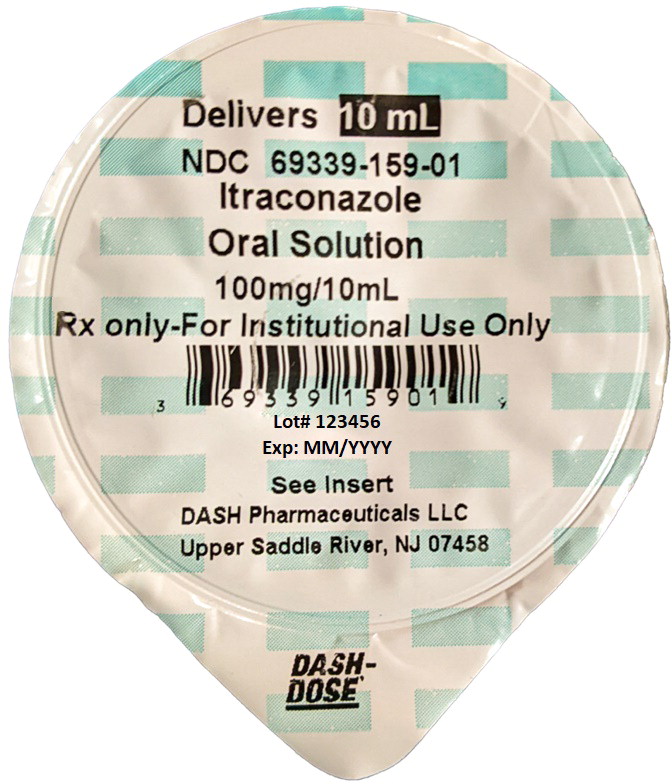
HOW SUPPLIED Itraconazole oral solution is supplied in 10mL amber HDPE unit dose medicine cups as follows: NDC: 69339-159-01 (1) UD cup NDC: 69339-159-17 (40) UD cups Store at 20° to 25°C (68° to 77°F) [see USP Controlled Room Temperature]. Do not freeze. Keep out of reach of children.
Manufactured for: DASH® PHARMACEUTICALS Dash Pharmaceuticals LLC Upper Saddle River, NJ 07458 By: Annora Pharma Pvt. Ltd. Sangareddy - 502313, Telangana, India DP-UD-PI-AT-XXXXXXX Rev 05/2021
📋 Description ▾
DESCRIPTION Itraconazole, an azole antifungal agent. Itraconazole is a 1:1:1:1 racemic mixture of four diastereomers (two enantiomeric pairs), each possessing three chiral centers. It may be represented by the following structural formula and nomenclature: (±)-1-sec-Butyl-4-[p-[4-[p-[[2R*,4S*)-2-(2,4-dichloro phenyl)-2-(1H-1, 2, 4-triazol-1 ylmethyl)-1,3-dioxolan-4 yl]methoxy]phenyl]-1-piperazinyl]phenyl]-Δ 2 -1, 2, 4-triazolin-5-one or 4-[4-[4-[4-[[Cis-2-(2,4-dichlorophenyl)-2-(1H-1,2,4-triazol-1-ylmethyl)-1,3-dioxolan-4-yl]methoxy] phenyl]piperazin1-yl] phenyl]-2-[(1RS)-1-methyl propyl]-2,4-dihydro-3H-1,2,4-triazol-3-one Itraconazole has a molecular formula of C 35 H 38 Cl 2 N 8 O 4 and a molecular weight of 705.63.
It is a white or almost white powder. It is freely soluble in methylene chloride, sparingly soluble in tetrahydrofuran, very slightly soluble in alcohol, practically insoluble in water. It has a pKa of 3.70 (based on extrapolation of values obtained from methanolic solutions) and a log (n-octanol/aq.
Buffer of pH: 8.1) partition coefficient of 5.66 at pH 8.1. Itraconazole oral solution contains 10 mg of itraconazole USP per mL, solubilized by hydroxypropyl-β-cyclodextrin (400 mg/mL) as a molecular inclusion complex. Itraconazole oral solution is clear, colorless to yellowish brown liquid with a target pH of 2.
Other ingredients are ascorbic acid, hydrochloric acid, propylene glycol, purified water, non crystallizing sorbitol solution, saccharin sodium, sodium hydroxide, ART Cherry flavor. Structural Formula
💬 Information for Patients ▾
Information for Patients: Only itraconazole oral solution has been demonstrated effective for oral and/or esophageal candidiasis. Itraconazole oral solution contains the excipient hydroxypropyl-β-cyclodextrin which produced adenocarcinomas in the large intestine and exocrine pancreatic adenocarcinomas in a rat carcinogenicity study. These findings were not observed in a similar mouse carcinogenicity study.
The clinical relevance of these adenocarcinomas is unknown. (See Carcinogenesis, Mutagenesis, and Impairment of Fertility .) Taking itraconazole oral solution under fasted conditions improves the systemic availability of itraconazole. Instruct patients to take itraconazole oral solution without food, if possible.
Itraconazole oral solution should not be used interchangeably with itraconazole capsules. Instruct patients about the signs and symptoms of congestive heart failure, and if these signs or symptoms occur during itraconazole administration, they should discontinue itraconazole and contact their healthcare provider immediately. Instruct patients to stop itraconazole treatment immediately and contact their healthcare provider if any signs and symptoms suggestive of liver dysfunction develop.
Such signs and symptoms may include unusual fatigue, anorexia, nausea and/or vomiting, jaundice, dark urine, or pale stools. Instruct patients to contact their physician before taking any concomitant medications with itraconazole to ensure there are no potential drug interactions. Instruct patients that hearing loss can occur with the use of itraconazole.
The hearing loss usually resolves when treatment is stopped, but can persist in some patients. Advise patients to discontinue therapy and inform their physicians if any hearing loss symptoms occur. Instruct patients that dizziness or blurred/double vision can sometimes occur with itraconazole.
Advise patients that if they experience these events, they should not drive or use machines.
⚠️ Precautions ▾
PRECAUTIONS Hepatotoxicity: Rare cases of serious hepatotoxicity have been observed with itraconazole treatment, including some cases within the first week. It is recommended that liver function monitoring be considered in all patients receiving itraconazole. Treatment should be stopped immediately and liver function testing should be conducted in patients who develop signs and symptoms suggestive of liver dysfunction.
Neuropathy: If neuropathy occurs that may be attributable to itraconazole oral solution, the treatment should be discontinued. Cystic Fibrosis: If a patient with cystic fibrosis does not respond to itraconazole oral solution, consideration should be given to switching to alternative therapy (see CLINICAL PHARMACOLOGY: Special Populations ). Hearing Loss: Transient or permanent hearing loss has been reported in patients receiving treatment with itraconazole.
Several of these reports included concurrent administration of quinidine which is contraindicated (see BOXED WARNING: Drug Interactions, CONTRAINDICATIONS: Drug Interactions and PRECAUTIONS: Drug Interactions ). The hearing loss usually resolves when treatment is stopped, but can persist in some patients. Information for Patients: Only itraconazole oral solution has been demonstrated effective for oral and/or esophageal candidiasis.
Itraconazole oral solution contains the excipient hydroxypropyl-β-cyclodextrin which produced adenocarcinomas in the large intestine and exocrine pancreatic adenocarcinomas in a rat carcinogenicity study. These findings were not observed in a similar mouse carcinogenicity study. The clinical relevance of these adenocarcinomas is unknown.
(See Carcinogenesis, Mutagenesis, and Impairment of Fertility .) Taking itraconazole oral solution under fasted conditions improves the systemic availability of itraconazole. Instruct patients to take itraconazole oral solution without food, if possible. Itraconazole oral solution should not be used interchangeably with itraconazole capsules.
Instruct patients about the signs and symptoms of congestive heart failure, and if these signs or symptoms occur during itraconazole administration, they should discontinue itraconazole and contact their healthcare provider immediately. Instruct patients to stop itraconazole treatment immediately and contact their healthcare provider if any signs and symptoms suggestive of liver dysfunction develop. Such signs and symptoms may include unusual fatigue, anorexia, nausea and/or vomiting, jaundice, dark urine, or pale stools.
Instruct patients to contact their physician before taking any concomitant medications with itraconazole to ensure there are no potential drug interactions. Instruct patients that hearing loss can occur with the use of itraconazole. The hearing loss usually resolves when treatment is stopped, but can persist in some patients.
Advise patients to discontinue therapy and inform their physicians if any hearing loss symptoms occur. Instruct patients that dizziness or blurred/double vision can sometimes occur with itraconazole. Advise patients that if they experience these events, they should not drive or use machines.
Drug Interactions: Effect of Itraconazole on Other Drugs Itraconazole and its major metabolite, hydroxy-itraconazole, are potent CYP3A4 inhibitors. Itraconazole is an inhibitor of the drug transporters P-glycoprotein and breast cancer resistance protein (BCRP). Consequently, itraconazole has the potential to interact with many concomitant drugs resulting in either increased or sometimes decreased concentrations of the concomitant drugs.
Increased concentrations may increase the risk of adverse reactions associated with the concomitant drug which can be severe or life-threatening in some cases (e.g., QT prolongation, Torsade de Pointes, respiratory depression, hepatic adverse reactions, hypersensitivity reactions, myelosuppression, hypotension, seizures, angioedema, atrial fibrillation, bradycardia, priapism). Reduced concentrations… [Excerpted — this section continues on DailyMed.]
🍼 Nursing Mothers ▾
Nursing Mothers: Itraconazole is excreted in human milk; therefore, the expected benefits of itraconazole therapy for the mother should be weighed against the potential risk from exposure of itraconazole to the infant. The U.S. Public Health Service Centers for Disease Control and Prevention advises HIV-infected women not to breast-feed to avoid potential transmission of HIV to uninfected infants.
🧬 Pharmacokinetics ▾
Pharmacokinetics and Metabolism: Itraconazole General Pharmacokinetic Characteristics Peak plasma concentrations are reached within 2.5 hours following administration of the oral solution. As a consequence of non-linear pharmacokinetics, itraconazole accumulates in plasma during multiple dosing. Steadystate concentrations are generally reached within about 15 days, with C max and AUC values 4 to 7-fold higher than those seen after a single dose.
Steady-state C max values of about 2 mcg/mL are reached after oral administration of 200 mg once daily. The terminal half-life of itraconazole generally ranges from 16 to 28 hours after single dose and increases to 34 to 42 hours with repeated dosing. Once treatment is stopped, itraconazole plasma concentrations decrease to an almost undetectable concentration within 7 to 14 days, depending on the dose and duration of treatment.
Itraconazole mean total plasma clearance following intravenous administration is 278 mL/min. Itraconazole clearance decreases at higher doses due to saturable hepatic metabolism. Absorption Itraconazole is rapidly absorbed after administration of the oral solution.
Peak plasma concentrations of itraconazole are reached within 2.5 hours following administration of the oral solution under fasting conditions. The observed absolute bioavailability of itraconazole under fed conditions is about 55% and increases by 30% when the oral solution is taken in fasting conditions. Itraconazole exposure is greater with the oral solution than with the capsule formulation when the same dose of drug is given.
(see WARNINGS ) Distribution Most of the itraconazole in plasma is bound to protein (99.8%), with albumin being the main binding component (99.6% for the hydroxy-metabolite). It has also a marked affinity for lipids. Only 0.2% of the itraconazole in plasma is present as free drug.
Itraconazole is distributed in a large apparent volume in the body (>700 L), suggesting extensive distribution into tissues. Concentrations in lung, kidney, liver, bone, stomach, spleen and muscle were found to be two to three times higher than corresponding concentrations in plasma, and the uptake into keratinous tissues, skin in particular, up to four times higher. Concentrations in the cerebrospinal fluid are much lower than in plasma.
Metabolism Itraconazole is extensively metabolized by the liver into a large number of metabolites. In vitro studies have shown that CYP3A4 is the major enzyme involved in the metabolism of itraconazole. The main metabolite is hydroxy-itraconazole, which has in vitro antifungal activity comparable to itraconazole; trough plasma concentrations of this metabolite are about twice those of itraconazole.
Excretion Itraconazole is excreted mainly as inactive metabolites in urine (35%) and in feces (54%) within one week of an oral solution dose. Renal excretion of itraconazole and the active metabolite hydroxy-itraconazole account for less than 1% of an intravenous dose. Based on an oral radiolabeled dose, fecal excretion of unchanged drug ranges from 3% to 18% of the dose.
🔬 Clinical Studies ▾
CLINICAL STUDIES Oropharyngeal Candidiasis: Two randomized, controlled studies for the treatment of oropharyngeal candidiasis have been conducted (total n = 344). In one trial, clinical response to either 7 or 14 days of itraconazole oral solution, 200 mg/day, was similar to fluconazole tablets and averaged 84% across all arms. Clinical response in this study was defined as cured or improved (only minimal signs and symptoms with no visible lesions).
Approximately 5% of subjects were lost to follow-up before any evaluations could be performed. Response to 14 days therapy of itraconazole oral solution was associated with a lower relapse rate than 7 days of itraconazole therapy. In another trial, the clinical response rate (defined as cured or improved) for itraconazole oral solution was similar to clotrimazole troches and averaged approximately 71% across both arms, with approximately 3% of subjects lost to follow-up before any evaluations could be performed.
Ninety-two percent of the patients in these studies were HIV seropositive. In an uncontrolled, open-label study of selected patients clinically unresponsive to fluconazole tablets (n = 74, all patients HIV seropositive), patients were treated with itraconazole oral solution 100 mg b.i.d. (Clinically unresponsive to fluconazole in this study was defined as having received a dose of fluconazole tablets at least 200 mg/day for a minimum of 14 days.) Treatment duration was 14 to 28 days based on response.
Approximately 55% of patients had complete resolution of oral lesions. Of patients who responded and then entered a followup phase (n = 22), all relapsed within 1 month (median 14 days) when treatment was discontinued. Although baseline endoscopies had not been performed, several patients in this study developed symptoms of esophageal candidiasis while receiving therapy with itraconazole oral solution.
Itraconazole oral solution has not been directly compared to other agents in a controlled trial of similar patients. Esophageal Candidiasis: A double-blind randomized study (n = 119, 111 of whom were HIV seropositive) compared itraconazole oral solution (100 mg/day) to fluconazole tablets (100 mg/day). The dose of each was increased to 200 mg/day for patients not responding initially.
Treatment continued for 2 weeks following resolution of symptoms, for a total duration of treatment of 3 to 8 weeks. Clinical response (a global assessment of cured or improved) was not significantly different between the two study arms, and averaged approximately 86% with 8% lost to follow-up. Six of 53 (11%) itraconazole-treated patients and 12/57 (21%) fluconazole-treated patients were escalated to the 200 mg dose in this trial.
Of the subgroup of patients who responded and entered a follow-up phase (n = 88), approximately 23% relapsed across both arms within 4 weeks.
📄 Carcinogenesis, Mutagenesis, Impairment of Fertility ▾
Carcinogenesis, Mutagenesis, and Impairment of Fertility: Itraconazole Itraconazole showed no evidence of carcinogenicity potential in mice treated orally for 23 months at dosage levels up to 80 mg/kg/day (approximately 10 times the maximum recommended human dose [MRHD]). Male rats treated with 25 mg/kg/day (3.1 times the MRHD) had a slightly increased incidence of soft tissue sarcoma. These sarcomas may have been a consequence of hypercholesterolemia, which is a response of rats, but not dogs or humans, to chronic itraconazole administration.
Female rats treated with 50 mg/kg/day (6.25 times the MRHD) had an increased incidence of squamous cell carcinoma of the lung (2/50) as compared to the untreated group. Although the occurrence of squamous cell carcinoma in the lung is extremely uncommon in untreated rats, the increase in this study was not statistically significant. Itraconazole produced no mutagenic effects when assayed in DNA repair test (unscheduled DNA synthesis) in primary rat hepatocytes, in Ames tests with Salmonella typhimurium (6 strains) and Escherichia coli , in the mouse lymphoma gene mutation tests, in a sex-linked recessive lethal mutation ( Drosophila melanogaster ) test, in chromosome aberration tests in human lymphocytes, in a cell transformation test with C3H/10T½ C18 mouse embryo fibroblasts cells, in a dominant lethal mutation test in male and female mice, and in micronucleus tests in mice and rats.
Itraconazole did not affect the fertility of male or female rats treated orally with dosage levels of up to 40 mg/kg/day (5 times the MRHD), even though parental toxicity was present at this dosage level. More severe signs of parental toxicity, including death, were present in the next higher dosage level, 160 mg/kg/day (20 times the MRHD). Hydroxypropyl-β-cyclodextrin (HP-β-CD) Hydroxypropyl-β-cyclodextrin (HP-β-CD) is the solubilizing excipient used in itraconazole oral solution.
Hydroxypropyl-β-cyclodextrin (HP-β-CD) was found to produce neoplasms in the large intestine at 5,000 mg/kg/day in rat carcinogenicity study. This dose was about 6 times amount contained in the recommended clinical dose of itraconazole oral solution based on body surface area comparisons. The clinical relevance of this finding is unknown.
The slightly higher incidence of adenocarcinomas in the large intestines was linked to the hypertrophic/hyperplastic and inflammatory changes in the colonic mucosa brought about by HP-β-CD-induced increased osmotic forces. In addition, HP-β-CD was found to produce pancreatic exocrine hyperplasia and neoplasia when administered orally to rats at doses of 500, 2,000 or 5,000 mg/kg/day for 25 months. Adenocarcinomas of the exocrine pancreas produced in the treated animals were not seen in the untreated group and are not reported in the historical controls.
The recommended clinical dose of itraconazole oral solution contains approximately 1.7 times the amount of HP-β-CD as was in the 500 mg/kg/day dose, based on body surface area comparisons. This finding was not observed in the mouse carcinogenicity study at doses of 500, 2,000 or 5,000 mg/kg/day for 22 to 23 months. This finding was also not observed in a 12-month toxicity study in dogs or in a 2-year toxicity study in female cynomolgus monkeys.
Since the development of the pancreatic tumors may be related to a mitogenic action of cholecystokinin and since there is no evidence that cholecystokinin has a mitogenic action in man, the clinical relevance of these findings is unknown. HP-β-CD has no antifertile effect, and is not mutagenic.
📄 Package Label / Principal Display Panel ▾
Principal Display Panel - 10 mL Cup Label Delivers 10 mL NDC 69339-159-01 Itraconazole Oral Solution 100mg/10mL Rx only-For Institutional Use Only Lot# 123456 See Insert DASH Pharmaceuticals LLC Upper Saddle River, NJ 07458 DASH DOSE Principal Display Panel - 10 mL Cup Label
Medicare Part D spend CMS · PART D · 2026 (Q1)
Reported adverse events (FAERS)
Top reported reactions
Reporter sex
Serious outcomes
Where does this data come from?
About this NDC listing & data coverage
What data is (and isn’t) available for this NDC — tap to expand
| NDC identity (package / product / labeler codes) | ✓ Available |
| Labeler | ✓ Available |
| Product & package description | ✓ Available |
| Marketing category & status | ✓ Available |
| Active ingredient / dosage form / route | ✓ Available |
| FDA label (SPL via DailyMed) | ✓ Available |
| Package photos | ✓ Available |
| Inactive ingredients (structured) | — Not published for this NDC The labeler did not submit a structured excipient list, or no SPL is available. |
| NADAC pharmacy acquisition price (CMS) | — Not published for this NDC CMS publishes NADAC only for NDCs reported in its retail-pharmacy survey. |
| Orange Book / therapeutic-equivalence data | ✓ Available |
| HCPCS J-code billing crosswalk | — Not published for this NDC Most self-administered / retail products have no J-code — that is normal. |
| Medicaid utilization (CMS SDUD) | — Not published for this NDC CMS reports utilization only for NDCs with Medicaid claims above its privacy threshold. |