
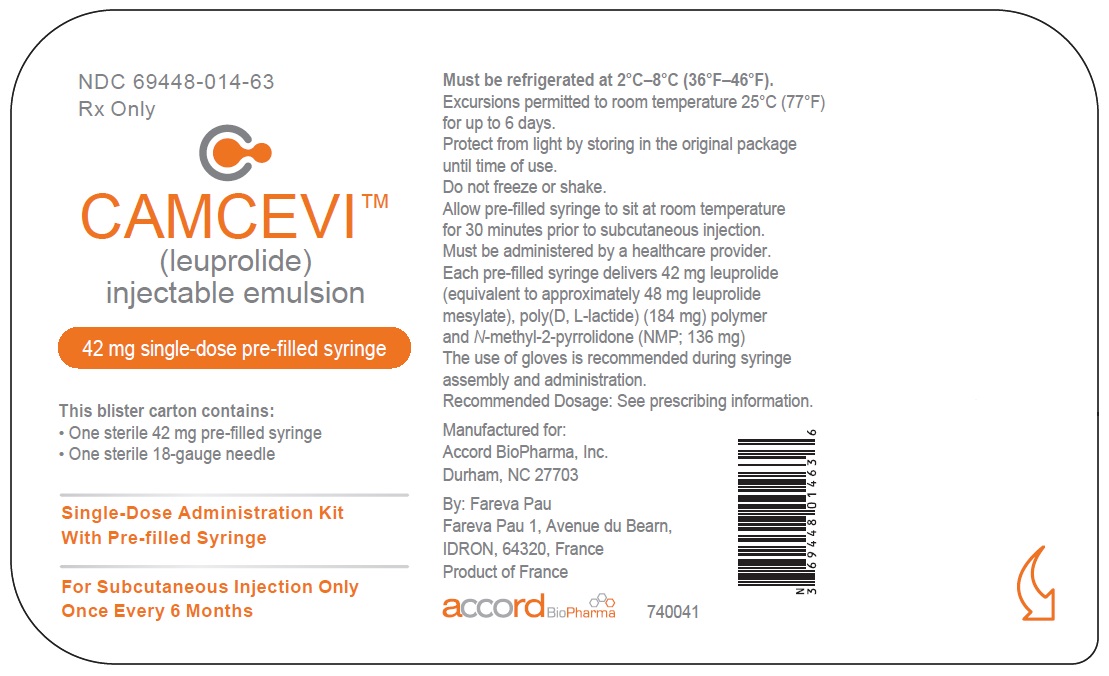
Camcevi Leuprolide 42 mg/.37g Injection, Emulsion, 1 syringe — NDC 69448-014-63 (Billing 69448-0014-63)
This is a package of 1 syringe of Camcevi Leuprolide 42 mg/.37g Injection, Emulsion from Accord BioPharma, Inc., marketed since Apr 2022 and currently FDA-listed. It is this product's only package size.
NDC database record
One package, one record: these facts belong to NDC 69448-014-63 alone.
- Record
- FDA NDC Directory package listing · Human prescription drug
- Code segments
- 69448 labeler · 014 product · 63 package
- Package marketed since
- Apr 5, 2022
- Sample package
- No — commercial package
- Listing certified through
- Dec 31, 2027
- Billing quantity
- 1 EA per package
- Barcode (UPC-A, from the NDC)
- 3 6944801463 6
- Medicaid fills, this package
- 431 prescriptions in the last four reported quarters
- FDA record last changed
- Jul 24, 2026
Identity & classification
Regulatory identifiers FDA, NLM and CMS codes for this package
Drug-database identifiers Medi-Span GPI and First Databank GCN / HICL / AHFS classification
- GSN (GCN sequence number): 082352
- GCN: 49745
- GPI-14 (Medi-Span): 2140501055E420
- HICL (First Databank): 047414
- AHFS class code: 10:00.00.00
- RxCUI (RxNorm): 2595044
Where does this data come from?
- FDA openFDA NDC Directory · synced Oct 8, 2026
- FDA label on DailyMed · label index refreshed Oct 6, 2026
- RxNorm (NLM RxNav) · catalog refreshed Oct 1, 2026
- Medi-Span GPI (licensed)
- First Databank (licensed) · refreshed Oct 8, 2026
RxNorm drug class
This medicine belongs to the Gonadotropin Releasing Hormone Receptor Agonist class.
Where does this data come from?
- RxClass (NLM) · catalog refreshed Oct 1, 2026
Clinical
Leuprolide injection is used to treat certain types of prostate cancer central precocious puberty (CPP; a condition causing children to enter puberty too soon, resulting in faster than normal bone growth and development of sexual characteristics) endometriosis (a condition in which the type of tissue that lines the uterus [womb] grows in other areas of the body and causes infertility, pain before and during menstrual periods, pain during and after sexual activity, and heavy, irregular bleeding) anemia (a lower-than-normal number of red blood cells) caused by uterine fibroids (growths i...
Read the full MedlinePlus article ↗- It lowers sex hormones. Different brands treat advanced prostate cancer, children with central precocious puberty, or, for Lupron Depot 11.25 mg, endometriosis and fibroid-related...
- It is an injection, not a pill. Many types are given by a healthcare provider every one to six months. One Leuprolide Acetate injection product is a daily injection under the skin,...
- Leuprolide briefly raises testosterone before lowering it. In prostate cancer this can cause bone pain or urinary trouble in the first few weeks. Tell your doctor right away if you...
- Why might my symptoms get worse at first?
Patient education
Supplement & herbal interactions
Where does this data come from?
- MedlinePlus (NLM) · refreshed Oct 1, 2026
- FDA label on DailyMed · label index refreshed Oct 6, 2026
Ask a licensed pharmacist directly — free, answered by our team.
Pricing
A drug doesn't have one price. Each row is a different public payment system, and none is what you'd pay at the counter — that depends on your insurance. The ⓘ on each row explains what it measures.
| Price system | Per mL | Per package |
|---|---|---|
| Retail pharmacies payNADAC · weekly | Not in the retail survey — common for institutional, discontinued, or low-volume packs. | |
| Medicaid paysCMS SDUD · 12 mo | $1,990.81 | — |
| Medicare drug plans payPart D · quarterly | No Part D plan price is available for this NDC in our data. | |
| Medicare Part B allowsASP · J1952 | $42.059 / J1952 unit | — |
Where does this data come from?
- CMS NADAC weekly file
- CMS ASP pricing files · refreshed Sep 20, 2026
- CMS Medicaid State Drug Utilization Data · through Q1 2026
- CMS Part D plan pricing files · refreshed Sep 24, 2026
- VA National Acquisition Center price file
Billing & reimbursement
Where does this data come from?
- CMS ASP NDC-HCPCS crosswalk · refreshed Sep 22, 2026
- DMEPDAC NDC-HCPCS crosswalk
- openFDA NSDE billing units · refreshed Oct 7, 2026
Packaging — all sizes for this product
| Package NDC | Description | Marketing start | Marketing end | Status |
|---|---|---|---|---|
| 69448-0014-63 You're viewing this Main listing | 1 SYRINGE in 1 CARTON / .37 g in 1 SYRINGE | 2022-04-05 | — | Active |
Therapeutic equivalents
| Product | Labeler | Pack | NADAC/unit | TE | Status | Price vs. this |
|---|---|---|---|---|---|---|
| Camcevi 42 mg/.37gthis 69448-0014-63 | Accord | 1 syringe | — | — | FDA listed | — |
| Camcevi 42 mg/.37g 69448-0023-63 | Accord | 1 syringe | — | — | FDA listed | — |
Where does this data come from?
- FDA openFDA NDC Directory · synced Oct 8, 2026
- FDA Orange Book · refreshed Oct 3, 2026
- CMS NADAC weekly file
Availability & generic status
We did not find an FDA-approved generic match for this exact strength, form and route. Patent/protection dates below may affect future generic timing.
Why the date isn’t exact: Generic timing can change because patents may be challenged, settled, licensed, added, removed, or worked around with a narrower label — and FDA approval does not always mean a pharmacy can get the generic today.
🛈 What do these terms mean?
- Patent
- Legal protection listed in the Orange Book that may delay generic approval or launch. Issued by the U.S. Patent & Trademark Office.
- Substance patent
- Covers the active drug molecule itself — the hardest to design around. A generic generally can’t launch until it expires.
- Formulation (product) patent
- Covers a specific formulation or dosage form. A generic can sometimes work around it with a different formulation.
- Method-of-use patent
- A patent covering one specific approved use of the drug — not necessarily the whole molecule. A generic can sometimes launch with a “skinny label” that carves out the protected use and keeps the others.
- Skinny label
- A generic label that omits a still-patented use when the FDA allows it — letting a generic reach the market for the unprotected uses.
- Exclusivity
- FDA-granted marketing protection, separate from patents — e.g. 5-yr new chemical entity, 7-yr orphan drug, or a +6-month pediatric extension.
- Paragraph IV
- A generic applicant’s formal challenge to a listed patent. It can potentially lead to earlier generic entry, but often involves litigation or a settlement.
- RLD / RS
- Reference Listed Drug — the brand product the FDA uses as the reference for generic applications. Reference Standard — the product the FDA expects generics to compare against in bioequivalence testing.
- TE / AB rating
- FDA therapeutic-equivalence rating. An AB rating generally means the FDA considers a generic therapeutically equivalent to — and substitutable for — the brand.
- LOE (loss of exclusivity)
- The latest patent or exclusivity currently listed — the loss-of-exclusivity / latest-listed-protection date shown on this page. Paragraph-IV challenges and settlements can move the real date earlier; FDA approval and a manufacturer’s decision to market can move it later.
Built from the FDA Orange Book. The bars above are scaled to each protection’s expiry; the red LOE marker is the last one to lapse.
| Patent | Type | Use code | Expires |
|---|---|---|---|
| US 10646572 ↗ | Drug product | — | Jan 16, 2027 |
| US 11717555 ↗ | Drug product | — | Jan 1, 2039 |
| US 9744207 ↗ | Drug product | — | Jan 16, 2027 |
| US 12133878 ↗ | Drug product | — | Dec 18, 2037 |
| US 9572857 ↗ | Drug product | — | Aug 2, 2029 |
Is there a generic version of CAMCEVI 42 MG SYRINGE?
The FDA approved a generic — why can’t I get it at my pharmacy yet?
Why do different websites show different generic release dates?
What does “FDA listed” mean?
What does a patent or protection date mean here?
What does “current Orange Book estimate” mean?
Can a generic come out before the last patent expires?
Can a generic come out after the listed dates?
What is the difference between patents and exclusivity?
Why are there multiple patent dates?
Where does this data come from?
- FDA Orange Book · refreshed Oct 3, 2026
Inactive Ingredients / Excipients
Inactive ingredients, also called excipients, are components of the drug product other than the active ingredient. They may include fillers, dyes, coatings, preservatives, flavors, or other formulation ingredients.
🧪 Avoiding an ingredient? See Leuprolide inactive ingredients by manufacturer: every current product's list side by side, so you can ask your pharmacy for the version that does not list it.
💡 Tap an ingredient (hover on desktop) to see what it is and why it’s used.
-
136 mg / 0.37 g
UNII JR9CE63FPM
Methyl pyrrolidone is a synthetic liquid solvent used in pharmaceutical formulations. It helps dissolve and deliver active ingredients in topical products and some oral medicines.
-
184 mg / 0.37 g
UNII 459TN2L5F5
Polylactide is a biodegradable plastic polymer made from lactic acid, derived from corn or sugarcane. In medicines, it acts as a binder and film-former to hold tablets together or create coatings on capsules.
2 inactive ingredients listed in the exact product block matched to this NDC.
Where does this data come from?
ingredient classCode="IACT" elements from the exact product block matched by this NDC. Label-section narrative from DailyMed / the openFDA label index is shown separately when available.- FDA label on DailyMed · label index refreshed Oct 6, 2026
- FDA openFDA NDC Directory · synced Oct 8, 2026
Inactive ingredient FAQ
Are inactive ingredients the same for every manufacturer?
Why might an inactive ingredient be missing?
Can inactive ingredients matter?
Manufacturer & labeler
More NDCs from Accord BioPharma, Inc. labeler code 69448
- MUTAMYCIN Mitomycin 5 mg/10mL Injection, Powder, Lyophilized, For Solution NDC 69448-001-05
- MUTAMYCIN Mitomycin 40 mg/80mL Injection, Powder, Lyophilized, For Solution NDC 69448-003-38
- FILKRI filgrastim-laha 300 ug/.5mL Injection, Solution NDC 69448-008-03
- FILKRI filgrastim-laha 480 ug/.8mL Injection, Solution NDC 69448-009-03
- HERCESSI Trastuzumab-strf 150 mg/7.4mL Injection, Powder, Lyophilized, For Solution NDC 69448-015-05
- HERCESSI Trastuzumab-strf 420 mg/20mL Injection, Powder, Lyophilized, For Solution NDC 69448-016-11
- IMULDOSA ustekinumab-srlf 45 mg/.5mL Injection NDC 69448-017-63
- IMULDOSA ustekinumab-srlf 90 mg/mL Injection NDC 69448-018-63
- IMULDOSA ustekinumab-srlf 130 mg/26mL Injection NDC 69448-019-26
- OSVYRTI denosumab-desu 60 mg/mL Injection NDC 69448-021-63
Where does this data come from?
- FDA openFDA NDC Directory · synced Oct 8, 2026
- Drugs@FDA
Full prescribing information FDA SPL
🎯 Indications and Usage ▾
1 INDICATIONS AND USAGE CAMCEVI is indicated for the treatment of adult patients with advanced prostate cancer. CAMCEVI is a gonadotropin-releasing hormone (GnRH) agonist indicated for the treatment of adult patients with advanced prostate cancer.
⏱️ Dosage and Administration ▾
2 DOSAGE AND ADMINISTRATION See Full Prescribing Information for instructions on the preparation and administration of the injectable emulsion in a pre-filled syringe. ( 2 ) Recommended Dosage: 42 mg subcutaneously every 6 months. ( 2 )
2.1Recommended Dosage The recommended dose of CAMCEVI is 42 mg administered subcutaneously once every 6 months.
2.2Preparation and Administration CAMCEVI must be administered by a healthcare provider. Important: Read the instructions completely before you administer Camcevi for the first time. Do NOT substitute any of the components from the kit for administration.
CAMCEVI is packaged in a blister in the kit. Check to make sure the kit contains: One sterile, single-dose pre-filled syringe with plunger rod and backstop One sterile 18-gauge, 5/8-inch needle One Point-Lok ® Needle Protection Device Prescribing Information Follow the detailed instructions to ensure correct preparation of CAMCEVI prior to administration: STEP 1 Remove CAMCEVI kit from refrigerator. Keep the contents in their original, sealed blister carton and allow to sit at room temperature for 30 minutes before use.
Return to refrigerator after 30 minutes if not used. STEP 2 On a clean, dry surface, open carton and remove the contents. Examine all contents of the package.
Do not use if any component is damaged. Check the expiration date on the syringe. Do not use if the expiration date has passed.
The use of gloves is recommended during syringe assembly and administration. STEP 3 Remove pre-filled syringe (A) and needle cartridge (B) from the blister tray. Visually inspect the syringe for particulate matter prior to administration.
The emulsion should appear off-white to pale yellow, viscous, and opalescent. Do not use if particulate matter is observed prior to administration. STEP 4 Remove the gray cap from the syringe (A).
Twist the clear cap off the bottom of the needle cartridge (B). Attach the needle (B) to the end of the syringe (A) by pushing and turning the needle until firmly connected to the syringe. Do not over twist the needle and strip the threading.
See figure of assembled pre-filled syringe below. STEP 5 Choose an injection site on the upper- or mid-abdominal area with sufficient soft or loose subcutaneous tissue that has not recently been used. Clean the injection site with an alcohol swab.
Do NOT inject in areas with brawny or fibrous subcutaneous tissue or locations that can be rubbed or compressed (i.e., with a belt or clothing waistband). In addition, avoid applying heat directly to the site of Camcevi injection. STEP 6 Pull the blue cover off the needle (B).
Use standard sharps safety techniques to avoid needle sticks. STEP 7 Use standard aseptic technique when performing the injection. Grab and bunch the skin around the injection site with one hand.
Insert the needle at a 90° angle to the skin surface, and then release the bunched skin. STEP 8 Inject the full contents of the syringe with a slow and steady push on the plunger, and then withdraw the needle at the same 90° angle used for insertion. STEP 9 Do not remove the needle from the syringe.
Use the enclosed Point-Lok ® device to prevent needle sticks. Retrieve the Point-Lok ® needle protection device from the Camcevi kit and place it on a secured, flat surface with its largest surface base touching the surface as shown in the diagram. Immediately after use of the needle, gently insert the exposed needle into the Point-Lok ® device opening at the top of the Point-Lok ® device.
(see Figure 1) Push the needle into the top opening until it is fully inserted into the Point-Lok ® device. This action will seal the needle tip and lock the needle firmly into the Point-Lok ® device. (see Figure 2) STEP 10 After use, discard all components safely in a suitable sharps container.
Dispose of the syringe and contaminated products according to local regulations/procedures. camcevi-inj-image-3 camcevi-inj-image-2 camcevi-inj-image-4 camcevi-inj-image-5 camcevi-inj-imag… [Excerpted — this section continues on DailyMed.]
💊 Dosage Forms and Strengths ▾
3 DOSAGE FORMS AND STRENGTHS Injectable emulsion: 42 mg leuprolide (equivalent to approximately 48 mg leuprolide mesylate) as a sterile, off-white to pale yellow, viscous, and opalescent emulsion in a single-dose, pre-filled syringe for subcutaneous injection. Injectable emulsion: 42 mg ( 3 )
⛔ Contraindications ▾
4 CONTRAINDICATIONS CAMCEVI is contraindicated in patients known to be hypersensitive to GnRH, GnRH agonist analogs, or any of the excipients in CAMCEVI. Anaphylactic reactions to GnRH agonist analogs have been reported in the medical literature. Hypersensitivity to GnRH, GnRH agonist analogs, or any of the components of CAMCEVI. ( 4 )
⚠️ Warnings and Cautions ▾
5 WARNINGS AND PRECAUTIONS Tumor Flare: Transient worsening of bone pain, uretral obstruction, spinal cord compression, or the occurrence of additional signs and symptoms of prostate cancer may develop during the first few weeks of treatment. Monitor patients closely and manage symptoms. ( 5.1 ) Hyperglycemia and Diabetes: Hyperglycemia and an increased risk of developing diabetes have been reported in men receiving GnRH agonists.
Monitor blood glucose levels and manage according to current clinical practice. ( 5.2 ) Cardiovascular Diseases: Increased risk of myocardial infarction, sudden cardiac death, and stroke has been reported in men receiving GnRH agonists. Monitor for cardiovascular disease and manage according to current clinical practice.
( 5.3 ) QT/QTc Prolongation: Androgen deprivation therapy may prolong the QT interval. Consider periodic monitoring of electrocardiograms and electrolytes. ( 5.4 ) Convulsions: Manage convulsions according to the current clinical practice.
( 5.5 ) Severe Cutaneous Adverse Reactions: CAMCEVI can cause severe cutaneous adverse reactions (SCARs), including Stevens-Johnson syndrome/toxic epidermal necrolysis. Interrupt CAMCEVI if signs or symptoms of SCARs develop. Permanently discontinue if SCARs are confirmed.
( 5.6 ) Embryo-Fetal Toxicity: CAMCEVI may cause fetal harm. ( 5.8 , 8.1 )
5.1Tumor Flare CAMCEVI, like other GnRH agonists, causes a transient increase in serum levels of testosterone during the first week of treatment, declining thereafter to baseline levels or below by the end of the second week of treatment. Transient worsening of symptoms, or the occurrence of additional signs and symptoms of prostate cancer, may develop during the first few weeks of CAMCEVI treatment. Patients treated with CAMCEVI may experience a temporary increase in bone pain, which can be managed symptomatically.
Cases of ureteral obstruction and spinal cord compression have been observed, which may contribute to paralysis with or without fatal complications. Patients with metastatic vertebral lesions and/or with urinary tract obstruction should be closely observed during the first few weeks of therapy.
5.2Hyperglycemia and Diabetes Hyperglycemia and an increased risk of developing diabetes have been reported in men receiving GnRH agonists. Hyperglycemia may represent the development of diabetes mellitus or worsening of glycemic control in patients with diabetes. Monitor blood glucose and/or glycosylated hemoglobin (HbA1c) periodically in patients receiving a GnRH agonist and manage with current practice for treatment of hyperglycemia or diabetes.
5.3Cardiovascular Diseases Increased risk of developing myocardial infarction, sudden cardiac death, and stroke has been reported in association with use of GnRH agonists in men. The risk appears low based on the reported odds ratios, and should be evaluated carefully along with cardiovascular risk factors when determining a treatment for patients with prostate cancer. Patients receiving a GnRH agonist should be monitored for symptoms and signs suggestive of development of cardiovascular disease and be managed according to current clinical practice.
5.4QT/QTc Prolongation Androgen deprivation therapy may prolong the QT/QTc interval. Providers should consider whether the benefits of androgen deprivation therapy outweigh the potential risks in patients with congenital long QT syndrome, congestive heart failure, frequent electrolyte abnormalities, and in patients taking drugs known to prolong the QT interval. Electrolyte abnormalities should be corrected.
Consider periodic monitoring of electrocardiograms and electrolytes.
5.5Convulsions Convulsions have been reported in patients receiving GnRH agonists, like CAMCEVI [see Adverse Reactions ( 6.2 )]. Manage patients receiving a GnRH agonist who experience convulsions according to current clinical practice.
5.6Severe Cutaneous Adverse Reactions CAMCEVI can cause severe cutaneous adverse reactions (SCARs), inc… [Excerpted — this section continues on DailyMed.]
🤒 Adverse Reactions ▾
6 ADVERSE REACTIONS The following adverse reactions are discussed in greater detail in other sections of the labeling: Tumor Flare [see Warnings and Precautions (5.1) ] Hyperglycemia and Diabetes [see Warnings and Precautions (5.2) ] Cardiovascular Diseases [see Warnings and Precautions (5.3) ] QT/QTc Prolongation [see Warnings and Precautions (5.4) ] Convulsions [see Warnings and Precautions (5.5) ] The most common (≥5%) adverse reactions were hot flushes, hypertension, injection site reactions, fatigue, upper respiratory tract infections, musculoskeletal pain, pain in extremity, arthralgia, micturition urgency, nocturia, and dizziness.
( 6.1 ) To report SUSPECTED ADVERSE REACTIONS, contact Accord BioPharma Inc. at 1-866-941-7875 or FDA at 1-800-FDA-1088 or www.fda.gov/medwatch
6.1Clinical Trial Experience Because clinical trials are conducted under widely varying conditions, adverse reaction rates observed in the clinical trials of a drug cannot be directly compared to rates in the clinical trials of another drug and may not reflect the rates observed in practice. FP01C-13-001 The safety of CAMCEVI was evaluated in an open-label, single-arm, international clinical trial (FP01C-13-001) in patients with advanced prostate cancer. Patients received CAMCEVI administered subcutaneously at a dose of 42 mg on Day 0 and Day 168.
Of 137 patients enrolled, 93% received both doses of CAMCEVI. Serious adverse reactions occurred in 15% of patients who received CAMCEVI, including 1% of patients who experienced subdural hematoma. Fatal adverse reactions occurred in 2% of patients, including cerebrovascular accident (0.7%) and pulmonary embolism (0.7%).
The most common adverse reactions (≥10%) occurring during a median follow-up duration of 336 days were hot flush, hypertension, injection site reactions, upper respiratory tract infections, musculoskeletal pain, fatigue, and pain in extremity. Table 1 summarizes the adverse reactions in FP01C-13-001. Table 1.
Adverse Reactions Occurring in ≥5% of CAMCEVI in Advanced Prostate Cancer Patients - FP01C-13-001 Adverse Reaction CAMCEVI N = 137 All Grades (%) Grade 3-4 (%) Vascular disorders Hot flushes a 50 0 Hypertension b 15 0 General disorders and administration site conditions Injection site reactions c 11 0 Fatigue d 10 0 Infections and infestations Upper respiratory tract infection e 11 0 Musculoskeletal and connective tissue disorders Musculoskeletal pain f 11 0 Pain in extremity 10 0 Arthralgia 7 0 Renal and urinary disorders Micturition urgency g 6 0 Nocturia 6 0 Nervous system disorders Dizziness h 5 0.7 a includes hot flush and flushing b includes hypertension, essential hypertension, and blood pressure increased c includes injection site pain, injection site erythema, injection site hemorrhage, injection site nodule, injection site paraesthesia, injection site pruritus, and injection site warmth d includes fatigue and asthenia e includes upper respiratory tract infection, sinusitis, and nasopharyngitis f includes musculoskeletal pain, back pain, and bone pain g includes micturition urgency and dysuria h includes dizziness, dizziness postural, vertigo, and vertigo positional.
6.2Postmarketing Experience The following adverse reactions have been identified during post approval use of CAMCEVI or leuprolide. Because these reactions are reported voluntarily from a population of uncertain size, it is not always possible to reliably estimate their frequency or establish a causal relationship to drug exposure. During postmarketing surveillance, which includes other dosage forms and other patient populations, the following adverse reactions were reported.
Allergic Conditions: hypersensitivity reactions including anaphylaxis, rash, urticaria, and photosensitivity reactions Cardiovascular System: hypotension, myocardial infarction, pulmonary embolism Central/Peripheral Nervous System: convulsion, peripheral neuropathy, spinal fracture/paralysis Endocrine System: pituitary apoplexy, diabetes Hepa… [Excerpted — this section continues on DailyMed.]
👥 Use in Specific Populations ▾
8 USE IN SPECIFIC POPULATIONS Females and males of reproductive potential: CAMCEVI may impair fertility. ( 8.3 ) Safety and effectiveness in pediatric patients have not been established. ( 8.4 )
8.1Pregnancy Risk Summary Based on findings in animal studies and mechanism of action, CAMCEVI can cause fetal harm when administered to a pregnant woman [see Clinical Pharmacology ( 12.1 )]. There are no available data in pregnant women to inform the drug-associated risk. In animal developmental and reproductive toxicology studies, administration of a monthly formulation of leuprolide on day 6 of pregnancy (sustained exposure was expected throughout the period of organogenesis) caused adverse embryo-fetal toxicity in animals at doses less than the human dose based on body surface area using an estimated daily dose (see data) .
Advise pregnant patients and females of reproductive potential of the potential risk to the fetus. Data Animal Data Major fetal malformations were observed in developmental and reproductive toxicology studies in rabbits after a single administration of a monthly formulation of leuprolide administered on day 6 of pregnancy at test dosages of 0.00024, 0.0024, and 0.024 mg/kg (approximately 1/1500 to 1/15 the human dose based on body surface area using an estimated daily dose in animals and humans). Since a depot formulation was utilized in the study, a sustained exposure to leuprolide was expected throughout the period of organogenesis and to the end of gestation.
Similar studies in rats did not demonstrate an increase in fetal malformations, however, there was increased fetal mortality and decreased fetal weights with the two higher doses of the monthly formulation of leuprolide in rabbits and with the highest dose in rats.
8.2Lactation Risk Summary The safety and efficacy of CAMCEVI have not been established in females. There is no information regarding the presence of leuprolide in human milk, the effects on the breastfed child, or the effects on milk production. Because many drugs are excreted in human milk and because of the potential for serious adverse reactions in a breastfed child, a decision should be made to discontinue breastfeeding or discontinue the drug, taking into account the importance of the drug to the mother.
8.3Females and Males of Reproductive Potential Infertility Males Based on findings in animals and mechanism of action, CAMCEVI may impair fertility in males of reproductive potential [see Clinical Pharmacology ( 12.1 ), Nonclinical Toxicology ( 13.1 ) ] .
8.4Pediatric Use The safety and efficacy of CAMCEVI in pediatric patients have not been established.
8.5Geriatric Use Of the 137 patients who received CAMCEVI in the FP01C-13-001 study, 74% were 65 years of age or older, while 37% were 75 years of age or older. No overall differences in safety or effectiveness were observed between these patients and younger patients.
🤰 Pregnancy ▾
8.1Pregnancy Risk Summary Based on findings in animal studies and mechanism of action, CAMCEVI can cause fetal harm when administered to a pregnant woman [see Clinical Pharmacology ( 12.1 )]. There are no available data in pregnant women to inform the drug-associated risk. In animal developmental and reproductive toxicology studies, administration of a monthly formulation of leuprolide on day 6 of pregnancy (sustained exposure was expected throughout the period of organogenesis) caused adverse embryo-fetal toxicity in animals at doses less than the human dose based on body surface area using an estimated daily dose (see data) .
Advise pregnant patients and females of reproductive potential of the potential risk to the fetus. Data Animal Data Major fetal malformations were observed in developmental and reproductive toxicology studies in rabbits after a single administration of a monthly formulation of leuprolide administered on day 6 of pregnancy at test dosages of 0.00024, 0.0024, and 0.024 mg/kg (approximately 1/1500 to 1/15 the human dose based on body surface area using an estimated daily dose in animals and humans). Since a depot formulation was utilized in the study, a sustained exposure to leuprolide was expected throughout the period of organogenesis and to the end of gestation.
Similar studies in rats did not demonstrate an increase in fetal malformations, however, there was increased fetal mortality and decreased fetal weights with the two higher doses of the monthly formulation of leuprolide in rabbits and with the highest dose in rats.
🧒 Pediatric Use ▾
8.4Pediatric Use The safety and efficacy of CAMCEVI in pediatric patients have not been established.
8.5Geriatric Use Of the 137 patients who received CAMCEVI in the FP01C-13-001 study, 74% were 65 years of age or older, while 37% were 75 years of age or older. No overall differences in safety or effectiveness were observed between these patients and younger patients.
🧬 Clinical Pharmacology ▾
12 CLINICAL PHARMACOLOGY
12.1Mechanism of Action Leuprolide, a GnRH agonist, acts as an inhibitor of gonadotropin secretion. Animal and human studies indicate that following an initial stimulation of gonadotropins, chronic administration of leuprolide results in suppression of ovarian and testicular steroidogenesis. This effect is reversible upon discontinuation of drug therapy.
12.2Pharmacodynamics Mean serum testosterone concentrations transiently increased, then fell to below castrate threshold levels (≤ 50 ng/dL) within 3 weeks following administration of the dose of leuprolide, and generally remained below castrate thresholds levels throughout treatment. In humans, subcutaneous administration of single daily doses of leuprolide result in an initial increase in circulating levels of LH and FSH, leading to a transient increase in levels of the gonadal steroids (testosterone and dihydrotestosterone in males).
However, continuous daily administration of leuprolide results in decreased levels of LH and FSH. In males, testosterone is reduced to below castration levels. These decreases generally occur within 2 to 4 weeks after initiation of treatment, and castration levels of testosterone in prostatic cancer patients have been demonstrated for periods of up to 5 years.
12.3Pharmacokinetics Leuprolide concentration is variable, exhibiting an initial rapid increase followed by a rapid decline over the first 3 days before reaching steady concentrations for the duration of the dosing interval. The mean serum leuprolide C max was 94.5 and 99 ng/mL following the first and second doses of CAMCEVI, respectively. The mean serum concentration was maintained at 0.497–2.57 and 0.507–2.39 ng/ml after Day 3 post the first and second doses, respectively.
The mean AUC 0-6 mon was 224 and 268 day.ng/mL following the first and second doses of CAMCEVI, respectively. Absorption The median T max of leuprolide was 3.2 and 2.1 hours following the first and second doses of CAMCEVI, respectively Distribution The mean steady-state volume of distribution of leuprolide was 27 L following an intravenous bolus in healthy male volunteers. Protein binding of leuprolide ranged from 43% to 49% in vitro.
Elimination The mean systemic clearance was
7.6L/h and terminal elimination half-life of approximately 3 hours following an intravenous bolus of leuprolide in healthy male volunteers. Metabolism Administration of radiolabeled leuprolide was metabolized to smaller inactive peptides which may then be further catabolized. Excretion Excretion of leuprolide has not been evaluated with CAMCEVI.
Specific Populations No clinically significant differences in the systemic exposure of leuprolide were observed based on age (51 to 88 years), race/ethnicity (White, Black, Asian), or body weight (54 to 134 kg). The effect of renal or hepatic impairment on the pharmacokinetics of leuprolide has not been evaluated.
🧬 Mechanism of Action ▾
12.1Mechanism of Action Leuprolide, a GnRH agonist, acts as an inhibitor of gonadotropin secretion. Animal and human studies indicate that following an initial stimulation of gonadotropins, chronic administration of leuprolide results in suppression of ovarian and testicular steroidogenesis. This effect is reversible upon discontinuation of drug therapy.
📦 How Supplied / Storage and Handling ▾
16 HOW SUPPLIED/STORAGE AND HANDLING CAMCEVI is a sterile, off-white to pale yellow, viscous and opalescent injectable emulsion supplied in a kit as a single-dose, pre-filled syringe. CAMCEVI is available as follows: Kit Contents NDC Injectable emulsion in a pre-filled syringe containing 42 mg leuprolide for subcutaneous injection, a sterile 18 gauge needle, a Point-Lok ® needle protection device, and Prescribing Information. 69448-014-63 Store CAMCEVI at 2°C–8°C (36°F–46°F).
Protect CAMCEVI from light by storing in the original package until time of use. Do not freeze or shake. Excursions permitted to room temperature 25°C (77°F) for up to 6 days.
The rubber used in syringe tip cap and plunger stopper is not made of natural rubber latex.
📋 Description ▾
11 DESCRIPTION CAMCEVI is a sterile formulation of leuprolide mesylate for subcutaneous injection. CAMCEVI is designed to deliver approximately 42 mg of leuprolide over 6 months. Leuprolide mesylate is a synthetic nonapeptide analog of naturally occurring GnRH and is a GnRH agonist.
The analog possesses greater potency than the natural hormone. The chemical name is 5-oxo-L-prolyl-L-histidyl-L-tryptophyl-L-seryl-L-tyrosyl-D-leucyl-L-leucyl-L-arginyl-N-ethyl-L-prolinamide mesylate (salt) with the following structural formula. The pH of 50 mg/mL solution of leuprolide mesylate in water is approximately 5.7.
CAMCEVI is supplied as a kit with a pre-filled, single-dose, sterile syringe for subcutaneous injection. Each pre-filled syringe delivers 42 mg leuprolide (equivalent to approximately 48 mg leuprolide mesylate), poly(D, L-lactide) (184 mg) polymer and N -methyl-2-pyrrolidone (136 mg). camcevi-inj-structure
💬 Information for Patients ▾
17 PATIENT COUNSELING INFORMATION Hypersensitivity Inform patients that if they have experienced hypersensitivity with other GnRH agonist drugs like CAMCEVI, CAMCEVI is contraindicated [see Contraindications ( 4 )]. Tumor Flare Inform patients that CAMCEVI can cause tumor flare during the first weeks of treatment. Inform patients that the increase in testosterone can cause an increase in urinary symptoms or pain.
Advise patients to contact their healthcare provider if uretral obstruction, spinal cord compression, paralysis, or new or worsened symptoms occur after beginning CAMCEVI treatment [see Warnings and Precautions ( 5.1 )] . Hyperglycemia and Diabetes Advise patients that there is an increased risk of hyperglycemia and diabetes with CAMCEVI therapy. Inform patients that periodic monitoring for hyperglycemia and diabetes is required when being treated with CAMCEVI [see Warnings and Precautions ( 5.2 )] .
Cardiovascular Diseases Inform patients that there is an increased risk of myocardial infarction, sudden cardiac death, and stroke with CAMCEVI treatment. Advise patients to immediately report signs and symptoms associated with these events to their healthcare provider for evaluation [see Warnings and Precautions ( 5.3 )]. QT/QTc Prolongation Inform patients that CAMCEVI can cause QT/QTc prolongation.
Advise patients to immediately contact their healthcare provider in the event of syncope, presyncopal symptoms, or cardiac palpitations [see Warnings and Precautions ( 5.4 )]. Convulsions Inform patients that there is an increased risk of convulsions with CAMCEVI treatment. Advise patients to immediately contact their healthcare provider if they experience convulsions [see Warnings and Precautions ( 5.5 )].
Severe Cutaneous Adverse Reactions Inform patients that severe cutaneous adverse reactions (SCARs), including Stevens-Johnson syndrome (SJS), toxic epidermal necrolysis (TEN), drug reaction with eosinophilia and systemic symptoms (DRESS), and acute generalized exanthematous pustulosis (AGEP), which may be life threatening or fatal, may occur during treatment with CAMCEVI. Advise patients to contact their healthcare provider or seek medical attention right away if they experience signs or symptoms of SCARs, e.g., a prodrome of fever, flu-like symptoms, mucosal lesions, progressive skin rash, or lymphadenopathy [see Warnings and Precautions ( 5.6 )] .
Injection Site Reactions Inform patients that injection site related adverse reactions may occur such as transient burning/stinging, pain, bruising, and redness. Advise patients to contact their healthcare provider if they experience rash or severe injection site reactions [see Adverse Reactions ( 6.1 )]. Urogenital Disorders Advise patients that CAMCEVI may cause impotence.
Infertility Inform patients that CAMCEVI may cause infertility [see Use In Specific Populations ( 8.3 )]. Manufactured for: Accord BioPharma Inc. 8041 Arco Corporate Drive, Suite 200 Raleigh, NC 27617, USA By: Fareva Pau Fareva Pau 1, Avenue du Bearn, IDRON, 64320, France
🧬 Pharmacokinetics ▾
12.3Pharmacokinetics Leuprolide concentration is variable, exhibiting an initial rapid increase followed by a rapid decline over the first 3 days before reaching steady concentrations for the duration of the dosing interval. The mean serum leuprolide C max was 94.5 and 99 ng/mL following the first and second doses of CAMCEVI, respectively. The mean serum concentration was maintained at 0.497–2.57 and 0.507–2.39 ng/ml after Day 3 post the first and second doses, respectively.
The mean AUC 0-6 mon was 224 and 268 day.ng/mL following the first and second doses of CAMCEVI, respectively. Absorption The median T max of leuprolide was 3.2 and 2.1 hours following the first and second doses of CAMCEVI, respectively Distribution The mean steady-state volume of distribution of leuprolide was 27 L following an intravenous bolus in healthy male volunteers. Protein binding of leuprolide ranged from 43% to 49% in vitro.
Elimination The mean systemic clearance was
7.6L/h and terminal elimination half-life of approximately 3 hours following an intravenous bolus of leuprolide in healthy male volunteers. Metabolism Administration of radiolabeled leuprolide was metabolized to smaller inactive peptides which may then be further catabolized. Excretion Excretion of leuprolide has not been evaluated with CAMCEVI.
Specific Populations No clinically significant differences in the systemic exposure of leuprolide were observed based on age (51 to 88 years), race/ethnicity (White, Black, Asian), or body weight (54 to 134 kg). The effect of renal or hepatic impairment on the pharmacokinetics of leuprolide has not been evaluated.
🧬 Pharmacodynamics ▾
12.2Pharmacodynamics Mean serum testosterone concentrations transiently increased, then fell to below castrate threshold levels (≤ 50 ng/dL) within 3 weeks following administration of the dose of leuprolide, and generally remained below castrate thresholds levels throughout treatment. In humans, subcutaneous administration of single daily doses of leuprolide result in an initial increase in circulating levels of LH and FSH, leading to a transient increase in levels of the gonadal steroids (testosterone and dihydrotestosterone in males).
However, continuous daily administration of leuprolide results in decreased levels of LH and FSH. In males, testosterone is reduced to below castration levels. These decreases generally occur within 2 to 4 weeks after initiation of treatment, and castration levels of testosterone in prostatic cancer patients have been demonstrated for periods of up to 5 years.
🔬 Clinical Studies ▾
14 CLINICAL STUDIES The efficacy of CAMCEVI was evaluated in an open label, single arm, multinational study FP01C-13-001 ( NCT02234115 ) in patients with advanced prostate carcinoma who have a baseline morning serum testosterone level >150 ng/dL and Eastern Cooperative Oncology Group performance status ≤ 2. CAMCEVI was administered subcutaneously at a dose of 42 mg initially on Day 0 and on Week 24. The population (n = 137) had a median age of 71 years (range 51 to 88) and was 90% White, 6% Black, and 4% Asian.
Disease stage was distributed as follows: 23% metastatic (M1), 27% locally advanced (T3/4 NX M0 or any T N1 M0), 26% localized (T1 or T2 N0 M0), and 24% not classifiable. The median testosterone concentration at baseline was 440 ng/dL. The major efficacy outcome measure was medical castration rate, defined as achieving and maintaining serum testosterone suppression to ≤ 50 ng/dL by Week 4 through Week 48 of treatment.
Following the first injection of CAMCEVI, serum testosterone levels were suppressed to ≤ 50 ng/dL by Week 4 (+/-7 days) in 98.5% of the patients; and from Week 4 through Week 48 in 97.0% of patients (95% CI: 92.2-98.9) estimated using the Kaplan-Meier method. The time course of percent change from baseline in testosterone suppression are shown in Figure 1. The percentage of patients with testosterone suppression to ≤ 20 ng/dL was 69.3% on Day 28.
Figure 1 CAMCEVI Mean (95% CI) Percentage Change from Baseline in Serum Testosterone Concentration Over Time (N =137) In the clinical trial, PSA levels were monitored and were lowered on average by 51% after 4 weeks after administration of CAMCEVI, 83% after 3 months and remained suppressed throughout the 48 weeks of treatment. These PSA results should be interpreted with caution because of the heterogeneity of the patient population studied. No evidence has shown that the rapidity of PSA decline correlates with clinical benefit. camcevi-inj-figure
🧪 Nonclinical Toxicology ▾
13 NONCLINICAL TOXICOLOGY
13.1Carcinogenesis, Mutagenesis, Impairment of Fertility Two-year carcinogenicity studies were conducted with leuprolide in rats and mice. In rats, a dose-related increase of benign pituitary hyperplasia and benign pituitary adenomas was noted at 24 months when the drug was administered subcutaneously at high daily doses (0.6 to 4 mg/kg). There was a significant but not dose-related increase of pancreatic islet-cell adenomas in females and of testicular interstitial cell adenomas in males (highest incidence in the low dose group).
In mice, no pituitary abnormalities were observed at a dose as high as 60 mg/kg for 2 years. Patients have been treated with leuprolide for up to 3 years with doses as high as 10 mg/day and for 2 years with doses as high as 20 mg/day without demonstrable pituitary abnormalities. Mutagenicity studies have been performed with leuprolide using bacterial and mammalian systems.
These studies provided no evidence of mutagenic potential. Leuprolide may reduce male and female fertility. Administration of leuprolide to male and female rats at doses of 0.024, 0.24, and 2.4 mg/kg as monthly depot formulation for up to 3 months (approximately as low as 1/30 of the human dose based on body surface area using an estimated daily dose in animals and humans) caused atrophy of the reproductive organs, and suppression of reproductive function.
These changes were reversible upon cessation of treatment.
📄 Carcinogenesis, Mutagenesis, Impairment of Fertility ▾
13.1Carcinogenesis, Mutagenesis, Impairment of Fertility Two-year carcinogenicity studies were conducted with leuprolide in rats and mice. In rats, a dose-related increase of benign pituitary hyperplasia and benign pituitary adenomas was noted at 24 months when the drug was administered subcutaneously at high daily doses (0.6 to 4 mg/kg). There was a significant but not dose-related increase of pancreatic islet-cell adenomas in females and of testicular interstitial cell adenomas in males (highest incidence in the low dose group).
In mice, no pituitary abnormalities were observed at a dose as high as 60 mg/kg for 2 years. Patients have been treated with leuprolide for up to 3 years with doses as high as 10 mg/day and for 2 years with doses as high as 20 mg/day without demonstrable pituitary abnormalities. Mutagenicity studies have been performed with leuprolide using bacterial and mammalian systems.
These studies provided no evidence of mutagenic potential. Leuprolide may reduce male and female fertility. Administration of leuprolide to male and female rats at doses of 0.024, 0.24, and 2.4 mg/kg as monthly depot formulation for up to 3 months (approximately as low as 1/30 of the human dose based on body surface area using an estimated daily dose in animals and humans) caused atrophy of the reproductive organs, and suppression of reproductive function.
These changes were reversible upon cessation of treatment.
📄 Recent Major Changes ▾
Dosage and Administration ( 2.2 ) 02/2025 Warnings and Precautions ( 5.6 ) 09/2025
📄 Package Label / Principal Display Panel ▾
PRINCIPAL DISPLAY PANEL -Blister Label PRINCIPAL DISPLAY PANEL -Blister Label
PRINCIPAL DISPLAY PANEL -Carton Label (front) PRINCIPAL DISPLAY PANEL -Carton Label(front)
PRINCIPAL DISPLAY PANEL -Carton Label (back) PRINCIPAL DISPLAY PANEL -Carton Label (back)
PRINCIPAL DISPLAY PANEL -Syringe Label PRINCIPAL DISPLAY PANEL -Syringe Label
Medicaid utilization & spend
Reported adverse events (FAERS)
Top reported reactions
Age at onset
Reporter sex
Serious outcomes
Where does this data come from?
About this NDC listing & data coverage
What data is (and isn’t) available for this NDC — tap to expand
| NDC identity (package / product / labeler codes) | ✓ Available |
| Labeler | ✓ Available |
| Product & package description | ✓ Available |
| Marketing category & status | ✓ Available |
| Active ingredient / dosage form / route | ✓ Available |
| FDA label (SPL via DailyMed) | ✓ Available |
| Package photos | ✓ Available |
| Inactive ingredients (structured) | ✓ Available |
| NADAC pharmacy acquisition price (CMS) | — Not published for this NDC CMS publishes NADAC only for NDCs reported in its retail-pharmacy survey. |
| Orange Book / therapeutic-equivalence data | ✓ Available |
| HCPCS J-code billing crosswalk | ✓ Available |
| Medicaid utilization (CMS SDUD) | ✓ Available |