
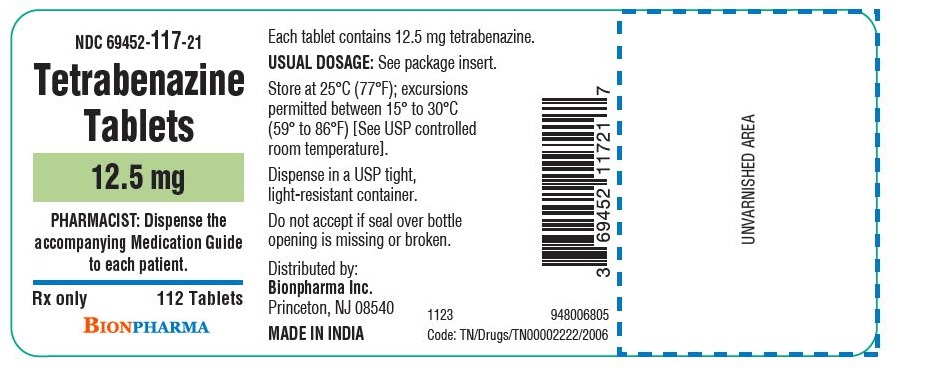
Tetrabenazine 12.5 mg Tablet, 112-count — NDC 69452-117-21 (Billing 69452-0117-21)
This is a package of 112 tablets of Tetrabenazine 12.5 mg Tablet from Bionpharma Inc., marketed since Jan 2018 and currently FDA-listed; retail pharmacies pay about $0.7019 per tablet (NADAC). It is this product's only package size.
NDC database record
One package, one record: these facts belong to NDC 69452-117-21 alone.
- Record
- FDA NDC Directory package listing · Human prescription drug
- Code segments
- 69452 labeler · 117 product · 21 package
- Package marketed since
- Jan 15, 2018
- Sample package
- No — commercial package
- Listing certified through
- Dec 31, 2026
- Billing quantity
- 112 EA per package
- Barcode (UPC-A, from the NDC)
- 3 6945211721 7
- FDA record last changed
- Jul 24, 2026
Identity & classification
Regulatory identifiers FDA, NLM and CMS codes for this package
Drug-database identifiers Medi-Span GPI and First Databank GCN / HICL / AHFS classification
- GSN (GCN sequence number): 064582
- GCN: 15508
- GPI-14 (Medi-Span): 62380070000310
- HICL (First Databank): 007350
- AHFS class code: 28:56.00.00
- RxCUI (RxNorm): 199592
Where does this data come from?
- FDA openFDA NDC Directory · synced Oct 8, 2026
- FDA label on DailyMed · label index refreshed Oct 6, 2026
- RxNorm (NLM RxNav) · catalog refreshed Oct 1, 2026
- Medi-Span GPI (licensed)
- First Databank (licensed) · refreshed Oct 8, 2026
RxNorm drug class
This medicine belongs to the Vesicular Monoamine Transporter 2 Inhibitor class.
Where does this data come from?
- RxClass (NLM) · catalog refreshed Oct 1, 2026
Clinical
Tetrabenazine is used to treat chorea (sudden movements that you cannot control) caused by Huntington's disease (an inherited disease that causes the progressive breakdown of nerve cells in the brain). Tetrabenazine is in a class of medications called vesicular monoamine transporter 2 (VMAT2) inhibitors. It works by changing the activity of certain natural substances in the brain that affect nerves and muscles.
Read the full MedlinePlus article ↗- It treats chorea, the jerky, uncontrolled movements, caused by Huntington’s disease. It helps control the movements but does not treat the disease itself.
- You take it by mouth, with or without food. Your doctor starts you low and raises the dose slowly each week. Higher doses are split into three a day. Follow your label and don’t ch...
- Sleepiness, tiredness, trouble sleeping, low mood, restlessness, anxiety and nausea are the most common. Sleepiness is the main reason doses get lowered, so tell your doctor if it...
- Tetrabenazine can cause or worsen depression and suicidal thoughts. You and your family should watch for new sadness, anxiety, or unusual behavior changes. Call your doctor right a...
Patient education
Supplement & herbal interactions
Some supplements/herbs that may interact with Tetrabenazine — tap one for details:
Where does this data come from?
- MedlinePlus (NLM) · refreshed Oct 1, 2026
- FDA label on DailyMed · label index refreshed Oct 6, 2026
Ask a licensed pharmacist directly — free, answered by our team.
Pricing
A drug doesn't have one price. Each row is a different public payment system, and none is what you'd pay at the counter — that depends on your insurance. The ⓘ on each row explains what it measures.
| Price system | Per ea | Per package |
|---|---|---|
| Retail pharmacies payNADAC · weekly | $0.702 | $78.61 / 112 tablets |
| Medicaid paysCMS SDUD · 12 mo | No recent Medicaid claims on file for this NDC — rare and low-volume NDCs are suppressed in the public data. | |
| Medicare drug plans payPart D · Q2 2026 | $10.00 | $1,119.94 / 112 tablets |
Where does this data come from?
- CMS NADAC weekly file · file of Oct 7, 2026
- CMS ASP pricing files · refreshed Sep 20, 2026
- CMS Medicaid State Drug Utilization Data · refreshed Oct 8, 2026
- CMS Part D plan pricing files · refreshed Sep 24, 2026
- VA National Acquisition Center price file
Packaging — all sizes for this product
| Package NDC | Description | Marketing start | Marketing end | Status |
|---|---|---|---|---|
| 69452-0117-21 You're viewing this Main listing | 112 TABLET in 1 BOTTLE | 2018-01-15 | — | Active |
Therapeutic equivalents
| Product | Labeler | Pack | NADAC/unit | TE | Status | Price vs. this |
|---|---|---|---|---|---|---|
| Tetrabenazine 12.5 mg 23155-0938-63 | Heritage | 112 tablets | $0.702 | AB | Availability likely | — |
| Tetrabenazine 12.5 mg 31722-0821-11 | Camber | 112 tablets | $0.702 | AB | Availability likely | — |
| Tetrabenazine 12.5 mg 60505-3882-07 | Apotex | 112 tablets | $0.702 | AB | Availability likely | — |
| Tetrabenazine 12.5 mg 68094-0905-10 | Precision | 112 tablets | $0.702 | AB | Availability likely | — |
| Tetrabenazine 12.5 mgthis 69452-0117-21 | Bionpharma | 112 tablets | $0.702 | AB | Availability likely | — |
| Tetrabenazine 12.5 mg 47335-0277-23 | Sun | 112 tablets | $0.768 | — | FDA listed | +9% |
| tetrabenazine 12.5 mg 70436-0101-09 | Slate | 112 tablets | $0.804 | AB | Availability likely | +15% |
| tetrabenazine 12.5 mg 68682-0421-12 | Oceanside | 112 tablets | $1.192 | AB | FDA listed | +70% |
| Tetrabenazine 12.5 mg 27241-0176-13 | Ajanta | 112 tablets | — | — | FDA listed | — |
| Tetrabenazine 12.5 mg 43598-0394-05 | Dr. | 500 tablets | — | AB | FDA listed | — |
| Tetrabenazine 12.5 mg 51407-0480-12 | Golden | 112 tablets | — | AB | FDA listed | — |
| Xenazine 12.5 mg 67386-0421-01 | Lundbeck | 112 tablets | — | AB | FDA listed | — |
Where does this data come from?
- FDA openFDA NDC Directory · synced Oct 8, 2026
- FDA Orange Book · refreshed Oct 3, 2026
- CMS NADAC weekly file · file of Oct 7, 2026
Availability & generic status
This product is an FDA-approved generic. Other versions of the same drug are listed under Therapeutic equivalents, least expensive first.
Where does this data come from?
- FDA Orange Book · refreshed Oct 3, 2026
What it looks like
Where does this data come from?
- FDA label on DailyMed · label index refreshed Oct 6, 2026
Inactive Ingredients / Excipients
Inactive ingredients, also called excipients, are components of the drug product other than the active ingredient. They may include fillers, dyes, coatings, preservatives, flavors, or other formulation ingredients.
🧪 Avoiding an ingredient? See Tetrabenazine inactive ingredients by manufacturer: every current product's list side by side, so you can ask your pharmacy for the version that does not list it.
💡 Tap an ingredient (hover on desktop) to see what it is and why it’s used.
-
UNII EX438O2MRT
Ferric oxide yellow is a naturally occurring iron compound used as a colorant in medications. It gives tablets, capsules, and other forms a yellow or golden hue for identification and appearance.
-
UNII 3NXW29V3WO
Hypromellose is a plant-based thickener made from cellulose. It's used in medicines as a binder to hold ingredients together, a coating for tablets, and a thickener for liquids.
-
UNII EWQ57Q8I5X
Lactose monohydrate is a natural sugar derived from milk. It serves as a filler and binder in tablets and capsules, helping create the proper size, texture, and consistency of the medicine.
-
UNII 70097M6I30
Magnesium stearate is a salt made from magnesium and stearic acid, a fatty substance. It's used in tablets and capsules as a lubricant and glidant to help ingredients flow smoothly during manufacturing and prevent sticking.
-
UNII O8232NY3SJ
A plant-based carbohydrate derived from corn kernels. It acts as a filler to add bulk, a binder to hold ingredients together, and a disintegrant to help the tablet break apart in your stomach for absorption.
-
UNII 7SEV7J4R1U
A powder made from a naturally occurring mineral. In medicines, talc works as a glidant and anti-caking agent, helping tablets and capsules flow smoothly during manufacturing and preventing clumping.
6 inactive ingredients listed in the exact product block matched to this NDC.
Where does this data come from?
ingredient classCode="IACT" elements from the exact product block matched by this NDC. Label-section narrative from DailyMed / the openFDA label index is shown separately when available.- FDA label on DailyMed · label index refreshed Oct 6, 2026
- FDA openFDA NDC Directory · synced Oct 8, 2026
Inactive ingredient FAQ
Are inactive ingredients the same for every manufacturer?
Why might an inactive ingredient be missing?
Can inactive ingredients matter?
Manufacturer & labeler
More NDCs from Bionpharma Inc. labeler code 69452
- Clobazam 2.5 mg/mL Suspension NDC 69452-116-45
- Tetrabenazine 25 mg Tablet NDC 69452-118-21
- Oxcarbazepine 300 mg/5mL Suspension NDC 69452-125-50
- Sevelamer Carbonate 800 mg Powder, For Suspension NDC 69452-126-19
- Sevelamer Carbonate 2400 mg Powder, For Suspension NDC 69452-127-19
- Dofetilide .125 mg Capsule NDC 69452-131-17
- Dofetilide .25 mg Capsule NDC 69452-132-17
Where does this data come from?
- FDA openFDA NDC Directory · synced Oct 8, 2026
- Drugs@FDA
Full prescribing information FDA SPL
🚨 Boxed Warning ▾
WARNING: DEPRESSION AND SUICIDALITY Tetrabenazine can increase the risk of depression and suicidal thoughts and behavior (suicidality) in patients with Huntington’s disease. Anyone considering the use of tetrabenazine must balance the risks of depression and suicidality with the clinical need for control of chorea. Close observation of patients for the emergence or worsening of depression, suicidality, or unusual changes in behavior should accompany therapy.
Patients, their caregivers, and families should be informed of the risk of depression and suicidality and should be instructed to report behaviors of concern promptly to the treating physician. Particular caution should be exercised in treating patients with a history of depression or prior suicide attempts or ideation, which are increased in frequency in Huntington’s disease. Tetrabenazine is contraindicated in patients who are actively suicidal, and in patients with untreated or inadequately treated depression [see Contraindications ( 4 ) , Warnings and Precautions ( 5.1 ) ] .
WARNING: DEPRESSION AND SUICIDALITY See full prescribing information for complete boxed warning . Increases the risk of depression and suicidal thoughts and behavior (suicidality) in patients with Huntington’s disease ( 5. 1 ) Balance risks of depression and suicidality with the clinical need for control of chorea when considering the use of tetrabenazine ( 5.2 ) Monitor patients for the emergence or worsening of depression, suicidality, or unusual changes in behavior ( 5.
1 ) Inform patients, caregivers and families of the risk of depression and suicidality and instruct to report behaviors of concern promptly to the treating physician ( 5. 1 ) Exercise caution when treating patients with a history of depression or prior suicide attempts or ideation ( 5. 1 ) Tetrabenazine is contraindicated in patients who are actively suicidal, and in patients with untreated or inadequately treated depression ( 4 , 5.1 )
🎯 Indications and Usage ▾
1 INDICATIONS AND USAGE Tetrabenazine tablets are indicated for the treatment of chorea associated with Huntington’s disease. Tetrabenazine is a vesicular monoamine transporter 2 (VMAT) inhibitor indicated for the treatment of chorea associated with Huntington’s disease. ( 1 )
⏱️ Dosage and Administration ▾
2 DOSAGE AND ADMINISTRATION Individualization of dose with careful weekly titration is required. The 1 st week’s starting dose is 12.5 mg daily; 2 nd week, 25 mg (12.5 mg twice daily); then slowly titrate at weekly intervals by 12.5 mg to a tolerated dose that reduces chorea. ( 2.1 , 2.2 ) Doses of 37.5 mg and up to 50 mg per day should be administered in three divided doses per day with a maximum recommended single dose not to exceed 25 mg.
( 2.2 ) Patients requiring doses above 50 mg per day should be genotyped for the drug metabolizing enzyme CYP2D6 to determine if the patient is a poor metabolizer (PM) or an extensive metabolizer (EM). ( 2.2 , 5.3 ) Maximum daily dose in PMs: 50 mg with a maximum single dose of 25 mg ( 2.2 ) Maximum daily dose in EMs and intermediate metabolizers (IMs): 100 mg with a maximum single dose of 37.5 mg ( 2.2 ) If serious adverse reactions occur, titration should be stopped and the dose should be reduced. If the adverse reaction(s) do not resolve, consider withdrawal of tetrabenazine tablets.
( 2.2 )
2.1General Dosing Considerations The chronic daily dose of tetrabenazine tablets used to treat chorea associated with Huntington’s disease (HD) is determined individually for each patient. When first prescribed, tetrabenazine tablets therapy should be titrated slowly over several weeks to identify a dose of tetrabenazine tablets that reduces chorea and is tolerated. Tetrabenazine tablets can be administered without regard to food [see Clinical Pharmacology ( 12.3 )] .
2.2Individualization of Dose The dose of tetrabenazine tablets should be individualized. Dosing Recommendations Up to 50 mg per day The starting dose should be 12.5 mg per day given once in the morning. After one week, the dose should be increased to 25 mg per day given as 12.5 mg twice a day.
Tetrabenazine tablets should be titrated up slowly at weekly intervals by 12.5 mg daily, to allow the identification of a tolerated dose that reduces chorea. If a dose of 37.5 to 50 mg per day is needed, it should be given in a three times a day regimen. The maximum recommended single dose is 25 mg.
If adverse reactions such as akathisia, restlessness, parkinsonism, depression, insomnia, anxiety or sedation occur, titration should be stopped and the dose should be reduced. If the adverse reaction does not resolve, consideration should be given to withdrawing tetrabenazine tablets treatment or initiating other specific treatment (e.g., antidepressants) [see Adverse Reactions ( 6.1 )] . Dosing Recommendations Above 50 mg per day Patients who require doses of tetrabenazine tablets greater than 50 mg per day should be first tested and genotyped to determine if they are poor metabolizers (PMs) or extensive metabolizers (EMs) by their ability to express the drug metabolizing enzyme, CYP2D6.
The dose of tetrabenazine tablets should then be individualized accordingly to their status as PMs or EMs [see Warnings and Precautions ( 5.3 ), Use in Specific Populations ( 8.7 ) , Clinical Pharmacology ( 12.3 ) ] . Extensive and Intermediate CYP2D6 Metabolizers Genotyped patients who are identified as extensive (EMs) or intermediate metabolizers (IMs) of CYP2D6, who need doses of tetrabenazine tablets above 50 mg per day, should be titrated up slowly at weekly intervals by 12.5 mg daily, to allow the identification of a tolerated dose that reduces chorea.
Doses above 50 mg per day should be given in a three times a day regimen. The maximum recommended daily dose is 100 mg and the maximum recommended single dose is 37.5 mg. If adverse reactions such as akathisia, parkinsonism, depression, insomnia, anxiety or sedation occur, titration should be stopped and the dose should be reduced.
If the adverse reaction does not resolve, consideration should be given to withdrawing tetrabenazine tablets treatment or initiating other specific treatment (e.g., antidepressants) [see Warnings and Precautions ( 5.3 ), Use in Specific Populations ( 8.7 ), Clinical Pharmacology ( 1… [Excerpted — this section continues on DailyMed.]
💊 Dosage Forms and Strengths ▾
3 DOSAGE FORMS AND STRENGTHS Tetrabenazine tablets are available in the following strengths: The 12.5 mg tetrabenazine tablets are yellowish-buff colored, round-shaped tablets, debossed with “T1” on one side and plain on other side. The 25 mg tetrabenazine tablets are yellowish-buff colored, round-shaped tablets, debossed with “T2” on one side and scoreline (functional scoring) on other side. Tablets: 12.5 mg non-scored and 25 mg scored (functional scoring) ( 3 )
⛔ Contraindications ▾
4 CONTRAINDICATIONS Tetrabenazine is contraindicated in patients: Who are actively suicidal, or in patients with untreated or inadequately treated depression [see Warnings and Precautions ( 5.1 ) ] . With hepatic impairment [see Use in Specific Populations ( 8.6 ), Clinical Pharmacology ( 12.3 ) ] . Taking monoamine oxidase inhibitors (MAOIs).
Tetrabenazine should not be used in combination with an MAOI, or within a minimum of 14 days of discontinuing therapy with an MAOI [see Drug Interactions ( 7.3 ) ] . Taking reserpine. At least 20 days should elapse after stopping reserpine before starting tetrabenazine [see Drug Interactions ( 7.2 ) ] .
Taking deutetrabenazine or valbenazine [see Drug Interactions ( 7.7 )]. Actively suicidal, or who have depression which is untreated or undertreated ( 4 , 5.1 ) Hepatic impairment ( 4 , 8.6 , 12.3 ) Taking monoamine oxidase inhibitors (MAOIs) or reserpine ( 4 , 7.2 , 7.3 ) Taking deutetrabenazine or valbenazine ( 4 , 7.7 )
⚠️ Warnings and Cautions ▾
5 WARNINGS AND PRECAUTIONS Periodically reevaluate the benefit and potential for adverse effects such as worsening mood, cognition, rigidity, and functional capacity. ( 5.2 ) Do not exceed 50 mg/day and the maximum single dose should not exceed 25 mg if administered in conjunction with a strong CYP2D6 inhibitor (e.g., fluoxetine, paroxetine). ( 5.3 , 7.1 ) Neuroleptic Malignant Syndrome (NMS): Discontinue if this occurs ( 5.4 , 7.6 ) Restlessness, agitation, akathisia and parkinsonism: Reduce dose or discontinue if occurs ( 5.5 , 5.6 ) Sedation/Somnolence: May impair patient’s ability to drive or operate complex machinery ( 5.7 ) QTc prolongation: Not recommended in combination with other drugs that prolong QTc ( 5.8 )
5.1Depression and Suicidality Patients with Huntington’s disease are at increased risk for depression, suicidal ideation or behaviors (suicidality). tetrabenazine increases the risk for suicidality in patients with HD. In a 12-week, double-blind, placebo-controlled study in patients with chorea associated with Huntington’s disease, 10 of 54 patients (19%) treated with tetrabenazine were reported to have an adverse event of depression or worsening depression compared to none of the 30 placebo‑treated patients. In two open-label studies (in one study, 29 patients received tetrabenazine for up to 48 weeks; in the second study, 75 patients received tetrabenazine for up to 80 weeks), the rate of depression/worsening depression was 35%.
In all of the HD chorea studies of tetrabenazine (n=187), one patient committed suicide, one attempted suicide, and six had suicidal ideation. When considering the use of tetrabenazine, the risk of suicidality should be balanced against the need for treatment of chorea. All patients treated with tetrabenazine should be observed for new or worsening depression or suicidality.
If depression or suicidality does not resolve, consider discontinuing treatment with tetrabenazine. Patients, their caregivers, and families should be informed of the risks of depression, worsening depression, and suicidality associated with tetrabenazine, and should be instructed to report behaviors of concern promptly to the treating physician. Patients with HD who express suicidal ideation should be evaluated immediately.
5.2Clinical Worsening and Adverse Effects Huntington’s disease is a progressive disorder characterized by changes in mood, cognition, chorea, rigidity, and functional capacity over time. In a 12-week controlled trial, tetrabenazine was also shown to cause slight worsening in mood, cognition, rigidity, and functional capacity. Whether these effects persist, resolve, or worsen with continued treatment is unknown.
Prescribers should periodically re-evaluate the need for tetrabenazine in their patients by assessing the effect on chorea and possible adverse effects, including depression and suicidality, cognitive decline, parkinsonism, dysphagia, sedation/somnolence, akathisia, restlessness, and disability. It may be difficult to distinguish between adverse reactions and progression of the underlying disease; decreasing the dose or stopping the drug may help the clinician distinguish between the two possibilities. In some patients, underlying chorea itself may improve over time, decreasing the need for tetrabenazine.
5.3Laboratory Tests Before prescribing a daily dose of tetrabenazine that is greater than 50 mg per day, patients should be genotyped to determine if they express the drug metabolizing enzyme, CYP2D6. CYP2D6 testing is necessary to determine whether patients are poor metabolizers (PMs), extensive (EMs) or intermediate metabolizers (IMs) of tetrabenazine. Patients who are PMs of tetrabenazine will have substantially higher levels of the primary drug metabolites (about 3-fold for α-HTBZ and 9-fold for β-HTBZ) than patients who are EMs.
The dosage should be adjusted according to a patient’s CYP2D6 metabolizer status. In patients who are identified as CYP2D6 PMs, the maximum recommended… [Excerpted — this section continues on DailyMed.]
🤒 Adverse Reactions ▾
6 ADVERSE REACTIONS The following serious adverse reactions are described below and elsewhere in the labeling: Depression and Suicidality [see Warnings and Precautions ( 5.1 ) ] Neuroleptic Malignant Syndrome (NMS) [see Warnings and Precautions ( 5.4 )] Akathisia, Restlessness, and Agitation [see Warnings and Precautions ( 5.5 ) ] Parkinsonism [see Warnings and Precautions ( 5.6 ) ] Sedation and Somnolence [see Warnings and Precautions ( 5.7 )] QTc Prolongation [see Warnings and Precautions ( 5.8 )] Hypotension and Orthostatic Hypotension [see Warnings and Precautions ( 5.9 )] Hyperprolactinemia [see Warnings and Precautions ( 5.10 )] Binding to Melanin-Containing Tissues [see Warnings and Precautions ( 5.11 )] Most common adverse reactions (>10% and at least 5% greater than placebo) were: Sedation/somnolence, fatigue, insomnia, depression, akathisia, anxiety/anxiety aggravated, nausea.
( 6.1 ) To report SUSPECTED ADVERSE REACTIONS, contact Bionpharma Inc. at 1-888-235-BION or 1-888-235-2466 or FDA at 1-800-FDA-1088 or www.fda.gov/medwatch .
6.1Clinical Trials Experience Because clinical trials are conducted under widely varying conditions, adverse reaction rates observed in the clinical trials of a drug cannot be directly compared to rates in the clinical trials of another drug and may not reflect the rates observed in practice. During its development, tetrabenazine was administered to 773 unique subjects and patients. The conditions and duration of exposure to tetrabenazine varied greatly, and included single-dose and multiple-dose clinical pharmacology studies in healthy volunteers (n=259) and open-label (n=529) and double-blind studies (n=84) in patients.
In a randomized, 12-week, placebo-controlled clinical trial of HD patients, adverse reactions were more common in the tetrabenazine group than in the placebo group. Forty-nine of 54 (91%) patients who received tetrabenazine experienced one or more adverse reactions at any time during the study. The most common adverse reactions (over 10%, and at least 5% greater than placebo) were sedation/somnolence, fatigue, insomnia, depression, akathisia, anxiety/anxiety aggravated, and nausea.
Adverse Reactions Occurring in ≥4% Patients The number and percentage of the most common adverse reactions that occurred at any time during the study in ≥4% of tetrabenazine-treated patients, and with a greater frequency than in placebo-treated patients, are presented in Table 1. Table 1: Adverse Reactions in a 12-Week, Double-Blind, Placebo-Controlled Trial in Patients with Huntington’s Disease Adverse Reaction Tetrabenazine n = 54 % Placebo n = 30 % Sedation/somnolence 31 3 Insomnia 22 0 Fatigue 22 13 Depression 19 0 Akathisia 19 0 Anxiety/anxiety aggravated 15 3 Fall 15 13 Nausea 13 7 Upper respiratory tract infection 11 7 Irritability 9 3 Balance difficulty 9 0 Parkinsonism/bradykinesia 9 0 Vomiting 6 3 Laceration (head) 6 0 Ecchymosis 6 0 Decreased appetite 4 0 Obsessive reaction 4 0 Dizziness 4 0 Dysarthria 4 0 Unsteady gait 4 0 Headache 4 3 Shortness of breath 4 0 Bronchitis 4 0 Dysuria 4 0 Dose escalation was discontinued or dosage of study drug was reduced because of one or more adverse reactions in 28 of 54 (52%) patients randomized to tetrabenazine.
These adverse reactions consisted of sedation (15), akathisia (7), parkinsonism (4), depression (3), anxiety (2), fatigue (1) and diarrhea (1). Some patients had more than one AR and are, therefore, counted more than once. Adverse Reactions Due to Extrapyramidal Symptoms Table 2 describes the incidence of events considered to be extrapyramidal adverse reactions which occurred at a greater frequency in tetrabenazine-treated patients compared to placebo-treated patients.
Table 2: Adverse Reactions Due to Extrapyramidal Symptoms in a 12-Week, Double-Blind, Placebo-Controlled Trial in Patients with Huntington’s Disease Tetrabenazine n = 54 % Placebo n =30 % Akathisia * 19 0 Extrapyramidal event † 15 0 Any extrapyramidal event 33 0 * Patients… [Excerpted — this section continues on DailyMed.]
🔄 Drug Interactions ▾
7 DRUG INTERACTIONS
7.1Strong CYP2D6 Inhibitors In vitro studies indicate that α-HTBZ and β-HTBZ are substrates for CYP2D6. Strong CYP2D6 inhibitors (e.g., paroxetine, fluoxetine, quinidine) markedly increase exposure to these metabolites. A reduction in tetrabenazine dose may be necessary when adding a strong CYP2D6 inhibitor (e.g., fluoxetine, paroxetine, quinidine) in patients maintained on a stable dose of tetrabenazine.
The daily dose of tetrabenazine should not exceed 50 mg per day and the maximum single dose of tetrabenazine should not exceed 25 mg in patients taking strong CYP2D6 inhibitors [see Dosage and Administration ( 2.3 ), Warnings and Precautions ( 5.3 ), Use in Specific Populations ( 8.7 ), Clinical Pharmacology ( 12.3 ) ] .
7.2Reserpine Reserpine binds irreversibly to VMAT2, and the duration of its effect is several days. Prescribers should wait for chorea to re-emerge before administering tetrabenazine to avoid overdosage and major depletion of serotonin and norepinephrine in the CNS. At least 20 days should elapse after stopping reserpine before starting tetrabenazine. Tetrabenazine and reserpine should not be used concomitantly [see Contraindications ( 4 ) ] .
7.3Monoamine Oxidase Inhibitors (MAOIs) Tetrabenazine is contraindicated in patients taking MAOIs. Tetrabenazine should not be used in combination with an MAOI, or within a minimum of 14 days of discontinuing therapy with an MAOI [see Contraindications ( 4 ) ] .
7.4Alcohol or Other Sedating Drugs Concomitant use of alcohol or other sedating drugs may have additive effects and worsen sedation and somnolence [see Warnings and Precautions ( 5.7 )].
7.5Drugs that Cause QTc Prolongation Tetrabenazine causes a small prolongation of QTc (about 8 msec), concomitant use with other drugs that are known to cause QTc prolongation should be avoided, these including antipsychotic medications (e.g., chlorpromazine, haloperidol, thioridazine, ziprasidone), antibiotics (e.g., moxifloxacin), Class 1A (e.g., quinidine, procainamide) and Class III (e.g., amiodarone, sotalol) antiarrhythmic medications or any other medications known to prolong the QTc interval. Tetrabenazine should be avoided in patients with congenital long QT syndrome and in patients with a history of cardiac arrhythmias.
Certain conditions may increase the risk for torsade de pointes or sudden death such as (1) bradycardia; (2) hypokalemia or hypomagnesemia; (3) concomitant use of other drugs that prolong the QTc interval; and (4) presence of congenital prolongation of the QT interval [see Warnings and Precautions ( 5.8 ), Clinical Pharmacology ( 12.2 ) ] .
7.6Neuroleptic Drugs The risk for Parkinsonism, NMS, and akathisia may be increased by concomitant use of tetrabenazine and dopamine antagonists or antipsychotics (e.g., chlorpromazine, haloperidol, olanzapine, risperidone, thioridazine, ziprasidone) [see Warnings and Precautions ( 5.4 , 5.5 , 5.6 )] .
7.7Concomitant Deutetrabenazine or Valbenazine Tetrabenazine is contraindicated in patients currently taking deutetrabenazine or valbenazine.
👥 Use in Specific Populations ▾
8 USE IN SPECIFIC POPULATIONS Pregnancy: Based on animal data, may cause fetal harm. ( 8.1 )
8.1Pregnancy Risk Summary There are no adequate data on the developmental risk associated with the use of tetrabenazine in pregnant women. Administration of tetrabenazine to rats throughout pregnancy and lactation resulted in an increase in stillbirths and postnatal offspring mortality. Administration of a major human metabolite of tetrabenazine to rats during pregnancy or during pregnancy and lactation produced adverse effects on the developing fetus and offspring (increased mortality, decreased growth, and neurobehavioral and reproductive impairment).
The adverse developmental effects of tetrabenazine and a major human metabolite of tetrabenazine in rats occurred at clinically relevant doses [see Data] . In the U.S. general population, the estimated background risk of major birth defects and miscarriage in clinically recognized pregnancies is 2 to 4% and 15 to 20%, respectively. The background risk of major birth defects and miscarriage for the indicated population is unknown.
Data Animal Data Tetrabenazine had no clear effects on embryofetal development when administered to pregnant rats throughout the period of organogenesis at oral doses up to 30 mg/kg/day (or 3 times the maximum recommended human dose [MRHD] of 100 mg/day on a mg/m 2 basis). Tetrabenazine had no effects on embryofetal development when administered to pregnant rabbits during the period of organogenesis at oral doses up to 60 mg/kg/day (or 12 times the MRHD on a mg/m 2 basis). When tetrabenazine (5, 15, and 30 mg/kg/day) was orally administered to pregnant rats from the beginning of organogenesis through the lactation period, an increase in stillbirths and offspring postnatal mortality was observed at 15 and 30 mg/kg/day and delayed pup maturation was observed at all doses.
A no-effect dose for pre- and postnatal developmental toxicity in rats was not identified. The lowest dose tested (5 mg/kg/day) was less than the MRHD on a mg/m 2 basis. Because rats dosed orally with tetrabenazine do not produce 9-desmethyl-β-DHTBZ, a major human metabolite of tetrabenazine, the metabolite was directly administered to pregnant and lactating rats.
Oral administration of 9-desmethyl-β-DHTBZ (8, 15, and 40 mg/kg/day) throughout the period of organogenesis produced increases in embryofetal mortality at 15 and 40 mg/kg/day and reductions in fetal body weights at 40 mg/kg/day, which was also maternally toxic. When 9-desmethyl-β-DHTBZ (8, 15, and 40 mg/kg/day) was orally administered to pregnant rats from the beginning of organogenesis through the lactation period, increases in gestation duration, stillbirths, and offspring postnatal mortality (40 mg/kg/day); decreases in pup weights (40 mg/kg/day); and neurobehavioral (increased activity, learning and memory deficits) and reproductive (decreased litter size) impairment (15 and 40 mg/kg/day) were observed.
Maternal toxicity was seen at the highest dose. The no-effect dose for developmental toxicity in rats (8 mg/kg/day) was associated with plasma exposures (AUC) of 9-desmethyl-β-DHTBZ in pregnant rats lower than that in humans at the MRHD.
8.2Lactation Risk Summary There are no data on the presence of tetrabenazine or its metabolites in human milk, the effects on the breastfed infant, or the effects of the drug on milk production. The developmental and health benefits of breastfeeding should be considered along with the mother’s clinical need for tetrabenazine and any potential adverse effects on the breastfed infant from tetrabenazine or from the underlying maternal condition.
8.4Pediatric Use Safety and effectiveness in pediatric patients have not been established.
8.5Geriatric Use The pharmacokinetics of tetrabenazine and its primary metabolites have not been formally studied in geriatric subjects.
8.6Hepatic Impairment Because the safety and efficacy of the increased exposure to tetrabenazine and other circulating metabolites… [Excerpted — this section continues on DailyMed.]
🆘 Overdosage ▾
10 OVERDOSAGE Three episodes of overdose occurred in the open-label trials performed in support of registration. Eight cases of overdose with tetrabenazine have been reported in the literature. The dose of tetrabenazine in these patients ranged from 100 mg to 1 g.
Adverse reactions associated with tetrabenazine overdose include acute dystonia, oculogyric crisis, nausea and vomiting, sweating, sedation, hypotension, confusion, diarrhea, hallucinations, rubor, and tremor. Treatment should consist of those general measures employed in the management of overdosage with any CNS-active drug. General supportive and symptomatic measures are recommended.
Cardiac rhythm and vital signs should be monitored. In managing overdosage, the possibility of multiple drug involvement should always be considered. The physician should consider contacting a poison control center on the treatment of any overdose.
🧬 Clinical Pharmacology ▾
12 CLINICAL PHARMACOLOGY
12.1Mechanism of Action The precise mechanism by which tetrabenazine exerts its anti-chorea effects is unknown but is believed to be related to its effect as a reversible depletor of monoamines (such as dopamine, serotonin, norepinephrine, and histamine) from nerve terminals. Tetrabenazine reversibly inhibits the human vesicular monoamine transporter type 2 (VMAT2) (Ki ≈100 nM), resulting in decreased uptake of monoamines into synaptic vesicles and depletion of monoamine stores. Human VMAT2 is also inhibited by dihydrotetrabenazine (HTBZ), a mixture of α-HTBZ and β‑HTBZ. α-and β-HTBZ, major circulating metabolites in humans, exhibit high in vitro binding affinity to bovine VMAT2.
Tetrabenazine exhibits weak in vitro binding affinity at the dopamine D2 receptor (Ki = 2100 nM).
12.2Pharmacodynamics QTc Prolongation The effect of a single 25 or 50 mg dose of tetrabenazine on the QT interval was studied in a randomized, double-blind, placebo-controlled crossover study in healthy male and female subjects with moxifloxacin as a positive control. At 50 mg, tetrabenazine caused an approximately 8 msec mean increase in QTc (90% CI: 5.0, 10.4 msec). Additional data suggest that inhibition of CYP2D6 in healthy subjects given a single 50 mg dose of tetrabenazine does not further increase the effect on the QTc interval.
Effects at higher exposures to either tetrabenazine or its metabolites have not been evaluated [see Warnings and Precautions ( 5.8 ), Drug Interactions ( 7.5 )] . Melanin Binding Tetrabenazine or its metabolites bind to melanin-containing tissues (i.e., eye, skin, fur) in pigmented rats. After a single oral dose of radiolabeled tetrabenazine, radioactivity was still detected in eye and fur at 21 days post dosing [see Warnings and Precautions ( 5.11 ) ] .
12.3Pharmacokinetics Absorption Following oral administration of tetrabenazine, the extent of absorption is at least 75%. After single oral doses ranging from 12.5 to 50 mg, plasma concentrations of tetrabenazine are generally below the limit of detection because of the rapid and extensive hepatic metabolism of tetrabenazine by carbonyl reductase to the active metabolites α-HTBZ and β-HTBZ. α-HTBZ and β-HTBZ are metabolized principally by CYP2D6. Peak plasma concentrations (C max ) of α‑HTBZ and β-HTBZ are reached within 1 to 1½ hours post-dosing. α-HTBZ is subsequently metabolized to a minor metabolite, 9-desmethyl-α-DHTBZ. β-HTBZ is subsequently metabolized to another major circulating metabolite, 9-desmethyl-β-DHTBZ, for which C max is reached approximately 2 hours post-dosing.
Food Effects The effects of food on the bioavailability of tetrabenazine were studied in subjects administered a single dose with and without food. Food had no effect on mean plasma concentrations, C max , or the area under the concentration time course (AUC) of α-HTBZ or β-HTBZ [see Dosage and Administration ( 2.1 )] . Distribution Results of PET-scan studies in humans show that radioactivity is rapidly distributed to the brain following intravenous injection of 11 C-labeled tetrabenazine or α-HTBZ, with the highest binding in the striatum and lowest binding in the cortex.
The in vitro protein binding of tetrabenazine, α-HTBZ, and β-HTBZ was examined in human plasma for concentrations ranging from 50 to 200 ng/mL. Tetrabenazine binding ranged from 82% to 85%, α-HTBZ binding ranged from 60% to 68%, and β-HTBZ binding ranged from 59% to 63%. Metabolism After oral administration in humans, at least 19 metabolites of tetrabenazine have been identified. α-HTBZ, βHTBZ and 9-desmethyl-β-DHTBZ are the major circulating metabolites and are subsequently metabolized to sulfate or glucuronide conjugates. α-HTBZ and β-HTBZ are formed by carbonyl reductase that occurs mainly in the liver. α-HTBZ is O-dealkylated by CYP450 enzymes, principally CYP2D6, with some contribution of CYP1A2 to form 9‑desmethyl-α-DHTBZ, a minor metabolite. β-HTBZ is O-dealkylated principally by CYP2D6 to fo… [Excerpted — this section continues on DailyMed.]
📦 How Supplied / Storage and Handling ▾
16 HOW SUPPLIED/STORAGE AND HANDLING
16.1How Supplied Tetrabenazine tablets are available in the following strengths and packages: The 12.5 mg tetrabenazine tablets are yellowish-buff colored, round-shaped tablets, debossed with “T1” on one side and plain on other side. Bottles of 112: NDC 69452-117-21. The 25 mg tetrabenazine tablets are yellowish-buff colored, round-shaped tablets, debossed with “T2” on one side and scoreline (functional scoring) on other side.
Bottles of 112: NDC 69452-118-21.
16.2Storage Store at 25º C (77º F); excursions permitted between 15º to 30º C (59º to 86º F) [See USP Controlled Room Temperature].
📋 Description ▾
11 DESCRIPTION Tetrabenazine tablets are monoamine depletor for oral administration. The molecular weight of tetrabenazine is 317.42; the pKa is 6.51. Tetrabenazine is a hexahydro-dimethoxy-benzoquinolizine derivative and has the following chemical name: cis rac–1,3,4,6,7,11b-hexahydro-9,10-dimethoxy-3-(2-methylpropyl)-2H-benzo[a]quinolizin-2-one.
The molecular formula C 19 H 27 NO 3 is represented by the following structural formula: Tetrabenazine is a off-white to pale yellow powder that is soluble in chloroform and sparingly soluble in methanol. Each tetrabenazine tablet contains either 12.5 or 25 mg of tetrabenazine as the active ingredient. Tetrabenazine tablets contain tetrabenazine as the active ingredient and the following inactive ingredients: corn starch, ferric oxide (yellow), hypromellose, lactose monohydrate, magnesium stearate, and talc.
Tetrabenazine is supplied as a yellowish-buff scored tablet (functional scoring) containing 25 mg of tetrabenazine or as a yellowish-buff non-scored tablet containing 12.5 mg of tetrabenazine. Structural Formula
💬 Information for Patients ▾
17 PATIENT COUNSELING INFORMATION Advise the patient to read the FDA-approved patient labeling ( Medication Guide). Risk of Suicidality Inform patients and their families that tetrabenazine tablets may increase the risk of suicidal thinking and behaviors. Counsel patients and their families to remain alert to the emergence of suicidal ideation and to report it immediately to the patient’s physician [see Contraindications ( 4 ), Warnings and Precautions ( 5.1 ) ] .
Risk of Depression Inform patients and their families that tetrabenazine tablets may cause depression or may worsen pre-existing depression. Encourage patients and their families to be alert to the emergence of sadness, worsening of depression, withdrawal, insomnia, irritability, hostility (aggressiveness), akathisia (psychomotor restlessness), anxiety, agitation, or panic attacks and to report such symptoms promptly to the patient’s physician [see Contraindications ( 4 ), Warnings and Precautions ( 5.1 ) ] . Dosing of Tetrabenazine Tablets Inform patients and their families that the dose of tetrabenazine tablets will be increased slowly to the dose that is best for each patient.
Sedation, akathisia, parkinsonism, depression, and difficulty swallowing may occur. Such symptoms should be promptly reported to the physician, and the tetrabenazine tablets dose may need to be reduced or discontinued [see Dosage and Administration ( 2.2 ) ] . Risk of Sedation and Somnolence Inform patients that tetrabenazine tablets may induce sedation and somnolence and may impair the ability to perform tasks that require complex motor and mental skills.
Advise patients that until they learn how they respond to tetrabenazine tablets, they should be careful doing activities that require them to be alert, such as driving a car or operating machinery [see Warnings and Precautions ( 5.7 ) ] . Interaction with Alcohol Advise patients and their families that alcohol may potentiate the sedation induced by tetrabenazine tablets [see Drug Interactions ( 7.4 )] . Usage in Pregnancy Advise patients and their families to notify the physician if the patient becomes pregnant or intends to become pregnant during tetrabenazine tablets therapy, or is breastfeeding or intending to breastfeed an infant during therapy [see Use in Specific Populations ( 8.1 ) ] .
Distributed by: Bionpharma Inc. Princeton, NJ 08540 MADE IN INDIA FDA-04 948026817
💬 Medication Guide ▾
MEDICATION GUIDE Tetrabenazine (TET-ra-BEN-a-Zeen) Tablets Read the Medication Guide that comes with tetrabenazine tablets before you start taking it and each time you refill the prescription. There may be new information. This information does not take the place of talking with your doctor about your medical condition or your treatment.
You should share this information with your family members and caregivers. What is the most important information I should know about tetrabenazine tablets? • Tetrabenazine tablets can cause serious side effects, including: o depression o suicidal thoughts o suicidal actions You should not start taking tetrabenazine tablets if you are depressed (have untreated depression or depression that is not well controlled by medicine) or have suicidal thoughts. Pay close attention to any changes, especially sudden changes, in mood, behaviors, thoughts or feelings.
This is especially important when tetrabenazine tablets are started and when the dose is changed. Call the doctor right away if you become depressed or have any of the following symptoms, especially if they are new, worse, or worry you: feel sad or have crying spells lose interest in seeing your friends or doing things you used to enjoy sleep a lot more or a lot less than usual feel unimportant feel guilty feel hopeless or helpless more irritable, angry or aggressive than usual more or less hungry than usual or notice a big change in your body weight have trouble paying attention feel tired or sleepy all the time have thoughts about hurting yourself or ending your life What are tetrabenazine tablets?
Tetrabenazine tablets are medicine that is used to treat the involuntary movements (chorea) of Huntington’s disease. Tetrabenazine tablets do not cure the cause of the involuntary movements, and it does not treat other symptoms of Huntington’s disease, such as problems with thinking or emotions. It is not known whether tetrabenazine tablets are safe and effective in children.
Who should not take tetrabenazine tablets? Do not take tetrabenazine tablets if you: are depressed or have thoughts of suicide. See “ What is the most important information I should know about tetrabenazine tablets? ” have liver problems. are taking a monoamine oxidase inhibitor (MAOI) medicine.
Ask your doctor or pharmacist if you are not sure. are taking reserpine. Do not take medicines that contain reserpine (such as Serpalan ® and Renese ® -R) with tetrabenazine tablets. If your doctor plans to switch you from taking reserpine to tetrabenazine tablets, you must wait at least 20 days after your last dose of reserpine before you start taking tetrabenazine tablets.
What should I tell my doctor before taking tetrabenazine tablets? Tell your doctor about all your medical conditions, including if you: have emotional or mental problems (for example, depression, nervousness, anxiety, anger, agitation, psychosis, previous suicidal thoughts or suicide attempts). have liver disease. have any allergies. See the end of this Medication Guide for a complete list of the ingredients in tetrabenazine tablets. have breast cancer or a history of breast cancer. have heart disease that is not stable, have heart failure or recently had a heart attack. have an irregular heartbeat (cardiac arrhythmia). are pregnant or plan to become pregnant.
It is not known if tetrabenazine tablets can harm your unborn baby. are breastfeeding. It is not known if tetrabenazine passes into breast milk. Tell your doctor about all the medicines you take, including prescription medicines and nonprescription medicines, vitamins and herbal products.
Using tetrabenazine tablets with certain other medicines may cause serious side effects. Do not start any new medicines while taking tetrabenazine tablets without talking to your doctor first. How should I take tetrabenazine tablets?
Tetrabenazine is a tablet that you take by mouth. Take tetrabenazine tablets exactly as prescribed by your doctor. You may take tetrabenazine… [Excerpted — this section continues on DailyMed.]
🔬 Clinical Studies ▾
14 CLINICAL STUDIES Study 1 The efficacy of tetrabenazine as a treatment for the chorea of Huntington’s disease was established primarily in a randomized, double-blind, placebo-controlled multi-center trial (Study 1) conducted in ambulatory patients with a diagnosis of HD. The diagnosis of HD was based on family history, neurological exam, and genetic testing. Treatment duration was 12 weeks, including a 7-week dose titration period and a 5-week maintenance period followed by a 1-week washout.
Tetrabenazine was started at a dose of 12.5 mg per day, followed by upward titration at weekly intervals, in 12.5 mg increments until satisfactory control of chorea was achieved, intolerable side effects occurred, or until a maximal dose of 100 mg per day was reached. The primary efficacy endpoint was the Total Chorea Score, an item of the Unified Huntington’s Disease Rating Scale (UHDRS). On this scale, chorea is rated from 0 to 4 (with 0 representing no chorea) for 7 different parts of the body.
The total score ranges from 0 to 28. As shown in Figure 1, Total Chorea Scores for patients in the drug group declined by an estimated 5.0 units during maintenance therapy (average of Week 9 and Week 12 scores versus baseline), compared to an estimated 1.5 units in the placebo group. The treatment effect of 3.5 units was statistically significant.
At the Week 13 follow-up in Study 1 (1 week after discontinuation of the study medication), the Total Chorea Scores of patients receiving tetrabenazine returned to baseline. Figure 2 illustrates the cumulative percentages of patients from the tetrabenazine and placebo treatment groups who achieved the level of reduction in the Total Chorea Score shown on the X axis. The left-ward shift of the curve (toward greater improvement) for the tetrabenazine-treated patients indicates that these patients were more likely to have any given degree of improvement in chorea score.
For example, about 7% of placebo patients had a 6-point or greater improvement compared to 50% of tetrabenazine-treated patients. The percentage of patients achieving reductions of at least 10, 6, and 3-points from baseline to Week 12 are shown in the inset table. A Physician-rated Clinical Global Impression (CGI) favored tetrabenazine statistically.
In general, measures of functional capacity and cognition showed no difference between tetrabenazine and placebo. However, one functional measure (Part 4 of the UHDRS), a 25-item scale assessing the capacity for patients to perform certain activities of daily living, showed a decrement for patients treated with tetrabenazine compared to placebo, a difference that was nominally statistically significant. A 3-item cognitive battery specifically developed to assess cognitive function in patients with HD (Part 2 of the UHDRS) also showed a decrement for patients treated with tetrabenazine compared to placebo, but the difference was not statistically significant.
Study 2 A second controlled study was performed in patients who had been treated with open-label tetrabenazine for at least 2 months (mean duration of treatment was 2 years). They were randomized to continuation of tetrabenazine at the same dose (n=12) or to placebo (n=6) for three days, at which time their chorea scores were compared. Although the comparison did not reach statistical significance (p=0.1), the estimate of the treatment effect was similar to that seen in Study 1 (about 3.5 units).
Figure 1 Figure 2
🔒 Drug Abuse and Dependence ▾
9 DRUG ABUSE AND DEPENDENCE
9.1Controlled Substance Tetrabenazine is not a controlled substance.
9.2Abuse Clinical trials did not reveal patients developed drug seeking behaviors, though these observations were not systematic. Abuse has not been reported from the postmarketing experience in countries where tetrabenazine has been marketed. As with any CNS-active drug, prescribers should carefully evaluate patients for a history of drug abuse and follow such patients closely, observing them for signs of tetrabenazine misuse or abuse (such as development of tolerance, increasing dose requirements, drug-seeking behavior).
Abrupt discontinuation of tetrabenazine from patients did not produce symptoms of withdrawal or a discontinuation syndrome; only symptoms of the original disease were observed to re‑emerge [see Dosage and Administration ( 2.4 ) ] .
🧪 Nonclinical Toxicology ▾
13 NONCLINICAL TOXICOLOGY
13.1Carcinogenesis, Mutagenesis, Impairment of Fertility Carcinogenesis No increase in tumors was observed in p53 +/– transgenic mice treated orally with tetrabenazine (5, 15, and 30 mg/kg/day) for 26 weeks. No increase in tumors was observed in Tg.rasH2 transgenic mice treated orally with a major human metabolite, 9-desmethyl-β-DHTBZ (20, 100, and 200 mg/kg/day), for 26 weeks. Mutagenesis Tetrabenazine and metabolites α-HTBZ, β-HTBZ, and 9-desmethyl-β-DHTBZ were negative in an in vitro bacterial reverse mutation assay.
Tetrabenazine was clastogenic in an in vitro chromosomal aberration assay in Chinese hamster ovary cells in the presence of metabolic activation. α-HTBZ and β-HTBZ were clastogenic in an in vitro chromosome aberration assay in Chinese hamster lung cells in the presence and absence of metabolic activation. 9‑desmethyl‑βDHTBZ was not clastogenic in an in vitro chromosomal aberration assay in human peripheral blood mononuclear cells in the presence or absence of metabolic activation. In vivo micronucleus assays were conducted in male and female rats and male mice.
Tetrabenazine was negative in male mice and rats but produced an equivocal response in female rats. Impairment of Fertility Oral administration of tetrabenazine (5, 15, or 30 mg/kg/day) to female rats prior to and throughout mating, and continuing through day 7 of gestation resulted in disrupted estrous cyclicity at doses greater than 5 mg/kg/day (less than the MRHD on a mg/m 2 basis). No effects on mating and fertility indices or sperm parameters (motility, count, density) were observed when males were treated orally with tetrabenazine (5, 15, or 30 mg/kg/day; up to 3 times the MRHD on a mg/m 2 basis) prior to and throughout mating with untreated females.
Because rats dosed with tetrabenazine do not produce 9-desmethyl-beta-DHTBZ, a major human metabolite, these studies may not have adequately assessed the potential of tetrabenazine to impair fertility in humans.
📄 Package Label / Principal Display Panel ▾
NDC 69452-117-21 Tetrabenazine Tablets 12.5 mg PHARMACIST: Dispense the accompanying Medication Guide to each patient. Rx Only 112 Tablets image001
BIONPHARMA NDC 69452-118-21 Tetrabenazine Tablets 25 mg PHARMACIST: Dispense the accompanying Medication Guide to each patient. Rx Only 112 Tablets image002