
Qbrexza glycopyrronium 2.4 g/100g Cloth, 5 pouches — NDC 69489-411-05 (Billing 69489-0411-05)
This is a package of 5 pouches of Qbrexza glycopyrronium 2.4 g/100g Cloth from Journey Medical Corporation, marketed since Jun 2018 and currently FDA-listed.
Identity & classification
Regulatory identifiers FDA, NLM and CMS codes for this package
Drug-database identifiers Medi-Span GPI and First Databank GCN / HICL / AHFS classification
- GSN (GCN sequence number): 078624
- GCN: 44983
- GPI-14 (Medi-Span): 90970030204320
- HICL (First Databank): 045086
- AHFS class code: 84:12.00.00
- RxCUI (RxNorm): 2054118
Where does this data come from?
- FDA openFDA NDC Directory · synced Oct 1, 2026
- FDA label on DailyMed · label index refreshed Oct 1, 2026
- RxNorm (NLM RxNav) · catalog refreshed Oct 1, 2026
- Medi-Span GPI (licensed)
- First Databank (licensed) · refreshed Oct 1, 2026
RxNorm drug class
This medicine belongs to the Anticholinergic class.
Where does this data come from?
- RxClass (NLM) · catalog refreshed Oct 1, 2026
Clinical
Topical glycopyrronium is used to treat excessive underarm sweating in adults and children 9 years of age and older. Topical glycopyrronium is in a class of medications called anticholinergics. It works by blocking the activity of a certain natural substance that triggers the sweat glands to produce sweat.
Read the full MedlinePlus article ↗- Qbrexza treats primary axillary hyperhidrosis, which is excessive underarm sweating. It is approved for adults and children 9 and older. It is for the underarms only.
- Tear open the pouch and wipe the cloth once across each clean, dry underarm, using the same cloth for both. Use it no more than once every 24 hours. Throw it away out of children's...
- Dry mouth is the most common. Some people get dilated pupils, blurred vision, headache, sore throat, constipation, or skin redness, burning or itching. Tell your pharmacist if thes...
- Stop right away if you have trouble passing urine or your bladder feels full. Also stop if your vision blurs, and wait until it clears before driving. Call if you stop sweating in...
Patient education
Supplement & herbal interactions
Some supplements/herbs that may interact with Glycopyrronium Tosylate — tap one for details:
Where does this data come from?
- MedlinePlus (NLM) · refreshed Oct 1, 2026
- FDA label on DailyMed · label index refreshed Oct 1, 2026
Ask a licensed pharmacist directly — free, answered by our team.
Pricing
A drug doesn't have one price. Each row is a different public payment system, and none is what you'd pay at the counter — that depends on your insurance. The ⓘ on each row explains what it measures.
| Price system | Per each | Per package |
|---|---|---|
| Retail pharmacies payNADAC · weekly | Not in the retail survey — common for institutional, discontinued, or low-volume packs. | |
| Medicaid paysCMS SDUD · 12 mo | No recent Medicaid claims on file for this NDC — rare and low-volume NDCs are suppressed in the public data. | |
| Medicare drug plans payPart D · Q2 2026 | $22.88 | $114.39 / 5 pouches |
Where does this data come from?
- CMS NADAC weekly file
- CMS ASP pricing files · refreshed Sep 20, 2026
- CMS Medicaid State Drug Utilization Data · refreshed Oct 3, 2026
- CMS Part D plan pricing files · refreshed Sep 24, 2026
- VA National Acquisition Center price file
Packaging — all sizes for this product
| Package NDC | Description | Per unit | Per pack | Marketing start | Marketing end | Status |
|---|---|---|---|---|---|---|
| 69489-0411-05 You're viewing this | 5 POUCH in 1 CARTON / 2.8 g in 1 POUCH Sample | — | — | 2021-12-03 | — | Active |
| 69489-0411-30 69489-411-30 Main listing | 30 POUCH in 1 CARTON / 2.8 g in 1 POUCH | $20.72 / ea | $621.53 | 2021-12-03 | — | Active |
Pack size FAQ
What quantity is in this package?
How does this package differ from NDC 69489-0411-30?
What NDC number is used to bill for this package of Qbrexza glycopyrronium 2.4 g/100g Cloth?
Prices are the latest CMS NADAC pharmacy acquisition cost per NDC; per-pack figures are per-unit × pack quantity, shown only when the pack is denominated in the same measure NADAC prices.
Therapeutic equivalents
| Product | Labeler | Pack | NADAC/unit | TE | Status | Price vs. this |
|---|---|---|---|---|---|---|
| Qbrexza 2.4 g/100gthis 69489-0411-05 | Journey | 5 pouches | — | — | FDA listed | — |
Where does this data come from?
- FDA openFDA NDC Directory · synced Oct 1, 2026
- FDA Orange Book · refreshed Oct 3, 2026
- CMS NADAC weekly file
Availability & generic status
The FDA lists approved generic versions of this medicine, but that does not always mean a pharmacy can get one today. Patent rules, launch agreements, supply and pricing can affect when generics actually arrive.
Why the date isn’t exact: Generic timing can change because patents may be challenged, settled, licensed, added, removed, or worked around with a narrower label — and FDA approval does not always mean a pharmacy can get the generic today.
🛈 What do these terms mean?
- Patent
- Legal protection listed in the Orange Book that may delay generic approval or launch. Issued by the U.S. Patent & Trademark Office.
- Substance patent
- Covers the active drug molecule itself — the hardest to design around. A generic generally can’t launch until it expires.
- Formulation (product) patent
- Covers a specific formulation or dosage form. A generic can sometimes work around it with a different formulation.
- Method-of-use patent
- A patent covering one specific approved use of the drug — not necessarily the whole molecule. A generic can sometimes launch with a “skinny label” that carves out the protected use and keeps the others.
- Skinny label
- A generic label that omits a still-patented use when the FDA allows it — letting a generic reach the market for the unprotected uses.
- Exclusivity
- FDA-granted marketing protection, separate from patents — e.g. 5-yr new chemical entity, 7-yr orphan drug, or a +6-month pediatric extension.
- Paragraph IV
- A generic applicant’s formal challenge to a listed patent. It can potentially lead to earlier generic entry, but often involves litigation or a settlement.
- RLD / RS
- Reference Listed Drug — the brand product the FDA uses as the reference for generic applications. Reference Standard — the product the FDA expects generics to compare against in bioequivalence testing.
- TE / AB rating
- FDA therapeutic-equivalence rating. An AB rating generally means the FDA considers a generic therapeutically equivalent to — and substitutable for — the brand.
- LOE (loss of exclusivity)
- The latest patent or exclusivity currently listed — the loss-of-exclusivity / latest-listed-protection date shown on this page. Paragraph-IV challenges and settlements can move the real date earlier; FDA approval and a manufacturer’s decision to market can move it later.
Built from the FDA Orange Book. The bars above are scaled to each protection’s expiry; the red LOE marker is the last one to lapse.
| Patent | Type | Use code | Expires |
|---|---|---|---|
| US 10052267 ↗ | Method of use | U-2398 | Oct 17, 2028 |
| US 8859610 ↗ | Method of use | U-2398 | Feb 28, 2033 |
| US 9259414 ↗ | Method of use | U-2398 | Feb 28, 2033 |
| US 9744105 ↗ | Method of use | U-2398 | Jul 18, 2030 |
| US 10004717 ↗ | Method of use | U-2398 | Feb 28, 2033 |
| US 8618160 ↗ | Method of use | U-2398 | Dec 10, 2029 |
| US 10548875 ↗ | Drug substance | U-2398 | Feb 28, 2033 |
| US 10543192 ↗ | Drug product | — | Feb 28, 2033 |
Is there a generic version of QBREXZA 2.4% CLOTH?
The FDA approved a generic — why can’t I get it at my pharmacy yet?
Why do different websites show different generic release dates?
What does “FDA listed” mean?
What does a patent or protection date mean here?
What does “current Orange Book estimate” mean?
Can a generic come out before the last patent expires?
Can a generic come out after the listed dates?
What is the difference between patents and exclusivity?
Why are there multiple patent dates?
Where does this data come from?
- FDA Orange Book · refreshed Oct 3, 2026
Inactive Ingredients / Excipients
Inactive ingredients, also called excipients, are components of the drug product other than the active ingredient. They may include fillers, dyes, coatings, preservatives, flavors, or other formulation ingredients.
💡 Tap an ingredient (hover on desktop) to see what it is and why it’s used.
-
UNII 3K9958V90M
A liquid solvent derived from fermentation or chemical synthesis. In medicines, alcohol dissolves active ingredients, helps preserve the product, and improves how the body absorbs certain drugs.
-
UNII XF417D3PSL
Anhydrous citric acid is a sour, crystalline powder derived from citric acid with water removed. In medicines, it acts as a buffer to control pH, adds tartness to improve taste, and helps tablets disintegrate.
-
UNII B22547B95K
A salt derived from citric acid that helps maintain the proper acid-base balance in the medicine. It's used as a buffer to keep the product stable and at the right pH level.
-
UNII 059QF0KO0R
Water is a liquid solvent that dissolves and mixes ingredients together in liquid medicines, syrups, and injections. It helps distribute the active drug evenly throughout the product.
4 inactive ingredients listed in the exact product block matched to this NDC.
Where does this data come from?
ingredient classCode="IACT" elements from the exact product block matched by this NDC. Label-section narrative from DailyMed / the openFDA label index is shown separately when available.- FDA label on DailyMed · label index refreshed Oct 1, 2026
- FDA openFDA NDC Directory · synced Oct 1, 2026
Inactive ingredient FAQ
Are inactive ingredients the same for every manufacturer?
Why might an inactive ingredient be missing?
Can inactive ingredients matter?
Manufacturer & labeler
Where does this data come from?
- FDA openFDA NDC Directory · synced Oct 1, 2026
- Drugs@FDA
Full prescribing information FDA SPL
🎯 Indications and Usage ▾
1 INDICATIONS AND USAGE Qbrexza is indicated for topical treatment of primary axillary hyperhidrosis in adult and pediatric patients 9 years of age and older. Qbrexza is an anticholinergic indicated for topical treatment of primary axillary hyperhidrosis in adults and pediatric patients 9 years of age and older ( 1 ).
⏱️ Dosage and Administration ▾
2 DOSAGE AND ADMINISTRATION For topical use only. Qbrexza is for topical use in the underarm area only and not for use in other body areas. Qbrexza is administered by a single-use pre-moistened cloth packaged in individual pouches.
Qbrexza should be applied to clean dry skin on the underarm areas only. Qbrexza should not be used more frequently than once every 24 hours. Tear open the pouch and pull out the cloth, unfold the cloth, and wipe it across one entire underarm once.
Using the same cloth, wipe the other underarm once. A single cloth should be used to apply Qbrexza to both underarms. After applying Qbrexza, discard the cloth in the household trash out of reach of children and others.
Wash hands immediately with soap and water after applying and discarding the Qbrexza cloth. Qbrexza may cause temporary dilation of the pupils and blurred vision if it comes in contact with the eyes. Avoid transfer of Qbrexza to the periocular area [see Warnings and Precautions ( 5.3 )] .
Do not apply Qbrexza to broken skin. Avoid using Qbrexza with occlusive dressings. For topical use only.
Apply Qbrexza once daily to both axillae using a single cloth ( 2 ).
💊 Dosage Forms and Strengths ▾
3 DOSAGE FORMS AND STRENGTHS Cloth: A single-use cloth pre-moistened with 2.4% glycopyrronium solution Cloth: A single-use cloth pre-moistened with 2.4% glycopyrronium solution ( 3 ).
⛔ Contraindications ▾
4 CONTRAINDICATIONS Qbrexza is contraindicated in patients with medical conditions that can be exacerbated by the anticholinergic effect of Qbrexza (e.g., glaucoma, paralytic ileus, unstable cardiovascular status in acute hemorrhage, severe ulcerative colitis, toxic megacolon complicating ulcerative colitis, myasthenia gravis, Sjogren’s syndrome). Qbrexza is contraindicated in patients with medical conditions that can be exacerbated by the anticholinergic effect of Qbrexza (e.g., glaucoma, paralytic ileus, unstable cardiovascular status in acute hemorrhage, severe ulcerative colitis, toxic megacolon complicating ulcerative colitis, myasthenia gravis, Sjogren’s syndrome) ( 4 ).
⚠️ Warnings and Cautions ▾
5 WARNINGS AND PRECAUTIONS New or worsening urinary retention: Use with caution in patients with a history of documented urinary retention ( 5.1 ). Control of body temperature: In the presence of high ambient temperature, heat illness may occur; avoid use if patients develop generalized lack of sweating when exposed to hot or very warm environmental temperatures ( 5.2 ). Operating machinery or an automobile: Transient blurred vision may occur with use of Qbrexza.
If blurred vision occurs, discontinue use of Qbrexza until symptoms resolve; avoid operating a motor vehicle or other machinery until symptoms resolve ( 5.3 ).
5.1New or Worsening Urinary Retention New or worsening signs and symptoms of urinary retention (e.g., difficulty passing urine, distended bladder) have occurred in patients taking Qbrexza with or without a history of documented urinary retention. Instruct patients to discontinue use immediately and consult a physician should any of these signs or symptoms develop. Qbrexza should be used with caution in patients with prostatic hypertrophy or bladder-neck obstruction.
5.2Control of Body Temperature In the presence of high ambient temperature, heat illness (hyperpyrexia and heat stroke due to decreased sweating) can occur with the use of anticholinergic drugs such as Qbrexza. Advise patients using Qbrexza to watch for generalized lack of sweating when in hot or very warm environmental temperatures and to avoid use if not sweating under these conditions.
5.3Operating Machinery or an Automobile Transient blurred vision may occur with use of Qbrexza. If blurred vision occurs, the patient should discontinue use until symptoms resolve. Patients should be warned not to engage in activities that require clear vision such as operating a motor vehicle or other machinery, or performing hazardous work until the symptoms have resolved.
5.4Risk of Accidental Exposure Cases of accidental exposure resulting in mydriasis, anisocoria, and blurred vision have been reported in postmarketing surveillance of Qbrexza. The exposures occurred when children accessed Qbrexza wipes discarded in trash or when patients touched the periocular area after using Qbrexza. In most cases, the mydriasis, anisocoria, and blurred vision were temporary and resolved within one week following exposure.
The risk of accidental exposure was increased in these cases by not adhering to recommendations for the appropriate use of Qbrexza. Strict adherence to the recommended hand washing after use and disposal instructions is of the utmost importance to prevent accidental exposure. [see Dosage and Administration (2) ].
🤒 Adverse Reactions ▾
6 ADVERSE REACTIONS The following adverse reactions are described in greater detail in other sections • New or Worsening Urinary Retention [see Warnings and Precautions ( 5.1 )] Most common adverse reactions (incidence ≥2%) are dry mouth, mydriasis, oropharyngeal pain, headache, urinary hesitation, vision blurred, nasal dryness, dry throat, dry eye, dry skin, constipation. Local skin reactions, including erythema, burning/stinging and pruritus were also common (>5%) ( 6.1 ). To report SUSPECTED ADVERSE REACTIONS, contact Journey Medical Corp. at 1-855-531-1859 or FDA at 1-800-FDA-1088 or www.fda.gov/medwatch.
6.1Clinical Trials Experience Because clinical trials are conducted under widely varying conditions, adverse reaction rates observed in the clinical trials of a drug cannot be directly compared to rates in the clinical trials of another drug and may not reflect the rates observed in practice. In two double-blind, vehicle-controlled clinical trials (Trial 1 [NCT02530281] and Trial 2 [NCT02530294]) of 459 subjects treated with Qbrexza once daily and 232 treated with vehicle, subjects were 9 to 76 years of age, 47% male, and the percentages of White, Black (including African Americans), and Asian subjects were 82%, 12%, and 1%, respectively.
Table 1 summarizes the most frequent adverse reactions (≥2%) in subjects with primary axillary hyperhidrosis treated with Qbrexza. Table 1: Adverse Reactions Occurring in ≥2% of Subjects Adverse Reactions Qbrexza (N=459) n (%) Vehicle (N=232) n (%) Dry mouth 111 (24.2%) 13 (5.6%) Mydriasis 31 (6.8%) 0 Oropharyngeal pain 26 (5.7%) 3 (1.3%) Headache 23 (5.0%) 5 (2.2%) Urinary hesitation 16 (3.5%) 0 Vision blurred 16 (3.5%) 0 Nasal dryness 12 (2.6%) 1 (0.4%) Dry throat 12 (2.6%) 0 Dry eye 11 (2.4%) 1 (0.4%) Dry skin 10 (2.2%) 0 Constipation 9 (2.0%) 0 Table 2 shows the most frequently reported local skin reactions, which were relatively common in both the Qbrexza and vehicle groups.
Table 2: Local Skin Reactions a Patients with a post-baseline local skin reaction assessment Local Skin Reactions Qbrexza (N=454) a n (%) Vehicle (N=231) a n (%) Erythema 77 (17.0%) 39 (16.9%) Burning/stinging 64 (14.1%) 39 (16.9%) Pruritus 37 (8.1%) 14 (6.1%) In an open-label safety trial (NCT02553798), 564 subjects were treated for up to an additional 44 weeks after completing Trial 1 or Trial 2. Adverse reactions occurring at a frequency ≥2.0% were: dry mouth (16.9%), vision blurred (6.7%), nasopharyngitis (5.8%), mydriasis (5.3%), urinary hesitation (4.2%), nasal dryness (3.6%), dry eye (2.9%), pharyngitis (2.2%), and application site reactions (pain [6.4%], dermatitis [3.8%], pruritus [3.8%], rash [3.8%], erythema [2.4%]).
6.2Postmarketing Experience The following adverse reactions have been identified during post-approval use of Qbrexza. Because the reactions are reported voluntarily from a population of uncertain size, it is not always possible to reliably estimate their frequency or establish a causal relationship to Qbrexza exposure. • Genitourinary system disorders : new onset urinary retention [ see Warnings and Precautions ( 5.1 ) ]
🔄 Drug Interactions ▾
7 DRUG INTERACTIONS Coadministration of Qbrexza with anticholinergic medications may result in additive interaction leading to an increase in anticholinergic adverse effects. Avoid coadministration of Qbrexza with other anticholinergic-containing drugs ( 7 ).
7.1Anticholinergics Coadministration of Qbrexza with anticholinergic medications may result in additive interaction leading to an increase in anticholinergic adverse effects [see Warnings and Precautions ( 5 ) and Adverse Reactions ( 6 )] . Avoid coadministration of Qbrexza with other anticholinergic-containing drugs.
👥 Use in Specific Populations ▾
8 USE IN SPECIFIC POPULATIONS Pediatric use: Safety and efficacy are not established in patients under 9 years of age ( 8.4 ).
8.1Pregnancy Risk Summary There are no available data on Qbrexza use in pregnant women to inform a drug-associated risk for adverse developmental outcomes. In pregnant rats, daily oral administration of glycopyrrolate (glycopyrronium bromide) during organogenesis did not result in an increased incidence of gross external or visceral defects [see Data ] . When glycopyrrolate was administered intravenously to pregnant rabbits during organogenesis, no adverse effects on embryo-fetal development were seen.
The available data do not support relevant comparisons of systemic glycopyrronium exposures achieved in the animal studies to exposures observed in humans after topical use of Qbrexza. The estimated background risks of major birth defects and miscarriage for the indicated population are unknown. In the U.S. general population, the estimated background risk of major birth defects and miscarriage in clinically recognized pregnancies is 2-4% and 15-20%, respectively.
Data Animal Data Glycopyrrolate was orally administered to pregnant rats at dosages of 50, 200, and 400 mg/kg/day during the period of organogenesis. Glycopyrrolate had no effect on maternal survival, but significantly reduced mean maternal body weight gain over the period of dosing at all dosages evaluated. Mean fetal weight was significantly reduced in the 200 and 400 mg/kg/day dose groups.
There were two litters with all resorbed fetuses in the 400 mg/kg/day dose group. There were no effects of treatment on the incidence of gross external or visceral defects. Minor treatment-related skeletal effects included reduced ossification of various bones in the 200 and 400 mg/kg/day dose groups; these skeletal effects were likely secondary to maternal toxicity.
Glycopyrrolate was intravenously administered to pregnant rabbits at dosages of 0.1, 0.5, and 1.0 mg/kg/day during the period of organogenesis. Glycopyrrolate did not affect maternal survival under the conditions of this study. Mean maternal body weight gain and mean food consumption over the period of dosing were lower than the corresponding control value in the 0.5 and 1.0 mg/kg/day treatment groups.
There were no effects of treatment on fetal parameters, including fetal survival, mean fetal weight, and the incidence of external, visceral, or skeletal defects. Female rats that were pregnant or nursing were orally dosed with glycopyrrolate daily at dosages of 0, 50, 200, or 400 mg/kg/day, beginning on day 7 of gestation, and continuing until day 20 of lactation. Mean body weight of pups in all treatment groups was reduced compared to the control group during the period of nursing, but eventually recovered to be comparable to the control group, post-weaning.
No other notable delivery or litter parameters were affected by treatment in any group, including no effects on mean duration of gestation or mean numbers of live pups per litter. No treatment-related effects on survival or adverse clinical signs were observed in pups. There were no effects of maternal treatment on behavior, learning, memory, or reproductive function of pups.
8.2Lactation Risk Summary There are no data on the presence of glycopyrrolate or its metabolites in human milk, the effects on the breastfed infant, or the effects on milk production. The developmental and health benefits of breastfeeding should be considered along with the mother’s clinical need for Qbrexza and any potential adverse effects on the breastfed infant from Qbrexza or from the underlying maternal condition.
8.4Pediatric Use The safety, effectiveness and pharmacokinetics of Qbrexza have been established in pediatric patients age 9 years and older for topical treatment of primary axillary hyperhidrosis [see Clinical Pharmacology ( 12.3 )] . Use of Qbrexza in this age group is supported by evidence from two multicenter, randomized, double-blind, parallel-… [Excerpted — this section continues on DailyMed.]
🤰 Pregnancy ▾
8.1Pregnancy Risk Summary There are no available data on Qbrexza use in pregnant women to inform a drug-associated risk for adverse developmental outcomes. In pregnant rats, daily oral administration of glycopyrrolate (glycopyrronium bromide) during organogenesis did not result in an increased incidence of gross external or visceral defects [see Data ] . When glycopyrrolate was administered intravenously to pregnant rabbits during organogenesis, no adverse effects on embryo-fetal development were seen.
The available data do not support relevant comparisons of systemic glycopyrronium exposures achieved in the animal studies to exposures observed in humans after topical use of Qbrexza. The estimated background risks of major birth defects and miscarriage for the indicated population are unknown. In the U.S. general population, the estimated background risk of major birth defects and miscarriage in clinically recognized pregnancies is 2-4% and 15-20%, respectively.
Data Animal Data Glycopyrrolate was orally administered to pregnant rats at dosages of 50, 200, and 400 mg/kg/day during the period of organogenesis. Glycopyrrolate had no effect on maternal survival, but significantly reduced mean maternal body weight gain over the period of dosing at all dosages evaluated. Mean fetal weight was significantly reduced in the 200 and 400 mg/kg/day dose groups.
There were two litters with all resorbed fetuses in the 400 mg/kg/day dose group. There were no effects of treatment on the incidence of gross external or visceral defects. Minor treatment-related skeletal effects included reduced ossification of various bones in the 200 and 400 mg/kg/day dose groups; these skeletal effects were likely secondary to maternal toxicity.
Glycopyrrolate was intravenously administered to pregnant rabbits at dosages of 0.1, 0.5, and 1.0 mg/kg/day during the period of organogenesis. Glycopyrrolate did not affect maternal survival under the conditions of this study. Mean maternal body weight gain and mean food consumption over the period of dosing were lower than the corresponding control value in the 0.5 and 1.0 mg/kg/day treatment groups.
There were no effects of treatment on fetal parameters, including fetal survival, mean fetal weight, and the incidence of external, visceral, or skeletal defects. Female rats that were pregnant or nursing were orally dosed with glycopyrrolate daily at dosages of 0, 50, 200, or 400 mg/kg/day, beginning on day 7 of gestation, and continuing until day 20 of lactation. Mean body weight of pups in all treatment groups was reduced compared to the control group during the period of nursing, but eventually recovered to be comparable to the control group, post-weaning.
No other notable delivery or litter parameters were affected by treatment in any group, including no effects on mean duration of gestation or mean numbers of live pups per litter. No treatment-related effects on survival or adverse clinical signs were observed in pups. There were no effects of maternal treatment on behavior, learning, memory, or reproductive function of pups.
🧒 Pediatric Use ▾
8.4Pediatric Use The safety, effectiveness and pharmacokinetics of Qbrexza have been established in pediatric patients age 9 years and older for topical treatment of primary axillary hyperhidrosis [see Clinical Pharmacology ( 12.3 )] . Use of Qbrexza in this age group is supported by evidence from two multicenter, randomized, double-blind, parallel-group, vehicle-controlled 4-week trials which included 34 pediatric subjects 9 years and older [see Adverse Reactions ( 6.1 ) and Clinical Studies ( 14 )] . The safety and effectiveness of Qbrexza have not been established in pediatric patients under 9 years of age.
🧓 Geriatric Use ▾
8.5Geriatric Use Clinical trials of Qbrexza did not include sufficient numbers of subjects age 65 years and older to determine whether they respond differently from younger subjects.
🆘 Overdosage ▾
10 OVERDOSAGE Because glycopyrronium is a quaternary amine which does not easily cross the blood-brain barrier, symptoms of glycopyrronium overdosage are generally more peripheral in nature rather than central compared to other anticholinergic agents. Associated signs and symptoms related to excessive anticholinergic activity may include flushing, hyperthermia, tachycardia, ileus, urinary retention, loss of ocular accommodation and light sensitivity due to mydriasis. In the case of overdose when symptoms are severe or life threatening, therapy may include: Managing per standard of care any acute conditions such as hyperthermia, coma, and/or seizures, as applicable, and managing any myoclonic or choreoathetoid movements which may lead to rhabdomyolysis in some cases of anticholinergic overdosage Managing severe urinary retention with catheterization if not spontaneously reversed within several hours Providing cardiovascular support and/or controlling arrhythmias Maintaining an open airway, providing ventilation as necessary Administering a quaternary ammonium anticholinesterase such as neostigmine to help alleviate severe and/or life threatening peripheral anticholinergic effects.
Topical overdosing of Qbrexza could result in an increased incidence or severity of local skin reactions. Administration of Qbrexza under occlusive conditions may result in an increase in anticholinergic effects, including dry mouth and urinary hesitation.
🧬 Clinical Pharmacology ▾
12 CLINICAL PHARMACOLOGY
12.1Mechanism of Action Glycopyrronium is a competitive inhibitor of acetylcholine receptors that are located on certain peripheral tissues, including sweat glands. In hyperhidrosis, glycopyrronium inhibits the action of acetylcholine on sweat glands, reducing sweating.
12.2Pharmacodynamics The pharmacodynamics of Qbrexza are not known.
12.3Pharmacokinetics Absorption The pharmacokinetics of glycopyrronium were evaluated in adult and pediatric patients with primary axillary hyperhidrosis following Qbrexza once daily applied to the axillae for 5 days. The mean ± SD exposures of glycopyrronium are presented in Tables 3 and 4. There was no evidence of accumulation.
Table 3: Mean ± SD Plasma Exposures of Glycopyrronium in Adults Following Qbrexza Once Daily for 5 days Abbreviations: Maximum concentration (C max ), Area under the time concentration curve (AUC) between 0 and 6 hours following administration of Qbrexza (AU 0-6h ), AUC between 0 and 24 hours following administration of Qbrexza (AUC 0-24h ) Parameter Adult Patients C max (ng/mL) 0.08 ±
0.04AUC 0-6h (h ∗ ng/mL) 0.2 ±
0.14AUC 0-24h (h ∗ ng/mL) 0.88 ±
0.57Median T max (Range) (h) 1 (0, 10) Distribution After IV administration, glycopyrronium has a mean volume of distribution in children aged 1 to 14 years of approximately 1.3 to
1.8L/kg, with a range from 0.7 to
3.9L/kg. In adults aged 60-75 years, the volume of distribution was lower (0.42 L/kg ± 0.22). Elimination Metabolism A small proportion of glycopyrronium is metabolized following IV administration.
The metabolic pathway for glycopyrronium is not characterized. Excretion Following administration of a single radiolabeled IV glycopyrronium dose to adult subjects who underwent surgery for cholelithiasis, approximately 85% of total radioactivity was excreted in urine and < 5% was present in bile drainage. Greater than 80% of the radioactivity in both urine and bile was unchanged drug.
Specific Populations The pharmacokinetics of glycopyrronium were not evaluated in pregnant women or patients with hepatic impairment. Pediatric Subjects The mean ± SD exposures of glycopyrronium in pediatric subjects following Qbrexza once daily for 5 days are presented in Table 4. There was no evidence of accumulation.
Table 4: Mean ± SD Plasma Exposures of Glycopyrronium in Pediatric Subjects Aged 10 to 17 years Following Qbrexza Once Daily for 5 days Parameter Pediatric Subjects C max (ng/mL) 0.07 ±
0.06AUC 0-6h (h ∗ ng/mL) 0.18 ±
0.13AUC 0-24h (h ∗ ng/mL) Not calculated Median T max (Range) (h) 1.5 (0, 6) Patients with Renal Impairment Following a 4 mcg/kg IV dose of a glycopyrronium formulation for IV use, mean glycopyrronium AUC (10.6 mcg·h/L), CL (0.43 L/h/kg) and 3-hour urinary excretion (0.7%) were significantly different in uremic subjects undergoing renal transplantation surgery than those of healthy subjects (3.73 mcg·h/L,
1.14L/h/kg, and 50%, respectively). Pharmacokinetics of Qbrexza in subjects with renal impairment has not been studied. In Vitro Studies In vitro studies indicated that under the conditions of clinical use, Qbrexza is not expected to induce cytochrome P450 (CYP) enzymes 1A2, 2B6 and 3A4; or inhibit 1A2, 2B6, 2C8, 2C9, 2C19, 2D6 and 3A4.
🧬 Mechanism of Action ▾
12.1Mechanism of Action Glycopyrronium is a competitive inhibitor of acetylcholine receptors that are located on certain peripheral tissues, including sweat glands. In hyperhidrosis, glycopyrronium inhibits the action of acetylcholine on sweat glands, reducing sweating.
📦 How Supplied / Storage and Handling ▾
16 HOW SUPPLIED/STORAGE AND HANDLING
16.1How Supplied Qbrexza is supplied as: A single-use cloth pre-moistened with a 2.4% glycopyrronium solution in a pouch Carton of 30 pouches NDC 69489-411-30
16.2Storage and Handling Store at room temperature 20° - 25°C (68° - 77°F); excursions permitted to 15° - 30°C (59° - 86°F) [See USP Controlled Room Temperature]. Qbrexza is flammable; keep away from heat or flame.
16.1How Supplied Qbrexza is supplied as: A single-use cloth pre-moistened with a 2.4% glycopyrronium solution in a pouch Carton of 30 pouches NDC 69489-411-30
📦 Storage and Handling ▾
16.2Storage and Handling Store at room temperature 20° - 25°C (68° - 77°F); excursions permitted to 15° - 30°C (59° - 86°F) [See USP Controlled Room Temperature]. Qbrexza is flammable; keep away from heat or flame.
📋 Description ▾
11 DESCRIPTION Qbrexza (glycopyrronium) cloth, 2.4% is an anticholinergic drug available as a clear, colorless to pale yellow solution on a single-use pre-moistened cloth (an absorbent polypropylene pad) packaged in a pouch for topical administration. Each pouch contains 105 mg glycopyrronium tosylate, equivalent to 66 mg of glycopyrronium. The inactive ingredients are citric acid, dehydrated alcohol, purified water, and sodium citrate.
Glycopyrronium tosylate is chemically described as pyrrolidinium, 3-[(2-cyclopentyl-2-hydroxy-2-phenylacetyl)oxy]-1, 1-dimethyl-, 4-methylbenzensulfonate, hydrate (1:1:1) with an empirical formula of C 26 H 37 NO 7 S and a molecular weight of 507.6. The structural formula is represented below: Chemical Structure
💬 Information for Patients ▾
17 PATIENT COUNSELING INFORMATION Advise the patient to read the FDA-approved patient labeling ( Patient Information ). New or Worsening Urinary Retention Instruct patients to be alert for signs and symptoms of urinary retention (e.g., difficulty passing urine, distended bladder). Instruct patients to discontinue use and consult a physician immediately should any of these signs or symptoms develop.
Control of Body Temperature (Risk of Overheating or Heat Illness) In the presence of high ambient temperature, heat illness due to decreased sweating can occur with the use of anticholinergic drugs such as Qbrexza. Advise patients using Qbrexza to watch for generalized lack of sweating when in hot or very warm environmental temperatures and to avoid use if not sweating under these conditions. Operating Machinery or an Automobile Transient blurred vision may occur with Qbrexza.
If this occurs, instruct patients to contact their healthcare provider, discontinue use of Qbrexza and avoid operating a motor vehicle or other machinery, or performing hazardous work until symptoms resolve. Instructions for Administering Qbrexza It is important for patients to understand how to correctly apply Qbrexza (see Patient Information ). Instruct patients to use one cloth to apply Qbrexza to both axillae by wiping the cloth across one underarm, ONE TIME.
Using the same cloth, apply the medication to the other underarm, ONE TIME. After applying Qbrexza, discard the cloth in the household trash out of reach of children and others. Wash your hands with soap and water right away after you apply Qbrexza and have thrown away the cloth.
Inform patients to avoid touching the periocular area. The Qbrexza that is still on your hands can cause you to have temporary pupil dilation and blurred vision if you touch your eyes. Remind patients not to apply Qbrexza to other body areas or to broken skin.
Instruct patients to avoid using Qbrexza with occlusive dressings. Qbrexza is flammable; avoid use near heat or flame. Manufactured for: Journey Medical Corporation Scottsdale, AZ 85258 Version 2, November 2022 QBR-P01-R00
🧬 Pharmacokinetics ▾
12.3Pharmacokinetics Absorption The pharmacokinetics of glycopyrronium were evaluated in adult and pediatric patients with primary axillary hyperhidrosis following Qbrexza once daily applied to the axillae for 5 days. The mean ± SD exposures of glycopyrronium are presented in Tables 3 and 4. There was no evidence of accumulation.
Table 3: Mean ± SD Plasma Exposures of Glycopyrronium in Adults Following Qbrexza Once Daily for 5 days Abbreviations: Maximum concentration (C max ), Area under the time concentration curve (AUC) between 0 and 6 hours following administration of Qbrexza (AU 0-6h ), AUC between 0 and 24 hours following administration of Qbrexza (AUC 0-24h ) Parameter Adult Patients C max (ng/mL) 0.08 ±
0.04AUC 0-6h (h ∗ ng/mL) 0.2 ±
0.14AUC 0-24h (h ∗ ng/mL) 0.88 ±
0.57Median T max (Range) (h) 1 (0, 10) Distribution After IV administration, glycopyrronium has a mean volume of distribution in children aged 1 to 14 years of approximately 1.3 to
1.8L/kg, with a range from 0.7 to
3.9L/kg. In adults aged 60-75 years, the volume of distribution was lower (0.42 L/kg ± 0.22). Elimination Metabolism A small proportion of glycopyrronium is metabolized following IV administration.
The metabolic pathway for glycopyrronium is not characterized. Excretion Following administration of a single radiolabeled IV glycopyrronium dose to adult subjects who underwent surgery for cholelithiasis, approximately 85% of total radioactivity was excreted in urine and < 5% was present in bile drainage. Greater than 80% of the radioactivity in both urine and bile was unchanged drug.
Specific Populations The pharmacokinetics of glycopyrronium were not evaluated in pregnant women or patients with hepatic impairment. Pediatric Subjects The mean ± SD exposures of glycopyrronium in pediatric subjects following Qbrexza once daily for 5 days are presented in Table 4. There was no evidence of accumulation.
Table 4: Mean ± SD Plasma Exposures of Glycopyrronium in Pediatric Subjects Aged 10 to 17 years Following Qbrexza Once Daily for 5 days Parameter Pediatric Subjects C max (ng/mL) 0.07 ±
0.06AUC 0-6h (h ∗ ng/mL) 0.18 ±
0.13AUC 0-24h (h ∗ ng/mL) Not calculated Median T max (Range) (h) 1.5 (0, 6) Patients with Renal Impairment Following a 4 mcg/kg IV dose of a glycopyrronium formulation for IV use, mean glycopyrronium AUC (10.6 mcg·h/L), CL (0.43 L/h/kg) and 3-hour urinary excretion (0.7%) were significantly different in uremic subjects undergoing renal transplantation surgery than those of healthy subjects (3.73 mcg·h/L,
1.14L/h/kg, and 50%, respectively). Pharmacokinetics of Qbrexza in subjects with renal impairment has not been studied. In Vitro Studies In vitro studies indicated that under the conditions of clinical use, Qbrexza is not expected to induce cytochrome P450 (CYP) enzymes 1A2, 2B6 and 3A4; or inhibit 1A2, 2B6, 2C8, 2C9, 2C19, 2D6 and 3A4.
🧬 Pharmacodynamics ▾
12.2Pharmacodynamics The pharmacodynamics of Qbrexza are not known.
🔬 Clinical Studies ▾
14 CLINICAL STUDIES
14.1Efficacy and Safety Trials Two randomized, vehicle-controlled multicenter trials, Trial 1 (NCT02530281) and Trial 2 (NCT02530294), were conducted in subjects with primary axillary hyperhidrosis and enrolled a total of 697 subjects 9 years of age or older. Inclusion criteria required that prior to the start of treatment, all subjects produce at least 50 mg of sweat in each axilla over a 5-minute period and rate the severity of their sweating daily over a week with a mean score of 4 or higher on the ASDD item #2, a patient reported outcome instrument scored from 0 (no sweating) to 10 (worst possible sweating).
The median sweat production over 5 minutes at baseline was 122 mg in the Qbrexza arm and 113 mg in the vehicle arm in Trial 1, and 127 mg in the Qbrexza arm and 117 mg in the vehicle arm in Trial 2. The average weekly mean score on the ASDD item #2 at baseline was approximately 7.2 across both trials. Subjects were randomized to receive either Qbrexza or vehicle applied once daily to each axilla.
The co-primary endpoints were the proportion of subjects having at least a 4-point improvement from baseline in the weekly mean ASDD item #2 score at Week 4 and the mean absolute change from baseline in gravimetrically measured sweat production at Week 4. Clinical Response The results of Trial 1 and Trial 2 are presented in Table 5 below. Table 5: Primary Efficacy Outcomes in Subjects with Primary Axillary Hyperhidrosis Trial 1 Trial 2 Qbrexza, 2.4% N = 229 Vehicle N = 115 Qbrexza, 2.4% N = 234 Vehicle N = 119 ASDD Item #2 Response at Week 4: Proportion of subjects with at least a 4-point improvement from baseline in the weekly mean ASDD item #2 at Week 4 53% 28% 66% 27% Change from Baseline in Sweat Production at Week 4 (mg/5 minutes): Median -81 -66 -79 -58 25 th percentile, 75 th percentile -149, -40 -106, -28 -144, -45 -122, -21
🧪 Nonclinical Toxicology ▾
13 NONCLINICAL TOXICOLOGY
13.1Carcinogenesis, Mutagenesis, Impairment of Fertility Glycopyrronium tosylate was not carcinogenic when topically applied to rats daily for up to 24 months in solution at concentrations of 1%, 2%, and 4% w/w. When glycopyrrolate was administered via oral gavage to mice for up to 24 months at dosages of 2.5, 7, and 20 mg/kg/day in both genders, no significant changes in tumor incidence were observed when compared to control. When glycopyrrolate was administered via oral gavage to rats for up to 24 months at dosages of 5, 15, and 40 mg/kg/day in both genders, no significant changes in tumor incidence were observed when compared to control.
Glycopyrrolate was negative in a battery of genetic toxicology studies that included a bacterial reverse mutation (Ames) assay, a mouse lymphoma assay conducted with L5178Y/TK +/- cells, and an in vivo micronucleus assay with mice. Glycopyrronium tosylate was negative in an Ames assay. Glycopyrrolate was assessed for effects on fertility or general reproductive function in rats.
Rats of both genders received glycopyrrolate at dosages up to 100 mg/kg/day via oral gavage. No treatment-related effects on fertility or reproductive parameters were observed in either gender.
📄 Carcinogenesis, Mutagenesis, Impairment of Fertility ▾
13.1Carcinogenesis, Mutagenesis, Impairment of Fertility Glycopyrronium tosylate was not carcinogenic when topically applied to rats daily for up to 24 months in solution at concentrations of 1%, 2%, and 4% w/w. When glycopyrrolate was administered via oral gavage to mice for up to 24 months at dosages of 2.5, 7, and 20 mg/kg/day in both genders, no significant changes in tumor incidence were observed when compared to control. When glycopyrrolate was administered via oral gavage to rats for up to 24 months at dosages of 5, 15, and 40 mg/kg/day in both genders, no significant changes in tumor incidence were observed when compared to control.
Glycopyrrolate was negative in a battery of genetic toxicology studies that included a bacterial reverse mutation (Ames) assay, a mouse lymphoma assay conducted with L5178Y/TK +/- cells, and an in vivo micronucleus assay with mice. Glycopyrronium tosylate was negative in an Ames assay. Glycopyrrolate was assessed for effects on fertility or general reproductive function in rats.
Rats of both genders received glycopyrrolate at dosages up to 100 mg/kg/day via oral gavage. No treatment-related effects on fertility or reproductive parameters were observed in either gender.
📄 Patient Package Insert ▾
This Patient Information has been approved by the U.S. Food and Drug Administration. Revised: 11/2022 PATIENT INFORMATION Qbrexza ® (kew brex’ zah) (glycopyrronium) cloth, 2.4% Important Information: Qbrexza is for use on the skin in the underarm area only.
What is Qbrexza? Qbrexza is a prescription anticholinergic medicine used on the skin (topical) to treat excessive underarm sweating (primary axillary hyperhidrosis) in adults and children 9 years of age and older. It is not known if Qbrexza is safe and effective in children under 9 years of age.
Who should not use Qbrexza? Do not use Qbrexza if you have certain medical conditions that can be made worse by taking an anticholinergic medicine such as glaucoma, severe ulcerative colitis or certain other serious bowel problems associated with severe ulcerative colitis, myasthenia gravis, and Sjogren’s syndrome. Talk to your healthcare provider if you are not sure if you have a medical condition that can be made worse by taking an anticholinergic medicine.
Before using Qbrexza, tell your healthcare provider about all of your medical conditions, including if you: have prostate or bladder problems, or problems passing urine have kidney problems are pregnant or plan to become pregnant. It is not known if Qbrexza will harm your unborn baby. are breastfeeding or plan to breastfeed. It is not known if Qbrexza passes into your breast milk.
Talk to your healthcare provider about the best way to feed your baby during treatment with Qbrexza. Tell your healthcare provider about all the medicines you take, including prescription medicines, over-the-counter medicines, vitamins, and herbal supplements. Qbrexza may affect the way other medicines work causing side effects.
Especially tell your healthcare provider if you take anticholinergic medicines. Know the medicines you take. Keep a list of your medicines with you and show it to your healthcare provider and pharmacist when you get a new medicine.
How should I use Qbrexza? Use Qbrexza exactly as your healthcare provider tells you to use it. Qbrexza comes as a single-use pre-moistened cloth in individual pouches.
Qbrexza should be applied to the clean, dry, intact skin, of your underarm areas only. Do not apply Qbrexza to broken skin. Do not cover the treated area with a plastic (occlusive) dressing.
Apply Qbrexza to both underarm areas using 1 cloth 1 time every 24 hours. Applying Qbrexza: Carefully tear open the pouch to avoid tearing the Qbrexza cloth. Unfold the Qbrexza cloth and apply Qbrexza by wiping across 1 entire underarm 1 time.
Using the same Qbrexza cloth, wipe across the other underarm 1 time. Throw away (discard) the used Qbrexza cloth in the trash out of the reach of children and others. Wash your hands right away after you apply Qbrexza and have thrown away the cloth.
It is important that you wash your hands because the Qbrexza that is still on your hands can cause you to have blurred vision if you touch your eyes. Do not reuse the Qbrexza cloth. What should I avoid while using Qbrexza?
Avoid touching eyes. Qbrexza may cause you to have blurred vision that is temporary. If you develop blurred vision, call your healthcare provider, stop using Qbrexza and do not drive, operate machinery, or do hazardous work until your vision is clear.
Qbrexza is flammable. Avoid heat and flame while applying Qbrexza to your skin. What are the possible side effects of Qbrexza?
Qbrexza can cause serious side effects, including: New or worsened urinary retention. People who use Qbrexza may develop new or worse urinary retention. Urinary retention can be caused by a blockage in your bladder.
Urinary retention can also happen in men who have a larger than normal prostate. Symptoms of urinary retention may include: difficulty urinating urinating frequently urination in a weak stream or drips full bladder or difficulty emptying your bladder (distended bladder) If you have these symptoms, stop using Qbrexza and call your healthcare provider right away.… [Excerpted — this section continues on DailyMed.]
📄 Package Label / Principal Display Panel ▾
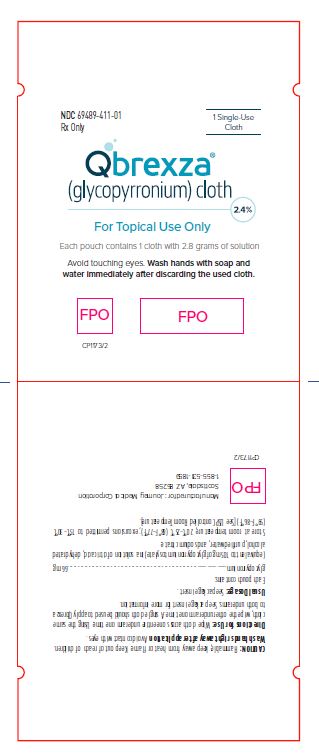
PRINCIPAL DISPLAY PANEL - NDC: 69489-411-01 - 1-Count Pouch Label NDC 69489-411-01 Rx Only 1 Single-use Cloth Qbrexza ® (glycopyrronium) cloth 2.4% For Topical Use Only Each pouch contains 1 cloth with 2.8 grams of solution Avoid touching eyes. Wash hands with soap and water immediately after discarding the used cloth . 1-Count Pouch Label
PRINCIPAL DISPLAY PANEL - NDC: 69489-411-30 - 30-Count Carton Label NDC 69489-411-30 Rx Only Qbrexza ® (glycopyrronium) cloth 2.4% For Topical Use Only 30 Single-use Cloths www.Qbrexza.com Avoid touching eyes. Wash hands with soap and water immediately after discarding the used cloth. 30-Count Carton Label
Medicare Part D spend CMS · PART D · 2026 (Q1)
About this NDC listing & data coverage
What data is (and isn’t) available for this NDC — tap to expand
| NDC identity (package / product / labeler codes) | ✓ Available |
| Labeler | ✓ Available |
| Product & package description | ✓ Available |
| Marketing category & status | ✓ Available |
| Active ingredient / dosage form / route | ✓ Available |
| FDA label (SPL via DailyMed) | ✓ Available |
| Package photos | ✓ Available |
| Inactive ingredients (structured) | ✓ Available |
| NADAC pharmacy acquisition price (CMS) | — Not published for this NDC CMS publishes NADAC only for NDCs reported in its retail-pharmacy survey. |
| Orange Book / therapeutic-equivalence data | ✓ Available |
| HCPCS J-code billing crosswalk | — Not published for this NDC Most self-administered / retail products have no J-code — that is normal. |
| Medicaid utilization (CMS SDUD) | — Not published for this NDC CMS reports utilization only for NDCs with Medicaid claims above its privacy threshold. |