
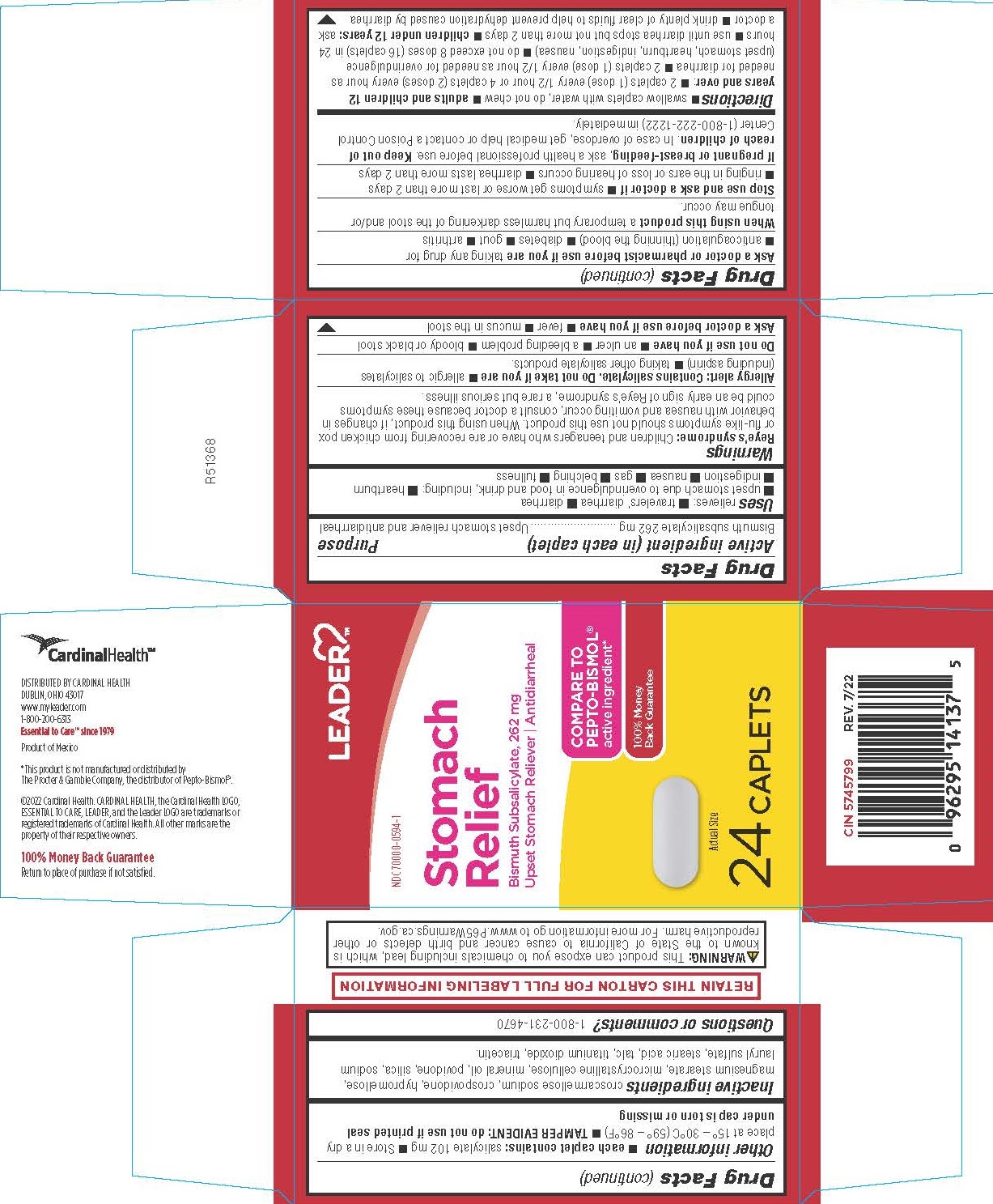
Bismuth Subsalicylate 262 mg Tablet, Film Coated, 24-count
🆔 Identity & classification
Where does this data come from?
🏷️ RxNorm drug class
This medicine belongs to the Bismuth class.
Where does this data come from?
🏭 Manufacturer & labeler
Where does this data come from?
🩺 Clinical
Bismuth subsalicylate is used to treat diarrhea, heartburn, and upset stomach in adults and children 12 years of age and older. Bismuth subsalicylate is in a class of medications called antidiarrheal agents. It works by decreasing the flow of fluids and electrolytes into the bowel, reduces inflammation within the intestine, and may kill the organisms that can cause diarrhea.
Read the full MedlinePlus article ↗- It's a go-to remedy for diarrhea — including traveler's diarrhea — and for upset stomach when you've eaten or drunk too much. That covers heartburn, indigestion, nausea, gas, belch...
- What exactly does bismuth subsalicylate help with?
- Completely normal, and nothing to worry about. Bismuth reacts with trace amounts of sulfur in your digestive tract and saliva, which temporarily turns things dark — sometimes black...
- Why did my stool and tongue turn dark after taking this?
Patient education
Supplement & herbal interactions
Some supplements/herbs that may interact with Bismuth Subsalicylate (OTC drug) — tap one for details:
Where does this data come from?
Ask a licensed pharmacist directly — free, answered by our team.
💊 What it looks like
Where does this data come from?
🧪 Inactive Ingredients / Excipients
Inactive ingredients, also called excipients, are components of the drug product other than the active ingredient. They may include fillers, dyes, coatings, preservatives, flavors, or other formulation ingredients.
💡 Tap an ingredient (hover on desktop) to see what it is and why it’s used.
-
UNII M28OL1HH48
Croscarmellose sodium is a plant-based substance derived from cellulose. It acts as a disintegrant, helping tablets and capsules break down quickly in the digestive system so the medicine can be absorbed.
-
UNII 2S7830E561
Crospovidone is a synthetic polymer derived from povidone. It acts as a disintegrant, helping the tablet or capsule break apart quickly in the stomach so the active ingredient can be absorbed.
-
UNII 3NXW29V3WO
Hypromellose is a plant-based thickener made from cellulose. It's used in medicines as a binder to hold ingredients together, a coating for tablets, and a thickener for liquids.
-
UNII N6K5787QVP
Light mineral oil is a clear, odorless liquid derived from petroleum. In medicines, it acts as a lubricant and emollient to help the product spread smoothly and improve texture.
-
UNII 70097M6I30
Magnesium stearate is a salt made from magnesium and stearic acid, a fatty substance. It's used in tablets and capsules as a lubricant and glidant to help ingredients flow smoothly during manufacturing and prevent sticking.
-
UNII OP1R32D61U
Microcrystalline cellulose is a purified form of cellulose, a natural fiber from plant sources. It acts as a binder and filler in tablets and capsules, helping hold ingredients together and give the medicine its shape and size.
-
UNII U725QWY32X
Povidone K30 is a synthetic polymer made from petroleum. It acts as a binder to hold tablet ingredients together and as a disintegrant to help the tablet break apart in the stomach so the medicine can be absorbed.
-
UNII ETJ7Z6XBU4
Silicon dioxide is a naturally occurring mineral used as a glidant and anti-caking agent. It helps powder ingredients flow smoothly and prevents clumping during manufacturing and storage.
-
UNII 368GB5141J
A detergent and foaming agent derived from coconut or palm oil. In medications, it helps break down and mix oil and water-based ingredients, aids in tablet disintegration, and improves how the drug dissolves and spreads in the mouth or digestive system.
-
UNII 4ELV7Z65AP
Stearic acid is a fatty acid derived from plant or animal sources. It acts as a binder and lubricant in tablets and capsules, helping them hold together and flow smoothly during manufacturing.
-
UNII 7SEV7J4R1U
A powder made from a naturally occurring mineral. In medicines, talc works as a glidant and anti-caking agent, helping tablets and capsules flow smoothly during manufacturing and preventing clumping.
-
UNII 15FIX9V2JP
Titanium dioxide is a bright white mineral powder commonly used as a colorant and opacifying agent. It makes pills and tablets white or lighter in color and helps make coatings non-transparent.
-
UNII XHX3C3X673
Triacetin is a clear, oily liquid made from glycerin and acetic acid. It works as a plasticizer and solvent in medicines, helping soften coatings and improve how liquids mix together in formulations.
13 inactive ingredients listed in the exact product block matched to this NDC.
Label-section wording can be broader than the structured product block and may mention additional formulation ingredients.
Where does this data come from?
ingredient classCode="IACT" elements from the exact product block matched by this NDC. Label-section narrative from DailyMed / the openFDA label index is shown separately when available.Inactive ingredient FAQ
Are inactive ingredients the same for every manufacturer?
Why might an inactive ingredient be missing?
Can inactive ingredients matter?
💲 Pricing
A drug doesn't have one price. Each row is a different public payment system, and none is what you'd pay at the counter — that depends on your insurance. The ⓘ on each row explains what it measures.
| Price system | Per ea | Per package |
|---|---|---|
| Retail pharmacies payNADAC · weekly | $0.093 | $2.23 / 24 tablets |
| Medicaid paysCMS SDUD · 12 mo | $0.2875 | $6.90 / 24 tablets |
| Medicare drug plans payPart D · quarterly | No Part D plan price is available for this NDC in our data. | |
Where does this data come from?
🔁 Therapeutic equivalents
| Product | Labeler | Pack | NADAC/unit | TE | Status | Price vs. this |
|---|---|---|---|---|---|---|
| GNP Pink Bismuth 262 mg 24385-0017-58 | Amerisource | 40 tablets | $0.093 | — | Availability likely | — |
| Bismuth Subsalicylate 262 mgthis 70000-0594-01 | LEADER/ | 24 tablets | $0.093 | — | Availability likely | — |
| Foster and Thrive Stomach Relief 262 mg 70677-1082-01 | Strategic | 40 tablets | $0.093 | — | Availability likely | — |
| Stomach Relief 262 mg 83324-0060-40 | Chain | 40 tablets | $0.093 | — | Availability likely | — |
| Walgreen 262 mg 00363-9125-40 | WALGREEN | 40 tablets | — | — | FDA listed | — |
| up and up 5-symptom digestive relief 262 mg 11673-0122-48 | Target | 48 tablets | — | — | FDA listed | — |
| up and up 5-symptom digestive relief 262 mg 11673-0125-20 | Target | 40 tablets | — | — | FDA listed | — |
| 5-Symptom Digestive Relief 262 mg 11673-0880-44 | TARGET | 40 tablets | — | — | FDA listed | — |
| Rite Aid Digestive Relief 262 mg 11822-1254-00 | RITE | 40 tablets | — | — | FDA listed | — |
| Digestive Relief 262 mg 21130-0125-40 | SAFEWAY | 40 tablets | — | — | FDA listed | — |
| Kroger Digestive Relief 262 mg 30142-0524-24 | KROGER | 24 tablets | — | — | FDA listed | — |
| Topco Stomach Relief 262 mg 36800-0104-28 | Topco | 40 tablets | — | — | FDA listed | — |
| Stomach Relief 262 mg 37808-0346-08 | H | 24 tablets | — | — | FDA listed | — |
| Equaline Stomach Relief 262 mg 41163-0123-28 | UNITED | 40 tablets | — | — | FDA listed | — |
| meijer stomach relief 262 mg 41250-0324-40 | Meijer | 40 tablets | — | — | FDA listed | — |
| Stomach reliever 262 mg 42507-0707-28 | Hyvee | 40 tablets | — | — | FDA listed | — |
| Stomach Relief 262 mg 49035-0346-10 | Wal-Mart | 40 tablets | — | — | FDA listed | — |
| Kaopectate 262 mg 55505-0197-07 | Kramer | 28 tablets | — | — | FDA listed | — |
| POCKET PEPTO Pepto Bismol 262 mg 58933-0017-12 | Procter | 12 tablets | — | — | FDA listed | — |
| Pepto-Bismol 262 mg 58933-0476-01 | Procter | 2 tablets | — | — | FDA listed | — |
| QC Pink Bismuth 262 mg 63868-0171-40 | QUALITY | 40 tablets | — | — | FDA listed | — |
| Stomach Relief 262 mg 63868-0691-40 | CHAIN | 40 tablets | — | — | Discontinued | — |
| Anti-Diarrheal 262 mg 66715-6841-04 | Lil' | 24 tablets | — | — | FDA listed | — |
| Stomach relief 262 mg 69842-0172-12 | CVS | 24 tablets | — | — | FDA listed | — |
| Bismuth Subsalicylate 262 mg 69842-0346-12 | CVS | 24 tablets | — | — | FDA listed | — |
| AMAZON Digestive Relief 262 mg 72288-0125-40 | AMAZON.COM | 40 tablets | — | — | FDA listed | — |
| Pepto-Bismol 262 mg 76420-0490-24 | ASCLEMED | 24 tablets | — | — | FDA listed | — |
| Stomach Relief 262 mg 63868-0622-30 | CDMA- | 30 tablets | — | — | FDA listed | — |
| Topcare Stomach Relief Original Strength 262 mg 76162-0001-85 | TopCo | 30 tablets | — | — | FDA listed | — |
| CVS Stomach Relief 262 mg 51316-0124-48 | CVS | 48 tablets | — | — | FDA listed | — |
| Bismuth 262 mg 69168-0046-69 | Allegiant | 12 tablets | — | — | FDA listed | — |
| Stomach Relief 262 mg 41226-0475-42 | Kroger | 24 tablets | — | — | FDA listed | — |
Where does this data come from?
⏳ Availability & generic status
We did not find an FDA-approved generic match for this exact strength, form and route.
Where does this data come from?
🗺️ Medicaid utilization & spend
🔬 Reported adverse events (FAERS)
Top reported reactions
Age at onset
Reporter sex
Serious outcomes
Where does this data come from?
📦 Packaging — all sizes for this product
| Package NDC | Description | Marketing start | Status |
|---|---|---|---|
| 70000-0594-01 You're viewing this | 1 BOTTLE in 1 CARTON (70000-0594-1) / 24 TABLET, FILM COATED in 1 BOTTLE | 2022-01-03 | Active |
📄 FDA label — Drug Facts FDA SPL
🎯 Indications and Usage ▾
Uses relieves: ■ travelers’ diarrhea ■ diarrhea ■ upset stomach due to overindulgence in food and drink, including: ■ heartburn ■ indigestion ■ nausea ■ gas ■ belching ■ fullness
⏱️ Dosage and Administration ▾
Directions swallow caplets with water, do not chew adults and children 12 years and over : 2 caplets (1 dose) every 1/2 hour or 4 caplets (2 doses) every hour as needed for diarrhea 2 caplets (1 dose) every 1/2 hour as needed for overindulgence (upset stomach, heartburn, indigestion, nausea) do not exceed 8 doses (16 caplets) in 24 hours use until diarrhea stops but not more than 2 days children under 12 years : ask a doctor drink plenty of clear fluids to help prevent dehydration caused by diarrhea
⚠️ Warnings ▾
Reye’s syndrome: Children and teenagers who have or are recovering from chicken pox or flu-like symptoms should not use this product. When using this product, if changes in behavior with nausea and vomiting occur, consult a doctor because these symptoms could be an early sign of Reye’s syndrome, a rare but serious illness. Allergy alert: Contains salicylate.
Do not take if you are allergic to salicylates (including aspirin) taking other salicylate products. Do not use if you have an ulcer a bleeding problem bloody or black stool Ask a doctor before use if you have fever mucus in the stool Ask a doctor or pharmacist before use if you are taking any drug for anticoagulation (thinning the blood) diabetes gout arthritis When using this product a temporary but harmless darkening of the stool and/or tongue may occur. Stop use and ask a doctor if symptoms get worse or last more than 2 days ringing in the ears or loss of hearing occurs diarrhea lasts more than 2 days If pregnant or breast-feeding, ask a health professional before use.
Keep out of reach of children. In case of overdose, get medical help or contact a Poison Control Center (1-800-222-1222) immediately.
🆘 Overdosage ▾
In case of overdose, get medical help or contact a Poison Control Center (1-800-222-1222) immediately.
🧪 Active Ingredient ▾
Drug Facts Active ingredient (in each caplet) Bismuth subsalicylate 262 mg
🧪 Inactive Ingredients ▾
croscarmellose sodium, crospovidone, hypromellose, magnesium stearate, microcrystalline cellulose, mineral oil, povidone, silica, sodium lauryl sulfate, stearic acid, talc, titanium dioxide, triacetin.
🎯 Purpose ▾
Purpose Upset stomach reliever and antidiarrheal