
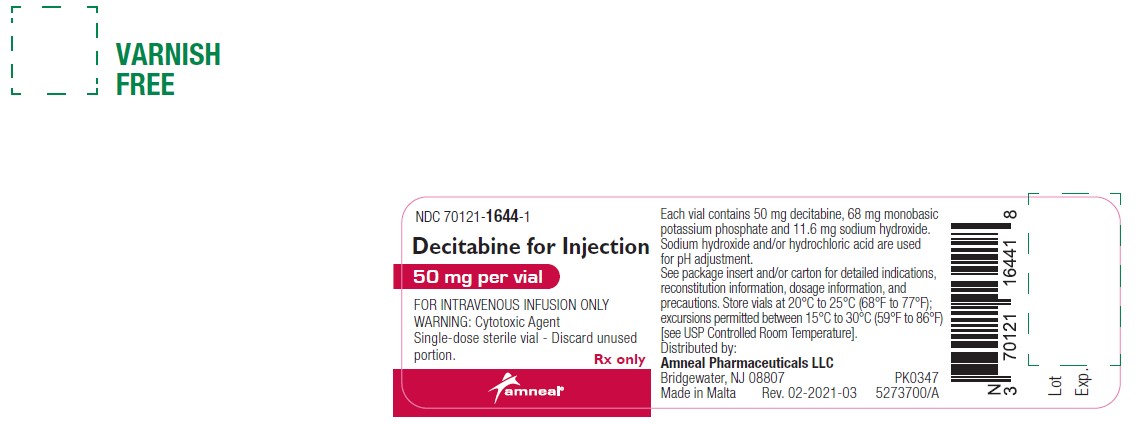
Decitabine 50 mg/20mL Injection, Powder, Lyophilized, For Solution — NDC 70121-1644-1 (Billing 70121-1644-01)
This is a package of Decitabine 50 mg/20mL Injection, Powder, Lyophilized, For Solution from Amneal Pharmaceuticals LLC, marketed since Dec 2019 and currently FDA-listed. It is this product's only package size.
NDC database record
One package, one record: these facts belong to NDC 70121-1644-1 alone.
- Record
- FDA NDC Directory package listing · Human prescription drug
- Code segments
- 70121 labeler · 1644 product · 1 package
- Package marketed since
- Dec 1, 2019
- Sample package
- No — commercial package
- Listing certified through
- Dec 31, 2026
- Barcode (UPC-A, from the NDC)
- 3 7012116441 8
- FDA record last changed
- Oct 8, 2026
Identity & classification
Regulatory identifiers FDA, NLM and CMS codes for this package
Drug-database identifiers Medi-Span GPI and First Databank GCN / HICL / AHFS classification
- GSN (GCN sequence number): 060839
- GCN: 27027
- GPI-14 (Medi-Span): 21300015002120
- HICL (First Databank): 033712
- AHFS class code: 10:00.00.00
- RxCUI (RxNorm): 636631
Where does this data come from?
- FDA openFDA NDC Directory · synced Oct 8, 2026
- FDA label on DailyMed · label index refreshed Oct 6, 2026
- RxNorm (NLM RxNav) · catalog refreshed Oct 1, 2026
- Medi-Span GPI (licensed)
- First Databank (licensed) · refreshed Oct 8, 2026
RxNorm drug class
This medicine belongs to the Nucleoside Metabolic Inhibitor class.
Where does this data come from?
- RxClass (NLM) · catalog refreshed Oct 1, 2026
Clinical
- Decitabine Injection treats myelodysplastic syndromes (MDS) in adults. These are bone marrow disorders where blood cells aren't made normally. It's used whether you've been treated...
- It's given through an IV by a healthcare professional. Your team will use either a 3-day or a 5-day schedule and repeat it in cycles. They check your blood counts before each cycle...
- Low blood counts are very common. Fatigue, fever, nausea, constipation, diarrhea and cough are also common. Call your team right away for fever, signs of infection or unusual bleed...
- Decitabine can seriously lower your white cells, platelets and red cells. Blood counts guide whether doses are delayed or lowered. Low counts can happen early and don't always mean...
Patient education
Supplement & herbal interactions
Where does this data come from?
- MedlinePlus (NLM) · refreshed Oct 1, 2026
- FDA label on DailyMed · label index refreshed Oct 6, 2026
Ask a licensed pharmacist directly — free, answered by our team.
Pricing
A drug doesn't have one price. Each row is a different public payment system, and none is what you'd pay at the counter — that depends on your insurance. The ⓘ on each row explains what it measures.
| Price system | Per mL | Per package |
|---|---|---|
| Retail pharmacies payNADAC · weekly | Not in the retail survey — common for institutional, discontinued, or low-volume packs. | |
| Medicaid paysCMS SDUD · 12 mo | No recent Medicaid claims on file for this NDC — rare and low-volume NDCs are suppressed in the public data. | |
| Medicare drug plans payPart D · quarterly | No Part D plan price is available for this NDC in our data. | |
| Medicare Part B allowsASP · J0894 | $1.064 / J0894 unit | — |
Where does this data come from?
- CMS NADAC weekly file
- CMS ASP pricing files · refreshed Sep 20, 2026
- CMS Medicaid State Drug Utilization Data · refreshed Oct 8, 2026
- CMS Part D plan pricing files · refreshed Sep 24, 2026
- VA National Acquisition Center price file
Billing & reimbursement
Where does this data come from?
- CMS ASP NDC-HCPCS crosswalk · refreshed Sep 22, 2026
- DMEPDAC NDC-HCPCS crosswalk
- openFDA NSDE billing units · refreshed Oct 7, 2026
Packaging — all sizes for this product
| Package NDC | Description | Marketing start | Marketing end | Status |
|---|---|---|---|---|
| 70121-1644-01 You're viewing this Main listing | 1 VIAL, SINGLE-USE in 1 CARTON / 20 mL in 1 VIAL, SINGLE-USE | 2019-12-01 | — | Active |
Therapeutic equivalents
| Product | Labeler | Pack | NADAC/unit | TE | Status | Price vs. this |
|---|---|---|---|---|---|---|
| decitabine 50 mg 00143-9385-01 | Hikma | 1 vial | — | AP | FDA listed | — |
| Decitabine 50 mg/20mL 16729-0224-05 | Accord | 1 vial | — | AP | FDA listed | — |
| Decitabine 50 mg/20mL 25021-0219-20 | Sagent | 1 vial | — | AP | FDA listed | — |
| Decitabine 50 mg/10mL 31722-0304-31 | Camber | 1 vial | — | AP | FDA listed | — |
| Decitabine 50 mg/10mL 43598-0427-37 | Dr. | 1 vial | — | AP | FDA listed | — |
| decitabine 47335-0361-41 | Sun | 1 kit | — | — | FDA listed | — |
| Decitabine 50 mg/10mL 55111-0556-10 | Dr.Reddy's | 1 vial | — | AP | FDA listed | — |
| Decitabine 50 mg/26mL 55150-0376-01 | Eugia | 1 vial | — | — | FDA listed | — |
| Decitabine 50 mg/20mL 67184-0535-01 | Qilu | 1 vial | — | AP | FDA listed | — |
| Decitabine 50 mg/20mL 67457-0316-25 | Mylan | 1 vial | — | AP | FDA listed | — |
| Decitabine 50 mg 68001-0573-41 | BluePoint | 1 vial | — | — | FDA listed | — |
| Decitabine 50 mg/20mL 68001-0618-37 | BluePoint | 1 vial | — | AP | FDA listed | — |
| Decitabine 50 mg/10mL 68001-0642-41 | BluePoint | 1 vial | — | AP | FDA listed | — |
| decitabine 50 mg/10mL 68083-0528-01 | Gland | 1 vial | — | AP | FDA listed | — |
| Decitabine 50 mg/20mLthis 70121-1644-01 | Amneal | 1 vial | — | AP | FDA listed | — |
| Decitabine 50 mg/20mL 71288-0119-20 | Meitheal | 1 vial | — | AP | FDA listed | — |
| Decitabine 50 mg/10mL 72162-2634-02 | Bryant | 1 vial | — | AP | FDA listed | — |
| Decitabine 50 mg/10mL 72205-0031-01 | Novadoz | 1 vial | — | AP | FDA listed | — |
| Decitabine 50 mg/10mL 72205-0036-01 | Novadoz | 1 vial | — | AP | FDA listed | — |
| Decitabine 50 mg/10mL 72603-0107-01 | Northstar | 1 vial | — | AP | FDA listed | — |
| Decitabine 50 mg/20mL 75834-0190-01 | Nivagen | 1 vial | — | AP | FDA listed | — |
Where does this data come from?
- FDA openFDA NDC Directory · synced Oct 8, 2026
- FDA Orange Book · refreshed Oct 3, 2026
- CMS NADAC weekly file
Availability & generic status
This product is an FDA-approved generic. Other versions of the same drug are listed under Therapeutic equivalents, least expensive first.
Where does this data come from?
- FDA Orange Book · refreshed Oct 3, 2026
Inactive Ingredients / Excipients
Inactive ingredients, also called excipients, are components of the drug product other than the active ingredient. They may include fillers, dyes, coatings, preservatives, flavors, or other formulation ingredients.
🧪 Avoiding an ingredient? See Decitabine Injection inactive ingredients by manufacturer: every current product's list side by side, so you can ask your pharmacy for the version that does not list it.
💡 Tap an ingredient (hover on desktop) to see what it is and why it’s used.
-
UNII 4J9FJ0HL51
Potassium phosphate, monobasic is a salt compound used in medicines as a pH buffer and electrolyte source. It helps stabilize the acidity level of liquid and powdered formulations.
-
UNII 55X04QC32I
A strong alkaline chemical used to adjust and maintain the pH balance of liquid medicines. It helps keep the medicine stable and ensures it stays effective during storage.
2 inactive ingredients listed in the exact product block matched to this NDC.
Where does this data come from?
ingredient classCode="IACT" elements from the exact product block matched by this NDC. Label-section narrative from DailyMed / the openFDA label index is shown separately when available.- FDA label on DailyMed · label index refreshed Oct 6, 2026
- FDA openFDA NDC Directory · synced Oct 8, 2026
Inactive ingredient FAQ
Are inactive ingredients the same for every manufacturer?
Why might an inactive ingredient be missing?
Can inactive ingredients matter?
Manufacturer & labeler
More NDCs from Amneal Pharmaceuticals LLC labeler code 70121
- Doxycycline 100 mg/10mL Injection, Powder, Lyophilized, For Solution NDC 70121-1616-7
- FYLNETRA pegfilgrastim 6 mg/.6mL Injection NDC 70121-1627-1
- Tepadina Thiotepa 15 mg Injection, Powder, For Solution NDC 70121-1630-1
- Tepadina Thiotepa 100 mg Injection, Powder, For Solution NDC 70121-1631-1
- Ephedrine Sulfate 50 mg/mL Injection NDC 70121-1637-5
- vasopressin 20 [USP'U]/mL Injection NDC 70121-1642-2
- Tigecycline 50 mg/5mL Injection, Powder, Lyophilized, For Solution NDC 70121-1647-7
- calcitonin salmon 200 [USP'U]/mL Injection, Solution NDC 70121-1650-2
- Triamcinolone Acetonide 40 mg/mL Injection, Suspension NDC 70121-1651-1
- Triamcinolone Acetonide 200 mg/5mL Injection, Suspension NDC 70121-1652-1
- Triamcinolone Acetonide 400 mg/10mL Injection, Suspension NDC 70121-1653-1
- Triamcinolone Acetonide 200 mg/5mL Injection, Suspension NDC 70121-1654-1
Where does this data come from?
- FDA openFDA NDC Directory · synced Oct 8, 2026
- Drugs@FDA
Full prescribing information FDA SPL
🎯 Indications and Usage ▾
1 INDICATIONS AND USAGE Decitabine for Injection is indicated for treatment of adult patients with myelodysplastic syndromes (MDS) including previously treated and untreated, de novo and secondary MDS of all French-American-British subtypes (refractory anemia, refractory anemia with ringed sideroblasts, refractory anemia with excess blasts, refractory anemia with excess blasts in transformation, and chronic myelomonocytic leukemia) and intermediate-1, intermediate-2, and high-risk International Prognostic Scoring System groups.
Decitabine for Injection is a nucleoside metabolic inhibitor indicated for treatment of adult patients with myelodysplastic syndromes (MDS) including previously treated and untreated, de novo and secondary MDS of all French-American-British subtypes (refractory anemia, refractory anemia with ringed sideroblasts, refractory anemia with excess blasts, refractory anemia with excess blasts in transformation, and chronic myelomonocytic leukemia) and intermediate-1, intermediate-2, and high-risk International Prognostic Scoring System groups.
( 1 )
⏱️ Dosage and Administration ▾
2 DOSAGE AND ADMINISTRATION Three Day Regimen: Administer Decitabine for Injection at a dose of 15 mg/m 2 by continuous intravenous infusion over 3 hours repeated every 8 hours for 3 days. Repeat cycle every 6 weeks. ( 2.1 ) Five Day Regimen: Administer Decitabine for Injection at a dose of 20 mg/m 2 by continuous intravenous infusion over 1 hour repeated daily for 5 days. Repeat cycle every 4 weeks. ( 2.1 )
2.1Recommended Dosage Pre-Medications and Baseline Testing Consider pre-medicating for nausea with antiemetics. Conduct baseline laboratory testing: complete blood count (CBC) with platelets, serum hepatic panel, and serum creatinine. Decitabine for Injection Regimen Options Three Day Regimen Administer Decitabine for Injection at a dose of 15 mg/m 2 by continuous intravenous infusion over 3 hours repeated every 8 hours for 3 days.
Repeat cycles every 6 weeks upon hematologic recovery (ANC at least 1,000/μL and platelets at least 50,000/μL) for a minimum of 4 cycles. A complete or partial response may take longer than 4 cycles. Delay and reduce dose for hematologic toxicity [see Dosage and Administration ( 2.2 )] .
Five Day Regimen Administer Decitabine for Injection at a dose of 20 mg/m 2 by continuous intravenous infusion over 1 hour daily for 5 days. Delay and reduce dose for hematologic toxicity [see Dosage and Administration ( 2.2 )] . Repeat cycles every 4 weeks upon hematologic recovery (ANC at least 1,000/μL and platelets at least 50,000/μL) for a minimum of 4 cycles.
A complete or partial response may take longer than 4 cycles. Patients with Renal or Severe Hepatic Impairment Treatment with Decitabine for Injection has not been studied in patients with pre-existing renal or hepatic impairment. For patients with pre-existing renal or hepatic impairment, consider the potential risks and benefits before initiating treatment with Decitabine for Injection.
2.2Dosage Modifications for Adverse Reactions Hematologic Toxicity If hematologic recovery from a previous Decitabine for Injection treatment cycle requires more than 6 weeks, delay the next cycle of Decitabine for Injection therapy and reduce Decitabine for Injection dose temporarily by following this algorithm: Recovery requiring more than 6, but less than 8 weeks: delay Decitabine for Injection dosing for up to 2 weeks and reduce the dose temporarily to 11 mg/m 2 every 8 hours (33 mg/m 2 /day, 99 mg/m 2 /cycle) upon restarting therapy.
Recovery requiring more than 8, but less than 10 weeks: Perform bone marrow aspirate to assess for disease progression. In the absence of progression, delay Decitabine for Injection dosing for up to 2 more weeks and reduce the dose to 11 mg/m 2 every 8 hours (33 mg/m 2 /day, 99 mg/m 2 /cycle) upon restarting therapy, then maintain or increase dose in subsequent cycles as clinically indicated. Non-hematologic Toxicity Delay subsequent Decitabine for Injection treatment for any the following non-hematologic toxicities and do not restart until toxicities resolve: Serum creatinine greater than or equal to 2 mg/dL Alanine transaminase (ALT), total bilirubin greater than or equal to 2 times upper limit of normal (ULN) Active or uncontrolled infection
2.3Preparation and Administration Decitabine for Injection is a cytotoxic drug. Follow special handling and disposal procedures 1 . Aseptically reconstitute Decitabine for Injection with room temperature (20°C to 25°C) 10 mL of Sterile Water for Injection, USP.
Upon reconstitution, the final concentration of the reconstituted Decitabine for Injection solution is 5 mg/mL. You must dilute the reconstituted solution with 0.9% Sodium Chloride Injection or 5% Dextrose Injection prior to administration. Temperature of the diluent (0.9% Sodium Chloride Injection or 5% Dextrose Injection) depends on time of administration after preparation.
For Administration Within 15 Minutes of Preparation If Decitabine for Injection is intended to be administered within 15 minutes from the time of preparation,… [Excerpted — this section continues on DailyMed.]
💊 Dosage Forms and Strengths ▾
3 DOSAGE FORMS AND STRENGTHS For Injection: 50 mg of decitabine as a sterile, white to almost white lyophilized powder, in a single-dose vial for reconstitution. For Injection: 50 mg of decitabine as a lyophilized powder in a single-dose vial for reconstitution. ( 3 )
⛔ Contraindications ▾
4 CONTRAINDICATIONS None. None
⚠️ Warnings and Cautions ▾
5 WARNINGS AND PRECAUTIONS Neutropenia and Thrombocytopenia: Perform complete blood counts and platelet counts. ( 5.1 ) Embryo-Fetal Toxicity: Can cause fetal harm. Advise patients of reproductive potential of the potential risk to a fetus and to use effective contraception. ( 5.2 , 8.1 , 8.3 )
5.1Myelosuppression Fatal and serious myelosuppression occurs in Decitabine for Injection-treated patients. Myelosuppression (anemia, neutropenia, and thrombocytopenia) is the most frequent cause of Decitabine for Injection dose reduction, delay, and discontinuation. Neutropenia of any grade occurred in 90% of Decitabine for Injection-treated patients with grade 3 or 4 occurring in 87% of patients.
Grade 3 or 4 febrile neutropenia occurred in 23% of patients. Thrombocytopenia of any grade occurred in 89% of patients with grade 3 or 4 occurring in 85% of patients. Anemia of any grade occurred in 82% of patients.
Perform complete blood count with platelets at baseline, prior to each cycle, and as needed to monitor response and toxicity. Manage toxicity using dose-delay, dose-reduction, growth factors, and anti-infective therapies as needed [see Dosage and Administration ( 2.2 )] . Myelosuppression and worsening neutropenia may occur more frequently in the first or second treatment cycles, and may not necessarily indicate progression of underlying MDS.
5.2Embryo-Fetal Toxicity Based on findings from human data, animal studies and its mechanism of action, Decitabine for Injection can cause fatal harm when administered to a pregnant woman [see Clinical Pharmacology ( 12.1 ) and Nonclinical Toxicology ( 13.1 )] . In preclinical studies in mice and rats, decitabine caused adverse developmental outcomes including embryo-fetal lethality and malformations. Advise pregnant women of the potential risk to a fetus.
Advise females of reproductive potential to use effective contraception while receiving Decitabine for Injection and for 6 months following the last dose. Advise males with female partners of reproductive potential to use effective contraception while receiving treatment with Decitabine for Injection, and for 3 months following the last dose [see Use in Specific Populations ( 8.1 , 8.3 )] .
🤒 Adverse Reactions ▾
6 ADVERSE REACTIONS The following clinically significant adverse reactions are described elsewhere in the labeling: Myelosuppression [see Warnings and Precautions ( 5.1 )] Most common adverse reactions (> 50%) are neutropenia, thrombocytopenia, anemia, and pyrexia. ( 6.1 ) To report SUSPECTED ADVERSE REACTIONS, contact Amneal Pharmaceuticals at 1-877-835-5472 or FDA at 1-800-FDA-1088 or www.fda.gov/medwatch .
6.1Clinical Trials Experience Because clinical trials are conducted under widely varying conditions, adverse reaction rates observed in the clinical trials of a drug cannot be directly compared to rates in the clinical trials of another drug and may not reflect the rates observed in practice. The safety of Decitabine for Injection was studied in 3 single-arm studies (N = 66, N = 98, N = 99) and 1 controlled supportive care study (N = 83 Decitabine for Injection, N = 81 supportive care). The data described below reflect exposure to Decitabine for Injection in 83 patients in the MDS trial.
In the trial, patients received 15 mg/m 2 intravenously every 8 hours for 3 days every 6 weeks. The median number of Decitabine for Injection cycles was 3 (range 0 to 9). Most Common Adverse Reactions: neutropenia, thrombocytopenia, anemia, fatigue, pyrexia, nausea, cough, petechiae, constipation, diarrhea, and hyperglycemia.
Adverse Reactions Most Frequently (≥ 1%) Resulting in Clinical Intervention and or Dose Modification in the Controlled Supportive Care Study in the Decitabine for Injection Arm: Discontinuation: thrombocytopenia, neutropenia, pneumonia, Mycobacterium avium complex infection, cardio-respiratory arrest, increased blood bilirubin, intracranial hemorrhage, abnormal liver function tests. Dose Delayed: neutropenia, pulmonary edema, atrial fibrillation, central line infection, febrile neutropenia. Dose Reduced: neutropenia, thrombocytopenia, anemia, lethargy, edema, tachycardia, depression, pharyngitis.
Table 1 presents all adverse reactions occurring in at least 5% of patients in the Decitabine for Injection group and at a rate greater than supportive care. Table 1: Adverse Reactions Reported in ≥ 5% of Patients in the Decitabine for Injection Group and at a Rate Greater than Supportive Care in the Controlled Trial in MDS Decitabine for Injection N = 83 (%) Supportive Care N = 81 (%) Blood and lymphatic system disorders Neutropenia 75(90) 58 (72) Thrombocytopenia 74 (89) 64 (79) Anemia NOS 68 (82) 60 (74) Febrile neutropenia 24 (29) 5 (6) Leukopenia NOS 23 (28) 11 (14) Lymphadenopathy 10 (12) 6 (7) Thrombocythemia 4 (5) 1 (1) Cardiac disorders Pulmonary edema NOS 5 (6) 0 (0) Eye disorders Vision blurred 5 (6) 0 (0) Gastrointestinal disorders Nausea 35 (42) 13 (16) Constipation 29 (35) 11 (14) Diarrhea NOS 28 (34) 13 (16) Vomiting NOS 21 (25) 7 (9) Abdominal pain NOS 12 (14) 5 (6) Oral mucosal petechiae 11 (13) 4 (5) Stomatitis 10 (12) 5 (6) Dyspepsia 10 (12) 1 (1) Ascites 8 (10) 2 (2) Gingival bleeding 7 (8) 5 (6) Hemorrhoids 7 (8) 3 (4) Loose stools 6 (7) 3 (4) Tongue ulceration 6 (7) 2 (2) Dysphagia 5 (6) 2 (2) Oral soft tissue disorder NOS 5 (6) 1 (1) Lip ulceration 4 (5) 3 (4) Abdominal distension 4 (5) 1 (1) Abdominal pain upper 4 (5) 1 (1) Gastro-esophageal reflux disease 4 (5) 0 (0) Glossodynia 4 (5) 0 (0) General disorders and administrative site disorders Pyrexia 44 (53) 23 (28) Edema peripheral 21 (25) 13 (16) Rigors 18 (22) 14 (17) Edema NOS 15 (18) 5 (6) Pain NOS 11 (13) 5 (6) Lethargy 10 (12) 3 (4) Tenderness NOS 9 (11) 0 (0) Fall 7 (8) 3 (4) Chest discomfort 6 (7) 3 (4) Intermittent pyrexia 5 (6) 3 (4) Malaise 4 (5) 1 (1) Crepitations NOS 4 (5) 1 (1) Catheter site erythema 4 (5) 1 (1) Catheter site pain 4 (5) 0 (0) Injection site swelling 4 (5) 0 (0) Hepatobiliary disorders Hyperbilirubinemia 12 (14) 4 (5) Infections and infestations Pneumonia NOS 18 (22) 11 (14) Cellulitis 10 (12) 6 (7) Candidal infection NOS 8 (10) 1 (1) Catheter related infection 7 (8) 0 (0) Urinary tract infection NOS 6 (7) 1 (1) Staphyl… [Excerpted — this section continues on DailyMed.]
🔄 Drug Interactions ▾
7 DRUG INTERACTIONS Drug interaction studies with decitabine have not been conducted. In vitro studies in human liver microsomes suggest that decitabine is unlikely to inhibit or induce cytochrome P450 enzymes. In vitro metabolism studies have suggested that decitabine is not a substrate for human liver cytochrome P450 enzymes.
As plasma protein binding of decitabine is negligible (<1%), interactions due to displacement of more highly protein bound drugs from plasma proteins are not expected.
👥 Use in Specific Populations ▾
8 USE IN SPECIFIC POPULATIONS Lactation: Advise not to breastfeed. ( 8.2 )
8.1Pregnancy Risk Summary Based on findings from human data, animal studies, and the mechanism of action, Decitabine for Injection can cause fetal harm when administered to a pregnant woman [see Clinical Pharmacology ( 12.1 ) and Nonclinical Toxicology ( 13.1 )] . Limited published data on Decitabine for Injection use throughout the first trimester during pregnancy describe adverse developmental outcomes including major birth defects (structural abnormalities). In animal reproduction studies, administration of decitabine to pregnant mice and rats during organogenesis caused adverse developmental outcomes including malformations and embryo-fetal lethality starting at doses approximately 7% of the recommended human dose on a mg/m 2 basis ( see Data ).
Advise pregnant women of the potential risk to a fetus. The estimated background risk of major birth defects and miscarriage for the indicated population is unknown. All pregnancies have a background risk of birth defect, loss, or other adverse outcomes.
The estimated background risk of major birth defects and miscarriage in the U.S. general population is 2% to 4% and 15% to 20% of clinically recognized pregnancies, respectively. Data Human Data A single published case report of decitabine pregnancy exposure in a 39-year old woman with a hematologic malignancy described multiple structural abnormalities after 6 cycles of therapy in the 18 th week of gestation. These abnormalities included holoprosencephaly, absence of nasal bone, mid-facial deformity, cleft lip and palate, polydactyly and rocker-bottom feet.
The pregnancy was terminated. Animal Data In utero exposure to decitabine causes temporal related defects in the rat and/or mouse, which include growth suppression, exencephaly, defective skull bones, rib/sternabrae defects, phocomelia, digit defects, micrognathia, gastroschisis, micromelia. Decitabine inhibits proliferation and increases apoptosis of neural progenitor cells of the fetal CNS and induces palatal clefting in the developing murine fetus.
Studies in mice have also shown that decitabine administration during osteoblastogenesis (day 10 of gestation) induces bone loss in offspring. In mice exposed to single IP (intraperitoneal) injections (0, 0.9 and 3.0 mg/m 2 , approximately 2% and 7% of the recommended daily clinical dose, respectively) over gestation days 8, 9, 10 or 11, no maternal toxicity was observed but reduced fetal survival was observed after treatment at 3 mg/m 2 and decreased fetal weight was observed at both dose levels. The 3 mg/m 2 dose elicited characteristic fetal defects for each treatment day, including supernumerary ribs (both dose levels), fused vertebrae and ribs, cleft palate, vertebral defects, hind-limb defects and digital defects of fore- and hind-limbs.
In rats given a single IP injection of 2.4, 3.6 or 6 mg/m 2 (approximately 5%, 8%, or 13% the daily recommended clinical dose, respectively) on gestation days 9 to 12, no maternal toxicity was observed. No live fetuses were seen at any dose when decitabine was injected on gestation day 9. A significant decrease in fetal survival and reduced fetal weight at doses greater than 3.6 mg/m 2 was seen when decitabine was given on gestation day 10.
Increased incidences of vertebral and rib anomalies were seen at all dose levels, and induction of exophthalmia, exencephaly, and cleft palate were observed at 6.0 mg/m 2 . Increased incidence of foredigit defects was seen in fetuses at doses greater than 3.6 mg/m 2 . Reduced size and ossification of long bones of the fore-limb and hind-limb were noted at 6.0 mg/m 2 .
The effect of decitabine on postnatal development and reproductive capacity was evaluated in mice administered a single 3 mg/m 2 IP injection (approximately 7% the recommended daily clinical dose) on day 10 of gestation. Body weights of males and females exposed in utero to decitabine were significantly reduced relat… [Excerpted — this section continues on DailyMed.]
🤰 Pregnancy ▾
8.1Pregnancy Risk Summary Based on findings from human data, animal studies, and the mechanism of action, Decitabine for Injection can cause fetal harm when administered to a pregnant woman [see Clinical Pharmacology ( 12.1 ) and Nonclinical Toxicology ( 13.1 )] . Limited published data on Decitabine for Injection use throughout the first trimester during pregnancy describe adverse developmental outcomes including major birth defects (structural abnormalities). In animal reproduction studies, administration of decitabine to pregnant mice and rats during organogenesis caused adverse developmental outcomes including malformations and embryo-fetal lethality starting at doses approximately 7% of the recommended human dose on a mg/m 2 basis ( see Data ).
Advise pregnant women of the potential risk to a fetus. The estimated background risk of major birth defects and miscarriage for the indicated population is unknown. All pregnancies have a background risk of birth defect, loss, or other adverse outcomes.
The estimated background risk of major birth defects and miscarriage in the U.S. general population is 2% to 4% and 15% to 20% of clinically recognized pregnancies, respectively. Data Human Data A single published case report of decitabine pregnancy exposure in a 39-year old woman with a hematologic malignancy described multiple structural abnormalities after 6 cycles of therapy in the 18 th week of gestation. These abnormalities included holoprosencephaly, absence of nasal bone, mid-facial deformity, cleft lip and palate, polydactyly and rocker-bottom feet.
The pregnancy was terminated. Animal Data In utero exposure to decitabine causes temporal related defects in the rat and/or mouse, which include growth suppression, exencephaly, defective skull bones, rib/sternabrae defects, phocomelia, digit defects, micrognathia, gastroschisis, micromelia. Decitabine inhibits proliferation and increases apoptosis of neural progenitor cells of the fetal CNS and induces palatal clefting in the developing murine fetus.
Studies in mice have also shown that decitabine administration during osteoblastogenesis (day 10 of gestation) induces bone loss in offspring. In mice exposed to single IP (intraperitoneal) injections (0, 0.9 and 3.0 mg/m 2 , approximately 2% and 7% of the recommended daily clinical dose, respectively) over gestation days 8, 9, 10 or 11, no maternal toxicity was observed but reduced fetal survival was observed after treatment at 3 mg/m 2 and decreased fetal weight was observed at both dose levels. The 3 mg/m 2 dose elicited characteristic fetal defects for each treatment day, including supernumerary ribs (both dose levels), fused vertebrae and ribs, cleft palate, vertebral defects, hind-limb defects and digital defects of fore- and hind-limbs.
In rats given a single IP injection of 2.4, 3.6 or 6 mg/m 2 (approximately 5%, 8%, or 13% the daily recommended clinical dose, respectively) on gestation days 9 to 12, no maternal toxicity was observed. No live fetuses were seen at any dose when decitabine was injected on gestation day 9. A significant decrease in fetal survival and reduced fetal weight at doses greater than 3.6 mg/m 2 was seen when decitabine was given on gestation day 10.
Increased incidences of vertebral and rib anomalies were seen at all dose levels, and induction of exophthalmia, exencephaly, and cleft palate were observed at 6.0 mg/m 2 . Increased incidence of foredigit defects was seen in fetuses at doses greater than 3.6 mg/m 2 . Reduced size and ossification of long bones of the fore-limb and hind-limb were noted at 6.0 mg/m 2 .
The effect of decitabine on postnatal development and reproductive capacity was evaluated in mice administered a single 3 mg/m 2 IP injection (approximately 7% the recommended daily clinical dose) on day 10 of gestation. Body weights of males and females exposed in utero to decitabine were significantly reduced relative to controls at all postnatal time points. No consistent effect on ferti… [Excerpted — this section continues on DailyMed.]
🧒 Pediatric Use ▾
8.4Pediatric Use The safety and effectiveness of Decitabine for Injection in pediatric patients have not been established.
🧓 Geriatric Use ▾
8.5Geriatric Use Of the total number of patients exposed to Decitabine for Injection in the controlled clinical trial, 61 of 83 patients were age 65 years and over, while 21 of 83 patients were age 75 years and over. No overall differences in safety or effectiveness were observed between these subjects and younger subjects, and other reported clinical experience has not identified differences in responses between the elderly and younger patients, but greater sensitivity of some older individuals cannot be ruled out.
🆘 Overdosage ▾
10 OVERDOSAGE There is no known antidote for overdosage with Decitabine for Injection. Higher doses are associated with increased myelosuppression including prolonged neutropenia and thrombocytopenia. Standard supportive measures should be taken in the event of an overdose.
🧬 Clinical Pharmacology ▾
12 CLINICAL PHARMACOLOGY
12.1Mechanism of Action Decitabine is believed to exert its antineoplastic effects after phosphorylation and direct incorporation into DNA and inhibition of DNA methyltransferase, causing hypomethylation of DNA and cellular differentiation or apoptosis. Decitabine inhibits DNA methylation in vitro, which is achieved at concentrations that do not cause major suppression of DNA synthesis. Decitabine-induced hypomethylation in neoplastic cells may restore normal function to genes that are critical for the control of cellular differentiation and proliferation.
In rapidly dividing cells, the cytotoxicity of decitabine may also be attributed to the formation of covalent adducts between DNA methyltransferase and decitabine incorporated into DNA. Non-proliferating cells are relatively insensitive to decitabine.
12.2Pharmacodynamics Decitabine has been shown to induce hypomethylation both in vitro and in vivo . However, there have been no studies of decitabine-induced hypomethylation and pharmacokinetic parameters.
12.3Pharmacokinetics Pharmacokinetic (PK) parameters were evaluated in patients. Eleven patients received 20 mg/m 2 infused over 1 hour intravenously (treatment Option 2). Fourteen patients received 15 mg/m 2 infused over 3 hours intravenously (treatment Option 1).
PK parameters are shown in Table 3 . Plasma concentration-time profiles after discontinuation of infusion showed a biexponential decline. The clearance (CL) of decitabine was higher following treatment Option 2.
Upon repeat doses, there was no systemic accumulation of decitabine or any changes in PK parameters. Population PK analysis (N=35) showed that the cumulative AUC per cycle for treatment Option 2 was 2.3-fold lower than the cumulative AUC per cycle following treatment Option 1. Table 3: Mean (CV% or 95% CI) Pharmacokinetic Parameters of Decitabine * N=14, † N=11, ‡ N=35 Cumulative AUC per cycle Dose C max (ng/mL) AUC 0-INF (ng•h/mL) T 1/2 (h) CL (L/h/m 2 ) AUC Cumulative ‡ (ng•h/mL) 15 mg/m 2 3-hr infusion every 8 hours for 3 days (Option 1)* 73.8 (66) 163 (62) 0.62 (49) 125 (53) 1332 (1010 to 1730) 20 mg/m 2 1-hr infusion daily for 5 days (Option 2) † 147 (49) 115 (43) 0.54 (43) 210 (47) 570 (470 to 700) The exact route of elimination and metabolic fate of decitabine is not known in humans.
One of the pathways of elimination of decitabine appears to be deamination by cytidine deaminase found principally in the liver but also in granulocytes, intestinal epithelium and whole blood. Specific Populations Patients with Renal Impairment There are no data on the use of Decitabine for Injection in patients with renal impairment. Patients with Hepatic Impairment There are no data on the use of Decitabine for Injection in patients with hepatic impairment.
🧬 Mechanism of Action ▾
12.1Mechanism of Action Decitabine is believed to exert its antineoplastic effects after phosphorylation and direct incorporation into DNA and inhibition of DNA methyltransferase, causing hypomethylation of DNA and cellular differentiation or apoptosis. Decitabine inhibits DNA methylation in vitro, which is achieved at concentrations that do not cause major suppression of DNA synthesis. Decitabine-induced hypomethylation in neoplastic cells may restore normal function to genes that are critical for the control of cellular differentiation and proliferation.
In rapidly dividing cells, the cytotoxicity of decitabine may also be attributed to the formation of covalent adducts between DNA methyltransferase and decitabine incorporated into DNA. Non-proliferating cells are relatively insensitive to decitabine.
📦 How Supplied / Storage and Handling ▾
16 HOW SUPPLIED/STORAGE AND HANDLING Decitabine for Injection is a sterile, white to almost white lyophilized powder for intravenous use supplied as: NDC 70121-1644-1, 50 mg single-dose vial individually packaged in a carton. Store vials at 20°C to 25°C (68°F to 77°F); excursions permitted between 15°C to 30°C (59°F to 86°F) [see USP Controlled Room Temperature].
📦 Storage and Handling ▾
Store vials at 20°C to 25°C (68°F to 77°F); excursions permitted between 15°C to 30°C (59°F to 86°F) [see USP Controlled Room Temperature].
📋 Description ▾
11 DESCRIPTION Decitabine is a nucleoside metabolic inhibitor. Decitabine is a fine, white to almost white powder with the molecular formula of C 8 H 12 N 4 O 4 and a molecular weight of 228.21. Its chemical name is 4-amino-1-(2-deoxy-β-D-erythro-pentofuranosyl)-1,3,5-triazin-2(1 H )-one and it has the following structural formula: Decitabine is slightly soluble in ethanol/water (50/50), methanol/water (50/50) and methanol; sparingly soluble in water and soluble in dimethylsulfoxide (DMSO).
Decitabine for Injection, for intravenous use, is a sterile, white to almost white lyophilized powder supplied in a clear colorless glass single-dose vial. Each 20 mL vial contains 50 mg decitabine, 68 mg monobasic potassium phosphate (potassium dihydrogen phosphate) and 11.6 mg sodium hydroxide. Sodium hydroxide and/or hydrochloric acid are used for pH adjustment. structure
💬 Information for Patients ▾
17 PATIENT COUNSELING INFORMATION Myelosuppression Advise patients of the risk of myelosuppression and to report any symptoms of infection, anemia, or bleeding to their healthcare provider as soon as possible. Advise patients for the need for laboratory monitoring [see Warnings and Precautions ( 5.1 )] . Embryo-Fetal Toxicity Advise pregnant women of the potential risk to a fetus.
Advise females of reproductive potential to inform their healthcare provider of a known or suspected pregnancy [see Warnings and Precautions ( 5.2 ) and Use in Specific Populations ( 8.1 )] . Advise females of reproductive potential to use effective contraception while receiving Decitabine for Injection and for 6 months after last dose [see Use in Specific Populations ( 8.3 )] . Advise males with female partners of reproductive potential to use effective contraception while receiving treatment with Decitabine for Injection, and for 3 months after the last dose. [see Use in Specific Populations ( 8.3 ) and Nonclinical Toxicology ( 13.1 )] .
Lactation Advise women to avoid breastfeeding while receiving Decitabine for Injection and for at least 2 weeks after the last dose [see Use in Specific Populations ( 8.2 )] . Made in Malta Distributed by: Amneal Pharmaceuticals LLC Bridgewater, NJ 08807 Rev. 07-2020-04
🧬 Pharmacokinetics ▾
12.3Pharmacokinetics Pharmacokinetic (PK) parameters were evaluated in patients. Eleven patients received 20 mg/m 2 infused over 1 hour intravenously (treatment Option 2). Fourteen patients received 15 mg/m 2 infused over 3 hours intravenously (treatment Option 1).
PK parameters are shown in Table 3 . Plasma concentration-time profiles after discontinuation of infusion showed a biexponential decline. The clearance (CL) of decitabine was higher following treatment Option 2.
Upon repeat doses, there was no systemic accumulation of decitabine or any changes in PK parameters. Population PK analysis (N=35) showed that the cumulative AUC per cycle for treatment Option 2 was 2.3-fold lower than the cumulative AUC per cycle following treatment Option 1. Table 3: Mean (CV% or 95% CI) Pharmacokinetic Parameters of Decitabine * N=14, † N=11, ‡ N=35 Cumulative AUC per cycle Dose C max (ng/mL) AUC 0-INF (ng•h/mL) T 1/2 (h) CL (L/h/m 2 ) AUC Cumulative ‡ (ng•h/mL) 15 mg/m 2 3-hr infusion every 8 hours for 3 days (Option 1)* 73.8 (66) 163 (62) 0.62 (49) 125 (53) 1332 (1010 to 1730) 20 mg/m 2 1-hr infusion daily for 5 days (Option 2) † 147 (49) 115 (43) 0.54 (43) 210 (47) 570 (470 to 700) The exact route of elimination and metabolic fate of decitabine is not known in humans.
One of the pathways of elimination of decitabine appears to be deamination by cytidine deaminase found principally in the liver but also in granulocytes, intestinal epithelium and whole blood. Specific Populations Patients with Renal Impairment There are no data on the use of Decitabine for Injection in patients with renal impairment. Patients with Hepatic Impairment There are no data on the use of Decitabine for Injection in patients with hepatic impairment.
🧬 Pharmacodynamics ▾
12.2Pharmacodynamics Decitabine has been shown to induce hypomethylation both in vitro and in vivo . However, there have been no studies of decitabine-induced hypomethylation and pharmacokinetic parameters.
🔬 Clinical Studies ▾
14 CLINICAL STUDIES
14.1Controlled Trial in Myelodysplastic Syndrome A randomized open-label, multicenter, controlled trial evaluated 170 adult patients with myelodysplastic syndromes (MDS) meeting French-American-British (FAB) classification criteria and International Prognostic Scoring System (IPSS) High-Risk, Intermediate-2 and Intermediate-1 prognostic scores. Eighty-nine patients were randomized to Decitabine for Injection therapy plus supportive care (only 83 received Decitabine for Injection), and 81 to Supportive Care (SC) alone.
Patients with Acute Myeloid Leukemia (AML) were not intended to be included. Of the 170 patients included in the study, independent review (adjudicated diagnosis) found that 12 patients (9 in the Decitabine for Injection arm and 3 in the SC arm) had the diagnosis of AML at baseline. Baseline demographics and other patient characteristics in the Intent-to-Treat (ITT) population were similar between the 2 groups, as shown in Table 4 .
Table 4: Baseline Demographics and Other Patient Characteristics (ITT) Demographic or Other Patient Characteristic Decitabine for Injection N = 89 Supportive Care N= 81 Age (years) Mean (±SD) Median (IQR) (Range: min to max) 69±10 70 (65 to 76) (31 to 85) 67±10 70 (62 to 74) (30 to 82) Sex n (%) Male Female 59 (66) 30 (34) 57 (70) 24 (30) Race n (%) White Black Other 83 (93) 4 (4) 2 (2) 76 (94) 2 (2) 3 (4) Weeks Since MDS Diagnosis Mean (±SD) Median (IQR) (Range: min to max) 86±131 29 (10 to 87) (2 to 667) 77±119 35 (7 to 98) (2 to 865) Previous MDS Therapy n (%) Yes No 27 (30) 62 (70) 19 (23) 62 (77) RBC Transfusion Status n (%) Independent Dependent 23 (26) 66 (74) 27 (33) 54 (67) Platelet Transfusion Status n (%) Independent Dependent 69 (78) 20 (22) 62 (77) 19 (23) IPSS Classification n (%) Intermediate-1 Intermediate-2 High Risk 28 (31) 38 (43) 23 (26) 24 (30) 36 (44) 21 (26) FAB Classification n (%) RA RARS RAEB RAEB-t CMML 12 (13) 7 (8) 47 (53) 17 (19) 6 (7) 12 (15) 4 (5) 43 (53) 14 (17) 8 (10) Patients randomized to the Decitabine for Injection arm received Decitabine for Injection intravenously infused at a dose of 15 mg/m 2 over a 3-hour period, every 8 hours, for 3 consecutive days.
This cycle was repeated every 6 weeks, depending on the patient’s clinical response and toxicity. Supportive care consisted of blood and blood product transfusions, prophylactic antibiotics, and hematopoietic growth factors. The study endpoints were overall response rate (complete response + partial response) and time to AML or death.
Responses were classified using the MDS International Working Group (IWG) criteria; patients were required to be RBC and platelet transfusion independent during the time of response. Response criteria are given in Table 5 . Table 5: Response Criteria for the Controlled Trial in MDS* * Cheson BD, Bennett JM, et al.
Report of an International Working Group to Standardize Response Criteria for MDS. Blood. 2000; 96:3671-3674.
Complete Response (CR) ≥8 weeks Bone Marrow On repeat aspirates: < 5% myeloblasts No dysplastic changes Peripheral Blood In all samples during response: Hgb > 11 g/dL (no transfusions or erythropoietin ANC ≥1500/ µL (no growth factor) Platelets≥ 100,000/ µL (no thrombopoietic agent) No blasts and no dysplasia Partial Response (PR) ≥8 weeks Bone Marrow On repeat aspirates: ≥ 50% decrease in blasts over pretreatment values OR Improvement to a less advanced MDS FAB classification Peripheral Blood Same as for CR The overall response rate (CR+PR) in the ITT population was 17% in Decitabine for Injection-treated patients and 0% in the SC group (p<0.001) (see Table 6 ).
The overall response rate was 21% (12/56) in Decitabine for Injection-treated patients considered evaluable for response (i.e., those patients with pathologically confirmed MDS at baseline who received at least 2 cycles of treatment). The median duration of response (range) for patients who responded to Decitabine for Injection was 288 days (116 to 388) and median tim… [Excerpted — this section continues on DailyMed.]
🧪 Nonclinical Toxicology ▾
13 NONCLINICAL TOXICOLOGY
13.1Carcinogenesis, Mutagenesis and Impairment of Fertility Carcinogenicity studies with decitabine have not been conducted. The mutagenic potential of decitabine was tested in several in vitro and in vivo systems. Decitabine increased mutation frequency in L5178Y mouse lymphoma cells, and mutations were produced in an Escherichia coli lac-I transgene in colonic DNA of decitabine-treated mice.
Decitabine caused chromosomal rearrangements in larvae of fruit flies. In male mice given IP injections of 0.15, 0.3 or 0.45 mg/m 2 decitabine (approximately 0.3% to 1% the recommended clinical dose) 3 times a week for 7 weeks, decitabine did not affect survival, body weight gain or hematological measures (hemoglobin and white blood cell counts). Testes weights were reduced, abnormal histology was observed and significant decreases in sperm number were found at doses ≥ 0.3 mg/m 2 .
In females mated to males dosed with ≥ 0.3 mg/m 2 decitabine, pregnancy rate was reduced and preimplantation loss was significantly increased.
📄 Carcinogenesis, Mutagenesis, Impairment of Fertility ▾
13.1Carcinogenesis, Mutagenesis and Impairment of Fertility Carcinogenicity studies with decitabine have not been conducted. The mutagenic potential of decitabine was tested in several in vitro and in vivo systems. Decitabine increased mutation frequency in L5178Y mouse lymphoma cells, and mutations were produced in an Escherichia coli lac-I transgene in colonic DNA of decitabine-treated mice.
Decitabine caused chromosomal rearrangements in larvae of fruit flies. In male mice given IP injections of 0.15, 0.3 or 0.45 mg/m 2 decitabine (approximately 0.3% to 1% the recommended clinical dose) 3 times a week for 7 weeks, decitabine did not affect survival, body weight gain or hematological measures (hemoglobin and white blood cell counts). Testes weights were reduced, abnormal histology was observed and significant decreases in sperm number were found at doses ≥ 0.3 mg/m 2 .
In females mated to males dosed with ≥ 0.3 mg/m 2 decitabine, pregnancy rate was reduced and preimplantation loss was significantly increased.
📚 References ▾
15 REFERENCES OSHA Hazardous Drugs.” OSHA. http://www.osha.gov/SLTC/hazardousdrugs/index.html
📄 Package Label / Principal Display Panel ▾
PRINCIPAL DISPLAY PANEL - NDC: 70121-1644-1 - Vial Label Vial Label
PRINCIPAL DISPLAY PANEL - NDC: 70121-1644-1 - Carton Label Carton Label
Medicare Part D spend CMS · PART D · 2026 (Q1)
About this NDC listing & data coverage
What data is (and isn’t) available for this NDC — tap to expand
| NDC identity (package / product / labeler codes) | ✓ Available |
| Labeler | ✓ Available |
| Product & package description | ✓ Available |
| Marketing category & status | ✓ Available |
| Active ingredient / dosage form / route | ✓ Available |
| FDA label (SPL via DailyMed) | ✓ Available |
| Package photos | ✓ Available |
| Inactive ingredients (structured) | ✓ Available |
| NADAC pharmacy acquisition price (CMS) | — Not published for this NDC CMS publishes NADAC only for NDCs reported in its retail-pharmacy survey. |
| Orange Book / therapeutic-equivalence data | ✓ Available |
| HCPCS J-code billing crosswalk | ✓ Available |
| Medicaid utilization (CMS SDUD) | — Not published for this NDC CMS reports utilization only for NDCs with Medicaid claims above its privacy threshold. |