
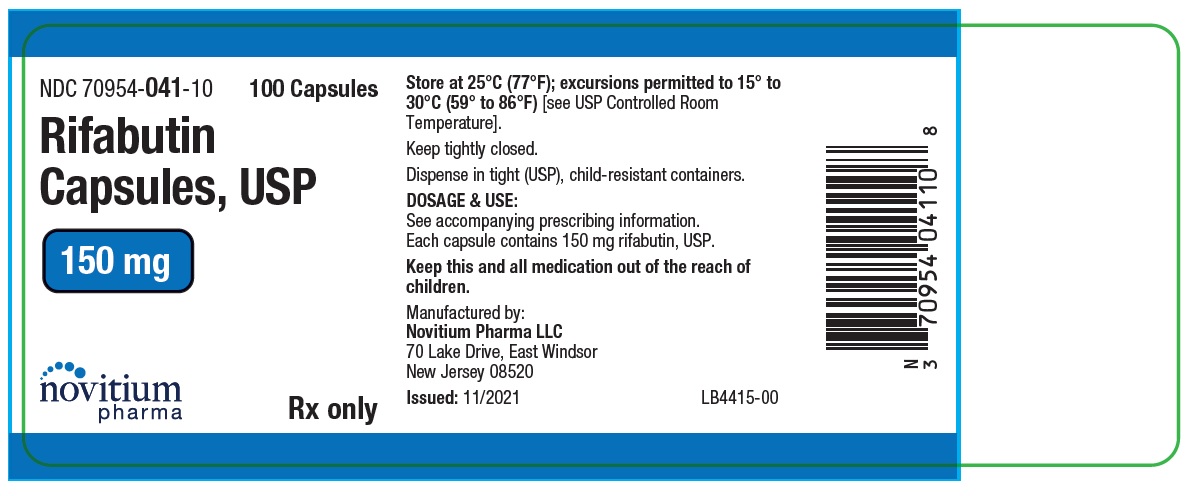
Rifabutin 150 mg Capsule, 100-count — NDC 70954-041-10 (Billing 70954-0041-10)
This is a package of 100 capsules of Rifabutin 150 mg Capsule from ANI Pharmaceuticals, Inc., marketed since Dec 2021 and currently FDA-listed; retail pharmacies pay about $8.14 per capsule (NADAC). It is this product's only package size.
NDC database record
One package, one record: these facts belong to NDC 70954-041-10 alone.
- Record
- FDA NDC Directory package listing · Human prescription drug
- Code segments
- 70954 labeler · 041 product · 10 package
- Package marketed since
- Dec 17, 2021
- Sample package
- No — commercial package
- Listing certified through
- Dec 31, 2027
- Billing quantity
- 100 EA per package
- Barcode (UPC-A, from the NDC)
- 3 7095404110 8
- Medicaid fills, this package
- 4,168 prescriptions in the last four reported quarters
- FDA record last changed
- Oct 8, 2026
Identity & classification
Regulatory identifiers FDA, NLM and CMS codes for this package
Drug-database identifiers Medi-Span GPI and First Databank GCN / HICL / AHFS classification
- GSN (GCN sequence number): 018766
- GCN: 29810
- HICL (First Databank): 007626
- AHFS class code: 08:12.28.30
Where does this data come from?
- FDA openFDA NDC Directory · synced Oct 8, 2026
- FDA label on DailyMed · label index refreshed Oct 6, 2026
- RxNorm (NLM RxNav) · catalog refreshed Oct 1, 2026
- Medi-Span GPI (licensed)
- First Databank (licensed) · refreshed Oct 8, 2026
Clinical
Rifabutin helps to prevent or slow the spread of Mycobacterium avium complex disease (MAC; a bacterial infection that may cause serious symptoms) in patients with human immunodeficiency virus (HIV) infection. It is also used in combination with other medications to eliminate H. pylori, a bacteria that causes ulcers. Rifabutin is in a class of medications called antimycobacterials. It works by killing the bacteria that cause infection. Antibiotics such as rifabutin will not work for colds, flu, or other viral infections. Using antibiotics when they are not needed increases your risk of getting...
Read the full MedlinePlus article ↗- It is used to help prevent disseminated MAC disease, a serious bacterial infection, in people with advanced HIV infection. It does not protect against tuberculosis.
- Take the capsule by mouth as prescribed, usually once a day. If it upsets your stomach, your prescriber may split the dose and have you take it with food. You can also mix the caps...
- Discolored urine is a very common effect of rifabutin and is generally expected. Still, mention it to your care team, and call us about rash, fever or other new symptoms.
- Call right away for allergic signs such as hives, swelling, wheezing or fever, or a rash that is spreading or blistering. Also report eye pain or redness, vision changes, or severe...
Patient education
Supplement & herbal interactions
Some supplements/herbs that may interact with Rifabutin — tap one for details:
Rifabutin may be associated with lower levels of 7 nutrients — worth a chat with your pharmacist, not a cause for alarm.
Where does this data come from?
- MedlinePlus (NLM) · refreshed Oct 1, 2026
- FDA label on DailyMed · label index refreshed Oct 6, 2026
Ask a licensed pharmacist directly — free, answered by our team.
Pricing
A drug doesn't have one price. Each row is a different public payment system, and none is what you'd pay at the counter — that depends on your insurance. The ⓘ on each row explains what it measures.
| Price system | Per ea | Per package |
|---|---|---|
| Retail pharmacies payNADAC · weekly | $8.136 | $813.63 / 100 capsules |
| Medicaid paysCMS SDUD · 12 mo | $8.70 | $870.00 / 100 capsules |
| Medicare drug plans payPart D · Q2 2026 | $10.30 | $1,030.47 / 100 capsules |
Where does this data come from?
- CMS NADAC weekly file · file of Oct 7, 2026
- CMS ASP pricing files · refreshed Sep 20, 2026
- CMS Medicaid State Drug Utilization Data · through Q1 2026
- CMS Part D plan pricing files · refreshed Sep 24, 2026
- VA National Acquisition Center price file
Packaging — all sizes for this product
| Package NDC | Description | Marketing start | Marketing end | Status |
|---|---|---|---|---|
| 70954-0041-10 You're viewing this Main listing | 100 CAPSULE in 1 BOTTLE | 2021-12-17 | — | Active |
Therapeutic equivalents
| Product | Labeler | Pack | NADAC/unit | TE | Status | Price vs. this |
|---|---|---|---|---|---|---|
| Rifabutin 150 mg 59762-1350-01 | Mylan | 100 capsules | $8.136 | AB | Availability likely | — |
| Rifabutin 150 mgthis 70954-0041-10 | ANI | 100 capsules | $8.136 | AB | Availability likely | — |
| Rifabutin 150 mg 72319-0010-04 | i3 | 100 capsules | $8.136 | AB | Availability likely | — |
| Rifabutin 150 mg 10135-0738-01 | Marlex | 100 capsules | — | AB | FDA listed | — |
| Rifabutin 150 mg 70518-4254-00 | REMEDYREPACK | 60 capsules | — | AB | FDA listed | — |
| Rifabutin 150 mg 70518-4594-00 | REMEDYREPACK | 60 capsules | — | AB | FDA listed | — |
| Rifabutin 150 mg 73141-0020-04 | A2A | 100 capsules | — | AB | Discontinued | — |
Where does this data come from?
- FDA openFDA NDC Directory · synced Oct 8, 2026
- FDA Orange Book · refreshed Oct 3, 2026
- CMS NADAC weekly file · file of Oct 7, 2026
Availability & generic status
This product is an FDA-approved generic. Other versions of the same drug are listed under Therapeutic equivalents, least expensive first.
Where does this data come from?
- FDA Orange Book · refreshed Oct 3, 2026
What it looks like
Where does this data come from?
- FDA label on DailyMed · label index refreshed Oct 6, 2026
Inactive Ingredients / Excipients
Inactive ingredients, also called excipients, are components of the drug product other than the active ingredient. They may include fillers, dyes, coatings, preservatives, flavors, or other formulation ingredients.
🧪 Avoiding an ingredient? See Rifabutin inactive ingredients by manufacturer: every current product's list side by side, so you can ask your pharmacy for the version that does not list it.
💡 Tap an ingredient (hover on desktop) to see what it is and why it’s used.
-
UNII 3K9958V90M
A liquid solvent derived from fermentation or chemical synthesis. In medicines, alcohol dissolves active ingredients, helps preserve the product, and improves how the body absorbs certain drugs.
-
UNII 5138Q19F1X
Ammonia is a colorless gas made from nitrogen and hydrogen. It's used in medicines as a pH buffer to maintain the correct acidity level and help keep the product stable.
-
UNII 8PJ61P6TS3
Butyl alcohol is a clear liquid organic solvent derived from petroleum or natural sources. In medicines, it helps dissolve active ingredients and serves as a solvent in liquid formulations and some topical products.
-
UNII OP1R32D61U
Microcrystalline cellulose is a purified form of cellulose, a natural fiber from plant sources. It acts as a binder and filler in tablets and capsules, helping hold ingredients together and give the medicine its shape and size.
-
UNII 1K09F3G675
Ferric oxide red is an inorganic iron compound used as a colorant in medicines. It gives tablets, capsules, or other dosage forms a red or reddish tint for identification and appearance.
-
UNII XM0M87F357
A dark iron oxide compound that gives medicines their black or dark color. It's used as a colorant in tablets and capsules to help identify the product and make it visually distinctive.
-
UNII 2G86QN327L
Gelatin is a protein derived from animal collagen, commonly used in medicines as a gelling agent and capsule material. It helps create soft or hard capsule shells that hold and release medication, and can also thicken liquid formulations.
-
UNII ND2M416302
Isopropyl alcohol is a clear liquid solvent derived from petroleum. In medicines, it dissolves active ingredients and other components, helps the product flow smoothly, and aids in sterilization during manufacturing.
-
UNII 70097M6I30
Magnesium stearate is a salt made from magnesium and stearic acid, a fatty substance. It's used in tablets and capsules as a lubricant and glidant to help ingredients flow smoothly during manufacturing and prevent sticking.
-
UNII WZH3C48M4T
Potassium hydroxide is a strong alkaline chemical used in medicines to adjust and maintain the pH level of liquid formulations, helping keep the product stable and the active ingredients effective.
-
UNII 6DC9Q167V3
Propylene glycol is a clear liquid derived from petroleum or vegetable sources. It acts as a solvent, humectant, and preservative in medicines, helping dissolve active ingredients and maintain product stability.
-
UNII MB5IUD6JUA
Shellac is a natural resin secreted by lac beetles, purified and processed into a coating material. It seals and protects tablets and capsules, controls how quickly the medicine dissolves, and gives pills their glossy finish.
-
UNII ETJ7Z6XBU4
Silicon dioxide is a naturally occurring mineral used as a glidant and anti-caking agent. It helps powder ingredients flow smoothly and prevents clumping during manufacturing and storage.
-
UNII 368GB5141J
A detergent and foaming agent derived from coconut or palm oil. In medications, it helps break down and mix oil and water-based ingredients, aids in tablet disintegration, and improves how the drug dissolves and spreads in the mouth or digestive system.
-
UNII 15FIX9V2JP
Titanium dioxide is a bright white mineral powder commonly used as a colorant and opacifying agent. It makes pills and tablets white or lighter in color and helps make coatings non-transparent.
-
UNII 059QF0KO0R
Water is a liquid solvent that dissolves and mixes ingredients together in liquid medicines, syrups, and injections. It helps distribute the active drug evenly throughout the product.
16 inactive ingredients listed in the exact product block matched to this NDC.
Where does this data come from?
ingredient classCode="IACT" elements from the exact product block matched by this NDC. Label-section narrative from DailyMed / the openFDA label index is shown separately when available.- FDA label on DailyMed · label index refreshed Oct 6, 2026
- FDA openFDA NDC Directory · synced Oct 8, 2026
Inactive ingredient FAQ
Are inactive ingredients the same for every manufacturer?
Why might an inactive ingredient be missing?
Can inactive ingredients matter?
Manufacturer & labeler
More NDCs from ANI Pharmaceuticals, Inc. labeler code 70954
- Prazosin Hydrochloride 5 mg Capsule NDC 70954-021-10
- Macitentan 10 mg Tablet, Film Coated NDC 70954-025-10
- Acetazolamide 125 mg Tablet NDC 70954-033-20
- Acetazolamide 250 mg Tablet NDC 70954-034-20
- Clotrimazole 10 mg/mL Solution NDC 70954-036-20
- Fosfomycin Tromethamine 3 g Granule, For Solution NDC 70954-040-10
- Felbamate 600 mg/5mL Suspension NDC 70954-051-10
- Hydrocortisone 5 mg Tablet NDC 70954-052-10
- Hydrocortisone 10 mg Tablet NDC 70954-053-10
- Hydrocortisone 20 mg Tablet NDC 70954-054-10
- Prednisone 1 mg Tablet NDC 70954-056-10
- Prednisone 2.5 mg Tablet NDC 70954-057-10
Where does this data come from?
- FDA openFDA NDC Directory · synced Oct 8, 2026
- Drugs@FDA
Full prescribing information FDA SPL
🎯 Indications and Usage ▾
INDICATIONS & USAGE Rifabutin capsules are indicated for the prevention of disseminated Mycobacterium avium complex (MAC) disease in patients with advanced HIV infection.
⏱️ Dosage and Administration ▾
DOSAGE & ADMINISTRATION It is recommended that rifabutin capsules be administered at a dose of 300 mg once daily. For those patients with propensity to nausea, vomiting, or other gastrointestinal upset, administration of rifabutin at doses of 150 mg twice daily taken with food may be useful. Doses of rifabutin may be administered mixed with foods such as applesauce.
For patients with severe renal impairment (creatinine clearance less than 30 mL/min), consider reducing the dose of rifabutin by 50%, if toxicity is suspected. No dosage adjustment is required for patients with mild to moderate renal impairment. Reduction of the dose of rifabutin may also be needed for patients receiving concomitant treatment with certain other drugs (see PRECAUTIONS- Drug Interactions) .
Mild hepatic impairment does not require a dose modification. The pharmacokinetics of rifabutin in patients with moderate and severe hepatic impairment is not known.
⛔ Contraindications ▾
CONTRAINDICATIONS Rifabutin capsules are contraindicated in patients who have had clinically significant hypersensitivity to rifabutin or to any other rifamycins. Rifabutin capsules are contraindicated in patients being treated with cabotegravir/rilpivirine prolonged-release injectable suspension (see PRECAUTIONS-Drug Interactions, Table 2 ).
⚠️ Warnings ▾
WARNINGS Tuberculosis Rifabutin capsules must not be administered for MAC prophylaxis to patients with active tuberculosis. Patients who develop complaints consistent with active tuberculosis while on prophylaxis with rifabutin should be evaluated immediately, so that those with active disease may be given an effective combination regimen of anti-tuberculosis medications. Administration of rifabutin as a single agent to patients with active tuberculosis is likely to lead to the development of tuberculosis that is resistant both to rifabutin and to rifampin.
There is no evidence that rifabutin is an effective prophylaxis against M. tuberculosis . Patients requiring prophylaxis against both M. tuberculosis and Mycobacterium avium complex may be given isoniazid and rifabutin concurrently. Tuberculosis in HIV-positive patients is common and may present with atypical or extrapulmonary findings.
Patients are likely to have a nonreactive purified protein derivative (PPD) despite active disease. In addition to chest X-ray and sputum culture, the following studies may be useful in the diagnosis of tuberculosis in the HIV-positive patient: blood culture, urine culture, or biopsy of a suspicious lymph node. MAC Treatment with Clarithromycin When rifabutin is used concomitantly with clarithromycin for MAC treatment, a decreased dose of rifabutin is recommended due to the increase in plasma concentrations of rifabutin (see PRECAUTIONS-Drug Interactions, Table 2 ).
Hypersensitivity and Related Reactions Hypersensitivity reactions may occur in patients receiving rifamycins. Signs and symptoms of these reactions may include hypotension, urticaria, angioedema, acute bronchospasm, conjunctivitis, thrombocytopenia, neutropenia or flu-like syndrome (weakness, fatigue, muscle pain, nausea, vomiting, headache, fever, chills, aches, rash, itching, sweats, dizziness, shortness of breath, chest pain, cough, syncope, palpitations). There have been reports of anaphylaxis with the use of rifamycins.
Monitor patients receiving rifabutin therapy for signs and/or symptoms of hypersensitivity reactions. If these symptoms occur, administer supportive measures and discontinue rifabutin. Uveitis Due to the possible occurrence of uveitis, patients should also be carefully monitored when rifabutin is given in combination with clarithromycin (or other macrolides) and/or fluconazole and related compounds (see PRECAUTIONS-Drug Interactions, Table 2 ).
If uveitis is suspected, the patient should be referred to an ophthalmologist and, if considered necessary, treatment with rifabutin should be suspended (see also ADVERSE REACTIONS ). Clostridioides difficile Associated Diarrhea Clostridioides difficile associated diarrhea (CDAD) has been reported with use of nearly all antibacterial agents, including rifabutin capsules and may range in severity from mild diarrhea to fatal colitis. Treatment with antibacterial agents alters the normal flora of the colon leading to overgrowth of C. difficile .
C. difficile produces toxins A and B which contribute to the development of CDAD. Hypertoxin producing strains of C. difficile cause increased morbidity and mortality, as these infections can be refractory to antimicrobial therapy and may require colectomy. CDAD must be considered in all patients who present with diarrhea following antibacterial use.
Careful medical history is necessary since CDAD has been reported to occur over two months after the administration of antibacterial agents. If CDAD is suspected or confirmed, ongoing antibacterial use not directed against C. difficile may need to be discontinued. Appropriate fluid and electrolyte management, protein supplementation, antibacterial treatment of C. difficile , and surgical evaluation should be instituted as clinically indicated.
Severe Cutaneous Adverse Reactions There have been reports of severe cutaneous adverse reactions (SCAR), such as Stevens-Johnson syndrome (SJS), toxic epidermal necrolysis (TEN), drug reaction w… [Excerpted — this section continues on DailyMed.]
🤒 Adverse Reactions ▾
ADVERSE REACTIONS Adverse Reactions from Clinical Trials Rifabutin capsules were generally well tolerated in the controlled clinical trials. Discontinuation of therapy due to an adverse event was required in 16% of patients receiving rifabutin, compared to 8% of patients receiving placebo in these trials. Primary reasons for discontinuation of rifabutin were rash (4% of treated patients), gastrointestinal intolerance (3%), and neutropenia (2%).
The following table enumerates adverse experiences that occurred at a frequency of 1% or greater, among the patients treated with rifabutin in studies 023 and 027. Table: 3 Clinical Adverse Experiences Reported in ≥1% of Patients Treated With Rifabutin Adverse event Rifabutin (n = 566) % Placebo (n = 580) % Body as a whole Abdominal pain 4 3 Asthenia 1 1 Chest pain 1 1 Fever 2 1 Headache 3 5 Pain 1 2 Blood and lymphatic system Leucopenia 10 7 Anemia 1 2 Digestive System Anorexia 2 2 Diarrhea 3 3 Dyspepsia 3 1 Eructation 3 1 Flatulence 2 1 Nausea 6 5 Nausea and vomiting 3 2 Vomiting 1 1 Musculoskeletal system Myalgia 2 1 Nervous system Insomnia 1 1 Skin and appendages Rash 11 8 Special senses Taste perversion 3 1 Urogenital system Discolored urine 30 6 CLINICAL ADVERSE EVENTS REPORTED IN <1% OF PATIENTS WHO RECEIVED RIFABUTIN Considering data from the 023 and 027 pivotal trials, and from other clinical studies, rifabutin appears to be a likely cause of the following adverse events which occurred in less than 1% of treated patients: flu-like syndrome, hepatitis, hemolysis, arthralgia, myositis, chest pressure or pain with dyspnea, skin discoloration, thrombocytopenia, pancytopenia and jaundice.
The following adverse events have occurred in more than one patient receiving rifabutin, but an etiologic role has not been established: seizure, paresthesia, aphasia, confusion, and non-specific T wave changes on electrocardiogram. When rifabutin was administered at doses from 1050 mg/day to 2400 mg/day, generalized arthralgia and uveitis were reported. These adverse experiences abated when rifabutin was discontinued.
Mild to severe, reversible uveitis has been reported less frequently when rifabutin is used at 300 mg as monotherapy in MAC prophylaxis versus rifabutin in combination with clarithromycin for MAC treatment (see also WARNINGS ). Uveitis has been infrequently reported when rifabutin is used at 300 mg/day as monotherapy in MAC prophylaxis of HIV-infected persons, even with the concomitant use of fluconazole and/or macrolide antibacterials. However, if higher doses of rifabutin are administered in combination with these agents, the incidence of uveitis is higher.
Patients who developed uveitis had mild to severe symptoms that resolved after treatment with corticosteroids and/or mydriatic eye drops; in some severe cases, however, resolution of symptoms occurred after several weeks. When uveitis occurs, temporary discontinuance of rifabutin and ophthalmologic evaluation are recommended. In most mild cases, rifabutin may be restarted; however, if signs or symptoms recur, use of rifabutin should be discontinued (Morbidity and Mortality Weekly Report, September 9, 1994).
Corneal deposits have been reported during routine ophthalmologic surveillance of some HIV-positive pediatric patients receiving rifabutin as part of a multiple drug regimen for MAC prophylaxis. The deposits are tiny, almost transparent, asymptomatic peripheral and central corneal deposits, and do not impair vision. The following table enumerates the changes in laboratory values that were considered as laboratory abnormalities in Studies 023 and 027.
Table 4 Percentage of Patients With Laboratory Abnormalities Laboratory abnormalities Rifabutin (n = 566) % PLACEBO (n = 580) % Chemistry Increased alkaline phosphatase 1 <1 3 Increased SGOT 2 7 12 Increased SGPT 2 9 11 Hematology Anemia 3 6 7 Eosinophilia 1 1 Leukopenia 4 17 16 Neutropenia 5 25 20 Thrombocytopenia 6 5 4 Includes grades 3 or 4 toxicities as specified: 1 All value… [Excerpted — this section continues on DailyMed.]
🔄 Drug Interactions ▾
DRUG INTERACTIONS Effect of Rifabutin on the Pharmacokinetics of Other Drugs Rifabutin induces CYP3A enzymes and therefore may reduce the plasma concentrations of drugs metabolized by those enzymes. This effect may reduce the efficacy of standard doses of such drugs, which include itraconazole, clarithromycin, and saquinavir. Effect of Other Drugs on Rifabutin Pharmacokinetics Some drugs that inhibit CYP3A may significantly increase the plasma concentration of rifabutin.
Therefore, carefully monitor for rifabutin associated adverse events in those patients also receiving CYP3A inhibitors, which include fluconazole and clarithromycin. In some cases, the dosage of rifabutin may need to be reduced when it is co-administered with CYP3A inhibitors. Table 2 summarizes the results and magnitude of the pertinent drug interactions assessed with rifabutin.
The clinical relevance of these interactions and subsequent dose modifications should be judged in light of the population studied, severity of the disease, patient's drug profile, and the likely impact on the risk/benefit ratio. Table 2 Rifabutin Interaction Studies Co-administered drug Dosing regimen of co-administered drug Dosing regimen of rifabutin Study population (n) Effect on rifabutin Effect on co-administered drug Recommendation ANTIRETROVIRALS Amprenavir 1200 mg twice a day for 10 days 300 mg once a day for 10 days Healthy male subjects (6) ↑ AUC by 193%, ↑ C max by 119% Reduce rifabutin dose by at least 50%.
Monitor closely for adverse reactions. Atazanavir/ Ritonavir 300/100 mg once daily 150 mg twice weekly Healthy adult subjects 48% ↑ in AUC, 149% ↑ C max of rifabutin. 990% ↑ in AUC, 677%↑ C max of25-O-desacetyl-rifabutin.
No significant change in pharmacokinetics A reduction in the dose of rifabutin (to 150 mg every other day or 3 times a week) is recommended. Increased monitoring for adverse reactions is warranted. Bictegravir 75 mg once a day 300 mg once a day (fasted) Healthy subjects ND ↓ AUC 38% ↓ C min 56% ↓ C max 20% Co-administration of rifabutin with Biktarvy (bictegravir/ emtricitabine/tenofovir alafenamide) is not recommended due to an expected decrease in tenofovir alafenamide in addition to the reported reduction in bictegravir.
Refer to Biktarvy prescribing information for additional information. Darunavir/ Ritonavir 600/100 mg twice a day for 12 days 150 mg every other day for 12 days Healthy HIV negative adults No significant change in rifabutin pharmacokinetics. 881% ↑in AUC, 377% ↑ C max of 25-O-desacetyl-rifabutin 57% ↑in AUC, 42% ↑ C max of darunavir.
66% ↑in AUC,68% ↑ C max of ritonavir. A reduction in the dose of rifabutin (to 150 mg every other day or 3 times a week) is recommended. Increased monitoring for adverse reactions is warranted.
Delavirdine 400 mg three times a day 300 mg once a day HIV infected patients (7) ↑ AUC by 230%, ↑ C max by 128% ↓ AUC by 80%, ↓ C max by 75%, ↓ C min by 17% CONTRAINDICATED Didanosine 167 or 250 mg twice a day for 12 days 300 or 600 mg once a day for 12 days HIV infected patients (11) Dolutegravir 50 mg daily for 14 days 300 mg daily for 14 days Healthy adult subjects ND No significant change in dolutegravir pharmacokinetic s at steady state. Doravirine 100 mg single dose 300 mg once a day for 16 days Healthy subjects (12) ND ↓ 50% in AUC, ↓ 68% in C24 ↔ in Cmax If concomitant use is necessary, increase the doravirine dosage as instructed in doravirine-containing product prescribing information.
Elvitegravir/ Cobicistat 150/50 mg daily 300 mg daily or 150 mg every other day Healthy subjects (12) No significant change in rifabutin pharmacokinetics. 6.3-fold ↑in AUC, 4.8-fold ↑ C max of 25-O-desacetyl-rifabutin No change in elvitegravir except 67% ↓ C trough of elvitegravir No change in cobicistat exposure. Co-administration of rifabutin with elvitegravir/ cobicistat is not recommended due to an expected decrease in elvitegravir exposure.
Etravirine 800 mg twice daily for 21 days 300 mg daily on days 8 to 21 Healt… [Excerpted — this section continues on DailyMed.]
🤰 Pregnancy ▾
PREGNANCY Rifabutin should be used in pregnant women only if the potential benefit justifies the potential risk to the fetus. There are no adequate and well-controlled studies in pregnant or breastfeeding women. Reproduction studies have been carried out in rats and rabbits given rifabutin using dose levels up to 200 mg/kg (about 6 to 13 times the recommended human daily dose based on body surface area comparisons).
No teratogenicity was observed in either species. In rats, given 200 mg/kg/day, (about 6 times the recommended human daily dose based on body surface area comparisons), there was a decrease in fetal viability. In rats, at 40 mg/kg/day (approximately equivalent to the recommended human daily dose based on body surface area comparisons), rifabutin caused an increase in fetal skeletal variants.
In rabbits, at 80 mg/kg/day (about 5 times the recommended human daily dose based on body surface area comparisons), rifabutin caused maternotoxicity and increase in fetal skeletal anomalies. Because animal reproduction studies are not always predictive of human response, rifabutin should be used in pregnant women only if the potential benefit justifies the potential risk to the fetus.
🧒 Pediatric Use ▾
PEDIATRIC USE Safety and effectiveness of rifabutin for prophylaxis of MAC in children have not been established. Limited safety data are available from treatment use in 22 HIV-positive children with MAC who received rifabutin in combination with at least two other antimycobacterials for periods from 1 to 183 weeks. Mean doses (mg/kg) for these children were: 18.5 (range 15.0 to 25.0) for infants 1 year of age, 8.6 (range 4.4 to 18.8) for children 2 to 10 years of age, and 4.0 (range 2.8 to 5.4) for adolescents 14 to 16 years of age.
There is no evidence that doses greater than 5 mg/kg daily are useful. Adverse experiences were similar to those observed in the adult population, and included leukopenia, neutropenia, and rash. In addition, corneal deposits have been observed in some patients during routine ophthalmologic surveillance of HIV-positive pediatric patients receiving rifabutin as part of a multiple-drug regimen for MAC prophylaxis.
These are tiny, almost transparent, asymptomatic peripheral and central corneal deposits which do not impair vision.
🧓 Geriatric Use ▾
GERIATRIC USE Clinical studies of rifabutin did not include sufficient numbers of subjects aged 65 and over to determine whether they respond differently from younger subjects. Other reported clinical experience has not identified differences in responses between the elderly and younger patients. In general, dose selection for an elderly patient should be cautious, usually starting at the low end of the dosing range, reflecting the greater frequency of decreased hepatic, renal, or cardiac function, and of concomitant disease or other drug therapy (see CLINICAL PHARMACOLOGY ).
🆘 Overdosage ▾
OVERDOSAGE No information is available on accidental overdosage in humans. Treatment While there is no experience in the treatment of overdose with rifabutin capsules, clinical experience with rifamycins suggests that gastric lavage to evacuate gastric contents (within a few hours of overdose), followed by instillation of an activated charcoal slurry into the stomach, may help absorb any remaining drug from the gastrointestinal tract. Rifabutin is 85% protein bound and distributed extensively into tissues (Vss:8 to 9 L/kg).
It is not primarily excreted via the urinary route (less than 10% as unchanged drug); therefore, neither hemodialysis nor forced diuresis is expected to enhance the systemic elimination of unchanged rifabutin from the body in a patient with an overdose of rifabutin.
🧬 Clinical Pharmacology ▾
CLINICAL PHARMACOLOGY Pharmacokinetics Absorption Following a single oral dose of 300 mg to nine healthy adult volunteers, rifabutin was readily absorbed from the gastrointestinal tract with mean (±SD) peak plasma levels (C max ) of 375 (±267) ng/mL (range: 141 to 1033 ng/mL) attained in 3.3 (±0.9) hours (T max range: 2 to 4 hours). Absolute bioavailability assessed in five HIV-positive patients, who received both oral and intravenous doses, averaged 20%. Total recovery of radioactivity in the urine indicates that at least 53% of the orally administered rifabutin dose is absorbed from the gastrointestinal tract.
The bioavailability of rifabutin from the capsule dosage form, relative to an oral solution, was 85% in 12 healthy adult volunteers. High-fat meals slow the rate without influencing the extent of absorption from the capsule dosage form. Plasma concentrations post-C max declined in an apparent biphasic manner.
Pharmacokinetic dose- proportionality was established over the 300 mg to 600 mg dose range in nine healthy adult volunteers (crossover design) and in 16 early symptomatic human immunodeficiency virus (HIV)-positive patients over a 300 mg to 900 mg dose range. Distribution Due to its high lipophilicity, rifabutin demonstrates a high propensity for distribution and intracellular tissue uptake. Following intravenous dosing, estimates of apparent steady-state distribution volume (9.3 ±
1.5L/kg) in five HIV-positive patients exceeded total body water by approximately 15-fold. Substantially higher intracellular tissue levels than those seen in plasma have been observed in both rat and man. The lung-to-plasma concentration ratio, obtained at 12 hours, was approximately 6.5 in four surgical patients who received an oral dose.
Mean rifabutin steady-state trough levels (C p,min ss ; 24- hour post-dose) ranged from 50 to 65 ng/mL in HIV-positive patients and in healthy adult volunteers. About 85% of the drug is bound in a concentration-independent manner to plasma proteins over a concentration range of 0.05 to 1 µg/mL. Binding does not appear to be influenced by renal or hepatic dysfunction.
Rifabutin was slowly eliminated from plasma in seven healthy adult volunteers, presumably because of distribution-limited elimination, with a mean terminal half-life of 45 (±17) hours (range: 16 to 69 hours). Although the systemic levels of rifabutin following multiple dosing decreased by 38%, its terminal half-life remained unchanged. Metabolism Of the five metabolites that have been identified, 25-O-desacetyl and 31-hydroxy are the most predominant, and show a plasma metabolite: parent area under the curve ratio of 0.10 and 0.07, respectively.
The former has an activity equal to the parent drug and contributes up to 10% to the total antimicrobial activity. Excretion A mass-balance study in three healthy adult volunteers with 14 C-labeled rifabutin showed that 53% of the oral dose was excreted in the urine, primarily as metabolites. About 30% of the dose is excreted in the feces.
Mean systemic clearance (CL s /F) in healthy adult volunteers following a single oral dose was 0.69 (±0.32) L/hr/kg (range: 0.46 to
1.34L/hr/kg). Renal and biliary clearance of unchanged drug each contribute approximately 5% to CL s /F. Pharmacokinetics in Special Populations Geriatric Compared to healthy volunteers, steady-state pharmacokinetics of rifabutin are more variable in elderly patients (>70 years).
Pediatric The pharmacokinetics of rifabutin have not been studied in subjects under 18 years of age. Renal Impairment The disposition of rifabutin (300 mg) was studied in 18 patients with varying degrees of renal function. Area under plasma concentration time curve (AUC) increased by about 71% in patients with severe renal impairment (creatinine clearance below 30 mL/min) compared to patients with creatinine clearance (Cr cl ) between 61–74 mL/min.
In patients with mild to moderate renal impairment (Cr cl between 30–61 mL/min), the AUC increased by about… [Excerpted — this section continues on DailyMed.]
📦 How Supplied / Storage and Handling ▾
HOW SUPPLIED Rifabutin capsules, USP are supplied as hard gelatin capsule shell with maroon colored cap and body, imprinted with black ink as 041 on cap and Novitium 150 mg (150 mg under Novitium) on body, filled with red-violet powder, each containing 150 mg of rifabutin, USP. Rifabutin Capsules, USP are available as follows: NDC 70954-041-10 Bottles of 100 capsules Keep tightly closed and dispense in a tight container as defined in the USP. Store at 25°C (77°F); excursions permitted to 15° to 30°C (59° to 86°F) [see USP Controlled Room Temperature].
Manufactured by: Novitium Pharma LLC 70 Lake Drive, East Windsor New Jersey, 08520 LB4416-01 Issued: 02/2025
📋 Description ▾
DESCRIPTION Rifabutin capsules for oral administration contain 150 mg of the rifamycin antimycobacterial agent rifabutin, USP, per capsule along with the inactive ingredients, microcrystalline cellulose, sodium lauryl sulfate, colloidal silicon dioxide, magnesium stearate. The hard gelatin capsule contains titanium dioxide, red iron oxide, gelatin, sodium lauryl sulfate and purified water. The imprinting ink contains shellac, dehydrated alcohol, isopropyl alcohol, butyl alcohol, propylene glycol, strong ammonia solution, black iron oxide, potassium hydroxide and purified water.
The chemical name for rifabutin is 1',4-didehydro-1-deoxy-1,4-dihydro-5'-(2-methylpropyl)-1-oxorifamycin XIV (Chemical Abstracts Service, 9th Collective Index) or (9 S ,12 E ,14 S ,15 R , 16 S ,17 R ,18 R ,19 R ,20 S ,21 S ,22 E , 24 Z )-6,16,18,20-tetrahydroxy-1'-isobutyl-14-methoxy- 7,9,15,17,19,21,25-heptamethyl-spiro [9,4-(epoxypentadeca[1,11,13]trienimino)-2 H - furo[2',3':7,8]naphth[1,2-d] imidazole-2,4'-piperidine]-5,10,26-(3 H ,9 H )-trione-16-acetate. Rifabutin has a molecular formula of C46H62N4O11, a molecular weight of 847.02 and the following structure: Rifabutin is a red-violet powder soluble in methanol, slightly soluble in ethanol, and slightly soluble in water (0.21 mg/mL).
Its log P value (the base 10 logarithm of the partition coefficient between n-octanol and water) is 3.2 (n-octanol/water). FDA approved dissolution method differs from the current USP monograph dissolution method. structure
💬 Information for Patients ▾
INFORMATION FOR PATIENTS Patients should be advised of the signs and symptoms of both MAC and tuberculosis, and should be instructed to consult their physicians if they develop new complaints consistent with either of these diseases. In addition, since rifabutin may rarely be associated with myositis and uveitis, patients should be advised to notify their physicians if they develop signs or symptoms suggesting either of these disorders. Urine, feces, saliva, sputum, perspiration, tears, and skin may be colored brown-orange with rifabutin and some of its metabolites.
Soft contact lenses may be permanently stained. Patients to be treated with rifabutin should be made aware of these possibilities. Diarrhea is a common problem caused by antibacterials which usually ends when the antibacterial is discontinued.
Sometimes, after starting treatment with antibacterials, patients can develop watery and bloody stools (with or without stomach cramps and fever) even as late as two or more months after having taken the last dose of the antibacterial. If this occurs, patients should contact their physician as soon as possible.
⚠️ Precautions ▾
PRECAUTIONS GENERAL PRECAUTIONS Because treatment with rifabutin capsules may be associated with neutropenia, and more rarely thrombocytopenia, physicians should consider obtaining hematologic studies periodically in patients receiving prophylaxis with rifabutin. INFORMATION FOR PATIENTS Patients should be advised of the signs and symptoms of both MAC and tuberculosis, and should be instructed to consult their physicians if they develop new complaints consistent with either of these diseases. In addition, since rifabutin may rarely be associated with myositis and uveitis, patients should be advised to notify their physicians if they develop signs or symptoms suggesting either of these disorders.
Urine, feces, saliva, sputum, perspiration, tears, and skin may be colored brown-orange with rifabutin and some of its metabolites. Soft contact lenses may be permanently stained. Patients to be treated with rifabutin should be made aware of these possibilities.
Diarrhea is a common problem caused by antibacterials which usually ends when the antibacterial is discontinued. Sometimes, after starting treatment with antibacterials, patients can develop watery and bloody stools (with or without stomach cramps and fever) even as late as two or more months after having taken the last dose of the antibacterial. If this occurs, patients should contact their physician as soon as possible.
DRUG INTERACTIONS Effect of Rifabutin on the Pharmacokinetics of Other Drugs Rifabutin induces CYP3A enzymes and therefore may reduce the plasma concentrations of drugs metabolized by those enzymes. This effect may reduce the efficacy of standard doses of such drugs, which include itraconazole, clarithromycin, and saquinavir. Effect of Other Drugs on Rifabutin Pharmacokinetics Some drugs that inhibit CYP3A may significantly increase the plasma concentration of rifabutin.
Therefore, carefully monitor for rifabutin associated adverse events in those patients also receiving CYP3A inhibitors, which include fluconazole and clarithromycin. In some cases, the dosage of rifabutin may need to be reduced when it is co-administered with CYP3A inhibitors. Table 2 summarizes the results and magnitude of the pertinent drug interactions assessed with rifabutin.
The clinical relevance of these interactions and subsequent dose modifications should be judged in light of the population studied, severity of the disease, patient's drug profile, and the likely impact on the risk/benefit ratio. Table 2 Rifabutin Interaction Studies Co-administered drug Dosing regimen of co-administered drug Dosing regimen of rifabutin Study population (n) Effect on rifabutin Effect on co-administered drug Recommendation ANTIRETROVIRALS Amprenavir 1200 mg twice a day for 10 days 300 mg once a day for 10 days Healthy male subjects (6) ↑ AUC by 193%, ↑ C max by 119% Reduce rifabutin dose by at least 50%.
Monitor closely for adverse reactions. Atazanavir/ Ritonavir 300/100 mg once daily 150 mg twice weekly Healthy adult subjects 48% ↑ in AUC, 149% ↑ C max of rifabutin. 990% ↑ in AUC, 677%↑ C max of25-O-desacetyl-rifabutin.
No significant change in pharmacokinetics A reduction in the dose of rifabutin (to 150 mg every other day or 3 times a week) is recommended. Increased monitoring for adverse reactions is warranted. Bictegravir 75 mg once a day 300 mg once a day (fasted) Healthy subjects ND ↓ AUC 38% ↓ C min 56% ↓ C max 20% Co-administration of rifabutin with Biktarvy (bictegravir/ emtricitabine/tenofovir alafenamide) is not recommended due to an expected decrease in tenofovir alafenamide in addition to the reported reduction in bictegravir.
Refer to Biktarvy prescribing information for additional information. Darunavir/ Ritonavir 600/100 mg twice a day for 12 days 150 mg every other day for 12 days Healthy HIV negative adults No significant change in rifabutin pharmacokinetics. 881% ↑in AUC, 377% ↑ C max of 25-O-desacetyl-rifabutin 57% ↑in AUC, 42% ↑ C max of darunavir.
66% ↑in AUC,68% ↑ C max of rito… [Excerpted — this section continues on DailyMed.]
🍼 Nursing Mothers ▾
NURSING MOTHERS It is not known whether rifabutin is excreted in human milk. Because many drugs are excreted in human milk and because of the potential for serious adverse reactions in nursing infants, a decision should be made whether to discontinue nursing or discontinue the drug, taking into account the importance of the drug to the mother.
🔬 Clinical Studies ▾
CLINICAL STUDIES Two randomized, double-blind clinical trials (Study 023 and Study 027) compared rifabutin (300 mg/day) to placebo in patients with CDC-defined AIDS and CD4 counts ≤200 cells/µL. These studies accrued patients from 2/90 through 2/92. Study 023 enrolled 590 patients, with a median CD4 cell count at study entry of 42 cells/µL (mean 61).
Study 027 enrolled 556 patients with a median CD4 cell count at study entry of 40 cells/µL (mean 58). Endpoints included the following: (1) MAC bacteremia, defined as at least one blood culture positive for Mycobacterium avium complex (MAC) bacteria. (2) Clinically significant disseminated MAC disease, defined as MAC bacteremia accompanied by signs or symptoms of serious MAC infection, including one or more of the following: fever, night sweats, rigors, weight loss, worsening anemia, and/or elevations in alkaline phosphatase.
(3) Survival. MAC Bacteremia Participants who received rifabutin were one-third to one-half as likely to develop MAC bacteremia as were participants who received placebo. These results were statistically significant (Study 023: p<0.001; Study 027: p = 0.002).
In Study 023, the one-year cumulative incidence of MAC bacteremia, on an intent to treat basis, was 9% for patients randomized to rifabutin and 22% for patients randomized to placebo. In Study 027, these rates were 13% and 28% for patients receiving rifabutin and placebo, respectively. Most cases of MAC bacteremia (approximately 90% in these studies) occurred among participants whose CD4 count at study entry was ≤100 cells/µL.
The median and mean CD4 counts at onset of MAC bacteremia were 13 cells/µL and 24 cells/µL, respectively. These studies did not investigate the optimal time to begin MAC prophylaxis. Clinically Significant Disseminated MAC Disease In association with the decreased incidence of bacteremia, patients on rifabutin showed reductions in the signs and symptoms of disseminated MAC disease, including fever, night sweats, weight loss, fatigue, abdominal pain, anemia, and hepatic dysfunction.
Survival The one-year survival rates in Study 023 were 77% for the group receiving rifabutin and 77% for the placebo group. In Study 027, the one-year survival rates were 77% for the group receiving rifabutin and 70% for the placebo group. These differences were not statistically significant.
Microbiology Mechanism of Action Rifabutin inhibits DNA-dependent RNA polymerase in susceptible strains of Escherichia coli and Bacillus subtilis but not in mammalian cells. In resistant strains of E. coli , rifabutin, like rifampin, did not inhibit this enzyme. It is not known whether rifabutin inhibits DNA-dependent RNA polymerase in Mycobacterium avium or in M. intracellulare which comprise M. avium complex (MAC).
Susceptibility Testing For specific information regarding susceptibility test interpretive criteria and associated test methods and quality control standards recognized by FDA for this drug, please see: https://www.fda.gov/STIC. In Vitro Studies Rifabutin has demonstrated in vitro activity against M. avium complex (MAC) organisms isolated from both HIV-positive and HIV-negative people. While-gene probe techniques may be used to identify these two organisms, many reported studies did not distinguish between these two species.
The vast majority of isolates from MAC-infected, HIV-positive people are M. avium , whereas in HIV-negative people, about 40% of the MAC isolates are M. intracellulare . Various in vitro methodologies employing broth or solid media, with and without polysorbate 80 (Tween 80), have been used to determine rifabutin MIC values for mycobacterial species. In general, MIC values determined in broth are several fold lower than that observed with methods employing solid media.
Utilization of Tween 80 in these assays has been shown to further lower MIC values. However, MIC values were substantially higher for egg-based compared to agar-based solid media. Rifabutin activity against 211 MAC is… [Excerpted — this section continues on DailyMed.]
📄 Carcinogenesis, Mutagenesis, Impairment of Fertility ▾
CARCINOGENESIS & MUTAGENESIS & IMPAIRMENT OF FERTILITY Long-term carcinogenicity studies were conducted with rifabutin in mice and in rats. Rifabutin was not carcinogenic in mice at doses up to 180 mg/kg/day, or approximately 36 times the recommended human daily dose. Rifabutin was not carcinogenic in the rat at doses up to 60 mg/kg/day, about 12 times the recommended human dose.
Rifabutin was not mutagenic in the bacterial mutation assay (Ames Test) using both rifabutin-susceptible and resistant strains. Rifabutin was not mutagenic in Schizosaccharomyces pombe P 1 and was not genotoxic in V-79 Chinese hamster cells, human lymphocytes in vitro , or mouse bone marrow cells in vivo . Fertility was impaired in male rats given 160 mg/kg (32 times the recommended human daily dose).
📄 Package Label / Principal Display Panel ▾
PACKAGE LABEL.PRINCIPAL DISPLAY PANEL Rifabutin Capsules, USP 150 mg NDC 70954-041-10 Bottles of 100 capsules label