
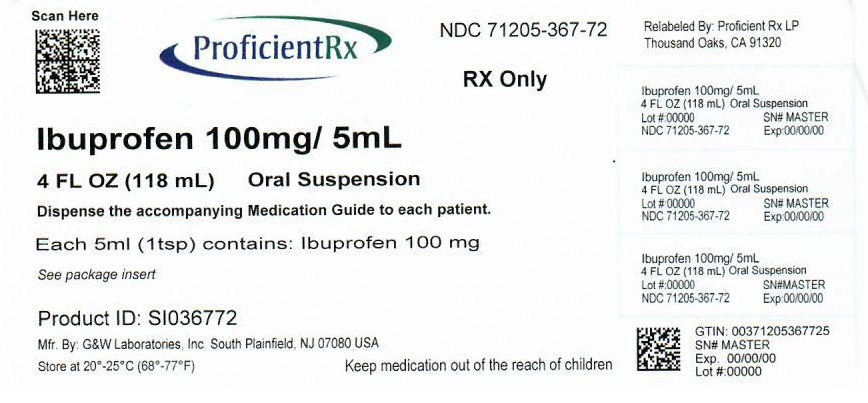
Ibuprofen 100 mg/5mL Suspension
Other active recalls for Ibuprofen (different manufacturers) — 5 · tap to view
🆔 Identity & classification
Where does this data come from?
🏷️ RxNorm drug class
This medicine belongs to the Nonsteroidal Anti-inflammatory Drug class.
Where does this data come from?
🏭 Manufacturer & labeler
Where does this data come from?
🩺 Clinical
Prescription ibuprofen is used to relieve pain, tenderness, swelling, and stiffness caused by osteoarthritis (arthritis caused by a breakdown of the lining of the joints) and rheumatoid arthritis (arthritis caused by swelling of the lining of the joints). It is also used to relieve mild to moderate pain, including menstrual pain (pain that happens before or during a menstrual period). Nonprescription ibuprofen is used to reduce fever and to relieve minor aches and pain from headaches, muscle aches, arthritis, menstrual periods, the common cold, toothaches, and backaches. Ibuprofen is in a clas...
Read the full MedlinePlus article ↗- It does a lot more than just kill pain. Ibuprofen is an anti-inflammatory drug, so it relieves pain, reduces swelling and inflammation, and brings down fever. Over-the-counter prod...
- What's ibuprofen actually used for — is it just a painkiller?
- Yes, it really does help. Ibuprofen can irritate the stomach lining, so taking it with food or a glass of milk significantly reduces the chance of nausea or stomach upset. You don'...
- Should I take ibuprofen with food? Does it really matter?
Patient education
Supplement & herbal interactions
Some supplements/herbs that may interact with Ibuprofen — tap one for details:
Ibuprofen may be associated with lower levels of 1 nutrient — worth a chat with your pharmacist, not a cause for alarm.
Where does this data come from?
Ask a licensed pharmacist directly — free, answered by our team.
🧪 Inactive Ingredients / Excipients
Inactive ingredients, also called excipients, are components of the drug product other than the active ingredient. They may include fillers, dyes, coatings, preservatives, flavors, or other formulation ingredients.
💡 Tap an ingredient (hover on desktop) to see what it is and why it’s used.
-
UNII 23OV73Q5G9
Acesulfame potassium is an artificial sweetener that tastes about 200 times sweeter than sugar. It's added to medicines to improve taste without adding calories or affecting blood sugar.
-
UNII XF417D3PSL
Anhydrous citric acid is a sour, crystalline powder derived from citric acid with water removed. In medicines, it acts as a buffer to control pH, adds tartness to improve taste, and helps tablets disintegrate.
-
UNII 35SW5USQ3G
A synthetic yellow dye used to color medicines. It helps make tablets, capsules, and liquids visually distinct so patients can easily identify their medication.
-
UNII WZB9127XOA
A synthetic red dye used to color medications and make them easier to identify. It serves as a colorant in tablets, capsules, and liquid formulations.
-
UNII PDC6A3C0OX
Glycerin is a clear, thick liquid derived from plant oils or fats. It acts as a humectant to retain moisture, a sweetener, and a solvent in medications.
-
UNII 6OZP39ZG8H
Polysorbate 80 is a synthetic emulsifier derived from sorbitol and oleic acid. It helps mix oil and water-based ingredients together in medications and improves how the product disperses in the body.
-
UNII OJ245FE5EU
Sodium benzoate is a salt derived from benzoic acid, a preservative. It's added to medicines to prevent growth of bacteria, fungi, and other microorganisms that could spoil the product.
-
UNII O8232NY3SJ
A plant-based carbohydrate derived from corn kernels. It acts as a filler to add bulk, a binder to hold ingredients together, and a disintegrant to help the tablet break apart in your stomach for absorption.
-
UNII 4J2TY8Y81V
A natural flavoring derived from strawberries that gives the medicine its strawberry taste and smell. It helps make the medicine more pleasant to take, especially for children.
-
UNII C151H8M554
A natural sugar derived from sugar cane or sugar beets. It's used as a sweetener, filler, and binder to improve taste, add bulk, and help hold tablet or capsule ingredients together.
-
UNII 059QF0KO0R
Water is a liquid solvent that dissolves and mixes ingredients together in liquid medicines, syrups, and injections. It helps distribute the active drug evenly throughout the product.
-
UNII TTV12P4NEE
Xanthan gum is a thickening and stabilizing ingredient made from fermented corn or other sugars. It's added to medicines to improve texture, prevent separation of liquids and solids, and help the product stay consistent.
12 inactive ingredients listed in the exact product block matched to this NDC.
Where does this data come from?
ingredient classCode="IACT" elements from the exact product block matched by this NDC. Label-section narrative from DailyMed / the openFDA label index is shown separately when available.Inactive ingredient FAQ
Are inactive ingredients the same for every manufacturer?
Why might an inactive ingredient be missing?
Can inactive ingredients matter?
💲 Pricing
A drug doesn't have one price. Each row is a different public payment system, and none is what you'd pay at the counter — that depends on your insurance. The ⓘ on each row explains what it measures.
| Price system | Per mL | Per package |
|---|---|---|
| Retail pharmacies payNADAC · weekly | Not in the retail survey — common for institutional, discontinued, or low-volume packs. | |
| Medicaid paysCMS SDUD · 12 mo | No recent Medicaid claims on file for this NDC — rare and low-volume NDCs are suppressed in the public data. | |
| Medicare drug plans payPart D · Q2 2026 | $0.0500 | $5.90 / 118 ml |
Where does this data come from?
🔁 Therapeutic equivalents
| Product | Labeler | Pack | NADAC/unit | TE | Status | Price vs. this |
|---|---|---|---|---|---|---|
| Ibuprofen 100 mg/5mL 00904-5309-09 | Major | 1 bottle | $0.024 | — | Availability likely | — |
| Ibuprofen 100 mg/5mL 51672-2130-01 | Sun | 1 bottle | $0.024 | — | FDA listed | — |
| Ibuprofen 100 mg/5mL 00472-2002-16 | Actavis | 473 ml | $0.025 | AB | Availability likely | — |
| Childrens Ibuprofen 100 mg/5mL 83324-0012-04 | Chain | 1 bottle | $0.030 | — | Availability likely | — |
| good sense ibuprofen childrens 100 mg/5mL 00113-0166-26 | L. | 1 bottle | $0.030 | — | Availability likely | — |
| Good Sense Ibuprofen Childrens 100 mg/5mL 00113-0660-26 | L. | 1 bottle | $0.030 | — | Availability likely | — |
| Good Sense Ibuprofen 100 mg/5mL 00113-0685-26 | L. | 1 bottle | $0.030 | — | Availability likely | — |
| good sense ibuprofen childrens 100 mg/5mL 00113-0897-26 | L. | 1 bottle | $0.030 | — | Availability likely | — |
| Ibuprofen Childrens 100 mg/5mL 00904-5577-20 | Major | 1 bottle | $0.030 | — | Availability likely | — |
| Good Neighbor Pharmacy ibuprofen childrens 100 mg/5mL 24385-0009-26 | Amerisource | 1 bottle | $0.030 | — | Availability likely | — |
| Good Neighbor Pharmacy Childrens Ibuprofen 100 mg/5mL 24385-0372-26 | Amerisource | 1 bottle | $0.030 | — | Availability likely | — |
| good neighbor pharmacy ibuprofen 100 mg/5mL 24385-0905-26 | Amerisource | 1 bottle | $0.030 | — | Availability likely | — |
| Childrens Ibuprofen 100 mg/5mL 68001-0521-92 | BluePoint | 1 bottle | $0.030 | — | Availability likely | — |
| Leader Childrens Ibuprofen 100 mg/5mL 70000-0181-01 | Cardinal | 1 bottle | $0.030 | — | Availability likely | — |
| Leader Ibuprofen 100 mg/5mL 70000-0262-01 | Cardinal | 1 bottle | $0.030 | — | Availability likely | — |
| Leader Childrens Ibuprofen 100 mg/5mL 70000-0263-01 | Cardinal | 1 bottle | $0.030 | — | Availability likely | — |
| leader Ibuprofen 100 mg/5mL 70000-0264-01 | Cardinal | 1 bottle | $0.030 | — | Availability likely | — |
| Childrens Ibuprofen 100 mg/5mL 83324-0013-04 | Chain | 1 bottle | $0.030 | — | Availability likely | — |
| Childrens Ibuprofen 100 mg/5mL 83324-0014-04 | Chain | 1 bottle | $0.030 | — | Availability likely | — |
| Ibuprofen 100 mg/5mL 51672-1385-08 | Sun | 1 bottle | $0.032 | AB | Availability likely | — |
| Ibuprofen 100 mg/5mL 64380-0997-03 | Strides | 1 bottle | $0.032 | AB | Availability likely | — |
| Childrens Ibuprofen 100 mg/5mL 45802-0133-26 | Padagis | 1 bottle | $0.033 | — | Availability likely | — |
| Childrens Ibuprofen 100 mg/5mL 45802-0140-26 | Padagis | 1 bottle | $0.033 | — | Availability likely | — |
| ibuprofen 100 mg/5mL 45802-0897-26 | Padagis | 1 bottle | $0.033 | — | Availability likely | — |
| Ibuprofen Oral 100 mg/5mL 69230-0308-11 | Camber | 1 bottle | $0.033 | — | Availability likely | — |
| Ibuprofen Oral 100 mg/5mL 69230-0309-11 | Camber | 1 bottle | $0.033 | — | Availability likely | — |
| Ibuprofen Oral 100 mg/5mL 69230-0310-11 | Camber | 1 bottle | $0.033 | — | Availability likely | — |
| Ibuprofen Oral 100 mg/5mL 69230-0311-11 | Camber | 1 bottle | $0.033 | — | Availability likely | — |
| Ibuprofen Oral 100 mg/5mL 70677-0153-01 | Strategic | 1 bottle | $0.033 | — | Availability likely | — |
| Ibuprofen Oral 100 mg/5mL 70677-1115-01 | Strategic | 1 bottle | $0.033 | — | Availability likely | — |
| Ibuprofen Oral 100 mg/5mL 70677-1116-01 | Strategic | 1 bottle | $0.033 | — | Availability likely | — |
| Ibuprofen Oral 100 mg/5mL 70677-1117-01 | Strategic | 1 bottle | $0.033 | — | Availability likely | — |
| Ibuprofen Oral 100 mg/5mL 70677-1118-01 | Strategic | 1 bottle | $0.033 | — | Availability likely | — |
| Childrens Ibuprofen Oral Suspension Original Berry Flavor 100 mg/5mL 83474-0002-04 | Puro | 1 bottle | $0.033 | — | Availability likely | — |
| Ibuprofen Oral 100 mg/5mL 70677-0150-01 | Strategic | 1 bottle | $0.035 | — | Availability likely | — |
| Ibuprofen Oral 100 mg/5mL 70677-0152-01 | Strategic | 1 bottle | $0.035 | — | Availability likely | — |
| Ibuprofen Oral 100 mg/5mL 70677-0151-01 | Strategic | 1 bottle | $0.035 | — | Availability likely | — |
| Ibuprofen 100 mg/5mL 51672-1409-08 | Sun | 1 bottle | $0.039 | AB | FDA listed | — |
| Ibuprofen 100 mg/5mL 45802-0952-26 | Padagis | 1 bottle | $0.044 | AB | Availability likely | — |
| Ibuprofen 100 mg/5mL 59651-0032-12 | Aurobindo | 1 bottle | $0.044 | AB | Availability likely | — |
| Childrens Ibuprofen Oral Suspension 100 mg/5mL 00121-0833-00 | PAI | 10 cups | — | — | FDA listed | — |
| Childrens Ibuprofen Oral Suspension 100 mg/5mL 00121-0914-00 | Pharmaceutical | 10 cups | — | — | FDA listed | — |
| Dye Free Childrens Ibuprofen 100 mg/5mL 00121-1022-05 | PAI | 10 cups | — | — | FDA listed | — |
| Childrens Ibuprofen Oral Suspension 200 mg/10mL 00121-1666-00 | PAI | 10 cups | — | — | FDA listed | — |
| Childrens Ibuprofen Oral Suspension 100 mg/10mL 00121-1828-00 | Pharmaceutical | 10 cups | — | — | FDA listed | — |
| Dye Free Childrens Ibuprofen 200 mg/10mL 00121-2044-00 | PAI | 10 cups | — | — | FDA listed | — |
| ibuprofen childrens 100 mg/5mL 00363-0166-26 | Walgreen | 1 bottle | — | — | FDA listed | — |
| Ibuprofen Childrens 100 mg/5mL 00363-0660-26 | Walgreen | 1 bottle | — | — | FDA listed | — |
| Childrens Ibuprofen 100 Dye Free 100 mg/5mL 00363-0806-26 | Walgreen | 1 bottle | — | — | FDA listed | — |
| ibuprofen childrens 100 mg/5mL 00363-0897-26 | Walgreen | 1 bottle | — | — | FDA listed | — |
| Childrens Ibuprofen 100 mg/5mL 00363-8901-24 | WALGREEN | 1 bottle | — | — | FDA listed | — |
| Childrens Advil 100 mg/5mL 00573-0170-01 | Haleon | 1 bottle | — | — | FDA listed | — |
| Childrens Advil 100 mg/5mL 00573-0171-03 | Haleon | 1 bottle | — | — | FDA listed | — |
| Childrens Advil 100 mg/5mL 00573-0207-30 | Haleon | 1 bottle | — | — | FDA listed | — |
| Childrens Advil 100 mg/5mL 00573-0232-30 | Haleon | 1 bottle | — | — | FDA listed | — |
| Childrens Advil 100 mg/5mL 00573-0290-01 | Haleon | 1 bottle | — | — | FDA listed | — |
| Childrens Advil 100 mg/5mL 00573-1174-12 | Haleon | 1 bottle | — | — | FDA listed | — |
| Childrens Ibuprofen 100 mg/5mL 10202-0150-24 | 7-Eleven | 1 bottle | — | — | FDA listed | — |
| Childrens Ibuprofen 100 mg/5mL 10202-0711-24 | 7-Eleven | 1 bottle | — | — | FDA listed | — |
| Up and Up childrens ibuprofen 100 mg/5mL 11673-0166-26 | Target | 1 bottle | — | — | Discontinued | — |
| up and up childrens ibuprofen 100 mg/5mL 11673-0660-26 | Target | 1 bottle | — | — | FDA listed | — |
| up and up ibuprofen 100 mg/5mL 11673-0685-26 | Target | 1 bottle | — | — | FDA listed | — |
| Childrens Ibuprofen 100 mg/5mL 11822-0166-01 | Rite | 1 bottle | — | — | Discontinued | — |
| ibuprofen 100 mg/5mL 11822-0660-01 | Rite | 1 bottle | — | — | Discontinued | — |
| ibuprofen childrens 100 mg/5mL 11822-0897-01 | Rite | 1 bottle | — | — | Discontinued | — |
| childrens ibuprofen 100 mg/5mL 11822-1685-00 | Rite | 1 bottle | — | — | FDA listed | — |
| Childrens Ibuprofen 100 mg/5mL 11822-9998-08 | Rite | 1 bottle | — | — | FDA listed | — |
| Ibuprofen 100 mg/5mL 17856-5309-01 | ATLANTIC | 5 ml | — | — | FDA listed | — |
| Ibuprofen 100 mg/5mL 17856-5310-01 | ATLANTIC | 50 cups | — | — | FDA listed | — |
| signature care childrens ibuprofen 100 mg/5mL 21130-0011-26 | Safeway | 1 bottle | — | — | Discontinued | — |
| Signature Care Childrens Ibuprofen 100 mg/5mL 21130-0035-26 | Safeway | 1 bottle | — | — | Discontinued | — |
| Childrens Ibuprofen 100 mg/5mL 21130-0216-20 | Better | 1 bottle | — | — | FDA listed | — |
| Childrens Ibuprofen 100 mg/5mL 21130-0506-26 | Safeway | 1 bottle | — | — | FDA listed | — |
| Childrens Ibuprofen 100 mg/5mL 21130-0510-26 | Safeway | 1 bottle | — | — | FDA listed | — |
| signature care childrens ibuprofen 100 mg/5mL 21130-0911-26 | Safeway | 1 bottle | — | — | Discontinued | — |
| Good Neighbor Pharmacy Childrens Ibuprofen 100 mg/5mL 24385-0361-25 | Amerisource | 1 bottle | — | — | Discontinued | — |
| Childrens FLANAX ORAL 100 mg/5mL 27854-0777-99 | Belmora | 1 bottle | — | — | FDA listed | — |
| Childrens Ibuprofen 100 mg/5mL 30142-0281-08 | KROGER | 1 bottle | — | — | FDA listed | — |
| Ibuprofen Childrens 100 mg/5mL 30142-0660-26 | Kroger | 1 bottle | — | — | FDA listed | — |
| ibuprofen childrens 100 mg/5mL 30142-0897-34 | Kroger | 1 bottle | — | — | Discontinued | — |
| Childrens Ibuprofen 100 mg/5mL 30142-0965-08 | Kroger | 1 bottle | — | — | FDA listed | — |
| topcare childrens ibuprofen 100 mg/5mL 36800-0166-26 | Topco | 1 bottle | — | — | FDA listed | — |
| Topcare Childrens Ibuprofen 100 mg/5mL 36800-0660-00 | Topco | 1 bottle | — | — | FDA listed | — |
| ibuprofen 100 mg/5mL 37808-0023-26 | H | 1 bottle | — | — | FDA listed | — |
| childrens ibuprofen 100 mg/5mL 37808-0200-26 | H | 1 bottle | — | — | FDA listed | — |
| Ibuprofen Childrens 100 mg/5mL 37808-0363-26 | H | 1 bottle | — | — | FDA listed | — |
| Equaline ibuprofen childrens 100 mg/5mL 41163-0166-26 | United | 1 bottle | — | — | FDA listed | — |
| Equaline Ibuprofen 100 mg/5mL 41163-0685-26 | United | 1 bottle | — | — | FDA listed | — |
| equaline ibuprofen childrens 100 mg/5mL 41163-0897-26 | United | 1 bottle | — | — | FDA listed | — |
| Childrens Ibuprofen 100 mg/5mL 41250-0419-26 | Meijer | 1 bottle | — | — | FDA listed | — |
| ibuprofen childrens 100 mg/5mL 41250-0660-26 | Meijer | 1 bottle | — | — | FDA listed | — |
| childrens ibuprofen 100 mg/5mL 41250-0685-26 | Meijer | 1 bottle | — | — | FDA listed | — |
| ibuprofen childrens 100 mg/5mL 41250-0897-26 | Meijer | 1 bottle | — | — | FDA listed | — |
| care one ibuprofen childrens 100 mg/5mL 41520-0166-26 | American | 1 bottle | — | — | FDA listed | — |
| Care One ibuprofen childrens 100 mg/5mL 41520-0685-26 | American | 1 bottle | — | — | FDA listed | — |
| care one ibuprofen 100 mg/5mL 41520-0897-26 | American | 1 bottle | — | — | FDA listed | — |
| ibuprofen childrens 100 mg/5mL 42507-0166-18 | HyVee | 1 bottle | — | — | FDA listed | — |
| Ibuprofen childrens 100 mg/5mL 42507-0660-26 | HyVee | 1 bottle | — | — | FDA listed | — |
| childrens ibuprofen 100 mg/5mL 42507-0685-26 | HyVee | 1 bottle | — | — | FDA listed | — |
| ibuprofen 100 mg/5mL 42507-0897-26 | HyVee | 1 bottle | — | — | FDA listed | — |
| equate ibuprofen childrens 100 mg/5mL 49035-0166-26 | Wal-Mart | 1 bottle | — | — | FDA listed | — |
| equate ibuprofen childrens 100 mg/5mL 49035-0660-26 | Wal-Mart | 1 bottle | — | — | FDA listed | — |
| Ibuprofen 100 mg/5mL 49035-0693-08 | EQUATE | 1 bottle | — | — | FDA listed | — |
| equate ibuprofen 100 mg/5mL 49035-0897-26 | Wal-Mart | 1 bottle | — | — | FDA listed | — |
| Ibuprofen Oral 100 mg/5mL 50090-4129-00 | A-S | 1 bottle | — | — | FDA listed | — |
| Ibuprofen 100 mg/5mL 50090-7274-00 | A-S | 1 bottle | — | — | FDA listed | — |
| ibuprofen 100 mg/5mL 50090-7653-00 | A-S | 1 bottle | — | — | FDA listed | — |
| Childrens Motrin 100 mg/5mL 50580-0184-01 | Kenvue | 1 bottle | — | — | FDA listed | — |
| Childrens MOTRIN 100 mg/5mL 50580-0601-08 | Kenvue | 1 bottle | — | — | FDA listed | — |
| Childrens Motrin 100 mg/5mL 50580-0603-04 | Kenvue | 1 bottle | — | — | FDA listed | — |
| Childrens Motrin 100 mg/5mL 50580-0604-04 | Kenvue | 1 bottle | — | — | FDA listed | — |
| Dye Free Childrens Ibuprofen 100 mg/5mL 51316-0914-03 | CVS | 1 bottle | — | — | FDA listed | — |
| Childrens Ibuprofen Bubblegum Dye Free 100 mg/5mL 51316-0932-04 | CVS | 1 bottle | — | — | FDA listed | — |
| Ibuprofen 100 mg/5mL 51672-2144-01 | Sun | 1 bottle | — | — | FDA listed | — |
| ibuprofen 100 mg/5mL 51672-5321-01 | Sun | 1 bottle | — | — | FDA listed | — |
| Pediacare Childrens Ibuprofen Berry 100 mg/5mL 52412-0910-04 | RANDOB | 1 bottle | — | — | FDA listed | — |
| Childrens Ibuprofen 100 mg/5mL 52412-0911-04 | Randob | 1 bottle | — | — | FDA listed | — |
| Childrens Ibuprofen bubblegum 100 mg/5mL 53041-0572-03 | Guardian | 1 bottle | — | — | FDA listed | — |
| Childrens Ibuprofen fruit 100 mg/5mL 53041-0632-03 | Guardian | 1 bottle | — | — | FDA listed | — |
| Childrens Ibuprofen 100 mg/5mL 53041-0634-03 | Guardian | 1 bottle | — | — | FDA listed | — |
| Childrens Ibuprofen blue raspberry 100 mg/5mL 53041-0638-03 | Guardian | 1 bottle | — | — | FDA listed | — |
| Childrens Ibuprofen grape 100 mg/5mL 53041-0639-03 | Guardian | 1 bottle | — | — | FDA listed | — |
| Childrens Ibuprofen Oral Suspension 100 mg/5mL 53942-0119-24 | DEMOULAS | 1 bottle | — | — | FDA listed | — |
| Childrens Ibuprofen Oral Suspension 100 mg/5mL 53943-0119-24 | Discount | 1 bottle | — | — | FDA listed | — |
| Childrens Ibuprofen 100 mg/5mL 53943-0682-03 | Discount | 1 bottle | — | — | FDA listed | — |
| Childrens Ibuprofen 100 mg/5mL 55154-1577-05 | Cardinal | 5 cups | — | — | FDA listed | — |
| Childrens Ibuprofen 100 mg/5mL 55319-0114-03 | Family | 1 bottle | — | — | FDA listed | — |
| Childrens Ibuprofen 572 100 mg/5mL 55319-0929-03 | Family | 1 bottle | — | — | FDA listed | — |
| dg health childrens ibuprofen 100 mg/5mL 55910-0102-26 | Dolgencorp, | 1 bottle | — | — | FDA listed | — |
| DG Health childrens ibuprofen 100 mg/5mL 55910-0166-26 | Dolgencorp, | 1 bottle | — | — | FDA listed | — |
| Rexall Ibuprofen 100 mg/5mL 55910-0685-26 | Dolgencorp, | 1 bottle | — | — | FDA listed | — |
| DG Health Ibuprofen 100 mg/5mL 55910-0897-26 | Dolgencorp | 1 bottle | — | — | FDA listed | — |
| profen ib 100 mg/5mL 56062-0166-26 | Publix | 1 bottle | — | — | FDA listed | — |
| profen IB childrens 100 mg/5mL 56062-0897-26 | Publix | 1 bottle | — | — | FDA listed | — |
| Childrens Ibuprofen 100 mg/5mL 58602-0002-20 | Aurohealth | 1 bottle | — | — | FDA listed | — |
| Childrens Ibuprofen 100 mg/5mL 58602-0003-20 | Aurohealth | 1 bottle | — | — | FDA listed | — |
| Childrens Ibuprofen 100 mg/5mL 58602-0008-24 | Aurohealth | 1 bottle | — | — | FDA listed | — |
| Ibuprofen 100 mg/5mL 59779-0166-26 | CVS | 1 bottle | — | — | FDA listed | — |
| ibuprofen childrens 100 mg/5mL 59779-0660-26 | CVS | 1 bottle | — | — | FDA listed | — |
| Ibuprofen 100 mg/5mL 59779-0685-26 | CVS | 1 bottle | — | — | FDA listed | — |
| ibuprofen childrens 100 mg/5mL 59779-0897-26 | CVS | 1 bottle | — | — | FDA listed | — |
| Childrens Ibuprofen 100 mg/5mL 59779-0971-26 | CVS | 1 bottle | — | — | FDA listed | — |
| Childrens Ibuprofen 100 mg/5mL 60687-0743-17 | American | 10 cups | — | — | FDA listed | — |
| Ibuprofen Oral 100 mg/5mL 63629-8540-01 | Bryant | 1 bottle | — | — | FDA listed | — |
| Ibuprofen Oral 100 mg/5mL 63629-8851-01 | Bryant | 1 bottle | — | — | FDA listed | — |
| Ibuprofen Oral 100 mg/5mL 63629-8852-01 | Bryant | 1 bottle | — | — | FDA listed | — |
| Ibuprofen Oral 100 mg/5mL 63629-8853-01 | Bryant | 1 bottle | — | — | FDA listed | — |
| Childrens Ibuprofen Oral Suspension 100 mg/5mL 63868-0796-04 | Chain | 1 bottle | — | — | FDA listed | — |
| Childrens Ibuprofen Oral Suspension, Bubble Gum 100 mg/5mL 63941-0127-24 | Best | 1 bottle | — | — | FDA listed | — |
| Childrens Ibuprofen Oral Suspension, Dye Free 100 mg/5mL 63941-0128-24 | Best | 1 bottle | — | — | FDA listed | — |
| Ibuprofen Oral 100 mg/5mL 68071-1628-04 | NuCare | 118 ml | — | — | FDA listed | — |
| Ibuprofen 100 mg/5mL 68071-3589-04 | NuCare | 1 bottle | — | AB | FDA listed | — |
| Childrens Ibuprofen 100 mg/5mL 68071-5290-04 | NuCare | 1 bottle | — | — | FDA listed | — |
| Childrens Ibuprofen 100 mg/5mL 68094-0494-61 | Precision | 10 cups | — | — | FDA listed | — |
| Childrens Ibuprofen 100 mg/5mL 68094-0503-61 | Precision | 10 cups | — | — | Discontinued | — |
| Dye Free Childrens Ibuprofen 100 mg/5mL 68094-0600-61 | Precision | 10 cups | — | — | FDA listed | — |
| Childrens Ibuprofen 100 mg/5mL 68788-4031-01 | Preferred | 1 bottle | — | — | FDA listed | — |
| good sense ibuprofen childrens 100 mg/5mL 68788-4036-01 | Preferred | 1 bottle | — | — | FDA listed | — |
| Ibuprofen 100 mg/5mL 68788-8288-01 | Preferred | 1 bottle | — | — | FDA listed | — |
| Childrens Ibuprofen Oral Suspension 100 mg/5mL 68998-0320-24 | Marc | 1 bottle | — | — | FDA listed | — |
| Childrens Ibuprofen 100 mg/5mL 69256-0634-03 | Harris | 1 bottle | — | — | FDA listed | — |
| Childrens Ibuprofen Oral Suspension 100 mg/5mL 69618-0078-54 | Reliable | 1 bottle | — | — | FDA listed | — |
| Ibuprofen 100 mg/5mL 70518-4595-00 | REMEDYREPACK | 1 bottle | — | AB | FDA listed | — |
| Ibuprofen 100 mg/5mL 71205-0213-72 | Proficient | 1 bottle | — | — | FDA listed | — |
| Ibuprofen 100 mg/5mLthis 71205-0367-72 | Proficient | 1 bottle | — | AB | FDA listed | — |
| ibuprofen 100 mg/5mL 71205-0395-72 | Proficient | 1 bottle | — | — | FDA listed | — |
| Ibuprofen 100 mg/5mL 71205-0716-72 | Proficient | 1 bottle | — | AB | FDA listed | — |
| Ibuprofen Oral 100 mg/5mL 72162-1909-02 | Bryant | 1 bottle | — | — | FDA listed | — |
| Ibuprofen Oral 100 mg/5mL 72162-1910-02 | Bryant | 1 bottle | — | — | FDA listed | — |
| Ibuprofen Oral 100 mg/5mL 72162-1911-02 | Bryant | 1 bottle | — | — | FDA listed | — |
| Ibuprofen Oral 100 mg/5mL 72162-1912-02 | Bryant | 1 bottle | — | — | FDA listed | — |
| Childrens Ibuprofen 100 mg/5mL 72162-2285-02 | Bryant | 1 bottle | — | — | FDA listed | — |
| Childrens Ibuprofen 100 mg/5mL 72162-2286-02 | Bryant | 1 bottle | — | — | FDA listed | — |
| ibuprofen 100 mg/5mL 72162-2341-02 | Bryant | 1 bottle | — | — | FDA listed | — |
| basic care childrens ibuprofen 100 mg/5mL 72288-0166-26 | Amazon.com | 1 bottle | — | — | FDA listed | — |
| basic care childrens ibuprofen 100 mg/5mL 72288-0660-26 | Amazon.com | 1 bottle | — | — | FDA listed | — |
| basic care childrens ibuprofen 100 mg/5mL 72288-0685-26 | Amazon.com | 1 bottle | — | — | FDA listed | — |
| basic care childrens ibuprofen 100 mg/5mL 72288-0897-26 | Amazon.com | 1 bottle | — | — | FDA listed | — |
| Childrens Ibuprofen 100 mg/5mL 72888-0479-01 | Advagen | 1 bottle | — | — | FDA listed | — |
| Childrens Ibuprofen Oral Suspension 100 mg/5mL 76281-0119-24 | AptaPharma | 1 bottle | — | — | FDA listed | — |
| Childrens Ibuprofen Grape 100 mg/5mL 76281-0126-24 | AptaPharma | 1 bottle | — | — | FDA listed | — |
| Childrens Ibuprofen Oral Suspension Dye free 100 mg/5mL 76281-0128-24 | AptaPharma | 1 bottle | — | — | FDA listed | — |
| Childrens Ibuprofen 100 mg/5mL 79395-0003-92 | Chalkboard | 1 bottle | — | — | FDA listed | — |
| CHILDRENS Ibuprofen 100 mg/5mL 81033-0019-01 | Kesin | 100 cups | — | — | FDA listed | — |
| Childrens Ibuprofen Oral Suspension Dye Free 100 mg/5mL 81522-0311-11 | FSA | 1 bottle | — | — | FDA listed | — |
| Ibuprofen Childrens 100 mg/5mL 81522-0700-04 | FSA | 1 bottle | — | — | FDA listed | — |
| Ibuprofen Childrens 100 mg/5mL 81522-0938-04 | FSA | 1 bottle | — | — | Discontinued | — |
| Kosher Meds 100 mg/5mL 82179-0001-04 | Mollec | 1 bottle | — | — | FDA listed | — |
| Kosher Meds Dye-Free Ibuprofen 100 mg/5mL 82179-0006-04 | Mollec | 1 bottle | — | — | FDA listed | — |
| Ibuprofen Childrens 100 mg/5mL 63941-0761-94 | Best | 1 bottle | — | — | Discontinued | — |
| Ibuprofen Childrens 100 mg/5mL 63941-0762-94 | Best | 1 bottle | — | — | Discontinued | — |
| Ibuprofen Childrens 100 mg/5mL 63941-0760-94 | Best | 1 bottle | — | — | Discontinued | — |
| Ibuprofen 100 mg/5mL 51662-1582-01 | HF | 120 ml | — | — | FDA listed | — |
| Childrens Ibuprofen 100 mg/5mL 72288-0392-34 | Amazon.com | 1 bottle | — | — | FDA listed | — |
| ibuprofen 100 mg/5mL 68071-5315-04 | NuCare | 1 bottle | — | — | FDA listed | — |
Where does this data come from?
⏳ Availability & generic status
This product is an FDA-approved generic. Other versions of the same drug are listed under Therapeutic equivalents, least expensive first.
Where does this data come from?
📊 Medicare Part D spend CMS · PART D · 2026 (Q1)
🔬 Reported adverse events (FAERS)
Top reported reactions
Age at onset
Reporter sex
Serious outcomes
Where does this data come from?
📦 Packaging — all sizes for this product
| Package NDC | Description | Marketing start | Status |
|---|---|---|---|
| 71205-0367-72 You're viewing this | 1 BOTTLE in 1 CARTON (71205-367-72) / 118 mL in 1 BOTTLE | 2019-11-22 | Active |
🧭 About this NDC listing & data coverage
What data is (and isn’t) available for this NDC — tap to expand
| NDC identity (package / product / labeler codes) | ✓ Available |
| Labeler | ✓ Available |
| Product & package description | ✓ Available |
| Marketing category & status | ✓ Available |
| Active ingredient / dosage form / route | ✓ Available |
| FDA label (SPL via DailyMed) | ✓ Available |
| Package photos | ✓ Available |
| Inactive ingredients (structured) | ✓ Available |
| NADAC pharmacy acquisition price (CMS) | — Not published for this NDC CMS publishes NADAC only for NDCs reported in its retail-pharmacy survey. |
| Orange Book / therapeutic-equivalence data | ✓ Available |
| HCPCS J-code billing crosswalk | — Not published for this NDC Most self-administered / retail products have no J-code — that is normal. |
| Medicaid utilization (CMS SDUD) | — Not published for this NDC CMS reports utilization only for NDCs with Medicaid claims above its privacy threshold. |
Questions about this listing
Why is there no price listed?
Is the NDC printed on the package the same as the 11-digit billing NDC?
What do the three segments of this NDC mean?
Is this package still being marketed?
Who lists this product with the FDA?
Do I need a prescription for this product?
Where does this data come from?
📄 Full prescribing information FDA SPL
🚨 Boxed Warning ▾
Cardiovascular Thrombotic Events • Nonsteroidal anti-inflammatory drugs (NSAIDs) cause an increased risk of serious cardiovascular thrombotic events, including myocardial infarction and stroke, which can be fatal. This risk may occur early in treatment and may increase with duration of use (see WARNINGS and PRECAUTIONS ). • Ibuprofen oral suspension is contraindicated in the setting of coronary artery bypass graft (CABG) surgery (see CONTRAINDICATIONS and WARNINGS ). Gastrointestinal Risk • NSAIDs cause an increased risk of serious gastrointestinal adverse events including bleeding, ulceration, and perforation of the stomach or intestines, which can be fatal.
These events can occur at any time during use and without warning symptoms. Elderly patients are at greater risk for serious gastrointestinal events (see WARNINGS ).
🎯 Indications and Usage ▾
INDICATIONS AND USAGE Carefully consider the potential benefits and risks of Ibuprofen Oral Suspension and other treatment options before deciding to use ibuprofen. Use the lowest effective dose for the shortest duration consistent with individual patient treatment goals (see WARNINGS ). In Pediatric Patients, Ibuprofen Oral Suspension is indicated: • For reduction of fever in patients aged 6 months up to 2 years of age. • For relief of mild to moderate pain in patients aged 6 months up to 2 years of age. • For relief of signs and symptoms of juvenile arthritis.
In Adults, Ibuprofen Oral Suspension is indicated: • For treatment of primary dysmenorrhea. • For relief of the signs and symptoms of rheumatoid arthritis and osteoarthritis. Since there have been no controlled trials to demonstrate whether there is any beneficial effect or harmful interaction with the use of ibuprofen in conjunction with aspirin, the combination cannot be recommended (see PRECAUTIONS-Drug Interactions ).
⏱️ Dosage and Administration ▾
DOSAGE AND ADMINISTRATION Carefully consider the potential benefits and risks of ibuprofen oral suspension and other treatment options before deciding to use ibuprofen oral suspension. Use the lowest effective dose for the shortest duration consistent with individual patient treatment goals (see WARNINGS ). After observing the response to initial therapy with ibuprofen oral suspension, the dose and frequency should be adjusted to suit an individual patient’s needs.
Pediatric Patients Fever Reduction: For reduction of fever in children, 6 months up to 2 years of age, the dosage should be adjusted on the basis of the initial temperature level (see CLINICAL PHARMACOLOGY ). The recommended dose is 5 mg/kg if the baseline temperature is less than 102.5ºF, or 10 mg/kg if the baseline temperature is 102.5ºF or greater. The duration of fever reduction is generally 6 to 8 hours.
The recommended maximum daily dose is 40 mg/kg. Analgesia: For relief of mild to moderate pain in children 6 months up to 2 years of age, the recommended dosage is 10 mg/kg, every 6 to 8 hours. The recommended maximum daily dose is 40 mg/kg.
Doses should be given so as not to disturb the child's sleep pattern. Juvenile Arthritis: The recommended dose is 30 to 40 mg/kg/day divided into three to four doses (see Individualization of Dosage ). Patients with milder disease may be adequately treated with 20 mg/kg/day.
In patients with juvenile arthritis, doses above 50 mg/kg/day are not recommended because they have not been studied and doses exceeding the upper recommended dose of 40 mg/kg/day may increase the risk of causing serious adverse events. The therapeutic response may require from a few days to several weeks to be achieved. Once a clinical effect is obtained, the dosage should be lowered to the smallest dose of ibuprofen oral suspension needed to maintain adequate control of symptoms.
Pediatric patients receiving doses above 30 mg/kg/day or if abnormal liver function tests have occurred with previous NSAID treatments should be carefully followed for signs and symptoms of early liver dysfunction. Adults Primary Dysmenorrhea: For the treatment of primary dysmenorrhea, beginning with the earliest onset of such pain, ibuprofen oral suspension should be given in a dose of 400 mg every 4 hours, as necessary, for the relief of pain. Rheumatoid Arthritis and Osteoarthritis: Suggested dosage: 1200 to 3200 mg daily (300 mg q.i.d. or 400 mg, 600 mg or 800 mg t.i.d. or q.i.d.).
Individual patients may show a better response to 3200 mg daily, as compared with 2400 mg, although in well-controlled clinical trials patients on 3200 mg did not show a better mean response in terms of efficacy. Therefore, when treating patients with 3200 mg/day, the physician should observe sufficient increased clinical benefits to offset potential increased risk. Individualization of Dosage: The dose of ibuprofen oral suspension should be tailored to each patient, and may be lowered or raised from the suggested doses depending on the severity of symptoms either at time of initiating drug therapy or as the patient responds or fails to respond.
One fever study showed that, after the initial dose of ibuprofen oral suspension, subsequent doses may be lowered and still provide adequate fever control. In a situation when low fever would require the ibuprofen oral suspension 5 mg/kg dose in a child with pain, the dose that will effectively treat the predominant symptom should be chosen. In chronic conditions, a therapeutic response to ibuprofen therapy is sometimes seen in a few days to a week, but most often is observed by two weeks.
After a satisfactory response has been achieved, the patient's dose should be reviewed and adjusted as required. Patients with rheumatoid arthritis seem to require higher doses than do patients with osteoarthritis. The smallest dose of ibuprofen oral suspension that yields acceptable control should be employed.
Ibuprofen oral suspension may be used in combination with…
⛔ Contraindications ▾
CONTRAINDICATIONS Ibuprofen is contraindicated in patients with known hypersensitivity to ibuprofen. Ibuprofen should not be given to patients who have experienced asthma, urticaria, or allergic-type reactions after taking aspirin or other NSAIDs. Severe, rarely fatal, anaphylactic-like reactions to NSAIDs have been reported in such patients (see WARNINGS-Anaphylactoid Reactions , and PRECAUTIONS-Preexisting Asthma ).
Ibuprofen is contraindicated in the setting of coronary artery bypass graft (CABG) surgery (see WARNINGS ).
⚠️ Warnings ▾
WARNINGS Cardiovascular Effects Cardiovascular Thrombotic Events Clinical trials of several COX-2 selective and nonselective NSAIDs of up to three years duration have shown an increased risk of serious cardiovascular (CV) thrombotic events, including myocardial infarction (MI) and stroke, which can be fatal. Based on available data, it is unclear that the risk for CV thrombotic events is similar for all NSAIDs. The relative increase in serious CV thrombotic events over baseline conferred by NSAID use appears to be similar in those with and without known CV disease or risk factors for CV disease.
However, patients with known CV disease or risk factors had a higher absolute incidence of excess serious CV thrombotic events, due to their increased baseline rate. Some observational studies found that this increased risk of serious CV thrombotic events began as early as the first weeks of treatment. The increase in CV thrombotic risk has been observed most consistently at higher doses.
To minimize the potential risk for an adverse CV event in NSAID-treated patients, use the lowest effective dose for the shortest duration possible. Physicians and patients should remain alert for the development of such events, throughout the entire treatment course, even in the absence of previous CV symptoms. Patients should be informed about the signs and/or symptoms of serious CV events and the steps to take if they occur.
There is no consistent evidence that concurrent use of aspirin mitigates the increased risk of serious CV thrombotic events associated with NSAID use. The concurrent use of aspirin and an NSAID, such as ibuprofen, increases the risk of serious gastrointestinal (GI) events (see WARNINGS ). Status Post Coronary Artery Bypass Graft (CABG) Surgery Two large, controlled clinical trials of a COX-2 selective NSAID for the treatment of pain in the first 10 to 14 days following CABG surgery found an increased incidence of myocardial infarction and stroke.
NSAIDs are contraindicated in the setting of CABG (see CONTRAINDICATIONS ). Post-MI Patients Observational studies conducted in the Danish National Registry have demonstrated that patients treated with NSAIDs in the post-MI period were at increased risk of reinfarction, CV-related death, and all-cause mortality beginning in the first week of treatment. In this same cohort, the incidence of death in the first year post MI was 20 per 100 person years in NSAID-treated patients compared to 12 per 100 person years in non-NSAID exposed patients.
Although the absolute rate of death declined somewhat after the first year post-MI, the increased relative risk of death in NSAID users persisted over at least the next four years of follow-up. Avoid the use of ibuprofen oral suspension in patients with a recent MI unless the benefits are expected to outweigh the risk of recurrent CV thrombotic events. If ibuprofen oral suspension is used in patients with a recent MI, monitor patients for signs of cardiac ischemia.
Hypertension NSAIDs, including ibuprofen, can lead to onset of new hypertension or worsening of pre-existing hypertension, either of which may contribute to the increased incidence of CV events. Patients taking thiazides or loop diuretics may have impaired response to these therapies when taking NSAIDs. NSAIDs, including ibuprofen, should be used with caution in patients with hypertension.
Blood pressure (BP) should be monitored closely during the initiation of NSAID treatment and throughout the course of therapy. Heart Failure and Edema The Coxib and traditional NSAID Trialists’ Collaboration meta-analysis of randomized controlled trials demonstrated an approximately 2-fold increase in hospitalizations for heart failure in COX-2 selective-treated patients and nonselective NSAID-treated patients compared to placebo-treated patients. In a Danish National Registry study of patients with heart failure, NSAID use increased the risk of MI, hospitalization for heart failure, and death.
Additional…
🤒 Adverse Reactions ▾
ADVERSE REACTIONS In patients taking ibuprofen or other NSAIDs, the most frequently reported adverse experiences occurring in approximately 1 to 10% of patients are: Abnormal renal function, anemia, dizziness, edema, elevated liver enzymes, fluid retention, gastrointestinal experiences (including abdominal pain, bloating, constipation, diarrhea, dyspepsia, epigastric pain, flatulence, heartburn, nausea, vomiting), headaches, increased bleeding time, nervousness, pruritus, rashes (including maculopapular) and tinnitus.
Additional adverse experiences reported occasionally include: Body as a whole - fever, infection, sepsis Cardiovascular system - congestive heart failure in patients with marginal cardiac function, hypertension, tachycardia, syncope Digestive system - dry mouth, duodenitits, esophagitis, gastric or duodenal ulcer with bleeding and/or perforation, gastritis, gastrointestinal bleeding, glossitis, hematemesis, hepatitis, jaundice, melena, rectal bleeding Hemic and lymphatic system - ecchymosis, eosinophilia, leukopenia, purpura, stomatitis, thrombocytopenia Metabolic and nutritional - weight changes Nervous system - anxiety, asthenia, confusion, depression, dream abnormalities, drowsiness, insomnia, malaise, paresthesia, somnolence, tremors, vertigo Respiratory system - asthma, dyspnea Skin and appendages - alopecia, photosensitivity, sweat Special senses - blurred vision Urogenital system - cystitis, dysuria, hematuria, interstitial nephritis, oliguria/polyuria, proteinuria, acute renal failure in patients with pre-existing significantly impaired renal function Other adverse reactions, which occur rarely are: Body as a whole - anaphylactic reactions, anaphylactoid reactions, appetite changes Cardiovascular system - arrhythmia, cerebrovascular accident, hypotension, myocardial infarction, palpitations, vasculitis Digestive system - eructation, gingival ulcer, hepatorenal syndrome, liver necrosis, liver failure, pancreatitis Hemic and lymphatic system - agranulocystosis, hemolytic anemia, aplastic anemia, lymphadenopathy, neutropenia, pancytopenia Metabolic and nutritional - hyperglycemia Nervous system - convulsions, coma, emotional lability hallucinations, aseptic meningitis Respiratory - apnea, respiratory depression, pneumonia, rhinitis Skin and appendages - angioedema, toxic epidermal necrosis, erythema multiforme, exfoliative dermatitis, Stevens Johnson syndrome, urticaria, vesiculobullous eruptions Special senses - amblyopia (blurred and/or diminished vision, scotomata and/or changes in color vision), conjunctivitis, dry eyes, hearing impairment Urogenital - azotemia, decreased creatinine clearance, glomerulitis, renal papillary necrosis, tubular necrosis To report SUSPECTED ADVERSE EVENTS, contact Actavis at 1-888-838-2872 or FDA at 1-800-FDA-1088 or http://www.fda.gov/ for voluntary reporting of adverse reactions.
🔄 Drug Interactions ▾
Drug Interactions ACE-Inhibitors Reports suggest that NSAIDs may diminish the antihypertensive effect of ACE-inhibitors. This interaction should be given consideration in patients taking NSAIDs concomitantly with ACE-inhibitors. Aspirin Pharmacodynamic studies have demonstrated interference with the antiplatelet activity of aspirin when ibuprofen 400 mg, given three times daily, is administered with enteric-coated low-dose aspirin.
The interaction exists even following a once-daily regimen of ibuprofen 400 mg, particularly when ibuprofen is dosed prior to aspirin. The interaction is alleviated if immediate-release low-dose aspirin is dosed at least 2 hours prior to a once-daily regimen of ibuprofen; however, this finding cannot be extended to enteric-coated low-dose aspirin (see CLINICAL PHARMACOLOGY - Pharmacodynamics ). Because there may be an increased risk of cardiovascular events due to the interference of ibuprofen with the antiplatelet effect of aspirin, for patients taking low-dose aspirin for cardioprotection who require analgesics, consider use of an NSAID that does not interfere with the antiplatelet effect of aspirin, or non-NSAID analgesics, where appropriate.
As with other NSAIDs, concomitant administration of ibuprofen and aspirin is not generally recommended because of the potential of increased adverse effects. Diuretics Clinical studies, as well as post marketing observations, have shown that ibuprofen can reduce the natriuretic effect of furosemide and thiazides in some patients. This response has been attributed to inhibition of renal prostaglandin synthesis.
During concomitant therapy with NSAIDs, the patient should be observed closely for signs of renal failure (see WARNINGS, Renal Effects ), as well as to assure diuretic efficacy. Lithium Ibuprofen produced an elevation of plasma lithium levels and a reduction in renal lithium clearance in a study of eleven normal volunteers. The mean minimum lithium concentration increased 15% and the renal clearance of lithium was decreased by 19% during this period of concomitant drug administration.
This effect has been attributed to inhibition of renal prostaglandin synthesis by ibuprofen. Thus, when ibuprofen and lithium are administered concurrently, subjects should be observed carefully for signs of lithium toxicity. (Read circulars for lithium preparation before use of such concurrent therapy.) Methotrexate NSAIDs have been reported to competitively inhibit methotrexate accumulation in rabbit kidney slices.
This may indicate that they could enhance the toxicity of methotrexate. Caution should be used when NSAIDs are administered concomitantly with methotrexate. Warfarin Several short-term controlled studies failed to show that ibuprofen significantly affected prothrombin times or a variety of other clotting factors when administered to individuals on warfarin-type anticoagulants.
However, because bleeding has been reported when ibuprofen and other NSAIDs have been administered to patients on warfarin-type anticoagulants, the physician should be cautious when administering ibuprofen to patients on anticoagulants. The effects of warfarin and NSAIDs on GI bleeding are synergistic, such that the users of both drugs together have a risk of serious GI bleeding higher than users of either drug alone.
🤰 Pregnancy ▾
Pregnancy Teratogenic Effects Pregnancy Category C: Reproductive studies conducted in rats and rabbits have not demonstrated evidence of developmental abnormalities. However, animal reproduction studies are not always predictive of human response. There are no adequate and well-controlled studies in pregnant women.
Ibuprofen should be used in pregnancy only if the potential benefit justifies the potential risk to the fetus. Nonteratogenic Effects Because of the known effects of nonsteroidal anti-inflammatory drugs on the fetal cardiovascular system (closure of ductus arteriosus), use during pregnancy (particularly late pregnancy) should be avoided.
🧒 Pediatric Use ▾
Pediatric Use Safety and effectiveness of ibuprofen in pediatric patients below the age of 6 months have not been established (see CLINICAL PHARMACOLOGY-Clinical Studies ). Dosing of ibuprofen in children 6 months or older should be guided by their body weight (see DOSAGE AND ADMINISTRATION ).
🧓 Geriatric Use ▾
Geriatric Use As with any NSAIDs, caution should be exercised in treating the elderly (65 years and older).
🆘 Overdosage ▾
OVERDOSAGE The toxicity of ibuprofen overdose is dependent upon the amount of drug ingested and the time elapsed since ingestion, though individual response may vary, which makes it necessary to evaluate each case individually. Although uncommon, serious toxicity and death have been reported in the medical literature with ibuprofen overdosage. The most frequently reported symptoms of ibuprofen overdose include abdominal pain, nausea, vomiting, lethargy and drowsiness.
Other central nervous system symptoms include headache, tinnitus, CNS depression and seizures. Metabolic acidosis, coma, acute renal failure and apnea (primarily in very young children) may rarely occur. Cardiovascular toxicity, including hypotension, bradycardia, tachycardia and atrial fibrillation also have been reported.
The treatment of acute ibuprofen overdose is primarily supportive. Management of hypotension, acidosis and gastrointestinal bleeding may be necessary. In cases of acute overdose, the stomach should be emptied through ipecac-induced emesis or lavage.
Emesis is most effective if initiated within 30 minutes of ingestion. Orally administered activated charcoal may help in reducing the absorption and reabsorption of ibuprofen. In children, the estimated amount of ibuprofen ingested per body weight may be helpful to predict the potential for development of toxicity although each case must be evaluated.
Ingestion of less than 100 mg/kg is unlikely to produce toxicity. Children ingesting 100 to 200 mg/kg may be managed with induced emesis and a minimal observation time of four hours. Children ingesting 200 to 400 mg/kg of ibuprofen should have immediate gastric emptying and at least four hours observation in a health care facility.
Children ingesting greater than 400 mg/kg require immediate medical referral, careful observation and appropriate supportive therapy. Ipecac-induced emesis is not recommended in overdoses greater than 400 mg/kg because of the risk for convulsions and the potential for aspiration of gastric contents. In adult patients the history of the dose reportedly ingested does not appear to be predictive of toxicity.
The need for referral and follow-up must be judged by the circumstances at the time of the overdose ingestion. Symptomatic adults should be carefully evaluated, observed and supported.
🧬 Clinical Pharmacology ▾
CLINICAL PHARMACOLOGY Pharmacokinetics - Ibuprofen is a racemic mixture of [-]R-and [+]S-isomers. In vivo and in vitro studies indicate that the [+]S-isomer is responsible for clinical activity. The [-]R-form, while thought to be pharmacologically inactive, is slowly and incompletely (~ 60%) interconverted into the active [+]S species in adults.
The degree of interconversion in children is unknown, but is thought to be similar. The [-]R-isomer serves as a circulating reservoir to maintain levels of active drug. Ibuprofen is well absorbed orally, with less than 1% being excreted in the urine unchanged.
It has a biphasic elimination time curve with a plasma half-life of approximately 2 hours. Studies in febrile children have established the dose-proportionality of 5 and 10 mg/kg doses of ibuprofen. Studies in adults have established the dose-proportionality of ibuprofen as a single oral dose from 50 to 600 mg for total drug and up to 1200 mg for free drug.
Absorption - In vivo studies indicate that ibuprofen is well absorbed orally from the suspension formulation, with peak plasma levels usually occurring within 1 to 2 hours (see Table 1). Table 1 Pharmacokinetic Parameters of Ibuprofen Oral Suspension [Mean values (% coefficient of variation)] Dose 200 mg (2.8 mg/kg) 10 mg/kg in in Adults Febrile Children Formulation Suspension Suspension Legend: AUC inf = Area-under-the-curve to infinity T max = Time-to-peak plasma concentration C max = Peak plasma concentration Cl/F = Clearance divided by fraction at drug absorbed Number of Patients 24 18 AUC inf (mcg•h/mL) 64 155 (27%) (24%) C max (mcg/mL) 19 55 (22%) (23%) T max (h) 0.79 0.97 (69%) (57%) CI/F (mL/h/kg) 45.6 68.6 (22%) (22%) Antacids - A bioavailability study in adults has shown that there was no interference with the absorption of ibuprofen when given in conjunction with an antacid containing both aluminum hydroxide and magnesium hydroxide.
H-2 Antagonists - In studies with human volunteers, coadministration of cimetidine or ranitidine with ibuprofen had no substantive effect on ibuprofen serum concentrations. Food Effects - Absorption is most rapid when ibuprofen is given under fasting conditions. Administration of ibuprofen with food affects the rate but not the extent of absorption.
When taken with food, T max is delayed by approximately 30 to 60 minutes, and peak levels are reduced by approximately 30 to 50%. Distribution - Ibuprofen, like most drugs of its class, is highly protein bound (>99% bound at 20 mcg/mL). Protein binding is saturable and at concentrations >20 mcg/mL binding is non-linear.
Based on oral dosing data there is an age- or fever-related change in volume of distribution for ibuprofen. Febrile children <11 years old have a volume of approximately 0 . 2 L/kg while adults have a volume of approximately 0 .
12 L/kg. The clinical significance of these findings is unknown. Metabolism - Following oral administration, the majority of the dose was recovered in the urine within 24 hours as the hydroxy-(25%) and carboxypropyl-(37%) phenylpropionic acid metabolites.
The percentages of free and conjugated ibuprofen found in the urine were approximately 1% and 14%, respectively. The remainder of the drug was found in the stool as both metabolites and unabsorbed drug. Elimination - Ibuprofen is rapidly metabolized and eliminated in the urine.
The excretion of ibuprofen is virtually complete 24 hours after the last dose. It has a biphasic plasma elimination time curve with a half-life of approximately 2 . 0 hours.
There is no difference in the observed terminal elimination rate or half-life between children and adults, however, there is an age- or fever-related change in total clearance. This suggests that the observed change in clearance is due to changes in the volume of distribution of ibuprofen (see Table 1 for Cl/F values). Clinical Studies - Controlled clinical trials comparing doses of 5 and 10 mg/kg ibuprofen suspension and 10 to 15 mg/kg of acetaminophen eli…
📦 How Supplied / Storage and Handling ▾
HOW SUPPLIED Ibuprofen Oral Suspension USP, 100 mg/5 mL Orange-colored, berry-flavored suspension - Bottles of 4 fl oz (118 mL) – NDC 71205-367-72 Shake well before using. Store at 20°C to 25°C (68°F to 77°F). [See USP Controlled Room Temperature.] Dispense in a well-closed container as defined in the USP. Manufactured by: G&W Laboratories, Inc.
South Plainfield, NJ 07080 USA Distributed by: Actavis Pharma, Inc. Parsippany, NJ 07054 USA Relabeled by: Proficient Rx LP Thousand Oaks, CA 91320 Rev. A 3/2019
📋 Description ▾
DESCRIPTION The active ingredient in Ibuprofen Oral Suspension, USP is ibuprofen, which is a member of the propionic acid group of nonsteroidal anti-inflammatory drugs (NSAIDs). Ibuprofen is a racemic mixture of [+]S- and [-]R-enantiomers. It is a white to off-white crystalline powder, with a melting point of 74° to 77°C.
It is practically insoluble in water (<0.1 mg/mL), but readily soluble in organic solvents such as ethanol and acetone. Ibuprofen has a pKa of 4.43 ± 0.03 and an n-octanol/water partition coefficient of 11.7 at pH 7.4. The chemical name for ibuprofen is (±)-2 - ( p -Isobutylphenyl) propionic acid.
The molecular weight of ibuprofen is 206.28. Its molecular formula is C 13 H 18 O 2 and it has the following structural formula: Ibuprofen Oral Suspension, USP is a sucrose-sweetened, orange-colored, berry-flavored suspension containing 100 mg of ibuprofen in 5 mL (20 mg/mL). Inactive ingredients include: acesulfame potassium, citric acid anhydrous, D&C yellow #10, FD&C red #40, glycerin, polysorbate 80, pregelatinized corn starch, purified water, sodium benzoate, strawberry flavor, sucrose and xanthan gum.
1c1b5c78-figure-01
💬 Information for Patients ▾
Information for Patients Patients should be informed of the following information before initiating therapy with an NSAID and periodically during the course of ongoing therapy. Patients should also be encouraged to read the NSAID Medication Guide that accompanies each prescription dispensed. 1.
Cardiovascular Thrombotic Events Advise patients to be alert for the symptoms of cardiovascular thrombotic events, including chest pain, shortness of breath, weakness, or slurring of speech, and to report any of these symptoms to their healthcare provider immediately (see WARNINGS ). 2. Ibuprofen, like other NSAIDs, can cause GI discomfort and, rarely, serious GI side effects, such as ulcers and bleeding, which may result in hospitalization or even death.
Although serious GI tract ulcerations and bleeding can occur without warning symptoms, patients should be alert for signs and symptoms of ulcerations and bleeding, and should ask for medical advice when observing any indicative sign or symptoms including epigastric pain, dyspepsia, melena, and hematemesis. Patients should be apprised of the importance of this follow-up (see WARNINGS , Gastrointestinal Effects-Risk of Ulceration , Bleeding, and Perforation ). 3.
Ibuprofen, like other NSAIDs, can cause serious skin side effects such as exfoliative dermatitis, SJS, and TEN, which may result in hospitalizations and even death. Although serious skin reactions may occur without warning, patients should be alert for the signs and symptoms of skin rash and blisters, fever, or other signs of hypersensitivity such as itching, and should ask for medical advice when observing any indicative signs or symptoms. Patients should be advised to stop the drug immediately if they develop any type of rash or contact their physicians as soon as possible.
4. Heart Failure and Edema Advise patients to be alert for the symptoms of congestive heart failure including shortness of breath, unexplained weight gain, or edema and to contact their healthcare provider if such symptoms occur (see WARNINGS ). 5.
Patients should be informed of the warning signs and symptoms of hepatotoxicity (e.g., nausea, fatigue, lethargy, pruritis, jaundice, right upper quadrant tenderness, and “flu-like” symptoms). If these occur, patients should be instructed to stop therapy and seek immediate medical therapy. 6.
Patients should be informed of the signs of an anaphylactoid reaction (e.g. difficulty breathing, swelling of the face or throat). If these occur, patients should be instructed to seek immediate emergency help (see WARNINGS ). 7.
In late pregnancy, as with other NSAIDs, ibuprofen should be avoided because it may cause premature closure of the ductus arteriosus.
💬 Medication Guide ▾
Medication Guide for Nonsteroidal Anti-inflammatory Drugs (NSAIDs) What is the most important information I should know about medicines called Nonsteroidal Anti-inflammatory Drugs (NSAIDs)? NSAIDs can cause serious side effects, including: Increased risk of a heart attack or stroke that can lead to death . This risk may happen early in treatment and may increase: • with increasing doses of NSAIDs • with longer use of NSAIDs Do not take NSAIDs right before or after a heart surgery called a “coronary artery bypass graft (CABG)." Avoid taking NSAIDs after a recent heart attack, unless your healthcare provider tells you to.
You may have an increased risk of another heart attack if you take NSAIDs after a recent heart attack. • Increased risk of bleeding, ulcers, and tears (perforation) of the esophagus (tube leading from the mouth to the stomach), stomach and intestines: • anytime during use • without warning symptoms • that may cause death The risk of getting an ulcer or bleeding increases with: • past history of stomach ulcers, or stomach or intestinal bleeding with use of NSAIDs • taking medicines called “corticosteroids”, “anticoagulants”, “SSRIs”, or “SNRIs” • increasing doses of NSAIDs • longer use of NSAIDs • smoking • drinking alcohol • older age • poor health • advanced liver disease • bleeding problems NSAIDs should only be used: • exactly as prescribed • at the lowest dose possible for your treatment • for the shortest time needed What are NSAIDs?
NSAIDs are used to treat pain and redness, swelling, and heat (inflammation) from medical conditions such as different types of arthritis, menstrual cramps, and other types of short-term pain. Who should not take NSAIDs? Do not take NSAIDs: if you have had an asthma attack, hives, or other allergic reaction with aspirin or any other NSAIDs. right before or after heart bypass surgery.
Before taking NSAIDs, tell your healthcare provider about all of your medical conditions, including if you: have liver or kidney problems have high blood pressure have asthma are pregnant or plan to become pregnant. Talk to your healthcare provider if you are considering taking NSAIDs during pregnancy. You should not take NSAIDs after 29 weeks of pregnancy. are breastfeeding or plan to breastfeed.
Tell your healthcare provider about all of the medicines you take, including prescription or over-the-counter medicines, vitamins or herbal supplements. NSAIDs and some other medicines can interact with each other and cause serious side effects. Do not start taking any new medicine without talking to your healthcare provider first.
What are the possible side effects of NSAIDs? NSAIDs can cause serious side effects, including: See “What is the most important information I should know about medicines called Nonsteroidal Anti-inflammatory Drugs (NSAIDs)? • new or worse high blood pressure • heart failure • liver problems including liver failure • kidney problems including kidney failure • low red blood cells (anemia) • life-threatening skin reactions • life-threatening allergic reactions • Other side effects of NSAIDs include: stomach pain, constipation, diarrhea, gas, heartburn, nausea, vomiting, and dizziness.
Get emergency help right away if you get any of the following symptoms: • shortness of breath or trouble breathing • chest pain • weakness in one part or side of your body • slurred speech • swelling of the face or throat Stop taking your NSAID and call your healthcare provider right away if you get any of the following symptoms: • nausea • vomit blood • more tired or weaker than usual • there is blood in your bowel movement or it is black and sticky like tar • diarrhea • unusual weight gain • itching • skin rash or blisters with fever • your skin or eyes look yellow • swelling of the arms, legs, hands and feet • indigestion or stomach pain • flu-like symptoms If you take too much of your NSAID, call your healthcare provider or get medical help right away.
These are not all the possible side effects…