
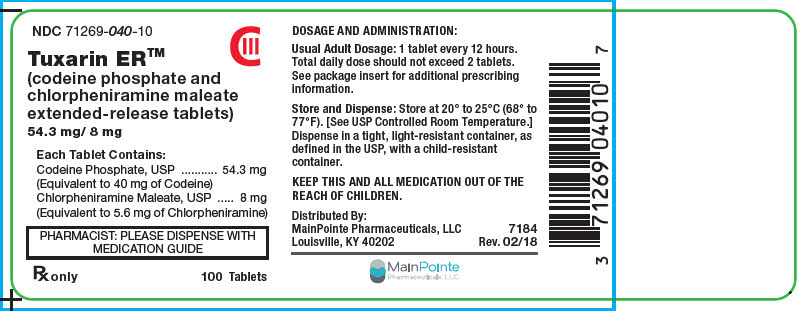
Tuxarin codeine phosphate and chlorpheniramine maleate 54.3 mg; 8 mg Tablet, Extended Release, 100-count
🆔 Identity & classification
Where does this data come from?
🏷️ RxNorm drug class
This medicine belongs to the Histamine-1 Receptor Antagonist class.
Where does this data come from?
🏭 Manufacturer & labeler
Where does this data come from?
🩺 Clinical
Chlorpheniramine is used to treat allergy symptoms: sneezing runny nose itchy nose or throat red, itchy, watery eyes Chlorpheniramine is in a class of medications called antihistamines. It works by blocking the action of histamine, a substance in the body that causes allergic symptoms.
Read the full MedlinePlus article ↗- Tuxarin ER is a combination of two ingredients working on two fronts. The codeine acts on your brain's cough center to quiet a persistent cough. The chlorpheniramine is an antihist...
- What exactly is this medication supposed to do for me?
- Absolutely not — this is one of the most important things to know. Alcohol and codeine together can dangerously slow your breathing, and in serious cases can lead to coma or death....
- Is it okay to have a glass of wine or a beer while taking this?
Patient education
Supplement & herbal interactions
Where does this data come from?
Ask a licensed pharmacist directly — free, answered by our team.
💊 What it looks like
Where does this data come from?
🧪 Inactive Ingredients / Excipients
Inactive ingredients, also called excipients, are components of the drug product other than the active ingredient. They may include fillers, dyes, coatings, preservatives, flavors, or other formulation ingredients.
Where does this data come from?
IACT rows and label-wide narrative are kept separate; availability and product-level specificity depend on the submitted label.Inactive ingredient FAQ
Are inactive ingredients the same for every manufacturer?
Why might an inactive ingredient be missing?
Can inactive ingredients matter?
💲 Pricing
A drug doesn't have one price. Each row is a different public payment system, and none is what you'd pay at the counter — that depends on your insurance. The ⓘ on each row explains what it measures.
| Price system | Per each | Per package |
|---|---|---|
| Retail pharmacies payNADAC · weekly | Not in the retail survey — common for institutional, discontinued, or low-volume packs. | |
| Medicaid paysCMS SDUD · 12 mo | No recent Medicaid claims on file for this NDC — rare and low-volume NDCs are suppressed in the public data. | |
| Medicare drug plans payPart D · quarterly | No Part D plan price is available for this NDC in our data. | |
Where does this data come from?
🔁 Therapeutic equivalents
| Product | Labeler | Pack | NADAC/unit | TE | Status | Price vs. this |
|---|---|---|---|---|---|---|
| Tuxarin 54.3 mg/1; 8 mgthis 71269-0040-10 | Mainpointe | 100 tablets | — | — | FDA listed | — |
Where does this data come from?
⏳ Availability & generic status
We did not find an FDA-approved generic match for this exact strength, form and route. Patent/protection dates below may affect future generic timing.
Why the date isn’t exact: Generic timing can change because patents may be challenged, settled, licensed, added, removed, or worked around with a narrower label — and FDA approval does not always mean a pharmacy can get the generic today.
🛈 What do these terms mean?
- Patent
- Legal protection listed in the Orange Book that may delay generic approval or launch. Issued by the U.S. Patent & Trademark Office.
- Substance patent
- Covers the active drug molecule itself — the hardest to design around. A generic generally can’t launch until it expires.
- Formulation (product) patent
- Covers a specific formulation or dosage form. A generic can sometimes work around it with a different formulation.
- Method-of-use patent
- A patent covering one specific approved use of the drug — not necessarily the whole molecule. A generic can sometimes launch with a “skinny label” that carves out the protected use and keeps the others.
- Skinny label
- A generic label that omits a still-patented use when the FDA allows it — letting a generic reach the market for the unprotected uses.
- Exclusivity
- FDA-granted marketing protection, separate from patents — e.g. 5-yr new chemical entity, 7-yr orphan drug, or a +6-month pediatric extension.
- Paragraph IV
- A generic applicant’s formal challenge to a listed patent. It can potentially lead to earlier generic entry, but often involves litigation or a settlement.
- RLD / RS
- Reference Listed Drug — the brand product the FDA uses as the reference for generic applications. Reference Standard — the product the FDA expects generics to compare against in bioequivalence testing.
- TE / AB rating
- FDA therapeutic-equivalence rating. An AB rating generally means the FDA considers a generic therapeutically equivalent to — and substitutable for — the brand.
- LOE (loss of exclusivity)
- The latest patent or exclusivity currently listed — the loss-of-exclusivity / latest-listed-protection date shown on this page. Paragraph-IV challenges and settlements can move the real date earlier; FDA approval and a manufacturer’s decision to market can move it later.
Built from the FDA Orange Book. The bars above are scaled to each protection’s expiry; the red LOE marker is the last one to lapse.
| Patent | Type | Use code | Expires |
|---|---|---|---|
| US 9066942 ↗ | Method of use | U-1716 | Jan 3, 2032 |
| US 9107921 ↗ | Drug product | — | Jan 3, 2032 |
Is there a generic version of TUXARIN ER 8-54.3 MG TABLET?
The FDA approved a generic — why can’t I get it at my pharmacy yet?
Why do different websites show different generic release dates?
What does “FDA listed” mean?
What does a patent or protection date mean here?
What does “current Orange Book estimate” mean?
Can a generic come out before the last patent expires?
Can a generic come out after the listed dates?
What is the difference between patents and exclusivity?
Why are there multiple patent dates?
Where does this data come from?
📦 Packaging — all sizes for this product
| Package NDC | Description | Marketing start | Status |
|---|---|---|---|
| 71269-0040-10 You're viewing this | 100 TABLET, EXTENDED RELEASE in 1 BOTTLE, PLASTIC (71269-040-10) | 2018-10-15 | Active |
| 71269-0040-30 | 100 TABLET, EXTENDED RELEASE in 1 BOTTLE, PLASTIC (71269-040-30) | 2018-10-15 | Active |
Pack size FAQ
What quantity is in NDC 71269-0040-10?
What is the difference between NDC 71269-0040-10 and NDC 71269-0040-30?
What NDC number is used to bill for this package of Tuxarin codeine phosphate and chlorpheniramine maleate 54.3 mg; 8 mg Tablet, Extended Release?
🧭 About this NDC listing & data coverage
What data is (and isn’t) available for this NDC — tap to expand
| NDC identity (package / product / labeler codes) | ✓ Available |
| Labeler | ✓ Available |
| Product & package description | ✓ Available |
| Marketing category & status | ✓ Available |
| Active ingredient / dosage form / route | ✓ Available |
| FDA label (SPL via DailyMed) | ✓ Available |
| Package photos | ✓ Available |
| Inactive ingredients (structured) | — Not published for this NDC The labeler did not submit a structured excipient list, or no SPL is available. |
| NADAC pharmacy acquisition price (CMS) | — Not published for this NDC CMS publishes NADAC only for NDCs reported in its retail-pharmacy survey. |
| Orange Book / therapeutic-equivalence data | ✓ Available |
| HCPCS J-code billing crosswalk | — Not published for this NDC Most self-administered / retail products have no J-code — that is normal. |
| Medicaid utilization (CMS SDUD) | — Not published for this NDC CMS reports utilization only for NDCs with Medicaid claims above its privacy threshold. |
Questions about this listing
Why is there no price listed?
Is the NDC printed on the package the same as the 11-digit billing NDC?
What do the three segments of this NDC mean?
Is this package still being marketed?
Does this product come in other package sizes?
Who lists this product with the FDA?
Do I need a prescription for this product?
Where does this data come from?
📄 Full prescribing information FDA SPL
🚨 Boxed Warning ▾
WARNING: ADDICTION, ABUSE, AND MISUSE; LIFE-THREATENING RESPIRATORY DEPRESSION; ACCIDENTIAL INGESTION; ULTRA-RAPID METABOLISM OF CODEINE AND OTHER RISK FACTORS FOR LIFE-THREATENING RESPIRATORY DEPRESSION IN CHILDREN; MEDICATION ERRORS; INTERACTIONS WITH DRUGS AFFECTING CYTOCHROME P450 ISOENZYMES; CONCOMITANT USE WITH BENZODIAZEPINES OR OTHER CNS DEPRESSANTS; NEONATAL OPOID WITHDRAWAL SYNDROME WARNING: ADDICTION, ABUSE, AND MISUSE; LIFE-THREATENING RESPIRATORY DEPRESSION; ACCIDENTIAL INGESTION; ULTRA-RAPID METABOLISM OF CODEINE AND OTHER RISK FACTORS FOR LIFE-THREATENING RESPIRATORY DEPRESSION IN CHILDREN; MEDICATION ERRORS; INTERACTIONS WITH DRUGS AFFECTING CYTOCHROME P450 ISOENZYMES; CONCOMITANT USE WITH BENZODIAZEPINES OR OTHER CNS DEPRESSANTS; NEONATAL OPOID WITHDRAWAL SYNDROME See full prescribing information for complete boxed warning.
TUXARIN ER exposes users to risks of addiction, abuse, and misuse, which can lead to overdose and death. Assess patient's risk before prescribing and monitor closely for these behaviors and conditions. ( 5.1 ) Serious, life-threatening, or fatal respiratory depression may occur.
Monitor closely, especially upon initiation or when used in patients at higher risk. ( 5.2 ) Accidental ingestion of TUXARIN ER, especially by children, can result in a fatal overdose of codeine. ( 5.2 ) Life-threatening respiratory depression and death have occurred in children who received codeine; most cases followed tonsillectomy and/or adenoidectomy, and many of the children had evidence of being an ultra-rapid metabolizer of codeine due to a CYP2D6 polymorphism.
( 5.3 ) TUXARIN ER is contraindicated in children younger than 12 years of age and in children younger than 18 years of age following tonsillectomy and/or adenoidectomy. ( 4 ) Avoid the use of TUXARIN ER in adolescents 12 to 18 years of age who have other risk factors that may increase their sensitivity to the respiratory depressant effects of codeine. Ensure accuracy when prescribing, dispensing, and administering TUXARIN ER.
Dosing errors can result in accidental overdose and death. ( 2.1 , 5.6 ) The effects of concomitant use or discontinuation of cytochrome P450 3A4 inducers, 3A4 inhibitors, or 2D6 inhibitors with codeine are complex, requiring careful consideration of the effects on the parent drug, codeine, and the active metabolite, morphine. Avoid the use of TUXARIN ER in these patients.
( 5.4 , 7.1 , 7.2 , 7.4 ) Concomitant use of opioids with benzodiazepines or other central nervous system (CNS) depressants, including alcohol, may result in profound sedation, respiratory depression, coma, and death. Avoid the use of TUXARIN ER in patients taking benzodiazepines, other CNS depressants, or alcohol. ( 5.9 , 7.5 ) TUXARIN ER is not recommended for use in pregnant women.
Prolonged use of TUXARIN ER during pregnancy can result in neonatal opioid withdrawal syndrome, which may be life-threatening if not recognized and treated. If TUXARIN ER is used for a prolonged period in a pregnant woman, advise the patient of the risk of neonatal opioid withdrawal syndrome and ensure that appropriate treatment will be available. ( 5.15 , 8.1 ) Addiction, Abuse, and Misuse TUXARIN ER exposes patients and other users to the risks of opioid addiction, abuse, and misuse, which can lead to overdose and death.
Reserve TUXARIN ER for use in adult patients for whom the benefits of cough suppression are expected to outweigh the risks, and in whom an adequate assessment of the etiology of the cough has been made. Assess each patient's risk prior to prescribing TUXARIN ER, prescribe TUXARIN ER for the shortest duration that is consistent with individual patient treatment goals , monitor all patients regularly for the development of addition or abuse, and refill only after reevaluation of the need for continued treatment. [ see Warnings and Precautions (5.1) ] Life-Threatening Respiratory Depression Serious, life-threatening, or fatal respiratory depression may occur with u…
🎯 Indications and Usage ▾
1 INDICATIONS AND USAGE TUXARIN ER is indicated for the temporary relief of cough and upper respiratory symptoms associated with allergy or the common cold in patients 18 years of age and older. TUXARIN ER is a combination of codeine, an opioid agonist; and chlorpheniramine, a histamine-1 (H 1 ) receptor antagonist, indicated for the temporary relief of cough and upper respiratory symptoms associated with allergy or the common cold in patients 18 years of age and older. ( 1 ) Important Limitations of Use ( 1 ) Not indicated for pediatric patients under 18 years of age.
Because of the risks of addiction, abuse, and misuse with opioids, even at recommended doses, reserve TUXARIN ER for use in adult patients for whom the benefits of cough suppression are expected to outweigh the risks, and in whom an adequate assessment of the etiology of the cough has been made. Important Limitations of Use Not indicated for pediatric patients under 18 years of age [see Use in Specific Population (8.4) ]. Contraindicated in pediatric patients under 12 years of age [ see Contraindications (4) , Use in Specific Populations (8.4) ].
Contraindicated in pediatric patients 12 to 18 years of age after tonsillectomy or adenoidectomy [see Contraindications (4) , Use in Specific Populations (8.4) ]. Because of the risks of addiction, abuse, and misuse with opioids, even at recommended doses [ see Warnings and Precautions (5.1) ], reserve TUXARIN ER for use in adult patients for whom the benefits of cough suppression are expected to outweigh the risks, and in whom an adequate assessment of the etiology of the cough has been made.
⏱️ Dosage and Administration ▾
2 DOSAGE AND ADMINISTRATION Adults 18 years of age and older : 1 tablet every 12 hours as needed, not to exceed 2 tablets in 24 hours. ( 2.2 ) Do not increase the dose or dosing frequency. ( 2.1 ) Prescribe for the shortest duration consistent with treatment goals. ( 2.3 ) Reevaluate patients with unresponsive cough in 5 days or sooner for possible underlying pathology. ( 2.3 ) Reevaluate patient prior to refilling. ( 2.3 )
2.1Important Dosage and Administration Instructions Administer TUXARIN ER by the oral route only. Advise patients not to increase the dose or dosing frequency of TUXARIN ER because serious adverse events such as respiratory depression may occur with overdosage [ see Warnings and Precautions (5.2) , Overdosage (10) ]. The dosage of TUXARIN ER should not be increased if cough fails to respond; an unresponsive cough should be reevaluated for possible underlying pathology [ see Dosage and Administration (2.3) , Warnings and Precautions (5.5) ].
2.2Recommended Dosage Adults 18 years of age and older: one tablet every 12 hours as needed, not to exceed 2 tablets in 24 hours.
2.3Monitoring, Maintenance, and Discontinuation of Therapy Prescribe TUXARIN ER for the shortest duration that is consistent with individual patient treatment goals [ see Warnings and Precautions (5.1) ] Monitor patients closely for respiratory depression, especially within the first 24-72 hours of initiating therapy [ see Warnings and Precautions (5.2) ] . Reevaluate patients with unresponsive cough in 5 days or sooner for possible underlying pathology, such as foreign body or lower respiratory tract disease [ see Warnings and Precautions (5.5) ].
If a patient requires a refill, reevaluate the cause of the cough and assess the need for continued treatment with TUXARIN ER, the relative incidence of adverse reactions, and the development of addiction, abuse, or misuse [ see Warnings and Precautions (5.1) ]. Do not abruptly discontinue TUXARIN ER in a physically-dependent patient [ see Drug Abuse and Dependence (9.3) ]. When a patient who has been taking TUXARIN ER regularly and may be physically dependent no longer requires therapy with TUXARIN ER, taper the dose gradually, by 25% to 50% every 2 to 4 days, while monitoring carefully for signs and symptoms of withdrawal.
If the patient develops these signs or symptoms, raise the dose to the previous level and taper more slowly, either by increasing the interval between decreases, decreasing the amount of change in dose, or both.
💊 Dosage Forms and Strengths ▾
3 DOSAGE FORMS AND STRENGTHS Extended-release tablets: Each tablet contains 54.3 mg of codeine phosphate (equivalent to 40 mg of codeine); and 8 mg of chlorpheniramine maleate (equivalent to 5.6 mg of chlorpheniramine). Each tablet is white to off-white, uncoated, round, debossed with MP on one side and CC on the other side [ see Description (11) ]. Extended-release (ER) tablet: contains 54.3 mg of codeine phosphate; and 8 mg of chlorpheniramine maleate.
( 3 )
⛔ Contraindications ▾
4 CONTRAINDICATIONS TUXARIN ER is contraindicated for: All children younger than 12 years of age [ see Warnings and Precautions (5.2 , 5.3 , 5.4) , Use in Specific Populations (8.4) ]. Postoperative management in children younger than 18 years of age following tonsillectomy and/or adenoidectomy [ see Warnings and Precautions (5.2 , 5.3) ]. TUXARIN ER is also contraindicated in patients with: Significant respiratory depression [see Warnings and Precautions (5.2) ] Acute or severe bronchial asthma in an unmonitored setting or in the absence of resuscitative equipment [ see Warnings and Precautions (5.5) ].
Known or suspected gastrointestinal obstruction, including paralytic ileus [ see Warnings and Precautions (5.10) ]. Concurrent use of monoamine oxidase inhibitors (MAOIs) or use of MAOIs within 14 days [ see Warnings and Precautions (5.13) , Drug Interactions (7.7) ]. Hypersensitivity to codeine, chlorpheniramine, or any of the inactive ingredients in TUXARIN ER [ see Adverse Reactions (6) ].
Persons known to be hypersensitive to certain other opioids may exhibit cross-reactivity to codeine. Children younger than 12 years of age ( 4 ) Significant respiratory depression. ( 4 ) Acute or severe bronchial asthma in an unmonitored setting or in absence of resuscitative equipment.
( 4 ) Known or suspected gastrointestinal obstruction, including paralytic ileus. ( 4 ) Concurrent use of monoamine oxidase inhibitor (MAOI) therapy or within the last 14 days. ( 4 ) Hypersensitivity to codeine or other opiates, chlorpheniramine, or any of the inactive ingredients in TUXARIN ER.
( 4 )
⚠️ Warnings and Cautions ▾
5 WARNINGS AND PRECAUTIONS See Boxed WARNINGS Life-threatening respiratory depression in patients with chronic pulmonary disease or in elderly, cachectic, or debilitated patients: Monitor closely, particularly during initiation of therapy. ( 5.5 ) Activities requiring mental alertness: Avoid engaging in hazardous tasks requiring mental alertness such as driving or operating machinery. ( 5.7 ) Risks of use in patients with head injury, impaired consciousness, increased intracranial pressure, or brain tumors: Avoid use.
May increase intracranial pressure and obscure the clinical course of head injuries. ( 5.11 ) Seizures in patients with seizure disorders: Monitor during therapy. ( 5.12 ) Severe hypotension: Monitor during initiation of therapy.
Avoid use in patients with circulatory shock. ( 5.14 ) Adrenal insufficiency: If diagnosed, treat with physiologic replacement of corticosteroids, and wean patient off of the opioid. ( 5.16 )
5.1Addiction, Abuse, and Misuse TUXARIN ER contains codeine, a Schedule III controlled substance. As an opioid, TUXARIN ER exposes users to the risks of addiction, abuse, and misuse [ see Drug Abuse and Dependence (9) ] , which can lead to overdose and death [ see Overdosage (10) ] . Reserve TUXARIN ER for use in adult patients for whom the benefits of cough suppression are expected to outweigh the risks, and in whom an adequate assessment of the etiology of the cough has been made.
Assess each patient's risk prior to prescribing TUXARIN ER, prescribe TUXARIN ER for the shortest duration that is consistent with individual patient treatment goals , monitor all patients regularly for the development of addiction or abuse, and refill only after reevaluation of the need for continued treatment. Although the risk of addiction in any individual is unknown, it can occur in patients appropriately prescribed TUXARIN ER. Addiction can occur at recommended dosages and if the drug is misused or abused.
Risks are increased in patients with a personal or family history of substance abuse (including drug or alcohol abuse or addiction) or mental illness (e.g., major depression). Opioids are sought by drug abusers and people with addiction disorders and are subject to criminal diversion. Consider these risks when prescribing or dispensing TUXARIN ER.
Strategies to reduce these risks include prescribing the drug in the smallest appropriate quantity and advising the patient on the proper disposal of unused drug [ see Patient Counseling Information (17) ]. Contact local state professional licensing board or state controlled substances authority for information on how to prevent and detect abuse or diversion of this product.
5.2Life-Threatening Respiratory Depression Serious, life-threatening, or fatal respiratory depression has been reported with the use of opioids, including codeine, one of the active ingredients in TUXARIN ER. Codeine produces dose-related respiratory depression by directly acting on the brain stem respiratory center that controls respiratory rhythm and may produce irregular and periodic breathing. Codeine is subject to variability in metabolism based upon CYP2D6 genotype, which can lead to an increased exposure to the active metabolite morphine [ see Warnings and Precautions (5.3) ].
Respiratory depression, if not immediately recognized and treated, may lead to respiratory arrest and death. Management of respiratory depression includes discontinuation of TUXARIN ER, close observation, supportive measures, and use of opioid antagonists (e.g. naloxone), depending on the patient's clinical status [ see Overdosage (10) ]. Carbon dioxide (CO 2 ) retention from opioid-induced respiratory depression can exacerbate the sedating effects of opioids.
While serious, life-threatening, or fatal respiratory depression can occur at any time during the use of TUXARIN ER, the risk is greatest during the initiation of therapy, when TUXARIN ER is used concomitantly with other drugs that may cause respiratory depressi…
🤒 Adverse Reactions ▾
6 ADVERSE REACTIONS The following serious adverse reactions are described, or described in greater detail, in other sections: Addiction, abuse, and misuse [ see Warnings and Precautions (5.1) , Drug Abuse and Dependence (9.3) ] Life-threatening respiratory depression [ see Warnings and Precautions (5.2 , 5.3 , 5.4 , 5.5 , 5.9) , Overdosage (10) ] Ultra-rapid metabolism of codeine and other risk factors for life-threatening respiratory depression in children [ see Warnings and Precautions (5.3) ] Accidental overdose and death due to medication errors [ see Warnings and Precautions (5.6) ] Decreased mental alertness with impaired mental and/or physical abilities [ see Warnings and Precautions (5.7) ] Interactions with benzodiazepines and other CNS depressants [ see Warnings and Precautions (5.9) ] Paralytic ileus, gastrointestinal adverse reactions [ see Warnings and Precautions (5.10) ] Increased intracranial pressure [ see Warnings and Precautions (5.11) ] Obscured clinical course in patients with head injuries [ see Warnings and Precautions (5.11) ] Seizures [ see Warnings and Precautions (5.12) ] Interactions with MAOI [ see Warnings and Precautions (5.13) ] Severe hypotension [ see Warnings and Precautions (5.14) ] Neonatal Opioid Withdrawal Syndrome [ see Warnings and Precautions (5.15) ] Adrenal insufficiency [ see Warnings and Precautions (5.16) ] The following adverse reactions have been identified during clinical studies, or during post-approval use of codeine and/or chlorpheniramine.
Because these reactions may be reported voluntarily from a population of uncertain size, it is not always possible to reliably estimate their frequency or establish a causal relationship to drug exposure. The most common adverse reactions to TUXARIN ER include: Sedation (somnolence, mental clouding, lethargy), impaired mental and physical performance, lightheadedness, dizziness, headache, dry mouth, nausea, vomiting, constipation, shortness of breath, and sweating. Other reactions include: Anaphylaxis : Anaphylaxis has been reported with codeine, one of the ingredients in TUXARIN ER.
Body as a whole : Coma, death, fatigue, falling injuries, lethargy. Cardiovascular : Peripheral edema, increased blood pressure, decreased blood pressure, tachycardia, chest pain, palpitation, syncope, orthostatic hypotension, prolonged QT interval, hot flush. Central Nervous System : Ataxia, facial dyskinesia, insomnia, increased intracranial pressure, migraine, seizure, tremor, tinnitus, vertigo.
Dermatologic : Flushing, hyperhidrosis, pruritus, rash. Endocrine/Metabolic : Cases of serotonin syndrome, a potentially life-threatening condition, have been reported during concomitant use of opioids with serotonergic drugs. Cases of adrenal insufficiency have been reported with opioid use, more often following greater than one month of use.
Cases of androgen deficiency have occurred with chronic use of opioids [ see Clinical Pharmacology (12.2) ]. Gastrointestinal : Abdominal pain, bowel obstruction, decreased appetite, diarrhea, difficulty swallowing, GERD, indigestion, pancreatitis, paralytic ileus, biliary tract spasm (spasm of the sphincter of Oddi). Genitourinary : Urinary tract infection, ureteral spasm, spasm of vesicle sphincters, urinary retention.
Hematologic : Agranulocytosis, aplastic anemia, and thrombocytopenia have been reported. Laboratory: Increases in serum amylase. Musculoskeletal : Arthralgia, backache, muscle spasm.
Ophthalmic : Blurred vision, diplopia, miosis (constricted pupils), visual disturbances. Psychiatric : Agitation, anxiety, confusion, fear, dysphoria, depression, hallucinations. Reproductive : Hypogonadism, infertility.
Respiratory : Bronchitis, cough, dry nose, dry throat, dyspnea, nasal congestion, nasopharyngitis, respiratory depression, sinusitis, thickening of bronchial secretions, tightness of chest and wheezing, upper respiratory tract infection. Other : Drug abuse, drug dependence, opioid withdrawal syndrome. Hypoglycemi…
🔄 Drug Interactions ▾
7 DRUG INTERACTIONS No specific drug interaction studies have been conducted with TUXARIN ER. Phenytoin : Avoid concomitant use; may increase phenytoin levels. ( 7.4 ) Serotonergic drugs : Concomitant use may result in serotonin syndrome.
Discontinue if serotonin syndrome is suspected. ( 7.6 ) Muscle relaxants : Avoid concomitant use. ( 7.8 ) Diuretics: Codeine may reduce the efficacy of diuretics.
Monitor for reduced effect. ( 7.9 ) Anticholinergic drugs : Concurrent use may cause paralytic ileus. ( 5.10 , 7.10 )
7.1Inhibitors of CYP3A4 The concomitant use of TUXARIN ER with CYP3A4 inhibitors, such as macrolide antibiotics (e.g., erythromycin), azole-antifungal agents (e.g. ketoconazole), or protease inhibitors (e.g., ritonavir), may result in an increase in codeine plasma concentrations with subsequently greater metabolism by cytochrome CYP2D6, resulting in greater morphine levels, which could increase or prolong adverse reactions and may cause potentially fatal respiratory depression, particularly when an inhibitor is added after a stable dose of TUXARIN ER is achieved [ see Warnings and Precautions (5.8) ].
After stopping a CYP3A4 inhibitor, as the effects of the inhibitor decline, it may result in lower codeine levels, greater norcodeine levels, and less metabolism via CYP2D6 with resultant lower morphine levels [ see Clinical Pharmacology (12.3) ], resulting in decreased opioid efficacy or a withdrawal syndrome in patients who had developed physical dependence to codeine. Avoid the use of TUXARIN ER while taking a CYP3A4 inhibitor. If concomitant use is necessary, monitor patients for respiratory depression and sedation at frequent intervals.
7.2CYP3A4 Inducers The concomitant use of TUXARIN ER and CYP3A4 inducers, such as rifampin, carbamazepine, or phenytoin, can result in lower codeine levels, greater norcodeine levels, and less metabolism via 2D6 with resultant lower morphine levels [ see Clinical Pharmacology (12.3) ], resulting in decreased efficacy or onset of a withdrawal syndrome in patients who have developed physical dependence [ see Warnings and Precautions (5.8) ]. After stopping a CYP3A4 inducer, as the effects of the inducer decline, codeine plasma concentrations may increase with subsequently greater metabolism by cytochrome CYP2D6, resulting in greater morphine levels [ see Clinical Pharmacology (12.3) ], which could increase or prolong both the therapeutic effects and adverse reactions, and may cause serious respiratory depression.
Avoid the use of TUXARIN ER in patients who are taking CYP3A4 inducers. If concomitant use of a CYP3A4 inducer is necessary, follow the patient for reduced efficacy.
7.3Phenytoin Adverse event reports in the literature suggest a possible drug interaction involving increased serum phenytoin levels and phenytoin toxicity when chlorpheniramine and phenytoin are co-administered. The exact mechanism for this interaction is not known, however it is believed that chlorpheniramine may inhibit the hepatic metabolism of phenytoin. Avoid the use of TUXARIN ER while taking phenytoin.
7.4Inhibitors of CYP2D6 Codeine is metabolized by CYP2D6 to form morphine. The concomitant use of TUXARIN ER and CYP2D6 inhibitors, such as paroxetine, fluoxetine, bupropion, or quinidine, can increase the plasma concentration of codeine, but can decrease the plasma concentration of active metabolite morphine, which could result in reduced efficacy [see Clinical Pharmacology (12.3) ]. After stopping a CYP2D6 inhibitor, as the effects of the inhibitor decline, the codeine plasma concentration will decrease but the active metabolite morphine plasma concentration will increase, which could increase or prolong adverse reactions and may cause potentially fatal respiratory depression [ see Clinical Pharmacology (12.3) ].
Avoid the use of TUXARIN ER in patients who are taking inhibitors of CYP2D6.
7.5Benzodiazepines and Other CNS Depressants Due to additive pharmacologic effect, the concomitant use of benzodia…
👥 Use in Specific Populations ▾
8 USE IN SPECIFIC POPULATIONS Pregnancy : Avoid use in pregnant women. May cause fetal harm. ( 8.1 ) Lactation : Breastfeeding not recommended. ( 8.2 ) Renal Impairment : Use with caution in patients with severe renal impairment. ( 8.6 ) Hepatic Impairment : Use with caution in patients with severe hepatic impairment. ( 8.7 )
8.1Pregnancy Risk Summary TUXARIN ER is not recommended for use in pregnant women, including during or immediately prior to labor. Prolonged use of opioids during pregnancy may cause neonatal opioid withdrawal syndrome [see Warnings and Precautions (5.15) and Clinical Considerations ]. There are no available data with TUXARIN ER use in pregnant women to inform a drug-associated risk for adverse developmental outcomes.
Published studies with codeine have reported inconsistent findings and have important methodological limitations ( see Data ). There are reports of respiratory depression when codeine is used during labor and delivery (see Clinical Considerations ) . Reproductive toxicity studies have not been conducted with TUXARIN ER; however, studies are available with individual active ingredients ( see Data ).
In animal reproduction studies, codeine administered by the oral route to pregnant rats during the period of organogenesis increased resorptions and decreased fetal weights at a dose approximately 15 times the maximum recommended human dose (MRHD) in the presence of maternal toxicity ( see Data ). Chlorpheniramine administered by the oral route to mice throughout pregnancy was embryolethal at a dose approximately 9 times the MRHD and decreased postnatal survival when dosing was continued after parturition. Chlorpheniramine administered by the oral route to male and female rats prior to mating produced embryolethality at a dose approximately 9 times the MRHD ( see Data ).
Based on the animal data, advise pregnant women of the potential risk to a fetus. The estimated background risk of major birth defects and miscarriage for the indicated population is unknown. All pregnancies have a background risk of birth defect, loss, or other adverse outcomes.
In the U.S. general population, the estimated background risk of major birth defects and miscarriage in clinically recognized pregnancies is 2 to 4% and 15 to 20%, respectively. Clinical Considerations Fetal/Neonatal Adverse Reactions Prolonged use of opioid analgesics during pregnancy for medical or nonmedical purposes can result in physical dependence in the neonate and neonatal opioid withdrawal syndrome shortly after birth. Neonatal opioid withdrawal syndrome presents as irritability, hyperactivity and abnormal sleep pattern, high pitched cry, tremor, vomiting, diarrhea and failure to gain weight.
The onset, duration, and severity of neonatal opioid withdrawal syndrome vary based on the specific opioid used, duration of use, timing and amount of last maternal use, and rate of elimination of the drug by the newborn. Observe newborns for symptoms of neonatal opioid withdrawal syndrome and manage accordingly [ see Warnings and Precautions (5.15) ]. Labor or Delivery Opioids cross the placenta and may produce respiratory depression and psycho-physiologic effects in neonates.
An opioid antagonist, such as naloxone, must be available for reversal of opioid-induced respiratory depression in the neonate. Opioids, including TUXARIN ER, can prolong labor through actions which temporarily reduce the strength, duration, and frequency of uterine contractions. However, this effect is not consistent and may be offset by an increased rate of cervical dilation, which tends to shorten labor.
Monitor neonates exposed to opioids during labor for signs of excess sedation and respiratory depression. Data Human Data No new primary pharmacodynamic studies were conducted. Codeine is a well-established antitussive and chlorpheniramine maleate is a recognized antihistamine.
Both drugs have been used at these strengths in combination for several years. Codeine Published data fr…
🤰 Pregnancy ▾
8.1Pregnancy Risk Summary TUXARIN ER is not recommended for use in pregnant women, including during or immediately prior to labor. Prolonged use of opioids during pregnancy may cause neonatal opioid withdrawal syndrome [see Warnings and Precautions (5.15) and Clinical Considerations ]. There are no available data with TUXARIN ER use in pregnant women to inform a drug-associated risk for adverse developmental outcomes.
Published studies with codeine have reported inconsistent findings and have important methodological limitations ( see Data ). There are reports of respiratory depression when codeine is used during labor and delivery (see Clinical Considerations ) . Reproductive toxicity studies have not been conducted with TUXARIN ER; however, studies are available with individual active ingredients ( see Data ).
In animal reproduction studies, codeine administered by the oral route to pregnant rats during the period of organogenesis increased resorptions and decreased fetal weights at a dose approximately 15 times the maximum recommended human dose (MRHD) in the presence of maternal toxicity ( see Data ). Chlorpheniramine administered by the oral route to mice throughout pregnancy was embryolethal at a dose approximately 9 times the MRHD and decreased postnatal survival when dosing was continued after parturition. Chlorpheniramine administered by the oral route to male and female rats prior to mating produced embryolethality at a dose approximately 9 times the MRHD ( see Data ).
Based on the animal data, advise pregnant women of the potential risk to a fetus. The estimated background risk of major birth defects and miscarriage for the indicated population is unknown. All pregnancies have a background risk of birth defect, loss, or other adverse outcomes.
In the U.S. general population, the estimated background risk of major birth defects and miscarriage in clinically recognized pregnancies is 2 to 4% and 15 to 20%, respectively. Clinical Considerations Fetal/Neonatal Adverse Reactions Prolonged use of opioid analgesics during pregnancy for medical or nonmedical purposes can result in physical dependence in the neonate and neonatal opioid withdrawal syndrome shortly after birth. Neonatal opioid withdrawal syndrome presents as irritability, hyperactivity and abnormal sleep pattern, high pitched cry, tremor, vomiting, diarrhea and failure to gain weight.
The onset, duration, and severity of neonatal opioid withdrawal syndrome vary based on the specific opioid used, duration of use, timing and amount of last maternal use, and rate of elimination of the drug by the newborn. Observe newborns for symptoms of neonatal opioid withdrawal syndrome and manage accordingly [ see Warnings and Precautions (5.15) ]. Labor or Delivery Opioids cross the placenta and may produce respiratory depression and psycho-physiologic effects in neonates.
An opioid antagonist, such as naloxone, must be available for reversal of opioid-induced respiratory depression in the neonate. Opioids, including TUXARIN ER, can prolong labor through actions which temporarily reduce the strength, duration, and frequency of uterine contractions. However, this effect is not consistent and may be offset by an increased rate of cervical dilation, which tends to shorten labor.
Monitor neonates exposed to opioids during labor for signs of excess sedation and respiratory depression. Data Human Data No new primary pharmacodynamic studies were conducted. Codeine is a well-established antitussive and chlorpheniramine maleate is a recognized antihistamine.
Both drugs have been used at these strengths in combination for several years. Codeine Published data from case-control and observational studies on codeine use during pregnancy are inconsistent in their findings. Some studies of codeine exposure showed an increased risk of overall congenital malformations while others did not.
An increased risk of specific malformations with codeine exposure such as respiratory malformations, s…
🧒 Pediatric Use ▾
8.4Pediatric Use TUXARIN ER is not indicated for use in patients younger than 18 years of age because the benefits of symptomatic treatment of cough associated with allergies or the common cold do not outweigh the risks for use of codeine in these patients [ see Indications (1) , Warnings and Precautions (5.4) ]. Life-threatening respiratory depression and death have occurred in children who received codeine [ see Warnings and Precautions (5.2) ]. In most of the reported cases, these events followed tonsillectomy and/or adenoidectomy, and many of the children had evidence of being ultra-rapid metabolizers of codeine (i.e., multiple copies of the gene for cytochrome P450 isoenzyme 2D6 or high morphine concentrations).
Children with sleep apnea may be particularly sensitive to the respiratory depressant effects of codeine. Because of the risk of life-threatening respiratory depression and death: TUXARIN ER is contraindicated in all children younger than 12 years of age [see Contraindications (4) ] . TUXARIN ER is contraindicated for post-operative management in pediatric patients younger than 18 years of age following tonsillectomy and/or adenoidectomy [see Contraindications (4) ] .
Avoid the use of TUXARIN ER in adolescents 12 to 18 years of age who have other risk factors that may increase their sensitivity to the respiratory depressant effects of codeine unless the benefits outweigh the risks. Risk factors include conditions associated with hypoventilation, such as postoperative status, obstructive sleep apnea, obesity, severe pulmonary disease, neuromuscular disease, and concomitant use of other medications that cause respiratory depression. [see Warnings and Precautions (5.3) ] .
🧓 Geriatric Use ▾
8.5Geriatric Use Clinical studies have not been conducted with TUXARIN ER in geriatric populations. Use caution when considering the use of TUXARIN ER in patients 65 years of age or older. Elderly patients may have increased sensitivity to codeine; greater frequency of decreased hepatic, renal, or cardiac function; or concomitant disease or other drug therapy [ see Warnings and Precautions (5.5) ].
Respiratory depression is the chief risk for elderly patients treated with opioids, including TUXARIN ER. Respiratory depression has occurred after large initial doses of opioids were administered to patients who were not opioid-tolerant or when opioids were co-administered with other agents that depress respiration [ see Warnings and Precautions (5.5 , 5.9) ]. Codeine is known to be substantially excreted by the kidney, and the risk of adverse reactions to this drug may be greater in patients with impaired renal function.
Because elderly patients are more likely to have decreased renal function, monitor these patients closely for respiratory depression, sedation, and hypotension.
🆘 Overdosage ▾
10 OVERDOSAGE Clinical Presentation Codeine Acute overdose with codeine is characterized by respiratory depression (a decrease in respiratory rate and/or tidal volume, Cheyne-Stokes respiration, cyanosis), extreme somnolence progressing to stupor or coma, skeletal muscle flaccidity, cold and clammy skin, constricted pupils, and, in some cases, pulmonary edema, bradycardia, partial or complete airway obstruction, atypical snoring, hypotension, hypoglycemia, circulatory collapse, cardiac arrest, and death. Codeine may cause miosis, even in total darkness.
Pinpoint pupils are a sign of opioid overdose but are not pathognomonic (e.g., pontine lesions of hemorrhagic or ischemic origin may produce similar findings). Marked mydriasis rather than miosis may be seen with hypoxia in overdose situations [ see Clinical Pharmacology (12.2) ]. Chlorpheniramine Signs and symptoms of chlorpheniramine overdosage may vary from central nervous system depression to stimulation.
Central toxic effects are characterized by agitation, anxiety, delirium, disorientation, hallucinations, hyperactivity, sedation, and seizures. Severe overdosage may produce coma, medullary paralysis, and death. Peripheral toxicity includes hypertension, tachycardia, dysrhythmias, vasodilation, hyperpyrexia, mydriasis, urinary retention, and diminished gastrointestinal motility.
Atropine-like signs and symptoms (dry mouth, fixed dilated pupils, flushing, tachycardia, hallucinations, gastrointestinal symptoms, convulsions, urinary retention, cardiac arrhythmias and coma) may be observed. Impaired secretion from sweat glands following toxic doses of drugs with anticholinergic side effects may predispose to hyperthermia. Toxic psychosis, a possible class effect from overdose of sedating antihistamines, has been reported.
Treatment of Overdose Treatment of overdosage is driven by the overall clinical presentation, and consists of discontinuation of TUXARIN ER together with institution of appropriate therapy. Give primary attention to the reestablishment of adequate respiratory exchange through provision of a patent and protected airway and the institution of assisted or controlled ventilation. Employ other supportive measures (including oxygen and vasopressors) in the management of circulatory shock and pulmonary edema as indicated.
Cardiac arrest or arrhythmias will require advanced life-support techniques. Gastric emptying may be useful in removing unabsorbed drug. The opioid antagonists, naloxone and nalmefene, are specific antidotes for respiratory depression resulting from opioid overdose.
For clinically significant respiratory or circulatory depression secondary to codeine overdose, administer an opioid antagonist. An antagonist should not be administered in the absence of clinically significant respiratory depression. Because the duration of opioid reversal is expected to be less than the duration of action of codeine in TUXARIN ER, carefully monitor the patient until spontaneous respiration is reliably reestablished.
TUXARIN ER will continue to release codeine and add to the codeine load for 4 hours or longer following ingestion, necessitating prolonged monitoring. If the response to an opioid antagonist is suboptimal or only brief in nature, administer additional antagonist as directed by the product's prescribing information. Hemodialysis is not routinely used to enhance the elimination of codeine or chlorpheniramine from the body.
Urinary excretion of chlorpheniramine is increased when the pH of the urine is acidic; however, acid diuresis is NOT recommended to enhance elimination in overdose, as the risks of acidemia and acute tubular necrosis in patients with rhabdomyolysis far outweigh any potential benefits.
🧬 Clinical Pharmacology ▾
12 CLINICAL PHARMACOLOGY
12.1Mechanism of Action Codeine Codeine is an opioid agonist relatively selective for the mu-opioid receptor, but with a much weaker affinity than morphine. The analgesic and antitussive properties of codeine have been speculated to come from its conversion to morphine. The precise mechanism of action of codeine and other opiates is not known; however, codeine is believed to act centrally on the cough center.
In excessive doses, codeine will depress respiration. Chlorpheniramine Chlorpheniramine is a propylamine derivative antihistamine (H 1 -receptor antagonist) of the alkylamine class that also possesses anticholinergic and sedative activity. It prevents released histamine from dilating capillaries and causing edema of the respiratory mucosa.
12.2Pharmacodynamics Codeine Effects on the Central Nervous System Codeine produces respiratory depression by direct action on brain stem respiratory centers. The respiratory depression involves a reduction in the responsiveness of the brain stem respiratory centers to both increases in carbon dioxide tension and to electrical stimulation. Codeine causes miosis, even in total darkness.
Pinpoint pupils are a sign of opioid overdose but are not pathognomonic (e.g., pontine lesions of hemorrhagic or ischemic origins may produce similar findings). Marked mydriasis rather than miosis may be seen due to hypoxia in overdose situations. Effects on the Gastrointestinal Tract and Other Smooth Muscle Codeine causes a reduction in motility associated with an increase in smooth muscle tone in the antrum of the stomach and duodenum.
Digestion of food in the small intestine is delayed and propulsive contractions are decreased. Propulsive peristaltic waves in the colon are decreased, while tone may be increased to the point of spasm resulting in constipation. Other opioid-induced effects may include a reduction in biliary and pancreatic secretions, spasm of sphincter of Oddi, and transient elevations in serum amylase.
Effects on the Cardiovascular System Codeine produces peripheral vasodilation which may result in orthostatic hypotension or syncope. Manifestations of histamine release and/or peripheral vasodilation may include pruritus, flushing, red eyes and sweating and/or orthostatic hypotension. Effects on the Endocrine System Opioids inhibit the secretion of adrenocorticotropic hormone (ACTH), cortisol, and luteinizing hormone (LH) in humans [ see Adverse Reactions (6) ].
They also stimulate prolactin, growth hormone (GH) secretion, and pancreatic secretion of insulin and glucagon. Chronic use of opioids may influence the hypothalamic-pituitary-gonadal axis, leading to androgen deficiency that may manifest as low libido, impotence, erectile dysfunction, amenorrhea, or infertility. The causal role of opioids in the clinical syndrome of hypogonadism is unknown because the various medical, physical, lifestyle, and psychological stressors that may influence gonadal hormone levels have not been adequately controlled for in studies conducted to date [ see Adverse Reactions (6) ].
Effects on the Immune System Opioids have been shown to have a variety of effects on components of the immune system in in vitro and animal models. The clinical significance of these findings is unknown. Overall, the effects of opioids appear to be modestly immunosuppressive.
Concentration–Adverse Reaction Relationships There is a relationship between increasing codeine plasma concentration and increasing frequency of dose-related opioid adverse reactions such as nausea, vomiting, CNS effects, and respiratory depression. In opioid-tolerant patients, the situation may be altered by the development of tolerance to opioid-related adverse reactions.
12.3Pharmacokinetics Absorption Pharmacokinetic (PK) parameters (Mean ± SD) for TUXARIN ER in fasting, healthy volunteers are shown in the table below. PK Parameter Single-dose Multiple-dose (BID for 6.5 days) Codeine Mean (± SD) Chlorpheniramine Maleate Mean…
🧬 Mechanism of Action ▾
12.1Mechanism of Action Codeine Codeine is an opioid agonist relatively selective for the mu-opioid receptor, but with a much weaker affinity than morphine. The analgesic and antitussive properties of codeine have been speculated to come from its conversion to morphine. The precise mechanism of action of codeine and other opiates is not known; however, codeine is believed to act centrally on the cough center.
In excessive doses, codeine will depress respiration. Chlorpheniramine Chlorpheniramine is a propylamine derivative antihistamine (H 1 -receptor antagonist) of the alkylamine class that also possesses anticholinergic and sedative activity. It prevents released histamine from dilating capillaries and causing edema of the respiratory mucosa.
📦 How Supplied / Storage and Handling ▾
16 HOW SUPPLIED/STORAGE AND HANDLING TUXARIN ER (codeine phosphate and chlorpheniramine maleate) 54.3 mg/ 8 mg extended-release tablets, are white to off-white, uncoated, standard round tablets, debossed with MP on one side and CC on the other side. Supplied in bottles of 30 tablets (NDC 71269-040-30) and 100 tablets (NDC 71269-040-10). Store at 20 to 25°C (68 to 77°F) [see USP Controlled Room Temperature].
Dispense in a tight, light-resistant container, as defined in the USP, with a child-resistant closure. Keep this and all medicine out of reach of children.
📦 Storage and Handling ▾
Store at 20 to 25°C (68 to 77°F) [see USP Controlled Room Temperature]. Dispense in a tight, light-resistant container, as defined in the USP, with a child-resistant closure. Keep this and all medicine out of reach of children.
📋 Description ▾
11 DESCRIPTION TUXARIN ER (codeine phosphate and chlorpheniramine maleate) extended-release tablets, contains codeine, an opioid agonist; and chlorpheniramine, a histamine-1 (H 1 ) receptor antagonist. Each tablet of TUXARIN ER contains 54.3 mg of codeine phosphate and 8 mg of chlorpheniramine maleate for oral administration. TUXARIN ER are white to off-white, uncoated, standard round extended-release matrix tablets.
TUXARIN ER also contains the following inactive ingredients: hypromellose, lactose monohydrate, cellulose microcrystalline, polysorbate 80, magnesium stearate, and colloidal silicon dioxide. Codeine Phosphate The chemical name for codeine phosphate is [morphine3methyl ether phosphate (1:1) (salt)] hemihydrate. It has the following structural formula: Chemical Structure Chlorpheniramine Maleate The chemical name for chlorpheniramine maleate is 2-pyridinepropanamine, γ-(4-chlorophenyl)- N,N -dimethyl-, ( Z )-2-butenedioate (1:1).
It has the following structural formula: Chemical Structure
💬 Information for Patients ▾
17 PATIENT COUNSELING INFORMATION Advise the patient to read the FDA-approved patient labeling (Medication Guide). Addiction, Abuse, and Misuse Inform patients that the use of TUXARIN ER, even when taken as recommended, can result in addiction, abuse, and misuse, which can lead to overdose and death [ see Warnings and Precautions (5.1) ] . Instruct patients not to share TUXARIN ER with others and to take steps to protect TUXARIN ER from theft or misuse.
Important Dosing and Administration Instructions Advise patients take TUXARIN ER exactly as prescribed. Advise patients not to increase the dose or dosing frequency of TUXARIN ER because serious adverse events such as respiratory depression may occur with overdosage [ see Warnings and Precautions (5.2) , Overdosage (10) ]. Life-Threatening Respiratory Depression Inform patients of the risk of life-threatening respiratory depression, including information that the risk is greatest when starting TUXARIN ER and that it can occur even at recommended dosages [ see Warnings and Precautions (5.2) ].
Advise patients how to recognize respiratory depression and to seek medical attention if breathing difficulties develop. Accidental Ingestion Inform patients that accidental ingestion, especially by children, may result in respiratory depression or death [ see Warnings and Precautions (5.2) ]. Instruct patients to take steps to store TUXARIN ER securely and to properly dispose of unused TUXARIN ER in accordance with the local state guidelines and/or regulations.
Ultra-Rapid Metabolism of Codeine and Other Risk Factors for Life-Threatening Respiratory Depression in Children Advise caregivers that TUXARIN ER is not indicated for pediatric patients under 18 years of age and is contraindicated in all children younger than 12 years of age and in children younger than 18 years of age following tonsillectomy and/or adenoidectomy. Activities Requiring Mental Alertness Advise patients to avoid engaging in hazardous tasks that require mental alertness and motor coordination such as operating machinery or driving a motor vehicle as TUXARIN ER may produce marked drowsiness [ see Warnings and Precautions (5.7) ].
Interactions with Benzodiazepines and Other Central Nervous System Depressants, Including Alcohol Inform patients and caregivers that potentially fatal additive effects may occur if TUXARIN ER is used with benzodiazepines or other CNS depressants, including alcohol. Advise patients to avoid concomitant use of TUXARIN ER with benzodiazepines or other CNS depressants and to not use alcohol while taking TUXARIN ER [ see Warnings and Precautions (5.9) , Drug Interactions (7.5) ]. Constipation Advise patients of the potential for severe constipation [ see Warnings and Precautions (5.10) , Adverse Reactions (6) ].
Anaphylaxis Inform patients that anaphylaxis has been reported with ingredients contained in TUXARIN ER. Advise patients how to recognize such a reaction and when to seek medical attention [ see Contraindications (4) , Adverse Reactions (6) ]. MAOI Interaction Inform patients not to take TUXARIN ER while using or within 14 days of stopping any drugs that inhibit monoamine oxidase.
Patients should not start MAOIs while taking TUXARIN ER [ see Warnings and Precautions (5.13) , Drug Interactions (7.7) ]. Hypotension Inform patients that TUXARIN ER may cause orthostatic hypotension and syncope. Instruct patients how to recognize symptoms of low blood pressure and how to reduce the risk of serious consequences should hypotension occur (e.g., sit or lie down, carefully rise from a sitting or lying position) [ see Warnings and Precautions (5.14) ].
Pregnancy Advise patients that use of TUXARIN ER is not recommended during pregnancy [ see Use in Specific Populations (8.1) ]. Neonatal Opioid Withdrawal Syndrome Inform female patients of reproductive potential that use of TUXARIN ER during pregnancy can result in neonatal opioid withdrawal syndrome, which may be life-threatening if not recognized an…
💬 Medication Guide ▾
Medication Guide TUXARIN ® ER (Tuks-a-ren) (codeine phosphate and chlorpheniramine maleate) extended-release tablets, C-III This Medication Guide has been approved by the U.S. Food and Drug Administration Revised: June 2018 What is the most important information I should know about TUXARIN ER? TUXARIN ER is not for children under 18 years of age.
TUXARIN ER can cause serious side effects, including: Addiction, abuse and misuse. Taking TUXARIN ER or other medications that contain an opioid can cause addiction, abuse, and misuse, which can lead to overdose and death. This can happen even if you take TUXARIN ER exactly as prescribed by your healthcare provider.
Your risk of addiction, abuse, and misuse is increased if you or a family member has a history of drug or alcohol abuse or addiction, or mental health problems. Do not share your TUXARIN ER with other people. Keep TUXARIN ER in a safe place away from children.
Life-threatening breathing problems (respiratory depression). TUXARIN ER can cause breathing problems (respiratory depression) that can happen at any time during treatment and can lead to death. Your risk of breathing problems is greatest when you first start taking TUXARIN ER, are taking other medicines that can cause breathing problems, have certain lung problems, are elderly or have certain other health problems.
Children are at higher risk for respiratory depression. Breathing problems can happen even if you take TUXARIN ER exactly as prescribed by your healthcare provider. Call your healthcare provider or get emergency medical help right away if anyone taking TUXARIN ER has any of the symptoms below: increased sleepiness confusion difficulty breathing shallow breathing limpness Keep TUXARIN ER in a safe place away from children.
Accidental use of even 1 dose of TUXARIN ER, especially by a child, is a medical emergency and can cause breathing problems (respiratory depression) which can lead to death. If a child accidentally takes TUXARIN ER, get emergency help right away. Overdose and death due to medicine dosing errors.
Overdose and death can happen if you take the wrong dose of TUXARIN ER. Do not increase the dose or dosing frequency of TUXARIN ER. See " How should I take TUXARIN ER? " Breathing problems (respiratory depression) that can lead to death and opioid withdrawal can happen if you start taking or stop taking other medicines while taking TUXARIN ER, including: certain antibiotics certain medicines to treat a fungal infection certain medicines to treat Human Immunodeficiency Virus (HIV)-1 infection, Acquired Immune Deficiency Syndrome (AIDS), or Hepatitis C rifampin carbamazepine phenytoin Severe drowsiness, breathing problems (respiratory depression), coma, and death can happen in adults and children who take TUXARIN ER with benzodiazepines, or other central nervous system depressants, including alcohol.
Do not take any benzodiazepines or medicines that can cause drowsiness or sleepiness during treatment with TUXARIN ER. Ask your healthcare provider for a list of these medicines if you are not sure. Do not drink alcohol during treatment with TUXARIN ER.
Opioid withdrawal in a newborn. Use of TUXARIN ER during pregnancy can cause withdrawal symptoms in your newborn baby that could be life-threatening if not recognized and treated. You should not take TUXARIN ER if you are pregnant.
Tell your healthcare provider right away if you are pregnant or think you may be pregnant. What is TUXARIN ER? TUXARIN ER is a prescription medicine used to treat cough and upper respiratory symptoms that you can have with allergies or a common cold.
TUXARIN ER contains 2 medicines, codeine and chlorpheniramine. Codeine is an opioid (narcotic) cough suppressant. Chlorpheniramine is an antihistamine.
TUXARIN ER is a federal controlled substance (C-III) because it contains codeine that can be abused or lead to dependence. Keep TUXARIN ER in a safe place to prevent misuse and abuse. Selling or giving away TUXARIN ER may harm oth…