
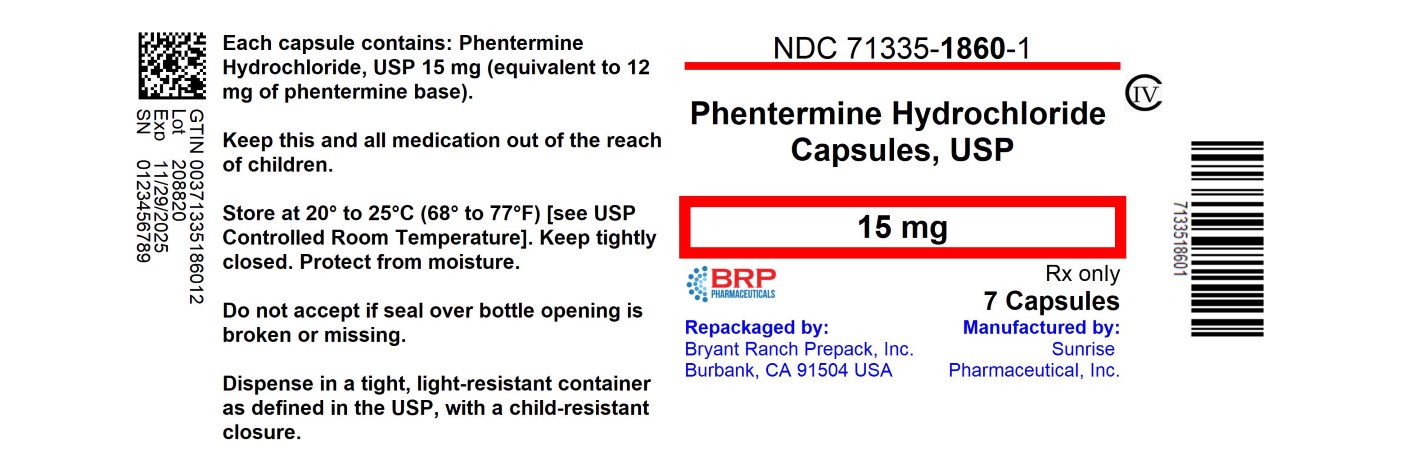
Phentermine Hydrochloride 15 mg Capsule, 14-count
Other active recalls for Phentermine Hydrochloride (different manufacturers) — 1 · tap to view
🆔 Identity & classification
Where does this data come from?
🏷️ RxNorm drug class
This medicine belongs to the Sympathomimetic Amine Anorectic class.
Where does this data come from?
🏭 Manufacturer & labeler
Where does this data come from?
🩺 Clinical
- Phentermine works by suppressing your appetite, which can help you eat less as part of a calorie-controlled plan. But it is not a magic pill — it's meant to be used alongside a red...
- What exactly is phentermine supposed to do, and will it make me lose weight on its own?
- Most phentermine capsules and tablets are taken once a day — either before breakfast or within a couple of hours of breakfast. You can take them with or without food. The one excep...
- The most common ones people notice are dry mouth, trouble sleeping, feeling jittery or restless, a faster heartbeat, and sometimes constipation or stomach upset. Those are usually...
Patient education
Supplement & herbal interactions
Where does this data come from?
Ask a licensed pharmacist directly — free, answered by our team.
💊 What it looks like
Where does this data come from?
🧪 Inactive Ingredients / Excipients
Inactive ingredients, also called excipients, are components of the drug product other than the active ingredient. They may include fillers, dyes, coatings, preservatives, flavors, or other formulation ingredients.
💡 Tap an ingredient (hover on desktop) to see what it is and why it’s used.
-
UNII 3K9958V90M
A liquid solvent derived from fermentation or chemical synthesis. In medicines, alcohol dissolves active ingredients, helps preserve the product, and improves how the body absorbs certain drugs.
-
UNII 5138Q19F1X
Ammonia is a colorless gas made from nitrogen and hydrogen. It's used in medicines as a pH buffer to maintain the correct acidity level and help keep the product stable.
-
UNII 8PJ61P6TS3
Butyl alcohol is a clear liquid organic solvent derived from petroleum or natural sources. In medicines, it helps dissolve active ingredients and serves as a solvent in liquid formulations and some topical products.
-
UNII PN2ZH5LOQY
A synthetic red dye approved by the FDA for use in foods, medicines, and cosmetics. It serves as a colorant to make tablets, capsules, and liquids visually distinctive for product identification.
-
UNII I753WB2F1M
FD&C Yellow No. 5 is a synthetic yellow colorant approved by the FDA. It is added to medicines to make pills, tablets, or liquids visually distinct and easier to identify.
-
UNII XM0M87F357
A dark iron oxide compound that gives medicines their black or dark color. It's used as a colorant in tablets and capsules to help identify the product and make it visually distinctive.
-
UNII 2G86QN327L
Gelatin is a protein derived from animal collagen, commonly used in medicines as a gelling agent and capsule material. It helps create soft or hard capsule shells that hold and release medication, and can also thicken liquid formulations.
-
UNII ND2M416302
Isopropyl alcohol is a clear liquid solvent derived from petroleum. In medicines, it dissolves active ingredients and other components, helps the product flow smoothly, and aids in sterilization during manufacturing.
-
UNII EWQ57Q8I5X
Lactose monohydrate is a natural sugar derived from milk. It serves as a filler and binder in tablets and capsules, helping create the proper size, texture, and consistency of the medicine.
-
UNII 70097M6I30
Magnesium stearate is a salt made from magnesium and stearic acid, a fatty substance. It's used in tablets and capsules as a lubricant and glidant to help ingredients flow smoothly during manufacturing and prevent sticking.
-
UNII WZH3C48M4T
Potassium hydroxide is a strong alkaline chemical used in medicines to adjust and maintain the pH level of liquid formulations, helping keep the product stable and the active ingredients effective.
-
UNII 6DC9Q167V3
Propylene glycol is a clear liquid derived from petroleum or vegetable sources. It acts as a solvent, humectant, and preservative in medicines, helping dissolve active ingredients and maintain product stability.
-
UNII 46N107B71O
Shellac is a natural resin secreted by the lac beetle. It's used as a coating on tablets and capsules to control how quickly the medicine dissolves and to improve appearance and stability.
-
UNII ETJ7Z6XBU4
Silicon dioxide is a naturally occurring mineral used as a glidant and anti-caking agent. It helps powder ingredients flow smoothly and prevents clumping during manufacturing and storage.
-
UNII O8232NY3SJ
A plant-based carbohydrate derived from corn kernels. It acts as a filler to add bulk, a binder to hold ingredients together, and a disintegrant to help the tablet break apart in your stomach for absorption.
-
UNII 15FIX9V2JP
Titanium dioxide is a bright white mineral powder commonly used as a colorant and opacifying agent. It makes pills and tablets white or lighter in color and helps make coatings non-transparent.
-
UNII 059QF0KO0R
Water is a liquid solvent that dissolves and mixes ingredients together in liquid medicines, syrups, and injections. It helps distribute the active drug evenly throughout the product.
17 inactive ingredients listed in the exact product block matched to this NDC.
Where does this data come from?
ingredient classCode="IACT" elements from the exact product block matched by this NDC. Label-section narrative from DailyMed / the openFDA label index is shown separately when available.Inactive ingredient FAQ
Are inactive ingredients the same for every manufacturer?
Why might an inactive ingredient be missing?
Can inactive ingredients matter?
💲 Pricing
A drug doesn't have one price. Each row is a different public payment system, and none is what you'd pay at the counter — that depends on your insurance. The ⓘ on each row explains what it measures.
| Price system | Per each | Per package |
|---|---|---|
| Retail pharmacies payNADAC · weekly | Not in the retail survey — common for institutional, discontinued, or low-volume packs. | |
| Medicaid paysCMS SDUD · 12 mo | No recent Medicaid claims on file for this NDC — rare and low-volume NDCs are suppressed in the public data. | |
| Medicare drug plans payPart D · quarterly | No Part D plan price is available for this NDC in our data. | |
Where does this data come from?
🔁 Therapeutic equivalents
| Product | Labeler | Pack | NADAC/unit | TE | Status | Price vs. this |
|---|---|---|---|---|---|---|
| Phentermine Hydrochloride 15 mg 10702-0026-01 | KVK-Tech, | 100 capsules | $0.099 | AA | Availability likely | — |
| Phentermine Hydrochloride 15 mg 11534-0157-01 | SUNRISE | 100 capsules | $0.099 | AA | Availability likely | — |
| Phentermine Hydrochloride 15 mg 68094-0802-50 | Precision | 100 capsules | $0.099 | AA | Availability likely | — |
| Phentermine 15 mg 13107-0105-01 | Aurolife | 100 capsules | $0.126 | AA | FDA listed | — |
| Phentermine Hydrochloride 15 mg 17224-0851-21 | Calvin | 21 capsules | — | AA | FDA listed | — |
| Phentermine Hydrochloride 15 mg 43063-0961-01 | PD-Rx | 100 capsules | — | AA | FDA listed | — |
| Phentermine Hydrochloride 15 mg 50090-5998-00 | A-S | 28 capsules | — | AA | FDA listed | — |
| Phentermine Hydrochloride 15 mg 55289-0791-07 | PD-Rx | 7 capsules | — | AA | FDA listed | — |
| Phentermine Hydrochloride 15 mg 63187-0512-07 | Proficient | 7 capsules | — | AA | FDA listed | — |
| Phentermine Hydrochloride 15 mg 63629-1041-01 | Bryant | 1000 capsules | — | AA | FDA listed | — |
| Phentermine Hydrochloride 15 mg 63629-2383-01 | Bryant | 100 capsules | — | AA | FDA listed | — |
| Phentermine Hydrochloride 15 mg 63629-8528-01 | Bryant | 1000 capsules | — | AA | FDA listed | — |
| Phentermine Hydrochloride 15 mg 68788-7740-01 | Preferred | 7 capsules | — | AA | FDA listed | — |
| Phentermine Hydrochloride 15 mg 71205-0564-07 | Proficient | 7 capsules | — | AA | FDA listed | — |
| Phentermine Hydrochloride 15 mgthis 71335-1860-02 | Bryant | 14 capsules | — | AA | FDA listed | — |
| Phentermine Hydrochloride 15 mg 72162-1227-01 | Bryant | 100 capsules | — | AA | FDA listed | — |
| Phentermine Hydrochloride 15 mg 72162-1565-00 | Bryant | 1000 capsules | — | AA | Discontinued | — |
| Phentermine Hydrochloride 15 mg 72162-2312-00 | Bryant | 1000 capsules | — | AA | FDA listed | — |
| Phentermine HCL C-IV 15 mg 72189-0365-30 | Direct_Rx | 30 capsules | — | AA | FDA listed | — |
| Phentermine Hydrochloride 15 mg 72789-0573-07 | PD-Rx | 7 capsules | — | AA | FDA listed | — |
| Phentermine Hydrochloride 15 mg 76420-0585-10 | Asclemed | 100 capsules | — | AA | FDA listed | — |
| Phentermine Hydrochloride 15 mg 84053-0026-21 | Martek | 21 capsules | — | AA | FDA listed | — |
Where does this data come from?
⏳ Availability & generic status
This product is an FDA-approved generic. Other versions of the same drug are listed under Therapeutic equivalents, least expensive first.
Where does this data come from?
🔬 Reported adverse events (FAERS)
Top reported reactions
Age at onset
Reporter sex
Serious outcomes
Where does this data come from?
📦 Packaging — all sizes for this product
| Package NDC | Description | Marketing start | Status |
|---|---|---|---|
| 71335-1860-00 | 45 CAPSULE in 1 BOTTLE (71335-1860-0) | 2021-10-21 | Active |
| 71335-1860-01 | 7 CAPSULE in 1 BOTTLE (71335-1860-1) | 2021-10-21 | Active |
| 71335-1860-02 You're viewing this | 14 CAPSULE in 1 BOTTLE (71335-1860-2) | 2021-10-21 | Active |
| 71335-1860-03 | 30 CAPSULE in 1 BOTTLE (71335-1860-3) | 2021-10-21 | Active |
| 71335-1860-04 | 100 CAPSULE in 1 BOTTLE (71335-1860-4) | 2021-10-21 | Active |
| 71335-1860-05 | 2 CAPSULE in 1 BOTTLE (71335-1860-5) | 2021-10-21 | Active |
| 71335-1860-06 | 28 CAPSULE in 1 BOTTLE (71335-1860-6) | 2021-10-21 | Active |
| 71335-1860-07 | 90 CAPSULE in 1 BOTTLE (71335-1860-7) | 2021-10-21 | Active |
| 71335-1860-08 | 21 CAPSULE in 1 BOTTLE (71335-1860-8) | 2021-10-21 | Active |
| 71335-1860-09 | 60 CAPSULE in 1 BOTTLE (71335-1860-9) | 2021-10-21 | Active |
You're viewing one of 10 pack sizes for this product.
Pack size FAQ
What quantity is in NDC 71335-1860-02?
What is the difference between NDC 71335-1860-02 and NDC 71335-1860-05?
What NDC number is used to bill for this package of Phentermine Hydrochloride 15 mg Capsule?
🧭 About this NDC listing & data coverage
What data is (and isn’t) available for this NDC — tap to expand
| NDC identity (package / product / labeler codes) | ✓ Available |
| Labeler | ✓ Available |
| Product & package description | ✓ Available |
| Marketing category & status | ✓ Available |
| Active ingredient / dosage form / route | ✓ Available |
| FDA label (SPL via DailyMed) | ✓ Available |
| Package photos | ✓ Available |
| Inactive ingredients (structured) | ✓ Available |
| NADAC pharmacy acquisition price (CMS) | — Not published for this NDC CMS publishes NADAC only for NDCs reported in its retail-pharmacy survey. |
| Orange Book / therapeutic-equivalence data | ✓ Available |
| HCPCS J-code billing crosswalk | — Not published for this NDC Most self-administered / retail products have no J-code — that is normal. |
| Medicaid utilization (CMS SDUD) | — Not published for this NDC CMS reports utilization only for NDCs with Medicaid claims above its privacy threshold. |
Questions about this listing
Why is there no price listed?
Is the NDC printed on the package the same as the 11-digit billing NDC?
What do the three segments of this NDC mean?
Is this package still being marketed?
Does this product come in other package sizes?
Who lists this product with the FDA?
Do I need a prescription for this product?
Where does this data come from?
📄 Full prescribing information FDA SPL
🎯 Indications and Usage ▾
1 INDICATIONS AND USAGE Phentermine hydrochloride capsules are indicated as a short-term (a few weeks) adjunct in a regimen of weight reduction based on exercise, behavioral modification and caloric restriction in the management of exogenous obesity for patients with an initial body mass index ≥ 30 kg/m 2 , or ≥ 27 kg/m 2 in the presence of other risk factors (e.g., controlled hypertension, diabetes, hyperlipidemia). Below is a chart of body mass index (BMI) based on various heights and weights. BMI is calculated by taking the patient’s weight, in kilograms (kg), divided by the patient’s height, in meters (m), squared.
Metric conversions are as follows: pounds ÷ 2.2 = kg; inches x 0.0254 = meters. BODY MASS INDEX (BMI), kg/m 2 The limited usefulness of agents of this class, including phentermine, [se e CLINICAL PHARMACOLOGY ( 12.1 , 12.2 )] should be measured against possible risk factors inherent in their use such as those described below. Phentermine hydrochloride is a sympathomimetic amine anorectic indicated as a short-term adjunct (a few weeks) in a regimen of weight reduction based on exercise, behavioral modification and caloric restriction in the management of exogenous obesity for patients with an initial body mass index ≥ 30 kg/m 2 , or ≥ 27 kg/m 2 in the presence of other risk factors (e.g., controlled hypertension, diabetes, hyperlipidemia).
The limited usefulness of agents of this class, including phentermine hydrochloride, should be measured against possible risk factors inherent in their use.
⏱️ Dosage and Administration ▾
2 DOSAGE AND ADMINISTRATION Dosage should be individualized to obtain an adequate response with the lowest effective dose. ( 2 .1) Late evening administration should be avoided (risk of insomnia). ( 2 .1) Phentermine hydrochloride capsules can be taken with or without food (2.1) Limit the dosage to 15 mg daily for patients with severe renal impairment (eGFR 15 to 29 mL/min/1.73m 2 )- ( 2.2 )
2.1Exogenous Obesity Dosage should be individualized to obtain an adequate response with the lowest effective dose. The usual adult dose is 15 mg to 30 mg as prescribed by the physician, at approximately 2 hours after breakfast for appetite control. Administration of one 30 mg capsule daily has been found to be adequate in depression of the appetite for 12 to 14 hours.
Phentermine is not recommended for use in pediatric patients ≤16 years of age. Late evening medication should be avoided because of the possibility of resulting insomnia.
2.2Dosage in Patients With Renal Impairment The recommended maximum dosage of phentermine hydrochloride is 15 mg daily for patients with severe renal impairment (eGFR 15 to 29 mL/min/1.73m 2 ). Avoid use of phentermine hydrochloride in patients with eGFR less than 15 mL/min/1.73m 2 or end-stage renal disease requiring dialysis [see USE IN SPECIFIC POPULATIONS ( 8.6 ) and CLINICAL PHARMACOLOGY ( 12.3 )].
💊 Dosage Forms and Strengths ▾
3 DOSAGE FORMS AND STRENGTHS Capsules containing 15 mg or 30 mg phentermine hydrochloride (equivalent to 12 mg or 24 mg phentermine base, respectively). 15 mg capsules: gray opaque cap, yellow opaque body with black imprint “N1” on both the cap and body, filled with powder. 30 mg capsules: blue cap, natural body with black imprint “N16” on both the cap and body, filled with powder. Capsules containing 15 mg or 30 mg phentermine hydrochloride. ( 3 )
⛔ Contraindications ▾
4 CONTRAINDICATIONS • History of cardiovascular disease (e.g., coronary artery disease, stroke, arrhythmias, congestive heart failure, uncontrolled hypertension) • During or within 14 days following the administration of monoamine oxidase inhibitors • Hyperthyroidism • Glaucoma • Agitated states • History of drug abuse • Pregnancy [see USE IN SPECIFIC POPULATIONS ( 8.1 )] • Nursing [see USE IN SPECIFIC POPULATIONS ( 8.3 )] • Known hypersensitivity, or idiosyncrasy to the sympathomimetic amines History of cardiovascular disease (e.g., coronary artery disease, stroke, arrhythmias, congestive heart failure, uncontrolled hypertension) ( 4 ) During or within 14 days following the administration of monoamine oxidase inhibitors ( 4 ) Hyperthyroidism ( 4 ) Glaucoma ( 4 ) Agitated states ( 4 ) History of drug abuse ( 4 ) Pregnancy ( 4 , 8.1 ) Nursing ( 4 , 8.3 ) Known hypersensitivity, or idiosyncrasy to the sympathomimetic amines ( 4 )
⚠️ Warnings and Cautions ▾
5 WARNINGS AND PRECAUTIONS Co-administration with other drugs for weight loss is not recommended (safety and efficacy of combination not established). ( 5.1 ) Rare cases of primary pulmonary hypertension have been reported. Phentermine should be discontinued in case of new, unexplained symptoms of dyspnea, angina pectoris, syncope or lower extremity edema.
( 5.2 ) Rare cases of serious regurgitant cardiac valvular disease have been reported. ( 5.3 ) Tolerance to the anorectic effect usually develops within a few weeks. If this occurs, phentermine should be discontinued.
The recommended dose should not be exceeded. ( 5.4 ) Phentermine may impair the ability of the patient to engage in potentially hazardous activities such as operating machinery or driving a motor vehicle. ( 5.5 ) Risk of abuse and dependence.
The least amount feasible should be prescribed or dispensed at one time in order to minimize the possibility of overdosage. ( 5.6 ) Concomitant alcohol use may result in an adverse drug reaction. ( 5.7 ) Use caution in patients with even mild hypertension (risk of increase in blood pressure).
( 5.8 ) A reduction in dose of insulin or oral hypoglycemic medication may be required in some patients. ( 5.9 )
5.1Co-administration with Other Drug Products for Weight Loss Phentermine hydrochloride capsules are indicated only as short-term (a few weeks) monotherapy for the management of exogenous obesity. The safety and efficacy of combination therapy with phentermine and any other drug products for weight loss including prescribed drugs, over-the-counter preparations, and herbal products, or serotonergic agents such as selective serotonin reuptake inhibitors (e.g., fluoxetine, sertraline, fluvoxamine, paroxetine), have not been established.
Therefore, co-administration of phentermine and these drug products is not recommended.
5.2Primary Pulmonary Hypertension Primary Pulmonary Hypertension (PPH) – a rare, frequently fatal disease of the lungs – has been reported to occur in patients receiving a combination of phentermine with fenfluramine or dexfenfluramine. The possibility of an association between PPH and the use of phentermine alone cannot be ruled out; there have been rare cases of PPH in patients who reportedly have taken phentermine alone. The initial symptom of PPH is usually dyspnea.
Other initial symptoms may include angina pectoris, syncope or lower extremity edema. Patients should be advised to report immediately any deterioration in exercise tolerance. Treatment should be discontinued in patients who develop new, unexplained symptoms of dyspnea, angina pectoris, syncope or lower extremity edema, and patients should be evaluated for the possible presence of pulmonary hypertension.
5.3Valvular Heart Disease Serious regurgitant cardiac valvular disease, primarily affecting the mitral, aortic and/or tricuspid valves, has been reported in otherwise healthy persons who had taken a combination of phentermine with fenfluramine or dexfenfluramine for weight loss. The possible role of phentermine in the etiology of these valvulopathies has not been established and their course in individuals after the drugs are stopped is not known. The possibility of an association between valvular heart disease and the use of phentermine alone cannot be ruled out; there have been rare cases of valvular heart disease in patients who reportedly have taken phentermine alone.
5.4Development of Tolerance, Discontinuation in Case of Tolerance When tolerance to the anorectant effect develops, the recommended dose should not be exceeded in an attempt to increase the effect; rather, the drug should be discontinued.
5.5Effect on the Ability to Engage in Potentially Hazardous Tasks Phentermine may impair the ability of the patient to engage in potentially hazardous activities such as operating machinery or driving a motor vehicle; the patient should therefore be cautioned accordingly.
5.6 Risk of Abuse and Dependence Phentermine is related chemical…
🤒 Adverse Reactions ▾
6 ADVERSE REACTIONS The following adverse reactions are described, or described in greater detail, in other sections: • Primary pulmonary hypertension [see WARNINGS AND PRECAUTIONS ( 5.2 )] • Valvular heart disease [see WARNINGS AND PRECAUTIONS ( 5.3 )] • Effect on the ability to engage in potentially hazardous tasks [see WARNINGS AND PRECAUTIONS ( 5.5 )] • Withdrawal effects following prolonged high dosage administration [see DRUG ABUSE AND DEPENDENCE ( 9.3 )]. The following adverse reactions to phentermine have been identified: Cardiovascular Primary pulmonary hypertension and/or regurgitant cardiac valvular disease, palpitation, tachycardia, elevation of blood pressure, ischemic events.
Central Nervous System Overstimulation, restlessness, dizziness, insomnia, euphoria, dysphoria, tremor, headache, psychosis. Gastrointestinal Dryness of the mouth, unpleasant taste, diarrhea, constipation, other gastrointestinal disturbances. Allergic Urticaria.
Endocrine Impotence, changes in libido. Adverse events have been reported in the cardiovascular, central nervous, gastrointestinal, allergic, and endocrine systems. To report SUSPECTED ADVERSE REACTIONS, contact Sunrise Pharmaceutical, Inc. at 732-382-6085 or FDA at 1-800-FDA-1088 or www.fda.gov/medwatch.
🔄 Drug Interactions ▾
7 DRUG INTERACTIONS Monoamine oxidase inhibitors: Risk of hypertensive crisis. ( 4 , 7.1 ) Alcohol: Consider potential interaction ( 7.2 ) Insulin and oral hypoglycemics: Requirements may be altered. ( 7.3 ) Adrenergic neuron blocking drugs: Hypotensive effect may be decreased by phentermine. ( 7.4 )
7.1Monoamine Oxidase Inhibitors Use of phentermine is contraindicated during or within 14 days following the administration of monoamine oxidase inhibitors because of the risk of hypertensive crisis.
7.2Alcohol Concomitant use of alcohol with phentermine may result in an adverse drug reaction.
7.3Insulin and Oral Hypoglycemic Medications Requirements may be altered [see WARNINGS AND PRECAUTIONS ( 5.9 )].
7.4Adrenergic Neuron Blocking Drugs Phentermine may decrease the hypotensive effect of adrenergic neuron blocking drugs.
👥 Use in Specific Populations ▾
8 USE IN SPECIFIC POPULATIONS Nursing mothers: Discontinue drug or nursing taking into consideration importance of drug to mother. ( 4 , 8.3 ) Pediatric use: Safety and effectiveness not established. ( 8.4 ) Geriatric use: Due to substantial renal excretion, use with caution. ( 8.5 ) Renal Impairment: Avoid use in patients with eGFR less than 15 mL/min/m 2 or end-stage renal disease requiring dialysis. ( 8.6 )
8.1Pregnancy Pregnancy category X Phentermine is contraindicated during pregnancy because weight loss offers no potential benefit to a pregnant woman and may result in fetal harm. A minimum weight gain, and no weight loss, is currently recommended for all pregnant women, including those who are already overweight or obese, due to obligatory weight gain that occurs in maternal tissues during pregnancy. Phentermine has pharmacologic activity similar to amphetamine (d- and d l l-amphetamine) [see CLINICAL PHARMACOLOGY ( 12.1 )].
Animal reproduction studies have not been conducted with phentermine. If this drug is used during pregnancy, or if the patient becomes pregnant while taking this drug, the patient should be apprised of the potential hazard to a fetus.
8.3Nursing Mothers It is not known if phentermine is excreted in human milk; however, other amphetamines are present in human milk. Because of the potential for serious adverse reactions in nursing infants, a decision should be made whether to discontinue nursing or to discontinue the drug, taking into account the importance of the drug to the mother.
8.4Pediatric Use Safety and effectiveness in pediatric patients have not been established. Because pediatric obesity is a chronic condition requiring long-term treatment, the use of this product, approved for short-term therapy, is not recommended.
8.5Geriatric Use In general, dose selection for an elderly patient should be cautious, usually starting at the low end of the dosing range, reflecting the greater frequency of decreased hepatic, renal, or cardiac function, and of concomitant disease or other drug therapy. This drug is known to be substantially excreted by the kidney, and the risk of toxic reactions to this drug may be greater in patients with impaired renal function. Because elderly patients are more likely to have decreased renal function, care should be taken in dose selection, and it may be useful to monitor renal function.
8.6Renal Impairment Based on the reported excretion of phentermine in urine, exposure increases can be expected in patients with renal impairment [see CLINICAL PHARMACOLOGY ( 12.3 )]. Use caution when administering phentermine to patients with renal impairment. In patients with severe renal impairment (eGFR 15 to 29 mL/min/1.73m 2 ), limit the dosage of phentermine to 15 mg daily [see DOSAGE AND ADMINISTRATION ( 2.2 )].
Phentermine has not been studied in patients with eGFR less than 15 mL/min/m 2 , including end-stage renal disease requiring dialysis; avoid use in these populations.
🧒 Pediatric Use ▾
8.4Pediatric Use Safety and effectiveness in pediatric patients have not been established. Because pediatric obesity is a chronic condition requiring long-term treatment, the use of this product, approved for short-term therapy, is not recommended.
🧓 Geriatric Use ▾
8.5Geriatric Use In general, dose selection for an elderly patient should be cautious, usually starting at the low end of the dosing range, reflecting the greater frequency of decreased hepatic, renal, or cardiac function, and of concomitant disease or other drug therapy. This drug is known to be substantially excreted by the kidney, and the risk of toxic reactions to this drug may be greater in patients with impaired renal function. Because elderly patients are more likely to have decreased renal function, care should be taken in dose selection, and it may be useful to monitor renal function.
🆘 Overdosage ▾
10 OVERDOSAGE The least amount feasible should be prescribed or dispensed at one time in order to minimize the possibility of overdosage.
10.1Acute Overdosage Manifestations of acute overdosage include restlessness, tremor, hyperreflexia, rapid respiration, confusion, assaultiveness, hallucinations, and panic states. Fatigue and depression usually follow the central stimulation. Cardiovascular effects include arrhythmia, hypertension or hypotension, and circulatory collapse.
Gastrointestinal symptoms include nausea, vomiting, diarrhea and abdominal cramps. Overdosage of pharmacologically similar compounds has resulted in fatal poisoning usually terminates in convulsions and coma. Management of acute phentermine hydrochloride intoxication is largely symptomatic and includes lavage and sedation with a barbiturate.
Experience with hemodialysis or peritoneal dialysis is inadequate to permit recommendations in this regard. Acidification of the urine increases phentermine excretion. Intravenous phentolamine (Regitine ® , CIBA) has been suggested on pharmacologic grounds for possible acute, severe hypertension, if this complicates overdosage.
10.2Chronic Intoxication Manifestations of chronic intoxication with anorectic drugs include severe dermatoses, marked insomnia, irritability, hyperactivity and personality changes. The most severe manifestation of chronic intoxications is psychosis, often clinically indistinguishable from schizophrenia. See DRUG ABUSE AND DEPENDENCE ( 9.3 ).
🧬 Clinical Pharmacology ▾
12 CLINICAL PHARMACOLOGY
12.1Mechanism of Action Phentermine is a sympathomimetic amine with pharmacologic activity similar to the prototype drugs of this class used in obesity, amphetamine (d- and d l l-amphetamine). Drugs of this class used in obesity are commonly known as “anorectics” or “anorexigenics.” It has not been established that the primary action of such drugs in treating obesity is one of appetite suppression since other central nervous system actions, or metabolic effects, may also be involved.
12.2Pharmacodynamics Typical of amphetamines include central nervous system stimulation and elevation of blood pressure. Tachyphylaxis and tolerance have been demonstrated with all drugs of this class in which these phenomena have been looked for.
12.3Pharmacokinetics Following the administration of phentermine, phentermine reaches peak concentrations (C max ) after 3 to 4.4 hours. Specific Populations Renal Impairment Cumulative urinary excretion of phentermine under uncontrolled urinary pH conditions was 62% - 85%. Systemic exposure of phentermine may increase up to 91%, 45%, and 22% in patients with severe, moderate, and mild renal impairment, respectively [see DOSAGE AND ADMINISTRATION ( 2.2 ) and USE IN SPECIFIC POPULATIONS ( 8.6 )].
Drug Interactions In a single-dose study comparing the exposures after oral administration of a combination capsule of 15 mg phentermine and 92 mg topiramate to the exposures after oral administration of a 15 mg phentermine capsule or a 92 mg topiramate capsule, there is no significant topiramate exposure change in the presence of phentermine. However in the presence of topiramate, phentermine C max and AUC increase 13% and 42%, respectively.
🧬 Mechanism of Action ▾
12.1Mechanism of Action Phentermine is a sympathomimetic amine with pharmacologic activity similar to the prototype drugs of this class used in obesity, amphetamine (d- and d l l-amphetamine). Drugs of this class used in obesity are commonly known as “anorectics” or “anorexigenics.” It has not been established that the primary action of such drugs in treating obesity is one of appetite suppression since other central nervous system actions, or metabolic effects, may also be involved.
📦 How Supplied / Storage and Handling ▾
16 HOW SUPPLIED/STORAGE AND HANDLING Phentermine hydrochloride capsules USP, for oral administration, are available as: 15 mg: Grey/yellow powder filled capsules; imprinted “N1” in black ink and supplied as: NDC: 71335-1860-1: 7 Capsules in a BOTTLE NDC: 71335-1860-2: 14 Capsules in a BOTTLE NDC: 71335-1860-3: 30 Capsules in a BOTTLE NDC: 71335-1860-4: 100 Capsules in a BOTTLE NDC: 71335-1860-5: 2 Capsules in a BOTTLE NDC: 71335-1860-6: 28 Capsules in a BOTTLE NDC: 71335-1860-7: 90 Capsules in a BOTTLE NDC: 71335-1860-8: 21 Capsules in a BOTTLE NDC: 71335-1860-9: 60 Capsules in a BOTTLE NDC: 71335-1860-0: 45 Capsules in a BOTTLE Store at 20° to 25°C (68° to 77°F) [see USP Controlled Room Temperature].
Protect from moisture. Dispense in a tight, light-resistant container as defined in the USP, with a child-resistant closure (as required). Keep out of the reach of children.
Repackaged/Relabeled by: Bryant Ranch Prepack, Inc. Burbank, CA 91504
📋 Description ▾
11 DESCRIPTION Phentermine hydrochloride is a sympathomimetic amine anorectic. Its chemical name is α,α, dimethylphenethylamine hydrochloride. The structural formula is as follows: C 10 H 15 N•HCl M.W.
185.7 Phentermine hydrochloride is a white, odorless, hygroscopic, crystalline powder which is soluble in water and lower alcohols, slightly soluble in chloroform and insoluble in ether. Phentermine hydrochloride capsule USP is available as an oral capsule containing 15 mg or 30 mg of phentermine hydrochloride (equivalent to 12 mg or 24 mg of phentermine base). a) powder-filled capsules containing 15 mg phentermine hydrochloride (equivalent to 12 mg phentermine) or 30 mg phentermine hydrochloride (equivalent to 24 mg phentermine) and inactive ingredients: colloidal silicon dioxide, corn starch, gelatin, lactose monohydrate, magnesium stearate.
In addition, the 15 mg capsules contain black iron oxide, FD&C red No. 3, FD&C yellow No. 5, titanium dioxide; and the blue and clear 30 mg capsules contain D&C red No.
28, FD&C blue No. 1. The ingredients in the black imprinting ink are shellac, dehydrated alcohol, isopropyl alcohol, butyl alcohol, propylene glycol, purified water, strong ammonia solution, potassium hydroxide and black iron oxide.
💬 Information for Patients ▾
17 PATIENT COUNSELING INFORMATION Patients must be informed that phentermine hydrochloride is a short-term (a few weeks) adjunct in a regimen of weight reduction based on exercise, behavioral modification and caloric restriction in the management of exogenous obesity, and that co-administration of phentermine with other drugs for weight loss is not recommended [see INDICATIONS AND USAGE ( 1 ) and WARNINGS AND PRECAUTIONS ( 5.1 )]. Patients must be instructed on how much phentermine to take, and when and how to take it [see DOSAGE AND ADMINISTRATION ( 3 )].
Advise pregnant women and nursing mothers not to use phentermine [see USE IN SPECIFIC POPULATIONS ( 8.1 , 8.3 )]. Patients must be informed about the risks of use of phentermine (including the risks discussed in Warnings and Precautions), about the symptoms of potential adverse reactions and when to contact a physician and/or take other action. The risks include, but are not limited to: • Development of primary pulmonary hypertension [see WARNINGS AND PRECAUTIONS ( 5.2 )] • Development of serious valvular heart disease [see WARNINGS AND PRECAUTIONS ( 5.3 )] • Effects on the ability to engage in potentially hazardous tasks [see WARNINGS AND PRECAUTIONS ( 5.5 )] • The risk of an increase in blood pressure [see WARNINGS AND PRECAUTIONS ( 5.8 ) and ADVERSE REACTIONS ( 6 )] • The risk of interactions [see CONTRAINDICATIONS ( 4 ), WARNINGS AND PRECAUTIONS ( 5.7 , 5.9 ) and DRUG INTERACTIONS ( 7 )] See also, for example, ADVERSE REACTIONS ( 6 ) and USE IN SPECIFIC POPULATIONS ( 8 ).
The patients must also be informed about • the potential for developing tolerance and actions if they suspect development of tolerance [see WARNINGS AND PRECAUTIONS ( 5.4 )] and • the risk of dependence and the potential consequences of abuse [see WARNINGS AND PRECAUTIONS ( 5.6 ), DRUG ABUSE AND DEPENDENCE ( 9 ), and OVERDOSAGE ( 10 )]. Tell patients to keep phentermine in a safe place to prevent theft, accidental overdose, misuse or abuse. Selling or giving away phentermine may harm others and is against the law.
Rx Only Manufactured & Distributed By: Sunrise Pharmaceutical, Inc. Rahway, New Jersey 07065 Revised: 04/2017 5104/02