
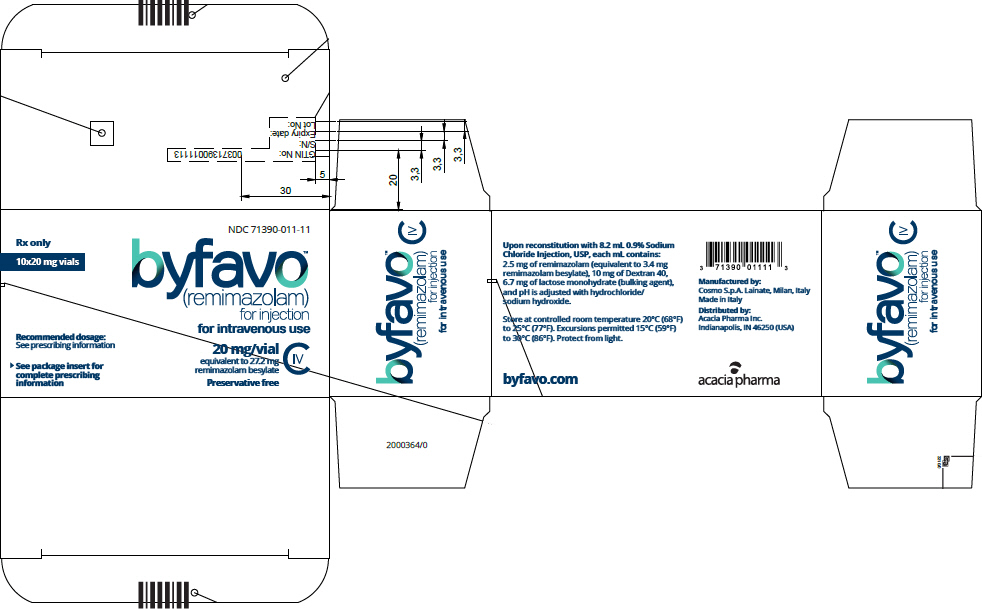
BYFAVO remimazolam besylate 2.5 mg/mL Injection, Powder, Lyophilized, For Solution — NDC 71390-011-11 (Billing 71390-0011-11)
This is a package of BYFAVO remimazolam besylate 2.5 mg/mL Injection, Powder, Lyophilized, For Solution from Acacia Pharma, Ltd., marketed since Oct 2020 and currently FDA-listed. It is this product's only package size.
NDC database record
One package, one record: these facts belong to NDC 71390-011-11 alone.
- Record
- FDA NDC Directory package listing · Human prescription drug
- Code segments
- 71390 labeler · 011 product · 11 package
- Package marketed since
- Oct 6, 2020
- Sample package
- No — commercial package
- Listing certified through
- Dec 31, 2026
- Barcode (UPC)
- 0371390011007
- Medicaid fills, this package
- 293 prescriptions in the last four reported quarters
- FDA record last changed
- Jul 24, 2026
Identity & classification
Regulatory identifiers FDA, NLM and CMS codes for this package
Drug-database identifiers Medi-Span GPI and First Databank GCN / HICL / AHFS classification
- GSN (GCN sequence number): 081257
- GCN: 48313
- GPI-14 (Medi-Span): 60201029102120
- HICL (First Databank): 046678
- AHFS class code: 28:24.08.00
- RxCUI (RxNorm): 2383946
Where does this data come from?
- FDA openFDA NDC Directory · synced Oct 8, 2026
- FDA label on DailyMed · label index refreshed Oct 8, 2026
- RxNorm (NLM RxNav) · catalog refreshed Oct 8, 2026
- Medi-Span GPI (licensed)
- First Databank (licensed) · refreshed Oct 8, 2026
RxNorm drug class
This medicine belongs to the Benzodiazepine derivatives class.
Where does this data come from?
- RxClass (NLM) · catalog refreshed Oct 8, 2026
Clinical
Patient education
Supplement & herbal interactions
Some supplements/herbs that may interact with Remimazolam Besylate — tap one for details:
Where does this data come from?
- MedlinePlus (NLM) · refreshed Oct 8, 2026
- FDA label on DailyMed · label index refreshed Oct 8, 2026
Ask a licensed pharmacist directly — free, answered by our team.
Pricing
A drug doesn't have one price. Each row is a different public payment system, and none is what you'd pay at the counter — that depends on your insurance. The ⓘ on each row explains what it measures.
| Price system | Per mL | Per package |
|---|---|---|
| Retail pharmacies payNADAC · weekly | Not in the retail survey — common for institutional, discontinued, or low-volume packs. | |
| Medicaid paysCMS SDUD · 12 mo | $101.24 | $8,098.88 / 80 ml |
| Medicare drug plans payPart D · quarterly | No Part D plan price is available for this NDC in our data. | |
| Medicare Part B allowsASP · J2249 | No ASP payment limit on file for J2249 this quarter. | |
Where does this data come from?
- CMS NADAC weekly file
- CMS ASP pricing files · refreshed Sep 20, 2026
- CMS Medicaid State Drug Utilization Data · through Q1 2026
- CMS Part D plan pricing files · refreshed Sep 24, 2026
- VA National Acquisition Center price file
Billing & reimbursement
Where does this data come from?
- CMS ASP NDC-HCPCS crosswalk · refreshed Sep 22, 2026
- DMEPDAC NDC-HCPCS crosswalk
- openFDA NSDE billing units · refreshed Oct 7, 2026
Packaging — all sizes for this product
| Package NDC | Description | Marketing start | Marketing end | Status |
|---|---|---|---|---|
| 71390-0011-11 You're viewing this Main listing | 10 VIAL in 1 CARTON / 8 mL in 1 VIAL | 2020-10-06 | — | Active |
Therapeutic equivalents
| Product | Labeler | Pack | NADAC/unit | TE | Status | Price vs. this |
|---|---|---|---|---|---|---|
| Byfavo 2.5 mg/mLthis 71390-0011-11 | Acacia | 10 vials | — | — | FDA listed | — |
Where does this data come from?
- FDA openFDA NDC Directory · synced Oct 8, 2026
- FDA Orange Book · refreshed Oct 3, 2026
- CMS NADAC weekly file
Availability & generic status
We did not find an FDA-approved generic match for this exact strength, form and route. Patent/protection dates below may affect future generic timing.
Why the date isn’t exact: Generic timing can change because patents may be challenged, settled, licensed, added, removed, or worked around with a narrower label — and FDA approval does not always mean a pharmacy can get the generic today.
🛈 What do these terms mean?
- Patent
- Legal protection listed in the Orange Book that may delay generic approval or launch. Issued by the U.S. Patent & Trademark Office.
- Substance patent
- Covers the active drug molecule itself — the hardest to design around. A generic generally can’t launch until it expires.
- Formulation (product) patent
- Covers a specific formulation or dosage form. A generic can sometimes work around it with a different formulation.
- Method-of-use patent
- A patent covering one specific approved use of the drug — not necessarily the whole molecule. A generic can sometimes launch with a “skinny label” that carves out the protected use and keeps the others.
- Skinny label
- A generic label that omits a still-patented use when the FDA allows it — letting a generic reach the market for the unprotected uses.
- Exclusivity
- FDA-granted marketing protection, separate from patents — e.g. 5-yr new chemical entity, 7-yr orphan drug, or a +6-month pediatric extension.
- Paragraph IV
- A generic applicant’s formal challenge to a listed patent. It can potentially lead to earlier generic entry, but often involves litigation or a settlement.
- RLD / RS
- Reference Listed Drug — the brand product the FDA uses as the reference for generic applications. Reference Standard — the product the FDA expects generics to compare against in bioequivalence testing.
- TE / AB rating
- FDA therapeutic-equivalence rating. An AB rating generally means the FDA considers a generic therapeutically equivalent to — and substitutable for — the brand.
- LOE (loss of exclusivity)
- The latest patent or exclusivity currently listed — the loss-of-exclusivity / latest-listed-protection date shown on this page. Paragraph-IV challenges and settlements can move the real date earlier; FDA approval and a manufacturer’s decision to market can move it later.
Built from the FDA Orange Book. The bars above are scaled to each protection’s expiry; the red LOE marker is the last one to lapse.
| Patent | Type | Use code | Expires |
|---|---|---|---|
| US 10961250 ↗ | Method of use | U-2968 | Jul 10, 2027 |
| US 10472365 ↗ | Method of use | U-2968 | Jul 10, 2027 |
| US 9827251 ↗ | Method of use | U-2968 | Jan 13, 2034 |
| US 9737547 ↗ | Method of use | U-2968 | Nov 7, 2031 |
| US 10052334 ↗ | Method of use | U-2968 | Nov 7, 2031 |
| US 10195210 ↗ | Method of use | U-2968 | Nov 7, 2031 |
| US 10342800 ↗ | Method of use | U-2968 | Nov 7, 2031 |
| US 9561236 ↗ | Method of use | U-2968 | Apr 30, 2033 |
| US 10722522 ↗ | Method of use | U-2968 | Nov 7, 2031 |
| US 9777007 ↗ | Drug product | — | Jul 10, 2027 |
| US 9914738 ↗ | Drug product | — | Jul 10, 2027 |
Is there a generic version of BYFAVO 20 MG VIAL?
The FDA approved a generic — why can’t I get it at my pharmacy yet?
Why do different websites show different generic release dates?
What does “FDA listed” mean?
What does a patent or protection date mean here?
What does “current Orange Book estimate” mean?
Can a generic come out before the last patent expires?
Can a generic come out after the listed dates?
What is the difference between patents and exclusivity?
Why are there multiple patent dates?
Where does this data come from?
- FDA Orange Book · refreshed Oct 3, 2026
Inactive Ingredients / Excipients
Inactive ingredients, also called excipients, are components of the drug product other than the active ingredient. They may include fillers, dyes, coatings, preservatives, flavors, or other formulation ingredients.
💡 Tap an ingredient (hover on desktop) to see what it is and why it’s used.
-
10 mg / 1 mL
UNII K3R6ZDH4DU
Dextran 40 is a sugar-based polymer derived from bacteria. It acts as a thickener and volume expander in liquid medicines, helping achieve proper consistency and stability.
-
UNII QTT17582CB
A strong acid used to adjust and maintain the proper pH level in liquid medicines, ensuring stability and preventing breakdown of active ingredients.
-
6.7 mg / 1 mL
UNII EWQ57Q8I5X
Lactose monohydrate is a natural sugar derived from milk. It serves as a filler and binder in tablets and capsules, helping create the proper size, texture, and consistency of the medicine.
-
UNII 55X04QC32I
A strong alkaline chemical used to adjust and maintain the pH balance of liquid medicines. It helps keep the medicine stable and ensures it stays effective during storage.
4 inactive ingredients listed in the exact product block matched to this NDC.
Where does this data come from?
ingredient classCode="IACT" elements from the exact product block matched by this NDC. Label-section narrative from DailyMed / the openFDA label index is shown separately when available.- FDA label on DailyMed · label index refreshed Oct 8, 2026
- FDA openFDA NDC Directory · synced Oct 8, 2026
Inactive ingredient FAQ
Are inactive ingredients the same for every manufacturer?
Why might an inactive ingredient be missing?
Can inactive ingredients matter?
Manufacturer & labeler
More NDCs from Acacia Pharma, Ltd. labeler code 71390
Where does this data come from?
- FDA openFDA NDC Directory · synced Oct 8, 2026
- Drugs@FDA
Full prescribing information FDA SPL
🚨 Boxed Warning ▾
WARNING: PERSONNEL AND EQUIPMENT FOR MONITORING AND RESUSCITATION AND RISKS FROM CONCOMITANT USE WITH OPIOID ANALGESICS WARNING: PERSONNEL AND EQUIPMENT FOR MONITORING AND RESUSCITATION, AND RISKS FROM CONCOMITANT USE WITH OPIOID ANALGESICS AND OTHER SEDATIVE-HYPNOTICS See full prescribing information for complete boxed warning Only personnel trained in the administration of procedural sedation, and not involved in the conduct of the diagnostic or therapeutic procedure, should administer BYFAVO. ( 2.1 , 5.1 ) Administering personnel must be trained in the detection and management of airway obstruction, hypoventilation, and apnea, including the maintenance of a patent airway, supportive ventilation, and cardiovascular resuscitation.
( 2.1 , 5.1 ) BYFAVO has been associated with hypoxia, bradycardia, and hypotension. Continuously monitor vital signs during sedation and through the recovery period. ( 2.1 , 5.1 ) Resuscitative drugs, and age- and size-appropriate equipment for bag/valve/mask assisted ventilation must be immediately available during administration of BYFAVO.
( 2.1 , 5.1 ) Concomitant use of benzodiazepines with opioid analgesics may result in profound sedation, respiratory depression, coma, and death. The sedative effect of intravenous BYFAVO can be accentuated by concomitantly administered CNS depressant medications, including other benzodiazepines and propofol. Continuously monitor patients for respiratory depression and depth of sedation.
( 5.2 , 7.1 ) Personnel and Equipment for Monitoring and Resuscitation Only personnel trained in the administration of procedural sedation, and not involved in the conduct of the diagnostic or therapeutic procedure, should administer BYFAVO [see Dosage and Administration (2.1) , Warnings and Precautions (5.1) ] . Administering personnel must be trained in the detection and management of airway obstruction, hypoventilation, and apnea, including the maintenance of a patent airway, supportive ventilation, and cardiovascular resuscitation [see Dosage and Administration (2.1) , Warnings and Precautions (5.1) ] .
BYFAVO has been associated with hypoxia, bradycardia, and hypotension. Continuously monitor vital signs during sedation and during the recovery period [see Dosage and Administration (2.1) , Warnings and Precautions (5.1) ] . Resuscitative drugs, and age- and size-appropriate equipment for bag/valve/mask assisted ventilation must be immediately available during administration of BYFAVO [see Dosage and Administration (2.1) , Warnings and Precautions (5.1) ].
Risks From Concomitant Use With Opioid Analgesics and Other Sedative-Hypnotics Concomitant use of benzodiazepines, including BYFAVO, and opioid analgesics may result in profound sedation, respiratory depression, coma, and death. The sedative effect of intravenous BYFAVO can be accentuated by concomitantly administered CNS depressant medications, including other benzodiazepines and propofol. Continuously monitor patients for respiratory depression and depth of sedation [see Warnings and Precautions (5.2) , Drug Interactions (7.1) ] .
🎯 Indications and Usage ▾
1 INDICATIONS AND USAGE BYFAVO ® is indicated for the induction and maintenance of procedural sedation in adults undergoing procedures lasting 30 minutes or less. BYFAVO (remimazolam) for injection is a benzodiazepine indicated for the induction and maintenance of procedural sedation in adults undergoing procedures lasting 30 minutes or less. ( 1 )
⏱️ Dosage and Administration ▾
2 DOSAGE AND ADMINISTRATION Individualize and titrate BYFAVO dosing to desired clinical effect. ( 2.2 ) Adult Patients : Administer an initial dose intravenously as a 5 mg push injection over a 1-minute time period. ( 2.2 ) If necessary, administer supplemental doses of 2.5 mg intravenously over a 15-second time period.
At least 2 minutes must elapse prior to the administration of any supplemental dose. ( 2.2 ) ASA III-IV Patients (at the discretion of the physician) : Based on the general condition of the patient, administer 2.5 mg to 5 mg over 1-minute time period. ( 2.2 ) If necessary, administer supplemental doses of 1.25 mg to 2.5 mg intravenously over a 15-second time period.
At least 2 minutes must elapse prior to the administration of any supplemental dose. ( 2.2 )
2.1Important Dosage and Administration Instructions BYFAVO can depress respiration. Continuously monitor patients for early signs of hypoventilation, airway obstruction, and apnea using capnography, pulse oximetry, and clinical assessment. Only personnel trained in the administration of procedural sedation, and not involved in the conduct of the diagnostic or therapeutic procedure, should administer BYFAVO.
Administering personnel must be trained in the detection and management of airway obstruction, hypoventilation, and apnea, including the maintenance of a patent airway, supportive ventilation, and cardiovascular resuscitation. Supplemental oxygen, resuscitative drugs, and age- and size-appropriate equipment for bag/valve/mask assisted ventilation must be immediately available during administration of BYFAVO. A benzodiazepine reversal agent should be immediately available.
Continuously monitor vital signs during sedation and through the recovery period [see Warnings and Precautions (5.1) ] . Peak sedation occurs approximately 3 to 3.5 minutes after an initial 5 mg intravenous injection of BYFAVO given over a 1-minute period [see Clinical Pharmacology (12.2) ]. Titrate subsequent doses of BYFAVO on the basis of clinical judgment and assessment of the depth of sedation.
If maintenance of procedural sedation is inadequate, consider alternative medications [see Clinical Studies (14) ] .
2.2Basic Dosing Information Individualize BYFAVO dosing and titrate to desired clinical response. In clinical studies, fentanyl 25 to 75 mcg was administered for analgesia prior to the first dose of BYFAVO. Supplemental doses of fentanyl were administered as needed for analgesia [see Clinical Studies (14) ] .
Recommended dosing guidelines: Induction of Procedural Sedation For adult patients: Administer 5 mg intravenously over a 1-minute time period. For ASA ASA = American Society of Anesthesiologists Physical Status Classification System III and IV patients: Administer 2.5 mg to 5 mg intravenously over 1 minute based on the general condition of the patient. Maintenance of Procedural Sedation (as needed) For adult patients: Administer 2.5 mg intravenously over 15 seconds.
At least 2 minutes must elapse prior to administration of any supplemental dose. For ASA III and IV patients: Administer 1.25 mg to 2.5 mg intravenously over 15 seconds. At least 2 minutes must elapse prior to administration of any supplemental dose.
2.3Preparation Reconstitution of BYFAVO (remimazolam) for injection Strict aseptic technique must be maintained during handling of BYFAVO. This product does not contain preservative. Once removed from packaging, protect vials from light.
Each single-patient-use vial contains 20 mg BYFAVO lyophilized powder for reconstitution. The product must be prepared immediately before use. To reconstitute, add 8.2 mL sterile 0.9% Sodium Chloride Injection, USP, to the vial, directing the stream of solution toward the wall of the vial.
Gently swirl the vial (do not shake) until the contents are fully dissolved. The reconstituted product will deliver a final concentration of 2.5 mg/mL solution of BYFAVO. Parenteral drug products should be inspected visually for particulate ma… [Excerpted — this section continues on DailyMed.]
💊 Dosage Forms and Strengths ▾
3 DOSAGE FORM AND STRENGTHS Single-patient-use vial: Each glass, single-patient-use vial of BYFAVO (remimazolam) for injection contains 20 mg remimazolam white to off-white lyophilized powder, equivalent to 27.2 mg remimazolam besylate. Each glass, single-patient-use vial contains 20 mg BYFAVO (remimazolam) lyophilized powder for reconstitution, equivalent to 27.2 mg remimazolam besylate. ( 3 )
⛔ Contraindications ▾
4 CONTRAINDICATIONS BYFAVO is contraindicated in patients with a history of severe hypersensitivity reaction to dextran 40 or products containing dextran 40 [see Warnings and Precautions (5.3) ]. Hypersensitivity to dextran 40. ( 4 )
⚠️ Warnings and Cautions ▾
5 WARNINGS AND PRECAUTIONS Hypersensitivity Reactions : Hypersensitivity reactions including anaphylaxis may occur. ( 5.3 ) Neonatal Sedation and Withdrawal Syndrome : Receiving benzodiazepines during pregnancy can result in neonatal sedation and/or neonatal withdrawal. ( 5.4 , 8.1 ) Pediatric Neurotoxicity : In developing animals, exposures greater than 3 hours cause neurotoxicity.
Weigh benefits against potential risks when considering elective procedures in children under 3 years old. ( 5.5 )
5.1Personnel and Equipment for Monitoring and Resuscitation Clinically notable hypoxia, bradycardia, and hypotension were observed in Phase 3 studies of BYFAVO. Continuously monitor vital signs during sedation and through the recovery period. Only personnel trained in the administration of procedural sedation, and not involved in the conduct of the diagnostic or therapeutic procedure, should administer BYFAVO.
Administering personnel must be trained in the detection and management of airway obstruction, hypoventilation, and apnea, including the maintenance of a patent airway, supportive ventilation, and cardiovascular resuscitation. Resuscitative drugs, and age- and size-appropriate equipment for bag/valve/mask assisted ventilation must be immediately available during administration of BYFAVO [see Dosage and Administration (2.1) ] . Consider the potential for worsened cardiorespiratory depression prior to using BYFAVO concomitantly with other drugs that have the same potential (e.g., opioid analgesics or other sedative-hypnotics) [see Drug Interactions (7.1) ].
Administer supplemental oxygen to sedated patients through the recovery period. A benzodiazepine reversal agent (flumazenil) should be immediately available during administration of BYFAVO [see Overdosage (10) ].
5.2Risks from Concomitant Use with Opioid Analgesics and Other Sedative-Hypnotics Concomitant use of benzodiazepines, including BYFAVO, and opioid analgesics may result in profound sedation, respiratory depression, coma, and death [see Drug Interactions (7.1) ]. The sedative effect of intravenous BYFAVO can be accentuated by concomitantly administered CNS depressant medications, including other benzodiazepines and propofol. Titrate the dose of BYFAVO when administered with opioid analgesics and sedative-hypnotics to the desired clinical response.
Continuously monitor sedated patients for hypotension, airway obstruction, hypoventilation, apnea, and oxygen desaturation. These cardiorespiratory effects may be more likely to occur in patients with obstructive sleep apnea, the elderly, and ASA III or IV patients.
5.3Hypersensitivity Reactions BYFAVO contains dextran 40, which can cause hypersensitivity reactions, including rash, urticaria, pruritus, and anaphylaxis. BYFAVO is contraindicated in patients with a history of severe hypersensitivity reaction to dextran 40 or products containing dextran 40 [see Contraindications (4) , Adverse Reactions (6) ].
5.4Neonatal Sedation and Withdrawal Syndrome Receiving benzodiazepines late in pregnancy can result in sedation (respiratory depression, lethargy, hypotonia) and/or withdrawal symptoms (hyperreflexia, irritability, restlessness, tremors, inconsolable crying, and feeding difficulties) in the neonate. Monitor neonates exposed to benzodiazepines, including BYFAVO, during pregnancy or labor for signs of sedation and monitor neonates exposed to benzodiazepines during pregnancy for signs of withdrawal and manage these neonates accordingly [see Use in Specific Populations (8.1) ].
5.5Pediatric Neurotoxicity Published animal studies demonstrate that the administration of anesthetic and sedation drugs that block NMDA receptors and/or potentiate GABA activity increase neuronal apoptosis in the developing brain and result in long-term cognitive deficits when used for longer than 3 hours. The clinical significance of these findings is not clear. However, based on the available data, the window of vulnerability to these changes is be… [Excerpted — this section continues on DailyMed.]
🤒 Adverse Reactions ▾
6 ADVERSE REACTIONS The following serious adverse reactions are discussed in greater detail in other sections: Neonatal Sedation and Withdrawal Syndrome [see Warnings and Precautions (5.4) , Use in Specific Populations (8.1) ] The most common adverse reactions (>10%) in patients receiving BYFAVO for procedural sedation are hypotension, hypertension, diastolic hypertension, systolic hypertension, hypoxia, and diastolic hypotension. ( 6 ) To report SUSPECTED ADVERSE REACTIONS, contact Acacia Pharma at 1-877-357-9237 or FDA at 1-800-FDA-1088 or www.fda.gov/medwatch
6.1Clinical Trials Experience Because clinical trials are conducted under widely varying conditions, adverse reaction rates observed in the clinical trials of a drug cannot be directly compared to rates in the clinical trials of another drug and may not reflect the rates observed in practice. The safety of BYFAVO was evaluated in three prospective, randomized, double-blind, multicenter, parallel group clinical studies in 630 patients undergoing colonoscopy (two studies) or bronchoscopy (one study). Colonoscopy Study 1 and the bronchoscopy study evaluated American Society of Anesthesiologists (ASA) physical status I to III patients, and Colonoscopy Study 2 evaluated ASA III and IV patients.
All three studies evaluated the safety of BYFAVO compared to placebo with midazolam rescue and an open-label midazolam treatment arm. Patients were administered a total dose ranging from 5 to 30 mg of BYFAVO. In these studies, the most common adverse reactions (incidence greater than 10%) following BYFAVO administration were hypotension, hypertension, diastolic hypertension, systolic hypertension, hypoxia, and diastolic hypotension.
There were two patients who experienced an adverse reaction that led to discontinuation of study drug. One patient in the BYFAVO arm in the bronchoscopy study discontinued treatment due to bradycardia, hypertension, hypotension, hypoxia, and respiratory rate increase. One patient in the open-label midazolam arm in Colonoscopy Study 2 discontinued due to respiratory acidosis.
No deaths were reported during the studies. Tables 1-3 provide a summary of the common adverse reactions observed in each of the three Phase 3 studies with BYFAVO. Table 1: Common Adverse Reactions in Colonoscopy Study 1 (Incidence >2%), ASA I to III Adverse Reaction BYFAVO N = 296 Placebo (with Midazolam Rescue 57/60 (95%) patients received midazolam rescue. ) N = 60 Midazolam N = 102 n (%) n (%) n (%) Hypotension Hypotension defined as a fall in systolic BP to ≤80 mmHg or in diastolic BP to ≤40 mmHg, or a fall in systolic or diastolic BP of 20% or more below baseline or necessitating medical intervention.
115 (39%) 25 (42%) 63 (62%) Hypertension Hypertension defined as an increase in systolic BP to ≥180 mmHg or in diastolic BP to ≥100 mmHg, or an increase of systolic or diastolic BP of 20% or more over baseline or necessitating medical intervention. 59 (20%) 17 (28%) 18 (18%) Bradycardia 33 (11%) 7 (12%) 16 (16%) Diastolic hypertension 29 (10%) 6 (10%) 9 (9%) Tachycardia 23 (8%) 7 (12%) 13 (13%) Diastolic hypotension 23 (8%) 4 (7%) 9 (9%) Systolic hypertension 16 (5%) 5 (8%) 6 (6%) Table 2: Common Adverse Reactions in Bronchoscopy Study (Incidence >2%) Adverse Reaction BYFAVO N = 303 Placebo (with Midazolam Rescue 57/59 (97%) patients received midazolam rescue. ) N = 59 Midazolam N = 69 n (%) n (%) n (%) Hypotension Hypotension defined as a fall in systolic BP to ≤80 mmHg or in diastolic BP to ≤40 mmHg, or a fall in systolic or diastolic BP of 20% or more below baseline or necessitating medical intervention.
99 (33%) 28 (47%) 23 (33%) Hypertension Hypertension defined as an increase in systolic BP to ≥180 mmHg or in diastolic BP to ≥100 mmHg, or an increase of systolic or diastolic BP of 20% or more over baseline or necessitating medical intervention. 85 (28%) 9 (15%) 19 (28%) Diastolic hypertension 77 (25%) 15 (25%) 16 (23%) Systolic hypertension 67 (22%) 13 (22%) 17 (25%) Hypoxia… [Excerpted — this section continues on DailyMed.]
🔄 Drug Interactions ▾
7 DRUG INTERACTIONS
7.1Opioid Analgesics and Other Sedative-Hypnotics The sedative effect of intravenous BYFAVO can be accentuated by concomitantly administered CNS depressant medications, including opioid analgesics, other benzodiazepines, and propofol. Continuously monitor vital signs during sedation and through the recovery period. Titrate the dose of BYFAVO when administered with opioid analgesics and sedative-hypnotics to the desired clinical response [see Warnings and Precautions (5.2) ].
👥 Use in Specific Populations ▾
8 USE IN SPECIFIC POPULATIONS Lactation : A lactating woman may pump and discard breast milk for 5 hours after treatment with BYFAVO. ( 8.2 ) Pediatric Use : BYFAVO should not be used in patients less than 18 years of age. ( 8.4 ) Geriatric Use : Sedating drugs, such as BYFAVO, may cause confusion and over-sedation in the elderly; elderly patients generally should be observed closely.
( 8.5 ) Severe Hepatic Impairment : In patients with severe hepatic impairment the dose of BYFAVO should be carefully titrated to effect. Depending on the overall status of the patient, reduced doses might be indicated. ( 8.6 , 12.3 )
8.1Pregnancy Risk Summary Neonates born to mothers using benzodiazepines late in pregnancy have been reported to experience symptoms of sedation and/or neonatal withdrawal [see Warnings and Precautions (5.4) , Clinical Considerations ]. Available data from published observational studies of pregnant women exposed to benzodiazepines do not report a clear association with benzodiazepines and major birth defects (see Data ). In animal studies, reduced fetal weights but no evidence of malformations or embryofetal lethality were noted in a study in which pregnant rabbits were treated intravenously with 4 times the maximum recommended human dose (MRHD) of 30 mg during organogenesis.
Adequate rodent reproductive and developmental toxicology studies have not been completed to fully evaluate the effects of BYFAVO. Published studies in pregnant primates demonstrate that the administration of anesthetic and sedation drugs that block NMDA receptors and/or potentiate GABA activity during the period of peak brain development increases neuronal apoptosis in the developing brain of the offspring when used for longer than 3 hours. There are no data on pregnancy exposures in primates corresponding to periods prior to the third trimester in humans (see Data ) .
The background risk of major birth defects and miscarriage for the indicated population is unknown. All pregnancies have a background risk of birth defect, loss, or other adverse outcomes. In the U.S. general population, the estimated background risk of major birth defects and miscarriage in clinically recognized pregnancies is 2 to 4% and 15 to 20%, respectively.
Clinical Considerations Fetal/Neonatal Adverse Reactions Benzodiazepines cross the placenta and may produce respiratory depression, hypotonia, and sedation in neonates. Monitor neonates exposed to BYFAVO during pregnancy or labor for signs of sedation, respiratory depression, hypotonia, and feeding problems. Monitor neonates exposed to BYFAVO during pregnancy for signs of withdrawal.
Manage these neonates accordingly [see Warnings and Precautions (5.4) ]. Data Human Data Published data from observational studies on the use of benzodiazepines during pregnancy do not report a clear association with benzodiazepines and major birth defects. Although early studies reported an increased risk of congenital malformations with diazepam and chlordiazepoxide, there was no consistent pattern noted.
In addition, the majority of more recent case-control and cohort studies of benzodiazepine use during pregnancy, which were adjusted for confounding exposures to alcohol, tobacco, and other medications, have not confirmed these findings. Animal Data Reduced fetal weights but no evidence of malformation or embryofetal lethality were noted in a study in which pregnant rabbits were treated intravenously with 5 mg/kg remimazolam (approximately 4 times the MRHD of 30 mg/day based on AUC) from Gestation Day 6 to 20 in the presence of maternal toxicity (reduced food intake and body weights).
In a study that did not test exposures comparable to the MRHD of 30 mg/day over the full period of organogenesis, there was an increase in early resorptions (embryolethality) but no evidence of malformations when female rats were treated from Gestation Day 6 through 17 with up to 30 mg/kg remimazolam via intravenous bolus (approximately 0.3 times the MRH… [Excerpted — this section continues on DailyMed.]
🤰 Pregnancy ▾
8.1Pregnancy Risk Summary Neonates born to mothers using benzodiazepines late in pregnancy have been reported to experience symptoms of sedation and/or neonatal withdrawal [see Warnings and Precautions (5.4) , Clinical Considerations ]. Available data from published observational studies of pregnant women exposed to benzodiazepines do not report a clear association with benzodiazepines and major birth defects (see Data ). In animal studies, reduced fetal weights but no evidence of malformations or embryofetal lethality were noted in a study in which pregnant rabbits were treated intravenously with 4 times the maximum recommended human dose (MRHD) of 30 mg during organogenesis.
Adequate rodent reproductive and developmental toxicology studies have not been completed to fully evaluate the effects of BYFAVO. Published studies in pregnant primates demonstrate that the administration of anesthetic and sedation drugs that block NMDA receptors and/or potentiate GABA activity during the period of peak brain development increases neuronal apoptosis in the developing brain of the offspring when used for longer than 3 hours. There are no data on pregnancy exposures in primates corresponding to periods prior to the third trimester in humans (see Data ) .
The background risk of major birth defects and miscarriage for the indicated population is unknown. All pregnancies have a background risk of birth defect, loss, or other adverse outcomes. In the U.S. general population, the estimated background risk of major birth defects and miscarriage in clinically recognized pregnancies is 2 to 4% and 15 to 20%, respectively.
Clinical Considerations Fetal/Neonatal Adverse Reactions Benzodiazepines cross the placenta and may produce respiratory depression, hypotonia, and sedation in neonates. Monitor neonates exposed to BYFAVO during pregnancy or labor for signs of sedation, respiratory depression, hypotonia, and feeding problems. Monitor neonates exposed to BYFAVO during pregnancy for signs of withdrawal.
Manage these neonates accordingly [see Warnings and Precautions (5.4) ]. Data Human Data Published data from observational studies on the use of benzodiazepines during pregnancy do not report a clear association with benzodiazepines and major birth defects. Although early studies reported an increased risk of congenital malformations with diazepam and chlordiazepoxide, there was no consistent pattern noted.
In addition, the majority of more recent case-control and cohort studies of benzodiazepine use during pregnancy, which were adjusted for confounding exposures to alcohol, tobacco, and other medications, have not confirmed these findings. Animal Data Reduced fetal weights but no evidence of malformation or embryofetal lethality were noted in a study in which pregnant rabbits were treated intravenously with 5 mg/kg remimazolam (approximately 4 times the MRHD of 30 mg/day based on AUC) from Gestation Day 6 to 20 in the presence of maternal toxicity (reduced food intake and body weights).
In a study that did not test exposures comparable to the MRHD of 30 mg/day over the full period of organogenesis, there was an increase in early resorptions (embryolethality) but no evidence of malformations when female rats were treated from Gestation Day 6 through 17 with up to 30 mg/kg remimazolam via intravenous bolus (approximately 0.3 times the MRHD based on AUC by the end of the dosing interval) in the presence of maternal toxicity (convulsion in one mid dose and one high dose dam). In a pre- and postnatal development study that did not test exposures comparable to the MRHD of 30 mg/day over the full treatment period, there were no adverse effects on survival or development of offspring when pregnant rats were treated with up to 30 mg/kg remimazolam (<0.3 times the MRHD by the end of the gestational period) by intravenous bolus injection from Gestation Day 6 through Lactation Day 20 with minimal evidence of maternal toxicity (sedation).
No evidence of advers… [Excerpted — this section continues on DailyMed.]
🧒 Pediatric Use ▾
8.4Pediatric Use Safety and effectiveness in pediatric patients have not been established. No studies are available in any pediatric population and extrapolation of adult effectiveness data to the pediatric population is not possible. Published juvenile animal studies demonstrate that the administration of anesthetic and sedation drugs, such as BYFAVO, that either block NMDA receptors or potentiate the activity of GABA during the period of rapid brain growth or synaptogenesis, results in widespread neuronal and oligodendrocyte cell loss in the developing brain and alterations in synaptic morphology and neurogenesis.
Based on comparisons across species, the window of vulnerability to these changes is believed to correlate with exposures in the third trimester of gestation through the first several months of life but may extend out to approximately 3 years of age in humans. In primates, exposure to 3 hours of ketamine that produced a light surgical plane of anesthesia did not increase neuronal cell loss; however, treatment regimens of 5 hours or longer of isoflurane increased neuronal cell loss. Data from isoflurane-treated rodents and ketamine-treated primates suggest that the neuronal and oligodendrocyte cell losses are associated with prolonged cognitive deficits in learning and memory.
The clinical significance of these nonclinical findings is not known, and healthcare providers should balance the benefits of appropriate anesthesia in pregnant women, neonates, and young children who require procedures with the potential risks suggested by the nonclinical data [see Warnings and Precautions (5.4) , Warnings and Precautions (5.5) , Use in Specific Populations (8.1) , Nonclinical Toxicology (13.2) ].
🧓 Geriatric Use ▾
8.5Geriatric Use Of the total number of subjects treated with BYFAVO in clinical studies for procedural sedation, there were 649 subjects <65 years of age, 221 subjects >65 years of age, 171 subjects between 65-74 years of age, and 50 subjects >75 years of age. No overall differences in safety or effectiveness were observed between these subjects and younger subjects, and other reported clinical experience has not identified differences in responses between the elderly and younger patients. Some data suggest a potential of greater sensitivity (a faster onset of loss of consciousness and a longer duration of sedation) of some older individuals.
Administer supplemental doses of BYFAVO slowly to achieve the level of sedation required for the procedure, and monitor all patients for cardiorespiratory complications.
🆘 Overdosage ▾
10 OVERDOSAGE Clinical Presentation Overdosage of benzodiazepines is characterized by central nervous system depression ranging from drowsiness to coma. In mild to moderate cases, symptoms can include drowsiness, confusion, dysarthria, lethargy, hypnotic state, diminished reflexes, ataxia, and hypotonia. Rarely, paradoxical or disinhibitory reactions (including agitation, irritability, impulsivity, violent behavior, confusion, restlessness, excitement, and talkativeness) may occur.
In severe overdosage cases, patients may develop respiratory depression and coma. Overdosage of benzodiazepines in combination with other CNS depressants (including alcohol and opioids) may be fatal [see Warnings and Precautions (5.2) ] . Markedly abnormal (lowered or elevated) blood pressure, heart rate, or respiratory rate raise the concern that additional drugs and/or alcohol are involved in the overdosage.
Management of Overdosage In managing benzodiazepine overdosage, employ general supportive measures, including intravenous fluids and airway management. Flumazenil, a specific benzodiazepine receptor antagonist indicated for the complete or partial reversal of the sedative effects of benzodiazepines in the management of benzodiazepine overdosage, can lead to withdrawal and adverse reactions, including seizures, particularly in the context of mixed overdosage with drugs that increase seizure risk (e.g., tricyclic and tetracyclic antidepressants) and in patients with long-term benzodiazepine use and physical dependency.
The risk of withdrawal seizures with flumazenil use may be increased in patients with epilepsy. Flumazenil is contraindicated in patients who have received a benzodiazepine for control of a potentially life-threatening condition (e.g., status epilepticus). If the decision is made to use flumazenil, it should be used as an adjunct to, not as a substitute for, supportive management of benzodiazepine overdosage.
See the flumazenil injection Prescribing Information. Consider contacting the Poison Help Line (1-800-222-1222), or medical toxicologist for additional overdosage management recommendations.
🧬 Clinical Pharmacology ▾
12 CLINICAL PHARMACOLOGY
12.1Mechanism of Action BYFAVO is a benzodiazepine. BYFAVO binds to brain benzodiazepine sites (gamma amino butyric acid type A [GABA A ] receptors), while its carboxylic acid metabolite (CNS7054) has a 300 times lower affinity for the receptor. BYFAVO, like other benzodiazepines, did not show clear selectivity between subtypes of the GABA A receptor.
12.2Pharmacodynamics Dose finding studies determined the IV dosing recommendation of the initial 5 mg bolus, followed by 2.5 mg top-up doses. Median time to peak sedation, defined as the lowest Modified Observer's Assessment of Alertness/Sedation (MOAA/S) score after the initial dose, in the Phase 3 trials was 3 to 3.5 minutes and median time to fully alert, defined as time to the first of three consecutive MOAA/S scores of five, following the last dose of BYFAVO was 11 to 14 minutes. Cardiac Electrophysiology In a thorough QT study, 57 healthy volunteers were given an IV push of 10 mg or 20 mg BYFAVO, intravenous midazolam (2.5 mg or 7.5 mg) or placebo, or a single tablet of moxifloxacin 400 mg given orally.
The largest mean placebo-adjusted change-from-baseline QTc (upper bound of 2-sided 90% confidence interval) was 6.7 (9.5) ms, 10.7 (13.4) ms, 4.5 (7.3) ms, and 8.1 (10.8) ms, respectively, after treatment with 10 mg or 20 mg BYFAVO, or 2.5 mg or 7.5 mg midazolam. BYFAVO treatment is associated with increases in heart rate. The largest mean placebo-adjusted change-from-baseline HR (upper bound of 2-sided 90% confidence interval) was 12.3 (14.2) bpm and 15.2 (17.1) bpm, respectively, after treatment with 10 mg and 20 mg BYFAVO.
12.3Pharmacokinetics BYFAVO has a terminal elimination half-life from plasma of 37 to 53 minutes. Mean distribution half-life (t 1/2α ) is between 0.5 and 2 minutes. Half-life (t 1/2 ) is prolonged with increasing severity of hepatic impairment leading to a need for careful dose titration in patients with severe hepatic impairment.
Clearance (54 to 75 L/h) is not related to body weight. In healthy subjects at least 80% and in colonoscopy patients 50% to 60% of dose is excreted in urine as inactive metabolite. Absorption BYFAVO is administered intravenously.
BYFAVO overall maximum plasma concentration (C max ) after IV administration of 0.01 to 0.5 mg/kg was 189 to 6,960 ng/mL, and overall area under the concentration versus time curve from time 0 to infinity (AUC 0-∞ ) was 12.1 to 452 ng∙h/mL; BYFAVO cumulative dose versus BYFAVO total exposure (AUC 0-∞ ) suggested a close to dose-proportional relationship. Metabolite C max was achieved approximately 20-30 minutes post dose. Metabolite AUC 0-∞ was 231 to 7,090 ng∙h/mL.
Distribution BYFAVO volume of distribution (V z ) was 0.76 to
0.98L/kg. Plasma protein binding of BYFAVO was >91%, primarily to human serum albumin. Elimination BYFAVO has a terminal elimination half-life from plasma of 37 to 53 minutes and mean distribution half-life (t 1/2α ) is between 0.5 and 2 minutes.
Metabolism The main route of metabolism of BYFAVO is via conversion to primary inactive metabolite CNS7054, which is then subject to hydroxylation and glucuronidation. Conversion to CNS7054 is mediated by tissue carboxylesterases (primarily type 1A), with no meaningful contribution by cytochrome P450 enzymes. The t 1/2 of the metabolite was 2.4 to 3.8 hours.
Excretion In colonoscopy patients, approximately 0.003% BYFAVO is excreted unchanged in urine, and 50% to 60% is excreted in urine as the metabolite CNS7054. Specific Populations Pediatric Patients There were no pediatric patients who received BYFAVO. Patients with Renal Impairment The pharmacokinetics of BYFAVO were not altered in patients with mild to end stage renal disease not requiring dialysis.
In a renal impairment study, BYFAVO PK parameters (e.g., AUC and C max ) were not statistically different in subjects with varying degrees of renal function (from normal to severely impaired). Increased exposure to inactive metabolite CNS7054 was observed w… [Excerpted — this section continues on DailyMed.]
🧬 Mechanism of Action ▾
12.1Mechanism of Action BYFAVO is a benzodiazepine. BYFAVO binds to brain benzodiazepine sites (gamma amino butyric acid type A [GABA A ] receptors), while its carboxylic acid metabolite (CNS7054) has a 300 times lower affinity for the receptor. BYFAVO, like other benzodiazepines, did not show clear selectivity between subtypes of the GABA A receptor.
📦 How Supplied / Storage and Handling ▾
16 HOW SUPPLIED/STORAGE AND HANDLING BYFAVO (remimazolam) for injection, for intravenous use is supplied as follows: NDC 71390-011-11: Carton of 10 × 12 mL vials. Each 12 mL glass vial of BYFAVO (NDC 71390-011-00) provides a sterile lyophilized white to off-white powder intended for single-patient use only and contains 20 mg remimazolam (equivalent to 27.2 mg remimazolam besylate) ready for reconstitution. Store at controlled room temperature 20°C to 25°C (68°F to 77°F) excursions between 15° and 30°C (59° and 86°F) are allowed.
Reconstituted BYFAVO can be stored in the vial for up to 8 hours under controlled room temperature at 20°C to 25°C (68°F to 77°F). Protect vials from light once they are removed from packaging. Discard unused portion.
📦 Storage and Handling ▾
Store at controlled room temperature 20°C to 25°C (68°F to 77°F) excursions between 15° and 30°C (59° and 86°F) are allowed. Reconstituted BYFAVO can be stored in the vial for up to 8 hours under controlled room temperature at 20°C to 25°C (68°F to 77°F). Protect vials from light once they are removed from packaging. Discard unused portion.
📋 Description ▾
11 DESCRIPTION Each glass, single-patient-use, sterile vial of BYFAVO (remimazolam) for injection contains 20 mg remimazolam, equivalent to 27.2 mg remimazolam besylate. Remimazolam is a benzodiazepine. Its chemical description is 4H-imidazol[1,2-a][1,4]benzodiazepine-4-propionic acid, 8-bromo-1-methyl-6-(2-pyridinyl)-(4S)-, methyl ester, benzenesulfonate (1:1).
The structural formulas are shown below. Molecular weight of BYFAVO (free base): 439.3 g/mol. Molecular weight of BYFAVO besylate: 597.5 g/mol.
BYFAVO besylate powder is sparingly soluble in water. BYFAVO 20 mg contains: 82 mg dextran 40 and 55 mg lactose monohydrate as bulking agents/stabilizers. The pH is adjusted with hydrochloride/sodium hydroxide.
Upon reconstitution with saline, BYFAVO has a pH of 2.9 to 3.9. Chemical Structure
💬 Information for Patients ▾
17 PATIENT COUNSELING INFORMATION Alcohol and Current Medications Advise patients to notify their healthcare provider about alcohol or medication use. Alcohol and other CNS depressants, such as opioid analgesics and benzodiazepines, can have an additive effect when administered with BYFAVO [see Warnings and Precautions (5.1) , Drug Interactions (7.1) ]. Pregnancy Advise pregnant females that receiving BYFAVO late in pregnancy can result in sedation (respiratory depression, lethargy, hypotonia) and/or withdrawal symptoms (hyperreflexia, irritability, restlessness, tremors, inconsolable crying, and feeding difficulties) in newborns.
Instruct patients to inform their healthcare provider if they are pregnant during treatment with BYFAVO [see Warnings and Precautions (5.4 , 5.5) , Use in Specific Populations (8.1) ] . Effect of Anesthetic and Sedation Drugs on Early Brain Development Studies conducted in young animals and children suggest repeated or prolonged use of general anesthetic or sedation drugs in children younger than 3 years may have negative effects on their developing brains. Discuss with parents and caregivers the benefits, risks, and timing and duration of surgery or procedures requiring anesthetic and sedation drugs [see Warnings and Precautions (5.4) , Use in Specific Populations (8.1 , 8.4) , Nonclinical Toxicology (13.2) ] .
Lactation Instruct patients to notify their healthcare provider if they are breastfeeding or intend to breastfeed. Instruct breastfeeding patients receiving BYFAVO to monitor infants for excessive sedation, poor feeding and poor weight gain, and to seek medical attention if they notice these signs. A lactating woman may consider pumping and discarding breast milk for 5 hours after receiving BYFAVO during procedural sedation to minimize drug exposure to the breastfed infant [see Use in Specific Populations (8.2) ].
🧬 Pharmacokinetics ▾
12.3Pharmacokinetics BYFAVO has a terminal elimination half-life from plasma of 37 to 53 minutes. Mean distribution half-life (t 1/2α ) is between 0.5 and 2 minutes. Half-life (t 1/2 ) is prolonged with increasing severity of hepatic impairment leading to a need for careful dose titration in patients with severe hepatic impairment.
Clearance (54 to 75 L/h) is not related to body weight. In healthy subjects at least 80% and in colonoscopy patients 50% to 60% of dose is excreted in urine as inactive metabolite. Absorption BYFAVO is administered intravenously.
BYFAVO overall maximum plasma concentration (C max ) after IV administration of 0.01 to 0.5 mg/kg was 189 to 6,960 ng/mL, and overall area under the concentration versus time curve from time 0 to infinity (AUC 0-∞ ) was 12.1 to 452 ng∙h/mL; BYFAVO cumulative dose versus BYFAVO total exposure (AUC 0-∞ ) suggested a close to dose-proportional relationship. Metabolite C max was achieved approximately 20-30 minutes post dose. Metabolite AUC 0-∞ was 231 to 7,090 ng∙h/mL.
Distribution BYFAVO volume of distribution (V z ) was 0.76 to
0.98L/kg. Plasma protein binding of BYFAVO was >91%, primarily to human serum albumin. Elimination BYFAVO has a terminal elimination half-life from plasma of 37 to 53 minutes and mean distribution half-life (t 1/2α ) is between 0.5 and 2 minutes.
Metabolism The main route of metabolism of BYFAVO is via conversion to primary inactive metabolite CNS7054, which is then subject to hydroxylation and glucuronidation. Conversion to CNS7054 is mediated by tissue carboxylesterases (primarily type 1A), with no meaningful contribution by cytochrome P450 enzymes. The t 1/2 of the metabolite was 2.4 to 3.8 hours.
Excretion In colonoscopy patients, approximately 0.003% BYFAVO is excreted unchanged in urine, and 50% to 60% is excreted in urine as the metabolite CNS7054. Specific Populations Pediatric Patients There were no pediatric patients who received BYFAVO. Patients with Renal Impairment The pharmacokinetics of BYFAVO were not altered in patients with mild to end stage renal disease not requiring dialysis.
In a renal impairment study, BYFAVO PK parameters (e.g., AUC and C max ) were not statistically different in subjects with varying degrees of renal function (from normal to severely impaired). Increased exposure to inactive metabolite CNS7054 was observed with increasing degree of renal impairment. Patients with Hepatic Impairment A Phase 1 open-label, single-dose trial evaluated the PK and safety of BYFAVO given as an IV bolus of 0.1 mg/kg over 1 minute in subjects with hepatic impairment (8 moderately hepatically impaired subjects and 3 severely hepatically impaired subjects) and 9 matched healthy subjects.
The C max values of total BYFAVO were 10% to 20% lower in subjects with hepatic impairment than in healthy subjects. Larger V z (33% increase in moderately impaired and 41% increase in severely impaired) and V ss (50% increase in moderately impaired and 115% increase in severely impaired), and prolonged t 1/2 (60 minutes in moderately impaired and 105 minutes in severely impaired as compared to 42 minutes in healthy subjects), of BYFAVO were observed with increasing severity of hepatic impairment. Sedation lasted longer and recovery took longer for subjects with hepatic impairment compared to healthy subjects.
The average duration of loss of consciousness and recovery time was 3.2 minutes and 12.1 minutes, respectively for subjects in the moderately hepatically impaired group. These times were 2.0 minutes and 16.7 minutes, respectively, for the subjects in the severely hepatically impaired group. Healthy control subjects had a loss of consciousness of 1.6 minutes and a recovery time of 8.0 minutes.
In patients with severe hepatic impairment, the dose of BYFAVO should be carefully titrated to effect. Depending on the overall status of the patient, less frequency of supplemental doses may be needed to achieve the level of sedation required for the proced… [Excerpted — this section continues on DailyMed.]
🧬 Pharmacodynamics ▾
12.2Pharmacodynamics Dose finding studies determined the IV dosing recommendation of the initial 5 mg bolus, followed by 2.5 mg top-up doses. Median time to peak sedation, defined as the lowest Modified Observer's Assessment of Alertness/Sedation (MOAA/S) score after the initial dose, in the Phase 3 trials was 3 to 3.5 minutes and median time to fully alert, defined as time to the first of three consecutive MOAA/S scores of five, following the last dose of BYFAVO was 11 to 14 minutes. Cardiac Electrophysiology In a thorough QT study, 57 healthy volunteers were given an IV push of 10 mg or 20 mg BYFAVO, intravenous midazolam (2.5 mg or 7.5 mg) or placebo, or a single tablet of moxifloxacin 400 mg given orally.
The largest mean placebo-adjusted change-from-baseline QTc (upper bound of 2-sided 90% confidence interval) was 6.7 (9.5) ms, 10.7 (13.4) ms, 4.5 (7.3) ms, and 8.1 (10.8) ms, respectively, after treatment with 10 mg or 20 mg BYFAVO, or 2.5 mg or 7.5 mg midazolam. BYFAVO treatment is associated with increases in heart rate. The largest mean placebo-adjusted change-from-baseline HR (upper bound of 2-sided 90% confidence interval) was 12.3 (14.2) bpm and 15.2 (17.1) bpm, respectively, after treatment with 10 mg and 20 mg BYFAVO.
🔬 Clinical Studies ▾
14 CLINICAL STUDIES The safety and efficacy of BYFAVO compared to a saline placebo with midazolam rescue treatment group and an open-label midazolam treatment group was evaluated in three randomized, double-blind, multicenter Phase 3 studies conducted in 969 adult patients receiving procedural sedation.
14.1Colonoscopy Study 1 (NCT 02290873) This Phase 3 study was conducted in 461 ASA I to III patients undergoing colonoscopy. BYFAVO 5 mg (2 mL) IV was administered as an initial bolus, followed by 2.5 mg (1 mL) top-up doses versus placebo 2 mL administered as an initial bolus, followed by 1 mL top-up doses. Midazolam rescue was dosed per investigator discretion in both treatment groups.
Fentanyl was administered as an analgesic pre-treatment at an initial dose of 50 to 75 mcg IV (or a reduced dose for ASA III patients) immediately prior to administration of the initial dose of study medication. Top-up doses of fentanyl 25 mcg every 5 to 10 minutes were allowed until analgesia was adequate or a maximum dose of 200 mcg had been administered. Supplemental oxygen was administered prior to the start of the procedure and continued at a rate of 1 to 5 L/minute until the patient was fully alert after procedure completion.
Colonoscopy started when adequate sedation was achieved, defined as an MOAA/S score ≤3. The primary efficacy endpoint for BYFAVO versus placebo was success of the colonoscopy procedure, defined as a composite of the following: Completion of the colonoscopy procedure, AND No requirement for a rescue sedative medication, AND No requirement for more than 5 doses of study medication within any 15-minute window. There were 63 patients (13.8%) who were aged 65 years or older, 218 patients (47.6%) who were male, 339 (74.0%) who were white, 80 (17.5%) who were Black or African American, 31 (6.8%) who were Asian, and 73 (15.9%) who were Hispanic or Latino.
There were 143 patients in ASA I, 285 in ASA II, and 30 in ASA III. As shown in Table 6, the colonoscopy sedation success rate was statistically significantly higher in the BYFAVO group than in the placebo group. Table 6.
Colonoscopy Sedation Success Rate – Colonoscopy Study 1 Cohort Sedation Success Rate n/N (%) n/N = number of successes/number of subjects in group. Remimazolam 272/298 (91.3%) Placebo 1/60 (1.7%) The reasons for procedural sedation failure are shown in Table 7. Table 7.
Reasons for Procedural Sedation Failure – Colonoscopy Study 1 Reason Remimazolam N = 298 n (%) Placebo N = 60 n (%) Rescue sedative medication taken 10 (3.4%) 57 (95%) Too many doses within the predefined time window 18 (6.0%) 44 (73.3%) Procedure not completed 7 (2.3%) 1 (1.7%) Table 8 shows the number of top-up doses required, and the total doses of study medication, fentanyl, and rescue medication administered. Table 8. Number of Top-up Doses and Total Doses of Study Medication, Fentanyl, and Rescue Medication – Colonoscopy Study 1 Number of Top-up Doses of Study Drug (Mean ± SD) Total Amount of Study Drug (mg) (Mean ± SD) Total Amount of Fentanyl (mcg) (Mean ± SD) Total Amount of Midazolam Rescue Medication (mg) (Mean ± SD) Remimazolam 2.2 ± 1.6 10.5 ± 4.0 88.9 ± 21.7 0.3 ±
2.1Placebo 5.1 ± 0.5 0 121.3 ± 34.4 6.8 ±
4.2Summaries of the time to start procedure, duration of procedure, time to fully alert, and time to ready for discharge are shown in Table 9. Table 9. Time to Start Procedure, Duration of Procedure, Time to Fully Alert, and Time to Ready for Discharge for the Remimazolam Cohort – Colonoscopy Study 1 Time to start procedure (minutes) Patients who were unable to start the procedure were excluded.
Median (95% confidence interval) 4.0 (4.0, 4.0) Min, Max 0, 26 Duration of procedure (minutes) Patients who did not successfully complete the procedure were excluded. Median (95% confidence interval) 12.0 (11.0, 13.0) Min, Max 3, 33 Number (proportion) of procedures lasting longer than 30 minutes 1/291 (0.3%) Time to fully alert after end of colonoscopy (minutes) Median (95% confide… [Excerpted — this section continues on DailyMed.]
🔒 Drug Abuse and Dependence ▾
9 DRUG ABUSE AND DEPENDENCE
9.1Controlled Substance BYFAVO contains remimazolam, a Schedule IV controlled substance (CIV).
9.2Abuse BYFAVO contains the benzodiazepine, remimazolam. Benzodiazepines are a class of sedative drugs with a known potential for abuse. Abuse is the intentional, non-therapeutic use of a drug, even once, for its desirable psychological or physiological effects.
In a human abuse potential study conducted in recreational sedative abusers (n = 39), remimazolam (5 and 10 mg, IV) produced responses on positive subjective measures such as "Drug Liking," "Overall Drug Liking," "Take Drug Again," and "Good Drug Effects" that were statistically similar to those produced by the sedative midazolam (2.5 and 5 mg), and statistically greater than the responses on these measures that were produced by placebo.
9.3Dependence Physical dependence is a state that develops as a result of physiological adaptation in response to repeated drug use, manifested by withdrawal signs and symptoms after abrupt discontinuation or a significant dose reduction of a drug. In a monkey physical dependence study, chronic administration of remimazolam produced withdrawal signs such as tremors, muscle rigidity, restlessness, impaired motor activity, and a reduction in food consumption upon drug discontinuation. One monkey of six in this study exhibited systemic convulsions and dissociation from the environment.
These behaviors are consistent with benzodiazepine withdrawal, which suggests that remimazolam produces physical dependence.
🔒 Controlled Substance ▾
9.1Controlled Substance BYFAVO contains remimazolam, a Schedule IV controlled substance (CIV).
🧪 Nonclinical Toxicology ▾
13 NONCLINICAL TOXICOLOGY
13.1Carcinogenesis, Mutagenesis, Impairment of Fertility Carcinogenesis Long-term animal studies have not been performed to evaluate the carcinogenic potential of remimazolam. Mutagenesis Remimazolam was not mutagenic or clastogenic when evaluated in an in vitro bacterial reverse mutation assay (Ames test), an in vivo rat micronucleus assay, mouse lymphoma cells, in vivo rat bone marrow micronucleus assay, or comet assay. Impairment of Fertility In a study that did not test exposures comparable to the MRHD of 30 mg/day, there were no adverse effects on male or female fertility when male rats were treated for 28 days prior to mating and female rats were treated for 14 days prior to mating with up to 30 mg/kg remimazolam via intravenous bolus (approximately 0.03 times the MRHD based on AUC).
There was no impact on female fertility when female rabbits were administered remimazolam by intravenous infusion (up to 4 hours/day) up to 20 mg/kg/day (approximately 17 times the MRHD of 30 mg/day based on AUC) from 14 days prior to mating. No adverse effects on histology of the testes and epididymides or evaluation of spermatid count, sperm motility, and sperm morphology were reported in a repeat-dose toxicity study in which male minipigs were administered remimazolam by intravenous infusion (6 hours) up to 120 mg/kg/day (approximately 400 times the MRHD based on AUC) for 28 days followed by a 14-day recovery period.
13.2Animal Toxicology and/or Pharmacology Published studies in animals demonstrate that the use of anesthetic agents during the period of rapid brain growth or synaptogenesis results in widespread neuronal and oligodendrocyte cell loss in the developing brain and alterations in synaptic morphology and neurogenesis. Based on comparisons across species, the window of vulnerability to these changes is believed to correlate with exposures in the third trimester through the first several months of life but may extend out to approximately 3 years of age in humans.
In primates, exposure to 3 hours of an anesthetic regimen that produced a light surgical plane of anesthesia did not increase neuronal cell loss; however, treatment regimens of 5 hours or longer increased neuronal cell loss. Data in rodents and in primates suggest that the neuronal and oligodendrocyte cell losses are associated with subtle but prolonged cognitive deficits in learning and memory. The clinical significance of these nonclinical findings is not known, and healthcare providers should balance the benefits of appropriate anesthesia in neonates and young children who require procedures against the potential risks suggested by the nonclinical data [See Warnings and Precautions (5.4) , Use in Specific Populations (8.1 , 8.4) ].
📄 Carcinogenesis, Mutagenesis, Impairment of Fertility ▾
13.1Carcinogenesis, Mutagenesis, Impairment of Fertility Carcinogenesis Long-term animal studies have not been performed to evaluate the carcinogenic potential of remimazolam. Mutagenesis Remimazolam was not mutagenic or clastogenic when evaluated in an in vitro bacterial reverse mutation assay (Ames test), an in vivo rat micronucleus assay, mouse lymphoma cells, in vivo rat bone marrow micronucleus assay, or comet assay. Impairment of Fertility In a study that did not test exposures comparable to the MRHD of 30 mg/day, there were no adverse effects on male or female fertility when male rats were treated for 28 days prior to mating and female rats were treated for 14 days prior to mating with up to 30 mg/kg remimazolam via intravenous bolus (approximately 0.03 times the MRHD based on AUC).
There was no impact on female fertility when female rabbits were administered remimazolam by intravenous infusion (up to 4 hours/day) up to 20 mg/kg/day (approximately 17 times the MRHD of 30 mg/day based on AUC) from 14 days prior to mating. No adverse effects on histology of the testes and epididymides or evaluation of spermatid count, sperm motility, and sperm morphology were reported in a repeat-dose toxicity study in which male minipigs were administered remimazolam by intravenous infusion (6 hours) up to 120 mg/kg/day (approximately 400 times the MRHD based on AUC) for 28 days followed by a 14-day recovery period.
📄 Recent Major Changes ▾
Warnings and Precautions ( 5.4 ) 01/2023
📄 Package Label / Principal Display Panel ▾
PRINCIPAL DISPLAY PANEL - 20 mg Vial Carton NDC 71390-011-11 Rx only 10x20 mg vials byfavo™ (remimazolam) for injection for intravenous use Recommended dosage: See prescribing information 20 mg/vial equivalent to 27.2 mg remimazolam besylate CIV ⏵ See package insert for complete prescribing information Preservative free PRINCIPAL DISPLAY PANEL - 20 mg Vial Carton
PRINCIPAL DISPLAY PANEL - NDC: 71390-011-00 - Vial Label Carton Label
Medicaid utilization & spend
About this NDC listing & data coverage
What data is (and isn’t) available for this NDC — tap to expand
| NDC identity (package / product / labeler codes) | ✓ Available |
| Labeler | ✓ Available |
| Product & package description | ✓ Available |
| Marketing category & status | ✓ Available |
| Active ingredient / dosage form / route | ✓ Available |
| FDA label (SPL via DailyMed) | ✓ Available |
| Package photos | ✓ Available |
| Inactive ingredients (structured) | ✓ Available |
| NADAC pharmacy acquisition price (CMS) | — Not published for this NDC CMS publishes NADAC only for NDCs reported in its retail-pharmacy survey. |
| Orange Book / therapeutic-equivalence data | ✓ Available |
| HCPCS J-code billing crosswalk | ✓ Available |
| Medicaid utilization (CMS SDUD) | ✓ Available |