
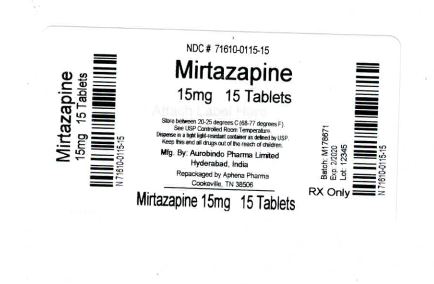
Mirtazapine 15 mg Tablet, Film Coated, 15-count — NDC 71610-115-15 (Billing 71610-0115-15)
This is a package of 15 tablets of Mirtazapine 15 mg Tablet, Film Coated from Aphena Pharma Solutions - Tennessee, LLC, marketed since Oct 2004 and currently FDA-listed. It is the main listing for this product, which comes in 3 package sizes.
NDC database record
One package, one record: these facts belong to NDC 71610-115-15 alone.
- Record
- FDA NDC Directory package listing · Human prescription drug
- Code segments
- 71610 labeler · 115 product · 15 package
- Package marketed since
- Aug 9, 2018
- Sample package
- No — commercial package
- Listing certified through
- Dec 31, 2026
- Billing quantity
- 15 EA per package
- Barcode (UPC-A, from the NDC)
- 3 7161011515 7
- FDA record last changed
- Jul 24, 2026
Identity & classification
Regulatory identifiers FDA, NLM and CMS codes for this package
Drug-database identifiers Medi-Span GPI and First Databank GCN / HICL / AHFS classification
- GSN (GCN sequence number): 046450
- GCN: 16732
- GPI-14 (Medi-Span): 58030050000315
- HICL (First Databank): 011505
- AHFS class code: 28:16.04.24
- RxCUI (RxNorm): 311725
Where does this data come from?
- FDA openFDA NDC Directory · synced Oct 8, 2026
- FDA label on DailyMed · label index refreshed Oct 6, 2026
- RxNorm (NLM RxNav) · catalog refreshed Oct 1, 2026
- Medi-Span GPI (licensed)
- First Databank (licensed) · refreshed Oct 8, 2026
RxNorm drug class
This medicine belongs to the Other antidepressants class.
Where does this data come from?
- RxClass (NLM) · catalog refreshed Oct 1, 2026
Clinical
Mirtazapine is used to treat depression. Mirtazapine is in a class of medications called antidepressants. It works by increasing certain types of activity in the brain to maintain mental balance.
Read the full MedlinePlus article ↗- It treats major depressive disorder (MDD) in adults. It's an antidepressant that may raise norepinephrine and serotonin activity in the brain. Your prescriber will check over time...
- Most people take it once a day, preferably in the evening before bed, since it commonly causes sleepiness. Food doesn't change how well it's absorbed. Follow your prescriber's dire...
- When should I take it, and does food matter?
- Sleepiness is the big one, along with dry mouth, increased appetite, weight gain, constipation, and dizziness. Be careful driving until you know how it affects you. Call your docto...
Patient education
Supplement & herbal interactions
Some supplements/herbs that may interact with Mirtazapine — tap one for details:
Mirtazapine may be associated with lower levels of 1 nutrient — worth a chat with your pharmacist, not a cause for alarm.
Where does this data come from?
- MedlinePlus (NLM) · refreshed Oct 1, 2026
- FDA label on DailyMed · label index refreshed Oct 6, 2026
Ask a licensed pharmacist directly — free, answered by our team.
Pricing
A drug doesn't have one price. Each row is a different public payment system, and none is what you'd pay at the counter — that depends on your insurance. The ⓘ on each row explains what it measures.
| Price system | Per each | Per package |
|---|---|---|
| Retail pharmacies payNADAC · weekly | Not in the retail survey — common for institutional, discontinued, or low-volume packs. | |
| Medicaid paysCMS SDUD · 12 mo | No recent Medicaid claims on file for this NDC — rare and low-volume NDCs are suppressed in the public data. | |
| Medicare drug plans payPart D · Q2 2026 | $0.6699 | $10.05 / 15 tablets |
Where does this data come from?
- CMS NADAC weekly file
- CMS ASP pricing files · refreshed Sep 20, 2026
- CMS Medicaid State Drug Utilization Data · refreshed Oct 8, 2026
- CMS Part D plan pricing files · refreshed Sep 24, 2026
- VA National Acquisition Center price file
Packaging — all sizes for this product
| Package NDC | Description | Marketing start | Marketing end | Status |
|---|---|---|---|---|
| 71610-0115-15 You're viewing this Main listing | 15 TABLET, FILM COATED in 1 BOTTLE | 2018-08-09 | — | Active |
| 71610-0115-30 71610-115-30 | 30 TABLET, FILM COATED in 1 BOTTLE | 2018-08-09 | — | Active |
| 71610-0115-60 71610-115-60 | 90 TABLET, FILM COATED in 1 BOTTLE | 2018-08-09 | — | Active |
You're viewing the smallest of 3 pack sizes for this product.
Pack size FAQ
What quantity is in this package?
How does this package differ from NDC 71610-0115-30?
What NDC number is used to bill for this package of Mirtazapine 15 mg Tablet, Film Coated?
Therapeutic equivalents
| Product | Labeler | Pack | NADAC/unit | TE | Status | Price vs. this |
|---|---|---|---|---|---|---|
| Mirtazapine 15 mg 00378-3515-01 | Mylan | 100 tablets | $0.063 | AB | Availability likely | — |
| Mirtazapine 15 mg 00904-6519-61 | Major | 1 tablet | $0.063 | AB | Availability likely | — |
| Mirtazapine 15 mg 51079-0086-20 | Mylan | 1 tablet | $0.063 | AB | Availability likely | — |
| Mirtazapine 15 mg 57237-0008-05 | Rising | 500 tablets | $0.063 | AB | Availability likely | — |
| Mirtazapine 15 mg 57664-0499-18 | Sun | 1000 tablets | $0.063 | AB | Availability likely | — |
| Mirtazapine 15 mg 60505-0247-01 | Apotex | 30 tablets | $0.063 | AB | Availability likely | — |
| Mirtazapine 15 mg 63739-0098-10 | McKesson | 10 tablets | $0.063 | AB | Availability likely | — |
| Mirtazapine 15 mg 66993-0607-04 | Prasco | 500 tablets | $0.063 | AB | Availability likely | — |
| Mirtazapine 15 mg 68084-0119-01 | American | 1 tablet | $0.063 | AB | Availability likely | — |
| Remeron 15 mg 78206-0160-01 | Organon | 30 tablets | $6.363 | AB | Availability likely | — |
| Mirtazapine 15 mg 00615-8268-05 | NCS | 15 tablets | — | AB | FDA listed | — |
| Mirtazapine 15 mg 13107-0031-01 | Aurolife | 100 tablets | — | AB | FDA listed | — |
| mirtazapine 15 mg 31722-0408-05 | Camber | 500 tablets | — | AB | FDA listed | — |
| Mirtazapine 15 mg 48433-0076-20 | Safecor | 1 tablet | — | AB | FDA listed | — |
| Mirtazapine 15 mg 50090-2140-00 | A-S | 30 tablets | — | AB | FDA listed | — |
| Mirtazapine 15 mg 50090-2800-00 | A-S | 30 tablets | — | AB | FDA listed | — |
| Mirtazapine 15 mg 51407-0350-10 | Golden | 1000 tablets | — | AB | FDA listed | — |
| Mirtazapine 15 mg 55154-5355-00 | Cardinal | 1 tablet | — | AB | FDA listed | — |
| Mirtazapine 15 mg 55154-7297-00 | Cardinal | 1 tablet | — | AB | FDA listed | — |
| Mirtazapine 15 mg 61919-0153-60 | Direct_Rx | 60 tablets | — | AB | FDA listed | — |
| Mirtazapine 15 mg 63187-0206-30 | Proficient | 30 tablets | — | AB | FDA listed | — |
| Mirtazapine 15 mg 63629-2366-01 | Bryant | 1000 tablets | — | AB | FDA listed | — |
| Mirtazapine 15 mg 63629-2367-01 | Bryant | 30 tablets | — | AB | FDA listed | — |
| Mirtazapine 15 mg 65862-0031-01 | Aurobindo | 100 tablets | — | AB | FDA listed | — |
| Mirtazapine 15 mg 67046-1590-03 | Coupler | 30 tablets | — | AB | FDA listed | — |
| Mirtazapine 15 mg 68788-7251-01 | Preferred | 15 tablets | — | AB | FDA listed | — |
| Mirtazapine 15 mg 70518-0180-00 | REMEDYREPACK | 30 tablets | — | AB | FDA listed | — |
| Mirtazapine 15 mg 70518-1397-00 | REMEDYREPACK | 30 tablets | — | AB | FDA listed | — |
| Mirtazapine 15 mg 70518-1838-00 | REMEDYREPACK | 30 tablets | — | AB | FDA listed | — |
| Mirtazapine 15 mg 70518-2453-00 | REMEDYREPACK | 30 tablets | — | AB | FDA listed | — |
| Mirtazapine 15 mg 70518-4322-00 | REMEDYREPACK | 30 tablets | — | AB | FDA listed | — |
| Mirtazapine 15 mg 71205-0481-30 | Proficient | 30 tablets | — | AB | FDA listed | — |
| Mirtazapine 15 mg 71335-0286-01 | Bryant | 30 tablets | — | AB | FDA listed | — |
| Mirtazapine 15 mg 71335-0664-01 | Bryant | 30 tablets | — | AB | FDA listed | — |
| Mirtazapine 15 mg 71335-1055-01 | Bryant | 30 tablets | — | AB | Discontinued | — |
| Mirtazapine 15 mgthis 71610-0115-15 | Aphena | 15 tablets | — | AB | FDA listed | — |
| Mirtazapine 15 mg 71610-0475-15 | Aphena | 15 tablets | — | AB | FDA listed | — |
| Mirtazapine 15 mg 71610-0717-15 | Aphena | 15 tablets | — | AB | FDA listed | — |
| Mirtazapine 15 mg 71610-0853-15 | Aphena | 15 tablets | — | AB | FDA listed | — |
| Mirtazapine 15 mg 72162-1639-00 | Bryant | 1000 tablets | — | AB | FDA listed | — |
| Mirtazapine 15 mg 80425-0305-01 | Advanced | 30 tablets | — | AB | FDA listed | — |
| Mirtazapine 15 mg 87441-0058-01 | Unit | 30 tablets | — | AB | FDA listed | — |
| Mirtazapine 15 mg 55154-0280-00 | Cardinal | 1 tablet | — | AB | FDA listed | — |
| mirtazapine 15 mg 72865-0369-05 | XLCare | 500 tablets | — | AB | FDA listed | — |
| Mirtazapine 15 mg 67046-0319-03 | Coupler | 30 tablets | — | AB | FDA listed | — |
| Mirtazapine 15 mg 68071-2784-09 | NuCare | 90 tablets | — | AB | FDA listed | — |
Where does this data come from?
- FDA openFDA NDC Directory · synced Oct 8, 2026
- FDA Orange Book · refreshed Oct 3, 2026
- CMS NADAC weekly file
Availability & generic status
This product is an FDA-approved generic. Other versions of the same drug are listed under Therapeutic equivalents, least expensive first.
Where does this data come from?
- FDA Orange Book · refreshed Oct 3, 2026
What it looks like
Where does this data come from?
- FDA label on DailyMed · label index refreshed Oct 6, 2026
Inactive Ingredients / Excipients
Inactive ingredients, also called excipients, are components of the drug product other than the active ingredient. They may include fillers, dyes, coatings, preservatives, flavors, or other formulation ingredients.
🧪 Avoiding an ingredient? See Mirtazapine inactive ingredients by manufacturer: every current product's list side by side, so you can ask your pharmacy for the version that does not list it.
💡 Tap an ingredient (hover on desktop) to see what it is and why it’s used.
-
UNII EX438O2MRT
Ferric oxide yellow is a naturally occurring iron compound used as a colorant in medications. It gives tablets, capsules, and other forms a yellow or golden hue for identification and appearance.
-
UNII RFW2ET671P
Hydroxypropyl cellulose is a plant-derived thickening agent made from cellulose. It acts as a binder to hold tablet ingredients together and as a film-former to coat tablets or control how fast the medicine releases.
-
UNII 2165RE0K14
A plant-based thickener made from cellulose that helps control how quickly the medicine dissolves and releases its active ingredient. It also binds ingredients together and improves the tablet's texture and handling during manufacturing.
-
UNII 0WZ8WG20P6
Hypromellose 2910 is a plant-based cellulose derivative that acts as a thickener, binder, and film-coating agent. It helps control how quickly the medicine dissolves and protects the tablet or capsule from moisture and light.
-
UNII EWQ57Q8I5X
Lactose monohydrate is a natural sugar derived from milk. It serves as a filler and binder in tablets and capsules, helping create the proper size, texture, and consistency of the medicine.
-
UNII 70097M6I30
Magnesium stearate is a salt made from magnesium and stearic acid, a fatty substance. It's used in tablets and capsules as a lubricant and glidant to help ingredients flow smoothly during manufacturing and prevent sticking.
-
UNII ETJ7Z6XBU4
Silicon dioxide is a naturally occurring mineral used as a glidant and anti-caking agent. It helps powder ingredients flow smoothly and prevents clumping during manufacturing and storage.
-
UNII O8232NY3SJ
A plant-based carbohydrate derived from corn kernels. It acts as a filler to add bulk, a binder to hold ingredients together, and a disintegrant to help the tablet break apart in your stomach for absorption.
-
UNII 15FIX9V2JP
Titanium dioxide is a bright white mineral powder commonly used as a colorant and opacifying agent. It makes pills and tablets white or lighter in color and helps make coatings non-transparent.
9 inactive ingredients listed in the exact product block matched to this NDC.
Where does this data come from?
ingredient classCode="IACT" elements from the exact product block matched by this NDC. Label-section narrative from DailyMed / the openFDA label index is shown separately when available.- FDA label on DailyMed · label index refreshed Oct 6, 2026
- FDA openFDA NDC Directory · synced Oct 8, 2026
Inactive ingredient FAQ
Are inactive ingredients the same for every manufacturer?
Why might an inactive ingredient be missing?
Can inactive ingredients matter?
Manufacturer & labeler
More NDCs from Aphena Pharma Solutions - Tennessee, LLC labeler code 71610
- Spironolactone 25 mg Tablet NDC 71610-102-60
- Glipizide 10 mg Tablet NDC 71610-105-53
- Gemfibrozil 600 mg Tablet, Film Coated NDC 71610-107-53
- Ciprofloxacin 500 mg Tablet, Film Coated NDC 71610-109-30
- Alprazolam .25 mg Tablet NDC 71610-112-30
- Alprazolam 1 mg Tablet NDC 71610-113-30
- Ondansetron Hydrochloride 8 mg Tablet, Film Coated NDC 71610-119-88
- Lorazepam 1 mg Tablet NDC 71610-122-10
- Cetirizine 10 mg Tablet, Film Coated NDC 71610-123-60
- Azathioprine 50 mg Tablet NDC 71610-124-09
- Gabapentin 100 mg Capsule NDC 71610-126-60
- Quetiapine Fumarate 300 mg Tablet NDC 71610-127-18
Where does this data come from?
- FDA openFDA NDC Directory · synced Oct 8, 2026
- Drugs@FDA
Full prescribing information FDA SPL
🚨 Boxed Warning ▾
Suicidality and Antidepressant Drugs Antidepressants increased the risk compared to placebo of suicidal thinking and behavior (suicidality) in children, adolescents, and young adults in short-term studies of major depressive disorder (MDD) and other psychiatric disorders. Anyone considering the use of mirtazapine tablets or any other antidepressant in a child, adolescent, or young adult must balance this risk with the clinical need. Short-term studies did not show an increase in the risk of suicidality with antidepressants compared to placebo in adults beyond age 24; there was a reduction in risk with antidepressants compared to placebo in adults aged 65 and older.
Depression and certain other psychiatric disorders are themselves associated with increases in the risk of suicide. Patients of all ages who are started on antidepressant therapy should be monitored appropriately and observed closely for clinical worsening, suicidality, or unusual changes in behavior. Families and caregivers should be advised of the need for close observation and communication with the prescriber.
Mirtazapine is not approved for use in pediatric patients. (See WARNINGS: Clinical Worsening and Suicide Risk , PRECAUTIONS: Information for Patients , and PRECAUTIONS: Pediatric Use )
🎯 Indications and Usage ▾
INDICATIONS AND USAGE Mirtazapine tablets are indicated for the treatment of major depressive disorder. The efficacy of mirtazapine in the treatment of major depressive disorder was established in 6-week controlled trials of outpatients whose diagnoses corresponded most closely to the Diagnostic and Statistical Manual of Mental Disorders-3rd edition (DSM-III) category of major depressive disorder (see CLINICAL PHARMACOLOGY ). A major depressive episode (DSM-IV) implies a prominent and relatively persistent (nearly every day for at least 2 weeks) depressed or dysphoric mood that usually interferes with daily functioning, and includes at least 5 of the following 9 symptoms: depressed mood, loss of interest in usual activities, significant change in weight and/or appetite, insomnia or hypersomnia, psychomotor agitation or retardation, increased fatigue, feelings of guilt or worthlessness, slowed thinking or impaired concentration, a suicide attempt, or suicidal ideation.
The effectiveness of mirtazapine in hospitalized depressed patients has not been adequately studied. The efficacy of mirtazapine in maintaining a response in patients with major depressive disorder for up to 40 weeks following 8 to 12 weeks of initial open-label treatment was demonstrated in a placebo-controlled trial. Nevertheless, the physician who elects to use mirtazapine for extended periods should periodically re-evaluate the long-term usefulness of the drug for the individual patient (see CLINICAL PHARMACOLOGY ).
⏱️ Dosage and Administration ▾
DOSAGE AND ADMINISTRATION Initial Treatment The recommended starting dose for mirtazapine tablets is 15 mg/day, administered in a single dose, preferably in the evening prior to sleep. In the controlled clinical trials establishing the efficacy of mirtazapine in the treatment of major depressive disorder, the effective dose range was generally 15 to 45 mg/day. While the relationship between dose and satisfactory response in the treatment of major depressive disorder for mirtazapine has not been adequately explored, patients not responding to the initial 15 mg dose may benefit from dose increases up to a maximum of 45 mg/day.
Mirtazapine has an elimination half-life of approximately 20 to 40 hours; therefore, dose changes should not be made at intervals of less than 1 to 2 weeks in order to allow sufficient time for evaluation of the therapeutic response to a given dose. Elderly and Patients with Renal or Hepatic Impairment The clearance of mirtazapine is reduced in elderly patients and in patients with moderate to severe renal or hepatic impairment. Consequently, the prescriber should be aware that plasma mirtazapine levels may be increased in these patient groups, compared to levels observed in younger adults without renal or hepatic impairment (see PRECAUTIONS and CLINICAL PHARMACOLOGY ).
Maintenance/Extended Treatment It is generally agreed that acute episodes of depression require several months or longer of sustained pharmacological therapy beyond response to the acute episode. Systematic evaluation of mirtazapine tablets has demonstrated that its efficacy in major depressive disorder is maintained for periods of up to 40 weeks following 8 to 12 weeks of initial treatment at a dose of 15 to 45 mg/day (see CLINICAL PHARMACOLOGY ). Based on these limited data, it is unknown whether or not the dose of mirtazapine needed for maintenance treatment is identical to the dose needed to achieve an initial response.
Patients should be periodically reassessed to determine the need for maintenance treatment and the appropriate dose for such treatment. Switching a Patient To or From a Monoamine Oxidase Inhibitor (MAOI) Intended to Treat Psychiatric Disorders At least 14 days should elapse between discontinuation of an MAOI intended to treat psychiatric disorders and initiation of therapy with mirtazapine tablets. Conversely, at least 14 days should be allowed after stopping mirtazapine tablets before starting an MAOI intended to treat psychiatric disorders (see CONTRAINDICATIONS ).
Use of Mirtazapine Tablets With Other MAOIs, Such as Linezolid or Methylene Blue Do not start mirtazapine tablets in a patient who is being treated with linezolid or intravenous methylene blue because there is an increased risk of serotonin syndrome. In a patient who requires more urgent treatment of a psychiatric condition, other interventions, including hospitalization, should be considered (see CONTRAINDICATIONS ). In some cases, a patient already receiving therapy with mirtazapine tablets may require urgent treatment with linezolid or intravenous methylene blue.
If acceptable alternatives to linezolid or intravenous methylene blue treatment are not available and the potential benefits of linezolid or intravenous methylene blue treatment are judged to outweigh the risks of serotonin syndrome in a particular patient, mirtazapine tablets should be stopped promptly, and linezolid or intravenous methylene blue can be administered. The patient should be monitored for symptoms of serotonin syndrome for 2 weeks or until 24 hours after the last dose of linezolid or intravenous methylene blue, whichever comes first.
Therapy with mirtazapine tablets may be resumed 24 hours after the last dose of linezolid or intravenous methylene blue (see WARNINGS ). The risk of administering methylene blue by non-intravenous routes (such as oral tablets or by local injection) or in intravenous doses much lower than 1 mg/kg with mirtazapine tablets is unclear. The clinician should… [Excerpted — this section continues on DailyMed.]
⛔ Contraindications ▾
CONTRAINDICATIONS Hypersensitivity Mirtazapine tablets are contraindicated in patients with a known hypersensitivity to mirtazapine or to any of the excipients. Monoamine Oxidase Inhibitors The use of monoamine oxidase inhibitors (MAOIs) intended to treat psychiatric disorders with mirtazapine tablets or within 14 days of stopping treatment with mirtazapine tablets are contraindicated because of an increased risk of serotonin syndrome. The use of mirtazapine tablets within 14 days of stopping an MAOI intended to treat psychiatric disorders is also contraindicated (see WARNINGS and DOSAGE AND ADMINISTRATION ).
Starting mirtazapine tablets in a patient who is being treated with MAOIs such as linezolid or intravenous methylene blue is also contraindicated because of an increased risk of serotonin syndrome (see WARNINGS and DOSAGE AND ADMINISTRATION ).
⚠️ Warnings ▾
WARNINGS Clinical Worsening and Suicide Risk Patients with major depressive disorder (MDD), both adult and pediatric, may experience worsening of their depression and/or the emergence of suicidal ideation and behavior (suicidality) or unusual changes in behavior, whether or not they are taking antidepressant medications, and this risk may persist until significant remission occurs. Suicide is a known risk of depression and certain other psychiatric disorders, and these disorders themselves are the strongest predictors of suicide.
There has been a long-standing concern, however, that antidepressants may have a role in inducing worsening of depression and the emergence of suicidality in certain patients during the early phases of treatment. Pooled analyses of short-term placebo-controlled trials of antidepressant drugs (SSRIs and others) showed that these drugs increase the risk of suicidal thinking and behavior (suicidality) in children, adolescents, and young adults (ages 18 to 24) with major depressive disorder (MDD) and other psychiatric disorders.
Short-term studies did not show an increase in the risk of suicidality with antidepressants compared to placebo in adults beyond age 24; there was a reduction in risk with antidepressants compared to placebo in adults aged 65 and older. The pooled analyses of placebo-controlled trials in children and adolescents with MDD, obsessive compulsive disorder (OCD), or other psychiatric disorders included a total of 24 short-term trials of 9 antidepressant drugs in over 4400 patients. The pooled analyses of placebo-controlled trials in adults with MDD or other psychiatric disorders included a total of 295 short-term trials (median duration of 2 months) of 11 antidepressant drugs in over 77,000 patients.
There was considerable variation in risk of suicidality among drugs, but a tendency toward an increase in the younger patients for almost all drugs studied. There were differences in absolute risk of suicidality across different indications, with the highest incidence in MDD. The risk differences (drug vs. placebo), however, were relatively stable within age strata and across indications.
These risk differences (drug-placebo difference in the number of cases of suicidality per 1000 patients treated) are provided in Table 1. Table 1 Age Range Drug-Placebo Difference in Number of Cases of Suicidality per 1000 Patients Treated Increases Compared to Placebo <18 14 additional cases 18-24 5 additional cases Decreases Compared to Placebo 25-64 1 fewer case > 65 6 fewer cases No suicides occurred in any of the pediatric trials. There were suicides in the adult trials, but the number was not sufficient to reach any conclusion about drug effect on suicide.
It is unknown whether the suicidality risk extends to longer-term use, i.e., beyond several months. However, there is substantial evidence from placebo-controlled maintenance trials in adults with depression that the use of antidepressants can delay the recurrence of depression. All patients being treated with antidepressants for any indication should be monitored appropriately and observed closely for clinical worsening, suicidality, and unusual changes in behavior, especially during the initial few months of a course of drug therapy, or at times of dose changes, either increases or decreases.
The following symptoms, anxiety, agitation, panic attacks, insomnia, irritability, hostility, aggressiveness, impulsivity, akathisia (psychomotor restlessness), hypomania, and mania, have been reported in adult and pediatric patients being treated with antidepressants for major depressive disorder as well as for other indications, both psychiatric and nonpsychiatric. Although a causal link between the emergence of such symptoms and either the worsening of depression and/or the emergence of suicidal impulses has not been established, there is concern that such symptoms may represent precursors to emerging suicidality.
Consideration should be given to changin… [Excerpted — this section continues on DailyMed.]
🤒 Adverse Reactions ▾
ADVERSE REACTIONS Associated with Discontinuation of Treatment Approximately 16% of the 453 patients who received mirtazapine tablets in US 6-week controlled clinical trials discontinued treatment due to an adverse experience, compared to 7% of the 361 placebo-treated patients in those studies. The most common events (≥ 1%) associated with discontinuation and considered to be drug related (i.e., those events associated with dropout at a rate at least twice that of placebo) are included in Table 2. Table 2: Common Adverse Events Associated With Discontinuation of Treatment in 6-Week U.S.
Mirtazapine Trials Adverse Event Percentage of Patients Discontinuing With Adverse Event Mirtazapine (n=453) Placebo (n=361) Somnolence 10.4% 2.2% Nausea 1.5% 0% Commonly Observed Adverse Events in U.S. Controlled Clinical Trials The most commonly observed adverse events associated with the use of mirtazapine tablets (incidence of 5% or greater) and not observed at an equivalent incidence among placebo-treated patients (mirtazapine incidence at least twice that for placebo) are listed in Table 3. Table 3: Common Treatment – Emergent Adverse Events Associated With the Use of Mirtazapine in 6-Week U.S.
Trials Adverse Event Percentage of Patients Reporting Adverse Event Mirtazapine (n=453) Placebo (n=361) Somnolence 54% 18% Increased Appetite 17% 2% Weight Gain 12% 2% Dizziness 7% 3% Adverse Events Occurring at an Incidence of 1% or More Among Mirtazapine-Treated Patients Table 4 enumerates adverse events that occurred at an incidence of 1% or more, and were more frequent than in the placebo group, among mirtazapine tablets-treated patients who participated in short-term US placebo-controlled trials in which patients were dosed in a range of 5 to 60 mg/day.
This table shows the percentage of patients in each group who had at least 1 episode of an event at some time during their treatment. Reported adverse events were classified using a standard COSTART-based dictionary terminology. The prescriber should be aware that these figures cannot be used to predict the incidence of side effects in the course of usual medical practice where patient characteristics and other factors differ from those which prevailed in the clinical trials.
Similarly, the cited frequencies cannot be compared with figures obtained from other investigations involving different treatments, uses, and investigators. The cited figures, however, do provide the prescribing physician with some basis for estimating the relative contribution of drug and nondrug factors to the side-effect incidence rate in the population studied. Table 4: Incidence of Adverse Clinical Experiences 1 (≥1%) in Short-Term U.S.
Controlled Studies Body System Adverse Clinical Experience Mirtazapine (n=453) Placebo (n=361) 1 Events reported by at least 1% of patients treated with mirtazapine are included, except the following events, which had an incidence on placebo greater than or equal to mirtazapine: headache, infection, pain, chest pain, palpitation, tachycardia, postural hypotension, nausea, dyspepsia, diarrhea, flatulence, insomnia, nervousness, libido decreased, hypertonia, pharyngitis, rhinitis, sweating, amblyopia, tinnitus, taste perversion.
Body as a Whole Asthenia 8% 5% Flu Syndrome 5% 3% Back Pain 2% 1% Digestive System Dry Mouth 25% 15% Increased Appetite 17% 2% Constipation 13% 7% Metabolic and Nutritional Disorders Weight Gain 12% 2% Peripheral Edema 2% 1% Edema 1% 0% Musculoskeletal System Myalgia 2% 1% Nervous System Somnolence 54% 18% Dizziness 7% 3% Abnormal Dreams 4% 1% Thinking Abnormal 3% 1% Tremor 2% 1% Confusion 2% 0% Respiratory System Dyspnea 1% 0% Urogenital System Urinary Frequency 2% 1% ECG Changes The electrocardiograms for 338 patients who received mirtazapine tablets and 261 patients who received placebo in 6-week, placebo-controlled trials were analyzed.
Prolongation in QTc ≥ 500 msec was not observed among mirtazapine-treated patients; mean change in QTc was +1.6 msec for mir… [Excerpted — this section continues on DailyMed.]
🔄 Drug Interactions ▾
Drug Interactions As with other drugs, the potential for interaction by a variety of mechanisms (e.g., pharmacodynamic, pharmacokinetic inhibition or enhancement, etc.) is a possibility (see CLINICAL PHARMACOLOGY ). Monoamine Oxidase Inhibitors (See CONTRAINDICATIONS , WARNINGS , and DOSAGE AND ADMINISTRATION .) Serotonergic Drugs (See CONTRAINDICATIONS and WARNINGS .) Drugs Affecting Hepatic Metabolism The metabolism and pharmacokinetics of mirtazapine tablets may be affected by the induction or inhibition of drug-metabolizing enzymes.
Drugs that are Metabolized by and/or Inhibit Cytochrome P450 Enzymes CYP Enzyme Inducers (these studies used both drugs at steady state) Phenytoin In healthy male patients (n=18), phenytoin (200 mg daily) increased mirtazapine (30 mg daily) clearance about 2-fold, resulting in a decrease in average plasma mirtazapine concentrations of 45%. Mirtazapine did not significantly affect the pharmacokinetics of phenytoin. Carbamazepine In healthy male patients (n=24), carbamazepine (400 mg b.i.d.) increased mirtazapine (15 mg b.i.d.) clearance about 2-fold, resulting in a decrease in average plasma mirtazapine concentrations of 60%.
When phenytoin, carbamazepine, or another inducer of hepatic metabolism (such as rifampicin) is added to mirtazapine therapy, the mirtazapine dose may have to be increased. If treatment with such a medicinal product is discontinued, it may be necessary to reduce the mirtazapine dose. CYP Enzyme Inhibitors Cimetidine In healthy male patients (n=12), when cimetidine, a weak inhibitor of CYP1A2, CYP2D6, and CYP3A4, given at 800 mg b.i.d. at steady state was coadministered with mirtazapine (30 mg daily) at steady state, the Area Under the Curve (AUC) of mirtazapine increased more than 50%.
Mirtazapine did not cause relevant changes in the pharmacokinetics of cimetidine. The mirtazapine dose may have to be decreased when concomitant treatment with cimetidine is started, or increased when cimetidine treatment is discontinued. Ketoconazole In healthy, male, Caucasian patients (n=24), coadministration of the potent CYP3A4 inhibitor ketoconazole (200 mg b.i.d. for 6.5 days) increased the peak plasma levels and the AUC of a single 30 mg dose of mirtazapine by approximately 40% and 50%, respectively.
Caution should be exercised when coadministering mirtazapine with potent CYP3A4 inhibitors, HIV protease inhibitors, azole antifungals, erythromycin, or nefazodone. Paroxetine In an in vivo interaction study in healthy, CYP2D6 extensive metabolizer patients (n=24), mirtazapine (30 mg/day), at steady state, did not cause relevant changes in the pharmacokinetics of steady state paroxetine (40 mg/day), a CYP2D6 inhibitor. Other Drug-Drug Interactions Amitriptyline In healthy, CYP2D6 extensive metabolizer patients (n=32), amitriptyline (75 mg daily), at steady state, did not cause relevant changes in the pharmacokinetics of steady state mirtazapine (30 mg daily); mirtazapine also did not cause relevant changes to the pharmacokinetics of amitriptyline.
Warfarin In healthy male subjects (n=16), mirtazapine (30 mg daily), at steady state, caused a small (0.2) but statistically significant increase in the International Normalized Ratio (INR) in subjects treated with warfarin. As at a higher dose of mirtazapine, a more pronounced effect can not be excluded, it is advisable to monitor the INR in case of concomitant treatment of warfarin with mirtazapine. Lithium No relevant clinical effects or significant changes in pharmacokinetics have been observed in healthy male subjects on concurrent treatment with subtherapeutic levels of lithium (600 mg/day for 10 days) at steady state and a single 30 mg dose of mirtazapine.
The effects of higher doses of lithium on the pharmacokinetics of mirtazapine are unknown. Risperidone In an in vivo , nonrandomized, interaction study, subjects (n=6) in need of treatment with an antipsychotic and antidepressant drug, showed that mirtazapine (30 mg daily) at steady sta… [Excerpted — this section continues on DailyMed.]
🤰 Pregnancy ▾
Pregnancy Teratogenic Effects - Pregnancy Category C Reproduction studies in pregnant rats and rabbits at doses up to 100 mg/kg and 40 mg/kg, respectively [20 and 17 times the maximum recommended human dose (MRHD) on an mg/m 2 basis, respectively], have revealed no evidence of teratogenic effects. However, in rats, there was an increase in postimplantation losses in dams treated with mirtazapine. There was an increase in pup deaths during the first 3 days of lactation and a decrease in pup birth weights.
The cause of these deaths is not known. The effects occurred at doses that were 20 times the MRHD, but not at 3 times the MRHD, on an mg/m 2 basis. There are no adequate and well-controlled studies in pregnant women.
Because animal reproduction studies are not always predictive of human response, this drug should be used during pregnancy only if clearly needed.
🧒 Pediatric Use ▾
Pediatric Use Safety and effectiveness in the pediatric population have not been established (see BOXED WARNING and WARNINGS: Clinical Worsening and Suicide Risk ). Two placebo-controlled trials in 258 pediatric patients with MDD have been conducted with mirtazapine tablets, and the data were not sufficient to support a claim for use in pediatric patients. Anyone considering the use of mirtazapine tablets in a child or adolescent must balance the potential risks with the clinical need.
In an 8-week-long pediatric clinical trial of doses between 15 to 45 mg/day, 49% of mirtazapine-treated patients had a weight gain of at least 7%, compared to 5.7% of placebo-treated patients. The mean increase in weight was 4 kg (2 kg SD) for mirtazapine-treated patients versus 1 kg (2 kg SD) for placebo-treated patients (see PRECAUTIONS: Increased Appetite/Weight Gain ).
🧓 Geriatric Use ▾
Geriatric Use Approximately 190 elderly individuals (≥ 65 years of age) participated in clinical studies with mirtazapine tablets. This drug is known to be substantially excreted by the kidney (75%), and the risk of decreased clearance of this drug is greater in patients with impaired renal function. Because elderly patients are more likely to have decreased renal function, care should be taken in dose selection.
Sedating drugs may cause confusion and over-sedation in the elderly. No unusual adverse age-related phenomena were identified in this group. Pharmacokinetic studies revealed a decreased clearance in the elderly.
Caution is indicated in administering mirtazapine to elderly patients (see CLINICAL PHARMACOLOGY and DOSAGE AND ADMINISTRATION ).
🆘 Overdosage ▾
OVERDOSAGE Human Experience There is very limited experience with mirtazapine tablets overdose. In premarketing clinical studies, there were 8 reports of mirtazapine overdose alone or in combination with other pharmacological agents. The only drug overdose death reported while taking mirtazapine was in combination with amitriptyline and chlorprothixene in a non-US clinical study.
Based on plasma levels, the mirtazapine dose taken was 30 to 45 mg, while plasma levels of amitriptyline and chlorprothixene were found to be at toxic levels. All other premarketing overdose cases resulted in full recovery. Signs and symptoms reported in association with overdose included disorientation, drowsiness, impaired memory, and tachycardia.
There were no reports of ECG abnormalities, coma, or convulsions following overdose with mirtazapine tablets alone. However, based on postmarketing reports, there is a possibility of more serious outcomes (including fatalities) at dosages much higher than the therapeutic dose, especially with mixed overdoses. In these cases, QT prolongation and Torsades de Pointes have also been reported (see PRECAUTIONS , Drug Interactions and ADVERSE REACTIONS sections).
Overdose Management Treatment should consist of those general measures employed in the management of overdose with any drug effective in the treatment of major depressive disorder. Ensure an adequate airway, oxygenation, and ventilation. Monitor ECG parameters (including cardiac rhythm) and vital signs.
General supportive and symptomatic measures are also recommended. Induction of emesis is not recommended. Gastric lavage with a large-bore orogastric tube with appropriate airway protection, if needed, may be indicated if performed soon after ingestion, or in symptomatic patients.
Activated charcoal should be administered. There is no experience with the use of forced diuresis, dialysis, hemoperfusion, or exchange transfusion in the treatment of mirtazapine overdosage. No specific antidotes for mirtazapine are known.
In managing overdosage, consider the possibility of multiple-drug involvement. The physician should consider contacting a poison control center for additional information on the treatment of any overdose. Telephone numbers for certified poison control centers are listed in the Physicians’ Desk Reference (PDR).
🧬 Clinical Pharmacology ▾
CLINICAL PHARMACOLOGY Pharmacodynamics The mechanism of action of mirtazapine tablets, as with other drugs effective in the treatment of major depressive disorder, is unknown. Evidence gathered in preclinical studies suggests that mirtazapine enhances central noradrenergic and serotonergic activity. These studies have shown that mirtazapine acts as an antagonist at central presynaptic α 2- adrenergic inhibitory autoreceptors and heteroreceptors, an action that is postulated to result in an increase in central noradrenergic and serotonergic activity.
Mirtazapine is a potent antagonist of 5-HT 2 and 5-HT 3 receptors. Mirtazapine has no significant affinity for the 5-HT 1A and 5-HT 1B receptors. Mirtazapine is a potent antagonist of histamine (H 1 ) receptors, a property that may explain its prominent sedative effects.
Mirtazapine is a moderate peripheral α 1- adrenergic antagonist, a property that may explain the occasional orthostatic hypotension reported in association with its use. Mirtazapine is a moderate antagonist at muscarinic receptors, a property that may explain the relatively low incidence of anticholinergic side effects associated with its use. Pharmacokinetics Mirtazapine tablets are rapidly and completely absorbed following oral administration and have a half-life of about 20 to 40 hours.
Peak plasma concentrations are reached within about 2 hours following an oral dose. The presence of food in the stomach has a minimal effect on both the rate and extent of absorption and does not require a dosage adjustment. Mirtazapine is extensively metabolized after oral administration.
Major pathways of biotransformation are demethylation and hydroxylation followed by glucuronide conjugation. In vitro data from human liver microsomes indicate that cytochrome 2D6 and 1A2 are involved in the formation of the 8-hydroxy metabolite of mirtazapine, whereas cytochrome 3A is considered to be responsible for the formation of the N-desmethyl and N-oxide metabolite. Mirtazapine has an absolute bioavailability of about 50%.
It is eliminated predominantly via urine (75%) with 15% in feces. Several unconjugated metabolites possess pharmacological activity but are present in the plasma at very low levels. The (-) enantiomer has an elimination half-life that is approximately twice as long as the (+) enantiomer and therefore achieves plasma levels that are about 3 times as high as that of the (+) enantiomer.
Plasma levels are linearly related to dose over a dose range of 15 to 80 mg. The mean elimination half-life of mirtazapine after oral administration ranges from approximately 20 to 40 hours across age and gender subgroups, with females of all ages exhibiting significantly longer elimination half-lives than males (mean half-life of 37 hours for females vs. 26 hours for males).
Steady state plasma levels of mirtazapine are attained within 5 days, with about 50% accumulation (accumulation ratio = 1.5). Mirtazapine is approximately 85% bound to plasma proteins over a concentration range of 0.01 to 10 mcg/mL. Special Populations Geriatric Following oral administration of mirtazapine tablets 20 mg/day for 7 days to subjects of varying ages (range, 25 to 74), oral clearance of mirtazapine was reduced in the elderly compared to the younger subjects.
The differences were most striking in males, with a 40% lower clearance in elderly males compared to younger males, while the clearance in elderly females was only 10% lower compared to younger females. Caution is indicated in administering mirtazapine tablets to elderly patients (see PRECAUTIONS and DOSAGE AND ADMINISTRATION ). Pediatrics Safety and effectiveness of mirtazapine in the pediatric population have not been established (see PRECAUTIONS ).
Gender The mean elimination half-life of mirtazapine after oral administration ranges from approximately 20 to 40 hours across age and gender subgroups, with females of all ages exhibiting significantly longer elimination half-lives than males (mean half… [Excerpted — this section continues on DailyMed.]
📦 How Supplied / Storage and Handling ▾
HOW SUPPLIED Mirtazapine tablets, USP are supplied as: 7.5 mg Tablets - White, biconvex, capsule shaped film coated tablets with “11” debossed on one side and “A” debossed on the other side. Bottles of 30 NDC 57237-007-30 Bottles of 500 NDC 57237-007-05 15 mg Tablets – Yellow, biconvex, capsule shaped film coated tablets with a score line in between “0” and “8” on one side and “A” debossed on the other side. Bottles of 30 NDC 57237-008-30 Bottles of 500 NDC 57237-008-05 30 mg Tablets – Reddish brown, biconvex, capsule shaped film coated tablets with a score line in between “0” and “9” on one side and “A” debossed on the other side.
Bottles of 30 NDC 57237-009-30 Bottles of 500 NDC 57237-009-05 45 mg Tablets – White, biconvex, capsule shaped film coated tablets with “10” debossed on one side and “A” debossed on the other side. Bottles of 30 NDC 57237-010-30 Bottles of 500 NDC 57237-010-05 Storag e Store at 25°C (77°F); excursions permitted to 15° to 30°C (59° to 86°F) [see USP Controlled Room Temperature]. Protect from light and moisture.
Dispense with medication guide available at : http://www.risingpharma.com/med-guides.html Distributed by: Rising Health, LLC Saddle Brook, NJ 07663 Made in India Code: TS/DRUGS/19/1993 Revised: 08/2017
📋 Description ▾
DESCRIPTION Mirtazapine tablets, USP are an orally administered drug. Mirtazapine has a tetracyclic chemical structure and belongs to the piperazino-azepine group of compounds. It is designated 1,2,3,4,10,14b-hexahydro-2-methylpyrazino [2,1-a] pyrido [2,3-c] benzazepine and has the empirical formula of C 17 H 19 N 3 .
Its molecular weight is 265.36. The structural formula is the following and it is the racemic mixture: Mirtazapine USP is a white to creamy white crystalline powder which is slightly soluble in water. Mirtazapine tablets, USP are supplied for oral administration as scored film-coated tablets containing 15 or 30 mg of mirtazapine USP, and unscored film-coated tablets containing 7.5 or 45 mg of mirtazapine USP.
Each tablet also contains corn starch, hydroxypropyl cellulose, magnesium stearate, colloidal silicon dioxide, lactose monohydrate, hypromellose, and titanium dioxide. In addition, the 15 mg contains iron oxide yellow and 30 mg contains iron oxide red, iron oxide black, and iron oxide yellow. Chemical Structure
💬 Information for Patients ▾
Information for Patients Prescribers or other health professionals should inform patients, their families, and their caregivers about the benefits and risks associated with treatment with mirtazapine tablets and should counsel them in its appropriate use. A patient Medication Guide about “Antidepressant Medicines, Depression and other Serious Mental Illnesses, and Suicidal Thoughts or Actions” is available for mirtazapine. The prescriber or health professional should instruct patients, their families, and their caregivers to read the Medication Guide and should assist them in understanding its contents.
Patients should be given the opportunity to discuss the contents of the Medication Guide and to obtain answers to any questions they may have. The complete text of the Medication Guide is reprinted at the end of this document. Patients should be advised of the following issues and asked to alert their prescriber if these occur while taking mirtazapine.
Clinical Worsening and Suicide Risk Patients, their families, and their caregivers should be encouraged to be alert to the emergence of anxiety, agitation, panic attacks, insomnia, irritability, hostility, aggressiveness, impulsivity, akathisia (psychomotor restlessness), hypomania, mania, other unusual changes in behavior, worsening of depression, and suicidal ideation, especially early during antidepressant treatment and when the dose is adjusted up or down. Families and caregivers of patients should be advised to look for the emergence of such symptoms on a day-to-day basis, since changes may be abrupt.
Such symptoms should be reported to the patient's prescriber or health professional, especially if they are severe, abrupt in onset, or were not part of the patient's presenting symptoms. Symptoms such as these may be associated with an increased risk for suicidal thinking and behavior and indicate a need for very close monitoring and possibly changes in the medication. Agranulocytosis Patients who are to receive mirtazapine should be warned about the risk of developing agranulocytosis.
Patients should be advised to contact their physician if they experience any indication of infection such as fever, chills, sore throat, mucous membrane ulceration, or other possible signs of infection. Particular attention should be paid to any flu-like complaints or other symptoms that might suggest infection. Interference with Cognitive and Motor Performance Mirtazapine may impair judgement, thinking, and particularly, motor skills, because of its prominent sedative effect.
The drowsiness associated with mirtazapine use may impair a patient’s ability to drive, use machines, or perform tasks that require alertness. Thus, patients should be cautioned about engaging in hazardous activities until they are reasonably certain that mirtazapine therapy does not adversely affect their ability to engage in such activities. Completing Course of Therapy While patients may notice improvement with mirtazapine therapy in 1 to 4 weeks, they should be advised to continue therapy as directed.
Concomitant Medication Patients should be advised to inform their physician if they are taking, or intend to take, any prescription or over-the-counter drugs, since there is a potential for mirtazapine to interact with other drugs. Patients should be made aware of a potential increased risk for serotonin syndrome if concomitant use of mirtazapine with other serotonergic drugs, including triptans, tricyclic antidepressants, fentanyl, lithium, tramadol, buspirone, tryptophan, and St. John's wort, is clinically warranted, particularly during treatment initiation and dose increases.
Alcohol The impairment of cognitive and motor skills produced by mirtazapine has been shown to be additive with those produced by alcohol. Accordingly, patients should be advised to avoid alcohol while taking mirtazapine. Pregnancy Patients should be advised to notify their physician if they become pregnant or intend to become pregnant during mirt… [Excerpted — this section continues on DailyMed.]
💬 Medication Guide ▾
Medication Guide Mirtazapine Tablets, USP (mir taz' a peen) What is the most important information I should know about mirtazapine tablets? Mirtazapine tablets and other antidepressant medicines may cause serious side effects, including: 1. Suicidal thoughts or actions: Mirtazapine tablets and other antidepressant medicines may increase suicidal thoughts or actions in some children, teenagers, or young adults within the f irst few months of treatment or when the dose is changed.
Depression or other serious mental illnesses are the most important causes of suicidal thoughts or actions. Watch for these changes and call your healthcare provider right away if you notice: New or sudden changes in mood, behavior, actions, thoughts, or feelings, especially if severe. Pay particular attention to such changes when mirtazapine tablets are started or when the dose is changed.
Keep all follow-up visits with your healthcare provider and call between visits if you are worried about symptoms. Call your healthcare provider right away if you have any of the following symptoms, or call 911 if an emergency, especially if they are new, worse, or worry you: attempts to commit suicide acting on dangerous impulses acting aggressive or violent thoughts about suicide or dying new or worse depression new or worse anxiety or panic attacks feeling agitated, restless, angry or irritable trouble sleeping an increase in activity or talking more than what is normal for you other unusual changes in behavior or mood Call your healthcare provider right away if you have any of the following symptoms, or call 911 if an emergency.
Mirtazapine tablets may be associated with these serious side effects: 2. Manic episodes: greatly increased energy severe trouble sleeping racing thoughts reckless behavior unusually grand ideas excessive happiness or irritability talking more or faster than usual 3. Decreased White Blood Cells called neutrophils, which are needed to fight infections.
Tell your doctor if you have any indication of infection such as fever, chills, sore throat, or mouth or nose sores, especially symptoms which are flu-like. 4. Serotonin Syndrome.
This condition can be life-threatening and may include: agitation, hallucinations, coma or other changes in mental status coordination problems or muscle twitching (overactive reflexes) racing heartbeat, high or low blood pressure sweating or fever nausea, vomiting, or diarrhea muscle rigidity 5. Visual problems eye pain changes in vision swelling or redness in or around the eye Only some people are at risk for these problems. You may want to undergo an eye examination to see if you are at risk and receive preventative treatment if you are.
6. Seizures 7. Low salt (sodium) levels in the blood.
Elderly people may be at greater risk for this. Symptoms may include: headache weakness or feeling unsteady confusion, problems concentrating or thinking or memory problems 8. Sleepiness.
It is best to take mirtazapine tablets close to bedtime. 9. Severe skin reactions: Call your doctor right away if you have any or all of the following symptoms: severe rash with skin swelling (including on the palms of the hands and soles of the feet) painful reddening of the skin, blisters, or ulcers on the body or in the mouth 10.
Severe allergic reactions: trouble breathing, swelling of the face, tongue, eyes or mouth rash, itchy welts (hives) or blisters, alone or with fever or joint pain 11. Increases in appetite or weight. Children and adolescents should have height and weight monitored during treatment.
12. Increased cholesterol and triglyceride levels in your blood Do not stop mirtazapine tablets without first talking to your healthcare provider . Stopping mirtazapine tablets too quickly may cause potentially serious symptoms including: dizziness abnormal dreams agitation anxiety fatigue confusion headache shaking tingling sensation nausea, vomiting sweating What are mirtazapine tablets?
Mirtazapine tablets are a prescription medici… [Excerpted — this section continues on DailyMed.]
⚠️ Precautions ▾
PRECAUTIONS General Discontinuation Symptoms There have been reports of adverse reactions upon the discontinuation of mirtazapine tablets (particularly when abrupt), including but not limited to the following: dizziness, abnormal dreams, sensory disturbances (including paresthesia and electric shock sensations), agitation, anxiety, fatigue, confusion, headache, tremor, nausea, vomiting, and sweating, or other symptoms which may be of clinical significance. The majority of the reported cases are mild and self-limiting.
Even though these have been reported as adverse reactions, it should be realized that these symptoms may be related to underlying disease. Patients currently taking mirtazapine should NOT discontinue treatment abruptly, due to risk of discontinuation symptoms. At the time that a medical decision is made to discontinue treatment with mirtazapine, a gradual reduction in the dose, rather than an abrupt cessation, is recommended.
Akathisia/Psychomotor Restlessness The use of antidepressants has been associated with the development of akathisia, characterized by a subjectively unpleasant or distressing restlessness and need to move, often accompanied by an inability to sit or stand still. This is most likely to occur within the first few weeks of treatment. In patients who develop these symptoms, increasing the dose may be detrimental.
Hyponatremia Hyponatremia has been reported very rarely with the use of mirtazapine. Caution should be exercised in patients at risk, such as elderly patients or patients concomitantly treated with medications known to cause hyponatremia. Somnolence In U.S. controlled studies, somnolence was reported in 54% of patients treated with mirtazapine tablets, compared to 18% for placebo and 60% for amitriptyline.
In these studies, somnolence resulted in discontinuation for 10.4% of mirtazapine-treated patients, compared to 2.2% for placebo. It is unclear whether or not tolerance develops to the somnolent effects of mirtazapine. Because of the potentially significant effects of mirtazapine on impairment of performance, patients should be cautioned about engaging in activities requiring alertness until they have been able to assess the drug’s effect on their own psychomotor performance (see PRECAUTIONS: Information for Patients ).
Dizziness In U.S. controlled studies, dizziness was reported in 7% of patients treated with mirtazapine, compared to 3% for placebo and 14% for amitriptyline. It is unclear whether or not tolerance develops to the dizziness observed in association with the use of mirtazapine. Increased Appetite/Weight Gain In U.S. controlled studies, appetite increase was reported in 17% of patients treated with mirtazapine, compared to 2% for placebo and 6% for amitriptyline.
In these same trials, weight gain of ≥ 7% of body weight was reported in 7.5% of patients treated with mirtazapine, compared to 0% for placebo and 5.9% for amitriptyline. In a pool of premarketing U.S. studies, including many patients for long-term, open-label treatment, 8% of patients receiving mirtazapine discontinued for weight gain. In an 8-week-long pediatric clinical trial of doses between 15 to 45 mg/day, 49% of mirtazapine-treated patients had a weight gain of at least 7%, compared to 5.7% of placebo-treated patients (see PRECAUTIONS: Pediatric Use ).
Cholesterol/Triglycerides In U.S. controlled studies, nonfasting cholesterol increases to ≥ 20% above the upper limits of normal were observed in 15% of patients treated with mirtazapine, compared to 7% for placebo and 8% for amitriptyline. In these same studies, nonfasting triglyceride increases to ≥ 500 mg/dL were observed in 6% of patients treated with mirtazapine, compared to 3% for placebo and 3% for amitriptyline. Transaminase Elevations Clinically significant ALT (SGPT) elevations (≥ 3 times the upper limit of the normal range) were observed in 2% (8/424) of patients exposed to mirtazapine in a pool of short-term US controlled trials, compared to 0.3%… [Excerpted — this section continues on DailyMed.]
🍼 Nursing Mothers ▾
Nursing Mothers Because some mirtazapine may be excreted into breast milk, caution should be exercised when mirtazapine tablets are administered to nursing women.
🔒 Drug Abuse and Dependence ▾
DRUG ABUSE AND DEPENDENCE Controlled Substance Class Mirtazapine tablets are not a controlled substance. Physical and Psychologic Dependence Mirtazapine tablets have not been systematically studied in animals or humans for its potential for abuse, tolerance, or physical dependence. While the clinical trials did not reveal any tendency for any drug-seeking behavior, these observations were not systematic and it is not possible to predict on the basis of this limited experience the extent to which a CNS-active drug will be misused, diverted and/or abused once marketed.
Consequently, patients should be evaluated carefully for history of drug abuse, and such patients should be observed closely for signs of mirtazapine misuse or abuse (e.g., development of tolerance, incrementations of dose, drug-seeking behavior).
🔒 Controlled Substance ▾
Controlled Substance Class Mirtazapine tablets are not a controlled substance.
📄 Carcinogenesis, Mutagenesis, Impairment of Fertility ▾
Carcinogenesis, Mutagenesis, Impairment of Fertility Carcinogenesis Carcinogenicity studies were conducted with mirtazapine given in the diet at doses of 2, 20, and 200 mg/kg/day to mice and 2, 20, and 60 mg/kg/day to rats. The highest doses used are approximately 20 and 12 times the maximum recommended human dose (MRHD) of 45 mg/day on an mg/m 2 basis in mice and rats, respectively. There was an increased incidence of hepatocellular adenoma and carcinoma in male mice at the high dose.
In rats, there was an increase in hepatocellular adenoma in females at the mid and high doses and in hepatocellular tumors and thyroid follicular adenoma/cystadenoma and carcinoma in males at the high dose. The data suggest that the above effects could possibly be mediated by non-genotoxic mechanisms, the relevance of which to humans is not known. The doses used in the mouse study may not have been high enough to fully characterize the carcinogenic potential of mirtazapine tablets.
Mutagenesis Mirtazapine was not mutagenic or clastogenic and did not induce general DNA damage as determined in several genotoxicity tests: Ames test, in vitro gene mutation assay in Chinese hamster V 79 cells, in vitro sister chromatid exchange assay in cultured rabbit lymphocytes, in vivo bone marrow micronucleus test in rats, and unscheduled DNA synthesis assay in HeLa cells. Impairment of Fertility In a fertility study in rats, mirtazapine was given at doses up to 100 mg/kg [20 times the maximum recommended human dose (MRHD) on an mg/m 2 basis].
Mating and conception were not affected by the drug, but estrous cycling was disrupted at doses that were 3 or more times the MRHD, and pre-implantation losses occurred at 20 times the MRHD.
📄 Package Label / Principal Display Panel ▾
PRINCIPAL DISPLAY PANEL - 15 mg NDC 71610-115 - Mirtazapine 15 mg - Rx Only Bottle Label 15 mg
Medicare Part D spend CMS · PART D · 2026 (Q1)
About this NDC listing & data coverage
What data is (and isn’t) available for this NDC — tap to expand
| NDC identity (package / product / labeler codes) | ✓ Available |
| Labeler | ✓ Available |
| Product & package description | ✓ Available |
| Marketing category & status | ✓ Available |
| Active ingredient / dosage form / route | ✓ Available |
| FDA label (SPL via DailyMed) | ✓ Available |
| Package photos | ✓ Available |
| Inactive ingredients (structured) | ✓ Available |
| NADAC pharmacy acquisition price (CMS) | — Not published for this NDC CMS publishes NADAC only for NDCs reported in its retail-pharmacy survey. |
| Orange Book / therapeutic-equivalence data | ✓ Available |
| HCPCS J-code billing crosswalk | — Not published for this NDC Most self-administered / retail products have no J-code — that is normal. |
| Medicaid utilization (CMS SDUD) | — Not published for this NDC CMS reports utilization only for NDCs with Medicaid claims above its privacy threshold. |