
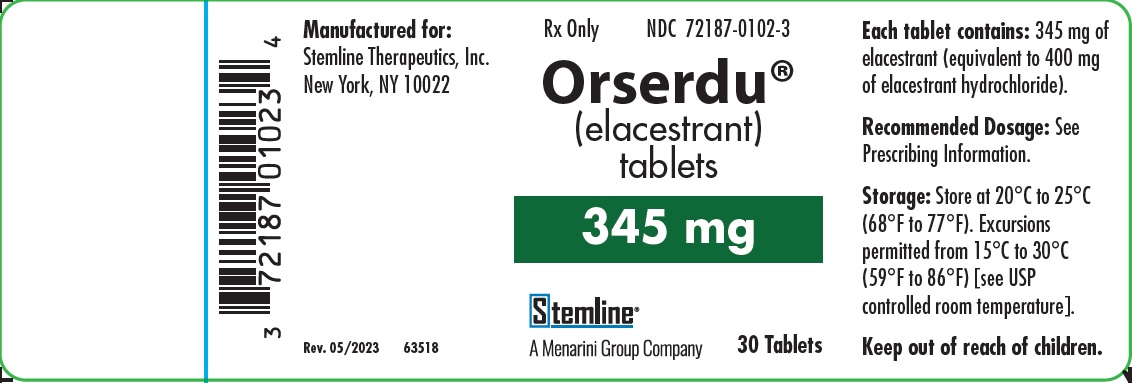
ORSERDU Elacestrant 345 mg Tablet, Film Coated, 30-count — NDC 72187-0102-3 (Billing 72187-0102-03)
This is a package of 30 tablets of ORSERDU Elacestrant 345 mg Tablet, Film Coated from Stemline Therapeutics, Inc., marketed since Jan 2023 and currently FDA-listed. It is this product's only package size.
Identity & classification
Regulatory identifiers FDA, NLM and CMS codes for this package
Drug-database identifiers Medi-Span GPI and First Databank GCN / HICL / AHFS classification
- GSN (GCN sequence number): 084359
- GCN: 53629
- GPI-14 (Medi-Span): 21403720100340
- HICL (First Databank): 048658
- AHFS class code: 10:00.00.00
- RxCUI (RxNorm): 2628478
Where does this data come from?
- FDA openFDA NDC Directory · synced Oct 1, 2026
- FDA label on DailyMed · label index refreshed Oct 1, 2026
- RxNorm (NLM RxNav) · catalog refreshed Oct 1, 2026
- Medi-Span GPI (licensed)
- First Databank (licensed) · refreshed Oct 1, 2026
RxNorm drug class
This medicine belongs to the Estrogen Receptor Antagonist class.
Where does this data come from?
- RxClass (NLM) · catalog refreshed Oct 1, 2026
Clinical
Elacestrant is used to treat certain types of hormone receptor-positive breast cancer (breast cancer that depends on hormones such as estrogen to grow) in adults who have had disease progression following treatment with at least one other hormone therapies. Elacestrant is in a class of medications called estrogen receptor antagonists. It works by stopping growth of cancer cells, dependent on estrogen, by blocking the ability of estrogen to bind.
Read the full MedlinePlus article ↗- Orserdu is an oral targeted therapy for a specific type of advanced breast cancer — one that tests positive for estrogen receptors (ER-positive), negative for HER2, and has a mutat...
- What exactly is Orserdu, and why did my doctor choose it for me?
- Yes — always take Orserdu with food. Food helps reduce nausea and vomiting, and it also helps your body absorb the medication better. Try to take it at the same time every day. If...
- Do I have to take it with food? What if I forget?
Patient education
Supplement & herbal interactions
Where does this data come from?
- MedlinePlus (NLM) · refreshed Oct 1, 2026
- FDA label on DailyMed · label index refreshed Oct 1, 2026
Ask a licensed pharmacist directly — free, answered by our team.
Pricing
A drug doesn't have one price. Each row is a different public payment system, and none is what you'd pay at the counter — that depends on your insurance. The ⓘ on each row explains what it measures.
| Price system | Per each | Per package |
|---|---|---|
| Retail pharmacies payNADAC · weekly | Not in the retail survey — common for institutional, discontinued, or low-volume packs. | |
| Medicaid paysCMS SDUD · 12 mo | $829.28 | $24,878.54 / 30 tablets |
| Medicare drug plans payPart D · Q2 2026 | $885.96 | $26,578.77 / 30 tablets |
Where does this data come from?
- CMS NADAC weekly file
- CMS ASP pricing files · refreshed Sep 20, 2026
- CMS Medicaid State Drug Utilization Data · through Q1 2026
- CMS Part D plan pricing files · refreshed Sep 24, 2026
- VA National Acquisition Center price file
Packaging — all sizes for this product
| Package NDC | Description | Marketing start | Marketing end | Status |
|---|---|---|---|---|
| 72187-0102-03 You're viewing this Main listing | 30 TABLET, FILM COATED in 1 BOTTLE | 2023-01-27 | — | Active |
Therapeutic equivalents
| Product | Labeler | Pack | NADAC/unit | TE | Status | Price vs. this |
|---|---|---|---|---|---|---|
| Orserdu 345 mgthis 72187-0102-03 | Stemline | 30 tablets | — | — | FDA listed | — |
Where does this data come from?
- FDA openFDA NDC Directory · synced Oct 1, 2026
- FDA Orange Book · refreshed Sep 3, 2026
- CMS NADAC weekly file
Availability & generic status
We did not find an FDA-approved generic match for this exact strength, form and route. Patent/protection dates below may affect future generic timing.
Why the date isn’t exact: Generic timing can change because patents may be challenged, settled, licensed, added, removed, or worked around with a narrower label — and FDA approval does not always mean a pharmacy can get the generic today.
🛈 What do these terms mean?
- Patent
- Legal protection listed in the Orange Book that may delay generic approval or launch. Issued by the U.S. Patent & Trademark Office.
- Substance patent
- Covers the active drug molecule itself — the hardest to design around. A generic generally can’t launch until it expires.
- Formulation (product) patent
- Covers a specific formulation or dosage form. A generic can sometimes work around it with a different formulation.
- Method-of-use patent
- A patent covering one specific approved use of the drug — not necessarily the whole molecule. A generic can sometimes launch with a “skinny label” that carves out the protected use and keeps the others.
- Skinny label
- A generic label that omits a still-patented use when the FDA allows it — letting a generic reach the market for the unprotected uses.
- Exclusivity
- FDA-granted marketing protection, separate from patents — e.g. 5-yr new chemical entity, 7-yr orphan drug, or a +6-month pediatric extension.
- Paragraph IV
- A generic applicant’s formal challenge to a listed patent. It can potentially lead to earlier generic entry, but often involves litigation or a settlement.
- RLD / RS
- Reference Listed Drug — the brand product the FDA uses as the reference for generic applications. Reference Standard — the product the FDA expects generics to compare against in bioequivalence testing.
- TE / AB rating
- FDA therapeutic-equivalence rating. An AB rating generally means the FDA considers a generic therapeutically equivalent to — and substitutable for — the brand.
- LOE (loss of exclusivity)
- The latest patent or exclusivity currently listed — the loss-of-exclusivity / latest-listed-protection date shown on this page. Paragraph-IV challenges and settlements can move the real date earlier; FDA approval and a manufacturer’s decision to market can move it later.
Built from the FDA Orange Book. The bars above are scaled to each protection’s expiry; the red LOE marker is the last one to lapse.
| Patent | Type | Use code | Expires |
|---|---|---|---|
| US 11819480 ↗ | Method of use | U-3523 | Feb 28, 2037 |
| US 11819480 ↗ | Method of use | U-3523 | Feb 28, 2037 |
| US 10420734 ↗ | Method of use | U-3524 | Oct 3, 2036 |
| US 10420734 ↗ | Method of use | U-3524 | Oct 3, 2036 |
| US 7612114 ↗ | Drug substance | U-3523 | Aug 18, 2026 |
| US 7612114 ↗ | Drug substance | U-3523 | Aug 18, 2026 |
| US 10745343 ↗ | Method of use | U-3523 | Jan 5, 2038 |
| US 10745343 ↗ | Method of use | U-3523 | Jan 5, 2038 |
| US 10071066 ↗ | Method of use | U-3524 | Oct 10, 2034 |
| US 10071066 ↗ | Method of use | U-3524 | Oct 10, 2034 |
| US 11779552 ↗ | Method of use | U-3524 | Oct 10, 2034 |
| US 11779552 ↗ | Method of use | U-3524 | Oct 10, 2034 |
| US 10385008 ↗ | Drug substance | — | Jan 5, 2038 |
| US 10385008 ↗ | Drug substance | — | Jan 5, 2038 |
| Code | What it grants | Expires |
|---|---|---|
| NCE | New Chemical Entity (5-year) | Jan 27, 2028 |
| NCE | New Chemical Entity (5-year) | Jan 27, 2028 |
Is there a generic version of ORSERDU 345 MG TABLET?
The FDA approved a generic — why can’t I get it at my pharmacy yet?
Why do different websites show different generic release dates?
What does “FDA listed” mean?
What does a patent or protection date mean here?
What does “current Orange Book estimate” mean?
Can a generic come out before the last patent expires?
Can a generic come out after the listed dates?
What is the difference between patents and exclusivity?
Why are there multiple patent dates?
Where does this data come from?
- FDA Orange Book · refreshed Sep 3, 2026
What it looks like
Where does this data come from?
- FDA label on DailyMed · label index refreshed Oct 1, 2026
Inactive Ingredients / Excipients
Inactive ingredients, also called excipients, are components of the drug product other than the active ingredient. They may include fillers, dyes, coatings, preservatives, flavors, or other formulation ingredients.
Where does this data come from?
IACT rows and label-wide narrative are kept separate; availability and product-level specificity depend on the submitted label.- FDA label on DailyMed · label index refreshed Oct 1, 2026
- FDA openFDA NDC Directory · synced Oct 1, 2026
Inactive ingredient FAQ
Are inactive ingredients the same for every manufacturer?
Why might an inactive ingredient be missing?
Can inactive ingredients matter?
Manufacturer & labeler
Where does this data come from?
- FDA openFDA NDC Directory · synced Oct 1, 2026
- Drugs@FDA
Full prescribing information FDA SPL
🎯 Indications and Usage ▾
1 INDICATIONS AND USAGE ORSERDU is indicated for the treatment of postmenopausal women or adult men with estrogen receptor (ER)-positive, human epidermal growth factor receptor 2 (HER2)‑negative, ESR1 -mutated advanced or metastatic breast cancer, as detected by an FDA-authorized test [see Dosage and Administration ( 2.1 )] , with disease progression following at least one line of endocrine therapy. ORSERDU is an estrogen receptor antagonist indicated for: treatment of postmenopausal women or adult men, with ER-positive, HER2-negative, ESR1 -mutated advanced or metastatic breast cancer, as detected by an FDA-authorized test, with disease progression following at least one line of endocrine therapy ( 1 )
⏱️ Dosage and Administration ▾
2 DOSAGE AND ADMINISTRATION Select patients for treatment with ORSERDU based on the presence of ESR1 mutations. ( 2.1 ) The recommended dosage of ORSERDU is one 345 mg tablet taken orally, once daily, with food ( 2.2 ) Dose interruption, reduction, or permanent discontinuation may be required due to adverse reactions. ( 2.3 )
2.1Patient Selection Select patients for treatment of ER-positive, HER2-negative advanced or metastatic breast cancer with ORSERDU based on the presence of ESR1 mutation(s) in plasma specimen using an FDA-authorized test [see Indications and Usage ( 1 ) and Clinical Studies ( 14 )] . Information on FDA-authorized tests for detection of ESR1 mutations in breast cancer is available at: http://www.fda.gov/CompanionDiagnostics.
2.2Recommended Dosage The recommended dosage of ORSERDU is 345 mg taken orally with food once daily until disease progression or unacceptable toxicity occurs. Take ORSERDU at approximately the same time each day. Take with food to reduce nausea and vomiting [see Adverse Reactions ( 6.1 )] .
Swallow ORSERDU tablet(s) whole. Do not chew, crush, or split prior to swallowing. Do not take any ORSERDU tablets that are broken, cracked, or that look damaged.
If a dose is missed for more than 6 hours or vomiting occurs, skip the dose and take the next dose the following day at its regularly scheduled time.
2.3Dosage Modifications for Adverse Reactions The recommended dose reduction levels for adverse reactions are listed in Table 1 : Table 1: ORSERDU Dose Reduction Levels for Adverse Reactions 1 If further dose reduction below 172 mg once daily is required, permanently discontinue ORSERDU. Dose Reduction Dosage Number and Strength of Tablets First-dose reduction 258 mg once daily Three 86 mg tablets Second-dose reduction 172 mg once daily 1 Two 86 mg tablets Recommended dosage modifications of ORSERDU for adverse reactions are provided in Table 2 [see Adverse Reactions ( 6.1 )] .
Table 2: ORSERDU Dosage Modification Guidelines for Adverse Reactions Severity Dosage Modification Grade 1 Continue ORSERDU at current dose level. Grade 2 Consider interruption of ORSERDU until recovery to Grade ≤ 1 or baseline. Then resume ORSERDU at the same dose level.
Grade 3 Interrupt ORSERDU until recovery to Grade ≤ 1 or baseline. Then resume ORSERDU at the next lower dose level. If the Grade 3 toxicity recurs, interrupt ORSERDU until recovery to Grade ≤ 1 or baseline.
Then resume ORSERDU reduced by another dose level. Grade 4 Interrupt ORSERDU until recovery to Grade ≤ 1 or baseline. Then resume ORSERDU reduced by one dose level.
If a Grade 4 or intolerable adverse reaction recurs, permanently discontinue ORSERDU.
2.4Dosage Modifications for CYP3A4 Inducers and Inhibitors Avoid concomitant use of ORSERDU with strong or moderate CYP3A4 inducers and inhibitors [see Drug Interactions ( 7.1 )] .
2.5Recommended Dosage in Patients with Hepatic Impairment Avoid use of ORSERDU in patients with severe hepatic impairment (Child-Pugh C). Reduce the ORSERDU dosage to 258 mg once daily for patients with moderate hepatic impairment (Child-Pugh B). No dosage adjustment is recommended for patients with mild hepatic impairment (Child-Pugh A) [see Clinical Pharmacology ( 12.3 )] .
💊 Dosage Forms and Strengths ▾
3 DOSAGE FORMS AND STRENGTHS Tablets: Elacestrant 345 mg (equivalent to 400 mg elacestrant hydrochloride) and 86 mg (equivalent to 100 mg elacestrant hydrochloride): 345 mg: light blue, unscored, oval film-coated biconvex tablet, imprinted with “MH” on one side and plain on the other side. 86 mg: light blue, unscored, round film-coated biconvex tablet, imprinted with “ME” on one side and plain on the other side. Tablets: 345 mg and 86 mg ( 3 )
⛔ Contraindications ▾
4 CONTRAINDICATIONS None. None ( 4 )
⚠️ Warnings and Cautions ▾
5 WARNINGS AND PRECAUTIONS Dyslipidemia : ORSERDU may cause hypercholesterolemia and hypertriglyceridemia. Monitor lipid profile prior to starting treatment and periodically thereafter. ( 5.1 ) Embryo-Fetal Toxicity : ORSERDU can cause fetal harm. Advise of the potential risk to a fetus and to use effective contraception. ( 5.2 , 8.1 , 8.3 )
5.1Dyslipidemia Hypercholesterolemia and hypertriglyceridemia occurred in patients taking ORSERDU at an incidence of 30% and 27%, respectively. The incidence of Grade 3 and 4 hypercholesterolemia and hypertriglyceridemia were 0.9% and 2.2%, respectively [see Adverse Reactions ( 6.1 )] . Monitor lipid profile prior to starting and periodically while taking ORSERDU.
5.2Embryo-Fetal Toxicity Based on findings in animals and its mechanism of action, ORSERDU can cause fetal harm when administered to a pregnant woman. Administration of elacestrant to pregnant rats resulted in adverse developmental outcomes, including embryo-fetal mortality and structural abnormalities, at maternal exposures below the recommended dose based on area under the curve (AUC). Advise pregnant women and females of reproductive potential of the potential risk to a fetus.
Advise females of reproductive potential to use effective contraception during treatment with ORSERDU and for 1 week after the last dose. Advise male patients with female partners of reproductive potential to use effective contraception during treatment with ORSERDU and for 1 week after the last dose [see Use in Specific Populations ( 8.1 , 8.3 ) and Clinical Pharmacology ( 12.1 )] .
🤒 Adverse Reactions ▾
6 ADVERSE REACTIONS The following clinically significant adverse reactions are described elsewhere in the labeling: Dyslipidemia [see Warnings and Precautions ( 5.1 )] The most common (>10%) adverse reactions, including laboratory abnormalities, of ORSERDU were musculoskeletal pain, nausea, increased cholesterol, increased AST, increased triglycerides, fatigue, decreased hemoglobin, vomiting, increased ALT, decreased sodium, increased creatinine, decreased appetite, diarrhea, headache, constipation, abdominal pain, hot flush, and dyspepsia.
( 6.1 ) To report SUSPECTED ADVERSE REACTIONS, contact Stemline Therapeutics, Inc. at 1-877-332-7961 or FDA at 1-800-FDA-1088 or www.fda.gov/medwatch.
6.1Clinical Trials Experience Because clinical trials are conducted under widely varying conditions, adverse reaction rates observed in the clinical trials of a drug cannot be directly compared to rates in the clinical trials of another drug and may not reflect the rates observed in practice. The safety of ORSERDU was evaluated in 467 patients with ER+/HER2- advanced breast cancer following CDK4/6 inhibitor therapy in EMERALD, a randomized, open-label, multicenter study [see Clinical Studies ( 14 )] . Patients received ORSERDU 345 mg orally once daily (n=237) or standard of care (SOC) consisting of fulvestrant or an aromatase inhibitor (n=230).
Among patients who received ORSERDU, 22% were exposed for 6 months or longer and 9% were exposed for greater than one year. Serious adverse reactions occurred in 12% of patients who received ORSERDU. Serious adverse reactions in >1% of patients who received ORSERDU were musculoskeletal pain (1.7%) and nausea (1.3%).
Fatal adverse reactions occurred in 1.7% of patients who received ORSERDU, including cardiac arrest, septic shock, diverticulitis, and unknown cause (one patient each). Permanent discontinuation of ORSERDU due to an adverse reaction occurred in 6% of patients. Adverse reactions which resulted in permanent discontinuation of ORSERDU in >1% of patients were musculoskeletal pain (1.7%) and nausea (1.3%).
Dosage interruptions of ORSERDU due to an adverse reaction occurred in 15% of patients. Adverse reactions which resulted in dosage interruption of ORSERDU in >1% of patients were nausea (3.4%), musculoskeletal pain (1.7%), and increased ALT (1.3%). Dosage reductions of ORSERDU due to an adverse reaction occurred in 3% of patients.
Adverse reactions which required dosage reductions of ORSERDU in >1% of patients were nausea (1.7%). The most common (≥10%) adverse reactions, including laboratory abnormalities, of ORSERDU were musculoskeletal pain, nausea, increased cholesterol, increased AST, increased triglycerides, fatigue, decreased hemoglobin, vomiting, increased ALT, decreased sodium, increased creatinine, decreased appetite, diarrhea, headache, constipation, abdominal pain, hot flush, and dyspepsia. Table 3 summarizes the adverse reactions in EMERALD.
Table 3: Adverse Reactions (>10%) in Patients with ER-positive, HER2-negative, Advanced or Metastatic Breast Cancer Who Received ORSERDU in EMERALD a a Adverse reactions were graded using NCI CTCAE version 5.0. b Includes other related terms c Only includes Grade 3 adverse reactions. Adverse Reaction ORSERDU (n=237) Fulvestrant or an Aromatase Inhibitor (n=230) All Grades (%) Grade 3 or 4 c (%) All Grades (%) Grade 3 or 4 c (%) Musculoskeletal and connective tissue disorders Musculoskeletal pain b 41 7 39 1 Gastrointestinal disorders Nausea 35 2.5 19
0.9Vomiting b 19 0.8 9 0 Diarrhea 13 0 10 1 Constipation 12 0 6 0 Abdominal pain b 11 1 10
0.9Dyspepsia 10 0 2.6 0 General disorders Fatigue b 26 2 27 1 Metabolism and nutrition disorders Decreased appetite 15 0.8 10
0.4Nervous system Headache 12 2 12 0 Vascular disorders Hot flush 11 0 8 0 Clinically relevant adverse reactions in < 10% of patients who received ORSERDU included rash, insomnia, dyspnea, cough, dizziness, stomatitis and gastroesophageal reflux disease. Table 4 summarizes the labo… [Excerpted — this section continues on DailyMed.]
🔄 Drug Interactions ▾
7 DRUG INTERACTIONS Strong and Moderate CYP3A4 Inducers : Avoid concomitant use. ( 7.1 ) Strong and Moderate CYP3A4 Inhibitors : Avoid concomitant use. ( 7.1 )
7.1Effect of Other Drugs on ORSERDU Strong and Moderate CYP3A4 Inhibitors Avoid concomitant use of strong or moderate CYP3A inhibitors with ORSERDU. Elacestrant is a CYP3A4 substrate. Concomitant use of a strong or moderate CYP3A4 inhibitor increase elacestrant exposure [see Clinical Pharmacology ( 12.3 )] , which may increase the risk of adverse reactions of ORSERDU.
Strong and Moderate CYP3A4 Inducers Avoid concomitant use of strong or moderate CYP3A inducers with ORSERDU. Elacestrant is a CYP3A4 substrate. Concomitant use of a strong or moderate CYP3A4 inducer decreases elacestrant exposure [see Clinical Pharmacology ( 12.3 )] , which may decrease effectiveness of ORSERDU.
7.2Effect of ORSERDU on Other Drugs P-gp Substrates Reduce the dosage of P-gp substrates per their Prescribing Information when minimal concentration changes may lead to serious or life-threatening adverse reactions. Elacestrant is a P-gp inhibitor. Concomitant use of ORSERDU with a P-gp substrate increased the concentrations of P-gp substrate [see Clinical Pharmacology ( 12.3 )] , which may increase the adverse reactions associated with a P-gp substrate.
BCRP Substrates Reduce the dosage of BCRP substrates per their Prescribing Information when minimal concentration changes may lead to serious or life-threatening adverse reactions. Elacestrant is a BCRP inhibitor. Concomitant use of ORSERDU with a BCRP substrate increased the plasma concentrations of BCRP substrate [see Clinical Pharmacology ( 12.3 )] , which may increase the adverse reactions associated with a BCRP substrate.
👥 Use in Specific Populations ▾
8 USE IN SPECIFIC POPULATIONS Lactation : Advise not to breastfeed. ( 8.2 ) Hepatic Impairment : Avoid use in patients with severe hepatic impairment (Child-Pugh C). Reduce the dosage for patients with moderate hepatic impairment (Child-Pugh B). ( 2.5 , 8.6 )
8.1Pregnancy Risk Summary Based on findings in animals and its mechanism of action, ORSERDU can cause fetal harm when administered to a pregnant woman [see Clinical Pharmacology ( 12.1 )] . There are no available human data on ORSERDU use in pregnant women to inform the drug-associated risk. In an animal reproduction study, oral administration of elacestrant to pregnant rats during organogenesis caused embryo-fetal mortality and structural abnormalities at maternal exposures below the recommended dose based on AUC (see Data ) .
Advise pregnant women and females of reproductive potential of the potential risk to a fetus. The background risk of major birth defects and miscarriage for the indicated population is unknown. In the U.S. general population, the estimated background risk of major birth defects and miscarriage in clinically recognized pregnancies is 2%-4% and 15%-20%, respectively.
Data Animal Data In an embryo-fetal development study in pregnant rats, administration of oral doses of elacestrant up to 30 mg/kg/day during the period of organogenesis resulted in maternal toxicity (reduced body weight gain, low food consumption, red vulvar discharge) and embryo-fetal mortality (increased resorptions, post-implantation loss, and reduced number of live fetuses) at ≥ 3 mg/kg/day (approximately 0.1 times the human AUC at the recommended dose). Additional adverse effects included reduced fetal weight and external malformations of the limbs (hyperflexion, malrotation) and head (domed, misshapen, flattened) with corresponding skeletal malformations of the skull at doses ≥ 10 mg/kg/day (approximately 0.5 times the human AUC at the recommended dose).
8.2Lactation Risk Summary There are no data on the presence of elacestrant in human milk, its effects on milk production, or the breastfed child. Because of the potential for serious adverse reactions in the breastfed child, advise lactating women to not breastfeed during treatment with ORSERDU and for 1 week after the last dose.
8.3Females and Males of Reproductive Potential ORSERDU can cause fetal harm when administered to a pregnant woman [see Use in Specific Populations ( 8.1 )] . Pregnancy Testing Verify the pregnancy status in females of reproductive potential prior to initiating ORSERDU treatment. Contraception Females Advise females of reproductive potential to use effective contraception during treatment with ORSERDU and for 1 week after the last dose.
Males Advise male patients with female partners of reproductive potential to use effective contraception during treatment with ORSERDU and for 1 week after the last dose. Infertility Based on findings from animal studies, ORSERDU may impair fertility in females and males of reproductive potential [see Nonclinical Toxicology ( 13.1 )] .
8.4Pediatric Use The safety and effectiveness of ORSERDU in pediatric patients have not been established.
8.5Geriatric Use Of 237 patients who received ORSERDU in the EMERALD trial, 43% were 65 years of age or older and 17% were 75 years of age or older. No overall differences in safety or effectiveness of ORSERDU were observed between patients 65 years or older of age compared to younger patients. There are an insufficient number of patients 75 years of age or older to assess whether there are differences in safety or effectiveness.
8.6Hepatic Impairment Avoid use of ORSERDU in patients with severe hepatic impairment (Child-Pugh C). Reduce the dose of ORSERDU in patients with moderate hepatic impairment (Child-Pugh B). No dosage adjustment is recommended for patients with mild hepatic impairment (Child-Pugh A) [see Dosage and Administration ( 2.5 ) and Clinical Pharmacology ( 12.3 )] .
🤰 Pregnancy ▾
8.1Pregnancy Risk Summary Based on findings in animals and its mechanism of action, ORSERDU can cause fetal harm when administered to a pregnant woman [see Clinical Pharmacology ( 12.1 )] . There are no available human data on ORSERDU use in pregnant women to inform the drug-associated risk. In an animal reproduction study, oral administration of elacestrant to pregnant rats during organogenesis caused embryo-fetal mortality and structural abnormalities at maternal exposures below the recommended dose based on AUC (see Data ) .
Advise pregnant women and females of reproductive potential of the potential risk to a fetus. The background risk of major birth defects and miscarriage for the indicated population is unknown. In the U.S. general population, the estimated background risk of major birth defects and miscarriage in clinically recognized pregnancies is 2%-4% and 15%-20%, respectively.
Data Animal Data In an embryo-fetal development study in pregnant rats, administration of oral doses of elacestrant up to 30 mg/kg/day during the period of organogenesis resulted in maternal toxicity (reduced body weight gain, low food consumption, red vulvar discharge) and embryo-fetal mortality (increased resorptions, post-implantation loss, and reduced number of live fetuses) at ≥ 3 mg/kg/day (approximately 0.1 times the human AUC at the recommended dose). Additional adverse effects included reduced fetal weight and external malformations of the limbs (hyperflexion, malrotation) and head (domed, misshapen, flattened) with corresponding skeletal malformations of the skull at doses ≥ 10 mg/kg/day (approximately 0.5 times the human AUC at the recommended dose).
🧒 Pediatric Use ▾
8.4Pediatric Use The safety and effectiveness of ORSERDU in pediatric patients have not been established.
🧓 Geriatric Use ▾
8.5Geriatric Use Of 237 patients who received ORSERDU in the EMERALD trial, 43% were 65 years of age or older and 17% were 75 years of age or older. No overall differences in safety or effectiveness of ORSERDU were observed between patients 65 years or older of age compared to younger patients. There are an insufficient number of patients 75 years of age or older to assess whether there are differences in safety or effectiveness.
🧬 Clinical Pharmacology ▾
12 CLINICAL PHARMACOLOGY
12.1Mechanism of Action Elacestrant is an estrogen receptor antagonist that binds to estrogen receptor-alpha (ERα). In ER-positive (ER+) HER2-negative (HER2-) breast cancer cells, elacestrant inhibited 17β-estradiol mediated cell proliferation at concentrations inducing degradation of ERα protein mediated through proteasomal pathway. Elacestrant demonstrated in vitro and in vivo antitumor activity including in ER+ HER2- breast cancer models resistant to fulvestrant and cyclin-dependent kinase 4/6 inhibitors and those harboring estrogen receptor 1 gene ( ESR1 ) mutations.
12.2Pharmacodynamics Exposure-Response Relationships Elacestrant exposure-response relationships and the time course of pharmacodynamics have not been fully characterized. Cardiac Electrophysiology ORSERDU does not cause a mean increase in QTc interval > 20 msec at the approved recommended dose.
12.3Pharmacokinetics The steady-state mean (%CV) maximum concentration (Cmax) of elacestrant is 119 ng/mL (44%) and the area under the concentration-time curve (AUC) is 2,440 ng*h/mL (44%) after administration of the recommended dosage of 345 mg once daily. The C max and AUC of elacestrant increase more than proportionally over a dosage range from 43 mg to 862 mg once daily (0.125 to 2.5 times the approved recommended dosage). Steady state is reached by Day 6 and the mean accumulation ratio based on AUC is 2-fold.
Absorption The time to achieve peak plasma concentration (t max ) ranges from 1 to 4 hours. The elacestrant oral bioavailability is approximately 10%. Effect of Food Administration of ORSERDU 345 mg with a high-fat meal (800 to 1000 calories, 50% fat) increased Cmax by 42% and AUC by 22% compared to fasted administration.
Distribution The estimated apparent volume of distribution is 5,800 L. Plasma protein binding of elacestrant is >99% and independent of concentration. Elimination The elimination half-life of elacestrant is 30 to 50 hours.
The estimated mean (% CV) clearance of elacestrant is 186 L/hr (44%) and renal clearance is ≤
0.14L/hr. Metabolism Elacestrant is primarily metabolized by CYP3A4 and to a lesser extent by CYP2A6 and CYP2C9. Excretion Following a single radiolabeled oral dose of 345 mg, 82% was recovered in feces (34% unchanged) and 7.5% was recovered in urine (< 1% unchanged).
Specific Populations There were no clinically significant differences in the pharmacokinetics of elacestrant based on age (24 to 89 years), sex, and body weight (41 to 143 kg). Patients with Hepatic Impairment There were no clinically significant differences in the C max and AUC of elacestrant in subjects with mild hepatic impairment (Child-Pugh A). The AUC of elacestrant increased in subjects with moderate hepatic impairment (Child-Pugh B) by 83%.
Elacestrant has not been studied in subjects with severe hepatic impairment (Child-Pugh C). Drug Interaction Studies Clinical Studies There were no clinically significant differences in the pharmacokinetics of elacestrant when used concomitantly with cimetidine (weak CYP3A inhibitor), omeprazole (gastric acid-reducing agent), or warfarin (highly protein-bound drug). Table 5 describes the effect of other drugs on the pharmacokinetics of elacestrant and Table 6 describes the effect of elacestrant on the pharmacokinetics of other drugs.
Table 5: Effect of Other Drugs on Elacestrant a Predicted changes in C max and AUC of elacestrant. Concomitant Drug Elacestrant Dose Fold Increased or Percent Decrease of Elacestrant With Concomitant Drug C max AUC CYP3A Inhibitors Strong Inhibitor Itraconazole 172 mg once daily 4.4
5.3Moderate Inhibitor Fluconazole a 345 mg single dose 1.6
2.3CYP3A Inducers Strong Inducer Rifampin 345 mg single dose 73% 86% Moderate Inducer Efavirenz a 345 mg single dose 44-63% 55-73% Table 6: Effect of Elacestrant on Other Drugs Concomitant Drug Elacestrant Dose Fold Increase of Concomitant Drug With Elacestrant C max AUC Substrate of P-gp Digoxin 345 mg single dose 1.3
1.1Sub… [Excerpted — this section continues on DailyMed.]
🧬 Mechanism of Action ▾
12.1Mechanism of Action Elacestrant is an estrogen receptor antagonist that binds to estrogen receptor-alpha (ERα). In ER-positive (ER+) HER2-negative (HER2-) breast cancer cells, elacestrant inhibited 17β-estradiol mediated cell proliferation at concentrations inducing degradation of ERα protein mediated through proteasomal pathway. Elacestrant demonstrated in vitro and in vivo antitumor activity including in ER+ HER2- breast cancer models resistant to fulvestrant and cyclin-dependent kinase 4/6 inhibitors and those harboring estrogen receptor 1 gene ( ESR1 ) mutations.
📦 How Supplied / Storage and Handling ▾
16 HOW SUPPLIED/STORAGE AND HANDLING ORSERDU (elacestrant) film-coated tablets for oral use are supplied as follows: Tablet Strength Tablet Color and Shape Tablet Markings Pack Size NDC Code Elacestrant 345 mg (equivalent to 400 mg elacestrant hydrochloride) Light blue; Oval “MH” Bottle of 30 Tablets with Child Resistant Closure (CRC). NDC 72187-0102-3 Elacestrant 86 mg (equivalent to 100 mg elacestrant hydrochloride) Light blue; Round “ME” Bottle of 30 Tablets with Child Resistant Closure (CRC). NDC 72187-0101-3 Storage and Handling Store at 20°C to 25°C (68°F to 77°F).
Excursions permitted from 15°C to 30°C (59°F to 86°F). [see USP controlled room temperature].
📦 Storage and Handling ▾
Storage and Handling Store at 20°C to 25°C (68°F to 77°F). Excursions permitted from 15°C to 30°C (59°F to 86°F). [see USP controlled room temperature].
📋 Description ▾
11 DESCRIPTION Elacestrant hydrochloride is the salt form of elacestrant, an estrogen receptor antagonist, that has the chemical name: (6R)-6-(2-(N-(4-(2-(ethylamino)ethyl)benzyl)-N-ethylamino)-4-methoxyphenyl)-5,6,7,8-tetrahydronaphthalen-2-ol dihydrochloride. Elacestrant hydrochloride is the dihydrochloride salt and the molecular formula is C 30 H 38 N 2 O 2 .2HCL. The relative molecular mass is 531.56 g/mol.
The chemical structure of elacestrant hydrochloride is shown below: Elacestrant hydrochloride is a white to off-white to grey solid and is freely soluble in 0.01N HCI. ORSERDU (elacestrant) 345 mg film-coated tablet contains 400 mg of elacestrant hydrochloride (approximately 345 mg of elacestrant free base). ORSERDU (elacestrant) 86 mg film-coated tablet contains 100 mg of elacestrant hydrochloride (approximately 86 mg of elacestrant free base).
Both tablet strengths contain the following inactive ingredients: colloidal silicon dioxide, crospovidone, magnesium stearate (non-bovine), microcrystalline cellulose, and silicified microcrystalline cellulose. The tablets also contain Opadry II Blue (polyvinyl alcohol, titanium dioxide, polyethylene glycol, FD&C Blue #1 and talc). Chemical Structure
💬 Information for Patients ▾
17 PATIENT COUNSELING INFORMATION Advise the patient to read the FDA-approved patient labeling (Patient Information). Dyslipidemia Advise patients that hypercholesterolemia and hypertriglyceridemia may occur while taking ORSERDU. Inform patients that lipid profile monitoring will be performed prior to starting and periodically while taking ORSERDU [see Warnings and Precautions ( 5.1 ) and Adverse Reactions ( 6.1 )] .
Embryo-Fetal Toxicity Advise pregnant women and females of reproductive potential of the potential risk to a fetus. Advise females to inform their healthcare provider of a known or suspected pregnancy [see Warnings and Precautions ( 5.2 ) and Use in Specific Populations ( 8.1 )] . Advise females of reproductive potential to use effective contraception during treatment with ORSERDU and for 1 week after the last dose.
Advise male patients with female partners of reproductive potential to use effective contraception during treatment with ORSERDU and for 1 week after the last dose [see Use in Specific Populations ( 8.3 )] . Lactation Advise women not to breastfeed during treatment with ORSERDU and for 1 week after the last dose [see Use in Specific Populations ( 8.2 )] . Infertility Advise males and females of reproductive potential that ORSERDU may impair fertility [see Use in Specific Populations ( 8.3 )] .
Drug Interactions Advise patients to inform their healthcare providers of all concomitant medications, including prescription medicines, over-the-counter drugs, and herbal products [see Drug Interactions ( 7.1 , 7.2 )] . Other Common Adverse Reactions Advise patients that other adverse reactions with ORSERDU treatment may include musculoskeletal pain, nausea, fatigue, vomiting, decreased appetite, diarrhea, headache, constipation, abdominal pain, hot flush, and dyspepsia, [see Adverse Reactions ( 6.1 )] . Dosing Instructions Instruct patients to take ORSERDU at approximately the same time each day and to swallow the tablet(s) whole.
Tablets should not be chewed, crushed, or split prior to swallowing [see Dosage and Administration ( 2.2 )] . Advise patients to take ORSERDU with food to reduce nausea and vomiting [see Dosage and Administration ( 2.2 ) and Adverse Reactions ( 6.1 )] . Instruct patients that if a dose of ORSERDU is missed for more than 6 hours or vomiting occurs, skip the dose and take the next dose the following day at its regularly scheduled time [see Dosage and Administration ( 2.2 )] .
ORSERDU is a trademark of the Menarini Group. ©Stemline Therapeutics, Inc., a Menarini Group company Manufactured for: Stemline Therapeutics, Inc., New York, NY 10022
🧬 Pharmacokinetics ▾
12.3Pharmacokinetics The steady-state mean (%CV) maximum concentration (Cmax) of elacestrant is 119 ng/mL (44%) and the area under the concentration-time curve (AUC) is 2,440 ng*h/mL (44%) after administration of the recommended dosage of 345 mg once daily. The C max and AUC of elacestrant increase more than proportionally over a dosage range from 43 mg to 862 mg once daily (0.125 to 2.5 times the approved recommended dosage). Steady state is reached by Day 6 and the mean accumulation ratio based on AUC is 2-fold.
Absorption The time to achieve peak plasma concentration (t max ) ranges from 1 to 4 hours. The elacestrant oral bioavailability is approximately 10%. Effect of Food Administration of ORSERDU 345 mg with a high-fat meal (800 to 1000 calories, 50% fat) increased Cmax by 42% and AUC by 22% compared to fasted administration.
Distribution The estimated apparent volume of distribution is 5,800 L. Plasma protein binding of elacestrant is >99% and independent of concentration. Elimination The elimination half-life of elacestrant is 30 to 50 hours.
The estimated mean (% CV) clearance of elacestrant is 186 L/hr (44%) and renal clearance is ≤
0.14L/hr. Metabolism Elacestrant is primarily metabolized by CYP3A4 and to a lesser extent by CYP2A6 and CYP2C9. Excretion Following a single radiolabeled oral dose of 345 mg, 82% was recovered in feces (34% unchanged) and 7.5% was recovered in urine (< 1% unchanged).
Specific Populations There were no clinically significant differences in the pharmacokinetics of elacestrant based on age (24 to 89 years), sex, and body weight (41 to 143 kg). Patients with Hepatic Impairment There were no clinically significant differences in the C max and AUC of elacestrant in subjects with mild hepatic impairment (Child-Pugh A). The AUC of elacestrant increased in subjects with moderate hepatic impairment (Child-Pugh B) by 83%.
Elacestrant has not been studied in subjects with severe hepatic impairment (Child-Pugh C). Drug Interaction Studies Clinical Studies There were no clinically significant differences in the pharmacokinetics of elacestrant when used concomitantly with cimetidine (weak CYP3A inhibitor), omeprazole (gastric acid-reducing agent), or warfarin (highly protein-bound drug). Table 5 describes the effect of other drugs on the pharmacokinetics of elacestrant and Table 6 describes the effect of elacestrant on the pharmacokinetics of other drugs.
Table 5: Effect of Other Drugs on Elacestrant a Predicted changes in C max and AUC of elacestrant. Concomitant Drug Elacestrant Dose Fold Increased or Percent Decrease of Elacestrant With Concomitant Drug C max AUC CYP3A Inhibitors Strong Inhibitor Itraconazole 172 mg once daily 4.4
5.3Moderate Inhibitor Fluconazole a 345 mg single dose 1.6
2.3CYP3A Inducers Strong Inducer Rifampin 345 mg single dose 73% 86% Moderate Inducer Efavirenz a 345 mg single dose 44-63% 55-73% Table 6: Effect of Elacestrant on Other Drugs Concomitant Drug Elacestrant Dose Fold Increase of Concomitant Drug With Elacestrant C max AUC Substrate of P-gp Digoxin 345 mg single dose 1.3
1.1Substrate of BCRP Rosuvastatin 345 mg single dose 1.5
1.2In Vitro Studies Cytochrome P450 (CYP) Enzymes: Elacestrant is not an inhibitor of CYP1A2, CYP2A6, CYP2B6, CYP2C8, CYP2C9, CYP2C19, CYP2D6, CYP2E1, or CYP3A. Elacestrant is not an inducer of CYP1A2, CYP2A6, CYP2B6, CYP2C9, CYP2C19, or CYP3A. Transporter Systems: Elacestrant is a substrate for OATP2B1, and P-gp. Elacestrant is not an inhibitor of OAT1, OAT3, OCT2, MATE1, MATE2-K, OCT1, OATP1B1, OATP1B3 or OATP2B1.
🧬 Pharmacodynamics ▾
12.2Pharmacodynamics Exposure-Response Relationships Elacestrant exposure-response relationships and the time course of pharmacodynamics have not been fully characterized. Cardiac Electrophysiology ORSERDU does not cause a mean increase in QTc interval > 20 msec at the approved recommended dose.
🔬 Clinical Studies ▾
14 CLINICAL STUDIES The efficacy of ORSERDU was evaluated in EMERALD (NCT03778931), a randomized, open-label, active-controlled, multicenter trial that enrolled 478 postmenopausal women and men with ER+/HER2- advanced or metastatic breast cancer of which 228 patients had ESR1 mutations. Patients were required to have disease progression on one or two prior lines of endocrine therapy, including one line containing a CDK4/6 inhibitor. Eligible patients could have received up to one prior line of chemotherapy in the advanced or metastatic setting.
Patients were randomized (1:1) to receive ORSERDU 345 mg orally once daily (n=239), or investigator’s choice of endocrine therapy (n=239), which included fulvestrant (n=166), or an aromatase inhibitor (n=73; anastrozole, letrozole or exemestane). Randomization was stratified by ESR1 mutation status (detected vs not detected), prior treatment with fulvestrant (yes vs no), and visceral metastasis (yes vs no). ESR1 mutational status was determined by blood circulating tumor deoxyribonucleic acid (ctDNA) using the Guardant360 CDx assay and was limited to ESR1 missense mutations in the ligand binding domain (between codons 310 to 547).
Patients were treated until disease progression or unacceptable toxicity. The major efficacy outcome was progression-free survival (PFS), assessed by a blinded imaging review committee (BIRC). An additional efficacy outcome measure was overall survival (OS).
A statistically significant difference in PFS was observed in the intention to treat (ITT) population and in the subgroup of patients with ESR1 mutations. An exploratory analysis of PFS in the 250 (52%) patients without ESR1 mutations showed a HR 0.86 (95% CI: 0.63, 1.19) indicating that the improvement in the ITT population was primarily attributed to the results seen in the ESR1 mutated population. Among the patients with ESR1 mutations (n=228), the median age was 63 years (range: 28-89); 100% were female; 72% were White, 5.7% Asian, 3.5% Black, 0.4% Other, 18.4% unknown/not reported; 8.8% were Hispanic/Latino; and baseline ECOG performance status was 0 (57%) or 1 (43%).
Most patients had visceral disease (71%); 62% had received 1 line of endocrine therapy and 39% had received 2 lines of endocrine therapy in the advanced or metastatic setting. All patients had received prior treatment with a CDK4/6 inhibitor, 24% had received prior fulvestrant, and 25% had received prior chemotherapy in the advanced or metastatic setting. Efficacy results are presented in Table 7 and Figure 1 for patients with ESR1 mutations.
Table 7: Efficacy Results for EMERALD (Patients with ESR1 Mutations) CI=confidence interval; ESR1 =estrogen receptor 1 a PFS results based on blinded imaging review committee. b Kaplan-Meier estimate; 95% CI based on the Brookmeyer-Crowley method using a linear transformation. c Cox proportional hazards model stratified by prior treatment with fulvestrant (yes vs no) and visceral metastasis (yes vs no). d Stratified log-rank test two-sided p-value. e NS – Not statistically significant. ORSERDU (N = 115) Fulvestrant or an Aromatase Inhibitor (N=113) Progression-free Survival (PFS) a Number of PFS Events, n (%) 62 (54) 78 (69) Median PFS months b (95% CI) 3.8 (2.2, 7.3) 1.9 (1.9, 2.1) Hazard ratio c (95% CI) 0.55 (0.39, 0.77) p-value d 0.0005 Overall Survival (OS) Number of OS Events, n (%) 61 (53) 60 (53) Hazard ratio c (95% CI) 0.90 (0.63, 1.30) p-value d NS e Figure 1: Kaplan-Meier Curve for PFS in EMERALD (Patients with ESR1 Mutations, BIRC Assessment) + Censored times Figure 1
🧪 Nonclinical Toxicology ▾
13 NONCLINICAL TOXICOLOGY
13.1Carcinogenesis, Mutagenesis, Impairment of Fertility Carcinogenicity studies have not been conducted with elacestrant. Elacestrant was not mutagenic in an in vitro bacterial reverse mutation (Ames) assay or clastogenic in either in vitro chromosome aberration assays or an in vivo rat bone marrow micronucleus assay. Fertility studies with elacestrant in animals have not been conducted.
In repeated-dose toxicity studies up to 26 weeks duration in rats and 39 weeks duration in cynomolgus monkeys, adverse reactions were observed in female reproductive organs including atrophy of the vagina, cervix, and uterus and follicular cysts in the ovary at doses ≥ 10 mg/kg/day in rats and cynomolgus monkeys (≥ 0.3 times the human AUC at the recommended dose). Decreased cellularity of Leydig cells and degeneration/atrophy of the seminiferous epithelium in the testis were observed in male rats at a dose of 50 mg/kg/day (approximately 2.6 times the human AUC at the recommended dose).
📄 Carcinogenesis, Mutagenesis, Impairment of Fertility ▾
13.1Carcinogenesis, Mutagenesis, Impairment of Fertility Carcinogenicity studies have not been conducted with elacestrant. Elacestrant was not mutagenic in an in vitro bacterial reverse mutation (Ames) assay or clastogenic in either in vitro chromosome aberration assays or an in vivo rat bone marrow micronucleus assay. Fertility studies with elacestrant in animals have not been conducted.
In repeated-dose toxicity studies up to 26 weeks duration in rats and 39 weeks duration in cynomolgus monkeys, adverse reactions were observed in female reproductive organs including atrophy of the vagina, cervix, and uterus and follicular cysts in the ovary at doses ≥ 10 mg/kg/day in rats and cynomolgus monkeys (≥ 0.3 times the human AUC at the recommended dose). Decreased cellularity of Leydig cells and degeneration/atrophy of the seminiferous epithelium in the testis were observed in male rats at a dose of 50 mg/kg/day (approximately 2.6 times the human AUC at the recommended dose).
📄 Patient Package Insert ▾
This Patient Information has been approved by the U.S. Food and Drug Administration. Issued: 01/2023 PATIENT INFORMATION ORSERDU ® (or-SER-doo) (elacestrant) tablets What is ORSERDU?
ORSERDU is a prescription medicine to treat women who have gone through menopause and adult men with estrogen receptor (ER)-positive, human epidermal growth factor receptor 2 (HER2)-negative, ESR1 -mutated advanced breast cancer or breast cancer that has spread to other parts of the body (metastatic), and whose disease has progressed after endocrine therapy. Your healthcare provider will perform a test to make sure that ORSERDU is right for you. It is not known if ORSERDU is safe and effective in children.
Before taking ORSERDU, tell your healthcare provider about all of your medical conditions, including if you: have liver problems are pregnant or plan to become pregnant. ORSERDU can harm your unborn baby. Females who are able to become pregnant: Your healthcare provider may do a pregnancy test before you start treatment with ORSERDU.
You should use effective (contraception) birth control during treatment with ORSERDU and for 1 week after the last dose. Tell your healthcare provider right away if you become pregnant or think you may be pregnant during treatment with ORSERDU. Males with female partners who are able to become pregnant: You should use effective (contraception) birth control during treatment with ORSERDU and for 1 week after the last dose. are breastfeeding or plan to breastfeed.
It is not known if ORSERDU passes into your breast milk. Do not breastfeed during treatment with ORSERDU and for 1 week after the last dose. Tell your healthcare provider about all of the medicines you take, including prescription and over-the counter medicines, vitamins, and herbal supplements.
ORSERDU and other medicines may affect each other causing side effects. Know the medicines you take. Keep a list of them to show your healthcare provider or pharmacist when you get a new medicine.
How should I take ORSERDU? Take ORSERDU exactly as your healthcare provider tells you. Do not change your dose or stop taking ORSERDU unless your healthcare provider tells you.
Take ORSERDU 1 time each day, at about the same time each day. Take ORSERDU with food. Taking ORSERDU with food may help reduce nausea and vomiting.
Swallow ORSERDU tablets whole. Do not chew, crush or split the tablets before swallowing. Do not take any ORSERDU tablets that are broken, cracked, or that look damaged.
If you miss a dose of ORSERDU or vomit after taking a dose of ORSERDU, do not take another dose of ORSERDU on that day. Skip the dose and take your next dose the following day at your regularly scheduled time. What are the possible side effects of ORSERDU?
ORSERDU may cause serious side effects, including: Increased fat (lipid) levels in your blood (hypercholesterolemia and hypertriglyceridemia) . Your healthcare provider will do blood tests to check your lipid levels before and during your treatment with ORSERDU. The most common side effects of ORSERDU include: muscle and joint (musculoskeletal) pain nausea increased cholesterol and triglyceride levels in your blood increased liver function tests tiredness decreased red blood cell counts vomiting decreased salt (sodium) levels in your blood increased kidney function test decreased appetite diarrhea headache constipation stomach-area (abdominal) pain hot flush indigestion or heartburn Your healthcare provider may decrease your dose, temporarily stop, or completely stop treatment with ORSERDU, if you develop certain side effects.
ORSERDU may affect fertility in males and in females who are able to become pregnant. Talk to your healthcare provider if this is a concern for you. These are not all of the possible side effects of ORSERDU.
Call your doctor for medical advice about side effects. You may report side effects to FDA at 1-800-FDA-1088. How should I store ORSERDU?
Store ORSERDU at room temperature 68℉ to 77℉ (20℃ to 25℃). Keep ORSERD… [Excerpted — this section continues on DailyMed.]
📄 Package Label / Principal Display Panel ▾
PRINCIPAL DISPLAY PANEL - NDC:72187-0101-3 - Orserdu Bottle Label - 86mg NDC 72187-0101-3 Orserdu ® (elacestrant) tablets 86 mg Rx Only 30 Tablets Orserdu Bottle Label - 86mg
PRINCIPAL DISPLAY PANEL - NDC: 72187-0102-3 - Orserdu Bottle Label - 345mg NDC 72187-0102-3 Orserdu ® (elacestrant) tablets 345 mg Rx Only 30 Tablets Orserdu Bottle Label - 345mg
Medicaid utilization & spend
Medicare Part D spend CMS · PART D · 2026 (Q1)
About this NDC listing & data coverage
What data is (and isn’t) available for this NDC — tap to expand
| NDC identity (package / product / labeler codes) | ✓ Available |
| Labeler | ✓ Available |
| Product & package description | ✓ Available |
| Marketing category & status | ✓ Available |
| Active ingredient / dosage form / route | ✓ Available |
| FDA label (SPL via DailyMed) | ✓ Available |
| Package photos | ✓ Available |
| Inactive ingredients (structured) | — Not published for this NDC The labeler did not submit a structured excipient list, or no SPL is available. |
| NADAC pharmacy acquisition price (CMS) | — Not published for this NDC CMS publishes NADAC only for NDCs reported in its retail-pharmacy survey. |
| Orange Book / therapeutic-equivalence data | ✓ Available |
| HCPCS J-code billing crosswalk | — Not published for this NDC Most self-administered / retail products have no J-code — that is normal. |
| Medicaid utilization (CMS SDUD) | ✓ Available |