
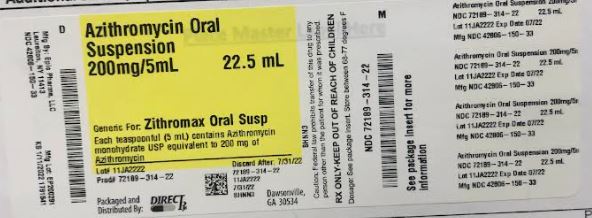
AZITHROMYCIN 200 mg/5mL Powder, For Suspension, 22.5 mL — NDC 72189-314-22 (Billing 72189-0314-22)
This is a package of 22.5 mL of AZITHROMYCIN 200 mg/5mL Powder, For Suspension from DirectRx, marketed since Jan 2022 and currently FDA-listed. It is this product's only package size.
NDC database record
One package, one record: these facts belong to NDC 72189-314-22 alone.
- Record
- FDA NDC Directory package listing · Human prescription drug
- Code segments
- 72189 labeler · 314 product · 22 package
- Package marketed since
- Jan 12, 2022
- Sample package
- No — commercial package
- Listing certified through
- Dec 31, 2026
- Barcode (UPC-A, from the NDC)
- 3 7218931422 4
- FDA record last changed
- Jul 24, 2026
Identity & classification
Regulatory identifiers FDA, NLM and CMS codes for this package
- RxCUI (RxNorm): 141963
Where does this data come from?
- FDA openFDA NDC Directory · synced Oct 8, 2026
- FDA label on DailyMed · label index refreshed Oct 8, 2026
- RxNorm (NLM RxNav) · catalog refreshed Oct 1, 2026
- Medi-Span GPI (licensed)
- First Databank (licensed) · refreshed Oct 8, 2026
RxNorm drug class
This medicine belongs to the Macrolide Antimicrobial class.
Where does this data come from?
- RxClass (NLM) · catalog refreshed Oct 1, 2026
Clinical
- It treats certain bacterial infections, such as sinus infections, pneumonia, bronchitis flare-ups, strep-type throat infections, ear infections in children, skin infections and som...
- The tablets can be taken with or without food. If it upsets your stomach, taking it with a meal may help. Follow the directions on your label.
- The most common are diarrhea, nausea, stomach pain and vomiting, and they are usually mild. Call your doctor if you have a rash, swelling, yellow skin or eyes, a racing or irregula...
- Tell me about everything you take. Azithromycin may increase the effect of warfarin, so your clotting tests should be monitored. Medicines that affect heart rhythm, such as amiodar...
Patient education
Supplement & herbal interactions
Some supplements/herbs that may interact with Azithromycin — tap one for details:
Azithromycin may be associated with lower levels of 7 nutrients — worth a chat with your pharmacist, not a cause for alarm.
Where does this data come from?
- MedlinePlus (NLM) · refreshed Oct 8, 2026
- FDA label on DailyMed · label index refreshed Oct 8, 2026
Ask a licensed pharmacist directly — free, answered by our team.
Pricing
A drug doesn't have one price. Each row is a different public payment system, and none is what you'd pay at the counter — that depends on your insurance. The ⓘ on each row explains what it measures.
| Price system | Per mL | Per package |
|---|---|---|
| Retail pharmacies payNADAC · weekly | Not in the retail survey — common for institutional, discontinued, or low-volume packs. | |
| Medicaid paysCMS SDUD · 12 mo | No recent Medicaid claims on file for this NDC — rare and low-volume NDCs are suppressed in the public data. | |
| Medicare drug plans payPart D · Q2 2026 | $0.3238 | $7.29 / 22.5 ml |
Where does this data come from?
- CMS NADAC weekly file
- CMS ASP pricing files · refreshed Sep 20, 2026
- CMS Medicaid State Drug Utilization Data · refreshed Oct 8, 2026
- CMS Part D plan pricing files · refreshed Sep 24, 2026
- VA National Acquisition Center price file
Packaging — all sizes for this product
| Package NDC | Description | Marketing start | Marketing end | Status |
|---|---|---|---|---|
| 72189-0314-22 You're viewing this Main listing | 22.5 mL in 1 BOTTLE | 2022-01-12 | — | Active |
Therapeutic equivalents
| Product | Labeler | Pack | NADAC/unit | TE | Status | Price vs. this |
|---|---|---|---|---|---|---|
| Azithromycin 200 mg/5mL 24658-0708-34 | PURACAP | 30 ml | $0.205 | AB | Availability likely | — |
| Azithromycin 200 mg/5mL 42806-0151-34 | Epic | 30 ml | $0.205 | AB | Availability likely | — |
| Azithromycin 200 mg/5mL 62135-0705-43 | Chartwell | 30 ml | $0.205 | AB | Availability likely | — |
| Azithromycin 200 mg/5mL 70710-1460-02 | Zydus | 1 bottle | $0.205 | AB | Availability likely | — |
| azithromycin dihydrate 200 mg/5mL 70436-0222-36 | Slate | 1 bottle | $0.219 | AB | Availability likely | — |
| Azithromycin 200 mg/5mL 24658-0707-33 | PURACAP | 22.5 ml | $0.238 | AB | Availability likely | — |
| Azithromycin 200 mg/5mL 42806-0150-33 | Epic | 22.5 ml | $0.238 | AB | Availability likely | — |
| Azithromycin 200 mg/5mL 70710-1459-02 | Zydus | 1 bottle | $0.238 | AB | Availability likely | — |
| azithromycin dihydrate 200 mg/5mL 70436-0228-49 | Slate | 1 bottle | $0.238 | AB | Availability likely | — |
| Azithromycin 200 mg/5mL 00093-2026-23 | Teva | 15 ml | $0.285 | AB | Availability likely | — |
| Azithromycin 200 mg/5mL 11788-0129-13 | AiPing | 1 bottle | $0.285 | AB | Availability likely | — |
| Azithromycin 200 mg/5mL 24658-0706-32 | PURACAP | 15 ml | $0.285 | AB | Availability likely | — |
| Azithromycin 200 mg/5mL 42806-0149-32 | Epic | 15 ml | $0.285 | AB | Availability likely | — |
| Azithromycin 200 mg/5mL 59651-0008-15 | Aurobindo | 1 bottle | $0.285 | AB | Availability likely | — |
| Azithromycin 200 mg/5mL 70710-1458-02 | Zydus | 1 bottle | $0.285 | AB | Availability likely | — |
| azithromycin dihydrate 200 mg/5mL 70436-0221-34 | Slate | 1 bottle | $0.325 | AB | Availability likely | — |
| Zithromax 200 mg/5mL 00069-3120-19 | Pfizer | 1 bottle | — | AB | FDA listed | — |
| Zithromax 200 mg/5mL 00069-3130-19 | Pfizer | 1 bottle | — | AB | FDA listed | — |
| Zithromax 200 mg/5mL 00069-3140-19 | Pfizer | 1 bottle | — | AB | FDA listed | — |
| Azithromycin 200 mg/5mL 50090-4458-00 | A-S | 1 bottle | — | AB | FDA listed | — |
| Azithromycin 200 mg/5mL 50090-6226-00 | A-S | 22.5 ml | — | AB | FDA listed | — |
| Azithromycin 200 mg/5mL 50090-6267-00 | A-S | 1 bottle | — | AB | FDA listed | — |
| Azithromycin 200 mg/5mL 50090-6296-00 | A-S | 15 ml | — | AB | FDA listed | — |
| Azithromycin 200 mg/5mL 55695-0003-00 | STATE | 30 ml | — | AB | FDA listed | — |
| Azithromycin 200 mg/5mL 63187-0093-15 | Proficient | 15 ml | — | AB | FDA listed | — |
| Azithromycin 200 mg/5mL 67296-2141-01 | Redpharm | 1 bottle | — | AB | FDA listed | — |
| Azithromycin 200 mg/5mL 68071-3897-02 | NuCare | 22.5 ml | — | AB | FDA listed | — |
| Azithromycin 200 mg/5mL 68071-4773-05 | NuCare | 15 ml | — | AB | FDA listed | — |
| Azithromycin 200 mg/5mL 68071-4779-03 | NuCare | 30 ml | — | AB | FDA listed | — |
| Azithromycin 200 mg/5mL 68071-4795-03 | NuCare | 30 ml | — | AB | FDA listed | — |
| Azithromycin 200 mg/5mL 68788-7549-03 | Preferred | 30 ml | — | AB | FDA listed | — |
| Azithromycin 200 mg/5mL 68788-8246-03 | Preferred | 1 bottle | — | AB | FDA listed | — |
| Azithromycin 200 mg/5mL 70771-1423-02 | Zydus | 1 bottle | — | AB | FDA listed | — |
| Azithromycin 200 mg/5mL 70771-1424-02 | Zydus | 1 bottle | — | AB | FDA listed | — |
| Azithromycin 200 mg/5mL 70771-1425-02 | Zydus | 1 bottle | — | AB | FDA listed | — |
| Azithromycin 200 mg/5mL 71205-0216-30 | Proficient | 1 bottle | — | AB | FDA listed | — |
| Azithromycin 200 mg/5mL 71205-0253-30 | Proficient | 30 ml | — | AB | FDA listed | — |
| Azithromycin 200 mg/5mL 71205-0566-15 | Proficient | 15 ml | — | AB | FDA listed | — |
| Azithromycin 200 mg/5mLthis 72189-0314-22 | DirectRx | 22.5 ml | — | AB | FDA listed | — |
| Azithromycin 200 mg/5mL 72673-0081-60 | Zhejiang | 1 bottle | — | AB | FDA listed | — |
| Azithromycin 200 mg/5mL 72673-0082-90 | Zhejiang | 1 bottle | — | AB | FDA listed | — |
| Azithromycin 200 mg/5mL 72673-0083-12 | Zhejiang | 1 bottle | — | AB | FDA listed | — |
Where does this data come from?
- FDA openFDA NDC Directory · synced Oct 8, 2026
- FDA Orange Book · refreshed Oct 3, 2026
- CMS NADAC weekly file
Availability & generic status
This product is an FDA-approved generic. Other versions of the same drug are listed under Therapeutic equivalents, least expensive first.
Where does this data come from?
- FDA Orange Book · refreshed Oct 3, 2026
Inactive Ingredients / Excipients
Inactive ingredients, also called excipients, are components of the drug product other than the active ingredient. They may include fillers, dyes, coatings, preservatives, flavors, or other formulation ingredients.
🧪 Avoiding an ingredient? See Azithromycin inactive ingredients by manufacturer: every current product's list side by side, so you can ask your pharmacy for the version that does not list it.
💡 Tap an ingredient (hover on desktop) to see what it is and why it’s used.
-
UNII 4AJZ4765R9
A flavoring agent derived from bananas that gives medicine a banana taste. It's added to make oral medications more palatable, especially for children.
-
UNII BUC5I9595W
A natural flavoring derived from cherry fruit that gives the medicine its cherry taste. It helps mask bitter drug flavors and makes the medication more pleasant to take.
-
UNII WZB9127XOA
A synthetic red dye used to color medications and make them easier to identify. It serves as a colorant in tablets, capsules, and liquid formulations.
-
UNII RFW2ET671P
Hydroxypropyl cellulose is a plant-derived thickening agent made from cellulose. It acts as a binder to hold tablet ingredients together and as a film-former to coat tablets or control how fast the medicine releases.
-
UNII ETJ7Z6XBU4
Silicon dioxide is a naturally occurring mineral used as a glidant and anti-caking agent. It helps powder ingredients flow smoothly and prevents clumping during manufacturing and storage.
-
UNII SX01TZO3QZ
A mineral salt made from sodium and phosphate. It acts as a buffer to maintain the medicine's pH level and can help bind ingredients together in solid dosage forms.
-
UNII C151H8M554
A natural sugar derived from sugar cane or sugar beets. It's used as a sweetener, filler, and binder to improve taste, add bulk, and help hold tablet or capsule ingredients together.
-
UNII TTV12P4NEE
Xanthan gum is a thickening and stabilizing ingredient made from fermented corn or other sugars. It's added to medicines to improve texture, prevent separation of liquids and solids, and help the product stay consistent.
8 inactive ingredients listed in the exact product block matched to this NDC.
Where does this data come from?
ingredient classCode="IACT" elements from the exact product block matched by this NDC. Label-section narrative from DailyMed / the openFDA label index is shown separately when available.- FDA label on DailyMed · label index refreshed Oct 8, 2026
- FDA openFDA NDC Directory · synced Oct 8, 2026
Inactive ingredient FAQ
Are inactive ingredients the same for every manufacturer?
Why might an inactive ingredient be missing?
Can inactive ingredients matter?
Manufacturer & labeler
More NDCs from DirectRx labeler code 72189
- Diethylpropion Hydrochloride ER 75 mg Tablet, Extended Release NDC 72189-307-30
- Cefdinir 300 mg Capsule NDC 72189-308-14
- Carisoprodol 350 mg Tablet NDC 72189-310-30
- Tramadol Hydrochloride 50 mg Tablet, Coated NDC 72189-311-12
- Emtricitabine and Tenofovir Disoproxil Fumarate 200 mg; 300 mg Tablet, Film Coated NDC 72189-312-03
- Gabapentin 600 mg Tablet NDC 72189-313-60
- Hydroxyzine Pamoate 50 mg Capsule NDC 72189-315-30
- Rizatriptan Benzoate 5 mg Tablet NDC 72189-316-18
- Esomeprazole Magnesium 40 mg Capsule, Delayed Release NDC 72189-318-30
- DICLOFENAC SODIUM 16.05 mg/mL Solution NDC 72189-319-05
- NEOMYCIN POLYMYXIN B SULFATES AND DEXAMETHASONE neomycin sulfate, polymyxin b sulfate and dexamethasone suspension/ drops 3.5 mg/mL; 10000 [USP'U]/mL; 1 mg/mL Suspension/ Drops NDC 72189-320-05
- MOXIFLOXACIN 5 mg/mL Solution/ Drops NDC 72189-321-05
Where does this data come from?
- FDA openFDA NDC Directory · synced Oct 8, 2026
- Drugs@FDA
Full prescribing information FDA SPL
🎯 Indications and Usage ▾
Azithromycin for oral suspension USP is a macrolide antibacterial drug indicated for the treatment of patients with mild to moderate infections caused by susceptible strains of the designated microorganisms in the specific conditions listed below. Recommended dosages and durations of therapy in adult and pediatric patient populations vary in these indications. [see DOSAGE AND ADMINISTRATION (2)]
⏱️ Dosage and Administration ▾
2.1Adult Patients [see INDICATIONS AND USAGE (1.1) and CLINICAL PHARMACOLOGY (12.3)] Infection* Recommended Dose/Duration of Therapy Community-acquired pneumonia Pharyngitis/tonsillitis (second-line therapy) Skin/skin structure (uncomplicated) 500 mg as a single dose on Day 1, followed by 250 mg once daily on Days 2 through 5 Acute bacterial exacerbations of chronic obstructive pulmonary disease 500 mg once daily for 3 days OR 500 mg as a single dose on Day 1, followed by 250 mg once daily on Days 2 through 5 Acute bacterial sinusitis 500 mg-once daily for 3 days Genital ulcer disease (chancroid) One single 1 gram dose Non-gonococcal urethritis and cervicitis One single 1 gram dose Gonococcal urethritis and cervicitis One single 2 gram dose *DUE TO THE INDICATED ORGANISMS [see INDICATIONS AND USAGE (1.1)] Azithromycin tablets can be taken with or without food.
2.2Pediatric Patients1 Infection* Recommended Dose/Duration of Therapy Acute otitis media 30 mg/kg as a single dose or 10 mg/kg once daily for 3 days or 10 mg/kg as a single dose on Day 1 followed by 5 mg/kg/day on Days 2 through 5. Acute bacterial sinusitis 10 mg/kg once daily for 3 days. Community-acquired pneumonia 10 mg/kg as a single dose on Day 1 followed by 5 mg/kg once daily on Days 2 through 5.
Pharyngitis/tonsillitis 12 mg/kg once daily for 5 days. *DUE TO THE INDICATED ORGANISMS [see INDICATIONS AND USAGE (1.2)] 1see dosing tables below for maximum doses evaluated by indication Azithromycin for oral suspension can be taken with or without food. PEDIATRIC DOSAGE GUIDELINES FOR OTITIS MEDIA, ACUTE BACTERIAL SINUSITIS, AND COMMUNITY-ACQUIRED PNEUMONIA (Age 6 months and above, [see USE IN SPECIFIC POPULATIONS (8.4)]) Based on Body Weight OTITIS MEDIA AND COMMUNITY-ACQUIRED PNEUMONIA: (5-Day Regimen)* Dosing Calculated on 10 mg/kg/day Day 1 and 5 mg/kg/day Days 2 to 5.
Weight 100 mg/5 mL 200 mg/5 mL Total mL per Treatment Course Total mg per Treatment Course Kg Day 1 Days 2-5 Day 1 Days 2-5 5 2.5 mL; (½ tsp) 1.25 mL; (¼ tsp) 7.5 mL 150 mg 10 5 mL; (1 tsp) 2.5 mL; (½ tsp) 15 mL 300 mg 20 5 mL; (1 tsp) 2.5 mL; (½ tsp) 15 mL 600 mg 30 7.5 mL; (1½ tsp) 3.75 mL; (¾ tsp) 22.5 mL 900 mg 40 10 mL; (2 tsp) 5 mL; (1 tsp) 30 mL 1200 mg 50 and above 12.5 mL; (2½ tsp) 6.25 mL; (1¼ tsp) 37.5 mL 1500 mg *Effectiveness of the 3-day or 1-day regimen in pediatric patients with community-acquired pneumonia has not been established.
OTITIS MEDIA AND ACUTE BACTERIAL SINUSITIS: (3-Day Regimen)* Dosing Calculated on 10 mg/kg/day. Weight 100 mg/5 mL 200 mg/5 mL Total mL per Treatment Course Total mg per Treatment Course Kg Days 1-3 Days 1-3 5 2.5 mL; (½ tsp) 7.5 mL 150 mg 10 5 mL; (1 tsp) 15 mL 300 mg 20 5 mL (1 tsp) 15 mL 600 mg 30 7.5 mL (1½ tsp) 22.5 mL 900 mg 40 10 mL (2 tsp) 30 mL 1200 mg 50 and above 12.5 mL (2½ tsp) 37.5 mL 1500 mg *Effectiveness of the 5-day or 1-day regimen in pediatric patients with acute bacterial sinusitis has not been established.
OTITIS MEDIA: (1-Day Regimen) Dosing Calculated on 30mg/kg as a single dose. Weight 200 mg/5 mL Total mL per Treatment Course Total mg per Treatment Course Kg 1-Day Regimen 5 3.75 mL; (¾ tsp) 3.75 mL 150 mg 10 7.5 mL; (1½ tsp) 7.5 mL 300 mg 20 15 mL; (3 tsp) 15 mL 600 mg 30 22.5 mL; ( 4½ tsp) 22.5 mL 900 mg 40 30 mL;(6 tsp) 30 mL 1200 mg 50 and above 37.5 mL; (7½ tsp) 37.5 mL 1500 mg The safety of re-dosing azithromycin in pediatric patients who vomit after receiving 30 mg/kg as a single dose has not been established.
In clinical studies involving 487 patients with acute otitis media given a single 30 mg/kg dose of azithromycin, 8 patients who vomited within 30 minutes of dosing were re-dosed at the same total dose. Pharyngitis/Tonsillitis: The recommended dose of azithromycin for children with pharyngitis/tonsillitis is 12 mg/kg once daily for 5 days. (See chart below.) PEDIATRIC DOSAGE GUIDELINES FOR PHARYNGITIS/TONSILLITIS (Age 2 years and above, [see USE IN SPECIFIC POPULATIONS (8.4)]) Based on Body Weight PHARYNGITIS/TONSILLI… [Excerpted — this section continues on DailyMed.]
💊 Dosage Forms and Strengths ▾
Azithromycin for oral suspension USP after constitution contains a banana-cherry flavored suspension. Azithromycin for oral suspension USP is supplied to provide 100 mg/5 mL or 200 mg/5 mL suspension in bottles.
⛔ Contraindications ▾
4.1Hypersensitivity Azithromycin for oral suspension is contraindicated in patients with known hypersensitivity to azithromycin, erythromycin, any macrolide or ketolide drug.
4.2Hepatic Dysfunction Azithromycin for oral suspension is contraindicated in patients with a history of cholestatic jaundice/hepatic dysfunction associated with prior use of azithromycin.
⚠️ Warnings and Cautions ▾
5.1Hypersensitivity Serious allergic reactions, including angioedema, anaphylaxis, and dermatologic reactions including Stevens-Johnson syndrome, and toxic epidermal necrolysis have been reported in patients on azithromycin therapy. [see CONTRAINDICATIONS (4.1)] Fatalities have been reported. Cases of Drug Reaction with Eosinophilia and Systemic Symptoms (DRESS) have also been reported. Despite initially successful symptomatic treatment of the allergic symptoms, when symptomatic therapy was discontinued, the allergic symptoms recurred soon thereafter in some patients without further azithromycin exposure.
These patients required prolonged periods of observation and symptomatic treatment. The relationship of these episodes to the long tissue half-life of azithromycin and subsequent prolonged exposure to antigen is presently unknown. If an allergic reaction occurs, the drug should be discontinued and appropriate therapy should be instituted.
Physicians should be aware that allergic symptoms may reappear when symptomatic therapy has been discontinued.
5.2Hepatotoxicity Abnormal liver function, hepatitis, cholestatic jaundice, hepatic necrosis, and hepatic failure have been reported, some of which have resulted in death. Discontinue azithromycin immediately if signs and symptoms of hepatitis occur.
5.3Infantile Hypertrophic Pyloric Stenosis(IHPS) Following the use of azithromycin in neonates (treatment up to 42 days of life), IHPS has been reported. Direct parents and caregivers to contact their physician if vomiting or irritability with feeding occurs.
5.4QT Prolongation Prolonged cardiac repolarization and QT interval, imparting a risk of developing cardiac arrhythmia and torsades de pointes, have been seen with treatment with macrolides, including azithromycin. Cases of torsades de pointes have been spontaneously reported during postmarketing surveillance in patients receiving azithromycin. Providers should consider the risk of QT prolongation which can be fatal when weighing the risks and benefits of azithromycin for at-risk groups including: • patients with known prolongation of the QT interval, a history of torsades de pointes, congenital long QT syndrome, bradyarrhythmias or uncompensated heart failure • patients on drugs known to prolong the QT interval • patients with ongoing proarrhythmic conditions such as uncorrected hypokalemia or hypomagnesemia, clinically significant bradycardia, and in patients receiving Class IA (quinidine, procainamide) or Class III (dofetilide, amiodarone, sotalol) antiarrhythmic agents.
Elderly patients may be more susceptible to drug-associated effects on the QT interval.
5.5Clostridium difficile-Associated Diarrhea (CDAD) Clostridium difficile-associated diarrhea has been reported with use of nearly all antibacterial agents, including azithromycin, and may range in severity from mild diarrhea to fatal colitis. Treatment with antibacterial agents alters the normal flora of the colon, leading to overgrowth of C. difficile. C. difficileproduces toxins A and B which contribute to the development of CDAD.
Hypertoxin producing strains of C. difficilecause increased morbidity and mortality, as these infections can be refractory to antibacterial therapy and may require colectomy. CDAD must be considered in all patients who present with diarrhea following antibiotic use. Careful medical history is necessary since CDAD has been reported to occur over two months after the administration of antibacterial agents.
If CDAD is suspected or confirmed, ongoing antibiotic use not directed against C. difficile may need to be discontinued. Appropriate fluid and electrolyte management, protein supplementation, antibiotic treatment of C. difficile, and surgical evaluation should be instituted as clinically indicated.
5.6Exacerbation of Myasthenia Gravis Exacerbation of symptoms of myasthenia gravis and new onset of myasthenic syndrome have been reported in patients receiving azithromycin therapy.
5.7Use in S… [Excerpted — this section continues on DailyMed.]
🤒 Adverse Reactions ▾
6.1Clinical Trials Experience Because clinical trials are conducted under widely varying conditions, adverse reaction rates observed in the clinical trials of a drug cannot be directly compared to rates in the clinical trials of another drug and may not reflect the rates observed in practice. In clinical trials, most of the reported side effects were mild to moderate in severity and were reversible upon discontinuation of the drug. Potentially serious adverse reactions of angioedema and cholestatic jaundice were reported.
Approximately 0.7% of the patients (adults and pediatric patients) from the 5-day multiple-dose clinical trials discontinued azithromycin therapy because of treatment-related adverse reactions. In adults given 500 mg/day for 3 days, the discontinuation rate due to treatment-related adverse reactions was 0.6%. In clinical trials in pediatric patients given 30 mg/kg, either as a single dose or over 3 days, discontinuation from the trials due to treatment-related adverse reactions was approximately 1%.
Most of the adverse reactions leading to discontinuation were related to the gastrointestinal tract, e.g., nausea, vomiting, diarrhea, or abdominal pain. [see CLINICAL STUDIES (14.2)]
6.2Postmarketing Experience The following adverse reactions have been identified during post-approval use of azithromycin. Because these reactions are reported voluntarily from a population of uncertain size, it is not always possible to reliably estimate their frequency or establish a causal relationship to drug exposure. Adverse reactions reported with azithromycin during the postmarketing period in adult and/or pediatric patients for which a causal relationship may not be established include: Allergic: Arthralgia, edema, urticaria, and angioedema.
Cardiovascular: Arrhythmias including ventricular tachycardia and hypotension. There have been reports of QT prolongation and torsades de pointes. Gastrointestinal: Anorexia, constipation, dyspepsia, flatulence, vomiting/diarrhea, pseudomembranous colitis, pancreatitis, oral candidiasis, pyloric stenosis, and reports of tongue discoloration.
General: Asthenia, paresthesia, fatigue, malaise, and anaphylaxis Genitourinary: Interstitial nephritis and acute renal failure and vaginitis. Hematopoietic: Thrombocytopenia. Liver/Biliary: Abnormal liver function, hepatitis, cholestatic jaundice, hepatic necrosis, and hepatic failure. [see WARNINGS AND PRECAUTIONS (5.2)] Nervous System: Convulsions, dizziness/vertigo, headache, somnolence, hyperactivity, nervousness, agitation, and syncope.
Psychiatric: Aggressive reaction and anxiety. Skin/Appendages: Pruritus serious skin reactions including erythema multiforme, Stevens-Johnson Syndrome, toxic epidermal necrolysis, and DRESS. Special Senses: Hearing disturbances including hearing loss, deafness and/or tinnitus, and reports of taste/smell perversion and/or loss.
6.3Laboratory Abnormalities Adults: Clinically significant abnormalities (irrespective of drug relationship) occurring during the clinical trials were reported as follows: with an incidence of greater than 1%: decreased hemoglobin, hematocrit, lymphocytes, neutrophils, and blood glucose; elevated serum creatine phosphokinase, potassium, ALT, GGT, AST, BUN, creatinine, blood glucose, platelet count, lymphocytes, neutrophils, and eosinophils; with an incidence of less than 1%: leukopenia, neutropenia, decreased sodium, potassium, platelet count, elevated monocytes, basophils, bicarbonate, serum alkaline phosphatase, bilirubin, LDH, and phosphate.
The majority of subjects with elevated serum creatinine also had abnormal values at baseline. When follow-up was provided, changes in laboratory tests appeared to be reversible. In multiple-dose clinical trials involving more than 5000 patients, four patients discontinued therapy because of treatment-related liver enzyme abnormalities and one because of a renal function abnormality.
Pediatric Patients: One, Three, and Five-Day Regimens Laboratory… [Excerpted — this section continues on DailyMed.]
🔄 Drug Interactions ▾
7.1Nelfinavir Co-administration of nelfinavir at steady-state with a single oral dose of azithromycin resulted in increased azithromycin serum concentrations. Although a dose adjustment of azithromycin is not recommended when administered in combination with nelfinavir, close monitoring for known adverse reactions of azithromycin, such as liver enzyme abnormalities and hearing impairment, is warranted. [see ADVERSE REACTIONS (6)]
7.2Warfarin Spontaneous postmarketing reports suggest that concomitant administration of azithromycin may potentiate the effects of oral anticoagulants such as warfarin, although the prothrombin time was not affected in the dedicated drug interaction study with azithromycin and warfarin. Prothrombin times should be carefully monitored while patients are receiving azithromycin and oral anticoagulants concomitantly.
7.3Potential Drug-Drug Interaction with Macrolides Interactions with digoxin, colchicine or phenytoin have not been reported in clinical trials with azithromycin. No specific drug interaction studies have been performed to evaluate potential drug-drug interaction. However, drug interactions have been observed with other macrolide products.
Until further data are developed regarding drug interactions when digoxin or phenytoin are used with azithromycin careful monitoring of patients is advised.
👥 Use in Specific Populations ▾
8.1Pregnancy Risk Summary Available data from published literature and postmarketing experience over several decades with azithromycin use in pregnant women have not identified any drug-associated risks for major birth defects, miscarriage, or adverse maternal or fetal outcomes (see Data). Developmental toxicity studies with azithromycin in rats, mice, and rabbits showed no drug-induced fetal malformations at doses up to 4, 2, and 2 times, respectively, an adult human daily dose of 500 mg based on body surface area.
Decreased viability and delayed development were observed in the offspring of pregnant rats administered azithromycin from day 6 of pregnancy through weaning at a dose equivalent to 4 times an adult human daily dose of 500 mg based on body surface area (see Data). The estimated background risk of major birth defects and miscarriage for the indicated populations is unknown. All pregnancies have a background risk of birth defect, loss, or other adverse outcomes.
In the U.S. general population, the estimated background risk of major birth defects and miscarriage in clinically recognized pregnancies is 2 to 4% and 15 to 20%, respectively. Data Human Data Available data from published observational studies, case series, and case reports over several decades do not suggest an increased risk for major birth defects, miscarriage, or adverse maternal or fetal outcomes with azithromycin use in pregnant women. Limitations of these data include the lack of randomization and inability to control for confounders such as underlying maternal disease and maternal use of concomitant medications.
Animal Data Azithromycin administered during the period of organogenesis did not cause fetal malformations in rats and mice at oral doses up to 200 mg/kg/day (moderately maternally toxic). Based on body surface area, this dose is approximately 4 (rats) and 2 (mice) times an adult human daily dose of 500 mg. In rabbits administered azithromycin at oral doses of 10, 20, and 40 mg/kg/day during organogenesis, reduced maternal body weight and food consumption were observed in all groups; no evidence of fetotoxicity or teratogenicity was observed at these doses, the highest of which is estimated to be 2 times an adult human daily dose of 500 mg based on body surface area.
In a pre-and postnatal development study, azithromycin was administered orally to pregnant rats from day 6 of pregnancy until weaning at doses of 50 or 200 mg/kg/day. Maternal toxicity (reduced food consumption and body weight gain; increased stress at parturition) was observed at the higher dose. Effects in the offspring were noted at 200 mg/kg/day during the postnatal development period (decreased viability, delayed developmental landmarks).
These effects were not observed in a pre-and postnatal rat study when up to 200 mg/kg/day of azithromycin was given orally beginning on day 15 of pregnancy until weaning.
8.2Lactation Risk Summary Azithromycin is present in human milk (see Data). Non-serious adverse reactions have been reported in breastfed infants after maternal administration of azithromycin (see Clinical Considerations). There are no available data on the effects of azithromycin on milk production.
The developmental and health benefits of breastfeeding should be considered along with the mother’s clinical need for azithromycin and any potential adverse effects on the breastfed infant from azithromycin or from the underlying maternal condition. Clinical Considerations Advise women to monitor the breastfed infant for diarrhea, vomiting, or rash. Data Azithromycin breastmilk concentrations were measured in 20 women after receiving a single 2 g oral dose of azithromycin during labor.
Breastmilk samples collected on days 3 and 6 postpartum as well as 2 and 4 weeks postpartum revealed the presence of azithromycin in breastmilk up to 4 weeks after dosing. In another study, a single dose of azithromycin 500 mg was administered intravenously to 8 women prior to incision for ce… [Excerpted — this section continues on DailyMed.]
🆘 Overdosage ▾
Adverse reactions experienced at higher than recommended doses were similar to those seen at normal doses particularly nausea, diarrhea, and vomiting. In the event of overdosage, general symptomatic and supportive measures are indicated as required.
🧬 Clinical Pharmacology ▾
12.1Mechanism of Action Azithromycin is a macrolide antibacterial drug. [see MICROBIOLOGY (12.4)]
12.2Pharmacodynamics Based on animal models of infection, the antibacterial activity of azithromycin appears to correlate with the ratio of area under the concentration-time curve to minimum inhibitory concentration (AUC/MIC) for certain pathogens (S. pneumoniae and S. aureus). The principal pharmacokinetic/pharmacodynamic parameter best associated with clinical and microbiological cure has not been elucidated in clinical trials with azithromycin. Cardiac Electrophysiology QTc interval prolongation was studied in a randomized, placebo-controlled parallel trial in 116 healthy subjects who received either chloroquine (1000 mg) alone or in combination with oral azithromycin (500 mg, 1000 mg, and 1500 mg once daily).
Co-administration of azithromycin increased the QTc interval in a dose- and concentration-dependent manner. In comparison to chloroquine alone, the maximum mean (95% upper confidence bound) increases in QTcF were 5 (10) ms, 7 (12) ms and 9 (14) ms with the co-administration of 500 mg, 1000 mg and 1500 mg azithromycin, respectively.
12.3Pharmacokinetics Following oral administration of a single 500 mg dose (two 250 mg tablets) to 36 fasted healthy male volunteers, the mean (SD) pharmacokinetic parameters were AUC0-72=4.3 (1.2) mcg∙hr/mL; Cmax=0.5 (0.2) mcg/mL; Tmax =2.2 (0.9) hours. Two azithromycin 250 mg tablets are bioequivalent to a single 500 mg tablet. In a two-way crossover study, 12 adult healthy volunteers (6 males, 6 females) received 1500 mg of azithromycin administered in single daily doses over either 5 days (two 250 mg tablets on day 1, followed by one 250 mg tablet on days 2 to 5) or 3 days (500 mg per day for days 1 to 3).
Due to limited serum samples on day 2 (3 day regimen) and days 2 to 4 (5 day regimen), the serum concentration-time profile of each subject was fit to a 3-compartment model and the AUC0-∞ for the fitted concentration profile was comparable between the 5 day and 3 day regimens. 3-Day Regimen 5-Day Regimen Pharmacokinetic Parameter [mean (SD)] Day 1 Day 3 Day 1 Day 5 Cmax (serum, mcg/mL) 0.44 (0.22) 0.54 (0.25) 0.43 (0.20) 0.24 (0.06) Serum AUC0-∞ (mcg∙hr/mL) 17.4 (6.2)* 14.9 (3.1)* Serum T½ 71.8 hr 68.9 hr *Total AUC for the entire 3-day and 5 day regimens.
Absorption The absolute bioavailability of azithromycin 250 mg capsules is 38%. In a two-way crossover study in which 12 healthy subjects received a single 500 mg dose of azithromycin (two 250 mg tablets) with or without a high fat meal, food was shown to increase Cmax by 23% but had no effect on AUC. When azithromycin oral suspension was administered with food to 28 adult healthy male subjects, Cmax increased by 56% and AUC was unchanged.
Distribution The serum protein binding of azithromycin is variable in the concentration range approximating human exposure, decreasing from 51% at 0.02 mcg/mL to 7% at 2 mcg/mL. The antibacterial activity of azithromycin is pH related and appears to be reduced with decreasing pH, However, the extensive distribution of drug to tissues may be relevant to clinical activity. Azithromycin has been shown to penetrate into human tissues, including skin, lung, tonsil, and cervix.
Extensive tissue distribution was confirmed by examination of additional tissues and fluids (bone, ejaculum, prostate, ovary, uterus, salpinx, stomach, liver, and gallbladder). As there are no data from adequate and well-controlled studies of azithromycin treatment of infections in these additional body sites, the clinical significance of these tissue concentration data is unknown. Following a regimen of 500 mg on the first day and 250 mg daily for 4 days, very low concentrations were noted in cerebrospinal fluid (less than 0.01 mcg/mL) in the presence of noninflamed meninges.
Metabolism In vitro and in vivo studies to assess the metabolism of azithromycin have not been performed. Elimination Plasma concentrations of azithromycin… [Excerpted — this section continues on DailyMed.]
📦 How Supplied / Storage and Handling ▾
Azithromycin for oral suspension USP after constitution contains a banana-cherry flavored suspension. Azithromycin for oral suspension USP is supplied to provide 100 mg/5 mL or 200 mg/5 mL suspension in bottles as follows: Azithromycin contents per bottle [see DOSAGE AND ADMINISTRATION (2)] for constitution instructions with each bottle type. Storage: Store dry powder below 30°C (86°F).
Store constituted suspension between 5° to 30°C (41° to 86°F) and discard when full dosing is completed.
📋 Description ▾
Azithromycin for oral suspension USP contains the active ingredient azithromycin monohydrate, USP, a macrolide antibacterial drug, for oral administration. Azithromycin has the chemical name (2R,3S,4R,5R,8R,10R,11R,12S,13S,14R)-13-[(2,6-dideoxy-3-C-methyl-3-O-methyl-α-L-ribo-hexopyranosyl)oxy]-2-ethyl-3,4,10-trihydroxy-3,5,6,8,10,12,14-heptamethyl-11-[[3,4,6-trideoxy-3-(dimethylamino)-β-D-xylo-hexopyranosyl]oxy]-1-oxa-6-azacyclopentadecan-15-one monohydrate. Azithromycin is derived from erythromycin; however, it differs chemically from erythromycin in that a methyl-substituted nitrogen atom is incorporated into the lactone ring.
Its molecular formula is C38H72N2O12∙H2O, and its molecular weight is 767.00. Azithromycin has the following structural formula: [structural-formula] Azithromycin, USP, as the monohydrate, is a white to off-white crystalline powder with a molecular formula of C38H72N2O12•H2O and a molecular weight of 767.00. Azithromycin for Oral Suspension USP is supplied in bottles containing azithromycin monohydrate powder equivalent to 300 mg, 600 mg, 900 mg, or 1200 mg azithromycin, USP per bottle and the following inactive ingredients: colloidal silicon dioxide, FD & C Red No.
40 Aluminum Lake, hydroxypropyl cellulose, sodium phosphate tribasic anhydrous, sucrose, natural and artificial banana flavor, natural and artificial cherry flavor and xanthan gum. After constitution, each 5 mL of suspension contains 100 mg or 200 mg of azithromycin, USP. The dry powder before constitution is off-white to pinkish in color.
The suspension after constitution is pink to red in color.
🔬 Clinical Studies ▾
14.1Adult Patients Acute Bacterial Exacerbations of Chronic Bronchitis In a randomized, double-blind controlled clinical trial of acute exacerbation of chronic bronchitis (AECB), azithromycin (500 mg once daily for 3 days) was compared with clarithromycin (500 mg twice daily for 10 days). The primary endpoint of this trial was the clinical cure rate at Days 21 to 24. For the 304 patients analyzed in the modified intent-to-treat analysis at the Days 21 to 24 visit, the clinical cure rate for 3 days of azithromycin was 85% (125/147) compared to 82% (129/157) for 10 days of clarithromycin.
The following outcomes were the clinical cure rates at the Days 21 to 24 visit for the bacteriologically evaluable patients by pathogen: Pathogen Azithromycin (3 Days) Clarithromycin (10 Days) S. pneumoniae 29/32 (91%) 21/27 (78%) H. influenzae 12/14 (86%) 14/16 (88%) M. catarrhalis 11/12 (92%) 12/15 (80%) Acute Bacterial Sinusitis In a randomized, double-blind, double-dummy controlled clinical trial of acute bacterial sinusitis, azithromycin (500 mg once daily for 3 days) was compared with amoxicillin/clavulanate (500/125 mg three times a day for 10 days).
Clinical response assessments were made at Day 10 and Day 28. The primary endpoint of this trial was prospectively defined as the clinical cure rate at Day 28. For the 594 patients analyzed in the modified intent to treat analysis at the Day 10 visit, the clinical cure rate for 3 days of azithromycin was 88% (268/303) compared to 85% (248/291) for 10 days of amoxicillin/clavulanate.
For the 586 patients analyzed in the modified intent to treat analysis at the Day 28 visit, the clinical cure rate for 3 days of azithromycin was 71.5% (213/298) compared to 71.5% (206/288), with a 97.5% confidence interval of –8.4 to 8.3, for 10 days of amoxicillin/clavulanate. In an open label, non-comparative study requiring baseline transantral sinus punctures, the following outcomes were the clinical success rates at the Day 7 and Day 28 visits for the modified intent to treat patients administered 500 mg of azithromycin once daily for 3 days with the following pathogens: Clinical Success Rates of Azithromycin (500 mg per day for 3 Days) Pathogen Day 7 Day 28 S. pneumoniae 23/26 (88%) 21/25 (84%) H. influenzae 28/32 (87%) 24/32 (75%) M. catarrhalis 14/15 (93%) 13/15 (87%)
14.2Pediatric Patients From the perspective of evaluating pediatric clinical trials, Days 11 to 14 were considered on-therapy evaluations because of the extended half-life of azithromycin. Days 11 to 14 data are provided for clinical guidance. Days 24 to 32 evaluations were considered the primary test of cure endpoint.
Pharyngitis/Tonsillitis In three double-blind controlled studies, conducted in the United States, azithromycin (12 mg/kg once a day for 5 days) was compared to penicillin V (250 mg three times a day for 10 days) in the treatment of pharyngitis due to documented Group A β-hemolytic streptococci (GABHS or S. pyogenes). Azithromycin was clinically and microbiologically statistically superior to penicillin at Day 14 and Day 30 with the following clinical success (i.e., cure and improvement) and bacteriologic efficacy rates (for the combined evaluable patient with documented GABHS): Three U.S.
Streptococcal Pharyngitis Studies Azithromycin vs. Penicillin V EFFICACY RESULTS Day 14 Day 30 Bacteriologic Eradication: Azithromycin 323/340 (95%) 255/330 (77%) Penicillin V 242/332 (73%) 206/325 (63%) Clinical Success (cure plus improvement): Azithromycin 336/343 (98%) 310/330 (94%) Penicillin V 284/338 (84%) 241/325 (74%) Approximately 1% of azithromycin-susceptible S. pyogenes isolates were resistant to azithromycin following therapy. Acute Otitis Media Efficacy using azithromycin given over 5 days (10 mg/kg on Day 1 followed by 5 mg/kg on Days 2 to 5).
Trial 1 In a double-blind, controlled clinical study of acute otitis media performed in the United States, azithromycin (10 mg/kg on Day 1 followed by 5 mg/kg on Days 2 to 5) was compa… [Excerpted — this section continues on DailyMed.]
🧪 Nonclinical Toxicology ▾
13.1Carcinogenesis, Mutagenesis, Impairment of Fertility Long-term studies in animals have not been performed to evaluate carcinogenic potential. Azithromycin has shown no mutagenic potential in standard laboratory tests: mouse lymphoma assay, human lymphocyte clastogenic assay, and mouse bone marrow clastogenic assay. In fertility studies conducted in male and female rats, oral administration of azithromycin for 64 to 66 days (males) or 15 days (females) prior to and during cohabitation resulted in decreased pregnancy rate at 20 and 30 mg/kg/day when both males and females were treated with azithromycin.
This minimal effect on pregnancy rate (approximately 12% reduction compared to concurrent controls) did not become more pronounced when the dose was increased from 20 to 30 mg/kg/day (approximately 0.4 to 0.6 times the adult daily dose of 500 mg based on body surface area) and it was not observed when only one animal in the mated pair was treated. There were no effects on any other reproductive parameters, and there were no effects on fertility at 10 mg/kg/day. The relevance of these findings to patients being treated with azithromycin at the doses and durations recommended in the prescribing information is uncertain.
13.2Animal Toxicology and/or Pharmacology Phospholipidosis (intracellular phospholipid accumulation) has been observed in some tissues of mice, rats, and dogs given multiple doses of azithromycin. It has been demonstrated in numerous organ systems (e.g., eye, dorsal root ganglia, liver, gallbladder, kidney, spleen, and/or pancreas) in dogs and rats treated with azithromycin at doses which, expressed on the basis of body surface area, are similar to or less than the highest recommended adult human dose. This effect has been shown to be reversible after cessation of azithromycin treatment.
Based on the pharmacokinetic data, phospholipidosis has been seen in the rat (50 mg/kg/day dose) at the observed maximal plasma concentration of 1.3 mcg/mL (1.6 times the observed Cmax of 0.821 mcg/mL at the adult dose of 2 g). Similarly, it has been shown in the dog (10 mg/kg/day dose) at the observed maximal serum concentration of 1 mcg/mL (1.2 times the observed Cmax of 0.821 mcg/mL at the adult dose of 2 g). Phospholipidosis was also observed in neonatal rats dosed for 18 days at 30 mg/kg/day, which is less than the pediatric dose of 60 mg/kg based on the surface area.
It was not observed in neonatal rats treated for 10 days at 40 mg/kg/day with mean maximal serum concentrations of 1.86 mcg/mL, approximately 1.5 times the Cmax of 1.27 mcg/mL at the pediatric dose. Phospholipidosis has been observed in neonatal dogs (10 mg/kg/day) at maximum mean whole blood concentrations of 3.54 mcg/mL, approximately 3 times the pediatric dose Cmax. The significance of these findings for animals and for humans is unknown.
📄 Package Label / Principal Display Panel ▾
yhght
Medicare Part D spend CMS · PART D · 2026 (Q1)
About this NDC listing & data coverage
What data is (and isn’t) available for this NDC — tap to expand
| NDC identity (package / product / labeler codes) | ✓ Available |
| Labeler | ✓ Available |
| Product & package description | ✓ Available |
| Marketing category & status | ✓ Available |
| Active ingredient / dosage form / route | ✓ Available |
| FDA label (SPL via DailyMed) | ✓ Available |
| Package photos | ✓ Available |
| Inactive ingredients (structured) | ✓ Available |
| NADAC pharmacy acquisition price (CMS) | — Not published for this NDC CMS publishes NADAC only for NDCs reported in its retail-pharmacy survey. |
| Orange Book / therapeutic-equivalence data | ✓ Available |
| HCPCS J-code billing crosswalk | — Not published for this NDC Most self-administered / retail products have no J-code — that is normal. |
| Medicaid utilization (CMS SDUD) | — Not published for this NDC CMS reports utilization only for NDCs with Medicaid claims above its privacy threshold. |