
Pregabalin 330 mg Tablet, Film Coated, Extended Release, 30-count — NDC 72205-079-30 (Billing 72205-0079-30)
This is a package of 30 tablets of Pregabalin 330 mg Tablet, Film Coated, Extended Release from Novadoz Pharmaceuticals LLC, marketed since Apr 2021 and currently FDA-listed; retail pharmacies pay about $2.12 per tablet (NADAC). It is this product's only package size.
NDC database record
One package, one record: these facts belong to NDC 72205-079-30 alone.
- Record
- FDA NDC Directory package listing · Human prescription drug
- Code segments
- 72205 labeler · 079 product · 30 package
- Package marketed since
- Apr 13, 2021
- Sample package
- No — commercial package
- Listing certified through
- Dec 31, 2027
- Billing quantity
- 30 EA per package
- Barcode (UPC)
- 0372205079304, 0372205078307, 0372205077300
- Medicaid fills, this package
- 517 prescriptions in the last four reported quarters
- FDA record last changed
- Jul 24, 2026
Other active recalls for Pregabalin (different manufacturers) — 1 · tap to view
Identity & classification
Regulatory identifiers FDA, NLM and CMS codes for this package
Drug-database identifiers Medi-Span GPI and First Databank GCN / HICL / AHFS classification
- GSN (GCN sequence number): 077836
- GCN: 43988
- GPI-14 (Medi-Span): 62540060007540
- HICL (First Databank): 026470
- AHFS class code: 28:12.28.00
- RxCUI (RxNorm): 1988974
Where does this data come from?
- FDA openFDA NDC Directory · synced Oct 8, 2026
- FDA label on DailyMed · label index refreshed Oct 8, 2026
- RxNorm (NLM RxNav) · catalog refreshed Oct 1, 2026
- Medi-Span GPI (licensed)
- First Databank (licensed) · refreshed Oct 8, 2026
RxNorm drug class
This medicine belongs to the Gabapentinoids class.
Where does this data come from?
- RxClass (NLM) · catalog refreshed Oct 1, 2026
Clinical
- It treats nerve pain from diabetes and from shingles. Some products, like Lyrica and pregabalin capsules and oral solution, are also used for fibromyalgia, spinal cord injury nerve...
- Yes for the capsules and oral solution, with or without food. The extended-release tablets are taken once a day after your evening meal and swallowed whole. Do not crush, split or...
- If you miss the dose after your evening meal, take your usual dose at bedtime with a snack. If you miss that too, take it after a morning meal. If you miss that as well, just take...
- What happens if I miss a dose of pregabalin extended-release?
Patient education
Supplement & herbal interactions
Some supplements/herbs that may interact with Pregabalin — tap one for details:
Where does this data come from?
- MedlinePlus (NLM) · refreshed Oct 8, 2026
- FDA label on DailyMed · label index refreshed Oct 8, 2026
Ask a licensed pharmacist directly — free, answered by our team.
Pricing
A drug doesn't have one price. Each row is a different public payment system, and none is what you'd pay at the counter — that depends on your insurance. The ⓘ on each row explains what it measures.
| Price system | Per ea | Per package |
|---|---|---|
| Retail pharmacies payNADAC · weekly | $2.124 | $63.73 / 30 tablets |
| Medicaid paysCMS SDUD · 12 mo | $3.85 | $115.45 / 30 tablets |
| Medicare drug plans payPart D · Q2 2026 | $9.40 | $282.08 / 30 tablets |
Where does this data come from?
- CMS NADAC weekly file · file of Oct 7, 2026
- CMS ASP pricing files · refreshed Sep 20, 2026
- CMS Medicaid State Drug Utilization Data · through Q1 2026
- CMS Part D plan pricing files · refreshed Sep 24, 2026
- VA National Acquisition Center price file
Packaging — all sizes for this product
| Package NDC | Description | Marketing start | Marketing end | Status |
|---|---|---|---|---|
| 72205-0079-30 You're viewing this Main listing | 30 TABLET, FILM COATED, EXTENDED RELEASE in 1 BOTTLE | 2021-04-13 | — | Active |
Therapeutic equivalents
| Product | Labeler | Pack | NADAC/unit | TE | Status | Price vs. this |
|---|---|---|---|---|---|---|
| Pregabalin 330 mgthis 72205-0079-30 | Novadoz | 30 tablets | $2.124 | AB | Availability likely | — |
| Pregabalin 330 mg 72888-0051-30 | Advagen | 30 tablets | $2.124 | AB | Availability likely | — |
| Pregabalin Extended Release 330 mg 50228-0464-05 | ScieGen | 500 tablets | — | — | FDA listed | — |
| Lyrica CR 330 mg 58151-0247-93 | Viatris | 30 tablets | — | AB | FDA listed | — |
Where does this data come from?
- FDA openFDA NDC Directory · synced Oct 8, 2026
- FDA Orange Book · refreshed Oct 3, 2026
- CMS NADAC weekly file · file of Oct 7, 2026
Availability & generic status
This product is an FDA-approved generic. Other versions of the same drug are listed under Therapeutic equivalents, least expensive first.
Where does this data come from?
- FDA Orange Book · refreshed Oct 3, 2026
What it looks like
Where does this data come from?
- FDA label on DailyMed · label index refreshed Oct 8, 2026
Inactive Ingredients / Excipients
Inactive ingredients, also called excipients, are components of the drug product other than the active ingredient. They may include fillers, dyes, coatings, preservatives, flavors, or other formulation ingredients.
🧪 Avoiding an ingredient? See Pregabalin inactive ingredients by manufacturer: every current product's list side by side, so you can ask your pharmacy for the version that does not list it.
💡 Tap an ingredient (hover on desktop) to see what it is and why it’s used.
-
UNII F68VH75CJC
A synthetic polymer made from acrylic acid that thickens and stabilizes liquid or gel formulations. It's used as a gelling agent and emulsifier to create the desired texture and consistency in topical medicines.
-
UNII M28OL1HH48
Croscarmellose sodium is a plant-based substance derived from cellulose. It acts as a disintegrant, helping tablets and capsules break down quickly in the digestive system so the medicine can be absorbed.
-
UNII 1K09F3G675
Ferric oxide red is an inorganic iron compound used as a colorant in medicines. It gives tablets, capsules, or other dosage forms a red or reddish tint for identification and appearance.
-
UNII EX438O2MRT
Ferric oxide yellow is a naturally occurring iron compound used as a colorant in medications. It gives tablets, capsules, and other forms a yellow or golden hue for identification and appearance.
-
UNII 3NXW29V3WO
Hypromellose is a plant-based thickener made from cellulose. It's used in medicines as a binder to hold ingredients together, a coating for tablets, and a thickener for liquids.
-
UNII 70097M6I30
Magnesium stearate is a salt made from magnesium and stearic acid, a fatty substance. It's used in tablets and capsules as a lubricant and glidant to help ingredients flow smoothly during manufacturing and prevent sticking.
-
UNII OP1R32D61U
Microcrystalline cellulose is a purified form of cellulose, a natural fiber from plant sources. It acts as a binder and filler in tablets and capsules, helping hold ingredients together and give the medicine its shape and size.
-
UNII G2M7P15E5P
Polyethylene glycol 3350 is a synthetic polymer used as a solvent, humectant, and thickening agent in medicines. It helps dissolve other ingredients, retain moisture in the product, and achieve the desired consistency.
-
UNII 532B59J990
Polyvinyl alcohol is a synthetic polymer made from plant-derived materials. It's used as a binder to hold ingredients together, a film-former in coatings, and a thickener in liquid formulations.
-
UNII ETJ7Z6XBU4
Silicon dioxide is a naturally occurring mineral used as a glidant and anti-caking agent. It helps powder ingredients flow smoothly and prevents clumping during manufacturing and storage.
-
UNII 368GB5141J
A detergent and foaming agent derived from coconut or palm oil. In medications, it helps break down and mix oil and water-based ingredients, aids in tablet disintegration, and improves how the drug dissolves and spreads in the mouth or digestive system.
-
UNII 7SEV7J4R1U
A powder made from a naturally occurring mineral. In medicines, talc works as a glidant and anti-caking agent, helping tablets and capsules flow smoothly during manufacturing and preventing clumping.
-
UNII 15FIX9V2JP
Titanium dioxide is a bright white mineral powder commonly used as a colorant and opacifying agent. It makes pills and tablets white or lighter in color and helps make coatings non-transparent.
13 inactive ingredients listed in the exact product block matched to this NDC.
Where does this data come from?
ingredient classCode="IACT" elements from the exact product block matched by this NDC. Label-section narrative from DailyMed / the openFDA label index is shown separately when available.- FDA label on DailyMed · label index refreshed Oct 8, 2026
- FDA openFDA NDC Directory · synced Oct 8, 2026
Inactive ingredient FAQ
Are inactive ingredients the same for every manufacturer?
Why might an inactive ingredient be missing?
Can inactive ingredients matter?
Manufacturer & labeler
More NDCs from Novadoz Pharmaceuticals LLC labeler code 72205
- Droxidopa 200 mg Capsule NDC 72205-073-05
- Droxidopa 300 mg Capsule NDC 72205-074-05
- Deferasorox Deferasirox 180 mg Granule NDC 72205-075-30
- Deferasorox Deferasirox 360 mg Granule NDC 72205-076-30
- Pregabalin 82.5 mg Tablet, Film Coated, Extended Release NDC 72205-077-30
- Pregabalin 165 mg Tablet, Film Coated, Extended Release NDC 72205-078-30
- Erlotinib Hydrochloride 25 mg Tablet, Film Coated NDC 72205-080-30
- Erlotinib Hydrochloride 100 mg Tablet, Film Coated NDC 72205-081-30
- Erlotinib Hydrochloride 150 mg Tablet, Film Coated NDC 72205-082-30
- Fosaprepitant 150 mg/5mL Injection, Powder, Lyophilized, For Solution NDC 72205-083-01
- Tiagabine Hydrochloride 2 mg Tablet NDC 72205-084-30
- Tiagabine Hydrochloride 4 mg Tablet NDC 72205-085-30
Where does this data come from?
- FDA openFDA NDC Directory · synced Oct 8, 2026
- Drugs@FDA
Full prescribing information FDA SPL
🎯 Indications and Usage ▾
1 INDICATIONS AND USAGE Pregabalin extended-release tablets are indicated for the management of: Neuropathic pain associated with diabetic peripheral neuropathy Postherpetic neuralgia Efficacy of pregabalin extended-release tablets has not been established for the management of fibromyalgia or as adjunctive therapy for adult patients with partial onset seizures. Pregabalin extended-release tablets are indicated for the management of: Neuropathic pain associated with diabetic peripheral neuropathy (DPN) ( 1 ) Postherpetic neuralgia (PHN) ( 1 ) Efficacy of pregabalin extended-release tablets has not been established for the management of fibromyalgia or as adjunctive therapy for adult patients with partial onset seizures.
⏱️ Dosage and Administration ▾
2 DOSAGE AND ADMINISTRATION Pregabalin extended-release tablets should be administered once daily after an evening meal. It should be swallowed whole and should not be split, crushed, or chewed. ( 2.1 ) Dosing recommendations for pregabalin extended-release tablets: Indication Dosing Regimen Initial Dose Maximum Dose DPN Pain ( 2.2 ) Single dose per day 165 mg/day 330 mg/day within 1 week.
PHN ( 2.3 ) Single dose per day 165 mg/day 330 mg/day within 1 week. Maximum dose of 660 mg/day. Conversion from Pregabalin Capsules or Oral Solution to Pregabalin extended-release tablets: See full prescribing information.
( 2.4 ) Dose modification recommended in patients with renal impairment. ( 2.5 )
2.1Important Dosage and Administration Instructions Pregabalin extended-release tablets should be administered once daily after an evening meal. Pregabalin extended-release tablets should be swallowed whole and should not be split, crushed, or chewed. When discontinuing pregabalin extended-release tablets, taper gradually over a minimum of 1 week.
Instruct patients that if they miss taking their dose of pregabalin extended-release tablets after an evening meal, then they should take their usual dose of pregabalin extended-release tablets prior to bedtime following a snack. If they miss taking the dose of pregabalin extended-release tablets prior to bedtime, then they should take their usual dose of pregabalin extended-release tablets following a morning meal. If they miss taking the dose of pregabalin extended-release tablets following the morning meal, then they should take their usual dose of pregabalin extended-release tablets at the usual time that evening following an evening meal [ see Patient Counseling Information (17)].
2.2Neuropathic Pain Associated with Diabetic Peripheral Neuropathy Begin dosing at 165 mg once daily and increase to 330 mg once daily within 1 week based on individual patient response and tolerability. The maximum recommended dose of pregabalin extended-release tablets are 330 mg once daily. Although pregabalin tablets were studied at 600 mg/day, there was no evidence that this dose conferred additional significant benefit and this dose was less well tolerated.
In view of the dose-dependent adverse reactions with pregabalin capsules, treatment with doses above 330 mg/day is not recommended for pregabalin extended-release tablets.
2.3Postherpetic Neuralgia Begin dosing at 165 mg once daily and increase to 330 mg once daily within 1 week based on individual patient response and tolerability. Patients who do not experience sufficient pain relief following 2 to 4 weeks of treatment with 330 mg once daily and who are able to tolerate pregabalin extended-release tablets, may be treated with up to 660 mg once daily. In view of the dose-dependent adverse reactions and the higher rate of treatment discontinuation due to adverse reactions, dosing above 330 mg/day should be reserved only for those patients who have on-going pain and are tolerating 330 mg daily.
The maximum recommended dose of pregabalin extended-release tablets is 660 mg once daily.
2.4Conversion from Pregabalin Capsules or Oral Solution to Pregabalin Extended-Release Tablets When switching from pregabalin to pregabalin extended-release tablets on the day of the switch, instruct patients to take their morning dose of pregabalin as prescribed and initiate pregabalin extended-release tablets therapy after an evening meal. Table 1.Conversion from Pregabalin Capsules or Oral Solution to Pregabalin Extended-Release Tablets Pregabalin Total Daily Dose (dosed 2 or 3 times daily) Pregabalin Extended-Release Tablets Dose (dosed once a day) 75 mg/daily 82.5 mg/day 150 mg/daily 165 mg/day 225 mg/daily 247.5 mg/day a 300 mg/daily 330 mg/day 450 mg/daily 495 mg/day b 600 mg/daily 660 mg/day c a.247.5 mg = 3× 82.5 mg tablets taken once a day. b.495 mg= 3× 165 mg tablets taken once a day. c.660 mg= 2× 330 mg tablets taken once a day.
2.5Patients with Renal Impairment Us… [Excerpted — this section continues on DailyMed.]
💊 Dosage Forms and Strengths ▾
3 DOSAGE FORMS AND STRENGTHS Extended-release tablets: 82.5 mg, 165 mg, and 330 mg [ see Description (11) and How Supplied/Storage and Handling (16) ]. Pregabalin Extended-Release Tablets Tablet Strength (mg) Tablet Description 82.5 mg Brown colored, almond shaped, biconvex, film coated tablets debossed with “MP 12” on one side and plain on other side. 165 mg Pink colored, almond shaped, biconvex, film coated tablets debossed with “MP 11” on one side and plain on other side.
330 mg Cream yellow colored, almond shaped, biconvex, film coated tablets debossed with “MP 10” on one side and plain on other side. Extended-release tablets: 82.5 mg, 165 mg, and 330 mg. ( 3 )
⛔ Contraindications ▾
4 CONTRAINDICATIONS Pregabalin extended-release tablets is contraindicated in patients with known hypersensitivity to pregabalin or any of its components. Angioedema and hypersensitivity reactions have occurred in patients receiving pregabalin therapy [ see Warnings and Precautions (5.1, 5.2), Adverse Reactions (6)]. Known hypersensitivity to pregabalin or any of its components.( 4 )
⚠️ Warnings and Cautions ▾
5 WARNINGS AND PRECAUTIONS Angioedema: Angioedema [e.g., swelling of the face, mouth (tongue, lips, and gums) and neck (throat and larynx)] can occur and may be associated with life-threatening respiratory compromise requiring emergency treatment. Discontinue pregabalin extended-release tabletsimmediately in patients with these symptoms. ( 5.1 ) Hypersensitivity Reactions: Hypersensitivity reactions (e.g., hives, dyspnea, and wheezing) can occur.
Discontinue pregabalin extended-release tablets immediately in these patients. ( 5.2 ) Suicidal Behavior and Ideation: Antiepileptic drugs, including pregabalin, the active ingredient in pregabalin extended-release tablets, increase the risk of suicidal thoughts or behavior. ( 5.3 ) Abrupt or rapid discontinuation may increase the risk for seizures.
Withdrawal symptoms or suicidal behavior and ideation have been observed after discontinuation. Taper pregabalin extended-release tablets gradually over a minimum of 1 week. ( 5.4 ) Respiratory Depression : May occur with pregabalin when used with concomitant CNS depressants or in the setting of underlying respiratory impairment.
Monitor patients and adjust dosage as appropriate. ( 5.5 ) Dizziness and Somnolence : May cause dizziness and somnolence and impair patient's ability to drive or operate machinery. ( 5.6 ) Peripheral Edema : May cause peripheral edema.
Monitor patients for the development of edema when co-administering pregabalin extended-release tablets and thiazolidinedione antidiabetic agents. ( 5.7 )
5.1Angioedema There have been postmarketing reports of angioedema in patients during initial and chronic treatment with pregabalin. Specific symptoms included swelling of the face, mouth (tongue, lips, and gums), and neck (throat and larynx). There were reports of life-threatening angioedema with respiratory compromise requiring emergency treatment.
Discontinue pregabalin extended-release tablets immediately in patients with these symptoms. Exercise caution when prescribing pregabalin extended-release tablets to patients who have had a previous episode of angioedema. In addition, patients who are taking other drugs associated with angioedema (e.g., angiotensin converting enzyme inhibitors [ACE-inhibitors]) may be at increased risk of developing angioedema.
5.2Hypersensitivity Reactions There have been postmarketing reports of hypersensitivity reactions in patients shortly after initiation of treatment with pregabalin. Adverse reactions included skin redness, blisters, hives, rash, dyspnea, and wheezing. Discontinue pregabalin extended-release tablets immediately in patients with these symptoms.
5.3Suicidal Behavior and Ideation Antiepileptic drugs (AEDs), including pregabalin, the active ingredient in pregabalin extended-release tablets, increase the risk of suicidal thoughts or behavior in patients taking these drugs for any indication. Suicidal behavior and ideation have also been reported in patients after discontinuation of pregabalin [see Warnings and Precautions (5.4) ] . Monitor patients treated with any AED for any indication for the emergence or worsening of depression, suicidal thoughts or behavior, and/or any unusual changes in mood or behavior.
Pooled analyses of 199 placebo-controlled clinical trials (mono- and adjunctive therapy) of 11 different AEDs showed that patients randomized to one of the AEDs had approximately twice the risk (adjusted Relative Risk 1.8, 95% CI:1.2, 2.7) of suicidal thinking or behavior compared to patients randomized to placebo. In these trials, which had a median treatment duration of 12 weeks, the estimated incidence rate of suicidal behavior or ideation among 27,863 AED-treated patients was 0.43%, compared to 0.24% among 16,029 placebo-treated patients, representing an increase of approximately one case of suicidal thinking or behavior for every 530 patients treated.
There were four suicides in drug-treated patients in the trials and none in placebo-treated patients, but the number is t… [Excerpted — this section continues on DailyMed.]
🤒 Adverse Reactions ▾
6 ADVERSE REACTIONS The following adverse reactions are described elsewhere in the labeling: Angioedema [ see Warnings and Precautions (5.1)] Hypersensitivity Reactions [ see Warnings and Precautions (5.2)] Suicidal Behavior and Ideation [ see Warnings and Precautions (5.3)] Increased Risk of Adverse Reactions with Abrupt or Rapid Discontinuation [see Warnings and Precautions (5.4) ] Respiratory Depression [ see Warnings and Precautions (5.5) ] Dizziness and Somnolence [ see Warnings and Precautions (5.6) ] Peripheral Edema [ see Warnings and Precautions (5.7 )] Weight Gain [ see Warnings and Precautions (5.8)] Ophthalmological Effects [ see Warnings and Precautions (5.10 )] Creatine Kinase Elevations [ see Warnings and Precautions (5.11) ] Decreased Platelet Count [ see Warnings and Precautions (5.12)] Most common adverse reactions reported in greater than or equal to 4% of patients treated with pregabalin extended-release tablets are dizziness, somnolence, headache, fatigue, peripheral edema, nausea, blurred vision, dry mouth, and weight gain.
( 6.1 ) To report SUSPECTED ADVERSE REACTIONS, contact Novadoz Pharmaceuticals LLC at 1-855-668-2369or FDA at 1-800-FDA-1088 or www.fda.gov/medwatch .
6.1Clinical Trials Experience Because clinical trials are conducted under widely varying conditions, adverse reaction rates observed in the clinical trials of a drug cannot be directly compared to rates in the clinical trials of another drug and may not reflect the rates observed in practice. Two randomized placebo-controlled clinical trials were conducted in patients with postherpetic neuralgia and fibromyalgia in which a total of 1242 patients received pregabalin extended-release tablets. Both studies were randomized withdrawal design where a 6-week single-blind, dose optimization phase was followed by a 13-week double-blind phase.
The most common adverse events leading to discontinuation from the single-blind phase of the study occurring in greater than or equal to 0.3% of patients were dizziness, somnolence, peripheral edema, fatigue, blurred vision, and increased weight. Sixty-four percent of patients experienced adverse events during the single-blind phase, with the most common adverse events occurring in greater than or equal to 4% of patients being dizziness, somnolence, headache, fatigue, peripheral edema, nausea, blurred vision, dry mouth, and weight gain.
Controlled Study in Postherpetic Neuralgia Adverse Reactions Leading to Discontinuation In a clinical trial in patients with postherpetic neuralgia, 8.9% of patients treated with pregabalin extended-release tabletsdiscontinued prematurely during the single-blind phase due to adverse reactions. The most common reasons for discontinuation due to adverse reactions were dizziness (2.1%), somnolence (0.87%), and peripheral edema (0.50%). Most Common Adverse Reactions Table 4 lists all adverse reactions, regardless of causality, occurring in greater than or equal to 1% of patients with postherpetic neuralgia who received pregabalin extended-release tablets, regardless of the phase of the study.
Table 4.Incidence of Adverse Reactions Reported in Greater Than or Equal to 1% of Subjects in Any Phase of the Pregabalin Extended-Release Tablets Study in Patients with Postherpetic Neuralgia* System Organ Class Preferred Term Single-Blind Phase Double-Blind Phase Pregabalin Extended-Release Tablets [N=801] n (%) Pregabalin Extended-Release Tablets [N=208] n (%) Placebo [N=205] n (%) Ear and labyrinth disorders Vertigo 31 (3.9) 2 (1.0) 1 (0.5) Eye disorders Vision blurred 30 (3.7) 1 (0.5) 0 Diplopia 8 (1.0) 1 (0.5) 0 Gastrointestinal disorders Dry mouth 30 (3.7) 1 (0.5) 0 Nausea 24 (3.0) 7 (3.4) 0 Constipation 22 (2.7) 0 0 Diarrhea 11 (1.4) 2 (1.0) 1 (0.5) Vomiting 9 (1.1) 3 (1.4) 1 (0.5) General disorders and administration site conditions Edema peripheral 39 (4.9) 8 (3.8) 1 (0.5) Fatigue 31 (3.9) 3 (1.4) 2 (1.0) Edema 3 (0.4) 3 (1.4) 0 Infections and infestations Nasopharyngitis 12 (1.5)… [Excerpted — this section continues on DailyMed.]
🔄 Drug Interactions ▾
7 DRUG INTERACTIONS Since pregabalin is predominantly excreted unchanged in the urine, undergoes negligible metabolism in humans (less than 2% of a dose recovered in urine as metabolites), and does not bind to plasma proteins, its pharmacokinetics are unlikely to be affected by other agents through metabolic interactions or protein binding displacement. In vitro studies showed that pregabalin is unlikely to be involved in significant pharmacokinetic drug interactions [ see Clinical Pharmacology (12)]. The interactions of pregabalin extended-release tabletswith co-administration of other drugs have not been systematically evaluated.
Co-administration of the prokinetic drug erythromycin with pregabalin extended-release tabletsdid not result in any clinically important changes in the pharmacokinetics of pregabalin extended-release tablets [ see Clinical Pharmacology (12)]. Additional studies have been performed with pregabalin. No pharmacokinetic interactions were observed between pregabalin and carbamazepine, gabapentin, lamotrigine, oral contraceptive, phenobarbital, phenytoin, topiramate, and valproic acid.
A similar lack of pharmacokinetic interactions would be expected to occur with pregabalin extended-release tablets. Pharmacodynamics Although no pharmacokinetic interactions were seen with pregabalin and ethanol, lorazepam, or oxycodone, additive effects on cognitive and gross motor functioning were seen when pregabalin was co-administered with these drugs. No clinically important effects on respiration were seen in studies of pregabalin.
👥 Use in Specific Populations ▾
8 USE IN SPECIFIC POPULATIONS Lactation: Breastfeeding is not recommended. ( 8.2 )
8.1Pregnancy Risk Summary Observational studies on the use of pregabalin extended-release tablets during pregnancy suggest a possible small increase in the rate of overall major birth defects, but there was no consistent or specific pattern of major birth defects identified (see Data) . Available postmarketing data on miscarriage and other maternal, fetal, and long term developmental adverse effects were insufficient to identify risk associated with pregabalin. Postmarketing data suggest that extended gabapentinoid use with opioids close to delivery may increase the risk of neonatal withdrawal versus opioids alone (see Clinical Considerations).
There are no comparative epidemiologic studies evaluating this association. Therefore, it is not known whether exposure to pregabalin alone late in pregnancy may cause withdrawal signs and symptoms. Inanimal reproduction studies, increased incidences of fetal structural abnormalities and other manifestations of developmental toxicity, including skeletal malformations, retarded ossification, and decreased fetal body weight were observed in the offspring of rats and rabbits given pregabalin orally during organogenesis, at doses that produced plasma pregabalin exposures (AUC) greater than or equal to 18 times human exposure at the maximum recommended dose (MRD) of 660 mg/day (see Data).
In an animal development study, lethality, growth retardation, and nervous and reproductive system functional impairment were observed in the offspring of rats given pregabalin during gestation and lactation. The no-effect dose for developmental toxicity was approximately twice the human exposure at MRD. The estimatedbackground risk of major birth defects and miscarriage for the indicated populations are unknown.
All pregnancies have abackground risk of birth defect, loss, or other adverse outcomes. In the U.S. general population, the estimated background risk of major birth defects and miscarriage in clinically recognized pregnancies is 2 to 4% and 15 to 20%, respectively. Clinical Considerations Fetal/Neonatal Adverse Reactions Neonatal withdrawal syndrome has been reported in newborns exposed to gabapentinoids in utero for an extended period of time when also exposed to opioids close to delivery.
Neonatal withdrawal signs and symptoms reported have included tachypnea, vomiting, diarrhea, hypertonia, irritability, sneezing, poor feeding, hyperactivity, abnormal sleep pattern, and tremor. Reported signs and symptoms that may also be related to withdrawal include tongue thrusting, wandering eye movements while awake, back arching, and continuous extremity movements. Observe neonates exposed to pregabalin extended-release tablets and opioids for signs and symptoms of neonatal withdrawal and manage accordingly.
Data Human Data One database study, which included over 2,700 pregnancies exposed to pregabalin (monotherapy) during the first trimester compared to 3,063,251 pregnancies unexposed to antiepileptics demonstrated prevalence ratios for major malformations overall of 1.14 (CI 95% 0.96 - 1.35) for pregabalin, 1.29 (CI 95% 1.01 - 1.65 ) for lamotrigine, 1.39 (CI 95% 1.07 - 1.82) for duloxetine, and 1.24 (CI 95% 1.00 - 1.54) for exposure to either lamotrigine or duloxetine. Important study limitations include uncertainty of whether women who filled a prescription took the medication and inability to adequately control for the underlying disease and other potential confounders.
A published study included results from two separate databases. One database, which included 353 pregnancies exposed to pregabalin (monotherapy) during the first trimester compared to 368,489 pregnancies unexposed to antiepileptics, showed no increase in risk of major birth defects; adjusted relative risk 0.87 (CI 95% 0.53 - 1.42). The second database, which included 118 pregnancies exposed to pregabalin (monotherapy) during the first trimester compared… [Excerpted — this section continues on DailyMed.]
🤰 Pregnancy ▾
8.1Pregnancy Risk Summary Observational studies on the use of pregabalin extended-release tablets during pregnancy suggest a possible small increase in the rate of overall major birth defects, but there was no consistent or specific pattern of major birth defects identified (see Data) . Available postmarketing data on miscarriage and other maternal, fetal, and long term developmental adverse effects were insufficient to identify risk associated with pregabalin. Postmarketing data suggest that extended gabapentinoid use with opioids close to delivery may increase the risk of neonatal withdrawal versus opioids alone (see Clinical Considerations).
There are no comparative epidemiologic studies evaluating this association. Therefore, it is not known whether exposure to pregabalin alone late in pregnancy may cause withdrawal signs and symptoms. Inanimal reproduction studies, increased incidences of fetal structural abnormalities and other manifestations of developmental toxicity, including skeletal malformations, retarded ossification, and decreased fetal body weight were observed in the offspring of rats and rabbits given pregabalin orally during organogenesis, at doses that produced plasma pregabalin exposures (AUC) greater than or equal to 18 times human exposure at the maximum recommended dose (MRD) of 660 mg/day (see Data).
In an animal development study, lethality, growth retardation, and nervous and reproductive system functional impairment were observed in the offspring of rats given pregabalin during gestation and lactation. The no-effect dose for developmental toxicity was approximately twice the human exposure at MRD. The estimatedbackground risk of major birth defects and miscarriage for the indicated populations are unknown.
All pregnancies have abackground risk of birth defect, loss, or other adverse outcomes. In the U.S. general population, the estimated background risk of major birth defects and miscarriage in clinically recognized pregnancies is 2 to 4% and 15 to 20%, respectively. Clinical Considerations Fetal/Neonatal Adverse Reactions Neonatal withdrawal syndrome has been reported in newborns exposed to gabapentinoids in utero for an extended period of time when also exposed to opioids close to delivery.
Neonatal withdrawal signs and symptoms reported have included tachypnea, vomiting, diarrhea, hypertonia, irritability, sneezing, poor feeding, hyperactivity, abnormal sleep pattern, and tremor. Reported signs and symptoms that may also be related to withdrawal include tongue thrusting, wandering eye movements while awake, back arching, and continuous extremity movements. Observe neonates exposed to pregabalin extended-release tablets and opioids for signs and symptoms of neonatal withdrawal and manage accordingly.
Data Human Data One database study, which included over 2,700 pregnancies exposed to pregabalin (monotherapy) during the first trimester compared to 3,063,251 pregnancies unexposed to antiepileptics demonstrated prevalence ratios for major malformations overall of 1.14 (CI 95% 0.96 - 1.35) for pregabalin, 1.29 (CI 95% 1.01 - 1.65 ) for lamotrigine, 1.39 (CI 95% 1.07 - 1.82) for duloxetine, and 1.24 (CI 95% 1.00 - 1.54) for exposure to either lamotrigine or duloxetine. Important study limitations include uncertainty of whether women who filled a prescription took the medication and inability to adequately control for the underlying disease and other potential confounders.
A published study included results from two separate databases. One database, which included 353 pregnancies exposed to pregabalin (monotherapy) during the first trimester compared to 368,489 pregnancies unexposed to antiepileptics, showed no increase in risk of major birth defects; adjusted relative risk 0.87 (CI 95% 0.53 - 1.42). The second database, which included 118 pregnancies exposed to pregabalin (monotherapy) during the first trimester compared to 380,347 pregnancies unexposed to antiepileptics, suggested a small increase in… [Excerpted — this section continues on DailyMed.]
🧒 Pediatric Use ▾
8.4Pediatric Use The safety and effectiveness of pregabalin extended-release tablets in pediatric patients have not been established. Juvenile Animal Toxicity Data In studies in which pregabalin (50 to 500 mg/kg) was orally administered to young rats from early in the postnatal period (Postnatal Day 7) through sexual maturity, neurobehavioral abnormalities (deficits in learning and memory, altered locomotor activity, decreased auditory startle responding and habituation) and reproductive impairment (delayed sexual maturation and decreased fertility in males and females) were observed at doses greater than or equal to 50 mg/kg.
The neurobehavioral changes of acoustic startle persisted at greater than or equal to 250 mg/kg and locomotor activity and water maze performance at greater than or equal to 500 mg/kg in animals tested after cessation of dosing and, thus, were considered to represent long-term effects. The low effect dose for developmental neurotoxicity and reproductive impairment in juvenile rats (50 mg/kg) was associated with a plasma pregabalin exposure (AUC) approximately equal to human exposure at the maximum recommended dose of 660 mg/day.
A no-effect dose was not established.
🧓 Geriatric Use ▾
8.5Geriatric Use In controlled clinical studies of pregabalin in neuropathic pain associated with diabetic peripheral neuropathy, 246 patients were 65 to 74 years of age, and 73 patients were 75 years of age or older. In controlled clinical studies of pregabalin in neuropathic pain associated with postherpetic neuralgia, 282 patients were 65 to 74 years of age, and 379 patients were 75 years of age or older. In the pregabalin extended-release tablets neuropathic pain associated with postherpetic neuralgia study, 422 patients 65 years of age and older received pregabalin.
No overall differences in safety and effectiveness were observed between these patients and younger patients, and other reported clinical experience has not identified differences in responses between the elderly and younger patients, but greater sensitivity of some older individuals cannot be ruled out. Pregabalin is known to be substantially excreted by the kidney, and the risk of adverse reactions to this drug may be greater in patients with impaired renal function. Because elderly patients are more likely to have decreased renal function, care should be taken in dose selection, and it may be useful to monitor renal function.
See Dosage and Administration (2.5) for recommendations for dosing in patients with renal impairment.
🆘 Overdosage ▾
10 OVERDOSAGE Signs, Symptoms and Laboratory Findings of Acute Overdosage in Humans In the postmarketing experience, the most commonly reported adverse events observed with pregabalin when taken in overdose include reduced consciousness, depression/anxiety, confusional state, agitation, and restlessness. Seizures and heart block have also been reported. Deaths have been reported in the setting of lone pregabalin overdose and in combination with other CNS depressants.
Treatment or Management of Overdose There is no specific antidote for overdose with pregabalin. If indicated, elimination of unabsorbed drug may be attempted by emesis or gastric lavage; observe usual precautions to maintain the airway. General supportive care of the patient is indicated including monitoring of vital signs and observation of the clinical status of the patient.
Contact a Certified Poison Control Center for up-to-date information on the management of overdose with pregabalin. Pregabalin can be removed by hemodialysis. Standard hemodialysis procedures result in significant clearance of pregabalin (approximately 50% in 4 hours).
🧬 Clinical Pharmacology ▾
12 CLINICAL PHARMACOLOGY
12.1Mechanism of Action Pregabalin binds with high affinity to the alpha 2 -delta site (an auxiliary subunit of voltage-gated calcium channels) in central nervous system tissues. Although the mechanism of action of pregabalin has not been fully elucidated, results with genetically modified mice and with compounds structurally related to pregabalin (such as gabapentin) suggest that binding to the alpha 2 -delta subunit may be involved in pregabalin's anti-nociceptive and antiseizure effects in animals. In animal models of nerve damage, pregabalin has been shown to reduce calcium-dependent release of pro-nociceptive neurotransmitters in the spinal cord, possibly by disrupting alpha 2 -delta containing-calcium channel trafficking and/or reducing calcium currents.
Evidence from other animal models of nerve damage and persistent pain suggest the anti-nociceptive activities of pregabalin may also be mediated through interactions with descending noradrenergic and serotonergic pathways originating from the brainstem that modulate pain transmission in the spinal cord. While pregabalin is a structural derivative of the inhibitory neurotransmitter gamma-aminobutyric acid (GABA), it does not bind directly to GABA A , GABA B , or benzodiazepine receptors, does not augment GABA A responses in cultured neurons, does not alter rat brain GABA concentration or have acute effects on GABA uptake or degradation.
However, in cultured neurons prolonged application of pregabalin increases the density of GABA transporter protein and increases the rate of functional GABA transport. Pregabalin does not block sodium channels, is not active at opiate receptors, and does not alter cyclooxygenase enzyme activity. It is inactive at serotonin and dopamine receptors and does not inhibit dopamine, serotonin, or noradrenaline reuptake.
12.3Pharmacokinetics Pregabalin extended-release tabletshas linear pharmacokinetics with dose-proportional increases in maximum plasma concentration (C max ) and area under the plasma concentration-time curve (AUC) from 82.5 to 660 mg/day. Following repeated administration, steady state is achieved within approximately 48-72 hours. Pregabalin extended-release tablets administered once daily following an evening meal has equivalent AUC and lower C max relative to a comparative dose of pregabalin administered without food twice daily (Table 5).
Variability in C max and AUC for pregabalin extended-release tablets is less than or equal to 25%. Table 5. Steady-State Pharmacokinetics for Pregabalin Extended-Release Tablets 165 mg Once Daily and Pregabalin 75 mg Twice Daily Pregabalin Extended-Release Tablets Once Daily Pregabalin BID N 24 24 C max (mcg/mL) 2.0 (17) 3.2 (21) T max (h) 8.0 (5.0 – 12.0) 0.7 (0.7 – 1.5) AUC 24 (mcg•h/mL) 29.4 (17) 31.5 (18) C min (mcg/mL) 0.44 (24) 0.59 (25) Note: Geometric mean (%CV) for AUC 24 , C max , C min ; median (range) for T max .
Abbreviations: AUC 24 =area under the curve over 24 hours; BID=every 12 hours; C max =peak concentrations; C min =minimum concentrations; N=Number of subjects; T max =time to peak concentrations. Absorption Pregabalin is absorbed from the small intestine and proximal colon. Pregabalin extended-release tabletsabsorption is linear and dose proportional.
The bioavailability of pregabalin extended-release tabletsis reduced if taken on an empty stomach. The AUC is approximately 30% lower when pregabalin extended-release tablets is administered fasted relative to following an evening meal. When pregabalin extended-release tabletsis administered following a 600 to 750 calorie (50% carbohydrates, 20% protein, 30% fat) evening meal, peak plasma concentrations occur within approximately 8 to 10 hours and AUC is approximately 93% to 97% relative to a comparative dose of pregabalin.
The rate and extent of pregabalin extended-release tablets absorption is similar when administered following a 400 to 500 calorie, 30% fat or an 800 to 1,000 calorie, 15%, 30%,… [Excerpted — this section continues on DailyMed.]
🧬 Mechanism of Action ▾
12.1Mechanism of Action Pregabalin binds with high affinity to the alpha 2 -delta site (an auxiliary subunit of voltage-gated calcium channels) in central nervous system tissues. Although the mechanism of action of pregabalin has not been fully elucidated, results with genetically modified mice and with compounds structurally related to pregabalin (such as gabapentin) suggest that binding to the alpha 2 -delta subunit may be involved in pregabalin's anti-nociceptive and antiseizure effects in animals. In animal models of nerve damage, pregabalin has been shown to reduce calcium-dependent release of pro-nociceptive neurotransmitters in the spinal cord, possibly by disrupting alpha 2 -delta containing-calcium channel trafficking and/or reducing calcium currents.
Evidence from other animal models of nerve damage and persistent pain suggest the anti-nociceptive activities of pregabalin may also be mediated through interactions with descending noradrenergic and serotonergic pathways originating from the brainstem that modulate pain transmission in the spinal cord. While pregabalin is a structural derivative of the inhibitory neurotransmitter gamma-aminobutyric acid (GABA), it does not bind directly to GABA A , GABA B , or benzodiazepine receptors, does not augment GABA A responses in cultured neurons, does not alter rat brain GABA concentration or have acute effects on GABA uptake or degradation.
However, in cultured neurons prolonged application of pregabalin increases the density of GABA transporter protein and increases the rate of functional GABA transport. Pregabalin does not block sodium channels, is not active at opiate receptors, and does not alter cyclooxygenase enzyme activity. It is inactive at serotonin and dopamine receptors and does not inhibit dopamine, serotonin, or noradrenaline reuptake.
📦 How Supplied / Storage and Handling ▾
16 HOW SUPPLIED/STORAGE AND HANDLING Pregabalin extended-release tablets are supplied in the following strengths and package configurations: Pregabalin Extended-Release Tablets Package Configuration Tablet Strength (mg) NDC Tablet Description Bottles of 30 tablets 82.5 mg NDC 72205-077-30 Brown colored, almond shaped, biconvex, film coated tablets debossed with “MP 12” on one side and plain on other side. Bottles of 30 tablets 165 mg NDC 72205-078-30 Pink colored, almond shaped, biconvex, film coated tablets debossed with “MP 11” on one side and plain on other side.
Bottles of 30 tablets 330 mg NDC 72205-079-30 Cream yellow colored, almond shaped, biconvex, film coated tablets debossed with “MP 10” on one side and plain on other side. Store at 20°C to 25°C (68°F to 77°F), excursions permitted between 15°C and 30°C (between 59°F and 86°F) in the original package. (See USP Controlled Room Temperature).
📋 Description ▾
11 DESCRIPTION Pregabalin extended-release tablets are for oral use and contain pregabalin. Pregabalin USP is described chemically as ( S )-3-(aminomethyl)-5-methylhexanoic acid. The molecular formula is C 8 H 17 NO 2 and the molecular weight is 159.23.
The chemical structure of pregabalin USP is: Pregabalin USP is a white to off-white, crystalline solid with a pKa of 4.2 – 10.6. It is sparingly soluble in water and freely soluble in both basic and acidic aqueous solution. Pregabalin extended-release tablets are administered orally and contain 82.5 mg, 165 mg, or 330 mg of pregabalin, along with carbopol, croscarmellose sodium, hypromellose, magnesium stearate, microcrystalline cellulose, sodium lauryl sulfate, silicon dioxide.
Film Coating contains polyvinyl alcohol, titanium dioxide, polyethylene glycol, talc, iron oxide red (for 82.5 mg, 165 mg and 330 mg tablets), black iron oxide, (82.5 mg tablets) iron oxide yellow (for 330 mg tablets) and colorants as inactive ingredients. str
💬 Information for Patients ▾
17 PATIENT COUNSELING INFORMATION Advise the patient to read the FDA-approved patient labeling (Medication Guide). Angioedema Advise patients that pregabalin extended-release tabletsmay cause angioedema, with swelling of the face, mouth (lip, gum, tongue) and neck (larynx and pharynx) that can lead to life-threatening respiratory compromise. Instruct patients to discontinue pregabalin extended-release tabletsand immediately seek medical care if they experience these symptoms [ see Warnings and Precautions (5.1) ].
Hypersensitivity Advise patients that pregabalin extended-release tabletshas been associated with hypersensitivity reactions such as skin redness, blisters, hives, rash, dyspnea, and wheezing. Instruct patients to discontinue pregabalin extended-release tablets and immediately seek medical care if they experience these symptoms [ see Warnings and Precautions (5.2) ]. Suicidal Thinking and Behavior Counsel patients, their caregivers, and families that AEDs, including pregabalin, the active ingredient in pregabalin extended-release tablets, may increase the risk of suicidal thoughts and behavior and should be advised of the need to be alert for the emergence or worsening of symptoms of depression, any unusual changes in mood or behavior, or the emergence of suicidal thoughts, behavior, or thoughts about self-harm.
Instruct patients, caregivers, and families to report behaviors of concern immediately to a healthcare provider. Also inform patients who plan to or have discontinued pregabalin extended-release tablets that suicidal thoughts and behavior can appear even after the drug is stopped [ see Warnings and Precautions (5.3) ]. Respiratory Depression Inform patients about the risk of respiratory depression.
Include information that the risk is greatest for those using concomitant central nervous system (CNS) depressants (such as opioid analgesics) or in those with underlying respiratory impairment. Teach patients how to recognize respiratory depression and advise them to seek medical attention immediately if it occurs [see Warnings and Precautions (5.5) ]. Dizziness and Somnolence Inform patients that pregabalin extended-release tablets may cause dizziness, somnolence, blurred vision, and other CNS signs and symptoms.
Accordingly, advise patients not to drive, operate complex machinery, or engage in other hazardous activities until they have gained sufficient experience on pregabalin extended-release tabletsto gauge whether or not it affects their mental, visual, and/or motor performance adversely [ see Warnings and Precautions (5.6) ]. CNS Depressants Inform patients who require concomitant treatment with central nervous system depressants such as opiates or benzodiazepines that they may experience additive CNS side effects, such as respiratory depression, somnolence, and dizziness [see Warnings and Precautions (5.5 , 5.6 ) and Drug Interactions (7) ] .
Advise patients to avoid consuming alcohol while taking pregabalin extended-release tablets, as pregabalin extended-release tablets may potentiate the impairment of motor skills and sedating effects of alcohol [see Drug Interactions (7) ]. Abrupt or Rapid Discontinuation Advise patients to take pregabalin extended-release tablets as prescribed. Abrupt or rapid discontinuation may result in insomnia, nausea, headache, anxiety, or diarrhea.
Advise patients with seizure disorders that abrupt or rapid discontinuation may increase seizure frequency [ see Warnings and Precautions (5.4) ]. Missed Dose Instruct patients that if they miss taking their dose of pregabalin extended-release tabletsafter an evening meal, then they should take their usual dose of pregabalin extended-release tablets prior to bedtime following a snack. If they miss taking the dose of pregabalin extended-release tabletsprior to bedtime, then they should take their usual dose of pregabalin extended-release tablets following a morning meal.
If they miss taking the dose of pregabalin extended-release tabl… [Excerpted — this section continues on DailyMed.]
💬 Medication Guide ▾
MEDICATION GUIDE MEDICATION GUIDE Pregabalin (pree gab' a lin) extended-release tablets, CV Read this Medication Guide before you start taking pregabalin extended-release tablets and each time you get a refill. There may be new information. This information does not take the place of talking to your healthcare provider about your medical condition or treatment.
If you have any questions about pregabalin extended-release tablets, ask your healthcare provider or pharmacist. What is the most important information I should know about pregabalin extended-release tablets? Pregabalin extended-release tablets may cause serious side effects including: Serious, even life-threatening, allergic reactions.
Swelling of your hands, legs and feet Suicidal thoughts or actions Dizziness and sleepiness Serious breathing problems These serious side effects are described below: Serious, even life-threatening, allergic reactions. Stop taking pregabalin extended-release tablets and call your healthcare provider right away if you have any of these signs of a serious allergic reaction: swelling of your face, mouth, lips, gums, tongue, throat, or neck trouble breathing rash, hives (raised bumps), or blisters skin redness Like other antiepileptic drugs,Pregabalin extended-release tablets may cause suicidal thoughts or actions in a very small number of people, about 1 in 500.
This can happen while you take Pregabalin extended-release tablets or after stopping. Call a healthcare provider right away if you have any of these symptoms, especially if they are new, worse, or worry you: thoughts about suicide or dying attempts to commit suicide new or worse depression new or worse anxiety feeling agitated or restless panic attacks trouble sleeping (insomnia) new or worse irritability acting aggressive, being angry, or violent acting on dangerous impulses an extreme increase in activity and talking (mania) other unusual changes in behavior or mood If you have suicidal thoughts or actions, do not stop pregabalin extended-release tablets without first talking to a healthcare provider.
Stopping pregabalin extended-release tablets suddenly can cause serious problems. Suicidal thoughts or actions can be caused by things other than medicines. If you have suicidal thoughts or actions, your healthcare provider may check for other causes.
How can I watch for early symptoms of suicidal thoughts and actions? Pay attention to any changes, especially sudden changes, in mood, behaviors, thoughts, or feelings. Keep all follow-up visits with your healthcare provider as scheduled.
Call your healthcare provider between visits as needed, especially if you are worried about symptoms. Serious breathing problems can occur when pregabalin is taken with other medicines that can cause severe sleepiness or decreased awareness, or when it is taken by someone who already has breathing problems. Watch for increased sleepiness or decreased breathing when starting pregabalin or when the dose is increased.
Get help right away if breathing problems occur. Swelling of your hands, legs and feet . This swelling can be a serious problem for people with heart problems.
Dizziness and sleepiness. Do not drive a car, work with machines, or do other dangerous activities until you know how pregabalin extended-release tablets affects you. Ask your healthcare provider about when it will be okay to do these activities.
What are pregabalin extended-release tablets? Pregabalin extended-release tablets are prescription medicine used to treat: pain from damaged nerves (neuropathic pain) that happens with diabetes pain from damaged nerves (neuropathic pain) that follows healing of shingles It is not known if pregabalin extended-release tablets are safe and effective in children. It is not known if pregabalin extended-release tablets are effective when used for the treatment of fibromyalgia, or when taken with other seizure medicines for adults with partial onset seizures.
Who should not take Pregabalin Extende… [Excerpted — this section continues on DailyMed.]
🍼 Nursing Mothers ▾
8.3Females and Males of Reproductive Potential Infertility Males Effects on Spermatogenesis In a randomized, double-blind, placebo-controlled non-inferiority study to assess the effect of pregabalin on sperm characteristics, healthy male subjects received pregabalin at a daily dose up to 600 mg (n=111) or placebo (n=109) for 13 weeks (1 complete sperm cycle) followed by a 13-week washout period (off-drug). A total of 65 subjects in the pregabalin group (59%) and 62 subjects in the placebo group (57%) were included in the per protocol (PP) population.
These subjects took study drug for at least 8 weeks, had appropriate timing of semen collections and did not have any significant protocol violations. Among these subjects, approximately 9% of the pregabalin group (6/65) vs. 3% in the placebo group (2/62) had greater than or equal to 50% reduction in mean sperm concentrations from baseline at Week 26 (the primary endpoint).
The difference between pregabalin and placebo was within the pre-specified non-inferiority margin of 20%. There were no adverse effects of pregabalin on sperm morphology, sperm motility, serum FSH or serum testosterone levels as compared to placebo. In subjects in the PP population with greater than or equal to 50% reduction in sperm concentration from baseline, sperm concentrations were no longer reduced by greater than or equal to 50% in any affected subject after an additional 3 months off-drug.
In 1 subject, however, subsequent semen analyses demonstrated reductions from baseline of greater than or equal to 50% at 9 and 12 months off-drug. The clinical relevance of these data is unknown. In the animal fertility study with pregabalin in male rats, adverse reproductive and developmental effects were observed [ see Nonclinical Toxicology (13.1)].
🧬 Pharmacokinetics ▾
12.3Pharmacokinetics Pregabalin extended-release tabletshas linear pharmacokinetics with dose-proportional increases in maximum plasma concentration (C max ) and area under the plasma concentration-time curve (AUC) from 82.5 to 660 mg/day. Following repeated administration, steady state is achieved within approximately 48-72 hours. Pregabalin extended-release tablets administered once daily following an evening meal has equivalent AUC and lower C max relative to a comparative dose of pregabalin administered without food twice daily (Table 5).
Variability in C max and AUC for pregabalin extended-release tablets is less than or equal to 25%. Table 5. Steady-State Pharmacokinetics for Pregabalin Extended-Release Tablets 165 mg Once Daily and Pregabalin 75 mg Twice Daily Pregabalin Extended-Release Tablets Once Daily Pregabalin BID N 24 24 C max (mcg/mL) 2.0 (17) 3.2 (21) T max (h) 8.0 (5.0 – 12.0) 0.7 (0.7 – 1.5) AUC 24 (mcg•h/mL) 29.4 (17) 31.5 (18) C min (mcg/mL) 0.44 (24) 0.59 (25) Note: Geometric mean (%CV) for AUC 24 , C max , C min ; median (range) for T max .
Abbreviations: AUC 24 =area under the curve over 24 hours; BID=every 12 hours; C max =peak concentrations; C min =minimum concentrations; N=Number of subjects; T max =time to peak concentrations. Absorption Pregabalin is absorbed from the small intestine and proximal colon. Pregabalin extended-release tabletsabsorption is linear and dose proportional.
The bioavailability of pregabalin extended-release tabletsis reduced if taken on an empty stomach. The AUC is approximately 30% lower when pregabalin extended-release tablets is administered fasted relative to following an evening meal. When pregabalin extended-release tabletsis administered following a 600 to 750 calorie (50% carbohydrates, 20% protein, 30% fat) evening meal, peak plasma concentrations occur within approximately 8 to 10 hours and AUC is approximately 93% to 97% relative to a comparative dose of pregabalin.
The rate and extent of pregabalin extended-release tablets absorption is similar when administered following a 400 to 500 calorie, 30% fat or an 800 to 1,000 calorie, 15%, 30%, or 50% fat evening meal. When pregabalin extended-release tabletsis administered following an 800 to 1,000 calorie (50% carbohydrates, 20% protein, 30% fat) morning meal, peak plasma concentrations occur within approximately 12 hours and AUC is 99% relative to a comparative dose of pregabalin. AUC decreases approximately 13% to 25% when pregabalin extended-release tabletsis administered following a 400 to 500 calorie or 600 to 750 calorie (50% carbohydrates, 20% protein, 30% fat) morning meal relative to the 800 to 1,000 calorie meal, while C max remains the same.
Distribution Pregabalin does not bind to plasma proteins. The apparent volume of distribution of pregabalin following oral administration is approximately
0.5L/kg. Pregabalin is a substrate for system L transporter which is responsible for the transport of large amino acids across the blood brain barrier. Although there are no data in humans, pregabalin has been shown to cross the blood brain barrier in mice, rats, and monkeys.
In addition, pregabalin has been shown to cross the placenta in rats and is present in the milk of lactating rats. Elimination Metabolism Pregabalin undergoes negligible metabolism in humans. Following a dose of radiolabeled pregabalin, approximately 90% of the administered dose was recovered in the urine as unchanged pregabalin.
The N-methylated derivative of pregabalin, the major metabolite of pregabalin found in urine, accounted for 0.9% of the dose. In preclinical studies, pregabalin (S-enantiomer) did not undergo racemization to the R-enantiomer in mice, rats, rabbits, or monkeys. Excretion Pregabalin is eliminated from the systemic circulation primarily by renal excretion as unchanged drug with a mean elimination half-life of 6.3 hours in subjects with normal renal function.
Mean renal clearance was estimated to be 67.0 to 80.9 mL/min i… [Excerpted — this section continues on DailyMed.]
🔬 Clinical Studies ▾
14 CLINICAL STUDIES
14.1Management of Postherpetic Neuralgia (Study PHN CR) Support for efficacy of pregabalin extended-release tablets for the management of PHN and diabetic peripheral neuropathy (DPN) was based on the efficacy of pregabalin for these indications along with an adequate and well-controlled study in adults with PHN. This 19-week randomized withdrawal study compared daily doses of pregabalin extended-release tablets 82.5 mg, 165 mg, 247.5 mg, 330 mg, 495 mg, or 660 mg with placebo. Those enrolled were required to have pain present for more than 3 months after healing of the herpes zoster skin rash and a baseline pain score of greater than or equal to 4 on the numeric rating scale (NRS)-Pain (assessed over a 1 week recall period).
The baseline mean pain scores were 6.83 for pregabalin extended-release-tablets-treated patients vs. 6.85 for placebo-treated patients. A total of 82.4% of patients completed the single-blind phase of the study.
Patients were considered responders if they had at least a 50% reduction in pain in the single-blind phase. Those who responded to treatment were then randomized in the double-blind phase to treatment with either the pregabalin extended-release tablets dose achieved in the single-blind phase or placebo. Patients were treated for up to 3 months following randomization.
A total of 87.5% of pregabalin extended-release- tablets-treated patients and 78% of placebo-treated patients completed the double-blind phase of the study. Pregabalin extended-release tablets treatment demonstrated statistically significant improvement in the endpoint change in mean pain score from baseline compared to placebo. For a range of levels of improvement in pain intensity from baseline to study endpoint, Figure 1 shows the fraction of patients achieving that degree of improvement.
The figure is cumulative, so that patients whose change from baseline is, for example, 50%, are also included at every level of improvement below 50%. Patients who did not complete the study were assigned 0% improvement. In the pregabalin extended-release tablets group, 79.8% of subjects achieved at least a 30% improvement and 73.6% at least 50% improvement in pain intensity.
In the placebo group, 64.9% of subjects achieved at least a 30% improvement and 54.6% at least a 50% improvement in pain intensity. Figure 1. Percent of Patients Achieving Various Levels of Improvement in Pain Intensity (N=413) fig
14.2Management of Fibromyalgia (Study FM CR) A double-blind, placebo-controlled, randomized withdrawal trial of pregabalin extended-release tablets in adults with fibromyalgia failed to demonstrate efficacy.
14.3Adjunctive Therapy for Adult Patients with Partial Onset Seizures A double-blind, placebo-controlled, randomized trial of pregabalin extended-release tablets as adjunctive therapy in adults with partial onset seizures failed to demonstrate efficacy.
🔒 Drug Abuse and Dependence ▾
9 DRUG ABUSE AND DEPENDENCE
9.1Controlled Substance Pregabalin extended-release tablets contains pregabalin, a Schedule V controlled substance.
9.2Abuse In a study of recreational users (N=15) of sedative/hypnotic drugs, including alcohol, pregabalin (450 mg, single dose) received subjective ratings of "good drug effect," "high" and "liking" to a degree that was similar to diazepam (30 mg, single dose). In controlled clinical studies in over 5500 patients, 4% of pregabalin-treated patients and 1% of placebo-treated patients overall reported euphoria as an adverse reaction, though in some patient populations studied, this reporting rate was higher and ranged from 1 to 12%.
Carefully evaluate all patients treated with pregabalin extended-release tablets for history of drug abuse and observe them for signs of pregabalin extended-release tablets misuse or abuse (e.g., development of tolerance, dose escalation, drug-seeking behavior).
9.3Dependence In clinical studies, following abrupt or rapid discontinuation of pregabalin extended-release tablets, some patients reported symptoms including insomnia, nausea, headache, diarrhea, or anxiety [ see Warnings and Precautions (5.4) ], consistent with physical dependence. In the postmarketing setting, in addition to these reported symptoms, other reported adverse reactions include, but are not limited to, seizures, depression, suicidal ideation and behavior, agitation, confusion, disorientation, psychotic symptoms, pain, sweating, tremor, dizziness, and malaise.
🔒 Controlled Substance ▾
9.1Controlled Substance Pregabalin extended-release tablets contains pregabalin, a Schedule V controlled substance.
🧪 Nonclinical Toxicology ▾
13 NONCLINICAL TOXICOLOGY
13.1Carcinogenesis, Mutagenesis, Impairment of Fertility Carcinogenesis A dose-dependent increase in the incidence of malignant vascular tumors (hemangiosarcomas) was observed in 2 strains of mice (B6C3F1 and CD-1) given pregabalin (200, 1,000, or 5,000 mg/kg) in the diet for 2 years.Plasma pregabalin exposure (AUC) in mice receiving the lowest dose that increased hemangiosarcomas was approximately equal to the human exposure at the maximum recommended human dose (MRD) of 660 mg/day. A no-effect dose for induction of hemangiosarcomas in mice was not established.
No evidence of carcinogenicity was seen in 2 studies in Wistar rats following dietary administration of pregabalin for 2 years at doses (50, 150, or 450 mg/kg in males and 100, 300, or 900 mg/kg in females) that were associated with plasma exposures in males and females up to approximately 15 and 26 times, respectively, human exposure at the MRD. Mutagenesis Pregabalin was not mutagenic in bacteria or in mammalian cells in vitro , was not clastogenic in mammalian systems in vitro and in vivo , and did not induce unscheduled DNA synthesis in mouse or rat hepatocytes.
Impairment of Fertility In fertility studies in which male rats were orally administered pregabalin (50 to 2,500 mg/kg) prior to and during mating with untreated females, a number of adverse reproductive and developmental effects were observed. These included decreased sperm counts and sperm motility, increased sperm abnormalities, reduced fertility, increased preimplantation embryo loss, decreased litter size, decreased fetal body weights, and an increased incidence of fetal abnormalities. Effects on sperm and fertility parameters were reversible in studies of this duration (3–4 months).
The no-effect dose for male reproductive toxicity in these studies (100 mg/kg) was associated with a plasma pregabalin exposure (AUC) approximately 4 times human exposure at the MRD of 660 mg/day. In addition, adverse reactions on reproductive organ (testes, epididymides) histopathology were observed in male rats exposed to pregabalin (500 to 1,250 mg/kg) in general toxicology studies of 4 weeks or greater duration. The no-effect dose for male reproductive organ histopathology in rats (250 mg/kg) was associated with a plasma exposure approximately 10 times human exposure at the MRD.
In a fertility study in which female rats were given pregabalin (500, 1,250, or 2,500 mg/kg) orally prior to and during mating and early gestation, disrupted estrous cyclicity and an increased number of days to mating were seen at all doses, and embryolethality occurred at the highest dose. The low dose in this study produced a plasma exposure approximately 10 times that in humans receiving the MRD. A no-effect dose for female reproductive toxicity in rats was not established.
13.2Animal Toxicology and/or Pharmacology Dermatopathy Skin lesions ranging from erythema to necrosis were seen in repeated-dose toxicology studies in both rats and monkeys. The etiology of these skin lesions is unknown. At the MRD of 660 mg/day, there is a 2-fold safety margin for the dermatological lesions.
The more severe dermatopathies involving necrosis were associated with pregabalin exposures (as expressed by plasma AUCs) of approximately 3 to 8 times those achieved in humans given the MRD. No increase in incidence of skin lesions was observed in clinical studies. Ocular Lesions Ocular lesions (characterized by retinal atrophy [including loss of photoreceptor cells] and/or corneal inflammation/mineralization) were observed in 2 lifetime carcinogenicity studies in Wistar rats.
These findings were observed at plasma pregabalin exposures (AUC) greater than or equal to 2 times those achieved in humans given the maximum recommended dose of 660 mg/day. A no-effect dose for ocular lesions was not established. Similar lesions were not observed in lifetime carcinogenicity studies in 2 strains of mice or in monkeys treated for 1 year.
📄 Carcinogenesis, Mutagenesis, Impairment of Fertility ▾
13.1Carcinogenesis, Mutagenesis, Impairment of Fertility Carcinogenesis A dose-dependent increase in the incidence of malignant vascular tumors (hemangiosarcomas) was observed in 2 strains of mice (B6C3F1 and CD-1) given pregabalin (200, 1,000, or 5,000 mg/kg) in the diet for 2 years.Plasma pregabalin exposure (AUC) in mice receiving the lowest dose that increased hemangiosarcomas was approximately equal to the human exposure at the maximum recommended human dose (MRD) of 660 mg/day. A no-effect dose for induction of hemangiosarcomas in mice was not established.
No evidence of carcinogenicity was seen in 2 studies in Wistar rats following dietary administration of pregabalin for 2 years at doses (50, 150, or 450 mg/kg in males and 100, 300, or 900 mg/kg in females) that were associated with plasma exposures in males and females up to approximately 15 and 26 times, respectively, human exposure at the MRD. Mutagenesis Pregabalin was not mutagenic in bacteria or in mammalian cells in vitro , was not clastogenic in mammalian systems in vitro and in vivo , and did not induce unscheduled DNA synthesis in mouse or rat hepatocytes.
Impairment of Fertility In fertility studies in which male rats were orally administered pregabalin (50 to 2,500 mg/kg) prior to and during mating with untreated females, a number of adverse reproductive and developmental effects were observed. These included decreased sperm counts and sperm motility, increased sperm abnormalities, reduced fertility, increased preimplantation embryo loss, decreased litter size, decreased fetal body weights, and an increased incidence of fetal abnormalities. Effects on sperm and fertility parameters were reversible in studies of this duration (3–4 months).
The no-effect dose for male reproductive toxicity in these studies (100 mg/kg) was associated with a plasma pregabalin exposure (AUC) approximately 4 times human exposure at the MRD of 660 mg/day. In addition, adverse reactions on reproductive organ (testes, epididymides) histopathology were observed in male rats exposed to pregabalin (500 to 1,250 mg/kg) in general toxicology studies of 4 weeks or greater duration. The no-effect dose for male reproductive organ histopathology in rats (250 mg/kg) was associated with a plasma exposure approximately 10 times human exposure at the MRD.
In a fertility study in which female rats were given pregabalin (500, 1,250, or 2,500 mg/kg) orally prior to and during mating and early gestation, disrupted estrous cyclicity and an increased number of days to mating were seen at all doses, and embryolethality occurred at the highest dose. The low dose in this study produced a plasma exposure approximately 10 times that in humans receiving the MRD. A no-effect dose for female reproductive toxicity in rats was not established.
📄 Recent Major Changes ▾
Warnings and Precautions ( 5.3 , 5.4 ) 04/2025
📄 Package Label / Principal Display Panel ▾
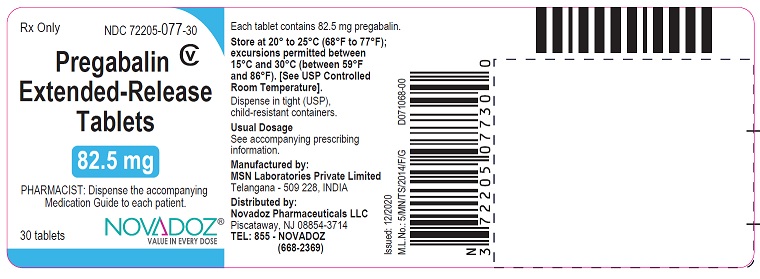
PACKAGE LABEL.PRINCIPAL DISPLAY PANEL pregabalin-er-tablets-82.5mg-30s-container-label pregabalin-er-tablets-165mg-30s-container-label pregabalin-er-tablets-330mg-30s-container-label pregabalin-er-tablets-82-5mg-30s-container-label pregabalin-er-tablets-165mg-30s-container-label pregabalin-er-tablets-330mg-30s-container-label