
Nurtec ODT rimegepant sulfate 75 mg Tablet, Orally Disintegrating — NDC 72618-3001-2 (Billing 72618-3001-02)
This is a package of Nurtec ODT rimegepant sulfate 75 mg Tablet, Orally Disintegrating from Pfizer Laboratories Div Pfizer Inc, marketed since Mar 2020 and currently FDA-listed, this package's marketing is listed to end Jun 2028. It is the main listing for this product, which comes in 2 package sizes.
Identity & classification
Regulatory identifiers FDA, NLM and CMS codes for this package
Drug-database identifiers Medi-Span GPI and First Databank GCN / HICL / AHFS classification
- GSN (GCN sequence number): 080787
- GCN: 47762
- HICL (First Databank): 046383
- AHFS class code: 28:32.12.00
- RxCUI (RxNorm): 2282313
Where does this data come from?
- FDA openFDA NDC Directory · synced Oct 1, 2026
- FDA label on DailyMed · label index refreshed Oct 1, 2026
- RxNorm (NLM RxNav) · catalog refreshed Oct 1, 2026
- Medi-Span GPI (licensed)
- First Databank (licensed) · refreshed Oct 1, 2026
RxNorm drug class
This medicine belongs to the Calcitonin Gene-related Peptide Receptor Antagonist class.
Where does this data come from?
- RxClass (NLM) · catalog refreshed Oct 1, 2026
Clinical
Rimegepant is used to prevent and treat migraine headaches (severe, throbbing headaches that sometimes are accompanied by nausea and sensitivity to sound or light). Rimegepant is in a class of medications called calcitonin gene-related peptide receptor antagonists. It works by blocking the action of a certain natural substance in the body that causes migraine headaches.
Read the full MedlinePlus article ↗- It's for adults with migraine. Nurtec ODT can treat a migraine attack, with or without aura, once it starts. It can also be used to help prevent episodic migraine.
- Open the blister pack with dry hands and peel back the foil. Don't push the tablet through it. Place the tablet on or under your tongue and let it dissolve. You don't need water, a...
- Nausea is the most common one. Some people using it for prevention also had stomach pain or indigestion. Most people don't have serious problems, but see the next question for what...
- Get emergency help for trouble breathing, a severe rash or swelling, since allergic reactions can happen even days later. Call your doctor if you notice higher blood pressure, or f...
Patient education
Supplement & herbal interactions
Where does this data come from?
- MedlinePlus (NLM) · refreshed Oct 1, 2026
- FDA label on DailyMed · label index refreshed Oct 1, 2026
Ask a licensed pharmacist directly — free, answered by our team.
Pricing
A drug doesn't have one price. Each row is a different public payment system, and none is what you'd pay at the counter — that depends on your insurance. The ⓘ on each row explains what it measures.
| Price system | Per each | Per package |
|---|---|---|
| Retail pharmacies payNADAC · weekly | Not in the retail survey — common for institutional, discontinued, or low-volume packs. | |
| Medicaid paysCMS SDUD · 12 mo | No recent Medicaid claims on file for this NDC — rare and low-volume NDCs are suppressed in the public data. | |
| Medicare drug plans payPart D · Q2 2026 | $129.70 | $1,037.62 / 8 tablets |
Where does this data come from?
- CMS NADAC weekly file
- CMS ASP pricing files · refreshed Sep 20, 2026
- CMS Medicaid State Drug Utilization Data · refreshed Oct 3, 2026
- CMS Part D plan pricing files · refreshed Sep 24, 2026
- VA National Acquisition Center price file
Packaging — all sizes for this product
| Package NDC | Description | Marketing start | Marketing end | Status |
|---|---|---|---|---|
| 72618-3001-02 You're viewing this Main listing | 4 DOSE PACK in 1 CARTON / 1 BLISTER PACK in 1 DOSE PACK / 2 TABLET, ORALLY DISINTEGRATING in 1 BLISTER PACK Sample | 2020-03-05 | Jun 30, 2028 | Active |
| 72618-3001-04 72618-3001-4 | 1 BLISTER PACK in 1 CARTON / 2 TABLET, ORALLY DISINTEGRATING in 1 BLISTER PACK Sample | 2024-12-18 | — | Active |
Pack size FAQ
What quantity is in this package?
What NDC number is used to bill for this package of Nurtec ODT rimegepant sulfate 75 mg Tablet, Orally Disintegrating?
Therapeutic equivalents
| Product | Labeler | Pack | NADAC/unit | TE | Status | Price vs. this |
|---|---|---|---|---|---|---|
| Nurtec Odt 75 mg 72618-3000-02 | Pfizer | 8 tablets | $128.670 | — | Availability likely | — |
| Nurtec Odt 75 mgthis 72618-3001-02 | Pfizer | 2 tablets | — | — | FDA listed | — |
| Nurtec Odt 75 mg 85766-0096-08 | Sportpharm | 8 tablets | — | — | FDA listed | — |
Where does this data come from?
- FDA openFDA NDC Directory · synced Oct 1, 2026
- FDA Orange Book · refreshed Oct 3, 2026
- CMS NADAC weekly file
Availability & generic status
We did not find an FDA-approved generic match for this exact strength, form and route. Patent/protection dates below may affect future generic timing.
Why the date isn’t exact: Generic timing can change because patents may be challenged, settled, licensed, added, removed, or worked around with a narrower label — and FDA approval does not always mean a pharmacy can get the generic today.
🛈 What do these terms mean?
- Patent
- Legal protection listed in the Orange Book that may delay generic approval or launch. Issued by the U.S. Patent & Trademark Office.
- Substance patent
- Covers the active drug molecule itself — the hardest to design around. A generic generally can’t launch until it expires.
- Formulation (product) patent
- Covers a specific formulation or dosage form. A generic can sometimes work around it with a different formulation.
- Method-of-use patent
- A patent covering one specific approved use of the drug — not necessarily the whole molecule. A generic can sometimes launch with a “skinny label” that carves out the protected use and keeps the others.
- Skinny label
- A generic label that omits a still-patented use when the FDA allows it — letting a generic reach the market for the unprotected uses.
- Exclusivity
- FDA-granted marketing protection, separate from patents — e.g. 5-yr new chemical entity, 7-yr orphan drug, or a +6-month pediatric extension.
- Paragraph IV
- A generic applicant’s formal challenge to a listed patent. It can potentially lead to earlier generic entry, but often involves litigation or a settlement.
- RLD / RS
- Reference Listed Drug — the brand product the FDA uses as the reference for generic applications. Reference Standard — the product the FDA expects generics to compare against in bioequivalence testing.
- TE / AB rating
- FDA therapeutic-equivalence rating. An AB rating generally means the FDA considers a generic therapeutically equivalent to — and substitutable for — the brand.
- LOE (loss of exclusivity)
- The latest patent or exclusivity currently listed — the loss-of-exclusivity / latest-listed-protection date shown on this page. Paragraph-IV challenges and settlements can move the real date earlier; FDA approval and a manufacturer’s decision to market can move it later.
Built from the FDA Orange Book. The bars above are scaled to each protection’s expiry; the red LOE marker is the last one to lapse.
| Patent | Type | Use code | Expires |
|---|---|---|---|
| US 11083724 ↗ | Method of use | U-2718 | Mar 25, 2039 |
| US 11083724 ↗ | Method of use | U-3142 | Mar 25, 2039 |
| US 8314117 ↗ | Drug substance | U-2718 | Feb 27, 2034 |
| US 8314117 ↗ | Drug substance | U-3142 | Feb 27, 2034 |
| US 8759372 ↗ | Drug substance | — | Feb 25, 2033 |
Is there a generic version of NURTEC ODT 75 MG TABLET?
The FDA approved a generic — why can’t I get it at my pharmacy yet?
Why do different websites show different generic release dates?
What does “FDA listed” mean?
What does a patent or protection date mean here?
What does “current Orange Book estimate” mean?
Can a generic come out before the last patent expires?
Can a generic come out after the listed dates?
What is the difference between patents and exclusivity?
Why are there multiple patent dates?
Where does this data come from?
- FDA Orange Book · refreshed Oct 3, 2026
What it looks like
Where does this data come from?
- FDA label on DailyMed · label index refreshed Oct 1, 2026
Inactive Ingredients / Excipients
Inactive ingredients, also called excipients, are components of the drug product other than the active ingredient. They may include fillers, dyes, coatings, preservatives, flavors, or other formulation ingredients.
💡 Tap an ingredient (hover on desktop) to see what it is and why it’s used.
-
UNII LKG8494WBH
Benzyl alcohol is a clear liquid used as a preservative and solvent in medicines. It helps prevent bacterial and fungal growth and dissolves other ingredients to create uniform liquid formulations.
-
UNII RV6J6604TK
Eucalyptol is a natural oil compound extracted from eucalyptus plants. In medicines, it serves as a flavoring agent and aromatic component to improve taste and smell.
-
UNII GFD7C86Q1W
A natural oil extracted from citrus peels, (+)-limonene is used as a flavoring agent and solvent in medicines. It helps dissolve active ingredients and provides a lemon or orange taste.
-
UNII 3OWL53L36A
A natural sugar alcohol derived from seaweed or synthesized in the lab. It's used as a filler to add bulk, a sweetener in sugar-free formulas, and a disintegrant to help tablets break apart in the stomach.
-
UNII AHQ60JKI5D
A protein derived from fish or marine animals, used as a capsule material or binder in medications. Its high molecular weight helps form sturdy capsule shells that contain and protect the active drug inside.
-
UNII L7T10EIP3A
A cooling compound from mint plants used as a flavoring agent and to create a fresh sensation in medicines. It helps mask bitter tastes and improve how the product feels in the mouth.
-
UNII 15F1B5K9A5
A natural organic compound derived from mint plants, used to provide cooling sensation and mint flavor to oral medicines and lozenges.
-
UNII LF3LEI45OH
A synthetic cooling agent derived from or chemically similar to mint. It's used as a flavoring and sensory ingredient to provide a mild cooling or refreshing sensation in oral medications.
-
UNII 96K6UQ3ZD4
Sucralose is a synthetic sweetener made from sugar. It's added to medicines to improve taste without adding calories, helping make bitter or unpleasant-tasting drugs easier to take.
-
UNII CHI530446X
Vanillin is a natural or synthetic aromatic compound that gives vanilla flavor. It's used in medicines as a flavoring agent to mask bitter tastes and improve how the medicine tastes.
10 inactive ingredients listed in the exact product block matched to this NDC.
Where does this data come from?
ingredient classCode="IACT" elements from the exact product block matched by this NDC. Label-section narrative from DailyMed / the openFDA label index is shown separately when available.- FDA label on DailyMed · label index refreshed Oct 1, 2026
- FDA openFDA NDC Directory · synced Oct 1, 2026
Inactive ingredient FAQ
Are inactive ingredients the same for every manufacturer?
Why might an inactive ingredient be missing?
Can inactive ingredients matter?
Manufacturer & labeler
Where does this data come from?
- FDA openFDA NDC Directory · synced Oct 1, 2026
- Drugs@FDA
Full prescribing information FDA SPL
🎯 Indications and Usage ▾
1 INDICATIONS AND USAGE NURTEC ODT is a calcitonin gene-related peptide receptor antagonist indicated for the: • acute treatment of migraine with or without aura in adults ( 1.1 ) • preventive treatment of episodic migraine in adults ( 1.2 )
1.1Acute Treatment of Migraine NURTEC ODT is indicated for the acute treatment of migraine with or without aura in adults .
1.2Preventive Treatment of Episodic Migraine NURTEC ODT is indicated for the preventive treatment of episodic migraine in adults.
⏱️ Dosage and Administration ▾
2 DOSAGE AND ADMINISTRATION • Recommended dosage for acute treatment of migraine: 75 mg taken orally, as needed. ( 2.1 ) • The safety of using more than 18 doses in a 30-day period has not been established. ( 2.1 ) • Recommended dosage for preventive treatment of episodic migraine: 75 mg taken orally every other day. ( 2.2 ) • The maximum dose in a 24-hour period is 75 mg. ( 2.1 ) • NURTEC ODT can be taken with or without food. ( 2.1 , 2.2 )
2.1Recommended Dosing for Acute Treatment of Migraine The recommended dose of NURTEC ODT is 75 mg taken orally, as needed. The maximum dose in a 24-hour period is 75 mg. The safety of using more than 18 doses in a 30-day period has not been established. NURTEC ODT can be taken with or without food [see Clinical Pharmacology (12.3) ] .
2.2Recommended Dosing for Preventive Treatment of Episodic Migraine The recommended dosage of NURTEC ODT is 75 mg taken orally every other day , with or without food .
2.3Administration Information Instruct the patient on the following administration instructions: • Use dry hands when opening the blister pack. • Peel back the foil covering of one blister and gently remove the orally disintegrating tablet (ODT). Do not push the ODT through the foil. • As soon as the blister is opened, remove the ODT and place on the tongue; alternatively, the ODT may be placed under the tongue. • The ODT will disintegrate in saliva so that it can be swallowed without additional liquid. • Take the ODT immediately after opening the blister pack.
Do not store the ODT outside the blister pack for future use.
2.4Concomitant Administration with Strong or Moderate CYP3A4 Inhibitors Avoid concomitant administration of NURTEC ODT with strong inhibitors of CYP3A4. Avoid another dose of NURTEC ODT within 48 hours when it is concomitantly administered with moderate inhibitors of CYP3A4 [see Drug Interactions (7.1) , Clinical Pharmacology (12.3) ] .
2.5Concomitant Administration with Strong or Moderate CYP3A Inducers Avoid concomitant administration of NURTEC ODT with strong or moderate inducers of CYP3A, which may lead to loss of efficacy of NURTEC ODT [see Drug Interactions (7.2) , Clinical Pharmacology (12.3) ] .
2.6Concomitant Administration with Potent Inhibitors of P-gp Avoid another dose of NURTEC ODT within 48 hours when it is concomitantly administered with potent inhibitors of P-gp [see Drug Interactions (7.3) , Clinical Pharmacology (12.3) ] .
💊 Dosage Forms and Strengths ▾
3 DOSAGE FORMS AND STRENGTHS Orally disintegrating tablets: white to off-white, circular, and debossed with the symbol , each containing 75 mg of rimegepant. NURTEC ODT orally disintegrating tablets: 75 mg ( 3 ) Image
⛔ Contraindications ▾
4 CONTRAINDICATIONS NURTEC ODT is contraindicated in patients with a history of hypersensitivity reaction to rimegepant, NURTEC ODT, or any of its components. Reactions have included anaphylaxis and delayed serious hypersensitivity [see Warnings and Precautions (5.1) ] . Patients with a history of hypersensitivity reaction to rimegepant, NURTEC ODT, or to any of its components. ( 4 )
⚠️ Warnings and Cautions ▾
5 WARNINGS AND PRECAUTIONS • Hypersensitivity Reactions: If a serious hypersensitivity reaction occurs, discontinue NURTEC ODT and initiate appropriate therapy. Severe hypersensitivity reactions have included anaphylaxis, dyspnea, and rash, and can occur days after administration. ( 5.1 ) • Hypertension: New-onset or worsening of pre-existing hypertension may occur.
( 5.2 ) • Raynaud’s Phenomenon: New-onset or worsening of pre-existing Raynaud’s phenomenon may occur. ( 5.3 )
5.1Hypersensitivity Reactions Serious hypersensitivity reactions, including anaphylaxis, dyspnea , and rash, have occurred in patients treated with NURTEC ODT . Hypersensitivity reactions can occur days after administration, and delayed serious hypersensitivity has occurred. If a hypersensitivity reaction occurs, discontinue NURTEC ODT and initiate appropriate therapy [see Contraindications (4) and Adverse Reactions (6.1 , 6.2) ] .
5.2Hypertension Development of hypertension and worsening of pre-existing hypertension have been reported following the use of CGRP antagonists, including NURTEC ODT, in the postmarketing setting. Some of the patients who developed new-onset hypertension had risk factors for hypertension. There were cases requiring initiation of pharmacological treatment for hypertension and, in some cases, hospitalization.
Hypertension may occur at any time during treatment, but was most frequently reported within 7 days of therapy initiation. NURTEC ODT was discontinued in many of the reported cases. Monitor patients treated with NURTEC ODT for new-onset hypertension or worsening of pre-existing hypertension, and consider whether discontinuation of NURTEC ODT is warranted if evaluation fails to establish an alternative etiology or blood pressure is inadequately controlled.
5.3Raynaud’s Phenomenon Development of Raynaud’s phenomenon and recurrence or worsening of pre-existing Raynaud’s phenomenon have been reported in the postmarketing setting following the use of CGRP antagonists, including NURTEC ODT. In reported cases with small molecule CGRP antagonists, symptom onset occurred a median of 1.5 days following dosing. Many of the cases reported serious outcomes, including hospitalizations and disability, generally related to debilitating pain.
In most reported cases, discontinuation of the CGRP antagonist resulted in resolution of symptoms. NURTEC ODT should be discontinued if signs or symptoms of Raynaud’s phenomenon develop, and patients should be evaluated by a healthcare provider if symptoms do not resolve. Patients with a history of Raynaud’s phenomenon should be monitored for, and informed about the possibility of, worsening or recurrence of signs and symptoms.
🤒 Adverse Reactions ▾
6 ADVERSE REACTIONS The following clinically significant adverse reactions are discussed in greater detail in other sections of the labeling: • Hypersensitivity Reactions [see Warnings and Precautions (5.1) ] • Hypertension [see Warnings and Precautions (5.2) ] • Raynaud’s Phenomenon [see Warnings and Precautions (5.3) ] • Acute treatment of migraine: the adverse reaction reported in ≥1% of patients treated with NURTEC ODT is nausea. ( 6.1 ) • Preventive treatment of episodic migraine: adverse reactions reported in ≥2% for rimegepant and ≥1% higher than placebo are nausea and abdominal pain/dyspepsia.
( 6.1 ) To report SUSPECTED ADVERSE REACTIONS, contact Pfizer Inc. at 1-800-438-1985 or FDA at 1-800-FDA-1088 or www.fda.gov/medwatch .
6.1Clinical Trials Experience Because clinical trials are conducted under widely varying conditions, adverse reaction rates observed in the clinical trials of a drug cannot be directly compared to rates in the clinical trials of another drug and may not reflect the rates observed in clinical practice. Acute Treatment of Migraine The safety of NURTEC ODT for the acute treatment of migraine in adults has been evaluated in a randomized, double-blind, placebo-controlled trial (Study 1) in 682 patients with migraine who received one 75 mg dose of NURTEC ODT [see Clinical Studies (14) ] .
Approximately 85% were female, 74% were White, 21% were Black, and 17% were Hispanic or Latino. The mean age at study entry was 40 years (range 18-75 years of age). Long-term safety was assessed in an open-label extension study using a different oral dosage form of rimegepant.
That study evaluated 1,798 patients, dosing intermittently for up to one year, including 1,131 patients who were exposed to rimegepant 75 mg for at least 6 months, and 863 who were exposed for at least one year, all of whom treated an average of at least two migraine attacks per month. The most common adverse reaction in Study 1 was nausea (2% in patients who received NURTEC ODT compared to 0.4% of patients who received placebo). Hypersensitivity, including dyspnea and severe rash, occurred in less than 1% of patients treated with NURTEC ODT [see Contraindications (4) and Warnings and Precautions (5.1) ] .
Preventive Treatment of Episodic Migraine The safety of NURTEC ODT for the preventive treatment of episodic migraine in adults has been established in a randomized, double-blind, placebo-controlled trial with an open-label extension (Study 2) using a different oral dosage form of rimegepant [see Clinical Studies (14) ] . In the 12-week, double-blind treatment period, 370 patients with migraine received one 75 mg dose of rimegepant every other day . Approximately 81% were female, 80% were White, 17% were Black, and 28% were Hispanic or Latino.
The mean age at study entry was 41 years (range 18-74 years of age). Long-term safety was assessed in an open-label extension study that included 603 patients who were treated for up to one year. Overall, 527 patients were exposed to rimegepant 75 mg for at least 6 months, and 311 were exposed for at least one year.
The most common adverse reactions (occurring in at least 2% of rimegepant-treated patients and at a frequency of at least 1% higher than placebo) in Study 2 were nausea (2.7% in patients who received rimegepant compared with 0.8% of patients who received placebo) and abdominal pain/dyspepsia (2.4% in patients who received rimegepant compared with 0.8% of patients who received placebo).
6.2Postmarketing Experience The following adverse reactions have been identified during postapproval use of NURTEC ODT. Because these reactions are reported voluntarily from a population of uncertain size, it is not always possible to reliably estimate their frequency or establish a causal relationship to drug exposure. Immune System Disorders : Hypersensitivity (e.g., anaphylaxis) [see Contraindications (4) and Warnings and Precautions (5.1) ] Vascular Disorders : Hypertension [see Warnings and Precautions (5… [Excerpted — this section continues on DailyMed.]
🔄 Drug Interactions ▾
7 DRUG INTERACTIONS • Strong CYP3A4 Inhibitors: Avoid concomitant administration. ( 7.1 ) • Moderate CYP3A4 Inhibitors: Avoid another dose within 48 hours when administered with a moderate CYP3A4 inhibitor. ( 7.1 ) • Strong and Moderate CYP3A Inducers: Avoid concomitant administration. ( 7.2 ) • Potent Inhibitors of P-gp: Avoid another dose of NURTEC ODT within 48 hours when administered with a potent P-gp inhibitor. ( 7.3 )
7.1CYP3A4 Inhibitors Concomitant administration of NURTEC ODT with strong inhibitors of CYP3A4 results in a significant increase in rimegepant exposure. Avoid concomitant administration of NURTEC ODT with strong inhibitors of CYP3A4 [see Clinical Pharmacology (12.3) ] . Concomitant administration of NURTEC ODT with moderate inhibitors of CYP3A4 may result in increased exposure of rimegepant.
Avoid another dose of NURTEC ODT within 48 hours when it is concomitantly administered with moderate inhibitors of CYP3A4 [see Clinical Pharmacology (12.3) ] .
7.2CYP3A Inducers Concomitant administration of NURTEC ODT with strong or moderate inducers of CYP3A can result in a significant reduction in rimegepant exposure, which may lead to loss of efficacy of NURTEC ODT. Avoid concomitant administration of NURTEC ODT with strong or moderate inducers of CYP3A [see Clinical Pharmacology (12.3) ] .
7.3P-gp Inhibitors Concomitant administration of NURTEC ODT with potent inhibitors of P-gp (e.g., amiodarone, cyclosporine, lapatinib, quinidine, ranolazine) may result in increased exposure of rimegepant. Avoid another dose of NURTEC ODT within 48 hours when it is concomitantly administered with potent inhibitors of P-gp [see Clinical Pharmacology (12.3) ] .
👥 Use in Specific Populations ▾
8 USE IN SPECIFIC POPULATIONS • Exposures were significantly higher in subjects with severe hepatic impairment. Avoid use in patients with severe hepatic impairment (Child-Pugh C). ( 8.6 )
8.1Pregnancy Pregnancy Exposure Registry There is a pregnancy exposure registry that monitors pregnancy outcomes in women exposed to NURTEC ODT during pregnancy. For more information, healthcare providers or patients are encouraged to contact: 1-877-366-0324, email [email protected], or visit nurtecpregnancyregistry.com . Risk Summary There are no adequate data on the developmental risk associated with the use of NURTEC ODT in pregnant women.
In animal studies, oral administration of rimegepant during organogenesis resulted in adverse effects on development in rats (decreased fetal body weight and increased incidence of skeletal variations) at exposures greater than those used clinically and which were associated with maternal toxicity (see Data ) . In the U.S. general population, the estimated background risk of major birth defects and miscarriage in clinically recognized pregnancies is 2 to 4% and 15 to 20%, respectively. The estimated rate of major birth defects (2.2 to 2.9%) and miscarriage (17%) among deliveries to women with migraine are similar to rates reported in women without migraine.
Clinical Considerations Disease-Associated Maternal and/or Embryo/Fetal Risk Published data have suggested that women with migraine may be at increased risk of preeclampsia and gestational hypertension during pregnancy. Data Animal Data Oral administration of rimegepant (0, 10, 60, or 300 mg/kg/day) to pregnant rats during the period of organogenesis resulted in decreased fetal body weight and an increased incidence of fetal skeletal variations at the highest dose tested (300 mg/kg/day), which was associated with maternal toxicity.
Plasma exposures (AUC) at the no-effect dose (60 mg/kg/day) for adverse effects on embryofetal development were approximately 45 times that in humans at the maximum recommended human dose (MRHD) of 75 mg/day. Oral administration of rimegepant (0, 10, 25, or 50 mg/kg/day) to pregnant rabbits during the period of organogenesis resulted in no adverse effects on embryofetal development. The highest dose tested (50 mg/kg/day) was associated with plasma exposures (AUC) approximately 10 times that in humans at the MRHD.
Oral administration of rimegepant (0, 10, 25, or 60 mg/kg/day) to rats throughout gestation and lactation resulted in no effects on pre- or postnatal development. The highest dose tested (60 mg/kg/day) was associated with plasma exposures (AUC) approximately 24 times that in humans at the MRHD.
8.2Lactation Risk Summary A lactation study was conducted, and the results have established a relative infant dose of less than 1% of the maternal weight-adjusted dose and the milk-to-plasma ratio of 0.20 (see Data ) . These data support that transfer of rimegepant into breastmilk is low. There are no data on the effects of rimegepant on a breastfed infant or on milk production.
The developmental and health benefits of breastfeeding should be considered along with the mother's clinical need for NURTEC ODT and any potential adverse effects on the breastfed infant from NURTEC ODT or from the underlying maternal condition. Data A study was conducted in twelve healthy adult lactating women who were between 2 weeks and 6 months postpartum and were administered a single oral dose of rimegepant 75 mg. The relative infant dose was <1%.
The average milk to plasma ratio was 0.20.
8.4Pediatric Use Safety and effectiveness in pediatric patients have not been established.
8.5Geriatric Use In pharmacokinetic studies, no clinically significant pharmacokinetic differences were observed between elderly and younger subjects. Clinical studies of NURTEC ODT did not include sufficient numbers of patients aged 65 and over to determine whether they respond differently from younger patients.
8.6Hepatic Impairment No… [Excerpted — this section continues on DailyMed.]
🤰 Pregnancy ▾
8.1Pregnancy Pregnancy Exposure Registry There is a pregnancy exposure registry that monitors pregnancy outcomes in women exposed to NURTEC ODT during pregnancy. For more information, healthcare providers or patients are encouraged to contact: 1-877-366-0324, email [email protected], or visit nurtecpregnancyregistry.com . Risk Summary There are no adequate data on the developmental risk associated with the use of NURTEC ODT in pregnant women.
In animal studies, oral administration of rimegepant during organogenesis resulted in adverse effects on development in rats (decreased fetal body weight and increased incidence of skeletal variations) at exposures greater than those used clinically and which were associated with maternal toxicity (see Data ) . In the U.S. general population, the estimated background risk of major birth defects and miscarriage in clinically recognized pregnancies is 2 to 4% and 15 to 20%, respectively. The estimated rate of major birth defects (2.2 to 2.9%) and miscarriage (17%) among deliveries to women with migraine are similar to rates reported in women without migraine.
Clinical Considerations Disease-Associated Maternal and/or Embryo/Fetal Risk Published data have suggested that women with migraine may be at increased risk of preeclampsia and gestational hypertension during pregnancy. Data Animal Data Oral administration of rimegepant (0, 10, 60, or 300 mg/kg/day) to pregnant rats during the period of organogenesis resulted in decreased fetal body weight and an increased incidence of fetal skeletal variations at the highest dose tested (300 mg/kg/day), which was associated with maternal toxicity.
Plasma exposures (AUC) at the no-effect dose (60 mg/kg/day) for adverse effects on embryofetal development were approximately 45 times that in humans at the maximum recommended human dose (MRHD) of 75 mg/day. Oral administration of rimegepant (0, 10, 25, or 50 mg/kg/day) to pregnant rabbits during the period of organogenesis resulted in no adverse effects on embryofetal development. The highest dose tested (50 mg/kg/day) was associated with plasma exposures (AUC) approximately 10 times that in humans at the MRHD.
Oral administration of rimegepant (0, 10, 25, or 60 mg/kg/day) to rats throughout gestation and lactation resulted in no effects on pre- or postnatal development. The highest dose tested (60 mg/kg/day) was associated with plasma exposures (AUC) approximately 24 times that in humans at the MRHD.
🧒 Pediatric Use ▾
8.4Pediatric Use Safety and effectiveness in pediatric patients have not been established.
🧓 Geriatric Use ▾
8.5Geriatric Use In pharmacokinetic studies, no clinically significant pharmacokinetic differences were observed between elderly and younger subjects. Clinical studies of NURTEC ODT did not include sufficient numbers of patients aged 65 and over to determine whether they respond differently from younger patients.
🆘 Overdosage ▾
10 OVERDOSAGE There is limited clinical experience with NURTEC ODT overdosage. Treatment of an overdose of NURTEC ODT should consist of general supportive measures including monitoring of vital signs and observation of the clinical status of the patient. No specific antidote for the treatment of rimegepant overdose is available.
Rimegepant is unlikely to be significantly removed by dialysis because of high serum protein binding [see Clinical Pharmacology (12.3) ] .
🧬 Clinical Pharmacology ▾
12 CLINICAL PHARMACOLOGY
12.1Mechanism of Action Rimegepant is a calcitonin gene-related peptide receptor antagonist.
12.2Pharmacodynamics The relationship between pharmacodynamic activity and the mechanism(s) by which rimegepant exerts its clinical effects is unknown. No clinically relevant differences in resting blood pressure were observed when rimegepant was concomitantly administered with sumatriptan (12 mg subcutaneous, given as two 6 mg doses separated by one hour) compared with sumatriptan alone to healthy volunteers. Cardiac Electrophysiology At a single dose 4 times the recommended dose, rimegepant does not prolong the QT interval to any clinically relevant extent.
12.3Pharmacokinetics Absorption Following oral administration of NURTEC ODT, rimegepant is absorbed with the maximum concentration at 1.5 hours. The absolute oral bioavailability of rimegepant is approximately 64%. Effects of Food Following administration of NURTEC ODT under fed conditions with a high-fat or low-fat meal, T max was delayed by approximately 1 to 1.5 hours.
A high-fat meal reduced C max by 41 to 53% and AUC by 32 to 38%. A low-fat meal reduced C max by 36% and AUC by 28%. NURTEC ODT was administered without regard to food in clinical safety and efficacy studies [see Dosage and Administration (2.1 , 2.2 )] .
The impact of the reduction in rimegepant exposure because of administration with food on its efficacy is unknown. Distribution The steady state volume of distribution of rimegepant is 120 L. Plasma protein binding of rimegepant is approximately 96%.
Elimination Metabolism Rimegepant is primarily metabolized by CYP3A4 and to a lesser extent by CYP2C9. Rimegepant is the primary form (~77%) with no major metabolites (i.e., >10%) detected in plasma. Excretion The elimination half-life of rimegepant is approximately 11 hours in healthy subjects.
Following oral administration of [ 14 C]-rimegepant to healthy male subjects, 78% of the total radioactivity was recovered in feces and 24% in urine. Unchanged rimegepant is the major single component in excreted feces (42%) and urine (51%). Specific Populations Renal Impairment In a dedicated clinical study comparing the pharmacokinetics of rimegepant in subjects with mild (estimated creatinine clearance [CLcr] 60-89 mL/min), moderate (CLcr 30-59 mL/min), and severe (CLcr 15-29 mL/min) renal impairment to that with normal subjects (healthy matched control), the exposure of rimegepant following single 75 mg dose was approximately 40% higher in subjects with moderate renal impairment.
However, there was no clinically meaningful difference in the exposure of rimegepant in subjects with severe renal impairment compared to subjects with normal renal function (CLcr ≥90 mL/min). NURTEC ODT has not been studied in patients with end-stage renal disease (CLcr <15 mL/min) [see Use in Specific Populations (8.7) ]. Hepatic Impairment In a dedicated clinical study comparing the pharmacokinetics of rimegepant in subjects with mild, moderate, and severe hepatic impairment to that with normal subjects (healthy matched control), the exposure of rimegepant (C max and AUC) following single 75 mg dose was approximately 2-fold higher in subjects with severe impairment (Child-Pugh class C).
There were no clinically meaningful differences in the exposure of rimegepant in subjects with mild (Child-Pugh class A) and moderate hepatic impairment (Child-Pugh class B) compared to subjects with normal hepatic function [see Use in Specific Populations (8.6) ]. Other Specific Populations No clinically significant differences in the pharmacokinetics of rimegepant were observed based on age, sex, race/ethnicity, body weight, or CYP2C9 genotype [see Clinical Pharmacology (12.5) ]. Drug Interaction Studies In Vitro Studies • Enzymes Rimegepant is a substrate of CYP3A4 and CYP2C9 (see In Vivo Studies ).
Rimegepant is not an inhibitor of CYP1A2, 2B6, 2C8, 2C9, 2C19, 2D6, or UGT1A1 at clinically relevant concentrations. However, rimegep… [Excerpted — this section continues on DailyMed.]
🧬 Mechanism of Action ▾
12.1Mechanism of Action Rimegepant is a calcitonin gene-related peptide receptor antagonist.
📦 How Supplied / Storage and Handling ▾
16 HOW SUPPLIED/STORAGE AND HANDLING
16.1How Supplied NURTEC ODT 75 mg orally disintegrating tablets are white to off-white, circular, debossed with the symbol , and supplied in cartons containing a blister pack of 8 orally disintegrating tablets. Each ODT contains 75 mg rimegepant. NDC: 72618-3000-2 Image
16.2Storage and Handling Store NURTEC ODT at controlled room temperature, 20°C to 25°C (68°F to 77°F); with excursions permitted between 15°C to 30°C (59°F to 86°F) [see USP controlled room temperature] .
📦 Storage and Handling ▾
16.2Storage and Handling Store NURTEC ODT at controlled room temperature, 20°C to 25°C (68°F to 77°F); with excursions permitted between 15°C to 30°C (59°F to 86°F) [see USP controlled room temperature] .
📋 Description ▾
11 DESCRIPTION NURTEC ODT contains rimegepant sulfate, a calcitonin gene-related peptide receptor antagonist. Rimegepant sulfate is described chemically as (5S,6S,9R)-5-amino-6-(2,3-difluorophenyl)-6,7,8,9-tetrahydro-5H-cyclohepta[b]pyridin-9-yl 4-(2-oxo-2,3-dihydro-1H-imidazo[4,5-b]pyridin-1-yl)-1-piperidinecarboxylate hemisulfate sesquihydrate and its structural formula is: Its empirical formula is C 28 H 28 F 2 N 6 O 3
0.5 H 2 SO 4
1.5H 2 O, representing a molecular weight of 610.63. Rimegepant free base has a molecular weight of 534.56. Rimegepant sulfate is a white to off-white, crystalline solid that is slightly soluble in water.
NURTEC ODT (orally disintegrating tablets) is for sublingual or oral use and contains 85.7 mg rimegepant sulfate, equivalent to 75 mg rimegepant free base, and the following inactive ingredients: benzyl alcohol, eucalyptol, gelatin, limonene, mannitol, menthol, menthone, menthyl acetate, sucralose, and vanillin. Chemical Structure
💬 Information for Patients ▾
17 PATIENT COUNSELING INFORMATION Advise patients to read the FDA-approved patient labeling (Patient Information). Handling of Orally Disintegrating Tablets Packaging Instruct patients not to remove the blister from the outer aluminum pouch until ready to use the orally disintegrating tablet inside [see Dosage and Administration (2.3) ] . Hypersensitivity Reactions Inform patients about the signs and symptoms of hypersensitivity reactions and that these reactions can occur days after administration of NURTEC ODT.
Advise patients to contact their healthcare provider immediately if signs or symptoms of hypersensitivity reactions occur [see Warnings and Precautions (5.1) ]. Hypertension Inform patients that hypertension can develop or pre-existing hypertension can worsen with NURTEC ODT, and that they should contact their healthcare provider if they experience elevation in their blood pressure [see Warnings and Precautions (5.2) ] . Raynaud’s Phenomenon Inform patients that Raynaud’s phenomenon can develop or worsen with NURTEC ODT.
Advise patients to discontinue NURTEC ODT and contact their healthcare provider if they experience signs or symptoms of Raynaud’s phenomenon [see Warnings and Precautions (5.3) ] . Pregnancy Registry There is a pregnancy exposure registry that monitors pregnancy outcomes in women exposed to NURTEC ODT during pregnancy. Encourage participation and advise patients about how they may enroll in the registry [see Use in Specific Populations (8.1) ] .
This product’s labeling may have been updated. For the most recent Prescribing Information, please visit www.pfizer.com
🧬 Pharmacokinetics ▾
12.3Pharmacokinetics Absorption Following oral administration of NURTEC ODT, rimegepant is absorbed with the maximum concentration at 1.5 hours. The absolute oral bioavailability of rimegepant is approximately 64%. Effects of Food Following administration of NURTEC ODT under fed conditions with a high-fat or low-fat meal, T max was delayed by approximately 1 to 1.5 hours.
A high-fat meal reduced C max by 41 to 53% and AUC by 32 to 38%. A low-fat meal reduced C max by 36% and AUC by 28%. NURTEC ODT was administered without regard to food in clinical safety and efficacy studies [see Dosage and Administration (2.1 , 2.2 )] .
The impact of the reduction in rimegepant exposure because of administration with food on its efficacy is unknown. Distribution The steady state volume of distribution of rimegepant is 120 L. Plasma protein binding of rimegepant is approximately 96%.
Elimination Metabolism Rimegepant is primarily metabolized by CYP3A4 and to a lesser extent by CYP2C9. Rimegepant is the primary form (~77%) with no major metabolites (i.e., >10%) detected in plasma. Excretion The elimination half-life of rimegepant is approximately 11 hours in healthy subjects.
Following oral administration of [ 14 C]-rimegepant to healthy male subjects, 78% of the total radioactivity was recovered in feces and 24% in urine. Unchanged rimegepant is the major single component in excreted feces (42%) and urine (51%). Specific Populations Renal Impairment In a dedicated clinical study comparing the pharmacokinetics of rimegepant in subjects with mild (estimated creatinine clearance [CLcr] 60-89 mL/min), moderate (CLcr 30-59 mL/min), and severe (CLcr 15-29 mL/min) renal impairment to that with normal subjects (healthy matched control), the exposure of rimegepant following single 75 mg dose was approximately 40% higher in subjects with moderate renal impairment.
However, there was no clinically meaningful difference in the exposure of rimegepant in subjects with severe renal impairment compared to subjects with normal renal function (CLcr ≥90 mL/min). NURTEC ODT has not been studied in patients with end-stage renal disease (CLcr <15 mL/min) [see Use in Specific Populations (8.7) ]. Hepatic Impairment In a dedicated clinical study comparing the pharmacokinetics of rimegepant in subjects with mild, moderate, and severe hepatic impairment to that with normal subjects (healthy matched control), the exposure of rimegepant (C max and AUC) following single 75 mg dose was approximately 2-fold higher in subjects with severe impairment (Child-Pugh class C).
There were no clinically meaningful differences in the exposure of rimegepant in subjects with mild (Child-Pugh class A) and moderate hepatic impairment (Child-Pugh class B) compared to subjects with normal hepatic function [see Use in Specific Populations (8.6) ]. Other Specific Populations No clinically significant differences in the pharmacokinetics of rimegepant were observed based on age, sex, race/ethnicity, body weight, or CYP2C9 genotype [see Clinical Pharmacology (12.5) ]. Drug Interaction Studies In Vitro Studies • Enzymes Rimegepant is a substrate of CYP3A4 and CYP2C9 (see In Vivo Studies ).
Rimegepant is not an inhibitor of CYP1A2, 2B6, 2C8, 2C9, 2C19, 2D6, or UGT1A1 at clinically relevant concentrations. However, rimegepant is a weak inhibitor of CYP3A4 with time-dependent inhibition. Rimegepant is not an inducer of CYP1A2, CYP2B6, or CYP3A4 at clinically relevant concentrations. • Transporters Rimegepant is a substrate of P-gp and BCRP (see In Vivo Studies ) .
Rimegepant is not a substrate of OATP1B1 or OATP1B3. Considering its low renal clearance, rimegepant was not evaluated as a substrate of the OAT1, OAT3, OCT2, MATE1, or MATE2-K. Rimegepant is not an inhibitor of P-gp, BCRP, OAT1, or MATE2-K at clinically relevant concentrations.
It is a weak inhibitor of OATP1B1 and OAT3. Rimegepant is an inhibitor of OATP1B3, OCT2, and MATE1. In a dedicated interaction study, concomitant administration… [Excerpted — this section continues on DailyMed.]
🧬 Pharmacodynamics ▾
12.2Pharmacodynamics The relationship between pharmacodynamic activity and the mechanism(s) by which rimegepant exerts its clinical effects is unknown. No clinically relevant differences in resting blood pressure were observed when rimegepant was concomitantly administered with sumatriptan (12 mg subcutaneous, given as two 6 mg doses separated by one hour) compared with sumatriptan alone to healthy volunteers. Cardiac Electrophysiology At a single dose 4 times the recommended dose, rimegepant does not prolong the QT interval to any clinically relevant extent.
🔬 Clinical Studies ▾
14 CLINICAL STUDIES
14.1Acute Treatment of Migraine The efficacy of NURTEC ODT for the acute treatment of migraine with and without aura in adults was demonstrated in a randomized, double-blind, placebo-controlled trial: Study 1 (NCT03461757). Patients in the study were randomized to receive 75 mg of NURTEC ODT (N=732) or placebo (N=734). Patients were instructed to treat a migraine of moderate to severe headache pain intensity.
Rescue medication (i.e., NSAIDs, acetaminophen, and/or an antiemetic) was allowed 2 hours after the initial treatment. Other forms of rescue medication such as triptans were not allowed within 48 hours of initial treatment. Approximately 14% of patients were taking preventive medications for migraine at baseline.
None of the patients in Study 1 were on concomitant preventive medication that act on the CGRP pathway. The primary efficacy analyses were conducted in patients who treated a migraine with moderate to severe pain. NURTEC ODT 75 mg demonstrated an effect on pain freedom and most bothersome symptom (MBS) freedom at two hours after dosing, compared to placebo.
Pain freedom was defined as a reduction of moderate or severe headache pain to no headache pain, and MBS freedom was defined as the absence of the self-identified MBS (i.e., photophobia, phonophobia, or nausea). Among patients who selected an MBS, the most commonly selected symptom was photophobia (54%), followed by nausea (28%), and phonophobia (15%). In Study 1, the percentage of patients achieving headache pain freedom and MBS freedom two hours after a single dose was statistically significantly greater in patients who received NURTEC ODT compared to those who received placebo (Table 1).
Table 1: Efficacy Endpoints for the Acute Treatment of Migraine in Study 1 Study 1 NURTEC ODT 75 mg Placebo Pain Free at 2 hours n/N n=number of responders/N=number of patients in that treatment group 142/669 74/682 % Responders 21.2
10.9Difference from placebo (%) 10.3 p-value <0.001 MBS Free at 2 hours n/N 235/669 183/682 % Responders 35.1
26.8Difference from placebo (%) 8.3 p-value 0.001 Figure 1 presents the percentage of patients achieving migraine pain freedom within 2 hours following treatment in Study 1. Figure 1: Percentage of Patients Achieving Pain Freedom within 2 Hours in Study 1 Figure 2 presents the percentage of patients achieving MBS freedom within 2 hours in Study 1. Figure 2: Percentage of Patients Achieving MBS Freedom within 2 Hours in Study 1 In Study 1, statistically significant effects of NURTEC ODT compared to placebo were demonstrated for the additional efficacy endpoints of pain relief at 2 hours, sustained pain freedom 2-48 hours, use of rescue medication within 24 hours, and the percentage of patients reporting normal function at two hours after dosing (Table 2).
Pain relief was defined as a reduction in migraine pain from moderate or severe severity to mild or none. The measurement of the percentage of patients reporting normal function at two hours after dosing was derived from a single item questionnaire, asking patients to select one response on a 4-point scale; normal function, mild impairment, severe impairment, or required bedrest. Table 2: Additional Acute Treatment of Migraine Efficacy Endpoints in Study 1 Study 1 NURTEC ODT 75 mg Placebo Pain Relief at 2 hours n/N n=number of responders/N=number of patients in that treatment group 397/669 295/682 % Responders 59.3
43.3Difference from placebo 16.1 p-value <0.001 Sustained Pain Freedom 2-48 hours n/N 90/669 37/682 % Responders 13.5
5.4Difference from placebo 8.0 p-value <0.001 Use of Rescue Medication within 24 hours This analysis includes only the use of NSAIDs, acetaminophen, or antiemetics, within 24 hours post-dose; the use of triptans, or other acute migraine medication, was not allowed. n/N 95/669 199/682 % Responders 14.2
29.2Difference from placebo -15.0 p-value <0.001 Percentage of Patients Reporting Normal Function at 2 hours n/N 255/669 176/682 % Resp… [Excerpted — this section continues on DailyMed.]
🧪 Nonclinical Toxicology ▾
13 NONCLINICAL TOXICOLOGY
13.1Carcinogenesis, Mutagenesis, Impairment of Fertility Carcinogenesis Oral administration of rimegepant to Tg.rasH2 mice (0, 10, 100, or 300 mg/kg/day) for 26 weeks and to rats (0, 5, 20, or 45 mg/kg/day) for 91-100 weeks resulted in no evidence of drug-induced tumors in either species. In rats, the plasma exposure (AUC) at the highest dose tested (45 mg/kg/day) was approximately 30 times that at the maximum recommended human dose (MRHD) of 75 mg/day. Mutagenesis Rimegepant was negative in in vitro (bacterial reverse-mutation, chromosomal aberration in Chinese hamster ovary cells) and in vivo (rat micronucleus) assays.
Impairment of Fertility Oral administration of rimegepant (0, 30, 60, or 150 mg/kg/day) to male and female rats prior to and during mating and continuing in females to gestation day (GD) 7 resulted in reduced fertility at the highest dose tested. In a second fertility study testing lower doses (0, 5, 15, or 25 mg/kg/day), no adverse effects on fertility, uterine histopathology, or early embryonic development were observed. The no-effect dose for impairment of fertility and early embryonic development in rats (60 mg/kg/day) was associated with plasma drug exposures (AUC) approximately 30 times that in humans at the MRHD.
📄 Carcinogenesis, Mutagenesis, Impairment of Fertility ▾
13.1Carcinogenesis, Mutagenesis, Impairment of Fertility Carcinogenesis Oral administration of rimegepant to Tg.rasH2 mice (0, 10, 100, or 300 mg/kg/day) for 26 weeks and to rats (0, 5, 20, or 45 mg/kg/day) for 91-100 weeks resulted in no evidence of drug-induced tumors in either species. In rats, the plasma exposure (AUC) at the highest dose tested (45 mg/kg/day) was approximately 30 times that at the maximum recommended human dose (MRHD) of 75 mg/day. Mutagenesis Rimegepant was negative in in vitro (bacterial reverse-mutation, chromosomal aberration in Chinese hamster ovary cells) and in vivo (rat micronucleus) assays.
Impairment of Fertility Oral administration of rimegepant (0, 30, 60, or 150 mg/kg/day) to male and female rats prior to and during mating and continuing in females to gestation day (GD) 7 resulted in reduced fertility at the highest dose tested. In a second fertility study testing lower doses (0, 5, 15, or 25 mg/kg/day), no adverse effects on fertility, uterine histopathology, or early embryonic development were observed. The no-effect dose for impairment of fertility and early embryonic development in rats (60 mg/kg/day) was associated with plasma drug exposures (AUC) approximately 30 times that in humans at the MRHD.
📄 Patient Package Insert ▾
This Patient Information has been approved by the U.S. Food and Drug Administration Revised: 4/2026 PATIENT INFORMATION NURTEC ® ODT (NUR-tek) (rimegepant) orally disintegrating tablets (ODT), for sublingual or oral use What is NURTEC ODT? NURTEC ODT is a prescription medicine used in adults for the: • acute treatment of migraine attacks with or without aura • preventive treatment of episodic migraine It is not known if NURTEC ODT is safe and effective in children.
Do not take NURTEC ODT if you are: • allergic to rimegepant, NURTEC ODT, or any of the ingredients in NURTEC ODT. See the end of this leaflet for a complete list of ingredients in NURTEC ODT. Before you take NURTEC ODT, tell your healthcare provider about all of your medical conditions, including if you: • have high blood pressure. • have circulation problems in your fingers and toes. • have liver problems. • have kidney problems. • are pregnant or plan to become pregnant.
It is not known if NURTEC ODT will harm your unborn baby. There is a pregnancy exposure registry for women who take NURTEC ODT during pregnancy. The study is named MONITOR (Migraine Observational NURTEC Pregnancy Registry).
A registry is a study. The purpose of this registry is to collect information about your health and the health of your baby. Your healthcare provider can help you enroll in this registry.
You may also enroll yourself or get more information about the registry by calling 1-877-366-0324, emailing [email protected], or by visiting nurtecpregnancyregistry.com . • are breastfeeding or plan to breastfeed. Very small amounts of NURTEC ODT pass into your breast milk. Talk with your healthcare provider about the best way to feed your baby if you take NURTEC ODT.
Tell your healthcare provider about all the medicines you take, including prescription and over-the-counter medicines, vitamins, and herbal supplements. How should I take NURTEC ODT? • Take NURTEC ODT by mouth with or without food. • Take NURTEC ODT exactly how your healthcare provider tells you to. • For the acute treatment of migraine attacks when they occur, NURTEC ODT can be taken 1 time each day as needed. You should not take more than 1 tablet in 24 hours. o It is not known if it is safe to take more than 18 doses of NURTEC ODT in 30 days. • For the preventive treatment of episodic migraine, take NURTEC ODT 1 time every other day. • To take NURTEC ODT: o Use dry hands when opening the blister pack. o Peel back the foil covering of one blister and gently remove NURTEC ODT.
Do not push NURTEC ODT through the foil. o As soon as the blister is opened, remove NURTEC ODT and place on or under the tongue. o NURTEC ODT will dissolve and no drink or water is needed. o Take NURTEC ODT immediately after opening the blister pack. Do not store NURTEC ODT outside the blister pack for future use. • If you take too much NURTEC ODT, go to the nearest emergency room right away. What are the possible side effects of NURTEC ODT?
NURTEC ODT may cause serious side effects including: • Allergic reactions. Allergic reactions, including trouble breathing and rash, can happen after you take NURTEC ODT. This can happen days after you take NURTEC ODT.
Call your healthcare provider or get emergency help right away if you have any of the following symptoms, which may be part of an allergic reaction: o Swelling of the face, mouth, tongue, or throat o Trouble breathing o Rash • High blood pressure. High blood pressure or worsening of high blood pressure can happen after you take NURTEC ODT. Contact your healthcare provider if you have an increase in blood pressure. • Raynaud’s phenomenon.
A type of circulation problem can worsen or happen after you take NURTEC ODT. Raynaud’s phenomenon can lead to your fingers or toes feeling numb, cool, or painful, or changing color from pale, to blue, to red. Contact your healthcare provider if these symptoms occur.
The most common side effect of NURTEC ODT in acute treatment of migraine attac… [Excerpted — this section continues on DailyMed.]
📄 Recent Major Changes ▾
Dosage and Administration ( 2.1 , 2.2 ) 3/2026 Contraindications ( 4 ) 8/2025 Warnings and Precautions ( 5.1 ) 8/2025
📄 Package Label / Principal Display Panel ▾
PRINCIPAL DISPLAY PANEL - 75 mg Tablet Blister Pack Carton NDC 72618-3000-2 NURTEC ® ODT (rimegepant) orally disintegrating tablets 75 mg PER ORALLY DISINTEGRATING TABLET (ODT) This package contains 8 ODTs. Rx Only PRINCIPAL DISPLAY PANEL - 75 mg Tablet Blister Pack Carton
PRINCIPAL DISPLAY PANEL - 75 mg NURTEC ODT Blister Pack PEEL HERE NURTEC® ODT (rimegepant) orally disintegrating tablets 75 mg Pfizer Labs Rx only PRINCIPAL DISPLAY PANEL - 75 mg NURTEC ODT Blister Pack
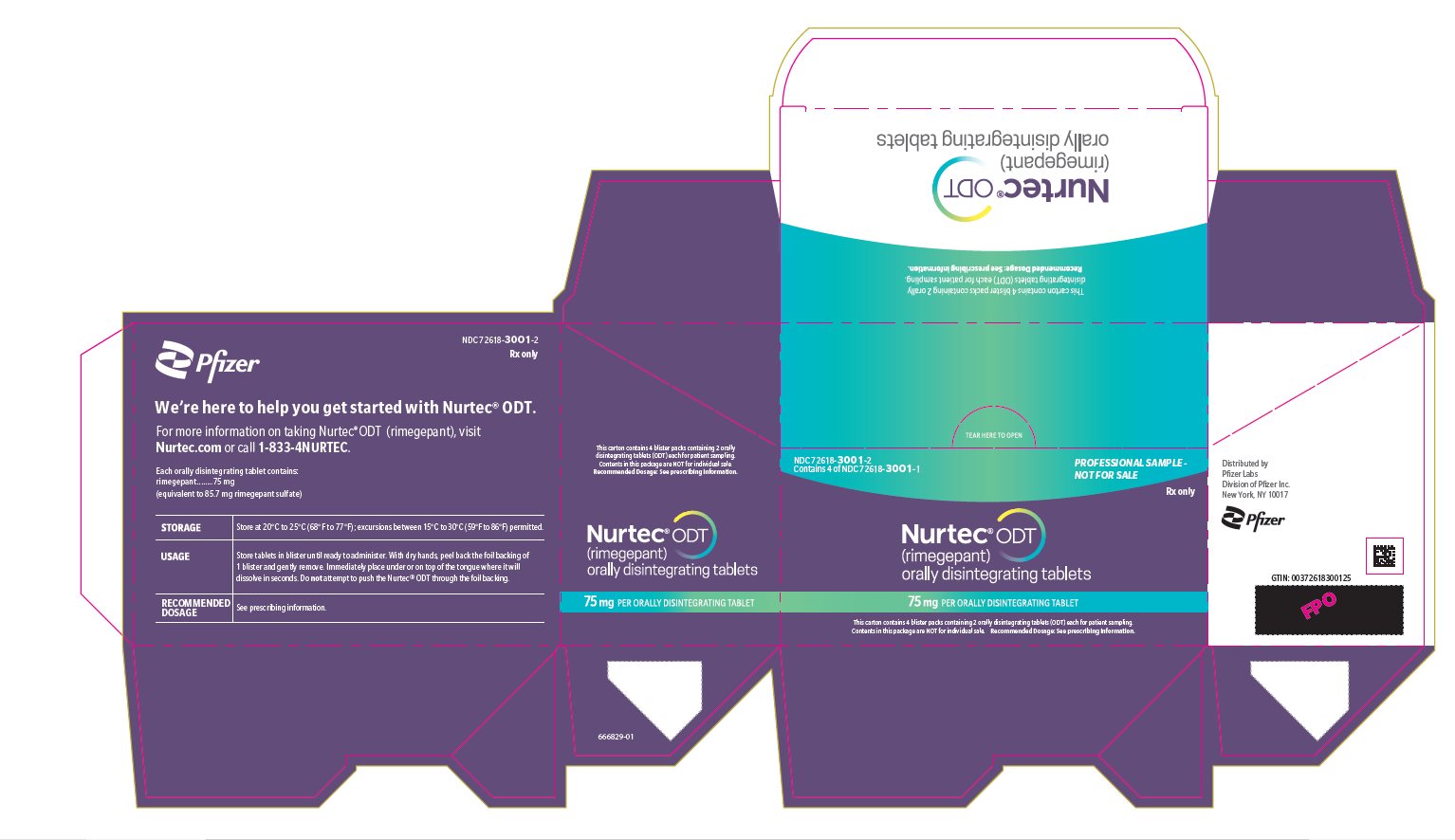
PRINCIPAL DISPLAY PANEL - 75 mg Tablet Blister Pack Carton SAMPLE NDC 72618-3001-2 Contains 4 of NDC 72618-3001-1 PROFESSIONAL SAMPLE - NOT FOR SALE Rx only NURTEC ® ODT (rimegepant) orally disintegrating tablets 75 mg PER ORALLY DISINTEGRATING TABLET This carton contains 4 blister packs containing 2 orally disintegrating tablets (ODT) each for patient sampling. Contents in this package are NOT for individual sale. Recommended Dosage: See prescribing information.
PRINCIPAL DISPLAY PANEL - 75 mg Tablet Blister Pack Carton SAMPLE
PRINCIPAL DISPLAY PANEL - 75 mg Tablet Blister Pack Dosepak SAMPLE NDC 72618-3001-1 PROFESSIONAL SAMPLE - NOT FOR SALE NURTEC ® ODT (rimegepant) orally disintegrating tablets 75 mg PER ORALLY DISINTEGRATING TABLET (ODT) This package contains 2 ODTs. Rx only PRINCIPAL DISPLAY PANEL - 75 mg Tablet Blister Pack Dosepak SAMPLE
PRINCIPAL DISPLAY PANEL - 75 mg NURTEC ODT Blister Pack SAMPLE PEEL HERE NURTEC® ODT (rimegepant) orally disintegrating tablets 75 mg PROFESSIONAL SAMPLE - NOT FOR SALE Pfizer Labs Rx only LOT EXP. YYYY/MM 66001 PRINCIPAL DISPLAY PANEL - 75 mg NURTEC ODT Blister Pack SAMPLE
PRINCIPAL DISPLAY PANEL - 75 mg 2 Tablet Blister Pack Carton SAMPLE NDC 72618-3001-4 This package contains 2 ODTs. PROFESSIONAL SAMPLE - NOT FOR SALE NURTEC ® ODT (rimegepant) orally disintegrating tablets 75 mg PER ORALLY DISINTEGRATING TABLET (ODT) Eligible commercially insured patients can get their medication for as little as $0* each month. Scan QR code for details.
Terms and conditions apply. See back of box. Rx only PRINCIPAL DISPLAY PANEL - 75 mg 2 Tablet Blister Pack Carton SAMPLE
Medicare Part D spend CMS · PART D · 2026 (Q1)
About this NDC listing & data coverage
What data is (and isn’t) available for this NDC — tap to expand
| NDC identity (package / product / labeler codes) | ✓ Available |
| Labeler | ✓ Available |
| Product & package description | ✓ Available |
| Marketing category & status | ✓ Available |
| Active ingredient / dosage form / route | ✓ Available |
| FDA label (SPL via DailyMed) | ✓ Available |
| Package photos | ✓ Available |
| Inactive ingredients (structured) | ✓ Available |
| NADAC pharmacy acquisition price (CMS) | — Not published for this NDC CMS publishes NADAC only for NDCs reported in its retail-pharmacy survey. |
| Orange Book / therapeutic-equivalence data | ✓ Available |
| HCPCS J-code billing crosswalk | — Not published for this NDC Most self-administered / retail products have no J-code — that is normal. |
| Medicaid utilization (CMS SDUD) | — Not published for this NDC CMS reports utilization only for NDCs with Medicaid claims above its privacy threshold. |