
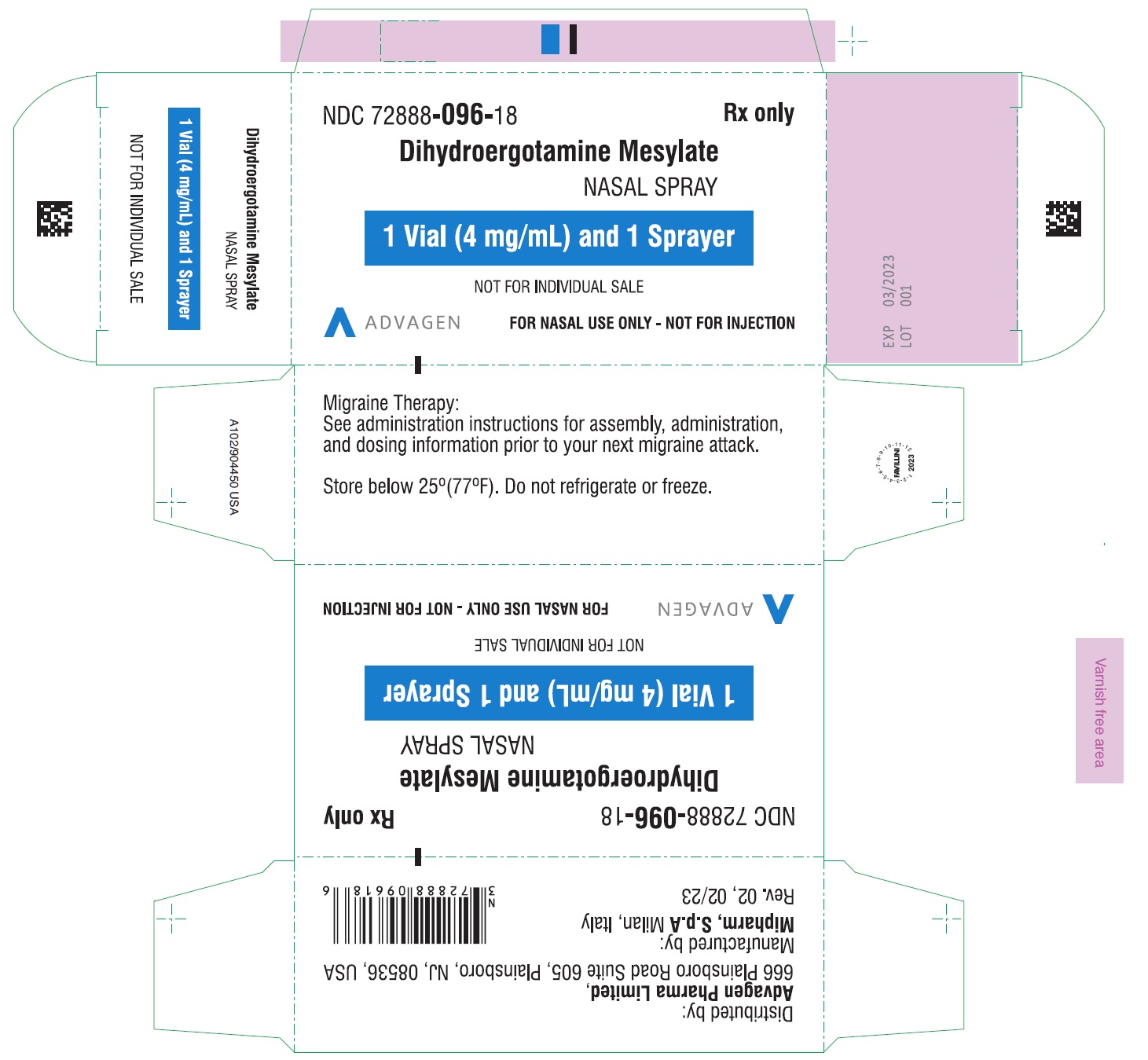
Dihydroergotamine mesylate 4 mg/mL Spray, 1 vial — NDC 72888-096-34 (Billing 72888-0096-34)
This is a package of 1 vial of Dihydroergotamine mesylate 4 mg/mL Spray from Advagen Pharma Ltd, marketed since Jun 2023 and currently FDA-listed; retail pharmacies pay about $49.63 per mL (NADAC).
NDC database record
One package, one record: these facts belong to NDC 72888-096-34 alone.
- Record
- FDA NDC Directory package listing · Human prescription drug
- Code segments
- 72888 labeler · 096 product · 34 package
- Package marketed since
- Jun 23, 2023
- Sample package
- No — commercial package
- Listing certified through
- Dec 31, 2027
- Barcode (UPC)
- 0372888096346, 0372888096186
- Medicaid fills, this package
- 54 prescriptions in the last four reported quarters
- FDA record last changed
- Jul 24, 2026
Other active recalls for Dihydroergotamine Mesylate (different manufacturers) — 1 · tap to view
Identity & classification
Regulatory identifiers FDA, NLM and CMS codes for this package
Drug-database identifiers Medi-Span GPI and First Databank GCN / HICL / AHFS classification
- GSN (GCN sequence number): 059189
- GCN: 24732
- GPI-14 (Medi-Span): 67000030102060
- HICL (First Databank): 000155
- AHFS class code: 12:16.04.04
- RxCUI (RxNorm): 861668
Where does this data come from?
- FDA openFDA NDC Directory · synced Oct 8, 2026
- FDA label on DailyMed · label index refreshed Oct 6, 2026
- RxNorm (NLM RxNav) · catalog refreshed Oct 1, 2026
- Medi-Span GPI (licensed)
- First Databank (licensed) · refreshed Oct 8, 2026
RxNorm drug class
This medicine belongs to the Ergotamine Derivative class.
Where does this data come from?
- RxClass (NLM) · catalog refreshed Oct 1, 2026
Clinical
Dihydroergotamine nasal spray is used to treat migraine headaches (severe, throbbing headaches that sometimes are accompanied by nausea and sensitivity to sound and light). Dihydroergotamine is in a class of medications called ergot alkaloids. It works by tightening blood vessels in the brain and by stopping the release of natural substances in the brain that cause swelling.
Read the full MedlinePlus article ↗- It treats migraine attacks after they start. It is not for preventing migraines. It should not be used for hemiplegic or basilar migraine.
- It goes in the nose only. With Atzumi, you squeeze the pump three fast, full squeezes into one nostril. Follow your prescriber's directions on repeating a dose and the daily limits...
- Nose and throat irritation, a stuffy nose, an odd taste, nausea, and dizziness are the most common. These are usually mild and short-lived.
- Get help for chest pain, stroke symptoms, or cold, numb, pale, or bluish fingers or toes. These can be signs of blocked blood flow. Stop the medicine and seek care.
Patient education
Supplement & herbal interactions
Some supplements/herbs that may interact with Dihydroergotamine Mesylate — tap one for details:
Where does this data come from?
- MedlinePlus (NLM) · refreshed Oct 1, 2026
- FDA label on DailyMed · label index refreshed Oct 6, 2026
Ask a licensed pharmacist directly — free, answered by our team.
Pricing
A drug doesn't have one price. Each row is a different public payment system, and none is what you'd pay at the counter — that depends on your insurance. The ⓘ on each row explains what it measures.
| Price system | Per mL | Per package |
|---|---|---|
| Retail pharmacies payNADAC · weekly | $49.630 | $49.63 / 1 ml |
| Medicaid paysCMS SDUD · 12 mo | $41.85 | $41.85 / 1 ml |
| Medicare drug plans payPart D · Q2 2026 | $79.27 | $79.27 / 1 ml |
Where does this data come from?
- CMS NADAC weekly file · file of Oct 7, 2026
- CMS ASP pricing files · refreshed Sep 20, 2026
- CMS Medicaid State Drug Utilization Data · through Q1 2026
- CMS Part D plan pricing files · refreshed Sep 24, 2026
- VA National Acquisition Center price file
Packaging — all sizes for this product
| Package NDC | Description | Per unit | Per pack | Marketing start | Marketing end | Status |
|---|---|---|---|---|---|---|
| 72888-0096-19 72888-096-19 Main listing | 8 KIT in 1 KIT / 1 VIAL, GLASS in 1 KIT / 1 mL in 1 VIAL, GLASS | $29.44 / mL | $235.48 | 2023-06-23 | — | Active |
| 72888-0096-34 You're viewing this | 1 VIAL, GLASS in 1 KIT / 1 mL in 1 VIAL, GLASS | $49.63 / mL | $49.63 | 2023-06-23 | — | Active |
Per mL, this pack runs about 69% above the cheapest pack (NDC 72888-0096-19, $29.44 vs $49.63 NADAC).
This pack accounts for about 4.6% of this product's recent Medicaid fills; most go to a different pack size. See all packs ↓
Pack size FAQ
What quantity is in this package?
How does this package differ from NDC 72888-0096-19?
What NDC number is used to bill for this package of Dihydroergotamine mesylate 4 mg/mL Spray?
Prices are the latest CMS NADAC pharmacy acquisition cost per NDC; per-pack figures are per-unit × pack quantity, shown only when the pack is denominated in the same measure NADAC prices.
Therapeutic equivalents
| Product | Labeler | Pack | NADAC/unit | TE | Status | Price vs. this |
|---|---|---|---|---|---|---|
| Dihydroergotamine Mesylate Nasal 4 mg/mL 69097-0503-27 | Cipla | 8 vials | $29.436 | AB | Availability likely | save 41% |
| Dihydroergotamine Mesylate 4 mg/mL 70069-0880-08 | Somerset | 1 kit | $29.436 | AB | Availability likely | save 41% |
| Dihydroergotamine mesylate 4 mg/mL 73352-0096-19 | Trifluent | 8 kits | $29.436 | AB | Availability likely | save 41% |
| Dihydroergotamine Mesylate 4 mg/mL 68682-0357-10 | Oceanside | 8 vials | $34.212 | AB | FDA listed | save 31% |
| Dihydroergotamine Mesylate 4 mg/mL 24201-0463-01 | Hikma | 1 vial | $49.630 | AB | Availability likely | — |
| Dihydroergotamine mesylate 4 mg/mLthis 72888-0096-34 | Advagen | 1 vial | $49.630 | AB | Availability likely | — |
| Trudhesa 4 mg/mL 77530-0725-00 | Impel | 1 vial | — | — | FDA listed | — |
Where does this data come from?
- FDA openFDA NDC Directory · synced Oct 8, 2026
- FDA Orange Book · refreshed Oct 3, 2026
- CMS NADAC weekly file · file of Oct 7, 2026
Availability & generic status
This product is an FDA-approved generic. Other versions of the same drug are listed under Therapeutic equivalents, least expensive first.
Where does this data come from?
- FDA Orange Book · refreshed Oct 3, 2026
What it looks like
Where does this data come from?
- FDA label on DailyMed · label index refreshed Oct 6, 2026
Inactive Ingredients / Excipients
Inactive ingredients, also called excipients, are components of the drug product other than the active ingredient. They may include fillers, dyes, coatings, preservatives, flavors, or other formulation ingredients.
🧪 Avoiding an ingredient? See Dihydroergotamine Nasal Spray inactive ingredients by manufacturer: every current product's list side by side, so you can ask your pharmacy for the version that does not list it.
💡 Tap an ingredient (hover on desktop) to see what it is and why it’s used.
-
UNII 5SL0G7R0OK
A simple sugar made from corn or other plants, used in medicines as a filler and sweetener. It helps create the right texture and taste in tablets, powders, and liquid formulations.
-
UNII 3G6A5W338E
Caffeine is a natural stimulant compound commonly extracted from coffee beans and tea leaves. In medicines, it serves as an active booster in pain relievers and cold products to enhance alertness and improve the effectiveness of other ingredients.
-
UNII 142M471B3J
Carbon dioxide is a colorless gas used in medicines as a propellant in pressurized inhalers and aerosol sprays to help deliver the active medication to where it's needed.
-
UNII 059QF0KO0R
Water is a liquid solvent that dissolves and mixes ingredients together in liquid medicines, syrups, and injections. It helps distribute the active drug evenly throughout the product.
4 inactive ingredients listed in the exact product block matched to this NDC.
Where does this data come from?
ingredient classCode="IACT" elements from the exact product block matched by this NDC. Label-section narrative from DailyMed / the openFDA label index is shown separately when available.- FDA label on DailyMed · label index refreshed Oct 6, 2026
- FDA openFDA NDC Directory · synced Oct 8, 2026
Inactive ingredient FAQ
Are inactive ingredients the same for every manufacturer?
Why might an inactive ingredient be missing?
Can inactive ingredients matter?
Manufacturer & labeler
More NDCs from Advagen Pharma Ltd labeler code 72888
- Oxcarbazepine 300 mg Tablet, Film Coated NDC 72888-088-01
- Oxcarbazepine 600 mg Tablet, Film Coated NDC 72888-089-01
- Bisoprolol Fumarate 5 mg Tablet, Film Coated NDC 72888-092-00
- Bisoprolol Fumarate 10 mg Tablet, Film Coated NDC 72888-093-00
- Triamterene and Hydrochlorothiazide 37.5 mg; 25 mg Tablet NDC 72888-094-00
- Triamterene and Hydrochlorothiazide 75 mg; 50 mg Tablet NDC 72888-095-00
- Potassium Chloride 750 mg Tablet, Extended Release NDC 72888-097-00
- Potassium Chloride 1125 mg Tablet, Extended Release NDC 72888-098-00
- Potassium Chloride 1500 mg Tablet, Extended Release NDC 72888-099-00
- Aripiprazole 1 mg/mL Solution NDC 72888-100-20
- Metoprolol Tartrate 37.5 mg Tablet, Film Coated NDC 72888-101-01
- CIPROFLOXACIN HYDROCHLORIDE 3 mg/mL Solution NDC 72888-102-21
Where does this data come from?
- FDA openFDA NDC Directory · synced Oct 8, 2026
- Drugs@FDA
Full prescribing information FDA SPL
🚨 Boxed Warning ▾
WARNING: PERIPHERAL ISCHEMIA FOLLOWING COADMINISTRATION WITH POTENT CYP3A4 INHIBITORS Serious and/or life-threatening peripheral ischemia has been associated with the coadministration of DIHYDROERGOTAMINE with potent CYP 3A4 inhibitors including protease inhibitors and macrolide antibiotics. Because CYP 3A4 inhibition elevates the serum levels of DIHYDROERGOTAMINE, the risk for vasospasm leading to cerebral ischemia and/or ischemia of the extremities is increased. Hence, concomitant use of these medications is contraindicated.
(See also CONTRAINDICATIONS and WARNINGS section)
🎯 Indications and Usage ▾
INDICATIONS AND USAGE Dihydroergotamine mesylate nasal spray is indicated for the acute treatment of migraine headaches with or without aura. Dihydroergotamine mesylate nasal spray is not intended for the prophylactic therapy of migraine or for the management of hemiplegic or basilar migraine.
⏱️ Dosage and Administration ▾
DOSAGE AND ADMINISTRATION The solution used in dihydroergotamine mesylate nasal spray (4 mg/mL) is intended for intranasal use and must not be injected. In clinical trials, dihydroergotamine mesylate nasal spray has been effective for the acute treatment of migraine headaches with or without aura. One spray (0.5 mg) of dihydroergotamine mesylate nasal spray should be administered in each nostril.
Fifteen minutes later, an additional one spray (0.5 mg) of dihydroergotamine mesylate nasal spray should be administered in each nostril, for a total dosage of four sprays (2 mg) of dihydroergotamine mesylate nasal spray. Studies have shown no additional benefit from acute doses greater than 2 mg for a single migraine administration. The safety of doses greater than 3 mg in a 24 hour period and 4 mg in a 7 day period has not been established.
Dihydroergotamine mesylate nasal spray, should not be used for chronic daily administration. Prior to administration, the pump must be primed (i.e., squeeze 4 times) before use (see administration instructions). Once the nasal spray applicator has been prepared, it should be discarded (with any remaining drug in opened vial) after 8 hours.
Prior to administration, the pump must be primed (i.e., squeeze 4 times) before use. (See administration instructions) Once the nasal spray applicator has been prepared, it should be discarded (with any remaining drug in opened vial after 8 hours).
⛔ Contraindications ▾
CONTRAINDICATIONS There have been a few reports of serious adverse events associated with the coadministration of dihydroergotamine and potent CYP 3A4 inhibitors, such as protease inhibitors and macrolide antibiotics, resulting in vasospasm that led to cerebral ischemia and/or ischemia of the extremities. The use of potent CYP 3A4 inhibitors (ritonavir, nelfinavir, indinavir, erythromycin, clarithromycin, troleandomycin, ketoconazole, itraconazole) with dihydroergotamine is, therefore contraindicated (See WARNINGS: CYP 3A4 Inhibitors ) .
Dihydroergotamine mesylate nasal spray should not be given to patients with ischemic heart disease (angina pectoris, history of myocardial infarction, or documented silent ischemia) or to patients who have clinical symptoms or findings consistent with coronary artery vasospasm including Prinzmetal's variant angina. (See WARNINGS ) Because dihydroergotamine mesylate nasal spray may increase blood pressure, it should not be given to patients with uncontrolled hypertension. Dihydroergotamine mesylate nasal spray, 5-HT1 agonists (e.g., sumatriptan), ergotamine-containing or ergot-type medications or methysergide should not be used within 24 hours of each other.
Dihydroergotamine mesylate nasal spray should not be administered to patients with hemiplegic or basilar migraine. In addition to those conditions mentioned above, dihydroergotamine mesylate nasal spray is also contraindicated in patients with known peripheral arterial disease, sepsis, following vascular surgery, and severely impaired hepatic or renal function. Dihydroergotamine mesylate nasal spray is contraindicated in patients who have previously shown hypersensitivity to ergot alkaloids.
Dihydroergotamine mesylate should not be used with peripheral and central vasoconstrictors because the combination may result in additive or synergistic elevation of blood pressure.
⚠️ Warnings ▾
WARNINGS Dihydroergotamine mesylate nasal spray should only be used where a clear diagnosis of migraine headache has been established. CYP 3A4 Inhibitors (e.g. Macrolide Antibiotics and Protease Inhibitors) There have been rare reports of serious adverse events in connection with the coadministration of dihydroergotamine and potent CYP 3A4 inhibitors, such as protease inhibitors and macrolide antibiotics, resulting in vasospasm that led to cerebral ischemia and/or and ischemia of the extremities.
The use of potent CYP 3A4 inhibitors with dihydroergotamine should therefore be avoided (See CONTRAINDICATIONS ) . Examples of some of the more potent CYP 3A4 inhibitors include: antifungals ketoconazole and itraconazole, the protease inhibitors ritonavir, nelfinavir, and indinavir, and macrolide antibiotics erythromycin, clarithromycin, and troleandomycin. Other less potent CYP 3A4 inhibitors should be administered with caution.
Less potent inhibitors include saquinavir, nefazodone, fluconazole, grapefruit juice, fluoxetine, fluvoxamine, zileuton, and clotrimazole. These lists are not exhaustive, and the prescriber should consider the effects on CYP3A4 of other agents being considered for concomitant use with dihydroergotamine. Fibrotic Complications There have been reports of pleural and retroperitoneal fibrosis in patients following prolonged daily use of injectable dihydroergotamine mesylate.
Rarely, prolonged daily use of other ergot alkaloid drugs has been associated with cardiac valvular fibrosis. Rare cases have also been reported in association with the use of injectable dihydroergotamine mesylate; however, in those cases, patients also received drugs known to be associated with cardiac valvular fibrosis. Administration of dihydroergotamine mesylate nasal spray, should not exceed the dosing guidelines and should not be used for chronic daily administration (see DOSAGE AND ADMINISTRATION ) .
Risk of Myocardial Ischemia and/or Infarction and Other Adverse Cardiac Events: Dihydroergotamine mesylate nasal spray should not be used by patients with documented ischemic or vasospastic coronary artery disease. (See CONTRAINDICATIONS ) It is strongly recommended that dihydroergotamine mesylate nasal spray not be given to patients in whom unrecognized coronary artery disease (CAD) is predicted by the presence of risk factors (e.g., hypertension, hypercholesterolemia, smoker, obesity, diabetes, strong family history of CAD, females who are surgically or physiologically postmenopausal, or males who are over 40 years of age) unless a cardiovascular evaluation provides satisfactory clinical evidence that the patient is reasonably free of coronary artery and ischemic myocardial disease or other significant underlying cardiovascular disease.
The sensitivity of cardiac diagnostic procedures to detect cardiovascular disease or predisposition to coronary artery vasospasm is modest, at best. If, during the cardiovascular evaluation, the patient's medical history or electrocardiographic investigations reveal findings indicative of or consistent with coronary artery vasospasm or myocardial ischemia, dihydroergotamine mesylate nasal spray should not be administered. (See CONTRAINDICATIONS ) For patients with risk factors predictive of CAD who are determined to have a satisfactory cardiovascular evaluation, it is strongly recommended that administration of the first dose of dihydroergotamine mesylate nasal spray take place in the setting of a physician's office or similar medically staffed and equipped facility unless the patient has previously received dihydroergotamine mesylate.
Because cardiac ischemia can occur in the absence of clinical symptoms, consideration should be given to obtaining on the first occasion of use an electrocardiogram (ECG) during the interval immediately following dihydroergotamine mesylate nasal spray, in these patients with risk factors. It is recommended that patients who are intermittent long-term users of dihydroergotam… [Excerpted — this section continues on DailyMed.]
🤒 Adverse Reactions ▾
ADVERSE REACTIONS During clinical studies and the foreign postmarketing experience with dihydroergotamine mesylate nasal spray there have been no fatalities due to cardiac events. Serious cardiac events, including some that have been fatal, have occurred following use of the parenteral form of dihydroergotamine mesylate (D.H.E. 45 Injection), but are extremely rare.
Events reported have included coronary artery vasospasm, transient myocardial ischemia, myocardial infarction, ventricular tachycardia, and ventricular fibrillation. (See CONTRAINDICATIONS , WARNINGS , and PRECAUTIONS ) . Fibrotic complications have been reported in association with long term use of injectable dihydroergotamine mesylate (see WARNINGS: Fibrotic Complications ) .
Incidence in Controlled Clinical Trials Of the 1,796 patients and subjects treated with dihydroergotamine mesylate nasal spray doses 2 mg or less in U.S. and foreign clinical studies, 26 (1.4%) discontinued because of adverse events. The adverse events associated with discontinuation were, in decreasing order of frequency: rhinitis 13, dizziness 2, facial edema 2, and one each due to cold sweats, accidental trauma, depression, elective surgery, somnolence, allergy, vomiting, hypotension, and paraesthesia. The most commonly reported adverse events associated with the use of dihydroergotamine mesylate nasal spray during placebo-controlled, double-blind studies for the treatment of migraine headache and not reported at an equal incidence by placebo-treated patients were rhinitis, altered sense of taste, application site reactions, dizziness, nausea, and vomiting.
The events cited reflect experience gained under closely monitored conditions of clinical trials in a highly selected patient population. In actual clinical practice or in other clinical trials, these frequency estimates may not apply, as the conditions of use, reporting behavior, and the kinds of patients treated may differ. Dihydroergotamine mesylate nasal spray was generally well tolerated.
In most instances these events were transient and self-limited and did not result in patient discontinuation from a study. The following table summarizes the incidence rates of adverse events reported by at least 1% of patients who received dihydroergotamine mesylate nasal spray for the treatment of migraine headaches during placebo-controlled, double-blind clinical studies and were more frequent than in those patients receiving placebo. Table 3: Adverse Reactions Reported by at least 1% of the Dihydroergotamine Mesylate Nasal Spray Treated Patients and Occurred More Frequently than in the Placebo-Group in the Migraine Placebo-Controlled Trials Dihydroergotamine mesylate N=597 Placebo N=631 Respiratory System Rhinitis 26% 7% Pharyngitis 3% 1% Sinusitis 1% 1% Gastrointestinal System Nausea 10% 4% Vomiting 4% 1% Diarrhea 2% <1% Special Senses, Other Altered Sense of Taste 8% 1% Application Site Application Site Reaction 6% 2% Central and Peripheral Nervous System Dizziness 4% 2% Somnolence 3% 2% Paraesthesia 2% 2% Body as a Whole, General Hot Flashes 1% <1% Fatigue 1% 1% Asthenia 1% 0% Autonomic Nervous System Mouth Dry 1% 1% Musculoskeletal System Stiffness 1% <1% Other Adverse Events During Clinical Trials In the paragraphs that follow, the frequencies of less commonly reported adverse clinical events are presented.
Because the reports include events observed in open and uncontrolled studies, the role of dihydroergotamine mesylate nasal spray in their causation cannot be reliably determined. Furthermore, variability associated with adverse event reporting, the terminology used to describe adverse events, etc., limit the value of the quantitative frequency estimates provided. Event frequencies are calculated as the number of patients who used dihydroergotamine mesylate nasal spray in placebo-controlled trials and reported an event divided by the total number of patients (n=1796) exposed to dihydroergotamine mesylate nasal spray.
All reported event… [Excerpted — this section continues on DailyMed.]
🔄 Drug Interactions ▾
Drug Interactions Vasoconstrictors Dihydroergotamine mesylate Nasal Spray should not be used with peripheral vasoconstrictors because the combination may cause synergistic elevation of blood pressure. Sumatriptan Sumatriptan has been reported to cause coronary artery vasospasm, and its effect could be additive with dihydroergotamine mesylate nasal spray. Sumatriptan and dihydroergotamine mesylate nasal spray should not be taken within 24 hours of each other.
(See CONTRAINDICATIONS ) Beta Blockers Although the results of a clinical study did not indicate a safety problem associated with the administration of dihydroergotamine mesylate nasal spray to subjects already receiving propranolol, there have been reports that propranolol may potentiate the vasoconstrictive action of ergotamine by blocking the vasodilating property of epinephrine. Nicotine Nicotine may provoke vasoconstriction in some patients, predisposing to a greater ischemic response to ergot therapy. CYP 3A4 Inhibitors (e.g.
Macrolide Antibiotics and Protease Inhibitors) See CONTRAINDICATIONS and WARNINGS . SSRI's Weakness, hyperreflexia, and incoordination have been reported rarely when 5HT 1 agonists have been coadministered with SSRI's (e.g., fluoxetine, fluvoxamine, paroxetine, sertraline). There have been no reported cases from spontaneous reports of drug interaction between SSRI's and dihydroergotamine mesylate nasal spray or D.H.E.
45. Oral Contraceptives The effect of oral contraceptives on the pharmacokinetics of dihydroergotamine mesylate nasal spray has not been studied. Carcinogenesis, Mutagenesis, Impairment of Fertility Carcinogenesis In a 2-year mouse carcinogenicity study, subcutaneous administration of dihydroergotamine mesylate (0, 0.5, 1.5 or 5 mg/kg/day) resulted in an increased incidence of fibrosarcoma at the injection sites in males and females at the high dose.
In a 2-year rat carcinogenicity study, intranasal administration of dihydroergotamine mesylate (0, 0.4, 0.8 or 1.6 mg/day for 13 weeks, followed by 0, 0.08, 0.24 or 0.8 mg/day for the remainder of the study) did not result in an increase in tumors. Mutagenesis Dihydroergotamine mesylate was clastogenic in two in vitro chromosomal aberration assays, the V79 Chinese hamster cell assay with metabolic activation and the cultured human peripheral blood lymphocyte assay. There was no evidence of mutagenic potential when dihydroergotamine mesylate was tested in the presence or absence of metabolic activation in two gene mutation assays (the Ames test and the in vitro mammalian Chinese hamster V79/HGPRT assay) and in an assay for DNA damage (the rat hepatocyte unscheduled DNA synthesis test).
Dihydroergotamine was not clastogenic in the in vivo mouse and hamster micronucleus tests. Impairment of Fertility Intranasal administration of dihydroergotamine to rats at doses up to 1.6 mg/day was not associated with adverse effects on fertility. Pregnancy Risk Summary Available data from published literature indicate an increased risk of preterm delivery with dihydroergotamine mesylate use during pregnancy.
Avoid use of dihydroergotamine mesylate nasal spray during pregnancy (see WARNINGS ). Data collected over decades have shown no increased risk of major birth defects or miscarriage with the use of dihydroergotamine mesylate during pregnancy. In animal reproduction studies, adverse effects on development were observed following intranasal administration of dihydroergotamine mesylate during pregnancy (decreased fetal body weight and/or skeletal ossification) in rats and rabbits or during pregnancy and lactation in rats (decreased body weight and impaired reproductive function in the offspring) at doses that were not associated with maternal toxicity (see Data).
The estimated rate of major birth defects (2.2% to 2.9%) and miscarriage (17%) among deliveries to women with migraine are similar to rates reported in women without migraine. All pregnancies have a background risk of birth defect, loss, or ot… [Excerpted — this section continues on DailyMed.]
🆘 Overdosage ▾
OVERDOSAGE To date, there have been no reports of acute overdosage with this drug. Due to the risk of vascular spasm, exceeding the recommended dosages of dihydroergotamine mesylate nasal spray is to be avoided. Excessive doses of dihydroergotamine may result in peripheral signs and symptoms of ergotism.
Treatment includes discontinuance of the drug, local application of warmth to the affected area, the administration of vasodilators, and nursing care to prevent tissue damage. In general, the symptoms of an acute dihydroergotamine mesylate nasal spray overdose are similar to those of an ergotamine overdose, although there is less pronounced nausea and vomiting with dihydroergotamine mesylate nasal spray. The symptoms of an ergotamine overdose include the following: numbness, tingling, pain, and cyanosis of the extremities associated with diminished or absent peripheral pulses; respiratory depression; an increase and/or decrease in blood pressure, usually in that order; confusion, delirium, convulsions, and coma; and/or some degree of nausea, vomiting, and abdominal pain.
In laboratory animals, significant lethality occurs when dihydroergotamine is given at I.V. doses of 44 mg/kg in mice, 130 mg/kg in rats, and 37 mg/kg in rabbits. Up-to-date information about the treatment of overdosage can often be obtained from a certified Regional Poison Control Center. Telephone numbers of certified Poison Control Centers are listed in the Physicians' Desk Reference (PDR).*
🧬 Clinical Pharmacology ▾
CLINICAL PHARMACOLOGY Mechanism of Action Dihydroergotamine binds with high affinity to 5-HT 1Dα and 5-HT 1Dβ receptors. It also binds with high affinity to serotonin 5-HT 1A, 5-HT 2A, and 5-HT 2C receptors, noradrenaline α 2A, α 2B and α 1 receptors, and dopamine D 2L and D 3 receptors. The therapeutic activity of dihydroergotamine in migraine is generally attributed to the agonist effect at 5-HT 1D receptors.
Two current theories have been proposed to explain the efficacy of 5-HT 1D receptor agonists in migraine. One theory suggests that activation of 5-HT 1D receptors located on intracranial blood vessels, including those on arterio-venous anastomoses, leads to vasoconstriction, which correlates with the relief of migraine headache. The alternative hypothesis suggests that activation of 5-HT 1D receptors on sensory nerve endings of the trigeminal system results in the inhibition of pro-inflammatory neuropeptide release.
In addition, dihydroergotamine possesses oxytocic properties. Pharmacokinetics Absorption Dihydroergotamine mesylate is poorly bioavailable following oral administration. Following intranasal administration, however, the mean bioavailability of dihydroergotamine mesylate is 32% relative to the injectable administration.
Absorption is variable, probably reflecting both intersubject differences of absorption and the technique used for self-administration. Distribution Dihydroergotamine mesylate is 93% plasma protein bound. The apparent steady-state volume of distribution is approximately 800 liters.
Metabolism Four dihydroergotamine mesylate metabolites have been identified in human plasma following oral administration. The major metabolite, 8'-β-hydroxydihydroergotamine, exhibits affinity equivalent to its parent for adrenergic and 5-HT receptors and demonstrates equivalent potency in several venoconstrictor activity models, in vivo and in vitro. The other metabolites, i.e., dihydrolysergic acid, dihydrolysergic amide and a metabolite formed by oxidative opening of the proline ring are of minor importance.
Following nasal administration, total metabolites represent only 20%-30% of plasma AUC. The systemic clearance of dihydroergotamine mesylate following I.V. and I.M. administration is
1.5L/min. Quantitative pharmacokinetic characterization of the four metabolites has not been performed. Excretion The major excretory route of dihydroergotamine is via the bile in the feces. After intranasal administration the urinary recovery of parent drug amounts to about 2% of the administered dose compared to 6% after I.M. administration. The total body clearance is
1.5L/min which reflects mainly hepatic clearance. The renal clearance (0.1 L/min) is unaffected by the route of dihydroergotamine administration. The decline of plasma dihydroergotamine is biphasic with a terminal half-life of about 10 hours.
Subpopulations No studies have been conducted on the effect of renal or hepatic impairment, gender, race, or ethnicity on dihydroergotamine pharmacokinetics. Dihydroergotamine mesylate nasal spray is contraindicated in patients with severely impaired hepatic or renal function. (See CONTRAINDICATIONS ) Interactions The pharmacokinetics of dihydroergotamine did not appear to be significantly affected by the concomitant use of a local vasoconstrictor (e.g., fenoxazoline).
Multiple oral doses of the β-adrenoceptor antagonist propranolol, used for migraine prophylaxis, had no significant influence on the C max , T max or AUC of dihydroergotamine doses up to 4 mg. Pharmacokinetic interactions have been reported in patients treated orally with other ergot alkaloids (e.g., increased levels of ergotamine) and macrolide antibiotics, principally troleandomycin, presumably due to inhibition of cytochrome P450 3A metabolism of the alkaloids by troleandomycin. Dihydroergotamine has also been shown to be an inhibitor of cytochrome P450 3A catalyzed reactions and rare reports of ergotism have been obtained from patients treated with dih… [Excerpted — this section continues on DailyMed.]
📦 How Supplied / Storage and Handling ▾
HOW SUPPLIED Dihydroergotamine mesylate nasal spray is available (as a clear, colorless to light yellow aqueous solution) in 3.5 mL amber glass vials containing 4 mg of dihydroergotamine mesylate. Dihydroergotamine mesylate Nasal Spray is provided as a package of 8 units, administration instruction sheet, and one package insert. Each unit consists of one vial and one sprayer.
(NDC 72888-096-19) Dihydroergotamine mesylate Nasal Spray is provided as a package of 1 unit, administration instruction sheet, and one package insert. Each unit consists of one vial and one sprayer. (NDC 72888-096-34) Store below 25°C (77°F).
Do not refrigerate or freeze. Manufactured by: Mipharm, S.p.A. Milano, Italy Distributed by: Advagen Pharma Ltd., East Windsor, NJ 08520, USA Rev.
12/2023
📋 Description ▾
DESCRIPTION Dihydroergotamine mesylate is ergotamine hydrogenated in the 9,10 position as the mesylate salt. Dihydroergotamine mesylate is known chemically as ergotaman-3', 6', 18-trione, 9,10-dihydro-12'-hydroxy-2'-methyl-5'- (phenylmethyl)-, (5'α)-, monomethane-sulfonate. Its molecular weight is 679.78 and its empirical formula is C 33 H 37 N 5 O 5 •CH 4 O 3 S.
The chemical structure is: Dihydroergotamine mesylate nasal spray is provided for intranasal administration as a clear, colorless to light yellow aqueous solution in an amber glass vial containing: dihydroergotamine mesylate.......................................................................... ..4 mg caffeine, anhydrous......................................................................................... 10 mg dextrose, anhydrous .......................................................................................
50 mg carbon dioxide......................................................................................................qs purified water............................................................................................... qs 1 mL Each milliliter contains Dihydroergotamine mesylate……4 mg (equivalent to 3.43 mg dihydroergotamine) image description
💬 Information for Patients ▾
Patient Information Information for the Patient Dihydroergotamine mesylate nasal spray. The solution used in dihydroergotamine mesylate Nasal Spray (4 mg/mL) is intended for intranasal use and must not be injected. Please read this information carefully before using your dihydroergotamine mesylate nasal spray for the first time.
Keep this information handy for future reference. This leaflet does not contain all of the information on dihydroergotamine mesylate nasal spray. Your pharmacist and/or health care provider can provide more detailed information.
Dihydroergotamine mesylate nasal spray has been evaluated in a limited number of patients long term (e.g., 1 year or longer). Purpose of your Medication Dihydroergotamine mesylate nasal spray is intended to treat an active migraine headache. Do not try to use it to prevent a headache if you have no symptoms.
Do not use it to treat common tension headache or a headache that is not at all typical of your usual migraine headache. Administration of dihydroergotamine mesylate nasal spray, should not exceed the dosing guidelines and should not be used for chronic daily administration. There have been reports of fibrosis (stiffening) in the lung or kidney areas in patients following prolonged daily use of injectable dihydroergotamine mesylate.
Rarely, prolonged daily use of other ergot alkaloid drugs (the class of drugs to which dihydroergotamine mesylate nasal spray belongs) has been associated with heart valvular fibrosis. Rare cases have also been reported in association with the use of injectable dihydroergotamine mesylate; however, in those cases, patients also received drugs known to be associated with heart valvular fibrosis. Do not use dihydroergotamine mesylate nasal spray if you: have any disease affecting your heart, arteries, or circulation. are taking certain anti-HIV medications (protease inhibitors). are taking a macrolide antibiotic such as troleandomycin, clarithromycin or erythromycin.
Important questions to consider before using dihydroergotamine mesylate nasal spray Please answer the following questions before you use your dihydroergotamine mesylate nasal spray. If you answer YES to any of these questions or are unsure of the answer, you should talk to your doctor before using dihydroergotamine mesylate nasal spray. Do you have high blood pressure?
Do you have chest pain, shortness of breath, heart disease, or have you had any surgery on your heart arteries? Do you have risk factors for heart disease (such as high blood pressure, high cholesterol, obesity, diabetes, smoking, strong family history of heart disease, or are you postmenopausal or a male over 40)? Do you have any problems with blood circulation in your arms or legs, fingers, or toes?
Are you pregnant? Do you think you might be pregnant? Are you trying to become pregnant?
Are you sexually active and not using birth control? Dihydroergotamine mesylate may cause preterm labor. Dihydroergotamine mesylate should be avoided during pregnancy.
Talk to your healthcare provider right away if you are pregnant or want to become pregnant. Are you breastfeeding? Dihydroergotamine mesylate may reduce breast milk supply and pass into your breast milk.
Dihydroergotamine mesylate may be harmful to your baby. Do not breastfeed your baby while taking dihydroergotamine mesylate nasal spray and for 3 days after you use dihydroergotamine mesylate nasal spray. Talk with your healthcare provider about the best way to feed your baby if you take dihydroergotamine mesylate.
Have you ever had to stop taking this or any other medication because of an allergy or bad reaction? Are you taking any other migraine medications, erythromycin or other antibiotics, or medications for blood pressure prescribed by your doctor, or other medicines obtained from your drugstore without a doctor's prescription? Do you smoke?
Have you had, or do you have, any disease of the liver or kidney? Is this headache different from your usual migraine attacks?… [Excerpted — this section continues on DailyMed.]
⚠️ Precautions ▾
PRECAUTIONS General Dihydroergotamine mesylate nasal spray may cause coronary artery vasospasm; patients who experience signs or symptoms suggestive of angina following its administration should, therefore, be evaluated for the presence of CAD or a predisposition to variant angina before receiving additional doses. Similarly, patients who experience other symptoms or signs suggestive of decreased arterial flow, such as ischemic bowel syndrome or Raynaud's syndrome following the use of any 5-HT agonist are candidates for further evaluation.
(See WARNINGS ). Fibrotic Complications: see WARNINGS: Fibrotic Complications Information for Patients The text of a patient information sheet is printed at the end of this insert. To assure safe and effective use of dihydroergotamine mesylate nasal spray, the information and instructions provided in the patient information sheet should be discussed with patients.
Once the nasal spray applicator has been prepared, it should be discarded (with any remaining drug) after 8 hours. Patients should be advised to report to the physician immediately any of the following: numbness or tingling in the fingers and toes, muscle pain in the arms and legs, weakness in the legs, pain in the chest, temporary speeding or slowing of the heart rate, swelling, or itching. Prior to the initial use of the product by a patient, the prescriber should take steps to ensure that the patient understands how to use the product as provided.
(See Patient Information Sheet and product packaging). Administration of dihydroergotamine mesylate nasal spray, should not exceed the dosing guidelines and should not be used for chronic daily administration (see DOSAGE AND ADMINISTRATION ) .
🔒 Drug Abuse and Dependence ▾
DRUG ABUSE AND DEPENDENCE Currently available data have not demonstrated drug abuse or psychological dependence with dihydroergotamine. However, cases of drug abuse and psychological dependence in patients on other forms of ergot therapy have been reported. Thus, due to the chronicity of vascular headaches, it is imperative that patients be advised not to exceed recommended dosages.
📄 Package Label / Principal Display Panel ▾
PACKAGE LABEL-PRINCIPAL DISPLAY PANEL Dihydroergotamine Mesylate Nasal Spray - NDC 72888-096-18 - 1 Unit (1mL Vial and 1 Sprayer) in 1 Carton Label Dihydroergotamine Mesylate Nasal Spray - NDC 72888-096-18 - 1mL Vial Container Label Dihydroergotamine Mesylate Nasal Spray - NDC 72888-096-19 - 8 Unit's (Each unit contains 1 Vial and 1 Sprayer) in 1 Carton Label Dihydroergotamine Mesylate Nasal Spray - NDC 72888-096-34 - 1mL Vial and 1 Sprayer in 1 Carton Label Dihydroergotamine Mesylate Nasal Spray - NDC 72888096-18 - Single Carton Label Dihydroergotamine Mesylate Nasal Spray - NDC 72888096-18 - Container Label Dihydroergotamine Mesylate Nasal Spray - NDC 72888096-19 - Eight Cartons Label Dihydroergotamine Mesylate Nasal Spray - NDC 72888096-34 - Carton Label
Medicaid utilization & spend
Medicaid utilization by pack size
Medicare Part D spend CMS · PART D · 2026 (Q1)
About this NDC listing & data coverage
Kit / multi-component package
This NDC identifies a kit — a package containing more than one component. Structured data (pricing, ingredients, equivalents) is often reported per component rather than for the kit NDC itself, which can make this page look thinner than the components' own pages.
What data is (and isn’t) available for this NDC — tap to expand
| NDC identity (package / product / labeler codes) | ✓ Available |
| Labeler | ✓ Available |
| Product & package description | ✓ Available |
| Marketing category & status | ✓ Available |
| Active ingredient / dosage form / route | ✓ Available |
| FDA label (SPL via DailyMed) | ✓ Available |
| Package photos | ✓ Available |
| Inactive ingredients (structured) | ✓ Available |
| NADAC pharmacy acquisition price (CMS) | ✓ Available |
| Orange Book / therapeutic-equivalence data | ✓ Available |
| HCPCS J-code billing crosswalk | — Not published for this NDC Most self-administered / retail products have no J-code — that is normal. |
| Medicaid utilization (CMS SDUD) | ✓ Available |