
VAZALORE Aspirin 81 mg/81mg Capsule, 81 mg — NDC 73089-081-12 (Billing 73089-0081-12)
This is a package of 81 mg of VAZALORE Aspirin 81 mg/81mg Capsule from PLx Pharma Inc, no longer marketed, no longer in the FDA NDC Directory. It is the main listing for this product, which comes in 3 package sizes.
NDC database record
One package, one record: these facts belong to NDC 73089-081-12 alone.
- Record
- FDA NDC Directory package listing · Human OTC drug
- Code segments
- 73089 labeler · 081 product · 12 package
- Billing quantity
- 81 EA per package
- Barcode (UPC-A, from the NDC)
- 3 7308908112 4
- FDA record last changed
- Jul 16, 2026
Identity & classification
Regulatory identifiers FDA, NLM and CMS codes for this package
Drug-database identifiers Medi-Span GPI and First Databank GCN / HICL / AHFS classification
- GSN (GCN sequence number): 082518
- GCN: 49959
- HICL (First Databank): 001820
- AHFS class code: 20:12.18.00
Where does this data come from?
- FDA openFDA NDC Directory · synced Oct 8, 2026
- FDA label on DailyMed · label index refreshed Oct 8, 2026
- RxNorm (NLM RxNav) · catalog refreshed Oct 8, 2026
- Medi-Span GPI (licensed)
- First Databank (licensed) · refreshed Oct 8, 2026
Clinical
Aspirin is used to: reduce fever relieve mild to moderate pain and inflammation prevent heart attacks, strokes or mini-strokes reduce the risk of death in people who are experiencing or who have had a heart attack Aspirin is in a group of medications called salicylates. It works by blocking natural substances that cause fever, pain, swelling, and blood clots. Aspirin is also available in combination with other medications such as pain relievers and cough and cold medications. This monograph only includes information about the use of aspirin alone. If you are taking a combination product,...
Read the full MedlinePlus article ↗- Aspirin is used to temporarily relieve common minor pains — things like headaches, backaches, muscle aches, toothaches, menstrual cramps, and discomfort from a cold — and to reduce...
- Generally, no — aspirin should not be given to children under 12. More importantly, children and teenagers who have or are recovering from chickenpox or a flu-like illness should n...
- Yes, stomach upset, heartburn, and nausea are real possibilities with aspirin. Taking it with a full glass of water helps. Some people tolerate enteric-coated or delayed-release fo...
- Does aspirin upset your stomach? What can I do about it?
Patient education
Supplement & herbal interactions
Some supplements/herbs that may interact with Aspirin — tap one for details:
Aspirin may be associated with lower levels of 3 nutrients — worth a chat with your pharmacist, not a cause for alarm.
Where does this data come from?
- MedlinePlus (NLM) · refreshed Oct 8, 2026
- FDA label on DailyMed · label index refreshed Oct 8, 2026
Ask a licensed pharmacist directly — free, answered by our team.
Pricing
A drug doesn't have one price. Each row is a different public payment system, and none is what you'd pay at the counter — that depends on your insurance. The ⓘ on each row explains what it measures.
| Price system | Per each | Per package |
|---|---|---|
| Retail pharmacies payNADAC · weekly | Not in the retail survey — common for institutional, discontinued, or low-volume packs. | |
| Medicaid paysCMS SDUD · 12 mo | No recent Medicaid claims on file for this NDC — rare and low-volume NDCs are suppressed in the public data. | |
| Medicare drug plans payPart D · quarterly | No Part D plan price is available for this NDC in our data. | |
Where does this data come from?
- CMS NADAC weekly file
- CMS ASP pricing files · refreshed Sep 20, 2026
- CMS Medicaid State Drug Utilization Data · refreshed Oct 9, 2026
- CMS Part D plan pricing files · refreshed Sep 24, 2026
- VA National Acquisition Center price file
Packaging — all sizes for this product
| Package NDC | Description | Marketing start | Marketing end | Status |
|---|---|---|---|---|
| 73089-0081-12 You're viewing this Main listing | 1 BLISTER PACK in 1 CARTON / 81 mg in 1 BLISTER PACK | 2021-08-05 | — | Inactivated by FDA |
| 73089-0081-14 73089-081-14 | 81 mg in 1 CARTON | 2021-08-05 | — | Inactivated by FDA |
| 73089-0081-21 73089-081-21 | 1 BOTTLE, PLASTIC in 1 CARTON / 81 mg in 1 BOTTLE, PLASTIC | 2021-08-05 | — | Inactivated by FDA |
Pack size FAQ
What quantity is in this package?
How does this package differ from NDC 73089-0081-14?
What NDC number is used to bill for this package of VAZALORE Aspirin 81 mg/81mg Capsule?
Therapeutic equivalents
| Product | Labeler | Pack | NADAC/unit | TE | Status | Price vs. this |
|---|---|---|---|---|---|---|
| Vazalore 81 mg/81mgthis 73089-0081-12 | PLx | 81 mg | — | — | Discontinued | — |
Where does this data come from?
- FDA openFDA NDC Directory · synced Oct 8, 2026
- FDA Orange Book · refreshed Oct 9, 2026
- CMS NADAC weekly file
Availability & generic status
We did not find an FDA-approved generic match for this exact strength, form and route. Patent/protection dates below may affect future generic timing.
Why the date isn’t exact: Generic timing can change because patents may be challenged, settled, licensed, added, removed, or worked around with a narrower label — and FDA approval does not always mean a pharmacy can get the generic today.
Our estimate: September 2032 about 6 years away
How sure: Toss-up. Still unsettled. Just as likely to slip as to hold.
Why then: A patent that protects the brand runs out. After that, approved generics can be sold.
See the full forecast for generic Vazalore →🛈 What do these terms mean?
- Patent
- Legal protection listed in the Orange Book that may delay generic approval or launch. Issued by the U.S. Patent & Trademark Office.
- Substance patent
- Covers the active drug molecule itself — the hardest to design around. A generic generally can’t launch until it expires.
- Formulation (product) patent
- Covers a specific formulation or dosage form. A generic can sometimes work around it with a different formulation.
- Method-of-use patent
- A patent covering one specific approved use of the drug — not necessarily the whole molecule. A generic can sometimes launch with a “skinny label” that carves out the protected use and keeps the others.
- Skinny label
- A generic label that omits a still-patented use when the FDA allows it — letting a generic reach the market for the unprotected uses.
- Exclusivity
- FDA-granted marketing protection, separate from patents — e.g. 5-yr new chemical entity, 7-yr orphan drug, or a +6-month pediatric extension.
- Paragraph IV
- A generic applicant’s formal challenge to a listed patent. It can potentially lead to earlier generic entry, but often involves litigation or a settlement.
- RLD / RS
- Reference Listed Drug — the brand product the FDA uses as the reference for generic applications. Reference Standard — the product the FDA expects generics to compare against in bioequivalence testing.
- TE / AB rating
- FDA therapeutic-equivalence rating. An AB rating generally means the FDA considers a generic therapeutically equivalent to — and substitutable for — the brand.
- LOE (loss of exclusivity)
- The latest patent or exclusivity currently listed — the loss-of-exclusivity / latest-listed-protection date shown on this page. Paragraph-IV challenges and settlements can move the real date earlier; FDA approval and a manufacturer’s decision to market can move it later.
Built from the FDA Orange Book. The bars above are scaled to each protection’s expiry; the red LOE marker is the last one to lapse.
| Patent | Type | Use code | Expires |
|---|---|---|---|
| US 9226892 ↗ | Method of use | U-1733 | Sep 29, 2032 |
| US 9226892 ↗ | Method of use | U-1731 | Sep 29, 2032 |
| US 9226892 ↗ | Method of use | U-1732 | Sep 29, 2032 |
| US 10786444 ↗ | Method of use | U-3559 | Sep 29, 2032 |
| US 10786444 ↗ | Method of use | U-3559 | Sep 29, 2032 |
| US 10646431 ↗ | Drug product | — | Sep 29, 2032 |
| US 10646431 ↗ | Drug product | — | Sep 29, 2032 |
| US 9216150 ↗ | Drug product | — | Sep 29, 2032 |
Is there a generic version of VAZALORE 81 MG CAPSULE?
The FDA approved a generic — why can’t I get it at my pharmacy yet?
Why do different websites show different generic release dates?
What does “FDA listed” mean?
What does a patent or protection date mean here?
What does “current Orange Book estimate” mean?
Can a generic come out before the last patent expires?
Can a generic come out after the listed dates?
What is the difference between patents and exclusivity?
Why are there multiple patent dates?
Where does this data come from?
- FDA Orange Book · refreshed Oct 9, 2026
What it looks like
Where does this data come from?
- FDA label on DailyMed · label index refreshed Oct 8, 2026
Inactive Ingredients / Excipients
Inactive ingredients, also called excipients, are components of the drug product other than the active ingredient. They may include fillers, dyes, coatings, preservatives, flavors, or other formulation ingredients.
🧪 Avoiding an ingredient? See Aspirin inactive ingredients by manufacturer: every current product's list side by side, so you can ask your pharmacy for the version that does not list it.
💡 Tap an ingredient (hover on desktop) to see what it is and why it’s used.
-
UNII XF417D3PSL
Anhydrous citric acid is a sour, crystalline powder derived from citric acid with water removed. In medicines, it acts as a buffer to control pH, adds tartness to improve taste, and helps tablets disintegrate.
-
UNII 5C69YCD2YJ
Carrageenan is a natural thickener and stabilizer extracted from red seaweed. It's used in medicines to create gel-like textures, improve consistency, and help keep ingredients from separating during storage.
-
UNII H3R47K3TBD
FD&C Blue No. 1 is a synthetic blue dye approved for use in foods and medicines. It serves as a colorant to give the medication its distinctive appearance and help with product identification.
-
UNII 3NXW29V3WO
Hypromellose is a plant-based thickener made from cellulose. It's used in medicines as a binder to hold ingredients together, a coating for tablets, and a thickener for liquids.
-
UNII 1DI56QDM62
A natural fatty substance from soybeans that helps mix oil and water-based ingredients together. It acts as an emulsifier and lubricant in medicines to improve texture and help the product break down properly in your body.
-
UNII 2UMI9U37CP
Oleic acid is a naturally occurring fatty acid derived from plant or animal oils. It functions as an emulsifier and solvent in medicines, helping blend water and oil-based ingredients together and dissolving other components.
-
UNII 660YQ98I10
Potassium chloride is a mineral salt used in medicines as a buffer and to help maintain the proper pH balance and stability of the formulation during storage and use.
-
UNII ETJ7Z6XBU4
Silicon dioxide is a naturally occurring mineral used as a glidant and anti-caking agent. It helps powder ingredients flow smoothly and prevents clumping during manufacturing and storage.
-
UNII 241ATL177A
Soybean oil is a natural plant oil derived from soybean seeds. It's used in medicines as a solvent and carrier to help dissolve or suspend active ingredients and improve how the body absorbs them.
-
UNII 15FIX9V2JP
Titanium dioxide is a bright white mineral powder commonly used as a colorant and opacifying agent. It makes pills and tablets white or lighter in color and helps make coatings non-transparent.
10 inactive ingredients listed in the exact product block matched to this NDC.
Label-section wording can be broader than the structured product block and may mention additional formulation ingredients.
Where does this data come from?
ingredient classCode="IACT" elements from the exact product block matched by this NDC. Label-section narrative from DailyMed / the openFDA label index is shown separately when available.- FDA label on DailyMed · label index refreshed Oct 8, 2026
- FDA openFDA NDC Directory · synced Oct 8, 2026
Inactive ingredient FAQ
Are inactive ingredients the same for every manufacturer?
Why might an inactive ingredient be missing?
Can inactive ingredients matter?
Manufacturer & labeler
Where does this data come from?
- FDA openFDA NDC Directory · synced Oct 8, 2026
- Drugs@FDA
FDA label — Drug Facts FDA SPL
🎯 Indications and Usage ▾
Uses For temporary relief of minor aches and pains associated with: headache Backache muscular aches a cold toothache minor pains of arthritis premenstrual and menstrual cramps temporarily redices fever n ask your doctor about other uses of aspirin capsules
⏱️ Dosage and Administration ▾
Directions Directions Drink a full glass of water with each dose Adults and children 12 years and over: Take 1 or 2 capsules every 4 hours or 3 capsules every 6 hours while symptoms persist Do not exceed 12 capsules in 24 hours Children under 12 years consult a doctor
⚠️ Warnings ▾
Warnings Warnings Reye’s Syndrome: Children and teenagers who have or are recovering from chicken pox or flu-like symptoms should not use this product. When using this product, if changes in behavior with nausea and vomiting occur, consult a doctor because these symptoms could be an early sign of Reye’s syndrome, a rare but serious illness. Allergy Alert: Aspirin may cause a severe allergic reaction which may include n hives n facial wseelling n shock n astham (wheezing) This product contains soy Stomach bleeding warning: This product contains an NSAID, which may cause bleeding.
The chance is higher if you: Are age 60 or older Have had stomach ulcers or bleeding problems Take a blood thinning (anticoagulant) or steroid drug Take other drugs containing prescription or nonprescription NSAIDs (aspirin, ibuprofen, naproxen, or others) Have 3 or more alcoholic drinks every day while using this product Take more or for a longer time than directed
📦 Storage and Handling ▾
Other Information Other Information Save carton for full directions and warnings Store at 15-30°C (59-86°F) Avoid excessive heat above 40°C (104°F) Do not use if the blue band around the capsule is missing or broken
🧪 Active Ingredient ▾
Active Ingredient (in Each capsules) Aspirin (NSAID)* 325mg *Non steroidal Anti inflammatory Drug
🧪 Inactive Ingredients ▾
Inactive ingredients Anhydrous citric acid, carrageenan, colloidal silicon dioxide, FD&C blue #1, Hypromellose, lecithin, oleic acid, pharmaceutical ink, potassium chloride, soybean oil, titanium dioxide
🎯 Purpose ▾
Purposes: Aspirin (NSAID)* 325mg __ Pain reliever / fever reducer *Non steroidal Anti inflammatory Drug
📄 Do Not Use ▾
Do not use If you have ever had an allergic reaction to aspirin or any other pain reliever / fever reducer
📄 Ask a Doctor Before Use If ▾
Ask a doctor before use if: Stomach bleeding warning applies to you You have a history of stomach problems, such as heartburn You have high blood pressure, heart disease, liver cirrhosis, or kidney disease You are taking a diuretic You have asthma
📄 Ask a Doctor or Pharmacist Before Use If ▾
Ask a doctor or a pharmacist before you use if you are Taking a drug for diabetes, gout or arthritis
📄 Stop Use and Ask a Doctor If ▾
Stop use and ask a doctor Stop use and ask a doctor if An allergic reaction occurs. Seek medical help right away You experience amu of the following signs of stomach bleeding - Feel faint - vomit blood - have bloody or black stool - have stomach pain that does not get better Pain gets worse or lasts more than 10 days Fever gets worse or lasts more than 3 days Ringing in the ears or loss of hearing occurs Redness and swelling is present in the painful area Any new symptoms occur. These could be signs of serious conditions
🤰 If Pregnant or Breast-Feeding ▾
If pregnant or breast feeding , ask a healthcare professional before use. It is especially important not to use aspirin during the last 3 months of pregnancy unless definitely directed to do so by a doctor because it may cause problems in the unborn child or complications during delivery
📄 Keep Out of Reach of Children ▾
Keep out of reach of children. In case of overdose, get medical help or contact a Poison Control Center right away
📄 Questions or Comments ▾
Questions or Comments Questions or comments? Call 1-888-842-3569 9:00 AM – 7:00 PM ET, Monday – Friday RETAIN CARTON FOR COMPLETE WARNINGS AND INFORMATION
📄 Package Label / Principal Display Panel ▾
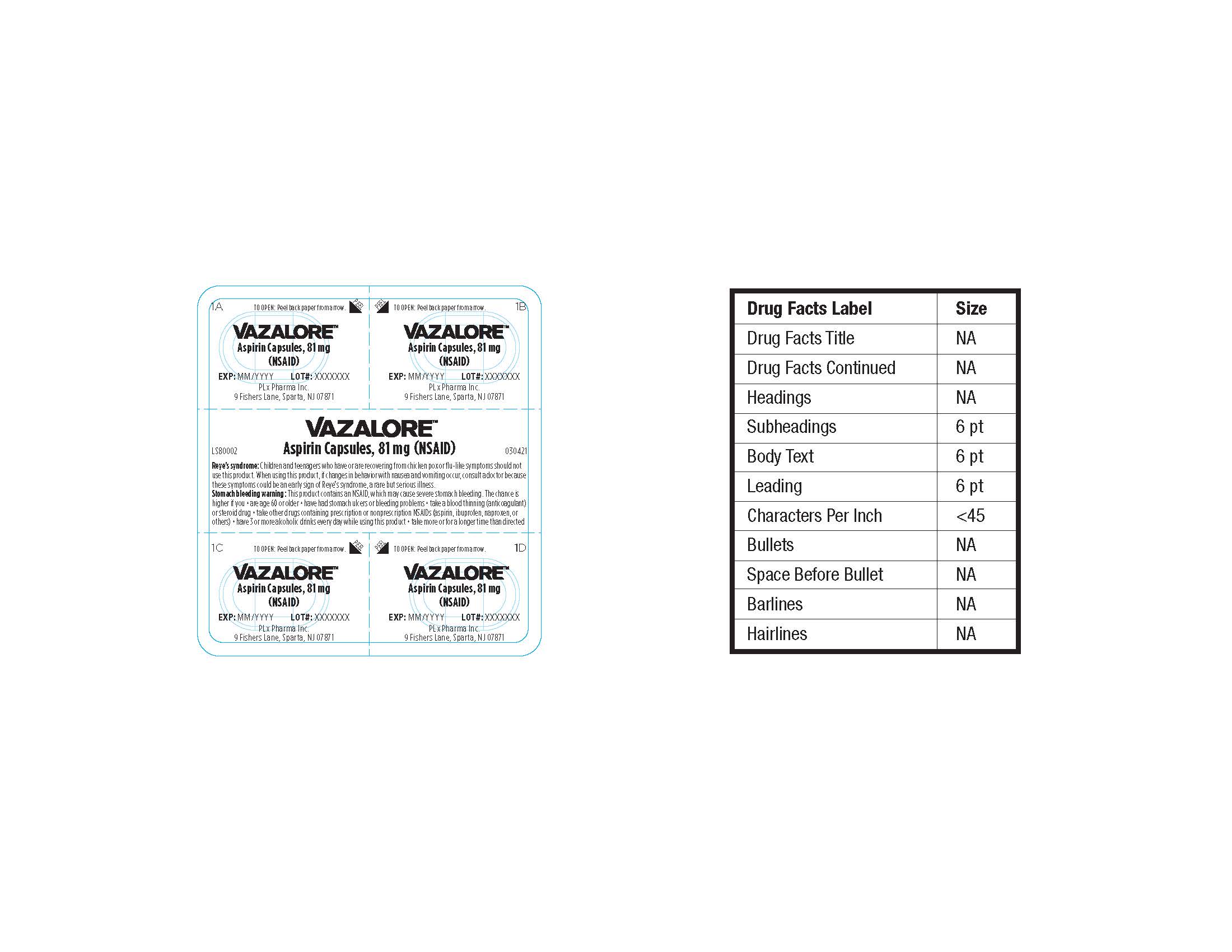
30 Count Blister Carton 30 CT Bottle Carton
30 Count Bottle Label 30 CT Bottle Label
4 Count Blister Card 4 ct blister card
4 Count Blister Carton 4 Ct Blister Carton
12 Count Blister Carton 12 Ct Blister Carton
About this NDC listing & data coverage
What data is (and isn’t) available for this NDC — tap to expand
| NDC identity (package / product / labeler codes) | ✓ Available |
| Labeler | ✓ Available |
| Product & package description | ✓ Available |
| Marketing category & status | ✓ Available |
| Active ingredient / dosage form / route | ✓ Available |
| FDA label (SPL via DailyMed) | ✓ Available |
| Package photos | ✓ Available |
| Inactive ingredients (structured) | ✓ Available |
| NADAC pharmacy acquisition price (CMS) | — Not published for this NDC CMS publishes NADAC only for NDCs reported in its retail-pharmacy survey. |
| Orange Book / therapeutic-equivalence data | ✓ Available |
| HCPCS J-code billing crosswalk | — Not published for this NDC Most self-administered / retail products have no J-code — that is normal. |
| Medicaid utilization (CMS SDUD) | — Not published for this NDC CMS reports utilization only for NDCs with Medicaid claims above its privacy threshold. |