
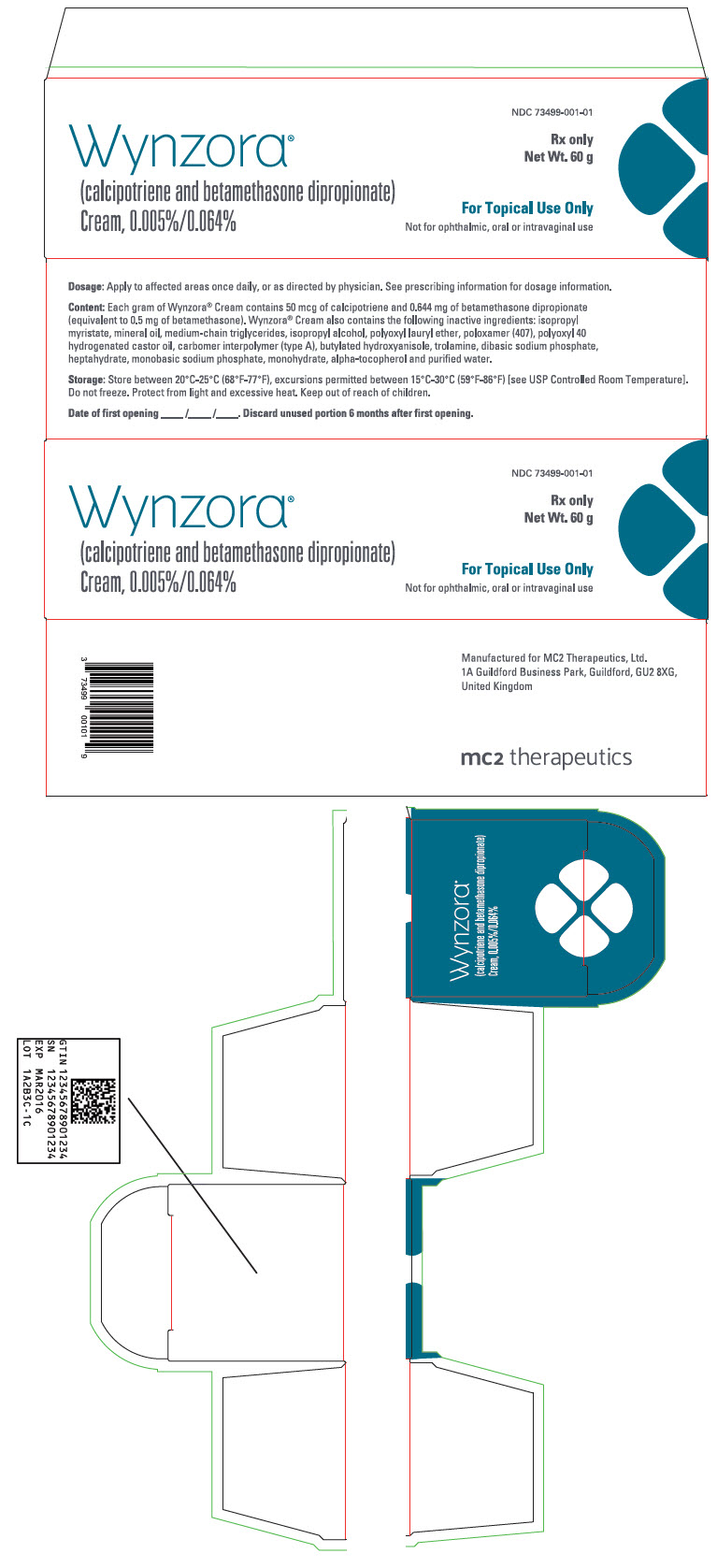
Wynzora Calcipotriene and Betamethasone dipropionate 50 ug/g; 64 mg/g Cream — NDC 73499-001-01 (Billing 73499-0001-01)
This is a package of Wynzora Calcipotriene and Betamethasone dipropionate 50 ug/g; 64 mg/g Cream from MC2 Therapeutics Ltd, marketed since Jun 2021 and currently FDA-listed. It is the main listing for this product, which comes in 2 package sizes.
NDC database record
One package, one record: these facts belong to NDC 73499-001-01 alone.
- Record
- FDA NDC Directory package listing · Human prescription drug
- Code segments
- 73499 labeler · 001 product · 01 package
- Package marketed since
- Jun 30, 2021
- Sample package
- No — commercial package
- Listing certified through
- Dec 31, 2026
- Barcode (UPC-A, from the NDC)
- 3 7349900101 9
- FDA record last changed
- Aug 27, 2026
Identity & classification
Regulatory identifiers FDA, NLM and CMS codes for this package
Drug-database identifiers Medi-Span GPI and First Databank GCN / HICL / AHFS classification
- GSN (GCN sequence number): 081314
- GCN: 48377
- GPI-14 (Medi-Span): 90559902323720
- HICL (First Databank): 022851
- AHFS class code: 84:24.12.00
- RxCUI (RxNorm): 2471873
Where does this data come from?
- FDA openFDA NDC Directory · synced Oct 1, 2026
- FDA label on DailyMed · label index refreshed Oct 5, 2026
- RxNorm (NLM RxNav) · catalog refreshed Oct 1, 2026
- Medi-Span GPI (licensed)
- First Databank (licensed) · refreshed Oct 1, 2026
RxNorm drug class
This medicine belongs to the Corticosteroid class.
Where does this data come from?
- RxClass (NLM) · catalog refreshed Oct 1, 2026
Clinical
- It treats plaque psoriasis. Depending on the product, it is approved for scalp psoriasis, body psoriasis, or both. Check which one you were given.
- Usually once a day until the psoriasis is controlled, up to 4 or 8 weeks depending on the product. Stay within the weekly limit on your label and follow your prescriber.
- Avoid the face, groin, and underarms, and skin that has become thin. Keep it out of your eyes and do not use it by mouth or vaginally. Don't cover it with tight dressings unless yo...
- Itching, scaly rash, redness, or burning where you apply it are the common ones. Call your doctor if you notice vision changes, skin that isn't healing, or your psoriasis getting w...
Patient education
Supplement & herbal interactions
Where does this data come from?
- MedlinePlus (NLM) · refreshed Oct 1, 2026
- FDA label on DailyMed · label index refreshed Oct 5, 2026
Ask a licensed pharmacist directly — free, answered by our team.
Pricing
A drug doesn't have one price. Each row is a different public payment system, and none is what you'd pay at the counter — that depends on your insurance. The ⓘ on each row explains what it measures.
| Price system | Per g | Per package |
|---|---|---|
| Retail pharmacies payNADAC · weekly | Not in the retail survey — common for institutional, discontinued, or low-volume packs. | |
| Medicaid paysCMS SDUD · 12 mo | No recent Medicaid claims on file for this NDC — rare and low-volume NDCs are suppressed in the public data. | |
| Medicare drug plans payPart D · quarterly | No Part D plan price is available for this NDC in our data. | |
Where does this data come from?
- CMS NADAC weekly file
- CMS ASP pricing files · refreshed Sep 20, 2026
- CMS Medicaid State Drug Utilization Data · refreshed Oct 5, 2026
- CMS Part D plan pricing files · refreshed Sep 24, 2026
- VA National Acquisition Center price file
Packaging — all sizes for this product
| Package NDC | Description | Marketing start | Marketing end | Status |
|---|---|---|---|---|
| 73499-0001-01 You're viewing this Main listing | 1 TUBE in 1 CARTON / 60 g in 1 TUBE | 2021-06-30 | — | Active |
| 73499-0001-03 73499-001-03 | 10 TUBE in 1 CARTON / 5 g in 1 TUBE Sample | 2021-06-30 | — | Active |
Pack size FAQ
What quantity is in this package?
What NDC number is used to bill for this package of Wynzora Calcipotriene and Betamethasone dipropionate 50 ug/g; 64 mg/g Cream?
Therapeutic equivalents
| Product | Labeler | Pack | NADAC/unit | TE | Status | Price vs. this |
|---|---|---|---|---|---|---|
| Wynzora 50 ug/g; 64 mg/gthis 73499-0001-01 | MC2 | 1 tube | — | — | FDA listed | — |
Where does this data come from?
- FDA openFDA NDC Directory · synced Oct 1, 2026
- FDA Orange Book · refreshed Oct 3, 2026
- CMS NADAC weekly file
Availability & generic status
We did not find an FDA-approved generic match for this exact strength, form and route. Patent/protection dates below may affect future generic timing.
Why the date isn’t exact: Generic timing can change because patents may be challenged, settled, licensed, added, removed, or worked around with a narrower label — and FDA approval does not always mean a pharmacy can get the generic today.
🛈 What do these terms mean?
- Patent
- Legal protection listed in the Orange Book that may delay generic approval or launch. Issued by the U.S. Patent & Trademark Office.
- Substance patent
- Covers the active drug molecule itself — the hardest to design around. A generic generally can’t launch until it expires.
- Formulation (product) patent
- Covers a specific formulation or dosage form. A generic can sometimes work around it with a different formulation.
- Method-of-use patent
- A patent covering one specific approved use of the drug — not necessarily the whole molecule. A generic can sometimes launch with a “skinny label” that carves out the protected use and keeps the others.
- Skinny label
- A generic label that omits a still-patented use when the FDA allows it — letting a generic reach the market for the unprotected uses.
- Exclusivity
- FDA-granted marketing protection, separate from patents — e.g. 5-yr new chemical entity, 7-yr orphan drug, or a +6-month pediatric extension.
- Paragraph IV
- A generic applicant’s formal challenge to a listed patent. It can potentially lead to earlier generic entry, but often involves litigation or a settlement.
- RLD / RS
- Reference Listed Drug — the brand product the FDA uses as the reference for generic applications. Reference Standard — the product the FDA expects generics to compare against in bioequivalence testing.
- TE / AB rating
- FDA therapeutic-equivalence rating. An AB rating generally means the FDA considers a generic therapeutically equivalent to — and substitutable for — the brand.
- LOE (loss of exclusivity)
- The latest patent or exclusivity currently listed — the loss-of-exclusivity / latest-listed-protection date shown on this page. Paragraph-IV challenges and settlements can move the real date earlier; FDA approval and a manufacturer’s decision to market can move it later.
Built from the FDA Orange Book. The bars above are scaled to each protection’s expiry; the red LOE marker is the last one to lapse.
| Patent | Type | Use code | Expires |
|---|---|---|---|
| US 12440499 ↗ | Method of use | U-1408 | Mar 18, 2039 |
| US 10265265 ↗ | Drug product | — | Sep 27, 2027 |
| US 11696919 ↗ | Drug product | — | Mar 18, 2039 |
Is there a generic version of WYNZORA 0.005%-0.064% CREAM?
The FDA approved a generic — why can’t I get it at my pharmacy yet?
Why do different websites show different generic release dates?
What does “FDA listed” mean?
What does a patent or protection date mean here?
What does “current Orange Book estimate” mean?
Can a generic come out before the last patent expires?
Can a generic come out after the listed dates?
What is the difference between patents and exclusivity?
Why are there multiple patent dates?
Where does this data come from?
- FDA Orange Book · refreshed Oct 3, 2026
Inactive Ingredients / Excipients
Inactive ingredients, also called excipients, are components of the drug product other than the active ingredient. They may include fillers, dyes, coatings, preservatives, flavors, or other formulation ingredients.
🧪 Avoiding an ingredient? See Betamethasone / Calcipotriene inactive ingredients by manufacturer: every current product's list side by side, so you can ask your pharmacy for the version that does not list it.
Where does this data come from?
IACT rows and label-wide narrative are kept separate; availability and product-level specificity depend on the submitted label.- FDA label on DailyMed · label index refreshed Oct 5, 2026
- FDA openFDA NDC Directory · synced Oct 1, 2026
Inactive ingredient FAQ
Are inactive ingredients the same for every manufacturer?
Why might an inactive ingredient be missing?
Can inactive ingredients matter?
Manufacturer & labeler
Where does this data come from?
- FDA openFDA NDC Directory · synced Oct 1, 2026
- Drugs@FDA
Full prescribing information FDA SPL
🎯 Indications and Usage ▾
1 INDICATIONS AND USAGE WYNZORA Cream is indicated for the topical treatment of plaque psoriasis in patients 18 years of age and older. WYNZORA Cream is a combination of calcipotriene, a vitamin D analog, and betamethasone dipropionate, a corticosteroid, indicated for the topical treatment of plaque psoriasis in patients 18 years of age and older. ( 1 )
⏱️ Dosage and Administration ▾
2 DOSAGE AND ADMINISTRATION Apply WYNZORA Cream to affected areas once daily for up to 8 weeks. Rub in gently to ensure that the plaques are saturated with the cream. Do not use more than 100 g per week.
Discontinue therapy when control is achieved. Do not use: with occlusive dressings unless directed by a healthcare provider on the face, groin, or axillae, or if skin atrophy is present at the treatment site WYNZORA Cream is not for oral, ophthalmic, or intravaginal use. Apply WYNZORA Cream to affected areas once daily for up to 8 weeks.
( 2 ) Discontinue therapy when control is achieved. ( 2 ) Do not use more than 100 g per week. ( 2 ) Do not use with occlusive dressings unless directed by a physician.
( 2 ) Avoid use on the face, groin, or axillae, or if skin atrophy is present at the treatment site. ( 2 ) Not for oral, ophthalmic, or intravaginal use. ( 2 )
💊 Dosage Forms and Strengths ▾
3 DOSAGE FORMS AND STRENGTHS Cream: 0.005%/0.064%. Each gram of WYNZORA Cream contains 50 mcg of calcipotriene and 0.644 mg of betamethasone dipropionate in a white cream. Cream: 0.005%/0.064% ( 3 )
⛔ Contraindications ▾
4 CONTRAINDICATIONS None. None ( 4 )
⚠️ Warnings and Cautions ▾
5 WARNINGS AND PRECAUTIONS Hypercalcemia and Hypercalciuria : Hypercalcemia and hypercalciuria have been observed with use of topical calcipotriene. If either occurs, discontinue until parameters of calcium metabolism normalize. ( 5.1 ) Effects on Endocrine System: Can cause reversible hypothalamicpituitary-adrenal (HPA) axis suppression with the potential for glucocorticosteroid insufficiency during and after withdrawal of treatment.
Risk factors include the use of high-potency topical corticosteroid, use over a large surface area, or to areas under occlusion, prolonged use, altered skin barrier, liver failure, and young age. Modify use should HPA axis suppression develop. ( 5.2 ) Ophthalmic Adverse Reactions: May increase the risk of cataracts and glaucoma.
If visual symptoms occur, consider referral to an ophthalmologist. ( 5.5 )
5.1Hypercalcemia and Hypercalciuria Hypercalcemia and hypercalciuria have been observed with use of topical calcipotriene. If hypercalcemia or hypercalciuria develop, discontinue treatment until parameters of calcium metabolism have normalized.
5.2Effects on Endocrine System Hypothalamic-Pituitary-Adrenal Axis Suppression WYNZORA Cream can cause reversible hypothalamic-pituitary-adrenal (HPA) axis suppression with the potential for clinical glucocorticosteroid insufficiency. This may occur during treatment or upon withdrawal of treatment. Factors that predispose a patient to HPA axis suppression include the use of high-potency steroids, large treatment surface areas, prolonged use, use of occlusive dressings, altered skin barrier, liver failure, and young age.
Evaluation for HPA axis suppression may be done by using the adrenocorticotropic hormone (ACTH) stimulation test. If HPA axis suppression is documented, gradually withdraw WYNZORA Cream, reduce the frequency of application, or substitute with a less potent corticosteroid. The following trial evaluated the effects of WYNZORA Cream on HPA axis suppression: HPA axis suppression was evaluated in adult subjects (N=27) with extensive psoriasis (including scalp).
Adrenal suppression was seen in 6 out of 26 subjects (23%) after 4 weeks of treatment, and in 3 out of 25 subjects (12%) after 8 weeks of treatment [see Clinical Pharmacology (12.2) ]. Cushing's Syndrome and Hyperglycemia Cushing's syndrome and hyperglycemia may occur due to the systemic effects of the topical corticosteroid. These complications generally occur after prolonged exposure to excessively large doses, especially of high-potency topical corticosteroids.
Additional Considerations for Endocrine Adverse Reactions Pediatric patients may be more susceptible to systemic toxicity due to their larger skin surface to body mass ratios [see Use in Specific Populations (8.4) ] . Use of more than one corticosteroid-containing product at the same time may increase total systemic corticosteroid exposure.
5.3Allergic Contact Dermatitis with Topical Corticosteroids Allergic contact dermatitis to a topical corticosteroid is usually diagnosed by observing a failure to heal rather than a clinical exacerbation. Such an observation should be corroborated with appropriate diagnostic patch testing.
5.4Allergic Contact Dermatitis with Topical Calcipotriene Allergic contact dermatitis has been observed with use of topical calcipotriene. Such an observation should be corroborated with appropriate diagnostic patch testing.
5.5Ophthalmic Adverse Reactions Use of topical corticosteroids, including WYNZORA Cream, may increase the risks of glaucoma and posterior subcapsular cataract. Cataracts and glaucoma have been reported with the postmarketing use of topical corticosteroid products [see Adverse Reactions (6.2) ]. Avoid contact of WYNZORA Cream with eyes.
WYNZORA Cream may cause eye irritation. Advise patients to report any visual symptoms and consider referral to an ophthalmologist for evaluation.
🤒 Adverse Reactions ▾
6 ADVERSE REACTIONS The most common adverse reactions reported by more than 1% of subjects treated with WYNZORA Cream were upper respiratory infection, headache, and application site irritation. ( 6.1 ) To report SUSPECTED ADVERSE REACTIONS, contact MC2 Therapeutics Ltd at 1-800-644-8240 or FDA at 1-800-FDA-1088 or www.fda.gov/medwatch .
6.1Clinical Trials Experience Because clinical trials are conducted under widely varying conditions, adverse reaction rates observed in the clinical trials of a drug cannot be directly compared to rates in the clinical trials of another drug and may not reflect the rates observed in practice. The rates of adverse reactions given below were reported in a randomized, multicenter, prospective, vehicle and active controlled clinical trial in adult subjects with plaque psoriasis. Subjects applied WYNZORA Cream, calcipotriene/betamethasone dipropionate topical suspension, 0.005%/0.064% or vehicle once daily for 8 weeks.
The mean weekly dose of WYNZORA Cream was 33.8 g. A total of 342 subjects were treated with WYNZORA Cream, 337 with calcipotriene/betamethasone dipropionate topical suspension, 0.005%/0.064% and 115 with vehicle. The majority of subjects were White (87%) and male (62%).
Approximately 72% were non-Hispanic/Latino. The mean age was 52 years and ages ranged from 18 to 89 years. The most common adverse reactions reported by ≥1% of subjects treated with WYNZORA Cream and more frequently than vehicle are presented in Table 1 below.
Table 1: Adverse Reactions Through Week 8 Preferred Term WYNZORA Cream (N=342) Vehicle Cream (N=115) Upper Respiratory Infection (URI) Includes nasopharyngitis, upper respiratory tract infection (URTI), and viral URTI 7% 5% Headache 2% 0% Application site irritation 1% 0%
6.2Postmarketing Experience The following adverse reactions have been identified during post-approval use of topical corticosteroids. Because these reactions are reported voluntarily from a population of uncertain size, it is not always possible to reliably estimate their frequency or establish a causal relationship to drug exposure. Postmarketing reports for local adverse reactions to topical corticosteroids included: atrophy, striae, telangiectasias, itching, dryness, hypopigmentation, perioral dermatitis, secondary infection, and miliaria.
Ophthalmic adverse reactions of cataracts, glaucoma, and increased intraocular pressure, have been reported during use of topical corticosteroids, including topical betamethasone products.
👥 Use in Specific Populations ▾
8 USE IN SPECIFIC POPULATIONS
8.1Pregnancy Risk Summary Available data with WYNZORA Cream are not sufficient to evaluate a drug-associated risk for major birth defects, miscarriages, or adverse maternal or fetal outcomes. Although there are no available data on use of the calcipotriene component in pregnant women, systemic exposure to calcipotriene after topical administration of WYNZORA Cream is likely to be low [see Clinical Pharmacology (12.3) ]. Observational studies suggest an increased risk of having low birthweight infants with the maternal use of potent or very potent topical corticosteroids (see Data ) .
Advise pregnant women that WYNZORA Cream may increase the potential risk of having a low birth weight infant and to use WYNZORA Cream on the smallest area of skin and for the shortest duration possible. In animal reproduction studies, oral administration of calcipotriene to pregnant rats during the period of organogenesis resulted in an increased incidence of minor skeletal abnormalities, including enlarged fontanelles and extra ribs (see Data ) . Oral administration of calcipotriene to pregnant rabbits during the period of organogenesis had no apparent effects on embryo-fetal development.
Subcutaneous administration of betamethasone dipropionate to pregnant rats and rabbits during the period of organogenesis resulted in fetal toxicity, including fetal deaths, reduced fetal weight, and fetal malformations (cleft palate and crooked or short tail) (see Data ) . The available data do not allow the calculation of relevant comparisons between the systemic exposures of calcipotriene and betamethasone dipropionate observed in animal studies to the systemic exposures that would be expected in humans after topical use of WYNZORA Cream.
The background risk of major birth defects and miscarriage in the indicated population is unknown. All pregnancies have a background risk of birth defect, loss, or other adverse outcomes. In the U.S. general population, the estimated background risk of major birth defects and miscarriage in clinically recognized pregnancies is 2% to 4% and 15% to 20%, respectively.
Data Human Data Available observational studies in pregnant women did not identify a drug-associated risk of major birth defects, preterm delivery, or fetal mortality with the use of topical corticosteroids of any potency. However, when the dispensed amount of potent or very potent topical corticosteroids exceeded 300 g during the entire pregnancy, maternal use was associated with an increased risk of low birth weight in infants. Animal Data Embryo-fetal development studies with calcipotriene were performed by the oral route in rats and rabbits.
Pregnant rats received dosages of 0, 6, 18, or 54 mcg/kg/day (0, 36, 108, and 324 mcg/m 2 /day, respectively) on days 6-15 of gestation (the period of organogenesis). There were no apparent effects on maternal survival, behavior, or body weight gain, no effects on litter parameters, and no effects on the incidence of major malformations in fetuses. Fetuses from dams dosed at 54 mcg/kg/day exhibited a significantly increased incidence of minor skeletal abnormalities, including enlarged fontanelles and extra ribs.
Pregnant rabbits were dosed daily with calcipotriene at exposures of 0, 4, 12, or 36 mcg/kg/day (0, 48, 144, and 432 mcg/m 2 /day, respectively) on days 6-18 of gestation (the period of organogenesis). Mean maternal body weight gain was reduced in animals dosed at 12 or 36 mcg/kg/day. The incidence of fetal deaths was increased in the group dosed at 36 mcg/kg/day; reduced fetal weight was also observed in this group.
The incidence of major malformations among fetuses was not affected. An increase in the incidence of minor skeletal abnormalities, including incomplete ossification of sternebrae, pubic bones, and forelimb phalanges, was observed in the group dosed at 36 mcg/kg/day. Embryo-fetal development studies with betamethasone dipropionate were performed via subcutaneous injection… [Excerpted — this section continues on DailyMed.]
🤰 Pregnancy ▾
8.1Pregnancy Risk Summary Available data with WYNZORA Cream are not sufficient to evaluate a drug-associated risk for major birth defects, miscarriages, or adverse maternal or fetal outcomes. Although there are no available data on use of the calcipotriene component in pregnant women, systemic exposure to calcipotriene after topical administration of WYNZORA Cream is likely to be low [see Clinical Pharmacology (12.3) ]. Observational studies suggest an increased risk of having low birthweight infants with the maternal use of potent or very potent topical corticosteroids (see Data ) .
Advise pregnant women that WYNZORA Cream may increase the potential risk of having a low birth weight infant and to use WYNZORA Cream on the smallest area of skin and for the shortest duration possible. In animal reproduction studies, oral administration of calcipotriene to pregnant rats during the period of organogenesis resulted in an increased incidence of minor skeletal abnormalities, including enlarged fontanelles and extra ribs (see Data ) . Oral administration of calcipotriene to pregnant rabbits during the period of organogenesis had no apparent effects on embryo-fetal development.
Subcutaneous administration of betamethasone dipropionate to pregnant rats and rabbits during the period of organogenesis resulted in fetal toxicity, including fetal deaths, reduced fetal weight, and fetal malformations (cleft palate and crooked or short tail) (see Data ) . The available data do not allow the calculation of relevant comparisons between the systemic exposures of calcipotriene and betamethasone dipropionate observed in animal studies to the systemic exposures that would be expected in humans after topical use of WYNZORA Cream.
The background risk of major birth defects and miscarriage in the indicated population is unknown. All pregnancies have a background risk of birth defect, loss, or other adverse outcomes. In the U.S. general population, the estimated background risk of major birth defects and miscarriage in clinically recognized pregnancies is 2% to 4% and 15% to 20%, respectively.
Data Human Data Available observational studies in pregnant women did not identify a drug-associated risk of major birth defects, preterm delivery, or fetal mortality with the use of topical corticosteroids of any potency. However, when the dispensed amount of potent or very potent topical corticosteroids exceeded 300 g during the entire pregnancy, maternal use was associated with an increased risk of low birth weight in infants. Animal Data Embryo-fetal development studies with calcipotriene were performed by the oral route in rats and rabbits.
Pregnant rats received dosages of 0, 6, 18, or 54 mcg/kg/day (0, 36, 108, and 324 mcg/m 2 /day, respectively) on days 6-15 of gestation (the period of organogenesis). There were no apparent effects on maternal survival, behavior, or body weight gain, no effects on litter parameters, and no effects on the incidence of major malformations in fetuses. Fetuses from dams dosed at 54 mcg/kg/day exhibited a significantly increased incidence of minor skeletal abnormalities, including enlarged fontanelles and extra ribs.
Pregnant rabbits were dosed daily with calcipotriene at exposures of 0, 4, 12, or 36 mcg/kg/day (0, 48, 144, and 432 mcg/m 2 /day, respectively) on days 6-18 of gestation (the period of organogenesis). Mean maternal body weight gain was reduced in animals dosed at 12 or 36 mcg/kg/day. The incidence of fetal deaths was increased in the group dosed at 36 mcg/kg/day; reduced fetal weight was also observed in this group.
The incidence of major malformations among fetuses was not affected. An increase in the incidence of minor skeletal abnormalities, including incomplete ossification of sternebrae, pubic bones, and forelimb phalanges, was observed in the group dosed at 36 mcg/kg/day. Embryo-fetal development studies with betamethasone dipropionate were performed via subcutaneous injection in mice and rabbits.
Pregnant… [Excerpted — this section continues on DailyMed.]
🧒 Pediatric Use ▾
8.4Pediatric Use Safety and effectiveness of the use of WYNZORA Cream in adolescents and pediatric patients under the age of 18 years have not been established. Because of a higher ratio of skin surface area to body mass, pediatric patients are at a greater risk than adults of systemic toxicity when treated with topical corticosteroids. Pediatric patients are, therefore, also at greater risk of HPA axis suppression and adrenal insufficiency with the use of topical corticosteroids including WYNZORA Cream [see Clinical Pharmacology (12.2) ] .
Systemic toxicities such as Cushing's syndrome, linear growth retardation, delayed weight gain, and intracranial hypertension have been reported in pediatric patients, especially those with prolonged exposure to large doses of high potency topical corticosteroids. Local adverse reactions including striae have also been reported with use of topical corticosteroids in pediatric patients.
🧓 Geriatric Use ▾
8.5Geriatric Use The trial included 66 subjects ≥ 65 years of age treated with WYNZORA Cream. No overall differences in safety or effectiveness of WYNZORA Cream were observed between these subjects and younger subjects. All other reported clinical experience has not identified any differences in response between elderly and younger patients. However, greater sensitivity of some older individuals cannot be ruled out.
🧬 Clinical Pharmacology ▾
12 CLINICAL PHARMACOLOGY
12.1Mechanism of Action WYNZORA Cream combines the pharmacological effects of calcipotriene as a synthetic vitamin D3 analog and betamethasone dipropionate as a synthetic corticosteroid. However, while their pharmacologic and clinical effects are known, the exact mechanisms of their actions in plaque psoriasis are unknown.
12.2Pharmacodynamics Vasoconstriction: In a vasoconstrictor trial in healthy subjects, the skin blanching response of WYNZORA Cream was consistent with a mid-strength corticosteroid when compared with other topical corticosteroids. However, similar blanching scores do not necessarily imply therapeutic equivalence. Hypothalamic-Pituitary-Adrenal (HPA) Axis Suppression: HPA axis suppression was evaluated in adult subjects with extensive psoriasis involving 20-30% of the body surface area (including scalp).
Treatment consisted of once daily application of WYNZORA Cream to the body (including scalp involvement in 75% of the subjects) for up to 8 weeks. Adrenal suppression indicated by 30-minute post-stimulation serum cortisol level of ≤18 mcg/dL was seen in 6 out of 26 subjects (23%) after 4 weeks of treatment, and in 3 out of 25 subjects (12%; one subject with continued suppression from Week 4 and two additional subjects) after 8 weeks of treatment. There was no trend towards decreasing cortisol levels post-ACTH stimulation with increasing systemic concentration of betamethasone 17-propionate (B17P) measured as AUC 0-7 or C max or increasing average weekly amount of WYNZORA Cream used.
Effects on Calcium Metabolism: The effects on calcium metabolism of once daily application of WYNZORA Cream to the body (including scalp involvement in 75% of subjects) for up to 8 weeks were also examined and no cases of hypercalcemia and no clinically relevant changes in urine calcium were reported.
12.3Pharmacokinetics Absorption The pharmacokinetics of WYNZORA Cream was investigated in adult subjects in the same study as described above [see Clinical Pharmacology (12.2) ] . Their mean ± SD total body surface area involvement was 25 ± 5 % and 74% of the subjects presented with scalp involvement and with a mean ± SD scalp involvement of 52 ± 40 %. The mean ± SD weekly dose during the 8 weeks of treatment was 79 ± 30 g.
Plasma concentrations of calcipotriene and betamethasone dipropionate and their major metabolites were measured after 4 weeks and 8 weeks of once daily application of WYNZORA Cream. In most samples, concentrations of the four analytes were below or close to lower limit of quantification (LOQ). One of 27 (4%) subjects had quantifiable levels of calcipotriene at Week 4 and the C max and AUC 0-7 were 30 pg/mL and 229 pg*h/mL, respectively.
For the major metabolite of calcipotriene, MC1080, 3 of 27 (11%) subjects had quantifiable levels at Week 4. The mean ± SD C max and AUC 0-7 were 30 ± 4 pg/mL and 224 ± 16 pg*h/mL, respectively. No subjects had quantifiable levels of calcipotriene or MC1080 at Week 8.
There were 3 of 27 subjects (11%) with quantifiable levels of betamethasone dipropionate at Week 4. The mean ± SD of C max and AUC 0-7 were 22 ± 9 pg/mL and 160 ± 36 pg*h/mL, respectively. The major metabolite of betamethasone dipropionate, B17P, was quantifiable in 13 of 27 subjects (48%) at Week 4.
The mean ± SD C max and AUC 0-7 were 96 ± 234 pg/mL and 419 ± 646 pg*h/mL, respectively. No subjects had quantifiable levels of betamethasone dipropionate at Week 8, whereas 7 of 19 (37%) subjects had quantifiable levels of B17P. The mean ± SD C max and AUC 0-7 were 31 ± 29 pg/mL and 205 ± 142 pg*h/mL, respectively.
Metabolism Calcipotriene: Calcipotriene metabolism following systemic uptake is rapid and occurs in the liver. The primary metabolites of calcipotriene are less potent than the parent compound. Calcipotriene is metabolized to MC1046 (the α,ß-unsaturated ketone analog of calcipotriene), which is metabolized further to MC1080 (a saturated ketone analog).
MC1080 is the major metabolit… [Excerpted — this section continues on DailyMed.]
🧬 Mechanism of Action ▾
12.1Mechanism of Action WYNZORA Cream combines the pharmacological effects of calcipotriene as a synthetic vitamin D3 analog and betamethasone dipropionate as a synthetic corticosteroid. However, while their pharmacologic and clinical effects are known, the exact mechanisms of their actions in plaque psoriasis are unknown.
📦 How Supplied / Storage and Handling ▾
16 HOW SUPPLIED/STORAGE AND HANDLING WYNZORA ® (calcipotriene and betamethasone dipropionate) Cream, 0.005%/0.064%, is a white cream. Each gram of cream contains 50 mcg of anhydrous calcipotriene and 0.644 mg of betamethasone dipropionate. It is available as 60 g tubes individually packaged (NDC 73499-001-01).
Store between 20°C-25°C (68°F-77°F); excursions permitted between 15°C-30°C (59°F-86°F). [See USP controlled room temperature.] Do not freeze. Protect from light and excessive heat . Unused product should be discarded six months after the tube has been opened.
📦 Storage and Handling ▾
Store between 20°C-25°C (68°F-77°F); excursions permitted between 15°C-30°C (59°F-86°F). [See USP controlled room temperature.] Do not freeze. Protect from light and excessive heat . Unused product should be discarded six months after the tube has been opened.
📋 Description ▾
11 DESCRIPTION WYNZORA (calcipotriene and betamethasone dipropionate) Cream contains anhydrous calcipotriene and betamethasone dipropionate intended for topical use. Calcipotriene is a synthetic vitamin D3 analog. Chemically, calcipotriene is (5Z,7E,22E,24S)-24-Cyclopropyl-9,10-secochola-5,7,10(19),22 tetraene-1α,3β,24-triol, with the empirical formula C 27 H 40 O 3 , a molecular weight of 412.6, and the following structural formula: Calcipotriene is a white or almost white powder.
It is insoluble in water, freely soluble in ethanol and slightly soluble in methylene chloride. Betamethasone dipropionate is a synthetic corticosteroid. Betamethasone dipropionate has the chemical name Pregna-1,4-diene-3,20-dione,9-fluoro-11-hydroxy-16-methyl-17,21-bis(1-oxypropoxy)-,(11β,16β), with the empirical formula C 28 H 37 FO 7 , a molecular weight of 504.6, and the following structural formula: Betamethasone dipropionate is a white to almost white crystalline powder.
It is practically insoluble in water, freely soluble in acetone and in methylene chloride, sparingly soluble in alcohol. Each gram of WYNZORA Cream contains 50 mcg of calcipotriene and 0.644 mg of betamethasone dipropionate (equivalent to 0.5 mg of betamethasone). WYNZORA Cream also contains the following inactive ingredients: isopropyl myristate, mineral oil, medium-chain triglycerides, isopropyl alcohol, polyoxyl lauryl ether, poloxamer (407), polyoxyl 40 hydrogenated castor oil, carbomer interpolymer (type A), butylated hydroxyanisole, trolamine, dibasic sodium phosphate, heptahydrate, monobasic sodium phosphate, monohydrate, alpha-tocopherol and purified water.
Chemical Structure Chemical Structure
💬 Information for Patients ▾
17 PATIENT COUNSELING INFORMATION Advise the patient to read the FDA-approved patient labeling (Patient Information). Administration Instructions Instruct patients not to use more than 100 grams per week. Instruct patients to discontinue therapy when control is achieved unless directed otherwise by the healthcare provider.
Advise patients to avoid use of WYNZORA Cream on the face, underarms, groin or eyes. Advise patients not to occlude the treatment area with a bandage or other covering unless directed by the healthcare provider. Instruct patients to wash hands after application.
Local Reactions and Skin Atrophy Advise patients that local reactions and skin atrophy are more likely to occur with occlusive use, prolonged use or use of higher potency corticosteroids. Hypercalcemia and Hypercalciuria Advise patients that hypercalcemia and hypercalciuria may occur with the use of WYNZORA Cream [see Warnings and Precautions (5.1) ] . HPA Axis Suppression, Cushing's Syndrome, and Hyperglycemia Advise patients that WYNZORA Cream can cause HPA access suppression, Cushing's syndrome, and/or hyperglycemia [see Warnings and Precautions (5.2) ] .
Ophthalmic Adverse Reactions Advise patients to avoid contact of WYNZORA Cream with eyes and to report any visual symptoms [see Warnings and Precautions (5.5) ] . Possible Avoidance of Other Products Containing Calcipotriene or a Corticosteroid Instruct patients not to use other products containing calcipotriene or a corticosteroid with WYNZORA Cream without first talking to the healthcare provider. Pregnancy and Lactation Advise pregnant women that WYNZORA Cream may increase the potential risk of having a low birth weight infant and to use WYNZORA Cream on the smallest area of skin and for the shortest duration possible [see Use in Specific Populations (8.1) ] .
Advise breastfeeding women not to apply WYNZORA Cream directly to the nipple and areola to avoid direct infant exposure [see Use in Specific Populations (8.2) ] .
🧬 Pharmacokinetics ▾
12.3Pharmacokinetics Absorption The pharmacokinetics of WYNZORA Cream was investigated in adult subjects in the same study as described above [see Clinical Pharmacology (12.2) ] . Their mean ± SD total body surface area involvement was 25 ± 5 % and 74% of the subjects presented with scalp involvement and with a mean ± SD scalp involvement of 52 ± 40 %. The mean ± SD weekly dose during the 8 weeks of treatment was 79 ± 30 g.
Plasma concentrations of calcipotriene and betamethasone dipropionate and their major metabolites were measured after 4 weeks and 8 weeks of once daily application of WYNZORA Cream. In most samples, concentrations of the four analytes were below or close to lower limit of quantification (LOQ). One of 27 (4%) subjects had quantifiable levels of calcipotriene at Week 4 and the C max and AUC 0-7 were 30 pg/mL and 229 pg*h/mL, respectively.
For the major metabolite of calcipotriene, MC1080, 3 of 27 (11%) subjects had quantifiable levels at Week 4. The mean ± SD C max and AUC 0-7 were 30 ± 4 pg/mL and 224 ± 16 pg*h/mL, respectively. No subjects had quantifiable levels of calcipotriene or MC1080 at Week 8.
There were 3 of 27 subjects (11%) with quantifiable levels of betamethasone dipropionate at Week 4. The mean ± SD of C max and AUC 0-7 were 22 ± 9 pg/mL and 160 ± 36 pg*h/mL, respectively. The major metabolite of betamethasone dipropionate, B17P, was quantifiable in 13 of 27 subjects (48%) at Week 4.
The mean ± SD C max and AUC 0-7 were 96 ± 234 pg/mL and 419 ± 646 pg*h/mL, respectively. No subjects had quantifiable levels of betamethasone dipropionate at Week 8, whereas 7 of 19 (37%) subjects had quantifiable levels of B17P. The mean ± SD C max and AUC 0-7 were 31 ± 29 pg/mL and 205 ± 142 pg*h/mL, respectively.
Metabolism Calcipotriene: Calcipotriene metabolism following systemic uptake is rapid and occurs in the liver. The primary metabolites of calcipotriene are less potent than the parent compound. Calcipotriene is metabolized to MC1046 (the α,ß-unsaturated ketone analog of calcipotriene), which is metabolized further to MC1080 (a saturated ketone analog).
MC1080 is the major metabolite in plasma. MC1080 is slowly metabolized to calcitroic acid. Betamethasone dipropionate: Betamethasone dipropionate is metabolized by hydrolysis to betamethasone 17-propionate and betamethasone, including the 6ß-hydroxy derivatives of those compounds.
Betamethasone17-propionate (B17P) is the primary metabolite.
🧬 Pharmacodynamics ▾
12.2Pharmacodynamics Vasoconstriction: In a vasoconstrictor trial in healthy subjects, the skin blanching response of WYNZORA Cream was consistent with a mid-strength corticosteroid when compared with other topical corticosteroids. However, similar blanching scores do not necessarily imply therapeutic equivalence. Hypothalamic-Pituitary-Adrenal (HPA) Axis Suppression: HPA axis suppression was evaluated in adult subjects with extensive psoriasis involving 20-30% of the body surface area (including scalp).
Treatment consisted of once daily application of WYNZORA Cream to the body (including scalp involvement in 75% of the subjects) for up to 8 weeks. Adrenal suppression indicated by 30-minute post-stimulation serum cortisol level of ≤18 mcg/dL was seen in 6 out of 26 subjects (23%) after 4 weeks of treatment, and in 3 out of 25 subjects (12%; one subject with continued suppression from Week 4 and two additional subjects) after 8 weeks of treatment. There was no trend towards decreasing cortisol levels post-ACTH stimulation with increasing systemic concentration of betamethasone 17-propionate (B17P) measured as AUC 0-7 or C max or increasing average weekly amount of WYNZORA Cream used.
Effects on Calcium Metabolism: The effects on calcium metabolism of once daily application of WYNZORA Cream to the body (including scalp involvement in 75% of subjects) for up to 8 weeks were also examined and no cases of hypercalcemia and no clinically relevant changes in urine calcium were reported.
🔬 Clinical Studies ▾
14 CLINICAL STUDIES The safety and efficacy of WYNZORA Cream were evaluated in a randomized, multicenter, vehicle and active-comparator controlled, clinical trial (NCT03308799) in adult subjects with mild to moderate plaque psoriasis. In the trial, 794 subjects were randomized to 1 of 3 treatment groups: WYNZORA Cream, vehicle cream, or calcipotriene/betamethasone dipropionate topical suspension, 0.005%/0.064%. The majority of subjects in the trial (81.7%) had disease of moderate severity at baseline, while 18.3% of subjects had disease of mild severity.
Disease severity was determined by a 5-grade Physician's Global Assessment (PGA) scale. The primary efficacy endpoint was the proportion of subjects with treatment success at Week 8. Treatment success was defined as at least a 2-grade improvement from baseline in the PGA score and an PGA score equating to "clear" or "almost clear".
Other evaluated outcomes included reduction in itch as defined by at least a 4-point improvement in the 11-point peak pruritus numeric rating scale (NRS) from baseline to Week 4. Table 2 presents the primary efficacy results. Table 2: Primary Efficacy Outcome at Week 8 WYNZORA Cream (N=342) Vehicle Cream (N=115) PGA of Clear or Almost Clear And ≥2-grade Improvement 37.4% 3.7% Difference from Vehicle (95% CI) 33.7% (27.4%, 40.0%) WYNZORA Cream was non-inferior to calcipotriene/betamethasone dipropionate topical suspension, 0.005%/0.064% for the primary endpoint of treatment success at Week 8 [Difference (95% CI): 14.6% (7.6%, 21.6%)].
Among subjects who had at least a peak pruritus NRS score of 4 at baseline, there was a higher percentage of subjects that achieved at least a 4-point improvement from baseline on the peak pruritus NRS score at Week 4 in the WYNZORA Cream group compared to the vehicle cream group (60.3% vs. 21.4%).
🧪 Nonclinical Toxicology ▾
13 NONCLINICAL TOXICOLOGY
13.1Carcinogenesis, Mutagenesis, Impairment of Fertility When calcipotriene was applied topically to mice for up to 24 months at dosages of 3, 10, and 30 mcg/kg/day (corresponding to 9, 30, and 90 mcg/m 2 /day), no significant changes in tumor incidence were observed when compared to control. A 104-week oral carcinogenicity study was conducted with calcipotriene in male and female rats at doses of 1, 5 and 15 mcg/kg/day (corresponding to dosages of approximately 6, 30, and 90 mcg/m 2 /day). Beginning week 71, the dosage for high-dose animals of both genders was reduced to 10 mcg/kg/day (corresponding to a dosage of approximately 60 mcg/m 2 /day).
A treatment-related increase in benign C-cell adenomas was observed in the thyroid of females that received 15 mcg/kg/day. A treatment-related increase in benign pheochromocytomas was observed in the adrenal glands of males that received 15 mcg/kg/day. No other statistically significant differences in tumor incidence were observed when compared to control.
The relevance of these findings to patients is unknown. When betamethasone dipropionate was applied topically to CD-1 mice for up to 24 months at dosages approximating 1.3, 4.2, and 8.5 mcg/kg/day in females, and 1.3, 4.2, and 12.9 mcg/kg/day in males (corresponding to dosages of up to approximately 26 mcg/m 2 /day and 39 mcg/m 2 /day, in females and males, respectively), no significant changes in tumor incidence were observed when compared to control. When betamethasone dipropionate was administered via oral gavage to male and female Sprague Dawley rats for up to 24 months at dosages of 20, 60, and 200 mcg/kg/day (corresponding to dosages of approximately 120, 360, and 1200 mcg/m 2 /day), no significant changes in tumor incidence were observed when compared to control.
Calcipotriene did not elicit any genotoxic effects in the Ames mutagenicity assay, the mouse lymphoma TK locus assay, the human lymphocyte chromosome aberration test, or the mouse micronucleus test. Betamethasone dipropionate did not elicit any genotoxic effects in the Ames mutagenicity assay, the mouse lymphoma TK locus assay, or in the rat micronucleus test. Studies in rats with oral doses of up to 54 mcg/kg/day (324 mcg/m 2 /day) of calcipotriene indicated no impairment of fertility or general reproductive performance.
Studies in male rats at oral doses of up to 200 mcg/kg/day (1200 mcg/m 2 /day), and in female rats at oral doses of up to 1000 mcg/kg/day (6000 mcg/m 2 /day), of betamethasone dipropionate indicated no impairment of fertility.
📄 Carcinogenesis, Mutagenesis, Impairment of Fertility ▾
13.1Carcinogenesis, Mutagenesis, Impairment of Fertility When calcipotriene was applied topically to mice for up to 24 months at dosages of 3, 10, and 30 mcg/kg/day (corresponding to 9, 30, and 90 mcg/m 2 /day), no significant changes in tumor incidence were observed when compared to control. A 104-week oral carcinogenicity study was conducted with calcipotriene in male and female rats at doses of 1, 5 and 15 mcg/kg/day (corresponding to dosages of approximately 6, 30, and 90 mcg/m 2 /day). Beginning week 71, the dosage for high-dose animals of both genders was reduced to 10 mcg/kg/day (corresponding to a dosage of approximately 60 mcg/m 2 /day).
A treatment-related increase in benign C-cell adenomas was observed in the thyroid of females that received 15 mcg/kg/day. A treatment-related increase in benign pheochromocytomas was observed in the adrenal glands of males that received 15 mcg/kg/day. No other statistically significant differences in tumor incidence were observed when compared to control.
The relevance of these findings to patients is unknown. When betamethasone dipropionate was applied topically to CD-1 mice for up to 24 months at dosages approximating 1.3, 4.2, and 8.5 mcg/kg/day in females, and 1.3, 4.2, and 12.9 mcg/kg/day in males (corresponding to dosages of up to approximately 26 mcg/m 2 /day and 39 mcg/m 2 /day, in females and males, respectively), no significant changes in tumor incidence were observed when compared to control. When betamethasone dipropionate was administered via oral gavage to male and female Sprague Dawley rats for up to 24 months at dosages of 20, 60, and 200 mcg/kg/day (corresponding to dosages of approximately 120, 360, and 1200 mcg/m 2 /day), no significant changes in tumor incidence were observed when compared to control.
Calcipotriene did not elicit any genotoxic effects in the Ames mutagenicity assay, the mouse lymphoma TK locus assay, the human lymphocyte chromosome aberration test, or the mouse micronucleus test. Betamethasone dipropionate did not elicit any genotoxic effects in the Ames mutagenicity assay, the mouse lymphoma TK locus assay, or in the rat micronucleus test. Studies in rats with oral doses of up to 54 mcg/kg/day (324 mcg/m 2 /day) of calcipotriene indicated no impairment of fertility or general reproductive performance.
Studies in male rats at oral doses of up to 200 mcg/kg/day (1200 mcg/m 2 /day), and in female rats at oral doses of up to 1000 mcg/kg/day (6000 mcg/m 2 /day), of betamethasone dipropionate indicated no impairment of fertility.
📄 Patient Package Insert ▾
This Patient Information has been approved by the U.S. Food and Drug Administration Issued: 11/2023 PATIENT INFORMATION WYNZORA ® (win-ZOR-uh) (calcipotriene and betamethasone dipropionate) Cream Important information: WYNZORA ® Cream is for use on the skin only (topical use only). Do not get WYNZORA ® Cream near or in your mouth, eyes, or vagina.
There are other medicines that contain the same medicine that is in WYNZORA ® Cream and are used to treat plaque psoriasis. Do not use other products containing calcipotriene or a corticosteroid medicine with WYNZORA ® Cream without talking to your healthcare provider first. What is WYNZORA ® Cream?
WYNZORA ® Cream is a prescription medicine used on the skin (topical) to treat plaque psoriasis in people 18 years of age and older. It is not known if WYNZORA ® Cream is safe and effective in children under 18 years of age. Before using WYNZORA ® Cream, tell your healthcare provider about all of your medical conditions, including if you: have a calcium metabolism disorder. have thinning skin (atrophy) at the treatment site. are pregnant or plan to become pregnant.
It is not known if WYNZORA ® Cream will harm your unborn baby. WYNZORA ® Cream may increase your chance of having a low birth weight baby. If you use WYNZORA ® Cream during pregnancy, use WYNZORA ® Cream on the smallest area of the skin and for the shortest time needed. are breastfeeding or plan to breastfeed.
It is not known if WYNZORA ® Cream passes into your breast milk. Breastfeeding women should use WYNZORA ® Cream on the smallest area of the skin and for the shortest time needed. Do not apply WYNZORA ® Cream directly to the nipple and areola to avoid contact with your baby.
Tell your healthcare provider about all the medicines you take, including prescription and over-the-counter medicines, vitamins and herbal supplements. How should I use WYNZORA ® Cream? Use WYNZORA ® Cream exactly as prescribed by your healthcare provider.
Your healthcare provider should tell you how much WYNZORA ® Cream to use and where to use it. Apply WYNZORA ® Cream to affected areas 1 time a day for up to 8 weeks. You should stop treatment when your plaque psoriasis is under control unless your healthcare provider gives you other instructions.
You should not use more than 100 grams of WYNZORA ® Cream in 1 week. Do not use WYNZORA ® Cream longer than prescribed. Using too much WYNZORA ® Cream, or using it too often or for too long, can increase your risk for having serious side effects.
Do not use WYNZORA ® Cream in the mouth, eyes, or vagina. Do not use WYNZORA ® Cream on your face, groin, or armpits, or if you have thinning of your skin (atrophy) at the treatment site. If you accidentally get WYNZORA ® Cream on your face or in your eyes wash the area with water right away.
Wash your hands well after applying WYNZORA ® Cream. Do not bandage or cover the treated skin area, unless instructed by your healthcare provider. Applying WYNZORA ® Cream: Remove the cap and check that the aluminum seal covers the opening on the top of the tube before the first use.
To break the seal, turn the cap over and poke a hole through the seal. Gently rub WYNZORA ® Cream all the way in to make sure that the plaques are well covered with the cream. What are the possible side effects of WYNZORA ® Cream?
WYNZORA ® Cream may cause serious side effects, including: Too much calcium in your blood or urine. Your healthcare provider may tell you to stop or temporarily stop treatment with WYNZORA ® Cream if you have too much calcium in your blood or urine. WYNZORA ® Cream can pass through your skin.
Too much WYNZORA ® Cream passing through your skin can cause your adrenal glands to stop working properly. Your healthcare provider may do blood tests to check for adrenal gland problems. Your healthcare provider may tell you to stop or temporarily stop treatment with WYNZORA ® Cream.
Cushing's syndrome, a condition that happens when your body is exposed to large amounts of the hormo… [Excerpted — this section continues on DailyMed.]
📄 Package Label / Principal Display Panel ▾
PRINCIPAL DISPLAY PANEL - 60 g Tube Carton Wynzora ® (calcipotriene and betamethasone dipropionate) Cream, 0.005%/0.064% NDC 73499-001-01 Rx only Net Wt. 60 g For Topical Use Only Not for ophthalmic, oral or intravaginal use PRINCIPAL DISPLAY PANEL - 60 g Tube Carton
PRINCIPAL DISPLAY PANEL - 5 g Tube Carton NDC 73499-001-03 Wynzora ® (calcipotriene and betamethasone dipropionate) Cream, 0.005%/0.064% Net Wt. 10 x 5 g Samples – Not for sale For Topical Use Only Not for ophthalmic, oral or intravaginal use PRINCIPAL DISPLAY PANEL - 5 g Tube Carton
About this NDC listing & data coverage
What data is (and isn’t) available for this NDC — tap to expand
| NDC identity (package / product / labeler codes) | ✓ Available |
| Labeler | ✓ Available |
| Product & package description | ✓ Available |
| Marketing category & status | ✓ Available |
| Active ingredient / dosage form / route | ✓ Available |
| FDA label (SPL via DailyMed) | ✓ Available |
| Package photos | ✓ Available |
| Inactive ingredients (structured) | — Not published for this NDC The labeler did not submit a structured excipient list, or no SPL is available. |
| NADAC pharmacy acquisition price (CMS) | — Not published for this NDC CMS publishes NADAC only for NDCs reported in its retail-pharmacy survey. |
| Orange Book / therapeutic-equivalence data | ✓ Available |
| HCPCS J-code billing crosswalk | — Not published for this NDC Most self-administered / retail products have no J-code — that is normal. |
| Medicaid utilization (CMS SDUD) | — Not published for this NDC CMS reports utilization only for NDCs with Medicaid claims above its privacy threshold. |