
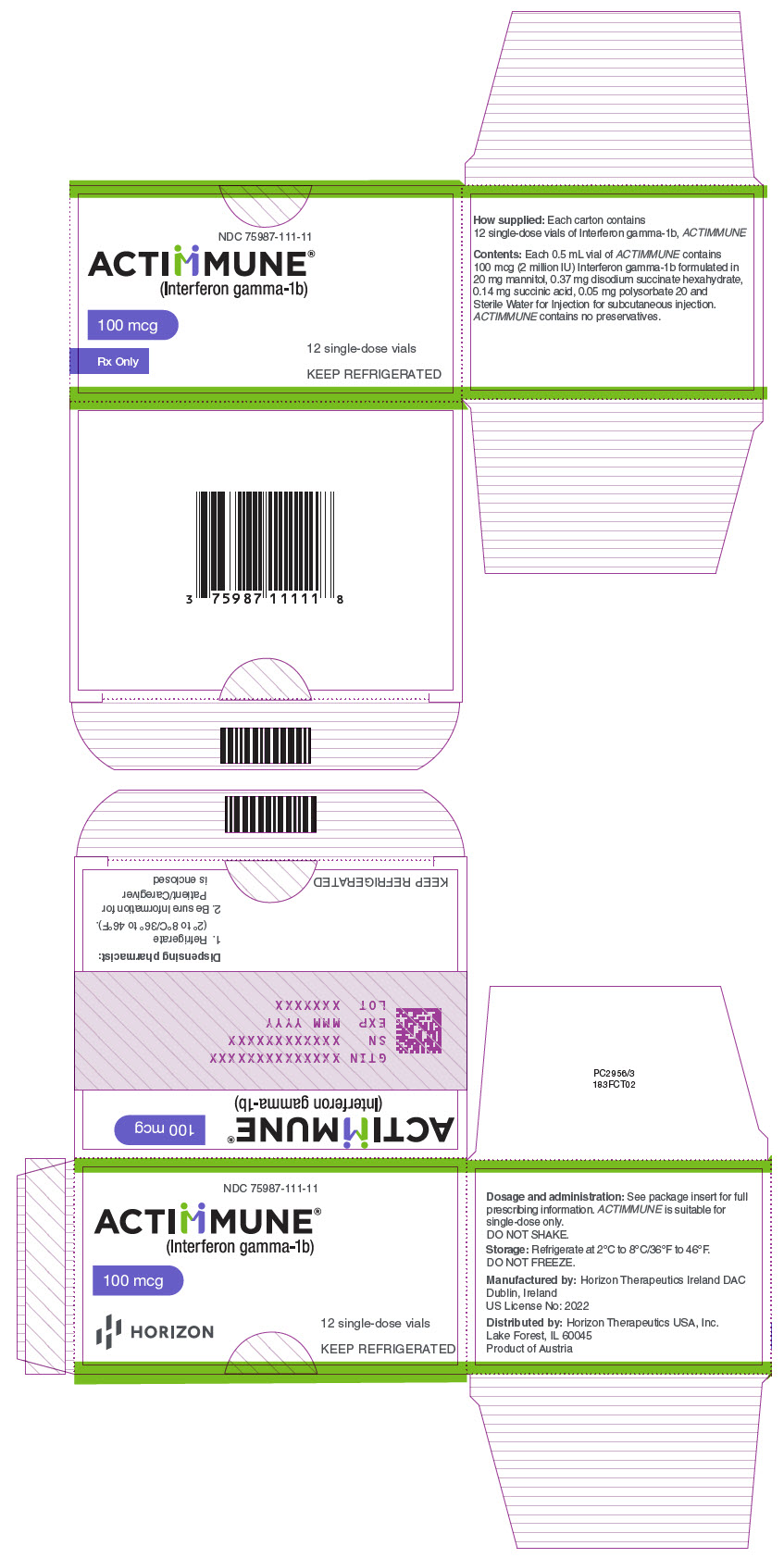
ACTIMMUNE Interferon gamma-1b 100 ug/.5mL Injection, Solution, 12 vials — NDC 75987-111-11 (Billing 75987-0111-11)
This is a package of 12 vials of ACTIMMUNE Interferon gamma-1b 100 ug/.5mL Injection, Solution from Horizon Therapeutics USA, Inc., marketed since Dec 2013 and currently FDA-listed. It is this product's only package size.
NDC database record
One package, one record: these facts belong to NDC 75987-111-11 alone.
- Record
- FDA NDC Directory package listing · Human prescription drug
- Code segments
- 75987 labeler · 111 product · 11 package
- Package marketed since
- Dec 1, 2013
- Sample package
- No — commercial package
- Listing certified through
- Dec 31, 2027
- Barcode (UPC-A, from the NDC)
- 3 7598711111 8
- Medicaid fills, this package
- 393 prescriptions in the last four reported quarters
- FDA record last changed
- Jul 24, 2026
Identity & classification
Regulatory identifiers FDA, NLM and CMS codes for this package
Drug-database identifiers Medi-Span GPI and First Databank GCN / HICL / AHFS classification
- GSN (GCN sequence number): 015914
- GCN: 48941
- GPI-14 (Medi-Span): 21700060702020
- HICL (First Databank): 006068
- AHFS class code: 92:20.00.00
- RxCUI (RxNorm): 240448
Where does this data come from?
- FDA openFDA NDC Directory · synced Oct 8, 2026
- FDA label on DailyMed · label index refreshed Oct 6, 2026
- RxNorm (NLM RxNav) · catalog refreshed Oct 1, 2026
- Medi-Span GPI (licensed)
- First Databank (licensed) · refreshed Oct 8, 2026
RxNorm drug class
This medicine belongs to the Interferon gamma class.
Where does this data come from?
- RxClass (NLM) · catalog refreshed Oct 1, 2026
Clinical
Interferon gamma-1b injection is used to reduce the frequency and severity of serious infections in people with chronic granulomatous disease (an inherited immune system disease). It is also used to slow down worsening of their condition in people with severe, malignant osteopetrosis (an inherited bone disease). Interferon gamma-1b is in a class of medications called immunomodulators. It is not known exactly how interferon gamma-1b works to treat chronic granulomatous disease and osteopetrosis.
Read the full MedlinePlus article ↗- Actimmune is used for two rare inherited conditions. It reduces how often and how severe serious infections are in chronic granulomatous disease (CGD). It also delays progression o...
- It is given under the skin three times a week, such as Monday, Wednesday and Friday. Your prescriber sets the dose based on body size. Each vial is single-use, so throw away any le...
- Fever, headache, chills, rash, tiredness, nausea and diarrhea are the most common. These flu-like symptoms may ease as treatment continues. Some people find that bedtime dosing hel...
- This medicine can affect blood counts, the liver and the kidneys. Your doctor checks blood, liver and kidney tests and urine before starting and about every three months. Babies un...
Patient education
Supplement & herbal interactions
Some supplements/herbs that may interact with Interferon Gamma-1b — tap one for details:
Where does this data come from?
- MedlinePlus (NLM) · refreshed Oct 1, 2026
- FDA label on DailyMed · label index refreshed Oct 6, 2026
Ask a licensed pharmacist directly — free, answered by our team.
Pricing
A drug doesn't have one price. Each row is a different public payment system, and none is what you'd pay at the counter — that depends on your insurance. The ⓘ on each row explains what it measures.
| Price system | Per mL | Per package |
|---|---|---|
| Retail pharmacies payNADAC · weekly | Not in the retail survey — common for institutional, discontinued, or low-volume packs. | |
| Medicaid paysCMS SDUD · 12 mo | $11,099.73 | $66,598.40 / 6 ml |
| Medicare drug plans payPart D · Q2 2026 | $11,760.70 | $70,564.22 / 6 ml |
| Medicare Part B allowsASP · J9216 | No ASP payment limit on file for J9216 this quarter. | |
Where does this data come from?
- CMS NADAC weekly file
- CMS ASP pricing files · refreshed Sep 20, 2026
- CMS Medicaid State Drug Utilization Data · through Q1 2026
- CMS Part D plan pricing files · refreshed Sep 24, 2026
- VA National Acquisition Center price file
Billing & reimbursement
Where does this data come from?
- CMS ASP NDC-HCPCS crosswalk · refreshed Sep 22, 2026
- DMEPDAC NDC-HCPCS crosswalk
- openFDA NSDE billing units · refreshed Oct 7, 2026
Packaging — all sizes for this product
| Package NDC | Description | Marketing start | Marketing end | Status |
|---|---|---|---|---|
| 75987-0111-11 You're viewing this Main listing | 12 VIAL, SINGLE-USE in 1 CARTON / .5 mL in 1 VIAL, SINGLE-USE | 2013-12-01 | — | Active |
Therapeutic equivalents
| Product | Labeler | Pack | NADAC/unit | TE | Status | Price vs. this |
|---|---|---|---|---|---|---|
| Actimmune 100 ug/.5mLthis 75987-0111-11 | Horizon | 12 vials | — | — | FDA listed | — |
Where does this data come from?
- FDA openFDA NDC Directory · synced Oct 8, 2026
- FDA Purple Book · refreshed Oct 5, 2026
- CMS NADAC weekly file
Availability & biosimilar status
Biologics have no small-molecule generics; biosimilar competition is tracked in the FDA Purple Book.
Where does this data come from?
- FDA Purple Book · refreshed Oct 5, 2026
Inactive Ingredients / Excipients
Inactive ingredients, also called excipients, are components of the drug product other than the active ingredient. They may include fillers, dyes, coatings, preservatives, flavors, or other formulation ingredients.
🧪 Avoiding an ingredient? See Interferon Gamma-1b Injection inactive ingredients by manufacturer: every current product's list side by side, so you can ask your pharmacy for the version that does not list it.
💡 Tap an ingredient (hover on desktop) to see what it is and why it’s used.
-
20 mg / 0.5 mL
UNII 3OWL53L36A
A natural sugar alcohol derived from seaweed or synthesized in the lab. It's used as a filler to add bulk, a sweetener in sugar-free formulas, and a disintegrant to help tablets break apart in the stomach.
-
0.05 mg / 0.5 mL
UNII 7T1F30V5YH
A synthetic emulsifier derived from sorbitol and oleic acid. It helps mix oil and water-based ingredients together and keeps them from separating in liquid formulations.
-
0.37 mg / 0.5 mL
UNII U16QOD6C4E
Sodium succinate hexahydrate is a salt form of succinic acid that contains water molecules. It functions as a buffer to help maintain stable pH levels in the medicine and may also act as a filler or tonicity agent.
-
UNII AB6MNQ6J6L
Succinic acid is an organic acid derived from natural sources or chemical synthesis. In medications, it functions as a buffer to help maintain the proper pH level and may also serve as a preservative or flavor enhancer in formulations.
-
UNII 059QF0KO0R
Water is a liquid solvent that dissolves and mixes ingredients together in liquid medicines, syrups, and injections. It helps distribute the active drug evenly throughout the product.
5 inactive ingredients listed in the exact product block matched to this NDC.
Where does this data come from?
ingredient classCode="IACT" elements from the exact product block matched by this NDC. Label-section narrative from DailyMed / the openFDA label index is shown separately when available.- FDA label on DailyMed · label index refreshed Oct 6, 2026
- FDA openFDA NDC Directory · synced Oct 8, 2026
Inactive ingredient FAQ
Are inactive ingredients the same for every manufacturer?
Why might an inactive ingredient be missing?
Can inactive ingredients matter?
Manufacturer & labeler
More NDCs from Horizon Therapeutics USA, Inc. labeler code 75987
- Krystexxa pegloticase 8 mg/50mL Injection, Solution NDC 75987-058-01
- Buphenyl sodium phenylbutyrate 500 mg Tablet NDC 75987-060-08
- Buphenyl sodium phenylbutyrate .94 g/g Powder NDC 75987-070-09
- Krystexxa pegloticase 8 mg/mL Injection, Solution NDC 75987-080-10
- PROCYSBI Cysteamine bitartrate 25 mg Capsule, Delayed Release Pellets NDC 75987-100-04
- PROCYSBI Cysteamine bitartrate 75 mg Capsule, Delayed Release Pellets NDC 75987-101-08
- Tepezza teprotumumab 500 mg Injection, Powder, Lyophilized, For Solution NDC 75987-130-15
- PROCYSBI Cysteamine bitartrate 75 mg Granule, Delayed Release NDC 75987-140-13
- PROCYSBI Cysteamine bitartrate 300 mg Granule, Delayed Release NDC 75987-145-13
- UPLIZNA Inebilizumab 10 mg/mL Injection NDC 75987-150-03
Where does this data come from?
- FDA openFDA NDC Directory · synced Oct 8, 2026
- Drugs@FDA
Full prescribing information FDA SPL
🎯 Indications and Usage ▾
1 INDICATIONS AND USAGE ACTIMMUNE is indicated for reducing the frequency and severity of serious infections associated with Chronic Granulomatous Disease (CGD). ACTIMMUNE is indicated for delaying time to disease progression in patients with severe, malignant osteopetrosis (SMO). ACTIMMUNE is an interferon gamma indicated for: Reducing the frequency and severity of serious infections associated with Chronic Granulomatous Disease (CGD) ( 1 ) Delaying time to disease progression in patients with severe, malignant osteopetrosis (SMO) ( 1 )
⏱️ Dosage and Administration ▾
2 DOSAGE AND ADMINISTRATION For subcutaneous use only ( 2.1 ) The recommended dose is 50 mcg/m 2 for patients whose body surface area is greater than 0.5 m 2 and 1.5 mcg/kg/dose for patients whose body surface area is equal to or less than 0.5 m 2 three times weekly. ( 2.1 ) Monitor hematology, blood chemistries and urinalysis prior to the beginning of treatment and at 3-month intervals. ( 2.1 ) If severe reactions occur, reduce dose by 50 percent or discontinue therapy until the adverse reaction abates.
( 2.3 )
2.1Dosing Information The recommended dosage of ACTIMMUNE administered subcutaneously, for the treatment of patients with CGD and SMO is shown in Table 1 below: Table 1: Recommended Dosage for ACTIMMUNE for the Treatment of Patients with CGD and SMO Body Surface Area (m 2 ) Dose (mcg/m 2 ) Dose (International Units/m 2 ) Note that the above activity is expressed in International Units (1 million International Units/50 mcg). This is equivalent to what was previously expressed as units (1.5 million units/50 mcg). Frequency Greater than 0.5 m 2 50 mcg/m 2 1 million International Units/m 2 Three times weekly (For example, Monday, Wednesday and Friday) Equal to or less than 0.5 m 2 1.5 mcg/kg/dose ------------ Three times weekly (For example, Monday, Wednesday and Friday) Prior to the beginning of treatment and at three-month intervals during treatment the following laboratory tests are recommended for all patients on ACTIMMUNE (interferon gamma-1b) therapy [see Warnings and Precautions (5.3 , 5.4 , 5.6) ] : Hematologic tests – including complete blood counts, differential and platelet counts Blood chemistries – including renal and liver function tests.
In patients less than 1 year of age, liver function tests should be measured monthly [see Adverse Reactions (6.2) ] . Urinalysis
2.2Important Administration Instructions The optimum sites of subcutaneous injection are the right and left deltoid and anterior thigh. ACTIMMUNE can be administered by a physician, nurse, family member or patient when appropriately counseled in the administration of subcutaneous injections. Parenteral drug products should be inspected visually for particulate matter and discoloration prior to administration, whenever solution and container permit.
ACTIMMUNE is a clear, colorless solution. ACTIMMUNE is for a single dose only. Discard any unused portion.
ACTIMMUNE does not contain a preservative. ACTIMMUNE should not be mixed with other drugs in the same syringe. Administer ACTIMMUNE using either sterilized glass or plastic disposable syringes.
2.3Dose Modification If severe reactions occur, the dosage should be reduced by 50 percent or therapy should be interrupted until the adverse reaction abates. Safety and efficacy has not been established for ACTIMMUNE given in doses greater or less than the recommended dose of 50 mcg/m 2 . Higher doses (i.e., greater than 50 mcg/m 2 ) are not recommended. The minimum effective dose of ACTIMMUNE has not been established.
💊 Dosage Forms and Strengths ▾
3 DOSAGE FORMS AND STRENGTHS Injection: 100 mcg (2 million International Units) per 0.5 mL solution in a single-dose vial. ACTIMMUNE (interferon gamma-1b) is a sterile, clear, colorless solution filled in a single-dose vial for subcutaneous injection. Injection : 100 mcg (2 million International Units) of Interferon gamma-1b in 0.5 mL solution in a single dose vial. ( 3 )
⛔ Contraindications ▾
4 CONTRAINDICATIONS ACTIMMUNE is contraindicated in patients who develop or have known hypersensitivity to interferon gamma, E. coli derived products, or any component of the product. Known hypersensitivity to interferon gamma, E. coli derived products, or any component of the product ( 4 )
⚠️ Warnings and Cautions ▾
5 WARNINGS AND PRECAUTIONS Cardiovascular Disorders : Pre-existing cardiac conditions may be exacerbated. ( 5.1 ) Neurologic Disorders : Reduce dose or discontinue if decreased mental status, gait disturbance, dizziness occur. ( 5.2 ) Bone Marrow Toxicity : Monitor for neutropenia and thrombocytopenia particularly when administering ACTIMMUNE in combination with other potentially myelosuppressive agents.
( 5.3 ) Hepatic Toxicity : Reduce dose or discontinue to reverse severe elevations of aspartate transaminase (AST) and/or alanine transaminase (ALT); monitor liver function monthly in patients less than 1 year old. ( 5.4 ) Hypersensitivity Reactions: If serious hypersensitivity reactions occur, discontinue and institute appropriate medical therapy. ( 5.5 ) Renal Toxicity : Monitor renal function regularly when administering ACTIMMUNE to patients with severe renal insufficiency ( 5.6 )
5.1Cardiovascular Disorders Acute and transient "flu-like" symptoms such as fever and chills induced by ACTIMMUNE at doses of 250 mcg/m 2 /day (greater than 10 times the weekly recommended dose) or higher may exacerbate pre-existing cardiac conditions. Patients with pre-existing cardiac conditions, including ischemia, congestive heart failure or arrhythmia on ACTIMMUNE should be monitored for signs/symptoms of exacerbation. Some of the "flu-like" symptoms may be minimized by bedtime administration of ACTIMMUNE.
Acetaminophen may also be used to ameliorate these effects.
5.2Neurologic Disorders Decreased mental status, gait disturbance and dizziness have been observed, particularly in patients receiving ACTIMMUNE doses greater than 250 mcg/m 2 /day (greater than 10 times the weekly recommended dose). Most of these abnormalities were reversible within a few days upon dose reduction or discontinuation of therapy. Monitor patients when administering ACTIMMUNE to patients with seizure disorders or compromised central nervous system function.
5.3Bone Marrow Toxicity Reversible neutropenia and thrombocytopenia that can be severe and may be dose related have been observed during ACTIMMUNE therapy. Monitor neutrophil and platelet counts in patients with myelosuppression during treatment with ACTIMMUNE.
5.4Hepatic Toxicity Repeated administration of ACTIMMUNE to patients with advanced hepatic disease may result in accumulation of interferon gamma-1b. Frequent assessment of liver function in these patients is recommended. Elevations of aspartate transaminase (AST) and/or alanine transaminase (ALT) (up to 25-fold) have been observed during ACTIMMUNE therapy.
The incidence appeared to be higher in patients less than 1 year of age compared to older children. The transaminase elevations were reversible with reduction in dosage or interruption of ACTIMMUNE treatment. Patients begun on ACTIMMUNE before age one year should receive monthly assessments of liver function.
If severe hepatic enzyme elevations develop, ACTIMMUNE dosage should be modified [see Dosage and Administration (2.3) ] .
5.5Hypersensitivity Reactions Isolated cases of acute serious hypersensitivity reactions have been observed in patients receiving ACTIMMUNE. If such an acute reaction develops the drug should be discontinued immediately and appropriate medical therapy instituted. Transient cutaneous rashes have occurred in some patients following injection of ACTIMMUNE that have necessitated treatment interruption.
5.6Renal Toxicity Monitor renal function regularly when administering ACTIMMUNE in patients with severe renal insufficiency because the possibility exists that with repeated administration, accumulation of interferon gamma-1b may occur. Renal toxicity has been reported in patients receiving ACTIMMUNE.
5.7Allergic Reactions to Natural Rubber The stopper of the glass vial for ACTIMMUNE contains natural rubber (a derivative of latex) which may cause allergic reactions.
🤒 Adverse Reactions ▾
6 ADVERSE REACTIONS The following adverse reactions are described below and elsewhere in the warnings and precautions section of the labeling: Cardiovascular Disorders [see Warnings and Precautions (5.1) ] Neurologic Disorders [see Warnings and Precautions (5.2) ] Bone Marrow Toxicity [see Warnings and Precautions (5.3) ] Hepatic Toxicity [see Warnings and Precautions (5.4) ] Hypersensitivity Reactions [see Warnings and Precautions (5.5) ] Renal Toxicity [see Warnings and Precautions (5.6) ] Common adverse reactions (incidence rate 2% or greater) for ACTIMMUNE include fever, headache, rash, chills, injection site erythema or tenderness, fatigue, diarrhea.
( 6 ) To report SUSPECTED ADVERSE REACTIONS, contact Amgen Inc.at 1 800 77 AMGEN (1 800 772 6436)or FDA at 1-800-FDA-1088 or www.fda.gov/medwatch .
6.1Clinical Trials Experience Because clinical trials are conducted under widely varying conditions, adverse reaction rates observed in the clinical trials of a drug cannot be directly compared to rates in the clinical trials of another drug and may not reflect the rates observed in practice. The following data on adverse reactions are based on the subcutaneous administration of ACTIMMUNE at a dose of 50 mcg/m 2 , three times weekly, in patients with CGD during a clinical trial in the United States and Europe. The most common adverse reactions observed in patients with CGD are shown in the following table: Table 2: Adverse Reactions Occurring in 2% or Greater of CGD Patients Receiving ACTIMMUNE in Clinical Trials Adverse Reactions Percent of Patients ACTIMMUNE CGD (n=63) Placebo CGD (n=65) Fever 52 28 Headache 33 9 Rash 17 6 Chills 14 0 Injection site erythema or tenderness 14 2 Fatigue 14 11 Diarrhea 14 12 Vomiting 13 5 Nausea 10 2 Myalgia 6 0 Arthralgia 2 0 Similar safety data were observed in 34 patients with SMO.
The clinical and laboratory toxicity associated with multiple dose studies of ACTIMMUNE is dose, route and schedule-dependent. The most common adverse reactions include constitutional symptoms such as fever, headache, chills, myalgia or fatigue which may decrease in severity as treatment continues. Less Common Adverse Reactions The following adverse reactions are assessed as potentially related to ACTIMMUNE (interferon gamma-1b) therapy: Blood and Lymphatic System — neutropenia (reversible), febrile neutropenia, leukopenia, and thrombocytopenia.
Cardiovascular — angina pectoris, arrhythmia, atrial fibrillation, atrioventricular block, cardiac failure (including congestive cardiac failure), tachyarrhythmia, heart block, (acute) myocardial infarction, myocardial ischemia, syncope, and tachycardia. Gastrointestinal — abdominal pain, dyspepsia, gastrointestinal bleeding, granulomatous colitis, hepatic insufficiency, and pancreatitis, including pancreatitis with fatal outcome. General Disorders and Administration Site Conditions — asthenia, chest pain/discomfort, influenza-like illness/flu-like symptoms, injection site hemorrhage, injection site pain, malaise, rigors, and weakness.
Hepatobiliary Disorders — hepatic insufficiency and hepatomegaly. Immunological — hypersensitivity, increased autoantibodies, lupus-like syndrome (including systemic lupus erythematosus-flares and drug-induced lupus erythematosus), and Stevens-Johnson syndrome. Infections and Infestations — upper respiratory tract infection.
Investigations — blood alkaline phosphatase increased, liver function tests abnormal/elevation of hepatic enzymes, increased triglycerides, and weight decreased. Metabolic — hyponatremia, hypokalemia, hyperglycemia, and hypertriglyceridemia. Musculoskeletal — back pain, clubbing, and muscle spasms.
Nervous System — dizziness (excluding vertigo), gait disturbance, headache, Parkinsonian symptoms, convulsion/seizure (including grand mal convulsions), and transient ischemic attacks. Psychiatric — confusion, depression, disorientation, hallucinations, mental status changes, and mental status decreased. Pulmonary — tachypnea, br… [Excerpted — this section continues on DailyMed.]
🔄 Drug Interactions ▾
7 DRUG INTERACTIONS Concomitant use of drugs with neurotoxic, hematotoxic or cardiotoxic effects may increase the toxicity of interferons. ( 7.2 ) Avoid simultaneous administration of ACTIMMUNE with other heterologous serum protein or immunological preparations (e.g., vaccines). ( 7.3 )
7.1Myelosuppressive Agents When administering ACTIMMUNE in combination with other potentially myelosuppressive agents, monitor neutrophil and platelet counts [see Warnings and Precautions (5.3) ] .
7.2Drugs with Neurotoxic, Hematoxic or Cardiotoxic Effects The concurrent use of drugs having neurotoxic (including effects on the central nervous system), hematotoxic, or cardiotoxic effects may increase the toxicity of interferons in these systems. It is theoretically possible that hepatotoxic and/or nephrotoxic drugs might have an effect on the clearance of ACTIMMUNE.
7.3Immunological Preparations Simultaneous administration of ACTIMMUNE with other heterologous serum protein preparations or immunological preparations (e.g., vaccines) should be avoided due to the risk of an unexpected, or amplified, immune response.
7.4Effects on Cytochrome P-450 Pathways Preclinical studies in rodents using species-specific interferon gamma have demonstrated a decrease in hepatic microsomal cytochrome P-450 concentrations. This could potentially lead to a depression of the hepatic metabolism of certain drugs that utilize this degradative pathway.
👥 Use in Specific Populations ▾
8 USE IN SPECIFIC POPULATIONS Based on animal data, may cause fetal harm. ( 8.1 )
8.1Pregnancy Risk Summary There are no adequate and well-controlled studies in pregnant women. ACTIMMUNE should be used during pregnancy only if the potential benefit justifies the potential risk to the fetus. Animal Data ACTIMMUNE has shown an increased incidence of abortions in primates when given from gestation day 20 to 80 in doses approximately 100 times the human dose.
A study in pregnant primates treated with subcutaneous doses 2 – 100 times the human dose failed to demonstrate teratogenic activity for ACTIMMUNE. Female mice treated subcutaneously with recombinant murine IFN-interferon gamma (rmuIFN-gamma) at 280 times the maximum recommended clinical dose of ACTIMMUNE from shortly after birth through puberty but not during pregnancy had offspring which exhibited decreased body weight during the lactation period. The clinical significance of this finding observed following treatment of mice with rmuIFN-gamma is uncertain.
For lower doses, there is no evidence of maternal toxicity, embryotoxicity, fetotoxicity or teratogenicity in preclinical studies.
8.2Lactation Risk Summary It is not known whether ACTIMMUNE is excreted in human milk. Because many drugs are excreted in human milk and because of the potential for serious adverse reactions in nursing infants from ACTIMMUNE, a decision should be made whether to discontinue nursing or to discontinue the drug, dependent upon the importance of the drug to the mother.
8.3Females and Males of Reproductive Potential Infertility Based on the information available, it cannot be excluded that the presence of higher levels of interferon gamma may impair male fertility and that in certain cases of female infertility increased levels of interferon gamma may have played a role [ see Nonclinical Toxicology (13.1) ]. In younger patients, the long-term effect on fertility is also not known.
8.4Pediatric Use The safety and effectiveness of ACTIMMUNE has been established in pediatric patients aged 1 year and older in CGD patients and 1 month and older in SMO patients [see Clinical Studies (14) ]. There are no data available for pediatric patients below the age of 1 month.
8.5Geriatric Use Clinical studies of ACTIMMUNE did not include sufficient numbers of subjects aged 65 and over to determine whether they respond differently from younger subjects. In general, dose selection for an elderly patient should be cautious, usually starting at the low end of the dosing range, reflecting the greater frequency of decreased hepatic, renal, or cardiac function, and of concomitant disease or other drug therapy.
🤰 Pregnancy ▾
8.1Pregnancy Risk Summary There are no adequate and well-controlled studies in pregnant women. ACTIMMUNE should be used during pregnancy only if the potential benefit justifies the potential risk to the fetus. Animal Data ACTIMMUNE has shown an increased incidence of abortions in primates when given from gestation day 20 to 80 in doses approximately 100 times the human dose.
A study in pregnant primates treated with subcutaneous doses 2 – 100 times the human dose failed to demonstrate teratogenic activity for ACTIMMUNE. Female mice treated subcutaneously with recombinant murine IFN-interferon gamma (rmuIFN-gamma) at 280 times the maximum recommended clinical dose of ACTIMMUNE from shortly after birth through puberty but not during pregnancy had offspring which exhibited decreased body weight during the lactation period. The clinical significance of this finding observed following treatment of mice with rmuIFN-gamma is uncertain.
For lower doses, there is no evidence of maternal toxicity, embryotoxicity, fetotoxicity or teratogenicity in preclinical studies.
🧒 Pediatric Use ▾
8.4Pediatric Use The safety and effectiveness of ACTIMMUNE has been established in pediatric patients aged 1 year and older in CGD patients and 1 month and older in SMO patients [see Clinical Studies (14) ]. There are no data available for pediatric patients below the age of 1 month.
🧓 Geriatric Use ▾
8.5Geriatric Use Clinical studies of ACTIMMUNE did not include sufficient numbers of subjects aged 65 and over to determine whether they respond differently from younger subjects. In general, dose selection for an elderly patient should be cautious, usually starting at the low end of the dosing range, reflecting the greater frequency of decreased hepatic, renal, or cardiac function, and of concomitant disease or other drug therapy.
🆘 Overdosage ▾
10 OVERDOSAGE Central nervous system adverse reactions including decreased mental status, gait disturbance and dizziness have been observed, particularly in patients receiving doses greater than 100 mcg/m 2 /day by intravenous or intramuscular administration. These abnormalities were reversible within a few days upon dose reduction or discontinuation of therapy. Reversible neutropenia, elevation of hepatic enzymes and of triglycerides, and thrombocytopenia have also been observed.
🧬 Clinical Pharmacology ▾
12 CLINICAL PHARMACOLOGY
12.1Mechanism of Action Interferons bind to specific cell surface receptors and initiate a sequence of intracellular events that lead to the transcription of interferon-stimulated genes. The three major groups of interferons (alpha, beta, gamma) have partially overlapping biological activities that include immunoregulation such as increased resistance to microbial pathogens and inhibition of cell proliferation. Type 1 interferons (alpha and beta) bind to the alpha/ beta receptor.
Interferon gamma binds to a different cell surface receptor and is classified as Type 2 interferon. Specific effects of interferon gamma include the enhancement of the oxidative metabolism of macrophages, antibody dependent cellular cytotoxicity (ADCC), activation of natural killer (NK) cells, and the expression of Fc receptors and major histocompatibility antigens. CGD is an inherited disorder of leukocyte function caused by defects in the enzyme complex responsible for phagocyte superoxide generation.
ACTIMMUNE does not increase phagocyte superoxide production even in treatment responders. In SMO (an inherited disorder characterized by an osteoclast defect, leading to bone overgrowth, and by deficient phagocyte oxidative metabolism), a treatment-related enhancement of superoxide production by phagocytes was observed. ACTIMMUNE was found to enhance osteoclast function in vivo.
In both disorders, the exact mechanism(s) by which ACTIMMUNE has a treatment effect has not been established. Changes in superoxide levels during ACTIMMUNE therapy do not predict efficacy and should not be used to assess patient response to therapy.
12.3Pharmacokinetics Pharmacokinetic studies in patients with CGD have not been performed. The intravenous, intramuscular, and subcutaneous pharmacokinetics of ACTIMMUNE have been investigated in 24 healthy male subjects following single-dose administration of 100 mcg/m 2 (twice the recommended dose for CGD and SMO patients). ACTIMMUNE is rapidly cleared after intravenous administration (1.4 Liters/minute) and slowly absorbed after intramuscular or subcutaneous injection.
After intramuscular or subcutaneous injection, the apparent fraction of dose absorbed was greater than 89%. The mean elimination half-life after intravenous administration of 100 mcg/m 2 in healthy male subjects was 38 minutes. The mean elimination half-lives for intramuscular and subcutaneous dosing with 100 mcg/m 2 were 2.9 and 5.9 hours, respectively.
Peak plasma concentrations, determined by ELISA, occurred approximately 4 hours (1.5 ng/mL) after intramuscular dosing and 7 hours (0.6 ng/mL) after subcutaneous dosing. Multiple dose subcutaneous pharmacokinetic studies were conducted in 38 healthy male subjects. There was no accumulation of ACTIMMUNE after 12 consecutive daily injections of 100 mcg/m 2 .
Interferon gamma was not detected in the urine of healthy human volunteers following administration of 100 mcg/m 2 of ACTIMMUNE by the intravenous, intramuscular and subcutaneous routes. In vitro perfusion studies utilizing rabbit livers and kidneys demonstrate that these organs are capable of clearing interferon gamma from perfusate.
🧬 Mechanism of Action ▾
12.1Mechanism of Action Interferons bind to specific cell surface receptors and initiate a sequence of intracellular events that lead to the transcription of interferon-stimulated genes. The three major groups of interferons (alpha, beta, gamma) have partially overlapping biological activities that include immunoregulation such as increased resistance to microbial pathogens and inhibition of cell proliferation. Type 1 interferons (alpha and beta) bind to the alpha/ beta receptor.
Interferon gamma binds to a different cell surface receptor and is classified as Type 2 interferon. Specific effects of interferon gamma include the enhancement of the oxidative metabolism of macrophages, antibody dependent cellular cytotoxicity (ADCC), activation of natural killer (NK) cells, and the expression of Fc receptors and major histocompatibility antigens. CGD is an inherited disorder of leukocyte function caused by defects in the enzyme complex responsible for phagocyte superoxide generation.
ACTIMMUNE does not increase phagocyte superoxide production even in treatment responders. In SMO (an inherited disorder characterized by an osteoclast defect, leading to bone overgrowth, and by deficient phagocyte oxidative metabolism), a treatment-related enhancement of superoxide production by phagocytes was observed. ACTIMMUNE was found to enhance osteoclast function in vivo.
In both disorders, the exact mechanism(s) by which ACTIMMUNE has a treatment effect has not been established. Changes in superoxide levels during ACTIMMUNE therapy do not predict efficacy and should not be used to assess patient response to therapy.
📦 How Supplied / Storage and Handling ▾
16 HOW SUPPLIED/STORAGE AND HANDLING
16.1How Supplied ACTIMMUNE (interferon gamma-1b) is a sterile, clear, colorless solution filled in a single-dose vial for subcutaneous injection. Each vial permits the extraction of up to 0.5 mL of ACTIMMUNE with additional volume to facilitate solution withdrawal. Each 0.5 mL of ACTIMMUNE contains: 100 mcg (2 million International Units) of interferon gamma-1b. NDC Number Size 75987-111-10 One vial 75987-111-11 Cartons of 12 vials
16.2Storage and Handling Store vials in the refrigerator at 2 to 8 °C (36 °F – 46 °F). Do Not Freeze. Avoid excessive or vigorous agitation. Do Not Shake . An unused vial of ACTIMMUNE can be stored at room temperature up to 12 hours prior to use. Discard vials if not used within the 12 hour period. Do not return to the refrigerator.
16.1How Supplied ACTIMMUNE (interferon gamma-1b) is a sterile, clear, colorless solution filled in a single-dose vial for subcutaneous injection. Each vial permits the extraction of up to 0.5 mL of ACTIMMUNE with additional volume to facilitate solution withdrawal. Each 0.5 mL of ACTIMMUNE contains: 100 mcg (2 million International Units) of interferon gamma-1b. NDC Number Size 75987-111-10 One vial 75987-111-11 Cartons of 12 vials
📦 Storage and Handling ▾
16.2Storage and Handling Store vials in the refrigerator at 2 to 8 °C (36 °F – 46 °F). Do Not Freeze. Avoid excessive or vigorous agitation. Do Not Shake . An unused vial of ACTIMMUNE can be stored at room temperature up to 12 hours prior to use. Discard vials if not used within the 12 hour period. Do not return to the refrigerator.
📋 Description ▾
11 DESCRIPTION ACTIMMUNE (Interferon gamma-1b), an interferon gamma, is a single-chain polypeptide containing 140 amino acids. Production of ACTIMMUNE is achieved by fermentation of a genetically engineered Escherichia coli bacterium containing the DNA which encodes for the recombinant protein. Purification of the product is achieved by conventional column chromatography.
ACTIMMUNE is a highly purified sterile solution consisting of non-covalent dimers of two identical 16,465 Dalton monomers; with a specific activity of 20 million International Units/mg (2 × 10 6 International Units/0.5 mL) which is equivalent to 30 million units/mg. ACTIMMUNE is a sterile, clear, colorless solution filled in a single-dose vial for subcutaneous injection. Each 0.5 mL of ACTIMMUNE contains: 100 mcg (2 million International Units) of interferon gamma-1b formulated in disodium succinate hexahydrate (0.37 mg), mannitol (20 mg), polysorbate 20 (0.05 mg), succinic acid (0.14 mg) and Sterile Water for Injection.
Note that the above activity is expressed in International Units (1 million International Units/50 mcg). This is equivalent to what was previously expressed as units (1.5 million units/50 mcg).
💬 Information for Patients ▾
17 PATIENT COUNSELING INFORMATION Advise the patient and/or their parents or caregivers to read the FDA-approved patient labeling (Information for Patient/Caregiver). Inform patients and/or their parents or caregiver regarding the potential benefits and risks associated with treatment. If home use is determined to be desirable by the physician, instructions on appropriate use should be given, including review of the contents of the Information for Patient/ Caregiver.
This information is intended to aid in the safe and effective use of the medication. It is not a disclosure of all possible adverse or intended effects. If home use is prescribed, a puncture resistant container for the disposal of used syringes and needles should be used by the patient and/or parents or caregivers.
Instruct patients thoroughly on the importance of proper disposal and caution the patient and/or patient or caregiver against any reuse of needles and syringes. The full container should be disposed of according to the directions provided by the physician. Advise the patients and/or their parents or caregivers that the most common adverse reactions occurring with ACTIMMUNE therapy are "flu-like" or constitutional symptoms such as fever, headache, chills, myalgia or fatigue [see Adverse Reactions (6.1) ] which may decrease in severity as treatment continues.
Some of the "flu-like" symptoms may be minimized by bedtime administration of ACTIMMUNE. Acetaminophen may also be used to prevent or partially alleviate the fever and headache. Advise patients and/or their parents or caregivers that they may experience undesirable effects such as fatigue, convulsion, confusional state, disorientation or hallucination during treatment.
Therefore, caution should be recommended when driving a car or operating machinery. If patients experience any of these events, they should avoid potentially hazardous tasks such as driving or operating machinery. This effect may be enhanced by alcohol.
Manufactured by: Horizon Therapeutics Ireland DAC Dublin, Ireland U.S. License No. 2022 © 2025 Amgen Inc.
All rights reserved. 1XXXXXX-V5
🧬 Pharmacokinetics ▾
12.3Pharmacokinetics Pharmacokinetic studies in patients with CGD have not been performed. The intravenous, intramuscular, and subcutaneous pharmacokinetics of ACTIMMUNE have been investigated in 24 healthy male subjects following single-dose administration of 100 mcg/m 2 (twice the recommended dose for CGD and SMO patients). ACTIMMUNE is rapidly cleared after intravenous administration (1.4 Liters/minute) and slowly absorbed after intramuscular or subcutaneous injection.
After intramuscular or subcutaneous injection, the apparent fraction of dose absorbed was greater than 89%. The mean elimination half-life after intravenous administration of 100 mcg/m 2 in healthy male subjects was 38 minutes. The mean elimination half-lives for intramuscular and subcutaneous dosing with 100 mcg/m 2 were 2.9 and 5.9 hours, respectively.
Peak plasma concentrations, determined by ELISA, occurred approximately 4 hours (1.5 ng/mL) after intramuscular dosing and 7 hours (0.6 ng/mL) after subcutaneous dosing. Multiple dose subcutaneous pharmacokinetic studies were conducted in 38 healthy male subjects. There was no accumulation of ACTIMMUNE after 12 consecutive daily injections of 100 mcg/m 2 .
Interferon gamma was not detected in the urine of healthy human volunteers following administration of 100 mcg/m 2 of ACTIMMUNE by the intravenous, intramuscular and subcutaneous routes. In vitro perfusion studies utilizing rabbit livers and kidneys demonstrate that these organs are capable of clearing interferon gamma from perfusate.
🔬 Clinical Studies ▾
14 CLINICAL STUDIES
14.1Effects in Chronic Granulomatous Disease (CGD) A randomized, double-blind, placebo-controlled trial of ACTIMMUNE (interferon gamma-1b) in patients with CGD, was performed to determine whether ACTIMMUNE administered subcutaneously on a three times weekly schedule could decrease the incidence of serious infectious episodes and improve existing infectious and inflammatory conditions in patients with CGD. One hundred twenty-eight eligible patients were enrolled in this trial including patients with different patterns of inheritance.
Most patients received prophylactic antibiotics. Patients ranged in age from 1 to 44 years with the mean age being 14.6 years. The study was terminated early following demonstration of a highly statistically significant benefit of ACTIMMUNE therapy compared to placebo with respect to time to serious infection (p=0.0036), the primary endpoint of the investigation.
Serious infection was defined as a clinical event requiring hospitalization and the use of parenteral antibiotics. The final analysis provided further support for the primary endpoint (p=0.0006). There was a 67 percent reduction in relative risk of serious infection in patients receiving ACTIMMUNE (n=63) compared to placebo (n=65).
Additional supportive evidence of treatment benefit included a twofold reduction in the number of primary serious infections in the ACTIMMUNE group (30 on placebo versus 14 on ACTIMMUNE, p=0.002) and the total number and rate of serious infections including recurrent events (56 on placebo versus 20 on ACTIMMUNE, p=<0.0001). Moreover, the length of hospitalization for the treatment of all clinical events provided evidence highly supportive of an ACTIMMUNE treatment benefit. Placebo patients required three times as many inpatient hospitalization days for treatment of clinical events compared to patients receiving ACTIMMUNE (1493 versus 497 total days, p=0.02).
An ACTIMMUNE treatment benefit with respect to time to serious infection was consistently demonstrated in all subgroup analyses according to stratification factors, including pattern of inheritance, use of prophylactic antibiotics, as well as age. There was a 67 percent reduction in relative risk of serious infection in patients receiving ACTIMMUNE compared to placebo across all groups. The beneficial effect of ACTIMMUNE therapy was observed throughout the entire study, in which the mean duration of ACTIMMUNE administration was 8.9 months/patient.
14.2Effects in Severe, Malignant Osteopetrosis (SMO) A controlled, randomized trial in patients with SMO was conducted with ACTIMMUNE administered subcutaneously three times weekly. Sixteen patients were randomized to receive either ACTIMMUNE plus calcitriol (n=11), or calcitriol alone (n=5). Patients ranged in age from 1 month to 8 years, mean 1.5 years.
Treatment failure was considered to be disease progression as defined by 1) death, 2) significant reduction in hemoglobin or platelet counts, 3) a serious bacterial infection requiring antibiotics, or 4) a 50 dB decrease in hearing or progressive optic atrophy. The median time to disease progression was significantly delayed in the ACTIMMUNE plus calcitriol arm versus calcitriol alone. In the treatment arm, the median was not reached.
Based on the observed data, however, the median time to progression in this arm was at least 165 days versus a median of 65 days in the calcitriol alone arm. In an analysis which combined data from a second study, 19 of 24 patients treated with ACTIMMUNE plus or minus calcitriol for at least 6 months had reduced trabecular bone volume compared to baseline.
🧪 Nonclinical Toxicology ▾
13 NONCLINICAL TOXICOLOGY
13.1Carcinogenesis, Mutagenesis, Impairment of Fertility Carcinogenesis: ACTIMMUNE has not been tested for its carcinogenic potential. Mutagenesis: Ames tests using five different tester strains of bacteria with and without metabolic activation revealed no evidence of mutagenic potential. ACTIMMUNE was tested in a micronucleus assay for its ability to induce chromosomal damage in bone marrow cells of mice following two intravenous doses of 20 mg/kg.
No evidence of chromosomal damage was noted. Impairment of Fertility : Female cynomolgus monkeys treated with daily subcutaneous doses of 30 or 150 mcg/kg ACTIMMUNE (approximately 20 and 100 times the human dose) exhibited irregular menstrual cycles or absence of cyclicity during treatment. Similar findings were not observed in animals treated with 3 mcg/kg ACTIMMUNE.
Female mice receiving recombinant murine IFN-interferon gamma (rmuIFN-gamma) at 32 times the maximum recommended clinical dose of ACTIMMUNE for 4 weeks via intramuscular injection exhibited an increased incidence of atretic ovarian follicles. Male cynomolgus monkeys treated intravenously for 4 weeks with 8 times the maximum recommended clinical dose of ACTIMMUNE exhibited decreased spermatogenesis. Male mice receiving rmuIFN-gamma at 32 times the maximum recommended clinical dose of ACTIMMUNE for 4 weeks via intramuscular injection exhibited decreased spermatogenesis.
The impact of this finding on fertility is not known. Male mice treated subcutaneously with rmuIFN-gamma from shortly after birth through puberty, with 280 times the maximum recommended clinical dose of ACTIMMUNE exhibited profound yet reversible decreases in sperm counts and fertility, and an increase in the number of abnormal sperm. The clinical significance of these findings observed following treatment of mice with rmuIFN-gamma is uncertain.
📄 Carcinogenesis, Mutagenesis, Impairment of Fertility ▾
13.1Carcinogenesis, Mutagenesis, Impairment of Fertility Carcinogenesis: ACTIMMUNE has not been tested for its carcinogenic potential. Mutagenesis: Ames tests using five different tester strains of bacteria with and without metabolic activation revealed no evidence of mutagenic potential. ACTIMMUNE was tested in a micronucleus assay for its ability to induce chromosomal damage in bone marrow cells of mice following two intravenous doses of 20 mg/kg.
No evidence of chromosomal damage was noted. Impairment of Fertility : Female cynomolgus monkeys treated with daily subcutaneous doses of 30 or 150 mcg/kg ACTIMMUNE (approximately 20 and 100 times the human dose) exhibited irregular menstrual cycles or absence of cyclicity during treatment. Similar findings were not observed in animals treated with 3 mcg/kg ACTIMMUNE.
Female mice receiving recombinant murine IFN-interferon gamma (rmuIFN-gamma) at 32 times the maximum recommended clinical dose of ACTIMMUNE for 4 weeks via intramuscular injection exhibited an increased incidence of atretic ovarian follicles. Male cynomolgus monkeys treated intravenously for 4 weeks with 8 times the maximum recommended clinical dose of ACTIMMUNE exhibited decreased spermatogenesis. Male mice receiving rmuIFN-gamma at 32 times the maximum recommended clinical dose of ACTIMMUNE for 4 weeks via intramuscular injection exhibited decreased spermatogenesis.
The impact of this finding on fertility is not known. Male mice treated subcutaneously with rmuIFN-gamma from shortly after birth through puberty, with 280 times the maximum recommended clinical dose of ACTIMMUNE exhibited profound yet reversible decreases in sperm counts and fertility, and an increase in the number of abnormal sperm. The clinical significance of these findings observed following treatment of mice with rmuIFN-gamma is uncertain.
📄 Patient Package Insert ▾
Information for the Patient/Caregiver ACTIMMUNE ® (Interferon gamma-1b) DO NOT ADMINISTER ACTIMMUNE UNTIL YOUR PHYSICIAN HAS THOROUGHLY TRAINED YOU IN THE PROPER TECHNIQUES. ACTIMMUNE is supplied in single-dose vials. The unused portion of each vial should be disposed of as instructed by your physician.
DO NOT SHAKE. Your physician will tell you what size needle and syringe to use and also give you instructions on sterile technique. Keep all used syringes and needles out of the reach of children.
Follow your physician's instructions on the safe disposal of used syringes and needles. MEASURING THE DOSE In measuring the correct dose for injection, be sure to check that the ACTIMMUNE solution is clear. If the solution is cloudy or hazy, do not inject it, but return the ACTIMMUNE vial to your pharmacist or prescribing physician.
1. Wash your hands thoroughly with soap and water before preparing the medication. This helps prevent infection.
2. Check the date on the ACTIMMUNE vial to be sure the drug has not expired. 3.
Remove the protective plastic cap and wipe the rubber stopper located on top of the ACTIMMUNE vial with an alcohol swab. 4. Draw air into the syringe by pulling back on the plunger.
The amount of air should be equal to the ACTIMMUNE dose. 5. Remove and save the needle guard.
Slowly insert the needle straight through the center of the rubber stopper into the ACTIMMUNE vial. 6. Gently push the plunger to discharge the air into the vial.
7. Turn the vial upside down with the syringe needle still in it and hold it in one hand. Be sure the tip of the needle is in the solution.
Using your other hand slowly pull back on the plunger in a continuous motion until the correct amount of ACTIMMUNE solution is in the syringe. Each vial contains enough ACTIMMUNE for removal of up to 0.5 mL, with a small additional amount present for ease of withdrawal. 8.
Remove the needle from the ACTIMMUNE vial and replace the needle guard until time of administration or injection. Administration should be as soon after filling the syringe as possible; do not store ACTIMMUNE in the syringe. SELECTING THE INJECTION SITE Your doctor or nurse will teach you how to locate appropriate injection sites.
It is very important that you rotate the site of an injection each time you give the medication. Even if you or your child develop a preference for one site – as often happens – you still should rotate the injection site. Following are the injection sites most often recommended: Upper Arm Abdomen Thigh GIVING THE MEDICATION Your doctor or nurse will provide you with hands-on training on how to give an injection.
Needles and syringes should be used only once to insure sterility of both the needle and the syringe. The following is a review of the steps involved in giving the medication: 1. Cleanse the injection site with an alcohol-saturated cotton ball or cotton swab.
2. Remove the needle guard from the syringe filled with the proper dose of solution and hold the syringe the way you would hold a pencil. Double check that the correct amount of ACTIMMUNE solution is in the syringe.
3. Squeeze the skin between your fingers before and during the injection. Insert the needle into the skin at a 45° angle with a quick, firm motion.
This hurts less than pushing the needle in slowly. 4. After the needle is in, pull back very slightly with one hand on the plunger to see if blood comes into the syringe.
This is to be sure that the needle has not entered a blood vessel. If blood does come into the syringe, do not inject the ACTIMMUNE solution. Withdraw the needle and insert at another location.
5. If blood does not come into the syringe, slowly (within a few seconds) inject the solution by gently pushing the plunger until the syringe is empty. 6.
Withdraw the needle quickly, pulling it straight out, and apply pressure over the injection site with a dry gauze pad or cotton ball. A drop of blood may appear. Put a Band-Aid ® on the injection site if desired.
7. To preve… [Excerpted — this section continues on DailyMed.]
📄 Package Label / Principal Display Panel ▾
PRINCIPAL DISPLAY PANEL - 100 mcg Vial Carton NDC 75987-111-11 ACTIMMUNE ® (Interferon gamma-1b) 100 mcg Rx Only 12 single-dose vials KEEP REFRIGERATED PRINCIPAL DISPLAY PANEL - 100 mcg Vial Carton
Medicaid utilization & spend
Medicare Part D spend CMS · PART D · 2026 (Q1)
About this NDC listing & data coverage
What data is (and isn’t) available for this NDC — tap to expand
| NDC identity (package / product / labeler codes) | ✓ Available |
| Labeler | ✓ Available |
| Product & package description | ✓ Available |
| Marketing category & status | ✓ Available |
| Active ingredient / dosage form / route | ✓ Available |
| FDA label (SPL via DailyMed) | ✓ Available |
| Package photos | ✓ Available |
| Inactive ingredients (structured) | ✓ Available |
| NADAC pharmacy acquisition price (CMS) | — Not published for this NDC CMS publishes NADAC only for NDCs reported in its retail-pharmacy survey. |
| Orange Book / therapeutic-equivalence data | — Not published for this NDC Applies only to products approved under an NDA/ANDA; many listings are out of scope. |
| HCPCS J-code billing crosswalk | ✓ Available |
| Medicaid utilization (CMS SDUD) | ✓ Available |