
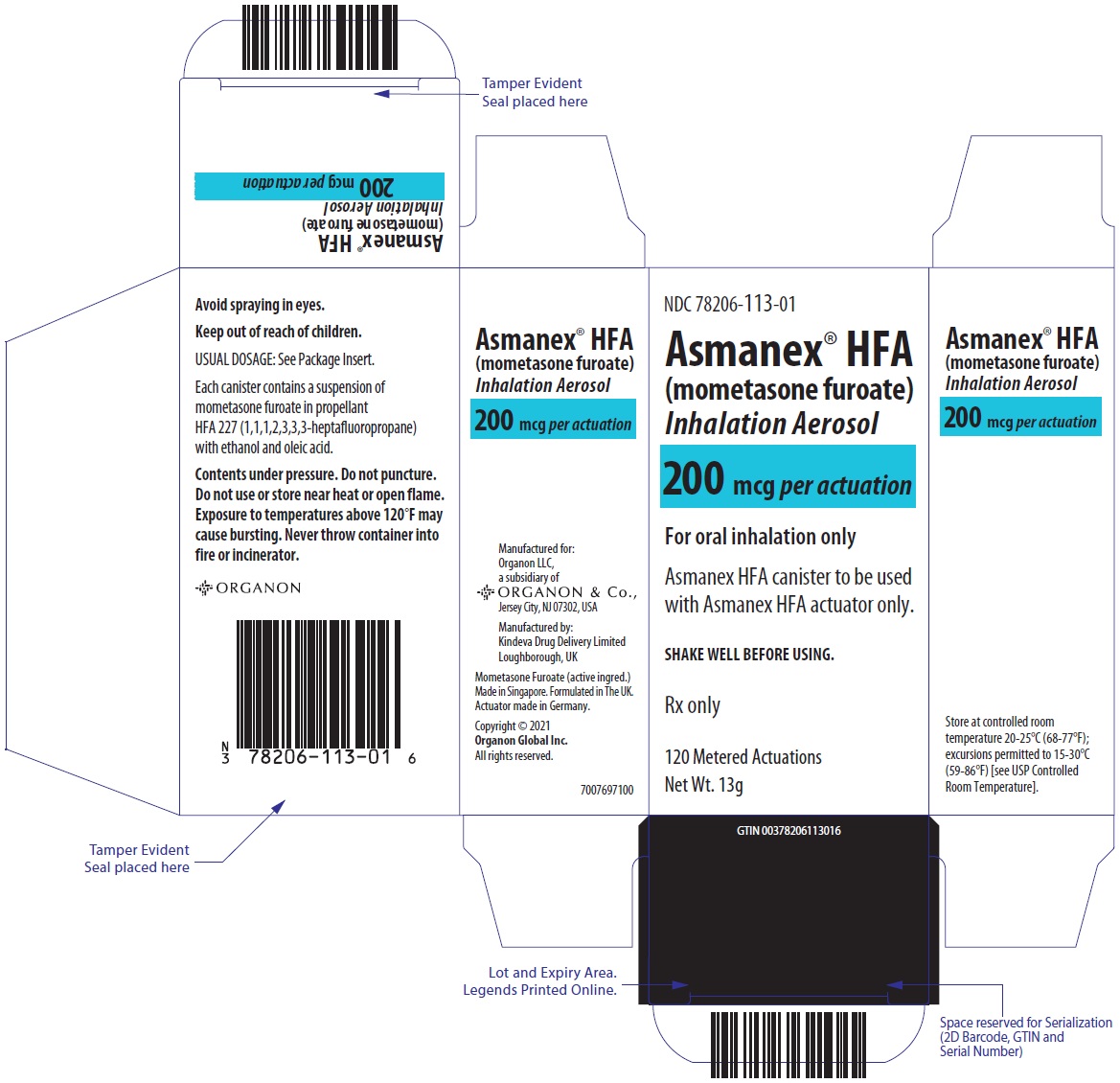
ASMANEX HFA MOMETASONE FUROATE 200 ug Aerosol
Other active recalls for Mometasone Furoate (different manufacturers) — 2 · tap to view
🆔 Identity & classification
Where does this data come from?
🏷️ RxNorm drug class
This medicine belongs to the Corticosteroid class.
Where does this data come from?
🏭 Manufacturer & labeler
Where does this data come from?
🩺 Clinical
Mometasone oral inhalation is used to prevent difficulty breathing, chest tightness, wheezing, and coughing caused by asthma. Mometasone oral inhalation (Asmanex® HFA) is used in adults and children 12 years of age and older. Mometasone powder for oral inhalation (Asmanex® Twisthaler) is used in adults and children 4 years of age and older. It is in a class of medications called corticosteroids. Mometasone works by decreasing swelling and irritation in the airways to allow for easier breathing.
Read the full MedlinePlus article ↗- For the nasal spray, it can help with allergy symptoms, but it works best as a daily preventive — not a quick-fix spray you grab when symptoms hit suddenly. For the inhalers (Asman...
- Can I use my mometasone nasal spray or inhaler when I'm having an allergy attack or asthma flare right now?
- That's actually normal — it can take one to two weeks or even longer to feel the full benefit from an inhaled corticosteroid like Asmanex. These medications work by gradually reduc...
- I've been using the Asmanex inhaler for a week and I still feel the same. Is it working?
Patient education
Supplement & herbal interactions
Some supplements/herbs that may interact with Mometasone Furoate — tap one for details:
Where does this data come from?
Ask a licensed pharmacist directly — free, answered by our team.
💊 What it looks like
Where does this data come from?
🧪 Inactive Ingredients / Excipients
Inactive ingredients, also called excipients, are components of the drug product other than the active ingredient. They may include fillers, dyes, coatings, preservatives, flavors, or other formulation ingredients.
💡 Tap an ingredient (hover on desktop) to see what it is and why it’s used.
-
UNII 3K9958V90M
A liquid solvent derived from fermentation or chemical synthesis. In medicines, alcohol dissolves active ingredients, helps preserve the product, and improves how the body absorbs certain drugs.
-
UNII R40P36GDK6
A fluorinated volatile liquid used as an anesthetic agent in inhalation medicines. It helps deliver consistent anesthesia during surgical procedures and medical sedation.
-
UNII 2UMI9U37CP
Oleic acid is a naturally occurring fatty acid derived from plant or animal oils. It functions as an emulsifier and solvent in medicines, helping blend water and oil-based ingredients together and dissolving other components.
3 inactive ingredients listed in the exact product block matched to this NDC.
Where does this data come from?
ingredient classCode="IACT" elements from the exact product block matched by this NDC. Label-section narrative from DailyMed / the openFDA label index is shown separately when available.Inactive ingredient FAQ
Are inactive ingredients the same for every manufacturer?
Why might an inactive ingredient be missing?
Can inactive ingredients matter?
💲 Pricing
A drug doesn't have one price. Each row is a different public payment system, and none is what you'd pay at the counter — that depends on your insurance. The ⓘ on each row explains what it measures.
| Price system | Per each | Per package |
|---|---|---|
| Retail pharmacies payNADAC · weekly | Not in the retail survey — common for institutional, discontinued, or low-volume packs. | |
| Medicaid paysCMS SDUD · 12 mo | No recent Medicaid claims on file for this NDC — rare and low-volume NDCs are suppressed in the public data. | |
| Medicare drug plans payPart D · quarterly | No Part D plan price is available for this NDC in our data. | |
Where does this data come from?
🔁 Therapeutic equivalents
| Product | Labeler | Pack | NADAC/unit | TE | Status | Price vs. this |
|---|---|---|---|---|---|---|
| Asmanex Hfa 200 ugthis 78206-0113-59 | Organon | 1 canister | — | — | Discontinued | — |
Where does this data come from?
⏳ Availability & generic status
We did not find an FDA-approved generic match for this exact strength, form and route.
Where does this data come from?
💊 Medicaid utilization by pack size
📊 Medicare Part D spend CMS · PART D · 2026 (Q1)
📦 Packaging — all sizes for this product
| Package NDC | Description | Per unit | Per pack | Marketing start | Status |
|---|---|---|---|---|---|
| 78206-0113-01 | 1 CANISTER in 1 CARTON (78206-113-01) / 120 AEROSOL in 1 CANISTER | $8.67 / g | — | 2021-06-01 | Active |
| 78206-0113-59 You're viewing this | 1 CANISTER in 1 CARTON (78206-113-59) / 120 AEROSOL in 1 CANISTER | — | — | 2021-06-01 | Discontinued by firm |
This pack shows little to no recent Medicaid volume — a different pack size carries most fills. See all packs ↓
Pack size FAQ
What quantity is in NDC 78206-0113-59?
What NDC number is used to bill for this package of ASMANEX HFA MOMETASONE FUROATE 200 ug Aerosol?
Prices are the latest CMS NADAC pharmacy acquisition cost per NDC; per-pack figures are per-unit × pack quantity, shown only when the pack is denominated in the same measure NADAC prices.
🧭 About this NDC listing & data coverage
What data is (and isn’t) available for this NDC — tap to expand
| NDC identity (package / product / labeler codes) | ✓ Available |
| Labeler | ✓ Available |
| Product & package description | ✓ Available |
| Marketing category & status | ✓ Available |
| Active ingredient / dosage form / route | ✓ Available |
| FDA label (SPL via DailyMed) | ✓ Available |
| Package photos | ✓ Available |
| Inactive ingredients (structured) | ✓ Available |
| NADAC pharmacy acquisition price (CMS) | — Not published for this NDC CMS publishes NADAC only for NDCs reported in its retail-pharmacy survey. |
| Orange Book / therapeutic-equivalence data | — Not published for this NDC Applies only to products approved under an NDA/ANDA; many listings are out of scope. |
| HCPCS J-code billing crosswalk | — Not published for this NDC Most self-administered / retail products have no J-code — that is normal. |
| Medicaid utilization (CMS SDUD) | — Not published for this NDC CMS reports utilization only for NDCs with Medicaid claims above its privacy threshold. |
Questions about this listing
Why is there no price listed?
What does the discontinued status mean for this NDC?
Is the NDC printed on the package the same as the 11-digit billing NDC?
What do the three segments of this NDC mean?
Does this product come in other package sizes?
Who lists this product with the FDA?
Do I need a prescription for this product?
Where does this data come from?
📄 Full prescribing information FDA SPL
🎯 Indications and Usage ▾
1 INDICATIONS AND USAGE ASMANEX HFA is a corticosteroid indicated for: Maintenance treatment of asthma as prophylactic therapy in patients 5 years of age and older. ( 1.1 ) Important limitations: Not indicated for the relief of acute bronchospasm. ( 1.1 )
1.1Treatment of Asthma ASMANEX ® HFA is indicated for the maintenance treatment of asthma as prophylactic therapy in patients 5 years of age and older. Important Limitations of Use ASMANEX HFA is NOT indicated for the relief of acute bronchospasm.
⏱️ Dosage and Administration ▾
2 DOSAGE AND ADMINISTRATION For oral inhalation only. ( 2.1 ) Treatment of asthma in patients 12 years of age and older: 2 inhalations twice daily of ASMANEX HFA 100 mcg or 200 mcg. Starting dosage is based on prior asthma therapy. ( 2.2 ) Treatment of asthma in patients aged 5 to less than 12 years: 2 inhalations twice daily of ASMANEX HFA 50 mcg. ( 2.2 )
2.1Administration Information Administer ASMANEX HFA only by the orally inhaled route [see Instructions for Use in the Patient Information leaflet ] . After each dose, advise patients to rinse their mouth with water and, without swallowing, spit out the contents to help reduce the risk of oropharyngeal candidiasis. Remove the cap from the mouthpiece of the actuator before using ASMANEX HFA.
Prime ASMANEX HFA before using for the first time by releasing 4 test sprays into the air, away from the face, shaking well before each spray. In cases where the inhaler has not been used for more than 5 days, prime the inhaler again by releasing 4 test sprays into the air, away from the face, shaking well before each spray. Only use the ASMANEX HFA canister with the ASMANEX HFA actuator.
Do not use the ASMANEX HFA actuator with any other inhalation drug product. Do not use actuators from other products with the ASMANEX HFA canister.
2.2Recommended Dosage Administer ASMANEX HFA as two inhalations twice daily every day (morning and evening) by the orally inhaled route. Shake well prior to each inhalation. If symptoms arise between doses, use an inhaled short-acting beta 2 -agonist for immediate relief.
The maximum benefit may not be achieved for 1 week or longer after beginning treatment. Individual patients may experience a variable time to onset and degree of symptom relief. Adult and Adolescent Patients Aged 12 Years and Older For patients 12 years of age and older, the dosage is either 2 inhalations twice daily of ASMANEX HFA 100 mcg or 200 mcg.
The starting dosage is based on previous asthma therapy and disease severity, including considerations of the patients' current control of asthma symptoms and risk of future exacerbations. The recommended starting dosage for patients 12 years of age and older who are not on an inhaled corticosteroid is ASMANEX HFA 100 mcg, 2 inhalations twice daily. It is recommended that patients currently receiving chronic oral corticosteroid therapy (e.g., prednisone) begin with ASMANEX HFA 200 mcg (2 inhalations twice daily).
For patients who do not respond adequately to the initial dosage after 2 weeks of therapy, increasing the dosage may provide additional asthma control. The maximum daily recommended dose is two inhalations of ASMANEX HFA 200 mcg twice daily (maximum of 800 mcg a day). After asthma stability has been achieved, it may be desirable to titrate to the lowest effective dosage to reduce the possibility of side effects.
If a dosage regimen of ASMANEX HFA fails to provide adequate control of asthma, re-evaluate the therapeutic regimen and consider additional therapeutic options, e.g., replacing the current strength of ASMANEX HFA with a higher strength, initiating an inhaled corticosteroid and long-acting beta 2 -agonist combination product, or initiating oral corticosteroids. Pediatric Patients Aged 5 to Less Than 12 Years For patients aged 5 to less than 12 years, the dosage is 2 inhalations of ASMANEX HFA 50 mcg twice daily. The maximum daily dosage is 200 mcg.
💊 Dosage Forms and Strengths ▾
3 DOSAGE FORMS AND STRENGTHS ASMANEX HFA is a pressurized metered dose inhaler (MDI) that is available in 2 strengths (100 mcg and 200 mcg) for adult and adolescent patients aged 12 years and older; and 1 strength (50 mcg) for pediatric patients aged 5 to less than 12 years. ASMANEX HFA 50 mcg delivers 50 mcg of mometasone furoate per actuation. ASMANEX HFA 100 mcg delivers 100 mcg of mometasone furoate per actuation.
ASMANEX HFA 200 mcg delivers 200 mcg of mometasone furoate per actuation. Each strength of ASMANEX HFA is supplied with a blue colored actuator and pink dust cap [see How Supplied/Storage and Handling (16.1) ] . Inhalation aerosol containing 50 mcg, 100 mcg, or 200 mcg of mometasone furoate per actuation.
( 3 )
⛔ Contraindications ▾
4 CONTRAINDICATIONS Primary treatment of status asthmaticus or acute episodes of asthma requiring intensive measures. ( 4.1 ) Hypersensitivity to any of the ingredients of ASMANEX HFA. ( 4.2 )
4.1Status Asthmaticus ASMANEX HFA is contraindicated in the primary treatment of status asthmaticus or other acute episodes of asthma where intensive measures are required.
4.2Hypersensitivity ASMANEX HFA is contraindicated in patients with known hypersensitivity to mometasone furoate or any of the ingredients in ASMANEX HFA [see Warnings and Precautions (5.8) ] .
⚠️ Warnings and Cautions ▾
5 WARNINGS AND PRECAUTIONS Deterioration of asthma and acute episodes: ASMANEX HFA should not be used for relief of acute symptoms. Patients require immediate re-evaluation during rapidly deteriorating asthma. ( 5.1 ) Localized infections: Candida albicans infection of the mouth and throat may occur.
Monitor patients periodically for signs of adverse effects on the oral cavity. After dosing, advise patients to rinse their mouth with water and spit out contents without swallowing. ( 5.2 ) Immunosuppression: Potential worsening of existing tuberculosis, fungal, bacterial, viral, or parasitic infection; or ocular herpes simplex infections.
More serious or even fatal course of chickenpox or measles can occur in susceptible patients. Use with caution in patients with these infections because of the potential for worsening of these infections. ( 5.3 ) Transferring patients from systemic corticosteroids: Risk of impaired adrenal function when transferring from oral steroids.
Wean patients slowly from systemic corticosteroids if transferring to ASMANEX HFA. ( 5.4 ) Hypercorticism and adrenal suppression: May occur with very high dosages or at the regular dosage in susceptible individuals. If such changes occur, discontinue ASMANEX HFA slowly.
( 5.5 ) Strong cytochrome P450 3A4 inhibitors (e.g., ritonavir): Risk of increased systemic corticosteroid effects. Exercise caution when used with ASMANEX HFA. ( 5.6 ) Paradoxical bronchospasm: Discontinue ASMANEX HFA and institute alternative therapy if paradoxical bronchospasm occurs.
( 5.7 ) Hypersensitivity reactions including anaphylaxis: Hypersensitivity reactions, such as urticaria, flushing, allergic dermatitis, bronchospasm, rash, pruritus, angioedema, and anaphylactic reaction may occur. Discontinue ASMANEX HFA if such reactions occur. ( 5.8 ) Decreases in bone mineral density: Monitor patients with major risk factors for decreased bone mineral content.
( 5.9 ) Effects on growth: Monitor growth of pediatric patients. ( 5.10 ) Glaucoma and cataracts: Consider referral to an ophthalmologist in patients who develop ocular symptoms or use ASMANEX HFA long term. ( 5.11 )
5.1Deterioration of Asthma and Acute Episodes ASMANEX HFA is not indicated for the relief of acute symptoms, i.e., as rescue therapy for the treatment of acute episodes of bronchospasm. An inhaled, short-acting beta 2 -agonist, not ASMANEX HFA, should be used to relieve acute symptoms such as shortness of breath. When prescribing ASMANEX HFA, the physician must also provide the patient with an inhaled, short-acting beta 2 -agonist (e.g., albuterol) for treatment of acute symptoms, despite regular twice-daily (morning and evening) use of ASMANEX HFA.
Instruct patients to contact their physician immediately if episodes of asthma that are not responsive to bronchodilators occur during the course of treatment with ASMANEX HFA. During such episodes, patients may require therapy with oral corticosteroids.
5.2Local Effects In clinical trials, the development of localized infections of the mouth and pharynx with Candida albicans have occurred in patients treated with ASMANEX HFA. If oropharyngeal candidiasis develops, treat with appropriate local or systemic (i.e., oral) antifungal therapy while remaining on treatment with ASMANEX HFA therapy, but at times therapy with ASMANEX HFA may need to be interrupted. To reduce the risk of oropharyngeal candidiasis, after dosing with ASMANEX HFA, advise patients to rinse their mouth with water and spit out the contents without swallowing.
5.3Immunosuppression Persons who are using drugs that suppress the immune system are more susceptible to infections than healthy individuals. Chickenpox and measles, for example, can have a more serious or even fatal course in susceptible children or adults using corticosteroids. In such children or adults who have not had these diseases or who are not properly immunized, particular care should be taken to avoid exposure. How the dose, route, and duratio…
🤒 Adverse Reactions ▾
6 ADVERSE REACTIONS Systemic and local corticosteroid use may result in the following: Candida albicans infection [see Warnings and Precautions (5.2) ] Immunosuppression [see Warnings and Precautions (5.3) ] Hypercorticism and adrenal suppression [see Warnings and Precautions (5.5) ] Growth effects in pediatrics [see Warnings and Precautions (5.10) ] Glaucoma and cataracts [see Warnings and Precautions (5.11) ] Because clinical trials are conducted under widely varying conditions, adverse reaction rates observed in the clinical trials of a drug cannot be directly compared to rates in the clinical trials of another drug and may not reflect the rates observed in practice.
Most common adverse reactions (reported in greater than or equal to 3% of patients) included: nasopharyngitis, headache, sinusitis, bronchitis, and influenza. ( 6.1 ) To report SUSPECTED ADVERSE REACTIONS, contact Organon LLC, a subsidiary of Organon & Co., at 1-844-674-3200 or FDA at 1-800-FDA-1088 or www.fda.gov/medwatch.
6.1Clinical Trials Experience Adult and Adolescent Patients Aged 12 Years and Older The safety of ASMANEX HFA was evaluated in 2 randomized placebo and active-controlled trials of 12 and 26 weeks' duration, conducted as part of a mometasone furoate/formoterol fumarate combination product asthma program, which enrolled 1509 patients with persistent asthma. Patient ages ranged from 12 to 84 years of age, 41% were male and 59% female, 73% were Caucasian and 27% non-Caucasian. Of the total population enrolled in the 2 trials, 432 patients received two inhalations twice daily of either ASMANEX HFA, 100 mcg or 200 mcg/actuation.
In the 26-week trial (Trial 1) 192 patients received two inhalations twice daily of ASMANEX HFA 100 mcg/actuation and 196 patients received placebo. In the 12 week trial (Trial 2) 240 patients received two inhalations twice daily of ASMANEX HFA 200 mcg/actuation and 233 and 255 patients received mometasone furoate and formoterol fumarate 100 mcg/5 mcg and 200 mcg/5 mcg/actuation combination products, respectively, as comparators. In these trials, the proportion of patients who discontinued study treatment early due to adverse reactions was 3% and 2% for ASMANEX HFA 100 and 200 mcg treated patients, respectively, and 4% for placebo-treated patients.
Serious adverse reactions, whether considered drug-related or not by the investigators, which occurred more frequently in ASMANEX HFA-treated patients included colitis ulcerative, colonic polyp, chest pain, gastroenteritis, endometriosis, asthma, and hemoptysis; all events occurred at rates less than 1%. The incidence of treatment emergent adverse events associated with ASMANEX HFA are shown in Tables 1 and 2. These are based upon data from each of the 2 clinical trials of 12 or 26 weeks in duration in patients 12 years and older treated with two inhalations twice daily of ASMANEX HFA (100 mcg or 200 mcg), mometasone furoate/formoterol fumarate (100 mcg/5 mcg or 200 mcg/5 mcg), or placebo.
TABLE 1: Trial 1: Treatment-Emergent Adverse Events Occurring at an Incidence of ≥3% and More Commonly than Placebo Over 26 Weeks ASMANEX HFA 100 mcg N=192 n (%) Placebo N=196 n (%) Nasopharyngitis 15 (8) 7 (4) Headache 10 (5) 7 (4) Influenza 7 (4) 5 (3) Sinusitis 6 (3) 2 (1) TABLE 2: Trial 2: Treatment-Emergent Adverse Events Occurring at an Incidence of ≥3% Over 12 Weeks ASMANEX HFA 200 mcg N=240 n (%) MF/F MF/F = mometasone furoate/formoterol fumarate. 100/5 mcg N=233 n (%) MF/F 200/5 mcg N=255 n (%) Nasopharyngitis 13 (5) 8 (3) 12 (5) Headache 8 (3) 10 (4) 5 (2) Bronchitis 6 (3) 2 (1) 7 (3) Oral candidiasis has been reported in clinical trials at an incidence of 0.5% in patients using ASMANEX HFA 100 mcg, 0.8% in patients using ASMANEX HFA 200 mcg and 0.5% in the placebo group.
Pediatric Patients Aged 5 to Less Than 12 Years The safety profile for ASMANEX HFA 50 mcg, 2 inhalations twice daily, is based on two clinical trials consisting of a total of 759 patients aged 5 to less than 12 yea…
🔄 Drug Interactions ▾
7 DRUG INTERACTIONS In clinical trials, concurrent administration of ASMANEX HFA and other drugs, such as short-acting beta 2 -agonist and intranasal corticosteroids have not resulted in an increased frequency of adverse drug reactions. No formal drug interaction studies have been performed with ASMANEX HFA. Strong cytochrome P450 3A4 inhibitors (e.g., ritonavir): Use with caution. May cause increased systemic corticosteroid effects. ( 7.1 )
7.1Inhibitors of Cytochrome P450 3A4 The main route of metabolism of corticosteroids, including mometasone furoate, is via CYP3A4. After oral administration of ketoconazole, a strong inhibitor of CYP3A4, the mean plasma concentration of orally inhaled mometasone furoate increased. Concomitant administration of CYP3A4 inhibitors may inhibit the metabolism of, and increase the systemic exposure to, mometasone furoate and potentially increase the risk for systemic corticosteroid side effects.
Caution should be exercised when considering the coadministration of ASMANEX HFA with long-term ketoconazole and other known strong CYP3A4 inhibitors (e.g., ritonavir, cobicistat-containing products, atazanavir, clarithromycin, indinavir, itraconazole, nefazodone, nelfinavir, saquinavir, telithromycin) [see Warnings and Precautions (5.6) and Clinical Pharmacology (12.3) ] . Consider the benefit of coadministration versus the potential risk of systemic corticosteroid effects, in which case patients should be monitored for systemic corticosteroid side effects.
👥 Use in Specific Populations ▾
8 USE IN SPECIFIC POPULATIONS Hepatic impairment: Monitor patients for signs of increased drug exposure. ( 8.6 )
8.1Pregnancy Risk Summary There are no randomized clinical studies of ASMANEX HFA in pregnant women. There are clinical considerations with the use of ASMANEX HFA in pregnant women [see Clinical Considerations ] . In animal reproduction studies with pregnant mice, rats, or rabbits, mometasone furoate caused increased fetal malformations and decreased fetal survival and growth following administration of doses that produced exposures approximately 1/3 to 8 times the maximum recommended human dose (MRHD) on a mcg/m 2 or AUC basis [see Data ] .
However, experience with oral corticosteroids suggests that rodents are more prone to teratogenic effects from corticosteroid exposure than humans. The estimated background risk of major birth defects and miscarriage for the indicated population is unknown. In the U.S. general population, the estimated risk of major birth defects and miscarriage in clinically recognized pregnancies is 2 to 4% and 15 to 20%, respectively.
Clinical Considerations Disease-associated maternal and/or embryo/fetal risk In women with poorly or moderately controlled asthma, there is an increased risk of several perinatal adverse outcomes such as preeclampsia in the mother and prematurity, low birth weight, and small for gestational age in the neonate. Pregnant women with asthma should be closely monitored and medication adjusted as necessary to maintain optimal asthma control. Data Animal Data In an embryofetal development study with pregnant mice dosed throughout the period of organogenesis, mometasone furoate produced cleft palate at an exposure approximately one-third of the MRHD (on a mcg/m 2 basis with maternal subcutaneous doses of 60 mcg/kg and above) and decreased fetal survival at an exposure approximately equivalent to the MRHD (on a mcg/m 2 basis with a maternal subcutaneous dose of 180 mcg/kg).
No toxicity was observed with a dose that produced an exposure approximately one-tenth of the MRHD (on a mcg/m 2 basis with maternal topical dermal doses of 20 mcg/kg and above). In an embryofetal development study with pregnant rats dosed throughout the period of organogenesis, mometasone furoate produced fetal umbilical hernia at exposures approximately 6 times the MRHD (on a mcg/m 2 basis with maternal topical dermal doses of 600 mcg/kg and above) and delays in fetal ossification at exposures approximately 3 times the MRHD (on a mcg/m 2 basis with maternal topical dermal doses of 300 mcg/kg and above).
In another reproductive toxicity study, pregnant rats were dosed with mometasone furoate throughout pregnancy or late in gestation. Treated animals had prolonged and difficult labor, fewer live births, lower birth weight, and reduced early pup survival at an exposure that was approximately 8 times the MRHD (on an area under the curve (AUC) basis with a maternal subcutaneous dose of 15 mcg/kg). There were no findings with an exposure approximately 4 times the MRHD (on an AUC basis with a maternal subcutaneous dose of 7.5 mcg/kg).
Embryofetal development studies were conducted with pregnant rabbits dosed with mometasone furoate by either the topical dermal route or oral route throughout the period of organogenesis. In the study using the topical dermal route, mometasone furoate caused multiple malformations in fetuses (e.g., flexed front paws, gallbladder agenesis, umbilical hernia, hydrocephaly) at an exposure approximately 3 times the MRHD (on a mcg/m 2 basis with maternal topical dermal doses of 150 mcg/kg and above). In the study using the oral route, mometasone furoate caused increased fetal resorptions and cleft palate and/or head malformations (hydrocephaly and domed head) at an exposure approximately 1/2 of the MRHD (on AUC basis with a maternal oral dose of 700 mcg/kg).
At an exposure approximately 2 times the MRHD (on an AUC basis with a maternal oral dose of 2800 mcg/kg), most litters were…
🤰 Pregnancy ▾
8.1Pregnancy Risk Summary There are no randomized clinical studies of ASMANEX HFA in pregnant women. There are clinical considerations with the use of ASMANEX HFA in pregnant women [see Clinical Considerations ] . In animal reproduction studies with pregnant mice, rats, or rabbits, mometasone furoate caused increased fetal malformations and decreased fetal survival and growth following administration of doses that produced exposures approximately 1/3 to 8 times the maximum recommended human dose (MRHD) on a mcg/m 2 or AUC basis [see Data ] .
However, experience with oral corticosteroids suggests that rodents are more prone to teratogenic effects from corticosteroid exposure than humans. The estimated background risk of major birth defects and miscarriage for the indicated population is unknown. In the U.S. general population, the estimated risk of major birth defects and miscarriage in clinically recognized pregnancies is 2 to 4% and 15 to 20%, respectively.
Clinical Considerations Disease-associated maternal and/or embryo/fetal risk In women with poorly or moderately controlled asthma, there is an increased risk of several perinatal adverse outcomes such as preeclampsia in the mother and prematurity, low birth weight, and small for gestational age in the neonate. Pregnant women with asthma should be closely monitored and medication adjusted as necessary to maintain optimal asthma control. Data Animal Data In an embryofetal development study with pregnant mice dosed throughout the period of organogenesis, mometasone furoate produced cleft palate at an exposure approximately one-third of the MRHD (on a mcg/m 2 basis with maternal subcutaneous doses of 60 mcg/kg and above) and decreased fetal survival at an exposure approximately equivalent to the MRHD (on a mcg/m 2 basis with a maternal subcutaneous dose of 180 mcg/kg).
No toxicity was observed with a dose that produced an exposure approximately one-tenth of the MRHD (on a mcg/m 2 basis with maternal topical dermal doses of 20 mcg/kg and above). In an embryofetal development study with pregnant rats dosed throughout the period of organogenesis, mometasone furoate produced fetal umbilical hernia at exposures approximately 6 times the MRHD (on a mcg/m 2 basis with maternal topical dermal doses of 600 mcg/kg and above) and delays in fetal ossification at exposures approximately 3 times the MRHD (on a mcg/m 2 basis with maternal topical dermal doses of 300 mcg/kg and above).
In another reproductive toxicity study, pregnant rats were dosed with mometasone furoate throughout pregnancy or late in gestation. Treated animals had prolonged and difficult labor, fewer live births, lower birth weight, and reduced early pup survival at an exposure that was approximately 8 times the MRHD (on an area under the curve (AUC) basis with a maternal subcutaneous dose of 15 mcg/kg). There were no findings with an exposure approximately 4 times the MRHD (on an AUC basis with a maternal subcutaneous dose of 7.5 mcg/kg).
Embryofetal development studies were conducted with pregnant rabbits dosed with mometasone furoate by either the topical dermal route or oral route throughout the period of organogenesis. In the study using the topical dermal route, mometasone furoate caused multiple malformations in fetuses (e.g., flexed front paws, gallbladder agenesis, umbilical hernia, hydrocephaly) at an exposure approximately 3 times the MRHD (on a mcg/m 2 basis with maternal topical dermal doses of 150 mcg/kg and above). In the study using the oral route, mometasone furoate caused increased fetal resorptions and cleft palate and/or head malformations (hydrocephaly and domed head) at an exposure approximately 1/2 of the MRHD (on AUC basis with a maternal oral dose of 700 mcg/kg).
At an exposure approximately 2 times the MRHD (on an AUC basis with a maternal oral dose of 2800 mcg/kg), most litters were aborted or resorbed. No effects were observed at an exposure approximately 1/10 of the MRHD (on an AUC basis with…
🧒 Pediatric Use ▾
8.4Pediatric Use The safety and effectiveness of ASMANEX HFA have been established in patients 12 years of age and older in 2 clinical trials of 12 and 26 weeks in duration. In the 2 clinical trials, 32 patients 12 to 17 years of age were treated with ASMANEX HFA. No overall differences in effectiveness were observed between patients in this age group compared to those observed in patients 18 years of age and older.
There were no obvious differences in the type or frequency of adverse reactions reported in this age group compared to patients 18 years of age and older. The safety and effectiveness of ASMANEX HFA 50 mcg, two inhalations twice daily, have been established in patients with asthma aged 5 to less than 12 years in clinical trials up to 24 weeks of treatment duration. The safety profile and overall effectiveness in this age group were consistent with that observed in patients aged 12 years and older who also received ASMANEX HFA [see Adverse Reactions (6.1) and Clinical Studies (14.1) ].
The safety and effectiveness of ASMANEX HFA have not been established in children younger than 5 years of age. Controlled clinical studies have shown that inhaled corticosteroids may cause a reduction in growth velocity in pediatric patients. In these studies, the mean reduction in growth velocity was approximately 1 cm per year (range 0.3 to 1.8 per year) and appears to depend upon dose and duration of exposure.
This effect was observed in the absence of laboratory evidence of HPA axis suppression, suggesting that growth velocity is a more sensitive indicator of systemic corticosteroid exposure in pediatric patients than some commonly used tests of HPA axis function. The long-term effects of this reduction in growth velocity associated with orally inhaled corticosteroids, including the impact on final adult height, are unknown. The potential for "catch-up" growth following discontinuation of treatment with orally inhaled corticosteroids has not been adequately studied.
The growth of children and adolescents receiving orally inhaled corticosteroids, including ASMANEX HFA, should be monitored routinely (e.g., via stadiometry). If a child or adolescent on any corticosteroid appears to have growth suppression, the possibility that he/she is particularly sensitive to this effect should be considered. The potential growth effects of prolonged treatment should be weighed against clinical benefits obtained and the risks associated with alternative therapies.
To minimize the systemic effects of orally inhaled corticosteroids, including ASMANEX HFA, each patient should be titrated to his/her lowest effective dose [see Dosage and Administration (2.2) ] .
🧓 Geriatric Use ▾
8.5Geriatric Use A total of 38 patients 65 years of age and older (3 of whom were 75 years and older) have been treated with ASMANEX HFA in 2 clinical trials of 12 and 26 weeks in duration. No overall differences in safety or effectiveness were observed between these patients and younger patients, but greater sensitivity of some older individuals cannot be ruled out. Based on available data for ASMANEX HFA, no adjustment of dosage in geriatric patients is warranted.
🆘 Overdosage ▾
10 OVERDOSAGE Chronic overdosage may result in signs/symptoms of hypercorticism [see Warnings and Precautions (5.5) ] . Single oral doses up to 8000 mcg of mometasone furoate have been studied on adult subjects with no adverse reactions reported.
🧬 Clinical Pharmacology ▾
12 CLINICAL PHARMACOLOGY
12.1Mechanism of Action Mometasone furoate is a corticosteroid demonstrating potent anti-inflammatory activity. The precise mechanism of corticosteroid action on asthma is not known. Inflammation is an important component in the pathogenesis of asthma.
Corticosteroids have been shown to have a wide range of inhibitory effects on multiple cell types (e.g., mast cells, eosinophils, neutrophils, macrophages, and lymphocytes) and mediators (e.g., histamine, eicosanoids, leukotrienes, and cytokines) involved in inflammation and in the asthmatic response. These anti-inflammatory actions of corticosteroids may contribute to their efficacy in asthma. Mometasone furoate has been shown in vitro to exhibit a binding affinity for the human glucocorticoid receptor, which is approximately 12 times that of dexamethasone, 7 times that of triamcinolone acetonide, 5 times that of budesonide, and 1.5 times that of fluticasone.
The clinical significance of these findings is unknown.
12.2Pharmacodynamics Systemic effects of inhaled corticosteroids are related to systemic exposure. Pharmacokinetic data have demonstrated that, in adults, systemic exposure to mometasone furoate administered by MDI is the same or lower than that of equivalent doses of inhaled mometasone furoate administered via DPI [see Clinical Pharmacology (12.3) ] . Based upon the pharmacokinetic data, the systemic effects (e.g., HPA-axis suppression and growth retardation) of mometasone furoate delivered by MDI in adult and pediatric patients would be expected to be no greater than what is reported for inhaled mometasone furoate when administered at comparable doses via DPI [see Use in Specific Populations (8.4) ] .
HPA Axis Effects (Adults) The effects of inhaled mometasone furoate administered via ASMANEX HFA on adrenal function have not been directly evaluated. However, the effects of inhaled mometasone furoate, administered as part of a mometasone furoate/formoterol fumarate inhalation aerosol combination product, on adrenal function were evaluated in two clinical trials in patients with asthma. As no evidence of a pharmacokinetic drug interaction between mometasone furoate and formoterol was observed when the two drugs were administered in combination, the HPA axis effects from the combination product are applicable to ASMANEX HFA.
For the mometasone furoate/formoterol fumarate combination product clinical program, HPA-axis function was assessed by 24-hour plasma cortisol AUC. Although both these trials have open-label design and contain a small number of subjects per treatment arm, results from these trials taken together demonstrated suppression of 24-hour plasma cortisol AUC for the combination mometasone furoate/formoterol fumarate 200 mcg/5 mcg compared to placebo consistent with the known systemic effects of inhaled corticosteroid. In a 42-day, open-label, placebo- and active-controlled study, the mean change from baseline plasma cortisol AUC (0-24 hr) was 8%, 22% and 34% lower compared to placebo for the mometasone furoate/formoterol fumarate 100 mcg/5 mcg (n=13), mometasone furoate/formoterol fumarate 200 mcg/5 mcg (n=15) and fluticasone propionate/salmeterol xinafoate 230 mcg/21 mcg (n=16) treatment groups, respectively.
In a 52-week, open-label safety study, the mean plasma cortisol AUC (0-24 hr) was 2.2%, 29.6%, 16.7%, and 32.2% lower from baseline for the mometasone furoate/formoterol fumarate 100 mcg/5 mcg (n=18), mometasone furoate/formoterol fumarate 200 mcg/5 mcg (n=20), fluticasone propionate/salmeterol xinafoate 125/25 mcg (n=8), and fluticasone propionate/salmeterol xinafoate 250/25 mcg (n=11) treatment groups, respectively. The potential effect of mometasone furoate via a dry powder inhaler (DPI) on the HPA axis was also assessed in a 29-day study.
A total of 64 adult patients with mild to moderate asthma were randomized to one of 4 treatment groups: mometasone furoate DPI 440 mcg twice daily, mometasone furoate DPI 880 mcg twice…
🧬 Mechanism of Action ▾
12.1Mechanism of Action Mometasone furoate is a corticosteroid demonstrating potent anti-inflammatory activity. The precise mechanism of corticosteroid action on asthma is not known. Inflammation is an important component in the pathogenesis of asthma.
Corticosteroids have been shown to have a wide range of inhibitory effects on multiple cell types (e.g., mast cells, eosinophils, neutrophils, macrophages, and lymphocytes) and mediators (e.g., histamine, eicosanoids, leukotrienes, and cytokines) involved in inflammation and in the asthmatic response. These anti-inflammatory actions of corticosteroids may contribute to their efficacy in asthma. Mometasone furoate has been shown in vitro to exhibit a binding affinity for the human glucocorticoid receptor, which is approximately 12 times that of dexamethasone, 7 times that of triamcinolone acetonide, 5 times that of budesonide, and 1.5 times that of fluticasone.
The clinical significance of these findings is unknown.
📦 How Supplied / Storage and Handling ▾
16 HOW SUPPLIED/STORAGE AND HANDLING
16.1How Supplied ASMANEX HFA is available in three strengths and supplied in the following package size (TABLE 3): TABLE 3 Package NDC Strength Identifier (Color Band) Included on the outer carton, actuator, and canister labels. ASMANEX HFA 50 mcg 120 metered actuations 78206-111-01 Orange ASMANEX HFA 100 mcg 120 metered actuations 78206-112-01 Green ASMANEX HFA 200 mcg 120 metered actuations 78206-113-01 Blue Each strength is supplied as a pressurized aluminum canister that has a blue plastic actuator integrated with a dose counter and a pink dust cap.
Each canister has a net fill weight of 13 grams. Each inhaler is placed into a carton. Each carton contains 1 inhaler.
Initially the dose counter will display "124" actuations. After the initial priming with 4 actuations, the dose counter will read "120" and the inhaler is now ready for use.
16.2Storage and Handling Only use the ASMANEX HFA canister with the ASMANEX HFA actuator. Do not use the ASMANEX HFA actuator with any other inhalation drug product. Do not use actuators from other products with the ASMANEX HFA canister.
Do not remove the canister from the actuator because the correct amount of medication may not be discharged; the dose counter may not function properly; reinsertion may cause the dose counter to count down by 1 and discharge a puff. The correct amount of medication in each inhalation cannot be ensured after the labeled number of actuations from the canister has been used, even though the inhaler may not feel completely empty and may continue to operate. Discard the inhaler when the labeled number of actuations has been used (the dose counter will read "0").
Store at controlled room temperature 20°C-25°C (68°F-77°F); excursions permitted to 15°C-30°C (59°F-86°F) [see USP Controlled Room Temperature]. After priming, store the inhaler with the mouthpiece down or in a horizontal position. For best results, keep the canister at room temperature before use.
Shake well and remove the cap from the mouthpiece of the actuator before using. Keep out of reach of children. Avoid spraying in eyes.
Contents Under Pressure: Do not puncture. Do not use or store near heat or open flame. Exposure to temperatures above 120°F may cause bursting.
Never throw container into fire or incinerator.
📦 Storage and Handling ▾
16.2Storage and Handling Only use the ASMANEX HFA canister with the ASMANEX HFA actuator. Do not use the ASMANEX HFA actuator with any other inhalation drug product. Do not use actuators from other products with the ASMANEX HFA canister.
Do not remove the canister from the actuator because the correct amount of medication may not be discharged; the dose counter may not function properly; reinsertion may cause the dose counter to count down by 1 and discharge a puff. The correct amount of medication in each inhalation cannot be ensured after the labeled number of actuations from the canister has been used, even though the inhaler may not feel completely empty and may continue to operate. Discard the inhaler when the labeled number of actuations has been used (the dose counter will read "0").
Store at controlled room temperature 20°C-25°C (68°F-77°F); excursions permitted to 15°C-30°C (59°F-86°F) [see USP Controlled Room Temperature]. After priming, store the inhaler with the mouthpiece down or in a horizontal position. For best results, keep the canister at room temperature before use.
Shake well and remove the cap from the mouthpiece of the actuator before using. Keep out of reach of children. Avoid spraying in eyes.
Contents Under Pressure: Do not puncture. Do not use or store near heat or open flame. Exposure to temperatures above 120°F may cause bursting.
Never throw container into fire or incinerator.
📋 Description ▾
11 DESCRIPTION ASMANEX HFA is a metered dose inhaler for oral inhalation only, consisting of 50 mcg, 100 mcg, or 200 mcg of mometasone furoate per actuation. Mometasone furoate, the active component of ASMANEX HFA, is a corticosteroid having the chemical name 9,21-dichloro-11(Beta),17-dihydroxy-16 (alpha)-methylpregna-1,4-diene-3,20-dione 17-(2-furoate) with the following chemical structure: Mometasone furoate is a white powder with an empirical formula of C 27 H 30 Cl 2 O 6 , and molecular weight 521.44. It is practically insoluble in water; slightly soluble in methanol, ethanol, and isopropanol; soluble in acetone.
ASMANEX HFA 50 mcg, 100 mcg, and 200 mcg are each formulated as a hydrofluoroalkane (HFA-227: 1,1,1,2,3,3,3-heptafluoropropane) propelled pressurized metered dose inhaler containing sufficient amount of drug for 120 actuations [see How Supplied/Storage and Handling (16) ] . After priming, each actuation of the inhaler delivers 60, 115, or 225 mcg of mometasone furoate in 69.6 mg of suspension from the valve and delivers 50, 100, or 200 mcg of mometasone furoate from the actuator. The actual amount of drug delivered to the lung may depend on patient factors, such as the coordination between actuation of the device and inspiration through the delivery system.
ASMANEX HFA also contains ethanol as a cosolvent and oleic acid as a surfactant. ASMANEX HFA should be primed before using for the first time by releasing 4 test sprays into the air, away from the face, shaking well before each spray. In cases where the inhaler has not been used for more than 5 days, prime the inhaler again by releasing 4 test sprays into the air, away from the face, shaking well before each spray.
Chemical Structure
💬 Information for Patients ▾
17 PATIENT COUNSELING INFORMATION Advise the patient to read the FDA-approved patient labeling ( Patient Information and Instructions for Use ). Not for Acute Symptoms Advise patients that ASMANEX HFA is not indicated to relieve acute asthma symptoms, and extra doses should not be used for that purpose. ASMANEX HFA is not a bronchodilator and should not be used to treat status asthmaticus or to relieve acute asthma symptoms.
Treat acute asthma symptoms with an inhaled, short-acting beta 2 -agonist such as albuterol. Prescribe the patient with such medication and instruct the patient on how to use it [see Warnings and Precautions (5.1) ]. Instruct patients to seek medical attention immediately if they experience any of the following: If their symptoms worsen Significant decrease in lung function as outlined by the physician If they need more inhalations of a short-acting beta 2 -agonist than usual Advise patients not to increase the dose or frequency of ASMANEX HFA.
Do not exceed the daily dosage of ASMANEX HFA two inhalations twice daily. If they miss a dose, instruct patients to take their next dose at the same time they normally do. Advise patients not to stop or reduce ASMANEX HFA therapy without physician/provider guidance since symptoms may recur after discontinuation.
Local Effects Advise patients that localized infections with Candida albicans occurred in the mouth and pharynx in some patients. If oropharyngeal candidiasis develops, treat with appropriate local or systemic (i.e., oral) antifungal therapy while still continuing with ASMANEX HFA therapy, but at times therapy with ASMANEX HFA may need to be temporarily interrupted under close medical supervision. After dosing, advise patients to rinse their mouth with water and spit out contents without swallowing [see Warnings and Precautions (5.2) ].
Immunosuppression Warn patients who are on immunosuppressant doses of corticosteroids to avoid exposure to chickenpox or measles and, if exposed, to consult their physician without delay. Inform patients of potential worsening of existing tuberculosis, fungal, bacterial, viral, or parasitic infections, or ocular herpes simplex [see Warnings and Precautions (5.3) ]. Hypercorticism and Adrenal Suppression Advise patients that ASMANEX HFA may cause systemic corticosteroid effects of hypercorticism and adrenal suppression.
Additionally, instruct patients that deaths due to adrenal insufficiency have occurred during and after transfer from systemic corticosteroids. Instruct patients to slowly taper from systemic corticosteroids if transferring to ASMANEX HFA [see Warnings and Precautions (5.4 and 5.5) ]. Reduction in Bone Mineral Density Advise patients who are at an increased risk for decreased BMD that the use of corticosteroids may pose an additional risk and should be monitored and, where appropriate, be treated for this condition [see Warnings and Precautions (5.9) ].
Reduced Growth Velocity Inform patients that orally inhaled corticosteroids, including ASMANEX HFA, may cause a reduction in growth velocity when administered to pediatric patients. Physicians should closely follow the growth of pediatric patients taking corticosteroids by any route [see Warnings and Precautions (5.10) ]. Glaucoma and Cataracts Advise patients that long-term use of inhaled corticosteroids may increase the risk of some eye problems (glaucoma or cataracts); consider regular eye examinations [see Warnings and Precautions (5.11) ].
Hypersensitivity Reactions Including Anaphylaxis Advise patients that hypersensitivity reactions, such as urticaria, flushing, allergic dermatitis, bronchospasm, rash, pruritus, angioedema, and anaphylactic reaction, may occur after administration of ASMANEX HFA. Instruct patients to discontinue ASMANEX HFA if such reactions occur [see Warnings and Precautions (5.8) ]. Use Daily for Best Effect Advise patients to use ASMANEX HFA at regular intervals, since its effectiveness depends on regular use.
Maximum benefit may not…