
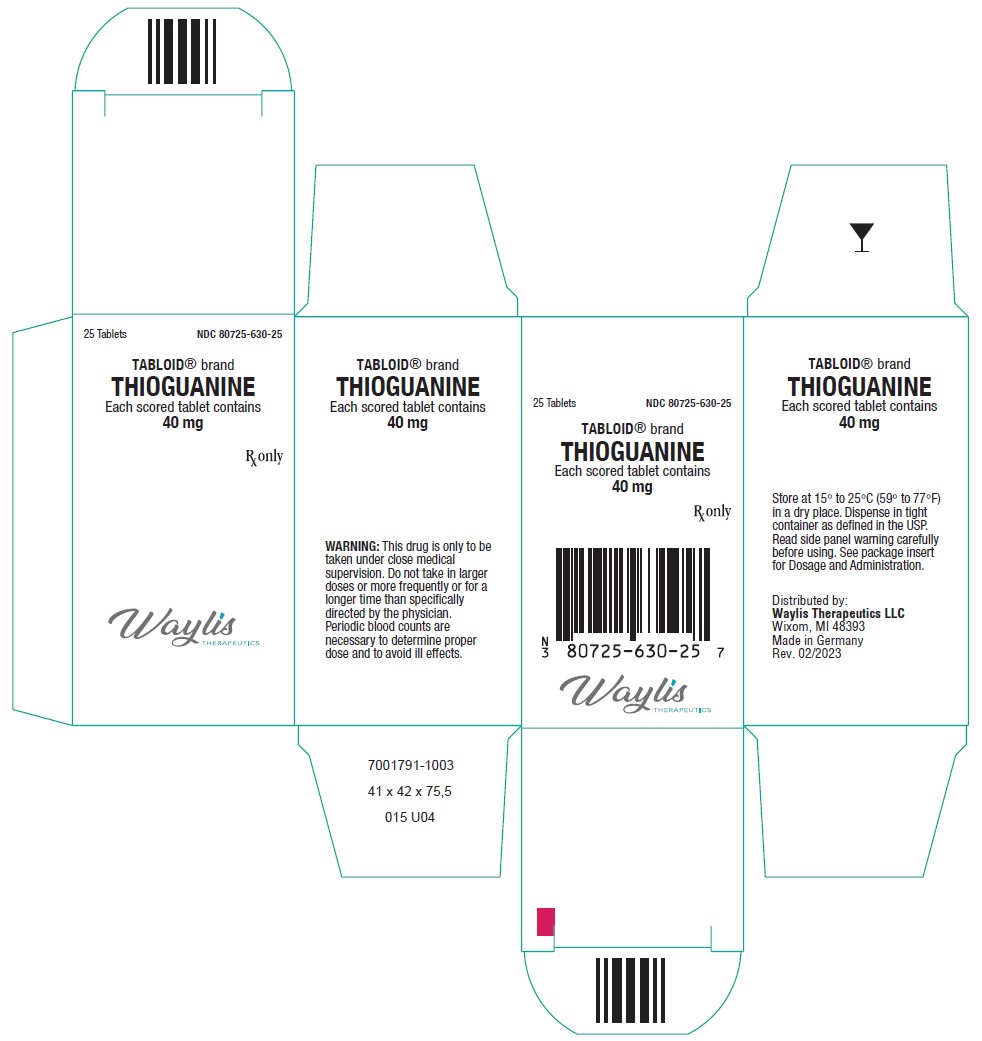
Tabloid thioguanine 40 mg Tablet, 25-count — NDC 80725-630-25 (Billing 80725-0630-25)
This is a package of 25 tablets of Tabloid thioguanine 40 mg Tablet from Waylis Therapeutics LLC, marketed since May 2023 and currently FDA-listed. It is this product's only package size.
NDC database record
One package, one record: these facts belong to NDC 80725-630-25 alone.
- Record
- FDA NDC Directory package listing · Human prescription drug
- Code segments
- 80725 labeler · 630 product · 25 package
- Package marketed since
- May 15, 2023
- Sample package
- No — commercial package
- Listing certified through
- Dec 31, 2026
- Billing quantity
- 25 EA per package
- Barcode (UPC-A, from the NDC)
- 3 8072563025 7
- FDA record last changed
- Jul 24, 2026
Identity & classification
Regulatory identifiers FDA, NLM and CMS codes for this package
Drug-database identifiers Medi-Span GPI and First Databank GCN / HICL / AHFS classification
- GSN (GCN sequence number): 008808
- GCN: 10290
- GPI-14 (Medi-Span): 21300060000305
- HICL (First Databank): 003911
- AHFS class code: 10:00.00.00
- RxCUI (RxNorm): 105590
Where does this data come from?
- FDA openFDA NDC Directory · synced Oct 1, 2026
- FDA label on DailyMed · label index refreshed Oct 3, 2026
- RxNorm (NLM RxNav) · catalog refreshed Oct 1, 2026
- Medi-Span GPI (licensed)
- First Databank (licensed) · refreshed Oct 1, 2026
RxNorm drug class
This medicine belongs to the Antimetabolite class.
Where does this data come from?
- RxClass (NLM) · catalog refreshed Oct 1, 2026
Clinical
Thioguanine is used to treat acute myeloid leukemia (AML; a type of cancer that begins in the white blood cells). Thioguanine is in a class of medications known as purine analogs. It works by slowing or stopping the growth of cancer cells in your body.
Read the full MedlinePlus article ↗- It treats acute nonlymphocytic leukemias, helping bring on and consolidate remission. It is usually used together with other chemotherapy drugs. It is not meant for long-term maint...
- Tabloid tablets are taken by mouth, and the daily dose can be taken all at once. Your oncology team sets the dose and schedule for you. Follow their directions and the label exactl...
- Low blood counts are the most common effect. You may also have nausea, vomiting, poor appetite, or mouth sores. Your team will check blood counts often.
- Call right away for fever or signs of infection, unusual bleeding, yellow skin or eyes, belly swelling or tenderness, or fast weight gain. These can signal low blood counts or live...
Patient education
Supplement & herbal interactions
Some supplements/herbs that may interact with Thioguanine — tap one for details:
Where does this data come from?
- MedlinePlus (NLM) · refreshed Oct 1, 2026
- FDA label on DailyMed · label index refreshed Oct 3, 2026
Ask a licensed pharmacist directly — free, answered by our team.
Pricing
A drug doesn't have one price. Each row is a different public payment system, and none is what you'd pay at the counter — that depends on your insurance. The ⓘ on each row explains what it measures.
| Price system | Per each | Per package |
|---|---|---|
| Retail pharmacies payNADAC · weekly | Not in the retail survey — common for institutional, discontinued, or low-volume packs. | |
| Medicaid paysCMS SDUD · 12 mo | No recent Medicaid claims on file for this NDC — rare and low-volume NDCs are suppressed in the public data. | |
| Medicare drug plans payPart D · Q2 2026 | $558.21 | $13,955.31 / 25 tablets |
Where does this data come from?
- CMS NADAC weekly file
- CMS ASP pricing files · refreshed Sep 20, 2026
- CMS Medicaid State Drug Utilization Data · refreshed Oct 4, 2026
- CMS Part D plan pricing files · refreshed Sep 24, 2026
- VA National Acquisition Center price file
Packaging — all sizes for this product
| Package NDC | Description | Marketing start | Marketing end | Status |
|---|---|---|---|---|
| 80725-0630-25 You're viewing this Main listing | 1 BOTTLE in 1 CARTON / 25 TABLET in 1 BOTTLE | 2023-05-15 | — | Active |
Therapeutic equivalents
| Product | Labeler | Pack | NADAC/unit | TE | Status | Price vs. this |
|---|---|---|---|---|---|---|
| Tabloid 40 mgthis 80725-0630-25 | Waylis | 25 tablets | — | — | FDA listed | — |
Where does this data come from?
- FDA openFDA NDC Directory · synced Oct 1, 2026
- FDA Orange Book · refreshed Oct 3, 2026
- CMS NADAC weekly file
Availability & generic status
We did not find an FDA-approved generic match for this exact strength, form and route.
Where does this data come from?
- FDA Orange Book · refreshed Oct 3, 2026
What it looks like
Where does this data come from?
- FDA label on DailyMed · label index refreshed Oct 3, 2026
Inactive Ingredients / Excipients
Inactive ingredients, also called excipients, are components of the drug product other than the active ingredient. They may include fillers, dyes, coatings, preservatives, flavors, or other formulation ingredients.
💡 Tap an ingredient (hover on desktop) to see what it is and why it’s used.
-
UNII 5C5403N26O
Acacia is a natural gum derived from acacia tree sap. It serves as a binder, thickener, and emulsifier to help hold ingredients together, improve texture, and stabilize the medicine.
-
UNII EWQ57Q8I5X
Lactose monohydrate is a natural sugar derived from milk. It serves as a filler and binder in tablets and capsules, helping create the proper size, texture, and consistency of the medicine.
-
UNII 70097M6I30
Magnesium stearate is a salt made from magnesium and stearic acid, a fatty substance. It's used in tablets and capsules as a lubricant and glidant to help ingredients flow smoothly during manufacturing and prevent sticking.
-
UNII 8I089SAH3T
A carbohydrate powder extracted from potatoes. It serves as a filler to add bulk and volume to the tablet or capsule, and as a disintegrant to help the medicine break apart and release its active ingredient in your body.
-
UNII 4ELV7Z65AP
Stearic acid is a fatty acid derived from plant or animal sources. It acts as a binder and lubricant in tablets and capsules, helping them hold together and flow smoothly during manufacturing.
5 inactive ingredients listed in the exact product block matched to this NDC.
Where does this data come from?
ingredient classCode="IACT" elements from the exact product block matched by this NDC. Label-section narrative from DailyMed / the openFDA label index is shown separately when available.- FDA label on DailyMed · label index refreshed Oct 3, 2026
- FDA openFDA NDC Directory · synced Oct 1, 2026
Inactive ingredient FAQ
Are inactive ingredients the same for every manufacturer?
Why might an inactive ingredient be missing?
Can inactive ingredients matter?
Manufacturer & labeler
More NDCs from Waylis Therapeutics LLC labeler code 80725
- Coreg CR Carvedilol Phosphate 40 mg Capsule, Extended Release NDC 80725-387-13
- Coreg CR Carvedilol Phosphate 80 mg Capsule, Extended Release NDC 80725-388-13
- Lovaza OMEGA-3-ACID ETHYL ESTERS 1 g Capsule NDC 80725-420-12
- Eulexin Flutamide 125 mg Capsule NDC 80725-600-18
- Leukeran chlorambucil 2 mg Tablet, Film Coated NDC 80725-610-25
- Myleran busulfan 2 mg Tablet, Film Coated NDC 80725-620-25
- Avodart dutasteride .5 mg Capsule, Liquid Filled NDC 80725-712-04
- Jalyn DUTASTERIDE and TAMSULOSIN HYDROCHLORIDE .5 mg; .4 mg Capsule NDC 80725-809-13
- HYDREA Hydroxyurea 500 mg Capsule NDC 80725-810-10
- DROXIA Hydroxyurea 200 mg Capsule NDC 80725-820-60
- DROXIA Hydroxyurea 300 mg Capsule NDC 80725-830-60
- DROXIA Hydroxyurea 400 mg Capsule NDC 80725-840-60
Where does this data come from?
- FDA openFDA NDC Directory · synced Oct 1, 2026
- Drugs@FDA
Full prescribing information FDA SPL
🎯 Indications and Usage ▾
INDICATIONS AND USAGE a) Acute Nonlymphocytic Leukemias TABLOID brand Thioguanine is indicated for remission induction and remission consolidation treatment of acute nonlymphocytic leukemias. However, it is not recommended for use during maintenance therapy or similar long-term continuous treatments due to the high risk of liver toxicity (see WARNINGS and ADVERSE REACTIONS). The response to this agent depends upon the age of the patient (younger patients faring better than older) and whether thioguanine is used in previously treated or previously untreated patients.
Reliance upon thioguanine alone is seldom justified for initial remission induction of acute nonlymphocytic leukemias because combination chemotherapy including thioguanine results in more frequent remission induction and longer duration of remission than thioguanine alone. b) Other Neoplasms TABLOID brand Thioguanine is not effective in chronic lymphocytic leukemia, Hodgkin’s lymphoma, multiple myeloma, or solid tumors. Although thioguanine is one of several agents with activity in the treatment of the chronic phase of chronic myelogenous leukemia, more objective responses are observed with MYLERAN ® (busulfan), and therefore busulfan is usually regarded as the preferred drug.
⏱️ Dosage and Administration ▾
DOSAGE AND ADMINISTRATION TABLOID brand Thioguanine is administered orally. The dosage which will be tolerated and effective varies according to the stage and type of neoplastic process being treated. Because the usual therapies for adult and pediatric acute nonlymphocytic leukemias involve the use of thioguanine with other agents in combination, physicians responsible for administering these therapies should be experienced in the use of cancer chemotherapy and in the chosen protocol.
Patients with homozygous deficiency of either TPMT or NUDT15 enzyme typically require 10% or less of the standard thioguanine dosage. Reduce initial dosage in patients who are known to have homozygous TPMT or NUDT15 deficiency. Most of the patients with heterozygous TPMT or NUDT15 deficiency tolerate recommended thioguanine doses, but some require dose reduction based on toxicities.
Patients who are heterozygous for both TPMT and NUDT15 may require more substantial dosage reduction. Reduce the dosage based on tolerability. Ninety-six (59%) of 163 pediatric patients with previously untreated acute nonlymphocytic leukemia obtained complete remission with a multiple-drug protocol including thioguanine, prednisone, cytarabine, cyclophosphamide, and vincristine.
Remission was maintained with daily thioguanine, 4-day pulses of cytarabine and cyclophosphamide, and a single dose of vincristine every 28 days. The median duration of remission was 11.5 months. Fifty-three percent of previously untreated adults with acute nonlymphocytic leukemias attained remission following use of the combination of thioguanine and cytarabine according to a protocol developed at The Memorial Sloan-Kettering Cancer Center.
A median duration of remission of 8.8 months was achieved with the multiple-drug maintenance regimen which included thioguanine. On those occasions when single-agent chemotherapy with thioguanine may be appropriate, the usual initial dosage for pediatric patients and adults is approximately 2 mg/kg of body weight per day. If, after 4 weeks on this dosage, there is no clinical improvement and no leukocyte or platelet depression, the dosage may be cautiously increased to 3 mg/kg/day.
The total daily dose may be given at one time. The dosage of thioguanine used does not depend on whether or not the patient is receiving ZYLOPRIM (allopurinol); this is in contradistinction to the dosage reduction which is mandatory when PURINETHOL ( mercaptopurine ) or IMURAN (azathioprine) is given simultaneously with allopurinol . Procedures for proper handling and disposal of anticancer drugs should be considered.
Several guidelines on this subject have been published. 1-8 There is no general agreement that all of the procedures recommended in the guidelines are necessary or appropriate.
⛔ Contraindications ▾
CONTRAINDICATIONS Thioguanine should not be used in patients whose disease has demonstrated prior resistance to this drug. In animals and humans, there is usually complete cross-resistance between PURINETHOL (mercaptopurine) and TABLOID brand Thioguanine.
⚠️ Warnings ▾
WARNINGS SINCE DRUGS USED IN CANCER CHEMOTHERAPY ARE POTENTIALLY HAZARDOUS, IT IS RECOMMENDED THAT ONLY PHYSICIANS EXPERIENCED WITH THE RISKS OF THIOGUANINE AND KNOWLEDGEABLE IN THE NATURAL HISTORY OF ACUTE NONLYMPHOCYTIC LEUKEMIAS ADMINISTER THIS DRUG. THIOGUANINE IS NOT RECOMMENDED FOR MAINTENANCE THERAPY OR SIMILAR LONG-TERM CONTINUOUS TREATMENTS DUE TO THE HIGH RISK OF LIVER TOXICITY ASSOCIATED WITH VASCULAR ENDOTHELIAL DAMAGE (see DOSAGE AND ADMINISTRATION and ADVERSE REACTIONS). This liver toxicity has been observed in a high proportion of children receiving thioguanine as part of maintenance therapy for acute lymphoblastic leukemia and in other conditions associated with continuous use of thioguanine.
This liver toxicity is particularly prevalent in males. Liver toxicity usually presents as the clinical syndrome of hepatic veno-occlusive disease (hyperbilirubinemia, tender hepatomegaly, weight gain due to fluid retention, and ascites) or with signs of portal hypertension (splenomegaly, thrombocytopenia, and oesophageal varices). Histopathological features associated with this toxicity include hepatoportal sclerosis, nodular regenerative hyperplasia, peliosis hepatitis, and periportal fibrosis.
Thioguanine therapy should be discontinued in patients with evidence of liver toxicity as reversal of signs and symptoms of liver toxicity have been reported upon withdrawal. Patients must be carefully monitored (see PRECAUTIONS, Laboratory Tests). Early indications of liver toxicity are signs associated with portal hypertension such as thrombocytopenia out of proportion with neutropenia and splenomegaly.
Elevations of liver enzymes have also been reported in association with liver toxicity but do not always occur. The most consistent, dose-related toxicity is bone marrow suppression. This may be manifested by anemia, leukopenia, thrombocytopenia, or any combination of these.
Any one of these findings may also reflect progression of the underlying disease. Since thioguanine may have a delayed effect, it is important to withdraw the medication temporarily at the first sign of an abnormally large fall in any of the formed elements of the blood. There are individuals with an inherited deficiency of the enzyme thiopurine methyltransferase (TPMT) who may be unusually sensitive to the myelosuppressive effects of thioguanine and prone to developing rapid bone marrow suppression following the initiation of treatment.
Substantial dosage reductions may be required to avoid the development of life-threatening bone marrow suppression in these patients. Prescribers should be aware that some laboratories offer testing for TPMT deficiency. Since bone marrow suppression may be associated with factors other than TPMT deficiency, TPMT testing may not identify all patients at risk for severe toxicity.
Therefore, close monitoring of clinical and hematologic parameters is important. Bone marrow suppression could be exacerbated by coadministration with drugs that inhibit TPMT, such as olsalazine, mesalazine, or sulphasalazine. It is recommended that evaluation of the hemoglobin concentration or hematocrit, total white blood cell count and differential count, and quantitative platelet count be obtained frequently while the patient is on thioguanine therapy.
In cases where the cause of fluctuations in the formed elements in the peripheral blood is obscure, bone marrow examination may be useful for the evaluation of marrow status. The decision to increase, decrease, continue, or discontinue a given dosage of thioguanine must be based not only on the absolute hematologic values, but also upon the rapidity with which changes are occurring. In many instances, particularly during the induction phase of acute leukemia, complete blood counts will need to be done more frequently in order to evaluate the effect of the therapy.
The dosage of thioguanine may need to be reduced when this agent is combined with other drugs whose primary toxicity is myelosuppression.… [Excerpted — this section continues on DailyMed.]
🤒 Adverse Reactions ▾
ADVERSE REACTIONS To report SUSPECTED ADVERSE REACTIONS, contact Waylis Therapeutics LLC Toll-Free at 1-888-514-4727 or FDA at 1-800-FDA-1088 or www.fda.gov/medwatch . The most frequent adverse reaction to thioguanine is myelosuppression. The induction of complete remission of acute myelogenous leukemia usually requires combination chemotherapy in dosages which produce marrow hypoplasia.
Since consolidation and maintenance of remission are also effected by multiple-drug regimens whose component agents cause myelosuppression, pancytopenia is observed in nearly all patients. Dosages and schedules must be adjusted to prevent life-threatening cytopenias whenever these adverse reactions are observed. Hyperuricemia frequently occurs in patients receiving thioguanine as a consequence of rapid cell lysis accompanying the antineoplastic effect.
Adverse effects can be minimized by increased hydration, urine alkalinization, and the prophylactic administration of a xanthine oxidase inhibitor such as ZYLOPRIM ® (allopurinol). Unlike PURINETHOL (mercaptopurine) and IMURAN ® (azathioprine), thioguanine may be continued in the usual dosage when allopurinol is used conjointly to inhibit uric acid formation. Less frequent adverse reactions include nausea, vomiting, anorexia, and stomatitis.
Intestinal necrosis and perforation have been reported in patients who received multiple-drug chemotherapy including thioguanine. Hepatic Effects Liver toxicity associated with vascular endothelial damage has been reported when thioguanine is used in maintenance or similar long-term continuous therapy which is not recommended (see WARNINGS and DOSAGE AND ADMINISTRATION). This usually presents as the clinical syndrome of hepatic veno-occlusive disease (hyperbilirubinemia, tender hepatomegaly, weight gain due to fluid retention, and ascites) or signs and symptoms of portal hypertension (splenomegaly, thrombocytopenia, and esophageal varices).
Elevation of liver transaminases, alkaline phosphatase, and gamma glutamyl transferase and jaundice may also occur. Histopathological features associated with this toxicity include hepatoportal sclerosis, nodular regenerative hyperplasia, peliosis hepatitis, and periportal fibrosis. Liver toxicity during short-term cyclical therapy presents as veno-occlusive disease.
Reversal of signs and symptoms of this liver toxicity has been reported upon withdrawal of short-term or long-term continuous therapy. Centrilobular hepatic necrosis has been reported in a few cases; however, the reports are confounded by the use of high doses of thioguanine, other chemotherapeutic agents, and oral contraceptives and chronic alcohol abuse.
🔄 Drug Interactions ▾
Drug Interactions There is usually complete cross-resistance between PURINETHOL (mercaptopurine) and TABLOID brand Thioguanine. As there is in vitro evidence that aminosalicylate derivatives (e.g., olsalazine, mesalazine, or sulphasalazine) inhibit the TPMT enzyme, they should be administered with caution to patients receiving concurrent thioguanine therapy (see WARNINGS).
🤰 Pregnancy ▾
Pregnancy Drugs such as thioguanine are potential mutagens and teratogens. Thioguanine may cause fetal harm when administered to a pregnant woman. Thioguanine has been shown to be teratogenic in rats when given in doses 5 times the human dose.
When given to the rat on the 4th and 5th days of gestation, 13% of surviving placentas did not contain fetuses, and 19% of offspring were malformed or stunted. The malformations noted included generalized edema, cranial defects, and general skeletal hypoplasia, hydrocephalus, ventral hernia, situs inversus, and incomplete development of the limbs. There are no adequate and well-controlled studies in pregnant women.
If this drug is used during pregnancy, or if the patient becomes pregnant while taking the drug, the patient should be apprised of the potential hazard to the fetus. Women of childbearing potential should be advised to avoid becoming pregnant.
Pregnancy Teratogenic Effects: See WARNINGS section.
🧒 Pediatric Use ▾
Pediatric Use See DOSAGE AND ADMINISTRATION section.
🧓 Geriatric Use ▾
Geriatric Use Clinical studies of thioguanine did not include sufficient numbers of subjects aged 65 and over to determine whether they respond differently from younger subjects. Other reported clinical experience has not identified differences in responses between the elderly and younger patients. In general, dose selection for an elderly patient should be cautious, usually starting at the low end of the dosing range, reflecting the greater frequency of decreased hepatic, renal, or cardiac function, and of concomitant disease or other drug therapy.
🆘 Overdosage ▾
OVERDOSAGE Signs and symptoms of overdosage may be immediate, such as nausea, vomiting, malaise, hypotension, and diaphoresis; or delayed, such as myelosuppression and azotemia. It is not known whether thioguanine is dialyzable. Hemodialysis is thought to be of marginal use due to the rapid intracellular incorporation of thioguanine into active metabolites with long persistence.
The oral LD 50 of thioguanine was determined to be 823 mg/kg ± 50.73 mg/kg and 740 mg/kg ± 45.24 mg/kg for male and female rats, respectively. Symptoms of overdosage may occur after a single dose of as little as 2.0 to 3.0 mg/kg thioguanine. As much as 35 mg/kg has been given in a single oral dose with reversible myelosuppression observed.
There is no known pharmacologic antagonist of thioguanine. The drug should be discontinued immediately if unintended toxicity occurs during treatment. Severe hematologic toxicity may require supportive therapy with platelet transfusions for bleeding, and granulocyte transfusions and antibiotics if sepsis is documented.
If a patient is seen immediately following an accidental overdosage of the drug, it may be useful to induce emesis.
🧬 Clinical Pharmacology ▾
CLINICAL PHARMACOLOGY Clinical studies have shown that the absorption of an oral dose of thioguanine in humans is incomplete and variable, averaging approximately 30% of the administered dose (range: 14% to 46%). Following oral administration of 35 S-6-thioguanine, total plasma radioactivity reached a maximum at 8 hours and declined slowly thereafter. Parent drug represented only a very small fraction of the total plasma radioactivity at any time, being virtually undetectable throughout the period of measurements.
The oral administration of radiolabeled thioguanine revealed only trace quantities of parent drug in the urine. However, a methylated metabolite, 2-amino-6-methylthiopurine (MTG), appeared very early, rose to a maximum 6 to 8 hours after drug administration, and was still being excreted after 12 to 22 hours. Radiolabeled sulfate appeared somewhat later than MTG but was the principal metabolite after 8 hours.
Thiouric acid and some unidentified products were found in the urine in small amounts. Intravenous administration of 35 S-6-thioguanine disclosed a median plasma half-disappearance time of 80 minutes (range: 25 to 240 minutes) when the compound was given in single doses of 65 to 300 mg/m 2 . Although initial plasma levels of thioguanine did correlate with the dose level, there was no correlation between the plasma half-disappearance time and the dose.
Thioguanine is incorporated into the DNA and the RNA of human bone marrow cells. Studies with intravenous 35 S-6-thioguanine have shown that the amount of thioguanine incorporated into nucleic acids is more than 100 times higher after 5 daily doses than after a single dose. With the 5-dose schedule, from one-half to virtually all of the guanine in the residual DNA was replaced by thioguanine.
Tissue distribution studies of 35 S-6-thioguanine in mice showed only traces of radioactivity in brain after oral administration. No measurements have been made of thioguanine concentrations in human cerebrospinal fluid (CSF), but observations on tissue distribution in animals, together with the lack of CNS penetration by the closely related compound, mercaptopurine, suggest that thioguanine does not reach therapeutic concentrations in the CSF. Monitoring of plasma levels of thioguanine during therapy is of questionable value.
There is technical difficulty in determining plasma concentrations, which are seldom greater than 1 to 2 mcg/mL after a therapeutic oral dose. More significantly, thioguanine enters rapidly into the anabolic and catabolic pathways for purines, and the active intracellular metabolites have appreciably longer half-lives than the parent drug. The biochemical effects of a single dose of thioguanine are evident long after the parent drug has disappeared from plasma.
Because of this rapid metabolism of thioguanine to active intracellular derivatives, hemodialysis would not be expected to appreciably reduce toxicity of the drug. Thioguanine competes with hypoxanthine and guanine for the enzyme hypoxanthine-guanine phosphoribosyltransferase (HGPRTase) and is itself converted to 6-thioguanylic acid (TGMP). This nucleotide reaches high intracellular concentrations at therapeutic doses.
TGMP interferes at several points with the synthesis of guanine nucleotides. It inhibits de novo purine biosynthesis by pseudo-feedback inhibition of glutamine-5-phosphoribosylpyrophosphate amidotransferase—the first enzyme unique to the de novo pathway for purine ribonucleotide synthesis. TGMP also inhibits the conversion of inosinic acid (IMP) to xanthylic acid (XMP) by competition for the enzyme IMP dehydrogenase.
At one time TGMP was felt to be a significant inhibitor of ATP:GMP phosphotransferase (guanylate kinase), but recent results have shown this not to be so. Thioguanylic acid is further converted to the di- and tri-phosphates, thioguanosine diphosphate (TGDP) and thioguanosine triphosphate (TGTP) (as well as their 2′-deoxyribosyl analogues) by the same enzymes which metabo… [Excerpted — this section continues on DailyMed.]
📦 How Supplied / Storage and Handling ▾
HOW SUPPLIED A biconvex, round white to off-white tablet, one side imprinted T40 and with a scorebar and the other side plain: in bottles of 25 tablets (NDC 80725-630-25). Store at 15° to 25°C (59° to 77°F) in a dry place.
📋 Description ▾
DESCRIPTION TABLOID brand Thioguanine was synthesized and developed by Hitchings, Elion, and associates at the Wellcome Research Laboratories. It is one of a large series of purine analogues which interfere with nucleic acid biosynthesis and has been found active against selected human neoplastic diseases. Thioguanine, known chemically as 2-amino-1,7-dihydro-6 H -purine-6-thione, is an analogue of the nucleic acid constituent guanine, and is closely related structurally and functionally to PURINETHOL ® (mercaptopurine).
Its structural formula is: TABLOID brand Thioguanine is available in tablets for oral administration. Each scored tablet contains 40 mg thioguanine and the inactive ingredients acacia, lactose monohydrate, magnesium stearate, potato starch, and stearic acid. thioguanine chemical structure
💬 Information for Patients ▾
Information for Patients Patients should be informed that the major toxicities of thioguanine are related to myelosuppression, hepatotoxicity, and gastrointestinal toxicity. Patients should never be allowed to take the drug without medical supervision and should be advised to consult their physician if they experience fever, sore throat, jaundice, nausea, vomiting, signs of local infection, bleeding from any site, or symptoms suggestive of anemia. Women of childbearing potential should be advised to avoid becoming pregnant.
⚠️ Precautions ▾
PRECAUTIONS General Although the primary toxicity of thioguanine is myelosuppression, other toxicities have occasionally been observed, particularly when thioguanine is used in combination with other cancer chemotherapeutic agents. A few cases of jaundice have been reported in patients with leukemia receiving thioguanine. Among these were 2 adult male patients and 4 pediatric patients with acute myelogenous leukemia and an adult male with acute lymphocytic leukemia who developed hepatic veno-occlusive disease while receiving chemotherapy for their leukemia.
Six patients had received cytarabine prior to treatment with thioguanine, and some were receiving other chemotherapy in addition to thioguanine when they became symptomatic. While hepatic veno-occlusive disease has not been reported in patients treated with thioguanine alone, it is recommended that thioguanine be withheld if there is evidence of toxic hepatitis or biliary stasis, and that appropriate clinical and laboratory investigations be initiated to establish the etiology of the hepatic dysfunction. Deterioration in liver function studies during thioguanine therapy should prompt discontinuation of treatment and a search for an explanation of the hepatotoxicity.
Administration of live vaccines to immunocompromised patients should be avoided. Information for Patients Patients should be informed that the major toxicities of thioguanine are related to myelosuppression, hepatotoxicity, and gastrointestinal toxicity. Patients should never be allowed to take the drug without medical supervision and should be advised to consult their physician if they experience fever, sore throat, jaundice, nausea, vomiting, signs of local infection, bleeding from any site, or symptoms suggestive of anemia.
Women of childbearing potential should be advised to avoid becoming pregnant. Laboratory Tests Prescribers should be aware that some laboratories offer testing for TPMT deficiency (see WARNINGS). It is advisable to monitor liver function tests (serum transaminases, alkaline phosphatase, bilirubin) at weekly intervals when first beginning therapy and at monthly intervals thereafter.
It may be advisable to perform liver function tests more frequently in patients with known pre-existing liver disease or in patients who are receiving thioguanine and other hepatotoxic drugs. Patients should be instructed to discontinue thioguanine immediately if clinical jaundice is detected (see WARNINGS). Drug Interactions There is usually complete cross-resistance between PURINETHOL (mercaptopurine) and TABLOID brand Thioguanine.
As there is in vitro evidence that aminosalicylate derivatives (e.g., olsalazine, mesalazine, or sulphasalazine) inhibit the TPMT enzyme, they should be administered with caution to patients receiving concurrent thioguanine therapy (see WARNINGS). Carcinogenesis, Mutagenesis, Impairment of Fertility In view of its action on cellular DNA, thioguanine is potentially mutagenic and carcinogenic, and consideration should be given to the theoretical risk of carcinogenesis when thioguanine is administered (see WARNINGS). Pregnancy Teratogenic Effects: See WARNINGS section.
Lactation It is not known whether this drug is excreted in human milk. Because of the potential for tumorigenicity shown for thioguanine, a decision should be made whether to discontinue nursing or to discontinue the drug, taking into account the importance of the drug to the mother. Pediatric Use See DOSAGE AND ADMINISTRATION section.
Geriatric Use Clinical studies of thioguanine did not include sufficient numbers of subjects aged 65 and over to determine whether they respond differently from younger subjects. Other reported clinical experience has not identified differences in responses between the elderly and younger patients. In general, dose selection for an elderly patient should be cautious, usually starting at the low end of the dosing range, reflecting the greater frequency of decreased hepatic, renal, or cardia… [Excerpted — this section continues on DailyMed.]
🍼 Nursing Mothers ▾
Lactation It is not known whether this drug is excreted in human milk. Because of the potential for tumorigenicity shown for thioguanine, a decision should be made whether to discontinue nursing or to discontinue the drug, taking into account the importance of the drug to the mother.
📄 Carcinogenesis, Mutagenesis, Impairment of Fertility ▾
Carcinogenesis, Mutagenesis, Impairment of Fertility In view of its action on cellular DNA, thioguanine is potentially mutagenic and carcinogenic, and consideration should be given to the theoretical risk of carcinogenesis when thioguanine is administered (see WARNINGS).
📚 References ▾
REFERENCES 1. ONS Clinical Practice Committee. Cancer Chemotherapy Guidelines and Recommendations for Practice.
Pittsburgh, PA: Oncology Nursing Society; 1999:32-41. 2. Recommendations for the safe handling of parenteral antineoplastic drugs.
Washington, DC: Division of Safety, Clinical Center Pharmacy Department and Cancer Nursing Services, National Institutes of Health and Human Services, 1992, US Dept of Health and Human Services, Public Health Service publication NIH 92-2621. 3. AMA Council on Scientific Affairs.
Guidelines for handling parenteral antineoplastics. JAMA. 1985;253:1590-1591.
4. National Study Commission on Cytotoxic Exposure. Recommendations for handling cytotoxic agents.
1987. Available from Louis P. Jeffrey, Chairman, National Study Commission on Cytotoxic Exposure.
Massachusetts College of Pharmacy and Allied Health Sciences, 179 Longwood Avenue, Boston, MA 02115. 5. Clinical Oncological Society of Australia.
Guidelines and recommendations for safe handling of antineoplastic agents. Med J Australia. 1983;1:426-428.
6. Jones RB, Frank R, Mass T. Safe handling of chemotherapeutic agents: a report from the Mount Sinai Medical Center.
CA-A Cancer J for Clin . 1983;33:258-263. 7.
American Society of Hospital Pharmacists. ASHP technical assistance bulletin on handling cytotoxic and hazardous drugs. Am J Hosp Pharm.
1990;47:1033-1049. 8. Controlling Occupational Exposure to Hazardous Drugs.
(OSHA Work-Practice Guidelines.) Am J Health- Syst Pharm. 1996;53:1669-1685. Distributed by: Waylis Therapeutics LLC Wixom, MI 48393 Made in Germany Rev.
02/2023 Waylis Logo
📄 Package Label / Principal Display Panel ▾
Principal Display Panel NDC 80725-630-25 TABLOID® brand THIOGUANINE Each scored tablet contains 40 mg R x only 25 Tablets carton label
Medicare Part D spend CMS · PART D · 2026 (Q1)
Reported adverse events (FAERS)
Top reported reactions
Age at onset
Reporter sex
Serious outcomes
Where does this data come from?
About this NDC listing & data coverage
What data is (and isn’t) available for this NDC — tap to expand
| NDC identity (package / product / labeler codes) | ✓ Available |
| Labeler | ✓ Available |
| Product & package description | ✓ Available |
| Marketing category & status | ✓ Available |
| Active ingredient / dosage form / route | ✓ Available |
| FDA label (SPL via DailyMed) | ✓ Available |
| Package photos | ✓ Available |
| Inactive ingredients (structured) | ✓ Available |
| NADAC pharmacy acquisition price (CMS) | — Not published for this NDC CMS publishes NADAC only for NDCs reported in its retail-pharmacy survey. |
| Orange Book / therapeutic-equivalence data | — Not published for this NDC Applies only to products approved under an NDA/ANDA; many listings are out of scope. |
| HCPCS J-code billing crosswalk | — Not published for this NDC Most self-administered / retail products have no J-code — that is normal. |
| Medicaid utilization (CMS SDUD) | — Not published for this NDC CMS reports utilization only for NDCs with Medicaid claims above its privacy threshold. |