
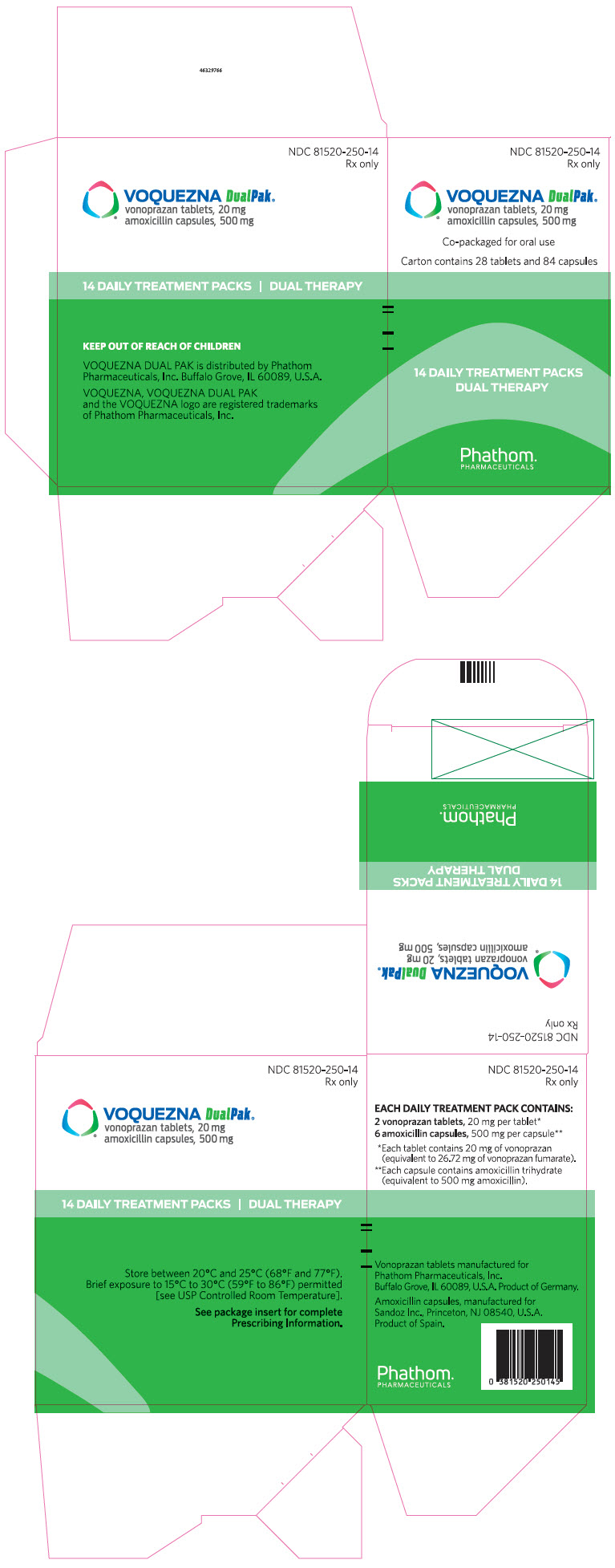
VOQUEZNA DUAL PAK vonoprazan fumarate and amoxicillin Kit
🆔 Identity & classification
Where does this data come from?
🏷️ RxNorm drug class
This medicine belongs to the Macrolide Antimicrobial class.
Where does this data come from?
🏭 Manufacturer & labeler
Where does this data come from?
🩺 Clinical
Amoxicillin is used to treat certain infections caused by bacteria, such as pneumonia, skin, and urinary tract infections eliminate H. pylori, a bacteria that causes ulcers in combination with other medications Amoxicillin is in a class of medications called penicillin-like antibiotics. It works by stopping the growth of bacteria. Antibiotics such as amoxicillin will not work for colds, flu, and other viral infections. Taking antibiotics when they are not needed increases your risk of getting an infection later that resists antibiotic treatment.
Read the full MedlinePlus article ↗- H. pylori is a type of bacteria that lives in the stomach lining and can cause ulcers and ongoing stomach inflammation. It's tough to eliminate because the stomach's acidic environ...
- What exactly is H. pylori, and why do I need two or three medications to treat it?
- Yes — they're different regimens. Voquezna Dual Pak contains vonoprazan and amoxicillin, taken three times a day. Voquezna Triple Pak adds clarithromycin and is taken twice a day....
- Does it matter which pak I was prescribed — Dual or Triple?
Patient education
Supplement & herbal interactions
Where does this data come from?
Ask a licensed pharmacist directly — free, answered by our team.
💊 What it looks like
Where does this data come from?
🧪 Inactive Ingredients / Excipients
Inactive ingredients, also called excipients, are components of the drug product other than the active ingredient. They may include fillers, dyes, coatings, preservatives, flavors, or other formulation ingredients.
Where does this data come from?
IACT rows and label-wide narrative are kept separate; availability and product-level specificity depend on the submitted label.Inactive ingredient FAQ
Are inactive ingredients the same for every manufacturer?
Why might an inactive ingredient be missing?
Can inactive ingredients matter?
💲 Pricing
A drug doesn't have one price. Each row is a different public payment system, and none is what you'd pay at the counter — that depends on your insurance. The ⓘ on each row explains what it measures.
| Price system | Per ea | Per package |
|---|---|---|
| Retail pharmacies payNADAC · weekly | $7.499 | $104.98 / 14 kit |
| Medicaid paysCMS SDUD · 12 mo | $828.25 | $11,595.47 / 14 kit |
| Medicare drug plans payPart D · Q2 2026 | $7.96 | $111.45 / 14 kit |
Where does this data come from?
🔁 Therapeutic equivalents
| Product | Labeler | Pack | NADAC/unit | TE | Status | Price vs. this |
|---|---|---|---|---|---|---|
| Voquezna Dual Pakthis 81520-0250-14 | Phathom | 1 kit | $7.499 | — | Availability likely | — |
Where does this data come from?
⏳ Availability & generic status
We did not find an FDA-approved generic match for this exact strength, form and route. Patent/protection dates below may affect future generic timing.
Why the date isn’t exact: Generic timing can change because patents may be challenged, settled, licensed, added, removed, or worked around with a narrower label — and FDA approval does not always mean a pharmacy can get the generic today.
🛈 What do these terms mean?
- Patent
- Legal protection listed in the Orange Book that may delay generic approval or launch. Issued by the U.S. Patent & Trademark Office.
- Substance patent
- Covers the active drug molecule itself — the hardest to design around. A generic generally can’t launch until it expires.
- Formulation (product) patent
- Covers a specific formulation or dosage form. A generic can sometimes work around it with a different formulation.
- Method-of-use patent
- A patent covering one specific approved use of the drug — not necessarily the whole molecule. A generic can sometimes launch with a “skinny label” that carves out the protected use and keeps the others.
- Skinny label
- A generic label that omits a still-patented use when the FDA allows it — letting a generic reach the market for the unprotected uses.
- Exclusivity
- FDA-granted marketing protection, separate from patents — e.g. 5-yr new chemical entity, 7-yr orphan drug, or a +6-month pediatric extension.
- Paragraph IV
- A generic applicant’s formal challenge to a listed patent. It can potentially lead to earlier generic entry, but often involves litigation or a settlement.
- RLD / RS
- Reference Listed Drug — the brand product the FDA uses as the reference for generic applications. Reference Standard — the product the FDA expects generics to compare against in bioequivalence testing.
- TE / AB rating
- FDA therapeutic-equivalence rating. An AB rating generally means the FDA considers a generic therapeutically equivalent to — and substitutable for — the brand.
- LOE (loss of exclusivity)
- The latest patent or exclusivity currently listed — the loss-of-exclusivity / latest-listed-protection date shown on this page. Paragraph-IV challenges and settlements can move the real date earlier; FDA approval and a manufacturer’s decision to market can move it later.
Built from the FDA Orange Book. The bars above are scaled to each protection’s expiry; the red LOE marker is the last one to lapse.
| Patent | Type | Use code | Expires |
|---|---|---|---|
| US 9186411 ↗ | Drug product | — | Aug 11, 2030 |
| US 7977488 ↗ | Drug substance | — | Apr 10, 2030 |
| Code | What it grants | Expires |
|---|---|---|
| NCE | New Chemical Entity (5-year) | May 3, 2027 |
| GAIN | Qualified Infectious Disease Product (+5-year) | May 3, 2032 |
Is there a generic version of VOQUEZNA DUAL PAK?
The FDA approved a generic — why can’t I get it at my pharmacy yet?
Why do different websites show different generic release dates?
What does “FDA listed” mean?
What does a patent or protection date mean here?
What does “current Orange Book estimate” mean?
Can a generic come out before the last patent expires?
Can a generic come out after the listed dates?
What is the difference between patents and exclusivity?
Why are there multiple patent dates?
Where does this data come from?
🗺️ Medicaid utilization & spend
📊 Medicare Part D spend CMS · PART D · 2026 (Q1)
📦 Packaging — all sizes for this product
| Package NDC | Description | Marketing start | Status |
|---|---|---|---|
| 81520-0250-14 You're viewing this | 14 BLISTER PACK in 1 CARTON (81520-250-14) / 1 KIT in 1 BLISTER PACK (81520-250-01) | 2023-11-08 | Active |
🧭 About this NDC listing & data coverage
Kit / multi-component package
This NDC identifies a kit — a package containing more than one component. Structured data (pricing, ingredients, equivalents) is often reported per component rather than for the kit NDC itself, which can make this page look thinner than the components' own pages.
What data is (and isn’t) available for this NDC — tap to expand
| NDC identity (package / product / labeler codes) | ✓ Available |
| Labeler | ✓ Available |
| Product & package description | ✓ Available |
| Marketing category & status | ✓ Available |
| Active ingredient / dosage form / route | ✓ Available |
| FDA label (SPL via DailyMed) | ✓ Available |
| Package photos | ✓ Available |
| Inactive ingredients (structured) | — Not published for this NDC The labeler did not submit a structured excipient list, or no SPL is available. |
| NADAC pharmacy acquisition price (CMS) | ✓ Available |
| Orange Book / therapeutic-equivalence data | ✓ Available |
| HCPCS J-code billing crosswalk | — Not published for this NDC Most self-administered / retail products have no J-code — that is normal. |
| Medicaid utilization (CMS SDUD) | ✓ Available |
Questions about this listing
Is the NDC printed on the package the same as the 11-digit billing NDC?
What do the three segments of this NDC mean?
Is this package still being marketed?
Who lists this product with the FDA?
Do I need a prescription for this product?
Where does this data come from?
📄 Full prescribing information FDA SPL
🎯 Indications and Usage ▾
1 INDICATIONS AND USAGE VOQUEZNA TRIPLE PAK, is a co-packaged product containing vonoprazan, a potassium-competitive acid blocker (PCAB), amoxicillin, a penicillin class antibacterial, and clarithromycin, a macrolide antimicrobial, indicated for the treatment of Helicobacter pylori (H. pylori) infection in adults. ( 1.1 ) VOQUEZNA DUAL PAK, is a co-packaged product containing vonoprazan, a PCAB, and amoxicillin, a penicillin class antibacterial, indicated for the treatment of H. pylori infection in adults. ( 1.1 ) To reduce the development of drug-resistant bacteria and maintain the effectiveness of VOQUEZNA TRIPLE PAK, VOQUEZNA DUAL PAK and other antibacterial drugs, VOQUEZNA TRIPLE PAK and VOQUEZNA DUAL PAK should be used only to treat or prevent infections that are proven or strongly suspected to be caused by bacteria.
( 1.2 )
1.1Helicobacter pylori Infection VOQUEZNA TRIPLE PAK or VOQUEZNA DUAL PAK are indicated for the treatment of Helicobacter pylori ( H. pylori ) infection in adults [see Clinical Studies (14) ].
1.2Usage To reduce the development of drug-resistant bacteria and maintain the effectiveness of VOQUEZNA TRIPLE PAK, VOQUEZNA DUAL PAK and other antibacterial drugs, VOQUEZNA TRIPLE PAK and VOQUEZNA DUAL PAK should be used only to treat or prevent infections that are proven or strongly suspected to be caused by susceptible bacteria. When culture and susceptibility information are available, they should be considered in selecting or modifying antibacterial therapy. In the absence of such data, local epidemiology and susceptibility patterns may contribute to the empiric selection of therapy.
⏱️ Dosage and Administration ▾
2 DOSAGE AND ADMINISTRATION VOQUEZNA TRIPLE PAK : The recommended dosage is vonoprazan 20 mg plus amoxicillin 1,000 mg plus clarithromycin 500 mg, each given twice daily (morning and evening, 12 hours apart), with or without food, for 14 days. ( 2.1 ) VOQUEZNA DUAL PAK : The recommended dosage is vonoprazan 20 mg twice daily (morning and evening) plus amoxicillin 1,000 mg, three times a day (morning, mid-day, and evening), with or without food, for 14 days. ( 2.2 ) See full prescribing information for the recommended dosage for patients with renal or hepatic impairment.
( 2.3 , 2.4 )
2.1Recommended Dosage for VOQUEZNA TRIPLE PAK VOQUEZNA TRIPLE PAK is a co-packaged product containing vonoprazan tablets, amoxicillin capsules, and clarithromycin tablets each given twice daily (in the morning and evening, 12 hours apart) with or without food, for 14 days [see Clinical Pharmacology (12.3) ] . The recommended adult oral dosage of VOQUEZNA TRIPLE PAK is the following: In the morning, take 20 mg of vonoprazan (one oval pale red tablet), 1,000 mg of amoxicillin (two yellow capsules), and 500 mg of clarithromycin (one oval white tablet) In the evening, take 20 mg of vonoprazan (one oval pale red tablet), and 1,000 mg of amoxicillin (two yellow capsules), and 500 mg of clarithromycin (one oval white tablet)
2.2Recommended Dosage for VOQUEZNA DUAL PAK VOQUEZNA DUAL PAK is a co-packaged product containing vonoprazan tablets and amoxicillin capsules given with or without food, for 14 days [see Clinical Pharmacology (12.3) ] . The recommended adult oral dosage of VOQUEZNA DUAL PAK is the following: In the morning, take 20 mg of vonoprazan (one oval pale red tablet) and 1,000 mg of amoxicillin (two yellow capsules) Mid-day, take 1,000 mg of amoxicillin (two yellow capsules) In the evening, take 20 mg of vonoprazan (one oval pale red tablet) and 1,000 mg of amoxicillin (two yellow capsules)
2.3Recommended Dosage in Patients with Renal Impairment The recommended dosage of VOQUEZNA TRIPLE PAK and VOQUEZNA DUAL PAK in adult patients with renal impairment is described in Table 1 [see Use in Specific Populations (8.6) and Clinical Pharmacology (12.3) ]. Table 1: Recommended Dosage of VOQUEZNA TRIPLE PAK and VOQUEZNA DUAL PAK in Patients with Renal Impairment Estimated GFR Recommended Dosage VOQUEZNA TRIPLE PAK VOQUEZNA DUAL PAK 30 mL/minute or greater 20 mg vonoprazan twice daily 1,000 mg amoxicillin twice daily 500 mg clarithromycin twice daily 20 mg vonoprazan twice daily 1,000 mg amoxicillin three times daily Less than 30 mL/minute Use is not recommended
2.4Recommended Dosage in Patients with Hepatic Impairment The recommended dosage of VOQUEZNA TRIPLE PAK and VOQUEZNA DUAL PAK in adult patients with hepatic impairment is described in Table 2 [see Use in Specific Populations (8.7) and Clinical Pharmacology (12.3) ]. Table 2: Recommended Dosage of VOQUEZNA TRIPLE PAK and VOQUEZNA DUAL PAK in Patients with Hepatic Impairment Classification Recommended Dosage VOQUEZNA TRIPLE PAK VOQUEZNA DUAL PAK Child-Pugh Class A 20 mg vonoprazan twice daily 1,000 mg amoxicillin twice daily 500 mg clarithromycin twice daily 20 mg vonoprazan twice daily 1,000 mg amoxicillin three times daily Child-Pugh Class B Use is not recommended Child-Pugh Class C Use is not recommended
2.5Missed Doses If a dose is missed, administer VOQUEZNA TRIPLE PAK or VOQUEZNA DUAL PAK as soon as possible, within 4 hours after the missed dose. If more than 4 hours have passed, skip the missed dose and administer the next dose on the regularly scheduled time. Patients should continue the normal dosing schedule until the medication is completed.
💊 Dosage Forms and Strengths ▾
3 DOSAGE FORMS AND STRENGTHS VOQUEZNA TRIPLE PAK : Carton of 14 daily administration packs for morning and evening dosing, each containing the following three drug products ( 3.1 ): Tablets: Vonoprazan 20 mg Capsules: Amoxicillin 500 mg Tablets: Clarithromycin 500 mg VOQUEZNA DUAL PAK : Carton of 14 daily administration packs for morning, mid-day, and evening dosing, each containing the following two drug products ( 3.2 ): Tablets: Vonoprazan 20 mg Capsules: Amoxicillin 500 mg
3.1VOQUEZNA TRIPLE PAK VOQUEZNA TRIPLE PAK is a co-package consisting of 14 administration packs for morning and evening dosing. Each administration pack contains the following three drug products: Vonoprazan Tablets, 20 mg: pale red, oval, film-coated tablets debossed V20 on one side and plain on the other side. Amoxicillin Capsules, 500 mg: yellow, opaque, hard gelatin capsules imprinted with AMOX 500 on one side and GG 849 on the other side.
Clarithromycin Tablets, 500 mg: white, oval, film-coated debossed GG C9 on one side and plain on the other side.
3.2VOQUEZNA DUAL PAK VOQUEZNA DUAL PAK is a co-package consisting of 14 administration packs for morning, mid-day, and evening dosing. Each administration pack contains the following two drug products: Vonoprazan Tablets, 20 mg: pale red, oval, film-coated tablets debossed V20 on one side and plain on the other side. Amoxicillin Capsules, 500 mg: yellow, opaque, hard gelatin capsules imprinted with AMOX 500 on one side and GG 849 on the other side.
⛔ Contraindications ▾
4 CONTRAINDICATIONS VOQUEZNA TRIPLE PAK and VOQUEZNA DUAL PAK : Known hypersensitivity to vonoprazan, amoxicillin or any other beta-lactams, clarithromycin or any other macrolide antimicrobial or any component of VOQUEZNA TRIPLE PAK. ( 4.1 ) Known hypersensitivity to vonoprazan, amoxicillin or any other beta-lactams or any component of VOQUEZNA DUAL PAK. ( 4.1 ) Rilpivirine-containing products.
( 4.1 ) VOQUEZNA TRIPLE PAK Due to the Clarithromycin Component : Pimozide. ( 4.2 ) Lomitapide, lovastatin, and simvastatin. ( 4.2 ) Ergot alkaloids (ergotamine or dihydroergotamine).
( 4.2 ) Colchicine in renal or hepatic impairment. ( 4.2 ) History of cholestatic jaundice/hepatic dysfunction with use of clarithromycin. ( 4.2 ) Lurasidone.
( 4.2 )
4.1Contraindications to VOQUEZNA TRIPLE PAK and VOQUEZNA DUAL PAK Hypersensitivity Reactions VOQUEZNA TRIPLE PAK and VOQUEZNA DUAL PAK are contraindicated in patients with a known hypersensitivity to any component of VOQUEZNA TRIPLE PAK: vonoprazan, amoxicillin (or other β-lactam antibacterials, e.g., penicillins and cephalosporins), or clarithromycin (or other macrolide antibacterial drugs, e.g., erythromycin) or VOQUEZNA DUAL PAK: vonoprazan or amoxicillin (or other β-lactam antibacterials, e.g., penicillins and cephalosporins) [see Warnings and Precautions (5.1) ].
Rilpivirine-containing Products VOQUEZNA TRIPLE PAK and VOQUEZNA DUAL PAK are contraindicated with rilpivirine-containing products [see Drug Interactions (7) ].
4.2Additional Contraindications to VOQUEZNA TRIPLE PAK Due to the Clarithromycin Component Serious Adverse Reactions/Risks Due to Drug Interactions Because of the clarithromycin component, VOQUEZNA TRIPLE PAK is contraindicated with concomitant use of: Pimozide: There have been postmarketing reports of drug interactions when clarithromycin is co-administered with pimozide, resulting in cardiac arrhythmias (QT prolongation, ventricular tachycardia, ventricular fibrillation, and torsades de pointes ) most likely due to inhibition of metabolism of these drugs by clarithromycin.
Fatalities have been reported [see Warnings and Precautions (5.2) and Drug Interactions (7) ]. Lipid-lowering Agents: Lomitapide, simvastatin, and lovastatin [see Warnings and Precautions (5.2) and Drug Interactions (7) ] Ergot Alkaloids: Ergotamine or dihydroergotamine [see Drug Interactions (7) ] Colchicine in patients with renal or hepatic impairment [see Warnings and Precautions (5.2) and Drug Interactions (7) ] Lurasidone: Coadministration of clarithromycin and lurasidone may lead to an increase in lurasidone exposure and the potential for serious adverse reactions [see Drug Interactions (7) ] .
Cholestatic Jaundice/Hepatic Dysfunction VOQUEZNA TRIPLE PAK is contraindicated in patients with a history of cholestatic jaundice or hepatic dysfunction associated with prior use of clarithromycin.
⚠️ Warnings and Cautions ▾
5 WARNINGS AND PRECAUTIONS VOQUEZNA TRIPLE PAK and VOQUEZNA DUAL PAK : Hypersensitivity Reactions : Serious and occasionally fatal reactions (e.g., anaphylaxis) have been reported with components of VOQUEZNA TRIPLE PAK and VOQUEZNA DUAL PAK. If hypersensitivity reactions occur, discontinue VOQUEZNA TRIPLE PAK or VOQUEZNA DUAL PAK and institute immediate therapy (e.g., anaphylaxis management). ( 5.1 ) Acute Tubulointerstitial Nephritis : Discontinue VOQUEZNA TRIPLE PAK or VOQUEZNA DUAL PAK and evaluate patients.
( 5.1 ) Severe Cutaneous Adverse Reactions (SCAR) : Discontinue VOQUEZNA TRIPLE PAK or VOQUEZNA DUAL PAK at the first signs or symptoms of SCAR or other signs of hypersensitivity and consider further evaluation. ( 5.1 ) Drug-induced enterocolitis syndrome (DIES) has been reported with use of amoxicillin, a component of VOQUEZNA TRIPLE PAK and VOQUEZNA DUAL PAK. If this occurs, discontinue VOQUEZNA TRIPLE PAK or VOQUEZNA DUAL PAK and institute appropriate therapy.
( 5.1 ) Clostridioides difficile -associated diarrhea (CDAD) : Evaluate if diarrhea occurs with VOQUEZNA TRIPLE PAK and VOQUEZNA DUAL PAK. ( 5.1 ) VOQUEZNA TRIPLE PAK Due to the Clarithromycin Component : QT Prolongation : Avoid VOQUEZNA TRIPLE PAK in patients with known QT prolongation or receiving drugs known to prolong the QT interval, ventricular arrhythmia ( torsades de pointes ), hypokalemia/hypomagnesemia, significant bradycardia, or taking Class IA or III antiarrhythmics. ( 5.2 ) Hepatotoxicity : Discontinue if signs and symptoms of hepatitis occur with VOQUEZNA TRIPLE PAK.
( 5.2 ) Serious Adverse Reactions Due to Concomitant Use with Other Drugs : Serious adverse reactions can occur with VOQUEZNA TRIPLE PAK due to drug interactions of clarithromycin with colchicine, some lipid lowering agents, some calcium channel blockers, and other drugs. ( 5.2 ) Embryo-Fetal Toxicity : Based on the findings from animal studies and human observational studies in pregnant women treated with clarithromycin, VOQUEZNA TRIPLE PAK is not recommended for use in pregnant women except in clinical circumstances where no alternative therapy is appropriate.
( 5.2 ) Myasthenia Gravis : Exacerbation of myasthenia gravis can occur with VOQUEZNA TRIPLE PAK since it has been reported in patients receiving clarithromycin tablets. ( 5.2 )
5.1Warnings and Precautions for VOQUEZNA TRIPLE PAK and VOQUEZNA DUAL PAK Hypersensitivity Reactions Serious and occasionally fatal hypersensitivity reactions (e.g., anaphylaxis, anaphylactic shock, rash, erythema multiforme, and Henoch-Schonlein purpura) have been reported with components of VOQUEZNA TRIPLE PAK and VOQUEZNA DUAL PAK [see Contraindications (4.1) ]. Before initiating therapy with VOQUEZNA TRIPLE PAK or VOQUEZNA DUAL PAK careful inquiry should be made regarding previous hypersensitivity reactions to penicillins, cephalosporins, macrolide antibacterial drugs or other allergens.
Discontinue VOQUEZNA TRIPLE PAK or VOQUEZNA DUAL PAK immediately and institute appropriate treatment if hypersensitivity occurs. Acute Tubulointerstitial Nephritis Acute tubulointerstitial nephritis (TIN) has been reported with vonoprazan, a component of VOQUEZNA TRIPLE PAK or VOQUEZNA DUAL PAK [see Adverse Reactions (6.1) ] . If suspected, discontinue VOQUEZNA TRIPLE PAK or VOQUEZNA DUAL PAK and evaluate patients with suspected acute TIN.
Severe Cutaneous Adverse Reactions Severe cutaneous adverse reactions (SCAR), including Stevens-Johnson syndrome (SJS) and toxic epidermal necrolysis (TEN) have been reported with the components of VOQUEZNA TRIPLE PAK: vonoprazan, amoxicillin, and clarithromycin and VOQUEZNA DUAL PAK: vonoprazan and amoxicillin [see Adverse Reactions (6.2) ] . In addition, drug reaction with eosinophilia and systemic symptoms (DRESS), and acute generalized exanthematous pustulosis (AGEP) have been reported with amoxicillin and clarithromycin.
Discontinue VOQUEZNA TRIPLE PAK or VOQUEZNA DUAL PAK at the first signs or symptoms of SCAR or other si…
🤒 Adverse Reactions ▾
6 ADVERSE REACTIONS The following serious adverse reactions are described below and elsewhere in labeling: Hypersensitivity Reactions [see Warnings and Precautions (5.1) ] Drug-Induced Enterocolitis Syndrome (DIES) [see Warnings and Precautions (5.1) ] Acute Tubulointerstitial Nephritis [see Warnings and Precautions (5.1) ] Clostridioides difficile -Associated Diarrhea [see Warnings and Precautions (5.1) ] QT Prolongation [see Warnings and Precautions (5.2) ] Hepatotoxicity [see Warnings and Precautions (5.2) ] Serious Adverse Reactions Due to Concomitant Use with Other Drugs [see Warnings and Precautions (5.2) ] Exacerbation of Myasthenia Gravis [see Warnings and Precautions (5.2) ] VOQUEZNA TRIPLE PAK : Most common adverse reactions (≥ 2%) were dysgeusia, diarrhea, vulvovaginal candidiasis, headache, abdominal pain, and hypertension.
( 6.1 ) VOQUEZNA DUAL PAK : Most common adverse reactions (≥ 2%) were diarrhea, abdominal pain, vulvovaginal candidiasis, and nasopharyngitis. ( 6.1 ) To report SUSPECTED ADVERSE REACTIONS, contact Phathom Pharmaceuticals, Inc. at toll-free phone 1-888-775-7428 or FDA at 1-800-FDA-1088 or www.fda.gov/medwatch ) .
6.1Clinical Trials Experience Because clinical trials are conducted under widely varying conditions, adverse reaction rates observed in the clinical trials of a drug cannot be directly compared to rates in the clinical trials of another drug and may not reflect the rates observed in practice. Adverse Reactions with VOQUEZNA TRIPLE PAK and VOQUEZNA DUAL PAK The safety of VOQUEZNA TRIPLE PAK was evaluated in 675 adult patients (aged 20 to 82 years) in clinical trials in the United States, Europe and Japan and VOQUEZNA DUAL PAK was evaluated in 348 adult patients (aged 20 to 80 years) in a clinical trial in the United States and Europe.
All the patients were screened and found to be positive for H. pylori infection. The safety of VOQUEZNA TRIPLE PAK and VOQUEZNA DUAL PAK was evaluated in a randomized, controlled, double-blind triple therapy/open-label dual therapy study conducted in the United States and Europe in treatment-naïve H. pylori -positive adult patients. Patients were randomized 1:1:1 to vonoprazan 20 mg twice daily plus amoxicillin 1,000 mg twice daily plus clarithromycin 500 mg twice daily (VOQUEZNA TRIPLE PAK) or vonoprazan 20 mg twice daily plus amoxicillin 1,000 mg three times daily (VOQUEZNA DUAL PAK) or lansoprazole 30 mg twice daily plus amoxicillin 1,000 mg twice daily plus clarithromycin 500 mg twice daily (LAC) administered for 14 consecutive days.
A total of 346 patients received VOQUEZNA TRIPLE PAK in the study, 348 received VOQUEZNA DUAL PAK and 345 received LAC. These patients had a mean age of 51 years (range 20 to 87 years); 62.2% were female, 89.3% were White, 7.4% Black or African American, 1.5% were Asian and 1.8% were others with 72.5% non-Hispanic or Latino. Adverse Reactions Leading to Discontinuation Treatment discontinuation due to an adverse reaction occurred in 2.3% (8/346) of the VOQUEZNA TRIPLE PAK-treated patients, 0.9% (3/348) of the VOQUEZNA DUAL PAK-treated patients and 1.2% (4/345) of the LAC-treated patients.
The most common adverse reactions leading to discontinuation of VOQUEZNA TRIPLE PAK were diarrhea (0.6%) and hypertension (0.6%) and the most common adverse reaction leading to discontinuation of VOQUEZNA DUAL PAK was rash (0.6%). Most Common Adverse Reactions The adverse reactions occurring in ≥2% of patients are described in Table 3. Table 3: Adverse Reactions Occurring in ≥2% of Adult Patients Receiving VOQUEZNA DUAL PAK or VOQUEZNA TRIPLE PAK Adverse Reactions VOQUEZNA DUAL PAK VOQUEZNA TRIPLE PAK LAC (N=348) n (%) (N=346) n (%) (N=345) n (%) Diarrhea 18 (5.2) 14 (4.0) 33 (9.6) Dysgeusia Dysgeusia also includes taste disorder.
2 (0.6) 16 (4.6) 21 (6.1) Vulvovaginal candidiasis Vulvovaginal candidiasis includes: urogenital infection fungal, vulvovaginal candidiasis, vulvovaginal mycotic infection, vulvovaginal pruritus, pruritus genita…
🔄 Drug Interactions ▾
7 DRUG INTERACTIONS Collated drug interaction information for the individual components in VOQUEZNA TRIPLE PAK and VOQUEZNA DUAL PAK is summarized below. Drug interaction studies with VOQUEZNA TRIPLE PAK or VOQUEZNA DUAL PAK have not been conducted. These recommendations are based on either drug interaction trials or predicted interactions due to the expected magnitude of interaction and potential for serious adverse reactions or loss of efficacy [see Clinical Pharmacology (12.3) ] .
Clarithromycin (a component of VOQUEZNA TRIPLE PAK) is a strong CYP3A inhibitor. Concomitant use of VOQUEZNA TRIPLE PAK with a drug(s) primarily metabolized by CYP3A may cause elevations in CYP3A substrate drug's concentrations that could increase or prolong both therapeutic and adverse effects of the concomitant drug. Table 4: Effects of Other Drugs on VOQUEZNA TRIPLE PAK Strong or Moderate CYP3A Inducers Clinical Effect Vonoprazan and clarithromycin are CYP3A substrates.
Strong or moderate CYP3A inducers may decrease exposure of vonoprazan and clarithromycin [see Clinical Pharmacology (12.3) ] , which may reduce the effectiveness of VOQUEZNA TRIPLE PAK. Prevention or Management Avoid concomitant use with VOQUEZNA TRIPLE PAK. Probenecid Clinical Effect Amoxicillin undergoes tubular secretion.
Probenecid may increase amoxicillin exposure by blocking its renal tubular secretion, which may increase the risk of VOQUEZNA TRIPLE PAK adverse reactions. Prevention or Management Closely monitor for signs or symptoms of increased or prolonged adverse reactions associated with amoxicillin when used with VOQUEZNA TRIPLE PAK. Allopurinol Clinical Effect Increase in the incidence of rashes is reported in patients receiving both allopurinol and amoxicillin together compared to patients receiving amoxicillin alone.
It is not known whether this potentiation of amoxicillin rashes is due to allopurinol or the hyperuricemia present in these patients. Prevention or Management Discontinue allopurinol at the first appearance of skin rash when used concomitantly with VOQUEZNA TRIPLE PAK. Omeprazole Clinical Effect Clarithromycin concentrations in the gastric tissue and mucus were increased by concomitant administration of omeprazole [see Clinical Pharmacology (12.3) ] .
Prevention or Management Avoid concomitant use of VOQUEZNA TRIPLE PAK with omeprazole. Itraconazole Clinical Effect Both clarithromycin and itraconazole are substrates and inhibitors of CYP3A, potentially leading to a bi-directional drug interaction when administered concomitantly. VOQUEZNA TRIPLE PAK's use with strong CYP3A4 inhibitors may lead to increases in clarithromycin exposure, which may increase the risk of VOQUEZNA TRIPLE PAK adverse reactions.
Prevention or Management Patients taking itraconazole with VOQUEZNA TRIPLE PAK should be monitored closely for signs or symptoms of increased or prolonged adverse reactions associated with itraconazole and clarithromycin. Antivirals Clinical Effect Clarithromycin is a CYP3A4 substrate and inhibitor. Use of VOQUEZNA TRIPLE PAK with antivirals that are CYP3A substrates, inducers, or CYP3A inhibitors may potentially lead to bi-directional drug interactions leading to alterations in exposure of clarithromycin and/or CYP3A substrates, which may increase the risk of adverse reactions or loss of effectiveness [see Clinical Pharmacology (12.3) ] .
Prevention or Management Saquinavir (CYP3A substrate and inhibitor) Use VOQUEZNA TRIPLE PAK with caution. See saquinavir prescribing information for instructions when saquinavir (with or without ritonavir) is co-administered with clarithromycin. Ritonavir (CYP3A inhibitor) Use of VOQUEZNA TRIPLE PAK with ritonavir is not recommended in patients with decreased renal function.
Etravirine (CYP3A inducer) Avoid concomitant use with VOQUEZNA TRIPLE PAK. Table 5: Effects of Other Drugs on VOQUEZNA DUAL PAK Strong or Moderate CYP3A Inducers Clinical Effect Vonoprazan is a CYP3A substrate. Strong or moderate CYP3A inducers may…
👥 Use in Specific Populations ▾
8 USE IN SPECIFIC POPULATIONS Geriatrics : VOQUEZNA TRIPLE PAK increased risk of torsades de pointes due to the clarithromycin component. ( 8.5 ) Renal Impairment : Use is not recommended in severe renal impairment. ( 8.6 ) Hepatic Impairment : Use is not recommended in moderate and severe hepatic impairment. ( 8.7 )
8.1Pregnancy Pregnancy Exposure Registry There is a pregnancy exposure registry that monitors pregnancy outcomes in women exposed to VOQUEZNA TRIPLE PAK or VOQUEZNA DUAL PAK during pregnancy. Healthcare providers are encouraged to register patients by calling 1-866-609-1612 or visiting https://voqueznapregnancyregistry.com/ . Risk Summary VOQUEZNA TRIPLE PAK Based on findings from animal studies and observational studies in pregnant women with use of clarithromycin, use of VOQUEZNA TRIPLE PAK is not recommended in pregnant women except in clinical circumstances where no alternative therapy is appropriate.
There are no adequate and well-controlled studies of VOQUEZNA TRIPLE PAK in pregnant women to evaluate for drug-associated risks of major birth defects, miscarriage, or other adverse maternal or fetal outcomes. If VOQUEZNA TRIPLE PAK is used during pregnancy, advise pregnant women of the potential risk to a fetus. No reproductive and developmental toxicity studies with the combination of vonoprazan, amoxicillin, and/or clarithromycin were conducted.
VOQUEZNA DUAL PAK There are no adequate and well-controlled studies of VOQUEZNA DUAL PAK in pregnant women to evaluate for drug-associated risks of major birth defects, miscarriage, or other adverse maternal or fetal outcomes. Individual Components of VOQUEZNA TRIPLE PAK and VOQUEZNA DUAL PAK Clarithromycin: Published observational studies in pregnant women have demonstrated adverse effects on pregnancy outcomes, including an increased risk of miscarriage and in some studies an increased incidence of fetal malformations (see Data ) .
In animal reproduction studies, administration of oral clarithromycin to pregnant mice, rats, rabbits, and monkeys during the period of organogenesis produced malformations in rats (cardiovascular anomalies) and mice (cleft palate) at clinically relevant doses. Fetal effects in mice, rats, and monkeys (e.g., reduced fetal survival, body weight, body weight gain) and implantation losses in rabbits were generally considered to be secondary to maternal toxicity (see Data ) . Vonoprazan: Available data from pharmacovigilance reports with vonoprazan use in pregnant women are not sufficient to evaluate for a drug-associated risk for major birth defects, miscarriage or other adverse maternal or fetal outcomes.
In pregnant rats, no adverse effects were noted after oral administration of vonoprazan during organogenesis at approximately 27 times the maximum recommended human dose (MRHD) based on AUC exposure comparisons. In a pre- and postnatal development (PPND) study, pups from dams orally administered vonoprazan during organogenesis and through lactation, exhibited liver discoloration, which in follow-up mechanistic animal studies was associated with necrosis, fibrosis, and hemorrhage at a dose approximately 22 times the MRHD based on AUC comparisons which were likely attributable to exposure during lactation [see Use in Specific Populations (8.2) ] .
These effects were not observed at the next lower dose in this study, which was approximately equal to the MRHD based on AUC comparison, however they were seen at clinically relevant exposures in dose range finding studies in rats (see Data ) . Amoxicillin: Available data from published epidemiologic studies and pharmacovigilance case reports over several decades with amoxicillin use have not established drug-associated risks of major birth defects, miscarriage, or adverse maternal or fetal outcomes. Reproduction studies with amoxicillin have been performed in mice and rats (5 and 10 times the human dose 2 g human dose for mice and rats, respectively, 3 and 6 times the 3 g human dose for mice and…
🤰 Pregnancy ▾
8.1Pregnancy Pregnancy Exposure Registry There is a pregnancy exposure registry that monitors pregnancy outcomes in women exposed to VOQUEZNA TRIPLE PAK or VOQUEZNA DUAL PAK during pregnancy. Healthcare providers are encouraged to register patients by calling 1-866-609-1612 or visiting https://voqueznapregnancyregistry.com/ . Risk Summary VOQUEZNA TRIPLE PAK Based on findings from animal studies and observational studies in pregnant women with use of clarithromycin, use of VOQUEZNA TRIPLE PAK is not recommended in pregnant women except in clinical circumstances where no alternative therapy is appropriate.
There are no adequate and well-controlled studies of VOQUEZNA TRIPLE PAK in pregnant women to evaluate for drug-associated risks of major birth defects, miscarriage, or other adverse maternal or fetal outcomes. If VOQUEZNA TRIPLE PAK is used during pregnancy, advise pregnant women of the potential risk to a fetus. No reproductive and developmental toxicity studies with the combination of vonoprazan, amoxicillin, and/or clarithromycin were conducted.
VOQUEZNA DUAL PAK There are no adequate and well-controlled studies of VOQUEZNA DUAL PAK in pregnant women to evaluate for drug-associated risks of major birth defects, miscarriage, or other adverse maternal or fetal outcomes. Individual Components of VOQUEZNA TRIPLE PAK and VOQUEZNA DUAL PAK Clarithromycin: Published observational studies in pregnant women have demonstrated adverse effects on pregnancy outcomes, including an increased risk of miscarriage and in some studies an increased incidence of fetal malformations (see Data ) .
In animal reproduction studies, administration of oral clarithromycin to pregnant mice, rats, rabbits, and monkeys during the period of organogenesis produced malformations in rats (cardiovascular anomalies) and mice (cleft palate) at clinically relevant doses. Fetal effects in mice, rats, and monkeys (e.g., reduced fetal survival, body weight, body weight gain) and implantation losses in rabbits were generally considered to be secondary to maternal toxicity (see Data ) . Vonoprazan: Available data from pharmacovigilance reports with vonoprazan use in pregnant women are not sufficient to evaluate for a drug-associated risk for major birth defects, miscarriage or other adverse maternal or fetal outcomes.
In pregnant rats, no adverse effects were noted after oral administration of vonoprazan during organogenesis at approximately 27 times the maximum recommended human dose (MRHD) based on AUC exposure comparisons. In a pre- and postnatal development (PPND) study, pups from dams orally administered vonoprazan during organogenesis and through lactation, exhibited liver discoloration, which in follow-up mechanistic animal studies was associated with necrosis, fibrosis, and hemorrhage at a dose approximately 22 times the MRHD based on AUC comparisons which were likely attributable to exposure during lactation [see Use in Specific Populations (8.2) ] .
These effects were not observed at the next lower dose in this study, which was approximately equal to the MRHD based on AUC comparison, however they were seen at clinically relevant exposures in dose range finding studies in rats (see Data ) . Amoxicillin: Available data from published epidemiologic studies and pharmacovigilance case reports over several decades with amoxicillin use have not established drug-associated risks of major birth defects, miscarriage, or adverse maternal or fetal outcomes. Reproduction studies with amoxicillin have been performed in mice and rats (5 and 10 times the human dose 2 g human dose for mice and rats, respectively, 3 and 6 times the 3 g human dose for mice and rats, respectively).
There was no evidence of harm to the fetus due to amoxicillin. The estimated background risks of major birth defects and miscarriage for the indicated population are unknown. All pregnancies have a background risk of birth defect, loss, or other adverse outcomes.
In the United States general popul…
🧒 Pediatric Use ▾
8.4Pediatric Use Safety and effectiveness of VOQUEZNA TRIPLE PAK or VOQUEZNA DUAL PAK in pediatric patients have not been established.
🧓 Geriatric Use ▾
8.5Geriatric Use Geriatric Use for the Individual Components of VOQUEZNA TRIPLE PAK and VOQUEZNA DUAL PAK Amoxicillin and Clarithromycin Amoxicillin and clarithromycin are known to be substantially excreted by the kidney, and the risk of adverse reactions to these drugs may be greater in patients with impaired renal function and it may be useful to monitor renal function [see Use in Specific Populations (8.6) ]. Vonoprazan There were 218 patients aged 65 years and older in the clinical study of VOQUEZNA TRIPLE PAK and VOQUEZNA DUAL PAK for the treatment of H. pylori infection [see Clinical Studies (14) ].
Of the total number of vonoprazan-treated subjects (N=694), there were 153 (22.0%) patients aged 65 years and older and 18 (2.6%) patients were aged 75 years and older. No overall differences in safety or effectiveness were observed between these patients and younger adult patients. Amoxicillin An analysis of clinical studies of amoxicillin was conducted to determine whether subjects aged 65 and over respond differently from younger subjects.
These analyses have not identified differences in responses between the elderly and younger patients, but a greater sensitivity of some older individuals cannot be ruled out. This drug is known to be substantially excreted by the kidney, and the risk of toxic reactions to this drug may be greater in patients with impaired renal function. Because elderly patients are more likely to have decreased renal function, and it may be useful to monitor renal function.
Clarithromycin In a steady-state study in which healthy elderly subjects (65 years to 81 years of age) were given 500 mg of clarithromycin every 12 hours, the maximum serum concentrations and area under the curves of clarithromycin and 14-OH clarithromycin were increased compared to those achieved in healthy young adults. These changes in pharmacokinetics parallel known age-related decreases in renal function. In clinical trials, elderly patients did not have an increased incidence of adverse reactions when compared to younger patients.
Elderly patients may be more susceptible to development of torsades de pointes arrhythmias than younger patients [see Warnings and Precautions (5.2) ]. Most reports of acute kidney injury with calcium channel blockers metabolized by CYP3A4 (e.g., verapamil, amlodipine, diltiazem, nifedipine) involved elderly patients 65 years of age or older [see Warnings and Precautions (5.2) ]. Especially in elderly patients, there have been reports of colchicine toxicity with concomitant use of clarithromycin and colchicine, some of which occurred in patients with renal insufficiency.
Deaths have been reported in some patients [see Contraindications (4.2) and Warnings and Precautions (5.2) ].
🆘 Overdosage ▾
10 OVERDOSAGE No information is available on accidental overdosage of VOQUEZNA TRIPLE PAK or VOQUEZNA DUAL PAK in humans. In case of an overdose, patients should contact a physician, poison control center, or emergency room. The available overdosage information for each of the individual components in VOQUEZNA TRIPLE PAK and VOQUEZNA DUAL PAK are summarized below: Vonoprazan There have been no reports of overdose with vonoprazan.
In clinical studies, a single dose of 120 mg resulted in no serious adverse reactions. Vonoprazan is not removed from the circulation by hemodialysis. If overdose occurs, treatment should be symptomatic and supportive.
Amoxicillin In case of amoxicillin overdosage, discontinue medication, treat symptomatically and institute supportive measures as needed. A prospective study of 51 pediatric patients at a poison-control center suggested that overdosages of less than 250 mg/kg of amoxicillin are not associated with significant clinical symptoms. Interstitial nephritis resulting in oliguric renal failure has been reported in a small number of patients after overdosage with amoxicillin.
Crystalluria, in some cases leading to renal failure, has also been reported after amoxicillin overdosage in adult and pediatric patients. In case of overdosage, adequate fluid intake and diuresis should be maintained to reduce the risk of amoxicillin crystalluria. Renal impairment appears to be reversible with cessation of drug administration.
High blood levels may occur more readily in patients with impaired renal function because of decreased renal clearance of amoxicillin. Amoxicillin can be removed from circulation by hemodialysis. Clarithromycin Overdosage of clarithromycin can cause gastrointestinal symptoms such as abdominal pain, vomiting, nausea, and diarrhea.
Treat adverse reactions accompanying overdosage by the prompt elimination of unabsorbed drug and supportive measures. As with other macrolides, clarithromycin serum concentrations are not expected to be appreciably affected by hemodialysis or peritoneal dialysis.
🧬 Clinical Pharmacology ▾
12 CLINICAL PHARMACOLOGY
12.1Mechanism of Action Vonoprazan suppresses basal and stimulated gastric acid secretion at the secretory surface of the gastric parietal cell through inhibition of the H + , K + -ATPase enzyme system in a potassium competitive manner. Because this enzyme is regarded as the acid (proton) pump within the parietal cell, vonoprazan has been characterized as a type of gastric proton-pump inhibitor, in that it blocks the final step of acid production. Vonoprazan does not require activation by acid.
Vonoprazan may selectively concentrate in the parietal cells in both the resting and stimulated states. Vonoprazan binds to the active proton pumps in a noncovalent and reversible manner. Amoxicillin is an antibacterial drug.
Clarithromycin is a macrolide antimicrobial drug [see Microbiology (12.4) ]. Acid suppression enhances the replication of H. pylori bacteria and the stability and effectiveness of antimicrobials in the treatment of H. pylori infection.
12.2Pharmacodynamics Vonoprazan Antisecretory Activity Following a single 20 mg dose of vonoprazan, the onset of the antisecretory effect as measured by intragastric pH occurs within 2 to 3 hours. The elevated intragastric pH compared to placebo is maintained for over 24-hours after dosing. The inhibitory effect of vonoprazan on acid secretion increases with repeated daily dosing and antisecretory effect reached steady state by Day 4 with a mean (SD) 24-hour intragastric pH of 6.0 (1.5) following 20 mg once daily dose (not an approved recommended dosage).
The antisecretory effect of vonoprazan decreases following drug discontinuation although intragastric pH remained elevated compared to placebo for 24 to 48 hours following the dose on Day 7. Cardiac Electrophysiology At a dose 6 times the maximum recommended dose, vonoprazan does not prolong the QT interval to any clinically relevant extent. Serum Gastrin Effects In clinical trials conducted in adult patients with erosive esophagitis, treatment with vonoprazan increased baseline serum gastrin concentrations.
Mean gastrin levels remained elevated with the recommended daily dose of vonoprazan for the treatment of erosive esophagitis and the mean serum gastrin levels returned to normal within 4 weeks of discontinuation of treatment. Increased gastrin causes enterochromaffin-like cell hyperplasia and increased serum CgA levels. The increased CgA levels may cause false positive results in diagnostic investigations for neuroendocrine tumors [see Warnings and Precautions (5.1) and Drug Interactions (7) ].
12.3Pharmacokinetics Pharmacokinetic (PK) parameters for vonoprazan 20 mg after a single dose (not an approved recommended dosage) and at steady state following twice daily administration are summarized in Table 8. Table 8: Mean (%CV) Pharmacokinetic Parameters for Vonoprazan Following a Single Dose or at Steady State Following Twice Daily Dosing PK Parameter Single Dose (N=10) Steady State (N=32) C max = Maximum plasma concentration; AUC 0-12h = Area under the plasma concentration-time curve from time 0 to the end of the 12-hour dosing interval; T max = Time to reach C max ; t 1/2 = Elimination half-life, CL/F = Apparent oral clearance, V z /F = Apparent oral volume of distribution.
T max (h), median (range) 2.5 (1.0-4.0) 3.0 (1.0-6.0) C max (ng/mL) 25.2 (39.7) 37.8 (36.1) AUC 0-12h (ng*hr/mL) 154.8 (25.2) 272.5 (30.5) t 1/2 (h) 7.1 (10.1) 6.8 (22.7) CL/F (L/h) 97.3 (36.3) 81.3 (35.7) V z /F (L) 1001 (39.6) 782.7 (34.4) Vonoprazan Absorption Vonoprazan exhibits time independent pharmacokinetics and steady state concentrations are achieved by Day 3 to 4. After multiple doses of vonoprazan ranging from 10 mg (0.5 times the lowest approved recommended single dosage) to 40 mg (2 times the highest approved recommended single dosage) once daily for 7 days in healthy subjects, C max and AUC values for vonoprazan increased in an approximately dose-proportional manner.
Steady state mean plasma exposure of vonoprazan fo…
🧬 Mechanism of Action ▾
12.1Mechanism of Action Vonoprazan suppresses basal and stimulated gastric acid secretion at the secretory surface of the gastric parietal cell through inhibition of the H + , K + -ATPase enzyme system in a potassium competitive manner. Because this enzyme is regarded as the acid (proton) pump within the parietal cell, vonoprazan has been characterized as a type of gastric proton-pump inhibitor, in that it blocks the final step of acid production. Vonoprazan does not require activation by acid.
Vonoprazan may selectively concentrate in the parietal cells in both the resting and stimulated states. Vonoprazan binds to the active proton pumps in a noncovalent and reversible manner. Amoxicillin is an antibacterial drug.
Clarithromycin is a macrolide antimicrobial drug [see Microbiology (12.4) ]. Acid suppression enhances the replication of H. pylori bacteria and the stability and effectiveness of antimicrobials in the treatment of H. pylori infection.
📦 How Supplied / Storage and Handling ▾
16 HOW SUPPLIED/STORAGE AND HANDLING VOQUEZNA TRIPLE PAK is a co-package containing: Vonoprazan Tablets, 20 mg: pale red, oval, film-coated tablets debossed V20 on one side and plain on the other side. Amoxicillin Capsules, 500 mg: yellow, opaque, hard gelatin capsules imprinted with AMOX 500 on one side and GG 849 on the other side. Clarithromycin Tablets, 500 mg: white, oval, film-coated tablets debossed GG C9 on one side and plain on the other side.
Vonoprazan tablets, amoxicillin capsules, and clarithromycin tablets are supplied in separate blister cavities within the same blister card. Each unit of use carton (NDC 81520-255-14) contains 56 tablets and 56 capsules divided into 14 daily dose blister cards. Each daily blister card contains two vonoprazan tablets (20 mg each), four amoxicillin capsules (500 mg each), and two clarithromycin tablets (500 mg each), and indicates which tablets and capsules need to be taken in the morning and evening.
Store between 20°C and 25°C (68°F and 77°F). Brief exposure to 15°C to 30°C (59°F to 86°F) permitted (see USP Controlled Room Temperature). Protect from light.
VOQUEZNA DUAL PAK is a co-package containing: Vonoprazan Tablets, 20 mg: pale red, oval, film-coated tablets debossed V20 on one side and plain on the reverse side. Amoxicillin Capsules, 500 mg: yellow, opaque, hard gelatin capsules imprinted with AMOX 500 on one side and GG 849 on the other side. Vonoprazan tablets and amoxicillin capsules are supplied in separate blister cavities within the same blister card.
Each unit of use carton (NDC 81520-250-14) contains 28 tablets and 84 capsules divided into 14 daily dose blister cards. Each daily blister card contains two vonoprazan tablets (20 mg each) and six amoxicillin capsules (500 mg each) and indicates which tablets and capsules need to be taken in the morning, mid-day, and evening. Store between 20°C and 25°C (68°F and 77°F).
Brief exposure to 15°C to 30°C (59°F to 86°F) permitted (see USP Controlled Room Temperature).
📦 Storage and Handling ▾
Store between 20°C and 25°C (68°F and 77°F). Brief exposure to 15°C to 30°C (59°F to 86°F) permitted (see USP Controlled Room Temperature). Protect from light.
VOQUEZNA DUAL PAK is a co-package containing: Vonoprazan Tablets, 20 mg: pale red, oval, film-coated tablets debossed V20 on one side and plain on the reverse side. Amoxicillin Capsules, 500 mg: yellow, opaque, hard gelatin capsules imprinted with AMOX 500 on one side and GG 849 on the other side. Vonoprazan tablets and amoxicillin capsules are supplied in separate blister cavities within the same blister card.
Each unit of use carton (NDC 81520-250-14) contains 28 tablets and 84 capsules divided into 14 daily dose blister cards. Each daily blister card contains two vonoprazan tablets (20 mg each) and six amoxicillin capsules (500 mg each) and indicates which tablets and capsules need to be taken in the morning, mid-day, and evening. Store between 20°C and 25°C (68°F and 77°F).
Brief exposure to 15°C to 30°C (59°F to 86°F) permitted (see USP Controlled Room Temperature).
📋 Description ▾
11 DESCRIPTION VOQUEZNA TRIPLE PAK contains vonoprazan tablets, 20 mg, amoxicillin capsules, 500 mg, and clarithromycin tablets, 500 mg for oral administration. VOQUEZNA DUAL PAK contains vonoprazan tablets, 20 mg and amoxicillin capsules, 500 mg for oral administration. Vonoprazan Tablets Vonoprazan (as the fumarate), is a potassium-competitive acid blocker (PCAB).
Chemically, it is 1 H -pyrrole-3-methanamine, 5-(2-fluorophenyl)- N -methyl-1-(3-pyridinylsulfonyl)-, (2 E )-2-butenedioate (1:1). Its empirical formula is C 17 H 16 FN 3 O 2 S∙C 4 H 4 O 4 with a molecular weight of 461.5. Vonoprazan has the following structure: Vonoprazan fumarate is white to nearly white crystals or crystalline powder which melts at 194.8°C.
Vonoprazan fumarate is soluble in dimethyl sulfoxide; sparingly soluble in N,N –dimethylacetamide, slightly soluble in N,N -dimethylformamide, methanol, and water; very slightly soluble in ethanol (99.5); and practically insoluble in 2-propanol, acetone, 1-octanol, and acetonitrile. Each film-coated tablet contains 20 mg of vonoprazan, present as 26.72 mg of vonoprazan fumarate and the following inactive ingredients: ascorbic acid, croscarmellose sodium, ferric oxide red, fumaric acid, hydroxypropyl cellulose, hypromellose, magnesium stearate, mannitol, microcrystalline cellulose, polyethylene glycol 8000, and titanium dioxide.
Chemical structure Amoxicillin Capsules Amoxicillin is a penicillin class antibacterial, with a broad spectrum of bactericidal activity against many gram-positive and gram-negative microorganisms. Chemically it is (2 S , 5 R , 6 R )-6-[( R )-(-)-2-amino-2-( p- hydroxyphenyl) acetamido]-3,3-dimethyl-7-oxo-4-thia-1-azabicyclo [3.2.0] heptane-2-carboxylic acid trihydrate. The molecular formula is C 16 H 19 N 3 O 5 S ∙ 3H 2 O and the molecular weight is 419.45.
Amoxicillin has the following structure: Each amoxicillin capsule, with yellow opaque cap and body, contains 500 mg amoxicillin as the trihydrate. Inactive ingredients: Capsule shells – ammonium hydroxide, black ferric oxide, gelatin, potassium hydroxide, propylene glycol, shellac, titanium dioxide, and yellow ferric oxide; Capsule contents – magnesium stearate and microcrystalline cellulose. Meets USP Dissolution Test 2.
Chemical structure Clarithromycin Tablets Clarithromycin is a semi-synthetic macrolide antimicrobial for oral use. Chemically, it is 6- O -methylerythromycin. The molecular formula is C 38 H 69 NO 13 , and the molecular weight is 747.96.
Clarithromycin has the following structure: Clarithromycin is a white to off-white crystalline powder. It is soluble in acetone, slightly soluble in methanol, ethanol, and acetonitrile, and practically insoluble in water. Each clarithromycin tablet contains 500 mg of clarithromycin and the following inactive ingredients: croscarmellose sodium, hypromellose, magnesium stearate, microcrystalline cellulose, polyethylene glycol, polysorbate 80, povidone, talc, and titanium dioxide.
Chemical structure
💬 Information for Patients ▾
17 PATIENT COUNSELING INFORMATION Hypersensitivity Reactions Patients should be aware that VOQUEZNA TRIPLE PAK and VOQUEZNA DUAL PAK can cause allergic reactions in some individuals. Advise the patient to call their healthcare provider immediately if they develop a new rash, urticaria, drug eruptions, swelling of the face, difficulty in breathing or other symptoms of allergic reactions [see Warnings and Precautions (5.1) and Adverse Reactions (6.2) ]. Acute Tubulointerstitial Nephritis Advise patients to call their healthcare provider if they experience signs and/or symptoms associated with acute tubulointerstitial nephritis [see Warnings and Precautions (5.1) ].
Severe Cutaneous Adverse Reactions Advise patients about the signs and symptoms of serious skin manifestations. Instruct patients to stop taking VOQUEZNA TRIPLE PAK or VOQUEZNA DUAL PAK immediately and promptly report the first signs or symptoms of skin rash, mucosal lesions, or any other sign of hypersensitivity [see Warnings and Precautions (5.1) and Adverse Reactions (6.2) ]. Drug Interactions Advise patients that VOQUEZNA TRIPLE PAK or the individual components of VOQUEZNA TRIPLE PAK may interact with some drugs; therefore, advise patients to report to their healthcare provider the use of any other medications including natural substitutes and nutritional supplements.
Diarrhea Advise patients that diarrhea is a common problem caused by antibacterials including amoxicillin and clarithromycin, and it usually ends when the drugs are stopped. However, rarely after receiving treatment with VOQUEZNA TRIPLE PAK or VOQUEZNA DUAL PAK, patients can develop watery and bloody stools (with or without stomach cramps and fever) even as late as 2 or more months after having taken their last dose. If this occurs, instruct patients to contact their healthcare provider as soon as possible [see Warnings and Precautions (5.1) ].
Embryo-Fetal Toxicity Advise pregnant patients and females of reproductive potential that if pregnancy occurs while taking VOQUEZNA TRIPLE PAK, there is a potential risk to the fetus due to the clarithromycin component [see Warnings and Precautions (5.2) and Use in Specific Populations (8.1) ]. Advise patients who are exposed to VOQUEZNA TRIPLE PAK or VOQUEZNA DUAL PAK during pregnancy to contact Phathom Pharmaceuticals, Inc. at 1-888-775-7428. Pregnancy Advise patients that there is a pregnancy exposure registry that monitors pregnancy outcomes in women exposed to VOQUEZNA TRIPLE PAK or VOQUEZNA DUAL PAK during pregnancy [see Use in Specific Populations (8.1) ] .
Lactation Advise breastfeeding women to monitor their infants for diarrhea, vomiting, and rash [see Use in Specific Populations (8.2) ]. Infertility Advise males of reproductive potential that VOQUEZNA TRIPLE PAK may impair fertility [see Use in Specific Populations (8.3) ]. Potential for Dizziness, Vertigo and Confusion There are no data on the effect of VOQUEZNA TRIPLE PAK on the ability to drive or use machines.
However, counsel patients regarding the potential for dizziness, vertigo, confusion, and disorientation, which may occur with clarithromycin, a component of VOQUEZNA TRIPLE PAK. The potential for these adverse reactions should be taken into account before patients drive or use machines. Important Administration Instructions for VOQUEZNA TRIPLE PAK and VOQUEZNA DUAL PAK Take with or without food [see Dosage and Administration (2) and Clinical Pharmacology (12.3) ] .
Missed doses : Advise patients that if a dose of VOQUEZNA TRIPLE PAK or VOQUEZNA DUAL PAK is missed, administer as soon as possible within 4 hours after the missed dose. If more than 4 hours have passed, skip the missed dose and administer the next dose on the regularly scheduled time. It is important for patients to complete the entire course of therapy [see Dosage and Administration (2) ] .
Counsel patients to continue the full course of VOQUEZNA TRIPLE PAK or VOQUEZNA DUAL PAK regardless of whether or not their symptoms impro…