
Does Turmeric Interact With Amlodipine?
Turmeric is one of the most popular herbal supplements, and it's a good question to ask if it's safe with your medications.
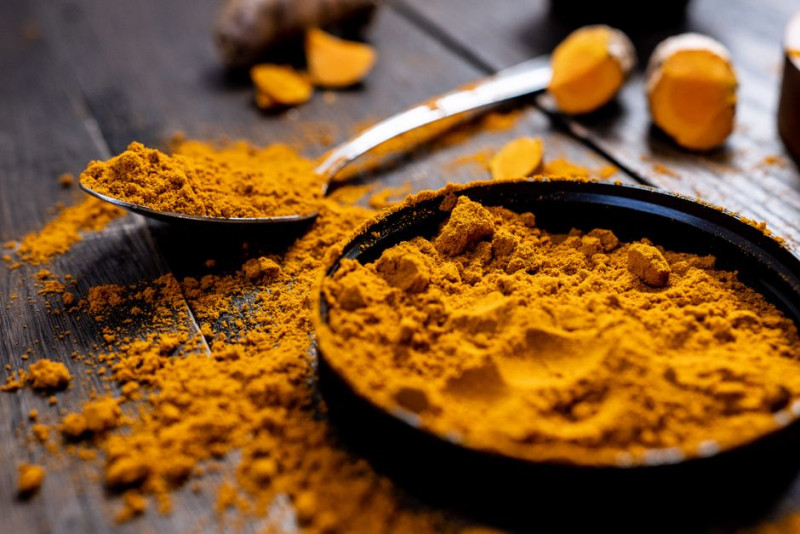

Is there an interaction between amlodipine and turmeric?
Jul 19, 2026- Turmeric supplements may raise amlodipine levels in your body and strengthen its blood pressure lowering effect, which could cause dizziness, lightheadedness, flushing, or increased swelling.
- The small amount of turmeric used in cooking is unlikely to cause a problem, but concentrated supplements are a different concern because they deliver much more of the active ingredient.
- If you want to take a turmeric supplement while on amlodipine, talk to your doctor or pharmacist first and monitor your blood pressure at home.
Great question! Thanks for using HelloPharmacist.
Turmeric and amlodipine do have a potential interaction worth knowing about, one we classify as moderate (Turmeric and Amlodipine Interaction: Severity & What to Do | HelloPharmacist).
In short, turmeric (specifically its active compound, curcumin) may raise the amount of amlodipine in your body, which could strengthen its blood pressure lowering effect.
This doesn't necessarily mean the two can't be used together, but it does change how you should approach the combination, so let's walk through what we actually know.
Why Turmeric Can Raise Amlodipine Levels
Amlodipine is a calcium channel blocker that lowers blood pressure by relaxing blood vessels, and it's broken down in the body by a liver enzyme called CYP3A4.
That enzyme is where turmeric comes in.
Laboratory studies have found that curcumin can block CYP3A4, meaning it may slow the breakdown of medications that rely on that enzyme.
For amlodipine specifically, animal studies back this up. In one, rats given turmeric extract daily for two weeks before a dose of amlodipine had significantly higher drug exposure, with peak concentrations rising by about 53%.
In another, pretreatment with curcumin for ten days roughly doubled amlodipine levels compared with amlodipine alone.
These are animal data, not human trials, so we can't say exactly how much this translates to people, but the direction of the effect is consistent.
There is also real-world evidence that turmeric can meaningfully affect CYP3A4 drugs in humans, at least at high intakes. In one published case, a transplant patient who had been eating large amounts of turmeric powder daily developed kidney toxicity from sharply elevated levels of tacrolimus, another CYP3A4 drug. It's a different medication, but it shows the interaction pathway is more than theoretical.
You can look at these studies through their links in the references section on the bottom of this page.
What This Could Mean for You in Practice
If turmeric raises your amlodipine levels, the most likely result is a stronger effect from the drug.
That could show up as blood pressure dropping lower than intended, dizziness or lightheadedness (especially when standing up), flushing, a faster heartbeat, or more ankle and leg swelling, which is already a known amlodipine side effect. Dose matters here too. The pinch of turmeric you'd use in cooking is very unlikely to cause a problem.
Concentrated supplements are a different story, since they deliver far more curcumin, and many are paired with black pepper extract (piperine) specifically to boost absorption, which amplifies the exposure.
It's worth noting the science isn't entirely one-directional either, as some lab research suggests turmeric could instead increase CYP3A4 activity over time, though that effect hasn't been shown in humans.
Final Words
Turmeric and amlodipine have a moderate, possible interaction: turmeric supplements may raise amlodipine levels and enhance its blood pressure lowering effect, while turmeric used as a cooking spice is generally not a concern.
If you'd like to take a turmeric supplement, check with your doctor or pharmacist first, keep an eye on your home blood pressure readings after starting it, and report any dizziness or new swelling.
You can read more on our turmeric with amlodipine interaction page, and feel free to reach back out with any follow-up questions!
References & sources
Glossary — Terms in This Answer
- Curcumin
- The active compound in turmeric that is responsible for its medicinal effects.
- Calcium channel blocker
- A type of blood pressure medication that works by relaxing blood vessels to allow blood to flow more easily.
- CYP3A4
- A liver enzyme responsible for breaking down many medications in the body.
- Drug exposure
- The amount of medication present in the body at a given time.
- Piperine
- An extract from black pepper that increases the absorption of turmeric into the body.
- Lightheadedness
- A feeling of dizziness or faintness, often caused by low blood pressure.
- Flushing
- A sudden reddening and warming of the face and skin, often caused by changes in blood pressure or blood flow.
- Tacrolimus
- An immunosuppressant medication used in transplant patients that is broken down by the same liver enzyme as amlodipine.
Dr. Brian Staiger, PharmD
Doctor of Pharmacy, board certified clinical pharmacist (BCPS), American Herbalist Guild, Medication Therapy Management certified
Brian Staiger, PharmD, BCPS, is a licensed pharmacist with more than 13 years of experience across retail pharmacy, clinical pharmacy, medication safety, pharmacy program development, and healthcare administration. He is the founder of HelloPharmacist.com, where he helps patients...
More answers from Brian →