
22 Reishis Ingredients & Drug Interactions
by Ron Teeguarden's Dragon Herbs
What is this page for?
First and foremost: checking 22 Reishis against your medications. The heart of this page is the interaction checker and the full interaction report — how this product’s ingredients may interact with prescription and over-the-counter medicines you may be taking.
Around that, we add a pharmacist’s high-level view of the product as a whole — what’s inside, the evidence for its stated use, how transparent the label is, and what safety data exists — so you can see the full picture in one place. It’s educational information from our licensed clinical databases and the clinical staff at HelloPharmacist — not medical advice — and we don’t sell or endorse products. Our editorial policy
22 Reishis is a dietary supplement by Ron Teeguarden's Dragon Herbs with 23 active ingredients. Its ingredients are commonly taken for immune support, fatigue and general well-being, stress and sleep.Based on those ingredients, 655 medications have a known interaction with it, the most serious rated moderate. The ingredients most likely to interact are Black Reishi Fruiting Body Extract, Wild, Siberian Chaga Fruiting Body Extract, Wild, Black Hoof Mushroom Fruiting Body Extract, Wild. Use the checker below to test your specific medication, or read the full HelloPharmacist Interaction Report.
Check Your Meds Against 22 Reishis by Ron Teeguarden's Dragon Herbs
Ask about any prescription or over-the-counter medication and we check it for interactions with 22 Reishis by Ron Teeguarden's Dragon Herbs — and tell you which ingredient is responsible.
AI summaries are generated from our interaction database for education only — always confirm with your pharmacist. How we use AI
Ask the Pharmacist
A licensed pharmacist will answer your question by email — free, usually within 24 hours.
Got it — thank you!
A licensed pharmacist will answer within 24 hours. Keep an eye on your email (worth checking spam, just in case).
HelloPharmacist Scorecard of 22 Reishis by Ron Teeguarden's Dragon Herbs
Our pharmacy team’s full take, with four database checks built into the cards below — a summary of what is known, not a grade of the product itself.
What’s inside
Low disclosure
22 Reishis is a liquid blend of 23 ingredients, most of them wild reishi mushroom fruiting body extracts in various colors and varieties — black, green, tibetan white, red, golden, purple, and others. The formula also includes bamboo yellow mushroom, siberian chaga, black hoof mushroom, chinese yew mushroom, antrodia, coriolus, pine needle mushroom, and several others we cannot identify from the ingredient names alone.
The product is preserved with grain alcohol and water. Reishi mushroom is the dominant active ingredient across multiple extracts.
The product's other named active mushrooms and botanicals play supporting roles. There are no fillers or binding agents listed beyond the liquid base.
Does it work?
Not established
The data we hold shows reishi mushroom as possibly ineffective for high cholesterol (hyperlipidemia). For altitude sickness, alzheimer disease, and athletic performance, there isn't enough reliable evidence to know whether reishi works.
Chaga's evidence for heart disease, diabetes, and COVID-19 is also insufficient to rate. Black hoof mushroom has insufficient evidence for COVID-19.
We have no effectiveness data on file for the other ingredients in this product.
How safe is it?
Well-documented data
Reishi mushroom is generally well tolerated in the short term, though long-term safety hasn't been well studied. Common side effects include dizziness, dry mouth, itching, nausea, rash, and stomach upset.
Respiratory allergies to reishi spores, sore throat, and runny nose have been reported, and rarely, insomnia and headache. Chaga is generally used in foods and teas but has limited human safety data; two cases of kidney failure and one case of acute kidney injury have been linked to excessive chaga consumption due to its high oxalate content.
Black hoof mushroom has limited human safety data. Bamboo shoots are widely eaten when properly cooked, but raw shoots can be toxic, and concentrated bamboo supplements haven't been well studied.
Chinese Yew is highly toxic and can cause sudden death — it must be avoided entirely. Yew poisoning causes nausea, vomiting, severe abdominal pain, weakness, trembling, shortness of breath, irregular heartbeat, low blood pressure, loss of consciousness, seizures, and death within 24 hours, usually from cardiac arrest.
Meds to double-check
Moderate interaction found
If you take blood pressure medications (antihypertensives), blood thinners or antiplatelet drugs (anticoagulants), diabetes medications (antidiabetes drugs), thyroid medications (antithyroid drugs), or immune-suppressing drugs (immunosuppressants), check with your doctor or pharmacist before taking this product — the reishi, bamboo, chaga, and black hoof mushroom content may affect how these drugs work. If you take medications processed by your liver through the CYP1A2 or CYP2E1 pathways, the black hoof mushroom may also interfere.
Do not take this product if it contains chinese yew — yew is highly toxic and can cause sudden death.
The bottom line
Scorecard at a glanceFormula with limited ingredient disclosure with no established evidence rating for its marketed use. Moderate medication interactions have been identified, and safety information is well characterized.
This product contains reishi mushroom, chaga, bamboo, black hoof mushroom, and other traditional medicinal mushrooms. If you take blood pressure medications, blood thinners, diabetes drugs, thyroid medications, or immune-suppressing drugs, you need to check this product with your own doctor or pharmacist before starting it — the interactions could affect how your medications work.
The inclusion of chinese yew, which is toxic and potentially fatal, makes this product unsafe; yew should never be in any supplement. Talk with your pharmacist or doctor before taking this product, especially if you're pregnant, breastfeeding, or on any prescription medications.
Educational only — not medical advice; always confirm with your pharmacist. Our editorial policy · How we use AI
Assessment coverage: 9 of 23 active ingredients matched to our full ingredient reviews (monographs). Based on the product label dated Sep 25, 2024.
This Scorecard evaluates available label information, ingredient evidence, and known medication-safety considerations. It does not independently verify product identity, purity, potency, contamination, or manufacturing quality. How these ratings are computed
General information
Key facts about 22 Reishis, straight from the product label.
| Brand | Ron Teeguarden's Dragon Herbs |
|---|---|
| Barcode (UPC) | 679372000101 |
| Net contents | 2 Fluid Ounce(s); 60 mL |
| Market status | On market |
| Date entered into DSLD | Sep 25, 2024 |
| DSLD ID | 316759 |
| Product type | Botanical |
| Supplement form | Liquid |
| Dietary claims / uses | All Other, Structure/Function |
| Intended target group(s) | Adult (18 - 50 Years) |
Everything in this section is reproduced from the manufacturer’s own product label — it’s the label speaking, not HelloPharmacist. We show it so you can see exactly what the maker states; we don’t verify or endorse those statements.
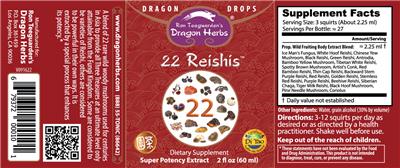
Supplement Facts
The label details for 22 Reishis by Ron Teeguarden's Dragon Herbs, sourced from the NIH Dietary Supplement Label Database.
Supplement Facts
Other ingredients: Water, Grain Alcohol
Tap any ingredient to jump to its full detail below.
These statements are the manufacturer’s wording, reproduced from the product label — the label is saying it, not HelloPharmacist. We don’t verify or endorse them.
Formula
A blend of 22 rare wild woody mushrooms used for centuries in Asia to provide all Three Treasures at an ultimate level only attainable from the Fungi Kingdom. Some are considered to be varieties of Reishi, others are considered to be powerful in their own ways.
Formulation
It is extracted by a special process that enhances its potency.
Super potency extract
General Statements
Dragon Drops
Seals/Symbols
Di Tao Certified Authentic Source
FDA Statement of Identity
Dietary Supplement
Suggested/Recommended/Usage/Directions
Directions: 3-12 squirts per day as desired or as directed by a health practitioner. Shake well before use.
Precautions
Keep out of the reach of children.
FDA Disclaimer Statement
These statements have not been evaluated by the Food and Drug Administration. This product is not intended to diagnose, treat, cure, or prevent any disease.
Is this label outdated? Report a formula or label change and our pharmacy team will review it.
22 Reishis by Ron Teeguarden's Dragon Herbs label
The label scan from the NIH Dietary Supplement Label Database. Tap to enlarge.
Label images are published by the NIH Dietary Supplement Label Database for the version of this product on file. Always read your actual product label.
View the full label (PDF)The Ingredients in 22 Reishis by Ron Teeguarden's Dragon Herbs
These are the 23 active ingredients this product is made of. Select any to open its full monograph.
Serving size2.25 mL Dosage formLiquid Servings per container27 Amounts shown are per serving.
Most supplement products combine several ingredients, and a medication can interact with the product through any one of them. Each ingredient below shows whether it has known drug interactions.
Proprietary Wild Fruiting Body Extract Blend
- › Ice Man's Fungus Fruiting Body Extract, Wild
- › White Hoof Reishi Fruiting Body Extract, Wild
- › Black Reishi Fruiting Body Extract, Wild
- › Green Reishi Fruiting Body Extract, Wild
- › Bamboo Yellow Mushroom Fruiting Body Extract, Wild
- › Tibetan White Reishi Fruiting Body Extract, Wild
- › Spotty Brown Mushroom Fruiting Body Extract, Wild
- › Artist's Conk Fruiting Body Extract, Wild
- › Red Bamboo Reishi Fruiting Body Extract, Wild
- › Thin Cap Reishi Fruiting Body Extract, Wild
- › Backward Stem Purple Reishi Fruiting Body Extract, Wild
- › Red Reishi Fruiting Body Extract, Wild
- › Golden Reishi Fruiting Body Extract, Wild
- › Red Reishi Fruiting Body Extract, Wild, Stemless
- › Purple Reishi Fruiting Body Extract, Wild
- › Beehive Reishi Fruiting Body Extract, Wild
- › Siberian Chaga Fruiting Body Extract, Wild
- › Tiger Milk Reishi Fruiting Body Extract, Wild
- › Black Hoof Mushroom Fruiting Body Extract, Wild
- › Pine Needle Mushroom Fruiting Body Extract, Wild
- › Coriolus Fruiting Body Extract, Wild
- › Chinese Yew Mushroom Fruiting Body Extract, Wild
- › Antrodia Fruiting Body Extract, Wild
Other (inactive) ingredients: Water, Grain Alcohol. These complete the product’s ingredient list but are not active constituents.
22 Reishis by Ron Teeguarden's Dragon Herbs Drug Interactions
HelloPharmacist Interaction Report
Dragon Herbs' 22 Reishis contains multiple reishi varieties, bamboo, chaga, black hoof mushroom, and yew — and carries documented interactions with several medication types.
The most serious concern is Chinese Yew Mushroom, which is highly toxic and can cause sudden death; yew must be avoided entirely and should never be used as a supplement under any circumstances.
Read the full breakdown — every affected drug type, severity by severity
Through its reishi varieties (black, green, tibetan white, and red reishi extracts), this product interacts with blood pressure medications (antihypertensives) — it may increase the risk of low blood pressure (hypotension). The same reishi extracts also interact with blood thinners and antiplatelet drugs (anticoagulants/antiplatelet drugs), theoretically raising bleeding risk at higher doses, and with diabetes medications (antidiabetes drugs), where effects on blood sugar are unpredictable.
Bamboo Yellow Mushroom Fruiting Body Extract interacts with thyroid drugs (antithyroid drugs) — long-term use might increase their effects and raise the risk of an underactive thyroid (hypothyroidism). Chaga and black hoof mushroom each interact with diabetes medications and immune-suppressing drugs.
Black hoof mushroom also affects how your body processes certain medications via the liver enzyme CYP1A2 and CYP2E1. Altogether, these interactions span 655 individual medications.
We could not check Ice Man's Fungus, White Hoof Reishi, Spotty Brown Mushroom, Artist's Conk, Red Bamboo Reishi, Thin Cap Reishi, Backward Stem Purple Reishi, Golden Reishi, Purple Reishi, Beehive Reishi, Tiger Milk Reishi, Pine Needle Mushroom, Coriolus, or Antrodia extracts for interactions. Use the medication checker on this page with your exact medications before starting this product.
Check your own medications below · Editorial policy · How we use AI
Want to check YOUR meds against 22 Reishis?
Ask about interactions with your drugs in plain English — “Can I take it with lisinopril?” — and we find you the answer in seconds, ingredient by ingredient.
Go to the checkerIngredients driving the most interactions
Individual Drug Interactions
The ingredients in 22 Reishis interact with 655 drugs. Click any drug to see the details.
4 of the 23 ingredients in 22 Reishis interact with drugs. Each result below shows which ingredient is responsible. Black Reishi Fruiting Body Extract, Wild Siberian Chaga Fruiting Body Extract, Wild Black Hoof Mushroom Fruiting Body Extract, Wild Bamboo Yellow Mushroom Fruiting Body Extract, Wild
6-mercaptopurinePurinethol
How 6-mercaptopurine interacts with 22 Reishis — through 2 ingredients. Tap an ingredient for the detail:
Black Hoof Mushroom Fruiting Body Extract, WildImmunosuppressants Moderate
Interaction Summary
Theoretically, black hoof mushroom might reduce the effects of immunosuppressant medications.
Read the full Black Hoof Mushroom Fruiting Body Extract, Wild + 6-mercaptopurine interactionSiberian Chaga Fruiting Body Extract, WildImmunosuppressants Moderate
Interaction Summary
Theoretically, chaga might interfere with immunosuppressive therapy.
Read the full Siberian Chaga Fruiting Body Extract, Wild + 6-mercaptopurine interactionAbciximabReoPro
How Abciximab interacts with 22 Reishis — through 2 ingredients. Tap an ingredient for the detail:
Red Reishi Fruiting Body Extract, Wild, StemlessAnticoagulant/antiplatelet Drugs Moderate
Interaction Summary
Theoretically, high doses of reishi mushroom might increase the risk of bleeding.
Read the full Red Reishi Fruiting Body Extract, Wild, Stemless + Abciximab interactionSiberian Chaga Fruiting Body Extract, WildAnticoagulant/antiplatelet Drugs Moderate
Interaction Summary
Theoretically, chaga may increase the risk of bleeding if used with anticoagulant or antiplatelet drugs.
Read the full Siberian Chaga Fruiting Body Extract, Wild + Abciximab interactionAbrocitinibCibinqo
How Abrocitinib interacts with 22 Reishis — through 3 ingredients. Tap an ingredient for the detail:
Red Reishi Fruiting Body Extract, Wild, StemlessAnticoagulant/antiplatelet Drugs Moderate
Interaction Summary
Theoretically, high doses of reishi mushroom might increase the risk of bleeding.
Read the full Red Reishi Fruiting Body Extract, Wild, Stemless + Abrocitinib interactionSiberian Chaga Fruiting Body Extract, WildAnticoagulant/antiplatelet Drugs, Immunosuppressants Moderate
Interaction Summary
Theoretically, chaga may increase the risk of bleeding if used with anticoagulant or antiplatelet drugs.
Read the full Siberian Chaga Fruiting Body Extract, Wild + Abrocitinib interactionBlack Hoof Mushroom Fruiting Body Extract, WildImmunosuppressants Moderate
Interaction Summary
Theoretically, black hoof mushroom might reduce the effects of immunosuppressant medications.
Read the full Black Hoof Mushroom Fruiting Body Extract, Wild + Abrocitinib interactionAcarboseGlucobay, Prandase, Precose
How Acarbose interacts with 22 Reishis — through 2 ingredients. Tap an ingredient for the detail:
Red Reishi Fruiting Body Extract, Wild, StemlessAntidiabetes Drugs Moderate
Interaction Summary
Theoretically, reishi mushroom might have additive effects with antidiabetes drugs.
Read the full Red Reishi Fruiting Body Extract, Wild, Stemless + Acarbose interactionSiberian Chaga Fruiting Body Extract, WildAntidiabetes Drugs Moderate
Interaction Summary
Theoretically, taking chaga with antidiabetes drugs might increase the risk of hypoglycemia.
Read the full Siberian Chaga Fruiting Body Extract, Wild + Acarbose interactionAcebutololRhotral, Sectral
How Acebutolol interacts with 22 Reishis — through 1 ingredient. Tap an ingredient for the detail:
Red Reishi Fruiting Body Extract, Wild, StemlessAntihypertensive Drugs Moderate
Interaction Summary
Theoretically, concurrent use of reishi mushroom with antihypertensive drugs might increase the risk of hypotension.
Read the full Red Reishi Fruiting Body Extract, Wild, Stemless + Acebutolol interactionAcenocoumarolSintrom
How Acenocoumarol interacts with 22 Reishis — through 2 ingredients. Tap an ingredient for the detail:
Siberian Chaga Fruiting Body Extract, WildAnticoagulant/antiplatelet Drugs Moderate
Interaction Summary
Theoretically, chaga may increase the risk of bleeding if used with anticoagulant or antiplatelet drugs.
Read the full Siberian Chaga Fruiting Body Extract, Wild + Acenocoumarol interactionRed Reishi Fruiting Body Extract, Wild, StemlessAnticoagulant/antiplatelet Drugs Moderate
Interaction Summary
Theoretically, high doses of reishi mushroom might increase the risk of bleeding.
Read the full Red Reishi Fruiting Body Extract, Wild, Stemless + Acenocoumarol interactionAcetaminophenChildren's Tylenol, Children's Tylenol Meltaways, Tylenol, Tylenol Ex Strength
How Acetaminophen interacts with 22 Reishis — through 1 ingredient. Tap an ingredient for the detail:
Black Hoof Mushroom Fruiting Body Extract, WildCytochrome P450 1a2 (cyp1a2) Substrates, Cytochrome P450 2e1 (cyp2e1) Substrates Moderate
Interaction Summary
Theoretically, black hoof mushroom might increase the levels and clinical effects of CYP1A2 substrates.
Read the full Black Hoof Mushroom Fruiting Body Extract, Wild + Acetaminophen interactionAcetaminophen, AspirinGemnisyn
How Acetaminophen, Aspirin interacts with 22 Reishis — through 3 ingredients. Tap an ingredient for the detail:
Black Hoof Mushroom Fruiting Body Extract, WildCytochrome P450 2e1 (cyp2e1) Substrates, Cytochrome P450 1a2 (cyp1a2) Substrates Moderate
Interaction Summary
Theoretically, black hoof mushroom might increase the levels and clinical effects of CYP2E1 substrates.
Read the full Black Hoof Mushroom Fruiting Body Extract, Wild + Acetaminophen, Aspirin interactionRed Reishi Fruiting Body Extract, Wild, StemlessAnticoagulant/antiplatelet Drugs Moderate
Interaction Summary
Theoretically, high doses of reishi mushroom might increase the risk of bleeding.
Read the full Red Reishi Fruiting Body Extract, Wild, Stemless + Acetaminophen, Aspirin interactionSiberian Chaga Fruiting Body Extract, WildAnticoagulant/antiplatelet Drugs Moderate
Interaction Summary
Theoretically, chaga may increase the risk of bleeding if used with anticoagulant or antiplatelet drugs.
Read the full Siberian Chaga Fruiting Body Extract, Wild + Acetaminophen, Aspirin interactionAcetaminophen, Aspirin, CaffeineExcedrin, Excedrin Extra Strength, Excedrin Migraine
How Acetaminophen, Aspirin, Caffeine interacts with 22 Reishis — through 3 ingredients. Tap an ingredient for the detail:
Siberian Chaga Fruiting Body Extract, WildAnticoagulant/antiplatelet Drugs Moderate
Interaction Summary
Theoretically, chaga may increase the risk of bleeding if used with anticoagulant or antiplatelet drugs.
Read the full Siberian Chaga Fruiting Body Extract, Wild + Acetaminophen, Aspirin, Caffeine interactionRed Reishi Fruiting Body Extract, Wild, StemlessAnticoagulant/antiplatelet Drugs Moderate
Interaction Summary
Theoretically, high doses of reishi mushroom might increase the risk of bleeding.
Read the full Red Reishi Fruiting Body Extract, Wild, Stemless + Acetaminophen, Aspirin, Caffeine interactionBlack Hoof Mushroom Fruiting Body Extract, WildCytochrome P450 2e1 (cyp2e1) Substrates, Cytochrome P450 1a2 (cyp1a2) Substrates Moderate
Interaction Summary
Theoretically, black hoof mushroom might increase the levels and clinical effects of CYP2E1 substrates.
Read the full Black Hoof Mushroom Fruiting Body Extract, Wild + Acetaminophen, Aspirin, Caffeine interactionAcetaminophen, Brompheniramine, PhenylpropanolamineDimetapp Cold and Flu
How Acetaminophen, Brompheniramine, Phenylpropanolamine interacts with 22 Reishis — through 1 ingredient. Tap an ingredient for the detail:
Black Hoof Mushroom Fruiting Body Extract, WildCytochrome P450 1a2 (cyp1a2) Substrates, Cytochrome P450 2e1 (cyp2e1) Substrates Moderate
Interaction Summary
Theoretically, black hoof mushroom might increase the levels and clinical effects of CYP1A2 substrates.
Read the full Black Hoof Mushroom Fruiting Body Extract, Wild + Acetaminophen, Brompheniramine, Phenylpropanolamine interactionAcetaminophen, ButalbitalAxocet, Bancap, Bucet, Butex Forte, Esgic CF, Orbivan CF +5 more
How Acetaminophen, Butalbital interacts with 22 Reishis — through 1 ingredient. Tap an ingredient for the detail:
Black Hoof Mushroom Fruiting Body Extract, WildCytochrome P450 2e1 (cyp2e1) Substrates, Cytochrome P450 1a2 (cyp1a2) Substrates Moderate
Interaction Summary
Theoretically, black hoof mushroom might increase the levels and clinical effects of CYP2E1 substrates.
Read the full Black Hoof Mushroom Fruiting Body Extract, Wild + Acetaminophen, Butalbital interactionAcetaminophen, Butalbital, CaffeineEsgic, Esgic Plus, Fiogesic, Fioricet, Repan, Tecnal +1 more
How Acetaminophen, Butalbital, Caffeine interacts with 22 Reishis — through 1 ingredient. Tap an ingredient for the detail:
Black Hoof Mushroom Fruiting Body Extract, WildCytochrome P450 1a2 (cyp1a2) Substrates, Cytochrome P450 2e1 (cyp2e1) Substrates Moderate
Interaction Summary
Theoretically, black hoof mushroom might increase the levels and clinical effects of CYP1A2 substrates.
Read the full Black Hoof Mushroom Fruiting Body Extract, Wild + Acetaminophen, Butalbital, Caffeine interactionAcetaminophen, Butalbital, Caffeine, CodeineEsgic with Codeine, Fioricet w/ Codeine
How Acetaminophen, Butalbital, Caffeine, Codeine interacts with 22 Reishis — through 1 ingredient. Tap an ingredient for the detail:
Black Hoof Mushroom Fruiting Body Extract, WildCytochrome P450 2e1 (cyp2e1) Substrates, Cytochrome P450 1a2 (cyp1a2) Substrates Moderate
Interaction Summary
Theoretically, black hoof mushroom might increase the levels and clinical effects of CYP2E1 substrates.
Read the full Black Hoof Mushroom Fruiting Body Extract, Wild + Acetaminophen, Butalbital, Caffeine, Codeine interactionAcetaminophen, Butalbital, CodeineBancap w/ Codeine
How Acetaminophen, Butalbital, Codeine interacts with 22 Reishis — through 1 ingredient. Tap an ingredient for the detail:
Black Hoof Mushroom Fruiting Body Extract, WildCytochrome P450 1a2 (cyp1a2) Substrates, Cytochrome P450 2e1 (cyp2e1) Substrates Moderate
Interaction Summary
Theoretically, black hoof mushroom might increase the levels and clinical effects of CYP1A2 substrates.
Read the full Black Hoof Mushroom Fruiting Body Extract, Wild + Acetaminophen, Butalbital, Codeine interactionAcetaminophen, Butalbital, Codeine PhosphatePhrenilin #3
How Acetaminophen, Butalbital, Codeine Phosphate interacts with 22 Reishis — through 1 ingredient. Tap an ingredient for the detail:
Black Hoof Mushroom Fruiting Body Extract, WildCytochrome P450 2e1 (cyp2e1) Substrates, Cytochrome P450 1a2 (cyp1a2) Substrates Moderate
Interaction Summary
Theoretically, black hoof mushroom might increase the levels and clinical effects of CYP2E1 substrates.
Read the full Black Hoof Mushroom Fruiting Body Extract, Wild + Acetaminophen, Butalbital, Codeine Phosphate interactionAcetaminophen, Caffeine, Chlorpheniramine, Hydrocodone, PhenylephrineHycomine Compound
How Acetaminophen, Caffeine, Chlorpheniramine, Hydrocodone, Phenylephrine interacts with 22 Reishis — through 1 ingredient. Tap an ingredient for the detail:
Black Hoof Mushroom Fruiting Body Extract, WildCytochrome P450 1a2 (cyp1a2) Substrates, Cytochrome P450 2e1 (cyp2e1) Substrates Moderate
Interaction Summary
Theoretically, black hoof mushroom might increase the levels and clinical effects of CYP1A2 substrates.
Read the full Black Hoof Mushroom Fruiting Body Extract, Wild + Acetaminophen, Caffeine, Chlorpheniramine, Hydrocodone, Phenylephrine interactionAcetaminophen, Caffeine, CodeineGesic C15, Gesic C30, Gesic C8, Lenoltec 1, Lenoltec 2, Lenoltec 3 +1 more
How Acetaminophen, Caffeine, Codeine interacts with 22 Reishis — through 1 ingredient. Tap an ingredient for the detail:
Black Hoof Mushroom Fruiting Body Extract, WildCytochrome P450 2e1 (cyp2e1) Substrates, Cytochrome P450 1a2 (cyp1a2) Substrates Moderate
Interaction Summary
Theoretically, black hoof mushroom might increase the levels and clinical effects of CYP2E1 substrates.
Read the full Black Hoof Mushroom Fruiting Body Extract, Wild + Acetaminophen, Caffeine, Codeine interactionAcetaminophen, Caffeine, Codeine, SalicylamideCodalan No.1, Codalan No.2, Codalan No.3
How Acetaminophen, Caffeine, Codeine, Salicylamide interacts with 22 Reishis — through 1 ingredient. Tap an ingredient for the detail:
Black Hoof Mushroom Fruiting Body Extract, WildCytochrome P450 1a2 (cyp1a2) Substrates, Cytochrome P450 2e1 (cyp2e1) Substrates Moderate
Interaction Summary
Theoretically, black hoof mushroom might increase the levels and clinical effects of CYP1A2 substrates.
Read the full Black Hoof Mushroom Fruiting Body Extract, Wild + Acetaminophen, Caffeine, Codeine, Salicylamide interactionAcetaminophen, Caffeine, DihydrocodeineDHC Plus, Panlor DC, Panlor SS
How Acetaminophen, Caffeine, Dihydrocodeine interacts with 22 Reishis — through 1 ingredient. Tap an ingredient for the detail:
Black Hoof Mushroom Fruiting Body Extract, WildCytochrome P450 2e1 (cyp2e1) Substrates, Cytochrome P450 1a2 (cyp1a2) Substrates Moderate
Interaction Summary
Theoretically, black hoof mushroom might increase the levels and clinical effects of CYP2E1 substrates.
Read the full Black Hoof Mushroom Fruiting Body Extract, Wild + Acetaminophen, Caffeine, Dihydrocodeine interactionAcetaminophen, Caffeine, IsomethepteneMigralam
How Acetaminophen, Caffeine, Isometheptene interacts with 22 Reishis — through 1 ingredient. Tap an ingredient for the detail:
Black Hoof Mushroom Fruiting Body Extract, WildCytochrome P450 1a2 (cyp1a2) Substrates, Cytochrome P450 2e1 (cyp2e1) Substrates Moderate
Interaction Summary
Theoretically, black hoof mushroom might increase the levels and clinical effects of CYP1A2 substrates.
Read the full Black Hoof Mushroom Fruiting Body Extract, Wild + Acetaminophen, Caffeine, Isometheptene interactionAcetaminophen, Caffeine, PyrilamineMidol Max Strength Menstrual
How Acetaminophen, Caffeine, Pyrilamine interacts with 22 Reishis — through 1 ingredient. Tap an ingredient for the detail:
Black Hoof Mushroom Fruiting Body Extract, WildCytochrome P450 2e1 (cyp2e1) Substrates, Cytochrome P450 1a2 (cyp1a2) Substrates Moderate
Interaction Summary
Theoretically, black hoof mushroom might increase the levels and clinical effects of CYP2E1 substrates.
Read the full Black Hoof Mushroom Fruiting Body Extract, Wild + Acetaminophen, Caffeine, Pyrilamine interactionAcetaminophen, Chlorpheniramine Maleate, Dextromethorphan HbrVicks Formula 44M Cough, Cold & Flu Relief
How Acetaminophen, Chlorpheniramine Maleate, Dextromethorphan Hbr interacts with 22 Reishis — through 1 ingredient. Tap an ingredient for the detail:
Black Hoof Mushroom Fruiting Body Extract, WildCytochrome P450 1a2 (cyp1a2) Substrates, Cytochrome P450 2e1 (cyp2e1) Substrates Moderate
Interaction Summary
Theoretically, black hoof mushroom might increase the levels and clinical effects of CYP1A2 substrates.
Read the full Black Hoof Mushroom Fruiting Body Extract, Wild + Acetaminophen, Chlorpheniramine Maleate, Dextromethorphan Hbr interactionAcetaminophen, Chlorpheniramine, Codeine, PhenylephrineColrex
How Acetaminophen, Chlorpheniramine, Codeine, Phenylephrine interacts with 22 Reishis — through 1 ingredient. Tap an ingredient for the detail:
Black Hoof Mushroom Fruiting Body Extract, WildCytochrome P450 2e1 (cyp2e1) Substrates, Cytochrome P450 1a2 (cyp1a2) Substrates Moderate
Interaction Summary
Theoretically, black hoof mushroom might increase the levels and clinical effects of CYP2E1 substrates.
Read the full Black Hoof Mushroom Fruiting Body Extract, Wild + Acetaminophen, Chlorpheniramine, Codeine, Phenylephrine interactionAcetaminophen, Chlorpheniramine, DextromethorphanCoricidin II Extra Strength Cold and Flu
How Acetaminophen, Chlorpheniramine, Dextromethorphan interacts with 22 Reishis — through 1 ingredient. Tap an ingredient for the detail:
Black Hoof Mushroom Fruiting Body Extract, WildCytochrome P450 1a2 (cyp1a2) Substrates, Cytochrome P450 2e1 (cyp2e1) Substrates Moderate
Interaction Summary
Theoretically, black hoof mushroom might increase the levels and clinical effects of CYP1A2 substrates.
Read the full Black Hoof Mushroom Fruiting Body Extract, Wild + Acetaminophen, Chlorpheniramine, Dextromethorphan interactionAcetaminophen, Chlorpheniramine, Dextromethorphan HydrobromideCoricidin HBP Maximum Strength Flu
How Acetaminophen, Chlorpheniramine, Dextromethorphan Hydrobromide interacts with 22 Reishis — through 1 ingredient. Tap an ingredient for the detail:
Black Hoof Mushroom Fruiting Body Extract, WildCytochrome P450 2e1 (cyp2e1) Substrates, Cytochrome P450 1a2 (cyp1a2) Substrates Moderate
Interaction Summary
Theoretically, black hoof mushroom might increase the levels and clinical effects of CYP2E1 substrates.
Read the full Black Hoof Mushroom Fruiting Body Extract, Wild + Acetaminophen, Chlorpheniramine, Dextromethorphan Hydrobromide interactionAcetaminophen, Chlorpheniramine, Dextromethorphan, PhenylpropanolamineMulti Symptom Cold Relief
How Acetaminophen, Chlorpheniramine, Dextromethorphan, Phenylpropanolamine interacts with 22 Reishis — through 1 ingredient. Tap an ingredient for the detail:
Black Hoof Mushroom Fruiting Body Extract, WildCytochrome P450 1a2 (cyp1a2) Substrates, Cytochrome P450 2e1 (cyp2e1) Substrates Moderate
Interaction Summary
Theoretically, black hoof mushroom might increase the levels and clinical effects of CYP1A2 substrates.
Read the full Black Hoof Mushroom Fruiting Body Extract, Wild + Acetaminophen, Chlorpheniramine, Dextromethorphan, Phenylpropanolamine interactionAcetaminophen, Chlorpheniramine, Dextromethorphan, PseudoephedrineChildren's Tylenol Cold Plus Cough, Tylenol Cold Ex Strength
How Acetaminophen, Chlorpheniramine, Dextromethorphan, Pseudoephedrine interacts with 22 Reishis — through 1 ingredient. Tap an ingredient for the detail:
Black Hoof Mushroom Fruiting Body Extract, WildCytochrome P450 2e1 (cyp2e1) Substrates, Cytochrome P450 1a2 (cyp1a2) Substrates Moderate
Interaction Summary
Theoretically, black hoof mushroom might increase the levels and clinical effects of CYP2E1 substrates.
Read the full Black Hoof Mushroom Fruiting Body Extract, Wild + Acetaminophen, Chlorpheniramine, Dextromethorphan, Pseudoephedrine interactionAcetaminophen, Chlorpheniramine, Guaifenesin, Phenylephrine, SalicylamideRhinogesic GG
How Acetaminophen, Chlorpheniramine, Guaifenesin, Phenylephrine, Salicylamide interacts with 22 Reishis — through 1 ingredient. Tap an ingredient for the detail:
Black Hoof Mushroom Fruiting Body Extract, WildCytochrome P450 1a2 (cyp1a2) Substrates, Cytochrome P450 2e1 (cyp2e1) Substrates Moderate
Interaction Summary
Theoretically, black hoof mushroom might increase the levels and clinical effects of CYP1A2 substrates.
Read the full Black Hoof Mushroom Fruiting Body Extract, Wild + Acetaminophen, Chlorpheniramine, Guaifenesin, Phenylephrine, Salicylamide interactionAcetaminophen, Chlorpheniramine, PhenylephrineAlka-Seltzer PLUS, Histex SR, Protid
How Acetaminophen, Chlorpheniramine, Phenylephrine interacts with 22 Reishis — through 1 ingredient. Tap an ingredient for the detail:
Black Hoof Mushroom Fruiting Body Extract, WildCytochrome P450 2e1 (cyp2e1) Substrates, Cytochrome P450 1a2 (cyp1a2) Substrates Moderate
Interaction Summary
Theoretically, black hoof mushroom might increase the levels and clinical effects of CYP2E1 substrates.
Read the full Black Hoof Mushroom Fruiting Body Extract, Wild + Acetaminophen, Chlorpheniramine, Phenylephrine interactionAcetaminophen, Chlorpheniramine, Phenylephrine, SalicylamideRhinogesic, Rhinogesic JR
How Acetaminophen, Chlorpheniramine, Phenylephrine, Salicylamide interacts with 22 Reishis — through 1 ingredient. Tap an ingredient for the detail:
Black Hoof Mushroom Fruiting Body Extract, WildCytochrome P450 1a2 (cyp1a2) Substrates, Cytochrome P450 2e1 (cyp2e1) Substrates Moderate
Interaction Summary
Theoretically, black hoof mushroom might increase the levels and clinical effects of CYP1A2 substrates.
Read the full Black Hoof Mushroom Fruiting Body Extract, Wild + Acetaminophen, Chlorpheniramine, Phenylephrine, Salicylamide interactionEach ingredient & the kinds of drugs it affects
For each ingredient in 22 Reishis with known interactions, here are the types of medications they can affect. Open any type for the detail — or search your exact drug in the checker above.
Black Reishi Fruiting Body Extract, Wild
Anticoagulant/Antiplatelet Drugs
Theoretically, high doses of reishi mushroom might increase the risk of bleeding.
A dose of 1.5 grams daily of reishi mushroom does not seem to decrease platelet aggregation, but a higher dose of 3 grams daily does.
Antidiabetes Drugs
Theoretically, reishi mushroom might have additive effects with antidiabetes drugs.
Animal research suggests that reishi mushroom decreases blood sugar. However, in patients with type 2 diabetes, taking reishi mushroom does not reduce fasting glucose levels, and its effects on glycated hemoglobin are inconsistent.
Antihypertensive Drugs
Theoretically, concurrent use of reishi mushroom with antihypertensive drugs might increase the risk of hypotension.
Reishi mushroom has shown hypotensive activity in animal research. Clinical evidence suggests that reishi mushroom reduces blood pressure in some, but not all, patients with hypertension.
Siberian Chaga Fruiting Body Extract, Wild
Anticoagulant/Antiplatelet Drugs
Theoretically, chaga may increase the risk of bleeding if used with anticoagulant or antiplatelet drugs.
In vitro and animal research suggests that chaga extract can inhibit platelet aggregation. This effect has not been reported in humans.
Antidiabetes Drugs
Theoretically, taking chaga with antidiabetes drugs might increase the risk of hypoglycemia.
Animal research suggests that chaga might decrease blood glucose levels and increase insulin levels. This has not been reported in humans.
Immunosuppressants
Theoretically, chaga might interfere with immunosuppressive therapy.
In vitro research suggests that certain constituents of chaga stimulate immune function. This has not been reported in humans.
Black Hoof Mushroom Fruiting Body Extract, Wild
Cytochrome P450 1A2 (Cyp1A2) Substrates
Theoretically, black hoof mushroom might increase the levels and clinical effects of CYP1A2 substrates.
In vitro, polysaccharides from black hoof mushroom grown in culture inhibit CYP1A2. This effect has not been reported in humans.
Cytochrome P450 2E1 (Cyp2E1) Substrates
Theoretically, black hoof mushroom might increase the levels and clinical effects of CYP2E1 substrates.
In vitro, polysaccharides from black hoof mushroom grown in culture inhibit CYP2E1. This effect has not been reported in humans.
Immunosuppressants
Theoretically, black hoof mushroom might reduce the effects of immunosuppressant medications.
In animal research, polysaccharides from black hoof mushroom and black hoof mushroom extract stimulate immune responses.
Bamboo Yellow Mushroom Fruiting Body Extract, Wild
Antithyroid Drugs
Theoretically, long-term bamboo use might increase the effects and adverse effects of antithyroid drugs, possibly leading to hypothyroidism.
Animal research suggests that long-term consumption of bamboo shoot can decrease thyroid peroxidase activity, as well as levels of thyroxine (T4) and triiodothyronine (T3). This effect has not yet been reported in humans.
Brand information
Manufacturer and brand details for 22 Reishis, from the product label.
Ron Teeguarden's Dragon Herbs
See all Ron Teeguarden's Dragon Herbs products- Name
- Ron Teeguarden's Dragon Herbs
- Street Address
- P.O. Box 361459
- City
- Los Angeles
- State
- CA
- ZipCode
- 90036
- Phone Number
- (888) 558-6642
- Web Address
- www.dragonherbs.com
22 Reishis by Ron Teeguarden's Dragon Herbs: Common Questions
Does 22 Reishis by Ron Teeguarden's Dragon Herbs interact with any medications?
How can one product interact with so many drugs?
Where does this information come from?
Is this safe to take if I'm pregnant?
Is this safe while breastfeeding?
What are the common side effects?
Does this product work for high cholesterol or other conditions?
Can I take this with my blood pressure medication?
What's the concern about yew in this product?
Written and reviewed by the HelloPharmacist editorial staff. Our editorial policy
Not sure if 22 Reishis is safe with your meds?
Our pharmacists answer your medication & supplement questions — free.
Label information is sourced from the NIH Dietary Supplement Label Database and reflects the product version on file; always read your actual product label. This page is for education only and is not a substitute for professional medical advice. Confirm with your pharmacist or doctor before combining supplements and medications.
The Full Monographs Behind 22 Reishis’s Ingredients
Every ingredient we hold a full HelloPharmacist monograph for — uses, evidence, safety, and the complete interaction list.
Reishi Mushroom
Interacts with 375 drugsReishi is a traditional Asian mushroom widely used to support the immune system and overall wellness. Human evidence for most of its claimed benefits is limited or low-quality, so it should...
Read the full Reishi Mushroom monograph → Herb & supplement monographBamboo
Interacts with 5 drugsBamboo is a giant grass whose shoots are eaten as food and whose leaves and silica-rich extracts are sold as supplements, often for hair, skin, nail, and bone support. Solid human evidence f...
Read the full Bamboo monograph → Herb & supplement monographChaga
Interacts with 327 drugsChaga is a fungus that grows mostly on birch trees and is used as a tea or supplement, mainly for immune and antioxidant support. Human evidence for its benefits is very limited, and it may...
Read the full Chaga monograph → Herb & supplement monographBlack Hoof Mushroom
Interacts with 308 drugsBlack Hoof Mushroom (Phellinus linteus) is a medicinal mushroom long used in East Asian traditional medicine, mainly for immune support. Most of the supporting evidence comes from laboratory...
Read the full Black Hoof Mushroom monograph → Herb & supplement monographYew
Yew is a highly poisonous plant, and nearly all parts can be deadly even in small amounts. It is famous mainly because pharmaceutical drugs like paclitaxel (Taxol) are made from yew compound...
Read the full Yew monograph →Sources & How We Checked
22 Reishis's label data comes from the NIH Dietary Supplement Label Database; the ingredient interaction data is from the Natural Medicines database, reviewed by our pharmacists.
- NIH Dietary Supplement Label Database (DSLD) — The official product label on file for this supplement.
- Natural Medicines (Therapeutic Research Center) — Evidence-graded clinical reference behind the ingredient interaction data.
Content is written and reviewed by licensed HelloPharmacist pharmacists. See our data sources and editorial standards for how this information is built and checked.
The 53 references behind this product’s interaction data
Every citation that drives the interaction findings for this product’s ingredients, from the evidence-graded Natural Medicines (TRC Healthcare) database. Open an ingredient to browse its citations — links open the study on PubMed or the publisher’s site.
Reishi Mushroom 17 references
- McGuffin M, Hobbs C, Upton R, Goldberg A, eds. American Herbal Products Association's Botanical Safety Handbook. Boca Raton, FL: CRC Press, LLC 1997.
- Tao J, Feng KY. Experimental and clinical studies on inhibitory effect of ganoderma lucidum on platelet aggregation. J Tongji Med Univ 1990;10:240-3. PubMed
- Singh AB, Gupta SK, Pereira BM, Prakash D. Sensitization to Ganoderma lucidum in patients with respiratory allergy in India. Clin Exp Allergy 1995;25:440-7.
- Lee SY, Rhee HM. Cardiovascular effects of mycelium extract of Ganoderma lucidum: inhibition of sympathetic outflow as a mechanism of its hypotensive action. Chem Pharm Bull (Tokyo) 1990;38:1359-64. PubMed
- Kwok Y, Ng KFJ, Li, CCF, et al. A prospective, randomized, double-blind, placebo-controlled study of the platelet and global hemostatic effects of Ganoderma lucidum (Ling-Zhi) in healthy volunteers. Anesth Analg 2005;101:423-6. PubMed
- Wanmuang, H., Leopairut, J., Kositchaiwat, C., Wananukul, W., and Bunyaratvej, S. Fatal fulminant hepatitis associated with Ganoderma lucidum (Lingzhi) mushroom powder. J Med Assoc Thai. 2007;90(1):179-181.
- Seto, S. W., Lam, T. Y., Tam, H. L., Au, A. L., Chan, S. W., Wu, J. H., Yu, P. H., Leung, G. P., Ngai, S. M., Yeung, J. H., Leung, P. S., Lee, S. M., and Kwan, Y. W. Novel hypoglycemic effects of Ganoderma lucidum water-extract in obese/diabetic (+db/+db
- Chu, T. T., Benzie, I. F., Lam, C. W., Fok, B. S., Lee, K. K., and Tomlinson, B. Study of potential cardioprotective effects of Ganoderma lucidum (Lingzhi): results of a controlled human intervention trial. Br.J.Nutr. 2012;107(7):1017-1027.
- Jin, X., Ruiz, Beguerie J., Sze, D. M., and Chan, G. C. Ganoderma lucidum (Reishi mushroom) for cancer treatment. Cochrane.Database.Syst.Rev. 2012;6:CD007731.
- Kabir, Y., Kimura, S., and Tamura, T. Dietary effect of Ganoderma lucidum mushroom on blood pressure and lipid levels in spontaneously hypertensive rats (SHR). J Nutr Sci Vitaminol.(Tokyo) 1988;34(4):433-438. PubMed
- Kanmatsuse, K., Kajiwara, N., Hayashi, K., Shimogaichi, S., Fukinbara, I., Ishikawa, H., and Tamura, T. [Studies on Ganoderma lucidum. I. Efficacy against hypertension and side effects]. Yakugaku Zasshi 1985;105(10):942-947. PubMed
- Gao, Y., Lan, J., Dai, X., Ye, J., and Zhou, S. A Phase I/II Study of Ling Zhi Mushroom Ganoderma lucidum(W.Curt: Fr.) Lloyd (Aphyllophoromycetideae) Extract in Patients with Type II Diabetes Mellitus. International Journal of Medicinal Mushrooms 2004;6. DOI
- Jin H, Zhang G, Cao X, and et al. Treatment of hypertension by linzhi combined with hypotensor and its effects on arterial, arteriolar and capillary pressure and microcirculation. In: Niimi H, Xiu RJ, Sawada T, and et al. Microcirculatory Approach to Asi
- Klupp NL, Chang D, Hawke F, Kiat H, Cao H, Grant SJ, Bensoussan A. Ganoderma lucidum mushroom for the treatment of cardiovascular risk factors. Cochrane Database Syst Rev. 2015 Feb 17;2:CD007259. PubMed
- Zhao H, Zhang Q, Zhao L, Huang X, Wang J, Kang X. Spore Powder of Ganoderma lucidum Improves Cancer-Related Fatigue in Breast Cancer Patients Undergoing Endocrine Therapy: A Pilot Clinical Trial. Evid Based Complement Alternat Med. 2012;2012:809614.
- Pazzi F, Adsuar JC, Domínguez-Muñoz FJ, García-Gordillo MA, Gusi N, Collado-Mateo D. Ganoderma lucidum effects on mood and health-related quality of life in women with fibromyalgia. Healthcare (Basel) 2020;8(4):520. PubMed
- Kogure T, Koiwai A, Fukushi D, et al. Hypereosinophilia with hepatic nodule formation caused by Ganoderma lucidum. Intern Med 2021;60(24):3897-3903.
Bamboo 4 references
- Chandra AK, Ghosh D, Mukhopadhyay S, et al. Effect of bamboo shoot, Bambusa arundinacea (Retz.) Willd. on thyroid status under conditions of varying iodine intake in rats. Indian J Exp Biol 2004;42(8):781-786.
- Kitajima T. Contact allergy caused by bamboo shoots. Contact Dermatitis 1986;15(2):100-102. PubMed
- Sang-A-Gad P, Guharat S, Wananukul W. A mass cyanide poisoning from pickling bamboo shoots. Clin Toxicol (Phila). 2011 Nov;49(9):834-9. PubMed
- Satya S, Bal LM, Singhal P, Naik SN. Bamboo shoot processing: food quality and safety aspect (a review). Trends in Food Sci. Technol. 2010;21(4):181-9. DOI
Chaga 9 references
- Sun JE, Ao ZH, Lu ZM, et al. Antihyperglycemic and antilipidperoxidative effects of dry matter of culture broth of Inonotus obliquus in submerged culture on normal and alloxan-diabetes mice. J Ethnopharmacol 2008;118(1):7-13. PubMed
- Hyun KW, Jeong SC, Lee DH, et al. Isolation and characterization of a novel platelet aggregation inhibitory peptide from the medicinal mushroom, Inonotus obliquus. Peptides 2006;27(6):1173-8. PubMed
- Kim YO, Han SB, Lee HW, et al. Immuno-stimulating effect of the endo-polysaccharide produced by submerged culture of Inonotus obliquus. Life Sci 2005;77(19):2438-56. PubMed
- Kikuchi Y, Seta K, Ogawa Y, et al. Chaga mushroom-induced oxalate nephropathy. Clin Nephrol 2014;81(6):440-4. PubMed
- Lee S, Lee HY, Park Y, et al. Development of end stage renal disease after long-term ingestion of chaga mushroom: case report and review of literature. J Korean Med Sci. 2020;35(19):e122.
- Kwon O, Kim Y, Paek JH, et al. Chaga mushroom-induced oxalate nephropathy that clinically manifested as nephrotic syndrome: A case report. Medicine (Baltimore) 2022;101(10):e28997. PubMed
- Su L, Xin C, Yang J, et al. A polysaccharide from Inonotus obliquus ameliorates intestinal barrier dysfunction in mice with type 2 diabetes mellitus. Int J Biol Macromol 2022;214:312-323. PubMed
- Chen S, Ma Y, Li H, et al. Anti-diabetic e?ects of Inonotus obliquus extract in high fat diet combined streptozotocin-induced type 2 diabetic mice. Nutr Hosp 2022;39(6):1256-1263. PubMed
- Ye X, Wu K, Xu L, et al. Methanol extract of Inonotus obliquus improves type 2 diabetes mellitus through modifying intestinal flora. Front Endocrinol (Lausanne) 2023;13:1103972. PubMed
Black Hoof Mushroom 6 references
- Song, K. S., Cho, S. M., Lee, J. H., Kim, H. M., Han, S. B., Ko, K. S., and Yoo, I. D. B-lymphocyte-stimulating polysaccharide from mushroom Phellinus linteus. Chem Pharm Bull (Tokyo) 1995;43(12):2105-2108. PubMed
- Matsuba, S., Matsuno, H., Sakuma, M., and Komatsu, Y. Phellinus linteus Extract Augments the Immune Response in Mitomycin C-Induced Immunodeficient Mice. Evid Based Complement Alternat Med 2008;5(1):85-90.
- Kim, G. Y., Roh, S. I., Park, S. K., Ahn, S. C., Oh, Y. H., Lee, J. D., and Park, Y. M. Alleviation of experimental septic shock in mice by acidic polysaccharide isolated from the medicinal mushroom Phellinus linteus. Biol Pharm Bull 2003;26(10):1418-1423 PubMed
- Shon, Y. H. and Nam, K. S. Inhibition of cytochrome P450 isozymes in rat liver microsomes by polysaccharides derived from Phellinus linteus. Biotechnol Lett 2003;25(2):167-172. PubMed
- Oh, G. S., Lee, M. S., Pae, H. O., Kwon, J., Lee, S. S., Jeong, J. G., Shin, M. K., Kwon, T. O., and Chung, H. T. Effects of oral administration of Phellinus linteus on the production of Th1- and Th2-type cytokines in mice. Immunopharmacol Immunotoxicol 2
- Kim, G. Y., Lee, J. Y., Lee, J. O., Ryu, C. H., Choi, B. T., Jeong, Y. K., Lee, K. W., Jeong, S. C., and Choi, Y. H. Partial characterization and immunostimulatory effect of a novel polysaccharide-protein complex extracted from Phellinus linteus. Biosci B
Yew 17 references
- The Review of Natural Products by Facts and Comparisons. St. Louis, MO: Wolters Kluwer Co., 1999.
- Gennaro A. Remington: The Science and Practice of Pharmacy. 19th ed. Lippincott: Williams & Wilkins, 1996.
- Gruenwald J, Brendler T, Jaenicke C. PDR for Herbal Medicines. 1st ed. Montvale, NJ: Medical Economics Company, Inc., 1998.
- Sinn LE, Porterfield JF. Fatal taxine poisoning from yew leaf ingestion. J Forensic Sci 1991;36:599-601. DOI
- Van IG, Visser R, Peltenburg H, et al. Sudden unexpected death due to Taxus poisoning. A report of five cases, with review of the literature. Forensic Sci Int 1992;56:81-7. PubMed
- Krenzelok EP, Jacobsen TD, Aronis J. Is the yew really poisonous to you? J Toxicol Clin Toxicol 1998;36:219-23. PubMed
- Maguchi, S. and Fukuda, S. Taxus cuspidata (Japanese yew) pollen nasal allergy. Auris Nasus Larynx 2001;28 Suppl:S43-S47. PubMed
- Willaert, W., Claessens, P., Vankelecom, B., and Vanderheyden, M. Intoxication with taxus baccata: cardiac arrhythmias following yew leaves ingestion. Pacing Clin.Electrophysiol. 2002;25(4 Pt 1):511-512.
- Yersin, B., Frey, J. G., Schaller, M. D., Nicod, P., and Perret, C. Fatal cardiac arrhythmias and shock following yew leaves ingestion. Ann.Emerg.Med. 1987;16(12):1396-1397. PubMed
- de Vos FYFL, van Laarhoven HMW. Taxus baccata allergy in a breast cancer patient. Neth J Med. 2012;70(5):249-0.
- Persico A, Bacis G, Uberti F, et al. Identification of taxine derivatives in biological fluids from a patient after attempted suicide by ingestion of yew (Taxus baccata) leaves. J Anal Toxicol. 2011;35(4):238-41. PubMed
- Pilija V, Djurendic-Brenesel M, Miletic S. Fatal poisoning by ingestion of Taxus Baccata leaves. Forensic Sci Int. 2018;290:e1-e4. PubMed
- Farag M, Badowski D, Koschny R, Skopp G, Brcic A, Szabo GB. Extracorporeal life support and digoxin-specific Fab fragments for successful management of Taxus baccata intoxication with low output and ventricular arrhythmia. Am J Emerg Med. 2017;35(12):1987 PubMed
- Vardon Bounes F, Tardif E, Ruiz S, Gallart JC, Conil JM, Delmas C. Suicide attempt with self-made Taxus baccata leaf capsules: survival following the application of extracorporeal membrane oxygenation for ventricular arrythmia and refractory cardiogenic s
- Baum C, Bohnen S, Sill B, et al. Prolonged resuscitation and cardiogenic shock after intoxication with European yew (Taxus baccata): Complete recovery after intermittent mechanical circulatory support. Int J Cardiol. 2015;181:176-8. PubMed
- Hermes-Laufer J, Meyer M, Rudiger A, et al. Extracorporeal life support as bridge to recovery in yew poisoning: case reports and literature review. ESC Heart Fail. 2021 Feb;8(1):705-709. PubMed
- G N, Chan M, Gue YX, Gorog DA. Fatal heart block from intentional yew tree (Taxus baccata) ingestion: a case report. Eur Heart J Case Rep. 2019 Dec 23;4(1):1-4. PubMed
Parts of this content are provided by the Therapeutic Research Center, LLC.
DISCLAIMER: Currently this does not check for drug-drug interactions. This is not an all-inclusive comprehensive list of potential interactions and is for informational purposes only. Not all interactions are known or well-reported in the scientific literature, and new interactions are continually being reported. Input is needed from a qualified healthcare provider including a pharmacist before starting any therapy. Application of clinical judgment is necessary.
© 2021 Therapeutic Research Center, LLC