
Arize Ingredients, Side Effects and Drug Interactions
by Arize Dietary Supplement Capsule Botanical
Arize is a dietary supplement with five active ingredients: 4 plant ingredients such as Rhodiola rosea Root, Korean Red Asian Ginseng Root and Ginkgo biloba Leaf and 1 amino acid.
UPC 7 21405 57747 7 Match it to the barcode on your bottle

Medically reviewed by Dr. Brian Staiger, PharmD, BCPS
Also reviewed by the HelloPharmacist Editorial Team
Updated Details about this page
- Label on file from the NIH Dietary Supplement Label Database, dated May 23, 2024.
- The interaction, evidence and safety records come from the Natural Medicines database, which we license, read against this label by our own system; the pharmacy team’s sections are written from those records.
- Dr. Brian Staiger, PharmD, BCPS, is a clinical pharmacist and pharmacotherapy specialist.
- Editorial policy Our sources
AI is used only to summarize verified clinical information, never the open internet. Our AI policy
Summary: The HelloPharmacist Team’s Take
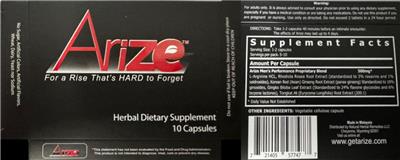
This summary is for Arize by Arize
- Form
- Capsule
- Serving Size
- 1 Capsule
- Servings
- 5 per container
- Container Holds
- 10 Capsules
- What is Arize?A supplement from Arize with five active ingredients, in capsule form.
- Active Ingredients 4 plant ingredients such as Rhodiola rosea Root, Korean Red Asian Ginseng Root and Ginkgo biloba Leaf and 1 amino acid: L-Arginine HydrochlorideRhodiola rosea Root ExtractKorean Red Asian Ginseng Root ExtractGinkgo biloba Leaf ExtractTongkat Ali Root Extract Five active ingredients. Each one can interact with drugs or cause side effects on its own, so we check every one. The full Supplement Facts
- Drug Interactions 1,601 drugs have a documented interaction with this supplement; the most serious is rated major. Of those, 1,120 are single drugs and 481 are combination products (two or more drugs in one), each listed under its own name. Ask your pharmacist first if you take a drug in any of these categories, the most serious of the 50 on record:
- TalinololMajor · 1 drug
- Moderate · 645 drugs
- Moderate · 418 drugs
- Moderate · 202 drugs
- Possible Side EffectsStomach upset 4 ingredientsDiarrhea 3 ingredientsDizziness 2 ingredientsHeadache 2 ingredientsNausea 2 ingredientsRestlessness 2 ingredients +13 moreCombined from all five of its active ingredients. Not studied in this exact product.
- Well documented Why
Does Arize work?
It is not marketed for one specific use, so this is what its ingredients have been studied for, strongest research first:
- L-Arginine
- Panax Ginseng
- Panax Ginseng
- Ginkgo
- Sexual desire Eurycoma Longifolia
- L-Arginine
These grades are for each ingredient, not this exact product, and never a promise it will work for you.
And 4 more graded uses, in what the research says- AllergensNone of its ingredient names point to a major food allergen
- Barcode (UPC)7 21405 57747 7Match it to the barcode on your bottle to be sure this is your product. Not your product? Search for it here
Who Might Consider It
- People who want it for erectile dysfunction (ED), influenza, anxiety, sexual desire or another graded use: the uses with research behind them. See each grade
- People interested in one of the uses where an ingredient is rated possibly effective may want to consider this product, but the evidence is limited.
Who Should Be Careful
- Anyone taking blood thinners, diabetes medicines, blood pressure medicines, or antidepressants should be careful.
- Pregnant or breastfeeding people, people with heart disease or low blood pressure, and children should also be careful.
- Talk it over with your own doctor or pharmacist before starting.
More Before You Take It Show both answersHide Pregnancy and Breastfeeding The Label’s Directions
-
Pregnant or breastfeeding?
- Pregnancy Panax Ginseng
- ! When used orally.
- Breastfeeding Panax Ginseng
- Insufficient reliable information available; avoid using.
- Pregnancy Ginkgo
- ! When used orally.
- Breastfeeding Ginkgo
- Insufficient reliable information available; avoid using.
- Pregnancy L-Arginine
- When used orally and appropriately, short-term.
- Breastfeeding L-Arginine
- Insufficient reliable information available; avoid using.
-
How does the label say to take it?
“Directions: Take 1-2 capsules 40 minutes before an intimate encounter. The effects of Arize may last up to 4 days.”
The maker’s words. Your pharmacist or doctor may advise differently.
Everything the label says
From the label dated May 23, 2024: all five of its active ingredients were checked against our records. A summary of what is known, not a grade or a test of the product. How these ratings are computed
Ask Anything About This Supplement
Name a drug you take, or ask about side effects, ingredients or pregnancy.
There’s a lot of information about this supplement on this page! Ask anything in plain English for a quick answer drawn from it.
AI answers come from this label and our own records, never the open internet. AI can make mistakes, so always check with your doctor or pharmacist. How we use AI
Ask the Pharmacist
A licensed pharmacist will answer your question by email — free, as soon as they can.
Got it — thank you!
A licensed pharmacist will answer as soon as they can. Keep an eye on your email (worth checking spam, just in case).
What’s Inside Arize
Five Active Ingredients
In the order the label lists them, each with its own card below.
The label gives an exact amount for 0 of its 5 active ingredients. Five are inside one proprietary blend, “Arize Men's Performance Proprietary Blend”, and the label gives one total for it, not how much of each ingredient is in it.
- 0 state an exact amount
- 5 have no amount of their own
- Arize Men's Performance Proprietary Blend 500 mg in total · 5 ingredients, no amount for each
This rates what the label tells you, not the quality of the product.
Supplement Facts
| Amount Per Serving | % Daily Value | |
|---|---|---|
| Arize Men's Performance Proprietary Blend | 500 mg | † |
| L-Arginine Hydrochloride | † | |
| Rhodiola rosea Root Extract | † | |
| Korean Red Asian Ginseng Root Extract | † | |
| Ginkgo biloba Leaf Extract | † | |
| Tongkat Ali Root Extract | † | |
Other ingredients: Cellulose
† Daily Value not established.
Daily Values for adults and children 4 or more years of age.
As the label prints it, from the NIH Dietary Supplement Label Database.
Each Ingredient and Its Drug Interactions
Tap one for more about it and its full guide. A drug can interact with this supplement through any one of them.
L-arginine increases nitric oxide, which causes blood vessels to widen.
- The product also includes a proprietary men's performance blend, but we have no information on its individual components.
-
Arize Men's Performance Proprietary Blend 500 mg Five ingredients inside it, each checked on its own
- L-Arginine Hydrochloride 403 drugs
- Rhodiola rosea Root Extract 1,271 drugs
- Korean Red Asian Ginseng Root Extract 1,132 drugs
- Ginkgo biloba Leaf Extract 1,267 drugs
- Tongkat Ali Root Extract 249 drugs
Other Ingredients (Inactive)
The capsule or tablet itself, fillers, coatings and flavors. Not part of the drug interaction check; the allergen check below reads them.
- Cellulose
Allergens in Arize
None of its ingredient names point to a major food allergen.
Not named in the ingredients
- Milk
- Egg
- Fish
- Shellfish
- Tree nuts
- Peanuts
- Wheat or other gluten grains
- Soy
- Sesame
- Made without, the label says“No sugar, artificial colors, artificial flavors, wheat, dairy, yeast nor sodium”
From the label text and ingredient names on file; we do not test products. With a serious allergy, check your bottle and ask the maker or your pharmacist.
What the Label Says
The maker’s own words, from the label. We do not verify or endorse them.
- Formulation
-
“For a rise that's hard to forget”
“Made in Malaysia”
- FDA Statement of Identity
-
“Herbal Dietary Supplement”
- Storage
-
“Store in a cool, dry place.”
- General statements
-
“Visit us online at: www.getarize.com”
The Arize Label on File
The label scan on file at the NIH Dietary Supplement Label Database, dated May 2024. Always read the label on the bottle you have.
Product Facts
- Brand
- Arize
- Barcode (UPC)
- 721405577477
- Net contents
- 10 Capsules
- Market status
- On market
- Date entered into DSLD
- May 23, 2024
- DSLD ID
- 309950
- Product type
- Botanical
- Supplement form
- Capsule
- Dietary claims / uses
- All Other, Structure/Function
- Intended target group(s)
- Adult Male (18-50 Years), Dairy Free, Sugar Free
Is this label outdated? Report a formula or label change and our pharmacy team will review it.
HelloPharmacist Score Arize
Up to 10 points for research, amount, label and outside testing. Not a safety rating. How this one adds up
for sexual desire
It is not marketed for one specific use, but 4 of its 5 ingredients have research behind them. The strongest is some research on eurycoma longifolia for sexual desire.
- Research4 of 5 points
- Amount1 of 2 points
- Label0 of 2 points
- Outside testing0 of 1 point
Major drug interactions. The score does not count drug interactions. Check them against any drugs you take. See them
How It Earns Its 5
Score: 5 out of 10. Preliminary for sexual desire.
4 of its 5 ingredients have research behind them. The best graded use of each:
- Eurycoma longifolia: Possibly Effective for sexual desire
- L-arginine: Possibly Effective for peripheral arterial disease (PAD)
- Panax ginseng: Possibly Effective for sexual arousal
- Ginkgo: Possibly Effective for anxiety
With no one use on the label, research can earn up to 4 of 5 points, because at least half its ingredients have research. Grades come from the Natural Medicines database, which we license.
4 of 5 points
Amount
It has more than one main ingredient, and we have nothing to compare their amounts with yet.
1 of 2 points
Label
It states the amount of none of its five active ingredients; five are inside blends that give only a total.
0 of 2 points
Outside testing
We found no mark from an outside testing program, such as USP Verified or NSF Certified, on the label we have on file.
0 of 1 point
Arize Side Effects
Why this rating?
We look for three kinds of safety information on each ingredient: side effects reported in studies, a pregnancy and breastfeeding rating, and a safety write-up from our pharmacy team. All three are on file for each of the five ingredients we could check.
So this rates how much is known, not whether Arize is right for you.
Reported with five of its ingredients
- Most often
- Stomach upset, diarrhea, dizziness, headache, nausea and restlessness
- !Rare but serious
- Severe allergic reaction, irregular heartbeat and ischemia See details
HelloPharmacist Team Summary: Arize Side Effects
Most people taking Arize notice stomach upset, nausea, or bloating, and many also notice headache, dizziness, or trouble sleeping.
- These come from several ingredients, so if you feel dizzy, see how it affects you before driving.
- Allergic reactions are possible but uncommon, and rare heart rhythm problems and bleeding have been reported with some ingredients, so call your doctor right away if you notice chest pain, fainting, unusual bruising, or bleeding.
- Talk with your own doctor or pharmacist before starting if you are pregnant, breastfeeding, have heart disease, or take blood thinners or diabetes medicines.
Side Effects, Ingredient by Ingredient
A supplement’s side effects come from its ingredients. Here is what is reported with each one.
L-Arginine
Most reported
- Stomach upset
- Bloating
- Nausea
- Diarrhea
Rhodiola
Most reported
- Dizziness
- Dry mouth
- Trouble sleeping (especially if taken later in the day)
- Jitteriness or feeling restless
Panax Ginseng
Most reported
- Headache
- Nervousness, restlessness, or feeling jittery
- Upset stomach, nausea, or diarrhea
- Changes in blood pressure
Ginkgo
Most reported
- Headache
- Upset stomach or nausea
- Dizziness
- Constipation or diarrhea
Eurycoma Longifolia
Most reported
- Restlessness
- Trouble sleeping
- Irritability
- Stomach upset
Arize Warnings: Who Should Be Careful
Arize has five active ingredients, and each can carry warnings of its own. We checked all five, and each warning below names the ingredient it comes from. If any of these apply to you, talk to your doctor or pharmacist before you start it.
- L-Arginine4 warnings below
- Rhodiola3 warnings below
- Panax Ginseng1 warning below
- Ginkgo3 warnings below
- Eurycoma Longifolia3 warnings below
-
Bleeding Problems or Surgery
- RhodiolaPeople with low blood pressure or those undergoing surgery should also talk to a healthcare provider first.
- GinkgoGinkgo is generally well tolerated in healthy adults but may increase bleeding risk.
-
Blood Pressure
- L-ArginineBecause L-arginine can widen blood vessels and lower blood pressure, use caution if you already have low blood pressure.
- L-ArginineOur pharmacists say L-arginine is often well tolerated short-term but can lower blood pressure, and that it is best avoided unless your doctor advises otherwise.
-
Heart Conditions
- L-ArgininePeople with heart disease, especially those who have recently had a heart attack, should avoid using it unless a doctor recommends it, since some research suggested possible harm in that group.
-
Hormone-Sensitive Conditions
- Eurycoma LongifoliaPeople with hormone-sensitive conditions, prostate problems, or other ongoing health issues should be cautious and check with a healthcare professional first.
-
Seizure Disorders
- GinkgoPeople with a history of seizures should be careful, as some reports suggest ginkgo could lower the seizure threshold, especially if a product is contaminated with ginkgo seeds.
-
Mental Health Conditions
- RhodiolaUse extra caution if you have a mental health condition such as bipolar disorder, since stimulating herbs could potentially affect mood.
-
Children
- Panax GinsengGinseng is generally not recommended for children unless directed by a doctor.
- GinkgoNever eat raw or roasted ginkgo seeds (nuts), which can be toxic, especially in children.
- Eurycoma LongifoliaChildren should not use it.
-
If You Take Other Drugs
- Eurycoma LongifoliaAlways tell your pharmacist or doctor about any supplement you are taking, especially if you have a medical condition or take other medicines.
-
Other Cautions
- L-ArgininePeople with herpes (cold sores or genital herpes) sometimes worry that arginine may trigger outbreaks; this is not well proven but worth discussing with your provider.
- RhodiolaChoose products from reputable brands, ideally with third-party testing, and always check with your pharmacist or doctor before starting.
-
What the Label Warns
- “Do not use if foil is broken.”
- “Keep out of reach of children. Warning: For adults only.”
- “It is always advised to consult your physician prior to using any dietary supplement, especially if you have a medical condition or are taking any medications. Do not use this product if you are pregnant or nursing.”
- “Use only as directed. Do not exceed 2 tablets in a 24 hour period.”
The maker’s wording, from the product label.
-
Pregnant or Breastfeeding
Each ingredient’s rating for pregnancy and for breastfeeding, and what it covers.
Pregnancy
-
When used orally.
Ginsenoside Rb1, an active constituent of Panax ginseng, has teratogenic effects in animal models; avoid using.
Breastfeeding
-
Insufficient reliable information available; avoid using.
Pregnancy
-
When used orally.
There is concern that ginkgo might have labor-inducing and hormonal effects.
2 more points on this rating
- There is also concern that the antiplatelet effects of ginkgo could prolong bleeding time if taken around the time of labor and delivery.
- Theoretically, ginkgo might adversely affect pregnancy outcome; avoid using during pregnancy.
Breastfeeding
-
Insufficient reliable information available; avoid using.
Show 3 more ingredients
Pregnancy
-
When used orally and appropriately, short-term.
L-arginine 12 grams daily for 2 days has been used with apparent safety in pregnancy during the third trimester.
L-arginine 3 grams daily has been taken safely during the second and/or third trimesters.
1 more rating for L-Arginine used another way
This supplement is taken by mouth. This rating is for L-Arginine given another way.
-
When used intravenously and appropriately, short-term.
Intravenous L-arginine 20-30 grams daily has been used safely in pregnancy for up to 5 days.
Breastfeeding
-
Insufficient reliable information available; avoid using.
Pregnancy and Breastfeeding The record rates both the same
-
Insufficient reliable information available; avoid using.
Pregnancy and Breastfeeding The record rates both the same
-
Insufficient reliable information available; avoid using.
Animal research suggests that there are no negative effects of Eurycoma longifolia on the offspring.
However, research in humans is lacking.
Our pharmacy team’s notes
- Lactation ratings aren’t available for any ingredient, but our pharmacists advise avoiding ginkgo, Tongkat Ali, rhodiola, and ginseng while breastfeeding.
Ratings and the words beside them are from the Natural Medicines database, which we license.
-
Rare but Serious Side Effects
-
!
L-Arginine
Allergic reactions are possible but uncommon.
-
!
Panax Ginseng
Rarely, more serious reactions such as allergic reactions can occur.
Orally: Anaphylaxis, arrhythmia, ischemia, Stevens-Johnson syndrome.
-
!
Ginkgo
More serious but rare concerns include increased bleeding or bruising.
Orally: Arrhythmia, bleeding, Stevens-Johnson syndrome.
When to get help: a serious allergic reaction, with trouble breathing or swelling of the face, lips or throat, needs emergency care: call 911. For any other side effect that worries you, call your doctor or pharmacist.
These reports describe each ingredient, not studies of this exact product. Not medical advice: a side effect you notice after starting a supplement is worth a word with your pharmacist or doctor.
Arize Drug Interactions
We checked all five active ingredients in this supplement against every drug in our records. A drug can interact with it through any one of them.
A major interaction on record
3 of 3, on a scale from Minor or none to Major.Why this rating?
We rate this by the most serious interaction on record, not by how many there are. For Ginkgo, L-Arginine, Rhodiola, Panax Ginseng and Eurycoma Longifolia, the most serious is rated major, which means the combination is best avoided, or used only under close supervision. Some involve kinds of drugs where a small change can matter, such as blood thinners, seizure drugs and transplant drugs.
1,602 drugs are on the full list. What matters is whether one you take is on it, so check yours with the interaction checker on this page.
From the HelloPharmacist Team
Our pharmacy team’s read on the supplement as a whole.
- Most of the remaining interactions are rated Moderate.
- They involve blood pressure medicines (antihypertensives, ACE inhibitors, and angiotensin receptor blockers), potassium-sparing diuretics, furosemide, anticoagulant and antiplatelet drugs such as warfarin (which can raise bleeding risk), and diabetes drugs including insulin, which can add to blood sugar lowering and lead to low blood sugar (hypoglycemia).
- Other Moderate-rated types include sildenafil, simvastatin, alprazolam, trazodone, efavirenz, rosiglitazone, tacrolimus, midazolam, propranolol, MAOI antidepressants, and selegiline.
All five of its active ingredients have drug interactions on record: L-Arginine, Rhodiola, Panax Ginseng, Ginkgo and Eurycoma Longifolia.
- Interacts with
- 1,267 drugs
- Most serious
- Major
- The most serious interaction on record is between ginkgo and talinolol, rated Major: ginkgo can raise blood levels of talinolol.
- Interacts with
- 1,271 drugs
- Most serious
- Moderate
- Most of its records involve Cytochrome P450 3A4 (CYP3A4) Substrates, CNS Depressants and P-glycoprotein Substrates.
- Interacts with
- 1,132 drugs
- Most serious
- Moderate
- Most of its records involve Cytochrome P450 3A4 (CYP3A4) Substrates, Cytochrome P450 2D6 (CYP2D6) Substrates and Stimulant Drugs.
Show two more ingredients
- Interacts with
- 403 drugs
- Most serious
- Moderate
- Most of its records involve Antihypertensive Drugs, Anticoagulant/Antiplatelet Drugs and Antidiabetes Drugs.
- Interacts with
- 249 drugs
- Most serious
- Moderate
- Most of its records involve Cytochrome P450 1A2 (CYP1A2) Substrates, Cytochrome P450 2C19 (CYP2C19) Substrates and Testosterone.
Summarized by the HelloPharmacist pharmacy team from the interaction records below. How it is written How we use AI
Why Arize Interacts, Ingredient by Ingredient
A product interacts through its ingredients. Each card: how many drugs, the most serious rating, and the kinds of drugs it affects most (tap a kind for what it means).
The ingredients driving the most interactions
-
Rhodiola rosea Root Extract 1,271 drugs
Most serious: Moderate10 interaction records on file
The kinds of drugs it affects most
- 645 drugs
- 248 drugs
- 202 drugs
- 186 drugs
Every Rhodiola drug interaction, 10 records The Rhodiola records cite 13 references, listed in the Rhodiola guide.
-
Ginkgo biloba Leaf Extract 1,267 drugs
Most serious: Major23 interaction records on file
The kinds of drugs it affects most
- 645 drugs
- 418 drugs
- 202 drugs
- 186 drugs
Every Ginkgo drug interaction, 23 records The Ginkgo records cite 97 references, listed in the Ginkgo guide.
-
Korean Red Asian Ginseng Root Extract 1,132 drugs
Most serious: Moderate20 interaction records on file
The kinds of drugs it affects most
- 645 drugs
- 193 drugs
- 172 drugs
- 161 drugs
Every Panax Ginseng drug interaction, 20 records The Panax Ginseng records cite 65 references, listed in the Panax Ginseng guide.
-
L-Arginine Hydrochloride 403 drugs
Most serious: Moderate9 interaction records on file
The kinds of drugs it affects most
- 172 drugs
- 122 drugs
- 86 drugs
- 23 drugs
Every L-Arginine drug interaction, 9 records The L-Arginine records cite 66 references, listed in the L-Arginine guide.
-
Tongkat Ali Root Extract 249 drugs
Most serious: Moderate5 interaction records on file
The kinds of drugs it affects most
- 186 drugs
- 72 drugs
- Testosterone 8 drugs
- Propranolol (Inderal) 3 drugs
Every Eurycoma Longifolia drug interaction, 5 records The Eurycoma Longifolia records cite 4 references, listed in the Eurycoma Longifolia guide.
The Breakdown by Severity
Each drug counted once, at its most serious rating. Tap a tile to list those drugs.
Find Your Drug
Type a drug or brand name to see whether it is on the list.
- Only drugs with a documented interaction are listed, the most serious first.
- A drug with no known interaction is not listed, but searching its name tells you so.
- Open a drug to see which ingredient is responsible. Of those, 1,120 are single drugs and 481 are combination products (two or more drugs in one), each listed under its own name.
-
Loperamide and SimethiconeImodium Advanced Moderate
The 2 ingredients responsible:
-
Ginkgo Biloba Leaf Extract Moderate Loperamide and Simethicone is in the P-glycoprotein Substrates category.
Theoretically, taking ginkgo with P-glycoprotein substrates might increase the levels and adverse effects of these substrates.
The full Ginkgo Biloba Leaf Extract + Loperamide and Simethicone interaction -
Rhodiola Rosea Root Extract Moderate Loperamide and Simethicone is in the P-glycoprotein Substrates category.
Theoretically, rhodiola might increase levels of P-glycoprotein substrates.
The full Rhodiola Rosea Root Extract + Loperamide and Simethicone interaction
-
-
Ephedrine and Guaifenesin (otc Drug)Ephedrine Formula 400, Ephedrine Plus Tabs Moderate
The ingredient responsible:
-
Korean Red Asian Ginseng Root Extract Moderate Ephedrine and Guaifenesin (otc Drug) is in the Stimulant Drugs category.
Theoretically, taking Panax ginseng with stimulant drugs might increase the risk of adverse stimulant effects.
The full Korean Red Asian Ginseng Root Extract + Ephedrine and Guaifenesin (otc Drug) interaction
-
-
Olopatadine Hydrochloride and Mometasone FuroateRyaltris Moderate
The 3 ingredients responsible:
-
Ginkgo Biloba Leaf Extract Moderate Olopatadine Hydrochloride and Mometasone Furoate is in the Cytochrome P450 3A4 (CYP3A4) Substrates category.
Theoretically, ginkgo might decrease levels of drugs metabolized by CYP3A4.
The full Ginkgo Biloba Leaf Extract + Olopatadine Hydrochloride and Mometasone Furoate interaction -
Korean Red Asian Ginseng Root Extract Moderate Olopatadine Hydrochloride and Mometasone Furoate is in the Cytochrome P450 3A4 (CYP3A4) Substrates category.
Theoretically, Panax ginseng might increase or decrease levels of drugs metabolized by CYP3A4.
The full Korean Red Asian Ginseng Root Extract + Olopatadine Hydrochloride and Mometasone Furoate interaction -
Rhodiola Rosea Root Extract Minor Olopatadine Hydrochloride and Mometasone Furoate is in the Cytochrome P450 3A4 (CYP3A4) Substrates category.
Theoretically, rhodiola might increase levels of drugs metabolized by CYP3A4.
The full Rhodiola Rosea Root Extract + Olopatadine Hydrochloride and Mometasone Furoate interaction
-
-
Bendroflumethiazide and PotassiumCentyl K, Neo-NaClex-K Moderate
The ingredient responsible:
-
L-Arginine Hydrochloride Moderate Bendroflumethiazide and Potassium is in the Potassium-sparing Diuretics category.
Theoretically concomitant use of potassium-sparing diuretics with L-arginine may increases the risk of hyperkalemia.
The full L-Arginine Hydrochloride + Bendroflumethiazide and Potassium interaction
-
-
Fluticasone Proprionate and SalmeterolAirduo Respiclick Moderate
The 3 ingredients responsible:
-
Ginkgo Biloba Leaf Extract Moderate Fluticasone Proprionate and Salmeterol is in the Cytochrome P450 3A4 (CYP3A4) Substrates category.
Theoretically, ginkgo might decrease levels of drugs metabolized by CYP3A4.
The full Ginkgo Biloba Leaf Extract + Fluticasone Proprionate and Salmeterol interaction -
Korean Red Asian Ginseng Root Extract Moderate Fluticasone Proprionate and Salmeterol is in these Cytochrome P450 3A4 (CYP3A4) Substrates, QT Interval-prolonging Drugs categories.
Theoretically, Panax ginseng might increase or decrease levels of drugs metabolized by CYP3A4.
The full Korean Red Asian Ginseng Root Extract + Fluticasone Proprionate and Salmeterol interaction -
Rhodiola Rosea Root Extract Minor Fluticasone Proprionate and Salmeterol is in the Cytochrome P450 3A4 (CYP3A4) Substrates category.
Theoretically, rhodiola might increase levels of drugs metabolized by CYP3A4.
The full Rhodiola Rosea Root Extract + Fluticasone Proprionate and Salmeterol interaction
-
-
Carbetapentane Tannate, Chlorpheniramine Tannate, Ephedrine Tannate, and Phenylephrine TannateQuadratuss, Ry Tuss, Rynatuss, Tri Tannate Plus Moderate
The 3 ingredients responsible:
-
Korean Red Asian Ginseng Root Extract Moderate Carbetapentane Tannate, Chlorpheniramine Tannate, Ephedrine Tannate, and Phenylephrine Tannate is in these Cytochrome P450 3A4 (CYP3A4) Substrates, Stimulant Drugs categories.
Theoretically, Panax ginseng might increase or decrease levels of drugs metabolized by CYP3A4.
The full Korean Red Asian Ginseng Root Extract + Carbetapentane Tannate, Chlorpheniramine Tannate, Ephedrine Tannate, and Phenylephrine Tannate interaction -
Ginkgo Biloba Leaf Extract Moderate Carbetapentane Tannate, Chlorpheniramine Tannate, Ephedrine Tannate, and Phenylephrine Tannate is in these Cytochrome P450 3A4 (CYP3A4) Substrates, Seizure Threshold Lowering Drugs categories.
Theoretically, ginkgo might decrease levels of drugs metabolized by CYP3A4.
The full Ginkgo Biloba Leaf Extract + Carbetapentane Tannate, Chlorpheniramine Tannate, Ephedrine Tannate, and Phenylephrine Tannate interaction -
Rhodiola Rosea Root Extract Minor Carbetapentane Tannate, Chlorpheniramine Tannate, Ephedrine Tannate, and Phenylephrine Tannate is in the Cytochrome P450 3A4 (CYP3A4) Substrates category.
Theoretically, rhodiola might increase levels of drugs metabolized by CYP3A4.
The full Rhodiola Rosea Root Extract + Carbetapentane Tannate, Chlorpheniramine Tannate, Ephedrine Tannate, and Phenylephrine Tannate interaction
-
-
Glecaprevir and PibrentasvirMavyret Moderate
The 3 ingredients responsible:
-
Korean Red Asian Ginseng Root Extract Moderate Glecaprevir and Pibrentasvir is in the Cytochrome P450 3A4 (CYP3A4) Substrates category.
Theoretically, Panax ginseng might increase or decrease levels of drugs metabolized by CYP3A4.
The full Korean Red Asian Ginseng Root Extract + Glecaprevir and Pibrentasvir interaction -
Ginkgo Biloba Leaf Extract Moderate Glecaprevir and Pibrentasvir is in these Cytochrome P450 3A4 (CYP3A4) Substrates, P-glycoprotein Substrates categories.
Theoretically, ginkgo might decrease levels of drugs metabolized by CYP3A4.
The full Ginkgo Biloba Leaf Extract + Glecaprevir and Pibrentasvir interaction -
Rhodiola Rosea Root Extract Moderate Glecaprevir and Pibrentasvir is in these P-glycoprotein Substrates, Cytochrome P450 3A4 (CYP3A4) Substrates categories.
Theoretically, rhodiola might increase levels of P-glycoprotein substrates.
The full Rhodiola Rosea Root Extract + Glecaprevir and Pibrentasvir interaction
-
-
Atropine and MeperidineAtropine, Meperidine Moderate
The 3 ingredients responsible:
-
Korean Red Asian Ginseng Root Extract Moderate Atropine and Meperidine is in the Cytochrome P450 2D6 (CYP2D6) Substrates category.
Theoretically, Panax ginseng might increase levels of drugs metabolized by CYP2D6.
The full Korean Red Asian Ginseng Root Extract + Atropine and Meperidine interaction -
Ginkgo Biloba Leaf Extract Moderate Atropine and Meperidine is in the Seizure Threshold Lowering Drugs category.
Theoretically, taking ginkgo with drugs that lower the seizure threshold might increase the risk for convulsions.
The full Ginkgo Biloba Leaf Extract + Atropine and Meperidine interaction -
Rhodiola Rosea Root Extract Minor Atropine and Meperidine is in the CNS Depressants category.
Theoretically, rhodiola might increase the risk of adverse effects when taken with CNS depressants.
The full Rhodiola Rosea Root Extract + Atropine and Meperidine interaction
-
-
Memantine and DonepezilNamzaric Moderate
The 3 ingredients responsible:
-
Korean Red Asian Ginseng Root Extract Moderate Memantine and Donepezil is in these Cytochrome P450 2D6 (CYP2D6) Substrates, Cytochrome P450 3A4 (CYP3A4) Substrates categories.
Theoretically, Panax ginseng might increase levels of drugs metabolized by CYP2D6.
The full Korean Red Asian Ginseng Root Extract + Memantine and Donepezil interaction -
Ginkgo Biloba Leaf Extract Moderate Memantine and Donepezil is in the Cytochrome P450 3A4 (CYP3A4) Substrates category.
Theoretically, ginkgo might decrease levels of drugs metabolized by CYP3A4.
The full Ginkgo Biloba Leaf Extract + Memantine and Donepezil interaction -
Rhodiola Rosea Root Extract Minor Memantine and Donepezil is in the Cytochrome P450 3A4 (CYP3A4) Substrates category.
Theoretically, rhodiola might increase levels of drugs metabolized by CYP3A4.
The full Rhodiola Rosea Root Extract + Memantine and Donepezil interaction
-
-
Fluticasone and SalmeterolAdvair Diskus Moderate
The 3 ingredients responsible:
-
Korean Red Asian Ginseng Root Extract Moderate Fluticasone and Salmeterol is in these QT Interval-prolonging Drugs, Cytochrome P450 3A4 (CYP3A4) Substrates categories.
Theoretically, Panax ginseng has an additive effect with drugs that prolong the QT interval and potentially increase the risk of ventricular arrhythmias.
The full Korean Red Asian Ginseng Root Extract + Fluticasone and Salmeterol interaction -
Ginkgo Biloba Leaf Extract Moderate Fluticasone and Salmeterol is in the Cytochrome P450 3A4 (CYP3A4) Substrates category.
Theoretically, ginkgo might decrease levels of drugs metabolized by CYP3A4.
The full Ginkgo Biloba Leaf Extract + Fluticasone and Salmeterol interaction -
Rhodiola Rosea Root Extract Minor Fluticasone and Salmeterol is in the Cytochrome P450 3A4 (CYP3A4) Substrates category.
Theoretically, rhodiola might increase levels of drugs metabolized by CYP3A4.
The full Rhodiola Rosea Root Extract + Fluticasone and Salmeterol interaction
-
-
Niacin and LovastatinAdvicor Moderate
The 3 ingredients responsible:
-
Korean Red Asian Ginseng Root Extract Moderate Niacin and Lovastatin is in the Cytochrome P450 3A4 (CYP3A4) Substrates category.
Theoretically, Panax ginseng might increase or decrease levels of drugs metabolized by CYP3A4.
The full Korean Red Asian Ginseng Root Extract + Niacin and Lovastatin interaction -
Ginkgo Biloba Leaf Extract Moderate Niacin and Lovastatin is in the Cytochrome P450 3A4 (CYP3A4) Substrates category.
Theoretically, ginkgo might decrease levels of drugs metabolized by CYP3A4.
The full Ginkgo Biloba Leaf Extract + Niacin and Lovastatin interaction -
Rhodiola Rosea Root Extract Minor Niacin and Lovastatin is in the Cytochrome P450 3A4 (CYP3A4) Substrates category.
Theoretically, rhodiola might increase levels of drugs metabolized by CYP3A4.
The full Rhodiola Rosea Root Extract + Niacin and Lovastatin interaction
-
-
Promethazine and PseudoephedrinePhenergan D Moderate
The ingredient responsible:
-
Korean Red Asian Ginseng Root Extract Moderate Promethazine and Pseudoephedrine is in the Stimulant Drugs category.
Theoretically, taking Panax ginseng with stimulant drugs might increase the risk of adverse stimulant effects.
The full Korean Red Asian Ginseng Root Extract + Promethazine and Pseudoephedrine interaction
-
-
Levodopa and CarbidopaDuodopa Moderate
The ingredient responsible:
-
Ginkgo Biloba Leaf Extract Moderate Levodopa and Carbidopa is in the Seizure Threshold Lowering Drugs category.
Theoretically, taking ginkgo with drugs that lower the seizure threshold might increase the risk for convulsions.
The full Ginkgo Biloba Leaf Extract + Levodopa and Carbidopa interaction
-
-
Guaifenesin, Phenylephrine, and PhenylpropanolamineDura Gest, Entex Moderate
The ingredient responsible:
-
Korean Red Asian Ginseng Root Extract Moderate Guaifenesin, Phenylephrine, and Phenylpropanolamine is in the Stimulant Drugs category.
Theoretically, taking Panax ginseng with stimulant drugs might increase the risk of adverse stimulant effects.
The full Korean Red Asian Ginseng Root Extract + Guaifenesin, Phenylephrine, and Phenylpropanolamine interaction
-
-
Sodium Nitrite and Sodium ThiosulfateNithiodote Moderate
The ingredient responsible:
-
Ginkgo Biloba Leaf Extract Moderate Sodium Nitrite and Sodium Thiosulfate is in the Seizure Threshold Lowering Drugs category.
Theoretically, taking ginkgo with drugs that lower the seizure threshold might increase the risk for convulsions.
The full Ginkgo Biloba Leaf Extract + Sodium Nitrite and Sodium Thiosulfate interaction
-
-
Homatropine Methylbromide and HydrocodoneHycodan, Tussigon Moderate
The 3 ingredients responsible:
-
Ginkgo Biloba Leaf Extract Moderate Homatropine Methylbromide and Hydrocodone is in these Seizure Threshold Lowering Drugs, Cytochrome P450 3A4 (CYP3A4) Substrates categories.
Theoretically, taking ginkgo with drugs that lower the seizure threshold might increase the risk for convulsions.
The full Ginkgo Biloba Leaf Extract + Homatropine Methylbromide and Hydrocodone interaction -
Korean Red Asian Ginseng Root Extract Moderate Homatropine Methylbromide and Hydrocodone is in these Cytochrome P450 2D6 (CYP2D6) Substrates, Cytochrome P450 3A4 (CYP3A4) Substrates categories.
Theoretically, Panax ginseng might increase levels of drugs metabolized by CYP2D6.
The full Korean Red Asian Ginseng Root Extract + Homatropine Methylbromide and Hydrocodone interaction -
Rhodiola Rosea Root Extract Minor Homatropine Methylbromide and Hydrocodone is in these CNS Depressants, Cytochrome P450 3A4 (CYP3A4) Substrates categories.
Theoretically, rhodiola might increase the risk of adverse effects when taken with CNS depressants.
The full Rhodiola Rosea Root Extract + Homatropine Methylbromide and Hydrocodone interaction
-
-
Pseudoephedrine and GuaifenesinRobitussin PE, Tussin PE Moderate
The ingredient responsible:
-
Korean Red Asian Ginseng Root Extract Moderate Pseudoephedrine and Guaifenesin is in the Stimulant Drugs category.
Theoretically, taking Panax ginseng with stimulant drugs might increase the risk of adverse stimulant effects.
The full Korean Red Asian Ginseng Root Extract + Pseudoephedrine and Guaifenesin interaction
-
-
Atovaquone and ProguanilMalarone Moderate
The 2 ingredients responsible:
-
Ginkgo Biloba Leaf Extract Moderate Atovaquone and Proguanil is in these Seizure Threshold Lowering Drugs, Cytochrome P450 2C19 (CYP2C19) Substrates categories.
Theoretically, taking ginkgo with drugs that lower the seizure threshold might increase the risk for convulsions.
The full Ginkgo Biloba Leaf Extract + Atovaquone and Proguanil interaction -
Tongkat Ali Root Extract Minor Atovaquone and Proguanil is in the Cytochrome P450 2C19 (CYP2C19) Substrates category.
Theoretically, Eurycoma longifolia might increase levels of CYP2C19 substrates.
The full Tongkat Ali Root Extract + Atovaquone and Proguanil interaction
-
-
Piperacillin and TazobactamZosyn Moderate
The ingredient responsible:
-
Ginkgo Biloba Leaf Extract Moderate Piperacillin and Tazobactam is in the Seizure Threshold Lowering Drugs category.
Theoretically, taking ginkgo with drugs that lower the seizure threshold might increase the risk for convulsions.
The full Ginkgo Biloba Leaf Extract + Piperacillin and Tazobactam interaction
-
-
Ledipasvir and SofosbuvirHarvoni Moderate
The 2 ingredients responsible:
-
Ginkgo Biloba Leaf Extract Moderate It contains sofosbuvir, the drug this record is about. Ledipasvir and Sofosbuvir is in the P-glycoprotein Substrates category.
Theoretically, taking ginkgo with P-glycoprotein substrates might increase the levels and adverse effects of these substrates.
The full Ginkgo Biloba Leaf Extract + Ledipasvir and Sofosbuvir interaction -
Rhodiola Rosea Root Extract Moderate Ledipasvir and Sofosbuvir is in the P-glycoprotein Substrates category.
Theoretically, rhodiola might increase levels of P-glycoprotein substrates.
The full Rhodiola Rosea Root Extract + Ledipasvir and Sofosbuvir interaction
-
-
Pheniramine, Phenylpropanolamine, Phenyltoloxamine, and PyrilamineHighland Histine D, Highland Histine D PED, Multihist D, Multihist D Ped, Multihistamine D and 8 more Moderate
The ingredient responsible:
-
Korean Red Asian Ginseng Root Extract Moderate Pheniramine, Phenylpropanolamine, Phenyltoloxamine, and Pyrilamine is in the Stimulant Drugs category.
Theoretically, taking Panax ginseng with stimulant drugs might increase the risk of adverse stimulant effects.
The full Korean Red Asian Ginseng Root Extract + Pheniramine, Phenylpropanolamine, Phenyltoloxamine, and Pyrilamine interaction
-
-
Deserpidine and MethyclothiazideEnduronyl, Enduronyl Forte Moderate
The 2 ingredients responsible:
-
L-Arginine Hydrochloride Moderate Deserpidine and Methyclothiazide is in the Antihypertensive Drugs category.
Theoretically, concomitant use of L-arginine and antihypertensive drugs may increase the risk of hypotension.
The full L-Arginine Hydrochloride + Deserpidine and Methyclothiazide interaction -
Rhodiola Rosea Root Extract Moderate Deserpidine and Methyclothiazide is in the Antihypertensive Drugs category.
Theoretically, taking rhodiola with antihypertensive drugs might increase the risk of hypotension.
The full Rhodiola Rosea Root Extract + Deserpidine and Methyclothiazide interaction
-
-
Tenofovir, Emtricitabine, and EfavirenzAtripla Moderate
The 3 ingredients responsible:
-
Ginkgo Biloba Leaf Extract Moderate It contains efavirenz, the drug this record is about. Tenofovir, Emtricitabine, and Efavirenz is in the Cytochrome P450 3A4 (CYP3A4) Substrates category.
Theoretically, ginkgo might decrease the levels and clinical effects of efavirenz.
The full Ginkgo Biloba Leaf Extract + Tenofovir, Emtricitabine, and Efavirenz interaction -
Korean Red Asian Ginseng Root Extract Moderate Tenofovir, Emtricitabine, and Efavirenz is in the Cytochrome P450 3A4 (CYP3A4) Substrates category.
Theoretically, Panax ginseng might increase or decrease levels of drugs metabolized by CYP3A4.
The full Korean Red Asian Ginseng Root Extract + Tenofovir, Emtricitabine, and Efavirenz interaction -
Rhodiola Rosea Root Extract Minor Tenofovir, Emtricitabine, and Efavirenz is in the Cytochrome P450 3A4 (CYP3A4) Substrates category.
Theoretically, rhodiola might increase levels of drugs metabolized by CYP3A4.
The full Rhodiola Rosea Root Extract + Tenofovir, Emtricitabine, and Efavirenz interaction
-
-
Isopropamide and TrifluoperazineStelabid Forte, Stelabid No 1, Stelabid No 2 Moderate
The ingredient responsible:
-
Ginkgo Biloba Leaf Extract Moderate Isopropamide and Trifluoperazine is in the Seizure Threshold Lowering Drugs category.
Theoretically, taking ginkgo with drugs that lower the seizure threshold might increase the risk for convulsions.
The full Ginkgo Biloba Leaf Extract + Isopropamide and Trifluoperazine interaction
-
-
Brompheniramine and PseudoephedrineAllent, BPM PSEH 08, Bromfed, Bromfed PD, Bromfenex and 13 more Moderate
The 2 ingredients responsible:
-
Korean Red Asian Ginseng Root Extract Moderate Brompheniramine and Pseudoephedrine is in the Stimulant Drugs category.
Theoretically, taking Panax ginseng with stimulant drugs might increase the risk of adverse stimulant effects.
The full Korean Red Asian Ginseng Root Extract + Brompheniramine and Pseudoephedrine interaction -
Ginkgo Biloba Leaf Extract Moderate Brompheniramine and Pseudoephedrine is in the Seizure Threshold Lowering Drugs category.
Theoretically, taking ginkgo with drugs that lower the seizure threshold might increase the risk for convulsions.
The full Ginkgo Biloba Leaf Extract + Brompheniramine and Pseudoephedrine interaction
-
-
Penicillin G Benzathine and ProcaineBicillin C-R Moderate
The ingredient responsible:
-
Ginkgo Biloba Leaf Extract Moderate Penicillin G Benzathine and Procaine is in the Seizure Threshold Lowering Drugs category.
Theoretically, taking ginkgo with drugs that lower the seizure threshold might increase the risk for convulsions.
The full Ginkgo Biloba Leaf Extract + Penicillin G Benzathine and Procaine interaction
-
-
Lopinavir and RitonavirKaletra Moderate
The 3 ingredients responsible:
-
Ginkgo Biloba Leaf Extract Moderate Lopinavir and Ritonavir is in the Cytochrome P450 3A4 (CYP3A4) Substrates category.
Theoretically, ginkgo might decrease levels of drugs metabolized by CYP3A4.
The full Ginkgo Biloba Leaf Extract + Lopinavir and Ritonavir interaction -
Korean Red Asian Ginseng Root Extract Moderate Lopinavir and Ritonavir is in the Cytochrome P450 3A4 (CYP3A4) Substrates category.
Theoretically, Panax ginseng might increase or decrease levels of drugs metabolized by CYP3A4.
The full Korean Red Asian Ginseng Root Extract + Lopinavir and Ritonavir interaction -
Rhodiola Rosea Root Extract Minor Lopinavir and Ritonavir is in the Cytochrome P450 3A4 (CYP3A4) Substrates category.
Theoretically, rhodiola might increase levels of drugs metabolized by CYP3A4.
The full Rhodiola Rosea Root Extract + Lopinavir and Ritonavir interaction
-
-
Chlorpheniramine, Pyrilamine, and PhenylephrineDuphrene Moderate
The 3 ingredients responsible:
-
Ginkgo Biloba Leaf Extract Moderate Chlorpheniramine, Pyrilamine, and Phenylephrine is in these Cytochrome P450 3A4 (CYP3A4) Substrates, Seizure Threshold Lowering Drugs categories.
Theoretically, ginkgo might decrease levels of drugs metabolized by CYP3A4.
The full Ginkgo Biloba Leaf Extract + Chlorpheniramine, Pyrilamine, and Phenylephrine interaction -
Korean Red Asian Ginseng Root Extract Moderate Chlorpheniramine, Pyrilamine, and Phenylephrine is in these Stimulant Drugs, Cytochrome P450 3A4 (CYP3A4) Substrates categories.
Theoretically, taking Panax ginseng with stimulant drugs might increase the risk of adverse stimulant effects.
The full Korean Red Asian Ginseng Root Extract + Chlorpheniramine, Pyrilamine, and Phenylephrine interaction -
Rhodiola Rosea Root Extract Minor Chlorpheniramine, Pyrilamine, and Phenylephrine is in the Cytochrome P450 3A4 (CYP3A4) Substrates category.
Theoretically, rhodiola might increase levels of drugs metabolized by CYP3A4.
The full Rhodiola Rosea Root Extract + Chlorpheniramine, Pyrilamine, and Phenylephrine interaction
-
-
Carbetapentane Tannate and Chlorpheniramine TannateTussi-12 Moderate
The 3 ingredients responsible:
-
Ginkgo Biloba Leaf Extract Moderate Carbetapentane Tannate and Chlorpheniramine Tannate is in these Cytochrome P450 3A4 (CYP3A4) Substrates, Seizure Threshold Lowering Drugs categories.
Theoretically, ginkgo might decrease levels of drugs metabolized by CYP3A4.
The full Ginkgo Biloba Leaf Extract + Carbetapentane Tannate and Chlorpheniramine Tannate interaction -
Korean Red Asian Ginseng Root Extract Moderate Carbetapentane Tannate and Chlorpheniramine Tannate is in the Cytochrome P450 3A4 (CYP3A4) Substrates category.
Theoretically, Panax ginseng might increase or decrease levels of drugs metabolized by CYP3A4.
The full Korean Red Asian Ginseng Root Extract + Carbetapentane Tannate and Chlorpheniramine Tannate interaction -
Rhodiola Rosea Root Extract Minor Carbetapentane Tannate and Chlorpheniramine Tannate is in the Cytochrome P450 3A4 (CYP3A4) Substrates category.
Theoretically, rhodiola might increase levels of drugs metabolized by CYP3A4.
The full Rhodiola Rosea Root Extract + Carbetapentane Tannate and Chlorpheniramine Tannate interaction
-
-
Dolutegravir, Emtricitabine, and Tenofovir AlafenamideDolutegravir, Emtricitabine, Tenofovir Alafenamide Moderate
The 2 ingredients responsible:
-
Rhodiola Rosea Root Extract Moderate Dolutegravir, Emtricitabine, and Tenofovir Alafenamide is in the P-glycoprotein Substrates category.
Theoretically, rhodiola might increase levels of P-glycoprotein substrates.
The full Rhodiola Rosea Root Extract + Dolutegravir, Emtricitabine, and Tenofovir Alafenamide interaction -
Ginkgo Biloba Leaf Extract Moderate Dolutegravir, Emtricitabine, and Tenofovir Alafenamide is in the P-glycoprotein Substrates category.
Theoretically, taking ginkgo with P-glycoprotein substrates might increase the levels and adverse effects of these substrates.
The full Ginkgo Biloba Leaf Extract + Dolutegravir, Emtricitabine, and Tenofovir Alafenamide interaction
-
Does It Work? Arize
What its ingredients have research behind, strongest first, then each ingredient on its own. A grade is the research so far, never an endorsement.
What the Research Supports
Each use one or more of its ingredients is graded for, strongest research first.
- L-Arginine and Panax Ginseng
- L-Arginine
- Panax Ginseng
- Panax Ginseng
- Sexual arousal Panax Ginseng
- Ginkgo
- Ginkgo
- Vertigo Ginkgo
- Sexual desire Eurycoma Longifolia
HelloPharmacist Team Summary: Does Arize Work?
Tongkat Ali is rated possibly effective for sexual desire, and possibly ineffective for athletic performance.
- Rhodiola's ratings are insufficient reliable evidence to rate for altitude sickness, generalized anxiety disorder, arrhythmia, athletic performance, and bladder cancer.
The Evidence, Ingredient by Ingredient
The detail behind the list above: our notes on each ingredient and its graded uses.
L-Arginine
From our L-Arginine guide
- People take L-arginine for many reasons, but the strength of the evidence varies a lot depending on the use.
Research suggests a benefit for
- Erectile dysfunction (ED) and peripheral arterial disease (PAD)
Not counted here: two graded uses are for L-Arginine injected or put on the skin (pre-eclampsia and pregnancy-induced hypertension), not for a product like this one. Two more are for conditions treated by a doctor or in a hospital (angina and necrotizing enterocolitis (NEC)).
Every graded use, in the L-Arginine guideRhodiola
From our Rhodiola guide
- People use Rhodiola for many reasons, but the scientific evidence is mixed and most studies are small or of low quality.
No use is graded effective, likely effective or possibly effective for it yet.
Every graded use, in the Rhodiola guidePanax Ginseng
From our Panax Ginseng guide
- Panax ginseng has been studied for many conditions, but for most uses the evidence is limited, mixed, or preliminary.
- Many studies are small, short, or of low quality, and ginseng products vary a lot in their ingredients, which makes it hard to draw firm conclusions.
Research suggests a benefit for
- Influenza, cognitive function, erectile dysfunction (ED) and sexual arousal
Not counted here: one graded use is for a condition treated by a doctor or in a hospital (multiple sclerosis-related fatigue).
Every graded use, in the Panax Ginseng guideGinkgo
From our Ginkgo guide
- Ginkgo is widely marketed for memory and brain function, but the research is mixed.
Research suggests a benefit for
- Anxiety, premenstrual syndrome (PMS) and vertigo
Not counted here: one graded use is for Ginkgo injected or put on the skin (hearing loss), not for a product like this one. Four more are for conditions treated by a doctor or in a hospital (dementia, schizophrenia, stroke and others).
Every graded use, in the Ginkgo guideEurycoma Longifolia
From our Eurycoma Longifolia guide
- The evidence for Eurycoma longifolia is limited and mixed.
- Most studies are small, short, and use specific standardized extracts, so results may not apply to every product on the shelf.
Research suggests a benefit for
- Sexual desire
The grades are the Natural Medicines database’s, which we license; tap a grade for what it means. They are about each ingredient, not this exact product.
About Arize
Manufacturer and brand details for Arize, from the product label.
Arize has one product in our supplement database, with labels on file since 2024. Our database is built from the NIH’s Dietary Supplement Label Database and our pharmacy team’s own additions, so it covers the labels filed there, not every product the brand sells.
- Name
- Natural Herbal Remedies LLC
- City
- Cheyenne
- State
- WY
- ZipCode
- 82001
- Web Address
- www.getarize.com
Arize: Common Questions
Does Arize interact with any drugs?
What are the side effects of Arize?
Who should be careful taking Arize?
Can Arize affect the liver?
Can Arize affect the kidneys?
Does Arize contain any common allergens?
How can Arize interact with so many drugs?
Where does the information about Arize come from?
What does the data say about using Arize during pregnancy?
Does ginkgo affect bleeding?
What is L-arginine used for?
Does Tongkat Ali boost testosterone?
What is ginseng rated for?
Written and reviewed by the HelloPharmacist Editorial Team. Our editorial policy
Still Have a Question About Arize?
Our pharmacists answer drug and supplement questions, free, by email.
Label information is sourced from the NIH Dietary Supplement Label Database and reflects the product version on file; always read your actual product label. This page is for education only and is not a substitute for professional medical advice. Confirm with your pharmacist or doctor before combining supplements and drugs.
Who Reviews This Page
The pharmacist behind it, and how it is checked.
Dr. Brian Staiger, PharmD, BCPS
Clinical pharmacist and founder of HelloPharmacist
A licensed pharmacist for more than 13 years, he built the system behind this page: it reads the label on file, matches each active ingredient to its record in the Natural Medicines database, checks those records against every drug we cover, and our pharmacy team writes the take and the interaction summary from those records.
- 13+ Years in PharmacyRetail and clinical pharmacy, medication safety and healthcare administration.
- Board Certified (BCPS)A pharmacotherapy specialist, certified by the Board of Pharmacy Specialties.
- Herbalist TrainingCertificates in medical ethnobotany, for the herbs and supplements people take.
Where This Page Comes From
Arize’s label data comes from the NIH Dietary Supplement Label Database; the ingredient interaction data is from the Natural Medicines database, reviewed by our pharmacists.
- NIH Dietary Supplement Label Database (DSLD)
- The official product label on file for this supplement.
- Natural Medicines (Therapeutic Research Center)
- The evidence-graded clinical reference behind the ingredient interaction, evidence and safety records, which we license.
- HelloPharmacist Editorial Team
- Content is reviewed by the HelloPharmacist Editorial Team, the pharmacists on our staff and those we contract. See our data sources and editorial standards for how this information is built and checked.
- The Pharmacy Team’s Take and Summaries
- Generated from HelloPharmacist’s pharmacist-curated databases and editorial rules. Clinical methodology reviewed by Dr. Brian Staiger, PharmD, BCPS. Last generated Oct 31, 2026. How we use AI
- The ratings in the Quick Summary
- They summarize available label information, ingredient evidence and known drug-safety records: a summary of what is known, not a grade of the product itself. They do not verify product identity, purity, potency, contamination or manufacturing quality. How these ratings are computed
The References Behind the Interaction Records
Every citation the ingredients’ records rest on is listed in that ingredient’s guide, in context: L-Arginine, 66 references; Rhodiola, 13 references; Panax Ginseng, 65 references; Ginkgo, 97 references; Eurycoma Longifolia, 4 references .
Parts of this content are provided by the Therapeutic Research Center, LLC.
DISCLAIMER: Currently this does not check for drug-drug interactions. This is not an all-inclusive comprehensive list of potential interactions and is for informational purposes only. Not all interactions are known or well-reported in the scientific literature, and new interactions are continually being reported. Input is needed from a qualified healthcare provider including a pharmacist before starting any therapy. Application of clinical judgment is necessary.
© 2021 Therapeutic Research Center, LLC
Keep Exploring
- Supplement interaction checkerCheck any supplement or product against your drugs
- Drug–drug interactionsCheck two or more of your drugs against each other
- Browse drugs A to ZEvery drug we have checked against herbs and supplements
- NDC and pricing lookupFind a drug’s NDCs, packaging and costs
- Ask a pharmacistA free, personal answer from our licensed team