
Better Bitters Absinthium Ingredients & Drug Interactions
by Herb Pharm
What is this page for?
First and foremost: checking Better Bitters Absinthium against your medications. The heart of this page is the interaction checker and the full interaction report — how this product’s ingredients may interact with prescription and over-the-counter medicines you may be taking.
Around that, we add a pharmacist’s high-level view of the product as a whole — what’s inside, the evidence for its stated use, how transparent the label is, and what safety data exists — so you can see the full picture in one place. It’s educational information from our licensed clinical databases and the clinical staff at HelloPharmacist — not medical advice — and we don’t sell or endorse products. Our editorial policy
Better Bitters Absinthium is a dietary supplement by Herb Pharm with 6 active ingredients. Its ingredients are commonly taken for digestive upset and bloating, infant colic, menstrual cramps.Based on those ingredients, 1,004 medications have a known interaction with it, the most serious rated moderate. The ingredients most likely to interact are Fennel Seed Extract, Lemon Balm aerial parts extract, Anise extract. Use the checker below to test your specific medication, or read the full HelloPharmacist Interaction Report.
Check Your Meds Against Better Bitters Absinthium by Herb Pharm
Ask about any prescription or over-the-counter medication and we check it for interactions with Better Bitters Absinthium by Herb Pharm — and tell you which ingredient is responsible.
AI summaries are generated from our interaction database for education only — always confirm with your pharmacist. How we use AI
Ask the Pharmacist
A licensed pharmacist will answer your question by email — free, usually within 24 hours.
Got it — thank you!
A licensed pharmacist will answer within 24 hours. Keep an eye on your email (worth checking spam, just in case).
HelloPharmacist Scorecard of Better Bitters Absinthium by Herb Pharm
Our pharmacy team’s full take, with four database checks built into the cards below — a summary of what is known, not a grade of the product itself.
What’s inside
Low disclosure
Better Bitters Absinthium contains six active ingredients: fennel seed extract, anise extract, lemon balm aerial parts extract, cardamom extract, wormwood flowering aerial parts extract, and hyssop flowering aerial parts extract. These are delivered in a liquid form using certified organic cane alcohol, distilled water, and certified organic vegetable glycerin as inactive ingredients.
The product is a traditional bitters blend — a concentrated herbal extract meant to be taken in small amounts, typically by mouth.
Does it work?
Not established
The evidence supporting this product's effectiveness is limited across its ingredients. Fennel seed extract is possibly effective for period pain (dysmenorrhea), but the data on it for anxiety and bronchitis isn't established.
Anise extract has insufficient reliable evidence to rate it for migraine, lice, menopausal symptoms, or PMS. Lemon balm is possibly effective for cold sores, stress relief, and depression.
Cardamom, wormwood, and hyssop all have insufficient reliable evidence to rate them for their traditional uses, which include liver health, respiratory infections, and digestive complaints. If you're considering this product for a specific condition, talk with your pharmacist or doctor about whether the evidence matches your needs.
How safe is it?
Well-documented data
Fennel seed extract is generally well tolerated when taken orally, though gastrointestinal upset, light sensitivity, and allergic reactions can occur — and in rare cases, seizures have been reported. Anise extract is also generally well tolerated orally, but allergic reactions (including severe ones like anaphylaxis in sensitive people) and contact dermatitis are possible.
Lemon balm is generally well tolerated for short-term use and doesn't typically cause sedation more often than placebo, though dizziness and sedation have been reported. Wormwood is the ingredient requiring the most caution: it contains thujone, a neurotoxin, and concentrated amounts can cause muscle aches, nausea, vomiting, kidney damage, and in rare cases seizures — chronic high-dose use carries risk of addiction, tremors, hallucinations, and brain damage.
Hyssop's essential oil can be toxic and cause seizures, though small culinary or tea amounts are likely low-risk. During pregnancy, fennel and wormwood should be avoided due to limited safety data and potential hormone-like or uterine-stimulating effects; hyssop is also traditionally thought to stimulate the uterus and should be avoided.
Anise is rated likely safe in pregnancy. For all ingredients during breastfeeding, data is either limited or insufficient — talk with your doctor or pharmacist before use.
Meds to double-check
Moderate interaction found
Check these medication types before taking this product, worst first: blood thinners and antiplatelet drugs (fennel), birth control pills (fennel, anise), hormone replacement therapy (fennel, anise), diabetes medications (anise), antidepressants including fluoxetine and imipramine (anise), sedatives like diazepam (anise), thyroid hormone replacement (lemon balm), anti-seizure medications (wormwood), codeine (anise), and caffeine-containing products (anise). Most of these interactions are theoretical and based on animal studies rather than human evidence, but they're worth verifying with your pharmacist.
The bottom line
Scorecard at a glanceFormula with limited ingredient disclosure with no established evidence rating for its marketed use. Moderate medication interactions have been identified, and safety information is well characterized.
This is a traditional herbal bitters blend with modest evidence for cold sores, stress, and depression from its lemon balm content, but most other uses aren't well established. If you take any medications — especially blood thinners, birth control, diabetes drugs, antidepressants, seizure medications, sedatives, or thyroid hormone — check your exact medications with the tool on this page before starting.
Pregnant or breastfeeding? Talk with your pharmacist first, particularly because of fennel, wormwood, and hyssop.
Educational only — not medical advice; always confirm with your pharmacist. Our editorial policy · How we use AI
Assessment coverage: 6 of 6 active ingredients matched to our full ingredient reviews (monographs). Based on the product label dated Dec 21, 2024.
This Scorecard evaluates available label information, ingredient evidence, and known medication-safety considerations. It does not independently verify product identity, purity, potency, contamination, or manufacturing quality. How these ratings are computed
General information
Key facts about Better Bitters Absinthium, straight from the product label.
| Brand | Herb Pharm |
|---|---|
| Barcode (UPC) | 090700031084 |
| Net contents | 1 Fluid Ounce(s); 30 Milliliter(s) |
| Market status | On market |
| Date entered into DSLD | Dec 21, 2024 |
| DSLD ID | 307438 |
| Product type | Botanical |
| Supplement form | Liquid |
| Dietary claims / uses | All Other |
| Intended target group(s) | Adult (18 - 50 Years), Women (not pregnant or lactating), Organic, Gluten Free |
Everything in this section is reproduced from the manufacturer’s own product label — it’s the label speaking, not HelloPharmacist. We show it so you can see exactly what the maker states; we don’t verify or endorse those statements.
Supplement Facts
The label details for Better Bitters Absinthium by Herb Pharm, sourced from the NIH Dietary Supplement Label Database.
Supplement Facts
| Ingredient | Amount | % DV |
|---|---|---|
| Fennel Seed Extract | 0 NP | -- |
| Anise extract | 0 NP | -- |
| Lemon Balm aerial parts extract | 0 NP | -- |
| Cardamom extract | 0 NP | -- |
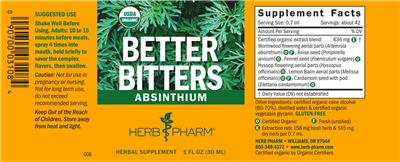
| Certified Organic extract blend | 636 mg | -- |
| Wormwood Flowering Aerial Parts Extract | 0 NP | -- |
| Hyssop Flowering Aerial Parts Extract | 0 NP | -- |
Other ingredients: certified organic Cane Alcohol, distilled Water, certified organic Vegetable Glycerin
Tap any ingredient to jump to its full detail below.
These statements are the manufacturer’s wording, reproduced from the product label — the label is saying it, not HelloPharmacist. We don’t verify or endorse them.
Suggested/Recommended/Usage/Directions
Suggested use Shake well before using. Adults: 10 to 15 minutes before meals, spray 4 times into mouth, hold briefly to savor the complex flavors, then swallow.
Precautions
Caution: Not for use in pregnancy or nursing.
Not for long term use, do not exceed recommended serving.
Keep out of the reach of children.
Storage
Store away from heat & light.
Formulation
USDA Organic
Gluten-free
Certified organic by Organic Certifiers
Seals/Symbols
USDA Organic
FDA Statement of Identity
Herbal Supplement
Is this label outdated? Report a formula or label change and our pharmacy team will review it.
Better Bitters Absinthium by Herb Pharm label
The label scan from the NIH Dietary Supplement Label Database. Tap to enlarge.
Label images are published by the NIH Dietary Supplement Label Database for the version of this product on file. Always read your actual product label.
View the full label (PDF)The Ingredients in Better Bitters Absinthium by Herb Pharm
These are the 6 active ingredients this product is made of. Select any to open its full monograph.
Serving size0.7 mL Dosage formLiquid Servings per container42 Amounts shown are per serving.
Most supplement products combine several ingredients, and a medication can interact with the product through any one of them. Each ingredient below shows whether it has known drug interactions.
Certified Organic extract blend
Other (inactive) ingredients: Certified organic Cane Alcohol, Distilled Water, Certified organic Vegetable Glycerin. These complete the product’s ingredient list but are not active constituents.
Better Bitters Absinthium by Herb Pharm Drug Interactions
HelloPharmacist Interaction Report
Better Bitters Absinthium by Herb Pharm contains six ingredients, five of which have documented interactions with medications.
Altogether, these interactions span 993 individual medications. The most serious finding involves fennel seed extract, which has Moderate-severity interactions across six drug categories — most notably, it may theoretically increase bleeding risk when combined with blood thinners (anticoagulants) or antiplatelet drugs, since animal research shows fennel has anticlotting effects.
Read the full breakdown — every affected drug type, severity by severity
Anise extract carries the broadest range of Moderate interactions: it may theoretically interfere with birth control pills and hormone replacement therapy through estrogenic activity; increase low blood sugar (hypoglycemia) risk with diabetes medications; reduce antidepressant effects of fluoxetine (Prozac) and imipramine (Tofranil); increase sedation and motor impairment with diazepam (Valium); heighten pain relief and side effects from codeine; and decrease caffeine's effects — though most of these rest on animal studies and haven't been confirmed in humans. Lemon balm aerial parts extract has two Moderate interactions: it may add to the effects of sedating drugs (CNS depressants) and theoretically interfere with thyroid hormone replacement.
Wormwood flowering aerial parts extract may theoretically interfere with anticonvulsant (anti-seizure) medications because of a neurotoxin it contains called thujone.
Cardamom extract and hyssop flowering aerial parts extract have no known interactions documented in our data. We could not check fennel seed extract and anise extract interactions against your exact medications without seeing your medication list — use the search tool on this page to verify.
Check your own medications below · Editorial policy · How we use AI
Want to check YOUR meds against Better Bitters Absinthium?
Ask about interactions with your drugs in plain English — “Can I take it with lisinopril?” — and we find you the answer in seconds, ingredient by ingredient.
Go to the checkerIngredients driving the most interactions
Individual Drug Interactions
The ingredients in Better Bitters Absinthium interact with 1,004 drugs. Click any drug to see the details.
4 of the 6 ingredients in Better Bitters Absinthium interact with drugs. Each result below shows which ingredient is responsible. Fennel Seed Extract Lemon Balm aerial parts extract Anise extract Wormwood Flowering Aerial Parts Extract
AcetaminophenChildren's Tylenol, Children's Tylenol Meltaways, Tylenol, Tylenol Ex Strength
How Acetaminophen interacts with Better Bitters Absinthium — through 1 ingredient. Tap an ingredient for the detail:
Anise ExtractAcetaminophen (tylenol, Others) Minor
Interaction Summary
Theoretically, anise oil might decrease the levels and clinical effects of acetaminophen.
Read the full Anise Extract + Acetaminophen interactionAcetaminophen, Brompheniramine, PhenylpropanolamineDimetapp Cold and Flu
How Acetaminophen, Brompheniramine, Phenylpropanolamine interacts with Better Bitters Absinthium — through 1 ingredient. Tap an ingredient for the detail:
Anise ExtractAcetaminophen (tylenol, Others) Minor
Interaction Summary
Theoretically, anise oil might decrease the levels and clinical effects of acetaminophen.
Read the full Anise Extract + Acetaminophen, Brompheniramine, Phenylpropanolamine interactionAcetaminophen, ButalbitalAxocet, Bancap, Bucet, Butex Forte, Esgic CF, Orbivan CF +5 more
How Acetaminophen, Butalbital interacts with Better Bitters Absinthium — through 1 ingredient. Tap an ingredient for the detail:
Anise ExtractAcetaminophen (tylenol, Others) Minor
Interaction Summary
Theoretically, anise oil might decrease the levels and clinical effects of acetaminophen.
Read the full Anise Extract + Acetaminophen, Butalbital interactionAcetaminophen, ChlorzoxazoneAcetazone Forte, Extra Strength Tylenol Aches & Strains, Parafon Forte
How Acetaminophen, Chlorzoxazone interacts with Better Bitters Absinthium — through 1 ingredient. Tap an ingredient for the detail:
Anise ExtractAcetaminophen (tylenol, Others) Minor
Interaction Summary
Theoretically, anise oil might decrease the levels and clinical effects of acetaminophen.
Read the full Anise Extract + Acetaminophen, Chlorzoxazone interactionAcetaminophen, Dexbrompheniramine, PseudoephedrineSinadrin Plus
How Acetaminophen, Dexbrompheniramine, Pseudoephedrine interacts with Better Bitters Absinthium — through 1 ingredient. Tap an ingredient for the detail:
Anise ExtractAcetaminophen (tylenol, Others) Minor
Interaction Summary
Theoretically, anise oil might decrease the levels and clinical effects of acetaminophen.
Read the full Anise Extract + Acetaminophen, Dexbrompheniramine, Pseudoephedrine interactionAcetaminophen, Doxylamine, PseudoephedrineEx Strength Tylenol Sinus Nighttime
How Acetaminophen, Doxylamine, Pseudoephedrine interacts with Better Bitters Absinthium — through 1 ingredient. Tap an ingredient for the detail:
Anise ExtractAcetaminophen (tylenol, Others) Minor
Interaction Summary
Theoretically, anise oil might decrease the levels and clinical effects of acetaminophen.
Read the full Anise Extract + Acetaminophen, Doxylamine, Pseudoephedrine interactionAcetaminophen, MethocarbamolRobaxacet
How Acetaminophen, Methocarbamol interacts with Better Bitters Absinthium — through 1 ingredient. Tap an ingredient for the detail:
Anise ExtractAcetaminophen (tylenol, Others) Minor
Interaction Summary
Theoretically, anise oil might decrease the levels and clinical effects of acetaminophen.
Read the full Anise Extract + Acetaminophen, Methocarbamol interactionAcetaminophen, OrphenadrineOrfenagesic
How Acetaminophen, Orphenadrine interacts with Better Bitters Absinthium — through 1 ingredient. Tap an ingredient for the detail:
Anise ExtractAcetaminophen (tylenol, Others) Minor
Interaction Summary
Theoretically, anise oil might decrease the levels and clinical effects of acetaminophen.
Read the full Anise Extract + Acetaminophen, Orphenadrine interactionAcetaminophen, Pamabrom, PyrilamineMidol Max Strength PMS, Pamprin, Pamprin ES
How Acetaminophen, Pamabrom, Pyrilamine interacts with Better Bitters Absinthium — through 1 ingredient. Tap an ingredient for the detail:
Anise ExtractAcetaminophen (tylenol, Others) Minor
Interaction Summary
Theoretically, anise oil might decrease the levels and clinical effects of acetaminophen.
Read the full Anise Extract + Acetaminophen, Pamabrom, Pyrilamine interactionAcetaminophen, PhenylpropanolamineTetra Caps
How Acetaminophen, Phenylpropanolamine interacts with Better Bitters Absinthium — through 1 ingredient. Tap an ingredient for the detail:
Anise ExtractAcetaminophen (tylenol, Others) Minor
Interaction Summary
Theoretically, anise oil might decrease the levels and clinical effects of acetaminophen.
Read the full Anise Extract + Acetaminophen, Phenylpropanolamine interactionAcetaminophen, Phenylpropanolamine, PhenyltoloxamineSinubid
How Acetaminophen, Phenylpropanolamine, Phenyltoloxamine interacts with Better Bitters Absinthium — through 1 ingredient. Tap an ingredient for the detail:
Anise ExtractAcetaminophen (tylenol, Others) Minor
Interaction Summary
Theoretically, anise oil might decrease the levels and clinical effects of acetaminophen.
Read the full Anise Extract + Acetaminophen, Phenylpropanolamine, Phenyltoloxamine interactionAcetaminophen, PhenyltoloxaminePercogesic, Relagesic
How Acetaminophen, Phenyltoloxamine interacts with Better Bitters Absinthium — through 1 ingredient. Tap an ingredient for the detail:
Anise ExtractAcetaminophen (tylenol, Others) Minor
Interaction Summary
Theoretically, anise oil might decrease the levels and clinical effects of acetaminophen.
Read the full Anise Extract + Acetaminophen, Phenyltoloxamine interactionAcetaminophen, Phenyltoloxamine, SalicylamideLobac
How Acetaminophen, Phenyltoloxamine, Salicylamide interacts with Better Bitters Absinthium — through 1 ingredient. Tap an ingredient for the detail:
Anise ExtractAcetaminophen (tylenol, Others) Minor
Interaction Summary
Theoretically, anise oil might decrease the levels and clinical effects of acetaminophen.
Read the full Anise Extract + Acetaminophen, Phenyltoloxamine, Salicylamide interactionAcetaminophen, PseudoephedrineChildren's Tylenol Sinus, Dristan N.D., Non-Aspirin Sinus, Ornex, Ornex-Max, Sinutab +5 more
How Acetaminophen, Pseudoephedrine interacts with Better Bitters Absinthium — through 1 ingredient. Tap an ingredient for the detail:
Anise ExtractAcetaminophen (tylenol, Others) Minor
Interaction Summary
Theoretically, anise oil might decrease the levels and clinical effects of acetaminophen.
Read the full Anise Extract + Acetaminophen, Pseudoephedrine interactionAcetaminophen, Pseudoephedrine, TriprolidineActifed Plus ES
How Acetaminophen, Pseudoephedrine, Triprolidine interacts with Better Bitters Absinthium — through 1 ingredient. Tap an ingredient for the detail:
Anise ExtractAcetaminophen (tylenol, Others) Minor
Interaction Summary
Theoretically, anise oil might decrease the levels and clinical effects of acetaminophen.
Read the full Anise Extract + Acetaminophen, Pseudoephedrine, Triprolidine interactionParacetamolPanadol
How Paracetamol interacts with Better Bitters Absinthium — through 1 ingredient. Tap an ingredient for the detail:
Anise ExtractAcetaminophen (tylenol, Others) Minor
Interaction Summary
Theoretically, anise oil might decrease the levels and clinical effects of acetaminophen.
Read the full Anise Extract + Paracetamol interactionEach ingredient & the kinds of drugs it affects
For each ingredient in Better Bitters Absinthium with known interactions, here are the types of medications they can affect. Open any type for the detail — or search your exact drug in the checker above.
Fennel Seed Extract
Anticoagulant/Antiplatelet Drugs
Theoretically, fennel might increase the risk of bleeding when used with antiplatelet or anticoagulant drugs.
Animal research suggests that fennel oil has antithrombotic and antiplatelet effects.
Ciprofloxacin (Cipro)
Theoretically, fennel might decrease the levels and clinical effects of ciprofloxacin.
Animal research shows that fennel reduces ciprofloxacin bioavailability by nearly 50%, possibly due to the metal cations such as calcium, iron, and magnesium contained in fennel. This study also found that fennel increased tissue distribution and slowed elimination of ciprofloxacin.
Contraceptive Drugs
Theoretically, taking large amounts of fennel might decrease the effects of contraceptive drugs due to competition for estrogen receptors.
Some constituents of fennel have estrogenic activity.
Cytochrome P450 3A4 (Cyp3A4) Substrates
Theoretically, fennel might increase levels of drugs metabolized by CYP3A4.
In vitro research suggests that fennel inhibits CYP3A4 enzyme activity. This effect has not been reported in humans.
Estrogens
Theoretically, taking large amounts of fennel might interfere with hormone replacement therapy due to competition for estrogen receptors.
Some constituents of fennel have estrogenic activity.
Tamoxifen (Nolvadex)
Theoretically, taking large amounts of fennel might decrease the antiestrogenic effect of tamoxifen.
Some constituents of fennel have estrogenic activity, which may interfere with the antiestrogenic activity of tamoxifen.
Lemon Balm aerial parts extract
Cns Depressants
Theoretically, concomitant use of lemon balm might have additive effects with CNS depressant drugs.
Lemon balm seems to have CNS depressant activity in animals and in humans.
Thyroid Hormone
Theoretically, lemon balm might interfere with thyroid hormone replacement therapy.
In vitro, constituents of lemon balm extract bind to thyroid stimulating hormone (TSH), preventing TSH receptor-binding and leading to the inhibition of TSH-stimulated adenylate cyclase activity. In animals, lemon balm extract has been shown to decrease levels of circulating TSH and inhibit thyroid secretion.
Anise extract
Antidiabetes Drugs
Theoretically, anise seed might increase the risk of hypoglycemia when taken with antidiabetes drugs.
A small clinical study shows that anise seed powder decreases fasting blood glucose levels by 36% when compared to baseline.
Caffeine
Theoretically, anise oil might decrease the efficacy of caffeine.
Animal research shows that taking anise oil with caffeine decreases the bioavailability of caffeine. Whether this interaction will occur in humans is unclear.
Codeine
Theoretically, anise oil might increase the effects and adverse effects of codeine.
Animal research shows that anise oil increases the analgesic effects of codeine, possibly by inducing its phase I metabolism and increasing conversion to morphine. Whether this interaction occurs in humans is unclear.
Contraceptive Drugs
Theoretically, anise might interfere with contraceptive drug therapy.
Some in vitro research suggests that anise has estrogenic effects, while other in vitro research suggests that anise has antiestrogenic effects.
Diazepam (Valium)
Theoretically, anise oil might increase the effects and adverse effects of diazepam.
Animal research shows that taking anise oil with diazepam increases the motor impairment associated with diazepam, possibly by inhibiting its breakdown by cytochrome P450 3A4. Whether this interaction occurs in humans is unclear.
Estrogens
Theoretically, anise might interfere with estrogen-based hormone replacement therapy.
Some in vitro research suggests that anise has estrogenic effects, while other in vitro research suggests that anise has antiestrogenic effects.
Fluoxetine (Prozac)
Theoretically, anise oil might decrease the efficacy of fluoxetine.
Animal research shows that taking anise oil with fluoxetine reduces the antidepressant effects of fluoxetine, possibly by promoting its breakdown by cytochrome P450 2D6. Whether this interaction occurs in humans is unclear.
Imipramine (Tofranil)
Theoretically, anise oil might decrease the efficacy of imipramine.
Animal research shows that taking anise oil with imipramine reduces the antidepressant effects of imipramine, possibly by promoting its breakdown by cytochrome P450 2D6. Whether this interaction occurs in humans is unclear.
Midazolam (Versed)
Theoretically, anise oil might increase the effects and adverse effects of midazolam.
Animal research shows that taking anise oil with midazolam increases the motor impairment associated with midazolam, possibly by inhibiting its breakdown by cytochrome P450 3A4. Whether this interaction occurs in humans is unclear.
Tamoxifen (Nolvadex)
Theoretically, anise might interfere with tamoxifen therapy.
Some in vitro research suggests that anise has estrogenic effects, while other in vitro research suggests that anise has antiestrogenic effects.
Acetaminophen (Tylenol, Others)
Theoretically, anise oil might decrease the levels and clinical effects of acetaminophen.
Animal research shows that taking anise oil with acetaminophen decreases peak plasma levels of acetaminophen but does not reduce overall bioavailability. Whether this interaction will occur in humans is unclear.
Wormwood Flowering Aerial Parts Extract
Anticonvulsants
Theoretically, taking wormwood might interfere with the effects of anticonvulsant drugs.
Thujone, a constituent of wormwood, has convulsant effects.
Brand information
Manufacturer and brand details for Better Bitters Absinthium, from the product label.
Herb Pharm
See all Herb Pharm products- Name
- Herb Pharm
- City
- Williams
- State
- OR
- ZipCode
- 97544
- Phone Number
- 800-348-4372
- Web Address
- www.herb-pharm.com
Better Bitters Absinthium by Herb Pharm: Common Questions
Does Better Bitters Absinthium by Herb Pharm interact with any medications?
How can one product interact with so many drugs?
Where does this information come from?
Is this safe to take while pregnant?
What is fennel seed extract actually used for in this product?
Can lemon balm really help with stress and depression?
What's wormwood, and why should I be careful with it?
Are there any ingredients in this blend with no known interactions?
Why are there so many possible interactions if most of them are from animal studies?
Written and reviewed by the HelloPharmacist editorial staff. Our editorial policy
Not sure if Better Bitters Absinthium is safe with your meds?
Our pharmacists answer your medication & supplement questions — free.
Label information is sourced from the NIH Dietary Supplement Label Database and reflects the product version on file; always read your actual product label. This page is for education only and is not a substitute for professional medical advice. Confirm with your pharmacist or doctor before combining supplements and medications.
The Full Monographs Behind Better Bitters Absinthium’s Ingredients
Every ingredient we hold a full HelloPharmacist monograph for — uses, evidence, safety, and the complete interaction list.
Fennel
Interacts with 740 drugsFennel is a Mediterranean herb widely used as a food and spice, and traditionally taken for digestive complaints, colic, and menstrual cramps. Some small studies suggest possible benefit for...
Read the full Fennel monograph → Herb & supplement monographAnise
Interacts with 245 drugsAnise is a fragrant, licorice-flavored seed used for centuries to ease digestion and soothe coughs. Most of its health claims are based on tradition and small or laboratory studies rather th...
Read the full Anise monograph → Herb & supplement monographLemon Balm
Interacts with 264 drugsLemon balm is a gentle, lemon-scented mint-family herb traditionally used to ease stress, support sleep, and calm digestion, and topically for cold sores. Early studies are promising but gen...
Read the full Lemon Balm monograph → Herb & supplement monographCardamom
Cardamom is a popular cooking spice that has long been used in traditional medicine for digestion and fresh breath. As a food, it is generally safe for most people, but high-dose supplements...
Read the full Cardamom monograph → Herb & supplement monographWormwood
Interacts with 50 drugsWormwood is a very bitter herb traditionally used to stimulate appetite and ease digestion, and it has early research interest in Crohn's disease. It contains thujone, which can be toxic in...
Read the full Wormwood monograph → Herb & supplement monographHyssop
Hyssop is a Mediterranean mint-family herb traditionally used for coughs, colds, and digestive complaints, but solid human evidence for these uses is lacking. The dried herb in tea is genera...
Read the full Hyssop monograph →Sources & How We Checked
Better Bitters Absinthium's label data comes from the NIH Dietary Supplement Label Database; the ingredient interaction data is from the Natural Medicines database, reviewed by our pharmacists.
- NIH Dietary Supplement Label Database (DSLD) — The official product label on file for this supplement.
- Natural Medicines (Therapeutic Research Center) — Evidence-graded clinical reference behind the ingredient interaction data.
Content is written and reviewed by licensed HelloPharmacist pharmacists. See our data sources and editorial standards for how this information is built and checked.
The 54 references behind this product’s interaction data
Every citation that drives the interaction findings for this product’s ingredients, from the evidence-graded Natural Medicines (TRC Healthcare) database. Open an ingredient to browse its citations — links open the study on PubMed or the publisher’s site.
Fennel 17 references
- Leung AY, Foster S. Encyclopedia of Common Natural Ingredients Used in Food, Drugs and Cosmetics. 2nd ed. New York, NY: John Wiley & Sons, 1996.
- Brinker F. Herb Contraindications and Drug Interactions. 2nd ed. Sandy, OR: Eclectic Medical Publications, 1998.
- Zhu M, Wong PY, Li RC. Effect of oral administration of fennel (Foeniculum vulgare) on ciprofloxacin absorption and disposition in the rat. J Pharm Pharmacol 1999;51:1391-6.
- Gral N, Beani JC, Bonnot D, et al. [Plasma levels of psoralens after celery ingestion]. Ann Dermatol Venereol 1993;120:599-603.
- Burkhard PR, Burkhardt K, Haenggeli CA, Landis T. Plant-induced seizures: reappearance of an old problem. J Neurol 1999;246:667-70. PubMed
- Rosti L, Nardini A, Bettinelli ME, Rosti D. Toxic effects of a herbal tea mixture in two newborns. Acta Paediatrica 1994;83:683. PubMed
- Cuzzolin L, Zaffani S, and Benoni G. Safety implications regarding use of phytomedicines. Eur.J Clin Pharmacol. 2006;62:37-42. PubMed
- Tognolini, M., Ballabeni, V., Bertoni, S., Bruni, R., Impicciatore, M., and Barocelli, E. Protective effect of Foeniculum vulgare essential oil and anethole in an experimental model of thrombosis. Pharmacol.Res 2007;56(3):254-260. PubMed
- Subehan, Usia, T., Iwata, H., Kadota, S., and Tezuka, Y. Mechanism-based inhibition of CYP3A4 and CYP2D6 by Indonesian medicinal plants. J Ethnopharmacol. 5-24-2006;105(3):449-455. PubMed
- Tognolini, M., Barocelli, E., Ballabeni, V., Bruni, R., Bianchi, A., Chiavarini, M., and Impicciatore, M. Comparative screening of plant essential oils: phenylpropanoid moiety as basic core for antiplatelet activity. Life Sci. 2-23-2006;78(13):1419-1432. PubMed
- Subehan, Zaidi, S. F., Kadota, S., and Tezuka, Y. Inhibition on human liver cytochrome P450 3A4 by constituents of fennel (Foeniculum vulgare): identification and characterization of a mechanism-based inactivator. J Agric.Food Chem. 12-12-2007;55(25):101 PubMed
- LEVY, S. B. Bronchial asthma due to ingestion of fennel and fennel seed. Ann.Allergy 1948;6(4):415.
- Ottolenghi, A., De Chiara, A., Arrigoni, S., Terracciano, L., and De Amici, M. [Diagnosis of food allergy caused by fruit and vegetables in children with atopic dermatitis]. Pediatr Med Chir 1995;17(6):525-530.
- Trabace L, Tucci P, Ciuffreda L, et al. "Natural" relief of pregnancy-related symptoms and neonatal outcomes: above all do no harm. J Ethnopharmacol. 2015;174:396-402. PubMed
- Denaxa D, Arkwright PD. Fennel as a cause of immediate hypersensitivity to toothpaste. Ann Allergy Asthma Immunol. 2020;125(1):99-100. PubMed
- Lee HW, Ang L, Lee MS, Alimoradi Z, Kim E. Fennel for reducing pain in primary dysmenorrhea: a systematic review and meta-analysis of randomized controlled trials. Nutrients 2020;12(11):3438. PubMed
- Mathew T, John SK, Javali M, Vasireddy M, Nadig R, Sarma GRK. Substance use related cluster headache: A case series. Headache 2022;62(7):908-910. PubMed
Anise 12 references
- Electronic Code of Federal Regulations. Title 21. Part 182 -- Substances Generally Recognized As Safe. Available at: https://www.accessdata.fda.gov/scripts/cdrh/cfdocs/cfcfr/CFRSearch.cfm?CFRPart=182
- Kassi E, Papoutsi Z, Fokialakis N, et al. Greek plant extracts exhibit selective estrogen receptor modulator (SERM)-like properties. J Agric Food Chem 2004;52:6956-61. PubMed
- Mumcuoglu KY, Miller J, Zamir C, et al. The in vivo pediculicidal efficacy of a natural remedy. Isr Med Assoc J 2002;4:790-3.
- Garcia-Gonzalez JJ, Bartolome-Zavala B, Fernandez-Melendez S, et al. Occupational rhinoconjunctivitis and food allergy because of aniseed sensitization. Ann Allergy Asthma Immunol 2002;88:518-22. . PubMed
- Tabanca N, Khan SI, Bedir E, et al. Estrogenic activity of isolated compounds and essential oils of Pimpinella species from Turkey, evaluated using a recombinant yeast screen. Planta Med 2004;70:728-35.
- Gonzalez-Gutierrez, M. L., Sanchez-Fernandez, C., Esteban-Lopez, M. I., Sempere-Ortells, J. M., and Diaz-Alperi, P. Allergy to anis. Allergy 2000;55(2):195-196.
- Anliker, M. D., Borelli, S., and Wuthrich, B. Occupational protein contact dermatitis from spices in a butcher: a new presentation of the mugwort-spice syndrome. Contact Dermatitis 2002;46(2):72-74. PubMed
- Poon, T. S. and Freeman, S. Cheilitis caused by contact allergy to anethole in spearmint flavoured toothpaste. Australas.J Dermatol. 2006;47(4):300-301. PubMed
- Andersen, K. E. Contact allergy to toothpaste flavors. Contact Dermatitis 1978;4(4):195-198. PubMed
- Samojlik I, Mijatovic V, Petkovic S, et al. The influence of essential oil of aniseed (Pimpinella anisum, L.) on drug effects on the central nervous system. Fitoterapia 2012;83:1466-73. PubMed
- Samojlik I, Petkovic S, Stilinovic N, et al. Pharmacokinetic herb-drug interaction between essential oil of aniseed (Pimpinella anisum L., Apiaceae) and acetaminophen and caffeine: A potential risk for clinical practice. Phytother Res 2016;30:253-9.
- Rajeshwari U, Shobha I, Andallu B. Comparison of aniseeds and coriander seeds for antidiabetic, hypolipidemic and antioxidant activities. Spatula DD-Peer Reviewed Journal on Complementary Medicine and Drug Discovery 2011;1:9-16. DOI
Lemon Balm 12 references
- Wolbling RH, Leonhardt K. Local therapy of herpes simplex with dried extract from Melissa officinalis. Phytomedicine 1994;1:25-31.
- Akhondzadeh S, Noroozian M, Mohammadi M, et al. Melissa officinalis extract in the treatment of patients with mild to moderate Alzheimer's disease: a double blind, randomised, placebo controlled trial. J Neurol Neurosurg Psychiatry 2003;74:863-6. PubMed
- Kennedy DO, Scholey AB, Tildesley NT, et al. Modulation of mood and cognitive performance following acute administration of Melissa officinalis (lemon balm). Pharmacol Biochem Behav 2002;72:953-64. PubMed
- Albrecht M, Berger W, Laux P, Schmidt U, et al. Psychopharmaka und Verkehrssicherheit. Der Einfluß von Euvegal® - Dragees forte auf die Fahrtüchtigkeit und Kombinationswirkungen mit Alkohol Z Allg Med 1995;71:1215-25.
- Herberg, KW. Nebenwirkungen pflanzlicher Beruhigungsmittel/ Leistung und Befinden nach Einnahme einer Baldrian-Hopfen-Kombination. Z.Allg Med 1996;72:234-240.
- Soulimani R, Fleurentin J, Mortier F, et al. Neurotropic action of the hydroalcoholic extract of Melissa officinalis in the mouse. Planta Med. 1991 Apr;57:105-9.
- Sourgens H, Winterhoff H, Gumbinger HG, et al. Antihormonal effects of plant extracts. TSH- and prolactin-suppressing properties of Lithospermum officinale and other plants. Planta Med. 1982 Jun;45:78-86. DOI
- Auf'mkolk M, Ingbar JC, Amir SM, et al. Inhibition by certain plant extracts of the binding and adenylate cyclase stimulatory effect of bovine thyrotropin in human thyroid membranes. Endocrinology. 1984 Aug;115:527-34. PubMed
- Santini F, Vitti P, Ceccarini G, et al. In vitro assay of thyroid disruptors affecting TSH-stimulated adenylate cyclase activity. J Endocrinol Invest. 2003 Oct;26:950-5. PubMed
- Alijaniha F, et al. Heart palpitation relief with Melissa officinalis leaf extract: double blind, randomized, placebo controlled trial of efficacy and safety. J Ethnopharmacol. 2015;164:378-384. doi: 10.1016/j.jep.2015.02.007. Epub 2015 Feb 11. PubMed
- Araj-Khodaei M, Noorbala AA, Yarani R, et al. A double-blind, randomized pilot study for comparison of Melissa officinalis L. and Lavandula angustifolia Mill. with Fluoxetine for the treatment of depression. BMC Complement Med Ther. 2020;20(1):207. PubMed
- Kucuk U, Pham M, Raza Raja MH, Saad Shaukat MH, Clark R. Transient complete atrioventricular block associated with herbal supplement use. S D Med 2023;76(7):311-313.
Cardamom 2 references
- Mobacken, H. and Fregert, S. Allergic contact dermatitis from cardamom. Contact Dermatitis 1975;1(3):175-176. PubMed
- Aghasi M, Koohdani F, Qorbani M, et al. Beneficial effects of green cardamom on serum SIRT1, glycemic indices and triglyceride levels in patients with type 2 diabetes mellitus: a randomized double-blind placebo controlled clinical trial. J Sci Food Agri PubMed
Wormwood 10 references
- Weisbord SD, Soule JB, Kimmel PL. Poison on line-acute renal failure caused by oil of wormwood purchased through the internet. N Engl J Med 1997;337:825-7. PubMed
- Gambelunghe C, Melai P. Absinthe: enjoying a new popularity among young people? Forensic Sci Int 2002;130:183-6.
- Hold KM, Sirisoma NS, Casida JE. Detoxification of alpha- and beta-Thujones (the active ingredients of absinthe): site specificity and species differences in cytochrome P450 oxidation in vitro and in vivo. Chem Res Toxicol 2001;14:589-95.
- Lachenmeier DW, Walch SG, Padosch SA, Kroner LU. Absinthe--a review. Crit Rev Food Sci Nutr 2006;46:365-77.
- Padosch SA, Lachenmeier DW, Kroner LU. Absinthism: a fictitious 19th century syndrome with present impact. Subst Abuse Treat Prev Policy 2006;1:14. PubMed
- Lachenmeier DW, Emmert J, Kuballa T, Sartor G. Thujone--cause of absinthism? Forensic Sci Int 2006;158:1-8. PubMed
- Dettling, A., Grass, H., Schuff, A., Skopp, G., Strohbeck-Kuehner, P., and Haffner, H. T. Absinthe: attention performance and mood under the influence of thujone. J Stud.Alcohol 2004;65(5):573-581. PubMed
- Benezet-Mazuecos, J. and de la Fuente, A. Electrocardiographic findings after acute absinthe intoxication. Int J Cardiol. 11-10-2006;113(2):e48-e50. PubMed
- El Makrini NI, Hassam B. Artemisia absinthium: burning plant! Pan Afr Med J. 2016 Jan 22;23:10. PubMed
- Kocaoglu C, Ozel A. Persistent metabolic acidosis and severe diarrhoea due to Artemisia absinthium poisoning. J Pak Med Assoc. 2014 Sep;64(9):1081-3.
Hyssop 1 reference
- McGuffin M, Hobbs C, Upton R, Goldberg A, eds. American Herbal Products Association's Botanical Safety Handbook. Boca Raton, FL: CRC Press, LLC 1997.
Parts of this content are provided by the Therapeutic Research Center, LLC.
DISCLAIMER: Currently this does not check for drug-drug interactions. This is not an all-inclusive comprehensive list of potential interactions and is for informational purposes only. Not all interactions are known or well-reported in the scientific literature, and new interactions are continually being reported. Input is needed from a qualified healthcare provider including a pharmacist before starting any therapy. Application of clinical judgment is necessary.
© 2021 Therapeutic Research Center, LLC