
Complete Omega Ingredients & Drug Interactions
by GNC AMP Advanced Muscle Performance
What is this page for?
First and foremost: checking Complete Omega against your medications. The heart of this page is the interaction checker and the full interaction report — how this product’s ingredients may interact with prescription and over-the-counter medicines you may be taking.
Around that, we add a pharmacist’s high-level view of the product as a whole — what’s inside, the evidence for its stated use, how transparent the label is, and what safety data exists — so you can see the full picture in one place. It’s educational information from our licensed clinical databases and the clinical staff at HelloPharmacist — not medical advice — and we don’t sell or endorse products. Our editorial policy
Complete Omega is a dietary supplement by GNC AMP Advanced Muscle Performance with 7 active ingredients. Its ingredients are commonly taken for respiratory support (asthma, allergies, cough), digestive upset, immune support.Based on those ingredients, 913 medications have a known interaction with it, the most serious rated moderate. The ingredients most likely to interact are Black Cumin seed Oil, Oleic Acid. Use the checker below to test your specific medication, or read the full HelloPharmacist Interaction Report.
Check Your Meds Against Complete Omega by GNC AMP Advanced Muscle Performance
Ask about any prescription or over-the-counter medication and we check it for interactions with Complete Omega by GNC AMP Advanced Muscle Performance — and tell you which ingredient is responsible.
AI summaries are generated from our interaction database for education only — always confirm with your pharmacist. How we use AI
Ask the Pharmacist
A licensed pharmacist will answer your question by email — free, usually within 24 hours.
Got it — thank you!
A licensed pharmacist will answer within 24 hours. Keep an eye on your email (worth checking spam, just in case).
HelloPharmacist Scorecard of Complete Omega by GNC AMP Advanced Muscle Performance
Our pharmacy team’s full take, with four database checks built into the cards below — a summary of what is known, not a grade of the product itself.
What’s inside
Full disclosure
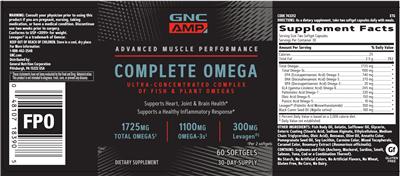
Complete Omega contains 9 active ingredients — a blend of omega fatty acids including eicosapentaenoic acid (EPA), docosahexaenoic acid (DHA), gamma-linolenic acid, and docosapentaenoic acid — along with oleic acid from olive oil, black cumin seed oil (also called black seed), punicic acid, and an ingredient called Levagen. The product also contains several inactive ingredients like fish body oil, gelatin, safflower oil, glycerin, and rosemary extract as a preservative.
Does it work?
Moderate evidence
The data we hold shows oleic acid (from olive oil) is possibly effective for high cholesterol and heart disease. Black seed is rated possibly effective for acne, hay fever, asthma, helicobacter pylori infection, and diabetes.
The effectiveness of the other active ingredients — the EPA, DHA, other omega fatty acids, punicic acid, and Levagen — is not established in our data.
How safe is it?
Well-documented data
Black seed is generally well tolerated when taken orally, though some people report constipation, stomach burning or discomfort, nausea, and vomiting — gastrointestinal complaints occurred in about one in five trial participants in one study. One trial noted relatively severe menstrual bleeding in a participant.
Oleic acid from food amounts is recognized as safe, but concentrated supplement doses haven't been well studied long-term. The safety data advises against black seed supplement doses in pregnancy; for oleic acid supplements, there isn't enough data to know either way, so talk with your doctor or pharmacist for personalized advice.
Breastfeeding safety data for both ingredients is limited or not on file.
Meds to double-check
Moderate interaction found
Check your medications against this product if you take blood thinners or antiplatelet drugs (bleeding risk), blood pressure medications, blood sugar drugs, sedatives, antidepressants or migraine medications that work on serotonin, immune-suppressing drugs, water pills, or cyclosporine — all carry Moderate severity concerns with the black seed component. No interactions are documented for the other ingredients we could check.
The bottom line
Scorecard at a glanceFully disclosed formula with some supporting evidence for its stated purpose. Moderate medication interactions have been identified, and safety information is well characterized.
If you take any blood thinners, blood pressure medications, blood sugar drugs, sedatives, or immune-suppressing medications, you'll want to check this product against your specific prescriptions before starting — the black seed component carries real interaction risk. Otherwise, it's generally well tolerated, though a few people report stomach upset.
Talk to your pharmacist if you're pregnant, nursing, or have any questions about your own medications.
Educational only — not medical advice; always confirm with your pharmacist. Our editorial policy · How we use AI
Assessment coverage: 2 of 9 active ingredients matched to our full ingredient reviews (monographs). Based on the product label dated Jun 24, 2020.
This Scorecard evaluates available label information, ingredient evidence, and known medication-safety considerations. It does not independently verify product identity, purity, potency, contamination, or manufacturing quality. How these ratings are computed
General information
Key facts about Complete Omega, straight from the product label.
| Brand | GNC AMP Advanced Muscle Performance |
|---|---|
| Barcode (UPC) | 048107183905 |
| Net contents | 60 Softgel(s) |
| Market status | On market |
| Date entered into DSLD | Jun 24, 2020 |
| DSLD ID | 222789 |
| Product type | Botanical With Nutrients |
| Supplement form | Softgel Capsule |
| Dietary claims / uses | Nutrient, All Other, Structure/Function |
| Intended target group(s) | Adult (18 - 50 Years), Gluten Free |
Everything in this section is reproduced from the manufacturer’s own product label — it’s the label speaking, not HelloPharmacist. We show it so you can see exactly what the maker states; we don’t verify or endorse those statements.
Supplement Facts
The label details for Complete Omega by GNC AMP Advanced Muscle Performance, sourced from the NIH Dietary Supplement Label Database.
Supplement Facts
| Ingredient | Amount | % DV |
|---|---|---|
| Calories | 25 Calorie(s) | -- |
| Eicosapentaenoic Acid | 740 mg | -- |
| Docosahexaenoic Acid | 270 mg | -- |
| Total Fat | 2.5 Gram(s) | 3% |
| Gamma-Linolenic Acid | 245 mg | -- |
| Total Omega-3 Fatty Acids | 1100 mg | -- |
| Docosapentaenoic Acid | 20 mg | -- |
| Palmitoleic Acid | 220 mg | -- |
| Oleic Acid | 150 mg | -- |
| Black Cumin seed Oil | 100 mg | -- |
| Total Omegas | 1725 mg | -- |
| Punicic Acid | 10 mg | -- |
| Levagen | 300 mg | -- |
Other ingredients: Fish Body Oil, Gelatin, Safflower Oil, Glycerin, Enteric Coating, Beeswax, Olive Oil, Annatto color, Pomegranate seed oil, Soy Lecithin, Carmine color, Mixed Tocopherols, Caramel color, Rosemary extract
Tap any ingredient to jump to its full detail below.
These statements are the manufacturer’s wording, reproduced from the product label — the label is saying it, not HelloPharmacist. We don’t verify or endorse them.
Precautions
Warning: Consult your physician prior to using this product if you are pregnant, nursing, taking medication, or have a medical condition.
Discontinue use two weeks prior to surgery.
Keep out of reach of children.
Contains: Soybeans and fish (anchovy, mackerel, sardine, smelt, salmon, tuna, cod or a combination thereof).
Formulation
Conforms to USP <2091> for weight.
Supports heart, join & brain health Supports a healthy inflammatory response
No starch, no artificial colors, no artificial flavors, no wheat, gluten free, no corn, no dairy.
Brand IP Statement(s)
Levagen is a trademark of Gencor.
Storage
Store in a cool, dry place.
FDA Disclaimer Statement
These statements have not been evaluated by the Food and Drug Administration. This product is not intended to diagnose, treat, cure, or prevent any disease.
Formula
Ultra-concentrated complex of fish & plant Omegas
1725 mg Total Omegas 1100 mg Omega-3s 300 mg Levagen Per 2 softgels
FDA Statement of Identity
Dietary Supplement
Suggested/Recommended/Usage/Directions
Directions: As a dietary supplement, take two softgel capsules daily with meals.
Is this label outdated? Report a formula or label change and our pharmacy team will review it.
Complete Omega by GNC AMP Advanced Muscle Performance label
The label scan from the NIH Dietary Supplement Label Database. Tap to enlarge.
Label images are published by the NIH Dietary Supplement Label Database for the version of this product on file. Always read your actual product label.
View the full label (PDF)The Ingredients in Complete Omega by GNC AMP Advanced Muscle Performance
These are the 7 active ingredients this product is made of. Select any to open its full monograph.
Serving size2 Softgel(s) Dosage formSoftgel Capsule Servings per container30 Amounts shown are per serving.
Most supplement products combine several ingredients, and a medication can interact with the product through any one of them. Each ingredient below shows whether it has known drug interactions.
Black Cumin seed Oil
Interacts with913 drugs
Black seed (Nigella sativa) is a traditional spice and remedy that has been studied for asthma, blood sugar, cholesterol, and blood pressure, with ear...
Black Cumin seed Oil monograph & interactionsTotal Omegas
- › Gamma-Linolenic Acid
- › Total Omega-3 Fatty Acids
- › Palmitoleic Acid
- › Oleic Acid
- › Punicic Acid
Levagen
Other (inactive) ingredients: Fish Body Oil, Gelatin, Safflower Oil, Glycerin, Enteric Coating, Beeswax, Olive Oil, Annatto color, Pomegranate seed oil, Soy Lecithin, Carmine color, Mixed Tocopherols, Caramel color, Rosemary extract. These complete the product’s ingredient list but are not active constituents.
Complete Omega by GNC AMP Advanced Muscle Performance Drug Interactions
HelloPharmacist Interaction Report
GNC AMP Complete Omega has documented interactions with a number of medications, primarily through its black cumin seed oil component.
The most serious concern is with blood thinners (anticoagulants) and antiplatelet drugs — black seed may increase bleeding risk by inhibiting clotting and platelet function, a Moderate severity interaction.
Read the full breakdown — every affected drug type, severity by severity
Black seed also interacts moderately with blood pressure medications (antihypertensives), blood sugar drugs (antidiabetes medications), sedating drugs (CNS depressants), serotonin-boosting antidepressants and migraine drugs (serotonergic drugs), immune-suppressing medications (immunosuppressants), water pills (diuretics), and cyclosporine (an immunosuppressant used after transplant). Each of these carries a Moderate severity rating.
Oleic acid, another ingredient here, theoretically may strengthen the effects of blood sugar drugs — also Moderate severity. We could not check several other ingredients in this product: eicosapentaenoic acid, docosahexaenoic acid, gamma-linolenic acid, docosapentaenoic acid, palmitoleic acid, punicic acid, and Levagen.
Altogether, these interactions span 912 individual medications. Run your exact prescriptions through the interaction checker on this page before you start.
Check your own medications below · Editorial policy · How we use AI
Want to check YOUR meds against Complete Omega?
Ask about interactions with your drugs in plain English — “Can I take it with lisinopril?” — and we find you the answer in seconds, ingredient by ingredient.
Go to the checkerIngredients driving the most interactions
Individual Drug Interactions
The ingredients in Complete Omega interact with 913 drugs. Click any drug to see the details.
2 of the 7 ingredients in Complete Omega interact with drugs. Each result below shows which ingredient is responsible. Black Cumin seed Oil Oleic Acid
6-mercaptopurinePurinethol
How 6-mercaptopurine interacts with Complete Omega — through 1 ingredient. Tap an ingredient for the detail:
Black Cumin Seed OilImmunosuppressants Moderate
Interaction Summary
Theoretically, black seed might interfere with immunosuppressive therapy.
Read the full Black Cumin Seed Oil + 6-mercaptopurine interactionAbciximabReoPro
How Abciximab interacts with Complete Omega — through 1 ingredient. Tap an ingredient for the detail:
Black Cumin Seed OilAnticoagulant/antiplatelet Drugs Moderate
Interaction Summary
Theoretically, black seed may increase the risk of bleeding if used with anticoagulant or antiplatelet drugs.
Read the full Black Cumin Seed Oil + Abciximab interactionAbrocitinibCibinqo
How Abrocitinib interacts with Complete Omega — through 1 ingredient. Tap an ingredient for the detail:
Black Cumin Seed OilAnticoagulant/antiplatelet Drugs, Immunosuppressants +1 Moderate
Interaction Summary
Theoretically, black seed may increase the risk of bleeding if used with anticoagulant or antiplatelet drugs.
Read the full Black Cumin Seed Oil + Abrocitinib interactionAcarboseGlucobay, Prandase, Precose
How Acarbose interacts with Complete Omega — through 2 ingredients. Tap an ingredient for the detail:
Black Cumin Seed OilAntidiabetes Drugs Moderate
Interaction Summary
Theoretically, taking black seed with antidiabetes drugs might increase the risk of hypoglycemia.
Read the full Black Cumin Seed Oil + Acarbose interactionOleic AcidAntidiabetes Drugs Moderate
Interaction Summary
Theoretically, oleic acid might increase the effects of antidiabetes drugs.
Read the full Oleic Acid + Acarbose interactionAcebutololRhotral, Sectral
How Acebutolol interacts with Complete Omega — through 1 ingredient. Tap an ingredient for the detail:
Black Cumin Seed OilAntihypertensive Drugs Moderate
Interaction Summary
Theoretically, taking black seed with antihypertensive drugs might increase the risk of hypotension.
Read the full Black Cumin Seed Oil + Acebutolol interactionAcenocoumarolSintrom
How Acenocoumarol interacts with Complete Omega — through 1 ingredient. Tap an ingredient for the detail:
Black Cumin Seed OilAnticoagulant/antiplatelet Drugs Moderate
Interaction Summary
Theoretically, black seed may increase the risk of bleeding if used with anticoagulant or antiplatelet drugs.
Read the full Black Cumin Seed Oil + Acenocoumarol interactionAcepromazineAtravet
How Acepromazine interacts with Complete Omega — through 1 ingredient. Tap an ingredient for the detail:
Black Cumin Seed OilCns Depressants Moderate
Interaction Summary
Theoretically, concomitant use with drugs that have sedative properties may cause additive effects.
Read the full Black Cumin Seed Oil + Acepromazine interactionAcetaminophen, AspirinGemnisyn
How Acetaminophen, Aspirin interacts with Complete Omega — through 1 ingredient. Tap an ingredient for the detail:
Black Cumin Seed OilAnticoagulant/antiplatelet Drugs Moderate
Interaction Summary
Theoretically, black seed may increase the risk of bleeding if used with anticoagulant or antiplatelet drugs.
Read the full Black Cumin Seed Oil + Acetaminophen, Aspirin interactionAcetaminophen, Aspirin, CaffeineExcedrin, Excedrin Extra Strength, Excedrin Migraine
How Acetaminophen, Aspirin, Caffeine interacts with Complete Omega — through 1 ingredient. Tap an ingredient for the detail:
Black Cumin Seed OilAnticoagulant/antiplatelet Drugs Moderate
Interaction Summary
Theoretically, black seed may increase the risk of bleeding if used with anticoagulant or antiplatelet drugs.
Read the full Black Cumin Seed Oil + Acetaminophen, Aspirin, Caffeine interactionAcetaminophen, Butalbital, Caffeine, CodeineEsgic with Codeine, Fioricet w/ Codeine
How Acetaminophen, Butalbital, Caffeine, Codeine interacts with Complete Omega — through 1 ingredient. Tap an ingredient for the detail:
Black Cumin Seed OilCns Depressants Moderate
Interaction Summary
Theoretically, concomitant use with drugs that have sedative properties may cause additive effects.
Read the full Black Cumin Seed Oil + Acetaminophen, Butalbital, Caffeine, Codeine interactionAcetaminophen, Butalbital, CodeineBancap w/ Codeine
How Acetaminophen, Butalbital, Codeine interacts with Complete Omega — through 1 ingredient. Tap an ingredient for the detail:
Black Cumin Seed OilCns Depressants Moderate
Interaction Summary
Theoretically, concomitant use with drugs that have sedative properties may cause additive effects.
Read the full Black Cumin Seed Oil + Acetaminophen, Butalbital, Codeine interactionAcetaminophen, Butalbital, Codeine PhosphatePhrenilin #3
How Acetaminophen, Butalbital, Codeine Phosphate interacts with Complete Omega — through 1 ingredient. Tap an ingredient for the detail:
Black Cumin Seed OilCns Depressants Moderate
Interaction Summary
Theoretically, concomitant use with drugs that have sedative properties may cause additive effects.
Read the full Black Cumin Seed Oil + Acetaminophen, Butalbital, Codeine Phosphate interactionAcetaminophen, Caffeine, Chlorpheniramine, Hydrocodone, PhenylephrineHycomine Compound
How Acetaminophen, Caffeine, Chlorpheniramine, Hydrocodone, Phenylephrine interacts with Complete Omega — through 1 ingredient. Tap an ingredient for the detail:
Black Cumin Seed OilCns Depressants Moderate
Interaction Summary
Theoretically, concomitant use with drugs that have sedative properties may cause additive effects.
Read the full Black Cumin Seed Oil + Acetaminophen, Caffeine, Chlorpheniramine, Hydrocodone, Phenylephrine interactionAcetaminophen, Caffeine, CodeineGesic C15, Gesic C30, Gesic C8, Lenoltec 1, Lenoltec 2, Lenoltec 3 +1 more
How Acetaminophen, Caffeine, Codeine interacts with Complete Omega — through 1 ingredient. Tap an ingredient for the detail:
Black Cumin Seed OilCns Depressants Moderate
Interaction Summary
Theoretically, concomitant use with drugs that have sedative properties may cause additive effects.
Read the full Black Cumin Seed Oil + Acetaminophen, Caffeine, Codeine interactionAcetaminophen, Caffeine, Codeine, SalicylamideCodalan No.1, Codalan No.2, Codalan No.3
How Acetaminophen, Caffeine, Codeine, Salicylamide interacts with Complete Omega — through 1 ingredient. Tap an ingredient for the detail:
Black Cumin Seed OilCns Depressants Moderate
Interaction Summary
Theoretically, concomitant use with drugs that have sedative properties may cause additive effects.
Read the full Black Cumin Seed Oil + Acetaminophen, Caffeine, Codeine, Salicylamide interactionAcetaminophen, Caffeine, DihydrocodeineDHC Plus, Panlor DC, Panlor SS
How Acetaminophen, Caffeine, Dihydrocodeine interacts with Complete Omega — through 1 ingredient. Tap an ingredient for the detail:
Black Cumin Seed OilCns Depressants Moderate
Interaction Summary
Theoretically, concomitant use with drugs that have sedative properties may cause additive effects.
Read the full Black Cumin Seed Oil + Acetaminophen, Caffeine, Dihydrocodeine interactionAcetaminophen, Caffeine, PyrilamineMidol Max Strength Menstrual
How Acetaminophen, Caffeine, Pyrilamine interacts with Complete Omega — through 1 ingredient. Tap an ingredient for the detail:
Black Cumin Seed OilDiuretic Drugs Moderate
Interaction Summary
Theoretically, taking black seed with diuretic drugs might increase potassium loss and the risk of hypokalemia.
Read the full Black Cumin Seed Oil + Acetaminophen, Caffeine, Pyrilamine interactionAcetaminophen, Chlorpheniramine Maleate, Dextromethorphan HbrVicks Formula 44M Cough, Cold & Flu Relief
How Acetaminophen, Chlorpheniramine Maleate, Dextromethorphan Hbr interacts with Complete Omega — through 1 ingredient. Tap an ingredient for the detail:
Black Cumin Seed OilSerotonergic Drugs Moderate
Interaction Summary
Theoretically, combining serotonergic drugs with black seed might increase the risk of serotonergic side effects, including serotonin syndrome and cerebral vasoconstrictive disorders.
Read the full Black Cumin Seed Oil + Acetaminophen, Chlorpheniramine Maleate, Dextromethorphan Hbr interactionAcetaminophen, Chlorpheniramine, Codeine, PhenylephrineColrex
How Acetaminophen, Chlorpheniramine, Codeine, Phenylephrine interacts with Complete Omega — through 1 ingredient. Tap an ingredient for the detail:
Black Cumin Seed OilSerotonergic Drugs, Cns Depressants Moderate
Interaction Summary
Theoretically, combining serotonergic drugs with black seed might increase the risk of serotonergic side effects, including serotonin syndrome and cerebral vasoconstrictive disorders.
Read the full Black Cumin Seed Oil + Acetaminophen, Chlorpheniramine, Codeine, Phenylephrine interactionAcetaminophen, Chlorpheniramine, DextromethorphanCoricidin II Extra Strength Cold and Flu
How Acetaminophen, Chlorpheniramine, Dextromethorphan interacts with Complete Omega — through 1 ingredient. Tap an ingredient for the detail:
Black Cumin Seed OilSerotonergic Drugs Moderate
Interaction Summary
Theoretically, combining serotonergic drugs with black seed might increase the risk of serotonergic side effects, including serotonin syndrome and cerebral vasoconstrictive disorders.
Read the full Black Cumin Seed Oil + Acetaminophen, Chlorpheniramine, Dextromethorphan interactionAcetaminophen, Chlorpheniramine, Dextromethorphan HydrobromideCoricidin HBP Maximum Strength Flu
How Acetaminophen, Chlorpheniramine, Dextromethorphan Hydrobromide interacts with Complete Omega — through 1 ingredient. Tap an ingredient for the detail:
Black Cumin Seed OilSerotonergic Drugs Moderate
Interaction Summary
Theoretically, combining serotonergic drugs with black seed might increase the risk of serotonergic side effects, including serotonin syndrome and cerebral vasoconstrictive disorders.
Read the full Black Cumin Seed Oil + Acetaminophen, Chlorpheniramine, Dextromethorphan Hydrobromide interactionAcetaminophen, Chlorpheniramine, Dextromethorphan, PhenylpropanolamineMulti Symptom Cold Relief
How Acetaminophen, Chlorpheniramine, Dextromethorphan, Phenylpropanolamine interacts with Complete Omega — through 1 ingredient. Tap an ingredient for the detail:
Black Cumin Seed OilSerotonergic Drugs Moderate
Interaction Summary
Theoretically, combining serotonergic drugs with black seed might increase the risk of serotonergic side effects, including serotonin syndrome and cerebral vasoconstrictive disorders.
Read the full Black Cumin Seed Oil + Acetaminophen, Chlorpheniramine, Dextromethorphan, Phenylpropanolamine interactionAcetaminophen, Chlorpheniramine, Dextromethorphan, PseudoephedrineChildren's Tylenol Cold Plus Cough, Tylenol Cold Ex Strength
How Acetaminophen, Chlorpheniramine, Dextromethorphan, Pseudoephedrine interacts with Complete Omega — through 1 ingredient. Tap an ingredient for the detail:
Black Cumin Seed OilSerotonergic Drugs Moderate
Interaction Summary
Theoretically, combining serotonergic drugs with black seed might increase the risk of serotonergic side effects, including serotonin syndrome and cerebral vasoconstrictive disorders.
Read the full Black Cumin Seed Oil + Acetaminophen, Chlorpheniramine, Dextromethorphan, Pseudoephedrine interactionAcetaminophen, Chlorpheniramine, Guaifenesin, Phenylephrine, SalicylamideRhinogesic GG
How Acetaminophen, Chlorpheniramine, Guaifenesin, Phenylephrine, Salicylamide interacts with Complete Omega — through 1 ingredient. Tap an ingredient for the detail:
Black Cumin Seed OilSerotonergic Drugs Moderate
Interaction Summary
Theoretically, combining serotonergic drugs with black seed might increase the risk of serotonergic side effects, including serotonin syndrome and cerebral vasoconstrictive disorders.
Read the full Black Cumin Seed Oil + Acetaminophen, Chlorpheniramine, Guaifenesin, Phenylephrine, Salicylamide interactionAcetaminophen, Chlorpheniramine, PhenylephrineAlka-Seltzer PLUS, Histex SR, Protid
How Acetaminophen, Chlorpheniramine, Phenylephrine interacts with Complete Omega — through 1 ingredient. Tap an ingredient for the detail:
Black Cumin Seed OilSerotonergic Drugs Moderate
Interaction Summary
Theoretically, combining serotonergic drugs with black seed might increase the risk of serotonergic side effects, including serotonin syndrome and cerebral vasoconstrictive disorders.
Read the full Black Cumin Seed Oil + Acetaminophen, Chlorpheniramine, Phenylephrine interactionAcetaminophen, Chlorpheniramine, Phenylephrine, SalicylamideRhinogesic, Rhinogesic JR
How Acetaminophen, Chlorpheniramine, Phenylephrine, Salicylamide interacts with Complete Omega — through 1 ingredient. Tap an ingredient for the detail:
Black Cumin Seed OilSerotonergic Drugs Moderate
Interaction Summary
Theoretically, combining serotonergic drugs with black seed might increase the risk of serotonergic side effects, including serotonin syndrome and cerebral vasoconstrictive disorders.
Read the full Black Cumin Seed Oil + Acetaminophen, Chlorpheniramine, Phenylephrine, Salicylamide interactionAcetaminophen, Chlorpheniramine, PhenylpropanolamineAlumadrine, Conex, Sinadrin Max Strength, Sinulin
How Acetaminophen, Chlorpheniramine, Phenylpropanolamine interacts with Complete Omega — through 1 ingredient. Tap an ingredient for the detail:
Black Cumin Seed OilSerotonergic Drugs Moderate
Interaction Summary
Theoretically, combining serotonergic drugs with black seed might increase the risk of serotonergic side effects, including serotonin syndrome and cerebral vasoconstrictive disorders.
Read the full Black Cumin Seed Oil + Acetaminophen, Chlorpheniramine, Phenylpropanolamine interactionAcetaminophen, Chlorpheniramine, Phenylpropanolamine, OpiumHista-Derfule
How Acetaminophen, Chlorpheniramine, Phenylpropanolamine, Opium interacts with Complete Omega — through 1 ingredient. Tap an ingredient for the detail:
Black Cumin Seed OilSerotonergic Drugs, Cns Depressants Moderate
Interaction Summary
Theoretically, combining serotonergic drugs with black seed might increase the risk of serotonergic side effects, including serotonin syndrome and cerebral vasoconstrictive disorders.
Read the full Black Cumin Seed Oil + Acetaminophen, Chlorpheniramine, Phenylpropanolamine, Opium interactionAcetaminophen, Chlorpheniramine, Phenylpropanolamine, PhenyltoloxamineNorel Plus
How Acetaminophen, Chlorpheniramine, Phenylpropanolamine, Phenyltoloxamine interacts with Complete Omega — through 1 ingredient. Tap an ingredient for the detail:
Black Cumin Seed OilSerotonergic Drugs Moderate
Interaction Summary
Theoretically, combining serotonergic drugs with black seed might increase the risk of serotonergic side effects, including serotonin syndrome and cerebral vasoconstrictive disorders.
Read the full Black Cumin Seed Oil + Acetaminophen, Chlorpheniramine, Phenylpropanolamine, Phenyltoloxamine interactionAcetaminophen, Chlorpheniramine, PseudoephedrineAlka-Seltzer PLUS Liquid Gels, Children's Tylenol Cold, Codimal, Comtrex, Extra Strength Tylenol Allergy Sinus, Lorsin +3 more
How Acetaminophen, Chlorpheniramine, Pseudoephedrine interacts with Complete Omega — through 1 ingredient. Tap an ingredient for the detail:
Black Cumin Seed OilSerotonergic Drugs Moderate
Interaction Summary
Theoretically, combining serotonergic drugs with black seed might increase the risk of serotonergic side effects, including serotonin syndrome and cerebral vasoconstrictive disorders.
Read the full Black Cumin Seed Oil + Acetaminophen, Chlorpheniramine, Pseudoephedrine interactionEach ingredient & the kinds of drugs it affects
For each ingredient in Complete Omega with known interactions, here are the types of medications they can affect. Open any type for the detail — or search your exact drug in the checker above.
Black Cumin seed Oil
Anticoagulant/Antiplatelet Drugs
Theoretically, black seed may increase the risk of bleeding if used with anticoagulant or antiplatelet drugs.
In vitro and animal research suggests that black seed extract can inhibit platelet aggregation and clotting, and increase bleeding time. In addition, decreased platelet counts have occurred in a human case report and in animal research.
Antidiabetes Drugs
Theoretically, taking black seed with antidiabetes drugs might increase the risk of hypoglycemia.
Some clinical research and numerous animal studies suggest that black seed, especially its constituent thymoquinone, can have hypoglycemic effects.
Antihypertensive Drugs
Theoretically, taking black seed with antihypertensive drugs might increase the risk of hypotension.
Clinical research suggests that black seed powder and oil might reduce blood pressure by 2-3 mmHg. In animal research, black seed modestly reduces blood pressure and concomitant use of black seed and amlodipine (Norvasc) or metoprolol (Lopressor) increased the blood pressure lowering effects of these drugs.
Clopidogrel (Plavix)
Theoretically, black seed may increase the risk of bleeding if used with clopidogrel.
Animal research shows that taking black seed extract daily for 2 weeks prior to a single dose of clopidogrel increases maximum concentrations of clopidogrel by approximately 31% and modestly decreases oral clearance. Furthermore, bleeding time was increased by 12%. This has not been shown in humans.
Cns Depressants
Theoretically, concomitant use with drugs that have sedative properties may cause additive effects.
Animal research suggests that black seed may have CNS depressant effects.
Cyclosporine (Neoral, Sandimmune)
Theoretically taking black seed might reduce the levels and clinical effects of cyclosporine.
In animal research, black seed extract decreased the maximal levels of cyclosporine in the blood by 35.5%. This has not been shown in humans.
Cytochrome P450 2C9 (Cyp2C9) Substrates
Theoretically, black seed might increase levels of drugs metabolized by CYP2C9.
In vitro research suggests that thymoquinone, a constituent of black seed, can decrease the metabolism of phenytoin by a mechanism possibly related to the inhibition of CYP2C9. The effect of black seed on CYP2C9 is unclear. This has not been shown in humans.
Diuretic Drugs
Theoretically, taking black seed with diuretic drugs might increase potassium loss and the risk of hypokalemia.
Black seed extract has shown diuretic effects in animals, which could theoretically increase potassium loss. This has not been shown in humans.
Immunosuppressants
Theoretically, black seed might interfere with immunosuppressive therapy.
Animal and in vitro studies suggest that black seed might stimulate immune function. However, other animal studies suggest that black seed may suppress immune function.
Phenytoin (Dilantin)
Theoretically, black seed might increase or decrease levels and effects of phenytoin.
In vitro research suggests that thymoquinone, a constituent of black seed, can decrease the metabolism of phenytoin. This effect may be due to inhibition of cytochrome P450 2C9 (CYP2C9). However, animal research shows that black seed decreases the maximum concentration of and total systemic exposure to phenytoin by 57% and 87%, respectively. This seems to be related to increased clearance and steady state volume of distribution. This interaction has not been shown in humans.
Serotonergic Drugs
Theoretically, combining serotonergic drugs with black seed might increase the risk of serotonergic side effects, including serotonin syndrome and cerebral vasoconstrictive disorders.
Animal research suggests that black seed can increase brain serotonin levels. In one case report, a 35-year-old man undergoing endoscopic surgery experienced immediate postoperative serotonin syndrome that was likely associated with the use of black seed oil 600 mg daily starting 4 days before surgery, and precipitated by the use of serotonergic pain medications, including fentanyl and oxycodone. Monitor patients for signs of serotonin syndrome and other serotonergic side effects if using black seed with serotonergic drugs.
Sildenafil (Viagra)
Theoretically, black seed might reduce plasma levels and the therapeutic effects of sildenafil.
Animal research shows that black seed reduces the total systemic exposure to sildenafil by 43%. So far, this interaction has not been reported in humans.
Warfarin (Coumadin)
Theoretically, black seed might increase levels of warfarin and increase the risk of bleeding.
In vitro research suggests that thymoquinone, a constituent of black seed, can decrease the metabolism of warfarin. This effect may be due to inhibition of cytochrome P450 2C9 (CYP2C9). The effect of black seed on warfarin metabolism is unclear. This has not been shown in humans.
Prednisolone
Theoretically black seed might reduce plasma levels and therapeutic effects of prednisolone.
In animal research, oral administration of a single dose of black seed oil 15 minutes prior to oral prednisolone decreases the prednisolone maximum plasma concentration by 65% and area under the curve by 25%. This has not been shown in humans.
Oleic Acid
Antidiabetes Drugs
Theoretically, oleic acid might increase the effects of antidiabetes drugs. Preliminary clinical research in patients with type 2 diabetes taking oral hypoglycemic drugs shows that eating a diet rich in oleic acid from olive oil decreases fasting blood glucose levels when compared to eating a diet rich in linoleic acid from sunflower oil. It is unknown if taking oleic acid supplements would have this effect or if this change is clinically significant. Until more is known, use caution. Dose adjustment may be necessary. Some antidiabetes drugs include glimepiride (Amaryl), glyburide (DiaBeta, Glynase PresTab, Micronase), insulin, metformin (Glucophage), pioglitazone (Actos), rosiglitazone (Avandia), and others.
Brand information
Manufacturer and brand details for Complete Omega, from the product label.
GNC AMP Advanced Muscle Performance
See all GNC AMP Advanced Muscle Performance products- Name
- General Nutrition Corporation
- City
- Pittsburgh
- State
- PA
- ZipCode
- 15222
- Phone Number
- 1-888-462-2548
- Web Address
- gnc.com
Complete Omega by GNC AMP Advanced Muscle Performance: Common Questions
Does Complete Omega by GNC AMP Advanced Muscle Performance interact with any medications?
How can one product interact with so many drugs?
Where does this information come from?
Can I take this if I'm on a blood thinner like warfarin?
Is this safe in pregnancy?
What's black seed, and why is it in here?
Will this help my cholesterol or heart health?
What side effects has black seed caused in trials?
Is this safe to take long-term?
Written and reviewed by the HelloPharmacist editorial staff. Our editorial policy
Not sure if Complete Omega is safe with your meds?
Our pharmacists answer your medication & supplement questions — free.
Label information is sourced from the NIH Dietary Supplement Label Database and reflects the product version on file; always read your actual product label. This page is for education only and is not a substitute for professional medical advice. Confirm with your pharmacist or doctor before combining supplements and medications.
The Full Monographs Behind Complete Omega’s Ingredients
Every ingredient we hold a full HelloPharmacist monograph for — uses, evidence, safety, and the complete interaction list.
Black Seed
Interacts with 913 drugsBlack seed (Nigella sativa) is a traditional spice and remedy that has been studied for asthma, blood sugar, cholesterol, and blood pressure, with early research showing some promise but no...
Read the full Black Seed monograph → Herb & supplement monographOleic Acid
Interacts with 86 drugsOleic acid is a heart-healthy monounsaturated fat found mainly in olive oil, canola oil, avocados, and nuts. As part of a Mediterranean-style diet, it is widely viewed as a healthier replace...
Read the full Oleic Acid monograph →Sources & How We Checked
Complete Omega's label data comes from the NIH Dietary Supplement Label Database; the ingredient interaction data is from the Natural Medicines database, reviewed by our pharmacists.
- NIH Dietary Supplement Label Database (DSLD) — The official product label on file for this supplement.
- Natural Medicines (Therapeutic Research Center) — Evidence-graded clinical reference behind the ingredient interaction data.
Content is written and reviewed by licensed HelloPharmacist pharmacists. See our data sources and editorial standards for how this information is built and checked.
The 61 references behind this product’s interaction data
Every citation that drives the interaction findings for this product’s ingredients, from the evidence-graded Natural Medicines (TRC Healthcare) database. Open an ingredient to browse its citations — links open the study on PubMed or the publisher’s site.
Oleic Acid 1 reference
- Madigan C, Ryan M, Owens D, et al. Dietary unsaturated fatty acids in type 2 diabetes: higher levels of postprandial lipoprotein on a linoleic acid-rich sunflower oil diet compared with an oleic acid-rich olive oil diet. Diabetes Care 2000;23:1472-7. PubMed
Black Seed 60 references
- The Review of Natural Products by Facts and Comparisons. St. Louis, MO: Wolters Kluwer Co., 1999.
- Aqel M, Shaheen R. Effects of the volatile oil of black seed seeds on the uterine smooth muscle of rat and guinea pig. J Ethnopharmacol 1996;52:23-6.
- Keshri G, Singh MM, Lakshmi V, Kamboj VP. Post-coital contraceptive efficacy of the seeds of Black seed in rats. Indian J Physiol Pharmacol 1995;39:59-62.
- Tennekoon KH, Jeevathayaparan S, Kurukulasooriya AP, Karunanayake EH. Possible hepatotoxicity of Nigella sativa seeds and Dregea volubilis leaves. J Ethnopharmacol 1991;31:283-9. PubMed
- Dehkordi FR, Kamkhah AF. Antihypertensive effect of Nigella sativa seed extract in patients with mild hypertension. Fundam Clin Pharmacol 2008;22:447-52.
- Zaoui, A., Cherrah, Y., Lacaille-Dubois, M. A., Settaf, A., Amarouch, H., and Hassar, M. [Diuretic and hypotensive effects of Nigella sativa in the spontaneously hypertensive rat]. Therapie 2000;55(3):379-382.
- Enomoto, S., Asano, R., Iwahori, Y., Narui, T., Okada, Y., Singab, A. N., and Okuyama, T. Hematological studies on black cumin oil from the seeds of Nigella sativa L. Biol.Pharm.Bull 2001;24(3):307-310. PubMed
- Meral, I., Yener, Z., Kahraman, T., and Mert, N. Effect of Nigella sativa on glucose concentration, lipid peroxidation, anti-oxidant defence system and liver damage in experimentally-induced diabetic rabbits. J Vet.Med A Physiol Pathol.Clin Med 2001;48(1
- Al Jishi, S. A. and Abuo, Hozaifa B. Effect of Nigella sativa on blood hemostatic function in rats. J Ethnopharmacol. 2003;85(1):7-14. PubMed
- Ali, B. H. and Blunden, G. Pharmacological and toxicological properties of Nigella sativa. Phytother.Res. 2003;17(4):299-305.
- Al Naggar, T. B., Gomez-Serranillos, M. P., Carretero, M. E., and Villar, A. M. Neuropharmacological activity of Nigella sativa L. extracts. J Ethnopharmacol. 2003;88(1):63-68. PubMed
- Kalus, U., Pruss, A., Bystron, J., Jurecka, M., Smekalova, A., Lichius, J. J., and Kiesewetter, H. Effect of Nigella sativa (black seed) on subjective feeling in patients with allergic diseases. Phytother.Res. 2003;17(10):1209-1214.
- Islam, S. N., Begum, P., Ahsan, T., Huque, S., and Ahsan, M. Immunosuppressive and cytotoxic properties of Nigella sativa. Phytother.Res. 2004;18(5):395-398.
- Fararh, K. M., Atoji, Y., Shimizu, Y., Shiina, T., Nikami, H., and Takewaki, T. Mechanisms of the hypoglycaemic and immunopotentiating effects of Nigella sativa L. oil in streptozotocin-induced diabetic hamsters. Res Vet.Sci 2004;77(2):123-129. PubMed
- Awad, E. M. and Binder, B. R. In vitro induction of endothelial cell fibrinolytic alterations by Nigella sativa. Phytomedicine 2005;12(3):194-202. PubMed
- El Obeid, A., Al Harbi, S., Al Jomah, N., and Hassib, A. Herbal melanin modulates tumor necrosis factor alpha (TNF-alpha), interleukin 6 (IL-6) and vascular endothelial growth factor (VEGF) production. Phytomedicine. 2006;13(5):324-333.
- Abbas, A. T., Abdel-Aziz, M. M., Zalata, K. R., and Tel, Abd Al-Galel. Effect of dexamethasone and Nigella sativa on peripheral blood eosinophil count, IgG1 and IgG2a, cytokine profiles and lung inflammation in murine model of allergic asthma. Egypt J Im
- Kaleem, M., Kirmani, D., Asif, M., Ahmed, Q., and Bano, B. Biochemical effects of Nigella sativa L seeds in diabetic rats. Indian J Exp.Biol. 2006;44(9):745-748.
- Hawsawi, Z. A., Ali, B. A., and Bamosa, A. O. Effect of Nigella sativa (Black Seed) and thymoquinone on blood glucose in albino rats. Ann.Saudi Med 2001;21(3-4):242-244.
- Massadeh, A. M., Al Safi, S. A., Momani, I. F., Al Mahmoud, M., and Alkofahi, A. S. Analysis of cadmium and lead in mice organs: effect of Nigella sativa L. (Black Cumin) on the distribution and immunosuppressive effect of cadmium-lead mixture in mice. B PubMed
- Akhondian, J., Parsa, A., and Rakhshande, H. The effect of Nigella sativa L. (black cumin seed) on intractable pediatric seizures. Med Sci Monit. 2007;13(12):CR555-CR559.
- Meddah, B., Ducroc, R., El Abbes, Faouzi M., Eto, B., Mahraoui, L., Benhaddou-Andaloussi, A., Martineau, L. C., Cherrah, Y., and Haddad, P. S. Nigella sativa inhibits intestinal glucose absorption and improves glucose tolerance in rats. J Ethnopharmacol. PubMed
- Najmi, A., Nasiruddin, M., Khan, R. A., and Haque, S. F. Effect of Nigella sativa oil on various clinical and biochemical parameters of insulin resistance syndrome. Int J Diabetes Dev.Ctries. 2008;28(1):11-14.
- al Sheikh, O. A. and Gad el-Rab, M. O. Allergic contact dermatitis: clinical features and profile of sensitizing allergens in Riyadh, Saudi Arabia. Int J Dermatol. 1996;35(7):493-497.
- Steinmann, A., Schatzle, M., Agathos, M., and Breit, R. Allergic contact dermatitis from black cumin (Nigella sativa) oil after topical use. Contact Dermatitis 1997;36(5):268-269.
- Al-Jenoobi FI, Al-Suwayeh SA, Muzaffar I, et al. Effects of Nigella sativa and Lepidium sativum on cyclosporine pharmacokinetics. Biomed Res Int 2013;2013:953520.
- Arslan E, Sayin S, Demirbas S, et al. A case study report of acute renal failure associated with Nigella sativa in a diabetic patient. J Integr Med 2013;11:64-6. PubMed
- Bamosa AO, Kaatabi H, Lebdaa FM, et al. Effect of Nigella sativa seeds on the glycemic control of patients with type 2 diabetes mellitus. Indian J Physiol Pharmacol 2010;54:344-54.
- Bonhomme A, Poreaux C, Jouen F, et al. Bullous drug eruption to Nigella sativa oil: Consideration of the use of a herbal medicine - clinical report and review of the literature. J Eur Acad Dermatol Venereol 2017;31:e217-e219.
- Farhangi MA, Dehghan P, Tajmiri S, Abbasi MM. The effects of Nigella sativa on thyroid function, serum Vascular Endothelial Growth Factor (VEGF) - 1, Nesfatin-1 and anthropometric features in patients with Hashimoto's thyroiditis: a randomized controlled
- Kaatabi H, Bamosa AO, Badar A, et al. Nigella sativa improves glycemic control and ameliorates oxidative stress in patients with type 2 diabetes mellitus: placebo controlled participant blinded clinical trial. PLoS One 2015;10:e0113486. PubMed
- Mohtashami R, Huseini HF, Heydari M, et al. Efficacy and safety of honey based formulation of Nigella sativa seed oil in functional dyspepsia: A double blind randomized controlled clinical trial. J Ethnopharmacol 2015;175:147-52. PubMed
- Perveen T, Haider S, Zuberi NA, et al. Increased 5-HT levels following repeated administration of Nigella sativa L. (Black Seed) oil produce antidepressant effects in rats. Sci Pharm 2013;82:161-70. PubMed
- Sahebkar A, Soranna D, Liu X, et al. A systematic review and meta-analysis of randomized controlled trials investigating the effects of supplementation with Nigella sativa (black seed) on blood pressure. J Hypertens 2016;34:2127-35. PubMed
- Shawki M, El Wakeel L, Shatla R, et al. The clinical outcome of adjuvant therapy with black seed oil on intractable paediatric seizures: a pilot study. Epileptic Disord 2013;15:295-301. PubMed
- Muneera KE, Majeed A, Naveed AK. Comparative evaluation of nigella sativa (Kalonji) and simvastatin for the treatment of hyperlipidemia and in the induction of hepatotoxicity. Pak J Pharm Sci. 2015 Mar;28(2):493-8.
- Mahdavi R, Namazi N, Alizadeh M, Farajnia S. Effects of Nigella sativa oil with a low-calorie diet on cardiometabolic risk factors in obese women: a randomized controlled clinical trial. Food Funct. 2015;6(6):2041-8. PubMed
- Fallah Huseini H, Amini M, Mohtashami R, et al. Blood pressure lowering effect of Nigella sativa L. seed oil in healthy volunteers: a randomized, double-blind, placebo-controlled clinical trial. Phytother Res. 2013;27(12):1849-53.
- Dehavay F, Kolivras A, Scheers C. Local and systemic adverse skin reactions following the use of herbal products believed to contain Nigella sativa seeds and oil. Contact Dermatitis. 2019 Mar;80(3):176-177.
- Kooshki A, Tofighiyan T, Rastgoo N, Rakhshani MH, Miri M. Effect of Nigella sativa oil supplement on risk factors for cardiovascular diseases in patients with type 2 diabetes mellitus. Phytother Res. 2020.
- Warner ME, Warner PA, Sprung J, Warner MA. Black seed oil and perioperative serotonin syndrome: A case report. A A Pract. 2019;13(11):420-422. PubMed
- Alam MA, Bin Jardan YA, Raish M, Al-Mohizea AM, Ahad A, Al-Jenoobi FBI. Effect of Nigella sativa and fenugreek on the pharmacokinetics and pharmacodynamics of amlodipine in hypertensive rats. Curr Drug Metab. 2020;21(4):318-325. PubMed
- Moustafa HAM, El Wakeel LM, Halawa MR, Sabri NA, El-Bahy AZ, Singab AN. Effect of Nigella sativa oil versus metformin on glycemic control and biochemical parameters of newly diagnosed type 2 diabetes mellitus patients. Endocrine 2019;65(2):286-94. PubMed
- Safi S, Razmpoosh E, Fallahzadeh H, et al. The effect of Nigella sativa on appetite, anthropometric and body composition indices among overweight and obese women: A crossover, double-blind, placebo-controlled, randomized clinical trial. Complement Ther Me PubMed
- Wang X, Jiang A, Batra V. Severe thrombocytopenia associated with black seed oil and evening primrose oil. Cureus. 2020;12(6):e8390. PubMed
- Alkharfy K, Jan B, Alotaibi K, et al. Clopidogrel-herb Interactions: A Pharmacokinetic and Pharmacodynamic Assessment in a Rat Model. Curr Drug Metab 2021;22(12):969-977. PubMed
- Bin Jardan YA, Ahad A, Raish M, Alam MA, Al-Mohizea AM, Al-Jenoobi FI. Effects of garden cress, fenugreek and black seed on the pharmacodynamics of metoprolol: an herb-drug interaction study in rats with hypertension. Pharm Biol 2021;59(1):1088-1097. PubMed
- Thomas JV, Mohan ME, Prabhakaran P, Das S S, Maliakel B, I M K. A phase I clinical trial to evaluate the safety of thymoquinone-rich black cumin oil (BlaQmax®) on healthy subjects: Randomized, double-blinded, placebo-controlled prospective study. Toxicol PubMed
- Assier H, Kouby F, Ingen-Housz-Oro S, Roux C. Severe allergic contact connubial dermatitis to Nigella Sativa Seed Oil due to repeated contacts to beard cosmetics. Contact Dermatitis 2022. PubMed
- Koshak AE, Koshak EA, Mobeireek AF, et al. Nigella sativa for the treatment of COVID-19: An open-label randomized controlled clinical trial. Complement Ther Med 2021;61:102769. PubMed
- Hadi S, Daryabeygi-Khotbehsara R, Mirmiran P, et al. Effect of Nigella sativa oil extract on cardiometabolic risk factors in type 2 diabetes: A randomized, double-blind, placebo-controlled clinical trial. Phytother Res 2021;35(7):3747-3755.
- Ali SM, Chen P, Sheikh S, et al. Thymoquinone with metformin decreases fasting, post prandial glucose, and HbA1c in type 2 diabetic patients. Drug Res (Stuttg) 2021;71(6):302-306. PubMed
- Tavakoli-Rouzbehani OM, Abbasnezhad M, Kheirouri S, Alizadeh M. Effects of Nigella sativa oil supplementation on selected metabolic parameters and anthropometric indices in patients with coronary artery disease: A randomized, double-blind, placebo-control
- Fargeas M, Calugareanu A, Ben-Said B. Drug reaction with eosinophilia and systemic symptoms (DRESS) syndrome after topical use of Nigella sativa (black cumin) oil. Contact Dermatitis 2022;87(2):203-204.
- Wang Z, Wang Z, Wang X, et al. Potential food-drug interaction risk of thymoquinone with warfarin. Chem Biol Interact. 2022;365:110070. PubMed
- Wang Z, Wang X, Wang Z, et al. Potential herb-drug interaction risk of thymoquinone and phenytoin. Chem Biol Interact. 2022;353:109801. PubMed
- Al-Mohizea AM, Ahad A, El-Maghraby GM, et al. Effects of Nigella sativa, Lepidium sativum and Trigonella foenum-graecum on sildenafil disposition in beagle dogs. Eur J Drug Metab Pharmacokinet. 2015;40(2):219-24. PubMed
- Alkharfy KM, Al-Jenoobi FI, Al-Mohizea AM, et al. Effects of Lepidium sativum, Nigella sativa and Trigonella foenum-graceum on phenytoin pharmacokinetics in beagle dogs. Phytother Res. 2013;27(12):1800-4.
- Abutaima R, Al-Ebini Y, Alkofahi A, et al. In vivo assessment of black seed oil single dose on prednisolone pharmacokinetics. J Pharm Pharmacol 2024;76(1):57-63.
- Sener K, Cakir A, Yesiloglu O, Altug E, Guven R, Korkut S. Rhabdomyolysis and acute kidney injury after consumption of black seed oil. Toxicon 2024;245:107787. PubMed
Parts of this content are provided by the Therapeutic Research Center, LLC.
DISCLAIMER: Currently this does not check for drug-drug interactions. This is not an all-inclusive comprehensive list of potential interactions and is for informational purposes only. Not all interactions are known or well-reported in the scientific literature, and new interactions are continually being reported. Input is needed from a qualified healthcare provider including a pharmacist before starting any therapy. Application of clinical judgment is necessary.
© 2021 Therapeutic Research Center, LLC