
NSS-M Ingredients & Drug Interactions
by Pure Herbs
What is this page for?
First and foremost: checking NSS-M against your medications. The heart of this page is the interaction checker and the full interaction report — how this product’s ingredients may interact with prescription and over-the-counter medicines you may be taking.
Around that, we add a pharmacist’s high-level view of the product as a whole — what’s inside, the evidence for its stated use, how transparent the label is, and what safety data exists — so you can see the full picture in one place. It’s educational information from our licensed clinical databases and the clinical staff at HelloPharmacist — not medical advice — and we don’t sell or endorse products. Our editorial policy
NSS-M is a dietary supplement by Pure Herbs with 14 active ingredients. Its ingredients are commonly taken for asthma and breathing problems, cough and bronchitis, smoking cessation aid.Based on those ingredients, 1,235 medications have a known interaction with it, the most serious rated major. The ingredients most likely to interact are Yohimbe Bark Extract, Saw Palmetto Berry Extract, Angelica sinensis Root Extract. Use the checker below to test your specific medication, or read the full HelloPharmacist Interaction Report.
Check Your Meds Against NSS-M by Pure Herbs
Ask about any prescription or over-the-counter medication and we check it for interactions with NSS-M by Pure Herbs — and tell you which ingredient is responsible.
AI summaries are generated from our interaction database for education only — always confirm with your pharmacist. How we use AI
Ask the Pharmacist
A licensed pharmacist will answer your question by email — free, usually within 24 hours.
Got it — thank you!
A licensed pharmacist will answer within 24 hours. Keep an eye on your email (worth checking spam, just in case).
HelloPharmacist Scorecard of NSS-M by Pure Herbs
Our pharmacy team’s full take, with four database checks built into the cards below — a summary of what is known, not a grade of the product itself.
What’s inside
Low disclosure
NSS-M contains 14 ingredients in a proprietary blend formula. The active components we can identify include extracts of lobelia (used historically for smoking cessation, though evidence is insufficient), dong quai (traditionally used for menstrual and circulatory concerns but lacking reliable evidence), sarsaparilla and damiana (both with limited evidence for their claimed uses), yohimbe bark (for sexual function and stamina, insufficiently proven), maca root (for sexual and reproductive health, not well established), saw palmetto berry (possibly effective for one specific prostate procedure but not for benign prostatic enlargement overall), and pumpkin seed (possibly effective for certain urinary symptoms).
Inactive ingredients are not listed on the product facts provided.
Does it work?
Moderate evidence
The evidence for NSS-M's ingredients is sparse. Saw palmetto shows "possibly effective" for one specific prostate procedure, but "possibly ineffective" for benign prostate enlargement itself.
Lobelia is rated "possibly ineffective" for smoking cessation. All other active ingredients — dong quai, sarsaparilla, damiana, yohimbe, maca, and pumpkin seed — carry a rating of "insufficient reliable evidence to rate" for their listed uses.
That means the data we hold doesn't establish whether they work for what they're marketed to do. You should talk with your pharmacist or doctor about realistic expectations for this product.
How safe is it?
Well-documented data
Several ingredients carry serious safety cautions. Lobelia is toxic at higher doses and can cause nausea, vomiting, diarrhea, dizziness, tremors, and throat irritation even at doses as low as 50 mg; at 600 mg or above, it may cause sweating, rapid heartbeat, convulsions, low blood pressure, and death.
Yohimbe can cause anxiety, agitation, tremors, rapid heartbeat, and dangerous increases in blood pressure; the potency of supplement products is unpredictable. Dong quai may increase bleeding risk and cause skin sensitivity to sunlight.
Pumpkin seed products are generally well tolerated but can cause stomach upset, diarrhea, nausea, or vomiting; anaphylaxis has been rarely reported. Saw palmetto is generally mild and well tolerated, though a few case reports describe rashes and heart rhythm changes.
Maca and damiana have limited safety data in supplement form. For pregnancy and breastfeeding: lobelia and yohimbe are rated unsafe, saw palmetto is likely unsafe, and dong quai, sarsaparilla, damiana, maca, and pumpkin seed have insufficient data — avoid all unless your doctor approves.
Meds to double-check
Major interaction found
Before taking NSS-M, check with your pharmacist if you use monoamine oxidase inhibitors (MAOIs) — yohimbe can cause dangerous interactions. Also double-check blood thinners like warfarin or other anticoagulants/antiplatelets (dong quai and saw palmetto may increase bleeding), blood pressure medications (yohimbe may interfere), antidepressants especially tricyclic types (yohimbe may worsen side effects), lithium (lobelia, sarsaparilla, and pumpkin seed may raise levels), digoxin or other heart medications (sarsaparilla may increase toxicity risk), diabetes drugs (damiana may lower blood sugar), birth control pills (saw palmetto may reduce effectiveness), and liver-metabolized drugs including certain antidepressants and other medications.
No interactions are documented in our data for European elder flower, chaste tree berry, stoneroot, wood betony, or Korean ginseng.
The bottom line
Scorecard at a glanceFormula with limited ingredient disclosure with some supporting evidence for its stated purpose. Major medication interactions have been identified, and safety information is well characterized.
NSS-M is a multi-ingredient herbal blend with serious medication interactions — particularly with blood thinners, MAOIs, and blood pressure drugs — and some ingredients carry toxicity warnings at higher doses. If you take any prescription medication, especially lithium, blood thinners, antidepressants, diabetes drugs, or heart medications, check with your pharmacist before using this product.
Women who are pregnant or breastfeeding should avoid it unless cleared by their doctor.
Educational only — not medical advice; always confirm with your pharmacist. Our editorial policy · How we use AI
Assessment coverage: 9 of 14 active ingredients matched to our full ingredient reviews (monographs). Based on the product label dated Apr 24, 2025.
This Scorecard evaluates available label information, ingredient evidence, and known medication-safety considerations. It does not independently verify product identity, purity, potency, contamination, or manufacturing quality. How these ratings are computed
General information
Key facts about NSS-M, straight from the product label.
| Brand | Pure Herbs |
|---|---|
| Net contents | 1 Fluid Ounce(s); 30 Milliliter(s) |
| Market status | On market |
| Date entered into DSLD | Apr 24, 2025 |
| DSLD ID | 327249 |
| Product type | Botanical |
| Supplement form | Liquid |
| Dietary claims / uses | All Other, Structure/Function |
| Intended target group(s) | Adult (18 - 50 Years), Women (not pregnant or lactating) |
Everything in this section is reproduced from the manufacturer’s own product label — it’s the label speaking, not HelloPharmacist. We show it so you can see exactly what the maker states; we don’t verify or endorse those statements.
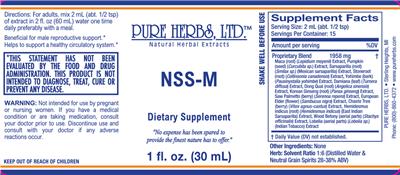
Supplement Facts
The label details for NSS-M by Pure Herbs, sourced from the NIH Dietary Supplement Label Database.
Supplement Facts
| Ingredient | Amount | % DV |
|---|---|---|
| Proprietary Blend | 1958 mg | -- |
| Lobelia Aerial Parts Extract | 0 NP | -- |
| Angelica sinensis Root Extract | 0 NP | -- |
| Sarsaparilla Root Extract | 0 NP | -- |
| European Elder Flower Extract | 0 NP | -- |
| Chaste Tree Berry Extract | 0 NP | -- |
| Stoneroot Root Extract | 0 NP | -- |
| Wood Betony Aerial Parts Extract | 0 NP | -- |
| Damiana Leaf Extract | 0 NP | -- |
| Yohimbe Bark Extract | 0 NP | -- |
| Maca Root Extract | 0 NP | -- |
| Korean Ginseng Root Extract | 0 NP | -- |
| Saw Palmetto Berry Extract | 0 NP | -- |
| Hemidesmus indicus Root Extract | 0 NP | -- |
| Pumpkin Seed Extract | 0 NP | -- |
Tap any ingredient to jump to its full detail below.
These statements are the manufacturer’s wording, reproduced from the product label — the label is saying it, not HelloPharmacist. We don’t verify or endorse them.
Suggested/Recommended/Usage/Directions
Directions: For adults, mix 2 mL (abt 1/2 tsp) of extract in 2 fl. oz (60 mL) water one time daily preferably with a meal.
Shake well before use
Formulation
Beneficial for male reproductive support. Helps to support a healthy circulatory system.
FDA Disclaimer Statement
This statement has not been evaluated by the Food and Drug Administration, This product is not intended to diagnose, treat, cure or prevent any disease.
Precautions
Warning: Not intended for use by pregnant or nursing women. If you have a medical condition or are taking medication, consult your doctor prior to use.
Discontinue use and consult with your doctor if any adverse reactions occur.
Keep out of reach of children.
Brand IP Statement(s)
Pure Herbs, LTD. Natural Herbal Extracts
FDA Statement of Identity
Dietary Supplement
General Statements
"No expense has been spared to provide the finest nature has to offer."
Herb: Solvent Ratio 1:6 (Distilled water & neutral grain spirits 28-38% ABV)
Is this label outdated? Report a formula or label change and our pharmacy team will review it.
NSS-M by Pure Herbs label
The label scan from the NIH Dietary Supplement Label Database. Tap to enlarge.
Label images are published by the NIH Dietary Supplement Label Database for the version of this product on file. Always read your actual product label.
View the full label (PDF)The Ingredients in NSS-M by Pure Herbs
These are the 14 active ingredients this product is made of. Select any to open its full monograph.
Serving size2 mL Dosage formLiquid Servings per container15 Amounts shown are per serving.
Most supplement products combine several ingredients, and a medication can interact with the product through any one of them. Each ingredient below shows whether it has known drug interactions.
Proprietary Blend
- › Lobelia Aerial Parts Extract
- › Angelica sinensis Root Extract
- › Sarsaparilla Root Extract
- › European Elder Flower Extract
- › Chaste Tree Berry Extract
- › Stoneroot Root Extract
- › Wood Betony Aerial Parts Extract
- › Damiana Leaf Extract
- › Yohimbe Bark Extract
- › Maca Root Extract
- › Korean Ginseng Root Extract
- › Saw Palmetto Berry Extract
- › Hemidesmus indicus Root Extract
- › Pumpkin Seed Extract
NSS-M by Pure Herbs Drug Interactions
HelloPharmacist Interaction Report
NSS-M by Pure Herbs is a 14-ingredient liquid blend with documented interactions affecting a broad range of medications.
The most serious concern is yohimbe bark extract, which carries Major-severity interactions with monoamine oxidase inhibitors (MAOIs) — drugs used for depression and certain other conditions. Yohimbe's active component, yohimbine, has MAO-inhibitory properties itself, and combining them can cause dangerous additive effects.
Read the full breakdown — every affected drug type, severity by severity
Several ingredients pose Moderate-severity risks. Angelica sinensis (dong quai) may increase bleeding risk with warfarin (Coumadin) and other blood thinners (anticoagulants/antiplatelets), and may interfere with hormone replacement therapy or birth control pills.
Yohimbe also interacts Moderately with blood pressure medications (antihypertensives), certain antidepressants called tricyclic antidepressants, stimulant drugs, and drugs metabolized by liver enzymes (CYP2D6 and CYP3A4 substrates and inhibitors). Lobelia, sarsaparilla, and pumpkin seed all may increase lithium levels if you take it for bipolar disorder.
Sarsaparilla may also increase the risk of heart toxicity if combined with digoxin. Damiana may lower blood sugar too much when paired with diabetes medications.
Saw palmetto may reduce birth control effectiveness and increase bleeding risk with blood thinners.
We could not check several ingredients — European elder flower, chaste tree berry, stoneroot, wood betony, and Korean ginseng — because we hold no interaction data for them.
Altogether, these interactions span 1,194 individual medications. Use the medication checker on this page to verify your exact prescriptions before starting NSS-M.
Check your own medications below · Editorial policy · How we use AI
Want to check YOUR meds against NSS-M?
Ask about interactions with your drugs in plain English — “Can I take it with lisinopril?” — and we find you the answer in seconds, ingredient by ingredient.
Go to the checkerIngredients driving the most interactions
Individual Drug Interactions
The ingredients in NSS-M interact with 1,235 drugs. Click any drug to see the details.
8 of the 14 ingredients in NSS-M interact with drugs. Each result below shows which ingredient is responsible. Yohimbe Bark Extract Saw Palmetto Berry Extract Angelica sinensis Root Extract Chaste Tree Berry Extract Damiana Leaf Extract Sarsaparilla Root Extract Lobelia Aerial Parts Extract Pumpkin Seed Extract
Acetaminophen, Caffeine, DihydrocodeineDHC Plus, Panlor DC, Panlor SS
How Acetaminophen, Caffeine, Dihydrocodeine interacts with NSS-M — through 1 ingredient. Tap an ingredient for the detail:
Yohimbe Bark ExtractCytochrome P450 3a4 (cyp3a4) Substrates, Cytochrome P450 1a2 (cyp1a2) Substrates +2 Moderate
Interaction Summary
Theoretically, yohimbe might decrease the levels and clinical effects of CYP3A4 substrates.
Read the full Yohimbe Bark Extract + Acetaminophen, Caffeine, Dihydrocodeine interactionAcetaminophen, Caffeine, IsomethepteneMigralam
How Acetaminophen, Caffeine, Isometheptene interacts with NSS-M — through 1 ingredient. Tap an ingredient for the detail:
Yohimbe Bark ExtractCytochrome P450 1a2 (cyp1a2) Substrates, Cytochrome P450 3a4 (cyp3a4) Substrates +1 Moderate
Interaction Summary
Theoretically, yohimbe might decrease the levels and clinical effects of CYP1A2 substrates.
Read the full Yohimbe Bark Extract + Acetaminophen, Caffeine, Isometheptene interactionAcetaminophen, Caffeine, PyrilamineMidol Max Strength Menstrual
How Acetaminophen, Caffeine, Pyrilamine interacts with NSS-M — through 1 ingredient. Tap an ingredient for the detail:
Yohimbe Bark ExtractStimulant Drugs, Cytochrome P450 1a2 (cyp1a2) Substrates +1 Moderate
Interaction Summary
Theoretically, taking yohimbe with stimulant drugs can have additive effects.
Read the full Yohimbe Bark Extract + Acetaminophen, Caffeine, Pyrilamine interactionAcetaminophen, Chlorpheniramine Maleate, Dextromethorphan HbrVicks Formula 44M Cough, Cold & Flu Relief
How Acetaminophen, Chlorpheniramine Maleate, Dextromethorphan Hbr interacts with NSS-M — through 1 ingredient. Tap an ingredient for the detail:
Yohimbe Bark ExtractCytochrome P450 1a2 (cyp1a2) Substrates, Cytochrome P450 2d6 (cyp2d6) Inhibitors +2 Moderate
Interaction Summary
Theoretically, yohimbe might decrease the levels and clinical effects of CYP1A2 substrates.
Read the full Yohimbe Bark Extract + Acetaminophen, Chlorpheniramine Maleate, Dextromethorphan Hbr interactionAcetaminophen, Chlorpheniramine, Codeine, PhenylephrineColrex
How Acetaminophen, Chlorpheniramine, Codeine, Phenylephrine interacts with NSS-M — through 1 ingredient. Tap an ingredient for the detail:
Yohimbe Bark ExtractCytochrome P450 2d6 (cyp2d6) Inhibitors, Stimulant Drugs +3 Moderate
Interaction Summary
CYP2D6 inhibitors may increase the levels and adverse effects of yohimbine, a constituent of yohimbe.
Read the full Yohimbe Bark Extract + Acetaminophen, Chlorpheniramine, Codeine, Phenylephrine interactionAcetaminophen, Chlorpheniramine, DextromethorphanCoricidin II Extra Strength Cold and Flu
How Acetaminophen, Chlorpheniramine, Dextromethorphan interacts with NSS-M — through 1 ingredient. Tap an ingredient for the detail:
Yohimbe Bark ExtractCytochrome P450 2d6 (cyp2d6) Inhibitors, Cytochrome P450 2d6 (cyp2d6) Substrates +2 Moderate
Interaction Summary
CYP2D6 inhibitors may increase the levels and adverse effects of yohimbine, a constituent of yohimbe.
Read the full Yohimbe Bark Extract + Acetaminophen, Chlorpheniramine, Dextromethorphan interactionAcetaminophen, Chlorpheniramine, Dextromethorphan HydrobromideCoricidin HBP Maximum Strength Flu
How Acetaminophen, Chlorpheniramine, Dextromethorphan Hydrobromide interacts with NSS-M — through 1 ingredient. Tap an ingredient for the detail:
Yohimbe Bark ExtractCytochrome P450 3a4 (cyp3a4) Substrates, Cytochrome P450 1a2 (cyp1a2) Substrates +2 Moderate
Interaction Summary
Theoretically, yohimbe might decrease the levels and clinical effects of CYP3A4 substrates.
Read the full Yohimbe Bark Extract + Acetaminophen, Chlorpheniramine, Dextromethorphan Hydrobromide interactionAcetaminophen, Chlorpheniramine, Dextromethorphan, PhenylpropanolamineMulti Symptom Cold Relief
How Acetaminophen, Chlorpheniramine, Dextromethorphan, Phenylpropanolamine interacts with NSS-M — through 1 ingredient. Tap an ingredient for the detail:
Yohimbe Bark ExtractCytochrome P450 2d6 (cyp2d6) Substrates, Cytochrome P450 1a2 (cyp1a2) Substrates +3 Moderate
Interaction Summary
Theoretically, yohimbe might increase the levels and adverse effects of CYP2D6 substrates.
Read the full Yohimbe Bark Extract + Acetaminophen, Chlorpheniramine, Dextromethorphan, Phenylpropanolamine interactionAcetaminophen, Chlorpheniramine, Dextromethorphan, PseudoephedrineChildren's Tylenol Cold Plus Cough, Tylenol Cold Ex Strength
How Acetaminophen, Chlorpheniramine, Dextromethorphan, Pseudoephedrine interacts with NSS-M — through 1 ingredient. Tap an ingredient for the detail:
Yohimbe Bark ExtractCytochrome P450 1a2 (cyp1a2) Substrates, Cytochrome P450 3a4 (cyp3a4) Substrates +3 Moderate
Interaction Summary
Theoretically, yohimbe might decrease the levels and clinical effects of CYP1A2 substrates.
Read the full Yohimbe Bark Extract + Acetaminophen, Chlorpheniramine, Dextromethorphan, Pseudoephedrine interactionAcetaminophen, Chlorpheniramine, Guaifenesin, Phenylephrine, SalicylamideRhinogesic GG
How Acetaminophen, Chlorpheniramine, Guaifenesin, Phenylephrine, Salicylamide interacts with NSS-M — through 1 ingredient. Tap an ingredient for the detail:
Yohimbe Bark ExtractCytochrome P450 2d6 (cyp2d6) Inhibitors, Cytochrome P450 1a2 (cyp1a2) Substrates +2 Moderate
Interaction Summary
CYP2D6 inhibitors may increase the levels and adverse effects of yohimbine, a constituent of yohimbe.
Read the full Yohimbe Bark Extract + Acetaminophen, Chlorpheniramine, Guaifenesin, Phenylephrine, Salicylamide interactionAcetaminophen, Chlorpheniramine, PhenylephrineAlka-Seltzer PLUS, Histex SR, Protid
How Acetaminophen, Chlorpheniramine, Phenylephrine interacts with NSS-M — through 1 ingredient. Tap an ingredient for the detail:
Yohimbe Bark ExtractCytochrome P450 1a2 (cyp1a2) Substrates, Cytochrome P450 2d6 (cyp2d6) Inhibitors +2 Moderate
Interaction Summary
Theoretically, yohimbe might decrease the levels and clinical effects of CYP1A2 substrates.
Read the full Yohimbe Bark Extract + Acetaminophen, Chlorpheniramine, Phenylephrine interactionAcetaminophen, Chlorpheniramine, Phenylephrine, SalicylamideRhinogesic, Rhinogesic JR
How Acetaminophen, Chlorpheniramine, Phenylephrine, Salicylamide interacts with NSS-M — through 1 ingredient. Tap an ingredient for the detail:
Yohimbe Bark ExtractCytochrome P450 1a2 (cyp1a2) Substrates, Stimulant Drugs +2 Moderate
Interaction Summary
Theoretically, yohimbe might decrease the levels and clinical effects of CYP1A2 substrates.
Read the full Yohimbe Bark Extract + Acetaminophen, Chlorpheniramine, Phenylephrine, Salicylamide interactionAcetaminophen, Chlorpheniramine, PhenylpropanolamineAlumadrine, Conex, Sinadrin Max Strength, Sinulin
How Acetaminophen, Chlorpheniramine, Phenylpropanolamine interacts with NSS-M — through 1 ingredient. Tap an ingredient for the detail:
Yohimbe Bark ExtractCytochrome P450 3a4 (cyp3a4) Substrates, Cytochrome P450 2d6 (cyp2d6) Inhibitors +2 Moderate
Interaction Summary
Theoretically, yohimbe might decrease the levels and clinical effects of CYP3A4 substrates.
Read the full Yohimbe Bark Extract + Acetaminophen, Chlorpheniramine, Phenylpropanolamine interactionAcetaminophen, Chlorpheniramine, Phenylpropanolamine, OpiumHista-Derfule
How Acetaminophen, Chlorpheniramine, Phenylpropanolamine, Opium interacts with NSS-M — through 1 ingredient. Tap an ingredient for the detail:
Yohimbe Bark ExtractStimulant Drugs, Cytochrome P450 3a4 (cyp3a4) Substrates +2 Moderate
Interaction Summary
Theoretically, taking yohimbe with stimulant drugs can have additive effects.
Read the full Yohimbe Bark Extract + Acetaminophen, Chlorpheniramine, Phenylpropanolamine, Opium interactionAcetaminophen, Chlorpheniramine, Phenylpropanolamine, PhenyltoloxamineNorel Plus
How Acetaminophen, Chlorpheniramine, Phenylpropanolamine, Phenyltoloxamine interacts with NSS-M — through 1 ingredient. Tap an ingredient for the detail:
Yohimbe Bark ExtractCytochrome P450 3a4 (cyp3a4) Substrates, Cytochrome P450 1a2 (cyp1a2) Substrates +2 Moderate
Interaction Summary
Theoretically, yohimbe might decrease the levels and clinical effects of CYP3A4 substrates.
Read the full Yohimbe Bark Extract + Acetaminophen, Chlorpheniramine, Phenylpropanolamine, Phenyltoloxamine interactionAcetaminophen, Chlorpheniramine, PseudoephedrineAlka-Seltzer PLUS Liquid Gels, Children's Tylenol Cold, Codimal, Comtrex, Extra Strength Tylenol Allergy Sinus, Lorsin +3 more
How Acetaminophen, Chlorpheniramine, Pseudoephedrine interacts with NSS-M — through 1 ingredient. Tap an ingredient for the detail:
Yohimbe Bark ExtractCytochrome P450 2d6 (cyp2d6) Inhibitors, Stimulant Drugs +2 Moderate
Interaction Summary
CYP2D6 inhibitors may increase the levels and adverse effects of yohimbine, a constituent of yohimbe.
Read the full Yohimbe Bark Extract + Acetaminophen, Chlorpheniramine, Pseudoephedrine interactionAcetaminophen, Chlorzoxazone, CodeineAcetazone Forte C8, Parafon Forte C8
How Acetaminophen, Chlorzoxazone, Codeine interacts with NSS-M — through 1 ingredient. Tap an ingredient for the detail:
Yohimbe Bark ExtractCytochrome P450 1a2 (cyp1a2) Substrates, Cytochrome P450 2d6 (cyp2d6) Substrates Moderate
Interaction Summary
Theoretically, yohimbe might decrease the levels and clinical effects of CYP1A2 substrates.
Read the full Yohimbe Bark Extract + Acetaminophen, Chlorzoxazone, Codeine interactionAcetaminophen, CodeineTylenol No.3, Tylenol w/ Codeine
How Acetaminophen, Codeine interacts with NSS-M — through 1 ingredient. Tap an ingredient for the detail:
Yohimbe Bark ExtractCytochrome P450 2d6 (cyp2d6) Substrates, Cytochrome P450 1a2 (cyp1a2) Substrates Moderate
Interaction Summary
Theoretically, yohimbe might increase the levels and adverse effects of CYP2D6 substrates.
Read the full Yohimbe Bark Extract + Acetaminophen, Codeine interactionAcetaminophen, Codeine, DoxylamineMersyndol
How Acetaminophen, Codeine, Doxylamine interacts with NSS-M — through 1 ingredient. Tap an ingredient for the detail:
Yohimbe Bark ExtractCytochrome P450 1a2 (cyp1a2) Substrates, Cytochrome P450 2d6 (cyp2d6) Substrates Moderate
Interaction Summary
Theoretically, yohimbe might decrease the levels and clinical effects of CYP1A2 substrates.
Read the full Yohimbe Bark Extract + Acetaminophen, Codeine, Doxylamine interactionAcetaminophen, Codeine, MethocarbamolAcetaminophen, Codeine, Methocarbamol, Robaxacet 8
How Acetaminophen, Codeine, Methocarbamol interacts with NSS-M — through 1 ingredient. Tap an ingredient for the detail:
Yohimbe Bark ExtractCytochrome P450 2d6 (cyp2d6) Substrates, Cytochrome P450 1a2 (cyp1a2) Substrates Moderate
Interaction Summary
Theoretically, yohimbe might increase the levels and adverse effects of CYP2D6 substrates.
Read the full Yohimbe Bark Extract + Acetaminophen, Codeine, Methocarbamol interactionAcetaminophen, Dexbrompheniramine, PseudoephedrineSinadrin Plus
How Acetaminophen, Dexbrompheniramine, Pseudoephedrine interacts with NSS-M — through 1 ingredient. Tap an ingredient for the detail:
Yohimbe Bark ExtractCytochrome P450 1a2 (cyp1a2) Substrates, Stimulant Drugs Moderate
Interaction Summary
Theoretically, yohimbe might decrease the levels and clinical effects of CYP1A2 substrates.
Read the full Yohimbe Bark Extract + Acetaminophen, Dexbrompheniramine, Pseudoephedrine interactionAcetaminophen, DextromethorphanTylenol Cough Ex Strength
How Acetaminophen, Dextromethorphan interacts with NSS-M — through 1 ingredient. Tap an ingredient for the detail:
Yohimbe Bark ExtractCytochrome P450 2d6 (cyp2d6) Substrates, Cytochrome P450 1a2 (cyp1a2) Substrates +1 Moderate
Interaction Summary
Theoretically, yohimbe might increase the levels and adverse effects of CYP2D6 substrates.
Read the full Yohimbe Bark Extract + Acetaminophen, Dextromethorphan interactionAcetaminophen, Dextromethorphan, Doxylamine, PseudoephedrineVicks NyQuil
How Acetaminophen, Dextromethorphan, Doxylamine, Pseudoephedrine interacts with NSS-M — through 1 ingredient. Tap an ingredient for the detail:
Yohimbe Bark ExtractCytochrome P450 1a2 (cyp1a2) Substrates, Stimulant Drugs +2 Moderate
Interaction Summary
Theoretically, yohimbe might decrease the levels and clinical effects of CYP1A2 substrates.
Read the full Yohimbe Bark Extract + Acetaminophen, Dextromethorphan, Doxylamine, Pseudoephedrine interactionAcetaminophen, Dextromethorphan, Guaifenesin, PhenylephrineConar-A
How Acetaminophen, Dextromethorphan, Guaifenesin, Phenylephrine interacts with NSS-M — through 1 ingredient. Tap an ingredient for the detail:
Yohimbe Bark ExtractCytochrome P450 3a4 (cyp3a4) Substrates, Cytochrome P450 1a2 (cyp1a2) Substrates +2 Moderate
Interaction Summary
Theoretically, yohimbe might decrease the levels and clinical effects of CYP3A4 substrates.
Read the full Yohimbe Bark Extract + Acetaminophen, Dextromethorphan, Guaifenesin, Phenylephrine interactionAcetaminophen, Dextromethorphan, Guaifenesin, PhenylpropanolamineAnatuss
How Acetaminophen, Dextromethorphan, Guaifenesin, Phenylpropanolamine interacts with NSS-M — through 1 ingredient. Tap an ingredient for the detail:
Yohimbe Bark ExtractCytochrome P450 1a2 (cyp1a2) Substrates, Cytochrome P450 2d6 (cyp2d6) Substrates +2 Moderate
Interaction Summary
Theoretically, yohimbe might decrease the levels and clinical effects of CYP1A2 substrates.
Read the full Yohimbe Bark Extract + Acetaminophen, Dextromethorphan, Guaifenesin, Phenylpropanolamine interactionAcetaminophen, Dextromethorphan, Guaifenesin, PseudoephedrineRobitussin Cold, Severe Cold, Suphedrine Cold/Cough
How Acetaminophen, Dextromethorphan, Guaifenesin, Pseudoephedrine interacts with NSS-M — through 1 ingredient. Tap an ingredient for the detail:
Yohimbe Bark ExtractCytochrome P450 1a2 (cyp1a2) Substrates, Cytochrome P450 3a4 (cyp3a4) Substrates +2 Moderate
Interaction Summary
Theoretically, yohimbe might decrease the levels and clinical effects of CYP1A2 substrates.
Read the full Yohimbe Bark Extract + Acetaminophen, Dextromethorphan, Guaifenesin, Pseudoephedrine interactionAcetaminophen, Dextromethorphan, Phenylpropanolamine, PyrilamineTheracaps
How Acetaminophen, Dextromethorphan, Phenylpropanolamine, Pyrilamine interacts with NSS-M — through 1 ingredient. Tap an ingredient for the detail:
Yohimbe Bark ExtractCytochrome P450 2d6 (cyp2d6) Substrates, Cytochrome P450 3a4 (cyp3a4) Substrates +2 Moderate
Interaction Summary
Theoretically, yohimbe might increase the levels and adverse effects of CYP2D6 substrates.
Read the full Yohimbe Bark Extract + Acetaminophen, Dextromethorphan, Phenylpropanolamine, Pyrilamine interactionAcetaminophen, Dextromethorphan, PseudoephedrineAlka-Seltzer PLUS Flu Liquid Gels, Non Aspirin Cold Caps, Tylenol Cold, Tylenol Flu Daytime Ex Strength, Tylenol Flu Ex Strength
How Acetaminophen, Dextromethorphan, Pseudoephedrine interacts with NSS-M — through 1 ingredient. Tap an ingredient for the detail:
Yohimbe Bark ExtractStimulant Drugs, Cytochrome P450 2d6 (cyp2d6) Substrates +2 Moderate
Interaction Summary
Theoretically, taking yohimbe with stimulant drugs can have additive effects.
Read the full Yohimbe Bark Extract + Acetaminophen, Dextromethorphan, Pseudoephedrine interactionAcetaminophen, Dichloralantipyrine, IsomethepteneAmidrine, Midchlor, Migquin, Migratine
How Acetaminophen, Dichloralantipyrine, Isometheptene interacts with NSS-M — through 1 ingredient. Tap an ingredient for the detail:
Yohimbe Bark ExtractStimulant Drugs, Cytochrome P450 1a2 (cyp1a2) Substrates Moderate
Interaction Summary
Theoretically, taking yohimbe with stimulant drugs can have additive effects.
Read the full Yohimbe Bark Extract + Acetaminophen, Dichloralantipyrine, Isometheptene interactionAcetaminophen, Dichloralphenazone, IsomethepteneMidrin
How Acetaminophen, Dichloralphenazone, Isometheptene interacts with NSS-M — through 1 ingredient. Tap an ingredient for the detail:
Yohimbe Bark ExtractStimulant Drugs, Cytochrome P450 1a2 (cyp1a2) Substrates Moderate
Interaction Summary
Theoretically, taking yohimbe with stimulant drugs can have additive effects.
Read the full Yohimbe Bark Extract + Acetaminophen, Dichloralphenazone, Isometheptene interactionEach ingredient & the kinds of drugs it affects
For each ingredient in NSS-M with known interactions, here are the types of medications they can affect. Open any type for the detail — or search your exact drug in the checker above.
Yohimbe Bark Extract
Monoamine Oxidase Inhibitors (Maois)
Concomitant use of MAOIs with yohimbe can result in additive effects.
Yohimbine, a constituent of yohimbe, has MAO inhibitory effects. At high doses, yohimbine is a non-selective inhibitor of MAO.
Antihypertensive Drugs
Theoretically, yohimbe might reduce the effects of antihypertensive drugs.
Yohimbine, a constituent of yohimbe, is an alpha-2 adrenoceptor antagonist and has been reported to increase blood pressure in clinical research. Theoretically, concomitant use of yohimbe and antihypertensive drugs can interfere with blood pressure control.
Clonidine (Catapres)
Theoretically, yohimbe might precipitate clonidine withdrawal.
Chronic clonidine use can downregulate alpha-2 adrenoreceptors. Animal research and one human case report suggest that concomitant administration of yohimbine, an alpha-2 adrenoceptor antagonist, may precipitate clonidine withdrawal and lead to sympathomimetic toxicity, including hypertensive crisis.
Cytochrome P450 2D6 (Cyp2D6) Inhibitors
CYP2D6 inhibitors may increase the levels and adverse effects of yohimbine, a constituent of yohimbe.
In vitro and clinical research shows that the yohimbe bark constituent, yohimbine, is metabolized by CYP2D6 isoenzymes. Paroxetine, a cytochrome P450 (CYP) 2D6 inhibitor, increases the maximum serum concentration of yohimbine and reduces the clearance of yohimbine compared to yohimbine alone in patients who are extensive CYP2D6 metabolizers..
Cytochrome P450 2D6 (Cyp2D6) Substrates
Theoretically, yohimbe might increase the levels and adverse effects of CYP2D6 substrates.
In vitro research suggests that yohimbine, a constituent of yohimbe bark, inhibits CYP2D6 enzyme activity.
Cytochrome P450 3A4 (Cyp3A4) Inhibitors
Theoretically, CYP3A4 inhibitors might increase the levels and adverse effects of yohimbine, a constituent of yohimbe bark.
In vitro and clinical research shows that the yohimbe bark constituent, yohimbine, is metabolized by CYP3A4 enzymes. Theoretically, drugs that inhibit CYP3A4 might increase the levels and adverse effects of yohimbine.
Paroxetine (Paxil)
Paroxetine decreases the clearance of yohimbine and may increase its effects.
Paroxetine, a cytochrome P450 (CYP) 2D6 inhibitor, increases the maximum serum concentration of yohimbine by about 350% and reduces the clearance of yohimbine by about 80% compared to yohimbine alone in patients who are extensive CYP2D6 metabolizers. No significant changes in pharmacokinetic parameters of yohimbine were observed with coadministration of paroxetine in patients who are poor CYP2D6 metabolizers.
Phenothiazines
Theoretically, using yohimbine with phenothiazines might have additive effects.
Yohimbine, a constituent of yohimbe, has alpha-2 adrenergic antagonist effects. Theoretically, combining it with phenothiazines can cause additive alpha-2 adrenergic antagonism.
Stimulant Drugs
Theoretically, taking yohimbe with stimulant drugs can have additive effects.
Yohimbine, a constituent of yohimbe, has sympathomimetic effects and increases blood pressure in a dose-dependent manner. Theoretically, taking yohimbe with stimulant drugs can have additive stimulant and hypertensive effects.
Tricyclic Antidepressants (Tcas)
Theoretically, taking yohimbe with TCAs can increase adverse effects.
A small clinical study in patients taking TCAs for at least 4 weeks shows that receiving doses of intravenous yohimbine 2.5-20 mg daily for up to 7 days precipitates severe anxiety, agitation, and tremor. The effects of yohimbe bark itself are unclear; oral yohimbe bark contains 0.6% to 1.38% yohimbine, but it is unclear how much is absorbed.
Anticoagulant/Antiplatelet Drugs
Theoretically, combining yohimbe bark with antiplatelet or anticoagulant drugs might have additive effects; however, this has not been reported in clinical research.
Research in healthy adults shows that taking yohimbine, a constituent of yohimbe bark, in doses of 8 mg or more, seems to inhibit platelet aggregation in vitro by binding to the alpha-2 adrenoceptor. The effects of yohimbe bark itself are unclear; yohimbe bark contains 0.6% to 1.38% yohimbine, but it is unclear how much is absorbed.
Cytochrome P450 1A2 (Cyp1A2) Substrates
Theoretically, yohimbe might decrease the levels and clinical effects of CYP1A2 substrates.
In vitro research shows that yohimbe extract induces CYP1A2 enzymes.
Cytochrome P450 3A4 (Cyp3A4) Substrates
Theoretically, yohimbe might decrease the levels and clinical effects of CYP3A4 substrates.
In vitro research shows that yohimbe extract induces CYP3A4 enzymes.
Saw Palmetto Berry Extract
Anticoagulant/Antiplatelet Drugs
Saw palmetto might increase the risk of bleeding with anticoagulant or antiplatelet drugs.
Saw palmetto is reported to prolong bleeding time. Theoretically, it might increase the risk of bleeding when used concomitantly with anticoagulant or antiplatelet drugs.
Contraceptive Drugs
Saw palmetto might reduce the effectiveness of contraceptive drugs.
Saw palmetto might have antiestrogenic effects. Theoretically, it might interfere with contraceptive drugs taken concomitantly.
Estrogens
Saw palmetto might reduce the effectiveness of estrogens.
Saw palmetto might have antiestrogenic effects. Theoretically, it might interfere with estrogens taken concomitantly.
Angelica sinensis Root Extract
Warfarin (Coumadin)
Dong quai may increase the risk of bleeding when used with warfarin.
Case reports suggest that concomitant use of dong quai with warfarin can increase the anticoagulant effects of warfarin and increase the risk of bleeding. In one case, after 4 weeks of taking dong quai 565 mg once or twice daily, the international normalized ratio (INR) increased to 4.9. The INR normalized 4 weeks after discontinuation of dong quai.
Anticoagulant/Antiplatelet Drugs
Theoretically, dong quai may increase the risk of bleeding when used with anticoagulant or antiplatelet drugs; however, research is conflicting.
Animal studies suggest that dong quai has antithrombin activity and inhibits platelet aggregation due to its coumarin components. Additionally, some case reports in humans suggest that dong quai can increase the anticoagulant effects of warfarin. However, clinical research in healthy adults shows that taking 1 gram of dong quai root daily for 3 weeks does not significantly inhibit platelet aggregation or cause bleeding. Until more is known, use dong quai with caution in patients taking antiplatelet/anticoagulant drugs.
Estrogens
Theoretically, dong quai may reduce the effects of estrogens.
Dong quai has estrogenic effects. Theoretically, concomitant use of large amounts of dong quai might interfere with hormone replacement therapy due to competition for estrogen receptors.
Chaste Tree Berry Extract
Antipsychotic Drugs
Theoretically, vitex agnus-castus could interfere with the activity of antipsychotic drugs.
Vitex agnus-castus might interfere with the action of dopamine antagonists such as antipsychotic drugs due to its dopamine agonist effects.
Contraceptive Drugs
Theoretically, vitex agnus-castus could interfere with oral contraceptives.
Vitex agnus-castus might interfere with the efficacy of oral contraceptives due to possible hormone modulating activity.
Dopamine Agonists
Theoretically, vitex agnus-castus could interfere with dopamine agonists.
Vitex agnus-castus might potentiate the actions of dopaminergic agonists due to possible dopaminergic effects.
Estrogens
Theoretically, vitex agnus-castus could interfere with the activity of estrogens.
Vitex agnus-castus has hormone modulating activity that can interfere with the efficacy of hormone replacement therapy.
Metoclopramide (Reglan)
Theoretically, dopaminergic effects of vitex agnus-castus could interfere with metoclopramide.
Vitex agnus-castus might interfere with the action of dopamine antagonists such as metoclopramide due to its possible dopaminergic effects.
Damiana Leaf Extract
Antidiabetes Drugs
Theoretically, taking damiana with antidiabetes drugs might increase the risk of hypoglycemia.
Animal research shows that taking damiana lowers blood glucose level.
Sarsaparilla Root Extract
Digoxin (Lanoxin)
Theoretically, concomitant use of sarsaparilla with digoxin might increase the risk of cardiac toxicity.
Sarsaparilla is thought to have diuretic properties, which could potentially cause potassium loss. Overuse or misuse of sarsaparilla with cardiac glycoside therapy might increase the risk of cardiac toxicity due to potassium loss.
Lithium
Theoretically, sarsaparilla might increase the effects and adverse effects of lithium.
Sarsaparilla is thought to have diuretic properties. Due to these effects, sarsaparilla might reduce excretion and increase levels of lithium. The dose of lithium might need to be decreased.
Lobelia Aerial Parts Extract
Lithium
Lobelia is thought to have diuretic properties. Theoretically, due to these potential diuretic effects, lobelia might reduce excretion and increase levels of lithium. The dose of lithium might need to be decreased.
Pumpkin Seed Extract
Lithium
Pumpkin might reduce excretion and increase levels of lithium.
Pumpkin is thought to have diuretic properties. Theoretically, this might reduce excretion and increase levels of lithium. The dose of lithium might need to be decreased.
Brand information
Manufacturer and brand details for NSS-M, from the product label.
Pure Herbs
See all Pure Herbs products- Name
- Pure Herbs, Ltd.
- City
- Sterling Heights
- State
- MI
- Phone Number
- (800) 860-4372
- Web Address
- www.pureherbs.com
NSS-M by Pure Herbs: Common Questions
Does NSS-M by Pure Herbs interact with any medications?
How can one product interact with so many drugs?
Where does this information come from?
Is NSS-M safe if I'm pregnant or breastfeeding?
Can NSS-M really help with [sexual function/energy/prostate symptoms]?
What are the side effects of lobelia in NSS-M?
Will NSS-M interact with my blood pressure medication?
Can I take NSS-M if I use warfarin or another blood thinner?
What happens if I take NSS-M with an antidepressant?
Written and reviewed by the HelloPharmacist editorial staff. Our editorial policy
Not sure if NSS-M is safe with your meds?
Our pharmacists answer your medication & supplement questions — free.
Label information is sourced from the NIH Dietary Supplement Label Database and reflects the product version on file; always read your actual product label. This page is for education only and is not a substitute for professional medical advice. Confirm with your pharmacist or doctor before combining supplements and medications.
The Full Monographs Behind NSS-M’s Ingredients
Every ingredient we hold a full HelloPharmacist monograph for — uses, evidence, safety, and the complete interaction list.
Lobelia
Interacts with 1 drugLobelia is a traditional herb once used for breathing problems and to help people quit smoking, but reliable evidence supporting these uses is lacking. It can be toxic in higher amounts, cau...
Read the full Lobelia monograph → Herb & supplement monographDong Quai
Interacts with 163 drugsDong Quai is a traditional Chinese herb often called "female ginseng" and is mostly used for menstrual and menopausal complaints. High-quality scientific evidence that it works for these use...
Read the full Dong Quai monograph → Herb & supplement monographSarsaparilla
Interacts with 2 drugsSarsaparilla is a traditional root used in teas, tonics, and old-fashioned root beer flavoring. Modern evidence for its health claims is very limited and comes mostly from lab studies, so it...
Read the full Sarsaparilla monograph → Herb & supplement monographVitex Agnus-castus
Interacts with 121 drugsVitex (chasteberry) is an herbal remedy most often used for PMS and menstrual cycle problems, and the strongest evidence is for easing some PMS symptoms. It is generally well tolerated by ma...
Read the full Vitex Agnus-castus monograph → Herb & supplement monographDamiana
Interacts with 86 drugsDamiana is a traditional herb most famous as an aphrodisiac and mild mood-lifter, but solid human evidence for any of its uses is very limited. It is generally well tolerated in the small am...
Read the full Damiana monograph → Herb & supplement monographYohimbe
Interacts with 1,125 drugsYohimbe is a West African tree bark that contains yohimbine, a compound mainly promoted for erectile dysfunction and as an aphrodisiac. A prescription form of yohimbine has some evidence for...
Read the full Yohimbe monograph → Herb & supplement monographMaca
Maca is a nutrient-rich Andean root often used for energy, libido, and menopause symptoms. Early studies suggest it may modestly help sexual desire and some menopause symptoms, but the evide...
Read the full Maca monograph → Herb & supplement monographSaw Palmetto
Interacts with 174 drugsSaw palmetto is a plant extract most often used for urinary symptoms linked to an enlarged prostate (BPH). The best research suggests it works no better than a placebo for most men, though i...
Read the full Saw Palmetto monograph → Herb & supplement monographPumpkin
Interacts with 1 drugPumpkin is a nutritious squash, and its seeds and seed oil are the parts most often used as supplements, mainly for urinary and prostate symptoms. The evidence for these uses is limited and...
Read the full Pumpkin monograph →Sources & How We Checked
NSS-M's label data comes from the NIH Dietary Supplement Label Database; the ingredient interaction data is from the Natural Medicines database, reviewed by our pharmacists.
- NIH Dietary Supplement Label Database (DSLD) — The official product label on file for this supplement.
- Natural Medicines (Therapeutic Research Center) — Evidence-graded clinical reference behind the ingredient interaction data.
Content is written and reviewed by licensed HelloPharmacist pharmacists. See our data sources and editorial standards for how this information is built and checked.
The 147 references behind this product’s interaction data
Every citation that drives the interaction findings for this product’s ingredients, from the evidence-graded Natural Medicines (TRC Healthcare) database. Open an ingredient to browse its citations — links open the study on PubMed or the publisher’s site.
Lobelia 6 references
- Newall CA, Anderson LA, Philpson JD. Herbal Medicine: A Guide for Healthcare Professionals. London, UK: The Pharmaceutical Press, 1996.
- Leung AY, Foster S. Encyclopedia of Common Natural Ingredients Used in Food, Drugs and Cosmetics. 2nd ed. New York, NY: John Wiley & Sons, 1996.
- McGuffin M, Hobbs C, Upton R, Goldberg A, eds. American Herbal Products Association's Botanical Safety Handbook. Boca Raton, FL: CRC Press, LLC 1997.
- McChargue DE, Collins FL Jr, Cohen LM. Effect of non-nicotinic moist snuff replacement and lobeline on withdrawal symptoms during 48-h smokeless tobacco deprivation. Nicotine Tob Res 2002;4:195-200. PubMed
- Stead LF, Hughes JR. Lobeline for smoking cessation. Cochrane Database Syst Rev 2000;2:CD000124. PubMed
- Plakun, A. L., Ambrus, J., Bross, I., Graham, S., Levin, M. L., and Ross, C. A. Clinical factors in smoking withdrawal: preliminary report. Am J Public Health Nations.Health 1966;56(3):434-441. PubMed
Dong Quai 19 references
- Hirata JD, Swiersz LM, Zell B, et al. Does dong quai have estrogenic effects in postmenopausal women? A double-blind, placebo-controlled trial. Fertil Steril 1997;68:981-6. PubMed
- Page RL II, Lawrence JD. Potentiation of warfarin by dong quai. Pharmacotherapy 1999;19:870-6. PubMed
- Heck AM, DeWitt BA, Lukes AL. Potential interactions between alternative therapies and warfarin. Am J Health Syst Pharm 2000;57:1221-7. DOI
- Eagon PK, Elm MS, Hunter DS, et al. Medicinal herbs: modulation of estrogen action. Era of Hope Mtg, Dept Defense; Breast Cancer Res Prog, Atlanta, GA 2000;Jun 8-11.
- Dr. Duke's Phytochemical and Ethnobotanical Databases. Available at: http://www.ars-grin.gov/duke/.
- Amato P, Christophe S, Mellon PL. Estrogenic activity of herbs commonly used as remedies for menopausal symptoms. Menopause 2002;9:145-50. PubMed
- Shi M, Chang L, He G. [Stimulating action of Carthamus tinctorius L., Angelica sinensis (Oliv.) Diels and Leonurus sibiricus L. on the uterus]. Zhongguo Zhong Yao Za Zhi 1995;20:173-5, 192.
- Hoult JR, Paya M. Pharmacological and biochemical actions of simple coumarins: natural products with therapeutic potential. Gen Pharmacol 1996;27:713-22.. PubMed
- Cheong JL, Bucknall R. Retinal vein thrombosis associated with a herbal phytoestrogen preparation in a susceptible patient. Postgrad Med J 2005;81:266-7.. PubMed
- Chang CJ, Chiu JH, Tseng LM, et al. Modulation of HER2 expression by ferulic acid on human breast cancer MCF7 cells. Eur J Clin Invest 2006;36:588-96. PubMed
- Chuang CH, Doyle P, Wang JD, et al. Herbal medicines used during the first trimester and major congenital malformations: an analysis of data from a pregnancy cohort study. Drug Saf 2006;29:537-48. PubMed
- Lau CBS, Ho TCY, Chan TWL, Kim SCF. Use of dong quai (Angelica sinensis) to treat peri- and postmenopausal symptoms in women with breast cancer: is it appropriate? Menopause 2005;12:734-40.
- Ellis GR, Stephens MR. Untitled (photograph and a brief case report). BMJ 1999;319:650.
- Nambiar, S., Schwartz, R. H., and Constantino, A. Hypertension in mother and baby linked to ingestion of Chinese herbal medicine. West J Med 1999;171(3):152.
- Lee, S. K., Cho, H. K., Cho, S. H., Kim, S. S., Nahm, D. H., and Park, H. S. Occupational asthma and rhinitis caused by multiple herbal agents in a pharmacist. Ann.Allergy Asthma Immunol. 2001;86(4):469-474. PubMed
- Xu, J. and Li, G. [Observation on short-term effects of Angelica injection on chronic obstructive pulmonary disease patients with pulmonary hypertension]. Zhongguo Zhong Xi Yi Jie He Za Zhi 2000;20(3):187-189.
- Scott, G. N. and Elmer, G. W. Update on natural product--drug interactions. Am J Health Syst.Pharm 2-15-2002;59(4):339-347. PubMed
- Circosta, C., Pasquale, R. D., Palumbo, D. R., Samperi, S., and Occhiuto, F. Estrogenic activity of standardized extract of Angelica sinensis. Phytother.Res. 2006;20(8):665-669.
- Fung FY, Wong WH, Ang SK, et al. A randomized, double-blind, placebo- controlled study on the anti-haemostatic effects of Curcuma longa, Angelica sinensis and Panax ginseng. Phytomedicine. 2017;32:88-96. PubMed
Sarsaparilla 3 references
- Blumenthal M, ed. The Complete German Commission E Monographs: Therapeutic Guide to Herbal Medicines. Trans. S. Klein. Boston, MA: American Botanical Council, 1998.
- Leung AY, Foster S. Encyclopedia of Common Natural Ingredients Used in Food, Drugs and Cosmetics. 2nd ed. New York, NY: John Wiley & Sons, 1996.
- Vandenplas O, Depelchin S, Toussaint G, et al. Occupational asthma caused by sarsaparilla root dust. J Allergy Clin Immunol 1996;97:1416-8. PubMed
Vitex Agnus-castus 23 references
- Wuttke W. Dopaminergic action of extracts of Agnus Castus. Forschende Komplementarmedizen 1996;3:329-30.
- Jarry H, Leonhardt S., Gorkow C, Wuttke W. In vitro prolactin but not LH and FSH release is inhibited by compounds in extracts of Agnus Castus: direct evidence for a dopaminergic principle by the dopamine receptor assay. Exp Clin Endocrinol 1994;102:448- PubMed
- Schellenberg R. Treatment for the premenstrual syndrome with agnus castus fruit extract: prospective, randomised, placebo-controlled study. BMJ 2001;322:134-7. PubMed
- Lauritzen CH, Reuter HD, Repges R, et al. Treatment of premenstrual tension syndrome with Vitex agnus castus: Controlled-double blind versus pyridoxine. Phytomedicine 1997;4:183-9.
- Berger D, Schaffner W, Schrader E, et al. Efficacy of Vitex agnus castus L. extract Ze 440 in patients with premenstrual syndrome (PMS). Arch Gynecol Obstet 2000;264:150-3.
- Loch EG, Selle H, Boblitz N. Treatment of premenstrual syndrome with a phytopharmaceutical formulation containing Vitex agnus castus. J Womens Health Gend Based Med 2000;9:315-20. PubMed
- Meier B, Berger D, Hoberg E, et al. Pharmacological activities of Vitex agnus-castus extracts in vitro. Phytomedicine 2000;7:373-81. PubMed
- Liu J, Burdette JE, Xu H, et al. Evaluation of estrogenic activity of plant extracts for the potential treatment of menopausal symptoms. J Agric Food Chem 2001;49:2472-9.. PubMed
- Wuttke W, Jarry H, Christoffel V, et al. Chaste tree (Vitex agnus-castus)--pharmacology and clinical indications. Phytomedicine 2003;10:348-57. PubMed
- Atmaca M, Kumru S, Tezcan E. Fluoxetine versus Vitex agnus castus extract in the treatment of premenstrual dysphoric disorder. Hum Psychopharmacol 2003;18:191-5..
- Daniele C, Thompson Coon J, Pittler MH, Ernst E. Vitex agnus castus: a systematic review of adverse events. Drug Saf 2005;28:319-32..
- Halaska M, Beles P, Gorkow C, Sieder C. Treatment of cyclical mastalgia with a solution containing a Vitex agnus castus extract: results of a placebo-controlled double-blind study. Breast 1999;8:175-81. PubMed
- Prilepskaya VN, Ledina AV, Tagiyeva AV, Revazova FS. Vitex agnus castus: Successful treatment of moderate to severe premenstrual syndrome. Maturitas 2006;55 Suppl 1:S55-63. DOI
- Ma, L., Lin, S., Chen, R., and Wang, X. Treatment of moderate to severe premenstrual syndrome with Vitex agnus castus (BNO 1095) in Chinese women. Gynecol.Endocrinol. 2010;26(8):612-616. PubMed
- Ma, L., Lin, S., Chen, R., Zhang, Y., Chen, F., and Wang, X. Evaluating therapeutic effect in symptoms of moderate-to-severe premenstrual syndrome with Vitex agnus castus (BNO 1095) in Chinese women. Aust.N.Z.J Obstet.Gynaecol. 2010;50(2):189-193. PubMed
- Dinç T, Coskun F. Comparison of fructus agni casti and flurbiprofen in the treatment of cyclic mastalgia in premenopausal women. Ulus Cerrahi Derg. 2014 Mar 1;30(1):34-8 PubMed
- Momoeda M, Sasaki H, Tagashira E, Ogishima M, Takano Y, Ochiai K. Efficacy and safety of Vitex agnus-castus extract for treatment of premenstrual syndrome in Japanese patients: a prospective, open-label study. Adv Ther. 2014 Mar;31(3):362-73. PubMed
- Yavarikia P, Shahnazi M, Hadavand Mirzaie S, Javadzadeh Y, Lutfi R. Comparing the effect of mefenamic Acid and vitex agnus on intrauterine device induced bleeding. J Caring Sci. 2013 Aug 31;2(3):245-54.
- Van Die MD, Burger HC, Teede HG, Bone KM. Vitex agnus castus extracts for female reproductive disorders: a systematic review of clinical trials. Planta Med 2013:79:562-575. PubMed
- Ooi SL, Watts S, McClean R, Pak SC. Vitex agnus-castus for the treatment of cyclic mastalgia: A systematic review and meta-analysis. J Womens Health (Larchmt). 2020;29(2):262-278. PubMed
- Mollazadeh S, Mirghafourvand M, Abdollahi NG. The effects of Vitex agnus-castus on menstrual bleeding: A systematic review and meta-analysis. J Complement Integr Med. 2019;17(1). pii: /j/jcim.2019.17.issue-1/jcim-2018-0053/jcim-2018-0053.xml.
- Najib FS, Poordast T, Mahmudi MS, Shiravani Z, Namazi N, Omrani GR. Does Vitex Agnus-Castus L. Have Deleterious Effect on Fertility and Pregnancy Outcome? An Experimental Study on Rats for Prediction of Its Safety. J Pharmacopuncture 2022;25(2):106-113. PubMed
- Somuncu E, Solak IHA. Colonic Obstruction Secondary to Phytobezoar Caused by Vitex Agnus-Castus Seeds: A Case Report. J Coll Physicians Surg Pak 2022;32(8):S115-S117. PubMed
Damiana 2 references
- Newall CA, Anderson LA, Philpson JD. Herbal Medicine: A Guide for Healthcare Professionals. London, UK: The Pharmaceutical Press, 1996.
- Alarcon-Aquilar FJ, Roman-Ramos R, Perez-Gutierrez S, et al. Study of the anti-hyperglycemic effect of plants used as antidiabetics. J Ethnopharmacol 1998;61:101-10. PubMed
Yohimbe 66 references
- Leung AY, Foster S. Encyclopedia of Common Natural Ingredients Used in Food, Drugs and Cosmetics. 2nd ed. New York, NY: John Wiley & Sons, 1996.
- McGuffin M, Hobbs C, Upton R, Goldberg A, eds. American Herbal Products Association's Botanical Safety Handbook. Boca Raton, FL: CRC Press, LLC 1997.
- Gruenwald J, Brendler T, Jaenicke C. PDR for Herbal Medicines. 1st ed. Montvale, NJ: Medical Economics Company, Inc., 1998.
- Brinker F. Herb Contraindications and Drug Interactions. 2nd ed. Sandy, OR: Eclectic Medical Publications, 1998.
- Milman N, Scheibel J, Jessen O. Lysine prophylaxis in recurrent herpes simplex labialis: a double-blind, controlled crossover study. Acta Derm Venereol 1980;60:85-7.
- Teloken C, Rhoden EL, Sogari P, et al. Therapeutic effects of high dose yohimbine hydrochloride on organic erectile dysfunction. J Urol 1998;159:122-4. PubMed
- Jacobsen FM. Fluoxetine-induced sexual dysfunction and an open trial of yohimbine. J Clin Psychiatry 1992;53:119-22.
- Hollander E, McCarley A. Yohimbine treatment of sexual side effects induced by serotonin reuptake blockers. J Clin Psychiatry 1992;53:207-9.
- Sandler B, Aronson P. Yohimbine-induced cutaneous drug eruption, progressive renal failure, and lupus-like syndrome. Urol 1993;41:343-5. PubMed
- Kearney T, Tu N, Haller C. Adverse drug events associated with yohimbine-containing products: a retrospective review of the California Poison Control System reported cases. Ann Pharmacother 2010;44:1022-9. PubMed
- VandenBrink, B. M., Foti, R. S., Rock, D. A., Wienkers, L. C., and Wahlstrom, J. L. Prediction of CYP2D6 drug interactions from in vitro data: evidence for substrate-dependent inhibition. Drug Metab Dispos. 2012;40(1):47-53. PubMed
- Abebe, W. An overview of herbal supplement utilization with particular emphasis on possible interactions with dental drugs and oral manifestations. J Dent.Hyg. 2003;77(1):37-46.
- Mustonen, P., Savola, J., and Lassila, R. Atipamezole, an imidazoline-type alpha(2)-adrenoceptor inhibitor, binds to human platelets and inhibits their adrenaline-induced aggregation more effectively than yohimbine. Thromb.Res 8-1-2000;99(3):231-237.
- Cameron, O. G., Zubieta, J. K., Grunhaus, L., and Minoshima, S. Effects of yohimbine on cerebral blood flow, symptoms, and physiological functions in humans. Psychosom.Med 2000;62(4):549-559. PubMed
- Bowes, M. P., Peters, R. H., Kernan, W. J., Jr., and Hopper, D. L. Effects of yohimbine and idazoxan on motor behaviors in male rats. Pharmacol.Biochem.Behav. 1992;41(4):707-713.
- Bagheri, H., Schmitt, L., Berlan, M., and Montastruc, J. L. Effect of 3 weeks treatment with yohimbine on salivary secretion in healthy volunteers and in depressed patients treated with tricyclic antidepressants. Br J Clin Pharmacol 1992;34(6):555-558. PubMed
- Bagheri, H., Bompart, G., Girolami, J. P., Montastruc, J. L., and Montastruc, P. Is yohimbine-induced increase in salivary secretion a kinin-dependent mechanism? Fundam.Clin Pharmacol 1992;6(1):17-20. PubMed
- Swann, A. C., Birnbaum, D., Jagar, A. A., Dougherty, D. M., and Moeller, F. G. Acute yohimbine increases laboratory-measured impulsivity in normal subjects. Biol.Psychiatry 5-15-2005;57(10):1209-1211. PubMed
- Adeniyi, A. A., Brindley, G. S., Pryor, J. P., and Ralph, D. J. Yohimbine in the treatment of orgasmic dysfunction. Asian J Androl 2007;9(3):403-407. PubMed
- Murburg, M. M., Villacres, E. C., Ko, G. N., and Veith, R. C. Effects of yohimbine on human sympathetic nervous system function. J Clin Endocrinol.Metab 1991;73(4):861-865. PubMed
- Giampreti, A., Lonati, D., Locatelli, C., Rocchi, L., and Campailla, M. T. Acute neurotoxicity after yohimbine ingestion by a body builder. Clin Toxicol.(Phila) 2009;47(8):827-829. PubMed
- Bloomer, R. J., Canale, R. E., Blankenship, M. M., Hammond, K. G., Fisher-Wellman, K. H., and Schilling, B. K. Effect of the dietary supplement Meltdown on catecholamine secretion, markers of lipolysis, and metabolic rate in men and women: a randomized,
- Myers, A. and Barrueto, F., Jr. Refractory priapism associated with ingestion of yohimbe extract. J Med Toxicol. 2009;5(4):223-225.
- Berlin, I., Crespo-Laumonnier, B., Cournot, A., Landault, C., Aubin, F., Legrand, J. C., and Puech, A. J. The alpha 2-adrenergic receptor antagonist yohimbine inhibits epinephrine-induced platelet aggregation in healthy subjects. Clin Pharmacol.Ther. 199
- Swann, A. C. Mechanisms of impulsivity in bipolar disorder and related illness. Epidemiol.Psichiatr.Soc. 2010;19(2):120-130.
- Shibao, C., Okamoto, L. E., Gamboa, A., Yu, C., Diedrich, A., Raj, S. R., Robertson, D., and Biaggioni, I. Comparative efficacy of yohimbine against pyridostigmine for the treatment of orthostatic hypotension in autonomic failure. Hypertension 2010;56(5) PubMed
- Soeter, M. and Kindt, M. Stimulation of the noradrenergic system during memory formation impairs extinction learning but not the disruption of reconsolidation. Neuropsychopharmacology 2012;37(5):1204-1215. PubMed
- Cimolai, N. and Cimolai, T. Yohimbine use for physical enhancement and its potential toxicity. J Diet.Suppl 2011;8(4):346-354. PubMed
- Bagheri, H., Berlan, M., Montastruc, J. L., and Montastruc, P. Yohimbine and lacrimal secretion. Br J Clin Pharmacol. 1990;30(1):151-152.
- Landis, E. and Shore, E. Yohimbine-induced bronchospasm. Chest 1989;96(6):1424. PubMed
- Susset, J. G., Tessier, C. D., Wincze, J., Bansal, S., Malhotra, C., and Schwacha, M. G. Effect of yohimbine hydrochloride on erectile impotence: a double-blind study. J Urol. 1989;141(6):1360-1363. PubMed
- Chatelut, E., Rispail, Y., Berlan, M., and Montastruc, J. L. Yohimbine increases human salivary secretion. Br.J Clin Pharmacol. 1989;28(3):366-368. PubMed
- Montastruc, P., Berlan, M., and Montastruc, J. L. Effects of yohimbine on submaxillary salivation in dogs. Br J Pharmacol 1989;98(1):101-104. PubMed
- Charney, D. S., Price, L. H., and Heninger, G. R. Desipramine-yohimbine combination treatment of refractory depression. Implications for the beta-adrenergic receptor hypothesis of antidepressant action. Arch.Gen.Psychiatry 1986;43(12):1155-1161. PubMed
- Braddock, L., Cowen, P. J., Elliott, J. M., Fraser, S., and Stump, K. Binding of yohimbine and imipramine to platelets in depressive illness. Psychol.Med 1986;16(4):765-773. PubMed
- Bolme, P., Corrodi, H., Fuxe, K., Hokfelt, T., Lidbrink, P., and Goldstein, M. Possible involvement of central adrenaline neurons in vasomotor and respiratory control. Studies with clonidine and its interactions with piperoxane and yohimbine. Eur J Pharm PubMed
- Charney, D. S., Heninger, G. R., and Sternberg, D. E. Assessment of alpha 2 adrenergic autoreceptor function in humans: effects of oral yohimbine. Life Sci 6-7-1982;30(23):2033-2041.
- Boon, N. A., Elliott, J. M., Grahame-Smith, D. G., John-Green, T., and Stump, K. A comparison of alpha 2-adrenoreceptor binding characteristics of intact human platelets identified by [3H]-yohimbine and [3H]- dihydroergocryptine. J Auton.Pharmacol 1983;3
- Andrejak, M., Ward, M., and Schmitt, H. Cardiovascular effects of yohimbine in anaesthetized dogs. Eur.J Pharmacol 10-28-1983;94(3-4):219-228. PubMed
- Brodde, O. E., Anlauf, M., Arroyo, J., Wagner, R., Weber, F., and Buck, K. D. Hypersensitivity of adrenergic receptors and blood-pressure response to oral yohimbine in orthostatic hypotension. N.Engl.J Med 4-28-1983;308(17):1033-1034. PubMed
- Charney, D. S., Heninger, G. R., and Redmond, D. E., Jr. Yohimbine induced anxiety and increased noradrenergic function in humans: effects of diazepam and clonidine. Life Sci. 7-4-1983;33(1):19-29. PubMed
- Knoll, L. D., Benson, R. C., Jr., Bilhartz, D. L., Minich, P. J., and Furlow, W. L. A randomized crossover study using yohimbine and isoxsuprine versus pentoxifylline in the management of vasculogenic impotence. J Urol. 1996;155(1):144-146. DOI
- Betz, J. M., White, K. D., and der Marderosian, A. H. Gas chromatographic determination of yohimbine in commercial yohimbe products. J AOAC Int 1995;78(5):1189-1194. DOI
- Bagheri, H., Chale, J. J., Guyen, L. N., Tran, M. A., Berlan, M., and Montastruc, J. L. Evidence for activation of both adrenergic and cholinergic nervous pathways by yohimbine, an alpha 2-adrenoceptor antagonist. Fundam.Clin Pharmacol 1995;9(3):248-254.
- Kennedy, S. H., Gnam, W., Ralevski, E., and Brown, G. M. Melatonin responses to clonidine and yohimbine challenges. J Psychiatry Neurosci. 1995;20(4):297-304.
- Musso, N. R., Vergassola, C., Pende, A., and Lotti, G. Yohimbine effects on blood pressure and plasma catecholamines in human hypertension. Am J Hypertens. 1995;8(6):565-571. PubMed
- Morgan, C. A., III, Southwick, S. M., Grillon, C., Davis, M., Krystal, J. H., and Charney, D. S. Yohimbine-facilitated acoustic startle reflex in humans. Psychopharmacology (Berl) 1993;110(3):342-346. PubMed
- Adler, L. E., Hoffer, L., Nagamoto, H. T., Waldo, M. C., Kisley, M. A., and Giffith, J. M. Yohimbine impairs P50 auditory sensory gating in normal subjects. Neuropsychopharmacology 1994;10(4):249-257. PubMed
- Biaggioni, I., Robertson, R. M., and Robertson, D. Manipulation of norepinephrine metabolism with yohimbine in the treatment of autonomic failure. J Clin Pharmacol. 1994;34(5):418-423. PubMed
- Kenney, W. L., Zappe, D. H., Tankersley, C. G., and Derr, J. A. Effect of systemic yohimbine on the control of skin blood flow during local heating and dynamic exercise. Am J Physiol 1994;266(2 Pt 2):H371-H376. PubMed
- Friesen, K., Palatnick, W., and Tenenbein, M. Benign course after massive ingestion of yohimbine. J Emerg.Med 1993;11(3):287-288. PubMed
- Bierer, L. M., Aisen, P. S., Davidson, M., Ryan, T. M., Stern, R. G., Schmeidler, J., and Davis, K. L. A pilot study of oral physostigmine plus yohimbine in patients with Alzheimer disease. Alzheimer Dis.Assoc.Disord. 1993;7(2):98-104. PubMed
- Mann, K., Klingler, T., Noe, S., Roschke, J., Muller, S., and Benkert, O. Effects of yohimbine on sexual experiences and nocturnal penile tumescence and rigidity in erectile dysfunction. Arch.Sex Behav. 1996;25(1):1-16. PubMed
- Rowland, D. L., Kallan, K., and Slob, A. K. Yohimbine, erectile capacity, and sexual response in men. Arch Sex Behav 1997;26(1):49-62.
- Bremner, J. D., Innis, R. B., Ng, C. K., Staib, L. H., Salomon, R. M., Bronen, R. A., Duncan, J., Southwick, S. M., Krystal, J. H., Rich, D., Zubal, G., Dey, H., Soufer, R., and Charney, D. S. Positron emission tomography measurement of cerebral metaboli
- Riley AJ, Goodman R, Kellett JM, and et al. Double blind trial of yohimbine hydrochloride in the treatment of erection inadequacy. Sexual Marital Ther 1989;4(1):17-26. DOI
- Cohen PA, Wang YH, Maller G, DeSouza R, Khan IA. Pharmaceutical quantities of yohimbine found in dietary supplements in the USA. Drug Test Anal. 2015 Sep 22. PubMed
- Ruck B, Shih RD, Marcus SM. Hypertensive crisis from herbal treatment of impotence. Am J Emerg Med. 1999;17:317-318. PubMed
- Wylie KR. Yohimbine and sinusitis. Br J Psychiatry. 1996;169(3):384-5. PubMed
- Le Corre P, Parmer RJ, Kailasam MT, et al. Human sympathetic activation by alpha2-adrenergic blockade with yohimbine: Bimodal, epistatic influence of cytochrome P450-mediated drug metabolism. Clin Pharmacol Ther. 2004;76(2):139-53.
- Mueller-Schoell A, Michelet R, Weinelt F, Kloft C, Mikus G. CYP2D6 phenotype explains reported yohimbine concentrations in four severe acute intoxications. Arch Toxicol. 2021. PubMed
- Bharucha AE, Skaar T, Andrews CN, et al Relationship of cytochrome P450 pharmacogenetics to the effects of yohimbine on gastrointestinal transit and catecholamines in healthy subjects. Neurogastroenterol Motil. 2008;20(8):891-9. PubMed
- Schmauss M, Laakmann G, Dieterle D. Effects of alpha 2-receptor blockade in addition to tricyclic antidepressants in therapy-resistant depression. J Clin Psychopharmacol. 1988;8(2):108-11.
- Haron MH, Dale O, Martin K, et al. Evaluation of the Herb-Drug Interaction Potential of Commonly Used Botanicals on the US Market with Regard to PXR- and AhR-Mediated Influences on CYP3A4 and CYP1A2. J Diet Suppl 2022. PubMed
- Hodapp B, Haggerty A, Feldman R, Timpe J. Intracranial hemorrhage after a single dose of Yohimbine in a chronic user of clonidine. Am J Emerg Med 2022;62:145. PubMed
- Vay M, Meyer MJ, Blank A, et al. Oral yohimbine as a new probe drug to predict CYP2D6 activity: results of a fixed-sequence phase I trial. Clin Pharmacokinet. 2020;59(7):927-939. PubMed
Maca 1 reference
- Valerio, L. G., Jr. and Gonzales, G. F. Toxicological aspects of the South American herbs cat's claw (Uncaria tomentosa) and Maca (Lepidium meyenii) : a critical synopsis. Toxicol.Rev 2005;24(1):11-35. PubMed
Saw Palmetto 22 references
- Wilt TJ, Ishani A, Stark G, et al. Saw palmetto extracts for treatment of benign prostatic hyperplasia: a systematic review. JAMA 1998;280:1604-9. PubMed
- Carraro JC, Raynaud JP, Koch G, et al. Comparison of phytotherapy (Permixon) with finasteride in the treatment of benign prostate hyperplasia: a randomized international study of 1,098 patients. Prostate 1996;29:231-40. DOI
- Di Silverio F, D'Eramo G, Lubrano C, et al. Evidence that Serenoa repens extract displays an antiestrogenic activity in prostatic tissue of benign prostatic hypertrophy patients. Eur Urol 1992;21:309-14. PubMed
- Stepanov VN, Siniakova LA, Sarrazin B, Raynaud JP. Efficacy and tolerability of the lipidosterolic extract of Serenoa repens (Permixon) in benign prostatic hyperplasia: a double-blind comparison of two dosage regimens. Adv Ther 1999;16:231-41.
- Cheema P, El-Mefty O, Jazieh AR. Intraoperative haemorrhage associated with the use of extract of Saw Palmetto herb: a case report and review of literature. J Intern Med 2001;250:167-9. PubMed
- Jibrin I, Erinle A, Saidi A, Aliyu ZY. Saw palmetto-induced pancreatitis. South Med J 2006;99:611-2. PubMed
- Prager N, Bickett K, French N, Marcovici G. A randomized, double-blind, placebo-controlled trial to determine the effectiveness of botanically derived inhibitors of 5-alpha-reductase in the treatment of androgenetic alopecia. J Altern Complement Med 2002
- Avins AL, Bent S, Staccone S, et al. A detailed safety assessment of a saw palmetto extract. Complement Ther Med 2008;16:147-54. PubMed
- Morgia, G., Mucciardi, G., Gali, A., Madonia, M., Marchese, F., Di, Benedetto A., Romano, G., Bonvissuto, G., Castelli, T., Macchione, L., and Magno, C. Treatment of chronic prostatitis/chronic pelvic pain syndrome category IIIA with Serenoa repens plus
- Aliaev, IuG, Vinarov, A. Z., Lokshin, K. L., and Spivak, L. G. [Efficiency and safety of prostamol-Uno in patients with chronic abacterial prostatitis]. Urologiia. 2006;(1):47-50.
- Agbabiaka, T. B., Pittler, M. H., Wider, B., and Ernst, E. Serenoa repens (saw palmetto): a systematic review of adverse events. Drug Saf 2009;32(8):637-647. PubMed
- Wargo, K. A., Allman, E., and Ibrahim, F. A possible case of saw palmetto-induced pancreatitis. South.Med.J. 2010;103(7):683-685. PubMed
- Lapi, F., Gallo, E., Giocaliere, E., Vietri, M., Baronti, R., Pieraccini, G., Tafi, A., Menniti-Ippolito, F., Mugelli, A., Firenzuoli, F., and Vannacci, A. Acute liver damage due to Serenoa repens: a case report. Br.J.Clin.Pharmacol. 2010;69(5):558-560.
- Mantovani, F. Serenoa repens in benign prostatic hypertrophy: analysis of 2 Italian studies. Minerva Urol.Nefrol. 2010;62(4):335-340.
- Hanaka, M., Yoshii, C., Yatera, K., Ito, C., Chojin, Y., Nagata, S., Yamasaki, K., Nishida, C., Kawanami, T., Kawanami, Y., Ishimoto, H., and Mukae, H. [A case of rhabdomyolysis caused by saw palmetto of healthy foods]. J.UOEH. 6-1-2012;34(2):193-199. PubMed
- Miroddi, M., Carni, A., Mannucci, C., Moleti, M., Navarra, M., and Calapai, G. Hot flashes in a young girl: a wake-up call concerning Serenoa repens use in children. Pediatrics 2012;130(5):e1374-e1376.
- Braeckman J. The extract of Serenoa repens in the treatment of benign prostatic hyperplasia: a multicenter open study. Current Therapeutic Research 1994;55(7):776-785. DOI
- Jipescu D, Patel A, Bohra H, Pientka A. Rare case of saw palmetto induced heart block. JACC 2017;69(11) supplement:2310.
- Morabito P, Miroddi M, Giovinazzo S, Spina E, Calapai G. Serenoa repens as an endocrine disruptor in a 10-year-Old young girl: a new case report. Pharmacology. 2015;96(1-2):41-3. doi: 10.1159/000431327.
- Gammoudi R, Ameur K, Ouni B, et al. Fixed drug eruption to Serenoa repens: first case report and consideration of the use of herbal medicine. Dermatol Ther 2020 Aug 29:e14247.
- Paulis G, Paulis A, Perletti G. Serenoa repens and its effects on male sexual function. A systematic review and meta-analysis of clinical trials. Arch Ital Urol Androl 2021;93(4):475-480. PubMed
- Venkateswaran S, Declet-Bauzo R, Shodeinde M, Gilford P. Postoperative Retroperitoneal Hematoma: A Case of Saw Palmetto and the Importance of Primary Care Intervention. HCA Healthc J Med 2020;1(5):279-282. PubMed
Pumpkin 5 references
- Marks L, Partin AW, Epstein JI, et al. Effects of a saw palmetto herbal blend in men with symptomatic benign prostatic hyperplasia. J Urol 2000;163:1451-6. DOI
- Cho YH, Lee SY, Jeong DW, et al. Effect of pumpkin seed oil on hair growth in men with androgenetic alopecia: a randomized, double-blind, placebo-controlled trial. Evid Based Complement Alternat Med 2014;2014:549721. PubMed
- Vahlensieck W, Theurer C, Pfitzer E, Patz B, Banik N, Engelmann U. Effects of pumpkin seed in men with lower urinary tract symptoms due to benign prostatic hyperplasia in the one-year, randomized, placebo-controlled GRANU study. Urol Int 2015;94(3):286-95 PubMed
- Assouly P. Hair loss associated with cucurbit poisoning. JAMA Dermatol. 2018 May 1;154(5):617-618. PubMed
- Gawryjolek J, Ludwig H, Zbikowska-Götz M, Bartuzi Z, Krogulska A. Anaphylaxis after consumption of pumpkin seeds in a 2-y-old child tolerant to its pulp: A case study. Nutrition 2021;89:111272. PubMed
Parts of this content are provided by the Therapeutic Research Center, LLC.
DISCLAIMER: Currently this does not check for drug-drug interactions. This is not an all-inclusive comprehensive list of potential interactions and is for informational purposes only. Not all interactions are known or well-reported in the scientific literature, and new interactions are continually being reported. Input is needed from a qualified healthcare provider including a pharmacist before starting any therapy. Application of clinical judgment is necessary.
© 2021 Therapeutic Research Center, LLC