
Idamycin PFS idarubicin hydrochloride 1 mg/mL Solution — NDC 0013-2576-05 (Billing 00013-2576-05)
This is a package of Idamycin PFS idarubicin hydrochloride 1 mg/mL Solution from Pfizer Laboratories Div Pfizer Inc, marketed since Feb 1997 and currently FDA-listed. It is the main listing for this product, which comes in 2 package sizes.
NDC database record
One package, one record: these facts belong to NDC 0013-2576-05 alone.
- Record
- FDA NDC Directory package listing · Human prescription drug
- Code segments
- 0013 labeler · 2576 product · 05 package
- Package marketed since
- Aug 12, 2024
- Sample package
- No — commercial package
- Listing certified through
- Dec 31, 2027
- Barcode (UPC-A, from the NDC)
- 3 0013257605 4
- FDA record last changed
- Sep 3, 2026
Identity & classification
Regulatory identifiers FDA, NLM and CMS codes for this package
Drug-database identifiers Medi-Span GPI and First Databank GCN / HICL / AHFS classification
- GSN (GCN sequence number): 036763
- GCN: 34248
- GPI-14 (Medi-Span): 21200045102025
- HICL (First Databank): 006024
- AHFS class code: 10:00.00.00
- RxCUI (RxNorm): 1791493
Where does this data come from?
- FDA openFDA NDC Directory · synced Oct 1, 2026
- FDA label on DailyMed · label index refreshed Oct 5, 2026
- RxNorm (NLM RxNav) · catalog refreshed Oct 1, 2026
- Medi-Span GPI (licensed)
- First Databank (licensed) · refreshed Oct 1, 2026
RxNorm drug class
This medicine belongs to the Anthracycline Topoisomerase Inhibitor class.
Where does this data come from?
- RxClass (NLM) · catalog refreshed Oct 1, 2026
Clinical
Idarubicin injection is used to treat acute myelogenous leukemia (AML; a type of cancer of the white blood cells). Idarubicin is in a class of medications called anthracyclines. It works by slowing or stopping the growth of cancer cells in your body.
Read the full MedlinePlus article ↗- Idarubicin is a chemotherapy drug used to treat acute myeloid leukemia — a type of blood and bone marrow cancer. It works by attacking the DNA inside leukemia cells, stopping them...
- What exactly is idarubicin treating in my body?
- It's given through an IV line directly into your vein — you can't take it as a pill. The infusion itself is relatively quick, usually over 10 to 15 minutes, but it's done in a hosp...
- Most people experience nausea, vomiting, hair loss, mouth sores, and diarrhea — these are common and your team can help manage them. Because idarubicin suppresses your bone marrow,...
Patient education
Supplement & herbal interactions
Where does this data come from?
- MedlinePlus (NLM) · refreshed Oct 1, 2026
- FDA label on DailyMed · label index refreshed Oct 5, 2026
Ask a licensed pharmacist directly — free, answered by our team.
Pricing
A drug doesn't have one price. Each row is a different public payment system, and none is what you'd pay at the counter — that depends on your insurance. The ⓘ on each row explains what it measures.
| Price system | Per mL | Per package |
|---|---|---|
| Retail pharmacies payNADAC · weekly | Not in the retail survey — common for institutional, discontinued, or low-volume packs. | |
| Medicaid paysCMS SDUD · 12 mo | No recent Medicaid claims on file for this NDC — rare and low-volume NDCs are suppressed in the public data. | |
| Medicare drug plans payPart D · quarterly | No Part D plan price is available for this NDC in our data. | |
| Medicare Part B allowsASP · J9211 | $38.132 / J9211 unit | — |
Where does this data come from?
- CMS NADAC weekly file
- CMS ASP pricing files · refreshed Sep 20, 2026
- CMS Medicaid State Drug Utilization Data · refreshed Oct 5, 2026
- CMS Part D plan pricing files · refreshed Sep 24, 2026
- VA National Acquisition Center price file
Billing & reimbursement
Where does this data come from?
- CMS ASP NDC-HCPCS crosswalk · refreshed Sep 22, 2026
- DMEPDAC NDC-HCPCS crosswalk
- openFDA NSDE billing units · refreshed Sep 7, 2026
Packaging — all sizes for this product
| Package NDC | Description | Marketing start | Marketing end | Status |
|---|---|---|---|---|
| 00013-2576-91 0013-2576-91 | 1 VIAL, SINGLE-DOSE in 1 CARTON / 5 mL in 1 VIAL, SINGLE-DOSE | 1997-02-17 | — | Discontinued by firm |
| 00013-2576-05 You're viewing this Main listing | 1 VIAL, SINGLE-DOSE in 1 CARTON / 5 mL in 1 VIAL, SINGLE-DOSE | 2024-08-12 | — | Active |
Pack size FAQ
What quantity is in this package?
What NDC number is used to bill for this package of Idamycin PFS idarubicin hydrochloride 1 mg/mL Solution?
Therapeutic equivalents
| Product | Labeler | Pack | NADAC/unit | TE | Status | Price vs. this |
|---|---|---|---|---|---|---|
| Idamycin PFS 1 mg/mLthis 00013-2576-05 | Pfizer | 1 vial | — | AP | FDA listed | — |
| Idarubicin Hydrochloride 1 mg/mL 00143-9217-01 | Hikma | 1 vial | — | AP | FDA listed | — |
| Idarubicin Hydrochloride 1 mg/mL 00143-9306-01 | Hikma | 1 vial | — | AP | FDA listed | — |
| Idarubicin Hydrochloride 1 mg/mL 71288-0184-05 | Meitheal | 1 vial | — | AP | FDA listed | — |
| Idarubicin Hydrochloride 1 mg/mL 00143-9218-01 | Hikma | 1 vial | — | AP | FDA listed | — |
| Idarubicin Hydrochloride 1 mg/mL 00143-9219-01 | Hikma | 1 vial | — | AP | FDA listed | — |
| Idarubicin Hydrochloride 1 mg/mL 00143-9307-01 | Hikma | 1 vial | — | AP | FDA listed | — |
| Idarubicin Hydrochloride 1 mg/mL 71288-0185-10 | Meitheal | 1 vial | — | AP | FDA listed | — |
| Idamycin PFS 1 mg/mL 00013-2586-91 | Pfizer | 1 vial | — | AP | Discontinued | — |
| Idarubicin Hydrochloride 1 mg/mL 71288-0186-20 | Meitheal | 1 vial | — | AP | FDA listed | — |
| Idarubicin Hydrochloride 1 mg/mL 00143-9308-01 | Hikma | 1 vial | — | AP | FDA listed | — |
| Idamycin PFS 1 mg/mL 00013-2596-91 | Pfizer | 1 vial | — | AP | Discontinued | — |
Where does this data come from?
- FDA openFDA NDC Directory · synced Oct 1, 2026
- FDA Orange Book · refreshed Oct 3, 2026
- CMS NADAC weekly file
Availability & generic status
The FDA lists approved generic versions of this medicine, but that does not always mean a pharmacy can get one today. Patent rules, launch agreements, supply and pricing can affect when generics actually arrive.
Where does this data come from?
- FDA Orange Book · refreshed Oct 3, 2026
Inactive Ingredients / Excipients
Inactive ingredients, also called excipients, are components of the drug product other than the active ingredient. They may include fillers, dyes, coatings, preservatives, flavors, or other formulation ingredients.
🧪 Avoiding an ingredient? See Idarubicin inactive ingredients by manufacturer: every current product's list side by side, so you can ask your pharmacy for the version that does not list it.
💡 Tap an ingredient (hover on desktop) to see what it is and why it’s used.
-
UNII PDC6A3C0OX
Glycerin is a clear, thick liquid derived from plant oils or fats. It acts as a humectant to retain moisture, a sweetener, and a solvent in medications.
-
UNII QTT17582CB
A strong acid used to adjust and maintain the proper pH level in liquid medicines, ensuring stability and preventing breakdown of active ingredients.
-
UNII 059QF0KO0R
Water is a liquid solvent that dissolves and mixes ingredients together in liquid medicines, syrups, and injections. It helps distribute the active drug evenly throughout the product.
3 inactive ingredients listed in the exact product block matched to this NDC.
Where does this data come from?
ingredient classCode="IACT" elements from the exact product block matched by this NDC. Label-section narrative from DailyMed / the openFDA label index is shown separately when available.- FDA label on DailyMed · label index refreshed Oct 5, 2026
- FDA openFDA NDC Directory · synced Oct 1, 2026
Inactive ingredient FAQ
Are inactive ingredients the same for every manufacturer?
Why might an inactive ingredient be missing?
Can inactive ingredients matter?
Manufacturer & labeler
More NDCs from Pfizer Laboratories Div Pfizer Inc labeler code 00013
- Azulfidine Sulfasalazine 500 mg Tablet NDC 0013-0101-01
- Azulfidine EN-tabs Sulfasalazine 500 mg Tablet, Delayed Release NDC 0013-0102-01
- Estring estradiol 2 mg System NDC 0013-1042-01
- Cyklokapron tranexamic acid 100 mg/mL Injection, Solution NDC 0013-1114-15
- Idamycin PFS idarubicin hydrochloride 1 mg/mL Solution NDC 0013-2586-10
- Idamycin PFS idarubicin hydrochloride 1 mg/mL Solution NDC 0013-2596-20
- GENOTROPIN somatropin Kit NDC 0013-2626-81
- GENOTROPIN somatropin Kit NDC 0013-2646-81
- GENOTROPIN somatropin Kit NDC 0013-2649-02
- GENOTROPIN somatropin Kit NDC 0013-2650-02
Where does this data come from?
- FDA openFDA NDC Directory · synced Oct 1, 2026
- Drugs@FDA
Full prescribing information FDA SPL
🚨 Boxed Warning ▾
WARNING: CARDIOMYOPATHY, SECONDARY MALIGNANCIES, and EXTRAVASATION AND TISSUE NECROSIS • Cardiomyopathy: IDAMYCIN PFS can cause myocardial damage, including acute left ventricular failure, during or after termination of therapy. The risk of cardiomyopathy is increased in patients who have received prior anthracyclines or who have pre-existing cardiac disease. Assess left ventricular cardiac function prior to initiation of IDAMYCIN PFS and during and after treatment [see Warnings and Precautions (5.1) ] . • Secondary Malignancies: Secondary acute myelogenous leukemia (AML) and myelodysplastic syndrome (MDS) occur at a higher incidence in patients treated with anthracyclines, including IDAMYCIN PFS [see Warnings and Precautions (5.2) ] . • Extravasation and Tissue Necrosis: Extravasation of IDAMYCIN PFS during administration can result in local tissue injury and necrosis.
Immediately terminate the infusion of IDAMYCIN PFS and institute the recommended management procedures [see Dosage and Administration (2.6) and Warnings and Precautions (5.3) ] . WARNING: CARDIOMYOPATHY, SECONDARY MALIGNANCIES, and EXTRAVASATION AND TISSUE NECROSIS See full prescribing information for complete boxed warning. • Cardiomyopathy: Myocardial damage leading to congestive heart failure can occur with IDAMYCIN PFS. Assess left ventricular cardiac function prior to initiation of IDAMYCIN PFS and during and after treatment.
(5.1) • Secondary Malignancies: Secondary acute myelogenous leukemia (AML) and myelodysplastic syndrome (MDS) occur at a higher incidence in patients treated with anthracyclines, including IDAMYCIN PFS. (5.2) • Extravasation of IDAMYCIN PFS during administration can result in local tissue injury and necrosis. Immediately discontinue the IDAMYCIN PFS infusion if extravasation occurs.
( 2.6 , 5.3 )
🎯 Indications and Usage ▾
1 INDICATIONS AND USAGE IDAMYCIN PFS is indicated for the treatment of adult patients with acute myeloid leukemia (AML) as a component of a combination chemotherapy regimen. IDAMYCIN PFS is an anthracycline topoisomerase inhibitor indicated for the treatment of adult patients with acute myeloid leukemia (AML) as a component of a combination chemotherapy regimen. (1)
⏱️ Dosage and Administration ▾
2 DOSAGE AND ADMINISTRATION Induction Therapy • 12 mg/m 2 intravenously over 10 to 15 minutes on days 1, 2, and 3 of induction in combination with cytarabine 100 mg/m 2 by continuous intravenous infusion daily for 7 days or cytarabine 25 mg/m 2 intravenous bolus followed by cytarabine 200 mg/m 2 continuous intravenous infusion daily for 5 days. (2.1) • IDAMYCIN PFS can be given as part of a combination regimen with other chemotherapeutic drugs. (2.1) • Renal Impairment: Assess renal function prior to therapy.
Reduce dosage in renal impairment. ( 2.3 , 8.6 ) • Hepatic Impairment: Assess hepatic function prior to therapy. Avoid or reduce dosage in hepatic impairment.
( 2.4 , 8.7 ) See full prescribing information for preparation and administration instructions. (2.5 , 2.6)
2.1Recommended Dosage Administer IDAMYCIN PFS 12 mg/m 2 intravenously over 10 to 15 minutes on days 1, 2, and 3 of induction in combination with cytarabine. The cytarabine may be given as 100 mg/m 2 by continuous intravenous infusion daily for 7 days or as cytarabine 25 mg/m 2 intravenous bolus followed by cytarabine 200 mg/m 2 continuous intravenous infusion daily for 5 days. If a response is not achieved with the first induction cycle, a second induction cycle may be administered.
Other dosage regimens may be used for a second induction cycle. Individualize the dose and dosing schedule of IDAMYCIN PFS based on the specific regimen administered, disease state, response to treatment, and patient risk factors.
2.2Dosage Modifications for Adverse Reactions Cardiomyopathy Discontinue IDAMYCIN PFS in patients who develop signs or symptoms of cardiomyopathy [see Warnings and Precautions (5.1) ] . Myelosuppression If patients develop severe myelosuppression, reduce the dose of IDAMYCIN PFS by 25% or as clinically indicated in subsequent cycles [see Warnings and Precautions (5.4)] . Mucositis If patients develop severe mucositis with IDAMYCIN PFS, reduce the dose by 25% in subsequent cycles.
If a second cycle is planned, delay administration in patients who develop severe mucositis until this adverse reaction has resolved [see Adverse Reactions (6.1) ] .
2.3Recommended IDAMYCIN PFS Dosage in Patients with Renal Impairment In patients with renal impairment, reduce the dose of IDAMYCIN PFS as described in Table 1 [see Use in Specific Populations (8.6) ] . Table 1: Recommended IDAMYCIN PFS Dosage for Patients with Renal Impairment Renal Impairment/Estimated GFR Dosage Modification GFR greater than or equal to 30 mL/min No adjustment needed GFR less than 30 mL/min Reduce the dose by 33% Hemodialysis Reduce the dose by 33%
2.4Recommended IDAMYCIN PFS Dosage in Patients with Hepatic Impairment In patients with hepatic impairment, reduce the dose of IDAMYCIN PFS as described in Table 2 [see Use in Specific Populations (8.7) ] . Table 2: Recommended IDAMYCIN PFS Dosage for Patients with Hepatic Impairment Serum Bilirubin Dosage Less than or equal to 2.6 mg/dL No adjustment needed Greater than 2.6 mg/dL and less than 5 mg/dL Reduce the dose by 50% Greater than 5 mg/dL Avoid Use
2.5Preparation • IDAMYCIN PFS is a hazardous drug. Follow applicable special handling and disposal procedures. 1 • Do not mix IDAMYCIN PFS or administer as an infusion with other drugs or heparin. • Avoid prolonged contact with any solution of an alkaline pH, as this will result in degradation of IDAMYCIN PFS. • Parenteral drug products should be inspected visually for particulate matter and discoloration prior to administration, whenever solution and container permit. • Withdraw the volume of IDAMYCIN PFS needed based on the required dose. • Do not further dilute prior to administration (see section
2.6Administration). • Discard unused portion.
2.6Administration • IDAMYCIN PFS is for intravenous infusion only. • Prior to administration, flush the intravenous catheter used for IDAMYCIN PFS administration to ensure patency and to minimize the risk of extravasation. • Administer IDAMYCIN PFS over… [Excerpted — this section continues on DailyMed.]
💊 Dosage Forms and Strengths ▾
3 DOSAGE FORMS AND STRENGTHS Injection: 5 mg/5 mL (1 mg/mL), 10 mg/10 mL (1 mg/mL), and 20 mg/20 mL (1 mg/mL) of idarubicin hydrochloride as a clear, orange-red, preservative-free aqueous solution in a single-dose vial. Injection: 5 mg/5 mL (1 mg/mL), 10 mg/10 mL (1 mg/mL), and 20 mg/20 mL (1 mg/mL) solution in a single-dose vial. (3)
⛔ Contraindications ▾
4 CONTRAINDICATIONS None. None. (4)
⚠️ Warnings and Cautions ▾
5 WARNINGS AND PRECAUTIONS • Myelosuppression : Severe myelosuppression resulting in severe infection, septic shock, hemorrhage, or death may occur. Obtain complete blood counts prior to each treatment and closely monitor patients during treatment for possible clinical complications due to myelosuppression. (5.4) • Tumor Lysis Syndrome : During treatment, monitor blood chemistries and manage promptly.
Treat as clinically indicated. (5.5) • Hypersensitivity : Monitor patients for hypersensitivity reactions and manage as clinically indicated. (5.6) • Renal Impairment : Assess renal function prior to and during treatment.
Reduce the dose in patients on dialysis or those with GFR <30 mL/min. ( 2.3 , 5.7 , 8.6 ) • Hepatic Impairment : Obtain liver tests prior to and during therapy. Reduce dose in patients with serum bilirubin levels of 2.6 to 5 mg/dL.
Avoid use in patients with serum bilirubin greater than 5 mg/dL. ( 2.4 , 5.8 , 8.7 ) • Embryo-Fetal Toxicity : Can cause fetal harm. Advise patients of the potential risk to a fetus and to use effective contraception.
( 5.9 , 8.1 , 8.3 )
5.1Cardiomyopathy IDAMYCIN PFS can cause myocardial damage, including left ventricular failure, or congestive heart failure (CHF). In pediatric patients, anthracycline-induced cardiomyopathy included impaired left ventricular systolic performance, reduced contractility, congestive heart failure, or death. Cardiomyopathy may develop during treatment with IDAMYCIN PFS or up to several years after completion of treatment.
Cases of pericarditis and myocarditis have also been reported at a lower incidence and may not be dose related. The risk of cardiomyopathy is generally proportional to the cumulative exposure to anthracycline drugs. Include prior doses of other anthracyclines or anthracenediones in calculations of total cumulative dosage for idarubicin hydrochloride.
In adult patients, at cumulative doses exceeding 90 mg/m 2 of idarubicin hydrochloride, there is an increased incidence of drug-induced congestive heart failure. The tolerable limit may be lower in patients who received radiation therapy to the mediastinum. Concomitant use of cardiotoxic drugs may increase the risk of idarubicin-induced cardiac toxicity or may result in cardiotoxicity at a lower cumulative anthracycline dose.
Calculate the lifetime cumulative anthracycline exposure prior to each cycle of IDAMYCIN PFS. IDAMYCIN PFS use is not recommended in patients whose lifetime anthracycline exposure has reached the maximum cumulative limit. Assess left ventricular cardiac function (e.g., MUGA or echocardiogram) prior to initiation of IDAMYCIN PFS.
Perform serial cardiac monitoring, which may include electrocardiograms and/or determination of systolic ejection fraction, in all patients during treatment to detect acute changes and after treatment to detect delayed cardiotoxicity. Increase the frequency of assessments as the cumulative anthracycline dose increases or in patients with risk factors for cardiac toxicity. Consider long-term periodic evaluation of cardiac function in these patients.
Adults 65 years of age and older, or with pre-existing cardiac disease, may have an increased risk of anthracycline-induced cardiac toxicity, or may experience cardiotoxicity at a lower cumulative anthracycline dose. Discontinue IDAMYCIN PFS in patients who develop signs or symptoms of cardiomyopathy.
5.2Secondary Malignancies The risk of developing secondary AML and myelodysplastic syndrome (MDS) is increased following treatment with IDAMYCIN PFS. AML and MDS have occurred in patients treated with anthracycline topoisomerase inhibitors when used in combination with other antineoplastic agents or radiation therapy. Monitor patients long-term for the development of secondary malignancies.
5.3Severe Local Tissue Necrosis with Extravasation Extravasation of IDAMYCIN PFS at the site of intravenous administration can cause severe local tissue injury including blistering, ulceration, thrombophlebitis, a… [Excerpted — this section continues on DailyMed.]
🤒 Adverse Reactions ▾
6 ADVERSE REACTIONS The following clinically significant adverse reactions are described elsewhere in the labeling: • Cardiomyopathy [see Warnings and Precautions (5.1) ] • Secondary Malignancies [see Warnings and Precautions (5.2) ] • Severe Local Tissue Necrosis with Extravasation [see Warnings and Precautions (5.3) ] • Severe Myelosuppression [see Warnings and Precautions (5.4) ] • Tumor Lysis Syndrome [see Warnings and Precautions (5.5) ] • Hypersensitivity [see Warnings and Precautions (5.6) ] Most common adverse reactions (≥30%) are infection, nausea/vomiting, alopecia, abdominal pain/diarrhea, hemorrhage, mucositis, dermatologic, mental status changes, and pulmonary disorders.
(6.1) To report SUSPECTED ADVERSE REACTIONS, contact Pfizer at 1-800-438-1985 or FDA at 1-800-FDA-1088 or www.fda.gov/medwatch.
6.1Clinical Trials and Postmarketing Experience Because clinical trials are conducted under widely varying conditions, adverse reaction rates observed in the clinical trials of a drug cannot be directly compared to rates in the clinical trials of another drug and may not reflect the rates observed in practice. The safety of IDAMYCIN PFS in combination with cytarabine has been evaluated in four controlled clinical studies with 823 patients with AML randomized to receive idarubicin hydrochloride (n=401) or daunorubicin (n=422) [see Clinical Studies (14) ] .
Southeastern Cancer Study Group (SEG) Table 3 below lists the adverse reactions that occurred in patients with AML who received idarubicin hydrochloride in the Southeastern Cancer Study Group (SEG) study. Table 3: Adverse Reactions (≥5%) in Patients with AML Who Received Idarubicin Hydrochloride as Induction Therapy in the SEG Trial Adverse Reactions Idarubicin with Cytarabine (N=110) Daunorubicin with Cytarabine (N=118) All Grades % All Grades % Infection 95 97 Nausea/Vomiting 82 80 Alopecia 77 72 Abdominal Pain/Diarrhea 73 68 Hemorrhage 63 65 Mucositis 50 55 Dermatologic 46 40 Mental Status Changes 41 34 Pulmonary Disorders 39 39 Fever 26 28 Headache 20 24 Cardiac Disorder 16 24 Peripheral Neuropathy 7 9 Clinically relevant adverse reactions in <5% of patients who received idarubicin hydrochloride included pulmonary allergy, seizure, and cerebellar adverse reactions.
Other Clinical Trials The following additional adverse reactions associated with the use of idarubicin hydrochloride were identified in clinical studies or postmarketing reports. Because some of these reactions were reported voluntarily from a population of uncertain size, it is not always possible to reliably estimate their frequency or establish a causal relationship to drug exposure. Cardiac • Asymptomatic declines in Left Ventricular Ejection Fraction (LVEF) • Chest pain • Congestive heart failure • Myocardial infarction • Serious arrhythmias including atrial fibrillation Dermatologic • Bullous erythrodermatous rash (palms and soles) • Generalized rash • Radiation recall (skin reaction) • Urticaria Gastrointestinal • Severe enterocolitis with perforation Hepatic • Increased ALT/AST Renal • Renal impairment
👥 Use in Specific Populations ▾
8 USE IN SPECIFIC POPULATIONS • Lactation : Advise not to breastfeed. (8.2) • Infertility : May impair fertility. (8.3)
8.1Pregnancy Risk Summary Based on findings from animal reproduction studies and its mechanism of action, IDAMYCIN PFS can cause fetal harm when administered to a pregnant woman [see Warnings and Precautions (5.9) ] . There are no available data on the use of IDAMYCIN PFS in pregnant women to evaluate for a drug-associated risk. Idarubicin hydrochloride was embryotoxic and teratogenic in rats at doses of 1.2 mg/m 2 /day or 0.1 times the human dose.
Idarubicin hydrochloride was embryotoxic but not teratogenic in rabbits at doses of 2.4 mg/m 2 /day or 0.2 times the human dose [see Data ] . Advise women of the potential risk to the fetus. In the U.S. general population, the estimated background risk of major birth defects and miscarriage in clinically recognized pregnancies is 2% to 4% and 15% to 20%, respectively.
Data Animal Data Idarubicin hydrochloride was embryotoxic and teratogenic in the rat at a dose of 1.2 mg/m 2 /day or 0.1 times the human dose, which was not maternally toxic. Idarubicin hydrochloride was embryotoxic but not teratogenic in the rabbit even at a dose of 2.4 mg/m 2 /day or 0.2 times the human dose, which was maternally toxic.
8.2Lactation Risk Summary There are no data on the presence of idarubicin hydrochloride or its metabolites in human milk, the effects on the breastfed child or the effects on milk production. Because of the potential for serious adverse reactions in the breastfed child, including myelosuppression, cardiac toxicity and malignancy, advise women not to breastfeed during treatment with IDAMYCIN PFS and for 14 days after the last dose.
8.3Females and Males of Reproductive Potential Based on mechanism of action and findings in animals, IDAMYCIN PFS can cause fetal harm [see Use in Specific Populations (8.1) ] . Pregnancy Testing Verify the pregnancy status of female patients of reproductive potential prior to initiating therapy with IDAMYCIN PFS. Contraception Females Advise females of reproductive potential to use effective contraception during treatment with IDAMYCIN PFS and for 6.5 months after the last dose.
Males Based on the genotoxicity potential, advise males with female partners of reproductive potential to use effective contraception during treatment with IDAMYCIN PFS and for 3.5 months after the last dose. Infertility Based on animal studies and mechanism of action, IDAMYCIN PFS may impair fertility in males and females of reproductive potential [see Nonclinical Toxicology (13.1) ] . It is not known if these effects are reversible.
8.4Pediatric Use The safety and effectiveness of IDAMYCIN PFS in pediatric patients have not been established. Pediatric patients may be at greater risk for anthracycline-induced acute manifestations of cardiotoxicity or late cardiovascular dysfunction. The safety and effectiveness of idarubicin hydrochloride were assessed but not established in two open label clinical studies in pediatric patients aged 1 to <17 years with leukemia and solid tumors.
The pharmacokinetics of idarubicin hydrochloride in these pediatric patients were within range of that observed in adult patients given a similar dose based on body surface area. Idarubicin hydrochloride and idarubicinol were detected in CSF samples obtained in these patients; the clinical relevance of these findings is unknown.
8.5Geriatric Use Patients over 60 years of age who were undergoing induction therapy experienced congestive heart failure, serious arrhythmias, chest pain, myocardial infarction, and asymptomatic declines in LVEF more frequently than younger patients [see Adverse Reactions (6.1) ] .
8.6Renal Impairment Reduce dosage of IDAMYCIN PFS in patients with GFR less than 30 mL/min and in patients on hemodialysis [see Dosage and Administration (2.3) ] . Renal function should be evaluated prior to and during treatment with IDAMYCIN PFS. The effect of renal impairment on… [Excerpted — this section continues on DailyMed.]
🤰 Pregnancy ▾
8.1Pregnancy Risk Summary Based on findings from animal reproduction studies and its mechanism of action, IDAMYCIN PFS can cause fetal harm when administered to a pregnant woman [see Warnings and Precautions (5.9) ] . There are no available data on the use of IDAMYCIN PFS in pregnant women to evaluate for a drug-associated risk. Idarubicin hydrochloride was embryotoxic and teratogenic in rats at doses of 1.2 mg/m 2 /day or 0.1 times the human dose.
Idarubicin hydrochloride was embryotoxic but not teratogenic in rabbits at doses of 2.4 mg/m 2 /day or 0.2 times the human dose [see Data ] . Advise women of the potential risk to the fetus. In the U.S. general population, the estimated background risk of major birth defects and miscarriage in clinically recognized pregnancies is 2% to 4% and 15% to 20%, respectively.
Data Animal Data Idarubicin hydrochloride was embryotoxic and teratogenic in the rat at a dose of 1.2 mg/m 2 /day or 0.1 times the human dose, which was not maternally toxic. Idarubicin hydrochloride was embryotoxic but not teratogenic in the rabbit even at a dose of 2.4 mg/m 2 /day or 0.2 times the human dose, which was maternally toxic.
🧒 Pediatric Use ▾
8.4Pediatric Use The safety and effectiveness of IDAMYCIN PFS in pediatric patients have not been established. Pediatric patients may be at greater risk for anthracycline-induced acute manifestations of cardiotoxicity or late cardiovascular dysfunction. The safety and effectiveness of idarubicin hydrochloride were assessed but not established in two open label clinical studies in pediatric patients aged 1 to <17 years with leukemia and solid tumors.
The pharmacokinetics of idarubicin hydrochloride in these pediatric patients were within range of that observed in adult patients given a similar dose based on body surface area. Idarubicin hydrochloride and idarubicinol were detected in CSF samples obtained in these patients; the clinical relevance of these findings is unknown.
🧓 Geriatric Use ▾
8.5Geriatric Use Patients over 60 years of age who were undergoing induction therapy experienced congestive heart failure, serious arrhythmias, chest pain, myocardial infarction, and asymptomatic declines in LVEF more frequently than younger patients [see Adverse Reactions (6.1) ] .
🆘 Overdosage ▾
10 OVERDOSAGE There is no known antidote to idarubicin hydrochloride. Two cases of fatal overdosage in patients receiving therapy for AML have been reported. The doses were 135 mg/m 2 over 3 days and 45 mg/m 2 of idarubicin hydrochloride and 90 mg/m 2 of daunorubicin over a three-day period.
Based on multicompartment and extravascular distribution, tissue binding, and low unbound fraction available in plasma, hemodialysis or peritoneal dialysis are unlikely to significantly reduce exposure during an overdosage.
🧬 Clinical Pharmacology ▾
12 CLINICAL PHARMACOLOGY
12.1Mechanism of Action Idarubicin hydrochloride has antimitotic and cytotoxic activity through forming complexes with the DNA, inhibiting nucleic acid synthesis, inhibiting topoisomerase II activity, and producing DNA-damaging free radicals.
12.2Pharmacodynamics Idarubicin hydrochloride exposure-response relationships and the time course of pharmacodynamic response have not been fully characterized.
12.3Pharmacokinetics Idarubicin hydrochloride pharmacokinetics were determined in adult leukemia patients with normal renal and hepatic function following intravenous administration of idarubicin hydrochloride 10 to 12 mg/m 2 daily for 3 to 4 days as a single agent or combined with cytarabine. Accumulation is predicted to be 1.7-fold for idarubicin hydrochloride and 2.3-fold for idarubicinol following multiple idarubicin hydrochloride dosing. Distribution Idarubicin hydrochloride exhibits a rapid distributive phase with a very large volume of distribution.
Idarubicin hydrochloride is approximately 97% and idarubicinol is 94% bound to plasma proteins and the binding is concentration independent. Concentrations of idarubicin hydrochloride and idarubicinol in nucleated blood and bone marrow cells are more than a hundred times the plasma concentrations. Elimination Idarubicin hydrochloride mean (range) terminal half-life is 22 (4 to 48) hours when used as a single agent and 20 (7 to 38) hours when used in combination with cytarabine.
Idarubicin hydrochloride plasma clearance is twice the expected hepatic plasma flow. Idarubicinol mean terminal half-life exceeds 45 hours; hence, its plasma levels are sustained for a period greater than 8 days. Metabolism The idarubicin hydrochloride is primary metabolized to the active metabolite idarubicinol which has cytotoxic activity that likely contributes to the effects of idarubicin hydrochloride.
Excretion Idarubicin hydrochloride is eliminated predominately by biliary excretion and to a lesser extent by renal excretion, primarily as idarubicinol. Specific Populations The effect of renal or hepatic impairment on idarubicin hydrochloride or idarubicinol pharmacokinetics is unknown.
🧬 Mechanism of Action ▾
12.1Mechanism of Action Idarubicin hydrochloride has antimitotic and cytotoxic activity through forming complexes with the DNA, inhibiting nucleic acid synthesis, inhibiting topoisomerase II activity, and producing DNA-damaging free radicals.
📦 How Supplied / Storage and Handling ▾
16 HOW SUPPLIED/STORAGE AND HANDLING How Supplied IDAMYCIN PFS (idarubicin hydrochloride) injection is a clear, orange-red, aqueous, preservative-free solution available as follows: Single-dose Cytosafe™ vials : Unit of Sale Concentration NDC 0013-2576-91 Carton of 1 Single-dose Vial 5 mg/5 mL (1 mg/mL) NDC 0013-2586-91 Carton of 1 Single-dose Vial 10 mg/10 mL (1 mg/mL) NDC 0013-2596-91 Carton of 1 Single-dose Vial 20 mg/20 mL (1 mg/mL) Single-dose glass vials : Unit of Sale Concentration NDC 0013-2576-05 Carton of 1 Single-dose Vial 5 mg/5 mL (1 mg/mL) NDC 0013-2586-10 Carton of 1 Single-dose Vial 10 mg/10 mL (1 mg/mL) NDC 0013-2596-20 Carton of 1 Single-dose Vial 20 mg/20 mL (1 mg/mL) Storage and Handling Store refrigerated at 2ºC to 8ºC (36ºF to 46ºF).
Store and dispense in the original carton until time of use to protect from light. IDAMYCIN PFS is a hazardous drug. Follow applicable special handling and disposal procedures.
1
📋 Description ▾
11 DESCRIPTION IDAMYCIN PFS contains idarubicin hydrochloride, which is an anthracycline topoisomerase inhibitor. Chemically, idarubicin hydrochloride is 5, 12-Naphthacenedione, 9-acetyl-7-[(3-amino-2,3,6-trideoxy-α-L-lyxo-hexopyranosyl)oxy]-7,8,9,10-tetrahydro-6,9,11-trihydroxyhydrochloride, (7S- cis ). The structural formula is as follows: C 26 H 27 NO 9 ∙HCl M.W.
533.96 IDAMYCIN PFS injection, for intravenous use, is a sterile, orange-red, isotonic parenteral preservative-free solution, available in 5 mL (5 mg), 10 mL (10 mg), and 20 mL (20 mg) single-dose only vials. Each mL contains idarubicin hydrochloride, USP 1 mg (equivalent to 0.93 mg idarubicin free base) and the following inactive ingredients: Glycerin, USP 25 mg and Water for Injection, USP q.s. Hydrochloric Acid, NF is used to adjust the pH to a target of 3.5. chemical structure
💬 Information for Patients ▾
17 PATIENT COUNSELING INFORMATION Cardiomyopathy Inform patients that IDAMYCIN PFS can cause irreversible myocardial damage. Advise patients to immediately contact their healthcare provider during or after treatment with IDAMYCIN PFS for symptoms of heart failure, including new onset or worsening shortness of breath, cough, swelling of the ankles/legs, swelling of the face, palpitations, weight gain of more than 5 pounds in 24 hours, dizziness, or loss of consciousness [see Warnings and Precautions (5.1) ] . Secondary Malignancies Inform patients that there is an increased risk of secondary malignancies with IDAMYCIN PFS [see Warnings and Precautions (5.2) ] .
Extravasation and Tissue Necrosis Inform patients that IDAMYCIN PFS can cause severe injection site reactions. Advise patients to contact a healthcare provider if injection site pain occurs after receiving IDAMYCIN PFS [see Warnings and Precautions (5.3) ] . Severe Myelosuppression Inform patients that IDAMYCIN PFS causes bone marrow suppression at therapeutic doses resulting in an increased risk of infection or hemorrhage.
Advise patients to contact their healthcare provider for new onset fever or symptoms of infection or hemorrhage [see Warnings and Precautions (5.4) ] . Tumor Lysis Syndrome Advise patients to contact their healthcare provider promptly to report any signs and symptoms of tumor lysis syndrome (fever, chills, nausea, vomiting, confusion, shortness of breath, seizure, irregular heartbeat, dark or cloudy urine, unusual tiredness, muscle pain, and/or joint discomfort) [see Warnings and Precautions (5.5) ] . Alopecia Inform patients that IDAMYCIN PFS causes alopecia (usually reversible) in most patients [see Adverse Reactions (6.1) ] .
Red Discoloration of Bodily Fluids Inform patients that IDAMYCIN PFS may transiently impart a red coloration to bodily fluids, including the urine, after administration. Gastrointestinal Adverse Reactions Inform patients that IDAMYCIN PFS can cause nausea, vomiting, diarrhea, and mucositis. Advise patients to contact a healthcare provider if nausea, vomiting, diarrhea, or mucositis occur [see Adverse Reactions (6.1) ] .
Embryo-Fetal Toxicity IDAMYCIN PFS can cause fetal harm. Advise females of reproductive potential to inform their healthcare provider of a known or suspected pregnancy [see Warnings and Precautions (5.9) , Use in Specific Populations (8.1 , 8.3) , and Nonclinical Toxicology (13.1) ] . Advise female patients of reproductive potential to use effective contraception during treatment with IDAMYCIN PFS and for 6.5 months after the last dose [see Warnings and Precautions (5.9) , Use in Specific Populations (8.1 , 8.3) , and Nonclinical Toxicology (13.1) ] .
Advise male patients with female partners of reproductive potential to use effective contraception during treatment and for 3.5 months after the last dose of IDAMYCIN PFS. [see Warnings and Precautions (5.9) , Use in Specific Populations (8.1 , 8.3) , and Nonclinical Toxicology (13.1) ] . Lactation Advise women not to breastfeed during treatment with IDAMYCIN PFS and for 14 days after the last dose [see Use in Specific Populations (8.2) ] . Infertility Advise male and female patients of reproductive potential that IDAMYCIN PFS may impair fertility [see Use in Specific Populations (8.3) and Nonclinical Toxicology (13.1) ] .
This product’s labeling may have been updated. For the most recent prescribing information, please visit www.pfizer.com . LAB-0131-10.0 Logo
🧬 Pharmacokinetics ▾
12.3Pharmacokinetics Idarubicin hydrochloride pharmacokinetics were determined in adult leukemia patients with normal renal and hepatic function following intravenous administration of idarubicin hydrochloride 10 to 12 mg/m 2 daily for 3 to 4 days as a single agent or combined with cytarabine. Accumulation is predicted to be 1.7-fold for idarubicin hydrochloride and 2.3-fold for idarubicinol following multiple idarubicin hydrochloride dosing. Distribution Idarubicin hydrochloride exhibits a rapid distributive phase with a very large volume of distribution.
Idarubicin hydrochloride is approximately 97% and idarubicinol is 94% bound to plasma proteins and the binding is concentration independent. Concentrations of idarubicin hydrochloride and idarubicinol in nucleated blood and bone marrow cells are more than a hundred times the plasma concentrations. Elimination Idarubicin hydrochloride mean (range) terminal half-life is 22 (4 to 48) hours when used as a single agent and 20 (7 to 38) hours when used in combination with cytarabine.
Idarubicin hydrochloride plasma clearance is twice the expected hepatic plasma flow. Idarubicinol mean terminal half-life exceeds 45 hours; hence, its plasma levels are sustained for a period greater than 8 days. Metabolism The idarubicin hydrochloride is primary metabolized to the active metabolite idarubicinol which has cytotoxic activity that likely contributes to the effects of idarubicin hydrochloride.
Excretion Idarubicin hydrochloride is eliminated predominately by biliary excretion and to a lesser extent by renal excretion, primarily as idarubicinol. Specific Populations The effect of renal or hepatic impairment on idarubicin hydrochloride or idarubicinol pharmacokinetics is unknown.
🧬 Pharmacodynamics ▾
12.2Pharmacodynamics Idarubicin hydrochloride exposure-response relationships and the time course of pharmacodynamic response have not been fully characterized.
🔬 Clinical Studies ▾
14 CLINICAL STUDIES The efficacy of IDAMYCIN PFS was evaluated in four randomized, controlled clinical studies (Memorial Sloan Kettering Cancer Center (MSKCC), Southeastern Cancer Study Group (SEG), US Multicenter, and Gruppo Italiano Malattie Ematologiche Maligne dell’Adulto (GIMEMA) trials) of 823 adult patients with newly-diagnosed AML. Patients were randomized to receive either idarubicin hydrochloride (IDR) or daunorubicin (DNR) in combination with cytarabine (Ara C) as induction therapy. Median age for IDR versus DNR in the MSKCC, SEG, US Multicenter, and GIMEMA studies was 36 versus 41, 60 versus 61, 56 versus 55, and 63 versus 62 years, respectively.
Incidence of male sex was 45% versus 46%, 53% versus 47%, 57% versus 56%, and 52% versus 59%, respectively. Idarubicin hydrochloride was administered as an induction regimen of 12 mg/m 2 (or 13 mg/m 2 [1.1 times the recommended dosage] in US Multicenter study only) once a day for 3 days in combination with cytarabine. Daunorubicin was administered as an induction regimen of 45 mg/m 2 (or 50 mg/m 2 in MSKCC study only) daily for 2 days.
Cytarabine was administered 100 mg/m 2 daily by continuous infusion for 7 days or as 25 mg/m 2 intravenous bolus followed by 200 mg/m 2 daily for 5 days continuous infusion (MSKCC only). Patients who had persistent leukemia after the first induction course could receive a second course of induction therapy. Patients received the same anthracycline for consolidation as was used for induction, in combination with cytarabine (and 6-thioguanine for the SEG study only).
The SEG study also included maintenance therapy with the same anthracycline used in induction in combination with cytarabine. The efficacy or safety have not been established for IDAMYCIN PFS for use as consolidation or maintenance therapy. Efficacy results for the four trials are provided in Table 4.
Table 4: Efficacy Results in Patients with AML in MSKCC, SEG, US Multicenter, and GIMEMA Studies All randomized patients MSKCC SEG US Multicenter GIMEMA IDR + Ara C DNR + Ara C IDR + Ara C DNR + Ara C IDR + Ara C DNR + Ara C IDR + Ara C DNR + Ara C Complete Remission Rate n/N (%) 51/65 Overall p <0.05, unadjusted for prognostic factors or multiple endpoints (78%) 38/65 (58%) 76/111 (68%) 65/119 (55%) 68/101 (67%) 66/113 (58%) 49/124 (40%) 49/125 (39%) Median Overall Survival (months) 16.7 14.3 10.8 9.1 12.9 9.2 2.9 5.6
🧪 Nonclinical Toxicology ▾
13 NONCLINICAL TOXICOLOGY
13.1Carcinogenesis, Mutagenesis, Impairment of Fertility Carcinogenicity studies have not been conducted with idarubicin hydrochloride. Idarubicin hydrochloride and related compounds have been shown to have mutagenic and carcinogenic properties when tested in experimental models (including bacterial systems, mammalian cells in culture and female Sprague Dawley rats). In male dogs given 1.8 mg/m 2 /day 3 times/week (about one seventh the weekly human dose on a mg/m 2 basis) for 13 weeks, or 3 times the human dose, testicular atrophy was observed with inhibition of spermatogenesis and sperm maturation with few or no mature sperm.
These effects were not readily reversed after a recovery of 8 weeks.
📄 Carcinogenesis, Mutagenesis, Impairment of Fertility ▾
13.1Carcinogenesis, Mutagenesis, Impairment of Fertility Carcinogenicity studies have not been conducted with idarubicin hydrochloride. Idarubicin hydrochloride and related compounds have been shown to have mutagenic and carcinogenic properties when tested in experimental models (including bacterial systems, mammalian cells in culture and female Sprague Dawley rats). In male dogs given 1.8 mg/m 2 /day 3 times/week (about one seventh the weekly human dose on a mg/m 2 basis) for 13 weeks, or 3 times the human dose, testicular atrophy was observed with inhibition of spermatogenesis and sperm maturation with few or no mature sperm.
These effects were not readily reversed after a recovery of 8 weeks.
📚 References ▾
15 REFERENCES 1. "OSHA Hazardous Drugs." OSHA. http://www.osha.gov/SLTC/hazardousdrugs/index.html .
📄 Recent Major Changes ▾
Boxed Warning 2/2026 Indications and Usage (1) 2/2026 Dosage and Administration (2) 2/2026 Warnings and Precautions (5) 2/2026
📄 Package Label / Principal Display Panel ▾
PRINCIPAL DISPLAY PANEL - 5 mg/5 mL Vial Label NDC 0013-2576-91 5 mL Single-Dose CYTOSAFE ® Vial Idamycin PFS ® idarubicin hydrochloride injection 5 mg/5 mL (1 mg/mL) For IV use only Sterile, Isotonic Solution Rx only PRINCIPAL DISPLAY PANEL - 5 mg/5 mL Vial Label
PRINCIPAL DISPLAY PANEL - 5 mL Vial Carton NDC 0013-2576-91 5 mL Single-Dose CYTOSAFE ® Vial Idamycin PFS ® idarubicin hydrochloride injection 5 mg/5 mL (1 mg/mL) For IV use only Sterile, Isotonic Solution Pfizer Hospital Rx only PRINCIPAL DISPLAY PANEL - 5 mL Vial Carton
PRINCIPAL DISPLAY PANEL - 5 mg/5 mL Glass Vial Label NDC 0013-2576-05 5 mL Single-Dose Vial Idamycin PFS ® idarubicin hydrochloride injection 5 mg/5 mL (1 mg/1 mL) For Intravenous Use Only Caution: Cytotoxic Agent Sterile: Isotonic Solution Rx only PRINCIPAL DISPLAY PANEL - 5 mg/5 mL Glass Vial Label
PRINCIPAL DISPLAY PANEL - 5 mg/5 mL Glass Vial Carton NDC 0013-2576-05 5 mL Single-Dose Vial Discard unused portion Idamycin PFS ® idarubicin hydrochloride injection 5 mg/5 mL (1 mg/mL) For Intravenous Use Only Sterile, Isotonic Solution Pfizer Hospital Rx only PRINCIPAL DISPLAY PANEL - 5 mg/5 mL Glass Vial Carton
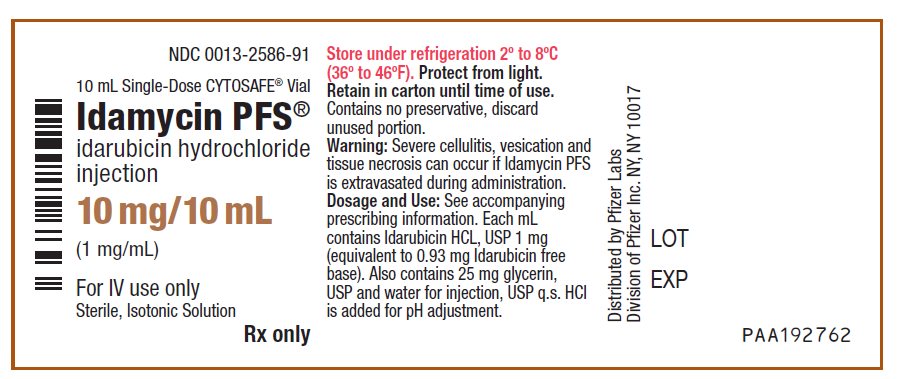
PRINCIPAL DISPLAY PANEL - 10 mg/10 mL Vial Label NDC 0013-2586-91 10 mL Single-Dose CYTOSAFE ® Vial Idamycin PFS ® idarubicin hydrochloride injection 10 mg/10 mL (1 mg/mL) For IV use only Sterile, Isotonic Solution Rx only PRINCIPAL DISPLAY PANEL - 10 mg/10 mL Vial Label
PRINCIPAL DISPLAY PANEL - 10 mL Vial Carton NDC 0013-2586-91 10 mL Single-Dose CYTOSAFE ® Vial Idamycin PFS ® idarubicin hydrochloride injection 10 mg/10 mL (1 mg/mL) For IV use only Sterile, Isotonic Solution Pfizer Hospital Rx only PRINCIPAL DISPLAY PANEL - 10 mL Vial Carton
PRINCIPAL DISPLAY PANEL - 10 mg/10 mL Glass Vial Label 10 mL Single- Dose Vial NDC 0013-2586-10 Idamycin PFS® idarubicin hydrochloride injection 10 mg/10 mL (1 mg/mL) For Intravenous Use Only Caution: Cytotoxic Agent Sterile, Isotonic Solution GUJ-DRUGS/G/28/1267 Rx only PRINCIPAL DISPLAY PANEL - 10 mg/10 mL Glass Vial Label
PRINCIPAL DISPLAY PANEL - 10 mg/10 mL Glass Vial Carton NDC 0013-2586-10 10 mL Single-Dose Vial Discard unused portion Idamycin PFS ® idarubicin hydrochloride injection 10 mg/10 mL (1 mg/mL) For Intravenous Use Only Sterile, Isotonic Solution Pfizer Hospital Rx only PRINCIPAL DISPLAY PANEL - 10 mg/10 mL Glass Vial Carton
PRINCIPAL DISPLAY PANEL - 20 mg/20 mL Vial Label NDC 0013-2596-91 20 mL Single-Dose CYTOSAFE ® Vial Idamycin PFS ® idarubicin hydrochloride injection 20 mg/20 mL (1 mg/mL) For IV use only Sterile, Isotonic Solution PRINCIPAL DISPLAY PANEL - 20 mg/20 mL Vial Label
PRINCIPAL DISPLAY PANEL - 20 mL Vial Carton NDC 0013-2596-91 20 mL Single-Dose CYTOSAFE ® Vial Idamycin PFS ® idarubicin hydrochloride injection 20 mg/20 mL (1 mg/mL) For IV use only Sterile, Isotonic Solution Pfizer Hospital Rx only PRINCIPAL DISPLAY PANEL - 20 mL Vial Carton
PRINCIPAL DISPLAY PANEL - 20 mg/20 mL Glass Vial Label NDC 0013-2596-20 20 mL Single-Dose Vial Idamycin PFS ® idarubicin hydrochloride injection 20 mg/20 mL (1 mg/mL) For Intravenous Use Only Caution: Cytotoxic Agent Sterile, Isotonic Solution Rx only PRINCIPAL DISPLAY PANEL - 20 mg/20 mL Glass Vial Label
PRINCIPAL DISPLAY PANEL - 20 mg/20 mL Glass Vial Carton NDC 0013-2596-20 20 mL Single-Dose Vial Discard unused portion Idamycin PFS ® idarubicin hydrochloride injection 20 mg/20 mL (1 mg/mL) For Intravenous Use Only Sterile, Isotonic Solution Pfizer Hospital Rx only PRINCIPAL DISPLAY PANEL - 20 mg/20 mL Glass Vial Carton
About this NDC listing & data coverage
What data is (and isn’t) available for this NDC — tap to expand
| NDC identity (package / product / labeler codes) | ✓ Available |
| Labeler | ✓ Available |
| Product & package description | ✓ Available |
| Marketing category & status | ✓ Available |
| Active ingredient / dosage form / route | ✓ Available |
| FDA label (SPL via DailyMed) | ✓ Available |
| Package photos | ✓ Available |
| Inactive ingredients (structured) | ✓ Available |
| NADAC pharmacy acquisition price (CMS) | — Not published for this NDC CMS publishes NADAC only for NDCs reported in its retail-pharmacy survey. |
| Orange Book / therapeutic-equivalence data | ✓ Available |
| HCPCS J-code billing crosswalk | ✓ Available |
| Medicaid utilization (CMS SDUD) | — Not published for this NDC CMS reports utilization only for NDCs with Medicaid claims above its privacy threshold. |