
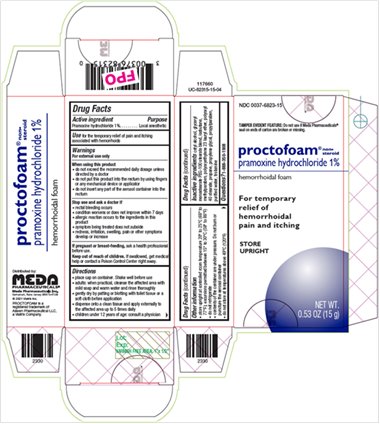
Proctofoam Ns pramoxine hydrochloride 150 mg/15g Aerosol, Foam — NDC 0037-6823-15 (Billing 00037-6823-15)
This is a package of Proctofoam Ns pramoxine hydrochloride 150 mg/15g Aerosol, Foam from Viatris Specialty LLC, marketed since Aug 2014 and currently FDA-listed; retail pharmacies pay about $6.56 per g (NADAC). It is this product's only package size.
NDC database record
One package, one record: these facts belong to NDC 0037-6823-15 alone.
- Record
- FDA NDC Directory package listing · Human OTC drug
- Code segments
- 0037 labeler · 6823 product · 15 package
- Package marketed since
- Aug 18, 2014
- Sample package
- No — commercial package
- Listing certified through
- Dec 31, 2026
- Barcode (UPC-A, from the NDC)
- 3 0037682315 0
- Medicaid fills, this package
- 58 prescriptions in the last four reported quarters
- FDA record last changed
- Jul 24, 2026
Identity & classification
Regulatory identifiers FDA, NLM and CMS codes for this package
Drug-database identifiers Medi-Span GPI and First Databank GCN / HICL / AHFS classification
- GSN (GCN sequence number): 062043
- GCN: 97827
- GPI-14 (Medi-Span): 89200030103905
- HICL (First Databank): 002977
- AHFS class code: 84:08.00.00
- RxCUI (RxNorm): 828365
Where does this data come from?
- FDA openFDA NDC Directory · synced Oct 8, 2026
- FDA label on DailyMed · label index refreshed Oct 8, 2026
- RxNorm (NLM RxNav) · catalog refreshed Oct 8, 2026
- Medi-Span GPI (licensed)
- First Databank (licensed) · refreshed Oct 8, 2026
RxNorm drug class
This medicine belongs to the Local anesthetics class.
Where does this data come from?
- RxClass (NLM) · catalog refreshed Oct 8, 2026
Clinical
Pramoxine is used to temporarily relieve pain and itching from insect bites; poison ivy, poison oak, or poison sumac; minor cuts, scrapes, or burns; minor skin irritation or rashes; or dry, itchy skin. Pramoxine also may be used to treat soreness, burning, itching, and pain from hemorrhoids (''piles'') and other minor rectal irritations or itching. Pramoxine is in a class of medications called topical anesthetics. It works by stopping nerves from sending pain signals.
Read the full MedlinePlus article ↗- It gives short-term relief from pain and itching from minor problems like sunburn, minor burns, insect bites, and poison ivy rashes. Some products are made for specific uses, like...
- That depends on the product. Many say not more than 3 to 4 times daily, and some allow up to 5 times daily. Check your label and follow it closely.
- No. It is for external use only. If it gets in your eyes, rinse thoroughly with water.
- Can I use it inside the vagina or near my eyes?
Patient education
Supplement & herbal interactions
Where does this data come from?
- MedlinePlus (NLM) · refreshed Oct 8, 2026
- FDA label on DailyMed · label index refreshed Oct 8, 2026
Ask a licensed pharmacist directly — free, answered by our team.
Pricing
A drug doesn't have one price. Each row is a different public payment system, and none is what you'd pay at the counter — that depends on your insurance. The ⓘ on each row explains what it measures.
| Price system | Per g | Per package |
|---|---|---|
| Retail pharmacies payNADAC · weekly | $6.562 | $98.42 / 15 g |
| Medicaid paysCMS SDUD · 12 mo | $6.54 | $98.16 / 15 g |
| Medicare drug plans payPart D · quarterly | No Part D plan price is available for this NDC in our data. | |
Where does this data come from?
- CMS NADAC weekly file · file of Oct 7, 2026
- CMS ASP pricing files · refreshed Sep 20, 2026
- CMS Medicaid State Drug Utilization Data · through Q1 2026
- CMS Part D plan pricing files · refreshed Sep 24, 2026
- VA National Acquisition Center price file
Packaging — all sizes for this product
| Package NDC | Description | Marketing start | Marketing end | Status |
|---|---|---|---|---|
| 00037-6823-15 You're viewing this Main listing | 1 CANISTER in 1 CARTON / 15 g in 1 CANISTER | 2014-08-18 | — | Active |
Therapeutic equivalents
| Product | Labeler | Pack | NADAC/unit | TE | Status | Price vs. this |
|---|---|---|---|---|---|---|
| Proctofoam Ns 150 mg/15gthis 00037-6823-15 | Viatris | 1 canister | $6.561 | — | Availability likely | — |
Where does this data come from?
- FDA openFDA NDC Directory · synced Oct 8, 2026
- FDA Orange Book · refreshed Oct 3, 2026
- CMS NADAC weekly file · file of Oct 7, 2026
Availability & generic status
We did not find an FDA-approved generic match for this exact strength, form and route.
Where does this data come from?
- FDA Orange Book · refreshed Oct 3, 2026
What it looks like
Where does this data come from?
- FDA label on DailyMed · label index refreshed Oct 8, 2026
Inactive Ingredients / Excipients
Inactive ingredients, also called excipients, are components of the drug product other than the active ingredient. They may include fillers, dyes, coatings, preservatives, flavors, or other formulation ingredients.
🧪 Avoiding an ingredient? See Pramoxine inactive ingredients by manufacturer: every current product's list side by side, so you can ask your pharmacy for the version that does not list it.
💡 Tap an ingredient (hover on desktop) to see what it is and why it’s used.
-
UNII 936JST6JCN
Cetyl alcohol is a waxy, fatty substance derived from plant or animal sources. It acts as an emulsifier and thickener in medicines, helping blend oil and water components and giving products a smooth, creamy texture.
-
UNII 230OU9XXE4
A waxy substance made from glycerin and stearic acid that acts as an emulsifier to blend oily and watery ingredients together. It also helps thicken and stabilize the medicine's texture.
-
UNII BXR49TP611
Isobutane is a liquefied gas used as a propellant in aerosol inhalers and sprays. It helps push the medicine out of the container so you can breathe or spray it as directed.
-
UNII N72LMW566G
A synthetic cleansing agent derived from lauryl alcohol and ethylene oxide. It helps dissolve and mix oil and water-based ingredients in liquid medicines, acting as an emulsifier and solubilizer.
-
UNII A2I8C7HI9T
Methylparaben is a preservative derived from benzoic acid that prevents growth of bacteria, fungi, and mold in medicines. It extends the product's shelf life and maintains safety during storage.
-
UNII YD01N1999R
A waxy substance made from polyethylene glycol and stearic acid. It helps mix oil and water-based ingredients together and serves as an emulsifier and solubilizer in liquid and semi-solid medicines.
-
UNII 13A4J4NH9I
A synthetic emulsifier derived from stearic acid and polyethylene glycol. It helps mix oil and water-based ingredients together in liquid medicines and creams to create a smooth, uniform product.
-
UNII T75W9911L6
A flammable gas used as a propellant in aerosol formulations. It helps dispense the medicine as a fine mist or spray when you activate the inhaler or pump.
-
UNII 6DC9Q167V3
Propylene glycol is a clear liquid derived from petroleum or vegetable sources. It acts as a solvent, humectant, and preservative in medicines, helping dissolve active ingredients and maintain product stability.
-
UNII Z8IX2SC1OH
Propylparaben is a chemical preservative used to prevent bacterial and fungal growth in medicines and personal care products. It helps extend shelf life and maintain product safety during storage.
-
UNII 9O3K93S3TK
Trolamine is an alkaline compound used as a pH buffer and emulsifier in medicines. It helps neutralize acids, stabilize formulations, and enable mixing of oil and water-based ingredients.
-
UNII 059QF0KO0R
Water is a liquid solvent that dissolves and mixes ingredients together in liquid medicines, syrups, and injections. It helps distribute the active drug evenly throughout the product.
12 inactive ingredients listed in the exact product block matched to this NDC.
Label-section wording can be broader than the structured product block and may mention additional formulation ingredients.
Where does this data come from?
ingredient classCode="IACT" elements from the exact product block matched by this NDC. Label-section narrative from DailyMed / the openFDA label index is shown separately when available.- FDA label on DailyMed · label index refreshed Oct 8, 2026
- FDA openFDA NDC Directory · synced Oct 8, 2026
Inactive ingredient FAQ
Are inactive ingredients the same for every manufacturer?
Why might an inactive ingredient be missing?
Can inactive ingredients matter?
Manufacturer & labeler
More NDCs from Viatris Specialty LLC labeler code 00037
- Depen Penicillamine 250 mg Tablet NDC 0037-4401-01
- Elestrin Estradiol .52 mg/.87g Gel, Metered NDC 0037-4801-70
- Edluar Zolpidem Tartrate 10 mg Tablet NDC 0037-6010-02
- Edluar Zolpidem Tartrate 5 mg Tablet NDC 0037-6050-30
- Urelle hyoscyamine sulfate, methenamine, methylene blue, phenyl salicylate, and sodium phosphate, monobasic, monohydrate .12 mg; 81 mg; 10.8 mg; 32.4 mg; 40.8 mg Tablet NDC 0037-6321-90
- Proctofoam HC pramoxine hydrochloride hydrocortisone acetate 100 mg/10g; 100 mg/10g Aerosol, Foam NDC 0037-6822-10
- Epifoam pramoxine hydrochloride and hydrocortisone acetate 100 mg/10g; 100 mg/10g Aerosol, Foam NDC 0037-6824-10
- Cortifoam hydrocortisone acetate 1500 mg/15g Aerosol, Foam NDC 0037-6830-15
- Dipentum olsalazine sodium 250 mg Capsule, Gelatin Coated NDC 0037-6860-10
Where does this data come from?
- FDA openFDA NDC Directory · synced Oct 8, 2026
- Drugs@FDA
FDA label — Drug Facts FDA SPL
🎯 Indications and Usage ▾
Use for the temporary relief of pain and itching associated with hemorrhoids
⏱️ Dosage and Administration ▾
Directions • place cap on container. Shake well before use • adults: when practical, cleanse the affected area with mild soap and warm water and rinse thoroughly • gently dry by patting or blotting with toilet tissue or a soft cloth before application • dispense onto a clean tissue and apply externally to the affected area up to 5 times daily • children under 12 years of age: consult a physician
⚠️ Warnings ▾
Warnings For external use only When using this product • do not exceed the recommended daily dosage unless directed by a doctor • do not put this product into the rectum by using fingers or any mechanical device or applicator • do not insert any part of the aerosol container into the rectum Stop use and ask a doctor if • rectal bleeding occurs • condition worsens or does not improve within 7 days • allergic reaction occurs to the ingredients in this product • symptom being treated does not subside • redness, irritation, swelling, pain or other symptoms develop or increase If pregnant or breast-feeding, ask a health professional before use.
Keep out of reach of children. If swallowed, get medical help or contact a Poison Control Center right away.
🧪 Active Ingredient ▾
Active ingredient Pramoxine hydrochloride 1%
🧪 Inactive Ingredients ▾
Inactive ingredients cetyl alcohol, glyceryl monostearate PEG-100 stearate blend, isobutane, methylparaben, polyoxyethylene 23 lauryl ether, polyoxyl 40 stearate, propane, propylene glycol, propylparaben, purified water, trolamine
🎯 Purpose ▾
Purpose Local anesthetic
📄 Keep Out of Reach of Children ▾
Keep out of reach of children. If swallowed, get medical help or contact a Poison Control Center right away.
📄 Other Information ▾
Other information • store upright at controlled room temperature 20° to 25°C (68° to 77°F); excursions permitted between 15° to 30°C (59° to 86°F) • do not refrigerate • contents of the container are under pressure. Do not burn or puncture the aerosol container • do not store at temperatures above 49°C (120°F)
📄 Questions or Comments ▾
Questions? 1-888-350-1908 Distributed by: Meda Pharmaceuticals Inc. Canonsburg, PA 15317 U.S.A. © 2025 Viatris Inc. PROCTOFOAM is a registered trademark of Alaven Pharmaceutical LLC, a Viatris Company..
📄 Package Label / Principal Display Panel ▾
Principal Display Panel – 1% NDC 0037-6823-15 TAMPER EVIDENT FEATURE: Do not use if Meda Pharmaceuticals ® seal on ends of carton are broken or missing. proctofoam ® non-steroid pramoxine hydrochloride 1% hemorrhoidal foam For temporary relief of hemorrhoidal pain and itching STORE UPRIGHT NET WT.
0.53OZ (15 g) Drug Facts Active ingredient Purpose Pramoxine hydrochloride 1%. . . . . . . . Local anesthetic Use for the temporary relief of pain and itching associated with hemorrhoids Warnings For external use only When using this product • do not exceed the recommended daily dosage unless directed by a doctor • do not put this product into the rectum by using fingers • or any mechanical device or applicator • do not insert any part of the aerosol container into the rectum Stop use and ask a doctor if • rectal bleeding occurs • condition worsens or does not improve within 7 days • allergic reaction occurs to the ingredients in this product • symptom being treated does not subside • redness, irritation, swelling, pain or other symptoms develop or increase If pregnant or breast-feeding, ask a health professional before use.
Keep out of reach of children. If swallowed, get medical help or contact a Poison Control Center right away. Directions • place cap on container.
Shake well before use • adults: when practical, cleanse the affected area with mild soap and warm water and rinse thoroughly • gently dry by patting or blotting with toilet tissue or a soft cloth before application • dispense onto a clean tissue and apply externally to the affected area up to 5 times daily • children under 12 years of age: consult a physician Drug Facts (continued) Other information • store upright at controlled room temperature 20° to 25°C (68° to 77°F); excursions permitted between 15° to 30°C (59° to 86°F) • do not refrigerate • contents of the container are under pressure.
Do not burn or puncture the aerosol container • do not store at temperatures above 49°C (120°F) Drug Facts (continued) Inactive ingredients cetyl alcohol, glyceryl monostearate PEG-100 stearate blend, isobutane, methylparaben, polyoxyethylene 23 lauryl ether, polyoxyl 40 stearate, propane, propylene glycol, propylparaben, purified water, trolamine Questions? 1-888-350-1908 Distributed by: MEDA PHARMACEUTICALS ® Canonsburg, PA 15317 U.S.A. ©2025 Viatris Inc. PROCTOFOAM is a registered trademark of Alaven Pharmaceutical LLC, a Viatris Company.
117789 UC-82315-15-05 Proctofoam Hydrochloride Foam Carton Label