
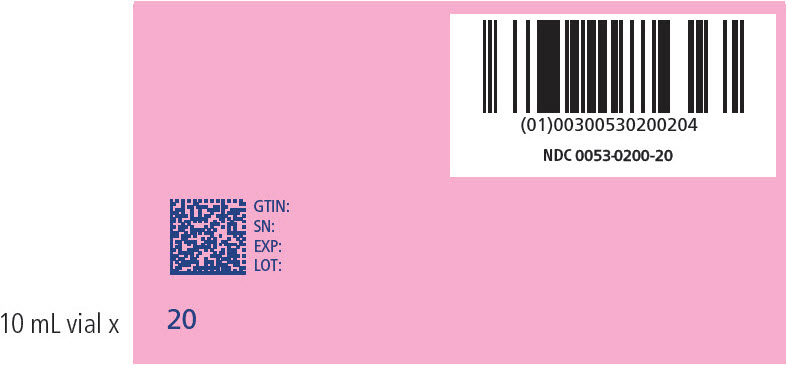
HEMGENIX etranacogene dezaparvovec Kit — NDC 0053-0200-20 (Billing 00053-0200-20)
This is a package of HEMGENIX etranacogene dezaparvovec Kit from CSL Behring, marketed since Nov 2022 and currently FDA-listed. It is this product's only package size.
NDC database record
One package, one record: these facts belong to NDC 0053-0200-20 alone.
- Record
- FDA NDC Directory package listing · Human prescription drug
- Code segments
- 0053 labeler · 0200 product · 20 package
- Package marketed since
- Nov 22, 2022
- Sample package
- No — commercial package
- Listing certified through
- Dec 31, 2027
- Barcode (UPC-A, from the NDC)
- 3 0053020020 9
- FDA record last changed
- Oct 8, 2026
Identity & classification
Regulatory identifiers FDA, NLM and CMS codes for this package
Drug-database identifiers Medi-Span GPI and First Databank GCN / HICL / AHFS classification
- GSN (GCN sequence number): 084104
- GCN: 53251
- HICL (First Databank): 048472
- AHFS class code: 20:28.16.00
- RxCUI (RxNorm): 2626772
Where does this data come from?
- FDA openFDA NDC Directory · synced Oct 8, 2026
- FDA label on DailyMed · label index refreshed Oct 8, 2026
- RxNorm (NLM RxNav) · catalog refreshed Oct 8, 2026
- Medi-Span GPI (licensed)
- First Databank (licensed) · refreshed Oct 8, 2026
RxNorm drug class
This medicine belongs to the Blood coagulation factors class.
Where does this data come from?
- RxClass (NLM) · catalog refreshed Oct 8, 2026
Clinical
Patient education
Supplement & herbal interactions
Where does this data come from?
- MedlinePlus (NLM) · refreshed Oct 8, 2026
- FDA label on DailyMed · label index refreshed Oct 8, 2026
Ask a licensed pharmacist directly — free, answered by our team.
Pricing
A drug doesn't have one price. Each row is a different public payment system, and none is what you'd pay at the counter — that depends on your insurance. The ⓘ on each row explains what it measures.
| Price system | Per each | Per package |
|---|---|---|
| Retail pharmacies payNADAC · weekly | Not in the retail survey — common for institutional, discontinued, or low-volume packs. | |
| Medicaid paysCMS SDUD · 12 mo | No recent Medicaid claims on file for this NDC — rare and low-volume NDCs are suppressed in the public data. | |
| Medicare drug plans payPart D · quarterly | No Part D plan price is available for this NDC in our data. | |
| Medicare Part B allowsASP · J1411 | No ASP payment limit on file for J1411 this quarter. | |
Where does this data come from?
- CMS NADAC weekly file
- CMS ASP pricing files · refreshed Sep 20, 2026
- CMS Medicaid State Drug Utilization Data · refreshed Oct 9, 2026
- CMS Part D plan pricing files · refreshed Sep 24, 2026
- VA National Acquisition Center price file
Billing & reimbursement
Where does this data come from?
- CMS ASP NDC-HCPCS crosswalk · refreshed Sep 22, 2026
- DMEPDAC NDC-HCPCS crosswalk
- openFDA NSDE billing units · refreshed Oct 7, 2026
Packaging — all sizes for this product
| Package NDC | Description | Marketing start | Marketing end | Status |
|---|---|---|---|---|
| 00053-0200-20 You're viewing this Main listing | 1 KIT in 1 CARTON * 1 INJECTION, SUSPENSION in 1 VIAL, GLASS | 2022-11-22 | — | Active |
Therapeutic equivalents
| Product | Labeler | Pack | NADAC/unit | TE | Status | Price vs. this |
|---|---|---|---|---|---|---|
| Hemgenix 00053-0100-10 | CSL | 1 kit | — | — | FDA listed | — |
| Hemgenix 00053-0210-21 | CSL | 1 kit | — | — | FDA listed | — |
| Hemgenix 00053-0260-26 | CSL | 1 kit | — | — | FDA listed | — |
| Hemgenix 00053-0340-34 | CSL | 1 kit | — | — | FDA listed | — |
| Hemgenix 00053-0350-35 | CSL | 1 kit | — | — | FDA listed | — |
| Hemgenix 00053-0480-48 | CSL | 1 kit | — | — | FDA listed | — |
| Hemgenix 00053-0150-15 | CSL | 1 kit | — | — | FDA listed | — |
| Hemgenix 00053-0170-17 | CSL | 1 kit | — | — | FDA listed | — |
| Hemgenix 00053-0190-19 | CSL | 1 kit | — | — | FDA listed | — |
| Hemgenix 00053-0320-32 | CSL | 1 kit | — | — | FDA listed | — |
| Hemgenix 00053-0410-41 | CSL | 1 kit | — | — | FDA listed | — |
| Hemgenix 00053-0390-39 | CSL | 1 kit | — | — | FDA listed | — |
| Hemgenix 00053-0110-11 | CSL | 1 kit | — | — | FDA listed | — |
| Hemgenix 00053-0470-47 | CSL | 1 kit | — | — | FDA listed | — |
| Hemgenix 00053-0130-13 | CSL | 1 kit | — | — | FDA listed | — |
| Hemgenixthis 00053-0200-20 | CSL | 1 kit | — | — | FDA listed | — |
| Hemgenix 00053-0330-33 | CSL | 1 kit | — | — | FDA listed | — |
| Hemgenix 00053-0360-36 | CSL | 1 kit | — | — | FDA listed | — |
| Hemgenix 00053-0400-40 | CSL | 1 kit | — | — | FDA listed | — |
| Hemgenix 00053-0430-43 | CSL | 1 kit | — | — | FDA listed | — |
| Hemgenix 00053-0220-22 | CSL | 1 kit | — | — | FDA listed | — |
| Hemgenix 00053-0230-23 | CSL | 1 kit | — | — | FDA listed | — |
| Hemgenix 00053-0250-25 | CSL | 1 kit | — | — | FDA listed | — |
| Hemgenix 00053-0270-27 | CSL | 1 kit | — | — | FDA listed | — |
| Hemgenix 00053-0290-29 | CSL | 1 kit | — | — | FDA listed | — |
| Hemgenix 00053-0300-30 | CSL | 1 kit | — | — | FDA listed | — |
| Hemgenix 00053-0420-42 | CSL | 1 kit | — | — | FDA listed | — |
| Hemgenix 00053-0120-12 | CSL | 1 kit | — | — | FDA listed | — |
| Hemgenix 00053-0160-16 | CSL | 1 kit | — | — | FDA listed | — |
| Hemgenix 00053-0240-24 | CSL | 1 kit | — | — | FDA listed | — |
| Hemgenix 00053-0140-14 | CSL | 1 kit | — | — | FDA listed | — |
| Hemgenix 00053-0180-18 | CSL | 1 kit | — | — | FDA listed | — |
| Hemgenix 00053-0280-28 | CSL | 1 kit | — | — | FDA listed | — |
| Hemgenix 00053-0370-37 | CSL | 1 kit | — | — | FDA listed | — |
| Hemgenix 00053-0380-38 | CSL | 1 kit | — | — | FDA listed | — |
| Hemgenix 00053-0440-44 | CSL | 1 kit | — | — | FDA listed | — |
| Hemgenix 00053-0460-46 | CSL | 1 kit | — | — | FDA listed | — |
| Hemgenix 00053-0310-31 | CSL | 1 kit | — | — | FDA listed | — |
| Hemgenix 00053-0450-45 | CSL | 1 kit | — | — | FDA listed | — |
Where does this data come from?
- FDA openFDA NDC Directory · synced Oct 8, 2026
- FDA Purple Book · refreshed Oct 5, 2026
- CMS NADAC weekly file
Availability & biosimilar status
Biologics have no small-molecule generics; biosimilar competition is tracked in the FDA Purple Book.
Why the date isn’t exact: Biosimilar timing can change because patents may be challenged, settled, licensed, added or removed, and litigation can move the real date earlier or later.
🛈 What do these terms mean?
- Biologic patent
- A patent the reference product’s maker has publicly listed. A biosimilar generally can’t launch until these expire — unless they’re invalidated or resolved in a settlement.
- Reference-product exclusivity
- A flat 12 years of FDA market protection from the biologic’s first licensure (the BPCIA). No biosimilar can be licensed before it ends, regardless of patents.
- Interchangeable exclusivity
- The first interchangeable biosimilar can earn a period as the only interchangeable version (pharmacists can substitute it without the prescriber).
- Earliest biosimilar (LOE)
- The latest of all the dates above — the soonest a biosimilar can realistically reach the market. Litigation and settlements can move it earlier.
Biologics have no small-molecule “generics” — competition comes from FDA-licensed biosimilars, tracked in the FDA Purple Book.
| Code | What it grants | Expires |
|---|---|---|
| RefProduct | Reference-product exclusivity (12-year, BPCIA) — no biosimilar can be licensed before this date | Nov 22, 2034 |
Is there a biosimilar for HEMGENIX 96-100 KG (10ML X 20)?
Why do different websites show different biosimilar dates?
Can a biosimilar launch before the last patent expires?
What does “current Purple Book estimate” mean?
What does “FDA listed” mean?
What does a patent or protection date mean here?
Where does this data come from?
- FDA Purple Book · refreshed Oct 5, 2026
Inactive Ingredients / Excipients
Inactive ingredients, also called excipients, are components of the drug product other than the active ingredient. They may include fillers, dyes, coatings, preservatives, flavors, or other formulation ingredients.
Where does this data come from?
IACT rows and label-wide narrative are kept separate; availability and product-level specificity depend on the submitted label.- FDA label on DailyMed · label index refreshed Oct 8, 2026
- FDA openFDA NDC Directory · synced Oct 8, 2026
Inactive ingredient FAQ
Are inactive ingredients the same for every manufacturer?
Why might an inactive ingredient be missing?
Can inactive ingredients matter?
Manufacturer & labeler
More NDCs from CSL Behring labeler code 00053
- HEMGENIX etranacogene dezaparvovec Kit NDC 0053-0140-14
- HEMGENIX etranacogene dezaparvovec Kit NDC 0053-0150-15
- HEMGENIX etranacogene dezaparvovec Kit NDC 0053-0160-16
- HEMGENIX etranacogene dezaparvovec Kit NDC 0053-0170-17
- HEMGENIX etranacogene dezaparvovec Kit NDC 0053-0180-18
- HEMGENIX etranacogene dezaparvovec Kit NDC 0053-0190-19
- HEMGENIX etranacogene dezaparvovec Kit NDC 0053-0210-21
- HEMGENIX etranacogene dezaparvovec Kit NDC 0053-0220-22
- HEMGENIX etranacogene dezaparvovec Kit NDC 0053-0230-23
- HEMGENIX etranacogene dezaparvovec Kit NDC 0053-0240-24
- HEMGENIX etranacogene dezaparvovec Kit NDC 0053-0250-25
- HEMGENIX etranacogene dezaparvovec Kit NDC 0053-0260-26
Where does this data come from?
- FDA openFDA NDC Directory · synced Oct 8, 2026
- Drugs@FDA
Full prescribing information FDA SPL
🎯 Indications and Usage ▾
1 INDICATIONS AND USAGE HEMGENIX is indicated for treatment of adults with Hemophilia B (congenital Factor IX deficiency) who: Currently use Factor IX prophylaxis therapy, or Have current or historical life-threatening hemorrhage, or Have repeated, serious spontaneous bleeding episodes. HEMGENIX is an adeno-associated virus vector-based gene therapy indicated for the treatment of adults with Hemophilia B (congenital Factor IX deficiency) who: Currently use Factor IX prophylaxis therapy, or Have current or historical life-threatening hemorrhage, or Have repeated, serious spontaneous bleeding episodes.
⏱️ Dosage and Administration ▾
2 DOSAGE AND ADMINISTRATION For single-use intravenous infusion only. ( 2 ) Perform baseline testing to select patients, including testing for Factor IX inhibitor presence and liver health tests. ( 2.1 ) The recommended dose of HEMGENIX is 2 × 10 13 genome copies (gc) per kg of body weight. ( 2.1 ) Administer HEMGENIX as an intravenous infusion after dilution with 0.9% normal saline at a constant infusion rate of 500 ml/hour (8 mL/min). ( 2.1 )
2.1Critical Administration-related Information For single-use intravenous infusion only. For patient selection: Perform Factor IX inhibitor titer testing. Do not administer HEMGENIX for patients with positive FIX inhibitors or a prior history for FIX inhibitors.
Perform liver health assessments, including: Enzyme testing [alanine aminotransferase (ALT), aspartate aminotransferase (AST), alkaline phosphatase (ALP) and total bilirubin)], hepatic ultrasound and elastography. In case of radiological liver abnormalities and/or sustained liver enzyme elevations, consider a consultation with hepatologist to assess eligibility for HEMGENIX. Perform laboratory tests to evaluate active hepatitis B and C.
Postpone HEMGENIX treatment until patient does not have active hepatitis B or C infection as active infection may reduce the efficacy of HEMGENIX and/or increase the risk of adverse reactions [see Warnings and Precautions (5.2) ] .
2.2Dose The recommended dose of HEMGENIX is 2 × 10 13 genome copies (gc) per kilogram (kg) of body weight (or 2 mL/kg body weight) administered as an intravenous infusion after dilution with 0.9% sodium chloride solution (normal saline) [see Dosage and Administration (2.2) ] . Calculate the dose as follows: HEMGENIX dose (in mL) = patient body weight (in kilogram) × 2 The multiplication factor 2 represents the per kilogram dose (2 × 10 13 gc/kg) divided by the amount of genome copies per mL of the HEMGENIX solution (1 × 10 13 gc/mL).
Number of HEMGENIX vials needed = HEMGENIX dose (in mL) divided by 10 (round up to next whole number of vials). The division factor 10 represents the extractable volume of HEMGENIX from each vial (10 mL). The total volume of the patient's HEMGENIX dose to be diluted may be less than the total volume of vials needed.
Example calculation for 72 kg patient: HEMGENIX dose (in ML) = 72 × 2 = 144 mL Number of HEMGENIX vials needed = 144 (mL) / 10(mL per vial) = 14.4 vials = 15 Vials (rounded up) HEMGENIX can be administered only once.
2.3Preparation The vials are for single-dose only. General precautions Prepare HEMGENIX using sterile technique under aseptic conditions, proper engineering controls (e.g., biological safety cabinet or isolator) and according to institutional policies. Do not expose HEMGENIX to the light of an ultraviolet radiation disinfection lamp.
Confirm that the patient's identity matches with the patient-specific identifier number on the outer carton. Verify the required dose of HEMGENIX based on the patient's body weight. Confirm that the carton contains sufficient number of vials to prepare the diluted HEMGENIX patient-specific infusion bag.
Parenteral drug products should be inspected visually for particulate matter and discoloration prior to administration, whenever solution and container permit. Required supplies and materials: Normal saline infusion bag(s)* of 500 mL (1 to 2 bags based on patient's body weight) Labels Information to be included on the infusion bag label: Product name: Diluted Hemgenix Patient identifier Expiration date/time (24 h from the vial removal from refrigerator) Storage condition: Room Temperature [15-25 °C (59-77 °F] protected from light.
Contains genetically modified organisms Number of infusion bag: 1 of 2 bags / 2 of 2 bags for the infusion bag(s) of 500 mL IV Infusion line/drip chamber* primed with 0.9% normal saline Infusion bag connector(s) 20 mL or larger Luer-lock syringes* 20 G Needles* or vial adaptors* 70% isopropyl alcohol Sharps disposal container The following Table shows the s… [Excerpted — this section continues on DailyMed.]
💊 Dosage Forms and Strengths ▾
3 DOSAGE FORMS AND STRENGTHS HEMGENIX is a clear and colorless suspension for intravenous infusion. HEMGENIX is provided in a kit containing 10 to 48 vials. Each kit constitutes a dosage unit based on the patient's body weight.
HEMGENIX has a nominal concentration of 1 × 10 13 gc/mL, and each vial contains an extractable volume of not less than 10 mL. HEMGENIX is a suspension for intravenous infusion. ( 3 ) HEMGENIX is provided in kits containing 10 to 48 single-use vials, each kit constituting a dosage unit based on the patient's body weight.
( 3 ) HEMGENIX has a nominal concentration of 1 × 10 13 gc/mL, and each vial contains an extractable volume of not less than 10 mL. ( 3 )
⛔ Contraindications ▾
4 CONTRAINDICATIONS None. None. ( 4 )
⚠️ Warnings and Cautions ▾
5 WARNINGS AND PRECAUTIONS Infusion reactions: Monitor during administration and for at least 3 hours after end of infusion. If symptoms occur, slow or interrupt administration. Re-start administration at a slower infusion once resolved.
( 2.3 , 5.1 ) Hepatotoxicity: Monitor transaminase levels once per week for 3 months and thereafter monthly up to 1 year after HEMGENIX administration to mitigate the risk of potential hepatotoxicity. Consider corticosteroid treatment should elevations occur and as clinically indicated ( 5.2 ) Hepatocellular carcinogenicity: For patients with preexisting risk factors consider liver ultrasound and alpha-fetoprotein testing following administration. ( 5.4 ) Monitoring Laboratory tests: Monitor for Factor IX activity and Factor IX inhibitors.
( 5.5 )
5.1Hypersensitivity and Infusion-Related Reactions Moderate to severe hypersensitivity and infusion-related reactions have occurred with HEMGENIX treatment [see Adverse Reactions (6) ] . Anaphylaxis may occur with HEMGENIX treatment. Symptoms may include chest tightness, headaches, abdominal pain, lightheadedness, flu-like symptoms, shivering, flushing, rash, and hypertension.
Monitor patients for signs or symptoms of hypersensitivity and infusion-related reaction throughout the infusion period and for at least 3 hours after end of infusion. Do not infuse the product faster than 500 mL/hour [see Adverse Reactions (6) ] . In the event of hypersensitivity or infusion reaction during administration, the infusion may be slowed or stopped.
If the infusion is stopped, restart at a slower rate when the symptoms have resolved. Consider treatment with a corticosteroid or antihistamine for management of the reaction [see Clinical Trial Experience (6.1) ] .
5.2Hepatotoxicity Hepatotoxicity with elevated liver transaminase has occurred after HEMGENIX treatment due to intravenous administration of a liver-directed AAV vector [see Adverse Reactions (6) ] . Transaminitis may be immune mediated and reduce the therapeutic efficacy of the AAV-vector based gene therapy. Monitor ALT levels by testing weekly for 3 months and thereafter monthly for up to 1 year following administration of HEMGENIX to mitigate risk of immune-mediated hepatotoxicity and potential decrease in Factor IX activity.
Investigate alternative causes of ALT and other transaminase elevations. In case of increased ALT levels above the upper limit of normal or double baseline levels consider a course of corticosteroid, with a subsequent taper, along with Factor IX activity monitoring Monitor ALT until it returns to baseline, or until after completion of corticosteroid treatment or as clinically indicated. [see Clinical Trial Experience (6.1) ]
5.3Immune-mediated neutralization of the AAV5 vector capsid In AAV-vector based gene therapies, preexisting neutralizing anti-AAV antibodies may impede transgene expression at desired therapeutic levels. Immune-mediated neutralizing antibodies to AAV5 vector capsid occurred after treatment with HEMGENIX. Following treatment with HEMGENIX all patients developed neutralizing anti-AAV5 antibodies.
5.4Hepatocellular carcinogenicity Hepatocellular carcinoma related to HEMGENIX has not been observed. Hepatocellular carcinoma may develop after treatment with HEMGENIX due to the integration of liver-targeting AAV vector DNA into the genome. Monitor for hepatocellular carcinomas for five years following administration of HEMGENIX in patients at high risk for hepatocellular carcinoma through abdominal ultrasound screenings and serum alfa-fetoprotein (AFP) levels. [see Clinical Trials Experience (6.1) ] .
5.5Monitoring Laboratory Tests Monitor plasma Factor IX activity (e.g., weekly for 3 months) by performing either activated partial thromboplastin time (aPTT)-based one-stage clotting assay (OSA) or chromogenic substrate assay (CSA). Factor IX activity results may be lower with CSA compared to OSA [ see Pharmacodynamics (12.2) ]. Monitor Factor IX activity using same… [Excerpted — this section continues on DailyMed.]
🤒 Adverse Reactions ▾
6 ADVERSE REACTIONS The most common adverse reactions (incidence ≥5%) were elevated ALT, headache, blood creatine kinase elevations, flu-like symptoms, infusion-related reactions, fatigue, malaise and elevated AST. ( 6 ) To report SUSPECTED ADVERSE REACTIONS, contact CSL Behring at 1-866-915-6958 or FDA at 1-800-FDA-1088 or www.fda.gov/medwatch .
6.1Clinical Trials Experience Because clinical trials are conducted under widely varying conditions, adverse reaction rates observed in the clinical trials of a drug cannot be directly compared to rates in the clinical trials of another drug and may not reflect the rates observed in clinical practice. The safety of HEMGENIX was evaluated in two clinical studies (study 1 enrolled 3 patients and study 2 enrolled 54 patients). Both studies enrolled adult male patients with moderately severe or severe Hemophilia B (N = 57), who received a single intravenous dose of 2 × 10 13 gc/kg body weight of HEMGENIX.
Three patients in study 1 and 50 of 54 patients from study 2 completed the study-specific 5-year follow-up period. No serious adverse reactions were reported [see Clinical Studies (14) ] . The most common adverse reactions observed in ≥5% of patients post-dose are listed in Table 4: Table 4.
Adverse Reactions (Incidence ≥5%) Following Treatment with HEMGENIX Months 0-24 Adverse Reactions ≥5% Patients (%) (N = 57) Alanine aminotransferase increased 23 (40%) Headache 10 (18%) Blood creatine kinase increased 24 (42%) Flu-like symptoms 8 (14%) Infusion-related reactions Infusion-related reaction: Symptoms occurred during and after infusion in 7 and 12 patients, respectively. Infusions were temporarily interrupted and resumed at a slower infusion rate after treatment with antihistamines and/or corticosteroids in 3 patients.
Eleven patients recovered on the day of or day after infusion, and eight patients recovered within 8 days after infusion. (see below) 19 (33%) Hypersensitivity 2 Hypersensitivity reactions occurred within 10-12 minutes following initiation of HEMGENIX infusion. One patient needed supportive therapy and received only 10% of the intended HEMGENIX dose.
The other patient did not receive supportive therapy and received the full HEMGENIX dose. Symptoms resolved in both patients on the same day. (4%) Fatigue 7 (12%) Aspartate aminotransferase increased 24 (42%) Nausea 4 (7%) Malaise 7 (12%) Hepatic transaminases were monitored weekly for 3 months and then monthly thereafter till 1 year following HEMGENIX administration.
There were 23 patients who had asymptomatic elevated ALT values > ULN during the first 2-years post-administration (median ALT = 65, range = 41-275). Seventeen of 23 patients had elevated ALT levels in the first 4 months after HEMGENIX administration. The remaining 6 patients had elevated ALT levels between months 4-24.
ALT levels were elevated in 9 patients at the end of the 2-year follow-up period. Four patients had ALT elevations >2-3× ULN (range = 89 IU/L – 130 IU/L), one patient had an ALT elevation > 3-5× ULN (range = 157 IU/L – 214 IU/L) and one patient had an ALT elevation > 5× ULN (275 IU/L). The patient who had the ALT elevation >5× ULN occurred 3 weeks after HEMGENIX administration.
The remaining seventeen patients had ALT elevation ≤2× ULN. Nine patients with ALT elevations received a tapered course of corticosteroids based on a schedule as outlined in Table 5. The median (range) time to corticosteroid initiation was 41 (22-61) days.
The median (range) duration of corticosteroid treatment for the elevated ALT was 73 (51-130) days. Fourteen patients had elevated ALT levels and were not treated with corticosteroids. Table 5.
Prednisolone Treatment Applied in Clinical Studies With HEMGENIX: Timeline Medications equivalent to prednisolone may also be used. A combined immunosuppressant regimen or the use of other products can be considered in case of prednisolone treatment failure or contraindication. , Corticosteroid taper may be individualized based on… [Excerpted — this section continues on DailyMed.]
👥 Use in Specific Populations ▾
8 USE IN SPECIFIC POPULATIONS No dose adjustment is required in geriatric, hepatic, or renal impaired patients. ( 8.5 , 8.6 , 8.7 )
8.1Pregnancy Risk Summary HEMGENIX is not intended for administration in women. No adverse effects on mating rate and fertility indices or fetal weights were observed in healthy naïve female mice mated with healthy male mice that were intravenously administered a predecessor of HEMGENIX product 6 days prior to mating. Vector DNA was not detected in the uterus, placenta, or fetus.
In the United States general population, the estimated background risk of major birth defects and miscarriage in clinically recognized pregnancies is 2 to 4% and 15 to 20%, respectively.
8.2Lactation Risk Summary HEMGENIX is not intended for administration in women.
8.3Females and Males of Reproductive Potential Risk Summary No clinical studies have been performed to evaluate the effects of HEMGENIX on fertility in humans. Twenty days after intravenous administration of a predecessor of HEMGENIX product in healthy male mice, vector DNA was detected in all reproductive tissues examined (epididymis, seminal vesicles, testes, and sperm). However, no differences were observed in mating rates and fertility indices in healthy naïve female mice following mating with the dosed males.
8.4Pediatric Use The safety and efficacy of HEMGENIX in pediatric patients have not been established.
8.5Geriatric Use The clinical studies included a total of 6 geriatric patients with Hemophilia B, aged 68 to 75 years at time of enrollment. No meaningful differences in the safety and efficacy profile were observed in these patients compared to patients aged 18 to 65 years, and no dose adjustment was made [see Clinical Studies (14) ] .
8.6Hepatic Impairment Limited clinical data in patients with liver impairment indicate numerically lower FIX activity as compared to patients without hepatic impairment [see Clinical Pharmacology (12.3) ] . In the clinical studies, no dose adjustment was made in patients with hepatic pathologies. The safety and efficacy in patients with advanced hepatic impairment, including cirrhosis, advanced liver fibrosis, or uncontrolled hepatitis B and C, have not been studied.
8.7Renal Impairment Limited clinical data are available in patients with mild and moderate renal impairment [see Clinical Pharmacology (12.3) ] . In the clinical studies, no dose adjustment was made in these patients. The safety and efficacy in patients with severe renal impairment and end-stage renal disease have not been studied.
🤰 Pregnancy ▾
8.1Pregnancy Risk Summary HEMGENIX is not intended for administration in women. No adverse effects on mating rate and fertility indices or fetal weights were observed in healthy naïve female mice mated with healthy male mice that were intravenously administered a predecessor of HEMGENIX product 6 days prior to mating. Vector DNA was not detected in the uterus, placenta, or fetus.
In the United States general population, the estimated background risk of major birth defects and miscarriage in clinically recognized pregnancies is 2 to 4% and 15 to 20%, respectively.
🧒 Pediatric Use ▾
8.4Pediatric Use The safety and efficacy of HEMGENIX in pediatric patients have not been established.
🧓 Geriatric Use ▾
8.5Geriatric Use The clinical studies included a total of 6 geriatric patients with Hemophilia B, aged 68 to 75 years at time of enrollment. No meaningful differences in the safety and efficacy profile were observed in these patients compared to patients aged 18 to 65 years, and no dose adjustment was made [see Clinical Studies (14) ] .
🧬 Clinical Pharmacology ▾
12 CLINICAL PHARMACOLOGY
12.1Mechanism of Action HEMGENIX is an adeno-associated virus serotype 5 (AAV5) based gene therapy designed to deliver a copy of a gene encoding the Padua variant of human coagulation Factor IX (hFIX-Padua). Single intravenous infusion of HEMGENIX results in cell transduction and increase in circulating Factor IX activity in patients with Hemophilia B.
12.2Pharmacodynamics Factor IX activity The mean Factor IX activity levels over time, as measured by one-stage [activated Partial Thromboplastin Time (aPTT)-based] assay are summarized in Table 6. Patients achieved a mean (± SD) uncontaminated (i.e., excluding measurements within five half-lives of Factor IX replacement therapy) Factor IX activity levels of 39% (± 18.7), 41.5% (± 21.7), 36.9% (± 21.4), 36.7% (± 19.0), and 36.1% (± 15.7) of normal, respectively, at 6, 12, 18, 24, and 60 months. The time to onset of Factor IX protein expression post-dose was detectable by first uncontaminated measurement at Week 3 in the clinical efficacy study (N = 54) [see Clinical Studies (14) ] .
Table 6. Summary of Uncontaminated Factor IX Activity Over Time Following Administration of 2 × 10 13 gc/kg of HEMGENIX [FAS; One-Stage (aPTT-Based) Assay] Factor IX Activity in % (One-stage) Subject Number ( Contaminated and missing values are not shown here. Specifically, the number of patients excluded for contamination with Factor IX replacement therapy at Week 3, Month 3, Month 6, Month 12, Month 18, Month 24, Month 36, Month 48, and Month 60 were 10, 3, 3, 3, 3, 2, 2, 3, 1, respectively. n) Median (Min, Max) Mean (SD) Abbreviations: SD = Standard Deviation; FAS = Full Analysis Set including all 54 patients dosed; Min = Minimum; Max = Maximum.
Uncontaminated Factor IX activity values exclude measurements within five half-lives of Factor IX replacement therapy. Week 3 43 23.7 (4.9, 56.7) 26.8 (12.7) Month 3 51 33.8 (7.6, 91.0) 36.8 (18.2) Month 6 51 37.3 (8.2, 97.1) 39.0 (18.7) Month 12 50 39.9 (5.9, 113.0) 41.5 (21.7) Month 18 50 33.6 (4.5, 122.9) 36.9 (21.4) Month 24 50 33.9 (4.7, 99.2) 36.7 (19.0) Month 36 48 36.0 (4.8, 80.3) 38.6 (17.8) Month 48 47 34.6 (4.7, 80.1) 37.4 (16.7) Month 60 48 35.5 (5.5, 74.5) 36.1 (15.7) In the clinical efficacy study with HEMGENIX, the post-dose Factor IX activity measured with chromogenic substrate assay (CSA) returned lower values with the mean CSA to OSA Factor IX activity ratio ranging from 0.41 to 0.55.
Pharmacodynamics in specific populations Age Limited data (N = 7) from 60 -75 years subgroup showed that the mean Factor IX activity levels were approximately up to 2-fold higher in this subgroup compared to 18 to < 40 years age subgroup (N = 31), but comparable to 40 to <60 years age subgroup (N = 15). Hepatic Impairment In the clinical efficacy study, patients with varying degree of baseline liver pathology, specifically the degree of hepatic steatosis with the Controlled Attenuation Parameter (CAP) score of ≥S2 (≥260 decibels/m; range: 262 to 400; n = 12) versus <S2 (<260 decibels/m; range: 100 to 259; n = 28;) and missing score (n = 14) were compared [see Clinical Studies (14) ] .
The mean (± SD) uncontaminated Factor IX activity for <S2 versus ≥S2 subgroups at Months 6, 12, 18, and 24 post dose were 40.8 (±20.1) versus 34.5 (±13.7), 46.4 (±24.1) versus 32.6 (±18.6), 41.6 (±25.7) versus 29.2 (±13.7), and 40.2 (±19.8) versus 28.4 (±13.1), respectively. Patients with advanced liver impairment and advanced fibrosis (elastography of e.g., ≥9 kPA, or suggestive of or equal to METAVIR Stage 3 disease), were not studied. Renal Impairment In the clinical efficacy study, patients with mild renal impairment (creatinine clearance (CLcr) = 60 to 89 mL/min defined by Cockcroft-Gault equation, n = 7) had about 37% higher Factor IX activity relative to those with normal renal function (CLcr ≥90 mL/min; n = 45) following HEMGENIX administration.
One subject with moderate renal impairment (CLcr = 30 to 59 mL/min) had similar Factor IX activity a… [Excerpted — this section continues on DailyMed.]
🧬 Mechanism of Action ▾
12.1Mechanism of Action HEMGENIX is an adeno-associated virus serotype 5 (AAV5) based gene therapy designed to deliver a copy of a gene encoding the Padua variant of human coagulation Factor IX (hFIX-Padua). Single intravenous infusion of HEMGENIX results in cell transduction and increase in circulating Factor IX activity in patients with Hemophilia B.
📦 How Supplied / Storage and Handling ▾
16 HOW SUPPLIED/STORAGE AND HANDLING
16.1How Supplied HEMGENIX is supplied as sterile, preservative-free, clear, and colorless suspension. HEMGENIX has a nominal concentration of 1 × 10 13 gc/mL. HEMGENIX is provided as a customized kit to meet dosing requirements for each patient [see Dosage and Administration (2.1) ], with each kit containing 10 (ten) to 48 (forty-eight) single-use vials (NDC 0053-0099-01), each with an extractable volume of no less than 10 mL of HEMGENIX (see5) .
The total number of vials in each kit corresponds to the dosing requirement for the individual patient depending on the patient`s body weight [se e Dosage and Administration (2.1) ] . The customized kit is accompanied with patient`s specific identifier number (Lot) on the outer carton. Each HEMGENIX kit may contain different drug product lots.
Kit sizes and National Drug Codes (NDC) are provided in Table 8: Table 8. HEMGENIX Multi-Vial Kits Total Number of Vials per Kit Patient Body Weight (kg) Total Volume per Kit (mL) NDC Number 10 46-50 100 0053-0100-10 11 51-55 110 0053-0110-11 12 56-60 120 0053-0120-12 13 61-65 130 0053-0130-13 14 66-70 140 0053-0140-14 15 71-75 150 0053-0150-15 16 76-80 160 0053-0160-16 17 81-85 170 0053-0170-17 18 86-90 180 0053-0180-18 19 91-95 190 0053-0190-19 20 96-100 200 0053-0200-20 21 101-105 210 0053-0210-21 22 106-110 220 0053-0220-22 23 111-115 230 0053-0230-23 24 116-120 240 0053-0240-24 25 121-125 250 0053-0250-25 26 126-130 260 0053-0260-26 27 131-135 270 0053-0270-27 28 136-140 280 0053-0280-28 29 141-145 290 0053-0290-29 30 146-150 300 0053-0300-30 31 151-155 310 0053-0310-31 32 156-160 320 0053-0320-32 33 161-165 330 0053-0330-33 34 166-170 340 0053-0340-34 35 171-175 350 0053-0350-35 36 176-180 360 0053-0360-36 37 181-185 370 0053-0370-37 38 186-190 380 0053-0380-38 39 191-195 390 0053-0390-39 40 196-200 400 0053-0400-40 41 201-205 410 0053-0410-41 42 206-210 420 0053-0420-42 43 211-215 430 0053-0430-43 44 216-220 440 0053-0440-44 45 221-225 450 0053-0450-45 46 226-230 460 0053-0460-46 47 231-235 470 0053-0470-47 48 236-240 480 0053-0480-48
16.2Storage and Handling HEMGENIX is shipped at 2°C to 8°C (36°F to 46°F). Upon receipt, store HEMGENIX vials in a refrigerator at 2°C to 8°C (36°F to 46°F). Store HEMGENIX in the original carton until use.
Protect HEMGENIX from light until time of dilution and administration. Do NOT FREEZE. After dilution Once diluted, store HEMGENIX in the infusion bag protected from light.
Store diluted HEMGENIX in the infusion bag at 15°C to 25°C (59°F to 77°F). Infuse the diluted product within 24 hours after the dose preparation [see Dosage and Administration (2.2) ] .
📦 Storage and Handling ▾
16.2Storage and Handling HEMGENIX is shipped at 2°C to 8°C (36°F to 46°F). Upon receipt, store HEMGENIX vials in a refrigerator at 2°C to 8°C (36°F to 46°F). Store HEMGENIX in the original carton until use.
Protect HEMGENIX from light until time of dilution and administration. Do NOT FREEZE. After dilution Once diluted, store HEMGENIX in the infusion bag protected from light.
Store diluted HEMGENIX in the infusion bag at 15°C to 25°C (59°F to 77°F). Infuse the diluted product within 24 hours after the dose preparation [see Dosage and Administration (2.2) ] .
📋 Description ▾
11 DESCRIPTION HEMGENIX (etranacogene dezaparvovec-drlb) is an adeno-associated viral vector-based gene therapy for intravenous infusion after dilution. HEMGENIX is a non-replicating recombinant AAV5 containing a codon-optimized DNA sequence of the gain-of-function Padua variant of human Factor IX (variant R338L), under control of a liver-specific promotor 1 (LP1). HEMGENIX has a nominal concentration of 1 × 10 13 gc/mL.
Each vial contains an extractable volume of no less than 10 mL of HEMGENIX and the following excipients: sucrose (50 mg/mL), polysorbate-20 (0.22 mg/mL), potassium chloride (0.2 mg/mL), potassium phosphate (0.2 mg/mL), sodium chloride (8 mg/mL), and sodium phosphate (1.2 mg/mL). HEMGENIX is sterile, clear and colorless suspension, and contains no preservative. After dilution, HEMGENIX should be clear and colorless suspension.
💬 Information for Patients ▾
17 PATIENT COUNSELING INFORMATION Inform patients that: Pre-infusion blood tests will be necessary to look for Factor IX inhibitors. If these exist, the patient is not a candidate for HEMGENIX [see Dosage and Administration (2) ] . Prior to HEMGENIX treatment, a liver ultrasound and elastography will be performed.
Patients found to have pre-existing risk factors for hepatocellular carcinoma will be monitored annually in the 5 years following infusion [see Warnings and Precautions (5.4) ] . Infusion-related and allergic reactions can occur. Patients will be monitored during and for at least 3 hours following administration.
If a reaction occurs, the infusion rate may be slowed or interrupted, then started at a slower rate [see Warnings and Precautions (5.1) ]. HEMGENIX can elevate certain liver enzymes. Weekly blood tests will be required to monitor for this for 3 months after treatment.
Corticosteroid treatment may be necessary if this occurs [see Warnings and Precautions (5.2) ]. If post-infusion bleeding is not controlled or if bleeding returns, then blood tests will be performed for Factor IX activity and neutralizing Factor IX inhibitors [see Warnings and Precautions (5.5) ] . Vector distribution in blood (within the body), and vector shedding in semen and other excreta and secreta can occur post-infusion.
It is not known how long this will continue. Patients should not donate blood, organs, tissues, or cells for transplantation [see Pharmacokinetics (12.3) ] .
🧬 Pharmacokinetics ▾
12.3Pharmacokinetics Vector Biodistribution (within the body) and Vector Shedding (excretion/secretion) Nonclinical data Biodistribution of HEMGENIX was evaluated after intravenous administration in healthy male mice and non-human primates (NHPs). The highest levels of vector DNA were detected in the liver and adrenal glands in both species. Vector DNA was also detected in all reproductive tissues examined (epididymis, seminal vesicles, and testes).
In a mating study evaluating a predecessor of HEMGENIX, transmission of vector DNA to naïve female mice following mating with dosed males was not observed [see Nonclinical Toxicology (13.2) ]. Clinical data Following administration of the predecessor of HEMGENIX at doses of 5 ×10 12 (N = 5) and 2 × 10 13 gc/kg (N = 5) in a clinical study, vector shedding was assessed in blood, saliva, nasal secretions, semen, urine, and feces. Clearance of vector DNA as confirmed by ≥3 consecutive measurements below limit of detection (LOD), using a quantitative PCR assay for vector DNA detection, was achieved in all patients at both dose levels from all the matrices except for semen, where clearance was achieved in 9/10 patients.
One subject was unable to produce semen due to a historical medical condition and, therefore, shedding from semen could not be assessed. The maximum time to clearance of vector DNA was 22 weeks for urine, 26 weeks for saliva and nasal secretions, 40 weeks for feces, 52 weeks for semen, and 159 weeks for blood. Subsequently, the vector shedding in blood and semen following HEMGENIX administration was characterized in 2 clinical studies.
In an initial clinical study (N = 3), clearance of vector DNA from semen and blood (i.e., confirmed with ≥3 consecutive measurements below LOD of vector DNA) was achieved in 2/3 patients, and in all patients, respectively, after 3 years post-administration. One subject did not return the required number of semen samples to assess the shedding status as per the definition of ≥3 consecutive measurements below LOD of vector DNA. In the clinical efficacy study (N = 54), a total of 56% (30/54) of patients achieved absence of vector DNA from blood and 69% (37/54) from semen by Month 24, as per the definition.
Nine patients for semen and 5 patients for blood did not return the required number of samples to assess the shedding status as per the definition of ≥3 consecutive measurements below LOD of vector DNA. Considering results obtained from 2 available consecutive samples below LOD, a total of 74% (40/54 ) and 87% (47/54 ) patients were identified to have reached absence of vector DNA from blood and semen, respectively, at 24 months post-administration. At Month 60, clearance of vector DNA, as per the definition and accounting for missing samples, was confirmed in 90.7% (49/54) of patients in blood and in 83.3% (45/54) of patients in semen.
🧬 Pharmacodynamics ▾
12.2Pharmacodynamics Factor IX activity The mean Factor IX activity levels over time, as measured by one-stage [activated Partial Thromboplastin Time (aPTT)-based] assay are summarized in Table 6. Patients achieved a mean (± SD) uncontaminated (i.e., excluding measurements within five half-lives of Factor IX replacement therapy) Factor IX activity levels of 39% (± 18.7), 41.5% (± 21.7), 36.9% (± 21.4), 36.7% (± 19.0), and 36.1% (± 15.7) of normal, respectively, at 6, 12, 18, 24, and 60 months. The time to onset of Factor IX protein expression post-dose was detectable by first uncontaminated measurement at Week 3 in the clinical efficacy study (N = 54) [see Clinical Studies (14) ] .
Table 6. Summary of Uncontaminated Factor IX Activity Over Time Following Administration of 2 × 10 13 gc/kg of HEMGENIX [FAS; One-Stage (aPTT-Based) Assay] Factor IX Activity in % (One-stage) Subject Number ( Contaminated and missing values are not shown here. Specifically, the number of patients excluded for contamination with Factor IX replacement therapy at Week 3, Month 3, Month 6, Month 12, Month 18, Month 24, Month 36, Month 48, and Month 60 were 10, 3, 3, 3, 3, 2, 2, 3, 1, respectively. n) Median (Min, Max) Mean (SD) Abbreviations: SD = Standard Deviation; FAS = Full Analysis Set including all 54 patients dosed; Min = Minimum; Max = Maximum.
Uncontaminated Factor IX activity values exclude measurements within five half-lives of Factor IX replacement therapy. Week 3 43 23.7 (4.9, 56.7) 26.8 (12.7) Month 3 51 33.8 (7.6, 91.0) 36.8 (18.2) Month 6 51 37.3 (8.2, 97.1) 39.0 (18.7) Month 12 50 39.9 (5.9, 113.0) 41.5 (21.7) Month 18 50 33.6 (4.5, 122.9) 36.9 (21.4) Month 24 50 33.9 (4.7, 99.2) 36.7 (19.0) Month 36 48 36.0 (4.8, 80.3) 38.6 (17.8) Month 48 47 34.6 (4.7, 80.1) 37.4 (16.7) Month 60 48 35.5 (5.5, 74.5) 36.1 (15.7) In the clinical efficacy study with HEMGENIX, the post-dose Factor IX activity measured with chromogenic substrate assay (CSA) returned lower values with the mean CSA to OSA Factor IX activity ratio ranging from 0.41 to 0.55.
Pharmacodynamics in specific populations Age Limited data (N = 7) from 60 -75 years subgroup showed that the mean Factor IX activity levels were approximately up to 2-fold higher in this subgroup compared to 18 to < 40 years age subgroup (N = 31), but comparable to 40 to <60 years age subgroup (N = 15). Hepatic Impairment In the clinical efficacy study, patients with varying degree of baseline liver pathology, specifically the degree of hepatic steatosis with the Controlled Attenuation Parameter (CAP) score of ≥S2 (≥260 decibels/m; range: 262 to 400; n = 12) versus <S2 (<260 decibels/m; range: 100 to 259; n = 28;) and missing score (n = 14) were compared [see Clinical Studies (14) ] .
The mean (± SD) uncontaminated Factor IX activity for <S2 versus ≥S2 subgroups at Months 6, 12, 18, and 24 post dose were 40.8 (±20.1) versus 34.5 (±13.7), 46.4 (±24.1) versus 32.6 (±18.6), 41.6 (±25.7) versus 29.2 (±13.7), and 40.2 (±19.8) versus 28.4 (±13.1), respectively. Patients with advanced liver impairment and advanced fibrosis (elastography of e.g., ≥9 kPA, or suggestive of or equal to METAVIR Stage 3 disease), were not studied. Renal Impairment In the clinical efficacy study, patients with mild renal impairment (creatinine clearance (CLcr) = 60 to 89 mL/min defined by Cockcroft-Gault equation, n = 7) had about 37% higher Factor IX activity relative to those with normal renal function (CLcr ≥90 mL/min; n = 45) following HEMGENIX administration.
One subject with moderate renal impairment (CLcr = 30 to 59 mL/min) had similar Factor IX activity as patients with normal renal function. HEMGENIX was not studied in patients with severe renal impairment (CLcr = 15 to 29 mL/min) or end-stage renal disease (CLcr< 15 mL/min).
🔬 Clinical Studies ▾
14 CLINICAL STUDIES The efficacy of HEMGENIX was evaluated in a prospective, open-label, single-dose, single-arm, multi-national study (NCT03569891; N = 54). The study enrolled adult male patients aged 19 to 75 years, with severe or moderately severe Hemophilia B, who received a single intravenous dose of 2 × 10 13 gc/kg body weight of HEMGENIX The 54 patients prospectively completed a lead-in period of at least six months with the intent to receive standard of care regular Factor IX prophylaxis. These 54 patients then received the indicated single intravenous dose of HEMGENIX.
Patients were then followed up weekly until Month 3, monthly until Month 12, and then at 6-month intervals until Year 5 (Month 60). Of the 54 patients, 53 patients completed at least 24 months of follow-up and 50 patients completed 60 months of efficacy follow-up. The primary efficacy evaluation was non-inferiority in annualized bleeding rate (ABR) during Months 7 to 18 after HEMGENIX treatment compared with ABR during the lead-in period as described in Table 7.
All bleeding episodes, regardless of investigator assessment, were counted. Patients were allowed to continue prophylaxis during Months 0 to 6. The ABR ratio (Months 7 to 18 post-treatment / lead-in) was 0.46 [95% CI: 0.26, 0.81], demonstrating non-inferiority of ABR during Months 7 to 18 compared to the lead-in period.
Table 7. Total Bleeding Events and ABRs (Full Analysis Set: N=54) Lead-in Period During the observational lead-in period patients used their individualized approach to Factor IX prophylaxis derived prior to enrollment in the study, rather than a standardized approach to Factor IX prophylaxis. Not all patients complied with their prescribed prophylaxis regimen during the lead-in period.
Months 7 to 18 Efficacy evaluation started from Month 7 after HEMGENIX treatment, to allow Factor IX expression to reach a steady state. after HEMGENIX treatment Abbreviations: ABR = Annualized Bleeding Rate; CI = Confidence Interval All Bleeds 136 96 An ABR of 20 was imputed for the period when three patients were on continuous prophylaxis. Follow-up time (Person-Year) 33 52 Mean Adjusted ABR (95% CI) Non-inferiority comparison and mean ABR estimates were based on a repeated measures generalized estimating equations negative binomial regression model.
4.1(3.2, 5.4) 1.9 (1.0, 3.4) Patients with Bleeds 40 (74%) 20 (37%) Patients with Zero Bleeds 14 (26%) 34 (63%) Observed Spontaneous Bleed Count (Proportion of total bleeds) For spontaneous and joint bleed counts, no imputation was done for any patients receiving continuous prophylaxis during Months 7 to 18. 50 (37%) 14 (26%) Observed Joint Bleed Count (Proportion of total bleeds) 77 (57%) 19 (35%) Four patients had regular or intermittent prophylaxis following HEMGENIX administration and are described below. An unvalidated clinical trial assay was utilized to assess preexisting neutralizing anti-AAV5 antibodies.
There were 21 patients with pre-treatment positive AAV5 antibody titers that ranged between 1:8.5-3212. Patients with detectable preexisting neutralizing anti-AAV5 antibodies up to titers of 1:678 showed mean Factor IX activity that was numerically lower compared to patients without detectable preexisting neutralizing anti-AAV5 antibodies. One patient with anti-AAV5 antibodies (1:3212) did not stop regular prophylaxis after HEMGENIX treatment due to lack of response.
One patient who received a partial dose administration continued regular prophylaxis. One patient resumed FIX prophylaxis beginning day 874. An additional patient received prophylaxis intermittently from Days 396-1825.
The adjusted ABR for months 7 to 60 after HEMGENIX treatment was 1.9 (95% CI: 1.0, 3.7). Four patients did not complete the 5-year follow-up period: 2 patients due to treatment-unrelated death, 1 subject due to receiving a treatment-unrelated liver transplantation and 1 subject due to withdrawal of consent. Another subject received around 10% of the intended dose… [Excerpted — this section continues on DailyMed.]
🧪 Nonclinical Toxicology ▾
13 NONCLINICAL TOXICOLOGY Nonclinical studies were initiated with a predecessor of HEMGENIX product, rAAV5 expressing the wild type human coagulation factor IX (rAAV5-hFIX). HEMGENIX was developed by introducing a 2-nucleotide change in the transgene for hFIX, generating the naturally occurring Padua variant of Factor IX (rAAV5-hFIX-Padua).
13.1Carcinogenesis, Mutagenesis, Impairment of Fertility No traditional nonclinical carcinogenicity or mutagenicity studies were conducted with HEMGENIX; such studies were not indicated. No adverse effects were observed in mating rates and fertility indices in healthy naïve female mice following mating with males that were administered the predecessor of HEMGENIX [see Use in specific populations (8.3) ] . To evaluate vector integration, host genomic DNA was isolated from liver tissue obtained from healthy mice and NHPs following intravenous administration of the predecessor of HEMGENIX.
For both species, the identified rAAV5-hFIX vector DNA sequences represented episomal forms that were not integrated into the host DNA. A low level of integrated rAAV5-hFIX DNA was distributed throughout the host genome with no predilection to specific integration sites, including in genes associated with malignant transformation in humans.
13.2Animal Toxicology and/or Pharmacology A pharmacology study was conducted in a murine model of Hemophilia B ( B6.129P2-F9 tm1Dws . Intravenous administration of the predecessor of HEMGENIX at dose levels ranging from 5×10 11 to 2.3×10 14 gc/kg, resulted in dose-dependent increases in plasma hFIX protein levels, plasma hFIX clotting activity, and vector transduction in the liver at 4 weeks post-dose. Intravenous administration of HEMGENIX resulted in a no-observed-adverse-effect-level of 5 × 10 13 gc/kg (the maximum dose level administered) in healthy mice and 9 × 10 13 gc/kg in NHPs.
Vector biodistribution to the liver and hFIX protein levels in the plasma occurred in a dose-dependent manner in both species. Anti-hFIX antibodies developed in 5 out of 12 NHPs administered HEMGENIX, which correlated with a decline in circulating hFIX protein levels beginning at 13 weeks post-dose. One out of 10 healthy mice administered 5 × 10 13 gc/kg of HEMGENIX or the predecessor of HEMGENIX developed pulmonary thrombi at 13 weeks post-dose.
This dose level is 2.5-fold higher than the recommended dose level for HEMGENIX. Compared to concurrent controls, prolonged prothrombin time, decreased activated partial thromboplastin time and decreased heart rates were observed in NHPs administered 9 × 10 13 gc/kg of HEMGENIX during the 26-week study. This dose level is 4.5-fold higher than the recommended dose level for HEMGENIX.
📄 Carcinogenesis, Mutagenesis, Impairment of Fertility ▾
13.1Carcinogenesis, Mutagenesis, Impairment of Fertility No traditional nonclinical carcinogenicity or mutagenicity studies were conducted with HEMGENIX; such studies were not indicated. No adverse effects were observed in mating rates and fertility indices in healthy naïve female mice following mating with males that were administered the predecessor of HEMGENIX [see Use in specific populations (8.3) ] . To evaluate vector integration, host genomic DNA was isolated from liver tissue obtained from healthy mice and NHPs following intravenous administration of the predecessor of HEMGENIX.
For both species, the identified rAAV5-hFIX vector DNA sequences represented episomal forms that were not integrated into the host DNA. A low level of integrated rAAV5-hFIX DNA was distributed throughout the host genome with no predilection to specific integration sites, including in genes associated with malignant transformation in humans.
📄 Recent Major Changes ▾
Dosage and Administration ( 2.3 ) 04/2026 Warnings and Precautions ( 5 ) 04/2026
📄 Package Label / Principal Display Panel ▾
PRINCIPAL DISPLAY PANEL - 10 ml Vial Label NDC 0053-0099-01 10 ml etranacogene dezaparvovec-drlb HEMGENIX ® 1x10 13 genome copies/mL Suspension for intravenous infusion Single-dose vial Do Not Shake Dilute before use Rx only CSL Behring PRINCIPAL DISPLAY PANEL - 10 ml Vial Label
PRINCIPAL DISPLAY PANEL - 10 ml Vial Carton NDC 0053-0099-01 etranacogene dezaparvovec-drlb HEMGENIX ® 1 x 10 13 genome copies/mL Suspension for intravenous infusion Single-dose vial 1 x 10 13 genome copies/mL. No US standard of potency. Upon receipt store refrigerated at 2°C to 8°C (36°F to 46°F) Do Not Freeze Protect from Light Do Not Shake Dilute before use See enclosed prescribing information for dosage and directions for use Rx only CSL Behring PRINCIPAL DISPLAY PANEL - 10 ml Vial Carton
PRINCIPAL DISPLAY PANEL - Kit Carton etranacogene dezaparvovec-drlb HEMGENIX ® 1 x 10 13 genome copies/mL Suspension for intravenous infusion Single-dose vial Rx only Upon receipt store refrigerated at 2°C to 8°C (36°F to 46°F) Do Not Freeze Protect from Light Do Not Shake Dilute before use Manufactured by: Genezen MA, Inc. Lexington, MA 02421 USA Manufactured for: CSL Behring LLC King of Prussia, PA 19406 USA US License No. 1767 Distributed by: CSL Behring LLC Kankakee, IL 60901 USA CSL Behring PRINCIPAL DISPLAY PANEL - Kit Carton
PRINCIPAL DISPLAY PANEL - NDC: 0053-0100-10_ 46-50 KG KIT VARIABLE LABEL etranacogene dezaparvovec-drlb HEMGENIX ® Patient Weight: 46-50 kg PRINCIPAL DISPLAY PANEL - NDC: 0053-0100-10_ 46-50 KG KIT VARIABLE LABEL
PRINCIPAL DISPLAY PANEL - NDC: 0053-0110-11_ 51-55 KG KIT VARIABLE LABEL etranacogene dezaparvovec-drlb HEMGENIX ® Patient Weight: 51-55 kg PRINCIPAL DISPLAY PANEL - NDC: 0053-0110-11_ 51-55 KG KIT VARIABLE LABEL
PRINCIPAL DISPLAY PANEL - NDC: 0053-0120-12_ 56-60 KG KIT VARIABLE LABEL etranacogene dezaparvovec-drlb HEMGENIX ® Patient Weight: 56-60 kg PRINCIPAL DISPLAY PANEL - NDC: 0053-0120-12_ 56-60 KG KIT VARIABLE LABEL
PRINCIPAL DISPLAY PANEL - NDC: 0053-0130-13_ 61-65 KG KIT VARIABLE LABEL etranacogene dezaparvovec-drlb HEMGENIX ® Patient Weight: 61-65 kg PRINCIPAL DISPLAY PANEL - NDC: 0053-0130-13_ 61-65 KG KIT VARIABLE LABEL
PRINCIPAL DISPLAY PANEL - NDC: 0053-0140-14_ 66-70 KG KIT VARIABLE LABEL etranacogene dezaparvovec-drlb HEMGENIX ® Patient Weight: 66-70 kg PRINCIPAL DISPLAY PANEL - NDC: 0053-0140-14_ 66-70 KG KIT VARIABLE LABEL
PRINCIPAL DISPLAY PANEL - NDC: 0053-0150-15_ 71-75 KG KIT VARIABLE LABEL etranacogene dezaparvovec-drlb HEMGENIX ® Patient Weight: 71-75 kg PRINCIPAL DISPLAY PANEL - NDC: 0053-0150-15_ 71-75 KG KIT VARIABLE LABEL
PRINCIPAL DISPLAY PANEL - NDC: 0053-0160-16_ 76-80 KG KIT VARIABLE LABEL etranacogene dezaparvovec-drlb HEMGENIX ® Patient Weight: 76-80 kg PRINCIPAL DISPLAY PANEL - NDC: 0053-0160-16_ 76-80 KG KIT VARIABLE LABEL
PRINCIPAL DISPLAY PANEL - NDC: 0053-0170-17_ 81-85 KG KIT VARIABLE LABEL etranacogene dezaparvovec-drlb HEMGENIX ® Patient Weight: 81-85 kg PRINCIPAL DISPLAY PANEL - NDC: 0053-0170-17_ 81-85 KG KIT VARIABLE LABEL
PRINCIPAL DISPLAY PANEL - NDC: 0053-0180-18_ 86-90 KG KIT VARIABLE LABEL etranacogene dezaparvovec-drlb HEMGENIX ® Patient Weight: 86-90 kg PRINCIPAL DISPLAY PANEL - NDC: 0053-0180-18_ 86-90 KG KIT VARIABLE LABEL
PRINCIPAL DISPLAY PANEL - NDC: 0053-0190-19_ 91-95 KG KIT VARIABLE LABEL etranacogene dezaparvovec-drlb HEMGENIX ® Patient Weight: 91-95 kg PRINCIPAL DISPLAY PANEL - NDC: 0053-0190-19_ 91-95 KG KIT VARIABLE LABEL
PRINCIPAL DISPLAY PANEL - NDC: 0053-0200-20_ 96-100 KG KIT VARIABLE LABEL etranacogene dezaparvovec-drlb HEMGENIX ® Patient Weight: 96-100 kg PRINCIPAL DISPLAY PANEL - NDC: 0053-0200-20_ 96-100 KG KIT VARIABLE LABEL
PRINCIPAL DISPLAY PANEL - NDC: 0053-0210-21_ 101-105 KG KIT VARIABLE LABEL etranacogene dezaparvovec-drlb HEMGENIX ® Patient Weight: 101-105 kg PRINCIPAL DISPLAY PANEL - NDC: 0053-0210-21_ 101-105 KG KIT VARIABLE LABEL
PRINCIPAL DISPLAY PANEL - NDC: 0053-0220-22_ 106-110 KG KIT VARIABLE LABEL etranacogene dezaparvovec-drl… [Excerpted — this section continues on DailyMed.]
Reported adverse events (FAERS)
Top reported reactions
Age at onset
Reporter sex
Where does this data come from?
About this NDC listing & data coverage
Kit / multi-component package
This NDC identifies a kit — a package containing more than one component. Structured data (pricing, ingredients, equivalents) is often reported per component rather than for the kit NDC itself, which can make this page look thinner than the components' own pages.
What data is (and isn’t) available for this NDC — tap to expand
| NDC identity (package / product / labeler codes) | ✓ Available |
| Labeler | ✓ Available |
| Product & package description | ✓ Available |
| Marketing category & status | ✓ Available |
| Active ingredient / dosage form / route | ✓ Available |
| FDA label (SPL via DailyMed) | ✓ Available |
| Package photos | ✓ Available |
| Inactive ingredients (structured) | — Not published for this NDC The labeler did not submit a structured excipient list, or no SPL is available. |
| NADAC pharmacy acquisition price (CMS) | — Not published for this NDC CMS publishes NADAC only for NDCs reported in its retail-pharmacy survey. |
| Orange Book / therapeutic-equivalence data | ✓ Available |
| HCPCS J-code billing crosswalk | ✓ Available |
| Medicaid utilization (CMS SDUD) | — Not published for this NDC CMS reports utilization only for NDCs with Medicaid claims above its privacy threshold. |