
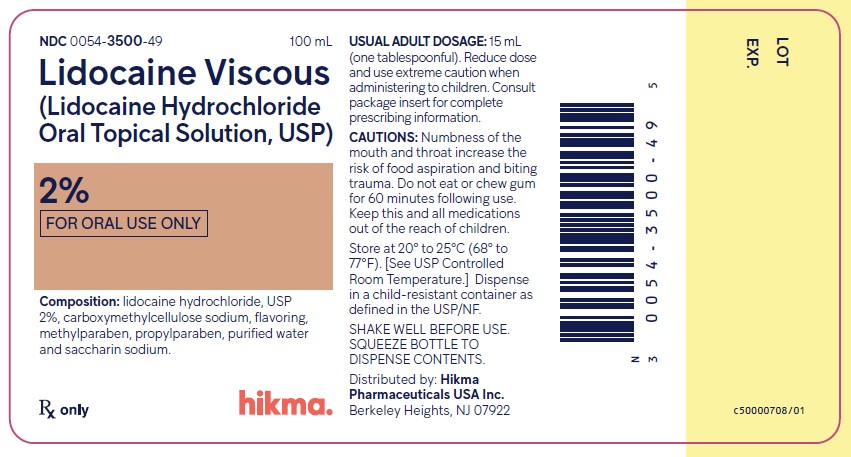
Lidocaine Viscous Lidocaine Hydrochloride 20 mg/mL Solution — NDC 0054-3500-49 (Billing 00054-3500-49)
This is a package of Lidocaine Viscous Lidocaine Hydrochloride 20 mg/mL Solution from Hikma Pharmaceuticals USA Inc., marketed since Apr 1985 and currently FDA-listed; retail pharmacies pay about $0.0825 per mL (NADAC). It is this product's only package size.
Other active recalls for Lidocaine Hydrochloride (different manufacturers) — 6 · tap to view
Identity & classification
Regulatory identifiers FDA, NLM and CMS codes for this package
Drug-database identifiers Medi-Span GPI and First Databank GCN / HICL / AHFS classification
- GSN (GCN sequence number): 003411
- GCN: 11941
- GPI-14 (Medi-Span): 88350065102050
- HICL (First Databank): 001478
- AHFS class code: 52:16.00.00
- RxCUI (RxNorm): 1010739
Where does this data come from?
- FDA openFDA NDC Directory · synced Oct 1, 2026
- FDA label on DailyMed · label index refreshed Oct 1, 2026
- RxNorm (NLM RxNav) · catalog refreshed Oct 1, 2026
- Medi-Span GPI (licensed)
- First Databank (licensed) · refreshed Oct 1, 2026
RxNorm drug class
This medicine belongs to the Antiarrhythmic class.
Where does this data come from?
- RxClass (NLM) · catalog refreshed Oct 1, 2026
Clinical
Lidocaine viscous mouth rinse is used to relieve pain of inflammation or sores of the mouth or throat. It is also used to reduce gagging during x-rays of the mouth or dental x-rays. Lidocaine is a local anesthetic. It works by blocking nerves from sending pain signals.
Read the full MedlinePlus article ↗- It's a liquid numbing medication for your mouth and throat. Doctors prescribe it to relieve pain from irritated or inflamed tissue in those areas — things like mouth sores or a sor...
- What exactly is Lidocaine Viscous used for?
- For mouth pain, you swish it around your mouth and then spit it out — you don't swallow it. For throat use, you gargle it, and in that case it may be swallowed. The most important...
- How do I use it correctly — do I swallow it?
Patient education
Supplement & herbal interactions
Where does this data come from?
- MedlinePlus (NLM) · refreshed Oct 1, 2026
- FDA label on DailyMed · label index refreshed Oct 1, 2026
Ask a licensed pharmacist directly — free, answered by our team.
Pricing
A drug doesn't have one price. Each row is a different public payment system, and none is what you'd pay at the counter — that depends on your insurance. The ⓘ on each row explains what it measures.
| Price system | Per mL | Per package |
|---|---|---|
| Retail pharmacies payNADAC · weekly | $0.083 | $8.25 / 100 ml |
| Medicaid paysCMS SDUD · 12 mo | $0.1098 | $10.98 / 100 ml |
| Medicare drug plans payPart D · Q2 2026 | $0.1035 | $10.35 / 100 ml |
Where does this data come from?
- CMS NADAC weekly file · file of Sep 30, 2026
- CMS ASP pricing files · refreshed Sep 20, 2026
- CMS Medicaid State Drug Utilization Data · through Q1 2026
- CMS Part D plan pricing files · refreshed Sep 24, 2026
- VA National Acquisition Center price file
Packaging — all sizes for this product
| Package NDC | Description | Marketing start | Marketing end | Status |
|---|---|---|---|---|
| 00054-3500-49 You're viewing this Main listing | 1 BOTTLE in 1 CARTON / 100 mL in 1 BOTTLE | 1985-04-26 | — | Active |
Therapeutic equivalents
| Product | Labeler | Pack | NADAC/unit | TE | Status | Price vs. this |
|---|---|---|---|---|---|---|
| Lidocaine Viscous 20 mg/mLthis 00054-3500-49 | Hikma | 1 bottle | $0.082 | AT | Availability likely | — |
| Lidocaine Hydrochloride 20 mg/mL 00121-0950-03 | PAI | 12 bottles | $0.082 | AT | Availability likely | — |
| Lidocaine Hydrochloride 20 mg/mL 62135-0712-42 | Chartwell | 100 ml | $0.082 | AT | Availability likely | — |
| Lidocaine hydrochloride 20 mg/mL 72888-0125-26 | Advagen | 100 ml | $0.082 | AT | Availability likely | — |
| Lidocaine hydrochloride 20 mg/mL 00116-4027-10 | Xttrium | 100 ml | — | AT | FDA listed | — |
| Lidocaine Hydrochloride 20 mg/mL 00121-4950-40 | PAI | 10 cups | — | AT | FDA listed | — |
| Lidocaine hydrochloride 20 mg/mL 17856-0138-01 | ATLANTIC | 50 cups | — | AT | FDA listed | — |
| Lidocaine hydrochloride 20 mg/mL 17856-8138-01 | Atlantic | 50 cups | — | AT | FDA listed | — |
| Lidocaine Viscous 20 mg/mL 50090-6186-00 | A-S | 1 bottle | — | AT | FDA listed | — |
| Lidocaine hydrochloride 20 mg/mL 50090-7040-00 | A-S | 100 ml | — | AT | FDA listed | — |
| Lidocaine Hydrochloride 20 mg/mL 59651-0943-01 | Aurobindo | 100 ml | — | AT | FDA listed | — |
| Lidocaine hydrochloride 20 mg/mL 60687-0870-64 | American | 10 cups | — | AT | FDA listed | — |
| Lidocaine Hydrochloride 20 mg/mL 62135-0871-24 | Chartwell | 10 cups | — | AT | FDA listed | — |
| Lidocaine Hydrochloride 20 mg/mL 66267-0962-00 | NuCare | 100 ml | — | — | FDA listed | — |
| Lidocaine Hydrochloride 20 mg/mL 68071-3449-02 | NuCare | 1 bottle | — | AT | FDA listed | — |
| Lidocaine hydrochloride 20 mg/mL 68071-3486-00 | NuCare | 100 ml | — | AT | FDA listed | — |
| Lidocaine hydrochloride 20 mg/mL 68788-8507-01 | Preferred | 100 ml | — | AT | FDA listed | — |
| Lidocaine Hydrochloride 20 mg/mL 68788-8847-01 | Preferred | 100 ml | — | AT | FDA listed | — |
| Lidocaine Hydrochloride 20 mg/mL 68999-0871-24 | Chartwell | 10 cups | — | AT | FDA listed | — |
| Lidocaine hydrochloride 20 mg/mL 70518-4030-00 | REMEDYREPACK | 100 ml | — | AT | FDA listed | — |
| Lidocaine Viscous 20 mg/mL 70518-4278-00 | REMEDYREPACK | 1 bottle | — | AT | FDA listed | — |
Where does this data come from?
- FDA openFDA NDC Directory · synced Oct 1, 2026
- FDA Orange Book · refreshed Sep 3, 2026
- CMS NADAC weekly file · file of Sep 30, 2026
Availability & generic status
This product is an FDA-approved generic. Other versions of the same drug are listed under Therapeutic equivalents, least expensive first.
Where does this data come from?
- FDA Orange Book · refreshed Sep 3, 2026
Inactive Ingredients / Excipients
Inactive ingredients, also called excipients, are components of the drug product other than the active ingredient. They may include fillers, dyes, coatings, preservatives, flavors, or other formulation ingredients.
💡 Tap an ingredient (hover on desktop) to see what it is and why it’s used.
-
UNII K679OBS311
Carboxymethylcellulose sodium is a plant-derived thickening agent made from cellulose. In medicines, it acts as a binder to hold ingredients together, a disintegrant to help the tablet break apart, or a thickener in liquids.
-
UNII A2I8C7HI9T
Methylparaben is a preservative derived from benzoic acid that prevents growth of bacteria, fungi, and mold in medicines. It extends the product's shelf life and maintains safety during storage.
-
UNII Z8IX2SC1OH
Propylparaben is a chemical preservative used to prevent bacterial and fungal growth in medicines and personal care products. It helps extend shelf life and maintain product safety during storage.
-
UNII SB8ZUX40TY
Saccharin sodium is an artificial sweetener made from saccharin salt. It's added to medicines to improve taste, especially in liquid formulations for children or bitter drugs.
-
UNII 059QF0KO0R
Water is a liquid solvent that dissolves and mixes ingredients together in liquid medicines, syrups, and injections. It helps distribute the active drug evenly throughout the product.
5 inactive ingredients listed in the exact product block matched to this NDC.
Where does this data come from?
ingredient classCode="IACT" elements from the exact product block matched by this NDC. Label-section narrative from DailyMed / the openFDA label index is shown separately when available.- FDA label on DailyMed · label index refreshed Oct 1, 2026
- FDA openFDA NDC Directory · synced Oct 1, 2026
Inactive ingredient FAQ
Are inactive ingredients the same for every manufacturer?
Why might an inactive ingredient be missing?
Can inactive ingredients matter?
Manufacturer & labeler
Where does this data come from?
- FDA openFDA NDC Directory · synced Oct 1, 2026
- Drugs@FDA
Full prescribing information FDA SPL
🚨 Boxed Warning ▾
WARNING: Life-threatening and fatal events in infants and young children Postmarketing cases of seizures, cardiopulmonary arrest, and death in patients under the age of 3 years have been reported with use of Lidocaine Viscous 2% when it was not administered in strict adherence to the dosing and administration recommendations. In the setting of teething pain, Lidocaine Viscous 2% should generally not be used. For other conditions, the use of the product in patients less than 3 years of age should be limited to those situations where safer alternatives are not available or have been tried but failed.
To decrease the risk of serious adverse events with use of Lidocaine Viscous 2%, instruct caregivers to strictly adhere to the prescribed dose and frequency of administration and store the prescription bottle safely out of reach of children.
🎯 Indications and Usage ▾
INDICATIONS AND USAGE Lidocaine is indicated for the production of topical anesthesia of irritated or inflamed mucous membranes of the mouth and pharynx. It is also useful for reducing gagging during the taking of X-ray pictures and dental impressions.
⏱️ Dosage and Administration ▾
DOSAGE AND ADMINISTRATION Adult The maximum recommended single dose of lidocaine for healthy adults should be such that the dose of lidocaine does not exceed 4.5 mg/kg or 2 mg/lb body weight and does not in any case exceed a total of 300 mg. For symptomatic treatment of irritated or inflamed mucous membranes of the mouth and pharynx, the usual adult dose is 15 mL undiluted. For use in the mouth, the solution should be swished around in the mouth and spit out.
For use in the pharynx, the undiluted solution should be gargled and may be swallowed. This dose should not be administered at intervals of less than three hours, and not more than eight doses should be given in a 24-hour period. The dosage should be adjusted commensurate with the patient’s age, weight and physical condition [see PRECAUTIONS ].
Pediatric Care must be taken to ensure correct dosage in all pediatric patients as there have been cases of overdose due to inappropriate dosing. It is difficult to recommend a maximum dose of any drug for children since this varies as a function of age and weight. For children over 3 years of age who have a normal lean body mass and normal body development, the maximum dose is determined by the child’s weight or age.
For example: in a child of 5 years weighing 50 lbs., the dose of lidocaine should not exceed 75 to 100 mg (3.7 to 5 mL of lidocaine). For infants and in children under 3 years of age, the solution should be accurately measured and no more than 1.2 mL be applied to the immediate area with a cotton-tipped applicator. Wait at least 3 hours before giving the next dose; a maximum of four doses may be given in a 12-hour period.
Lidocaine should only be used if the underlying condition requires treatment with a volume of product that is less than or equal to 1.2 mL.
⛔ Contraindications ▾
CONTRAINDICATIONS Lidocaine is contraindicated in patients with a known history of hypersensitivity to local anesthetics of the amide type, or to other components of the solution.
⚠️ Warnings ▾
WARNINGS EXCESSIVE DOSAGE, OR SHORT INTERVALS BETWEEN DOSES, CAN RESULT IN HIGH PLASMA LEVELS AND SERIOUS ADVERSE EFFECTS. PATIENTS SHOULD BE INSTRUCTED TO STRICTLY ADHERE TO THE RECOMMENDED DOSAGE AND ADMINISTRATION GUIDELINES AS SET FORTH IN THIS PACKAGE INSERT. THE MANAGEMENT OF SERIOUS ADVERSE REACTIONS MAY REQUIRE THE USE OF RESUSCITATIVE EQUIPMENT, OXYGEN, AND OTHER RESUSCITATIVE DRUGS.
Lidocaine should be used with extreme caution if the mucosa in the area of application has been traumatized, since under such conditions there is the potential for rapid systemic absorption. Life-threatening and fatal events in infants and young children Postmarketing cases of seizures, cardiopulmonary arrest, and death in patients under the age of 3 years have been reported with use of Lidocaine Viscous 2% when it was not administered in strict adherence to the dosing and administration recommendations. In the setting of teething pain, Lidocaine Viscous 2% should generally not be used.
For other conditions, the use of the product in patients less than 3 years of age should be limited to those situations where safer alternatives are not available or have been tried but failed. Methemoglobinemia Cases of methemoglobinemia have been reported in association with local anesthetic use. Although all patients are at risk for methemoglobinemia, patients with glucose-6-phosphate dehydrogenase deficiency, congenital or idiopathic methemoglobinemia, cardiac or pulmonary compromise, infants under 6 months of age, and concurrent exposure to oxidizing agents or their metabolites are more susceptible to developing clinical manifestations of the condition.
If local anesthetics must be used in these patients, close monitoring for symptoms and signs of methemoglobinemia is recommended. Signs of methemoglobinemia may occur immediately or may be delayed some hours after exposure, and are characterized by a cyanotic skin discoloration and/or abnormal coloration of the blood. Methemoglobin levels may continue to rise; therefore, immediate treatment is required to avert more serious central nervous system and cardiovascular adverse effects, including seizures, coma, arrhythmias, and death.
Discontinue Lidocaine Viscous 2% and any other oxidizing agents. Depending on the severity of the signs and symptoms, patients may respond to supportive care, i.e., oxygen therapy, hydration. A more severe clinical presentation may require treatment with methylene blue, exchange transfusion, or hyperbaric oxygen.
🤒 Adverse Reactions ▾
ADVERSE REACTIONS Adverse experiences following the administration of lidocaine are similar in nature to those observed with other amide local anesthetic agents. These adverse experiences are, in general, dose-related and may result from high plasma levels caused by excessive dosage or rapid absorption, or may result from a hypersensitivity, idiosyncrasy or diminished tolerance on the part of the patient. Serious adverse experiences are generally systemic in nature.
The following types are those most commonly reported: Central Nervous System CNS manifestations are excitatory and/or depressant and may be characterized by lightheadedness, nervousness, apprehension, euphoria, confusion, dizziness, drowsiness, tinnitus, blurred or double vision, vomiting, sensations of heat, cold or numbness, twitching, tremors, convulsions, unconsciousness, respiratory depression and arrest. The excitatory manifestations may be very brief or may not occur at all, in which case the first manifestation of toxicity may be drowsiness merging into unconsciousness and respiratory arrest.
Drowsiness following the administration of lidocaine is usually an early sign of a high blood level of the drug and may occur as a consequence of rapid absorption. Cardiovascular System Cardiovascular manifestations are usually depressant and are characterized by bradycardia, hypotension, and cardiovascular collapse, which may lead to cardiac arrest. Allergic Allergic reactions are characterized by cutaneous lesions, urticaria, edema or anaphylactoid reactions.
Allergic reactions may occur as a result of sensitivity either to the local anesthetic agent or to the methylparaben and/or propylparaben used in this formulation. Allergic reactions as a result of sensitivity to lidocaine are extremely rare and, if they occur, should be managed by conventional means. The detection of sensitivity by skin testing is of doubtful value.
🔄 Drug Interactions ▾
Drug Interactions Patients who are administered local anesthetics are at increased risk of developing methemoglobinemia when concurrently exposed to the following drugs, which could include other local anesthetics: Examples of Drugs Associated with Methemoglobinemia: Class Examples Nitrates/Nitrites nitroglycerin, nitroprusside, nitric oxide, nitrous oxide Local anesthetics benzocaine, lidocaine, bupivacaine, mepivacaine, tetracaine, prilocaine, procaine, articaine, ropivacaine Antineoplastic agents cyclophosphamide, flutamide, rasburicase, ifosfamide, hydroxyurea Antibiotics dapsone, sulfonamides, nitrofurantoin, para-aminosalicylic acid Antimalarials chloroquine, primaquine Anticonvulsants phenytoin, sodium valproate, phenobarbital Other drugs acetaminophen, metoclopramide, sulfasalazine, quinine
🤰 Pregnancy ▾
Pregnancy Teratogenic Effects Reproduction studies have been performed in rats at doses up to 6.6 times the human dose and have revealed no evidence of harm to the fetus caused by lidocaine. There are, however, no adequate and well-controlled studies in pregnant women. Because animal reproduction studies are not always predictive of human response, this drug should be used in pregnancy only if clearly needed.
🧒 Pediatric Use ▾
Pediatric Use Dosage in children should be reduced, commensurate with age, body weight and physical conditions. See DOSAGE AND ADMINISTRATION .
🆘 Overdosage ▾
OVERDOSAGE Acute emergencies from local anesthetics are generally related to high plasma levels encountered during therapeutic use of local anesthetics [see ADVERSE REACTIONS , WARNINGS , and PRECAUTIONS ]. Management of Local Anesthetic Emergencies The first consideration is prevention, best accomplished by careful and constant monitoring of cardiovascular and respiratory vital signs and the patient’s state of consciousness after each local anesthetic administration. The first step in the management of convulsions consist of immediate attention to the maintenance of a patent airway and assisted or controlled ventilation with oxygen.
In situations where trained personnel are readily available, ventilation should be maintained and oxygen should be delivered by a delivery system capable of permitting immediate positive airway pressure by mask. Immediately after the institution of these ventilatory measures, the adequacy of the circulation should be evaluated, keeping in mind that drugs used to treat convulsions sometimes depress the circulation when administered intravenously. Should convulsions persist despite adequate respiratory support, and if the status of the circulation permits, small increments of an ultra-short acting barbiturate (such as thiopental or thiamylal) or a benzodiazepine (such as diazepam) may be administered intravenously.
The clinician should be familiar, prior to use of local anesthetics, with these anticonvulsant drugs. Supportive treatment of circulatory depression may require administration of intravenous fluids and, when appropriate, a vasopressor as indicated by the clinical situation (e.g., ephedrine). If not treated immediately, both convulsions and cardiovascular depression can result in hypoxia, acidosis, bradycardia, arrhythmias and cardiac arrest.
If cardiac arrest should occur, standard cardiopulmonary resuscitative measures should be instituted. Dialysis is of negligible value in the treatment of acute overdosage with lidocaine. The oral LD 50 of lidocaine in non-fasted female rats is 459 (346 to 773) mg/kg (as the salt) and 214 (159 to 324) mg/kg (as the salt) in fasted female rats.
🧬 Clinical Pharmacology ▾
CLINICAL PHARMACOLOGY Mechanism of Action Lidocaine stabilizes the neuronal membrane by inhibiting the ionic fluxes required for the initiation and conduction of impulses, thereby effecting local anesthetic action. Hemodynamics Excessive blood levels may cause changes in cardiac output, total peripheral resistance, and mean arterial pressure. These changes may be attributable to a direct depressant effect of the local anesthetic agent on various components of the cardiovascular system.
The net effect is normally a modest hypotension when the recommended dosages are not exceeded. Pharmacokinetics and Metabolism Lidocaine is absorbed following topical administration to mucous membranes, its rate and extent of absorption being dependent upon concentration and total dose administered, the specific site of application, and duration of exposure. In general, the rate of absorption of local anesthetic agents following topical application occurs most rapidly after intratracheal administration.
Lidocaine is also well-absorbed from the gastrointestinal tract, but little intact drug appears in the circulation because of biotransformation in the liver. The plasma binding of lidocaine is dependent on drug concentration, and the fraction bound decreases with increasing concentration. At concentrations of 1 to 4 mcg of free base per mL, 60 to 80 percent of lidocaine is protein bound.
Binding is also dependent on the plasma concentration of the alpha-1-acid glycoprotein. Lidocaine crosses the blood-brain and placental barriers, presumably by passive diffusion. Lidocaine is metabolized rapidly by the liver, and metabolites and unchanged drug are excreted by the kidneys.
Biotransformation includes oxidative N-dealkylation, ring hydroxylation, cleavage of the amide linkage, and conjugation. N-dealkylation, a major pathway of biotransformation, yields the metabolites monoethylglycinexylidide and glycinexylidide. The pharmacological/toxicological actions of these metabolites are similar to, but less potent than, those of lidocaine.
Approximately 90% of lidocaine administered is excreted in the form of various metabolites, and less than 10% is excreted unchanged. The primary metabolite in urine is a conjugate of 4-hydroxy-2, 6-dimethylaniline. The elimination half-life of lidocaine following an intravenous bolus injection is typically 1.5 to 2 hours.
Because of the rapid rate at which lidocaine is metabolized, any condition that affects liver function may alter lidocaine kinetics. The half-life may be prolonged two-fold or more in patients with liver dysfunction. Renal dysfunction does not affect lidocaine kinetics but may increase the accumulation of metabolites.
Factors such as acidosis and the use of CNS stimulants and depressants affect the CNS levels of lidocaine required to produce overt systemic effects. Objective adverse manifestations become increasingly apparent with increasing venous plasma levels above 6 mcg free base per mL. In the rhesus monkey arterial blood levels of 18 to 21 mcg/mL have been shown to be threshold for convulsive activity.
📦 How Supplied / Storage and Handling ▾
HOW SUPPLIED Lidocaine Viscous 2% (Lidocaine Hydrochloride Oral Topical Solution, USP) The 2% oral topical solution is supplied as a clear, colorless, viscous solution . NDC 0054-0548-44: Squeeze Bottle of 20 mL NDC 0054-3500-49: Squeeze Bottle of 100 mL Store at 20° to 25°C (68° to 77°F). [See USP Controlled Room Temperature.] Dispense in a child-resistant container as defined in the USP/NF. SHAKE WELL BEFORE USE.
Distributed by: Hikma Pharmaceuticals USA Inc. Berkeley Heights, NJ 07922 C50000710/01 Revised May 2023
📋 Description ▾
DESCRIPTION Lidocaine Viscous 2% (Lidocaine Hydrochloride Oral Topical Solution, USP) contains a local anesthetic agent and is administered topically. Lidocaine Viscous 2% (Lidocaine Hydrochloride Oral Topical Solution, USP) contains lidocaine hydrochloride, which is chemically designated as acetamide, 2-(diethylamino)- N -(2,6-dimethylphenyl)-,monohydrochloride, monohydrate and has the following structural formula: The molecular formula of lidocaine is C 14 H 22 N 2 O • HCl • H 2 O. The molecular weight is 288.81.
Composition of Solution : Each mL contains 20 mg (2%) of lidocaine hydrochloride, USP and the following inactive ingredients: carboxymethylcellulose sodium, flavoring, methylparaben, propylparaben, purified water and saccharin sodium. lidocaine-chem-structure.jpg
💬 Information for Patients ▾
Information for Patients Parents and caregivers should be cautioned about the following: • For patients under 3 years of age, special care must be given to accurately measuring the prescribed dose and not administering the product more often than prescribed. • To ensure accuracy, we recommend you use a measuring device to carefully measure the correct volume. • The product should only be used for the prescribed indication. • To reduce the risk of accidental ingestion, the product container should be tightly closed and the product should be stored well out of reach of all children immediately after each use. • If the patient shows signs of systemic toxicity (e.g., lethargy, shallow breathing, seizure activity) emergency medical attention should besought immediately and no additional product should be administered. • Unused product should be discarded in a manner that prevents possible exposure to children and pets.
All patients should be aware that when topical anesthetics are used in the mouth or throat, the production of topical anesthesia may impair swallowing and thus enhance the danger of aspiration. For this reason, food should not be ingested for 60 minutes following use of local anesthetic preparations in the mouth or throat area. This is particularly important in children because of their frequency of eating.
Numbness of the tongue or buccal mucosa may increase the danger of biting trauma. For this reason food and/or chewing gum should not be used while the mouth or throat area is anesthetized. Inform patients that use of local anesthetics may cause methemoglobinemia, a serious condition that must be treated promptly.
Advise patients or caregivers to seek immediate medical attention if they or someone in their care experience the following signs or symptoms: pale, gray, or blue colored skin (cyanosis); headache; rapid heart rate; shortness of breath; lightheadedness; or fatigue.
⚠️ Precautions ▾
PRECAUTIONS Information for Patients Parents and caregivers should be cautioned about the following: • For patients under 3 years of age, special care must be given to accurately measuring the prescribed dose and not administering the product more often than prescribed. • To ensure accuracy, we recommend you use a measuring device to carefully measure the correct volume. • The product should only be used for the prescribed indication. • To reduce the risk of accidental ingestion, the product container should be tightly closed and the product should be stored well out of reach of all children immediately after each use. • If the patient shows signs of systemic toxicity (e.g., lethargy, shallow breathing, seizure activity) emergency medical attention should besought immediately and no additional product should be administered. • Unused product should be discarded in a manner that prevents possible exposure to children and pets.
All patients should be aware that when topical anesthetics are used in the mouth or throat, the production of topical anesthesia may impair swallowing and thus enhance the danger of aspiration. For this reason, food should not be ingested for 60 minutes following use of local anesthetic preparations in the mouth or throat area. This is particularly important in children because of their frequency of eating.
Numbness of the tongue or buccal mucosa may increase the danger of biting trauma. For this reason food and/or chewing gum should not be used while the mouth or throat area is anesthetized. Inform patients that use of local anesthetics may cause methemoglobinemia, a serious condition that must be treated promptly.
Advise patients or caregivers to seek immediate medical attention if they or someone in their care experience the following signs or symptoms: pale, gray, or blue colored skin (cyanosis); headache; rapid heart rate; shortness of breath; lightheadedness; or fatigue. General The safety and effectiveness of lidocaine depend on proper dosage, correct technique, adequate precautions, and readiness for emergencies [see WARNINGS and ADVERSE REACTIONS ]. The lowest dosage that results in effective anesthesia should be used to avoid high plasma levels and serious adverse effects.
Repeated doses of lidocaine may cause significant increases in blood levels with each repeated dose because of slow accumulation of the drug and/or its metabolites. Tolerance varies with the status of the patient. Debilitated, elderly patients, acutely ill patients, and children should be given reduced doses commensurate with their age, weight and physical condition.
Lidocaine should also be used with caution in patients with severe shock or heart block. Lidocaine should be used with caution in persons with known drug sensitivities. Patients allergic to paraaminobenzoic acid derivatives (procaine, tetracaine, benzocaine, etc.) have not shown cross sensitivity to lidocaine.
Drug Interactions Patients who are administered local anesthetics are at increased risk of developing methemoglobinemia when concurrently exposed to the following drugs, which could include other local anesthetics: Examples of Drugs Associated with Methemoglobinemia: Class Examples Nitrates/Nitrites nitroglycerin, nitroprusside, nitric oxide, nitrous oxide Local anesthetics benzocaine, lidocaine, bupivacaine, mepivacaine, tetracaine, prilocaine, procaine, articaine, ropivacaine Antineoplastic agents cyclophosphamide, flutamide, rasburicase, ifosfamide, hydroxyurea Antibiotics dapsone, sulfonamides, nitrofurantoin, para-aminosalicylic acid Antimalarials chloroquine, primaquine Anticonvulsants phenytoin, sodium valproate, phenobarbital Other drugs acetaminophen, metoclopramide, sulfasalazine, quinine Carcinogenesis, Mutagenesis, Impairment of Fertility Studies of lidocaine in animals to evaluate the carcinogenic and mutagenic potential or the effect on fertility have not been conducted.
Pregnancy Teratogenic Effects Reproduction studies have been performed in… [Excerpted — this section continues on DailyMed.]
🍼 Nursing Mothers ▾
Nursing Mothers It is not known whether this drug is excreted in human milk. Because many drugs are excreted in human milk, caution should be exercised when lidocaine is administered to nursing women.
📄 Carcinogenesis, Mutagenesis, Impairment of Fertility ▾
Carcinogenesis, Mutagenesis, Impairment of Fertility Studies of lidocaine in animals to evaluate the carcinogenic and mutagenic potential or the effect on fertility have not been conducted.
📄 Package Label / Principal Display Panel ▾
Package/Label Display Panel NDC 0054-3500-49 Lidocaine Viscous (Lidocaine Hydrochloride Oral Topical Solution USP) 100mL lidocaine-vis-0054-3500-bl
Package/Label Display Panel NDC 0054-0548-44 Lidocaine Viscous (Lidocaine Hydrochloride Oral Topical Solution USP) 15mL fpl-label-2-per-d15ml-ots-02-01.jpg