
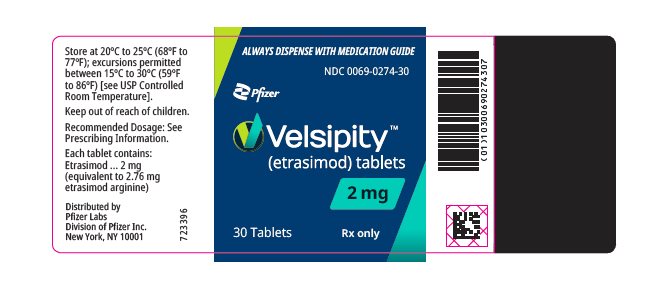
Velsipity etrasimod 2 mg Tablet, Film Coated, 30-count — NDC 0069-0274-30 (Billing 00069-0274-30)
This is a package of 30 tablets of Velsipity etrasimod 2 mg Tablet, Film Coated from Pfizer Laboratories Div Pfizer Inc, marketed since Oct 2023 and currently FDA-listed. It is this product's only package size.
NDC database record
One package, one record: these facts belong to NDC 0069-0274-30 alone.
- Record
- FDA NDC Directory package listing · Human prescription drug
- Code segments
- 0069 labeler · 0274 product · 30 package
- Package marketed since
- Oct 19, 2023
- Sample package
- No — commercial package
- Listing certified through
- Dec 31, 2026
- Billing quantity
- 30 EA per package
- Barcode (UPC-A, from the NDC)
- 3 0069027430 0
- Medicaid fills, this package
- 394 prescriptions in the last four reported quarters
- FDA record last changed
- Jul 24, 2026
Identity & classification
Regulatory identifiers FDA, NLM and CMS codes for this package
Drug-database identifiers Medi-Span GPI and First Databank GCN / HICL / AHFS classification
- GSN (GCN sequence number): 085399
- GCN: 54865
- GPI-14 (Medi-Span): 52504525100350
- HICL (First Databank): 049267
- AHFS class code: 56:44.00.00
- RxCUI (RxNorm): 2668051
Where does this data come from?
- FDA openFDA NDC Directory · synced Oct 8, 2026
- FDA label on DailyMed · label index refreshed Oct 8, 2026
- RxNorm (NLM RxNav) · catalog refreshed Oct 1, 2026
- Medi-Span GPI (licensed)
- First Databank (licensed) · refreshed Oct 8, 2026
RxNorm drug class
This medicine belongs to the Sphingosine-1-phosphate (S1P) receptor modulators class.
Where does this data come from?
- RxClass (NLM) · catalog refreshed Oct 1, 2026
Clinical
Etrasimod is used to treat moderate to severe active ulcerative colitis (a condition which causes swelling and sores in the lining of the colon [large intestine] and rectum) in adults. Etrasimod is in a class of medications called sphingosine l-phosphate receptor modulators. It works by decreasing the action of immune cells that may cause damage in the intestine.
Read the full MedlinePlus article ↗Patient education
Supplement & herbal interactions
Some supplements/herbs that may interact with Etrasimod — tap one for details:
Where does this data come from?
- MedlinePlus (NLM) · refreshed Oct 8, 2026
- FDA label on DailyMed · label index refreshed Oct 8, 2026
Ask a licensed pharmacist directly — free, answered by our team.
Pricing
A drug doesn't have one price. Each row is a different public payment system, and none is what you'd pay at the counter — that depends on your insurance. The ⓘ on each row explains what it measures.
| Price system | Per each | Per package |
|---|---|---|
| Retail pharmacies payNADAC · weekly | Not in the retail survey — common for institutional, discontinued, or low-volume packs. | |
| Medicaid paysCMS SDUD · 12 mo | $213.10 | $6,393.10 / 30 tablets |
| Medicare drug plans payPart D · Q2 2026 | $227.12 | $6,813.70 / 30 tablets |
Where does this data come from?
- CMS NADAC weekly file
- CMS ASP pricing files · refreshed Sep 20, 2026
- CMS Medicaid State Drug Utilization Data · through Q1 2026
- CMS Part D plan pricing files · refreshed Sep 24, 2026
- VA National Acquisition Center price file
Packaging — all sizes for this product
| Package NDC | Description | Marketing start | Marketing end | Status |
|---|---|---|---|---|
| 00069-0274-30 You're viewing this Main listing | 1 BOTTLE in 1 CARTON / 30 TABLET, FILM COATED in 1 BOTTLE | 2023-10-19 | — | Active |
Therapeutic equivalents
| Product | Labeler | Pack | NADAC/unit | TE | Status | Price vs. this |
|---|---|---|---|---|---|---|
| Velsipity 2 mgthis 00069-0274-30 | Pfizer | 30 tablets | — | — | FDA listed | — |
Where does this data come from?
- FDA openFDA NDC Directory · synced Oct 8, 2026
- FDA Orange Book · refreshed Oct 3, 2026
- CMS NADAC weekly file
Availability & generic status
We did not find an FDA-approved generic match for this exact strength, form and route. Patent/protection dates below may affect future generic timing.
Why the date isn’t exact: Generic timing can change because patents may be challenged, settled, licensed, added, removed, or worked around with a narrower label — and FDA approval does not always mean a pharmacy can get the generic today.
🛈 What do these terms mean?
- Patent
- Legal protection listed in the Orange Book that may delay generic approval or launch. Issued by the U.S. Patent & Trademark Office.
- Substance patent
- Covers the active drug molecule itself — the hardest to design around. A generic generally can’t launch until it expires.
- Formulation (product) patent
- Covers a specific formulation or dosage form. A generic can sometimes work around it with a different formulation.
- Method-of-use patent
- A patent covering one specific approved use of the drug — not necessarily the whole molecule. A generic can sometimes launch with a “skinny label” that carves out the protected use and keeps the others.
- Skinny label
- A generic label that omits a still-patented use when the FDA allows it — letting a generic reach the market for the unprotected uses.
- Exclusivity
- FDA-granted marketing protection, separate from patents — e.g. 5-yr new chemical entity, 7-yr orphan drug, or a +6-month pediatric extension.
- Paragraph IV
- A generic applicant’s formal challenge to a listed patent. It can potentially lead to earlier generic entry, but often involves litigation or a settlement.
- RLD / RS
- Reference Listed Drug — the brand product the FDA uses as the reference for generic applications. Reference Standard — the product the FDA expects generics to compare against in bioequivalence testing.
- TE / AB rating
- FDA therapeutic-equivalence rating. An AB rating generally means the FDA considers a generic therapeutically equivalent to — and substitutable for — the brand.
- LOE (loss of exclusivity)
- The latest patent or exclusivity currently listed — the loss-of-exclusivity / latest-listed-protection date shown on this page. Paragraph-IV challenges and settlements can move the real date earlier; FDA approval and a manufacturer’s decision to market can move it later.
Built from the FDA Orange Book. The bars above are scaled to each protection’s expiry; the red LOE marker is the last one to lapse.
| Patent | Type | Use code | Expires |
|---|---|---|---|
| US 11884626 ↗ | Method of use | U-3731 | Jun 21, 2036 |
| US 12377071 ↗ | Method of use | U-4255 | Jan 6, 2036 |
| US 11007175 ↗ | Method of use | U-3730 | Jan 6, 2036 |
| US 10676435 ↗ | Method of use | U-3731 | Jun 21, 2036 |
| US 9126932 ↗ | Method of use | U-3732 | Jul 22, 2029 |
| US 12156866 ↗ | Method of use | U-4047 | Jan 6, 2036 |
| US 11091435 ↗ | Drug substance | — | Jun 21, 2036 |
| US 10301262 ↗ | Drug substance | — | Jun 21, 2036 |
| US 8580841 ↗ | Drug substance | — | Mar 5, 2030 |
| Code | What it grants | Expires |
|---|---|---|
| NCE | New Chemical Entity (5-year) | Oct 12, 2028 |
Is there a generic version of VELSIPITY 2 MG TABLET?
The FDA approved a generic — why can’t I get it at my pharmacy yet?
Why do different websites show different generic release dates?
What does “FDA listed” mean?
What does a patent or protection date mean here?
What does “current Orange Book estimate” mean?
Can a generic come out before the last patent expires?
Can a generic come out after the listed dates?
What is the difference between patents and exclusivity?
Why are there multiple patent dates?
Where does this data come from?
- FDA Orange Book · refreshed Oct 3, 2026
What it looks like
Where does this data come from?
- FDA label on DailyMed · label index refreshed Oct 8, 2026
Inactive Ingredients / Excipients
Inactive ingredients, also called excipients, are components of the drug product other than the active ingredient. They may include fillers, dyes, coatings, preservatives, flavors, or other formulation ingredients.
💡 Tap an ingredient (hover on desktop) to see what it is and why it’s used.
-
UNII J9EQA3S2JM
FD&C Blue No. 1 Aluminum Lake is a blue colorant made by combining FD&C Blue No. 1 dye with aluminum salts. It is used to color tablets, capsules, and other medicines for easy identification and appearance.
-
UNII 4AQJ3LG584
A synthetic blue dye combined with aluminum to create a stable colorant. It's used in medicines and supplements to add blue color or create specific shades for product identification and appearance.
-
UNII JQ6BLH9FR7
FD&C Yellow No. 5 Aluminum Lake is a bright yellow colorant made by combining a synthetic dye with aluminum and other salts. It colors tablets and capsules to help identify the medication and make it visually distinctive.
-
UNII 70097M6I30
Magnesium stearate is a salt made from magnesium and stearic acid, a fatty substance. It's used in tablets and capsules as a lubricant and glidant to help ingredients flow smoothly during manufacturing and prevent sticking.
-
UNII 3OWL53L36A
A natural sugar alcohol derived from seaweed or synthesized in the lab. It's used as a filler to add bulk, a sweetener in sugar-free formulas, and a disintegrant to help tablets break apart in the stomach.
-
UNII OP1R32D61U
Microcrystalline cellulose is a purified form of cellulose, a natural fiber from plant sources. It acts as a binder and filler in tablets and capsules, helping hold ingredients together and give the medicine its shape and size.
-
UNII G2M7P15E5P
Polyethylene glycol 3350 is a synthetic polymer used as a solvent, humectant, and thickening agent in medicines. It helps dissolve other ingredients, retain moisture in the product, and achieve the desired consistency.
-
UNII 532B59J990
Polyvinyl alcohol is a synthetic polymer made from plant-derived materials. It's used as a binder to hold ingredients together, a film-former in coatings, and a thickener in liquid formulations.
-
UNII H8AV0SQX4D
A modified starch derived from potato or corn starch. It absorbs water quickly and helps tablets or capsules break apart and dissolve in the stomach, acting as a disintegrant to ensure the medicine releases its active ingredients properly.
-
UNII 7SEV7J4R1U
A powder made from a naturally occurring mineral. In medicines, talc works as a glidant and anti-caking agent, helping tablets and capsules flow smoothly during manufacturing and preventing clumping.
-
UNII 15FIX9V2JP
Titanium dioxide is a bright white mineral powder commonly used as a colorant and opacifying agent. It makes pills and tablets white or lighter in color and helps make coatings non-transparent.
11 inactive ingredients listed in the exact product block matched to this NDC.
Where does this data come from?
ingredient classCode="IACT" elements from the exact product block matched by this NDC. Label-section narrative from DailyMed / the openFDA label index is shown separately when available.- FDA label on DailyMed · label index refreshed Oct 8, 2026
- FDA openFDA NDC Directory · synced Oct 8, 2026
Inactive ingredient FAQ
Are inactive ingredients the same for every manufacturer?
Why might an inactive ingredient be missing?
Can inactive ingredients matter?
Manufacturer & labeler
More NDCs from Pfizer Laboratories Div Pfizer Inc labeler code 00069
- Propofol 10 mg/mL Injection, Emulsion NDC 0069-0248-10
- Ruxience rituximab-pvvr 500 mg/50mL Injection, Solution NDC 0069-0249-01
- Xalkori CRIZOTINIB 20 mg Capsule, Coated Pellets NDC 0069-0251-60
- Talzenna talazoparib .1 mg Capsule, Liquid Filled NDC 0069-0252-30
- Fragmin Dalteparin Sodium 2500 [iU]/mL Injection NDC 0069-0253-10
- Doxorubicin Hydrochloride 2 mg/mL Injection, Solution NDC 0069-0255-10
- Doxorubicin Hydrochloride 2 mg/mL Injection, Solution NDC 0069-0277-02
- Ibrance palbociclib 75 mg Tablet, Film Coated NDC 0069-0284-03
- Nivestym filgrastim-aafi 300 ug/.5mL Injection, Solution NDC 0069-0291-01
- Nivestym filgrastim-aafi 480 ug/.8mL Injection, Solution NDC 0069-0292-01
- Nivestym filgrastim-aafi 300 ug/mL Injection, Solution NDC 0069-0293-10
- Nivestym filgrastim-aafi 480 ug/1.6mL Injection, Solution NDC 0069-0294-10
Where does this data come from?
- FDA openFDA NDC Directory · synced Oct 8, 2026
- Drugs@FDA
Full prescribing information FDA SPL
🎯 Indications and Usage ▾
1 INDICATIONS AND USAGE VELSIPITY is indicated for the treatment of moderately to severely active ulcerative colitis (UC) in adults. VELSIPITY is a sphingosine 1-phosphate receptor modulator indicated for the treatment of moderately to severely active ulcerative colitis in adults. ( 1 )
⏱️ Dosage and Administration ▾
2 DOSAGE AND ADMINISTRATION • Assessments are required prior to initiating VELSIPITY. ( 2.1 ) • The recommended dosage is 2 mg orally once daily. ( 2.2 )
2.1Assessments, Medications, and Vaccinations Prior to First Dose of VELSIPITY Before initiation of treatment with VELSIPITY, assess the following: Complete Blood Count Obtain a recent (i.e., within the last 6 months or after discontinuation of prior UC therapy) complete blood count (CBC), including lymphocyte count [see Warnings and Precautions (5.1) ]. Cardiac Evaluation Obtain an electrocardiogram (ECG) to determine whether preexisting conduction abnormalities are present. In patients with certain preexisting conditions, advice from a cardiologist should be sought [see Warnings and Precautions (5.2) ] .
Liver Function Tests Obtain recent (i.e., within the last 6 months) transaminase and bilirubin levels [see Warnings and Precautions (5.3) ]. Ophthalmic Assessment Obtain a baseline evaluation of the fundus, including the macula, near the start of treatment with VELSIPITY [see Warnings and Precautions (5.4) ]. Skin Examination Obtain a skin examination prior to or shortly after initiation of VELSIPITY.
If a suspicious skin lesion is observed, it should be promptly evaluated [see Warnings and Precautions (5.7) ] . Current or Prior Medications • Determine if patients are taking drugs that could slow heart rate or atrioventricular (AV) conduction [see Warnings and Precautions (5.2) and Drug Interactions (7) ]. • If patients are taking anti-neoplastic, immune-modulating, or non-corticosteroid immunosuppressive therapies, or if there is a history of prior use of these drugs, consider possible unintended additive immunosuppressive effects before initiating treatment with VELSIPITY [see Warnings and Precautions (5.10) and Drug Interactions (7) ].
Vaccinations Patients without a healthcare professional-confirmed history of varicella (chickenpox) or without documentation of a full course of vaccination against varicella zoster virus (VZV) should be tested for antibodies to VZV before initiating VELSIPITY; VZV vaccination of antibody-negative patients is recommended prior to commencing treatment with VELSIPITY. If live attenuated vaccine immunizations are required, administer at least 4 weeks prior to initiation of VELSIPITY. Update immunizations in agreement with current immunization guidelines prior to initiating VELSIPITY therapy [see Warnings and Precautions (5.1) ].
2.2Recommended Dosage • The recommended dosage of VELSIPITY is 2 mg orally once daily. • Swallow the tablet whole, with or without food [see Clinical Pharmacology (12.3) ] . • If a dose is missed, take the missed dose at the next scheduled time; do not double the next dose.
💊 Dosage Forms and Strengths ▾
3 DOSAGE FORMS AND STRENGTHS Tablets: 2 mg of etrasimod as a round, green, film-coated tablet, debossed with “ETR” on one side and “2” on the other side. Tablets: 2 mg of etrasimod ( 3 )
⛔ Contraindications ▾
4 CONTRAINDICATIONS VELSIPITY is contraindicated in patients who: • In the last 6 months, have experienced a myocardial infarction, unstable angina pectoris, stroke, transient ischemic attack (TIA), decompensated heart failure requiring hospitalization, or Class III or IV heart failure [see Warnings and Precautions (5.2) ] . • Have a history or presence of Mobitz type II second-degree or third-degree AV block, sick sinus syndrome, or sino-atrial block, unless the patient has a functioning pacemaker [see Warnings and Precautions (5.2) ] . • In the last 6 months, experienced myocardial infarction, unstable angina pectoris, stroke, transient ischemic attack, decompensated heart failure requiring hospitalization, or Class III or IV heart failure.
( 4 , 5.2 ) • History or presence of Mobitz type II second-degree or third-degree atrioventricular (AV) block, sick sinus syndrome, or sino-atrial block, unless the patient has a functioning pacemaker. ( 4 , 5.2 )
⚠️ Warnings and Cautions ▾
5 WARNINGS AND PRECAUTIONS • Infections : May increase the risk of infections. Obtain a complete blood count (CBC) before initiation of treatment. Monitor for infection during treatment and for 5 weeks after discontinuation.
Consider interruption of treatment if a serious infection develops. Avoid use of live attenuated vaccines during and for up to 5 weeks after treatment. ( 5.1 ) • Bradyarrhythmia and Atrioventricular Conduction Delays : May result in a transient decrease in heart rate and AV conduction delays.
Obtain an electrocardiogram (ECG) to assess for preexisting cardiac conduction abnormalities before starting treatment. Consider cardiology consultation for conduction abnormalities or concomitant use with other drugs that decrease heart rate. ( 2.1 , 5.2 , 7 ) • Liver Injury : Elevations of aminotransferases may occur.
Obtain transaminase and bilirubin levels before initiating VELSIPITY. Discontinue if significant liver injury is confirmed. ( 2.1 , 5.3 ) • Macular Edema : May increase the risk of macular edema.
Obtain a baseline evaluation of the fundus, including the macula, near the start of treatment with VELSIPITY. Periodically conduct an evaluation of the fundus, including the macula, while on therapy and any time there is a change in vision. Consider discontinuing VELSIPITY if macular edema develops.
( 2.1 , 5.4 ) • Increased Blood Pressure : Monitor blood pressure during treatment. ( 5.5 ) • Fetal Risk : May cause fetal harm. Advise females of reproductive potential of the potential risk to a fetus and to use effective contraception during treatment and for one week after stopping VELSIPITY.
( 5.6 , 8.3 ) • Cutaneous Malignancies : Obtain a skin examination prior to or shortly after the start of treatment and periodically during treatment, especially if risk factors. Promptly evaluate suspicious skin lesions. ( 2.1 , 5.7 ) • Posterior Reversible Encephalopathy Syndrome (PRES) : If symptoms develop, obtain a physical and neurological exam, and consider MRI.
( 5.8 ) • Respiratory Effects : May cause a decline in pulmonary function. Assess pulmonary function (e.g., spirometry) if clinically indicated. ( 5.9 ) • Unintended Additive Immune System Effects from Prior Treatment with Immunosuppressive or Immune-Modulating Drugs : Consider the half-life and mode of action of prior therapies.
( 5.10 ) • Immune System Effects After Stopping VELSIPITY : If using concomitant immunosuppressants, monitor patients for infectious complications for up to 5 weeks after the last dose of VELSIPITY. ( 5.11 )
5.1Infections Risk of Infections VELSIPITY causes a mean reduction in peripheral blood lymphocyte count to approximately 45% of baseline values at Week 52 because of reversible sequestration of lymphocytes in lymphoid tissues [see Clinical Pharmacology (12.2) ]. VELSIPITY may, therefore, increase the susceptibility to infections. Life-threatening and rare fatal infections have been reported in association with other sphingosine 1-phosphate (S1P) receptor modulators.
Before initiating treatment, obtain a recent (i.e., within 6 months or after discontinuation of prior UC therapy) CBC, including lymphocyte count. Delay initiation of VELSIPITY in patients with an active infection until the infection is resolved. In UC-1, the overall rate of infections in subjects treated with VELSIPITY was 24.9% compared to 22.2% in subjects who received placebo.
In pooled data from UC-2 and UC-3, the overall rate of infections in subjects treated with VELSIPITY was 14.0% compared to 11.8% in subjects who received placebo. The most common infections were urinary tract infections and herpes viral infections in UC-1, and urinary tract infections in UC-2 and UC-3 [see Adverse Reactions (6.1) ] . The proportion of subjects treated with VELSIPITY who experienced lymphocyte counts less than 0.2 x 10 9 /L was 5.5% in UC-1 and 0.6% in UC-2 and UC-3.
These events did not lead to treatment discontinuation. Peripheral blood absolute lymphocyte counts returned… [Excerpted — this section continues on DailyMed.]
🤒 Adverse Reactions ▾
6 ADVERSE REACTIONS The following serious adverse reactions are described elsewhere in the labeling: • Infections [see Warnings and Precautions (5.1) ] • Bradyarrhythmia and Atrioventricular Conduction Delays [see Warnings and Precautions (5.2) ] • Liver Injury [see Warnings and Precautions (5.3) ] • Macular Edema [see Warnings and Precautions (5.4) ] • Increased Blood Pressure [see Warnings and Precautions (5.5) ] • Fetal Risk [see Warnings and Precautions (5.6) ] • Cutaneous Malignancies [see Warnings and Precautions (5.7) ] • Posterior Reversible Encephalopathy Syndrome [see Warnings and Precautions (5.8) ] • Respiratory Effects [see Warnings and Precautions (5.9) ] • Unintended Additive Immune System Effects from Prior Treatment with Immunosuppressive or Immune-Modulating Drugs [see Warnings and Precautions (5.10) ] • Immune System Effects After Stopping VELSIPITY [see Warnings and Precautions (5.11) ] Most common adverse reactions (incidence ≥5%) are: headache, elevated liver tests, and dizziness.
( 6.1 ) To report SUSPECTED ADVERSE REACTIONS, contact Pfizer Inc. at 1-800-438-1985 or FDA at 1-800-FDA-1088 or www.fda.gov/medwatch .
6.1Clinical Trials Experience Because clinical trials are conducted under widely varying conditions, adverse reaction rates observed in the clinical trials of a drug cannot be directly compared to rates in the clinical trials of another drug and may not reflect the rates observed in clinical practice. The safety of VELSIPITY 2 mg once daily in subjects with moderately to severely active ulcerative colitis was evaluated in two randomized, placebo-controlled studies of 52 weeks (UC-1) and 12 weeks (UC-2) duration [see Clinical Studies (14) ].
Additional safety data were obtained from a randomized, double-blind, placebo-controlled dose-finding study of 12 weeks duration (UC-3). In the 52-week study (UC-1), 433 subjects were enrolled of whom 289 received VELSIPITY 2 mg once daily. In the 12-week studies (UC-2 and UC-3), 458 subjects were enrolled of whom 288 received VELSIPITY 2 mg once daily.
Table 1 summarizes the adverse reactions reported in at least 2% of subjects and at a higher rate than placebo during UC-1. Table 1: Adverse Reactions Reported in at least 2% of subjects and at a higher rate than placebo. in Subjects with Ulcerative Colitis in a Placebo-Controlled 52-Week Study (UC-1) Adverse Reaction VELSIPITY 2 mg Once Daily N = 289 % Placebo N = 144 % Headache Headache includes related terms headache, migraine, and tension headache. 9 5 Elevated liver tests Elevated liver tests includes related terms ALT increased, AST increased, blood alkaline phosphatase increased, cholestasis, GGT increased, hepatic enzyme increased, hyperbilirubinemia, liver function test increased, and transaminases increased.
6 5 Dizziness Dizziness includes related terms dizziness, dizziness exertional, and dizziness postural. 5 2 Arthralgia 4 2 Hypertension Hypertension includes related terms hypertension, and blood pressure increased. 3 1 Urinary tract infection Urinary tract infection includes related terms urinary tract infection and cystitis.
3 2 Nausea 3 1 Hypercholesterolemia Hypercholesterolemia includes related terms hypercholesterolemia and blood cholesterol increased. 3 0 Herpes viral infection Herpes viral infection includes related terms herpes zoster, oral herpes, and herpes simplex. 2 1 Table 2 summarizes the adverse reactions reported in at least 2% of subjects and at a higher rate than placebo during UC-2 and UC-3.
Table 2: Adverse Reactions Reported in at least 2% of subjects and at a higher rate than placebo. in Subjects with Ulcerative Colitis in Placebo-Controlled 12-Week Studies (UC-2 and UC-3) Adverse Reaction VELSIPITY 2 mg Once Daily N = 288 % Study-size adjusted % for each group are based on the Mantel-Haenszel weights. Placebo N = 170 % Headache Headache includes related terms headache, migraine, and sinus headache. 6 4 Elevated liver tests Elevated liver tests includes related terms ALT i… [Excerpted — this section continues on DailyMed.]
🔄 Drug Interactions ▾
7 DRUG INTERACTIONS Etrasimod is primarily metabolized by CYP2C8, CYP2C9, and CYP3A4. Table 3 includes drugs with clinically important drug interactions when administered concomitantly with VELSIPITY and instructions for preventing or managing them. Consult the labeling of concomitantly used drugs to obtain further information.
The effect of concomitant use of VELSIPITY with a combination of separate drugs that are moderate to strong inhibitors or inducers of either CYP2C8, CYP2C9, or CYP3A4 is unknown. However, based on the information below, a similar clinically significant change in exposure cannot be ruled out when two or more metabolic pathways are affected. Table 3: Drugs That Affect VELSIPITY CYP-Mediated Metabolic Pathways Anti-Arrhythmic Drugs and QT Prolonging Drugs Clinical Impact A transient decrease in heart rate and AV conduction delays may occur when initiating VELSIPITY [see Warnings and Precautions (5.2) ] .
Because of the potential additive effect on heart rate, VELSIPITY may increase the risk of QT prolongation and Torsades de Pointes with concomitant use of Class Ia and Class III anti-arrhythmic drugs and QT prolonging drugs. Prevention or Management Seek the advice of a cardiologist before initiating VELSIPITY treatment with Class Ia (e.g., quinidine, procainamide), Class III anti-arrhythmic drugs (e.g., amiodarone, sotalol), or other drugs that prolong the QT interval. Beta-Blockers or Calcium Channel Blockers Clinical Impact A transient decrease in heart rate and AV conduction delays may occur when initiating VELSIPITY [see Warnings and Precautions (5.2) ] .
Concomitant use of VELSIPITY in patients receiving stable beta blocker treatment did not result in additive effects on heart rate reduction [see Clinical Pharmacology (12.2) ] . However, the risk of additive heart rate reduction following initiation of beta blocker therapy with stable VELSIPITY treatment or concomitant use with other drugs that may decrease heart rate is unknown. Prevention or Management VELSIPITY can be initiated in patients receiving stable doses of beta blocker treatment.
Seek the advice of a cardiologist before initiating a beta blocker in a patient receiving stable VELSIPITY treatment or concomitant use with other drugs that may decrease heart rate (e.g., calcium channel blockers). Anti-Neoplastic, Immune-Modulating, or Non-Corticosteroid Immunosuppressive Therapies Clinical Impact Risk of additive immune system effects with VELSIPITY VELSIPITY has not been studied in combination with anti-neoplastic, immune-modulating, or non-corticosteroid immunosuppressive therapies. Prevention or Management Avoid concomitant administration during and in the weeks following administration of VELSIPITY.
When switching from drugs with prolonged immune effects, consider the half-life and mode of action of these drugs to avoid unintended additive immunosuppressive effects [see Warnings and Precautions (5.10) ] . Moderate to Strong Inhibitors of CYP2C9 and CYP3A4 Clinical Impact Increased exposure of etrasimod was observed with concomitant use with a drug that is a moderate inhibitor of CYP2C9 and a moderate inhibitor of CYP3A4 (i.e., fluconazole) [see Clinical Pharmacology (12.3) ] . Prevention or Management Concomitant use with a drug that is a moderate to strong inhibitor of CYP2C9 and a moderate to strong inhibitor of CYP3A4 is not recommended.
CYP2C9 Poor Metabolizers Using Moderate to Strong Inhibitors of CYP2C8 or CYP3A4 Clinical Impact Increased exposure of etrasimod in patients who are CYP2C9 poor metabolizers is expected with concomitant use of moderate to strong inhibitors of CYP2C8 or CYP3A4 [see Clinical Pharmacology (12.3 , 12.5) ] . Prevention or Management Concomitant use not recommended. Rifampin Clinical Impact Concomitant use with a drug that is a combined CYP3A4 (strong), CYP2C8 (moderate) and CYP2C9 (moderate) inducer (i.e., rifampin) decreases exposure to etrasimod [see Clinical Pharmacology (12.3) ] .
Prevention or Managemen… [Excerpted — this section continues on DailyMed.]
👥 Use in Specific Populations ▾
8 USE IN SPECIFIC POPULATIONS Severe Hepatic Impairment : Use is not recommended. ( 8.6 )
8.1Pregnancy Pregnancy Exposure Registry There is a pregnancy exposure registry that monitors pregnancy outcomes in females exposed to VELSIPITY during pregnancy. Pregnant females exposed to VELSIPITY and healthcare providers are encouraged to contact the pregnancy registry by calling 1-800-616-3791. Risk Summary Based on findings from animal studies, VELSIPITY may cause fetal harm when administered to a pregnant woman.
Available data from reports of pregnancies from the clinical development program with VELSIPITY are insufficient to identify a drug-associated risk of major birth defects, miscarriage or other adverse maternal or fetal outcomes. There are risks to the mother and the fetus associated with increased disease activity in women with inflammatory bowel disease during pregnancy (see Clinical Considerations ). In animal reproduction studies, administration of etrasimod during organogenesis produced adverse effects on development, including embryolethality and fetal malformations, in both rats and rabbits at maternal exposures 5 and 6 times, respectively, the exposure at the maximum recommended human dose (MRHD).
Administration of VELSIPITY to pregnant rats during organogenesis through lactation resulted in decreased pup growth and viability at maternal exposures 5 times the exposure at the MRHD, as well as impaired reproductive performance in first generation offspring, including decreased implantations and increased pre-implantation loss at maternal exposures 24 times the exposure at the MRHD (see Data ) . The background risk of major birth defects and miscarriage for the indicated population is unknown. All pregnancies have a background risk of birth defect, loss, or other adverse outcomes.
In the U.S. general population, the estimated background risk of major birth defects and miscarriage in clinically recognized pregnancies is 2% to 4% and 15% to 20%, respectively. Clinical Considerations Disease-Associated Maternal and/or Embryo/Fetal Risk Published data suggest that the risk of adverse pregnancy outcomes in women with inflammatory bowel disease is associated with increased disease activity. Adverse pregnancy outcomes include preterm delivery (before 37 weeks of gestation), low birth weight (less than 2500 g) infants, and small for gestational age at birth.
Data Animal Data In an embryo-fetal development study in pregnant rats, etrasimod was orally administered at 1, 2, or 4 mg/kg/day (5, 11, and 21 times the exposure at the MRHD of 2 mg, based on AUC comparison) during the period of organogenesis, from gestation day 6 to 17. No maternal toxicity was observed up to 21 times the exposure at the MRHD. Increased post-implantation loss with a corresponding decrease in the number of viable fetuses was observed at 4 mg/kg/day (21 times the exposure at the MRHD).
Etrasimod-related fetal external and/or visceral malformations were noted at all dose levels (≥5 times the exposure at the MRHD). In an embryo-fetal development study in pregnant rabbits, etrasimod was orally administered at 2, 10, or 20 mg/kg/day (0.8, 6, and 11 times the exposure at the MRHD of 2 mg, based on AUC comparison) during the period of organogenesis, from gestation day 7 to 20. Increased post-implantation loss with a corresponding decrease in the number of viable fetuses was observed at 10 and 20 mg/kg/day (6 and 11 times the exposure at the MRHD).
Etrasimod-related fetal malformations including aortic arch defects and fused sternebrae were noted at 10 and/or 20 mg/kg/day (6 and 11 times the exposure at the MRHD). There were no adverse effects on embryofetal development at 2 mg/kg/day (less than the exposure at the MRHD). In a pre- and post-natal development study in rats, etrasimod was orally administered at 0.4, 2, or 4 mg/kg/day (2, 10, and 24 times the exposure at the MRHD of 2 mg, based on AUC comparison) throughout pregnancy and lactation, from gestation… [Excerpted — this section continues on DailyMed.]
🤰 Pregnancy ▾
8.1Pregnancy Pregnancy Exposure Registry There is a pregnancy exposure registry that monitors pregnancy outcomes in females exposed to VELSIPITY during pregnancy. Pregnant females exposed to VELSIPITY and healthcare providers are encouraged to contact the pregnancy registry by calling 1-800-616-3791. Risk Summary Based on findings from animal studies, VELSIPITY may cause fetal harm when administered to a pregnant woman.
Available data from reports of pregnancies from the clinical development program with VELSIPITY are insufficient to identify a drug-associated risk of major birth defects, miscarriage or other adverse maternal or fetal outcomes. There are risks to the mother and the fetus associated with increased disease activity in women with inflammatory bowel disease during pregnancy (see Clinical Considerations ). In animal reproduction studies, administration of etrasimod during organogenesis produced adverse effects on development, including embryolethality and fetal malformations, in both rats and rabbits at maternal exposures 5 and 6 times, respectively, the exposure at the maximum recommended human dose (MRHD).
Administration of VELSIPITY to pregnant rats during organogenesis through lactation resulted in decreased pup growth and viability at maternal exposures 5 times the exposure at the MRHD, as well as impaired reproductive performance in first generation offspring, including decreased implantations and increased pre-implantation loss at maternal exposures 24 times the exposure at the MRHD (see Data ) . The background risk of major birth defects and miscarriage for the indicated population is unknown. All pregnancies have a background risk of birth defect, loss, or other adverse outcomes.
In the U.S. general population, the estimated background risk of major birth defects and miscarriage in clinically recognized pregnancies is 2% to 4% and 15% to 20%, respectively. Clinical Considerations Disease-Associated Maternal and/or Embryo/Fetal Risk Published data suggest that the risk of adverse pregnancy outcomes in women with inflammatory bowel disease is associated with increased disease activity. Adverse pregnancy outcomes include preterm delivery (before 37 weeks of gestation), low birth weight (less than 2500 g) infants, and small for gestational age at birth.
Data Animal Data In an embryo-fetal development study in pregnant rats, etrasimod was orally administered at 1, 2, or 4 mg/kg/day (5, 11, and 21 times the exposure at the MRHD of 2 mg, based on AUC comparison) during the period of organogenesis, from gestation day 6 to 17. No maternal toxicity was observed up to 21 times the exposure at the MRHD. Increased post-implantation loss with a corresponding decrease in the number of viable fetuses was observed at 4 mg/kg/day (21 times the exposure at the MRHD).
Etrasimod-related fetal external and/or visceral malformations were noted at all dose levels (≥5 times the exposure at the MRHD). In an embryo-fetal development study in pregnant rabbits, etrasimod was orally administered at 2, 10, or 20 mg/kg/day (0.8, 6, and 11 times the exposure at the MRHD of 2 mg, based on AUC comparison) during the period of organogenesis, from gestation day 7 to 20. Increased post-implantation loss with a corresponding decrease in the number of viable fetuses was observed at 10 and 20 mg/kg/day (6 and 11 times the exposure at the MRHD).
Etrasimod-related fetal malformations including aortic arch defects and fused sternebrae were noted at 10 and/or 20 mg/kg/day (6 and 11 times the exposure at the MRHD). There were no adverse effects on embryofetal development at 2 mg/kg/day (less than the exposure at the MRHD). In a pre- and post-natal development study in rats, etrasimod was orally administered at 0.4, 2, or 4 mg/kg/day (2, 10, and 24 times the exposure at the MRHD of 2 mg, based on AUC comparison) throughout pregnancy and lactation, from gestation day 6 through lactation day 20.
Mortality during delivery and impaired maternal performanc… [Excerpted — this section continues on DailyMed.]
🧒 Pediatric Use ▾
8.4Pediatric Use The safety and effectiveness of VELSIPITY in pediatric patients have not been established.
🧓 Geriatric Use ▾
8.5Geriatric Use Of the 577 VELSIPITY-treated subjects in the three clinical trials (UC-1, UC-2, and UC-3), 30 subjects (5%) were 65 years of age and older, while 3 subjects (<1%) were 75 years of age and older. Clinical studies of VELSIPITY did not include sufficient numbers of subjects aged 65 and older to determine whether they respond differently from younger adult subjects. The pharmacokinetics of etrasimod are similar in subjects 65 years of age and older compared to younger adult subjects [see Clinical Pharmacology (12.3) ].
🧬 Clinical Pharmacology ▾
12 CLINICAL PHARMACOLOGY
12.1Mechanism of Action Etrasimod is a sphingosine 1-phosphate (S1P) receptor modulator that binds with high affinity to S1P receptors 1, 4, and 5 (S1P 1,4,5 ). Etrasimod has minimal activity on S1P 3 (25-fold lower than C max at the recommended dose) and no activity on S1P 2 . Etrasimod partially and reversibly blocks the capacity of lymphocytes to egress from lymphoid organs, reducing the number of lymphocytes in peripheral blood.
The mechanism by which etrasimod exerts therapeutic effects in UC is unknown but may involve the reduction of lymphocyte migration into the intestines.
12.2Pharmacodynamics Reduction in Blood Lymphocyte Counts VELSIPITY causes a reduction in peripheral blood lymphocyte count [see Warnings and Precautions (5.1) ]. In UC-1 and UC-2, mean lymphocyte counts decreased to approximately 50% of baseline at 2 weeks (approximate mean blood lymphocyte counts 0.9 x 10 9 /L) and the lower lymphocyte counts were maintained during treatment with VELSIPITY. Dose-response relationship analysis indicates there is a dose-dependent reduction in blood lymphocyte counts.
After discontinuing VELSIPITY 2 mg once daily, the median time for peripheral blood lymphocytes to return to the normal range was 2.6 weeks, with approximately 90% of subjects in the normal range within 4.7 weeks. Reduction in Heart Rate and AV Conduction Delays VELSIPITY may result in a transient decrease in heart rate and AV conduction upon treatment initiation [see Warnings and Precautions (5.2) ]. In UC-1 and UC-2, the mean (SD) decrease in heart rate was 7.2 (8.98) bpm at 2 to 3 hours after the first dose of VELSIPITY on Day 1.
Cardiac Electrophysiology At 2 times the maximum recommended dose, etrasimod does not cause clinically significant QTc interval prolongation. Pulmonary Function Reductions in absolute FEV 1 were observed in subjects treated with VELSIPITY [see Warnings and Precautions (5.9) ] . Drug Interaction Studies No clinically significant differences in heart rate reduction were observed when etrasimod was used concomitantly with stable beta blocker treatment.
The effect of concomitant use of etrasimod with a calcium channel blocker on heart rate reduction is unknown [see Drug Interactions (7) ] .
12.3Pharmacokinetics Etrasimod mean (SD) steady-state maximum plasma concentration (C max ) was 113 (27.5) ng/mL and area under the time concentration curve at the dosing interval (AUC tau ) was 2162 (488) ng*h/mL at the recommended dosage. Etrasimod C max and AUC are approximately dose proportional from 0.7 mg to 2 mg (0.35 times up to the recommended dosage). Etrasimod steady state is reached within 7 days with an accumulation of approximately 2- to 3-fold compared to the first dose.
Absorption The median (range) time to reach etrasimod C max (T max ) is approximately 4 hours (range 2 to 8 hours) after oral administration. Effect of Food No clinically significant differences in the pharmacokinetics of etrasimod were observed following administration of VELSIPITY with a high-fat meal (800 to 1000 calories) [see Dosage and Administration (2.2) ] . Distribution The mean apparent volume of distribution of etrasimod is 66 (24) L.
Etrasimod plasma protein binding is 97.9%. Elimination The mean plasma elimination half-life (t 1/2 ) of etrasimod is approximately 30 hours with an apparent steady-state oral clearance of approximately 1 L/h after oral administration. Metabolism Etrasimod is metabolized by oxidation and dehydrogenation mediated primarily by CYP2C8, CYP2C9, and CYP3A4, with a minor contribution by CYP2C19 and CYP2J2.
Etrasimod also undergoes conjugation primarily mediated by UGTs, with a minor contribution by sulfotransferases. Unchanged etrasimod is the main circulating component in plasma. Excretion Approximately 82% of total radioactive etrasimod dose was recovered in the feces and 5% in the urine within 336 hours.
Approximately 11% of administered radioactive dose was excreted as unchanged etrasimod in fe… [Excerpted — this section continues on DailyMed.]
🧬 Mechanism of Action ▾
12.1Mechanism of Action Etrasimod is a sphingosine 1-phosphate (S1P) receptor modulator that binds with high affinity to S1P receptors 1, 4, and 5 (S1P 1,4,5 ). Etrasimod has minimal activity on S1P 3 (25-fold lower than C max at the recommended dose) and no activity on S1P 2 . Etrasimod partially and reversibly blocks the capacity of lymphocytes to egress from lymphoid organs, reducing the number of lymphocytes in peripheral blood.
The mechanism by which etrasimod exerts therapeutic effects in UC is unknown but may involve the reduction of lymphocyte migration into the intestines.
📦 How Supplied / Storage and Handling ▾
16 HOW SUPPLIED/STORAGE AND HANDLING How Supplied VELSIPITY tablet is available as a round, green film-coated 2 mg etrasimod tablet, debossed with “ETR” on one side and “2” on the other side. VELSIPITY tablets are packed in a child-resistant 100 mL white, round, high-density polyethylene (HDPE) bottle containing 4 g of silica gel desiccant integrated directly into the 45 mm polypropylene (PP) cap. Dosage Form Strength Description NDC Number Tablets 2 mg of etrasimod 30 count bottle 0069-0274-30 Storage and Handling Store at 20°C to 25°C (68°F to 77°F); excursions permitted between 15°C to 30°C (59°F to 86°F) [see USP Controlled Room Temperature].
📋 Description ▾
11 DESCRIPTION VELSIPITY contains etrasimod, a sphingosine 1-phosphate (S1P) receptor modulator, supplied as etrasimod arginine. Etrasimod arginine is a white, off-white to light brown solid that is slightly soluble in water. The chemical name of etrasimod arginine is L-Arginine, (3 R )-7-[[4-cyclopentyl-3-(trifluoromethyl)phenyl]methoxy]-1,2,3,4-tetrahydrocyclopent[ b ]indole-3-acetate (1:1) having a molecular formula of C 32 H 40 F 3 N 5 O 5 and a molecular weight of 631.69 g/mol.
The chemical structure of etrasimod arginine is: VELSIPITY is supplied for oral administration as 2 mg tablets. Each tablet contains 2 mg etrasimod (equivalent to 2.76 mg etrasimod arginine) and the following inactive ingredients: magnesium stearate, mannitol, microcrystalline cellulose, and sodium starch glycolate, with a film coating containing FD&C blue #1/brilliant blue FCF aluminum lake, FD&C blue #2/indigo carmine aluminum lake, FD&C yellow #5/tartrazine aluminum lake, macrogol 4000 JP/PEG 3350, polyvinyl alcohol (partially hydrolyzed), talc, and titanium dioxide.
Chemical Structure
💬 Information for Patients ▾
17 PATIENT COUNSELING INFORMATION Advise the patient to read the FDA-approved patient labeling (Medication Guide). Risk of Infections Inform patients that they may be more likely to get infections, some of which could be life-threatening, when taking VELSIPITY and for 5 weeks after stopping it, and that they should contact their healthcare provider if they develop symptoms of infection [see Warnings and Precautions (5.1) ]. Inform patients that prior or concomitant use of drugs that suppress the immune system may increase the risk of infection.
Advise patients that some vaccines containing live virus (live attenuated vaccines) should be avoided during treatment with VELSIPITY. Advise patients that if immunizations are planned, they should be administered at least 4 weeks prior to initiation of VELSIPITY. Inform patients that the use of live attenuated vaccines should be avoided during and for 5 weeks after treatment with VELSIPITY.
Cardiac Effects Advise patients that initiation of VELSIPITY treatment may result in transient decrease in heart rate [see Warnings and Precautions (5.2) ] . Liver Injury Inform patients that VELSIPITY may increase liver enzymes. Advise patients that they should contact their healthcare provider if they have any unexplained nausea, vomiting, abdominal pain, fatigue, anorexia, or jaundice and/or dark urine [see Warnings and Precautions (5.3) ].
Macular Edema Advise patients that VELSIPITY may cause macular edema, and that they should obtain an eye exam near the start of treatment with VELSIPITY, have their eyes monitored periodically by an eye care professional while receiving therapy, and contact their healthcare provider if they experience any changes in their vision while taking VELSIPITY [see Warnings and Precautions (5.4) ]. Fetal Risk VELSIPITY may cause fetal harm. Advise females to immediately inform their healthcare provider of a known or suspected pregnancy [see Warnings and Precautions (5.6) and Use in Specific Populations (8.1) ] .
Advise females of reproductive potential to use effective contraception during treatment with VELSIPITY and for one week after stopping VELSIPITY [see Use in Specific Populations (8.3) ] . Pregnancy and Pregnancy Registry Advise patients that there is a pregnancy registry that monitors pregnancy outcomes in women exposed to VELSIPITY during pregnancy [see Use in Specific Populations (8.1) ]. Cutaneous Malignancies Advise patients to limit exposure to sunlight and ultraviolet (UV) light, wear protective clothing, and use a sunscreen with a high protection factor.
Concomitant phototherapy with UV-B radiation or PUVA‑photochemotherapy is not recommended in patients taking VELSIPITY. If a suspicious skin lesion is observed, patients should immediately report it to their healthcare provider [see Warnings and Precautions (5.7) ]. Posterior Reversible Encephalopathy Syndrome Advise patients to immediately report to their healthcare provider any symptoms involving sudden onset of severe headache, altered mental status, visual disturbances, or seizure.
Inform patients that delayed treatment could lead to permanent neurological consequences [see Warnings and Precautions (5.8) ]. Respiratory Effects Advise patients that they should contact their healthcare provider if they experience new onset or worsening dyspnea [see Warnings and Precautions (5.9) ]. Immune System Effects after Stopping VELSIPITY Advise patients that VELSIPITY continues to have effects, such as lowering effects on peripheral lymphocyte count, for up to 5 weeks after the last dose, and to monitor for signs and symptoms of infection during that time [see Warnings and Precautions (5.11) ].
This product’s labeling may have been updated. For the most recent prescribing information, please visit www.pfizer.com . For Medical Information about VELSIPITY, please visit www.pfizermedinfo.com or call 1-800-438-1985.
💬 Medication Guide ▾
This Medication Guide has been approved by the U.S. Food and Drug Administration. Revised: 06/2024 MEDICATION GUIDE VELSIPITY™ (Vel-sip-itee) (etrasimod) tablets, for oral use Read this Medication Guide before you start taking VELSIPITY and each time you get a refill.
There may be new information. This Medication Guide does not take the place of talking with your healthcare provider about your medical condition or treatment. What is the most important information I should know about VELSIPITY?
VELSIPITY can cause serious side effects, including: 1. Infections. VELSIPITY can increase your risk of serious infections.
These infections can be life-threatening and cause death. VELSIPITY lowers the number of white blood cells (lymphocytes) in your blood. This usually returns to normal within 4 to 5 weeks after you stop taking VELSIPITY.
Your healthcare provider will test your blood before you start taking VELSIPITY. Call your healthcare provider right away if you have any of these symptoms of an infection during treatment with VELSIPITY, and for 5 weeks after you stop taking VELSIPITY: • fever or high temperature • tiredness • flu-like symptoms • pain when peeing or peeing more often than usual. These can be signs of a urinary tract infection. • headache with fever, neck stiffness, sensitivity to light, nausea, or confusion.
These may be symptoms of meningitis, an infection of the lining around your brain and spine. Your healthcare provider may delay or stop your VELSIPITY treatment if you have an infection. 2.
Slow heart rate (also known as bradyarrhythmia) when you start taking VELSIPITY. VELSIPITY may cause your heart rate to temporarily slow down especially after you take your first dose. You will have a test called an electrocardiogram (ECG) to check the electrical activity of your heart before you take your first dose of VELSIPITY.
Call your healthcare provider if you experience these symptoms of slow heart rate: • feeling dizzy • feeling lightheaded • feeling like your heart is beating slowly or skipping beats • feeling short of breath • feeling confused • feeling tired • chest pain See " What are the possible side effects of VELSIPITY? " for more information about side effects. What is VELSIPITY? • VELSIPITY is a prescription medicine used to treat adults with moderately to severely active ulcerative colitis. It is not known if VELSIPITY is safe and effective in children.
Do not take VELSIPITY if you: • have had a heart attack, chest pain (unstable angina), stroke or mini stroke (transient ischemic attack or TIA), and certain types of heart failure requiring hospitalization in the last 6 months. • have or have had a history of unusual heartbeats (arrhythmia) that is not corrected by a pacemaker. Talk to your healthcare provider before taking VELSIPITY if you have any of these conditions or do not know if you have any of these conditions. Before taking VELSIPITY, tell your healthcare provider about all of your medical conditions, including if you: • have a serious infection or an infection that does not go away or that keeps coming back (chronic). • are unable to fight infections due to a disease. • have received a vaccine in the past 4 weeks or are scheduled to receive a vaccine.
You should be brought up to date with all age required vaccines before starting treatment with VELSIPITY. VELSIPITY may affect how well a vaccine works. Tell your healthcare provider that you are receiving treatment with VELSIPITY before receiving a vaccine. • have chickenpox or received the vaccine for chickenpox.
Your healthcare provider may do a blood test for the chickenpox virus. You may need to get the full course of the chickenpox vaccine and then wait 4 weeks before you start taking VELSIPITY. • have a slow heart rate. • have an irregular or abnormal heartbeat (arrhythmia). • have heart disease, Class I or II heart failure, history of a heart attack, high blood pressure or uncontrolled high blood pressure. • have cerebrovascular disease or h… [Excerpted — this section continues on DailyMed.]
🧬 Pharmacokinetics ▾
12.3Pharmacokinetics Etrasimod mean (SD) steady-state maximum plasma concentration (C max ) was 113 (27.5) ng/mL and area under the time concentration curve at the dosing interval (AUC tau ) was 2162 (488) ng*h/mL at the recommended dosage. Etrasimod C max and AUC are approximately dose proportional from 0.7 mg to 2 mg (0.35 times up to the recommended dosage). Etrasimod steady state is reached within 7 days with an accumulation of approximately 2- to 3-fold compared to the first dose.
Absorption The median (range) time to reach etrasimod C max (T max ) is approximately 4 hours (range 2 to 8 hours) after oral administration. Effect of Food No clinically significant differences in the pharmacokinetics of etrasimod were observed following administration of VELSIPITY with a high-fat meal (800 to 1000 calories) [see Dosage and Administration (2.2) ] . Distribution The mean apparent volume of distribution of etrasimod is 66 (24) L.
Etrasimod plasma protein binding is 97.9%. Elimination The mean plasma elimination half-life (t 1/2 ) of etrasimod is approximately 30 hours with an apparent steady-state oral clearance of approximately 1 L/h after oral administration. Metabolism Etrasimod is metabolized by oxidation and dehydrogenation mediated primarily by CYP2C8, CYP2C9, and CYP3A4, with a minor contribution by CYP2C19 and CYP2J2.
Etrasimod also undergoes conjugation primarily mediated by UGTs, with a minor contribution by sulfotransferases. Unchanged etrasimod is the main circulating component in plasma. Excretion Approximately 82% of total radioactive etrasimod dose was recovered in the feces and 5% in the urine within 336 hours.
Approximately 11% of administered radioactive dose was excreted as unchanged etrasimod in feces and none was excreted unchanged in urine. Specific Populations No clinically significant differences in the pharmacokinetics of etrasimod were observed based on age (>65 years), sex, body weight, race, ethnicity, disease (healthy subjects vs. subjects with ulcerative colitis), and severe renal impairment (eGFR ≤29 mL/min). Patients with Hepatic Impairment Etrasimod AUC increased by 13% in subjects with mild (Child-Pugh A), 29% in moderate (Child-Pugh B), and 57% in severe (Child-Pugh C) hepatic impairment, respectively, compared with subjects with normal liver function.
No clinically significant difference in the unbound etrasimod AUC was observed [see Use in Specific Populations (8.6) ] . Drug Interaction Studies Clinical Studies Combined moderate CYP2C9 and CYP3A4 inhibitors: Concomitant use of etrasimod with steady-state fluconazole (moderate CYP2C9 and CYP3A4 inhibitor) increased etrasimod AUC by 84% [see Drug Interactions (7) ] . Combined CYP3A4 (strong), CYP2C8 (moderate) and CYP2C9 (moderate) inducers: Concomitant use of etrasimod with rifampin (strong CYP3A4, moderate CYP2C8, and CYP2C9 inducer) decreased etrasimod AUC by 49% [see Drug Interactions (7) ].
Oral Contraceptives: No clinically significant differences in the pharmacokinetics and pharmacodynamics of oral contraceptive containing 30 mcg ethinyl estradiol and 150 mcg levonorgestrel were observed when used concomitantly with etrasimod. Other Drugs: Itraconazole (a P-gp and strong CYP3A inhibitor) increased etrasimod AUC by 32%. Gemfibrozil (an inhibitor of OATP1B1 and OAT3 and a strong inhibitor of CYP2C8) increased etrasimod AUC by 36%.
These effects are unlikely to be clinically significant. In Vitro Studies Based on in vitro studies, etrasimod is not an inhibitor of CYP1A2, CYP2B6, CYP2C8, CYP2C9, CYP2C19, CYP2D6, and CYP3A4, nor an inducer of CYP1A2, CYP2B6, and CYP3A4 at clinically relevant concentrations. Etrasimod is not an inhibitor of UGT1A3, UGT1A4, UGT1A9, UGT2B7, or UGT2B17 in vitro.
Etrasimod is not a substrate or an inhibitor of P-gp, BCRP, BSEP, OATP1B1, OATP1B3, OAT1, OAT3, OCT1, OCT2, MATE1, and MATE2-K transporters.
🧬 Pharmacodynamics ▾
12.2Pharmacodynamics Reduction in Blood Lymphocyte Counts VELSIPITY causes a reduction in peripheral blood lymphocyte count [see Warnings and Precautions (5.1) ]. In UC-1 and UC-2, mean lymphocyte counts decreased to approximately 50% of baseline at 2 weeks (approximate mean blood lymphocyte counts 0.9 x 10 9 /L) and the lower lymphocyte counts were maintained during treatment with VELSIPITY. Dose-response relationship analysis indicates there is a dose-dependent reduction in blood lymphocyte counts.
After discontinuing VELSIPITY 2 mg once daily, the median time for peripheral blood lymphocytes to return to the normal range was 2.6 weeks, with approximately 90% of subjects in the normal range within 4.7 weeks. Reduction in Heart Rate and AV Conduction Delays VELSIPITY may result in a transient decrease in heart rate and AV conduction upon treatment initiation [see Warnings and Precautions (5.2) ]. In UC-1 and UC-2, the mean (SD) decrease in heart rate was 7.2 (8.98) bpm at 2 to 3 hours after the first dose of VELSIPITY on Day 1.
Cardiac Electrophysiology At 2 times the maximum recommended dose, etrasimod does not cause clinically significant QTc interval prolongation. Pulmonary Function Reductions in absolute FEV 1 were observed in subjects treated with VELSIPITY [see Warnings and Precautions (5.9) ] . Drug Interaction Studies No clinically significant differences in heart rate reduction were observed when etrasimod was used concomitantly with stable beta blocker treatment.
The effect of concomitant use of etrasimod with a calcium channel blocker on heart rate reduction is unknown [see Drug Interactions (7) ] .
🔬 Clinical Studies ▾
14 CLINICAL STUDIES The efficacy of VELSIPITY was evaluated in 2 randomized, double-blind, placebo-controlled clinical studies [UC-1 (NCT03945188) and UC-2 (NCT03996369)] in adult subjects with moderately to severely active ulcerative colitis who had an inadequate response, loss of response, or intolerance to one or more of the following treatment options: oral aminosalicylates, corticosteroids, thiopurines, Janus kinase (JAK) inhibitors, or biologic therapies (e.g., TNF blocker, anti-integrin, anti-IL12/23). UC-1 was a 52-week study and UC-2 was a 12-week study.
In both studies, subjects were randomized to VELSIPITY or placebo and continued on treatment for the entire duration of the study. Disease severity was assessed based on the modified Mayo score (mMS), a 3-component Mayo score (0 to 9) which consists of the following subscores (0 to 3 for each subscore): stool frequency (SF), rectal bleeding (RB), and findings on centrally read endoscopy score (ES). An ES of 2 was defined by marked erythema, lack of vascular pattern, any friability, and/or erosions, and a score of 3 was defined by spontaneous bleeding and ulceration.
Subjects in these studies may have received other concomitant UC therapies including stable daily doses of oral aminosalicylates and/or oral corticosteroids (≤20 mg/day prednisone, ≤9 mg/day budesonide, or equivalent steroid). Concomitant treatment with immunomodulators (e.g., thiopurines, methotrexate), biologic therapies, JAK inhibitors, rectal 5-ASA, or rectal corticosteroids was not permitted. Endpoints and Results Study UC-1 In UC-1, efficacy was evaluated in 408 adult subjects with a baseline mMS of 5 to 9 (median of 7), including a centrally read endoscopy subscore of 2 or 3.
Subjects were randomized 2:1 to receive VELSIPITY 2 mg or placebo administered orally once daily. Subjects had a mean age of 41 years (range 18 to 78 years); 45% were female; and 89% identified as White, 7% as Asian, 2% as Black or African American, 1% as American Indian or Alaska Native, and 1% did not report their racial group. A total of 30% of subjects had prior exposure to biologic/JAK inhibitors and a total of 14% of subjects had exposure to >1 biologic/JAK inhibitor.
At baseline, 68% of subjects were receiving oral aminosalicylates and 31% of subjects were receiving oral corticosteroids. The coprimary endpoints were the proportion of subjects achieving clinical remission at Week 12 and at Week 52. The secondary endpoints included the proportion of subjects achieving endoscopic improvement, histologic-endoscopic mucosal improvement, corticosteroid-free clinical remission, and maintenance of clinical remission (see Table 4).
Table 4: Proportion of Subjects with Ulcerative Colitis Meeting Efficacy Endpoints in UC-1 at Week 12 and at Week 52 CI = confidence interval Endpoints Placebo VELSIPITY Treatment Difference Treatment difference (adjusted for stratification factors of prior biologic/JAK inhibitor exposure, corticosteroid use at baseline, and baseline mMS group). (95% CI) Coprimary Endpoints Clinical Remission Clinical remission is defined as SF subscore of 0 or 1, RB subscore of 0, and ES ≤1 (excluding friability). at Week 12 Total population N = 134 7% N = 274 27% 20% p <0.001.
(13%, 27%) No prior biologic/ JAK inhibitor exposure N = 93 10% N = 194 31% Prior biologic/ JAK inhibitor exposure N = 41 2% N = 80 18% Clinical Remission at Week 52 Total population N = 134 7% N = 274 32% 26% (19%, 33%) No prior biologic/ JAK inhibitor exposure N = 93 8% N = 194 37% Prior biologic/ JAK inhibitor exposure N = 41 5% N = 80 21% Week 12 Endpoints Endoscopic Improvement Endoscopic improvement is defined as ES ≤1 (excluding friability). Total population N = 134 14% N = 274 35% 21% (13%, 29%) No prior biologic/ JAK inhibitor exposure N = 93 18% N = 194 39% Prior biologic/ JAK inhibitor exposure N = 41 5% N = 80 25% Histologic-Endoscopic Mucosal Improvement Histologic-endoscopic mucosal improvement is defined as ES ≤1 (excluding friab… [Excerpted — this section continues on DailyMed.]
🧪 Nonclinical Toxicology ▾
13 NONCLINICAL TOXICOLOGY
13.1Carcinogenesis, Mutagenesis, Impairment of Fertility Carcinogenesis Oral carcinogenicity studies with etrasimod were conducted in mice and rats. In mice administered etrasimod (2, 6, or 20 mg/kg/day) for up to 104 weeks, there was an increase in hemangiosarcoma and hemangioma in males and females at 6 and 20 mg/kg/day. No increase in tumors was observed at the lowest tested dose of 2 mg/kg/day (approximately 19 times the exposure at the MRHD of 2 mg, based on AUC comparison).
In rats, oral administration of etrasimod (2, 6, or 20 mg/kg/day) for up to 91 weeks did not result in an increase in tumors (male and female exposures 80 and 179 times, respectively, the exposure at the MRHD). Mutagenesis Etrasimod was negative in a battery of in vitro (Ames, chromosomal aberration in human peripheral blood lymphocytes) and in vivo (rat micronucleus) assays. Impairment of Fertility Etrasimod administered orally to male rats at 25, 100, or 200 mg/kg/day from pre-mating through mating had no adverse effects on male fertility at exposures up to 467 times the exposure at the MRHD of 2 mg, based on AUC comparison.
Etrasimod administered orally to female rats at 1, 2, or 4 mg/kg/day from pre-mating to implantation had no adverse effects on female fertility at exposures up to 21 times the exposure at the MRHD.
📄 Carcinogenesis, Mutagenesis, Impairment of Fertility ▾
13.1Carcinogenesis, Mutagenesis, Impairment of Fertility Carcinogenesis Oral carcinogenicity studies with etrasimod were conducted in mice and rats. In mice administered etrasimod (2, 6, or 20 mg/kg/day) for up to 104 weeks, there was an increase in hemangiosarcoma and hemangioma in males and females at 6 and 20 mg/kg/day. No increase in tumors was observed at the lowest tested dose of 2 mg/kg/day (approximately 19 times the exposure at the MRHD of 2 mg, based on AUC comparison).
In rats, oral administration of etrasimod (2, 6, or 20 mg/kg/day) for up to 91 weeks did not result in an increase in tumors (male and female exposures 80 and 179 times, respectively, the exposure at the MRHD). Mutagenesis Etrasimod was negative in a battery of in vitro (Ames, chromosomal aberration in human peripheral blood lymphocytes) and in vivo (rat micronucleus) assays. Impairment of Fertility Etrasimod administered orally to male rats at 25, 100, or 200 mg/kg/day from pre-mating through mating had no adverse effects on male fertility at exposures up to 467 times the exposure at the MRHD of 2 mg, based on AUC comparison.
Etrasimod administered orally to female rats at 1, 2, or 4 mg/kg/day from pre-mating to implantation had no adverse effects on female fertility at exposures up to 21 times the exposure at the MRHD.
📄 Package Label / Principal Display Panel ▾
PRINCIPAL DISPLAY PANEL - 2 mg Tablet Bottle Label ALWAYS DISPENSE WITH MEDICATION GUIDE NDC 0069-0274-30 Pfizer Velsipity™ (etrasimod) tablets 2 mg 30 Tablets Rx only PRINCIPAL DISPLAY PANEL - 2 mg Tablet Bottle Label
PRINCIPAL DISPLAY PANEL - 2 mg Tablet Bottle Carton ALWAYS DISPENSE WITH MEDICATION GUIDE NDC 0069-0274-30 Pfizer Velsipity™ (etrasimod) tablets 2 mg 30 Tablets Rx only PRINCIPAL DISPLAY PANEL - 2 mg Tablet Bottle Carton
Medicaid utilization & spend
Medicare Part D spend CMS · PART D · 2026 (Q1)
Reported adverse events (FAERS)
Top reported reactions
Age at onset
Reporter sex
Serious outcomes
Where does this data come from?
About this NDC listing & data coverage
What data is (and isn’t) available for this NDC — tap to expand
| NDC identity (package / product / labeler codes) | ✓ Available |
| Labeler | ✓ Available |
| Product & package description | ✓ Available |
| Marketing category & status | ✓ Available |
| Active ingredient / dosage form / route | ✓ Available |
| FDA label (SPL via DailyMed) | ✓ Available |
| Package photos | ✓ Available |
| Inactive ingredients (structured) | ✓ Available |
| NADAC pharmacy acquisition price (CMS) | — Not published for this NDC CMS publishes NADAC only for NDCs reported in its retail-pharmacy survey. |
| Orange Book / therapeutic-equivalence data | ✓ Available |
| HCPCS J-code billing crosswalk | — Not published for this NDC Most self-administered / retail products have no J-code — that is normal. |
| Medicaid utilization (CMS SDUD) | ✓ Available |