
Paxlovid nirmatrelvir and ritonavir Kit
🆔 Identity & classification
Where does this data come from?
🏷️ RxNorm drug class
This medicine belongs to the Protease Inhibitor class.
Where does this data come from?
🏭 Manufacturer & labeler
Where does this data come from?
🩺 Clinical
The combination of nirmatrelvir and ritonavir is used to treat coronavirus disease 2019 (COVID-19 infection) caused by the SARS-CoV-2 virus in adults who have mild to moderate symptoms and are at risk of severe disease that could result in hospitalization or death. The FDA has also issued an emergency use authorization (EUA) authorizing use of nirmatrelvir and ritonavir to treat coronavirus disease 2019 (COVID-19 infection) caused by the SARS-CoV-2 virus in children 12 years of age and older who weigh at least 88 pounds (40 kg). Nirmatrelvir is in a class of medications called antivirals. It...
Read the full MedlinePlus article ↗- Paxlovid is a combination of two medicines — nirmatrelvir and ritonavir — taken together as an oral antiviral treatment. It was prescribed because you have COVID-19 and are conside...
- What exactly is Paxlovid and why was it prescribed to me?
- No — you can take Paxlovid with or without food, whichever works better for you. What does matter is that you take it around the same time every day and complete all 5 days of trea...
- Does it matter if I take Paxlovid with food or on an empty stomach?
Patient education
Supplement & herbal interactions
Where does this data come from?
Ask a licensed pharmacist directly — free, answered by our team.
💊 What it looks like
Where does this data come from?
🧪 Inactive Ingredients / Excipients
Inactive ingredients, also called excipients, are components of the drug product other than the active ingredient. They may include fillers, dyes, coatings, preservatives, flavors, or other formulation ingredients.
Where does this data come from?
IACT rows and label-wide narrative are kept separate; availability and product-level specificity depend on the submitted label.Inactive ingredient FAQ
Are inactive ingredients the same for every manufacturer?
Why might an inactive ingredient be missing?
Can inactive ingredients matter?
💲 Pricing
A drug doesn't have one price. Each row is a different public payment system, and none is what you'd pay at the counter — that depends on your insurance. The ⓘ on each row explains what it measures.
| Price system | Per ea | Per package |
|---|---|---|
| Retail pharmacies payNADAC · weekly | $49.240 | — |
| Medicaid paysCMS SDUD · 12 mo | $48.09 | — |
| Medicare drug plans payPart D · Q2 2026 | $49.47 | — |
Where does this data come from?
🔁 Therapeutic equivalents
| Product | Labeler | Pack | NADAC/unit | TE | Status | Price vs. this |
|---|---|---|---|---|---|---|
| Paxlovid 00069-5045-30 | Pfizer | 2 tablets | $49.237 | — | Availability likely | +0% |
| Paxlovidthis 00069-5321-30 | Pfizer | 2 tablets | $49.240 | — | Availability likely | — |
| Paxlovid 00069-5434-20 | Pfizer | 1 tablet | $73.785 | — | Availability likely | +50% |
| Paxlovid 00069-5317-20 | Pfizer | 1 tablet | $73.824 | — | Availability likely | +50% |
| Paxlovid 00069-5450-11 | Pfizer | 6 tablets | $133.967 | — | Availability likely | +172% |
| Paxlovid 00069-0521-11 | Pfizer | 6 tablets | $133.967 | — | Discontinued | +172% |
Where does this data come from?
⏳ Availability & generic status
We did not find an FDA-approved generic match for this exact strength, form and route. Patent/protection dates below may affect future generic timing.
Why the date isn’t exact: Generic timing can change because patents may be challenged, settled, licensed, added, removed, or worked around with a narrower label — and FDA approval does not always mean a pharmacy can get the generic today.
🛈 What do these terms mean?
- Patent
- Legal protection listed in the Orange Book that may delay generic approval or launch. Issued by the U.S. Patent & Trademark Office.
- Substance patent
- Covers the active drug molecule itself — the hardest to design around. A generic generally can’t launch until it expires.
- Formulation (product) patent
- Covers a specific formulation or dosage form. A generic can sometimes work around it with a different formulation.
- Method-of-use patent
- A patent covering one specific approved use of the drug — not necessarily the whole molecule. A generic can sometimes launch with a “skinny label” that carves out the protected use and keeps the others.
- Skinny label
- A generic label that omits a still-patented use when the FDA allows it — letting a generic reach the market for the unprotected uses.
- Exclusivity
- FDA-granted marketing protection, separate from patents — e.g. 5-yr new chemical entity, 7-yr orphan drug, or a +6-month pediatric extension.
- Paragraph IV
- A generic applicant’s formal challenge to a listed patent. It can potentially lead to earlier generic entry, but often involves litigation or a settlement.
- RLD / RS
- Reference Listed Drug — the brand product the FDA uses as the reference for generic applications. Reference Standard — the product the FDA expects generics to compare against in bioequivalence testing.
- TE / AB rating
- FDA therapeutic-equivalence rating. An AB rating generally means the FDA considers a generic therapeutically equivalent to — and substitutable for — the brand.
- LOE (loss of exclusivity)
- The latest patent or exclusivity currently listed — the loss-of-exclusivity / latest-listed-protection date shown on this page. Paragraph-IV challenges and settlements can move the real date earlier; FDA approval and a manufacturer’s decision to market can move it later.
Built from the FDA Orange Book. The bars above are scaled to each protection’s expiry; the red LOE marker is the last one to lapse.
| Patent | Type | Use code | Expires |
|---|---|---|---|
| US 11541034 ↗ | Method of use | U-3629 | Oct 31, 2041 |
| US 11351149 ↗ | Drug substance | U-3629 | Aug 5, 2041 |
| Code | What it grants | Expires |
|---|---|---|
| D-195 | Other change requiring clinical data (3-year) | Jan 31, 2028 |
| NCE | New Chemical Entity (5-year) | May 25, 2028 |
Is there a generic version of PAXLOVID 300-100 MG DOSE PACK?
The FDA approved a generic — why can’t I get it at my pharmacy yet?
Why do different websites show different generic release dates?
What does “FDA listed” mean?
What does a patent or protection date mean here?
What does “current Orange Book estimate” mean?
Can a generic come out before the last patent expires?
Can a generic come out after the listed dates?
What is the difference between patents and exclusivity?
Why are there multiple patent dates?
Where does this data come from?
🗺️ Medicaid utilization & spend
📊 Medicare Part D spend CMS · PART D · 2026 (Q1)
🔬 Reported adverse events (FAERS)
Top reported reactions
Age at onset
Reporter sex
Serious outcomes
Where does this data come from?
📦 Packaging — all sizes for this product
| Package NDC | Description | Marketing start | Status |
|---|---|---|---|
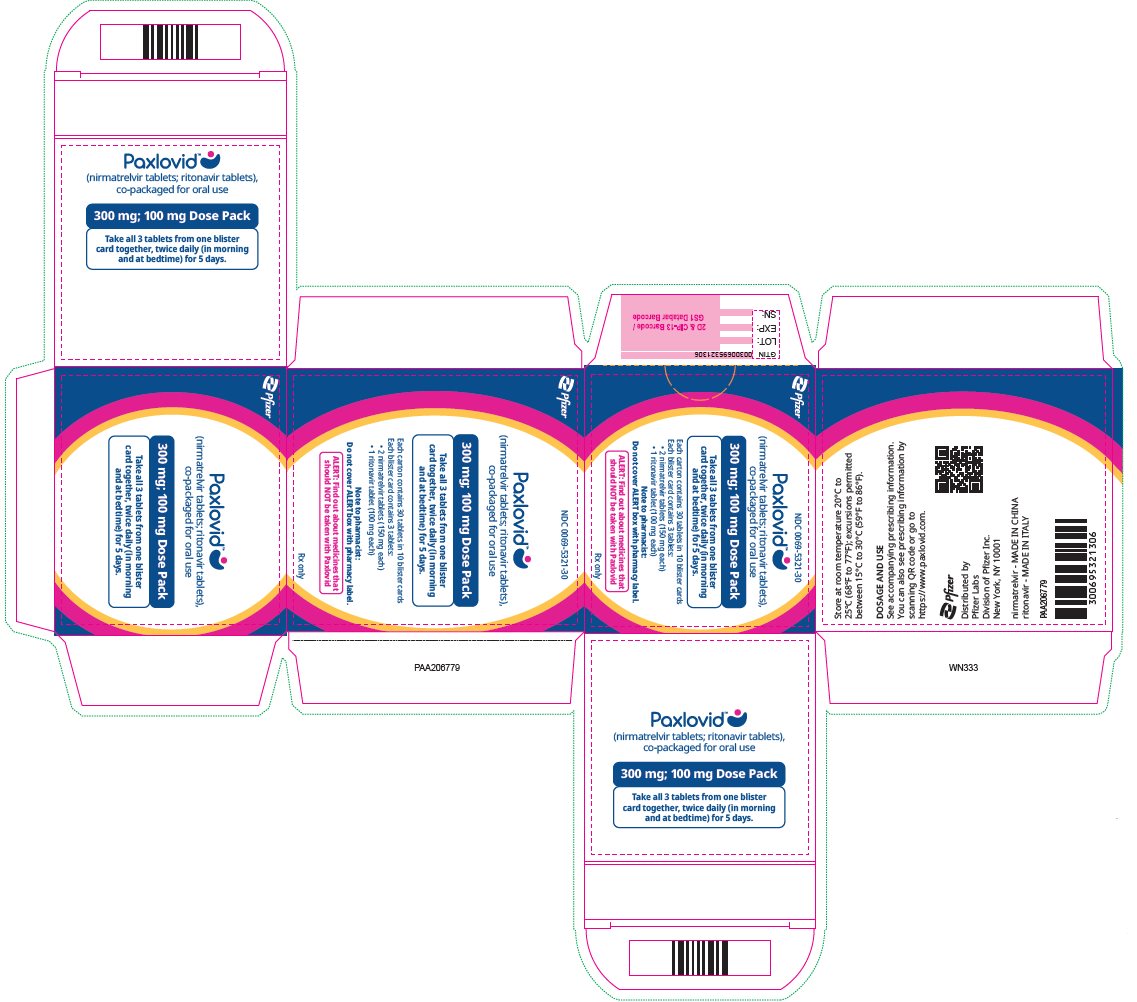
| 00069-5321-30 You're viewing this | 10 BLISTER PACK in 1 CARTON (0069-5321-30) / 1 KIT in 1 BLISTER PACK (0069-5321-03) * 2 TABLET, FILM COATED in 1 BLISTER PACK (0069-2085-02) * 1 TABLET, FILM COATED in 1 BLISTER PACK (0069-1735-11) | 2023-10-18 | Active |
🧭 About this NDC listing & data coverage
Kit / multi-component package
This NDC identifies a kit — a package containing more than one component. Structured data (pricing, ingredients, equivalents) is often reported per component rather than for the kit NDC itself, which can make this page look thinner than the components' own pages.
What data is (and isn’t) available for this NDC — tap to expand
| NDC identity (package / product / labeler codes) | ✓ Available |
| Labeler | ✓ Available |
| Product & package description | ✓ Available |
| Marketing category & status | ✓ Available |
| Active ingredient / dosage form / route | ✓ Available |
| FDA label (SPL via DailyMed) | ✓ Available |
| Package photos | ✓ Available |
| Inactive ingredients (structured) | — Not published for this NDC The labeler did not submit a structured excipient list, or no SPL is available. |
| NADAC pharmacy acquisition price (CMS) | ✓ Available |
| Orange Book / therapeutic-equivalence data | ✓ Available |
| HCPCS J-code billing crosswalk | — Not published for this NDC Most self-administered / retail products have no J-code — that is normal. |
| Medicaid utilization (CMS SDUD) | ✓ Available |
Questions about this listing
Is the NDC printed on the package the same as the 11-digit billing NDC?
What do the three segments of this NDC mean?
Is this package still being marketed?
Who lists this product with the FDA?
Do I need a prescription for this product?
Where does this data come from?
📄 Full prescribing information FDA SPL
🚨 Boxed Warning ▾
WARNING: SIGNIFICANT DRUG INTERACTIONS WITH PAXLOVID • PAXLOVID includes ritonavir, a strong CYP3A inhibitor, which may lead to greater exposure of certain concomitant medications, resulting in potentially severe, life-threatening, or fatal events [see Contraindications (4) , Warnings and Precautions (5.1) , and Drug Interactions (7) ]. • Prior to prescribing PAXLOVID: 1) Review all medications taken by the patient to assess potential drug-drug interactions with a strong CYP3A inhibitor like PAXLOVID and 2) Determine if concomitant medications require a dose adjustment, interruption, and/or additional monitoring [see Drug Interactions (7) ]. • Consider the benefit of PAXLOVID treatment in reducing hospitalization and death, and whether the risk of potential drug-drug interactions for an individual patient can be appropriately managed [see Warnings and Precautions (5.1) , Drug Interactions (7) , and Clinical Studies (14) ].
WARNING: SIGNIFICANT DRUG INTERACTIONS WITH PAXLOVID See full prescribing information for complete boxed warning. • PAXLOVID includes ritonavir, a strong CYP3A inhibitor, which may lead to greater exposure of certain concomitant medications, resulting in potentially severe, life-threatening, or fatal events. ( 4 , 5.1 , 7 ) • Prior to prescribing PAXLOVID: 1) Review all medications taken by the patient to assess potential drug-drug interactions with a strong CYP3A inhibitor like PAXLOVID and 2) Determine if concomitant medications require a dose adjustment, interruption, and/or additional monitoring.
( 7 ) • Consider the benefit of PAXLOVID treatment in reducing hospitalization and death, and whether the risk of potential drug-drug interactions for an individual patient can be appropriately managed. ( 5.1 , 7 , 14 )
🎯 Indications and Usage ▾
1 INDICATIONS AND USAGE PAXLOVID is indicated for the treatment of mild-to-moderate coronavirus disease 2019 (COVID-19) in adults who are at high risk for progression to severe COVID-19, including hospitalization or death. PAXLOVID which includes nirmatrelvir, a severe acute respiratory syndrome coronavirus 2 (SARS-CoV-2) main protease (M pro : also referred to as 3CL pro or nsp5 protease) inhibitor, and ritonavir, an HIV-1 protease inhibitor and CYP3A inhibitor, is indicated for the treatment of mild-to-moderate coronavirus disease 2019 (COVID-19) in adults who are at high risk for progression to severe COVID-19, including hospitalization or death.
( 1 ) Limitations of Use PAXLOVID is not approved for use as pre-exposure or post-exposure prophylaxis for prevention of COVID-19. ( 1 ) Limitations of Use PAXLOVID is not approved for use as pre-exposure or post-exposure prophylaxis for prevention of COVID-19 [see Clinical Studies (14.3) ] .
⏱️ Dosage and Administration ▾
2 DOSAGE AND ADMINISTRATION PAXLOVID is nirmatrelvir tablets co-packaged with ritonavir tablets. ( 2.1 ) Nirmatrelvir must be co-administered with ritonavir. ( 2.1 ) • Initiate PAXLOVID treatment as soon as possible after diagnosis of COVID-19 and within 5 days of symptom onset.
( 2.1 ) • Administer orally with or without food. ( 2.1 ) • Administer at approximately the same time each day. ( 2.2 , 2.3 ) • Dosage: 300 mg nirmatrelvir (two 150 mg tablets) with 100 mg ritonavir (one 100 mg tablet), with all 3 tablets taken together twice daily for 5 days.
( 2.2 ) • Dose Reduction for Renal Impairment ( 2.3 , 8.6 , 12.3 ) Abbreviation: eGFR=estimated glomerular filtration rate. Renal Function Days of Treatment Dose and Dose Frequency PAXLOVID should be administered at approximately the same time each day for 5 days. Moderate renal impairment (eGFR ≥30 to <60 mL/min) Days 1-5 150 mg nirmatrelvir (one 150 mg tablet) with 100 mg ritonavir (one 100 mg tablet) twice daily Severe renal impairment (eGFR <30 mL/min) including those requiring hemodialysis On days of hemodialysis, the PAXLOVID dose should be administered after hemodialysis.
Day 1 300 mg nirmatrelvir (two 150 mg tablets) with 100 mg ritonavir (one 100 mg tablet) once Days 2-5 150 mg nirmatrelvir (one 150 mg tablet) with 100 mg ritonavir (one 100 mg tablet) once daily • PAXLOVID is not recommend in patients with severe hepatic impairment (Child-Pugh Class C). ( 2.4 , 8.7 )
2.1Important Dosage and Administration Information PAXLOVID is nirmatrelvir tablets co-packaged with ritonavir tablets. There are three different dose packs available: • PAXLOVID (nirmatrelvir; ritonavir) co-packaged for oral use 300 mg;100 mg [see Dosage and Administration (2.2) ] . • PAXLOVID (nirmatrelvir; ritonavir) co-packaged for oral use 150 mg;100 mg for patients with moderate renal impairment [see Dosage and Administration (2.3) ]. • PAXLOVID (nirmatrelvir; ritonavir) co-packaged for oral use 300 mg;100 mg (Day 1) and 150 mg;100 mg (Days 2-5) for patients with severe renal impairment [see Dosage and Administration (2.3) ].
Nirmatrelvir must be co-administered with ritonavir. Failure to correctly co-administer nirmatrelvir with ritonavir may result in plasma levels of nirmatrelvir that are insufficient to achieve the desired therapeutic effect. Prescriptions should specify the numeric dose of each active ingredient within PAXLOVID [see Dosage and Administration (2.2 , 2.3 )].
Completion of the full 5-day treatment course and continued isolation in accordance with public health recommendations are important to maximize viral clearance and minimize transmission of SARS-CoV-2. The 5-day treatment course of PAXLOVID should be initiated as soon as possible after a diagnosis of COVID-19 has been made, and within 5 days of symptom onset even if baseline COVID-19 symptoms are mild. Should a patient require hospitalization due to severe or critical COVID-19 after starting treatment with PAXLOVID, the patient should complete the full 5-day treatment course per the healthcare provider's discretion.
If the patient misses a dose of PAXLOVID within 8 hours of the time it is usually taken, the patient should take it as soon as possible and resume the normal dosing schedule. If the patient misses a dose by more than 8 hours, the patient should not take the missed dose and instead take the next dose at the regularly scheduled time. The patient should not double the dose to make up for a missed dose.
PAXLOVID (both nirmatrelvir and ritonavir tablets) can be taken with or without food [see Clinical Pharmacology (12.3) ] . The tablets should be swallowed whole and not chewed, broken, or crushed.
2.2Recommended Dosage The recommended dosage for PAXLOVID is 300 mg nirmatrelvir (two 150 mg tablets) with 100 mg ritonavir (one 100 mg tablet) with all 3 tablets taken together orally twice daily in the morning and at bedtime for 5 days.
2.3 Dosage in Patients with Renal Impairment Prescriptions should specify the numeric dos…
💊 Dosage Forms and Strengths ▾
3 DOSAGE FORMS AND STRENGTHS PAXLOVID is nirmatrelvir tablets co-packaged with ritonavir tablets [see How Supplied/Storage and Handling (16) ] . • Nirmatrelvir is supplied as oval, pink immediate-release, film-coated tablets debossed with "PFE" on one side and "3CL" on the other side. Each tablet contains 150 mg of nirmatrelvir. • Ritonavir is supplied as white or white to off-white film-coated tablets uniquely identified by the color, shape, and debossing. Each tablet contains 100 mg of ritonavir. • Tablets: nirmatrelvir 150 mg ( 3 ) • Tablets: ritonavir 100 mg ( 3 )
⛔ Contraindications ▾
4 CONTRAINDICATIONS PAXLOVID is contraindicated in patients with a history of clinically significant hypersensitivity reactions [e.g., toxic epidermal necrolysis (TEN) or Stevens-Johnson syndrome] to its active ingredients (nirmatrelvir or ritonavir) or any other components of the product. PAXLOVID is contraindicated with drugs that are primarily metabolized by CYP3A and for which elevated concentrations are associated with serious and/or life-threatening reactions and drugs that are strong CYP3A inducers where significantly reduced nirmatrelvir or ritonavir plasma concentrations may be associated with the potential for loss of virologic response and possible resistance.
There are certain other drugs for which concomitant use with PAXLOVID should be avoided and/or dose adjustment, interruption, or therapeutic monitoring is recommended. Drugs listed in this section are a guide and not considered a comprehensive list of all drugs that may be contraindicated with PAXLOVID. The healthcare provider should consult other appropriate resources such as the prescribing information for the interacting drug for comprehensive information on dosing or monitoring with concomitant use of a strong CYP3A inhibitor like PAXLOVID [see Drug Interactions (7.3) ] : ➢ Drugs that are primarily metabolized by CYP3A for which elevated concentrations are associated with serious and/or life-threatening reactions [see Drug Interactions (7.3) ] : • Alpha 1-adrenoreceptor antagonist: alfuzosin • Antianginal: ranolazine • Antiarrhythmic: amiodarone, dronedarone, flecainide, propafenone, quinidine • Anti-gout: colchicine (in patients with renal and/or hepatic impairment [see Table 2 , Drug Interactions (7.3)] ) • Antipsychotics: lurasidone, pimozide • Benign prostatic hyperplasia agents: silodosin • Cardiovascular agents: eplerenone, ivabradine • Ergot derivatives: dihydroergotamine, ergotamine, methylergonovine • HMG-CoA reductase inhibitors: lovastatin, simvastatin (these drugs can be temporarily discontinued to allow PAXLOVID use [see Table 2 , Drug Interactions (7.3) ] ) • Immunosuppressants: voclosporin • Microsomal triglyceride transfer protein inhibitor: lomitapide • Migraine medications: eletriptan, ubrogepant • Mineralocorticoid receptor antagonists: finerenone • Non-opioid analgesic (selective blocker of Na v 1.8 sodium channels): suzetrigine • Opioid antagonists: naloxegol • PDE5 inhibitor: sildenafil (Revatio ® ) when used for pulmonary arterial hypertension (PAH) • Sedative/hypnotics: triazolam, oral midazolam • Serotonin receptor 1A agonist/serotonin receptor 2A antagonist: flibanserin • Vasopressin receptor antagonists: tolvaptan ➢ Drugs that are strong CYP3A inducers where significantly reduced nirmatrelvir or ritonavir plasma concentrations may be associated with the potential for loss of virologic response and possible resistance.
PAXLOVID cannot be started immediately after discontinuation of any of the following medications due to the delayed offset of the recently discontinued CYP3A inducer [see Drug Interactions (7.3) ] : • Anticancer drugs: apalutamide, enzalutamide • Anticonvulsant: carbamazepine, phenobarbital, primidone, phenytoin • Antimycobacterials: rifampin, rifapentine • Cystic fibrosis transmembrane conductance regulator potentiators: lumacaftor/ivacaftor • Herbal products: St. John's Wort ( hypericum perforatum ) • History of clinically significant hypersensitivity reactions to the active ingredients (nirmatrelvir or ritonavir) or any other components.
( 4 ) • Co-administration with drugs highly dependent on CYP3A for clearance and for which elevated concentrations are associated with serious and/or life-threatening reactions. ( 4 , 7.3 ) • Co-administration with potent CYP3A inducers where significantly reduced nirmatrelvir or ritonavir plasma concentrations may be associated with the potential for loss of virologic response and possible resistance. ( 4 , 7.3 )
⚠️ Warnings and Cautions ▾
5 WARNINGS AND PRECAUTIONS • The concomitant use of PAXLOVID and certain other drugs may result in potentially significant drug interactions. Consult the Full Prescribing Information prior to and during treatment for potential drug interactions. ( 5.1 , 7 ) • Hypersensitivity Reactions: Anaphylaxis, serious skin reactions (including toxic epidermal necrolysis and Stevens-Johnson syndrome), and other hypersensitivity reactions have been reported with PAXLOVID.
If signs and symptoms of a clinically significant hypersensitivity reaction or anaphylaxis occur, immediately discontinue PAXLOVID and initiate appropriate medications and/or supportive care. ( 5.2 ) • Hepatotoxicity: Hepatic transaminase elevations, clinical hepatitis, and jaundice have occurred in patients receiving ritonavir. ( 5.3 ) • HIV-1 Drug Resistance: PAXLOVID use may lead to a risk of HIV-1 developing resistance to HIV protease inhibitors in individuals with uncontrolled or undiagnosed HIV-1 infection.
( 5.4 )
5.1Risk of Serious Adverse Reactions Due to Drug Interactions Initiation of PAXLOVID, which contains ritonavir, a strong CYP3A inhibitor, in patients receiving medications metabolized by CYP3A or initiation of medications metabolized by CYP3A in patients already receiving PAXLOVID, may increase plasma concentrations of medications metabolized by CYP3A. Medications that induce CYP3A may decrease concentrations of PAXLOVID. These interactions may lead to: • Clinically significant adverse reactions, potentially leading to severe, life-threatening, or fatal events from greater exposures of concomitant medications. • Loss of therapeutic effect of PAXLOVID and possible development of viral resistance.
Severe, life-threatening, and/or fatal adverse reactions due to drug interactions have been reported in patients treated with PAXLOVID. The most commonly reported concomitant medications resulting in serious adverse reactions were calcineurin inhibitors (e.g., tacrolimus, cyclosporine), followed by calcium channel blockers. Prior to prescribing PAXLOVID, review all medications taken by the patient to assess potential drug-drug interactions and determine if concomitant medications require a dose adjustment, interruption, and/or additional monitoring (e.g., calcineurin inhibitors) [see Contraindications (4) and Drug Interactions (7) ] .
See Table 2 for clinically significant drug interactions, including contraindicated drugs. Drugs listed in Table 2 are a guide and not considered a comprehensive list of all possible drugs that may interact with PAXLOVID. Consider the benefit of PAXLOVID treatment in reducing hospitalization and death, and whether the risk of potential drug-drug interactions for an individual patient can be appropriately managed [see Drug Interactions (7) and Clinical Studies (14) ] .
5.2Hypersensitivity Reactions Anaphylaxis, serious skin reactions (including toxic epidermal necrolysis and Stevens-Johnson syndrome), and other hypersensitivity reactions have been reported with PAXLOVID [see Adverse Reactions (6.1) ]. If signs and symptoms of a clinically significant hypersensitivity reaction or anaphylaxis occur, immediately discontinue PAXLOVID and initiate appropriate medications and/or supportive care.
5.3Hepatotoxicity Hepatic transaminase elevations, clinical hepatitis, and jaundice have occurred in patients receiving ritonavir. Therefore, caution should be exercised when administering PAXLOVID to patients with pre-existing liver diseases, liver enzyme abnormalities, or hepatitis.
5.4Risk of HIV-1 Resistance Development Because nirmatrelvir is co-administered with ritonavir, there may be a risk of HIV-1 developing resistance to HIV protease inhibitors in individuals with uncontrolled or undiagnosed HIV-1 infection [see Contraindications (4) and Drug Interactions (7) ] .
🤒 Adverse Reactions ▾
6 ADVERSE REACTIONS The following clinically significant adverse reactions are described elsewhere in the labeling: • Hypersensitivity reactions [see Warnings and Precautions (5.2) ] Most common adverse reactions (incidence ≥1% and greater incidence than in the placebo group) are dysgeusia and diarrhea. ( 6.1 ) To report SUSPECTED ADVERSE REACTIONS, contact Pfizer Inc. at 1-800-438-1985 or FDA at 1-800-FDA-1088 or www.fda.gov/medwatch .
6.1Clinical Trials Experience Because clinical trials are conducted under widely varying conditions, adverse reaction rates observed in the clinical trials of a drug cannot be directly compared to rates in the clinical trials of another drug and may not reflect the rates observed in practice. The safety of PAXLOVID is based on two Phase 2/3 randomized, placebo-controlled trials in symptomatic adult subjects 18 years of age and older with a laboratory confirmed diagnosis of SARS-CoV-2 infection. Subjects in both studies received PAXLOVID (nirmatrelvir/ritonavir 300 mg/100 mg) or placebo every 12 hours for 5 days for the treatment of mild-to-moderate COVID-19 within 5 days of symptom onset [see Clinical Studies (14) ] : • Trial C4671005 (EPIC-HR) enrolled subjects who were at high risk for progression to severe disease. • Trial C4671002 (EPIC-SR) enrolled subjects who were at standard risk for progression to severe disease (previously unvaccinated subjects at standard risk or fully vaccinated subjects with at least 1 risk factor for progression to severe disease).
Adverse reactions were those reported while subjects were on study medication and through 28 days after the last dose of study treatment. In Trial C4671005 (EPIC-HR), 1,038 subjects received PAXLOVID and 1,053 subjects received placebo. The most common adverse reactions (≥1% incidence in the PAXLOVID group and occurring at a greater frequency than in the placebo group) were dysgeusia (5% and <1%, respectively) and diarrhea (3% and 2%, respectively).
Among vaccinated or unvaccinated subjects at standard risk or fully vaccinated subjects with at least 1 risk factor for progression to severe disease in Trial C4671002 (EPIC-SR), 540 subjects received PAXLOVID and 528 subjects received placebo. The adverse reactions observed were consistent with those observed in EPIC-HR. Trial C4671028 (EPIC-SRI) was a Phase 1, open-label trial that evaluated the effects of severe renal impairment on the pharmacokinetics, safety, and tolerability of PAXLOVID in non-hospitalized adult participants with COVID-19 and severe renal impairment.
A total of 15 subjects with severe renal impairment were enrolled in this trial, with 12 subjects receiving intermittent hemodialysis and 3 subjects not on hemodialysis. Subjects received nirmatrelvir/ritonavir 300 mg/100 mg once on Day 1 followed by nirmatrelvir/ritonavir 150 mg/100 mg once daily from Days 2-5. The safety profile of PAXLOVID in subjects with severe renal impairment, including those requiring hemodialysis, was consistent with the safety profile observed in the Phase 2/3 randomized, placebo-controlled trials.
Emergency Use Authorization Experience in Subjects with COVID-19 The following adverse reactions have been identified during use of PAXLOVID under Emergency Use Authorization. Immune System Disorders: Anaphylaxis, hypersensitivity reactions [see Warnings and Precautions (5.2) ] Skin and Subcutaneous Tissue Disorders: Toxic epidermal necrolysis, Stevens-Johnson syndrome [see Warnings and Precautions (5.2) ] Nervous System Disorders: Headache Vascular Disorders: Hypertension Gastrointestinal Disorders: Abdominal pain, nausea, vomiting General Disorders and Administration Site Conditions: Malaise
🔄 Drug Interactions ▾
7 DRUG INTERACTIONS Co-administration of PAXLOVID can alter the plasma concentrations of other drugs and other drugs may alter the plasma concentrations of PAXLOVID. Consider the potential for drug interactions prior to and during PAXLOVID therapy and review concomitant medications during PAXLOVID therapy. ( 4 , 5.1 , 7 , 12.3 )
7.1Potential for PAXLOVID to Affect Other Drugs PAXLOVID (nirmatrelvir co-packaged with ritonavir) is a strong inhibitor of CYP3A, and an inhibitor of CYP2D6, P-gp and OATP1B1. Co-administration of PAXLOVID with drugs that are primarily metabolized by CYP3A and CYP2D6 or are transported by P-gp or OATP1B1 may result in increased plasma concentrations of such drugs and increase the risk of adverse events. Co-administration of PAXLOVID with drugs highly dependent on CYP3A for clearance and for which elevated plasma concentrations are associated with serious and/or life-threatening events is contraindicated [see Contraindications (4) and Drug Interactions (7.3) Table 2 ] .
Co-administration with other CYP3A substrates may require a dose adjustment or additional monitoring as shown in Table 2.
7.2Potential for Other Drugs to Affect PAXLOVID Nirmatrelvir and ritonavir are CYP3A substrates; therefore, drugs that induce CYP3A may decrease nirmatrelvir and ritonavir plasma concentrations and reduce PAXLOVID therapeutic effect [see Contraindications (4) and Drug Interactions (7.3) Table 2 ] .
7.3Established and Other Potentially Significant Drug Interactions Table 2 provides a listing of clinically significant drug interactions, including contraindicated drugs [see Contraindications (4) and Warnings and Precautions (5.1) ] . Drugs listed in Table 2 are a guide and not considered a comprehensive list of all possible drugs that may interact with PAXLOVID. The healthcare provider should consult other appropriate resources such as the prescribing information for the interacting drug for comprehensive information on dosing or monitoring with concomitant use of a strong CYP3A inhibitor such as ritonavir.
Table 2: Established and Other Potentially Significant Drug Interactions Drug Class Drugs within Class Effect on Concentration Clinical Comments Alpha 1- adrenoreceptor antagonist alfuzosin ↑ alfuzosin Co-administration contraindicated due to potential hypotension [see Contraindications (4) ] . Alpha 1- adrenoreceptor antagonist tamsulosin ↑ tamsulosin Avoid concomitant use with PAXLOVID. Antianginal ranolazine ↑ ranolazine Co-administration contraindicated due to potential for serious and/or life-threatening reactions [see Contraindications (4) ] .
Antiarrhythmics amiodarone, dronedarone, flecainide, propafenone, quinidine ↑ antiarrhythmic Co-administration contraindicated due to potential for cardiac arrhythmias [see Contraindications (4) ] . Antiarrhythmics lidocaine (systemic), disopyramide ↑ antiarrhythmic Caution is warranted and therapeutic concentration monitoring is recommended for antiarrhythmics if available. Anticancer drugs apalutamide, enzalutamide ↓ nirmatrelvir/ritonavir Co-administration contraindicated due to potential loss of virologic response and possible resistance [see Contraindications (4) ].
Anticancer drugs abemaciclib, ceritinib, dasatinib, encorafenib, ibrutinib, ivosidenib, neratinib, nilotinib, venetoclax, vinblastine, vincristine ↑ anticancer drugs Avoid co-administration of encorafenib or ivosidenib due to potential risk of serious adverse events such as QT interval prolongation. Avoid use of neratinib, venetoclax or ibrutinib. Co-administration of vincristine and vinblastine may lead to significant hematologic or gastrointestinal side effects.
For further information, refer to the individual product prescribing information for anticancer drug. Anticoagulants warfarin ↑↓ warfarin Closely monitor international normalized ratio (INR) if co-administration with warfarin is necessary. rivaroxaban ↑ rivaroxaban Increased bleeding risk with rivaroxaban. Avoid concomitant use. dabigatran Se…
👥 Use in Specific Populations ▾
8 USE IN SPECIFIC POPULATIONS
8.1Pregnancy Risk Summary Available data on the use of nirmatrelvir during pregnancy are insufficient to evaluate for a drug-associated risk of major birth defects, miscarriage, or adverse maternal or fetal outcomes. Published observational studies on ritonavir use in pregnant women have not identified an increase in the risk of major birth defects. Published studies with ritonavir are insufficient to identify a drug associated risk of miscarriage (see Data ).
There are maternal and fetal risks associated with untreated COVID-19 in pregnancy (see Clinical Considerations ). In an embryo-fetal development study with nirmatrelvir, reduced fetal body weights following oral administration of nirmatrelvir to pregnant rabbits were observed at systemic exposures (AUC) approximately 11 times higher than clinical exposure at the approved human dose of PAXLOVID. No other adverse developmental outcomes were observed in animal reproduction studies with nirmatrelvir at systemic exposures (AUC) greater than or equal to 3 times higher than clinical exposure at the approved human dose of PAXLOVID (see Data ) .
In embryo-fetal developmental studies with ritonavir, no evidence of adverse developmental outcomes was observed following oral administration of ritonavir to pregnant rats and rabbits at systemic exposures (AUC) 5 (rat) or 8 (rabbits) times higher than clinical exposure at the approved human dose of PAXLOVID (see Data ) . The estimated background risk of major birth defects and miscarriage for the indicated population is unknown. All pregnancies have a risk of birth defect, loss, or other adverse outcomes.
In the U.S. general population, the estimated background risk of major birth defects and miscarriage in clinically recognized pregnancies is 2% to 4% and 15% to 20%, respectively. Clinical Considerations Disease-associated Maternal and/or Embryo-fetal Risk COVID-19 in pregnancy is associated with adverse maternal and fetal outcomes, including preeclampsia, eclampsia, preterm birth, premature rupture of membranes, venous thromboembolic disease, and fetal death. Data Human Data Ritonavir Based on prospective reports to the antiretroviral pregnancy registry of live births following exposure to ritonavir-containing regimens (including over 3,500 live births exposed in the first-trimester and over 3,500 live births exposed in the second and third trimesters), there was no difference in the rate of overall birth defects for ritonavir compared with the background birth defect rate of 2.7% in the U.S. reference population of the Metropolitan Atlanta Congenital Defects Program (MACDP).
The prevalence of birth defects in live births was 2.4% [95% confidence interval (CI): 1.9%, 2.9%] following first-trimester exposure to ritonavir-containing regimens and 2.9% (95% CI: 2.4%, 3.5%) following second and third trimester exposure to ritonavir-containing regimens. While placental transfer of ritonavir and fetal ritonavir concentrations are generally low, detectable levels have been observed in cord blood samples and neonate hair. Animal Data Nirmatrelvir Embryo-fetal developmental (EFD) toxicity studies were conducted in pregnant rats and rabbits administered oral nirmatrelvir doses of up to 1,000 mg/kg/day during organogenesis [on Gestation Days (GD) 6 through 17 in rats and GD 7 through 19 in rabbits].
No biologically significant developmental effects were observed in the rat EFD study. At the highest dose of 1,000 mg/kg/day, the systemic nirmatrelvir exposure (AUC 24 ) in rats was approximately 9 times higher than clinical exposures at the approved human dose of PAXLOVID. In the rabbit EFD study, lower fetal body weights (9% decrease) were observed at 1,000 mg/kg/day in the absence of significant maternal toxicity findings.
At 1,000 mg/kg/day, the systemic exposure (AUC 24 ) in rabbits was approximately 11 times higher than clinical exposures at the approved human dose of PAXLOVID. No other significant developmental…
🤰 Pregnancy ▾
8.1Pregnancy Risk Summary Available data on the use of nirmatrelvir during pregnancy are insufficient to evaluate for a drug-associated risk of major birth defects, miscarriage, or adverse maternal or fetal outcomes. Published observational studies on ritonavir use in pregnant women have not identified an increase in the risk of major birth defects. Published studies with ritonavir are insufficient to identify a drug associated risk of miscarriage (see Data ).
There are maternal and fetal risks associated with untreated COVID-19 in pregnancy (see Clinical Considerations ). In an embryo-fetal development study with nirmatrelvir, reduced fetal body weights following oral administration of nirmatrelvir to pregnant rabbits were observed at systemic exposures (AUC) approximately 11 times higher than clinical exposure at the approved human dose of PAXLOVID. No other adverse developmental outcomes were observed in animal reproduction studies with nirmatrelvir at systemic exposures (AUC) greater than or equal to 3 times higher than clinical exposure at the approved human dose of PAXLOVID (see Data ) .
In embryo-fetal developmental studies with ritonavir, no evidence of adverse developmental outcomes was observed following oral administration of ritonavir to pregnant rats and rabbits at systemic exposures (AUC) 5 (rat) or 8 (rabbits) times higher than clinical exposure at the approved human dose of PAXLOVID (see Data ) . The estimated background risk of major birth defects and miscarriage for the indicated population is unknown. All pregnancies have a risk of birth defect, loss, or other adverse outcomes.
In the U.S. general population, the estimated background risk of major birth defects and miscarriage in clinically recognized pregnancies is 2% to 4% and 15% to 20%, respectively. Clinical Considerations Disease-associated Maternal and/or Embryo-fetal Risk COVID-19 in pregnancy is associated with adverse maternal and fetal outcomes, including preeclampsia, eclampsia, preterm birth, premature rupture of membranes, venous thromboembolic disease, and fetal death. Data Human Data Ritonavir Based on prospective reports to the antiretroviral pregnancy registry of live births following exposure to ritonavir-containing regimens (including over 3,500 live births exposed in the first-trimester and over 3,500 live births exposed in the second and third trimesters), there was no difference in the rate of overall birth defects for ritonavir compared with the background birth defect rate of 2.7% in the U.S. reference population of the Metropolitan Atlanta Congenital Defects Program (MACDP).
The prevalence of birth defects in live births was 2.4% [95% confidence interval (CI): 1.9%, 2.9%] following first-trimester exposure to ritonavir-containing regimens and 2.9% (95% CI: 2.4%, 3.5%) following second and third trimester exposure to ritonavir-containing regimens. While placental transfer of ritonavir and fetal ritonavir concentrations are generally low, detectable levels have been observed in cord blood samples and neonate hair. Animal Data Nirmatrelvir Embryo-fetal developmental (EFD) toxicity studies were conducted in pregnant rats and rabbits administered oral nirmatrelvir doses of up to 1,000 mg/kg/day during organogenesis [on Gestation Days (GD) 6 through 17 in rats and GD 7 through 19 in rabbits].
No biologically significant developmental effects were observed in the rat EFD study. At the highest dose of 1,000 mg/kg/day, the systemic nirmatrelvir exposure (AUC 24 ) in rats was approximately 9 times higher than clinical exposures at the approved human dose of PAXLOVID. In the rabbit EFD study, lower fetal body weights (9% decrease) were observed at 1,000 mg/kg/day in the absence of significant maternal toxicity findings.
At 1,000 mg/kg/day, the systemic exposure (AUC 24 ) in rabbits was approximately 11 times higher than clinical exposures at the approved human dose of PAXLOVID. No other significant developmental toxicities (malformations and…
🧒 Pediatric Use ▾
8.4Pediatric Use The optimal dose of PAXLOVID has not been established in pediatric patients.
🧓 Geriatric Use ▾
8.5Geriatric Use Clinical studies of PAXLOVID include subjects 65 years of age and older and their data contributes to the overall assessment of safety and efficacy [see Adverse Reactions (6.1) and Clinical Studies (14.1) ] . Of the total number of subjects in the integrated dataset consisting of EPIC-HR and EPIC-SR who were randomized to and received PAXLOVID (N=1,578), 165 (10%) were 65 years of age and older and 39 (2%) were 75 years of age and older. No overall differences in safety were observed between these subjects and younger subjects, and other reported clinical experience has not identified differences in safety between the elderly and younger patients, but greater sensitivity of some older individuals cannot be ruled out.
🆘 Overdosage ▾
10 OVERDOSAGE Treatment of overdose with PAXLOVID should consist of general supportive measures including monitoring of vital signs and observation of the clinical status of the patient. There is no specific antidote for overdose with PAXLOVID.
🧬 Clinical Pharmacology ▾
12 CLINICAL PHARMACOLOGY
12.1Mechanism of Action Nirmatrelvir is a severe acute respiratory syndrome coronavirus 2 (SARS-CoV-2) antiviral drug [see Microbiology (12.4) ]. Ritonavir is an HIV-1 protease inhibitor but is not active against SARS-CoV-2 M pro . Ritonavir inhibits the CYP3A-mediated metabolism of nirmatrelvir, resulting in increased plasma concentrations of nirmatrelvir.
12.2Pharmacodynamics Cardiac Electrophysiology At 3 times the steady state peak plasma concentration (C max ) at the recommended dose, nirmatrelvir does not prolong the QTc interval to any clinically relevant extent.
12.3Pharmacokinetics The pharmacokinetics of nirmatrelvir/ritonavir were similar in healthy subjects and in subjects with mild-to-moderate COVID-19. Nirmatrelvir AUC increased in a less than dose proportional manner over a single dose range from 250 mg to 750 mg (0.83 to 2.5 times the approved recommended dose) and multiple dose range from 75 mg to 500 mg (0.25 to 1.67 times the approved recommended dose), when administered in combination with 100 mg ritonavir. Nirmatrelvir steady state was achieved on Day 2 following administration of the approved recommended dosage and the mean accumulation ratio was approximately 2-fold.
The pharmacokinetic properties of nirmatrelvir/ritonavir are displayed in Table 3. Table 3: Pharmacokinetic Properties of Nirmatrelvir and Ritonavir in Healthy Subjects Nirmatrelvir (When Given With Ritonavir) Ritonavir Abbreviations: CL/F=apparent clearance; hr=hour; L/hr=liters per hour; T ½ =terminal elimination half-life; T max =the time to reach C max ; V z /F=apparent volume of distribution. Absorption T max (hr), median
3.00Represents data after a single dose of 300 mg nirmatrelvir (2 × 150 mg tablet formulation) administered together with 100 mg ritonavir tablet in healthy subjects.
3.98Food effect Test/reference (fed/fasted) ratios of adjusted geometric means (90% CI) AUC inf and C max for nirmatrelvir were 119.67 (108.75, 131.68) and 161.01 (139.05, 186.44), respectively. Following a single oral dose of nirmatrelvir 300 mg boosted ritonavir 100 mg at -12 hours, 0 hours and 12 hours, administered under fed (high fat and high calorie meal) or fasted conditions. Distribution % bound to human plasma proteins 69% 98–99% Blood-to-plasma ratio 0.60
0.14Red blood cell to plasma ratio. V z /F (L), mean 104.7 300 mg nirmatrelvir (oral suspension formulation) co-administered with 100 mg ritonavir (tablet formulation) twice daily for 3 days. 112.4 Elimination Major route of elimination Renal elimination Hepatic metabolism Half-life (T ½ ) (hr), mean 6.05
6.15Oral clearance (CL/F) (L/hr), mean 8.99
13.92Metabolism Metabolic pathways Nirmatrelvir is a CYP3A substrate but when dosed with ritonavir, metabolic clearance is minimal. Major CYP3A, Minor CYP2D6 Excretion % drug-related material in feces 35.3% Determined by 19 F-NMR analysis following 300 mg nirmatrelvir oral suspension administered at 0 hr enhanced with 100 mg ritonavir at -12 hours, 0 hours, 12 hours, and 24 hours. 86.4% Determined by 14 C analysis following 600 mg 14 C-ritonavir oral solution (6 times the approved ritonavir dose). % of dose excreted as total (unchanged drug) in feces 27.5% 33.8% % drug-related material in urine 49.6% 11.3% % of dose excreted as total (unchanged drug) in urine 55.0% 3.5% The predicted Day 5 nirmatrelvir exposure parameters in adult subjects with mild-to-moderate COVID-19 who were treated with PAXLOVID in EPIC-HR are presented in Table 4.
Table 4: Predicted Day 5 Nirmatrelvir Exposure Parameters Following Administration of Nirmatrelvir/Ritonavir 300 mg/100 mg Twice Daily in Subjects with Mild-to-Moderate COVID-19 Pharmacokinetic Parameter (units) Data presented as geometric mean (10 th and 90 th percentile). Nirmatrelvir Based on 1,017 subjects with their post hoc PK parameters. Abbreviations: C max =predicted maximal concentration; C min =predicted minimal concentration (C trough ).
C max (µg/mL) 3.29 (1.93, 5.40) AUC…
🧬 Mechanism of Action ▾
12.1Mechanism of Action Nirmatrelvir is a severe acute respiratory syndrome coronavirus 2 (SARS-CoV-2) antiviral drug [see Microbiology (12.4) ]. Ritonavir is an HIV-1 protease inhibitor but is not active against SARS-CoV-2 M pro . Ritonavir inhibits the CYP3A-mediated metabolism of nirmatrelvir, resulting in increased plasma concentrations of nirmatrelvir.
📦 How Supplied / Storage and Handling ▾
16 HOW SUPPLIED/STORAGE AND HANDLING How Supplied PAXLOVID is nirmatrelvir tablets co-packaged with ritonavir tablets. It is supplied in three different Dose Packs. Nirmatrelvir tablets and ritonavir tablets are supplied in separate blister cavities within the same child-resistant blister card.
Dose Pack Content NDC Description 300 mg nirmatrelvir; 100 mg ritonavir Each Carton Contains: 30 tablets divided in 10 blister cards 0069-5045-30 Nirmatrelvir tablets: Oval, pink immediate-release, film-coated tablets debossed with "PFE" on one side and "3CL" on the other side. Ritonavir tablets: White to off-white, capsule-shaped, film-coated tablets debossed with "H" on one side and “R9” on the other side. Or 0069-5321-30 Nirmatrelvir tablets: Oval, pink immediate-release, film-coated tablets debossed with "PFE" on one side and "3CL" on the other side.
Ritonavir tablets: White film-coated ovaloid tablets debossed with "NK" on one side. Each Blister Card Contains: 2 nirmatrelvir tablets (150 mg each) and 1 ritonavir tablet (100 mg) 0069-5045-06 Nirmatrelvir tablets: Oval, pink immediate-release, film-coated tablets debossed with "PFE" on one side and "3CL" on the other side. Ritonavir tablets: White to off-white, capsule-shaped, film-coated tablets debossed with "H" on one side and “R9” on the other side.
Or 0069-5321-03 Nirmatrelvir tablets: Oval, pink immediate-release, film-coated tablets debossed with "PFE" on one side and "3CL" on the other side. Ritonavir tablets: White film-coated ovaloid tablets debossed with "NK" on one side. 150 mg nirmatrelvir; 100 mg ritonavir Each Carton Contains: 20 tablets divided in 10 blister cards 0069-5317-20 Nirmatrelvir tablets: Oval, pink immediate-release, film-coated tablets debossed with "PFE" on one side and "3CL" on the other side.
Ritonavir tablets: White film-coated ovaloid tablets debossed with “NK” on one side. Or 0069-5434-20 Nirmatrelvir tablets: Oval, pink immediate‑release, film‑coated tablets debossed with "PFE" on one side and "3CL" on the other side. Ritonavir tablets: White to off-white, capsule‑shaped, film‑coated tablets debossed with “H” on one side and “R9” on the other side.
Each Blister Card Contains: 1 nirmatrelvir tablet (150 mg) and 1 ritonavir tablet (100 mg) 0069-5317-02 Nirmatrelvir tablets: Oval, pink immediate-release, film-coated tablets debossed with "PFE" on one side and "3CL" on the other side. Ritonavir tablets: White film-coated ovaloid tablets debossed with “NK” on one side. Or 0069-5434-02 Nirmatrelvir tablets: Oval, pink immediate‑release, film‑coated tablets debossed with "PFE" on one side and "3CL" on the other side.
Ritonavir tablets: White to off-white, capsule‑shaped, film‑coated tablets debossed with “H” on one side and “R9” on the other side. 300 mg nirmatrelvir; 100 mg ritonavir (Day 1) 150 mg nirmatrelvir; 100 mg ritonavir (Days 2-5) Each Carton Contains: 11 tablets in 1 blister card 0069-0521-11 Nirmatrelvir tablets: Oval, pink immediate-release, film-coated tablets debossed with "PFE" on one side and "3CL" on the other side. Ritonavir tablets: White film-coated ovaloid tablets debossed with “NK” on one side.
Or 0069-5450-11 Nirmatrelvir tablets: Oval, pink immediate‑release, film‑coated tablets debossed with "PFE" on one side and "3CL" on the other side. Ritonavir tablets: White to off-white, capsule‑shaped, film‑coated tablets debossed with “H” on one side and “R9” on the other side. Each Blister Card Contains: 6 nirmatrelvir tablets (150 mg) and 5 ritonavir tablets (100 mg) 0069-0521-11 Nirmatrelvir tablets: Oval, pink immediate-release, film-coated tablets debossed with "PFE" on one side and "3CL" on the other side.
Ritonavir tablets: White film-coated ovaloid tablets debossed with “NK” on one side. Or 0069-5450-11 Nirmatrelvir tablets: Oval, pink immediate‑release, film‑coated tablets debossed with "PFE" on one side and "3CL" on the other side. Ritonavir tablets: White to off-white, capsule‑shaped, film‑coated tablets debossed with “H” on one…
📦 Storage and Handling ▾
Storage and Handling Store at USP controlled room temperature 20°C to 25°C (68°F to 77°F); excursions permitted between 15°C to 30°C (59°F to 86°F).
📋 Description ▾
11 DESCRIPTION PAXLOVID is nirmatrelvir tablets co-packaged with ritonavir tablets. Nirmatrelvir is a SARS-CoV-2 main protease (M pro ) inhibitor, and ritonavir is an HIV-1 protease inhibitor and CYP3A inhibitor. Nirmatrelvir The chemical name of active ingredient of nirmatrelvir is (1 R ,2 S ,5 S )- N -((1 S )-1-Cyano-2-((3 S )-2-oxopyrrolidin-3-yl)ethyl)-3-((2 S )-3,3-dimethyl-2-(2,2,2-trifluoroacetamido)butanoyl)-6,6-dimethyl-3-azabicyclo[3.1.0]hexane-2-carboxamide].
It has a molecular formula of C 23 H 32 F 3 N 5 O 4 and a molecular weight of 499.54. Nirmatrelvir has the following structural formula: Nirmatrelvir is available as immediate-release, film-coated tablets. Each tablet contains 150 mg nirmatrelvir with the following inactive ingredients: colloidal silicon dioxide, croscarmellose sodium, lactose monohydrate, microcrystalline cellulose, and sodium stearyl fumarate.
The following are the ingredients in the film coating: hydroxy propyl methylcellulose, iron oxide red, polyethylene glycol, and titanium dioxide. Chemical Structure Ritonavir Ritonavir is chemically designated as 10-Hydroxy-2-methyl-5-(1-methylethyl)-1- [2-(1 methylethyl)-4-thiazolyl]-3,6-dioxo-8,11-bis(phenylmethyl)-2,4,7,12- tetraazatridecan-13-oic acid, 5-thiazolylmethyl ester, [5S-(5R*,8R*,10R*,11R*)]. Its molecular formula is C 37 H 48 N 6 O 5 S 2 , and its molecular weight is 720.95.
Ritonavir has the following structural formula: Ritonavir is available as film-coated tablets. Each tablet contains 100 mg ritonavir with the following inactive ingredients: anhydrous dibasic calcium phosphate, colloidal silicon dioxide, copovidone, sodium stearyl fumarate, and sorbitan monolaurate. The film coating may include the following ingredients: colloidal anhydrous silica, colloidal silicon dioxide, hydroxypropyl cellulose, hypromellose, polyethylene glycol, polysorbate 80, talc, and titanium dioxide.
Chemical Structure
💬 Information for Patients ▾
17 PATIENT COUNSELING INFORMATION Advise the patient to read the FDA-approved patient labeling (Patient Information). Drug Interactions Inform patients that PAXLOVID may interact with certain drugs and is contraindicated for use with certain drugs; therefore, advise patients to report to their healthcare provider the use of any prescription, non-prescription medication, or herbal products [see Boxed Warning , Contraindications (4) , Warnings and Precautions (5.1) , and Drug Interactions (7) ]. Hypersensitivity Reactions Inform patients that anaphylaxis, serious skin reactions, and other hypersensitivity reactions have been reported, even following a single dose of PAXLOVID.
Advise them to immediately discontinue the drug and to inform their healthcare provider at the first sign of a skin rash, hives or other skin reactions, difficulty in swallowing or breathing, any swelling suggesting angioedema (for example, swelling of the lips, tongue, face, tightness of the throat, hoarseness), or other symptoms of an allergic reaction [see Warnings and Precautions (5.2) ] . Dosage Modification in Patients with Renal Impairment Moderate Renal Impairment To ensure appropriate dosing in patients with moderate renal impairment, instruct such patients that they will be taking one 150 mg nirmatrelvir tablet with one 100 mg ritonavir tablet together twice daily for 5 days [see Dosage and Administration (2.3) ] .
Severe Renal Impairment (Including Those Requiring Hemodialysis) To ensure appropriate dosing in patients with severe renal impairment, including those requiring hemodialysis, instruct patients that they will be taking two 150 mg nirmatrelvir tablets with one 100 mg ritonavir tablet together once on Day 1 , followed by one 150 mg nirmatrelvir tablet with one 100 mg ritonavir together once daily on Days 2-5 . Instruct patients to take their dose at approximately the same time each day. On days when patients undergo hemodialysis, instruct them to take the PAXLOVID dose after hemodialysis [see Dosage and Administration (2.3) ].
Administration Instructions Inform patients to take PAXLOVID with or without food at approximately the same time each day as instructed. Advise patients to swallow all tablets for PAXLOVID whole and not to chew, break, or crush the tablets. Alert the patient of the importance of completing the full 5-day treatment course and to continuing isolation in accordance with public health recommendations to maximize viral clearance and minimize transmission of SARS-CoV-2.
If the patient misses a dose of PAXLOVID within 8 hours of the time it is usually taken, the patient should take it as soon as possible and resume the normal dosing schedule. If the patient misses a dose by more than 8 hours, the patient should not take the missed dose and instead take the next dose at the regularly scheduled time. The patient should not double the dose to make up for a missed dose [see Dosage and Administration (2) ] .