
Orilissa Elagolix 200 mg Tablet, Film Coated — NDC 0074-0039-56 (Billing 00074-0039-56)
This is a package of Orilissa Elagolix 200 mg Tablet, Film Coated from AbbVie Inc., marketed since Jul 2018 and currently FDA-listed; retail pharmacies pay about $21.93 per unit (NADAC). It is the main listing for this product, which comes in 2 package sizes.
NDC database record
One package, one record: these facts belong to NDC 0074-0039-56 alone.
- Record
- FDA NDC Directory package listing · Human prescription drug
- Code segments
- 0074 labeler · 0039 product · 56 package
- Package marketed since
- Jul 23, 2018
- Sample package
- No — commercial package
- Listing certified through
- Dec 31, 2027
- Barcode (UPC-A, from the NDC)
- 3 0074003956 9
- Medicaid fills, this package
- 2,468 prescriptions in the last four reported quarters
- FDA record last changed
- Sep 10, 2026
Identity & classification
Regulatory identifiers FDA, NLM and CMS codes for this package
Drug-database identifiers Medi-Span GPI and First Databank GCN / HICL / AHFS classification
- GSN (GCN sequence number): 078659
- GCN: 45028
- HICL (First Databank): 045108
- AHFS class code: 68:18.04.00
- RxCUI (RxNorm): 2049852
Where does this data come from?
- FDA openFDA NDC Directory · synced Oct 8, 2026
- FDA label on DailyMed · label index refreshed Oct 8, 2026
- RxNorm (NLM RxNav) · catalog refreshed Oct 8, 2026
- Medi-Span GPI (licensed)
- First Databank (licensed) · refreshed Oct 8, 2026
RxNorm drug class
This medicine belongs to the Gonadotropin Releasing Hormone Receptor Antagonist class.
Where does this data come from?
- RxClass (NLM) · catalog refreshed Oct 8, 2026
Clinical
Elagolix is used to manage pain due to endometriosis (a condition in which the type of tissue that lines the uterus [womb] grows in other areas of the body and causes infertility, pain before and during menstrual periods, pain during and after sexual activity, and heavy or irregular bleeding). Elagolix is in a class of medications called gonadotropin-releasing hormone (GnRH) receptor antagonists. It works by decreasing the amount of certain hormones in the body.
Read the full MedlinePlus article ↗- It manages moderate to severe pain from endometriosis. Your prescriber picks the regimen based on your symptoms and health, and how long you can take it is limited.
- Take your tablet at about the same time each day, with or without food. If you miss one, take it the same day when you remember, then go back to your normal schedule. Don't take ex...
- Hot flushes and night sweats, headache, nausea, and trouble sleeping are common. Some people also have anxiety, joint pain, mood changes, or no periods. Nausea and hot flushes ofte...
- Elagolix can cause bone loss, and it increases with higher doses and longer use. The loss may not fully reverse after stopping. That's why your prescriber uses the lowest effective...
Patient education
Supplement & herbal interactions
Some supplements/herbs that may interact with Elagolix Sodium — tap one for details:
Where does this data come from?
- MedlinePlus (NLM) · refreshed Oct 8, 2026
- FDA label on DailyMed · label index refreshed Oct 8, 2026
Ask a licensed pharmacist directly — free, answered by our team.
Pricing
A drug doesn't have one price. Each row is a different public payment system, and none is what you'd pay at the counter — that depends on your insurance. The ⓘ on each row explains what it measures.
| Price system | Per ea | Per package |
|---|---|---|
| Retail pharmacies payNADAC · weekly | $21.932 | $1,228.18 / 56 tablets |
| Medicaid paysCMS SDUD · 12 mo | $21.16 | $1,185.01 / 56 tablets |
| Medicare drug plans payPart D · Q2 2026 | $22.33 | $1,250.34 / 56 tablets |
Where does this data come from?
- CMS NADAC weekly file · file of Oct 7, 2026
- CMS ASP pricing files · refreshed Sep 20, 2026
- CMS Medicaid State Drug Utilization Data · through Q1 2026
- CMS Part D plan pricing files · refreshed Sep 24, 2026
- VA National Acquisition Center price file
Packaging — all sizes for this product
| Package NDC | Description | Per unit | Per pack | Marketing start | Marketing end | Status |
|---|---|---|---|---|---|---|
| 00074-0039-14 0074-0039-14 | 1 BLISTER PACK in 1 CARTON / 14 TABLET, FILM COATED in 1 BLISTER PACK Sample | — | — | 2018-07-23 | — | Active |
| 00074-0039-56 You're viewing this Main listing | 4 BLISTER PACK in 1 CARTON / 14 TABLET, FILM COATED in 1 BLISTER PACK | $21.93 / ea | $1,228.18 | 2018-07-23 | — | Active |
In Medicaid, this is the most-dispensed pack of this product — about 100% of fills over the last four reported quarters. See all packs ↓
Pack size FAQ
What quantity is in this package?
What NDC number is used to bill for this package of Orilissa Elagolix 200 mg Tablet, Film Coated?
Prices are the latest CMS NADAC pharmacy acquisition cost per NDC; per-pack figures are per-unit × pack quantity, shown only when the pack is denominated in the same measure NADAC prices.
Therapeutic equivalents
| Product | Labeler | Pack | NADAC/unit | TE | Status | Price vs. this |
|---|---|---|---|---|---|---|
| Orilissa 200 mgthis 00074-0039-56 | AbbVie | 14 tablets | $21.932 | — | Availability likely | — |
Where does this data come from?
- FDA openFDA NDC Directory · synced Oct 8, 2026
- FDA Orange Book · refreshed Oct 3, 2026
- CMS NADAC weekly file · file of Oct 7, 2026
Availability & generic status
We did not find an FDA-approved generic match for this exact strength, form and route. Patent/protection dates below may affect future generic timing.
Why the date isn’t exact: Generic timing can change because patents may be challenged, settled, licensed, added, removed, or worked around with a narrower label — and FDA approval does not always mean a pharmacy can get the generic today.
🛈 What do these terms mean?
- Patent
- Legal protection listed in the Orange Book that may delay generic approval or launch. Issued by the U.S. Patent & Trademark Office.
- Substance patent
- Covers the active drug molecule itself — the hardest to design around. A generic generally can’t launch until it expires.
- Formulation (product) patent
- Covers a specific formulation or dosage form. A generic can sometimes work around it with a different formulation.
- Method-of-use patent
- A patent covering one specific approved use of the drug — not necessarily the whole molecule. A generic can sometimes launch with a “skinny label” that carves out the protected use and keeps the others.
- Skinny label
- A generic label that omits a still-patented use when the FDA allows it — letting a generic reach the market for the unprotected uses.
- Exclusivity
- FDA-granted marketing protection, separate from patents — e.g. 5-yr new chemical entity, 7-yr orphan drug, or a +6-month pediatric extension.
- Paragraph IV
- A generic applicant’s formal challenge to a listed patent. It can potentially lead to earlier generic entry, but often involves litigation or a settlement.
- RLD / RS
- Reference Listed Drug — the brand product the FDA uses as the reference for generic applications. Reference Standard — the product the FDA expects generics to compare against in bioequivalence testing.
- TE / AB rating
- FDA therapeutic-equivalence rating. An AB rating generally means the FDA considers a generic therapeutically equivalent to — and substitutable for — the brand.
- LOE (loss of exclusivity)
- The latest patent or exclusivity currently listed — the loss-of-exclusivity / latest-listed-protection date shown on this page. Paragraph-IV challenges and settlements can move the real date earlier; FDA approval and a manufacturer’s decision to market can move it later.
Built from the FDA Orange Book. The bars above are scaled to each protection’s expiry; the red LOE marker is the last one to lapse.
| Patent | Type | Use code | Expires |
|---|---|---|---|
| US 7419983 ↗ | Drug substance | U-2360 | Jul 6, 2029 |
| US 7419983 ↗ | Drug substance | U-2360 | Jul 6, 2029 |
| US 10537572 ↗ | Method of use | U-2735 | Sep 1, 2036 |
| US 10682351 ↗ | Method of use | U-2850 | Sep 1, 2036 |
| US 11344551 ↗ | Method of use | U-3388 | Mar 14, 2034 |
| US 11344551 ↗ | Method of use | U-3389 | Mar 14, 2034 |
| US 11690854 ↗ | Method of use | U-3653 | Apr 19, 2038 |
| US 11690845 ↗ | Method of use | U-3654 | Aug 27, 2040 |
| US 11690845 ↗ | Method of use | U-3654 | Aug 27, 2040 |
| US 11707464 ↗ | Method of use | U-3672 | Mar 14, 2034 |
| US 12102637 ↗ | Drug product | — | Aug 20, 2038 |
| US 11542239 ↗ | Drug substance | — | Jul 23, 2039 |
| US 11542239 ↗ | Drug substance | — | Jul 23, 2039 |
| US 12102637 ↗ | Drug product | — | Aug 20, 2038 |
Is there a generic version of ORILISSA 200 MG TABLET?
The FDA approved a generic — why can’t I get it at my pharmacy yet?
Why do different websites show different generic release dates?
What does “FDA listed” mean?
What does a patent or protection date mean here?
What does “current Orange Book estimate” mean?
Can a generic come out before the last patent expires?
Can a generic come out after the listed dates?
What is the difference between patents and exclusivity?
Why are there multiple patent dates?
Where does this data come from?
- FDA Orange Book · refreshed Oct 3, 2026
What it looks like
Where does this data come from?
- FDA label on DailyMed · label index refreshed Oct 8, 2026
Inactive Ingredients / Excipients
Inactive ingredients, also called excipients, are components of the drug product other than the active ingredient. They may include fillers, dyes, coatings, preservatives, flavors, or other formulation ingredients.
🧪 Avoiding an ingredient? See Elagolix inactive ingredients by manufacturer: every current product's list side by side, so you can ask your pharmacy for the version that does not list it.
💡 Tap an ingredient (hover on desktop) to see what it is and why it’s used.
-
UNII 1K09F3G675
Ferric oxide red is an inorganic iron compound used as a colorant in medicines. It gives tablets, capsules, or other dosage forms a red or reddish tint for identification and appearance.
-
UNII 70097M6I30
Magnesium stearate is a salt made from magnesium and stearic acid, a fatty substance. It's used in tablets and capsules as a lubricant and glidant to help ingredients flow smoothly during manufacturing and prevent sticking.
-
UNII 3OWL53L36A
A natural sugar alcohol derived from seaweed or synthesized in the lab. It's used as a filler to add bulk, a sweetener in sugar-free formulas, and a disintegrant to help tablets break apart in the stomach.
-
UNII 3WJQ0SDW1A
Polyethylene glycol is a synthetic liquid or solid polymer used in medicines as a solvent, lubricant, and humectant. It helps dissolve active ingredients, reduces friction during manufacturing, and retains moisture in the final product.
-
UNII 532B59J990
Polyvinyl alcohol is a synthetic polymer made from plant-derived materials. It's used as a binder to hold ingredients together, a film-former in coatings, and a thickener in liquid formulations.
-
UNII FZ989GH94E
Povidone is a synthetic polymer made from a plastic-like material. It acts as a binder to hold tablet ingredients together and as a disintegrant to help the tablet break apart in your stomach so the medicine can be absorbed.
-
UNII 2A1Q1Q3557
Sodium carbonate monohydrate is an inorganic salt containing sodium, carbon, and water. It acts as a pH buffer and alkalizing agent in medicines, helping maintain the proper acid-base balance needed for product stability and function.
-
UNII O8232NY3SJ
A plant-based carbohydrate derived from corn kernels. It acts as a filler to add bulk, a binder to hold ingredients together, and a disintegrant to help the tablet break apart in your stomach for absorption.
-
UNII 7SEV7J4R1U
A powder made from a naturally occurring mineral. In medicines, talc works as a glidant and anti-caking agent, helping tablets and capsules flow smoothly during manufacturing and preventing clumping.
-
UNII 15FIX9V2JP
Titanium dioxide is a bright white mineral powder commonly used as a colorant and opacifying agent. It makes pills and tablets white or lighter in color and helps make coatings non-transparent.
10 inactive ingredients listed in the exact product block matched to this NDC.
Where does this data come from?
ingredient classCode="IACT" elements from the exact product block matched by this NDC. Label-section narrative from DailyMed / the openFDA label index is shown separately when available.- FDA label on DailyMed · label index refreshed Oct 8, 2026
- FDA openFDA NDC Directory · synced Oct 8, 2026
Inactive ingredient FAQ
Are inactive ingredients the same for every manufacturer?
Why might an inactive ingredient be missing?
Can inactive ingredients matter?
Manufacturer & labeler
More NDCs from AbbVie Inc. labeler code 00074
- Orilissa Elagolix 150 mg Tablet, Film Coated NDC 0074-0038-07
- Ibrutinib 70 mg Capsule NDC 0074-0070-99
- Humira Adalimumab Kit NDC 0074-0124-01
- Humira Adalimumab Kit NDC 0074-0243-02
- DECNUPAZ pivekimab sunirine-pvzy 2 mg/mL Injection, Powder, Lyophilized, For Solution NDC 0074-0282-02
- Vyalev foscarbidopa/foslevodopa 12 mg/mL; 240 mg/mL Injection NDC 0074-0501-01
- Kaletra Lopinavir and Ritonavir 100 mg; 25 mg Tablet, Film Coated NDC 0074-0522-60
Where does this data come from?
- FDA openFDA NDC Directory · synced Oct 8, 2026
- Drugs@FDA
Full prescribing information FDA SPL
🎯 Indications and Usage ▾
1 INDICATIONS AND USAGE ORILISSA is indicated for the management of moderate to severe pain associated with endometriosis. Limitation s of Use: Limit the duration of use based on the dose and coexisting condition (see Table 1 ) [see D osage and Administration ( 2.1 ) and Warnings and Precautions ( 5.1 ) ] . ORILISSA is a gonadotropin-releasing hormone (GnRH) receptor antagonist indicated for the management of moderate to severe pain associated with endometriosis.
( 1 ) Limitation s of Use: Limit the duration of use based on the dose and coexisting condition (see Table 1 ). ( 1 )
⏱️ Dosage and Administration ▾
2 DOSAGE AND ADMINISTRATION Normal liver function or mild hepatic impairment : 150 mg once daily for up to 24 months or 200 mg twice daily for up to 6 months. ( 2.1 ) Moderate hepatic impairment : 150 mg once daily for up to 6 months. ( 2.1 )
2.1Important Dosing Information Exclude pregnancy before starting ORILISSA or start ORILISSA within 7 days from the onset of menses. Take ORILISSA at approximately the same time each day, with or without food. Use the lowest effective dose, taking into account the severity of symptoms and treatment objectives [see Warnings and Precautions ( 5.1 , 5.3 , 5.4 ) and Clinical Studies ( 14 )] .
Limit the duration of use because of bone loss ( Table 1 ) [see Warnings and Precautions ( 5.1 )] . Table 1. Recommended Dosage and Duration of Use Dosing Regimen Maximum Treatment Duration Coexisting Condition Initiate treatment with ORILISSA 150 mg once daily 24 months None Consider initiating treatment with ORILISSA 200 mg twice daily 6 months Dyspareunia Initiate treatment with ORILISSA 150 mg once daily.
Use of 200 mg twice daily is not recommended. 6 months Moderate hepatic impairment (Child-Pugh Class B)
2.2Hepatic Impairment No dosage adjustment of ORILISSA is required in women with mild hepatic impairment (Child-Pugh A). Compared to women with normal liver function, those with moderate hepatic impairment had approximately 3-fold higher elagolix exposures and those with severe hepatic impairment had approximately 7-fold higher elagolix exposures. Because of these increased exposures and risk for bone loss: ORILISSA 150 mg once daily is recommended for women with moderate hepatic impairment (Child-Pugh B) with the duration of treatment limited to 6 months.
Use of ORILISSA 200 mg twice daily is not recommended for women with moderate hepatic impairment [see Use in Specific Populations ( 8.7 ) and Clinical Pharmacology ( 12.3 )] . ORILISSA is contraindicated in women with severe hepatic impairment (Child-Pugh C) [see Contraindications ( 4 ), Use in Specific Populations ( 8.7 ) and Clinical Pharmacology ( 12.3 )] .
2.3Missed Dose Instruct the patient to take a missed dose of ORILISSA on the same day as soon as she remembers and then resume the regular dosing schedule. 150 mg once daily: take no more than 1 tablet each day. 200 mg twice daily: take no more than 2 tablets each day.
💊 Dosage Forms and Strengths ▾
3 DOSAGE FORMS AND STRENGTHS The 150 mg tablets are light pink, oblong, film-coated tablets with “EL 150” debossed on one side. Each tablet contains 155.2 mg of elagolix sodium equivalent to 150 mg of elagolix. The 200 mg tablets are light orange, oblong, film-coated tablets with “EL 200” debossed on one side. Each tablet contains 207.0 mg of elagolix sodium equivalent to 200 mg of elagolix. Oral tablets: 150 mg and 200 mg ( 3 )
⛔ Contraindications ▾
4 CONTRAINDICATIONS ORILISSA is contraindicated in women: Who are pregnant [see Use in Specific Populations ( 8.1 )] . Exposure to ORILISSA early in pregnancy may increase the risk of early pregnancy loss. With known osteoporosis because of the risk of further bone loss [see Warnings and Precautions ( 5.1 )] With severe hepatic impairment [see Use in Specific Populations ( 8.7 ), Clinical Pharmacology ( 12.3 )] Taking inhibitors of organic anion transporting polypeptide (OATP)1B1 (a hepatic uptake transporter) that are known or expected to significantly increase elagolix plasma concentrations [see Drug Interactions ( 7.2 )] With known hypersensitivity reaction to ORILISSA or any of its inactive components.
Reactions have included anaphylaxis and angioedema [see Adverse Reactions ( 6.2 )] . Pregnancy ( 4 ) Known osteoporosis ( 4 ) Severe hepatic impairment ( 4 ) Organic anion transporting polypeptide (OATP) 1B1 inhibitors that significantly increase elagolix plasma concentrations ( 4 ) Hypersensitivity reactions ( 4 , 6.2 )
⚠️ Warnings and Cautions ▾
5 WARNINGS AND PRECAUTIONS Bone Loss : Dose- and duration-dependent decreases in bone mineral density (BMD) that may not be completely reversible. Assess BMD in women with additional risk factors for bone loss ( 5.1 ) Reduced Ability to Recognize Pregnancy : ORILISSA may alter menstrual bleeding, which may reduce the ability to recognize pregnancy. Perform testing if pregnancy is suspected.
Discontinue if pregnancy is confirmed ( 5.2 ) Suicidal Ideation and Mood Disorders : Advise patients to seek medical attention for suicidal ideation, suicidal behavior, new onset or worsening depression, anxiety, or other mood changes ( 5.3 ) Hepatic Transaminase Elevations : Dose-dependent elevations in serum alanine aminotransferase (ALT). Counsel patients on signs and symptoms of liver injury ( 5.4 ) Interactions with Hormonal Contraceptives : Use non-hormonal contraception during treatment and for 28 days after discontinuing ORILISSA.
Coadministration of ORILISSA 200 mg twice daily with an estrogen-containing contraceptive is not recommended because of the potential for increased estrogen-associated risks. Coadministration of ORILISSA with an estrogen-containing contraceptive may reduce the efficacy of ORILISSA. Coadministration with progestin-containing oral contraceptives may reduce the efficacy of the contraceptive.
( 5.5 )
5.1Bone Loss ORILISSA causes a dose-dependent decrease in bone mineral density (BMD). BMD loss is greater with increasing duration of use and may not be completely reversible after stopping treatment [see Adverse Reactions ( 6.1 )] . The impact of these BMD decreases on long-term bone health and future fracture risk are unknown.
ORILISSA is contraindicated in women with known osteoporosis [see Contraindications ( 4 )]. Consider assessment of BMD in patients with a history of a low-trauma fracture or other risk factors for osteoporosis or bone loss. Limit the duration of use to reduce the extent of bone loss [see Dosage and Administration ( 2.2 )].
Although the effect of supplementation with calcium and vitamin D was not studied, such supplementation may be beneficial for all patients.
5.2Change in Menstrual Bleeding Pattern and Reduced Ability to Recognize Pregnancy Women who take ORILISSA may experience a reduction in the amount, intensity or duration of menstrual bleeding, which may reduce the ability to recognize the occurrence of a pregnancy in a timely manner [see Adverse Reactions ( 6.1 )] . Perform pregnancy testing if pregnancy is suspected, and discontinue ORILISSA if pregnancy is confirmed.
5.3Suicidal Ideation, Suicidal Behavior, and Exacerbation of Mood Disorders Suicidal ideation and behavior, including one completed suicide, occurred in subjects treated with ORILISSA in the endometriosis clinical trials. ORILISSA subjects had a higher incidence of depression and mood changes compared to placebo, and ORILISSA subjects with a history of suicidality or depression had a higher incidence of depression compared to subjects without such a history [see Adverse Reactions ( 6.1 )] . Promptly evaluate patients with depressive symptoms to determine whether the risks of continued therapy outweigh the benefits [see Adverse Reactions ( 6.1 )] .
Patients with new or worsening depression, anxiety or other mood changes should be referred to a mental health professional, as appropriate. Advise patients to seek immediate medical attention for suicidal ideation and behavior. Reevaluate the benefits and risks of continuing ORILISSA if such events occur.
5.4Hepatic Transaminase Elevations In clinical trials, dose-dependent elevations of serum alanine aminotransferase (ALT) at least 3-times the upper limit of the reference range occurred with ORILISSA. Use the lowest effective dose of ORILISSA and instruct patients to promptly seek medical attention in case of symptoms or signs that may reflect liver injury, such as jaundice. Promptly evaluate patients with elevations in liver tests to determine whether the benefits of… [Excerpted — this section continues on DailyMed.]
🤒 Adverse Reactions ▾
6 ADVERSE REACTIONS The following serious adverse reactions are discussed elsewhere in labeling: Bone loss [see Warnings and Precautions ( 5.1 )] Change in menstrual bleeding pattern and reduced ability to recognize pregnancy [see Warnings and Precautions ( 5.2 )] Suicidal ideation, suicidal behavior, and exacerbation of mood disorders [see Warnings and Precautions ( 5.3 )] Hepatic transaminase elevations [see Warnings and Precautions ( 5.4 )] Most common adverse reactions (>5%) in clinical trials included hot flushes and night sweats, headache, nausea, insomnia, amenorrhea, anxiety, arthralgia, depression-related adverse reactions and mood changes ( 6.1 ).
To report SUSPECTED ADVERSE REACTIONS, contact AbbVie Inc. at 1-800-633-9110 or FDA at 1-800-FDA-1088 or www.fda.gov/medwatch Figure 1. Percent Change from Baseline in Lumbar Spine BMD in Subjects Who Received 12 Months of ORILISSA and Had Follow-up BMD 6 Months off Therapy in Studies EM-2/EM-4 Figure 2. Percent Change from Baseline in Lumbar Spine BMD in Subjects Who Received 12 Months of ORILISSA and Had Follow-up BMD 12 Months off Therapy in Studies EM-2/EM-4
6.1Clinical Trials Experience Because clinical trials are conducted under widely varying conditions, adverse reaction rates observed in the clinical trials of a drug cannot be directly compared to rates in the clinical trials of another drug and may not reflect the rates observed in clinical practice. The safety of ORILISSA was evaluated in two six-month, randomized, double-blind, placebo-controlled clinical trials [EM-1 (NCT01620528) and EM-2 (NCT01931670)] in which a total of 952 adult women with moderate to severe pain associated with endometriosis were treated with ORILISSA (475 with 150 mg once daily and 477 with 200 mg twice daily) and 734 were treated with placebo.
The population age range was 18-49 years old. Women who completed six months of treatment and met eligibility criteria continued treatment in two uncontrolled, blinded six-month extension trials [EM-3 (NCT01760954) and EM-4 (NCT02143713)], for a total treatment duration of up to 12 months. Serious Adverse Events Overall, the most common serious adverse events reported for subjects treated with ORILISSA in the two placebo-controlled clinical trials (Studies EM-1 and EM-2) included appendicitis (0.3%), abdominal pain (0.2%), and back pain (0.2%).
In these trials, 0.2% of subjects treated with ORILISSA 150 mg once daily and 0.2% of subjects treated with ORILISSA 200 mg twice daily discontinued therapy due to serious adverse reactions compared to 0.5% of those given placebo. Adverse Reactions Leading to Study Discontinuation In the two placebo-controlled clinical trials (Studies EM-1 and EM-2), 5.5% of subjects treated with ORILISSA 150 mg once daily and 9.6% of subjects treated with ORILISSA 200 mg twice daily discontinued therapy due to adverse reactions compared to 6.0% of those given placebo.
Discontinuations were most commonly due to hot flushes or night sweats (1.1% with 150 mg once daily and 2.5% with 200 mg twice daily) and nausea (0.8% with 150 mg once daily and 1.5% with 200 mg twice daily) and were dose-related. The majority of discontinuations due to hot flushes or night sweats (10 of 17, 59%) and nausea (7 of 11, 64%) occurred within the first 2 months of therapy. In the two extension trials (Studies EM-3 and EM-4), discontinuations were most commonly due to decreased BMD and were dose-related.
In these trials, 0.3% of subjects treated with ORILISSA 150 mg once daily and 3.6% of subjects treated with ORILISSA 200 mg twice daily discontinued therapy due to decreased BMD. Common Adverse Reactions: Adverse reactions reported in ≥ 5% of women in the two placebo-controlled trials in either ORILISSA dose group and at a greater frequency than placebo are noted in the following table. Table 2.
Percentage of Subjects in Studies EM-1 and EM-2 with Treatment-Emergent Adverse Reactions Occurring in at Least 5% of Subjects (either ORILISSA Dose Group)… [Excerpted — this section continues on DailyMed.]
🔄 Drug Interactions ▾
7 DRUG INTERACTIONS See full prescribing information for a list of clinically important drug interactions ( 7 ).
7.1Potential for ORILISSA to Affect Other Drugs Elagolix is: A weak to moderate inducer of cytochrome P450 (CYP) 3A. Co-administration with ORILISSA may decrease plasma concentrations of drugs that are substrates of CYP3A (see Table 7). A weak inhibitor of CYP 2C19.
Co-administration with ORILISSA may increase plasma concentrations of drugs that are substrates of CYP2C19 (see Table 7). An inhibitor of efflux transporter P-glycoprotein (P-gp). Co-administration with ORILISSA may increase plasma concentrations of drugs that are substrates of P-gp (see Table 7).
The effects of co-administration of ORILISSA on concentrations of concomitant drugs and the clinical recommendations for these drug interactions are summarized in Table 7. Table 7. Drug Interactions: Effects of ORILISSA on Other Drugs Concomitant Drug Class: Drug Name Effect on Plasma Exposure of Concomitant Drug Clinical Recommendations Cardiac glycosides: digoxin ↑ digoxin Increase monitoring of digoxin concentrations and potential signs and symptoms of clinical toxicity when initiating ORILISSA in patients who are taking digoxin.
If ORILISSA is discontinued, increase monitoring of digoxin concentrations. Benzodiazepines: oral midazolam ↓ midazolam Consider increasing the dose of midazolam by no more than 2-fold and individualize midazolam therapy based on the patient’s response. Statins: rosuvastatin ↓ rosuvastatin Monitor lipid levels and adjust the dose of rosuvastatin, if necessary.
Proton pump inhibitors: omeprazole ↑ omeprazole No dose adjustment needed for omeprazole 40 mg once daily when co-administered with ORILISSA. When ORILISSA is used concomitantly with higher doses of omeprazole, consider dosage reduction of omeprazole. Combined hormonal contraceptives: oral ethinyl estradiol/levonorgestrel ↑ethinyl estradiol ↓levonorgestrel Advise women to use effective non-hormonal contraception during treatment with ORILISSA and for 28 days after discontinuing ORILISSA.
See Tables 10 and 11 [ see Clinical Pharmacology ( 12.3 )] . The direction of the arrow indicates the direction of the change in the area under the curve (AUC) (↑= increase, ↓ = decrease).
7.2Potential for Other Drugs to Affect ORILISSA Elagolix is a substrate of CYP3A, P-gp, and OATP1B1. Concomitant use of ORILISSA 200 mg twice daily and strong CYP3A inhibitors for more than 1 month is not recommended. Limit concomitant use of ORILISSA 150 mg once daily and strong CYP3A inhibitors to 6 months.
Co-administration of ORILISSA with strong CYP3A inducers may decrease elagolix plasma concentrations and may result in a decrease of the therapeutic effects of ORILISSA. Concomitant use of ORILISSA 200 mg twice daily and rifampin is not recommended. Limit concomitant use of ORILISSA 150 mg once daily and rifampin to 6 months.
The effect of concomitant use of P-gp inhibitors or inducers on the pharmacokinetics of ORILISSA is unknown. OATP1B1 inhibitors that are known or expected to significantly increase elagolix plasma concentrations are contraindicated due to increased risk of elagolix-associated adverse reactions [see Contraindications ( 4 )].
👥 Use in Specific Populations ▾
8 USE IN SPECIFIC POPULATIONS
8.1Pregnancy Risk Summary Use of ORILISSA is contraindicated in pregnant women. Exposure to ORILISSA early in pregnancy may increase the risk of early pregnancy loss. Discontinue ORILISSA if pregnancy occurs during treatment.
The limited human data with the use of ORILISSA in pregnant women are insufficient to determine whether there is a risk for major birth defects or miscarriage. Although two cases of congenital malformations were reported in clinical trials with ORILISSA, no pattern was identified and miscarriages were reported at a similar incidence across treatment groups (see Data ) . When pregnant rats and rabbits were orally dosed with elagolix during the period of organogenesis, postimplantation loss was observed in pregnant rats at doses 20 times the maximum recommended human dose (MRHD).
Spontaneous abortion and total litter loss was observed in rabbits at doses 7 and 12 times the MRHD. There were no structural abnormalities in the fetuses at exposures up to 40 and 12 times the MRHD for the rat and rabbit, respectively (see Data ) . Data Human Data There were 49 pregnancies reported in clinical trials of more than 3,500 women (of whom more than 2,000 had endometriosis) treated with ORILISSA for up to 12 months.
These pregnancies occurred while the women were receiving ORILISSA or within 30 days after stopping ORILISSA. Among these 49 pregnancies, two major congenital malformations were reported. In one case of infant cleft palate, the mother was treated with ORILISSA 150 mg daily and the estimated fetal exposure to ORILISSA occurred during the first 30 days of pregnancy.
In one case of infant tracheoesophageal fistula, the mother was treated with ORILISSA 150 mg daily and the estimated fetal exposure to ORILISSA occurred during the first 15 days of pregnancy. Among these 49 pregnancies, there were five cases of spontaneous abortion (miscarriage) compared to five cases among the 20 pregnancies that occurred in more than 1100 women treated with placebo. Although the duration of fetal exposure was limited in ORILISSA clinical trials, there were no apparent decreases in birth weights associated with ORILISSA in comparison to placebo.
Animal Data Embryofetal development studies were conducted in the rat and rabbit. Elagolix was administered by oral gavage to pregnant rats (25 animals/dose) at doses of 0, 300, 600 and 1200 mg/kg/day and to rabbits (20 animals/dose) at doses of 0, 100, 150, and 200 mg/kg/day, during the period of organogenesis (gestation day 6-17 in the rat and gestation day 7-20 in the rabbit). In rats, maternal toxicity was present at all doses and included six deaths and decreases in body weight gain and food consumption.
Increased postimplantation losses were present in the mid dose group, which was 20 times the MRHD based on AUC. In rabbits, three spontaneous abortions and a single total litter loss were observed at the highest, maternally toxic dose, which was 12 times the MRHD based on AUC. A single total litter loss occurred at a lower non-maternally toxic dose of 150 mg/kg/day, which was 7 times the MRHD.
No fetal malformations were present at any dose level tested in either species even in the presence of maternal toxicity. At the highest doses tested, the exposure margins were 40 and 12 times the MRHD for the rat and rabbit, respectively. However, because elagolix binds poorly to the rat gonadotropin-releasing hormone (GnRH) receptor (~1000 fold less than to the human GnRH receptor), the rat study is unlikely to identify pharmacologically mediated effects of elagolix on embryofetal development.
The rat study is still expected to provide information on potential non-target-related effects of elagolix. In a pre- and postnatal development study in rats, elagolix was given in the diet to achieve doses of 0, 100 and 300 mg/kg/day (25 per dose group) from gestation day 6 to lactation day 20. There was no evidence of maternal toxicity.
At the highest dose, two dams had t… [Excerpted — this section continues on DailyMed.]
🤰 Pregnancy ▾
8.1Pregnancy Risk Summary Use of ORILISSA is contraindicated in pregnant women. Exposure to ORILISSA early in pregnancy may increase the risk of early pregnancy loss. Discontinue ORILISSA if pregnancy occurs during treatment.
The limited human data with the use of ORILISSA in pregnant women are insufficient to determine whether there is a risk for major birth defects or miscarriage. Although two cases of congenital malformations were reported in clinical trials with ORILISSA, no pattern was identified and miscarriages were reported at a similar incidence across treatment groups (see Data ) . When pregnant rats and rabbits were orally dosed with elagolix during the period of organogenesis, postimplantation loss was observed in pregnant rats at doses 20 times the maximum recommended human dose (MRHD).
Spontaneous abortion and total litter loss was observed in rabbits at doses 7 and 12 times the MRHD. There were no structural abnormalities in the fetuses at exposures up to 40 and 12 times the MRHD for the rat and rabbit, respectively (see Data ) . Data Human Data There were 49 pregnancies reported in clinical trials of more than 3,500 women (of whom more than 2,000 had endometriosis) treated with ORILISSA for up to 12 months.
These pregnancies occurred while the women were receiving ORILISSA or within 30 days after stopping ORILISSA. Among these 49 pregnancies, two major congenital malformations were reported. In one case of infant cleft palate, the mother was treated with ORILISSA 150 mg daily and the estimated fetal exposure to ORILISSA occurred during the first 30 days of pregnancy.
In one case of infant tracheoesophageal fistula, the mother was treated with ORILISSA 150 mg daily and the estimated fetal exposure to ORILISSA occurred during the first 15 days of pregnancy. Among these 49 pregnancies, there were five cases of spontaneous abortion (miscarriage) compared to five cases among the 20 pregnancies that occurred in more than 1100 women treated with placebo. Although the duration of fetal exposure was limited in ORILISSA clinical trials, there were no apparent decreases in birth weights associated with ORILISSA in comparison to placebo.
Animal Data Embryofetal development studies were conducted in the rat and rabbit. Elagolix was administered by oral gavage to pregnant rats (25 animals/dose) at doses of 0, 300, 600 and 1200 mg/kg/day and to rabbits (20 animals/dose) at doses of 0, 100, 150, and 200 mg/kg/day, during the period of organogenesis (gestation day 6-17 in the rat and gestation day 7-20 in the rabbit). In rats, maternal toxicity was present at all doses and included six deaths and decreases in body weight gain and food consumption.
Increased postimplantation losses were present in the mid dose group, which was 20 times the MRHD based on AUC. In rabbits, three spontaneous abortions and a single total litter loss were observed at the highest, maternally toxic dose, which was 12 times the MRHD based on AUC. A single total litter loss occurred at a lower non-maternally toxic dose of 150 mg/kg/day, which was 7 times the MRHD.
No fetal malformations were present at any dose level tested in either species even in the presence of maternal toxicity. At the highest doses tested, the exposure margins were 40 and 12 times the MRHD for the rat and rabbit, respectively. However, because elagolix binds poorly to the rat gonadotropin-releasing hormone (GnRH) receptor (~1000 fold less than to the human GnRH receptor), the rat study is unlikely to identify pharmacologically mediated effects of elagolix on embryofetal development.
The rat study is still expected to provide information on potential non-target-related effects of elagolix. In a pre- and postnatal development study in rats, elagolix was given in the diet to achieve doses of 0, 100 and 300 mg/kg/day (25 per dose group) from gestation day 6 to lactation day 20. There was no evidence of maternal toxicity.
At the highest dose, two dams had total litter loss, and one fail… [Excerpted — this section continues on DailyMed.]
🧒 Pediatric Use ▾
8.4Pediatric Use Safety and effectiveness of ORILISSA in pediatric patients have not been established.
🆘 Overdosage ▾
10 OVERDOSAGE In case of overdose, monitor the patient for any signs or symptoms of adverse reactions and initiate appropriate symptomatic treatment, as needed.
🧬 Clinical Pharmacology ▾
12 CLINICAL PHARMACOLOGY
12.1Mechanism of Action ORILISSA is a GnRH receptor antagonist that inhibits endogenous GnRH signaling by binding competitively to GnRH receptors in the pituitary gland. Administration of ORILISSA results in dose-dependent suppression of luteinizing hormone (LH) and follicle-stimulating hormone (FSH), leading to decreased blood concentrations of the ovarian sex hormones, estradiol and progesterone.
12.2Pharmacodynamics Effect on Ovulation and Estradiol In a 3-menstrual cycle study in healthy women, ORILISSA 150 mg once daily and 200 mg twice daily resulted in an ovulation rate of approximately 50% and 32%, respectively. In the Phase 3 trials in women with endometriosis, ORILISSA caused a dose-dependent reduction in median estradiol concentrations to approximately 42 pg/mL for 150 mg once daily regimen and 12 pg/mL for the 200 mg twice daily regimen. Cardiac Electrophysiology The effect of elagolix on the QTc interval was evaluated in a randomized, placebo- and positive-controlled, open-label, single-dose, crossover thorough QTc study in 48 healthy adult premenopausal women.
Elagolix concentrations in subjects given a single dose of 1200 mg was 17-times higher than the concentration in subjects given elagolix 200 mg twice daily. There was no clinically relevant prolongation of the QTc interval.
12.3Pharmacokinetics The pharmacokinetic properties of ORILISSA in healthy subjects are summarized in Table 8 . The steady state pharmacokinetic parameters under fasting conditions are summarized in Table 9 . Table 8. Pharmacokinetic Properties of ORILISSA in Healthy Subjects Absorption T max (h)
1.0Effect of high-fat meal (relative to fasting) AUC: ↓24%, C max : ↓36% Distribution % Bound to human plasma proteins 80 Blood-to-plasma ratio
0.6Metabolism Metabolism CYP3A (major) Minor pathways include: CYP2D6, CYP2C8, and uridine glucuronosyl transferases (UGTs) Elimination Major route of elimination Hepatic metabolism Terminal phase elimination half-life (t 1/2 ) (h) 4-6 % of dose excreted in urine <3 % of dose excreted in feces 90 Table 9. Mean (%CV) Steady State Pharmacokinetic Parameters of ORILISSA Pharmacokinetic Parameter (Units) 150 mg Once Daily N = 6 200 mg Twice Daily N = 7 C max (ng/mL) 574 (29) 774 (68) AUC τ (ng●hr/mL) 1292 (31) 1725 (57) CL/F (L/hr) 123 (21) 144 (43) V dss /F 1674 (94) 881 (38) R ac 0.98 (7) 0.89 (19) CV: Coefficient of variation C max : peak concentration AUC τ : area under the plasma concentration-time curve during the dosing interval (τ) i.e., 12 hours for twice daily regimen, 24 hours for once daily regimen.
CL/F: oral clearance V dss /F: apparent volume of distribution at steady state R ac : drug accumulation ratio Specific Populations Patients with Renal Impairment Elagolix exposures (C max and AUC) are not altered by renal impairment. The mean exposures are similar for women with moderate to severe or end stage renal disease (including women on dialysis) compared to women with normal renal function. Patients with Hepatic Impairment Elagolix exposures (C max and AUC) are similar between women with normal hepatic function and women with mild hepatic impairment.
Elagolix exposures in women with moderate and severe hepatic impairment are approximately 3-fold and 7-fold, respectively, higher than exposures from women with normal hepatic function [see Use in Specific Populations ( 8.7 )] . Rac ial or Ethnic Groups No clinically meaningful difference in the pharmacokinetics of ORILISSA between White and Black subjects or between Hispanics and others was observed. There is no clinically meaningful difference in the pharmacokinetics of ORILISSA between Japanese and Han Chinese subjects.
Body weight/Body mass index Body weight or body mass index does not affect the pharmacokinetics of ORILISSA. Drug Interaction Studies Drug interaction studies were performed with ORILISSA and other drugs that are likely to be co-administered and with drugs commonly used as probes for pharmacokinetic… [Excerpted — this section continues on DailyMed.]
🧬 Mechanism of Action ▾
12.1Mechanism of Action ORILISSA is a GnRH receptor antagonist that inhibits endogenous GnRH signaling by binding competitively to GnRH receptors in the pituitary gland. Administration of ORILISSA results in dose-dependent suppression of luteinizing hormone (LH) and follicle-stimulating hormone (FSH), leading to decreased blood concentrations of the ovarian sex hormones, estradiol and progesterone.
📦 How Supplied / Storage and Handling ▾
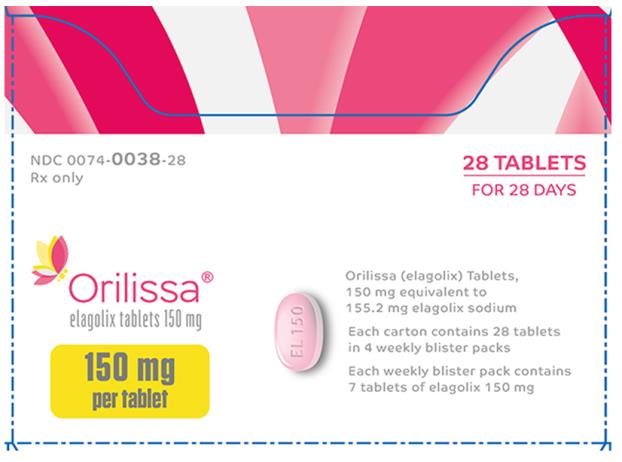
16 HOW SUPPLIED/STORAGE AND HANDLING ORILISSA tablets are available in two strengths: 150 mg and 200 mg, which are equivalent to 155.2 mg and 207.0 mg of elagolix sodium, respectively. ORILISSA 150 mg tablets are light pink, oblong, film-coated tablets with “EL 150” debossed on one side. ORILISSA 150 mg tablets are packaged in weekly blister packs.
Each blister pack contains 7 tablets supplying the drug product for one week. Four blister packs (a total of 28 tablets) are packaged into a carton that provides the drug product for 4 weeks (NDC 0074-0038-28). ORILISSA 200 mg tablets are light orange, oblong, film-coated tablets with “EL 200” debossed on one side.
The 200 mg tablets are packaged in weekly blister packs. Each blister pack contains 14 tablets supplying the drug product for one week. Four blister packs (a total of 56 tablets) are packaged in a carton that provides the drug product for 4 weeks (NDC 0074-0039-56).
Store at 2°C to 30°C (36°F to 86°F). Dispose unused medication via a take-back option if available. Otherwise, follow FDA instructions for disposing medication in the household trash, www.fda.gov/drugdisposal.
Do NOT flush down the toilet.
📋 Description ▾
11 DESCRIPTION ORILISSA (elagolix) tablets for oral administration contain elagolix sodium, the sodium salt of the active moiety elagolix. Elagolix sodium is a nonpeptide small molecule, GnRH receptor antagonist. Elagolix sodium is chemically described as sodium 4-({(1 R )-2-[5-(2-fluoro-3-methoxyphenyl)-3-{[2-fluoro-6-(trifluoromethyl)phenyl]methyl}-4-methyl-2,6-dioxo-3,6-dihydropyrimidin-1(2 H )-yl]-1-phenylethyl}amino)butanoate.
Elagolix sodium has a molecular formula of C 32 H 29 F 5 N 3 O 5 Na and a molecular weight of 653.58. Elagolix free acid has a molecular weight of 631.60. Elagolix sodium has the following structural formula: Elagolix sodium is a white to off white to light yellow powder and is freely soluble in water.
ORILISSA 150 mg tablets are light pink, oblong, film-coated tablets with “EL 150” debossed on one side. Each tablet contains 155.2 mg of elagolix sodium (equivalent to 150 mg of elagolix) as the active ingredient and the following inactive ingredients: mannitol, sodium carbonate monohydrate, pregelatinized starch, povidone, magnesium stearate, polyvinyl alcohol, titanium dioxide, polyethylene glycol, talc, and carmine high tint. ORILISSA 200 mg tablets are light orange, oblong, film-coated tablets with “EL 200” debossed on one side.
Each tablet contains 207.0 mg of elagolix sodium (equivalent to 200 mg of elagolix) as the active ingredient and the following inactive ingredients: mannitol, sodium carbonate monohydrate, pregelatinized starch, povidone, magnesium stearate, polyvinyl alcohol, titanium dioxide, polyethylene glycol, talc, and iron oxide red. Elagolix sodium has the following structural formula
💬 Information for Patients ▾
17 PATIENT COUNSELING INFORMATION Advise patients to read the FDA-approved patient labeling ( Medication Guide ). Bone Loss Inform patients about the risk of bone loss. Advise patients that supplementary calcium and vitamin D may be beneficial if dietary intake of calcium and vitamin D is not adequate [see Warnings and Precautions ( 5.1 )] .
Change in Menstrual Bleeding Pattern, Contraception and Pregnancy Advise women that ORILISSA may delay the recognition of pregnancy because it may reduce the amount, intensity, or duration of menstrual bleeding. Advise patients to use effective non-hormonal contraception while taking ORILISSA and to discontinue ORILISSA if pregnancy is confirmed [see Warnings and Precautions ( 5.2 ) and Use in Specific Populations ( 8.1 )] . Suicidal Ideation, Suicidal Behavior, and Exacerbation of Mood Disorders Advise patients that suicidal ideation and exacerbation of mood disorders may occur with ORILISSA use.
Instruct patients to seek immediate medical attention for suicidal ideation and behavior and for new onset or worsening depression, anxiety, or other mood changes [see Warnings and Precautions ( 5.3 )] . Liver Injury Advise patients to promptly seek medical attention in case of signs or symptoms that may reflect liver injury, such as jaundice [see Warnings and Precautions ( 5.4 )] . ORILISSA Missed Dose Instructions Instruct a patient who miss a dose of ORILISSA to take the missed dose on the same day as soon as she remembers and then resume the regular dosing schedule: 150 mg once daily: no more than 1 tablet each day should be taken.
200 mg twice daily: no more than 2 tablets each day should be taken. ORILISSA Disposal Instructions Instruct patients to dispose of unused medication via a take-back option if available or to otherwise follow FDA instructions for disposing of medication in the household trash, www.fda.gov/drugdisposal , and NOT to flush down the toilet. Manufactured by AbbVie Inc.
North Chicago, IL 60064 ORILISSA is a trademark of AbbVie Inc. © 2025 AbbVie Inc. All rights reserved. 20096645 December 2025
💬 Medication Guide ▾
MEDICATION GUIDE ORILISSA ® (awr-ah-lih-sah) (elagolix) tablets, for oral use What is the most important information I should know about ORILISSA? ORILISSA may cause serious side effects, including: bone loss (decreased bone mineral density). ○ While you are taking ORILISSA, your estrogen levels will be low. Low estrogen levels can lead to bone mineral density loss. ○ If you have bone loss on ORILISSA, your bone density may improve after you stop taking ORILISSA but complete recovery may not occur.
It is unknown if these bone changes could increase your risk for broken bones as you age. For this reason, your healthcare provider may limit the length of time you take ORILISSA. ○ Your healthcare provider may advise you to take vitamin D and calcium supplements as part of a healthy lifestyle that promotes bone health. ○ If you have conditions or take other medicines that can cause bone loss, or if you have broken a bone with minimal or no injury, your healthcare provider may order an X-ray test called a DXA scan to check your bone mineral density. effects on pregnancy ○ Do not take ORILISSA if you are trying to become or are pregnant.
It may increase the risk of early pregnancy loss. ○ If you think you are pregnant, stop taking ORILISSA right away and call your healthcare provider. ○ ORILISSA may change your menstrual periods (irregular bleeding or spotting, a decrease in menstrual bleeding, or no bleeding at all), making it hard to know if you are pregnant. Watch for other signs of pregnancy such as breast tenderness, weight gain and nausea. ○ ORILISSA does not prevent pregnancy. You will need to use effective methods of birth control while taking ORILISSA and for 28 days after you stop taking ORILISSA.
Examples of effective methods can include condoms or spermicide, which do not contain hormones. ○ Birth control pills that contain estrogen may make ORILISSA less effective. It is not known how well ORILISSA will work while you are taking progestin-only birth control such as injections or implants. ○ Talk to your healthcare provider about which birth control to use during treatment with ORILISSA. Your healthcare provider may change the birth control you were on before you start taking ORILISSA.
What is ORILISSA? ORILISSA is a prescription medicine used to treat moderate to severe pain associated with endometriosis. It is not known if ORILISSA is safe and effective in children.
Do not take ORILISSA if you: are pregnant have osteoporosis have severe liver disease are taking medicines called organic anion transporting polypeptide (OATP)1B1 inhibitors that are known or expected to significantly increase the blood levels of elagolix (the active ingredient in ORILISSA). Ask your healthcare provider if you are not sure if you are taking one of these medicines. have had a serious allergic reaction to ORILISSA or any of the ingredients in ORILISSA. See the end of this Medication Guide for a complete list of ingredients in ORILISSA.
Ask your healthcare provider if you are not sure. Before you take ORILISSA, tell your healthcare provider about all of your medical conditions, including if you: have or have had broken bones or other conditions that may cause bone problems have or have had depression, mood problems or suicidal thoughts or behavior have liver problems think you may be pregnant. You should avoid becoming pregnant while taking ORILISSA are breastfeeding or plan to breastfeed.
It is not known if ORILISSA passes into your breastmilk. Talk to your healthcare provider about the best way to feed your baby if you take ORILISSA. Tell your healthcare provider about all the medicines you take , including prescription and over-the-counter medicines, vitamins, and herbal supplements.
Especially tell your healthcare provider if you take: birth control that contains hormones. Your healthcare provider may advise you to change your method of birth control. Know the medicines you take.
Keep a list of your medicines with you to show to your health… [Excerpted — this section continues on DailyMed.]
🧬 Pharmacokinetics ▾
12.3Pharmacokinetics The pharmacokinetic properties of ORILISSA in healthy subjects are summarized in Table 8 . The steady state pharmacokinetic parameters under fasting conditions are summarized in Table 9 . Table 8. Pharmacokinetic Properties of ORILISSA in Healthy Subjects Absorption T max (h)
1.0Effect of high-fat meal (relative to fasting) AUC: ↓24%, C max : ↓36% Distribution % Bound to human plasma proteins 80 Blood-to-plasma ratio
0.6Metabolism Metabolism CYP3A (major) Minor pathways include: CYP2D6, CYP2C8, and uridine glucuronosyl transferases (UGTs) Elimination Major route of elimination Hepatic metabolism Terminal phase elimination half-life (t 1/2 ) (h) 4-6 % of dose excreted in urine <3 % of dose excreted in feces 90 Table 9. Mean (%CV) Steady State Pharmacokinetic Parameters of ORILISSA Pharmacokinetic Parameter (Units) 150 mg Once Daily N = 6 200 mg Twice Daily N = 7 C max (ng/mL) 574 (29) 774 (68) AUC τ (ng●hr/mL) 1292 (31) 1725 (57) CL/F (L/hr) 123 (21) 144 (43) V dss /F 1674 (94) 881 (38) R ac 0.98 (7) 0.89 (19) CV: Coefficient of variation C max : peak concentration AUC τ : area under the plasma concentration-time curve during the dosing interval (τ) i.e., 12 hours for twice daily regimen, 24 hours for once daily regimen.
CL/F: oral clearance V dss /F: apparent volume of distribution at steady state R ac : drug accumulation ratio Specific Populations Patients with Renal Impairment Elagolix exposures (C max and AUC) are not altered by renal impairment. The mean exposures are similar for women with moderate to severe or end stage renal disease (including women on dialysis) compared to women with normal renal function. Patients with Hepatic Impairment Elagolix exposures (C max and AUC) are similar between women with normal hepatic function and women with mild hepatic impairment.
Elagolix exposures in women with moderate and severe hepatic impairment are approximately 3-fold and 7-fold, respectively, higher than exposures from women with normal hepatic function [see Use in Specific Populations ( 8.7 )] . Rac ial or Ethnic Groups No clinically meaningful difference in the pharmacokinetics of ORILISSA between White and Black subjects or between Hispanics and others was observed. There is no clinically meaningful difference in the pharmacokinetics of ORILISSA between Japanese and Han Chinese subjects.
Body weight/Body mass index Body weight or body mass index does not affect the pharmacokinetics of ORILISSA. Drug Interaction Studies Drug interaction studies were performed with ORILISSA and other drugs that are likely to be co-administered and with drugs commonly used as probes for pharmacokinetic interactions. Tables 10 and 11 summarize the pharmacokinetic effects when elagolix was co-administered with these drugs.
Table 10. Drug Interactions: Change in Pharmacokinetics of Elagolix in the Presence of Co-administered Drugs Co- administered Drug Regimen of Co- administered Drug Regimen of Elagolix N Ratio (90% CI)* Ketoconazole 400 mg once daily 150 mg single dose 11 C max AUC 1.77 (1.48 – 2.12) 2.20 (1.98 – 2.44) Rifampin # 600 mg single dose 150 mg single dose 12 4.37 (3.62 – 5.28) 5.58 (4.88 – 6.37) 600 mg once daily 2.00 (1.66 – 2.41) 1.65 (1.45 – 1.89) CI: Confidence interval *ratios for C max and AUC compare co-administration of the medication with elagolix vs. administration of elagolix alone. # A single dose of 600 mg rifampin inhibits OATP1B1; 600 mg once daily dose of rifampin inhibits OATP1B1 and induces CYP3A.
No clinically significant changes in elagolix exposures were observed when co-administered with rosuvastatin (20 mg once daily), sertraline (25 mg once daily) or fluconazole (200 mg single dose). Table 11. Drug Interactions: Change in Pharmacokinetics of Co-administered Drug in the Presence of Elagolix Co- administered Drug Regimen of Co- administered Drug Regimen of Elagolix N Ratio (90% CI)* Digoxin 0.5 mg single dose 200 mg twice daily x 10 days 11 C max AUC 1.71 (1.53 – 1.91) 1.26 (1.17 – 1.3… [Excerpted — this section continues on DailyMed.]
🧬 Pharmacodynamics ▾
12.2Pharmacodynamics Effect on Ovulation and Estradiol In a 3-menstrual cycle study in healthy women, ORILISSA 150 mg once daily and 200 mg twice daily resulted in an ovulation rate of approximately 50% and 32%, respectively. In the Phase 3 trials in women with endometriosis, ORILISSA caused a dose-dependent reduction in median estradiol concentrations to approximately 42 pg/mL for 150 mg once daily regimen and 12 pg/mL for the 200 mg twice daily regimen. Cardiac Electrophysiology The effect of elagolix on the QTc interval was evaluated in a randomized, placebo- and positive-controlled, open-label, single-dose, crossover thorough QTc study in 48 healthy adult premenopausal women.
Elagolix concentrations in subjects given a single dose of 1200 mg was 17-times higher than the concentration in subjects given elagolix 200 mg twice daily. There was no clinically relevant prolongation of the QTc interval.
🔬 Clinical Studies ▾
14 CLINICAL STUDIES The efficacy of ORILISSA 150 mg once daily and 200 mg twice daily for the management of moderate to severe pain associated with endometriosis was demonstrated in two multinational double-blind, placebo-controlled trials in 1686 premenopausal women [Study EM-1 (NCT01620528) and Study EM-2 (NCT01931670)]. The median age of women in the trials was 32 years; 88% were White, 9% were Black or African American and 3% were other races. Each placebo-controlled trial assessed the reduction in endometriosis-associated pain over 6 months of treatment.
Moderate to severe pain associated with endometriosis was required for entry into the trials and was assessed during screening using the composite pelvic signs and symptoms score (CPSSS) and other baseline criteria. The CPSSS is based on a modified Biberoglu and Behrman scale with five elements: three responses reported by study subjects (dysmenorrhea, dyspareunia, and non-menstrual pelvic pain) and two findings based on investigator assessment during physical examination (rating of pelvic tenderness and induration).
Each element is scored from 0 (absent) to 3 (severe) for a maximum total score of 15. A total score of at least 6, with a score of at least 2 for dysmenorrhea and at least 2 for non-menstrual pelvic pain was required to qualify for randomization. Subjects were also required to have non-menstrual pelvic pain for at least four days in the preceding calendar month, defined as 35 days.
Other criteria to determine eligibility for randomization included subject responses in a daily electronic diary (Endometriosis Daily Pain Impact Scale, described below) for both dysmenorrhea and non-menstrual pelvic pain in the 35 days prior to randomization. Dysmenorrhea and Non-Menstrual Pelvic Pain The co-primary efficacy endpoints were (1) the proportion of subjects whose dysmenorrhea responded to treatment at Month 3 and (2) the proportion of subjects whose pelvic pain not related to menses (also known as non-menstrual pelvic pain) responded to treatment at Month 3.
Dysmenorrhea and non-menstrual pelvic pain were evaluated daily using the Endometriosis Daily Pain Impact Scale that asked subjects to rate their pain severity and its impact on daily activities during the prior 24 hours as none, mild, moderate or severe (correlating with a score of 0 to 3, respectively, where higher scores indicated greater severity). Scores at baseline and at each month were averaged over a 35-day interval. Women were defined as responders if they experienced a reduction in dysmenorrhea and non-menstrual pelvic pain as defined in Table 12 with no increase in analgesic use (nonsteroidal anti-inflammatory drug or opioid) for endometriosis-associated pain.
The threshold for defining responders was based on a receiver operating characteristic (ROC) analysis using the patient global impression of change as an anchor. A higher proportion of women treated with ORILISSA 150 mg once daily or 200 mg twice daily were responders for dysmenorrhea and non-menstrual pelvic pain compared to placebo in a dose-dependent manner at Month 3 [see Table 12 ] . Table 12.
Proportion of Responders † for Dysmenorrhea and Non-Menstrual Pelvic Pain at Month 3 in Studies EM-1 and EM-2, Using the Endometriosis Daily Pain Impact Scale Study EM-1 Study EM-2 ORILISSA Placebo ORILISSA Placebo 150 mg Once Daily N=248 200 mg Twice Daily N=244 N=373 150 mg Once Daily N=221 200 mg Twice Daily N=225 N=353 Dysmenorrhea Difference from placebo 46% 27%** 76% 56%** 20% 43% 21%** 72% 50%** 23% Non-Menstrual Pelvic Pain Difference from placebo 50% 14%** 55% 18%** 36% 50% 13%* 58% 21%** 37% † Study EM-1-Dysmenorrhea responder threshold: at least 0.81 point decrease from baseline in dysmenorrhea score; Non-Menstrual Pelvic Pain responder threshold: at least 0.36 point decrease from baseline in Non-Menstrual Pelvic Pain score Study EM-2 - Dysmenorrhea responder threshold: at least 0.85 point decrease from baseline in dysmenorrhea score; Non-Me… [Excerpted — this section continues on DailyMed.]
🧪 Nonclinical Toxicology ▾
13 NONCLINICAL TOXICOLOGY
13.1Carcinogenesis, Mutagenesis, Impairment of Fertility Two-year carcinogenicity studies conducted in mice (50, 150, or 500 mg/kg/day) and rats (150, 300, or 800 mg/kg/day) that administered elagolix by the dietary route revealed no increase in tumors in mice at up to 19-fold the MRHD based on AUC. In the rat, there was an increase in thyroid (male and female) and liver (males only) tumors at the high dose (12 to 13-fold the MRHD). The rat tumors were likely species-specific and of negligible relevance to humans.
Elagolix was not genotoxic or mutagenic in a battery of tests, including the in vitro bacterial reverse mutation assay, the in vitro mammalian cell forward mutation assay at the thymidine kinase (TK+/-) locus in L5178Y mouse lymphoma cells, and the in vivo mouse micronucleus assay. In a fertility study conducted in the rat, there was no effect of elagolix on fertility at any dose (50, 150, or 300 mg/kg/day). Based on AUC, the exposure multiple for the MRHD in women compared to the highest dose of 300 mg/kg/day in female rats is approximately 5-fold.
However, because elagolix has low affinity for the GnRH receptor in the rat [see Use in Specific Populations ( 8.1 )] , and because effects on fertility are most likely to be mediated via the GnRH receptor, these data have low relevance to humans.
📄 Carcinogenesis, Mutagenesis, Impairment of Fertility ▾
13.1Carcinogenesis, Mutagenesis, Impairment of Fertility Two-year carcinogenicity studies conducted in mice (50, 150, or 500 mg/kg/day) and rats (150, 300, or 800 mg/kg/day) that administered elagolix by the dietary route revealed no increase in tumors in mice at up to 19-fold the MRHD based on AUC. In the rat, there was an increase in thyroid (male and female) and liver (males only) tumors at the high dose (12 to 13-fold the MRHD). The rat tumors were likely species-specific and of negligible relevance to humans.
Elagolix was not genotoxic or mutagenic in a battery of tests, including the in vitro bacterial reverse mutation assay, the in vitro mammalian cell forward mutation assay at the thymidine kinase (TK+/-) locus in L5178Y mouse lymphoma cells, and the in vivo mouse micronucleus assay. In a fertility study conducted in the rat, there was no effect of elagolix on fertility at any dose (50, 150, or 300 mg/kg/day). Based on AUC, the exposure multiple for the MRHD in women compared to the highest dose of 300 mg/kg/day in female rats is approximately 5-fold.
However, because elagolix has low affinity for the GnRH receptor in the rat [see Use in Specific Populations ( 8.1 )] , and because effects on fertility are most likely to be mediated via the GnRH receptor, these data have low relevance to humans.
📄 Package Label / Principal Display Panel ▾
NDC 0074-0038-01 Rx only 7 TABLETS FOR 7 DAYS Orilissa® elagolix tablets 150 mg 150 mg per tablet Orilissa (elagolix) Tablets, 150 mg equivalent to 155.2 mg elagolix sodium NDC 0074-0038-01 Rx only 7 TABLETS FOR 7 DAYS Orilissa® elagolix tablets 150 mg 150 mg per tablet Orilissa (elagolix) Tablets, 150 mg equivalent to 155.2 mg elagolix sodium
NDC 0074-0038-28 Rx only 28 TABLETS FOR 28 DAYS Orilissa® elagolix tablets 150 mg 150 mg per tablet Orilissa (elagolix) Tablets, 150 mg equivalent to 155.2 mg elagolix sodium Each carton contains 28 tablets in 4 weekly blister packs Each weekly blister pack contains 7 tablets of elagolix 150 mg NDC 0074-0038-28 Rx only 28 TABLETS FOR 28 DAYS Orilissa® elagolix tablets 150 mg 150 mg per tablet Orilissa (elagolix) Tablets, 150 mg equivalent to 155.2 mg elagolix sodium Each carton contains 28 tablets in 4 weekly blister packs Each weekly blister pack contains 7 tablets of elagolix 150 mg
NDC 0074-0039–01 Rx only 14 TABLETS FOR 7 DAYS Orilissa® elagolix tablets 200 mg 200 mg per tablet Orilissa (elagolix) Tablets, 200 mg equivalent to 207.0 mg elagolix sodium
NDC 0074-0039-56 Rx only 56 TABLETS FOR 28 DAYS Orilissa® elagolix tablets 200 mg 200 mg per tablet Orilissa (elagolix) Tablets, 200 mg equivalent to 207.0 mg elagolix sodium Each carton contains 56 tablets in 4 weekly blister packs Each weekly blister pack contains 14 tablets of elagolix 200 mg NDC 0074-0039-56 Rx only 56 TABLETS FOR 28 DAYS Orilissa® elagolix tablets 200 mg 200 mg per tablet Orilissa (elagolix) Tablets, 200 mg equivalent to 207.0 mg elagolix sodium Each carton contains 56 tablets in 4 weekly blister packs Each weekly blister pack contains 14 tablets of elagolix 200 mg