
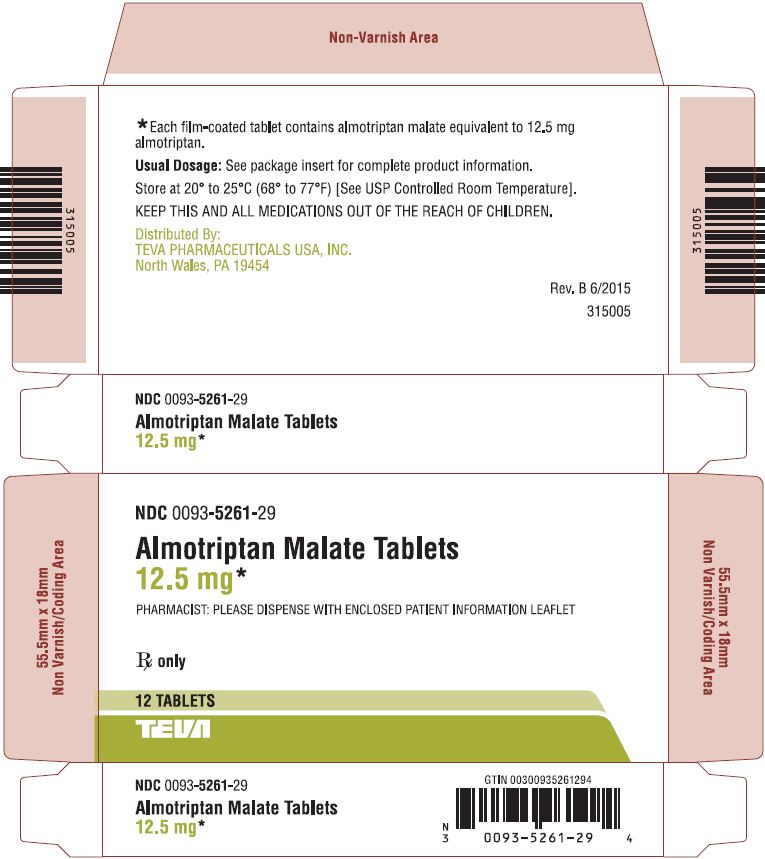
Almotriptan Malate 12.5 mg Tablet, Film Coated — NDC 0093-5261-29 (Billing 00093-5261-29)
This is a package of Almotriptan Malate 12.5 mg Tablet, Film Coated from Teva Pharmaceuticals USA, Inc., marketed since Jul 2015 and currently FDA-listed; retail pharmacies pay about $16.86 per unit (NADAC). It is this product's only package size.
NDC database record
One package, one record: these facts belong to NDC 0093-5261-29 alone.
- Record
- FDA NDC Directory package listing · Human prescription drug
- Code segments
- 0093 labeler · 5261 product · 29 package
- Package marketed since
- Jul 7, 2015
- Sample package
- No — commercial package
- Listing certified through
- Dec 31, 2026
- Barcode (UPC-A, from the NDC)
- 3 0093526129 4
- FDA record last changed
- Jul 24, 2026
Identity & classification
Regulatory identifiers FDA, NLM and CMS codes for this package
Drug-database identifiers Medi-Span GPI and First Databank GCN / HICL / AHFS classification
- GSN (GCN sequence number): 047424
- GCN: 12472
- GPI-14 (Medi-Span): 67406010100330
- HICL (First Databank): 021894
- AHFS class code: 28:32.28.00
- RxCUI (RxNorm): 284204
Where does this data come from?
- FDA openFDA NDC Directory · synced Oct 1, 2026
- FDA label on DailyMed · label index refreshed Oct 6, 2026
- RxNorm (NLM RxNav) · catalog refreshed Oct 1, 2026
- Medi-Span GPI (licensed)
- First Databank (licensed) · refreshed Oct 1, 2026
RxNorm drug class
This medicine belongs to the Serotonin-1b and Serotonin-1d Receptor Agonist class.
Where does this data come from?
- RxClass (NLM) · catalog refreshed Oct 1, 2026
Clinical
- It treats a migraine attack once it has started. It is used in adults and in adolescents ages 12 to 17. It will not prevent migraines and is not for cluster headache.
- Swallow the tablet by mouth when a migraine begins. You can take it with or without food. If the headache improves and then returns, your prescriber may let you repeat a dose after...
- Common ones are nausea, dry mouth, tingling, drowsiness, and dizziness. These are usually mild. Call for help right away if you have chest pain or tightness that doesn't go away, s...
- Tell me which one you take. SSRIs and SNRIs, such as sertraline or duloxetine, can combine with triptans to cause serotonin syndrome, which can be life-threatening. Your prescriber...
Patient education
Supplement & herbal interactions
Where does this data come from?
- MedlinePlus (NLM) · refreshed Oct 1, 2026
- FDA label on DailyMed · label index refreshed Oct 6, 2026
Ask a licensed pharmacist directly — free, answered by our team.
Pricing
A drug doesn't have one price. Each row is a different public payment system, and none is what you'd pay at the counter — that depends on your insurance. The ⓘ on each row explains what it measures.
| Price system | Per ea | Per package |
|---|---|---|
| Retail pharmacies payNADAC · weekly | $16.857 | $202.28 / 12 tablet |
| Medicaid paysCMS SDUD · 12 mo | No recent Medicaid claims on file for this NDC — rare and low-volume NDCs are suppressed in the public data. | |
| Medicare drug plans payPart D · Q2 2026 | $25.27 | $303.26 / 12 tablet |
Where does this data come from?
- CMS NADAC weekly file · file of Sep 30, 2026
- CMS ASP pricing files · refreshed Sep 20, 2026
- CMS Medicaid State Drug Utilization Data · refreshed Oct 7, 2026
- CMS Part D plan pricing files · refreshed Sep 24, 2026
- VA National Acquisition Center price file
Packaging — all sizes for this product
| Package NDC | Description | Marketing start | Marketing end | Status |
|---|---|---|---|---|
| 00093-5261-29 You're viewing this Main listing | 12 BLISTER PACK in 1 CARTON / 1 TABLET, FILM COATED in 1 BLISTER PACK | 2015-07-07 | — | Active |
Therapeutic equivalents
| Product | Labeler | Pack | NADAC/unit | TE | Status | Price vs. this |
|---|---|---|---|---|---|---|
| Almotriptan Malate 12.5 mgthis 00093-5261-29 | Teva | 1 tablet | $16.857 | AB | Availability likely | — |
| Almotriptan Malate 12.5 mg 00378-5246-85 | Mylan | 6 tablets | $16.857 | AB | Availability likely | — |
| almotriptan 12.5 mg 27241-0042-21 | Ajanta | 6 tablets | $16.857 | AB | Availability likely | — |
Where does this data come from?
- FDA openFDA NDC Directory · synced Oct 1, 2026
- FDA Orange Book · refreshed Oct 3, 2026
- CMS NADAC weekly file · file of Sep 30, 2026
Availability & generic status
This product is an FDA-approved generic. Other versions of the same drug are listed under Therapeutic equivalents, least expensive first.
Where does this data come from?
- FDA Orange Book · refreshed Oct 3, 2026
What it looks like
Where does this data come from?
- FDA label on DailyMed · label index refreshed Oct 6, 2026
Inactive Ingredients / Excipients
Inactive ingredients, also called excipients, are components of the drug product other than the active ingredient. They may include fillers, dyes, coatings, preservatives, flavors, or other formulation ingredients.
🧪 Avoiding an ingredient? See Almotriptan inactive ingredients by manufacturer: every current product's list side by side, so you can ask your pharmacy for the version that does not list it.
💡 Tap an ingredient (hover on desktop) to see what it is and why it’s used.
-
UNII M28OL1HH48
Croscarmellose sodium is a plant-based substance derived from cellulose. It acts as a disintegrant, helping tablets and capsules break down quickly in the digestive system so the medicine can be absorbed.
-
UNII 0VUT3PMY82
Hypromellose 2910 is a plant-derived thickening agent made from cellulose. In medicines, it forms protective coatings on tablets or capsules, controls how fast the drug releases, and thickens liquid formulations.
-
UNII 1IVH67816N
Hypromellose 2910 is a plant-derived cellulose compound used as a thickener and film-former in medicines. It helps control how quickly the medication dissolves and creates protective coatings on tablets or capsules.
-
UNII 0WZ8WG20P6
Hypromellose 2910 is a plant-based cellulose derivative that acts as a thickener, binder, and film-coating agent. It helps control how quickly the medicine dissolves and protects the tablet or capsule from moisture and light.
-
UNII 3OWL53L36A
A natural sugar alcohol derived from seaweed or synthesized in the lab. It's used as a filler to add bulk, a sweetener in sugar-free formulas, and a disintegrant to help tablets break apart in the stomach.
-
UNII OP1R32D61U
Microcrystalline cellulose is a purified form of cellulose, a natural fiber from plant sources. It acts as a binder and filler in tablets and capsules, helping hold ingredients together and give the medicine its shape and size.
-
UNII VH2XOU12IE
Polydextrose is a synthetic polymer made from dextrose (sugar) that acts as a bulking agent and filler in medicines. It helps give tablets and capsules proper volume and texture while often adding slight sweetness.
-
UNII Q662QK8M3B
Polyethylene glycol 8000 is a synthetic polymer made from ethylene oxide. It acts as a binder and filler in tablets and capsules, helping hold ingredients together and add bulk to the medicine.
-
UNII U725QWY32X
Povidone K30 is a synthetic polymer made from petroleum. It acts as a binder to hold tablet ingredients together and as a disintegrant to help the tablet break apart in the stomach so the medicine can be absorbed.
-
UNII 7CV7WJK4UI
Sodium stearyl fumarate is a synthetic compound made from stearyl alcohol and fumaric acid. It acts as a lubricant and glidant in tablets and capsules, helping ingredients flow smoothly during manufacturing and preventing sticking.
-
UNII 15FIX9V2JP
Titanium dioxide is a bright white mineral powder commonly used as a colorant and opacifying agent. It makes pills and tablets white or lighter in color and helps make coatings non-transparent.
-
UNII XHX3C3X673
Triacetin is a clear, oily liquid made from glycerin and acetic acid. It works as a plasticizer and solvent in medicines, helping soften coatings and improve how liquids mix together in formulations.
12 inactive ingredients listed in the exact product block matched to this NDC.
Where does this data come from?
ingredient classCode="IACT" elements from the exact product block matched by this NDC. Label-section narrative from DailyMed / the openFDA label index is shown separately when available.- FDA label on DailyMed · label index refreshed Oct 6, 2026
- FDA openFDA NDC Directory · synced Oct 1, 2026
Inactive ingredient FAQ
Are inactive ingredients the same for every manufacturer?
Why might an inactive ingredient be missing?
Can inactive ingredients matter?
Manufacturer & labeler
More NDCs from Teva Pharmaceuticals USA, Inc. labeler code 00093
- Efavirenz, Emtricitabine and Tenofovir Disoproxil Fumarate 600 mg; 200 mg; 300 mg Tablet, Film Coated NDC 0093-5234-56
- Olanzapine 5 mg Tablet, Orally Disintegrating NDC 0093-5245-65
- Olanzapine 10 mg Tablet, Orally Disintegrating NDC 0093-5246-65
- Olanzapine 15 mg Tablet, Orally Disintegrating NDC 0093-5247-65
- Olanzapine 20 mg Tablet, Orally Disintegrating NDC 0093-5248-65
- Almotriptan Malate 6.25 mg Tablet, Film Coated NDC 0093-5260-18
- Junel Fe 24 Norethindrone Acetate and Ethinyl Estradiol and Ferrous Fumarate Kit NDC 0093-5328-62
- Sildenafil 25 mg Tablet, Film Coated NDC 0093-5341-56
- Sildenafil 50 mg Tablet, Film Coated NDC 0093-5342-01
- Sildenafil 100 mg Tablet, Film Coated NDC 0093-5343-01
- Methylphenidate Hydrochloride (LA) 20 mg Capsule, Extended Release NDC 0093-5346-01
- Methylphenidate Hydrochloride (LA) 30 mg Capsule, Extended Release NDC 0093-5347-01
Where does this data come from?
- FDA openFDA NDC Directory · synced Oct 1, 2026
- Drugs@FDA
Full prescribing information FDA SPL
🎯 Indications and Usage ▾
1 INDICATIONS AND USAGE Almotriptan malate tablets are a 5HT 1B/1D receptor agonist (triptan) indicated for: Acute treatment of migraine attacks in adults with a history of migraine with or without aura ( 1.1 ) Acute treatment of migraine headache pain in adolescents age 12 to 17 years with a history of migraine with or without aura, and who have migraine attacks usually lasting 4 hours or more ( 1.1 ) Important limitations: Use only after a clear diagnosis of migraine has been established ( 1.2 ) In adolescents age 12 to 17 years, efficacy of almotriptan malate tablets on migraine-associated symptoms was not established ( 1.2 ) Not intended for the prophylactic therapy of migraine ( 1.2 ) Not indicated for the treatment of cluster headache ( 1.2 )
1.1Acute Treatment of Migraine Attacks Adults Almotriptan malate tablets are indicated for the acute treatment of migraine attacks in patients with a history of migraine with or without aura. Adolescents Age 12 to 17 Years Almotriptan malate tablets are indicated for the acute treatment of migraine headache pain in patients with a history of migraine attacks with or without aura usually lasting 4 hours or more (when untreated).
1.2Important Limitations Almotriptan malate tablets should only be used where a clear diagnosis of migraine has been established. If a patient has no response for the first migraine attack treated with almotriptan malate tablets, the diagnosis of migraine should be reconsidered before almotriptan malate tablets are administered to treat any subsequent attacks. In adolescents age 12 to 17 years, efficacy of almotriptan malate tablets on migraine-associated symptoms (nausea, photophobia, and phonophobia) was not established.
Almotriptan malate tablets are not intended for the prophylactic therapy of migraine or for use in the management of hemiplegic or basilar migraine [see Contraindications ( 4.7 )] . Safety and effectiveness of almotriptan malate tablets have not been established for cluster headache which is present in an older, predominantly male population.
⏱️ Dosage and Administration ▾
2 DOSAGE AND ADMINISTRATION Adults and adolescents age 12 to 17 years: 6.25 mg or 12.5 mg single dose; may repeat after 2 hours if headache returns; benefit of second dose in patients who have failed to respond to first dose has not been established; maximum daily dose 25 mg ( 2.1 ) Patients with hepatic or severe renal impairment: 6.25 mg starting dose; maximum daily dose 12.5 mg ( 2.2 , 2.3 )
2.1Acute Treatment of Migraine Attacks The recommended dose of almotriptan malate tablets in adults and adolescents age 12 to 17 years is 6.25 mg to 12.5 mg, with the 12.5 mg dose tending to be a more effective dose in adults. As individuals may vary in their response to different doses of almotriptan malate tablets, the choice of dose should be made on an individual basis. If the headache is relieved after the initial almotriptan malate tablets dose but returns, the dose may be repeated after 2 hours.
The effectiveness of a second dose has not been established in placebo-controlled trials. The maximum daily dose should not exceed 25 mg. The safety of treating an average of more than four migraines in a 30-day period has not been established.
2.2Hepatic Impairment The recommended starting dose of almotriptan malate tablets in patients with hepatic impairment is 6.25 mg. The maximum daily dose should not exceed 12.5 mg over a 24-hour period [see Warnings and Precautions ( 5.9 ) and Clinical Pharmacology ( 12.3 )] .
2.3Renal Impairment The recommended starting dose of almotriptan malate tablets in patients with severe renal impairment is 6.25 mg. The maximum daily dose should not exceed 12.5 mg over a 24-hour period [see Warnings and Precautions ( 5.9 ) and Clinical Pharmacology ( 12.3 )] .
💊 Dosage Forms and Strengths ▾
3 DOSAGE FORMS AND STRENGTHS Almotriptan malate tablets are available as white, film-coated, round, convex tablets in the following strengths: 6.25 mg tablet debossed with “93” on one side and “A1” on the other side 12.5 mg tablet debossed with “93” on one side and “A2” on the other side Tablets: 6.25 mg and 12.5 mg ( 3 )
⛔ Contraindications ▾
4 CONTRAINDICATIONS Ischemic heart disease, coronary artery vasospasm, or other significant underlying cardiovascular disease ( 4.1 ) Cerebrovascular syndromes (e.g., history of stroke or TIA) ( 4.2 ) Peripheral vascular disease (including ischemic bowel disease) ( 4.3 ) Uncontrolled hypertension ( 4.4 ) Do not use almotriptan malate within 24 hours of an ergotamine-containing, or ergot-type medication, or of another 5-HT 1 agonist, e.g., another triptan ( 4.5 , 4.6 ) Hemiplegic or basilar migraine ( 4.7 ) Known hypersensitivity to almotriptan malate ( 4.8 )
4.1Ischemic or Vasospastic Coronary Artery Disease, or Other Significant Underlying Cardiovascular Disease Do not use almotriptan malate in patients with ischemic heart disease (angina pectoris, history of myocardial infarction, or documented silent ischemia), or in patients who have symptoms or findings consistent with ischemic heart disease, coronary artery vasospasm, including Prinzmetal's variant angina, or other significant underlying cardiovascular disease [see Warnings and Precautions ( 5.1 )] .
4.2Cerebrovascular Syndromes Do not use almotriptan malate tablets in patients with cerebrovascular syndromes including (but not limited to) stroke of any type as well as transient ischemic attacks [see Warnings and Precautions ( 5.3 )] .
4.3Peripheral Vascular Disease Do not use almotriptan malate tablets in patients with peripheral vascular disease including (but not limited to) ischemic bowel disease [see Warnings and Precautions ( 5.4 )] .
4.4Uncontrolled Hypertension Because almotriptan malate may increase blood pressure, do not use almotriptan malate tablets in patients with uncontrolled hypertension [see Warnings and Precautions ( 5.7 )] .
4.5Ergotamine-Containing and Ergot-Type Medications Do not use almotriptan malate tablets and ergotamine-containing or ergot-derived medications like dihydroergotamine, ergotamine tartrate, or methysergide within 24 hours of each other [see Drug Interactions ( 7.1 )] .
4.6Concomitant Use With 5-HT 1 Agonists (e.g., Triptans) Almotriptan malate tablets and other 5-HT 1 agonists (e.g., triptans) should not be administered within 24 hours of each other [see Warnings and Precautions ( 5.1 ) and ( 5.2 )] .
4.7Hemiplegic or Basilar Migraine Do not use almotriptan malate tablets in patients with hemiplegic or basilar migraine.
4.8Hypersensitivity Almotriptan malate tablets are contraindicated in patients with known hypersensitivity to almotriptan or any of its inactive ingredients.
⚠️ Warnings and Cautions ▾
5 WARNINGS AND PRECAUTIONS Serious adverse cardiac events, including acute myocardial infarction and life-threatening disturbances of cardiac rhythm ( 5.1 ) It is strongly recommended that almotriptan malate not be given to patients in whom unrecognized coronary artery disease (CAD) is predicted by the presence of risk factors. In very rare cases, serious cardiovascular events have been reported in association with almotriptan malate use in the absence of known cardiovascular disease. If almotriptan malate is considered, patients should first have a cardiovascular evaluation.
If the evaluation is satisfactory, first dose should take place in a physician’s office setting ( 5.1 ) Sensations of pain, tightness, pressure, and heaviness in the chest, throat, neck, and jaw: generally not associated with myocardial ischemia, but patients with signs or symptoms suggestive of angina should be evaluated for the presence of CAD ( 5.2 ) Cerebrovascular events, some fatal ( 5.3 ) Gastrointestinal ischemic events and peripheral vasospastic reactions (e.g., Raynaud’s syndrome) ( 5.4 ) Potentially life-threatening serotonin syndrome, particularly in combination with selective serotonin reuptake inhibitors (SSRIs) or serotonin norepinephrine reuptake inhibitors (SNRIs).
Monitor patients for neurologic changes and gastrointestinal symptoms if concomitant treatment is clinically warranted ( 5.5 , 7.3 ) Medication overuse headache: Detoxification may be necessary (5.6) Increase in blood pressure, very rarely associated with significant clinical events ( 4.4 , 5.7 ) Use with caution in patients with a known hypersensitivity to sulfonamides ( 5.8 )
5.1Risk of Myocardial Ischemia and Infarction and Other Adverse Cardiac Events Cardiac Events and Fatalities with 5-HT 1 Agonists Serious adverse cardiac events, including acute myocardial infarction, have been reported within a few hours following administration of almotriptan malate. Life-threatening disturbances of cardiac rhythm and death have been reported within a few hours following the administration of other triptans. Considering the extent of use of triptans in patients with migraine, the incidence of these events is extremely low.
Almotriptan malate can cause coronary vasospasm; at least one of these events occurred in a patient with no cardiac history and with documented absence of coronary artery disease. Because of the close proximity of the events to use of almotriptan malate, a causal relationship cannot be excluded. Patients who experience signs or symptoms suggestive of angina following dosing should be evaluated for the presence of coronary artery disease (CAD) or a predisposition to Prinzmetal’s variant angina before receiving additional doses of medication, and should be monitored electrocardiographically if dosing is resumed and similar symptoms recur.
Premarketing Experience with Almotriptan Malate in Adults Among the 3865 subjects/patients who received almotriptan malate in premarketing clinical trials, one patient was hospitalized for observation after a scheduled electrocardiogram (ECG) was found to be abnormal (negative T-waves on the left leads) 48 hours after taking a single 6.25 mg dose of almotriptan. The patient, a 48-year-old female, had previously taken 3 other doses for earlier migraine attacks. Myocardial enzymes at the time of the abnormal ECG were normal.
The patient was diagnosed as having had myocardial ischemia and that she had a family history of coronary disease. An ECG performed 2 days later was normal, as was a follow-up coronary angiography. The patient recovered without incident.
Postmarketing Experience with Almotriptan Malate in Adults Serious cardiovascular events have been reported in association with the use of almotriptan malate. The uncontrolled nature of postmarketing surveillance, however, makes it impossible to definitively determine the proportion of the reported cases that were actually caused by almotriptan or to reliably assess causation in in… [Excerpted — this section continues on DailyMed.]
🤒 Adverse Reactions ▾
6 ADVERSE REACTIONS Serious cardiac reactions, including myocardial infarction, have occurred following the use of almotriptan malate tablets. These reactions are extremely rare and most have been reported in patients with risk factors predictive of CAD. Reactions reported in association with triptans have included coronary artery vasospasm, transient myocardial ischemia, myocardial infarction, ventricular tachycardia, and ventricular fibrillation [see Contraindications ( 4.1 ) and Warnings and Precautions ( 5.1 )] .
The following adverse reactions are discussed in more detail in other sections of the labeling: Risk of Myocardial Ischemia and Infarction and Other Adverse Cardiac Events [see Warnings and Precautions ( 5.1 )] Sensations of Pain, Tightness, Pressure in the Chest and/or Throat, Neck, and Jaw [see Warnings and Precautions ( 5.2 )] Cerebrovascular Events and Fatalities [see Warnings and Precautions ( 5.3 )] Other Vasospasm-Related Events, including Peripheral Vascular Ischemia and Colonic Ischemia [see Warnings and Precautions ( 5.4 )] Serotonin Syndrome [see Warnings and Precautions ( 5.5 )] Increases in Blood Pressure [see Warnings and Precautions ( 5.7 )] Adverse events were assessed in controlled clinical trials that included 1840 adult patients who received one or two doses of almotriptan malate and 386 adult patients who received placebo.
The most common adverse reactions during treatment with almotriptan malate were nausea, somnolence, headache, paresthesia, and dry mouth. In long-term open-label studies where patients were allowed to treat multiple attacks for up to 1 year, 5% (63 out of 1347 patients) withdrew due to adverse experiences. Adverse events were assessed in controlled clinical trials that included 362 adolescent patients who received almotriptan malate and 172 adolescent patients who received placebo.
The most common adverse reactions during treatment with almotriptan malate were dizziness, somnolence, headache, paresthesia, nausea, and vomiting. In a long-term, open-label study where patients were allowed to treat multiple attacks for up to 1 year, 2% (10 out of 420 adolescent patients) withdrew due to adverse events. Because clinical studies are conducted under widely varying conditions, adverse reaction rates observed in the clinical studies of a drug cannot be directly compared to rates in the clinical studies of another drug and may not reflect the rates observed in practice.
The most common adverse reactions (≥ 1% and greater than placebo) are: In adults: nausea, dry mouth and paresthesia ( 6.1 ) In adolescents: dizziness, somnolence, headache, paresthesia, nausea and vomiting ( 6.2 ) To report SUSPECTED ADVERSE REACTIONS, contact TEVA USA, PHARMACOVIGILANCE at 1-866-832-8537 or FDA at 1-800-FDA-1088 or www.fda.gov/medwatch.
6.1Commonly-Observed Adverse Reactions in Double-Blind, Placebo-Controlled Almotriptan Malate Clinical Trials Adults Table 1 lists the adverse events that occurred in at least 1% of the adult patients treated with almotriptan malate, and at an incidence greater than in patients treated with placebo, regardless of drug relationship. Table 1. Incidence of Adverse Events in Controlled Clinical Trials (Reported in at Least 1% of Adult Patients Treated with Almotriptan Malate, and at an Incidence Greater than Placebo) System/Organ Class Adverse Event Almotriptan 6.25 mg (n = 527) % Almotriptan 12.5 mg (n = 1313) % Placebo (n = 386) % Digestive Disorders Nausea 1 2 1 Dry mouth 1 1
0.5 Nervous System Disorders Paresthesia 1 1
0.5The incidence of adverse events in controlled clinical trials was not affected by gender, weight, age, presence of aura, or use of prophylactic medications or oral contraceptives. There were insufficient data to assess the effect of race on the incidence of adverse events. Adolescents Table 2 lists the adverse reactions reported by 1% or more of almotriptan malate-treated adolescents age 12 to 17 years in 1 placebo-controlled, double-blind clinical… [Excerpted — this section continues on DailyMed.]
🔄 Drug Interactions ▾
7 DRUG INTERACTIONS Do not use almotriptan malate and ergotamine-containing or ergot-type medications within 24 hours of each other ( 4.5 , 7.1 ) Do not use almotriptan malate and other 5-HT 1 agonists (e.g., triptans) within 24 hours of each other ( 4.6 , 7.2 ) SSRI or SNRI: life-threatening serotonin syndrome reported during combined use with triptans ( 5.5 , 7.3 ) Ketoconazole: use single dose of almotriptan malate 6.25 mg; maximum almotriptan malate daily dose 12.5 mg ( 7.4 )
7.1Ergot-Containing Drugs These drugs have been reported to cause prolonged vasospastic reactions. Because, in theory, vasospastic effects may be additive, ergotamine-containing or ergot-type medications (like dihydroergotamine, ergotamine tartrate, or methysergide) and almotriptan malate should not be used within 24 hours of each other [see Contraindications ( 4.5 )] . 7.2 5-HT 1 Agonists (e.g., Triptans) Concomitant use of other 5-HT 1 agonists (e.g., triptans) within 24 hours of treatment with almotriptan malate is contraindicated [see Contraindications ( 4.6 )] .
7.3Selective Serotonin Reuptake Inhibitors/Serotonin Norepinephrine Reuptake Inhibitors Cases of life-threatening serotonin syndrome have been reported during combined use of triptans and selective serotonin reuptake inhibitors (SSRIs) or serotonin norepinephrine reuptake inhibitors (SNRIs) [see Warnings and Precautions ( 5.5 ), Clinical Pharmacology (12.3) ] .
7.4Ketoconazole and Other Potent CYP3A4 Inhibitors Coadministration of almotriptan and oral ketoconazole, a potent CYP3A4 inhibitor, resulted in an approximately 60% increase in exposure of almotriptan. Increased exposures to almotriptan may be expected when almotriptan is used concomitantly with other potent CYP3A4 inhibitors [see Clinical Pharmacology (12.3) ] . In patients concomitantly using potent CYP3A4 inhibitors, the recommended starting dose of almotriptan is 6.25 mg.
The maximum daily dose should not exceed 12.5 mg within a 24-hour period. Concomitant use of almotriptan malate and potent CYP3A4 inhibitors should be avoided in patients with renal or hepatic impairment [see Clinical Pharmacology (12.3) ] .
👥 Use in Specific Populations ▾
8 USE IN SPECIFIC POPULATIONS Pregnancy: based on animal data, may cause fetal harm ( 8.1 ) Nursing mothers: use almotriptan malate with caution (8.3) Pediatric use: almotriptan malate has not been studied in children under 12 years ( 8.4 ) Geriatric use: insufficient safety and efficacy data; use with caution, usually starting with the 6.25 mg dose ( 8.5 ) Hepatic impairment: use single 6.25 mg tablet as a starting dose; maximum daily dose 12.5 mg ( 2.2 , 8.6 ) Severe renal impairment: use single 6.25 mg tablet as a starting dose; maximum daily dose 12.5 mg ( 2.3 , 8.7 )
8.1Pregnancy Pregnancy Category C In animal studies, almotriptan produced developmental toxicity (increased embryolethality and fetal skeletal variations, and decreased offspring body weight) at doses greater than those used clinically. There are no adequate and well-controlled studies in pregnant women; therefore, almotriptan malate should be used during pregnancy only if the potential benefit justifies the potential risk to the fetus. When almotriptan (125, 250, 500, or 1000 mg/kg/day) was administered orally to pregnant rats throughout the period of organogenesis, increased incidences of fetal skeletal variations (decreased ossification) were noted at a dose of 250 mg/kg/day or greater and an increase in embryolethality was seen at the highest dose.
The no-effect dose for embryo-fetal developmental toxicity in rats (125 mg/kg/day) is approximately 100 times the maximum recommended human dose (MRHD) of 25 mg/day on a body surface area (mg/m 2 ) basis. Similar studies in pregnant rabbits conducted with almotriptan (oral doses of 5, 20, or 60 mg/kg/day) demonstrated increases in embryolethality at the highest dose. The no-effect dose for embryo-fetal developmental toxicity in rabbits (20 mg/kg/day) is approximately 15 times the MRHD on a mg/m 2 basis.
When almotriptan (25, 100, or 400 mg/kg/day) was administered orally to rats throughout the periods of gestation and lactation, gestation length was increased and litter size and offspring body weight were decreased at the highest dose. The decrease in pup weight persisted throughout lactation. The no-effect dose in this study (100 mg/kg/day) is 40 times the MRHD on a mg/m 2 basis.
8.2Labor and Delivery The effect of almotriptan malate on labor and delivery in humans is unknown.
8.3Nursing Mothers It is not known whether almotriptan is excreted in human milk. Because many drugs are excreted in human milk, caution should be exercised when almotriptan malate is administered to a nursing woman. Levels of almotriptan in rat milk were up to 7 times higher than in rat plasma.
8.4Pediatric Use Safety and efficacy of almotriptan malate in pediatric patients under the age of 12 years have not been established. The pharmacokinetics, efficacy, and safety of almotriptan malate have been evaluated in adolescent patients, age 12 to 17 years [see Clinical Pharmacology ( 12.3 ) and Clinical Studies ( 14.2 )] . In a clinical study, almotriptan 6.25 mg and 12.5 mg were found to be effective for the relief of migraine headache pain in adolescent patients age 12 to 17 years.
Efficacy on migraine-associated symptoms (nausea, photophobia, and phonophobia) was not established. The most common adverse reactions (incidence of ≥ 1%) associated with almotriptan malate treatment were dizziness, somnolence, headache, paresthesia, nausea, and vomiting [see Adverse Reactions ( 6.1 )] . The safety and tolerability profile of almotriptan malate treatment in adolescents is similar to the profile observed in adults.
Postmarketing experience with other triptans include a limited number of reports that describe pediatric patients who have experienced clinically serious adverse events that are similar in nature to those reported rarely in adults.
8.5Geriatric Use Clinical studies of almotriptan malate did not include sufficient numbers of subjects age 65 and over to determine whether they respond differently from younger subjects. Clearance of… [Excerpted — this section continues on DailyMed.]
🤰 Pregnancy ▾
8.1Pregnancy Pregnancy Category C In animal studies, almotriptan produced developmental toxicity (increased embryolethality and fetal skeletal variations, and decreased offspring body weight) at doses greater than those used clinically. There are no adequate and well-controlled studies in pregnant women; therefore, almotriptan malate should be used during pregnancy only if the potential benefit justifies the potential risk to the fetus. When almotriptan (125, 250, 500, or 1000 mg/kg/day) was administered orally to pregnant rats throughout the period of organogenesis, increased incidences of fetal skeletal variations (decreased ossification) were noted at a dose of 250 mg/kg/day or greater and an increase in embryolethality was seen at the highest dose.
The no-effect dose for embryo-fetal developmental toxicity in rats (125 mg/kg/day) is approximately 100 times the maximum recommended human dose (MRHD) of 25 mg/day on a body surface area (mg/m 2 ) basis. Similar studies in pregnant rabbits conducted with almotriptan (oral doses of 5, 20, or 60 mg/kg/day) demonstrated increases in embryolethality at the highest dose. The no-effect dose for embryo-fetal developmental toxicity in rabbits (20 mg/kg/day) is approximately 15 times the MRHD on a mg/m 2 basis.
When almotriptan (25, 100, or 400 mg/kg/day) was administered orally to rats throughout the periods of gestation and lactation, gestation length was increased and litter size and offspring body weight were decreased at the highest dose. The decrease in pup weight persisted throughout lactation. The no-effect dose in this study (100 mg/kg/day) is 40 times the MRHD on a mg/m 2 basis.
🧒 Pediatric Use ▾
8.4Pediatric Use Safety and efficacy of almotriptan malate in pediatric patients under the age of 12 years have not been established. The pharmacokinetics, efficacy, and safety of almotriptan malate have been evaluated in adolescent patients, age 12 to 17 years [see Clinical Pharmacology ( 12.3 ) and Clinical Studies ( 14.2 )] . In a clinical study, almotriptan 6.25 mg and 12.5 mg were found to be effective for the relief of migraine headache pain in adolescent patients age 12 to 17 years.
Efficacy on migraine-associated symptoms (nausea, photophobia, and phonophobia) was not established. The most common adverse reactions (incidence of ≥ 1%) associated with almotriptan malate treatment were dizziness, somnolence, headache, paresthesia, nausea, and vomiting [see Adverse Reactions ( 6.1 )] . The safety and tolerability profile of almotriptan malate treatment in adolescents is similar to the profile observed in adults.
Postmarketing experience with other triptans include a limited number of reports that describe pediatric patients who have experienced clinically serious adverse events that are similar in nature to those reported rarely in adults.
🧓 Geriatric Use ▾
8.5Geriatric Use Clinical studies of almotriptan malate did not include sufficient numbers of subjects age 65 and over to determine whether they respond differently from younger subjects. Clearance of almotriptan was lower in elderly volunteers than in younger individuals, but there were no observed differences in the safety and tolerability between the two populations [see Clinical Pharmacology ( 12.3 )] . In general, dose selection for an elderly patient should be cautious, usually starting at the low dose, reflecting the greater frequency of decreased hepatic, renal, or cardiac function, and of concomitant disease or other drug therapy.
The recommended dose of almotriptan malate for elderly patients with normal renal function for their age is the same as that recommended for younger adults.
🆘 Overdosage ▾
10 OVERDOSAGE
10.1Signs and Symptoms Patients and volunteers receiving single oral doses of 100 to 150 mg of almotriptan did not experience significant adverse events. Six additional normal volunteers received single oral doses of 200 mg without serious adverse events. During clinical trials with almotriptan, one patient ingested 62.5 mg in a 5-hour period and another patient ingested 100 mg in a 38-hour period.
Neither patient experienced adverse reactions. Based on the pharmacology of triptans, hypertension or other more serious cardiovascular symptoms could occur after overdosage.
10.2Recommended Treatment There is no specific antidote to almotriptan. In cases of severe intoxication, intensive care procedures are recommended, including establishing and maintaining a patent airway, ensuring adequate oxygenation and ventilation, and monitoring and support of the cardiovascular system. Clinical and electrocardiographic monitoring should be continued for at least 20 hours even if clinical symptoms are not observed.
It is unknown what effect hemodialysis or peritoneal dialysis has on plasma concentrations of almotriptan.
🧬 Clinical Pharmacology ▾
12 CLINICAL PHARMACOLOGY
12.1Mechanism of Action Almotriptan binds with high affinity to 5-HT 1D , 5-HT 1B , and 5-HT 1F receptors. Almotriptan has weak affinity for 5-HT 1A and 5-HT 7 receptors, but has no significant affinity or pharmacological activity at 5-HT 2 , 5-HT 3 , 5-HT 4 , 5-HT 6 ; alpha or beta adrenergic; adenosine (A 1 , A 2 ); angiotensin (AT 1 , AT 2 ); dopamine (D 1 , D 2 ); endothelin (ET A , ET B ); or tachykinin (NK 1 , NK 2 , NK 3 ) binding sites.
12.2Pharmacodynamics Current theories on the etiology of migraine headache suggest that symptoms are due to local cranial vasodilatation and/or to the release of vasoactive and pro-inflammatory peptides from sensory nerve endings in an activated trigeminal system. The therapeutic activity of almotriptan in migraine can most likely be attributed to agonist effects at 5-HT 1B/1D receptors on the extracerebral, intracranial blood vessels that become dilated during a migraine attack and on nerve terminals in the trigeminal system.
Activation of these receptors results in cranial vessel constriction, inhibition of neuropeptide release, and reduced transmission in trigeminal pain pathways.
12.3Pharmacokinetics Absorption The absolute bioavailability of almotriptan is about 70%, with peak plasma levels occurring 1 to 3 hours after administration; food does not affect pharmacokinetics. Distribution Almotriptan is minimally protein bound (approximately 35%) and the mean apparent volume of distribution is approximately 180 to 200 liters. Metabolism Almotriptan is metabolized by two major and one minor pathways.
Monoamine oxidase (MAO)-mediated oxidative deamination (approximately 27% of the dose), and cytochrome P450-mediated oxidation (approximately 12% of the dose) are the major routes of metabolism, while flavin monooxygenase is the minor route. MAO-A is responsible for the formation of the indoleacetic acid metabolite, whereas cytochrome P450 (3A4 and 2D6) catalyzes the hydroxylation of the pyrrolidine ring to an intermediate that is further oxidized by aldehyde dehydrogenase to the gamma-aminobutyric acid derivative. Both metabolites are inactive.
Excretion Almotriptan has a mean half-life of 3 to 4 hours. Almotriptan is eliminated primarily by renal excretion (about 75% of the oral dose), with approximately 40% of an administered dose excreted unchanged in urine. Renal clearance exceeds the glomerular filtration rate by approximately 3-fold, indicating an active mechanism.
Approximately 13% of the administered dose is excreted via feces, both unchanged and metabolized. Drug-Drug Interactions All drug interaction studies were performed in healthy volunteers using a single 12.5 mg dose of almotriptan and multiple doses of the other drug. Monoamine Oxidase Inhibitors Coadministration of almotriptan and moclobemide (150 mg twice daily for 8 days) resulted in a 27% decrease in almotriptan clearance and an increase in C max of approximately 6%.
No dose adjustment is necessary. Propranolol Coadministration of almotriptan and propranolol (80 mg twice daily for 7 days) resulted in no significant changes in the pharmacokinetics of almotriptan. Fluoxetine Coadministration of almotriptan and fluoxetine (60 mg daily for 8 days), a potent inhibitor of CYP2D6, had no effect on almotriptan clearance, but maximal concentrations of almotriptan were increased 18%.
This difference is not clinically significant. Verapamil Coadministration of almotriptan and verapamil (120 mg sustained-release tablets twice daily for 7 days), an inhibitor of CYP3A4, resulted in a 20% increase in the area under the plasma concentration-time curve, and in a 24% increase in maximal plasma concentrations of almotriptan. Neither of these changes is clinically significant.
No dose adjustment is necessary. Ketoconazole and Other Potent CYP3A4 Inhibitors Coadministration of almotriptan and ketoconazole, a potent CYP3A4 inhibitor, resulted in an approximately 60% increase in exposure of almotriptan. Increased… [Excerpted — this section continues on DailyMed.]
🧬 Mechanism of Action ▾
12.1Mechanism of Action Almotriptan binds with high affinity to 5-HT 1D , 5-HT 1B , and 5-HT 1F receptors. Almotriptan has weak affinity for 5-HT 1A and 5-HT 7 receptors, but has no significant affinity or pharmacological activity at 5-HT 2 , 5-HT 3 , 5-HT 4 , 5-HT 6 ; alpha or beta adrenergic; adenosine (A 1 , A 2 ); angiotensin (AT 1 , AT 2 ); dopamine (D 1 , D 2 ); endothelin (ET A , ET B ); or tachykinin (NK 1 , NK 2 , NK 3 ) binding sites.
📦 How Supplied / Storage and Handling ▾
16 HOW SUPPLIED/STORAGE AND HANDLING Almotriptan malate tablets are available as follows: 6.25 mg: White to off-white, round, convex, film-coated tablets debossed with “93” on one side and “A1” on the other side in boxes of 1 card X 6 tablets (NDC 0093-5260-18). 12.5 mg: White to off-white, round, convex, film-coated tablets debossed with “93” on one side and “A2” on the other side in boxes of 2 cards X 6 tablets (NDC 0093-5261-29). Store at 20° to 25°C (68° to 77°F) [See USP Controlled Room Temperature].
📋 Description ▾
11 DESCRIPTION Almotriptan malate tablets contain almotriptan malate, a selective 5-hydroxytryptamine 1B/1D (5-HT 1B/1D ) receptor agonist. Almotriptan malate is chemically designated as 1-[[[3-[2-(Dimethylamino)ethyl]-1H-indol-5-yl]methyl]sulfonyl]pyrrolidine(±)-hydroxybutanedioate (1:1), and its structural formula is: C 17 H 25 N 3 O 2 S-C 4 H 6 O 5 M.W. 469.56 Almotriptan is a white to off white crystalline powder that is soluble in water.
Almotriptan malate tablets for oral administration contain almotriptan malate equivalent to 6.25 mg or 12.5 mg of almotriptan. Each compressed tablet contains the following inactive ingredients: croscarmellose sodium, hypromellose, macrogol/PEG 8000, mannitol, microcrystalline cellulose, polydextrose FCC, povidone, sodium stearyl fumarate, titanium dioxide, and triacetin/glycerol triacetate. Chemical Structure
💬 Information for Patients ▾
17 PATIENT COUNSELING INFORMATION Advise the patient to read the FDA-approved patient labeling (Patient Information). Drug Interactions Advise patients to talk with their physician or pharmacist before taking any new medicines, including prescription and non-prescription drugs and supplements [see Contraindications ( 4.5 ) and ( 4.6 ) and Drug Interactions ( 7 )] . Hypersensitivity Inform patients to tell their physician if they develop a rash, itching, or breathing difficulties after taking almotriptan malate [see Warnings and Precautions ( 5.8 )] .
Risk of Myocardial Ischemia and/or Infarction, Other Adverse Cardiac Events, Other Vasospasm-Related Events, and Cerebrovascular Events Inform patients that almotriptan malate may cause serious cardiovascular side effects such as myocardial infarction or stroke, which may result in hospitalization and even death. Although serious cardiovascular events can occur without warning symptoms, patients should be alert for the signs and symptoms of chest pain, shortness of breath, weakness, slurring of speech, and should ask for medical advice when observing any indicative signs or symptoms.
Apprise the patient of the importance of this follow-up [see Warnings and Precautions ( 5.1 ) , ( 5.2 ) , ( 5.3 ) , ( 5.4 )] . Serotonin Syndrome Caution patients about the risk of serotonin syndrome with the use of almotriptan malate or other triptans, particularly during combined use with selective serotonin reuptake inhibitors (SSRIs) or serotonin norepinephrine reuptake inhibitors (SNRIs) [see Warnings and Precautions ( 5.5 )] . Medication Overuse Headache Inform patients that use of acute migraine drugs for 10 or more days per month may lead to an exacerbation of headache and encourage patients to record headache frequency and drug use (e.g., by keeping a headache diary) [see Warnings and Precautions ( 5.6 )] .
Pregnancy Advise patients to notify their physician if they become pregnant during treatment or intend to become pregnant [see Use in Specific Populations ( 8.1 )] . Nursing Mothers Advise patients to notify their physician if they are breastfeeding or plan to breastfeed [see Use in Specific Populations (8.3)] . Ability to Operate Machinery or Vehicles Counsel patients that almotriptan malate may cause dizziness, somnolence, visual disturbances, and other CNS symptoms that can interfere with driving or operating machinery.
Accordingly, advise the patient not to drive, operate complex machinery, or engage in other hazardous activities until they have gained sufficient experience with almotriptan malate to gauge whether it affects their mental or visual performance adversely. Distributed By: Teva Pharmaceuticals USA, Inc. North Wales, PA 19454 Rev.
C 5/2017
🍼 Nursing Mothers ▾
8.3Nursing Mothers It is not known whether almotriptan is excreted in human milk. Because many drugs are excreted in human milk, caution should be exercised when almotriptan malate is administered to a nursing woman. Levels of almotriptan in rat milk were up to 7 times higher than in rat plasma.
🧬 Pharmacokinetics ▾
12.3Pharmacokinetics Absorption The absolute bioavailability of almotriptan is about 70%, with peak plasma levels occurring 1 to 3 hours after administration; food does not affect pharmacokinetics. Distribution Almotriptan is minimally protein bound (approximately 35%) and the mean apparent volume of distribution is approximately 180 to 200 liters. Metabolism Almotriptan is metabolized by two major and one minor pathways.
Monoamine oxidase (MAO)-mediated oxidative deamination (approximately 27% of the dose), and cytochrome P450-mediated oxidation (approximately 12% of the dose) are the major routes of metabolism, while flavin monooxygenase is the minor route. MAO-A is responsible for the formation of the indoleacetic acid metabolite, whereas cytochrome P450 (3A4 and 2D6) catalyzes the hydroxylation of the pyrrolidine ring to an intermediate that is further oxidized by aldehyde dehydrogenase to the gamma-aminobutyric acid derivative. Both metabolites are inactive.
Excretion Almotriptan has a mean half-life of 3 to 4 hours. Almotriptan is eliminated primarily by renal excretion (about 75% of the oral dose), with approximately 40% of an administered dose excreted unchanged in urine. Renal clearance exceeds the glomerular filtration rate by approximately 3-fold, indicating an active mechanism.
Approximately 13% of the administered dose is excreted via feces, both unchanged and metabolized. Drug-Drug Interactions All drug interaction studies were performed in healthy volunteers using a single 12.5 mg dose of almotriptan and multiple doses of the other drug. Monoamine Oxidase Inhibitors Coadministration of almotriptan and moclobemide (150 mg twice daily for 8 days) resulted in a 27% decrease in almotriptan clearance and an increase in C max of approximately 6%.
No dose adjustment is necessary. Propranolol Coadministration of almotriptan and propranolol (80 mg twice daily for 7 days) resulted in no significant changes in the pharmacokinetics of almotriptan. Fluoxetine Coadministration of almotriptan and fluoxetine (60 mg daily for 8 days), a potent inhibitor of CYP2D6, had no effect on almotriptan clearance, but maximal concentrations of almotriptan were increased 18%.
This difference is not clinically significant. Verapamil Coadministration of almotriptan and verapamil (120 mg sustained-release tablets twice daily for 7 days), an inhibitor of CYP3A4, resulted in a 20% increase in the area under the plasma concentration-time curve, and in a 24% increase in maximal plasma concentrations of almotriptan. Neither of these changes is clinically significant.
No dose adjustment is necessary. Ketoconazole and Other Potent CYP3A4 Inhibitors Coadministration of almotriptan and ketoconazole, a potent CYP3A4 inhibitor, resulted in an approximately 60% increase in exposure of almotriptan. Increased exposures to almotriptan may be expected when almotriptan is used with other potent CYP3A4 inhibitors.
Special Populations Geriatric Renal and total clearance, and amount of drug excreted in the urine, were lower in elderly healthy volunteers (age 65 to 76 years) than in younger healthy volunteers (age 19 to 34 years), resulting in longer terminal half-life (3.7 hours vs. 3.2 hours) and a 25% higher area under the plasma concentration-time curve in the elderly subjects. The differences, however, do not appear to be clinically significant.
Pediatric A pharmacokinetics study of almotriptan was conducted in adolescents (12 to 17 years) and adults (18 to 55 years) with or without a history of migraine. No differences were observed in the rate or extent of absorption of almotriptan in adolescents compared with adults. Gender No significant gender differences were observed in pharmacokinetic parameters.
Race No significant differences were observed in pharmacokinetic parameters between Caucasian and African-American volunteers. Hepatic Impairment The pharmacokinetics of almotriptan have not been assessed in patients with hepatic impairment. Based on the kno… [Excerpted — this section continues on DailyMed.]
🧬 Pharmacodynamics ▾
12.2Pharmacodynamics Current theories on the etiology of migraine headache suggest that symptoms are due to local cranial vasodilatation and/or to the release of vasoactive and pro-inflammatory peptides from sensory nerve endings in an activated trigeminal system. The therapeutic activity of almotriptan in migraine can most likely be attributed to agonist effects at 5-HT 1B/1D receptors on the extracerebral, intracranial blood vessels that become dilated during a migraine attack and on nerve terminals in the trigeminal system.
Activation of these receptors results in cranial vessel constriction, inhibition of neuropeptide release, and reduced transmission in trigeminal pain pathways.
🔬 Clinical Studies ▾
14 CLINICAL STUDIES
14.1Adults The efficacy of almotriptan malate was established in three multi-center, randomized, double-blind, placebo-controlled European trials. Patients enrolled in these studies were primarily female (86%) and Caucasian (more than 98%), with a mean age of 41 years (range of 18 to 72). Patients were instructed to treat a moderate to severe migraine headache.
Two hours after taking one dose of study medication, patients evaluated their headache pain. If the pain had not decreased in severity to mild or no pain, the patient was allowed to take an escape medication. If the pain had decreased to mild or no pain at 2 hours but subsequently increased in severity between 2 and 24 hours, it was considered a relapse and the patient was instructed to take a second dose of study medication.
Associated symptoms of nausea, vomiting, photophobia, and phonophobia were also evaluated. In these studies, the percentage of patients achieving a response (mild or no pain) 2 hours after treatment was significantly greater in patients who received either almotriptan 6.25 mg or 12.5 mg, compared with those who received placebo. A higher percentage of patients reported pain relief after treatment with the 12.5 mg dose than with the 6.25 mg dose.
Doses greater than 12.5 mg did not lead to a significantly better response. These results are summarized in Table 3. Table 3.
Response Rates 2 Hours Following Treatment of Initial Headache in Adults Placebo Almotriptan 6.25 mg Almotriptan 12.5 mg Study 1 33.8% (n = 80) 55.4% p value 0.002 in comparison with placebo (n = 166) 58.5% p value < 0.001 in comparison with placebo (n = 164) Study 2 40.0% (n = 95) --- 57.1% p value 0.008 in comparison with placebo (n = 175) Study 3 33.0% (n = 176) 55.6% (n = 360) 64.9% (n = 370) The estimated probability of achieving pain relief within 2 hours following initial treatment with almotriptan malate in adults is shown in Figure 1.
Figure 1. Estimated Probability of Achieving an Initial Headache Response (Mild or no Pain) in 2 Hours in Adults This Kaplan-Meier plot is based on data obtained in the three placebo-controlled clinical trials that provided evidence of efficacy (Studies 1, 2, and 3). Patients not achieving pain relief by 2 hours were censored at 2 hours.
For patients with migraine-associated photophobia, phonophobia, nausea, and vomiting at baseline, there was a decreased incidence of these symptoms following administration of almotriptan malate compared with placebo. Two to 24 hours following the initial dose of study medication, patients were allowed to take an escape medication or a second dose of study medication for pain response. The estimated probability of patients taking escape medication or a second dose of study medication over the 24 hours following the initial dose of study medication is shown in Figure 2.
Figure 2. Estimated Probability of Adult Patients Taking Escape Medication or a Second Dose of Study Medication Over the 24 Hours Following the Initial Dose of Study Treatment This Kaplan-Meier plot is based on data obtained in the three placebo-controlled trials that provided evidence of efficacy (Studies 1, 2, and 3). Patients not using additional treatment were censored at 24 hours.
Remedication was not allowed within 2 hours after the initial dose of almotriptan malate. The efficacy of almotriptan malate was unaffected by the presence of aura; by gender, weight, or age of the patient; or by concomitant use of common migraine prophylactic drugs (e.g., beta-blockers, calcium channel blockers, and tricyclic antidepressants); or oral contraceptives. There were insufficient data to assess the effect of race on efficacy.
Figure 1 Figure 2
14.2Adolescents Age 12 to 17 Years The efficacy of almotriptan malate in adolescent patients age 12 to 17 years was evaluated in a double-blind, randomized, placebo-controlled, study. Patients enrolled in that study had at least a 1-year history of migraine attacks with or without aura usuall… [Excerpted — this section continues on DailyMed.]
🧪 Nonclinical Toxicology ▾
13 NONCLINICAL TOXICOLOGY
13.1Carcinogenesis, Mutagenesis, Impairment of Fertility Carcinogenesis Almotriptan was administered to mice and rats for up to 103 to 104 weeks at oral doses up to 250 mg/kg/day and 75 mg/kg/day, respectively. These doses were associated with plasma exposures (AUC) to parent drug that were approximately 40 and 80 times, in mice and rats respectively, the plasma AUC in humans at the maximum recommended human dose (MRHD) of 25 mg/day. Because of high mortality rates in both studies, which reached statistical significance in high-dose female mice, all female rats, all male mice, and high-dose female mice were terminated between weeks 96 and 98.
There was no increase in tumors related to almotriptan administration. Mutagenesis Almotriptan was not mutagenic in two in vitro gene mutation assays, the Ames test, and the mouse lymphoma tk assay. Almotriptan was not clastogenic in an in vivo mouse micronucleus assay.
Impairment of Fertility When male and female rats received almotriptan (25, 100, or 400 mg/kg/day) orally prior to and during mating and gestation, prolongation of the estrous cycle was observed at the mid-dose and greater, and fertility was impaired at the highest dose. Subsequent mating of treated with untreated animals indicated that the decrease in fertility was due to an effect on females. The no-effect dose for reproductive toxicity in rats (25 mg/kg/day) is approximately 10 times the MRHD on a mg/m 2 basis.
📄 Carcinogenesis, Mutagenesis, Impairment of Fertility ▾
13.1Carcinogenesis, Mutagenesis, Impairment of Fertility Carcinogenesis Almotriptan was administered to mice and rats for up to 103 to 104 weeks at oral doses up to 250 mg/kg/day and 75 mg/kg/day, respectively. These doses were associated with plasma exposures (AUC) to parent drug that were approximately 40 and 80 times, in mice and rats respectively, the plasma AUC in humans at the maximum recommended human dose (MRHD) of 25 mg/day. Because of high mortality rates in both studies, which reached statistical significance in high-dose female mice, all female rats, all male mice, and high-dose female mice were terminated between weeks 96 and 98.
There was no increase in tumors related to almotriptan administration. Mutagenesis Almotriptan was not mutagenic in two in vitro gene mutation assays, the Ames test, and the mouse lymphoma tk assay. Almotriptan was not clastogenic in an in vivo mouse micronucleus assay.
Impairment of Fertility When male and female rats received almotriptan (25, 100, or 400 mg/kg/day) orally prior to and during mating and gestation, prolongation of the estrous cycle was observed at the mid-dose and greater, and fertility was impaired at the highest dose. Subsequent mating of treated with untreated animals indicated that the decrease in fertility was due to an effect on females. The no-effect dose for reproductive toxicity in rats (25 mg/kg/day) is approximately 10 times the MRHD on a mg/m 2 basis.
📄 Patient Package Insert ▾
PATIENT INFORMATION ALMOTRIPTAN MALATE (al " moe trip ' tan mal ' ate) TABLETS What is the most important information I should know about almotriptan malate tablets? Almotriptan malate tablets can cause serious side effects, including: Heart attack and other heart problems. Heart problems may lead to death.
Stop taking almotriptan malate tablets and get emergency medical help right away if you have any of the following symptoms of a heart attack: discomfort in the center of your chest that lasts for more than a few minutes, or that goes away and comes back severe tightness, pain, pressure, or heaviness in your chest, throat, neck, or jaw pain or discomfort in your arms, back, neck, jaw, or stomach shortness of breath with or without chest discomfort breaking out in a cold sweat nausea or vomiting feeling lightheaded Almotriptan malate tablets are not for people with risk factors for heart disease unless a heart exam is done and shows no problem.
You have a higher risk for heart disease if you: have high blood pressure have high cholesterol levels smoke are overweight have diabetes have a family history of heart disease are past menopause are a man over 40 years old What are almotriptan malate tablets? Almotriptan malate tablets are a prescription medicine that belongs to a class of medicines called Triptans. Almotriptan malate tablets are used: to treat acute migraine attacks in adults with a history of migraine with or without aura. to treat acute migraine headache pain in children 12 to 17 years of age with a history of migraine with or without aura, and who have migraine attacks that last 4 hours or more when not treated.
It is not known if almotriptan malate tablets are safe and effective in children 12 to 17 years of age with migraine related symptoms (nausea; light sensitivity; sound sensitivity). Almotriptan malate tablets are not to be used to prevent migraine attacks. Almotriptan malate tablets are not for the treatment of hemiplegic (that make you unable to move on one side of your body) or basilar (rare form of migraine with aura) migraines.
It is not known if almotriptan malate tablets are safe and effective for the treatment of cluster headaches. It is not known if almotriptan malate tablets are safe and effective in children under 12 years of age. Do not take almotriptan malate tablets if you: have or have had heart problems have or have had a stroke or transient ischemic attack (TIA) have or have had blood vessel problems including ischemic bowel disease have uncontrolled high blood pressure have hemiplegic or basilar migraine.
If you are not sure if you have these types of migraines, ask your health care provider. have taken any of the following medicines in the last 24 hours: ergotamines dihydroergotamines methysergide sumatriptan eletriptan frovatriptan naratriptan rizatriptan sumatriptan and naproxen zolmitriptan are allergic to almotriptan malate or any of the ingredients in almotriptan malate tablets. See the end of this leaflet for a complete list of ingredients in almotriptan malate tablets. Ask your doctor if you are not sure if your medicine is listed above.
Before you take almotriptan malate tablets, tell your doctor about all of your medical conditions, including if you: have high blood pressure have high cholesterol have diabetes smoke are overweight have heart problems or family history of heart problems or stroke have kidney problems have liver problems are past menopause are a man over 40 years old are allergic to sulfa (sulfonamide) are pregnant or plan to become pregnant. It is not known if almotriptan malate tablets will harm your unborn baby. are breastfeeding or plan to breastfeed.
It is not known if almotriptan malate passes into your breast milk. Talk to your doctor about the best way to feed your baby if you take almotriptan malate tablets. Tell your doctor about all the medicines you take, including prescription and over-the-counter medicines, vitamins, and herbal supplements.
Especially… [Excerpted — this section continues on DailyMed.]
📄 Package Label / Principal Display Panel ▾
Package/Label Display Panel image Almotriptan Malate Tablets 6.25 mg, 6s Carton Text NDC 0093- 5260 -18 Almotriptan Malate Tablets 6.25 mg* PHARMACIST: PLEASE DISPENSE WITH ENCLOSED PATIENT INFORMATION LEAFLET Rx only 6 TABLETS TEVA
Package/Label Display Panel image Almotriptan Malate Tablets 12.5 mg, 12s Carton Text NDC 0093- 5261 -29 Almotriptan Malate Tablets 12.5 mg* PHARMACIST: PLEASE DISPENSE WITH ENCLOSED PATIENT INFORMATION LEAFLET Rx only 12 TABLETS TEVA