
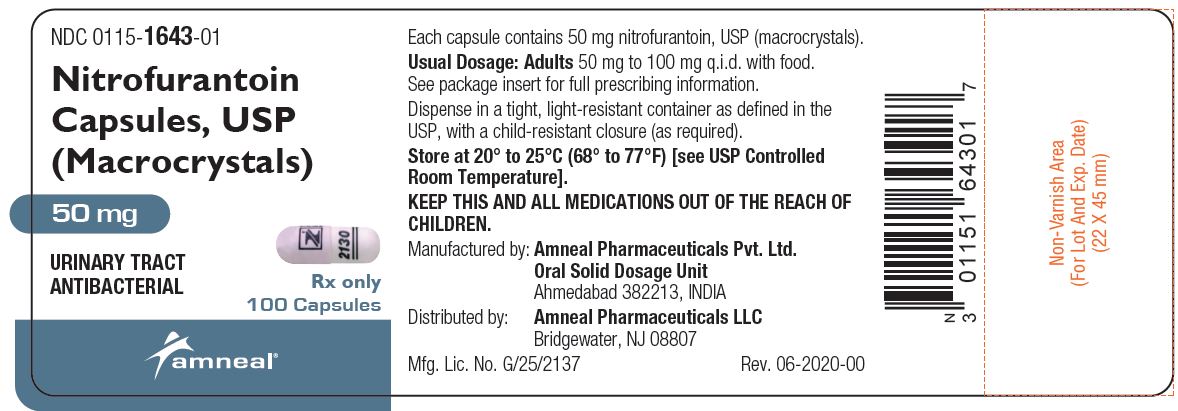
Nitrofurantoin Macrocrystals 50 mg Capsule, 100-count — NDC 0115-1643-01 (Billing 00115-1643-01)
This is a package of 100 capsules of Nitrofurantoin Macrocrystals 50 mg Capsule from Amneal Pharmaceuticals of New York LLC, marketed since Mar 2007 and currently FDA-listed; retail pharmacies pay about $0.1650 per capsule (NADAC). It is the main listing for this product, which comes in 2 package sizes.
NDC database record
One package, one record: these facts belong to NDC 0115-1643-01 alone.
- Record
- FDA NDC Directory package listing · Human prescription drug
- Code segments
- 0115 labeler · 1643 product · 01 package
- Package marketed since
- Mar 8, 2007
- Sample package
- No — commercial package
- Listing certified through
- Dec 31, 2027
- Billing quantity
- 100 EA per package
- Barcode (UPC-A, from the NDC)
- 3 0115164301 7
- Medicaid fills, this package
- 9,085 prescriptions in the last four reported quarters
- FDA record last changed
- Jul 24, 2026
Identity & classification
Regulatory identifiers FDA, NLM and CMS codes for this package
Drug-database identifiers Medi-Span GPI and First Databank GCN / HICL / AHFS classification
- GSN (GCN sequence number): 009430
- GCN: 41822
- GPI-14 (Medi-Span): 16800050100115
- HICL (First Databank): 004087
- AHFS class code: 08:36.00.00
- RxCUI (RxNorm): 311995
Where does this data come from?
- FDA openFDA NDC Directory · synced Oct 1, 2026
- FDA label on DailyMed · label index refreshed Oct 5, 2026
- RxNorm (NLM RxNav) · catalog refreshed Oct 1, 2026
- Medi-Span GPI (licensed)
- First Databank (licensed) · refreshed Oct 1, 2026
RxNorm drug class
This medicine belongs to the Nitrofuran Antibacterial class.
Where does this data come from?
- RxClass (NLM) · catalog refreshed Oct 1, 2026
Clinical
Nitrofurantoin is used to treat urinary tract infections. Nitrofurantoin is in a class of medications called antibiotics. It works by killing bacteria that cause infection. Antibiotics such as nitrofurantoin will not work for colds, flu, or other viral infections. Using antibiotics when they are not needed increases your risk of getting an infection later that resists antibiotic treatment.
Read the full MedlinePlus article ↗- Nitrofurantoin is an antibiotic specifically for urinary tract infections — think bladder infections, not kidney infections. It works by concentrating in your urine where it kills...
- What exactly is nitrofurantoin used for?
- Yes, every time. Taking nitrofurantoin with food isn't just about avoiding an upset stomach — food actually helps your body absorb more of the medication, so it works better. Even...
- Do I really need to take it with food every single time?
Patient education
Supplement & herbal interactions
Where does this data come from?
- MedlinePlus (NLM) · refreshed Oct 1, 2026
- FDA label on DailyMed · label index refreshed Oct 5, 2026
Ask a licensed pharmacist directly — free, answered by our team.
Pricing
A drug doesn't have one price. Each row is a different public payment system, and none is what you'd pay at the counter — that depends on your insurance. The ⓘ on each row explains what it measures.
| Price system | Per ea | Per package |
|---|---|---|
| Retail pharmacies payNADAC · weekly | $0.165 | $16.50 / 100 capsules |
| Medicaid paysCMS SDUD · 12 mo | $0.4560 | $45.60 / 100 capsules |
| Medicare drug plans payPart D · Q2 2026 | $0.3581 | $35.81 / 100 capsules |
Where does this data come from?
- CMS NADAC weekly file · file of Sep 30, 2026
- CMS ASP pricing files · refreshed Sep 20, 2026
- CMS Medicaid State Drug Utilization Data · through Q1 2026
- CMS Part D plan pricing files · refreshed Sep 24, 2026
- VA National Acquisition Center price file
Packaging — all sizes for this product
| Package NDC | Description | Per unit | Per pack | Marketing start | Marketing end | Status |
|---|---|---|---|---|---|---|
| 00115-1643-01 You're viewing this Main listing | 100 CAPSULE in 1 BOTTLE | $0.1650 / ea | $16.50 | 2007-03-08 | — | Active |
| 00115-1643-03 0115-1643-03 | 1000 CAPSULE in 1 BOTTLE | — | — | 2007-03-08 | — | Active |
You're viewing the smallest of 2 pack sizes for this product.
In Medicaid, this is the most-dispensed pack of this product — about 100% of fills over the last four reported quarters. See all packs ↓
Pack size FAQ
What quantity is in this package?
How does this package differ from NDC 00115-1643-03?
What NDC number is used to bill for this package of Nitrofurantoin Macrocrystals 50 mg Capsule?
Prices are the latest CMS NADAC pharmacy acquisition cost per NDC; per-pack figures are per-unit × pack quantity, shown only when the pack is denominated in the same measure NADAC prices.
Therapeutic equivalents
| Product | Labeler | Pack | NADAC/unit | TE | Status | Price vs. this |
|---|---|---|---|---|---|---|
| Nitrofurantoin macrocrystals 50 mg 43386-0641-01 | Lupin | 100 capsules | $0.153 | AB | Availability likely | save 7% |
| Nitrofurantoin Macrocrystals 50 mgthis 00115-1643-01 | Amneal | 100 capsules | $0.165 | AB | Availability likely | — |
| nitrofurantoin macrocrystals 50 mg 00904-7026-61 | Major | 100 capsules | $0.165 | AB | Availability likely | — |
| Nitrofurantoin Macrocrystals 50 mg 50268-0623-15 | AvPAK | 50 capsules | $0.165 | AB | Availability likely | — |
| nitrofurantoin (macrocrystals) 50 mg 59651-0753-01 | Aurobindo | 100 capsules | $0.165 | AB | Availability likely | — |
| Nitrofurantoin Macrocrystals 50 mg 60687-0839-01 | American | 100 capsules | $0.165 | AB | Availability likely | — |
| Nitrofurantoin 50 mg 62332-0390-31 | Alembic | 100 capsules | $0.165 | AB | Availability likely | — |
| nitrofurantoin macrocrystals 50 mg 68001-0604-00 | BluePoint | 100 capsules | $0.165 | AB | Availability likely | — |
| nitrofurantoin macrocrystals 50 mg 68382-0559-01 | Zydus | 100 capsules | $0.165 | AB | Availability likely | — |
| nitrofurantoin macrocrystals 50 mg 70756-0411-11 | Lifestar | 100 capsules | $0.165 | AB | Availability likely | — |
| nitrofurantoin macrocrystals 50 mg 72603-0183-01 | NorthStar | 100 capsules | $0.165 | AB | Availability likely | — |
| nitrofurantoin macrocrystals 50 mg 47781-0307-01 | Alvogen | 100 capsules | $0.310 | AB | Discontinued | +88% |
| Nitrofurantion 50 mg 68001-0385-00 | BluePoint | 100 capsules | $0.310 | — | FDA listed | +88% |
| Nitrofurantoin 50 mg 46708-0390-31 | Alembic | 100 capsules | — | AB | FDA listed | — |
| Macrodantin 50 mg 52427-0287-01 | Almatica | 100 capsules | — | AB | Discontinued | — |
| Nitrofurantion 50 mg 57664-0232-18 | Sun | 1000 capsules | — | — | FDA listed | — |
| nitrofurantoin macrocrystals 50 mg 70771-1170-00 | Zydus | 1000 capsules | — | AB | FDA listed | — |
| Nitrofurantion Macrocrystals 50 mg 71205-0023-10 | Proficient | 10 capsules | — | AB | FDA listed | — |
| nitrofurantoin macrocrystals 50 mg 71335-2254-01 | Bryant | 28 capsules | — | AB | FDA listed | — |
Where does this data come from?
- FDA openFDA NDC Directory · synced Oct 1, 2026
- FDA Orange Book · refreshed Oct 3, 2026
- CMS NADAC weekly file · file of Sep 30, 2026
Availability & generic status
This product is an FDA-approved generic. Other versions of the same drug are listed under Therapeutic equivalents, least expensive first.
Where does this data come from?
- FDA Orange Book · refreshed Oct 3, 2026
What it looks like
Where does this data come from?
- FDA label on DailyMed · label index refreshed Oct 5, 2026
Inactive Ingredients / Excipients
Inactive ingredients, also called excipients, are components of the drug product other than the active ingredient. They may include fillers, dyes, coatings, preservatives, flavors, or other formulation ingredients.
🧪 Avoiding an ingredient? See Nitrofurantoin inactive ingredients by manufacturer: every current product's list side by side, so you can ask your pharmacy for the version that does not list it.
💡 Tap an ingredient (hover on desktop) to see what it is and why it’s used.
-
UNII LMI26O6933
Alumina is a white powder form of aluminum oxide. It's used as a filler to add bulk to tablets and capsules, and sometimes as a thickening or anti-caking agent in powdered formulations.
-
UNII 9DBA0SBB0L
A synthetic red dye derived from coal tar used as a colorant in medicines and cosmetics. It gives tablets, capsules, and liquids their red or pink appearance for identification and visual appeal.
-
UNII 35SW5USQ3G
A synthetic yellow dye used to color medicines. It helps make tablets, capsules, and liquids visually distinct so patients can easily identify their medication.
-
UNII H3R47K3TBD
FD&C Blue No. 1 is a synthetic blue dye approved for use in foods and medicines. It serves as a colorant to give the medication its distinctive appearance and help with product identification.
-
UNII L06K8R7DQK
A synthetic blue dye approved by the FDA for use in medications and foods. It serves as a colorant to make pills and liquids visually distinct and easier to identify.
-
UNII WZB9127XOA
A synthetic red dye used to color medications and make them easier to identify. It serves as a colorant in tablets, capsules, and liquid formulations.
-
UNII XM0M87F357
A dark iron oxide compound that gives medicines their black or dark color. It's used as a colorant in tablets and capsules to help identify the product and make it visually distinctive.
-
UNII 2G86QN327L
Gelatin is a protein derived from animal collagen, commonly used in medicines as a gelling agent and capsule material. It helps create soft or hard capsule shells that hold and release medication, and can also thicken liquid formulations.
-
UNII D3741U8K7L
A blue colorant derived from indigo dye. It's added to tablets and capsules to provide color identification and improve the appearance of the medication.
-
UNII EWQ57Q8I5X
Lactose monohydrate is a natural sugar derived from milk. It serves as a filler and binder in tablets and capsules, helping create the proper size, texture, and consistency of the medicine.
-
UNII 6DC9Q167V3
Propylene glycol is a clear liquid derived from petroleum or vegetable sources. It acts as a solvent, humectant, and preservative in medicines, helping dissolve active ingredients and maintain product stability.
-
UNII 46N107B71O
Shellac is a natural resin secreted by the lac beetle. It's used as a coating on tablets and capsules to control how quickly the medicine dissolves and to improve appearance and stability.
-
UNII O8232NY3SJ
A plant-based carbohydrate derived from corn kernels. It acts as a filler to add bulk, a binder to hold ingredients together, and a disintegrant to help the tablet break apart in your stomach for absorption.
-
UNII 7SEV7J4R1U
A powder made from a naturally occurring mineral. In medicines, talc works as a glidant and anti-caking agent, helping tablets and capsules flow smoothly during manufacturing and preventing clumping.
-
UNII 15FIX9V2JP
Titanium dioxide is a bright white mineral powder commonly used as a colorant and opacifying agent. It makes pills and tablets white or lighter in color and helps make coatings non-transparent.
15 inactive ingredients listed in the exact product block matched to this NDC.
Where does this data come from?
ingredient classCode="IACT" elements from the exact product block matched by this NDC. Label-section narrative from DailyMed / the openFDA label index is shown separately when available.- FDA label on DailyMed · label index refreshed Oct 5, 2026
- FDA openFDA NDC Directory · synced Oct 1, 2026
Inactive ingredient FAQ
Are inactive ingredients the same for every manufacturer?
Why might an inactive ingredient be missing?
Can inactive ingredients matter?
Manufacturer & labeler
More NDCs from Amneal Pharmaceuticals of New York LLC labeler code 00115
- Lamotrigine 50 mg Tablet, Orally Disintegrating NDC 0115-1527-08
- Lamotrigine 100 mg Tablet, Orally Disintegrating NDC 0115-1528-08
- Lamotrigine 200 mg Tablet, Orally Disintegrating NDC 0115-1529-08
- Fenofibric Acid 45 mg Capsule, Delayed Release NDC 0115-1554-10
- Fenofibric Acid 135 mg Capsule, Delayed Release NDC 0115-1555-10
- Oxycodone Hydrochloride 40 mg Tablet, Film Coated, Extended Release NDC 0115-1560-01
- Nitrofurantoin Macrocrystals 100 mg Capsule NDC 0115-1645-01
- Alendronate Sodium 5 mg Tablet NDC 0115-1676-01
- Alendronate Sodium 10 mg Tablet NDC 0115-1678-01
- Alendronate Sodium 35 mg Tablet NDC 0115-1679-26
- Alendronate Sodium 40 mg Tablet NDC 0115-1680-08
- Alendronate Sodium 70 mg Tablet NDC 0115-1681-26
Where does this data come from?
- FDA openFDA NDC Directory · synced Oct 1, 2026
- Drugs@FDA
Full prescribing information FDA SPL
🎯 Indications and Usage ▾
INDICATIONS AND USAGE Nitrofurantoin Capsules USP (Macrocrystals) are specifically indicated for the treatment of urinary tract infections when due to susceptible strains of Escherichia coli , enterococci, Staphylococcus aureus , and certain susceptible strains of Klebsiella and Enterobacter species. Nitrofurantoin is not indicated for the treatment of pyelonephritis or perinephric abscesses. To reduce the development of drug-resistant bacteria and maintain the effectiveness of Nitrofurantoin Capsules USP (Macrocrystals) and other antibacterial drugs, Nitrofurantoin Capsules USP (Macrocrystals) should be used only to treat or prevent infections that are proven or strongly suspected to be caused by susceptible bacteria.
When culture and susceptibility information are available, they should be considered in selecting or modifying antibacterial therapy. In the absence of such data, local epidemiology and susceptibility patterns may contribute to the empiric selection of therapy. Nitrofurantoins lack the broader tissue distribution of other therapeutic agents approved for urinary tract infections.
Consequently, many patients who are treated with Nitrofurantoin Capsules USP (Macrocrystals) are predisposed to persistence or reappearance of bacteriuria. Urine specimens for culture and susceptibility testing should be obtained before and after completion of therapy. If persistence or reappearance of bacteriuria occurs after treatment with Nitrofurantoin Capsules USP (Macrocrystals), other therapeutic agents with broader tissue distribution should be selected.
In considering the use of Nitrofurantoin Capsules USP (Macrocrystals), lower eradication rates should be balanced against the increased potential for systemic toxicity and for the development of antimicrobial resistance when agents with broader tissue distribution are utilized.
⏱️ Dosage and Administration ▾
DOSAGE AND ADMINISTRATION Nitrofurantoin capsules (macrocrystals) should be given with food to improve drug absorption and, in some patients, tolerance. Adults 50 to 100 mg four times a day - the lower dosage level is recommended for uncomplicated urinary tract infections. Pediatric Patients 5 to 7 mg/kg of body weight per 24 hours, given in four divided doses (contraindicated under one month of age).
Therapy should be continued for one week or for at least 3 days after sterility of the urine is obtained. Continued infection indicates the need for reevaluation. For long-term suppressive therapy in adults, a reduction of dosage to 50 to 100 mg at bedtime may be adequate.
For long-term suppressive therapy in pediatric patients, doses as low as 1 mg/kg per 24 hours, given in a single dose or in two divided doses, may be adequate. SEE WARNINGS SECTION REGARDING RISKS ASSOCIATED WITH LONG-TERM THERAPY.
⛔ Contraindications ▾
CONTRAINDICATIONS Anuria, oliguria, or significant impairment of renal function (creatinine clearance under 60 mL per minute or clinically significant elevated serum creatinine) are contraindications. Treatment of this type of patient carries an increased risk of toxicity because of impaired excretion of the drug. Because of the possibility of hemolytic anemia due to immature erythrocyte enzyme systems (glutathione instability), the drug is contraindicated in pregnant patients at term (38 to 42 weeks’ gestation), during labor and delivery, or when the onset of labor is imminent.
For the same reason, the drug is contraindicated in neonates under one month of age. Nitrofurantoin capsules (macrocrystals) are contraindicated in patients with a previous history of cholestatic jaundice/hepatic dysfunction associated with nitrofurantoin. Nitrofurantoin capsules (macrocrystals) are also contraindicated in those patients with known hypersensitivity to nitrofurantoin.
⚠️ Warnings ▾
WARNINGS Pulmonary Reactions ACUTE, SUBACUTE, OR CHRONIC PULMONARY REACTIONS HAVE BEEN OBSERVED IN PATIENTS TREATED WITH NITROFURANTOIN. IF THESE REACTIONS OCCUR, NITROFURANTOIN MACROCRYSTALS SHOULD BE DISCONTINUED AND APPROPRIATE MEASURES TAKEN. REPORTS HAVE CITED PULMONARY REACTIONS AS A CONTRIBUTING CAUSE OF DEATH.
CHRONIC PULMONARY REACTIONS (DIFFUSE INTERSTITIAL PNEUMONITIS OR PULMONARY FIBROSIS, OR BOTH) CAN DEVELOP INSIDIOUSLY. THESE REACTIONS OCCUR RARELY AND GENERALLY IN PATIENTS RECEIVING THERAPY FOR SIX MONTHS OR LONGER. CLOSE MONITORING OF THE PULMONARY CONDITION OF PATIENTS RECEIVING LONG-TERM THERAPY IS WARRANTED AND REQUIRES THAT THE BENEFITS OF THERAPY BE WEIGHED AGAINST POTENTIAL RISKS (SEE ADVERSE REACTIONS, Respiratory ).
Hepatotoxicity Hepatic reactions, including hepatitis, cholestatic jaundice, chronic active hepatitis, and hepatic necrosis, occur rarely. Fatalities have been reported. The onset of chronic active hepatitis may be insidious, and patients should be monitored periodically for changes in biochemical tests that would indicate liver injury.
If hepatitis occurs, the drug should be withdrawn immediately and appropriate measures should be taken. Neuropathy Peripheral neuropathy, which may become severe or irreversible, has occurred. Fatalities have been reported.
Conditions such as renal impairment (creatinine clearance under 60 mL per minute or clinically significant elevated serum creatinine), anemia, diabetes mellitus, electrolyte imbalance, vitamin B deficiency, and debilitating disease may enhance the occurrence of peripheral neuropathy. Patients receiving long-term therapy should be monitored periodically for changes in renal function. Optic neuritis has been reported rarely in postmarketing experience with nitrofurantoin formulations.
Hemolytic Anemia Cases of hemolytic anemia of the primaquine-sensitivity type have been induced by nitrofurantoin. Hemolysis appears to be linked to a glucose-6-phosphate dehydrogenase deficiency in the red blood cells of the affected patients. This deficiency is found in 10 percent of Blacks and a small percentage of ethnic groups of Mediterranean and Near-Eastern origin.
Hemolysis is an indication for discontinuing nitrofurantoin macrocrystals; hemolysis ceases when the drug is withdrawn. Clostridium difficile -Associated Diarrhea Clostridium difficile associated diarrhea (CDAD) has been reported with use of nearly all antibacterial agents, including nitrofurantoin, and may range in severity from mild diarrhea to fatal colitis. Treatment with antibacterial agents alters the normal flora of the colon leading to overgrowth of C. difficile .
C. difficile produces toxins A and B which contribute to the development of CDAD. Hypertoxin producing strains of C. difficile cause increased morbidity and mortality, as these infections can be refractory to antimicrobial therapy and may require colectomy. CDAD must be considered in all patients who present with diarrhea following antibiotic use.
Careful medical history is necessary since CDAD has been reported to occur over two months after the administration of antibacterial agents. If CDAD is suspected or confirmed, ongoing antibiotic use not directed against C. difficile may need to be discontinued. Appropriate fluid and electrolyte management, protein supplementation, antibiotic treatment of C. difficile , and surgical evaluation should be instituted as clinically indicated.
🤒 Adverse Reactions ▾
ADVERSE REACTIONS Respiratory CHRONIC, SUBACUTE, OR ACUTE PULMONARY HYPERSENSITIVITY REACTIONS MAY OCCUR. CHRONIC PULMONARY REACTIONS OCCUR GENERALLY IN PATIENTS WHO HAVE RECEIVED CONTINUOUS TREATMENT FOR SIX MONTHS OR LONGER. MALAISE, DYSPNEA ON EXERTION, COUGH, AND ALTERED PULMONARY FUNCTION ARE COMMON MANIFESTATIONS WHICH CAN OCCUR INSIDIOUSLY.
RADIOLOGIC AND HISTOLOGIC FINDINGS OF DIFFUSE INTERSTITIAL PNEUMONITIS OR FIBROSIS, OR BOTH, ARE ALSO COMMON MANIFESTATIONS OF THE CHRONIC PULMONARY REACTION. FEVER IS RARELY PROMINENT. THE SEVERITY OF CHRONIC PULMONARY REACTIONS AND THEIR DEGREE OF RESOLUTION APPEAR TO BE RELATED TO THE DURATION OF THERAPY AFTER THE FIRST CLINICAL SIGNS APPEAR.
PULMONARY FUNCTION MAY BE IMPAIRED PERMANENTLY, EVEN AFTER CESSATION OF THERAPY. THE RISK IS GREATER WHEN CHRONIC PULMONARY REACTIONS ARE NOT RECOGNIZED EARLY. In subacute pulmonary reactions, fever and eosinophilia occur less often than in the acute form.
Upon cessation of therapy, recovery may require several months. If the symptoms are not recognized as being drug-related and nitrofurantoin therapy is not stopped, the symptoms may become more severe. Acute pulmonary reactions are commonly manifested by fever, chills, cough, chest pain, dyspnea, pulmonary infiltration with consolidation or pleural effusion on x-ray, and eosinophilia.
Acute reactions usually occur within the first week of treatment and are reversible with cessation of therapy. Resolution often is dramatic (see WARNINGS ). Changes in EKG (e.g., non-specific ST/T wave changes, bundle branch block) have been reported in association with pulmonary reactions.
Cyanosis has been reported rarely. Hepatic Hepatic reactions, including hepatitis, cholestatic jaundice, chronic active hepatitis, and hepatic necrosis, occur rarely (see WARNINGS ). Neurologic Peripheral neuropathy, which may become severe or irreversible, has occurred.
Fatalities have been reported. Conditions such as renal impairment (creatinine clearance under 60 mL per minute or clinically significant elevated serum creatinine), anemia, diabetes mellitus, electrolyte imbalance, vitamin B deficiency, and debilitating diseases may increase the possibility of peripheral neuropathy (see WARNINGS ). Asthenia, vertigo, nystagmus, dizziness, headache, and drowsiness also have been reported with the use of nitrofurantoin.
Benign intracranial hypertension (pseudotumor cerebri), confusion, depression, optic neuritis, and psychotic reactions have been reported rarely. Bulging fontanels, as a sign of benign intracranial hypertension in infants, have been reported rarely. Dermatologic Exfoliative dermatitis and erythema multiforme (including Stevens-Johnson syndrome) have been reported rarely.
Transient alopecia also has been reported. Allergic A lupus-like syndrome associated with pulmonary reactions to nitrofurantoin has been reported. Also, angioedema; maculopapular, erythematous, or eczematous eruptions; pruritus; urticaria; anaphylaxis; arthralgia; myalgia; drug fever; chills; and vasculitis (sometimes associated with pulmonary reactions) have been reported.
Hypersensitivity reactions represent the most frequent spontaneously-reported adverse events in worldwide postmarketing experience with nitrofurantoin formulations. Gastrointestinal Nausea, emesis, and anorexia occur most often. Abdominal pain and diarrhea are less common gastrointestinal reactions.
These dose-related reactions can be minimized by reduction of dosage. Sialadenitis and pancreatitis have been reported. There have been sporadic reports of pseudomembranous colitis with the use of nitrofurantoin.
The onset of pseudomembranous colitis symptoms may occur during or after antimicrobial treatment (see WARNINGS ). Hematologic Cyanosis secondary to methemoglobinemia has been reported rarely. Miscellaneous As with other antimicrobial agents, superinfections caused by resistant organisms, e.g., Pseudomonas species or Candida species, can occur.
Laboratory Adverse Events… [Excerpted — this section continues on DailyMed.]
🔄 Drug Interactions ▾
Drug Interactions Antacids containing magnesium trisilicate, when administered concomitantly with nitrofurantoin, reduce both the rate and extent of absorption. The mechanism for this interaction probably is adsorption of nitrofurantoin onto the surface of magnesium trisilicate. Uricosuric drugs, such as probenecid and sulfinpyrazone, can inhibit renal tubular secretion of nitrofurantoin.
The resulting increase in nitrofurantoin serum levels may increase toxicity, and the decreased urinary levels could lessen its efficacy as a urinary tract antibacterial.
🔄 Drug / Laboratory Test Interactions ▾
Drug/Laboratory Test Interactions As a result of the presence of nitrofurantoin, a false-positive reaction for glucose in the urine may occur. This has been observed with Benedict's and Fehling's solutions but not with the glucose enzymatic test.
🤰 Pregnancy ▾
Pregnancy Teratogenic Effects Pregnancy Category B Several reproduction studies have been performed in rabbits and rats at doses up to six times the human dose and have revealed no evidence of impaired fertility or harm to the fetus due to nitrofurantoin. In a single published study conducted in mice at 68 times the human dose (based on mg/kg administered to the dam), growth retardation and a low incidence of minor and common malformations were observed. However, at 25 times the human dose, fetal malformations were not observed; the relevance of these findings to humans is uncertain.
There are, however, no adequate and well-controlled studies in pregnant women. Because animal reproduction studies are not always predictive of human response, this drug should be used during pregnancy only if clearly needed. Non-Teratogenic Effects Nitrofurantoin has been shown in one published transplacental carcinogenicity study to induce lung papillary adenomas in the F1 generation mice at doses 19 times the human dose on a mg/kg basis.
The relationship of this finding to potential human carcinogenesis is presently unknown. Because of the uncertainty regarding the human implications of these animal data, this drug should be used during pregnancy only if clearly needed.
🧒 Pediatric Use ▾
Pediatric Use Nitrofurantoin macrocrystals are contraindicated in infants below the age of one month (see CONTRAINDICATIONS ).
🧓 Geriatric Use ▾
Geriatric Use Clinical studies of nitrofurantoin macrocrystals did not include sufficient numbers of subjects aged 65 and over to determine whether they respond differently from younger subjects. Other reported clinical experience has not identified differences in responses between the elderly and younger patients. Spontaneous reports suggest a higher proportion of pulmonary reactions, including fatalities, in elderly patients; these differences appear to be related to the higher proportion of elderly patients receiving long-term nitrofurantoin therapy.
As in younger patients, chronic pulmonary reactions generally are observed in patients receiving therapy for six months or longer (see WARNINGS ). Spontaneous reports also suggest an increased proportion of severe hepatic reactions, including fatalities, in elderly patients (see WARNINGS ). In general, the greater frequency of decreased hepatic, renal, or cardiac function, and of concomitant disease or other drug therapy should be considered when prescribing nitrofurantoin macrocrystals.
This drug is known to be substantially excreted by the kidney, and the risk of toxic reactions to this drug may be greater in patients with impaired renal function. Anuria, oliguria, or significant impairment of renal function (creatinine clearance under 60 mL per minute or clinically significant elevated serum creatinine) are contraindications (see CONTRAINDICATIONS ). Because elderly patients are more likely to have decreased renal function, care should be taken in dose selection, and it may be useful to monitor renal function.
🆘 Overdosage ▾
OVERDOSAGE Occasional incidents of acute overdosage of nitrofurantoin macrocrystals have not resulted in any specific symptoms other than vomiting. Induction of emesis is recommended. There is no specific antidote, but a high fluid intake should be maintained to promote urinary excretion of the drug. It is dialyzable.
🧬 Clinical Pharmacology ▾
CLINICAL PHARMACOLOGY Nitrofurantoin macrocrystals are a larger crystal form of nitrofurantoin. The absorption of nitrofurantoin macrocrystals is slower and its excretion somewhat less when compared to nitrofurantoin. Blood concentrations at therapeutic dosage are usually low.
It is highly soluble in urine, to which it may impart a brown color. Following a dose regimen of 100 mg q.i.d. for 7 days, average urinary drug recoveries (0 to 24 hours) on day 1 and day 7 were 37.9% and 35%. Unlike many drugs, the presence of food or agents delaying gastric emptying can increase the bioavailability of nitrofurantoin macrocrystals, presumably by allowing better dissolution in gastric juices.
🧬 Mechanism of Action ▾
Mechanism of Action The mechanism of the antimicrobial action of nitrofurantoin is unusual among antibacterials. Nitrofurantoin is reduced by bacterial flavoproteins to reactive intermediates which inactivate or alter bacterial ribosomal proteins and other macromolecules. As a result of such inactivations, the vital biochemical processes of protein synthesis, aerobic energy metabolism, DNA synthesis, RNA synthesis, and cell wall synthesis are inhibited.
Nitrofurantoin is bactericidal in urine at therapeutic doses. The broad-based nature of this mode of action may explain the lack of acquired bacterial resistance to nitrofurantoin, as the necessary multiple and simultaneous mutations of the target macromolecules would likely be lethal to the bacteria.
📦 How Supplied / Storage and Handling ▾
HOW SUPPLIED Nitrofurantoin Capsules USP (Macrocrystals) are available as pink opaque/white opaque capsules, imprinted with z, “Zenith 50 mg” on the cap and “2130”, underlined with a double bar, on the body, in black ink, containing 50 mg nitrofurantoin macrocrystals, packaged in bottles of 100 (NDC 0115-1643-01) and 1000 capsules (NDC 0115-1643-03). Nitrofurantoin Capsules USP (Macrocrystals) are available as pink opaque capsules, imprinted with z, “Zenith 100 mg” on the cap and “2131”, underlined with a triple bar, on the body, in black ink, containing 100 mg nitrofurantoin macrocrystals, packaged in bottles of 100 (NDC 0115-1645-01) and 1000 capsules (NDC 0115-1645-03).
Store at 20° to 25°C (68° to 77°F) [see USP Controlled Room Temperature]. Dispense in a tight, light-resistant container as defined in the USP, with a child-resistant closure (as required). KEEP THIS AND ALL MEDICATIONS OUT OF THE REACH OF CHILDREN.
📋 Description ▾
DESCRIPTION Nitrofurantoin Capsules, USP (Macrocrystals) are a synthetic chemical of controlled crystal size. It is a stable, yellow, crystalline compound. Nitrofurantoin Capsules, USP (Macrocrystals) are an antibacterial agent for specific urinary tract infections.
Nitrofurantoin, USP (macrocrystals) is chemically designated as 2,4-Imidazolidinedione, 1-[[(5-nitro-2-furanyl)methylene]amino]- and has the following structural formula: C 8 H 6 N 4 O 5 (anhydrous) M.W. 238.16 Each capsule, for oral administration, contains 50 mg or 100 mg of nitrofurantoin, USP (macrocrystals). In addition, each capsule contains the following inactive ingredients: corn starch, edible black ink (black iron oxide, D&C Yellow No.
10 Aluminum Lake, FD&C Blue No. 1 Aluminum Lake, FD&C Blue No. 2 Aluminum Lake, FD&C Red No.
40 Aluminum Lake, propylene glycol, shellac glaze), gelatin, lactose monohydrate, talc, titanium dioxide and colorant D&C Red No. 33. structural formula - nitrofurantoin, USP
💬 Information for Patients ▾
Information for Patients Patients should be advised to take nitrofurantoin macrocrystals with food to further enhance tolerance and improve drug absorption. Patients should be instructed to complete the full course of therapy; however, they should be advised to contact their physician if any unusual symptoms occur during therapy. Many patients who cannot tolerate microcrystalline nitrofurantoin are able to take nitrofurantoin macrocrystals without nausea.
Patients should be advised not to use antacid preparations containing magnesium trisilicate while taking nitrofurantoin macrocrystals. Patients should be counseled that antibacterial drugs including nitrofurantoin macrocrystals should only be used to treat bacterial infections. They do not treat viral infections (e.g., the common cold).
When nitrofurantoin macrocrystals are prescribed to treat a bacterial infection, patients should be told that although it is common to feel better early in the course of therapy, the medication should be taken exactly as directed. Skipping doses or not completing the full course of therapy may (1) decrease the effectiveness of the immediate treatment and (2) increase the likelihood that bacteria will develop resistance and will not be treatable by nitrofurantoin macrocrystals or other antibacterial drugs in the future.
Diarrhea is a common problem caused by antibiotics which usually ends when the antibiotic is discontinued. Sometimes after starting treatment with antibiotics, patients can develop watery and bloody stools (with or without stomach cramps and fever) even as late as two or more months after having taken the last dose of the antibiotic. If this occurs, patients should contact their physician as soon as possible.
⚠️ Precautions ▾
PRECAUTIONS Information for Patients Patients should be advised to take nitrofurantoin macrocrystals with food to further enhance tolerance and improve drug absorption. Patients should be instructed to complete the full course of therapy; however, they should be advised to contact their physician if any unusual symptoms occur during therapy. Many patients who cannot tolerate microcrystalline nitrofurantoin are able to take nitrofurantoin macrocrystals without nausea.
Patients should be advised not to use antacid preparations containing magnesium trisilicate while taking nitrofurantoin macrocrystals. Patients should be counseled that antibacterial drugs including nitrofurantoin macrocrystals should only be used to treat bacterial infections. They do not treat viral infections (e.g., the common cold).
When nitrofurantoin macrocrystals are prescribed to treat a bacterial infection, patients should be told that although it is common to feel better early in the course of therapy, the medication should be taken exactly as directed. Skipping doses or not completing the full course of therapy may (1) decrease the effectiveness of the immediate treatment and (2) increase the likelihood that bacteria will develop resistance and will not be treatable by nitrofurantoin macrocrystals or other antibacterial drugs in the future.
Diarrhea is a common problem caused by antibiotics which usually ends when the antibiotic is discontinued. Sometimes after starting treatment with antibiotics, patients can develop watery and bloody stools (with or without stomach cramps and fever) even as late as two or more months after having taken the last dose of the antibiotic. If this occurs, patients should contact their physician as soon as possible.
General Prescribing nitrofurantoin macrocrystals in the absence of a proven or strongly suspected bacterial infection or a prophylactic indication is unlikely to provide benefit to the patient and increases the risk of the development of drug-resistant bacteria. Drug Interactions Antacids containing magnesium trisilicate, when administered concomitantly with nitrofurantoin, reduce both the rate and extent of absorption. The mechanism for this interaction probably is adsorption of nitrofurantoin onto the surface of magnesium trisilicate.
Uricosuric drugs, such as probenecid and sulfinpyrazone, can inhibit renal tubular secretion of nitrofurantoin. The resulting increase in nitrofurantoin serum levels may increase toxicity, and the decreased urinary levels could lessen its efficacy as a urinary tract antibacterial. Drug/Laboratory Test Interactions As a result of the presence of nitrofurantoin, a false-positive reaction for glucose in the urine may occur.
This has been observed with Benedict's and Fehling's solutions but not with the glucose enzymatic test. Carcinogenesis, Mutagenesis, Impairment of Fertility Nitrofurantoin was not carcinogenic when fed to female Holtzman rats for 44.5 weeks or to female Sprague-Dawley rats for 75 weeks. Two chronic rodent bioassays utilizing male and female Sprague-Dawley rats and two chronic bioassays in Swiss mice and in BDF 1 mice revealed no evidence of carcinogenicity.
Nitrofurantoin presented evidence of carcinogenic activity in female B6C3F 1 mice as shown by increased incidences of tubular adenomas, benign mixed tumors, and granulosa cell tumors of the ovary. In male F344/N rats, there were increased incidences of uncommon kidney tubular cell neoplasms, osteosarcomas of the bone, and neoplasms of the subcutaneous tissue. In one study involving subcutaneous administration of 75 mg/kg nitrofurantoin to pregnant female mice, lung papillary adenomas of unknown significance were observed in the F1 generation.
Nitrofurantoin has been shown to induce point mutations in certain strains of Salmonella typhimurium and forward mutations in L5178Y mouse lymphoma cells. Nitrofurantoin induced increased numbers of sister chromatid exchanges and chromosomal aberrations in Chinese hamster… [Excerpted — this section continues on DailyMed.]
🍼 Nursing Mothers ▾
Nursing Mothers Nitrofurantoin has been detected in human breast milk in trace amounts. Because of the potential for serious adverse reactions from nitrofurantoin in nursing infants under one month of age, a decision should be made whether to discontinue nursing or to discontinue the drug, taking into account the importance of the drug to the mother (see CONTRAINDICATIONS ).
📄 Carcinogenesis, Mutagenesis, Impairment of Fertility ▾
Carcinogenesis, Mutagenesis, Impairment of Fertility Nitrofurantoin was not carcinogenic when fed to female Holtzman rats for 44.5 weeks or to female Sprague-Dawley rats for 75 weeks. Two chronic rodent bioassays utilizing male and female Sprague-Dawley rats and two chronic bioassays in Swiss mice and in BDF 1 mice revealed no evidence of carcinogenicity. Nitrofurantoin presented evidence of carcinogenic activity in female B6C3F 1 mice as shown by increased incidences of tubular adenomas, benign mixed tumors, and granulosa cell tumors of the ovary.
In male F344/N rats, there were increased incidences of uncommon kidney tubular cell neoplasms, osteosarcomas of the bone, and neoplasms of the subcutaneous tissue. In one study involving subcutaneous administration of 75 mg/kg nitrofurantoin to pregnant female mice, lung papillary adenomas of unknown significance were observed in the F1 generation. Nitrofurantoin has been shown to induce point mutations in certain strains of Salmonella typhimurium and forward mutations in L5178Y mouse lymphoma cells.
Nitrofurantoin induced increased numbers of sister chromatid exchanges and chromosomal aberrations in Chinese hamster ovary cells but not in human cells in culture. Results of the sex-linked recessive lethal assay in Drosophila were negative after administration of nitrofurantoin by feeding or by injection. Nitrofurantoin did not induce heritable mutation in the rodent models examined.
The significance of the carcinogenicity and mutagenicity findings relative to the therapeutic use of nitrofurantoin in humans is unknown. The administration of high doses of nitrofurantoin to rats causes temporary spermatogenic arrest; this is reversible on discontinuing the drug. Doses of 10 mg/kg/day or greater in healthy human males may, in certain unpredictable instances, produce a slight to moderate spermatogenic arrest with a decrease in sperm count.
📄 Package Label / Principal Display Panel ▾
PRINCIPAL DISPLAY PANEL - 50 mg ab
PRINCIPAL DISPLAY PANEL - 100 mg ab