
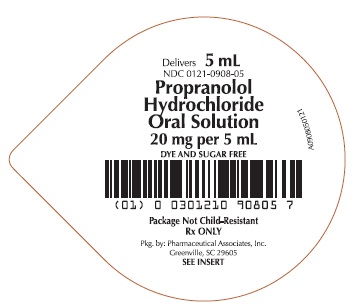
Propranolol Hydrochloride 20 mg/5mL Solution
🆔 Identity & classification
Where does this data come from?
🏷️ RxNorm drug class
This medicine belongs to the beta-Adrenergic Blocker class.
Where does this data come from?
🏭 Manufacturer & labeler
Where does this data come from?
🩺 Clinical
Propranolol oral solution is used to treat proliferating infantile hemangioma (noncancerous growths or tumors appearing on or under the skin shortly after birth) in infants. Propranolol is in a class of medications called beta blockers. It works by narrowing the blood vessels already formed and by preventing new ones from growing.
Read the full MedlinePlus article ↗- Please don't stop propranolol on your own — even if you feel great. Stopping suddenly, especially if you have angina or any underlying heart disease, can cause a dangerous rebound...
- Can I stop taking propranolol if I feel fine and my blood pressure is under control?
- Bronchial asthma is actually a contraindication for propranolol, meaning it should not be used if you have asthma. Propranolol blocks receptors in your airways that help keep them...
- I have asthma — is it safe for me to take propranolol?
Patient education
Supplement & herbal interactions
Some supplements/herbs that may interact with Propranolol Hydrochloride — tap one for details:
Propranolol Hydrochloride may be associated with lower levels of 1 nutrient — worth a chat with your pharmacist, not a cause for alarm.
Where does this data come from?
Ask a licensed pharmacist directly — free, answered by our team.
💊 What it looks like
Where does this data come from?
🧪 Inactive Ingredients / Excipients
Inactive ingredients, also called excipients, are components of the drug product other than the active ingredient. They may include fillers, dyes, coatings, preservatives, flavors, or other formulation ingredients.
💡 Tap an ingredient (hover on desktop) to see what it is and why it’s used.
-
30 uL / 5 mL
UNII 3K9958V90M
A liquid solvent derived from fermentation or chemical synthesis. In medicines, alcohol dissolves active ingredients, helps preserve the product, and improves how the body absorbs certain drugs.
-
UNII XF417D3PSL
Anhydrous citric acid is a sour, crystalline powder derived from citric acid with water removed. In medicines, it acts as a buffer to control pH, adds tartness to improve taste, and helps tablets disintegrate.
-
UNII 7FLD91C86K
Edetate disodium is a chemical compound that binds and removes certain metal ions. In medicines, it acts as a preservative and stabilizer by preventing metals like calcium from interfering with the product's shelf life and consistency.
-
UNII A2I8C7HI9T
Methylparaben is a preservative derived from benzoic acid that prevents growth of bacteria, fungi, and mold in medicines. It extends the product's shelf life and maintains safety during storage.
-
UNII 6DC9Q167V3
Propylene glycol is a clear liquid derived from petroleum or vegetable sources. It acts as a solvent, humectant, and preservative in medicines, helping dissolve active ingredients and maintain product stability.
-
UNII Z8IX2SC1OH
Propylparaben is a chemical preservative used to prevent bacterial and fungal growth in medicines and personal care products. It helps extend shelf life and maintain product safety during storage.
-
UNII SB8ZUX40TY
Saccharin sodium is an artificial sweetener made from saccharin salt. It's added to medicines to improve taste, especially in liquid formulations for children or bitter drugs.
-
UNII 506T60A25R
Sorbitol is a natural sugar alcohol derived from glucose. It serves as a sweetener, humectant, and bulking agent in medications to improve taste and help maintain moisture in the product.
-
UNII 059QF0KO0R
Water is a liquid solvent that dissolves and mixes ingredients together in liquid medicines, syrups, and injections. It helps distribute the active drug evenly throughout the product.
9 inactive ingredients listed in the exact product block matched to this NDC.
Where does this data come from?
ingredient classCode="IACT" elements from the exact product block matched by this NDC. Label-section narrative from DailyMed / the openFDA label index is shown separately when available.Inactive ingredient FAQ
Are inactive ingredients the same for every manufacturer?
Why might an inactive ingredient be missing?
Can inactive ingredients matter?
💲 Pricing
A drug doesn't have one price. Each row is a different public payment system, and none is what you'd pay at the counter — that depends on your insurance. The ⓘ on each row explains what it measures.
| Price system | Per mL | Per package |
|---|---|---|
| Retail pharmacies payNADAC · weekly | Not in the retail survey — common for institutional, discontinued, or low-volume packs. | |
| Medicaid paysCMS SDUD · 12 mo | No recent Medicaid claims on file for this NDC — rare and low-volume NDCs are suppressed in the public data. | |
| Medicare drug plans payPart D · Q2 2026 | $0.0817 | $16.34 / 200 ml |
Where does this data come from?
🔁 Therapeutic equivalents
| Product | Labeler | Pack | NADAC/unit | TE | Status | Price vs. this |
|---|---|---|---|---|---|---|
| Propranolol Hydrochloride 20 mg/5mL 00054-3727-63 | Hikma | 500 ml | $0.093 | AA | Availability likely | — |
| Propranolol Hydrochloride 20 mg/5mLthis 00121-0908-40 | Pharmaceutical | 10 cups | — | — | FDA listed | — |
| Propranolol Hydrochloride 20 mg/5mL 17856-3728-01 | ATLANTIC | 72 cups | — | — | FDA listed | — |
| Propranolol Hydrochloride 20 mg/5mL 17856-8728-01 | ATLANTIC | 50 cups | — | — | FDA listed | — |
| Propranolol Hydrochloride 20 mg/5mL 00121-0958-16 | PAI | 500 ml | — | AA | FDA listed | — |
| Propranolol Hydrochloride 20 mg/5mL 00121-4958-40 | PAI | 10 cups | — | AA | FDA listed | — |
Where does this data come from?
⏳ Availability & generic status
This product is an FDA-approved generic. Other versions of the same drug are listed under Therapeutic equivalents, least expensive first.
Where does this data come from?
🔬 Reported adverse events (FAERS)
Top reported reactions
Age at onset
Reporter sex
Serious outcomes
Where does this data come from?
📦 Packaging — all sizes for this product
| Package NDC | Description | Marketing start | Status |
|---|---|---|---|
| 00121-0908-40 You're viewing this | 4 TRAY in 1 CASE (0121-0908-40) / 10 CUP, UNIT-DOSE in 1 TRAY / 5 mL in 1 CUP, UNIT-DOSE (0121-0908-05) | 2021-09-03 | Active |
🧭 About this NDC listing & data coverage
What data is (and isn’t) available for this NDC — tap to expand
| NDC identity (package / product / labeler codes) | ✓ Available |
| Labeler | ✓ Available |
| Product & package description | ✓ Available |
| Marketing category & status | ✓ Available |
| Active ingredient / dosage form / route | ✓ Available |
| FDA label (SPL via DailyMed) | ✓ Available |
| Package photos | ✓ Available |
| Inactive ingredients (structured) | ✓ Available |
| NADAC pharmacy acquisition price (CMS) | — Not published for this NDC CMS publishes NADAC only for NDCs reported in its retail-pharmacy survey. |
| Orange Book / therapeutic-equivalence data | — Not published for this NDC Applies only to products approved under an NDA/ANDA; many listings are out of scope. |
| HCPCS J-code billing crosswalk | — Not published for this NDC Most self-administered / retail products have no J-code — that is normal. |
| Medicaid utilization (CMS SDUD) | — Not published for this NDC CMS reports utilization only for NDCs with Medicaid claims above its privacy threshold. |
Questions about this listing
Why is there no price listed?
Is the NDC printed on the package the same as the 11-digit billing NDC?
What do the three segments of this NDC mean?
Is this package still being marketed?
Who lists this product with the FDA?
Do I need a prescription for this product?
Where does this data come from?
📄 Full prescribing information FDA SPL
🎯 Indications and Usage ▾
INDICATIONS AND USAGE Hypertension Propranolol hydrochloride is indicated in the management of hypertension. It may be used alone or used in combination with other antihypertensive agents, particularly a thiazide diuretic. Propranolol is not indicated in the management of hypertensive emergencies.
Angina Pectoris Due to Coronary Atherosclerosis Propranolol hydrochloride is indicated to decrease angina frequency and increase exercise tolerance in patients with angina pectoris. Atrial Fibrillation Propranolol hydrochloride is indicated to control ventricular rate in patients with atrial fibrillation and a rapid ventricular response. Myocardial Infarction Propranolol hydrochloride is indicated to reduce cardiovascular mortality in patients who have survived the acute phase of myocardial infarction and are clinically stable.
Migraine Propranolol hydrochloride is indicated for the prophylaxis of common migraine headache. The efficacy of propranolol in the treatment of a migraine attack that has started has not been established, and propranolol is not indicated for such use. Essential Tremor Propranolol hydrochloride is indicated in the management of familial or hereditary essential tremor.
Familial or essential tremor consists of involuntary, rhythmic, oscillatory movements, usually limited to the upper limbs. It is absent at rest, but occurs when the limb is held in a fixed posture or position against gravity and during active movement. Propranolol causes a reduction in the tremor amplitude, but not in the tremor frequency.
Propranolol hydrochloride is not indicated for the treatment of tremor associated with Parkinsonism. Hypertrophic Subaortic Stenosis Propranolol hydrochloride improves NYHA functional class in symptomatic patients with hypertrophic subaortic stenosis. Pheochromocytoma Propranolol hydrochloride is indicated as an adjunct to alpha-adrenergic blockade to control blood pressure and reduce symptoms of catecholamine-secreting tumors.
⏱️ Dosage and Administration ▾
DOSAGE AND ADMINISTRATION General Because of the variable bioavailability of propranolol, the dose should be individualized based on response. Hypertension The usual initial dosage is 40 mg propranolol twice daily, whether used alone or added to a diuretic. Dosage may be increased gradually until adequate blood pressure control is achieved.
The usual maintenance dosage is 120 mg to 240 mg per day. In some instances a dosage of 640 mg a day may be required. The time needed for full antihypertensive response to a given dosage is variable and may range from a few days to several weeks.
While twice-daily dosing is effective and can maintain a reduction in blood pressure throughout the day, some patients, especially when lower doses are used, may experience a modest rise in blood pressure toward the end of the 12-hour dosing interval. This can be evaluated by measuring blood pressure near the end of the dosing interval to determine whether satisfactory control is being maintained throughout the day. If control is not adequate, a larger dose, or 3-times-daily therapy may achieve better control.
Angina Pectoris Total daily doses of 80 mg to 320 mg propranolol, when administered orally, twice a day, three times a day, or four times a day, have been shown to increase exercise tolerance and to reduce ischemic changes in the ECG. If treatment is to be discontinued, reduce dosage gradually over a period of several weeks. (See WARNINGS .) Atrial Fibrillation The recommended dose is 10 mg to 30 mg propranolol three or four times daily before meals and at bedtime.
Myocardial Infarction In the Beta-Blocker Heart Attack Trial (BHAT), the initial dose was 40 mg t.i.d., with titration after 1 month to 60 mg to 80 mg t.i.d. as tolerated. The recommended daily dosage is 180 mg to 240 mg propranolol per day in divided doses. Although a t.i.d. regimen was used in the BHAT and a q.i.d. regimen in the Norwegian Multicenter Trial, there is a reasonable basis for the use of either a t.i.d. or b.i.d. regimen (see PHARMACODYNAMICS AND CLINICAL EFFECTS ).
The effectiveness and safety of daily dosages greater than 240 mg for prevention of cardiac mortality have not been established. However, higher dosages may be needed to effectively treat co-existing diseases such as angina or hypertension (see above). Migraine The initial dose is 80 mg propranolol daily in divided doses.
The usual effective dose range is 160 mg to 240 mg per day. The dosage may be increased gradually to achieve optimum migraine prophylaxis. If a satisfactory response is not obtained within four to six weeks after reaching the maximum dose, propranolol therapy should be discontinued.
It may be advisable to withdraw the drug gradually over a period of several weeks. Essential Tremor The initial dosage is 40 mg propranolol twice daily. Optimum reduction of essential tremor is usually achieved with a dose of 120 mg per day.
Occasionally, it may be necessary to administer 240 mg to 320 mg per day. Hypertrophic Subaortic Stenosis The usual dosage is 20 mg to 40 mg propranolol three or four times daily before meals and at bedtime. Pheochromocytoma The usual dosage is 60 mg propranolol daily in divided doses for three days prior to surgery as adjunctive therapy to alpha-adrenergic blockade.
For the management of inoperable tumors, the usual dosage is 30 mg daily in divided doses as adjunctive therapy to alpha-adrenergic blockade.
⛔ Contraindications ▾
CONTRAINDICATIONS Propranolol hydrochloride is contraindicated in: 1) cardiogenic shock; 2) sinus bradycardia and greater than first degree block; 3) bronchial asthma; and 4) in patients with known hypersensitivity to propranolol hydrochloride.
⚠️ Warnings ▾
WARNINGS Angina Pectoris There have been reports of exacerbation of angina and, in some cases, myocardial infarction, following abrupt discontinuance of propranolol therapy. Therefore, when discontinuance of propranolol is planned, the dosage should be gradually reduced over at least a few weeks and the patient should be cautioned against interruption or cessation of therapy without the physician’s advice. If propranolol therapy is interrupted and exacerbation of angina occurs, it usually is advisable to reinstitute propranolol therapy and take other measures appropriate for the management of angina pectoris.
Since coronary artery disease may be unrecognized, it may be prudent to follow the above advice in patients considered at risk of having occult atherosclerotic heart disease who are given propranolol for other indications. Hypersensitivity and Skin Reactions Hypersensitivity reactions, including anaphylactic/anaphylactoid reactions, have been associated with the administration of propranolol (see ADVERSE REACTIONS ). Cutaneous reactions, including Stevens-Johnson Syndrome, toxic epidermal necrolysis, exfoliative dermatitis, erythema multiforme, and urticaria, have been reported with use of propranolol (see ADVERSE REACTIONS ).
Cardiac Failure Sympathetic stimulation may be a vital component supporting circulatory function in patients with congestive heart failure, and its inhibition by beta-blockade may precipitate more severe failure. Although beta-blockers should be avoided in overt congestive heart failure, some have been shown to be highly beneficial when used with close follow-up in patients with a history of failure who are well compensated and are receiving additional therapies, including diuretics as needed. Beta-adrenergic blocking agents do not abolish the inotropic action of digitalis on heart muscle.
In Patients without a History of Heart Failure , continued use of beta-blockers can, in some cases, lead to cardiac failure. Nonallergic Bronchospasm (e.g., Chronic Bronchitis, Emphysema) In general, patients with bronchospastic lung disease should not receive beta-blockers. Propranolol should be administered with caution in this setting since it may provoke a bronchial asthmatic attack by blocking bronchodilation produced by endogenous and exogenous catecholamine stimulation of beta-receptors.
Major Surgery Chronically administered beta-blocking therapy should not be routinely withdrawn prior to major surgery, however the impaired ability of the heart to respond to reflex adrenergic stimuli may augment the risks of general anesthesia and surgical procedures. Diabetes and Hypoglycemia Beta-adrenergic blockade may prevent the appearance of certain premonitory signs and symptoms (pulse rate and pressure changes) of acute hypoglycemia, especially in labile insulin-dependent diabetics. In these patients, it may be more difficult to adjust the dosage of insulin.
Propranolol therapy, particularly when given to infants and children, diabetic or not, has been associated with hypoglycemia, especially during fasting as in preparation for surgery. Hypoglycemia has been reported in patients taking propranolol after prolonged physical exertion and in patients with renal insufficiency. Thyrotoxicosis Beta-adrenergic blockade may mask certain clinical signs of hyperthyroidism.
Therefore, abrupt withdrawal of propranolol may be followed by an exacerbation of symptoms of hyperthyroidism, including thyroid storm. Propranolol may change thyroid-function tests, increasing T 4 and reverse T 3 and decreasing T 3 . Wolff-Parkinson-White Syndrome Beta-adrenergic blockade in patients with Wolf-Parkinson-White Syndrome and tachycardia has been associated with severe bradycardia requiring treatment with a pacemaker.
In one case, this result was reported after an initial dose of 5 mg propranolol. Pheochromocytoma Blocking only the peripheral dilator (beta) action of epinephrine with propranolol leaves its constrictor (alpha) action unopposed…
🤒 Adverse Reactions ▾
ADVERSE REACTIONS The following adverse events were observed and have been reported in patients using propranolol. Cardiovascular: Bradycardia; congestive heart failure; intensification of AV block; hypotension; paresthesia of hands; thrombocytopenic purpura; arterial insufficiency, usually of the Raynaud type. Central Nervous System: Light-headedness, mental depression manifested by insomnia, lassitude, weakness, fatigue; catatonia; visual disturbances; hallucinations; vivid dreams; an acute reversible syndrome characterized by disorientation for time and place, short-term memory loss, emotional lability, slightly clouded sensorium, and decreased performance on neuropsychometrics.
For immediate-release formulations, fatigue, lethargy, and vivid dreams appear dose-related. Gastrointestinal: Nausea, vomiting, epigastric distress, abdominal cramping, diarrhea, constipation, mesenteric arterial thrombosis, ischemic colitis. Allergic: Hypersensitivity reactions, including anaphylactic/anaphylactoid reactions, pharyngitis and agranulocytosis; erythematous rash, fever combined with aching and sore throat; laryngospasm, and respiratory distress.
Respiratory: Bronchospasm. Hematologic: Agranulocytosis, nonthrombocytopenic purpura, thrombocytopenic purpura. Autoimmune: Systemic lupus erythematosus (SLE).
Skin and Mucous Membranes: Stevens-Johnson Syndrome, toxic epidermal necrolysis, dry eyes, exfoliative dermatitis, erythema multiforme, urticaria, alopecia, SLE-like reactions, and psoriasiform rashes. Oculomucocutaneous syndrome involving the skin, serous membranes and conjunctivae reported for a beta-blocker (practolol) have not been associated with propranolol. Genitourinary: Male impotence; Peyronie’s disease.
🆘 Overdosage ▾
OVERDOSAGE Propranolol is not significantly dialyzable. In the event of overdosage or exaggerated response, the following measures should be employed: General : If ingestion is or may have been recent, evacuate gastric contents, taking care to prevent pulmonary aspiration. Supportive Therapy : Hypotension and bradycardia have been reported following propranolol overdose and should be treated appropriately.
Glucagon can exert potent inotropic and chronotropic effects and may be particularly useful for the treatment of hypotension or depressed myocardial function after a propranolol overdose. Glucagon should be administered as 50 to 150 mcg/kg intravenously followed by continuous drip of 1 to 5 mg/hour for positive chronotropic effect. Isoproterenol, dopamine or phosphodiesterase inhibitors may also be useful.
Epinephrine, however, may provoke uncontrolled hypertension. Bradycardia can be treated with atropine or isoproterenol. Serious bradycardia may require temporary cardiac pacing.
The electrocardiogram, pulse, blood pressure, neurobehavioral status and intake and output balance must be monitored. Isoproterenol and aminophylline may be used for bronchospasm.
🧬 Clinical Pharmacology ▾
CLINICAL PHARMACOLOGY General Propranolol is a nonselective beta-adrenergic receptor blocking agent possessing no other autonomic nervous system activity. It specifically competes with beta-adrenergic receptor agonist agents for available receptor sites. When access to beta-receptor sites is blocked by propranolol, the chronotropic, inotropic, and vasodilator responses to beta-adrenergic stimulation are decreased proportionately.
At dosages greater than required for beta-blockade, propranolol also exerts a quinidine-like or anesthetic-like membrane action, which affects the cardiac action potential. The significance of the membrane action in the treatment of arrhythmias is uncertain. Mechanism of Action The mechanism of the antihypertensive effect of propranolol has not been established.
Factors that may contribute to the antihypertensive action include: (1) decreased cardiac output, (2) inhibition of renin release by the kidneys, and (3) diminution of tonic sympathetic nerve outflow from vasomotor centers in the brain. Although total peripheral resistance may increase initially, it readjusts to or below the pretreatment level with chronic use of propranolol. Effects of propranolol on plasma volume appear to be minor and somewhat variable.
In angina pectoris, propranolol generally reduces the oxygen requirement of the heart at any given level of effort by blocking the catecholamine-induced increases in the heart rate, systolic blood pressure, and the velocity and extent of myocardial contraction. Propranolol may increase oxygen requirements by increasing left ventricular fiber length, end diastolic pressure, and systolic ejection period. The net physiologic effect of beta-adrenergic blockade is usually advantageous and is manifested during exercise by delayed onset of pain and increased work capacity.
Propranolol exerts its antiarrhythmic effects in concentrations associated with beta-adrenergic blockade, and this appears to be its principal antiarrhythmic mechanism of action. In dosages greater than required for beta-blockade, propranolol also exerts a quinidine-like or anesthetic-like membrane action, which affects the cardiac action potential. The significance of the membrane action in the treatment of arrhythmias is uncertain.
The mechanism of the antimigraine effect of propranolol has not been established. Beta-adrenergic receptors have been demonstrated in the pial vessels of the brain. The specific mechanism of propranolol’s antitremor effects has not been established, but beta-2 (noncardiac) receptors may be involved.
A central effect is also possible. Clinical studies have demonstrated that propranolol is of benefit in exaggerated physiological and essential (familial) tremor.
📦 How Supplied / Storage and Handling ▾
HOW SUPPLIED Propranolol Hydrochloride Oral Solution 20 mg per 5 mL oral solution is supplied as a (strawberry-mint flavor) clear, colorless to slightly colored viscous solution. NDC 0121-0908-05: 5 mL unit dose cup, in a tray of ten cups Storage Store at 20° to 25°C (68° to 77°F). [See USP Controlled Room Temperature.] Dispense in a tight, light-resistant, child-resistant container as defined in USP/NF. PACKAGED BY Pharmaceutical Associates, Inc.
Greenville, SC 29680 www.paipharma.com R01/21
📋 Description ▾
DESCRIPTION Propranolol Hydrochloride is a synthetic beta-adrenergic receptor blocking agent chemically described as 2-Propanol, 1-[(1-methylethyl)amino]-3-(1-naphthalenyloxy)-, hydrochloride,(±)-. Its molecular and structural formula: C 16 H 21 NO 2 • HCl Propranolol Hydrochloride USP is a stable, odorless, white to off-white crystalline powder which is readily soluble in water and ethanol. Its molecular weight is 295.81.
Each 5 mL of Oral Solution for oral administration contains: Propranolol Hydrochloride USP ………………………….20 mg Alcohol……………………………………………………0.6% Inactive Ingredients Propranolol Hydrochloride Oral Solution is available for oral administration containing either 20 mg per 5 mL of propranolol hydrochloride USP. The oral solution contains the following inactive ingredients: citric acid anhydrous, crème de menthe flavor, disodium edetate, methyl paraben, propylene glycol, propylparaben, purified water, saccharin sodium, sorbitol solution and strawberry flavor. chemical structure