
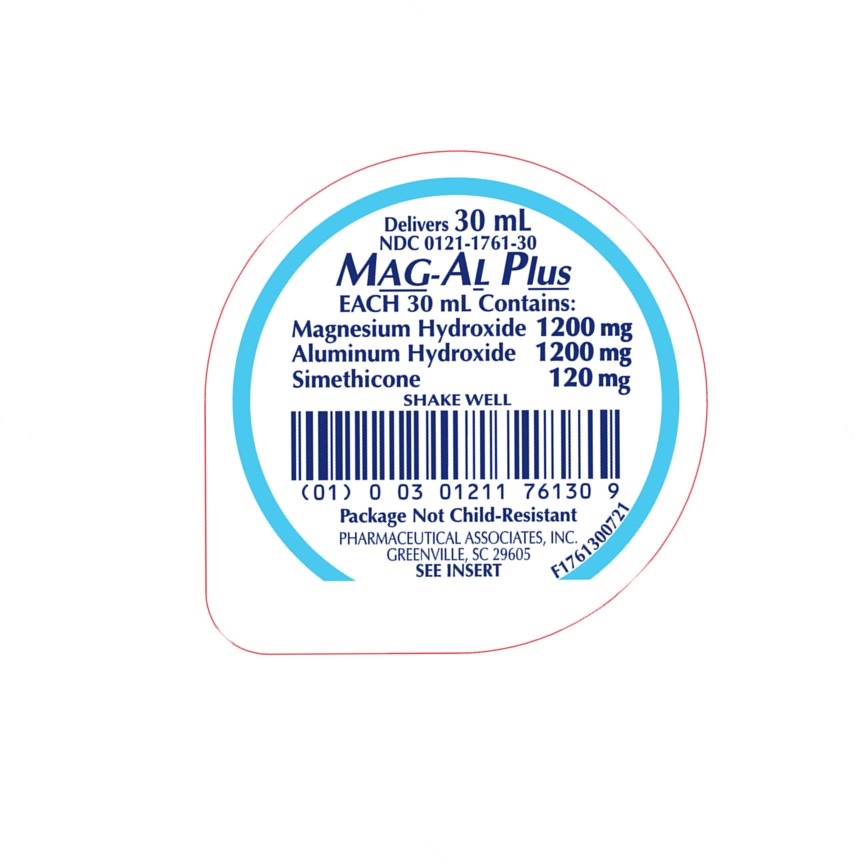
Mag-AL Plus Aluminum Hydroxide, Magnesium Hydroxide, and Simethicone 1200 mg/30mL; 1200 mg/30mL; 120 mg/30mL Suspension
🆔 Identity & classification
Where does this data come from?
🏷️ RxNorm drug class
This medicine belongs to the Aluminium compounds class.
Where does this data come from?
🏭 Manufacturer & labeler
Where does this data come from?
🩺 Clinical
Mag-AL Plus is an over-the-counter oral suspension containing three active ingredients commonly used to relieve heartburn and indigestion. Aluminum hydroxide and magnesium hydroxide are antacids that work to neutralize excess stomach acid. Simethicone (also called dimethicone) functions as an antifoaming agent, typically used to reduce gas and bloating that may accompany acid reflux discomfort. This product is marketed as an OTC monograph drug, meaning it follows FDA's established category rules for antacid combinations.
Patient education
Supplement & herbal interactions
Where does this data come from?
Ask a licensed pharmacist directly — free, answered by our team.
💊 What it looks like
Where does this data come from?
🧪 Inactive Ingredients / Excipients
Inactive ingredients, also called excipients, are components of the drug product other than the active ingredient. They may include fillers, dyes, coatings, preservatives, flavors, or other formulation ingredients.
💡 Tap an ingredient (hover on desktop) to see what it is and why it’s used.
-
UNII 3QPI1U3FV8
A preservative derived from benzoic acid that prevents bacterial and fungal growth in medicines. It helps extend shelf life and maintain product safety during storage and use.
-
UNII RN3152OP35
Hypromellose is a plant-based thickener and film-former derived from cellulose. In medicines, it's used to create coatings on tablets and capsules, control how fast the drug dissolves, and improve the product's texture and stability.
-
UNII AV092KU4JH
A natural oil extracted from peppermint plants. It's used as a flavoring agent to mask bitter tastes and add a refreshing mint flavor to medicines, making them easier to take.
-
UNII 6DC9Q167V3
Propylene glycol is a clear liquid derived from petroleum or vegetable sources. It acts as a solvent, humectant, and preservative in medicines, helping dissolve active ingredients and maintain product stability.
-
UNII Z8IX2SC1OH
Propylparaben is a chemical preservative used to prevent bacterial and fungal growth in medicines and personal care products. It helps extend shelf life and maintain product safety during storage.
-
UNII SB8ZUX40TY
Saccharin sodium is an artificial sweetener made from saccharin salt. It's added to medicines to improve taste, especially in liquid formulations for children or bitter drugs.
-
UNII 506T60A25R
Sorbitol is a natural sugar alcohol derived from glucose. It serves as a sweetener, humectant, and bulking agent in medications to improve taste and help maintain moisture in the product.
-
UNII 059QF0KO0R
Water is a liquid solvent that dissolves and mixes ingredients together in liquid medicines, syrups, and injections. It helps distribute the active drug evenly throughout the product.
8 inactive ingredients listed in the exact product block matched to this NDC.
Label-section wording can be broader than the structured product block and may mention additional formulation ingredients.
Where does this data come from?
ingredient classCode="IACT" elements from the exact product block matched by this NDC. Label-section narrative from DailyMed / the openFDA label index is shown separately when available.Inactive ingredient FAQ
Are inactive ingredients the same for every manufacturer?
Why might an inactive ingredient be missing?
Can inactive ingredients matter?
💲 Pricing
A drug doesn't have one price. Each row is a different public payment system, and none is what you'd pay at the counter — that depends on your insurance. The ⓘ on each row explains what it measures.
| Price system | Per mL | Per package |
|---|---|---|
| Retail pharmacies payNADAC · weekly | Not in the retail survey — common for institutional, discontinued, or low-volume packs. | |
| Medicaid paysCMS SDUD · 12 mo | $2.25 | $6,741.60 / 3000 ml |
| Medicare drug plans payPart D · quarterly | No Part D plan price is available for this NDC in our data. | |
Where does this data come from?
🔁 Therapeutic equivalents
Where does this data come from?
⏳ Availability & generic status
We did not find an FDA-approved generic match for this exact strength, form and route.
Where does this data come from?
🗺️ Medicaid utilization & spend
🔬 Reported adverse events (FAERS)
Top reported reactions
Reporter sex
Serious outcomes
Where does this data come from?
📦 Packaging — all sizes for this product
| Package NDC | Description | Marketing start | Status |
|---|---|---|---|
| 00121-1761-30 You're viewing this | 10 TRAY in 1 CASE (0121-1761-30) / 10 CUP, UNIT-DOSE in 1 TRAY / 30 mL in 1 CUP, UNIT-DOSE | 2004-01-14 | Active |
🧭 About this NDC listing & data coverage
What data is (and isn’t) available for this NDC — tap to expand
| NDC identity (package / product / labeler codes) | ✓ Available |
| Labeler | ✓ Available |
| Product & package description | ✓ Available |
| Marketing category & status | ✓ Available |
| Active ingredient / dosage form / route | ✓ Available |
| FDA label (SPL via DailyMed) | ✓ Available |
| Package photos | ✓ Available |
| Inactive ingredients (structured) | ✓ Available |
| NADAC pharmacy acquisition price (CMS) | — Not published for this NDC CMS publishes NADAC only for NDCs reported in its retail-pharmacy survey. |
| Orange Book / therapeutic-equivalence data | — Not published for this NDC Applies only to products approved under an NDA/ANDA; many listings are out of scope. |
| HCPCS J-code billing crosswalk | — Not published for this NDC Most self-administered / retail products have no J-code — that is normal. |
| Medicaid utilization (CMS SDUD) | ✓ Available |
Questions about this listing
Is this NDC FDA-approved?
Why is there no price listed?
Is the NDC printed on the package the same as the 11-digit billing NDC?
What do the three segments of this NDC mean?
Is this package still being marketed?
Who lists this product with the FDA?
Do I need a prescription for this product?
Where does this data come from?
📄 FDA label — Drug Facts FDA SPL
🎯 Indications and Usage ▾
USES Uses relieves acid indigestion heartburn sour stomach upset stomach due to these symptoms gas associated with heartburn, sour stomach or acid indigestion
⏱️ Dosage and Administration ▾
Directions shake well before using mL = milliliters adults and children 12 years of age and older: 30 mL (1 dose) up to 2 times a day or as directed by a doctor children under 12 years of age: ask a doctor
⚠️ Warnings ▾
Warnings Ask a doctor before use if you have kidney disease a magnesium-restricted diet Ask a doctor or pharmacist before use if you are presently taking a prescription drug. Antacids may interact with certain prescription drugs. When using this product do not take more than 60 mL (2 doses) in a 24-hour period do not use the maximum dosage for more than 2 weeks except under the advice and supervision of a doctor may cause a laxative effect If pregnant or breast-feeding, ask a health professional before use.
Keep out of reach of children. In case of overdose, get medical help or contact a poison control center right away.
📦 Storage and Handling ▾
Other information each 30 mL contains: magnesium 535 mg , sodium 2 mg store at 20° to 25°C (68° to 77°F) protect from freezing tamper-evident: do not use if seal on cup is missing or torn
🧪 Active Ingredient ▾
Active Ingredients (in each 30 mL dose) Aluminum hydroxide (equiv. to dried gel, USP) 1200 mg Magnesium hydroxide 1200 mg Simethicone 120 mg
🧪 Inactive Ingredients ▾
INACTIVE INGREGIENTS Inactive ingredients butylparaben, hydroxypropyl methylcellulose, flavoring, propylene glycol, propylparaben, purified water, saccharin sodium, sorbitol solution
🎯 Purpose ▾
Purposes Antacid Antigas