
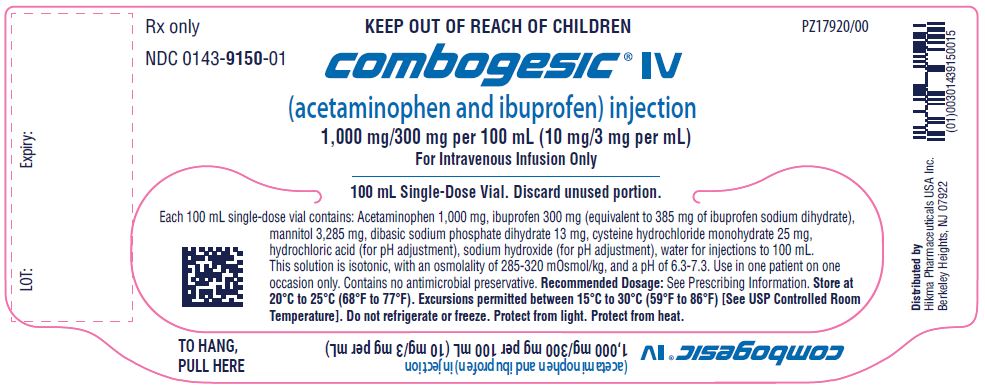
COMBOGESIC IV acetaminophen and ibuprofen injection 1000 mg/100mL; 300 mg/100mL Injection — NDC 0143-9150-10 (Billing 00143-9150-10)
This is a package of COMBOGESIC IV acetaminophen and ibuprofen injection 1000 mg/100mL; 300 mg/100mL Injection from Hikma Pharmaceuticals USA Inc., marketed since Feb 2024 and currently FDA-listed. It is this product's only package size.
Identity & classification
Regulatory identifiers FDA, NLM and CMS codes for this package
Drug-database identifiers Medi-Span GPI and First Databank GCN / HICL / AHFS classification
- GSN (GCN sequence number): 081382
- GCN: 48468
- GPI-14 (Medi-Span): 66109902302020
- HICL (First Databank): 046769
- AHFS class code: 28:08.04.04
- RxCUI (RxNorm): 2673874
Where does this data come from?
- FDA openFDA NDC Directory · synced Oct 1, 2026
- FDA label on DailyMed · label index refreshed Oct 1, 2026
- RxNorm (NLM RxNav) · catalog refreshed Oct 1, 2026
- Medi-Span GPI (licensed)
- First Databank (licensed) · refreshed Oct 1, 2026
RxNorm drug class
This medicine belongs to the Anilides class.
Where does this data come from?
- RxClass (NLM) · catalog refreshed Oct 1, 2026
Clinical
- Great question — it's intentional. Acetaminophen and ibuprofen work through completely different pathways in the body, so together they can give you broader, more effective pain re...
- Why does this combine two pain relievers? Is that safe?
- It depends on what you're taking. The ibuprofen in this product can interact with blood thinners like warfarin, blood pressure medicines like ACE inhibitors or ARBs, diuretics, dig...
- Can I take this with my other medications?
Patient education
Supplement & herbal interactions
Where does this data come from?
- MedlinePlus (NLM) · refreshed Oct 1, 2026
- FDA label on DailyMed · label index refreshed Oct 1, 2026
Ask a licensed pharmacist directly — free, answered by our team.
Pricing
A drug doesn't have one price. Each row is a different public payment system, and none is what you'd pay at the counter — that depends on your insurance. The ⓘ on each row explains what it measures.
| Price system | Per each | Per package |
|---|---|---|
| Retail pharmacies payNADAC · weekly | Not in the retail survey — common for institutional, discontinued, or low-volume packs. | |
| Medicaid paysCMS SDUD · 12 mo | No recent Medicaid claims on file for this NDC — rare and low-volume NDCs are suppressed in the public data. | |
| Medicare drug plans payPart D · quarterly | No Part D plan price is available for this NDC in our data. | |
| Medicare Part B allowsASP · J0138 | $0.092 / J0138 unit | — |
Where does this data come from?
- CMS NADAC weekly file
- CMS ASP pricing files · refreshed Sep 20, 2026
- CMS Medicaid State Drug Utilization Data · refreshed Oct 2, 2026
- CMS Part D plan pricing files · refreshed Sep 24, 2026
- VA National Acquisition Center price file
Billing & reimbursement
Where does this data come from?
- CMS ASP NDC-HCPCS crosswalk · refreshed Sep 22, 2026
- DMEPDAC NDC-HCPCS crosswalk
- openFDA NSDE billing units · refreshed Sep 7, 2026
Packaging — all sizes for this product
| Package NDC | Description | Marketing start | Marketing end | Status |
|---|---|---|---|---|
| 00143-9150-10 You're viewing this Main listing | 10 VIAL in 1 CARTON / 100 mL in 1 VIAL | 2024-02-05 | — | Active |
Therapeutic equivalents
| Product | Labeler | Pack | NADAC/unit | TE | Status | Price vs. this |
|---|---|---|---|---|---|---|
| Combogesic Iv 1000 mg/100mL; 300 mg/100mLthis 00143-9150-10 | Hikma | 10 vials | — | — | FDA listed | — |
Where does this data come from?
- FDA openFDA NDC Directory · synced Oct 1, 2026
- FDA Orange Book · refreshed Sep 3, 2026
- CMS NADAC weekly file
Availability & generic status
We did not find an FDA-approved generic match for this exact strength, form and route. Patent/protection dates below may affect future generic timing.
Why the date isn’t exact: Generic timing can change because patents may be challenged, settled, licensed, added, removed, or worked around with a narrower label — and FDA approval does not always mean a pharmacy can get the generic today.
🛈 What do these terms mean?
- Patent
- Legal protection listed in the Orange Book that may delay generic approval or launch. Issued by the U.S. Patent & Trademark Office.
- Substance patent
- Covers the active drug molecule itself — the hardest to design around. A generic generally can’t launch until it expires.
- Formulation (product) patent
- Covers a specific formulation or dosage form. A generic can sometimes work around it with a different formulation.
- Method-of-use patent
- A patent covering one specific approved use of the drug — not necessarily the whole molecule. A generic can sometimes launch with a “skinny label” that carves out the protected use and keeps the others.
- Skinny label
- A generic label that omits a still-patented use when the FDA allows it — letting a generic reach the market for the unprotected uses.
- Exclusivity
- FDA-granted marketing protection, separate from patents — e.g. 5-yr new chemical entity, 7-yr orphan drug, or a +6-month pediatric extension.
- Paragraph IV
- A generic applicant’s formal challenge to a listed patent. It can potentially lead to earlier generic entry, but often involves litigation or a settlement.
- RLD / RS
- Reference Listed Drug — the brand product the FDA uses as the reference for generic applications. Reference Standard — the product the FDA expects generics to compare against in bioequivalence testing.
- TE / AB rating
- FDA therapeutic-equivalence rating. An AB rating generally means the FDA considers a generic therapeutically equivalent to — and substitutable for — the brand.
- LOE (loss of exclusivity)
- The latest patent or exclusivity currently listed — the loss-of-exclusivity / latest-listed-protection date shown on this page. Paragraph-IV challenges and settlements can move the real date earlier; FDA approval and a manufacturer’s decision to market can move it later.
Built from the FDA Orange Book. The bars above are scaled to each protection’s expiry; the red LOE marker is the last one to lapse.
| Patent | Type | Use code | Expires |
|---|---|---|---|
| US 12220392 ↗ | Method of use | U-4306 | Oct 26, 2031 |
| US 12220392 ↗ | Method of use | U-4307 | Oct 26, 2031 |
| US 12083087 ↗ | Method of use | U-3744 | Jul 17, 2035 |
| US 12083087 ↗ | Method of use | U-3745 | Jul 17, 2035 |
| US 11446266 ↗ | Method of use | U-3744 | Oct 26, 2031 |
| US 11446266 ↗ | Method of use | U-3745 | Oct 26, 2031 |
| US 11896567 ↗ | Method of use | U-3744 | Oct 26, 2031 |
| US 11896567 ↗ | Method of use | U-3745 | Oct 26, 2031 |
| US 11213498 ↗ | Drug product | — | Jan 14, 2036 |
| US 11389416 ↗ | Drug product | — | Jul 17, 2035 |
| Code | What it grants | Expires |
|---|---|---|
| NP | New Product | Oct 17, 2026 |
Is there a generic version of COMBOGESIC IV 1000-300MG/100ML?
The FDA approved a generic — why can’t I get it at my pharmacy yet?
Why do different websites show different generic release dates?
What does “FDA listed” mean?
What does a patent or protection date mean here?
What does “current Orange Book estimate” mean?
Can a generic come out before the last patent expires?
Can a generic come out after the listed dates?
What is the difference between patents and exclusivity?
Why are there multiple patent dates?
Where does this data come from?
- FDA Orange Book · refreshed Sep 3, 2026
Inactive Ingredients / Excipients
Inactive ingredients, also called excipients, are components of the drug product other than the active ingredient. They may include fillers, dyes, coatings, preservatives, flavors, or other formulation ingredients.
💡 Tap an ingredient (hover on desktop) to see what it is and why it’s used.
-
25 mg / 100 mL
UNII ZT934N0X4W
A naturally occurring amino acid salt used as a reducing agent and antioxidant in medications. It helps prevent ingredient breakdown and may improve product stability during storage.
-
UNII QTT17582CB
A strong acid used to adjust and maintain the proper pH level in liquid medicines, ensuring stability and preventing breakdown of active ingredients.
-
3285 mg / 100 mL
UNII 3OWL53L36A
A natural sugar alcohol derived from seaweed or synthesized in the lab. It's used as a filler to add bulk, a sweetener in sugar-free formulas, and a disintegrant to help tablets break apart in the stomach.
-
UNII 55X04QC32I
A strong alkaline chemical used to adjust and maintain the pH balance of liquid medicines. It helps keep the medicine stable and ensures it stays effective during storage.
-
13 mg / 100 mL
UNII 94255I6E2T
Sodium phosphate dibasic dihydrate is a salt that helps control the acidity level of a medicine. It acts as a buffer and pH regulator to keep the medication stable and effective.
-
UNII 059QF0KO0R
Water is a liquid solvent that dissolves and mixes ingredients together in liquid medicines, syrups, and injections. It helps distribute the active drug evenly throughout the product.
6 inactive ingredients listed in the exact product block matched to this NDC.
Where does this data come from?
ingredient classCode="IACT" elements from the exact product block matched by this NDC. Label-section narrative from DailyMed / the openFDA label index is shown separately when available.- FDA label on DailyMed · label index refreshed Oct 1, 2026
- FDA openFDA NDC Directory · synced Oct 1, 2026
Inactive ingredient FAQ
Are inactive ingredients the same for every manufacturer?
Why might an inactive ingredient be missing?
Can inactive ingredients matter?
Manufacturer & labeler
Where does this data come from?
- FDA openFDA NDC Directory · synced Oct 1, 2026
- Drugs@FDA
Full prescribing information FDA SPL
🚨 Boxed Warning ▾
BOXED WARNING WARNING: HEPATOTOXICITY, CARDIOVASCULAR RISK, and GASTROINTESTINAL RISK RISK OF MEDICATION ERRORS: Take care when prescribing, preparing, and administering COMBOGESIC IV to avoid dosing errors which could result in accidental overdose and death ( 5.1 ). HEPATOTOXICITY: COMBOGESIC IV contains acetaminophen. Acetaminophen has been associated with cases of acute liver failure, at times resulting in liver transplant and death.
Most of the cases of liver injury are associated with doses of acetaminophen that exceed 4,000 mg per day, and often involve more than one acetaminophen-containing product [see Warnings and Precautions (5.2) ] . CARDIOVASCULAR RISK: COMBOGESIC IV contains ibuprofen, a nonsteroidal anti-inflammatory drug (NSAID). NSAIDs cause an increased risk of serious cardiovascular thrombotic events, including myocardial infarction and stroke, which can be fatal.
This risk may occur early in treatment and may increase with duration of use [see Warnings and Precautions (5.3) ] . COMBOGESIC IV is contraindicated for treatment of peri-operative pain in the setting of coronary artery bypass graft (CABG) surgery [see Contraindications (4) and Warnings and Precautions (5.3) ] . GASTROINTESTINAL RISK: NSAIDs cause an increased risk of serious gastrointestinal adverse events including bleeding, ulceration, and perforation of the stomach or intestines, which can be fatal.
These events can occur at any time during use and without warning symptoms. Elderly patients are at greater risk for serious gastrointestinal events [see Warnings and Precautions (5.4) ] . WARNING: HEPATOTOXICITY, CARDIOVASCULAR RISK, and GASTROINTESTINAL RISK See full prescribing information for complete boxed warning. • Take care when prescribing, preparing, and administering COMBOGESIC IV to avoid dosing errors which could result in accidental overdose and death.
( 5.1 ) • COMBOGESIC IV contains acetaminophen, which has been associated with cases of acute liver failure, at times resulting in liver transplant and death. Most of the cases of liver injury are associated with doses of acetaminophen that exceed 4000 mg per day, and often involve more than one acetaminophen-containing product. ( 5.2 ) • Nonsteroidal anti-inflammatory drugs (NSAIDS), like the ibuprofen in COMBOGESIC IV, may cause an increased risk of serious cardiovascular thrombotic events, including myocardial infarction and stroke, which can be fatal.
This risk may occur early in treatment and may increase with duration of use. ( 5.3 ). • COMBOGESIC IV is contraindicated in the setting of coronary artery bypass graft (CABG) surgery. ( 4 , 5.3 ) • NSAIDS, like the ibuprofen in COMBOGESIC IV, cause an increased risk of serious gastrointestinal (GI) adverse events, including bleeding, ulceration, and perforation of the stomach or intestines, which can be fatal.
These events can occur at any time during use and without warning symptoms. Elderly patients and patients with a prior history of peptic ulcer disease and/or GI bleeding are at greater risk for serious GI events. ( 5.4 )
🎯 Indications and Usage ▾
1 INDICATIONS AND USAGE COMBOGESIC IV is indicated in adults where an intravenous route of administration is considered clinically necessary for: • the relief of mild to moderate pain • the management of moderate to severe pain as an adjunct to opioid analgesics Limitations of Use COMBOGESIC IV is indicated for short-term use of five days or less. COMBOGESIC IV is indicated in adults where an intravenous route of administration is considered clinically necessary for: • the relief of mild to moderate pain • the management of moderate to severe pain as an adjunct to opioid analgesics Limitations of Use COMBOGESIC IV is indicated for short-term use of five days or less.
⏱️ Dosage and Administration ▾
2 DOSAGE AND ADMINISTRATION • Use the lowest effective dosage for the shortest duration consistent with individual patient treatment goals. ( 2.1 ). • Do not exceed the maximum total daily dose of COMBOGESIC IV (4,000 mg acetaminophen and 1,200 mg ibuprofen) in 24 hours. ( 2.1 ) • Do not exceed a total daily dose of 4,000 mg (4 g) of acetaminophen from all sources.
( 2.1 ) • Do not administer with other acetaminophen-containing products. ( 2.1 ) • For adult patients weighing greater than or equal to 50 kg (actual body weight): The recommended dosage is 1,000 mg of acetaminophen and 300 mg of ibuprofen administered as a 15-minute infusion, every 6 hours, as necessary ( 2.2 ). • For adult patients weighing less than 50 kg (actual body weight): The recommended dosage is 15 mg/kg acetaminophen and 4.5 mg/kg ibuprofen administered as a 15-minute infusion, every 6 hours, as necessary.
( 2.2 )
2.1Important Dosage and Administration Instructions • Use the lowest effective dosage for the shortest duration consistent with individual patient treatment goals [see Warnings and Precautions (5.4) ]. • Do not exceed the maximum total daily dose of COMBOGESIC IV (4,000 mg acetaminophen and 1,200 mg ibuprofen) in 24 hours. • Do not exceed a total daily dose of 4,000 mg (4 g) acetaminophen from all sources. • Do not co-administer COMBOGESIC IV with other acetaminophen or ibuprofen containing products [see Warnings and Precautions (5.2) ]. • Visually inspect for particulate matter and discoloration prior to administration.
If visibly opaque particles, discoloration, or other foreign particulates are observed, do not use. • Use COMBOGESIC IV in one patient on one occasion only. It contains no antimicrobial preservative. Discard any unused solution. • Do not mix with diluents or with other medicines.
2.2Recommended Dosage For adult patients weighing greater than or equal to 50 kg (actual body weight): The recommended dosage of COMBOGESIC IV is one vial (100 mL; acetaminophen 1,000 mg/ibuprofen 300 mg) administered as a 15-minute infusion every 6 hours, as necessary. For adult patients weighing less than 50 kg (actual body weight): The recommended dosage is 15 mg/kg acetaminophen and 4.5 mg/kg ibuprofen, administered as a 15-minute infusion every 6 hours, as necessary. This equates to a maximum single dose of 750 mg acetaminophen and 225 mg ibuprofen (discard remaining medicine in vial), and a total daily dose of 3,000 mg (3 g) acetaminophen and 900 mg ibuprofen.
2.3Instructions for Intravenous Administration • Administer as a 15-minute intravenous infusion. • Do not mix other medications with the COMBOGESIC IV vial or infusion device. • As for all solutions for infusion presented in glass vials, monitor closely, particularly at the end of infusion, regardless of administration route, in order to avoid air embolism. This applies particularly for central route infusion. • To decrease the likelihood of bung fragmentation or the bung being forced into the vial, use a syringe or giving set with a diameter equal to or below 0.8 mm for solution sampling and ensure that the bung is pierced at the location specifically designed for needle introduction (where the thickness of the bung is the lowest). • The entire 100 mL container of COMBOGESIC IV is not intended for use in patients weighing less than 50 kg.
For doses less than 1,000 mg acetaminophen and 300 mg ibuprofen, the appropriate dose must be withdrawn from the container and placed into a separate container prior to administration. Using aseptic technique, withdraw the appropriate dose (weight-based) from an intact sealed COMBOGESIC IV container and place the measured dose in a separate empty, sterile container (e.g., glass bottle, plastic intravenous container, or syringe) for intravenous infusion to avoid the inadvertent delivery and administration of the total volume of the commercially available container.
COMBOGESIC IV is supplied in a single-dose container and the unused portion must be disca… [Excerpted — this section continues on DailyMed.]
💊 Dosage Forms and Strengths ▾
3 DOSAGE FORMS AND STRENGTHS Injection: 1,000 mg/100 mL (10 mg/mL) of acetaminophen and 300 mg/100 mL (3 mg/mL) of ibuprofen in a clear, colorless solution in single-dose vial. Injection: 1,000 mg/100 mL (10 mg/mL) of acetaminophen and 300 mg/100 mL (3 mg/mL) of ibuprofen in single-dose vial. ( 3 )
⛔ Contraindications ▾
4 CONTRAINDICATIONS COMBOGESIC IV is contraindicated in: • patients with a known hypersensitivity (e.g., anaphylactic reactions and serious skin reactions) to acetaminophen, ibuprofen, other NSAIDs or to any other components of this product [see Warnings and Precautions (5.8 , 5.10 , 5.11 )] • patients with a history of asthma, urticaria, or other allergic-type reactions after taking aspirin or other NSAIDs. Severe, sometimes fatal, anaphylactic reactions to NSAIDs have been reported in such patients [see Warnings and Precautions (5.8 , 5.9 )] • in the setting of coronary artery bypass graft (CABG) surgery [see Warnings and Precautions (5.3) ] • patients with severe hepatic impairment or severe active liver disease [see Warnings and Precautions (5.2) ] COMBOGESIC IV is contraindicated in: • patients who have previously demonstrated hypersensitivity to acetaminophen, ibuprofen, other NSAIDs or to any of the excipients in the IV formulation ( 4 ) • patients who have experienced asthma, urticaria, or allergic-type reactions after taking aspirin or other NSAIDs.
Severe, sometimes fatal, anaphylactic reactions to NSAIDs have been reported in such patients ( 4 , 5.9 , 5.11 ) • the setting of coronary artery bypass graft (CABG) surgery ( 4 , 5.3 ) • patients with severe hepatic impairment or severe active liver disease ( 4 )
⚠️ Warnings and Cautions ▾
5 WARNINGS AND PRECAUTIONS • Hypertension: Patients taking some antihypertensive medications may have impaired response to these therapies when taking NSAIDs. Monitor blood pressure. ( 5.5 ) • Heart Failure and Edema: Avoid use of COMBOGESIC IV in patients with severe heart failure unless benefits are expected to outweigh risk of worsening heart failure.
( 5.6 ) • Renal Toxicity: Long-term administration of NSAIDs, including the ibuprofen component of COMBOGESIC IV, has resulted in renal papillary necrosis and other renal injury. ( 5.7 ) • Anaphylactic Reactions: Discontinue use immediately if symptoms occur. ( 5.8 ) • Exacerbation of Asthma Related to Aspirin Sensitivity: COMBOGESIC IV is contraindicated in patients with aspirin-sensitive asthma.
Monitor patients with preexisting asthma (without aspirin sensitivity). ( 5.9 ) • Serious Skin Reactions: Discontinue COMBOGESIC IV at first appearance of skin rash or other signs of hypersensitivity. ( 5.10 ) • Drug Rash with Eosinophilia and Systemic Symptoms (DRESS): Discontinue and evaluate clinically.
( 5.11 ) • Fetal Toxicity: Limit use of NSAID-containing products, including COMBOGESIC IV, between about 20 to 30 weeks in pregnancy due to the risk of oligohydramnios/fetal renal dysfunction. Avoid use of NSAID-containing products, including COMBOGESIC IV, in women at about 30 weeks gestation and later in pregnancy due to the risks of oligohydramnios/fetal renal dysfunction and premature closure of the fetal ductus arteriosus. ( 5.12 ) • Hematologic Toxicity: Monitor hemoglobin or hematocrit in patients with any signs or symptoms of anemia ( 5.13 ).
5.1Risk of Medication Errors Take care when prescribing, preparing, and administering COMBOGESIC IV in order to avoid dosing errors which could result in accidental overdose and death. In particular, be careful to ensure that: • the dose in milligrams (mg) and milliliters (mL) is not confused; • the dosing is based on weight for patients under 50 kg; • infusion pumps are properly programmed; and • the total daily dose of acetaminophen from all sources does not exceed maximum daily limits [see Dosage and Administration (2) ] .
5.2Hepatotoxicity Acetaminophen COMBOGESIC IV contains acetaminophen. Acetaminophen has been associated with cases of acute liver failure, at times resulting in liver transplant and death. Most of the cases of liver injury are associated with the use of acetaminophen at doses that exceed 4,000 mg per day, and often involve more than one acetaminophen-containing product.
The risk of acute liver failure is higher in individuals with underlying liver disease and in individuals who ingest alcohol while taking acetaminophen. Ibuprofen COMBOGESIC IV contains ibuprofen, a NSAID. Elevations of ALT or AST (three or more times the upper limit of normal [ULN]) have been reported in approximately 1% of NSAID-treated patients in clinical trials.
In addition, rare, sometimes fatal, cases of severe hepatic injury, including fulminant hepatitis, liver necrosis, and hepatic failure have been reported. Elevations of ALT or AST (less than three times ULN) may occur in up to 15% of patients treated with NSAIDs, including ibuprofen. Clinical Recommendations COMBOGESIC IV is contraindicated in patients with severe hepatic impairment or severe active liver disease.
COMBOGESIC IV has not been studied in patients with impaired hepatic function. Use in these patients is not recommended [see Use in Specific Populations (8.6) ] . If clinical signs and symptoms consistent with liver disease develop, or if systemic manifestations occur (e.g., eosinophilia, rash, etc.), discontinue COMBOGESIC IV immediately, and perform a clinical evaluation of the patient.
5.3Cardiovascular Thrombotic Events Clinical trials of several COX-2 selective and nonselective NSAIDs of up to three years duration have shown an increased risk of serious cardiovascular (CV) thrombotic events, including myocardial infarction (MI) and stroke, which can be fatal. Based o… [Excerpted — this section continues on DailyMed.]
🤒 Adverse Reactions ▾
6 ADVERSE REACTIONS The following clinically significant adverse reactions to ibuprofen or acetaminophen are described elsewhere in other sections of the labelling. • Hepatotoxicity [see Warnings and Precautions (5.2) ] • Cardiovascular Thrombotic Events [see Warnings and Precautions (5.3) ] • Gastrointestinal Bleeding, Ulceration, and Perforation [see Warnings and Precautions (5.4) ] • Hypertension [see Warnings and Precautions (5.5) ] • Heart Failure and Edema [see Warnings and Precautions (5.6) ] • Renal Toxicity and Hyperkalemia [see Warnings and Precautions (5.7) ] • Hypersensitivity and Anaphylactic Reactions [see Warnings and Precautions (5.8) ] • Exacerbation of Asthma Related to Aspirin Sensitivity [see Warnings and Precautions (5.9) ] • Serious Skin Reactions [see Warnings and Precautions (5.10) ] • Drug Rash with Eosinophilia and Systemic Symptoms (DRESS) [see Warnings and Precautions (5.11) ] • Hematologic Toxicity [see Warnings and Precautions (5.13) ] The most common adverse reactions (greater than or equal to 3%) are infusion site pain, nausea, constipation, dizziness, infusion site extravasation, vomiting, headache, somnolence.
( 6.1 ) To report SUSPECTED ADVERSE REACTIONS, contact Hikma Pharmaceuticals USA Inc. at 1-877-845-0689 or FDA at 1-800-FDA-1088 or www.fda.gov/medwatch.
6.1Clinical Trials Experience Because clinical trials are conducted under widely varying conditions, adverse reaction rates observed in the clinical trials of a drug cannot be directly compared to rates in the clinical trials of another drug and may not reflect the rates observed in practice. The clinical trials of COMBOGESIC IV have been conducted in patients with postoperative musculoskeletal pain and soft tissue pain models lasting between two to five days. Two Phase 3 clinical trials have been conducted with COMBOGESIC IV to assess efficacy and safety after multiple doses.
In AFT-MXIV-07 participants were treated with COMBOGESIC IV, acetaminophen IV, ibuprofen IV or placebo for a treatment period of 48 hours. In AFT-MXIV-11 participants were treated for between 48 hours and five days with COMBOGESIC IV. The study population for AFT-MXIV-07 was comprised of adults aged 18 to 65 years, mean age: 42 years.
AFT-MXIV-11 included adults aged 19 – 87 years, mean age: 53 years. Safety data for the first 48 hours of both studies was pooled. Overall, 59.3% of the patients (N = 182/307) administered COMBOGESIC IV experienced one or more treatment-emergent adverse event (TEAE) during the first 48 hours of treatment, accounting for a total of 436 TEAEs (see Table 1).
The most common TEAEs were related to the infusion site (infusion site pain, infusion site extravasation), or affected the gastrointestinal (nausea, vomiting, constipation) or nervous (dizziness, headache, somnolence) systems. Table 1: Common TEAEs (occurring in ≥ 3% of COMBOGESIC IV-treated participants) Adverse Reactions COMBOGESIC IV (N=307) % Acetaminophen (N=75) % Ibuprofen (N=76) % Placebo (N=50) % Gastrointestinal disorders Nausea 16.3 33.3 34.2
32.0Vomiting 6.2 14.7 6.6
2.0Constipation 7.2 5.3 5.3
8.0Infusion Site Complications Infusion site pain 17.6 0.0 9.2
2.0Infusion site extravasation 6.5 2.7 6.6
14.0Nervous System Disorders Headache 5.5 6.7 6.6
20.0Dizziness 7.2 9.3 9.2
18.0Somnolence 3.9 8.0 7.9
6.0Other skin and subcutaneous-related TEAEs (pruritis, hyperhidrosis) also affected around 2-3% of the study population, as did procedural nausea and polyuria. AFT-MXIV-11 found no notable difference in the safety profile of COMBOGESIC IV in participants treated for 5 days compared to those treated for 48 hours. Additionally, the safety profile was comparable between older participants (aged 65-75 years and >75 years) and younger participants (aged <65 years); the type and incidence of treatment-emergent adverse events was comparable, and the incidence of clinically significant shifts in laboratory tests (hematocrit 1.3% (n=3/228), hemoglobin 1.3% (n=3/228) and eryth… [Excerpted — this section continues on DailyMed.]
🔄 Drug Interactions ▾
7 DRUG INTERACTIONS Table 2. Drug Interactions with COMBOGESIC IV Drugs That Interfere with Hemostasis Clinical Impact: • Ibuprofen and anticoagulants such as warfarin have a synergistic effect on bleeding. The concomitant use of ibuprofen and anticoagulants have an increased risk of serious bleeding compared to the use of either drug alone. • Serotonin release by platelets plays an important role in hemostasis.
Case-control and cohort epidemiological studies showed that concomitant use of drugs that interfere with serotonin reuptake and an NSAID may potentiate the risk of bleeding more than an NSAID alone. Intervention: Monitor patients with concomitant use of COMBOGESIC IV with anticoagulants (e.g., warfarin), antiplatelet agents (e.g., aspirin), selective serotonin reuptake inhibitors (SSRIs), and serotonin norepinephrine reuptake inhibitors (SNRIs) for signs of bleeding [see Warnings and Precautions (5.13) ] . Aspirin Clinical Impact: Controlled clinical studies showed that the concomitant use of NSAIDs and analgesic doses of aspirin does not produce any greater therapeutic effect than the use of NSAIDs alone.
In a clinical study, the concomitant use of an NSAID and aspirin was associated with a significantly increased incidence of GI adverse reactions as compared to use of the NSAID alone [see Warnings and Precautions (5.3) ] . Intervention: Concomitant use of COMBOGESIC IV and analgesic doses of aspirin is not generally recommended because of the increased risk of bleeding [see Warnings and Precautions (5.4 , 5.13 )] . COMBOGESIC IV is not a substitute for low dose aspirin for cardiovascular protection.
ACE Inhibitors, Angiotensin Receptor Blockers, and Beta-Blockers Clinical Impact: • NSAIDs may diminish the antihypertensive effect of angiotensin converting enzyme (ACE) inhibitors, angiotensin receptor blockers (ARBs), or beta-blockers (including propranolol). • In patients who are elderly, volume-depleted (including those on diuretic therapy), or have renal impairment, co-administration of an NSAID with ACE inhibitors or ARBs may result in deterioration of renal function, including possible acute renal failure. These effects are usually reversible.
Intervention: • During concomitant use of COMBOGESIC IV and ACE-inhibitors, ARBs, or betablockers, monitor blood pressure to ensure that the desired blood pressure is obtained. • During concomitant use of COMBOGESIC IV and ACE-inhibitors or ARBs in patients who are elderly, volume-depleted, or have impaired renal function, monitor for signs of worsening renal function [see Warnings and Precautions (5.7) ] . • When these drugs are administered concomitantly, patients should be adequately hydrated. Assess renal function at the beginning of the concomitant treatment and periodically thereafter.
Diuretics Clinical Impact: Clinical studies, as well as post-marketing observations, showed that NSAIDs reduced the natriuretic effect of loop diuretics (e.g., furosemide) and thiazide diuretics in some patients. This effect has been attributed to the NSAID inhibition of renal prostaglandin synthesis. Intervention: During concomitant use of COMBOGESIC IV with diuretics, observe patients for signs of worsening renal function, in addition to assuring diuretic efficacy including antihypertensive effects [see Warnings and Precautions (5.7) ] .
Digoxin Clinical Impact: The concomitant use of ibuprofen with digoxin has been reported to increase the serum concentration and prolong the half-life of digoxin. Intervention: During concomitant use of COMBOGESIC IV and digoxin, monitor serum digoxin levels. Lithium Clinical Impact: NSAIDs have produced elevations in plasma lithium levels and reductions in renal lithium clearance.
The mean minimum lithium concentration increased 15%, and the renal clearance decreased by approximately 20%. This effect has been attributed to NSAID inhibition of renal prostaglandin synthesis. Intervention: During concomitant use of COMBOGESIC IV and lithium, monitor pati… [Excerpted — this section continues on DailyMed.]
👥 Use in Specific Populations ▾
8 USE IN SPECIFIC POPULATIONS COMBOGESIC IV is not recommended in patients with renal impairment. ( 5.7 , 8.7 ) COMBOGESIC IV is not recommended in patients with hepatic impairment. ( 5.2 , 8.6 ) See 17 for PATIENT COUNSELING INFORMATION
8.1Pregnancy Risk Summary Use of NSAID-containing products, including COMBOGESIC IV, can cause premature closure of the fetal ductus arteriosus and fetal renal dysfunction leading to oligohydramnios and, in some cases, neonatal renal impairment. Because of these risks, limit dose and duration of COMBOGESIC IV use between about 20 and 30 weeks of gestation and avoid COMBOGESIC IV use at about 30 weeks of gestation and later in pregnancy (see Clinical Considerations, Data) . Premature Closure of Fetal Ductus Arteriosus: Use of NSAID-containing products, including COMBOGESIC IV, at about 30 weeks gestation or later in pregnancy increases the risk of premature closure of the fetal ductus arteriosus.
Oligohydramnios/Neonatal Renal Impairment: Use of NSAID-containing products, including COMBOGESIC IV, at about 20 weeks gestation or later in pregnancy has been associated with cases of fetal renal dysfunction leading to oligohydramnios, and in some cases, neonatal renal impairment. Data from observational studies regarding other potential embryofetal risks of NSAID use in women in the first or second trimester of pregnancy are inconclusive. No adequate and well-controlled studies have been conducted using COMBOGESIC IV in pregnant women.
Animal reproduction studies have also not been conducted with COMBOGESIC IV. The following describes animal reproduction studies for Acetaminophen and Ibuprofen: Acetaminophen: Reproductive and developmental studies in rats and mice from the published literature have identified adverse events at clinically relevant doses of acetaminophen. Fetotoxicity, increases in bone variations in the fetuses, and necrosis in the fetus liver and kidney have been noted in studies in rats.
In mice treated with acetaminophen at doses within the clinical dosing range, cumulative adverse effects on reproduction were seen in a continuous breeding study. A reduction in number of litters of the parental mating pair was observed as well as retarded growth and abnormal sperm in their offspring and reduced birth weight in the next generation (see Data) . Ibuprofen: Reproductive studies conducted in rats and rabbits have not demonstrated evidence of developmental abnormalities after ibuprofen exposure.
However, animal reproduction studies are not always predictive of human response. There are no adequate and well-controlled studies in pregnant women and ibuprofen should be used in pregnancy only if the potential benefit justifies the potential risk to the fetus (see Data) . Based on animal data, prostaglandins have been shown to have an important role in endometrial vascular permeability, blastocyst implantation, and decidualization.
In animal studies, administration of prostaglandin synthesis inhibitors such as ibuprofen, resulted in increased pre- and post-implantation loss. Prostaglandins also have been shown to have an important role in fetal kidney development. In published animal studies, prostaglandin synthesis inhibitors have been reported to impair kidney development when administered at clinically relevant doses (see Data) .
The estimated background risk of major birth defects and miscarriages for the indicated population is unknown. All pregnancies have a background risk of birth defect, loss, or other adverse outcomes. In the general U.S. population, the estimated background risk of major birth defects and miscarriage in clinically recognized pregnancies is 2-4% and 15-20%, respectively.
Clinical Considerations Fetal/Neonatal Adverse Reactions Premature Closure of Fetal Ductus Arteriosus: Avoid use of NSAID-containing products, including COMBOGESIC IV, in women at about 30 weeks gestation and later in pregnancy, because NSAIDs, including COMBOGESIC IV, can cause premature closure… [Excerpted — this section continues on DailyMed.]
🤰 Pregnancy ▾
8.1Pregnancy Risk Summary Use of NSAID-containing products, including COMBOGESIC IV, can cause premature closure of the fetal ductus arteriosus and fetal renal dysfunction leading to oligohydramnios and, in some cases, neonatal renal impairment. Because of these risks, limit dose and duration of COMBOGESIC IV use between about 20 and 30 weeks of gestation and avoid COMBOGESIC IV use at about 30 weeks of gestation and later in pregnancy (see Clinical Considerations, Data) . Premature Closure of Fetal Ductus Arteriosus: Use of NSAID-containing products, including COMBOGESIC IV, at about 30 weeks gestation or later in pregnancy increases the risk of premature closure of the fetal ductus arteriosus.
Oligohydramnios/Neonatal Renal Impairment: Use of NSAID-containing products, including COMBOGESIC IV, at about 20 weeks gestation or later in pregnancy has been associated with cases of fetal renal dysfunction leading to oligohydramnios, and in some cases, neonatal renal impairment. Data from observational studies regarding other potential embryofetal risks of NSAID use in women in the first or second trimester of pregnancy are inconclusive. No adequate and well-controlled studies have been conducted using COMBOGESIC IV in pregnant women.
Animal reproduction studies have also not been conducted with COMBOGESIC IV. The following describes animal reproduction studies for Acetaminophen and Ibuprofen: Acetaminophen: Reproductive and developmental studies in rats and mice from the published literature have identified adverse events at clinically relevant doses of acetaminophen. Fetotoxicity, increases in bone variations in the fetuses, and necrosis in the fetus liver and kidney have been noted in studies in rats.
In mice treated with acetaminophen at doses within the clinical dosing range, cumulative adverse effects on reproduction were seen in a continuous breeding study. A reduction in number of litters of the parental mating pair was observed as well as retarded growth and abnormal sperm in their offspring and reduced birth weight in the next generation (see Data) . Ibuprofen: Reproductive studies conducted in rats and rabbits have not demonstrated evidence of developmental abnormalities after ibuprofen exposure.
However, animal reproduction studies are not always predictive of human response. There are no adequate and well-controlled studies in pregnant women and ibuprofen should be used in pregnancy only if the potential benefit justifies the potential risk to the fetus (see Data) . Based on animal data, prostaglandins have been shown to have an important role in endometrial vascular permeability, blastocyst implantation, and decidualization.
In animal studies, administration of prostaglandin synthesis inhibitors such as ibuprofen, resulted in increased pre- and post-implantation loss. Prostaglandins also have been shown to have an important role in fetal kidney development. In published animal studies, prostaglandin synthesis inhibitors have been reported to impair kidney development when administered at clinically relevant doses (see Data) .
The estimated background risk of major birth defects and miscarriages for the indicated population is unknown. All pregnancies have a background risk of birth defect, loss, or other adverse outcomes. In the general U.S. population, the estimated background risk of major birth defects and miscarriage in clinically recognized pregnancies is 2-4% and 15-20%, respectively.
Clinical Considerations Fetal/Neonatal Adverse Reactions Premature Closure of Fetal Ductus Arteriosus: Avoid use of NSAID-containing products, including COMBOGESIC IV, in women at about 30 weeks gestation and later in pregnancy, because NSAIDs, including COMBOGESIC IV, can cause premature closure of the fetal ductus arteriosus (see Data) . Oligohydramnios/Neonatal Renal Impairment: If, after consideration of alternative treatments for pain management, an NSAID-containing product, including COMBOGESIC IV, is necessary at about 20 w… [Excerpted — this section continues on DailyMed.]
🧒 Pediatric Use ▾
8.4Pediatric Use The safety and effectiveness of COMBOGESIC IV in pediatric patients has not been studied in the pediatric population. COMBOGESIC IV is not approved for patients under 18 years of age.
🧓 Geriatric Use ▾
8.5Geriatric Use Of the total number of subjects in clinical studies of COMBOGESIC IV, 20.2% (N = 62/307) were aged 65 years or over, including 5.2% (N = 16/307) aged 75 years or over [see Adverse Reactions (6.1) ] . No overall differences in safety or effectiveness were observed between these subjects and younger subjects, and other reported clinical experience has not identified differences in responses between the elderly and younger patients, but greater sensitivity of some older individuals cannot be ruled out.
Elderly patients, compared to younger patients, are at greater risk for NSAID-associated serious cardiovascular, gastrointestinal, and/or renal adverse reactions. If the anticipated benefit for the elderly patient outweighs these potential risks, start dosing at the low end of the dosing range, and monitor patients for adverse effects [see Warnings and Precautions (5.2 , 5.3 , 5.4 , 5.7 )] . The ibuprofen and acetaminophen in COMBOGESIC IV are known to be substantially excreted by the kidney, and the risk of adverse reactions to this drug may be greater in patients with impaired renal function.
Because elderly patients are more likely to have decreased renal function, care should be taken in dose selection, and it may be useful to monitor renal function.
🆘 Overdosage ▾
10 OVERDOSAGE COMBOGESIC IV is a combination product. The clinical presentation of overdose may include the signs and symptoms of acetaminophen toxicity, ibuprofen toxicity, or both. Acetaminophen The initial symptoms seen within the first 24 hours following an acetaminophen overdose are: anorexia, nausea, vomiting, malaise, pallor and diaphoresis.
In acute acetaminophen overdosage, dose-dependent, potentially fatal hepatic necrosis is the most serious adverse effect. Renal tubular necrosis, hypoglycemic coma, and thrombocytopenia also occur. Plasma acetaminophen levels > 300 mcg/mL at 4 hours after oral ingestion were associated with hepatic damage in 90% of patients; minimal hepatic damage is anticipated if plasma levels at 4 hours are < 150 mcg/mL or < 37.5 mcg/mL at 12 hours after ingestion [see Warnings and Precautions (5.2) ] .
Early symptoms following a potentially hepatotoxic overdose may include: nausea, vomiting, diaphoresis, and general malaise. Clinical and laboratory evidence of hepatic toxicity may not be apparent until 48 to 72 hours post-ingestion. If an acetaminophen overdose is suspected, obtain a serum acetaminophen assay as soon as possible, but no sooner than 4 hours following oral ingestion.
Obtain liver function studies initially and repeat at 24-hour intervals. Administer the antidote N-acetylcysteine (NAC) as early as possible. As a guide to treatment of acute ingestion, the acetaminophen level can be plotted against time since oral ingestion on a nomogram (Rumack- Matthew).
The lower toxic line on the nomogram is equivalent to 150 mcg/mL at 4 hours and 37.5 mcg/mL at 12 hours. If serum level is above the lower line, administer the entire course of NAC treatment. Withhold NAC therapy if the acetaminophen level is below the lower line.
Ibuprofen Symptoms following acute NSAID overdosages have been typically limited to lethargy, drowsiness, nausea, vomiting, and epigastric pain, which have been generally reversible with supportive care. Gastrointestinal bleeding has occurred. Hypertension, acute renal failure, respiratory depression, and coma have occurred, but were rare [see Warnings and Precautions (5.4 , 5.5 , 5.7 )] .
Manage patients with symptomatic and supportive care following an NSAID overdosage. There are no specific antidotes. For additional information about overdosage treatment contact a poison control center (1-800-222-1222).
🧬 Clinical Pharmacology ▾
12 CLINICAL PHARMACOLOGY
12.1Mechanism of Action COMBOGESIC IV contains acetaminophen and ibuprofen as active drug substances. Acetaminophen is a non-opiate, non-salicylate analgesic. The precise mechanism of the analgesic properties of acetaminophen is not established but is thought to primarily involve central actions.
Ibuprofen is a nonsteroidal anti-inflammatory drug (NSAID). Its mechanism of action for analgesia, like that of other NSAIDs, is not completely understood, but involves inhibition of cyclooxygenase (COX-1 and COX-2). Ibuprofen is a potent inhibitor of prostaglandin synthesis in vitro.
Prostaglandins sensitize afferent nerves and potentiate the action of bradykinin in inducing pain in animal models. Prostaglandins are mediators of inflammation. Because ibuprofen is an inhibitor of prostaglandin synthesis, its mode of action may be due to a decrease of prostaglandins in peripheral tissues.
12.2Pharmacodynamics Hematological Effects NSAIDs inhibit platelet aggregation and have been shown to prolong bleeding time in some patients. Unlike aspirin, their effect on platelet function is quantitatively less, of shorter duration, and reversible.
12.3Pharmacokinetics The pharmacokinetic profile of the intravenous formulation is dose proportional following the administration of a half dose and a full dose of COMBOGESIC IV. The maximum concentration (C max ) occurs at the end of the 15-min intravenous infusion of COMBOGESIC IV. While overall exposures (area under the concentration time curve [AUC]) were similar following a single dose of COMBOGESIC IV compared to the same dose given orally, the C max of the intravenous formulation was twice that of the oral formulation.
As expected, the T max following intravenous administration was achieved much faster (in 15 minutes) than with the oral formulation. The mean C max and AUC 0-inf of COMBOGESIC IV following administration of a single intravenous dose of 1,000 mg acetaminophen and 300 mg ibuprofen in adults were 34.30 mcg/mL and 56.48 mcg.h/mL for acetaminophen and 48.12 mcg/mL and 102.82 mcg.h/mL for ibuprofen, respectively. A single-dose pharmacokinetic study of COMBOGESIC IV in healthy volunteers showed no drug interactions between acetaminophen and ibuprofen.
Distribution Acetaminophen appears to be widely distributed throughout most body tissues except fat. Its apparent volume of distribution is about
0.9L/kg. A relative small portion (~20%) of acetaminophen is bound to plasma protein. Elimination The half-life of acetaminophen is about 2 to 3 hours in adults.
It is somewhat shorter in children and somewhat longer in neonates and in cirrhotic patients. Acetaminophen is eliminated from the body primarily by formation of glucuronide and sulfate conjugates in a dose-dependent manner. Ibuprofen is rapidly metabolized and eliminated in the urine.
The serum half-life is 1.8 to 2.0 hours. Metabolism Acetaminophen is primarily metabolized in the liver by first-order kinetics and involves three principal separate pathways: a) conjugation with glucuronide; b) conjugation with sulfate; and c) oxidation via the cytochrome, P450-dependent, mixed-function oxidase enzyme pathway to form a reactive intermediate metabolite, which conjugates with glutathione and is then further metabolized to form cysteine and mercapturic acid conjugates. The principal cytochrome P450 isoenzyme involved appears to be CYP2E1, with CYP1A2 and CYP3A4 as additional pathways.
In adults, the majority of acetaminophen is conjugated with glucuronic acid and, to a lesser extent, with sulfate. These glucuronide-, sulfate-, and glutathione-derived metabolites lack biologic activity. In premature infants, newborns, and young infants, the sulfate conjugate predominates.
Excretion Less than 9% of acetaminophen is excreted unchanged in the urine. The excretion of ibuprofen is virtually complete 24 hours after the last dose. Studies have shown that following ingestion of the drug, 45% to 79% of the dose was recovered… [Excerpted — this section continues on DailyMed.]
🧬 Mechanism of Action ▾
12.1Mechanism of Action COMBOGESIC IV contains acetaminophen and ibuprofen as active drug substances. Acetaminophen is a non-opiate, non-salicylate analgesic. The precise mechanism of the analgesic properties of acetaminophen is not established but is thought to primarily involve central actions.
Ibuprofen is a nonsteroidal anti-inflammatory drug (NSAID). Its mechanism of action for analgesia, like that of other NSAIDs, is not completely understood, but involves inhibition of cyclooxygenase (COX-1 and COX-2). Ibuprofen is a potent inhibitor of prostaglandin synthesis in vitro.
Prostaglandins sensitize afferent nerves and potentiate the action of bradykinin in inducing pain in animal models. Prostaglandins are mediators of inflammation. Because ibuprofen is an inhibitor of prostaglandin synthesis, its mode of action may be due to a decrease of prostaglandins in peripheral tissues.
📦 How Supplied / Storage and Handling ▾
16 HOW SUPPLIED COMBOGESIC IV (acetaminophen/ ibuprofen) injection 1,000 mg/300 mg per 100 mL (10 mg/3mg per mL): clear, colorless solution in single-dose vial. Discard unused portion. NDC # 0143-9150-10: pack of 10 vials.
COMBOGESIC IV is a clear, colorless solution, free from visible particles. Store at 20°C to 25°C (68°F to 77°F). Excursions permitted between 15°C to 30°C (59°F to 86°F) [See USP Controlled Room Temperature].
Do not refrigerate or freeze. Store in the original carton in order to protect from light. Protect from heat.
📋 Description ▾
11 DESCRIPTION COMBOGESIC IV (acetaminophen and ibuprofen) injection contains acetaminophen and ibuprofen, a nonsteroidal anti-inflammatory drug. Acetaminophen chemical name is N-acetyl-p-aminophenol. Acetaminophen is a white, odorless, crystalline powder, possessing a slightly bitter taste.
Acetaminophen is soluble in boiling water and 1N sodium hydroxide and is freely soluble in alcohol. Acetaminophen has a molecular weight of 151.16. The molecular formula is C 8 H 9 NO 2 and the structural formula is: Ibuprofen sodium dihydrate chemical name is 2-(4-isobutyl phenyl) propionic acid sodium salt dihydrate.
Ibuprofen sodium dihydrate is a white powder. It has a molecular weight of 264.29. It is freely soluble in water.
The molecular formula is C 13 H 21 NaO 4 and the structural formula of ibuprofen sodium dihydrate is represented below: COMBOGESIC IV injection is a sterile, clear, colorless, non-pyrogenic, isotonic solution, intended for intravenous infusion with a pH stability range of 6.3-7.3. Each single-dose 100 mL vial contains 1,000 mg of acetaminophen and 300 mg of ibuprofen base (equivalent to 385 mg of ibuprofen sodium dihydrate), 25 mg of Cysteine hydrochloride monohydrate, 13 mg of Disodium phosphate dihydrate, 3,285 mg of Mannitol, Hydrochloric acid (for pH adjustment), Sodium hydroxide (for pH adjustment), Water for injection.
Acetaminophen Structural Formula Ibuprofen Structural Formula
💬 Information for Patients ▾
17 PATIENT COUNSELING INFORMATION Patients should be informed of the following information before initiating therapy with COMBOGESIC IV. • Hepatotoxicity: Advise patients of the warning signs and symptoms of hepatotoxicity (e.g., nausea, fatigue, lethargy, pruritus, jaundice, right upper quadrant tenderness and "flu-like" symptoms). Advise patients to seek immediate medical assistance if these occur [see Warnings and Precautions (5.2) ] . • Alcohol: Advise patients that COMBOGESIC IV should not be taken concomitantly with alcohol-containing beverages or other acetaminophen-containing products [see Warnings and Precautions (5.2) ] . • Cardiovascular Thrombotic Events: Inform patients that COMBOGESIC IV, like other NSAID-containing medications, may cause serious CV side effects such as MI or stroke, which may result in hospitalization and even death.
Advise patients to be alert for the signs and symptoms of cardiovascular thrombotic events including chest pain, shortness of breath, weakness, slurring of speech, and to report any of these symptoms to their health care provider immediately [see Warnings and Precautions (5.3) ] . • Gastrointestinal Bleeding, Ulceration, and Perforation: Inform patients that COMBOGESIC IV, like other NSAID-containing medications, can cause GI discomfort and, rarely, serious GI side effects, such as ulcers and bleeding, which may result in hospitalization and even death.
Advise patients to be alert for the signs and symptoms of ulcerations and bleeding, including epigastric pain, dyspepsia, melena, and hematemesis. In the setting of concomitant use of low-dose aspirin for cardiac prophylaxis, inform patients of the increased risk for and the signs and symptoms of GI bleeding [see Warnings and Precautions (5.4) ] . • Heart Failure and Edema: Advise patients to be alert for the symptoms of congestive heart failure including shortness of breath, unexplained weight gain, or edema and to contact their healthcare provider if such symptoms occur [see Warnings and Precautions (5.6) ] . • Weight Gain and Edema: Advise patients to promptly report unexplained weight gain or edema to their physicians [see Warnings and Precautions (5.6) ] . • Hypersensitivity and Anaphylactic Reactions: Discontinue COMBOGESIC IV immediately if symptoms associated with allergy or hypersensitivity occur.
Do not use COMBOGESIC IV in patients with known acetaminophen or ibuprofen allergy [see Warnings and Precautions (5.8 and 5.10) ] . • Serious Skin Reactions, including DRESS: Advise patients to be alert for the signs and symptoms of skin rash and blisters, fever, or other signs of hypersensitivity such as itching, and to ask for medical advice when observing any indicative sign or symptoms [see Warnings and Precautions (5.8 , 5.10 , 5.11) ] . • Female Fertility: Advise females of reproductive potential who desire pregnancy that NSAID containing products, including COMBOGESIC IV, may be associated with a reversible delay in ovulation [see Use in Specific Populations (8.3) ] . • Fetal Toxicity: Inform pregnant women to avoid use of COMBOGESIC IV and other NSAIDs starting at 30 weeks gestation because of the risk of the premature closing of the fetal ductus arteriosus.
If treatment with COMBOGESIC IV is needed for a pregnant woman between about 20 to 30 weeks gestation, advise her that she may need to be monitored for oligohydramnios, if treatment continues for longer than 48 hours [see Warnings and Precautions (5.12) and Use in Specific Populations (8.1) ] . • Use of NSAIDs and Low-Dose Aspirin: Inform patients not to use low-dose aspirin concomitantly with COMBOGESIC IV until they talk to their healthcare provider [see Warnings and Precautions (5.4) , see Drug Interactions (7) ] .
Manufactured by: S.M. Farmaceutici SRL, Zona Industriale, 85050 Tito (PZ), Italy Distributed by: Hikma Pharmaceuticals USA Inc. Berkeley Heights, NJ 07922 Information and patents: https://www.combogesiciv.com Revised: November 2024
🧬 Pharmacokinetics ▾
12.3Pharmacokinetics The pharmacokinetic profile of the intravenous formulation is dose proportional following the administration of a half dose and a full dose of COMBOGESIC IV. The maximum concentration (C max ) occurs at the end of the 15-min intravenous infusion of COMBOGESIC IV. While overall exposures (area under the concentration time curve [AUC]) were similar following a single dose of COMBOGESIC IV compared to the same dose given orally, the C max of the intravenous formulation was twice that of the oral formulation.
As expected, the T max following intravenous administration was achieved much faster (in 15 minutes) than with the oral formulation. The mean C max and AUC 0-inf of COMBOGESIC IV following administration of a single intravenous dose of 1,000 mg acetaminophen and 300 mg ibuprofen in adults were 34.30 mcg/mL and 56.48 mcg.h/mL for acetaminophen and 48.12 mcg/mL and 102.82 mcg.h/mL for ibuprofen, respectively. A single-dose pharmacokinetic study of COMBOGESIC IV in healthy volunteers showed no drug interactions between acetaminophen and ibuprofen.
Distribution Acetaminophen appears to be widely distributed throughout most body tissues except fat. Its apparent volume of distribution is about
0.9L/kg. A relative small portion (~20%) of acetaminophen is bound to plasma protein. Elimination The half-life of acetaminophen is about 2 to 3 hours in adults.
It is somewhat shorter in children and somewhat longer in neonates and in cirrhotic patients. Acetaminophen is eliminated from the body primarily by formation of glucuronide and sulfate conjugates in a dose-dependent manner. Ibuprofen is rapidly metabolized and eliminated in the urine.
The serum half-life is 1.8 to 2.0 hours. Metabolism Acetaminophen is primarily metabolized in the liver by first-order kinetics and involves three principal separate pathways: a) conjugation with glucuronide; b) conjugation with sulfate; and c) oxidation via the cytochrome, P450-dependent, mixed-function oxidase enzyme pathway to form a reactive intermediate metabolite, which conjugates with glutathione and is then further metabolized to form cysteine and mercapturic acid conjugates. The principal cytochrome P450 isoenzyme involved appears to be CYP2E1, with CYP1A2 and CYP3A4 as additional pathways.
In adults, the majority of acetaminophen is conjugated with glucuronic acid and, to a lesser extent, with sulfate. These glucuronide-, sulfate-, and glutathione-derived metabolites lack biologic activity. In premature infants, newborns, and young infants, the sulfate conjugate predominates.
Excretion Less than 9% of acetaminophen is excreted unchanged in the urine. The excretion of ibuprofen is virtually complete 24 hours after the last dose. Studies have shown that following ingestion of the drug, 45% to 79% of the dose was recovered in the urine within 24 hours as metabolite A (25%), (+)-2-[p-(2hydroxymethyl-propyl) phenyl] propionic acid and metabolite B (37%), (+)-2-[p-(2carboxypropyl)phenyl]propionic acid; the percentages of free and conjugated ibuprofen were approximately 1% and 14%, respectively.
Specific Populations Pediatric Patients The pharmacokinetics of COMBOGESIC IV has not been studied in pediatric patients below 18 years of age. Hepatic Impairment The pharmacokinetics of COMBOGESIC IV in patients with impaired hepatic function has not been studied [see Warnings and Precautions (5.2) and Use in Specific Populations (8.6) ] . Renal Impairment The pharmacokinetics of COMBOGESIC IV in patients with renal impairment has not been studied. [see Warnings and Precautions (5.7) and Use in Specific Populations (8.7) ] .
Drug Interaction Studies Aspirin: When NSAIDs were administered with aspirin, the protein binding of NSAIDs were reduced, although the clearance of free NSAID was not altered. The clinical significance of this interaction is not known. See Table 2 for clinically significant drug interactions of NSAIDs with aspirin [see Drug Interactions (7) ] .
🧬 Pharmacodynamics ▾
12.2Pharmacodynamics Hematological Effects NSAIDs inhibit platelet aggregation and have been shown to prolong bleeding time in some patients. Unlike aspirin, their effect on platelet function is quantitatively less, of shorter duration, and reversible.
🔬 Clinical Studies ▾
14 CLINICAL STUDIES
14.1Phase 3 Clinical Efficacy Study COMBOGESIC IV was studied in a Phase 3, placebo-controlled, prospective, randomized, double-blind, parallel-design trial comparing the analgesic efficacy and safety of COMBOGESIC IV (n=75/276) with acetaminophen alone (n=75/276), ibuprofen alone (n=76/276) and placebo (n=50/276), after bunionectomy surgery. The demographic and baseline characteristics of the 276 eligible patients were balanced between the treatment groups with the majority of patients being female (82%) and white (62%) with a mean (SD) age of 42.4 (12.2) years.
The primary efficacy endpoint was the time-adjusted Sum of Pain Intensity Differences over 48 hours (SPID48) and analyzed with each pre-rescue Visual Analogue Scale (VAS) carried forward up to 2 hours. An analysis of covariance was used for the primary efficacy analysis with treatment as the fixed effect and baseline pain intensity score as the covariate on the intent to treat population. The analysis of time-adjusted SPID48 demonstrated that COMBOGESIC IV (least square mean (LSM) = 36.7, standard error (SE) = 2.2) provided more effective pain relief than placebo (LSM = 17.5, SE = 2.7), acetaminophen (LSM = 19.3, SE = 2.2) or ibuprofen (LSM = 24.6, SE = 2.2).
Figure 1: Time-adjusted SPID48 with Pre-Rescue VAS Score Carried Forward up to 2 Hours Figure 1
🧪 Nonclinical Toxicology ▾
13 NONCLINICAL TOXICOLOGY
13.1Carcinogenesis, Mutagenesis, Impairment of Fertility Carcinogenesis Acetaminophen Long-term studies in mice and rats have been completed by the National Toxicology Program to evaluate the carcinogenic potential of acetaminophen. In 2-year feeding studies, F344/N rats and B6C3F1 mice were fed a diet containing acetaminophen up to 6000 ppm. Female rats demonstrated equivocal evidence of carcinogenic activity based on increased incidences of mononuclear cell leukemia at 0.8 times the MHDD (based on a body surface area comparison).
In contrast, there was no evidence of carcinogenic activity in male rats (0.7 times) or mice (1.2 - 1.4 times the MHDD, based on a body surface area comparison). Ibuprofen Adequate long-term animal studies have not been conducted to evaluate the carcinogenic potential of ibuprofen. Mutagenesis Acetaminophen Acetaminophen was not mutagenic in the bacterial reverse mutation assay (Ames test).
In contrast, acetaminophen tested positive in the in vitro mouse lymphoma assay and the in vitro chromosomal aberration assay using human lymphocytes. In the published literature, acetaminophen has been reported to be clastogenic when administered a dose of 1,500 mg/kg/day to the rat model (at 3.6 times the MHDD, based on a body surface area comparison). In contrast, no clastogenicity was noted at a dose of 750 mg/kg/day (1.8 times the MHDD, based on a body surface area comparison), suggesting a threshold effect.
Ibuprofen In published studies, ibuprofen was not mutagenic in the in vitro bacterial reverse mutation assay (Ames assay). Impairment of Fertility Acetaminophen In studies conducted by the National Toxicology Program, fertility assessments with acetaminophen have been completed in Swiss mice via a continuous breeding study. There were no effects on fertility parameters in mice consuming up to approximately 1.1 times the MHDD of acetaminophen, (based on a body surface area comparison).
Although there was no effect on sperm motility or sperm density in the epididymis, there was a significant increase in the percentage of abnormal sperm in mice consuming approximately 1.1 times the MHDD (based on a body surface area comparison) and there was a reduction in the number of mating pairs producing a fifth litter at this dose, suggesting the potential for cumulative toxicity with chronic administration of acetaminophen near the upper limit of daily dosing. Published studies in rodents report that oral acetaminophen treatment of male animals at doses that are approximately 0.8 times the MHDD and greater (based on a body surface area comparison) result in decreased testicular weights, reduced spermatogenesis, and reduced fertility.
Females given the same doses also showed reduced implantation sites. These effects appear to increase with the duration of treatment. Published studies in rodents report that oral acetaminophen treatment of male animals at doses that are 1.2 times the MHDD and greater (based on a body surface area comparison) result in decreased testicular weights, reduced spermatogenesis, reduced fertility, and reduced implantation sites in females given the same doses.
These effects appear to increase with the duration of treatment. In a published mouse study, oral administration of 50 mg/kg acetaminophen to pregnant mice from Gestation Day 7 to delivery (0.06 times the MHDD) reduced the number of primordial follicles in female offspring and reduced the percentage of full-term pregnancies and number of pups born to these females exposed to acetaminophen in utero. In a published study, pregnant rats oral administration of 350 mg/kg acetaminophen (0.85 times the MHDD) from Gestation Day 13 to 21 (dams), reduced the number of germ cells in the fetal ovary and decreased ovary weight and reduced number of pups per litter in F1 females as well as reduced ovary weights in F2 females.
Ibuprofen In a published study, dietary administration of ibuprofen to male and female rats 8-weeks… [Excerpted — this section continues on DailyMed.]
📄 Carcinogenesis, Mutagenesis, Impairment of Fertility ▾
13.1Carcinogenesis, Mutagenesis, Impairment of Fertility Carcinogenesis Acetaminophen Long-term studies in mice and rats have been completed by the National Toxicology Program to evaluate the carcinogenic potential of acetaminophen. In 2-year feeding studies, F344/N rats and B6C3F1 mice were fed a diet containing acetaminophen up to 6000 ppm. Female rats demonstrated equivocal evidence of carcinogenic activity based on increased incidences of mononuclear cell leukemia at 0.8 times the MHDD (based on a body surface area comparison).
In contrast, there was no evidence of carcinogenic activity in male rats (0.7 times) or mice (1.2 - 1.4 times the MHDD, based on a body surface area comparison). Ibuprofen Adequate long-term animal studies have not been conducted to evaluate the carcinogenic potential of ibuprofen. Mutagenesis Acetaminophen Acetaminophen was not mutagenic in the bacterial reverse mutation assay (Ames test).
In contrast, acetaminophen tested positive in the in vitro mouse lymphoma assay and the in vitro chromosomal aberration assay using human lymphocytes. In the published literature, acetaminophen has been reported to be clastogenic when administered a dose of 1,500 mg/kg/day to the rat model (at 3.6 times the MHDD, based on a body surface area comparison). In contrast, no clastogenicity was noted at a dose of 750 mg/kg/day (1.8 times the MHDD, based on a body surface area comparison), suggesting a threshold effect.
Ibuprofen In published studies, ibuprofen was not mutagenic in the in vitro bacterial reverse mutation assay (Ames assay). Impairment of Fertility Acetaminophen In studies conducted by the National Toxicology Program, fertility assessments with acetaminophen have been completed in Swiss mice via a continuous breeding study. There were no effects on fertility parameters in mice consuming up to approximately 1.1 times the MHDD of acetaminophen, (based on a body surface area comparison).
Although there was no effect on sperm motility or sperm density in the epididymis, there was a significant increase in the percentage of abnormal sperm in mice consuming approximately 1.1 times the MHDD (based on a body surface area comparison) and there was a reduction in the number of mating pairs producing a fifth litter at this dose, suggesting the potential for cumulative toxicity with chronic administration of acetaminophen near the upper limit of daily dosing. Published studies in rodents report that oral acetaminophen treatment of male animals at doses that are approximately 0.8 times the MHDD and greater (based on a body surface area comparison) result in decreased testicular weights, reduced spermatogenesis, and reduced fertility.
Females given the same doses also showed reduced implantation sites. These effects appear to increase with the duration of treatment. Published studies in rodents report that oral acetaminophen treatment of male animals at doses that are 1.2 times the MHDD and greater (based on a body surface area comparison) result in decreased testicular weights, reduced spermatogenesis, reduced fertility, and reduced implantation sites in females given the same doses.
These effects appear to increase with the duration of treatment. In a published mouse study, oral administration of 50 mg/kg acetaminophen to pregnant mice from Gestation Day 7 to delivery (0.06 times the MHDD) reduced the number of primordial follicles in female offspring and reduced the percentage of full-term pregnancies and number of pups born to these females exposed to acetaminophen in utero. In a published study, pregnant rats oral administration of 350 mg/kg acetaminophen (0.85 times the MHDD) from Gestation Day 13 to 21 (dams), reduced the number of germ cells in the fetal ovary and decreased ovary weight and reduced number of pups per litter in F1 females as well as reduced ovary weights in F2 females.
Ibuprofen In a published study, dietary administration of ibuprofen to male and female rats 8-weeks prior to and during mating… [Excerpted — this section continues on DailyMed.]
📄 Recent Major Changes ▾
RECENT MAJOR CHANGES Warnings and Precautions (5.10) 11/2024
📄 Package Label / Principal Display Panel ▾
PRINCIPAL DISPLAY PANEL NDC 0143- 9150 -01 Rx only KEEP OUT OF REACH OF CHILDREN COMBOGESIC IV (acetaminophen and ibuprofen) injection 1,000 mg/300 mg per 100 mL (10 mg/3 mg per mL) For Intravenous Infusion Only 100 mL Single-Dose Vial. Discard unused portion. NDC 0143- 9150 -10 Rx only KEEP OUT OF REACH OF CHILDREN COMBOGESIC IV (acetaminophen and ibuprofen) injection 1,000 mg/300 mg per 100 mL (10 mg/3 mg per mL) For Intravenous Infusion Only Single-Dose Vial.
Discard unused portion. 10 x 100 mL Vials COMBOGESIC IV Vial Label COMBOGESIC IV Carton
About this NDC listing & data coverage
What data is (and isn’t) available for this NDC — tap to expand
| NDC identity (package / product / labeler codes) | ✓ Available |
| Labeler | ✓ Available |
| Product & package description | ✓ Available |
| Marketing category & status | ✓ Available |
| Active ingredient / dosage form / route | ✓ Available |
| FDA label (SPL via DailyMed) | ✓ Available |
| Package photos | ✓ Available |
| Inactive ingredients (structured) | ✓ Available |
| NADAC pharmacy acquisition price (CMS) | — Not published for this NDC CMS publishes NADAC only for NDCs reported in its retail-pharmacy survey. |
| Orange Book / therapeutic-equivalence data | ✓ Available |
| HCPCS J-code billing crosswalk | ✓ Available |
| Medicaid utilization (CMS SDUD) | — Not published for this NDC CMS reports utilization only for NDCs with Medicaid claims above its privacy threshold. |