
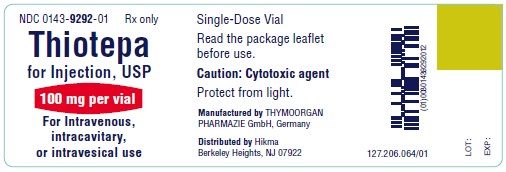
Thiotepa 100 mg Injection, Powder, Lyophilized, For Solution, 1 vial — NDC 0143-9292-01 (Billing 00143-9292-01)
This is a package of 1 vial of Thiotepa 100 mg Injection, Powder, Lyophilized, For Solution from Hikma Pharmaceuticals USA Inc., marketed since Sep 2023 and currently FDA-listed. It is this product's only package size.
NDC database record
One package, one record: these facts belong to NDC 0143-9292-01 alone.
- Record
- FDA NDC Directory package listing · Human prescription drug
- Code segments
- 0143 labeler · 9292 product · 01 package
- Package marketed since
- Sep 29, 2023
- Sample package
- No — commercial package
- Listing certified through
- Dec 31, 2026
- Billing quantity
- 1 EA per package
- Barcode (UPC-A, from the NDC)
- 3 0143929201 2
- FDA record last changed
- Jul 24, 2026
Identity & classification
Regulatory identifiers FDA, NLM and CMS codes for this package
Drug-database identifiers Medi-Span GPI and First Databank GCN / HICL / AHFS classification
- GSN (GCN sequence number): 066744
- GCN: 29119
- GPI-14 (Medi-Span): 21100040002150
- HICL (First Databank): 003898
- AHFS class code: 10:00.00.00
- RxCUI (RxNorm): 1660004
Where does this data come from?
- FDA openFDA NDC Directory · synced Oct 1, 2026
- FDA label on DailyMed · label index refreshed Oct 6, 2026
- RxNorm (NLM RxNav) · catalog refreshed Oct 1, 2026
- Medi-Span GPI (licensed)
- First Databank (licensed) · refreshed Oct 1, 2026
RxNorm drug class
This medicine belongs to the Alkylating Drug class.
Where does this data come from?
- RxClass (NLM) · catalog refreshed Oct 1, 2026
Clinical
Thiotepa injection is used to treat certain types of ovarian cancer (cancer that begins in the female reproductive organs where eggs are formed), breast, and bladder cancer. It is also used to treat malignant effusions (a condition when fluid collects in the lungs or around the heart) that are caused by cancerous tumors. Thiotepa is in a class of medications called alkylating agents. It works by slowing or stopping the growth of cancer cells in your body.
Read the full MedlinePlus article ↗- It is a chemotherapy medicine. Tepadina is used before stem cell transplant in children with class 3 beta-thalassemia. It is also used for breast or ovarian adenocarcinoma, cancer-...
- A healthcare team gives it to you. Depending on the use, it goes into a vein, into a body cavity, or into your bladder through a catheter. Your team decides the schedule and checks...
- Low blood counts are very common. You may also get mouth sores, diarrhea, rash, bleeding, blood in the urine, nausea and tiredness. Call right away for fever, signs of infection, u...
- Thiotepa can leave your body partly through the skin and cause discoloration, itching, blistering or peeling. The label advises bathing at least twice daily through 48 hours after...
Patient education
Supplement & herbal interactions
Some supplements/herbs that may interact with Thiotepa — tap one for details:
Thiotepa may be associated with lower levels of 1 nutrient — worth a chat with your pharmacist, not a cause for alarm.
Where does this data come from?
- MedlinePlus (NLM) · refreshed Oct 1, 2026
- FDA label on DailyMed · label index refreshed Oct 6, 2026
Ask a licensed pharmacist directly — free, answered by our team.
Pricing
A drug doesn't have one price. Each row is a different public payment system, and none is what you'd pay at the counter — that depends on your insurance. The ⓘ on each row explains what it measures.
| Price system | Per mL | Per package |
|---|---|---|
| Retail pharmacies payNADAC · weekly | Not in the retail survey — common for institutional, discontinued, or low-volume packs. | |
| Medicaid paysCMS SDUD · 12 mo | No recent Medicaid claims on file for this NDC — rare and low-volume NDCs are suppressed in the public data. | |
| Medicare drug plans payPart D · quarterly | No Part D plan price is available for this NDC in our data. | |
| Medicare Part B allowsASP · J9342 | $4.931 / J9342 unit | — |
Where does this data come from?
- CMS NADAC weekly file
- CMS ASP pricing files · refreshed Sep 20, 2026
- CMS Medicaid State Drug Utilization Data · refreshed Oct 7, 2026
- CMS Part D plan pricing files · refreshed Sep 24, 2026
- VA National Acquisition Center price file
Billing & reimbursement
Where does this data come from?
- CMS ASP NDC-HCPCS crosswalk · refreshed Sep 22, 2026
- DMEPDAC NDC-HCPCS crosswalk
- openFDA NSDE billing units · refreshed Sep 7, 2026
Packaging — all sizes for this product
| Package NDC | Description | Marketing start | Marketing end | Status |
|---|---|---|---|---|
| 00143-9292-01 You're viewing this Main listing | 1 VIAL in 1 BOX, UNIT-DOSE / 1 INJECTION, POWDER, LYOPHILIZED, FOR SOLUTION in 1 VIAL | 2023-09-29 | — | Active |
Therapeutic equivalents
| Product | Labeler | Pack | NADAC/unit | TE | Status | Price vs. this |
|---|---|---|---|---|---|---|
| Thiotepa 100 mgthis 00143-9292-01 | Hikma | 1 vial | — | AP | FDA listed | — |
| Thiotepa 100 mg 43598-0171-11 | Dr.Reddy's | 1 vial | — | AP | FDA listed | — |
| Thiotepa 100 mg 65219-0029-20 | Fresenius | 1 vial | — | AP | FDA listed | — |
| Thiotepa 100 mg 68083-0503-01 | Gland | 1 vial | — | AP | FDA listed | — |
| Tepadina 100 mg 70121-1631-01 | Amneal | 1 vial | — | AP | FDA listed | — |
| Thiotepa 100 mg 71288-0157-10 | Meitheal | 1 vial | — | AP | FDA listed | — |
| Thiotepa 100 mg 72205-0046-01 | Novadoz | 1 vial | — | AP | FDA listed | — |
Where does this data come from?
- FDA openFDA NDC Directory · synced Oct 1, 2026
- FDA Orange Book · refreshed Oct 3, 2026
- CMS NADAC weekly file
Availability & generic status
This product is an FDA-approved generic. Other versions of the same drug are listed under Therapeutic equivalents, least expensive first.
Where does this data come from?
- FDA Orange Book · refreshed Oct 3, 2026
Inactive Ingredients / Excipients
Inactive ingredients, also called excipients, are components of the drug product other than the active ingredient. They may include fillers, dyes, coatings, preservatives, flavors, or other formulation ingredients.
🧪 Avoiding an ingredient? See Thiotepa Injection inactive ingredients by manufacturer: every current product's list side by side, so you can ask your pharmacy for the version that does not list it.
💡 Tap an ingredient (hover on desktop) to see what it is and why it’s used.
-
UNII 059QF0KO0R
Water is a liquid solvent that dissolves and mixes ingredients together in liquid medicines, syrups, and injections. It helps distribute the active drug evenly throughout the product.
1 inactive ingredient listed in the exact product block matched to this NDC.
Where does this data come from?
ingredient classCode="IACT" elements from the exact product block matched by this NDC. Label-section narrative from DailyMed / the openFDA label index is shown separately when available.- FDA label on DailyMed · label index refreshed Oct 6, 2026
- FDA openFDA NDC Directory · synced Oct 1, 2026
Inactive ingredient FAQ
Are inactive ingredients the same for every manufacturer?
Why might an inactive ingredient be missing?
Can inactive ingredients matter?
Manufacturer & labeler
More NDCs from Hikma Pharmaceuticals USA Inc. labeler code 00143
- Pantoprazole Sodium 40 mg Injection, Powder, Lyophilized, For Solution NDC 0143-9284-10
- Amoxicillin 875 mg Tablet, Coated NDC 0143-9285-01
- Argatroban 250 mg/2.5mL Injection NDC 0143-9288-01
- Estradiol Valerate 10 mg/mL Injection NDC 0143-9289-01
- Estradiol Valerate 20 mg/mL Injection NDC 0143-9290-01
- Estradiol Valerate 40 mg/mL Injection NDC 0143-9291-01
- Haloperidol Decanoate 100 mg/mL Injection NDC 0143-9295-01
- Haloperidol Decanoate 100 mg/mL Injection NDC 0143-9296-01
- Dantrolene 20 mg Injection, Powder, For Solution NDC 0143-9297-01
- Sodium Ferric Gluconate Complex in Sucrose 12.5 mg/mL Injection NDC 0143-9298-10
- Ganciclovir 50 mg/mL Injection, Powder, Lyophilized, For Solution NDC 0143-9299-10
- Pantoprazole Sodium 40 mg Injection, Powder, Lyophilized, For Solution NDC 0143-9300-10
Where does this data come from?
- FDA openFDA NDC Directory · synced Oct 1, 2026
- Drugs@FDA
Full prescribing information FDA SPL
🚨 Boxed Warning ▾
BOXED WARNING WARNING: SEVERE MYELOSUPPRESSION, CARCINOGENICITY Thiotepa for injection may cause severe marrow suppression, and high doses may cause marrow ablation with resulting infection or bleeding. Monitor hematologic laboratory parameters. Hematopoietic progenitor (stem) cell transplantation (HSCT) is required to prevent potentially fatal complications of the prolonged myelosuppression after high doses of thiotepa for injection [see Warnings and Precautions (5.1 )] Thiotepa for injection should be considered potentially carcinogenic in humans [see Warnings and Precautions (5.7 )] WARNING: SEVERE MYELOSUPPRESSION, CARCINOGENICITY See full prescribing information for complete boxed warning.
May cause severe marrow suppression or ablation with resulting infection or bleeding. Monitor hematologic laboratory parameters [see Warnings and Precautions (5.1) ] Potentially carcinogenic in humans [see Warnings and Precautions (5.7) ]
🎯 Indications and Usage ▾
1 INDICATIONS AND USAGE Thiotepa for injection is an alkylating drug indicated: For treatment of adenocarcinoma of the breast or ovary. ( 1.2 ) For controlling intracavitary effusions secondary to diffuse or localized neoplastic diseases of various serosal cavities. ( 1.3 ) For treatment of superficial papillary carcinoma of the urinary bladder. ( 1.4 )
1.2Adenocarcinoma of the Breast or Ovary Thiotepa for injection is indicated for treatment of adenocarcinoma of the breast or ovary.
1.3Malignant Effusions Thiotepa for injection is indicated for controlling intracavitary effusions secondary to diffuse or localized neoplastic diseases of various serosal cavities.
1.4Superficial Papillary Carcinoma of the Urinary Bladder Thiotepa for injection is indicated for treatment of superficial papillary carcinoma of the urinary bladder. Pediatric use information is approved for Adienne SA’s TEPADINA (thiotepa) for Injection. However, due to Adienne SA’s marketing exclusivity rights, the drug product is not labeled with that information.
1.2Adenocarcinoma of the Breast or Ovary Thiotepa for injection is indicated for treatment of adenocarcinoma of the breast or ovary.
1.3Malignant Effusions Thiotepa for injection is indicated for controlling intracavitary effusions secondary to diffuse or localized neoplastic diseases of various serosal cavities.
1.4Superficial Papillary Carcinoma of the Urinary Bladder Thiotepa for injection is indicated for treatment of superficial papillary carcinoma of the urinary bladder. Pediatric use information is approved for Adienne SA’s TEPADINA (thiotepa) for Injection. However, due to Adienne SA’s marketing exclusivity rights, the drug product is not labeled with that information.
⏱️ Dosage and Administration ▾
2 DOSAGE AND ADMINISTRATION The recommended dose of thiotepa for injection for treatment of adenocarcinoma of the breast or ovary is 0.3 to 0.4 mg/kg intravenously. ( 2.1 ) The recommended dose of thiotepa for injection for treatment of malignant effusions is 0.6 to 0.8 mg/kg intracavitary. ( 2.1 ) The recommended dose of thiotepa for injection for treatment of superficial papillary carcinoma of the urinary bladder is 60 mg in 30 to 60 mL of Sodium Chloride Injection into the bladder by catheter.
( 2.1 )
2.1Recommended Dosage Adenocarcinoma of the Breast or Ovary The recommended dose of thiotepa for injection for treatment of adenocarcinoma of the breast or ovary is 0.3 to 0.4 mg/kg intravenously. Doses should be given at 1 to 4 week intervals. Initially the higher dose in the given range is commonly administered.
The maintenance dose should be adjusted weekly on the basis of pretreatment control blood counts and subsequent blood counts. Maintenance doses should not be administered more frequently than weekly. Malignant Effusions The recommended dose of thiotepa for injection for treatment of malignant effusions is 0.6 to 0.8 mg/kg intracavitary.
Administration is usually effected through the same tubing which is used to remove the fluid from the cavity involved. Doses should be given at 1 to 4 week intervals. Initially the higher dose in the given range is commonly administered.
The maintenance dose should be adjusted weekly on the basis of pretreatment control blood counts and subsequent blood counts. Maintenance doses should not be administered more frequently than weekly. Superficial Papillary Carcinoma of the Urinary Bladder The recommended dose of thiotepa for injection for treatment of superficial papillary carcinoma of the urinary bladder is 60 mg in 30 to 60 mL of Sodium Chloride Injection into the bladder by catheter.
The solution should be retained for 2 hours. If the patient finds it impossible to retain 60 mL for 2 hours, the dose may be given in a volume of 30 mL. The patient may be repositioned every 15 minutes for maximum area contact.
The usual course of treatment is once a week for 4 weeks. The course may be repeated if necessary, but second and third courses must be given with caution since bone-marrow depression may be increased. Pediatric use information is approved for Adienne SA’s TEPADINA (thiotepa) for Injection.
However, due to Adienne SA’s marketing exclusivity rights, the drug product is not labeled with that information.
2.2Preparation Instructions Thiotepa for injection is a cytotoxic drug. Follow applicable special handling and disposal procedures 1 . Reconstitution Reconstitute thiotepa for injection 100 mg with 10 ml of sterile water for injection.
Using a syringe fitted with a needle, aseptically withdraw 10 ml of sterile water for injection. Inject the content of the syringe into the vial through the rubber stopper. Remove the syringe and needle, and mix manually by repeated inversions.
The reconstituted solution is hypotonic and must be diluted in saline prior to administration. Reconstituted solutions, free of visible particulate matter, may occasionally show opalescence; such solutions can still be used for further dilution. If not used immediately after reconstitution, the product is stable for 8 hours when stored at 2°C to 8°C (36° to 46°F).
Discard unused portion. Dilution in the infusion bag Prior to administration, dilute the reconstituted solution further with an appropriate volume of sodium chloride 0.9% solution for injection to obtain a final thiotepa for injection concentration between 0.5 and 1 mg/mL. Dilute thiotepa for injection as recommended in Table 2.
Table 2: Dilution of Thiotepa for Injection in the infusion bag Calculated Thiotepa for Injection Dose Dilution Volume (Sodium Chloride 0.9% solution for injection) Less than 250 mg Appropriate volume to obtain a final concentration of 0.5 to 1 mg/mL 250 mg to 500 mg 500 mL or appropriate volume to obtain a final concentrat… [Excerpted — this section continues on DailyMed.]
💊 Dosage Forms and Strengths ▾
3 DOSAGE FORMS AND STRENGTHS For injection, 100 mg, lyophilized white powder in single-dose vial for reconstitution For injection: 100 mg, lyophilized white powder in single-dose vial for reconstitution. ( 3 )
⛔ Contraindications ▾
4 CONTRAINDICATIONS Thiotepa for injection is contraindicated in: Patients with severe hypersensitivity to thiotepa [see Warnings and Precautions (5.2) ] Concomitant use with live or attenuated vaccines [see Warnings and Precautions (5.4) ] Hypersensitivity to the active substance. ( 4 ) Concomitant use with live or attenuated vaccines. ( 4 )
⚠️ Warnings and Cautions ▾
5 WARNINGS AND PRECAUTIONS Cutaneous toxicity: Cleanse skin at least twice daily through 48 hours after the last dose of thiotepa for injection. ( 5.3) Embryo-Fetal toxicity: Can cause fetal harm. Advise females of reproductive potential of the potential risk to a fetus and to avoid pregnancy. ( 5.8 )
5.1Myelosuppression The consequence of treatment with high doses of thiotepa for injection together with other chemotherapy is profound myelosuppression occurring in all patients. Monitor complete blood counts, and provide supportive care for infections, anemia and thrombocytopenia until there is adequate hematopoietic recovery. For patients receiving thiotepa for injection for treatment of adenocarcinoma of the breast, adenocarcinoma of the ovary, malignant effusions and superficial papillary carcinoma of the urinary bladder, if the bone marrow has been compromised by prior irradiation or chemotherapy, or is recovering from chemotherapy, the risk of severe myelosuppression with thiotepa for injection may be increased.
Perform periodic complete blood counts during the course of treatment with thiotepa for injection. Provide supportive care for infections, bleeding, and symptomatic anemia [see Adverse Reactions (6.1 )] . Pediatric use information is approved for Adienne SA’s TEPADINA (thiotepa) for Injection.
However, due to Adienne SA’s marketing exclusivity rights, the drug product is not labeled with that information.
5.2Hypersensitivity Clinically significant hypersensitivity reactions, including anaphylaxis, have occurred following administration of thiotepa for injection. If anaphylactic or other clinically significant allergic reaction occurs, discontinue treatment with thiotepa for injection, initiate appropriate therapy, and monitor until signs and symptoms resolve [see Contraindications (4) , Adverse Reactions (6.1 )] .
5.3Cutaneous Toxicity Thiotepa for injection and/or its active metabolites may be excreted in part via skin patients receiving high-dose therapy. Treatment with thiotepa for injection may cause skin discoloration, pruritus, blistering, desquamation, and peeling that may be more severe in the groin, axillae, skin folds, in the neck area, and under dressings. Instruct patients to shower or bathe with water at least twice daily through 48 hours after administration of thiotepa for injection.
Change occlusive dressing and clean the covered skin at least twice daily through 48 hours after administration of thiotepa for injection. Change bed sheets daily during treatment. Skin reactions associated with accidental exposure to thiotepa for injection may also occur.
Wash the skin thoroughly with soap and water in case thiotepa solution contacts the skin. Flush mucous membranes in case of thiotepa for injection contact with mucous membranes.
5.4Concomitant Use of Live and Attenuated Vaccines Do not administer live or attenuated viral or bacterial vaccines to a patient treated with thiotepa for injection until the immunosuppressive effects have resolved.
5.5Hepatic Veno-Occlusive Disease Hepatic veno-occlusive disease may occur in patients who have received high-dose thiotepa for injection in conjunction with busulfan and cyclophosphamide. Monitor by physical examination, serum transaminases and bilirubin, and provide supportive care to patients who develop hepatic veno-occlusive disease. Pediatric use information is approved for Adienne SA’s TEPADINA (thiotepa) for Injection.
However, due to Adienne SA’s marketing exclusivity rights, the drug product is not labeled with that information.
5.6Central Nervous System Toxicity Fatal encephalopathy has occurred in patients treated with high doses of thiotepa. Other central nervous system toxicities, such as headache, apathy, psychomotor retardation, disorientation, confusion, amnesia, hallucinations, drowsiness, somnolence, seizures, coma, inappropriate behavior and forgetfulness have been reported to occur in a dose-dependent manner during or shortly after adminis… [Excerpted — this section continues on DailyMed.]
🤒 Adverse Reactions ▾
6 ADVERSE REACTIONS The following clinically significant adverse reactions are described elsewhere in the labeling: Myelosuppression [ see Warnings and Precautions ( 5.1 )] Infection [ see Warnings and Precautions (5.1 ) ] Hypersensitivity [ see Warnings and Precautions (5.2) ] Cutaneous Toxicity [ see Warnings and Precautions (5.3 ) ] Hepatic Veno-Occlusive Disease [ see Warnings and Precautions (5.5 ) ] Central Nervous System Toxicity [ see Warnings and Precautions (5.6 )] Carcinogenicity [ see Warnings and Precautions (5.7 )] The most common adverse reactions (incidence greater than 10%) were neutropenia, anemia, thrombocytopenia, elevated alanine aminotransferase, elevated aspartate aminotransferase, elevated bilirubin, mucositis, cytomegalovirus infection, hemorrhage, diarrhea, hematuria and rash ( 6.1 ) To report SUSPECTED ADVERSE REACTIONS, contact Hikma Pharmaceuticals USA Inc. at 877-845-0689 or FDA at 1-800-FDA-1088 or www.fda.gov/medwatch .
6.1Clinical Trials Experience Because clinical trials are conducted under widely varying conditions, adverse reaction rates observed in the clinical trials of a drug cannot be directly compared to rates in the clinical trials of another drug and may not reflect the rates observed in practice. Adverse reactions with treatment of adenocarcinoma of the breast, adenocarcinoma of the ovary, malignant effusions and superficial papillary carcinoma of the urinary bladder Gastrointestinal : Nausea, vomiting, abdominal pain, anorexia.
General : Fatigue, weakness. Febrile reaction and discharge from a subcutaneous lesion may occur as the result of breakdown of tumor tissue. Hypersensitivity Reactions : Allergic reactions - rash, urticaria, laryngeal edema, asthma, anaphylactic shock, wheezing.
Local Reactions : Contact dermatitis, pain at the injection site. Neurologic : Dizziness, headache, blurred vision. Renal : Dysuria, urinary retention, chemical cystitis or hemorrhagic cystitis.
Reproductive : Amenorrhea, interference with spermatogenesis. Respiratory : Prolonged apnea has been reported when succinylcholine was administered prior to surgery, following combined use of thiotepa and other anticancer agents. It was theorized that this was caused by decrease of pseudocholinesterase activity caused by the anticancer drugs.
Skin : Dermatitis, alopecia. Skin depigmentation has been reported following topical use. Special Senses : Conjunctivitis.
Pediatric use information is approved for Adienne SA’s TEPADINA (thiotepa) for Injection. However, due to Adienne SA’s marketing exclusivity rights, the drug product is not labeled with that information.
6.2Postmarketing Experience Because these reactions are reported voluntarily from a population of uncertain size, it is not always possible to reliably estimate their frequency or establish a causal relationship to drug exposure. The following adverse reactions have been identified during post approval use of thiotepa for injection in preparative regimens prior to allogeneic or autologous hematopoietic progenitor (stem) cell transplantation (HSCT) in patients. Blood and lymphatic system disorders : Febrile bone marrow aplasia.
Cardiac disorders : Bradycardia, cardiac failure congestive, cardio-respiratory arrest, pericardial effusion, pericarditis, right ventricular hypertrophy. Congenital, familial and genetic disorders : Aplasia. Ear and labyrinth disorders : Deafness.
Eye disorders : Blindness, eyelid ptosis, papilledema, strabismus. Gastrointestinal disorders : Ascites, dysphagia, enterocolitis, gastritis, palatal disorder. General disorders and administration site conditions : Device related infection, gait disturbance, malaise, multi-organ failure, pain.
Hepatobiliary disorders : Hepatomegaly. Immune system disorders : Bone marrow transplant rejection, immunosuppression. Infections and infestations: Acute sinusitis, bronchopulmonary aspergillosis, candida sepsis, enterococcal infection, Epstein-Barr virus infection, Escherichia sepsis, Fusariu… [Excerpted — this section continues on DailyMed.]
🔄 Drug Interactions ▾
7 DRUG INTERACTIONS
7.1Effect of Cytochrome CYP3A Inhibitors and Inducers In vitro studies suggest that thiotepa is metabolized by CYP3A4 and CYP2B6 to its active metabolite TEPA. Avoid coadministration of strong CYP3A4 inhibitors (e.g., itraconazole, clarithromycin, ritonavir) and strong CYP3A4 inducers (e.g., rifampin, phenytoin) with thiotepa due to the potential effects on efficacy and toxicity [see Clinical Pharmacology (12.2) ] . Consider alternative medications with no or minimal potential to inhibit or induce CYP3A4.
If concomitant use of strong CYP3A4 modulators cannot be avoided, closely monitor for adverse drug reactions.
7.2Effect of Thiotepa for Injection on Cytochrome CYP2B6 Substrates In vitro studies suggest that thiotepa inhibits CYP2B6. Thiotepa for injection may increase the exposure of drugs that are substrates of CYP2B6 in patients; however, the clinical relevance of this in vitro interaction is unknown [see Clinical Pharmacology (12.2 )] . The administration of thiotepa with cyclophosphamide in patients reduces the conversion of cyclophosphamide to the active metabolite, 4-hydroxycyclophosphamide; the effect appears sequence dependent with a greater reduction in the conversion to 4-hydroxycyclophosphamide when thiotepa is administered 1.5 hours prior to the intravenous administration of cyclophosphamide compared to administration of thiotepa after intravenous cyclophosphamide [see Clinical Pharmacology (12.2 )] .
The reduction in 4-hydroxycyclophosphamide levels may potentially reduce efficacy of cyclophosphamide treatment.
7.1Effect of Cytochrome CYP3A Inhibitors and Inducers In vitro studies suggest that thiotepa is metabolized by CYP3A4 and CYP2B6 to its active metabolite TEPA. Avoid coadministration of strong CYP3A4 inhibitors (e.g., itraconazole, clarithromycin, ritonavir) and strong CYP3A4 inducers (e.g., rifampin, phenytoin) with thiotepa due to the potential effects on efficacy and toxicity [see Clinical Pharmacology (12.2) ] . Consider alternative medications with no or minimal potential to inhibit or induce CYP3A4.
If concomitant use of strong CYP3A4 modulators cannot be avoided, closely monitor for adverse drug reactions.
👥 Use in Specific Populations ▾
8 USE IN SPECIFIC POPULATIONS Lactation: Breastfeeding is not recommended. ( 8.2 ) Moderate or severe renal impairment: Monitor patients more frequently for toxicity. ( 8.6 , 12.2 ) Moderate or severe hepatic impairment: Monitor patients more frequently for toxicity.
( 8.7, 12.2 ) See 17 for Patient Counseling Information Pediatric use information is approved for Adienne SA’s TEPADINA (thiotepa) for Injection. However, due to Adienne SA’s marketing exclusivity rights, the drug product is not labeled with that information.
8.1Pregnancy Thiotepa for injection can cause fetal harm when administered to a pregnant woman based on findings from animals and the drug’s mechanism of action [ see Clinical Pharmacology (12.1 ) ]. Limited available data with thiotepa for injection use in pregnant women are insufficient to inform a drug-associated risk of major birth defects and miscarriage. In animal reproduction studies, administration of thiotepa to pregnant mice and rats during organogenesis produced teratogenic effects (neural tube defects and malformations of the skeletal system of the fetus) at doses approximately 0.125 and 1 times, respectively, the maximum recommended human daily dose on a mg/m 2 basis.
Thiotepa was lethal to rabbit fetuses at approximately 2 times the maximum recommended human therapeutic dose based on body-surface area [see Data]. Consider the benefits and risks of thiotepa for injection for the mother and possible risks to the fetus when prescribing thiotepa for injection to a pregnant woman. The estimated background risk of major birth defects and miscarriage for the indicated population is unknown.
In the U.S. general population, the estimated background risk of major birth defects and miscarriage in clinically recognized pregnancies is 2 to 4% and 15 to 20%, respectively. Data Animal Data Thiotepa given by the IP route in mice at doses ≥ 1 mg/kg (3.2 mg/m 2 ), approximately 8-fold less than the maximum recommended human therapeutic dose based on body-surface area, and in rats at doses ≥ 3 mg/kg (21 mg/m 2 ), approximately equal to the maximum recommended human therapeutic dose based on body-surface area, resulted in various malformations including neural tube defects, omphalocele, renal agenesis, atresia ani, limb and digit defects, cleft palate, micrognathia, other skeletal anomalies in the skull, vertebrae and ribs, and reduced skeletal ossification.
Thiotepa was lethal to rabbit fetuses at a dose of 3 mg/kg (41 mg/m 2 ), approximately 2 times the maximum recommended human therapeutic dose based on body-surface area.
8.2Lactation Risk Summary There is no information regarding the presence of thiotepa in human milk, the effects on the breastfed infant, or the effects on milk production. Because of the potential for serious adverse reactions, including the potential for tumorigenicity shown for thiotepa in animal studies, advise patients not to breastfeed during thiotepa for injection treatment.
8.3Females and Males of Reproductive Potential Pregnancy testing Thiotepa for injection can cause fetal harm when administered to a pregnant female. Verify the pregnancy status of females of reproductive potential prior to initiating thiotepa for injection therapy. Contraception Females Advise females of reproductive potential to avoid pregnancy during thiotepa for injection treatment and for at least 6 months after the final dose of thiotepa for injection.
Advise females to immediately report pregnancy [see Use in Specific Populations (8.1 )]. Males Thiotepa for injection may damage spermatozoa and testicular tissue, resulting in possible genetic abnormalities. Males with female sexual partners of reproductive potential should use effective contraception during thiotepa for injection treatment and for at least 1 year after the final dose of thiotepa for injection [ see Nonclinical Toxicology (13.1) ].
Infertility Based on nonclinical findings, male and female fertility may be compromised by treatment with thiotepa… [Excerpted — this section continues on DailyMed.]
🤰 Pregnancy ▾
8.1Pregnancy Thiotepa for injection can cause fetal harm when administered to a pregnant woman based on findings from animals and the drug’s mechanism of action [ see Clinical Pharmacology (12.1 ) ]. Limited available data with thiotepa for injection use in pregnant women are insufficient to inform a drug-associated risk of major birth defects and miscarriage. In animal reproduction studies, administration of thiotepa to pregnant mice and rats during organogenesis produced teratogenic effects (neural tube defects and malformations of the skeletal system of the fetus) at doses approximately 0.125 and 1 times, respectively, the maximum recommended human daily dose on a mg/m 2 basis.
Thiotepa was lethal to rabbit fetuses at approximately 2 times the maximum recommended human therapeutic dose based on body-surface area [see Data]. Consider the benefits and risks of thiotepa for injection for the mother and possible risks to the fetus when prescribing thiotepa for injection to a pregnant woman. The estimated background risk of major birth defects and miscarriage for the indicated population is unknown.
In the U.S. general population, the estimated background risk of major birth defects and miscarriage in clinically recognized pregnancies is 2 to 4% and 15 to 20%, respectively. Data Animal Data Thiotepa given by the IP route in mice at doses ≥ 1 mg/kg (3.2 mg/m 2 ), approximately 8-fold less than the maximum recommended human therapeutic dose based on body-surface area, and in rats at doses ≥ 3 mg/kg (21 mg/m 2 ), approximately equal to the maximum recommended human therapeutic dose based on body-surface area, resulted in various malformations including neural tube defects, omphalocele, renal agenesis, atresia ani, limb and digit defects, cleft palate, micrognathia, other skeletal anomalies in the skull, vertebrae and ribs, and reduced skeletal ossification.
Thiotepa was lethal to rabbit fetuses at a dose of 3 mg/kg (41 mg/m 2 ), approximately 2 times the maximum recommended human therapeutic dose based on body-surface area.
🧒 Pediatric Use ▾
8.4Pediatric Use Safety and effectiveness of thiotepa for injection in neonates have not been established. Safety and effectiveness of thiotepa for injection for treatment of adenocarcinoma of the breast, adenocarcinoma of the ovary, malignant effusions and superficial papillary carcinoma of the urinary bladder in pediatric patients have not been established. Pediatric use information is approved for Adienne SA’s TEPADINA (thiotepa) for Injection.
However, due to Adienne SA’s marketing exclusivity rights, the drug product is not labeled with that information.
🧓 Geriatric Use ▾
8.5Geriatric Use Clinical studies of thiotepa for injection for treatment of adenocarcinoma of the breast, adenocarcinoma of the ovary, malignant effusions and superficial papillary carcinoma of the urinary bladder did not include sufficient numbers of subjects aged 65 and over to determine whether elderly subjects respond differently from younger subjects, and other reported clinical experience has not identified differences in responses between the elderly and younger patients. In general, dose selection for an elderly patient should be cautious, usually starting at the low end of the dosing range, reflecting the greater frequency of decreasing hepatic, renal or cardiac function, and of concomitant disease or other drug therapy.
🆘 Overdosage ▾
10 OVERDOSAGE There is no experience with overdoses of thiotepa [see Nonclinical Toxicology (13.1) ] . The most important adverse reactions expected in case of overdose are myeloablation and pancytopenia. There is no known antidote for thiotepa. Monitor the hematological status closely and provide vigorous supportive measures as medically indicated.
🧬 Clinical Pharmacology ▾
12 CLINICAL PHARMACOLOGY
12.1Mechanism of Action Thiotepa is a cytotoxic agent of the polyfunctional type, related chemically and pharmacologically to the nitrogen mustard. The radiomimetic action of thiotepa is believed to occur through the release of ethyleneimine radicals which, like irradiation, disrupt the bonds of DNA. One of the principle bond disruptions is initiated by alkylation of guanine at the N-7 position, which severs the linkage between the purine base and the sugar and liberates alkylated guanines.
12.2Pharmacodynamics Absorption Thiotepa reached maximal concentrations close to the end infusion following an intravenous infusion. Distribution The binding of thiotepa to plasma proteins is approximately 10% to 20%. In adults administered intravenous thiotepa between 20 mg to 250 mg/m 2 as an intravenous bolus or infusion up to 4 hours, the mean volume of distribution of thiotepa ranged from 1 L/kg (30%) to
1.9L/kg (17%). Elimination In adults administered intravenous thiotepa between 20 mg to 250 mg/m 2 as an intravenous bolus or infusion up to 4 hours, the mean thiotepa clearance ranged from
14.6 L/hr/m 2 (23%) to
27.9L/hr/m 2 (69%). In adult population, the mean terminal elimination half-life ranged from 1.4 hours (7%) to 3.7 hours (14%) for thiotepa and from 4.9 hours to 17.6 hours (20%) for TEPA. Metabolism Thiotepa undergoes hepatic metabolism.
In vitro data suggests that CYP3A4 and CYP2B6 may be responsible for the metabolism of thiotepa to TEPA, a major active metabolite. Excretion In adult patients, urinary excretion of thiotepa accounted for less than 2% of the dose and TEPA accounted for 11% or less of the dose. Specific Populations Hepatic Impairment The exposure (as measured by area under the curve (AUC)) of thiotepa increased by 1.6-fold and 1.8-fold following administration of multiple thiotepa doses of 7 mg/kg administered every 2 days with cyclophosphamide in two adult patients who had liver metastases with moderate hepatic impairment compared to the exposure observed in one patient with normal hepatic function .
The effect of severe hepatic impairment on thiotepa exposure is unknown. Renal Impairment The exposure (as measured by AUC) of thiotepa increased by 1.4-fold and TEPA increased by 2.6-fold following administration of multiple doses of 120 mg/m 2 /day in one patient with moderate renal impairment (CLcr = 38 mL/min) administered cyclophosphamide plus thiotepa plus carboplatin, compared to exposure of thiotepa in patients with normal renal function. The effects of severe renal impairment or end-stage renal disease on thiotepa exposure are unknown.
Drug Interactions The clinical relevance of in vitro inhibition of the cytochrome P450 enzymes described below is unknown, but it cannot be excluded that the systemic exposure of thiotepa or medicinal products that are substrates for these enzymes may be affected with concomitant administration with thiotepa for injection. Effect of Cytochrome P450 Modulators on Thiotepa In vitro data demonstrates that CYP3A4 and CYP2B6 inhibitors decrease the metabolism of thiotepa [see Drug Interactions (7.1) ] . Effect of Thiotepa on Cytochrome P450 2B6 In vitro data demonstrates that thiotepa inhibits CYP2B6.
Effect of Thiotepa on Cyclophosphamide The administration of thiotepa 1.5 hours prior to intravenous cyclophosphamide in patients administered cyclophosphamide plus thiotepa plus carboplatin decreased the AUC of 4-hydroxycyclophosphamide by 26% and maximal concentrations of 4-hydroxycyclophosphamide by 62%, compared to administration of cyclophosphamide prior to thiotepa. Pediatric use information is approved for Adienne SA’s TEPADINA (thiotepa) for Injection. However, due to Adienne SA’s marketing exclusivity rights, the drug product is not labeled with that information.
🧬 Mechanism of Action ▾
12.1Mechanism of Action Thiotepa is a cytotoxic agent of the polyfunctional type, related chemically and pharmacologically to the nitrogen mustard. The radiomimetic action of thiotepa is believed to occur through the release of ethyleneimine radicals which, like irradiation, disrupt the bonds of DNA. One of the principle bond disruptions is initiated by alkylation of guanine at the N-7 position, which severs the linkage between the purine base and the sugar and liberates alkylated guanines.
📦 How Supplied / Storage and Handling ▾
16 HOW SUPPLIED/STORAGE AND HANDLING
16.1How Supplied Thiotepa for Injection, USP 100 mg is supplied as Unit carton with one single-dose Type I clear glass vial with a bromobutyl stopper. One vial contains 100 mg thiotepa ( NDC 0143-9292-01 ).
16.2Storage and Handling Thiotepa for Injection, USP vials must be stored and transported refrigerated at 2°C to 8°C (36° to 46°F). Do not freeze. Protect from light.
Thiotepa for Injection, USP is a cytotoxic drug. Follow applicable special handling and disposal procedures 1 . To report SUSPECTED ADVERSE REACTIONS, contact Hikma Pharmaceuticals USA Inc. at 1-877-845-0689, or the FDA at 1-800-FDA-1088 or www.fda.gov/medwatch.
For Product Inquiry call 1-877-845-0689.
16.1How Supplied Thiotepa for Injection, USP 100 mg is supplied as Unit carton with one single-dose Type I clear glass vial with a bromobutyl stopper. One vial contains 100 mg thiotepa ( NDC 0143-9292-01 ).
16.2Storage and Handling Thiotepa for Injection, USP vials must be stored and transported refrigerated at 2°C to 8°C (36° to 46°F). Do not freeze. Protect from light.
Thiotepa for Injection, USP is a cytotoxic drug. Follow applicable special handling and disposal procedures 1 . To report SUSPECTED ADVERSE REACTIONS, contact Hikma Pharmaceuticals USA Inc. at 1-877-845-0689, or the FDA at 1-800-FDA-1088 or www.fda.gov/medwatch.
For Product Inquiry call 1-877-845-0689.
📋 Description ▾
11 DESCRIPTION Thiotepa for Injection, USP is an alkylating agent. Thiotepa for Injection, USP is supplied as a non-pyrogenic, sterile lyophilized white powder for intravenous, intracavitary, or intravesical use after reconstitution and dilution. Thiotepa for Injection, USP is available in a single-dose vial containing: 100 mg thiotepa.
After reconstitution with 10 ml of water for injection, each ml contains 10 mg thiotepa. Thiotepa is a synthetic product with antitumor activity. The chemical name for thiotepa is Tris(1-aziridinyl)phosphine sulfide.
Thiotepa has the following structural formula: Structural Formula for Thiotepa Thiotepa has the molecular formula C 6 H 12 N 3 PS, and a molecular weight of 189.23, and it appears as fine, white crystalline flakes, with a melting range of 52°C to 57°C. It is soluble in water and organic solvents. When reconstituted with sterile water for injection, the resulting solution has a pH of approximately 5.5 to 7.5.
Thiotepa is unstable in acid medium. Structural Formula for Thiotepa
💬 Information for Patients ▾
17 PATIENT COUNSELING INFORMATION Hypersensitivity Counsel patients on the signs and symptoms of hypersensitivity and to seek immediate emergency assistance if they develop any of these signs and symptoms [see Warnings and Precautions (5.2 )] . Myelosuppression Inform patients of the possibility of developing low blood cell counts and the need for hematopoietic progenitor cell infusion. Instruct patients to immediately report to their healthcare provider if bleeding or fever occurs [see Warnings and Precautions (5.1 )] .
Females and Males of Reproductive Potential Thiotepa for injection can cause fetal harm. Advise females receiving thiotepa for injection to avoid pregnancy during thiotepa for injection treatment and for at least 6 months after the final dose of thiotepa for injection [see Warnings and Precautions (5.8) ] . Advise males with female sexual partners of reproductive potential to use effective contraception during thiotepa for injection treatment and for at least 1 year after the final dose of thiotepa for injection [see Use in Specific Populations (8.3) ] .
Advise females to report pregnancy immediately [see Warnings and Precautions (5.8 )] . Advise patients that thiotepa for injection can produce infertility. Inform male patients about the possibility of sperm conservation before the start of therapy [see Use in Specific Populations (8.3 )] .
Lactation Advise patients to avoid breastfeeding while receiving thiotepa for injection [see Use in Specific Populations (8.2 )] . Secondary malignancies Inform patients that thiotepa for injection can increase the risk of secondary malignancy [see Warnings and Precautions (5.7 )] . Manufactured by THYMOORGAN PHARMAZIE GmbH, Schiffgraben 23, 38690 Goslar, Germany Distributed by Hikma Pharmaceuticals USA Inc.
Berkeley Heights, NJ 07922 Revised April 2023 127.207.031/02
🍼 Nursing Mothers ▾
8.3Females and Males of Reproductive Potential Pregnancy testing Thiotepa for injection can cause fetal harm when administered to a pregnant female. Verify the pregnancy status of females of reproductive potential prior to initiating thiotepa for injection therapy. Contraception Females Advise females of reproductive potential to avoid pregnancy during thiotepa for injection treatment and for at least 6 months after the final dose of thiotepa for injection.
Advise females to immediately report pregnancy [see Use in Specific Populations (8.1 )]. Males Thiotepa for injection may damage spermatozoa and testicular tissue, resulting in possible genetic abnormalities. Males with female sexual partners of reproductive potential should use effective contraception during thiotepa for injection treatment and for at least 1 year after the final dose of thiotepa for injection [ see Nonclinical Toxicology (13.1) ].
Infertility Based on nonclinical findings, male and female fertility may be compromised by treatment with thiotepa for injection. Inform male patients about the possibility of sperm conservation before the start of therapy [see Nonclinical Toxicology (13.1) ].
🧬 Pharmacodynamics ▾
12.2Pharmacodynamics Absorption Thiotepa reached maximal concentrations close to the end infusion following an intravenous infusion. Distribution The binding of thiotepa to plasma proteins is approximately 10% to 20%. In adults administered intravenous thiotepa between 20 mg to 250 mg/m 2 as an intravenous bolus or infusion up to 4 hours, the mean volume of distribution of thiotepa ranged from 1 L/kg (30%) to
1.9L/kg (17%). Elimination In adults administered intravenous thiotepa between 20 mg to 250 mg/m 2 as an intravenous bolus or infusion up to 4 hours, the mean thiotepa clearance ranged from
14.6 L/hr/m 2 (23%) to
27.9L/hr/m 2 (69%). In adult population, the mean terminal elimination half-life ranged from 1.4 hours (7%) to 3.7 hours (14%) for thiotepa and from 4.9 hours to 17.6 hours (20%) for TEPA. Metabolism Thiotepa undergoes hepatic metabolism.
In vitro data suggests that CYP3A4 and CYP2B6 may be responsible for the metabolism of thiotepa to TEPA, a major active metabolite. Excretion In adult patients, urinary excretion of thiotepa accounted for less than 2% of the dose and TEPA accounted for 11% or less of the dose. Specific Populations Hepatic Impairment The exposure (as measured by area under the curve (AUC)) of thiotepa increased by 1.6-fold and 1.8-fold following administration of multiple thiotepa doses of 7 mg/kg administered every 2 days with cyclophosphamide in two adult patients who had liver metastases with moderate hepatic impairment compared to the exposure observed in one patient with normal hepatic function .
The effect of severe hepatic impairment on thiotepa exposure is unknown. Renal Impairment The exposure (as measured by AUC) of thiotepa increased by 1.4-fold and TEPA increased by 2.6-fold following administration of multiple doses of 120 mg/m 2 /day in one patient with moderate renal impairment (CLcr = 38 mL/min) administered cyclophosphamide plus thiotepa plus carboplatin, compared to exposure of thiotepa in patients with normal renal function. The effects of severe renal impairment or end-stage renal disease on thiotepa exposure are unknown.
Drug Interactions The clinical relevance of in vitro inhibition of the cytochrome P450 enzymes described below is unknown, but it cannot be excluded that the systemic exposure of thiotepa or medicinal products that are substrates for these enzymes may be affected with concomitant administration with thiotepa for injection. Effect of Cytochrome P450 Modulators on Thiotepa In vitro data demonstrates that CYP3A4 and CYP2B6 inhibitors decrease the metabolism of thiotepa [see Drug Interactions (7.1) ] . Effect of Thiotepa on Cytochrome P450 2B6 In vitro data demonstrates that thiotepa inhibits CYP2B6.
Effect of Thiotepa on Cyclophosphamide The administration of thiotepa 1.5 hours prior to intravenous cyclophosphamide in patients administered cyclophosphamide plus thiotepa plus carboplatin decreased the AUC of 4-hydroxycyclophosphamide by 26% and maximal concentrations of 4-hydroxycyclophosphamide by 62%, compared to administration of cyclophosphamide prior to thiotepa. Pediatric use information is approved for Adienne SA’s TEPADINA (thiotepa) for Injection. However, due to Adienne SA’s marketing exclusivity rights, the drug product is not labeled with that information.
🔬 Clinical Studies ▾
14 CLINICAL STUDIES Pediatric use information is approved for Adienne SA’s TEPADINA (thiotepa) for Injection. However, due to Adienne SA’s marketing exclusivity rights, the drug product is not labeled with that information.
🧪 Nonclinical Toxicology ▾
13 NONCLINICAL TOXICOLOGY
13.1Carcinogenesis and Mutagenesis and Impairment of Fertility In mice, repeated intraperitoneal (IP) administration of thiotepa (1.15 or 2.3 mg/kg three times per week for 52 or 43 weeks, respectively) produced a significant increase in the combined incidence of squamous-cell carcinomas of the skin, preputial gland, and ear canal, and combined incidence of lymphoma and lymphocytic leukemia. In other studies in mice, repeated IP administration of thiotepa (4 or 8 mg/kg three times per week for 4 weeks followed by a 20 week observation period or 1.8 mg/kg three times per week for 4 weeks followed by a 35 week observation period) resulted in an increased incidence of lung tumors.
In rats, repeated IP administration of thiotepa (0.7 or 1.4 mg/kg three times per week for 52 or 34 weeks, respectively) produced significant increases in the incidence of squamous-cell carcinomas of the skin or ear canal, combined hematopoietic neoplasms, and uterine adenocarcinomas. Thiotepa given intravenously (IV) to rats (1 mg/kg once per week for 52 weeks) produced an increased incidence of malignant tumors (abdominal cavity sarcoma, lymphosarcoma myelosis, seminoma, fibrosarcoma, salivary gland hemangioendothelioma, mammary sarcoma, pheochromocytoma) and benign tumors.
The lowest reported carcinogenic dose in mice (1.15 mg/kg, 3.68 mg/m 2 ) is approximately 7-fold less than the maximum recommended human therapeutic dose based on body-surface area. The lowest reported carcinogenic dose in rats (0.7 mg/kg, 4.9 mg/m 2 ) is approximately 6-fold less than the maximum recommended human therapeutic dose based on body-surface area. Thiotepa was mutagenic in in vitro assays in Salmonella typhimurium, E coli , Chinese hamster lung and human lymphocytes.
Chromosomal aberrations and sister chromatid exchanges were observed in vitro with thiotepa in bean root tips, human lymphocytes, Chinese hamster lung, and monkey lymphocytes. Mutations were observed with oral thiotepa in mouse at doses > 2.5 mg/kg (8 mg/m 2 ). The mouse micronucleus test was positive with intraperitoneal administration of > 1 mg/kg (3.2 mg/m 2 ).
Other positive in vivo chromosomal aberration or mutation assays included Drosophila melanogaster , Chinese hamster marrow, murine marrow, monkey lymphocyte, and murine germ cell. Thiotepa impaired fertility in male mice at oral or intraperitoneal doses ≥ 0.7 mg/kg (2.24 mg/m 2 ), approximately 12-fold less than the maximum recommended human therapeutic dose based on body-surface area. Thiotepa (0.5 mg) inhibited implantation in female rats when instilled into the uterine cavity.
Thiotepa interfered with spermatogenesis in mice at IP doses ≥ 0.5 mg/kg (1.6 mg/m 2 ), approximately 17-fold less than the maximum recommended human therapeutic dose based on body-surface area. Thiotepa interfered with spermatogenesis in hamsters at an IP dose of 1 mg/kg (4.1 mg/m 2 ), approximately 7-fold less than the maximum recommended human therapeutic dose based on body-surface area.
📄 Carcinogenesis, Mutagenesis, Impairment of Fertility ▾
13.1Carcinogenesis and Mutagenesis and Impairment of Fertility In mice, repeated intraperitoneal (IP) administration of thiotepa (1.15 or 2.3 mg/kg three times per week for 52 or 43 weeks, respectively) produced a significant increase in the combined incidence of squamous-cell carcinomas of the skin, preputial gland, and ear canal, and combined incidence of lymphoma and lymphocytic leukemia. In other studies in mice, repeated IP administration of thiotepa (4 or 8 mg/kg three times per week for 4 weeks followed by a 20 week observation period or 1.8 mg/kg three times per week for 4 weeks followed by a 35 week observation period) resulted in an increased incidence of lung tumors.
In rats, repeated IP administration of thiotepa (0.7 or 1.4 mg/kg three times per week for 52 or 34 weeks, respectively) produced significant increases in the incidence of squamous-cell carcinomas of the skin or ear canal, combined hematopoietic neoplasms, and uterine adenocarcinomas. Thiotepa given intravenously (IV) to rats (1 mg/kg once per week for 52 weeks) produced an increased incidence of malignant tumors (abdominal cavity sarcoma, lymphosarcoma myelosis, seminoma, fibrosarcoma, salivary gland hemangioendothelioma, mammary sarcoma, pheochromocytoma) and benign tumors.
The lowest reported carcinogenic dose in mice (1.15 mg/kg, 3.68 mg/m 2 ) is approximately 7-fold less than the maximum recommended human therapeutic dose based on body-surface area. The lowest reported carcinogenic dose in rats (0.7 mg/kg, 4.9 mg/m 2 ) is approximately 6-fold less than the maximum recommended human therapeutic dose based on body-surface area. Thiotepa was mutagenic in in vitro assays in Salmonella typhimurium, E coli , Chinese hamster lung and human lymphocytes.
Chromosomal aberrations and sister chromatid exchanges were observed in vitro with thiotepa in bean root tips, human lymphocytes, Chinese hamster lung, and monkey lymphocytes. Mutations were observed with oral thiotepa in mouse at doses > 2.5 mg/kg (8 mg/m 2 ). The mouse micronucleus test was positive with intraperitoneal administration of > 1 mg/kg (3.2 mg/m 2 ).
Other positive in vivo chromosomal aberration or mutation assays included Drosophila melanogaster , Chinese hamster marrow, murine marrow, monkey lymphocyte, and murine germ cell. Thiotepa impaired fertility in male mice at oral or intraperitoneal doses ≥ 0.7 mg/kg (2.24 mg/m 2 ), approximately 12-fold less than the maximum recommended human therapeutic dose based on body-surface area. Thiotepa (0.5 mg) inhibited implantation in female rats when instilled into the uterine cavity.
Thiotepa interfered with spermatogenesis in mice at IP doses ≥ 0.5 mg/kg (1.6 mg/m 2 ), approximately 17-fold less than the maximum recommended human therapeutic dose based on body-surface area. Thiotepa interfered with spermatogenesis in hamsters at an IP dose of 1 mg/kg (4.1 mg/m 2 ), approximately 7-fold less than the maximum recommended human therapeutic dose based on body-surface area.
📚 References ▾
15 REFERENCES 1. OSHA Hazardous Drugs. OSHA. [Accessed from http://www.osha.gov/SLTC/hazardousdrugs/index.html ] .
📄 Package Label / Principal Display Panel ▾
PRINCIPAL DISPLAY PANEL NDC 0143- 9292 -01Rx only Thiotepa for Injection, USP 100 mg per vial For Intravenous, intracavitary, or intravesical use NDC 0143- 9292 -01 Rx only Sterile Single-Dose Vial Thiotepa for Injection, USP 100 mg per vial For Intravenous, intracavitary, or intravesical use Caution: Cytotoxic agent Thiotepa Vial Label Thiotepa Carton
SERIALIZATION Representative Serialization Image Representative Serialization Image
About this NDC listing & data coverage
What data is (and isn’t) available for this NDC — tap to expand
| NDC identity (package / product / labeler codes) | ✓ Available |
| Labeler | ✓ Available |
| Product & package description | ✓ Available |
| Marketing category & status | ✓ Available |
| Active ingredient / dosage form / route | ✓ Available |
| FDA label (SPL via DailyMed) | ✓ Available |
| Package photos | ✓ Available |
| Inactive ingredients (structured) | ✓ Available |
| NADAC pharmacy acquisition price (CMS) | — Not published for this NDC CMS publishes NADAC only for NDCs reported in its retail-pharmacy survey. |
| Orange Book / therapeutic-equivalence data | ✓ Available |
| HCPCS J-code billing crosswalk | ✓ Available |
| Medicaid utilization (CMS SDUD) | — Not published for this NDC CMS reports utilization only for NDCs with Medicaid claims above its privacy threshold. |