
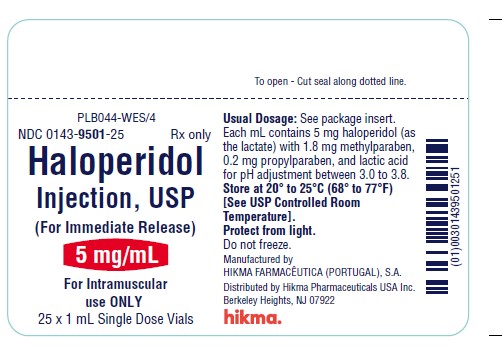
Haloperidol 5 mg/mL Injection, 25 vials — NDC 0143-9501-25 (Billing 00143-9501-25)
This is a package of 25 vials of Haloperidol 5 mg/mL Injection from Hikma Pharmaceuticals USA Inc., marketed since Jun 2001 and currently FDA-listed; retail pharmacies pay about $0.7820 per mL (NADAC). It is this product's only package size.
Other active recalls for Haloperidol Lactate (different manufacturers) — 1 · tap to view
Identity & classification
Regulatory identifiers FDA, NLM and CMS codes for this package
Drug-database identifiers Medi-Span GPI and First Databank GCN / HICL / AHFS classification
- GSN (GCN sequence number): 003970
- GCN: 15500
- GPI-14 (Medi-Span): 59100010202005
- HICL (First Databank): 001661
- AHFS class code: 28:16.08.08
- RxCUI (RxNorm): 204416
Where does this data come from?
- FDA openFDA NDC Directory · synced Oct 1, 2026
- FDA label on DailyMed · label index refreshed Oct 1, 2026
- RxNorm (NLM RxNav) · catalog refreshed Oct 1, 2026
- Medi-Span GPI (licensed)
- First Databank (licensed) · refreshed Oct 1, 2026
RxNorm drug class
This medicine belongs to the Typical Antipsychotic class.
Where does this data come from?
- RxClass (NLM) · catalog refreshed Oct 1, 2026
Clinical
Haloperidol injection and haloperidol extended-release injection are used to treat schizophrenia (a mental illness that causes disturbed or unusual thinking, loss of interest in life, and strong or inappropriate emotions). . Haloperidol is in a class of medications called conventional antipsychotics. It works by changing the activity of certain natural substances in the brain.
Read the full MedlinePlus article ↗- It treats schizophrenia and other psychotic disorders. The tablets and oral solution are also used for Tourette’s tics and for certain severe behavior problems in children. Your pr...
- Tablets and oral solution are taken by mouth as your prescriber directs. Injections are given into a muscle by a healthcare provider, and Haldol Decanoate is given every 4 weeks. N...
- Movement-related effects are the most common, such as stiffness, tremor, restlessness, or slowed movement. Headache and stomach pain can also happen. Tell us about any new movement...
- Call for fever with severe stiffness and confusion, fainting or a racing or irregular heartbeat, seizures, or swelling and trouble breathing. These can be serious.
Patient education
Supplement & herbal interactions
Where does this data come from?
- MedlinePlus (NLM) · refreshed Oct 1, 2026
- FDA label on DailyMed · label index refreshed Oct 1, 2026
Ask a licensed pharmacist directly — free, answered by our team.
Pricing
A drug doesn't have one price. Each row is a different public payment system, and none is what you'd pay at the counter — that depends on your insurance. The ⓘ on each row explains what it measures.
| Price system | Per mL | Per package |
|---|---|---|
| Retail pharmacies payNADAC · weekly | $0.782 | $19.55 / 25 ml |
| Medicaid paysCMS SDUD · 12 mo | $0.3388 | $8.47 / 25 ml |
| Medicare drug plans payPart D · Q2 2026 | $1.41 | $35.23 / 25 ml |
| Medicare Part B allowsASP · J1630 | $0.746 / J1630 unit | — |
Where does this data come from?
- CMS NADAC weekly file · file of Sep 30, 2026
- CMS ASP pricing files · refreshed Sep 20, 2026
- CMS Medicaid State Drug Utilization Data · through Q4 2025
- CMS Part D plan pricing files · refreshed Sep 24, 2026
- VA National Acquisition Center price file
Billing & reimbursement
Where does this data come from?
- CMS ASP NDC-HCPCS crosswalk · refreshed Sep 22, 2026
- DMEPDAC NDC-HCPCS crosswalk
- openFDA NSDE billing units · refreshed Sep 7, 2026
Packaging — all sizes for this product
| Package NDC | Description | Marketing start | Marketing end | Status |
|---|---|---|---|---|
| 00143-9501-25 You're viewing this Main listing | 25 VIAL in 1 BOX / 1 mL in 1 VIAL | 2001-06-19 | — | Active |
Therapeutic equivalents
| Product | Labeler | Pack | NADAC/unit | TE | Status | Price vs. this |
|---|---|---|---|---|---|---|
| Haloperidol 5 mg/mLthis 00143-9501-25 | Hikma | 25 vials | $0.782 | AP | Availability likely | — |
| Haloperidol 5 mg/mL 63323-0474-01 | Fresenius | 25 vials | $0.782 | AP | Availability likely | — |
| Haloperidol Lactate 5 mg/mL 67457-0426-12 | Mylan | 25 vials | $0.782 | AP | Availability likely | — |
| Haloperidol 5 mg/mL 00143-9319-25 | Hikma | 25 vials | — | AP | FDA listed | — |
| Haloperidol Lactate 5 mg/mL 00404-9871-01 | Henry | 1 vial | — | AP | FDA listed | — |
| Haloperidol 5 mg/mL 51662-1524-01 | HF | 1 ml | — | AP | FDA listed | — |
| Haloperidol Lactate 5 mg/mL 55154-7076-05 | Cardinal | 5 vials | — | AP | FDA listed | — |
| Haloperidol 5 mg/mL 55154-9553-05 | Cardinal | 5 vials | — | AP | FDA listed | — |
| Haloperidol 5 mg/mL 70518-0035-00 | REMEDYREPACK | 25 vials | — | AP | FDA listed | — |
| Haloperidol 5 mg/mL 00143-9502-01 | Hikma | 1 vial | — | AP | FDA listed | — |
| Haloperidol Lactate 5 mg/mL 70518-1053-00 | REMEDYREPACK | 25 vials | — | AP | FDA listed | — |
Where does this data come from?
- FDA openFDA NDC Directory · synced Oct 1, 2026
- FDA Orange Book · refreshed Sep 3, 2026
- CMS NADAC weekly file · file of Sep 30, 2026
Availability & generic status
This product is an FDA-approved generic. Other versions of the same drug are listed under Therapeutic equivalents, least expensive first.
Where does this data come from?
- FDA Orange Book · refreshed Sep 3, 2026
Inactive Ingredients / Excipients
Inactive ingredients, also called excipients, are components of the drug product other than the active ingredient. They may include fillers, dyes, coatings, preservatives, flavors, or other formulation ingredients.
💡 Tap an ingredient (hover on desktop) to see what it is and why it’s used.
-
UNII 33X04XA5AT
Lactic acid is a naturally occurring organic acid derived from milk or plant sources. It lowers and maintains pH in formulations, helps preserve the product, and can enhance ingredient stability and absorption.
-
1.8 mg / 1 mL
UNII A2I8C7HI9T
Methylparaben is a preservative derived from benzoic acid that prevents growth of bacteria, fungi, and mold in medicines. It extends the product's shelf life and maintains safety during storage.
-
0.2 mg / 1 mL
UNII Z8IX2SC1OH
Propylparaben is a chemical preservative used to prevent bacterial and fungal growth in medicines and personal care products. It helps extend shelf life and maintain product safety during storage.
3 inactive ingredients listed in the exact product block matched to this NDC.
Where does this data come from?
ingredient classCode="IACT" elements from the exact product block matched by this NDC. Label-section narrative from DailyMed / the openFDA label index is shown separately when available.- FDA label on DailyMed · label index refreshed Oct 1, 2026
- FDA openFDA NDC Directory · synced Oct 1, 2026
Inactive ingredient FAQ
Are inactive ingredients the same for every manufacturer?
Why might an inactive ingredient be missing?
Can inactive ingredients matter?
Manufacturer & labeler
Where does this data come from?
- FDA openFDA NDC Directory · synced Oct 1, 2026
- Drugs@FDA
Full prescribing information FDA SPL
🚨 Boxed Warning ▾
WARNING Increased Mortality in Elderly Patients with Dementia-Related Psychosis — Elderly patients with dementia-related psychosis treated with antipsychotic drugs are at an increased risk of death. Analyses of seventeen placebo-controlled trials (modal duration of 10 weeks), largely in patients taking atypical antipsychotic drugs, revealed a risk of death in drug-treated patients of between 1.6 to 1.7 times the risk of death in placebo-treated patients. Over the course of a typical 10 week controlled trial, the rate of death in drug-treated patients was about 4.5%, compared to a rate of about 2.6% in the placebo group.
Although the causes of death were varied, most of the deaths appeared to be either cardiovascular (e.g., heart failure, sudden death) or infectious (e.g., pneumonia) in nature. Observational studies suggest that, similar to atypical antipsychotic drugs, treatment with conventional antipsychotic drugs may increase mortality. The extent to which the findings of increased mortality in observational studies may be attributed to the antipsychotic drug as opposed to some characteristic(s) of the patients is not clear.
Haloperidol Injection is not approved for the treatment of patients with dementia-related psychosis (see WARNINGS ).
🎯 Indications and Usage ▾
INDICATIONS AND USAGE Haloperidol is indicated for the treatment of patients with schizophrenia.
⏱️ Dosage and Administration ▾
DOSAGE AND ADMINISTRATION There is considerable variation from patient to patient in the amount of medication required for treatment. As with all drugs used to treat schizophrenia, dosage should be individualized according to the needs and response of each patient. Dosage adjustments, either upward or downward, should be carried out as rapidly as practicable to achieve optimum therapeutic control.
To determine the initial dosage, consideration should be given to the patient's age, severity of illness, previous response to other antipsychotic drugs, and any concomitant medication or disease state. Debilitated or geriatric patients, as well as those with a history of adverse reactions to antipsychotic drugs, may require less haloperidol. The optimal response in such patients is usually obtained with more gradual dosage adjustments and at lower dosage levels.
Parenteral medication, administered intramuscularly in doses of 2 to 5 mg, is utilized for prompt control of the acutely agitated schizophrenic patient with moderately severe to very severe symptoms. Depending on the response of the patient, subsequent doses may be given, administered as often as every hour, although 4 to 8 hour intervals may be satisfactory. The maximum dose is 20 mg/day.
Controlled trials to establish the safety and effectiveness of intramuscular administration in children have not been conducted. Parenteral drug products should be inspected visually for particulate matter and discoloration prior to administration, whenever solution and container permit. Switchover Procedure An oral form should supplant the injectable as soon as practicable.
In the absence of bioavailability studies establishing bioequivalence between these two dosage forms the following guidelines for dosage are suggested. For an initial approximation of the total daily dose required, the parenteral dose administered in the preceding 24 hours may be used. Since this dose is only an initial estimate, it is recommended that careful monitoring of clinical signs and symptoms, including clinical efficacy, sedation, and adverse effects, be carried out periodically for the first several days following the initiation of switchover.
In this way, dosage adjustments, either upward or downward, can be quickly accomplished. Depending on the patient's clinical status, the first oral dose should be given within 12 to 24 hours following the last parenteral dose.
⛔ Contraindications ▾
CONTRAINDICATIONS Haloperidol Injection is contraindicated in patients with: Severe toxic central nervous system depression or comatose states from any cause. Hypersensitivity to this drug – hypersensitivity reactions have included anaphylactic reaction and angioedema (see WARNINGS, Hypersensitivity Reactions and ADVERSE REACTIONS ). Parkinson’s disease (see WARNINGS, Neurological Adverse Reactions in Patients with Parkinson’s Disease or Dementia with Lewy Bodies ).
Dementia with Lewy bodies (see WARNINGS, Neurological Adverse Reactions in Patients with Parkinson’s Disease or Dementia with Lewy Bodies ).
⚠️ Warnings ▾
WARNINGS Increased Mortality in Elderly Patients with Dementia-Related Psychosis — Elderly patients with dementia-related psychosis treated with antipsychotic drugs are at an increased risk of death. Haloperidol Injection is not approved for the treatment of patients with dementia‑related psychosis (see BOXED WARNING ). Cardiovascular Effects Cases of sudden death, QTc interval-prolongation, and Torsades de Pointes have been reported in patients receiving haloperidol (see ADVERSE REACTIONS ).
Higher than recommended doses of any formulation and intravenous administration of haloperidol appear to be associated with a higher risk of QTc interval-prolongation and Torsades de Pointes. Also, a QTc interval that exceeds 500 msec is associated with an increased risk of Torsades de Pointes. Although cases have been reported even in the absence of predisposing factors, particular caution is advised in treating patients with other QTc-prolonging conditions (including electrolyte imbalance [particularly hypokalemia and hypomagnesemia], drugs known to prolong QTc, underlying cardiac abnormalities, hypothyroidism, and familial long QT-syndrome).
HALOPERIDOL INJECTION IS NOT APPROVED FOR INTRAVENOUS ADMINISTRATION. If haloperidol is administered intravenously, the ECG should be monitored for QTc prolongation and arrhythmias. Tachycardia and hypotension (including orthostatic hypotension) have also been reported in occasional patients (see ADVERSE REACTIONS ).
Cerebrovascular Adverse Reactions In controlled trials, elderly patients with dementia-related psychosis treated with some antipsychotics had an increased risk (compared to placebo) of cerebrovascular adverse reactions (e.g., stroke, transient ischemic attack), including fatalities. The mechanism for this increased risk is not known. An increased risk cannot be excluded for haloperidol, other antipsychotics, or other patient populations.
Haloperidol should be used with caution in patients with risk factors for cerebrovascular adverse reactions. Tardive Dyskinesia A syndrome consisting of potentially irreversible, involuntary, dyskinetic movements may develop in patients treated with antipsychotic drugs (see ADVERSE REACTIONS ). Although the prevalence of the syndrome appears to be highest among the elderly, especially elderly women, it is impossible to rely upon prevalence estimates to predict, at the inception of antipsychotic treatment, which patients are likely to develop the syndrome.
Whether antipsychotic drug products differ in their potential to cause tardive dyskinesia is unknown. Both the risk of developing tardive dyskinesia and the likelihood that it will become irreversible are believed to increase as the duration of treatment and the total cumulative dose of antipsychotic drugs administered to the patient increase. However, the syndrome can develop, although much less commonly, after relatively brief treatment periods at low doses.
Tardive dyskinesia may remit, partially or completely, if antipsychotic treatment is discontinued. Antipsychotic treatment, itself, however, may suppress (or partially suppress) the signs and symptoms of the syndrome and thereby may possibly mask the underlying process. The effect that symptomatic suppression has upon the long‑term course of the syndrome is unknown.
Given these considerations, antipsychotic drugs should be prescribed in a manner that is most likely to minimize the occurrence of tardive dyskinesia. Chronic antipsychotic treatment should generally be reserved for patients who suffer from a chronic illness that, 1) is known to respond to antipsychotic drugs, and, 2) for whom alternative, equally effective, but potentially less harmful treatments are not available or appropriate. In patients who do require chronic treatment, the smallest dose and the shortest duration of treatment producing a satisfactory clinical response should be sought.
The need for continued treatment should be reassessed periodically. If signs and symptoms of… [Excerpted — this section continues on DailyMed.]
🤒 Adverse Reactions ▾
ADVERSE REACTIONS The following adverse reactions are discussed in more detail in other sections of the labeling: WARNINGS, Increased mortality in Elderly Patients with Dementia-Related Psychosis WARNINGS, Cardiovascular Effects WARNINGS, Tardive Dyskinesia WARNINGS, Neuroleptic Malignant Syndrome WARNINGS, Hypersensitivity Reactions WARNINGS, Falls WARNINGS, Usage in Pregnancy WARNINGS, Combined Use of Haloperidol and Lithium WARNINGS, General PRECAUTIONS, Leukopenia, Neutropenia, and Agranulocytosis PRECAUTIONS, Withdrawal Emergent Dyskinesia PRECAUTIONS, Other Clinical Trials Experience Because clinical trials are conducted under widely varying conditions, adverse reaction rates observed in the clinical trials of a drug cannot be directly compared to rates in the clinical trials of another drug, and may not reflect the rates observed in practice.
The data described below reflect exposure to haloperidol in the following: 284 patients who participated in 3 double-blind, placebo-controlled clinical trials with haloperidol (oral formulation, 2 to 20 mg/day); two trials were in the treatment of schizophrenia and one in the treatment of bipolar disorder. 1295 patients who participated in 16 double-blind, active comparator-controlled clinical trials with haloperidol (injection or oral formulation, 1 to 45 mg/day) in the treatment of schizophrenia. Based on the pooled safety data, the most common adverse reactions in haloperidol-treated patients from these double-blind placebo-controlled clinical trials (≥5%) were: extrapyramidal disorder, hyperkinesia, tremor, hypertonia, dystonia, and somnolence.
Adverse Reactions Reported at ≥1% Incidence in Double-Blind Placebo‑Controlled Clinical Trials with Oral Haloperidol Adverse reactions occurring in ≥1% of haloperidol-treated patients and at higher rate than placebo in 3 double-blind, parallel, placebo-controlled, clinical trials with the oral formulation are shown in Table 1. Table 1. Adverse Reactions Occurring in ≥1% of Haloperidol-Treated Patients in Double-Blind, Parallel Placebo-Controlled Clinical Trials (Oral Haloperidol) System/Organ Class Adverse Reaction Haloperidol (n=284) % Placebo (n=282) % Gastrointestinal Disorders Constipation 4.2
1.8Dry mouth 1.8
0.4Salivary hypersecretion 1.2
0.7Nervous System Disorders Extrapyramidal disorder a 50.7 16 Hyperkinesia 10.2
2.5Tremor 8.1
3.6Hypertonia 7.4
0.7Dystonia 6.7
0.4Bradykinesia 4.2
0.4Somnolence 5.3 1.1 a Represents the total reporting rate for extrapyramidal disorder (reported term) and individual symptoms of extrapyramidal disorder, including events that did not meet the threshold of ≥1% for inclusion in this table. Additional Adverse Reactions Reported in Double-Blind, Placebo- or Active Comparator-Controlled Clinical Trials with Injectable or Oral Haloperidol Additional adverse reactions that are listed below were reported by haloperidol‑treated patients in double-blind, active comparator-controlled clinical trials with the injectable or oral formulation, or at <1% incidence in double-blind, parallel, placebo-controlled, clinical trials with the oral formulation.
Cardiac Disorders : Tachycardia Endocrine Disorders : Hyperprolactinemia Eye Disorders : Vision blurred Investigations : Weight increased Musculoskeletal and Connective Tissue Disorders : Torticollis, Trismus, Muscle rigidity, Muscle twitching Nervous System Disorders : Akathisia, Dizziness, Dyskinesia, Hypokinesia, Neuroleptic malignant syndrome, Nystagmus, Oculogyric crisis, Parkinsonism, Sedation, Tardive dyskinesia Psychiatric Disorders : Loss of libido, Restlessness Reproductive System and Breast Disorders : Amenorrhea, Galactorrhea, Dysmenorrhea, Erectile dysfunction, Menorrhagia, Breast discomfort Skin and Subcutaneous Tissue Disorders : Acneiform skin reactions Vascular Disorders : Hypotension, Orthostatic hypotension Adverse Reactions Identified in Clinical Trials with Haloperidol Decanoate The adverse reactions listed below were identified in clinic… [Excerpted — this section continues on DailyMed.]
🧒 Pediatric Use ▾
Pediatric Use Safety and effectiveness in pediatric patients have not been established.
🧓 Geriatric Use ▾
Geriatric Use Clinical studies of haloperidol did not include sufficient numbers of subjects aged 65 and over to determine whether they respond differently from younger subjects. Other reported clinical experience has not consistently identified differences in responses between the elderly and younger patients. However, the prevalence of tardive dyskinesia appears to be highest among the elderly, especially elderly women (see WARNINGS , Tardive Dyskinesia ).
Also, the pharmacokinetics of haloperidol in geriatric patients generally warrants the use of lower doses (see DOSAGE AND ADMINISTRATION ).
🆘 Overdosage ▾
OVERDOSAGE Manifestations In general, the symptoms of overdosage would be an exaggeration of known pharmacologic effects and adverse reactions, the most prominent of which would be: 1) severe extrapyramidal reactions, 2) hypotension, or 3) sedation. The patient would appear comatose with respiratory depression and hypotension which could be severe enough to produce a shock-like state. The extrapyramidal reactions would be manifested by muscular weakness or rigidity and a generalized or localized tremor as demonstrated by the akinetic or agitans types respectively.
With accidental overdosage, hypertension rather than hypotension occurred in a two-year old child. The risk of ECG changes associated with torsade de pointes should be considered. (For further information regarding torsade de pointes, please refer to ADVERSE REACTIONS .) Treatment Since there is no specific antidote, treatment is primarily supportive.
Dialysis is not recommended in the treatment of overdose because it removes only very small amounts of haloperidol. A patent airway must be established by use of an oropharyngeal airway or endotracheal tube or, in prolonged cases of coma, by tracheostomy. Respiratory depression may be counteracted by artificial respiration and mechanical respirators.
Hypotension and circulatory collapse may be counteracted by use of intravenous fluids, plasma, or concentrated albumin, and vasopressor agents such as metaraminol, phenylephrine and norepinephrine. Epinephrine must not be used. In case of severe extrapyramidal reactions, antiparkinson medication should be administered.
ECG and vital signs should be monitored especially for signs of QTc‑interval prolongation or dysrhythmias and monitoring should continue until the ECG is normal. Severe arrhythmias should be treated with appropriate anti‑arrhythmic measures. In case of an overdose, consult a Certified Poison Control Center (1-800-222-1222).
🧬 Clinical Pharmacology ▾
CLINICAL PHARMACOLOGY Haloperidol is an antipsychotic. The mechanism of action of haloperidol for the treatment of schizophrenia is unclear. However, its efficacy could be mediated through its activity as an antagonist at central dopamine type 2 receptors. Haloperidol also binds to alpha-1 adrenergic receptors, but with lower affinity, and displays minimal binding to muscarinic cholinergic and histaminergic (H 1 ) receptors.
📦 How Supplied / Storage and Handling ▾
HOW SUPPLIED Haloperidol Injection, USP, equivalent to 5 mg/mL haloperidol (as the lactate), is supplied as follows: NDC 0143-9501-25 - 1 mL Single-dose vial in carton of 25. NDC 0143-9502-01 - 10 mL Multiple-dose vial individually boxed. Store at 20° to 25°C (68° to 77°F) [See USP Controlled Room Temperature].
Protect from light . Do not freeze . To report SUSPECTED ADVERSE REACTIONS, contact Hikma Pharmaceuticals USA Inc. at 1-877-845-0689, or the FDA at 1-800-FDA-1088 or www.fda.gov/medwatch .
For Product Inquiry call 1-877-845-0689. Manufactured by HIKMA FARMACÊUTICA (PORTUGAL), S.A. Estrada do Rio da Mó, 8, 8A e 8B – Fervença 2705-906 Terrugem SNT, PORTUGAL Distributed by Hikma Pharmaceuticals USA Inc.
Berkeley Heights, NJ 07922 Revised December 2024 PIN425-WES/13
📋 Description ▾
DESCRIPTION Haloperidol is the first of the butyrophenone series of major antipsychotics. The chemical designation is 4-[4-( p -chlorophenyl)-4-hydroxypiperidino]-4'-fluorobutyrophenone and it has the following structural formula: M.F. = C 21 H 23 ClFNO 2 M.W. = 375.86 Haloperidol Injection, USP is available as a sterile parenteral form for intramuscular injection. Each mL of Haloperidol Injection, USP contains 5 mg haloperidol (as the lactate) with 1.8 mg methylparaben, 0.2 mg propylparaben and lactic acid for pH adjustment between 3.0 to 3.8. structural formula
⚠️ Precautions ▾
PRECAUTIONS Leukopenia, Neutropenia, and Agranulocytosis Class Effect: In clinical trial and/or postmarketing experience, events of leukopenia/neutropenia have been reported temporally related to antipsychotic agents, including haloperidol. Agranulocytosis has also been reported. Possible risk factors for leukopenia/neutropenia include pre-existing low white blood cell count (WBC) and history of drug-induced leukopenia/neutropenia.
Patients with a history of a clinically significant low WBC or a drug-induced leukopenia/neutropenia should have their complete blood count (CBC) monitored frequently during the first few months of therapy and discontinuation of Haloperidol Injection should be considered at the first sign of a clinically significant decline in WBC in the absence of other causative factors. Patients with clinically significant neutropenia should be carefully monitored for fever or other symptoms or signs of infection and treated promptly if such symptoms or signs occur.
Patients with severe neutropenia (absolute neutrophil count <1000/mm 3 ) should discontinue Haloperidol Injection and have their WBC followed until recovery. Withdrawal Emergent Dyskinesia Generally, patients receiving short-term therapy experience no problems with abrupt discontinuation of antipsychotic drugs. However, some patients on maintenance treatment experience transient dyskinetic signs after abrupt withdrawal.
In certain of these cases the dyskinetic movements are indistinguishable from tardive dyskinesia (see WARNINGS, Tardive Dyskinesia ) except for duration. It is not known whether gradual withdrawal of antipsychotic drugs will reduce the rate of occurrence of withdrawal emergent neurological signs but until further evidence becomes available, it seems reasonable to gradually withdraw use of haloperidol (see WARNINGS, Usage in Pregnancy ). Other Haloperidol should be administered cautiously to patients: •with severe cardiovascular disorders, because of the possibility of transient hypotension and/or precipitation of anginal pain.
Should hypotension occur and a vasopressor be required, epinephrine must not be used since haloperidol may block its vasopressor activity and paradoxical further lowering of the blood pressure may occur. Instead, metaraminol, phenylephrine or norepinephrine should be used. •receiving anticonvulsant medications, with a history of seizures, or with EEG abnormalities, because haloperidol may lower the convulsive threshold. If indicated, adequate anticonvulsant therapy should be concomitantly maintained. •with known allergies, or with a history of allergic reactions to drugs. •receiving anticoagulants, since an isolated instance of interference occurred with the effects of one anticoagulant (phenindione).
When haloperidol is used to control mania in cyclic disorders, there may be a rapid mood swing to depression. Severe neurotoxicity (rigidity, inability to walk or talk) may occur in patients with thyrotoxicosis who are also receiving antipsychotic medication, including haloperidol. Drug Interactions Drug-drug interactions can be pharmacodynamic (combined pharmacologic effects) or pharmacokinetic (alteration of plasma levels).
The risks of using haloperidol in combination with other drugs have been evaluated as described below. Pharmacodynamic Interactions Since QTc interval-prolongation has been observed during haloperidol treatment, caution is advised when prescribing to a patient with QT-prolongation conditions or to patients receiving medications known to prolong the QTc-interval (see WARNINGS, Cardiovascular Effects ). Examples include (but are not limited to): Class 1A antiarrhythmics (e.g., procainamide, quinidine, disopyramide); Class 3 antiarrhythmics (e.g., amiodarone, sotalol); and other drugs such as citalopram, erythromycin, levofloxacin, methadone, and ziprasidone.
Caution is advised when haloperidol is used in combination with drugs known to cause electrolyte imbalance (e.g., diuretics or corticosteroi… [Excerpted — this section continues on DailyMed.]
🍼 Nursing Mothers ▾
Nursing Mothers Since haloperidol is excreted in human breast milk, infants should not be nursed during drug treatment with haloperidol.
📄 Package Label / Principal Display Panel ▾
VIAL LABEL - 1 mL NDC 0143- 9501 -01 Rx only Haloperidol Injection, USP (For Immediate Release) 5 mg/mL For Intramuscular use ONLY 1 mL Single Dose Vial PLB955-WES.3
VIAL LABEL - 10 mL NDC 0143- 9502 -01 Rx only Haloperidol Injection, USP (For Immediate Release) 50 mg per 10 mL (5 mg/mL) For Intramuscular use ONLY PLB956-WES.3
CARTON LABEL - 1 mL NDC 0143- 9501 -25 Rx only Haloperidol Injection, USP (For Immediate Release) 5 mg/mL For Intramuscular use ONLY 25 x 1 mL Single Dose Vials PLB044-WES.4
CARTON - 10 mL NDC 0143- 9502 -01 Rx only Haloperidol Injection, USP (For Immediate Release) 50 mg per 10 mL (5 mg/mL) For Intramuscular use ONLY 10 mL Sterile Multiple Dose Vial PLB671-WES.4