
Cefotaxime 500 mg Injection, Powder, For Solution, 10 vials — NDC 0143-9930-10 (Billing 00143-9930-10)
This is a package of 10 vials of Cefotaxime 500 mg Injection, Powder, For Solution from Hikma Pharmaceuticals USA Inc., marketed since Nov 2002 and currently FDA-listed. It is this product's only package size.
NDC database record
One package, one record: these facts belong to NDC 0143-9930-10 alone.
- Record
- FDA NDC Directory package listing · Human prescription drug
- Code segments
- 0143 labeler · 9930 product · 10 package
- Package marketed since
- Nov 20, 2002
- Sample package
- No — commercial package
- Listing certified through
- Dec 31, 2026
- Billing quantity
- 10 EA per package
- Barcode (UPC-A, from the NDC)
- 3 0143993010 5
- FDA record last changed
- Jul 24, 2026
Identity & classification
Regulatory identifiers FDA, NLM and CMS codes for this package
Drug-database identifiers Medi-Span GPI and First Databank GCN / HICL / AHFS classification
- GSN (GCN sequence number): 009116
- GCN: 40053
- GPI-14 (Medi-Span): 02300075102103
- HICL (First Databank): 003985
- AHFS class code: 08:12.06.12
- RxCUI (RxNorm): 309068
Where does this data come from?
- FDA openFDA NDC Directory · synced Oct 8, 2026
- FDA label on DailyMed · label index refreshed Oct 8, 2026
- RxNorm (NLM RxNav) · catalog refreshed Oct 1, 2026
- Medi-Span GPI (licensed)
- First Databank (licensed) · refreshed Oct 8, 2026
RxNorm drug class
This medicine belongs to the Cephalosporin Antibacterial class.
Where does this data come from?
- RxClass (NLM) · catalog refreshed Oct 1, 2026
Clinical
- It treats serious bacterial infections such as pneumonia, urinary tract, pelvic, blood, skin, abdominal, bone and joint infections, and meningitis. It is also given around some sur...
- It is mixed with a liquid and injected into a muscle or a vein, depending on how serious the infection is. Your prescriber decides the schedule and length of treatment. Finish the...
- Soreness, hardness or redness at the injection site is the most common effect. Some people get a rash, itching, fever, diarrhea, nausea or headache. Let your care team know if thes...
- Get emergency help for swelling, trouble breathing, or a severe rash. Call your doctor for severe or lasting diarrhea, seizures, confusion, or a fast, irregular heartbeat. Diarrhea...
Patient education
Supplement & herbal interactions
Some supplements/herbs that may interact with Cefotaxime — tap one for details:
Cefotaxime may be associated with lower levels of 7 nutrients — worth a chat with your pharmacist, not a cause for alarm.
Where does this data come from?
- MedlinePlus (NLM) · refreshed Oct 8, 2026
- FDA label on DailyMed · label index refreshed Oct 8, 2026
Ask a licensed pharmacist directly — free, answered by our team.
Pricing
A drug doesn't have one price. Each row is a different public payment system, and none is what you'd pay at the counter — that depends on your insurance. The ⓘ on each row explains what it measures.
| Price system | Per mL | Per package |
|---|---|---|
| Retail pharmacies payNADAC · weekly | Not in the retail survey — common for institutional, discontinued, or low-volume packs. | |
| Medicaid paysCMS SDUD · 12 mo | No recent Medicaid claims on file for this NDC — rare and low-volume NDCs are suppressed in the public data. | |
| Medicare drug plans payPart D · quarterly | No Part D plan price is available for this NDC in our data. | |
Where does this data come from?
- CMS NADAC weekly file
- CMS ASP pricing files · refreshed Sep 20, 2026
- CMS Medicaid State Drug Utilization Data · refreshed Oct 8, 2026
- CMS Part D plan pricing files · refreshed Sep 24, 2026
- VA National Acquisition Center price file
Packaging — all sizes for this product
| Package NDC | Description | Marketing start | Marketing end | Status |
|---|---|---|---|---|
| 00143-9930-10 You're viewing this Main listing | 10 VIAL in 1 PACKAGE / 1 INJECTION, POWDER, FOR SOLUTION in 1 VIAL | 2002-11-20 | — | Active |
Therapeutic equivalents
| Product | Labeler | Pack | NADAC/unit | TE | Status | Price vs. this |
|---|---|---|---|---|---|---|
| Cefotaxime 500 mgthis 00143-9930-10 | Hikma | 10 vials | — | — | FDA listed | — |
Where does this data come from?
- FDA openFDA NDC Directory · synced Oct 8, 2026
- FDA Orange Book · refreshed Oct 3, 2026
- CMS NADAC weekly file
Availability & generic status
This product is an FDA-approved generic. Other versions of the same drug are listed under Therapeutic equivalents, least expensive first.
Where does this data come from?
- FDA Orange Book · refreshed Oct 3, 2026
Inactive Ingredients / Excipients
Inactive ingredients, also called excipients, are components of the drug product other than the active ingredient. They may include fillers, dyes, coatings, preservatives, flavors, or other formulation ingredients.
🧪 Avoiding an ingredient? See Cefotaxime Injection inactive ingredients by manufacturer: every current product's list side by side, so you can ask your pharmacy for the version that does not list it.
Where does this data come from?
IACT rows and label-wide narrative are kept separate; availability and product-level specificity depend on the submitted label.- FDA label on DailyMed · label index refreshed Oct 8, 2026
- FDA openFDA NDC Directory · synced Oct 8, 2026
Inactive ingredient FAQ
Are inactive ingredients the same for every manufacturer?
Why might an inactive ingredient be missing?
Can inactive ingredients matter?
Manufacturer & labeler
More NDCs from Hikma Pharmaceuticals USA Inc. labeler code 00143
- Fluconazole 2 mg/mL Injection NDC 0143-9899-91
- Cefazolin 225 mg/mL Injection, Powder, For Solution NDC 0143-9923-90
- Cefazolin 330 mg/mL Injection, Powder, For Solution NDC 0143-9924-90
- Ciprofloxacin 250 mg Tablet, Film Coated NDC 0143-9927-01
- Ciprofloxacin 500 mg Tablet, Film Coated NDC 0143-9928-01
- Ciprofloxacin 750 mg Tablet, Film Coated NDC 0143-9929-01
- Cefotaxime 1 g Injection, Powder, For Solution NDC 0143-9931-25
- Cefotaxime 2 g Injection, Powder, For Solution NDC 0143-9933-25
- Cefotaxime 10 g Injection NDC 0143-9935-01
- Amoxicillin 500 mg Capsule NDC 0143-9939-05
- Polymyxin B 500000 [iU]/1 Injection, Powder, For Solution NDC 0143-9941-10
- Cefuroxime 750 mg/8mL Injection, Powder, For Solution NDC 0143-9976-03
Where does this data come from?
- FDA openFDA NDC Directory · synced Oct 8, 2026
- Drugs@FDA
Full prescribing information FDA SPL
🎯 Indications and Usage ▾
INDICATIONS AND USAGE Treatment Cefotaxime for Injection, USP is indicated for the treatment of patients with serious infections caused by susceptible strains of the designated microorganisms in the diseases listed below. (1) Lower respiratory tract infections, including pneumonia, caused by Streptococcus pneumoniae (formerly Diplococcus pneumoniae ), Streptococcus pyogenes* (Group A streptococci) and other streptococci (excluding enterococci, e.g., Enterococcus faecalis ), Staphylococcus aureus (penicillinase and non-penicillinase producing), Escherichia coli , Klebsiella species, Haemophilus influenzae (including ampicillin resistant strains), Haemophilus parainfluenzae , Proteus mirabilis , Serratia marcescens* , Enterobacter species, indole positive Proteus and Pseudomonas species (including P. aeruginosa ).
(2) Genitourinary infections . Urinary tract infections caused by Enterococcus species, Staphylococcus epidermidis , Staphylococcus aureus* , (penicillinase and non-penicillinase producing), Citrobacter species, Enterobacter species, Escherichia coli , Klebsiella species, Proteus mirabilis , Proteus vulgaris* , Providencia stuartii , Morganella morganii* , Providencia rettgeri* , Serratia marcescens and Pseudomonas species (including P. aeruginosa ). Also, uncomplicated gonorrhea (cervical/urethral and rectal) caused by Neisseria gonorrhoeae , including penicillinase producing strains.
(3) Gynecologic infections, including pelvic inflammatory disease, endometritis and pelvic cellulitis caused by Staphylococcus epidermidis , Streptococcus species, Enterococcus species, Enterobacter species*, Klebsiella species*, Escherichia coli , Proteus mirabilis , Bacteroides species (including Bacteroides fragilis* ), Clostridium species, and anaerobic cocci (including Peptostreptococcus species and Peptococcus species) and Fusobacterium species (including F. nucleatum* ). Cefotaxime for Injection, USP, like other cephalosporins, has no activity against Chlamydia trachomatis .
Therefore, when cephalosporins are used in the treatment of patients with pelvic inflammatory disease and C. trachomatis is one of the suspected pathogens, appropriate anti-chlamydial coverage should be added. (4) Bacteremia/Septicemia caused by Escherichia coli , Klebsiella species, and Serratia marcescens , Staphylococcus aureus and Streptococcus species (including S. pneumoniae ). (5) Skin and skin structure infections caused by Staphylococcus aureus (penicillinase and non-penicillinase producing), Staphylococcus epidermidis , Streptococcus pyogenes (Group A streptococci) and other streptococci, Enterococcus species, Acinetobacter species*, Escherichia coli , Citrobacter species (including C. freundii* ), Enterobacter species, Klebsiella species, Proteus mirabilis , Proteus vulgaris* , Morganella morganii , Providencia rettgeri* , Pseudomonas species, Serratia marcescens , Bacteroides species, and anaerobic cocci (including Peptostreptococcus* species and Peptococcus species).
(6) Intra-abdominal infections including peritonitis caused by Streptococcus species*, Escherichia coli , Klebsiella species, Bacteroides species, and anaerobic cocci (including Peptostreptococcus* species and Peptococcus* species) Proteus mirabilis* , and Clostridium species*. (7) Bone and/or joint infections caused by Staphylococcus aureus (penicillinase and non-penicillinase producing strains), Streptococcus species (including S. pyogenes* ), Pseudomonas species (including P. aeruginosa* ), and Proteus mirabilis* .
(8) Central nervous system infections, e.g., meningitis and ventriculitis, caused by Neisseria meningitidis , Haemophilus influenzae , Streptococcus pneumoniae , Klebsiella pneumoniae* and Escherichia coli* . (*) Efficacy for this organism, in this organ system, has been studied in fewer than 10 infections. Although many strains of enterococci (e.g., S. faecalis ) and Pseudomonas species are resistant to cefotaxime sodium in vitro , Cefotaxime for Injection, USP has been… [Excerpted — this section continues on DailyMed.]
⏱️ Dosage and Administration ▾
DOSAGE AND ADMINISTRATION Adults Dosage and route of administration should be determined by susceptibility of the causative organisms, severity of the infection, and the condition of the patient (see table for dosage guideline). Cefotaxime may be administered IM or IV after reconstitution. The maximum daily dosage should not exceed 12 grams.
GUIDELINES FOR DOSAGE OF CEFOTAXIME FOR INJECTION Type of Infection Daily Dose (grams) Frequency and Route Gonococcal urethritis/cervicitis in males and females 0.5 0.5 gram IM (single dose) Rectal gonorrhea in females 0.5 0.5 gram IM (single dose) Rectal gonorrhea in males 1 1 gram IM (single dose) Uncomplicated infections 2 1 gram every 12 hours IM or IV Moderate to severe infections 3-6 1-2 grams every 8 hours IM or IV Infections commonly needing antibiotics in higher dosage (e.g., septicemia) 6-8 2 grams every 6-8 hours IV Life-threatening infections up to 12 2 grams every 4 hours IV If C. trachomatis is a suspected pathogen, appropriate anti-chlamydial coverage should be added, because cefotaxime sodium has no activity against this organism.
To prevent postoperative infection in contaminated or potentially contaminated surgery, the recommended dose is a single 1 gram IM or IV administered 30 to 90 minutes prior to start of surgery. Cesarean Section Patients The first dose of 1 gram is administered intravenously as soon as the umbilical cord is clamped. The second and third doses should be given as 1 gram intravenously or intramuscularly at 6 and 12 hours after the first dose.
Neonates, Infants, and Children The following dosage schedule is recommended: Neonates (birth to 1 month): 0-1 week of age 50 mg/kg per dose every 12 hours IV 1-4 weeks of age 50 mg/kg per dose every 8 hours IV It is not necessary to differentiate between premature and normal-gestational age infants. Infants and Children (1 month to 12 years): For body weights less than 50 kg, the recommended daily dose is 50 to 180 mg/kg IM or IV body weight divided into four to six equal doses. The higher dosages should be used for more severe or serious infections, including meningitis.
For body weights 50 kg or more, the usual adult dosage should be used; the maximum daily dosage should not exceed 12 grams. Geriatric Use This drug is known to be substantially excreted by the kidney, and the risk of toxic reactions to this drug may be greater in patients with impaired renal function. Because elderly patients are more likely to have decreased renal function, care should be taken in dose selection, and it may be useful to monitor renal function.
(See PRECAUTIONS, General and PRECAUTIONS, Geriatric Use .) Impaired Renal Function See PRECAUTIONS, General . NOTE: As with antibiotic therapy in general, administration of cefotaxime should be continued for a minimum of 48 to 72 hours after the patient defervesces or after evidence of bacterial eradication has been obtained; a minimum of 10 days of treatment is recommended for infections caused by Group A beta-hemolytic streptococci in order to guard against the risk of rheumatic fever or glomerulonephritis; frequent bacteriologic and clinical appraisal is necessary during therapy of chronic urinary tract infection and may be required for several months after therapy has been completed; persistent infections may require treatment of several weeks and doses smaller than those indicated above should not be used.
Preparation of cefotaxime for injection sterile Cefotaxime for IM or IV administration should be reconstituted as follows: Strength Diluent (mL) Withdrawable Volume (mL) Approximate Concentration (mg/mL) 500 mg vial* (IM) 2 2.2 230 1 g vial* (IM) 3 3.4 300 2 g vial* (IM) 5 6.0 330 500 mg vial* (IV) 10 10.2 50 1 g vial* (IV) 10 10.4 95 2 g vial* (IV) 10 11.0 180 (*) in conventional vials Shake to dissolve; inspect for particulate matter and discoloration prior to use. Solutions of cefotaxime range from very pale yellow to light amber, depending on concentration, diluent used, and… [Excerpted — this section continues on DailyMed.]
⛔ Contraindications ▾
CONTRAINDICATIONS Cefotaxime is contraindicated in patients who have shown hypersensitivity to cefotaxime sodium, or the cephalosporin group of antibiotics.
⚠️ Warnings ▾
WARNINGS BEFORE THERAPY WITH CEFOTAXIME IS INSTITUTED, CAREFUL INQUIRY SHOULD BE MADE TO DETERMINE WHETHER THE PATIENT HAS HAD PREVIOUS HYPERSENSITIVITY REACTIONS TO CEFOTAXIME SODIUM, CEPHALOSPORINS, PENICILLINS, OR OTHER DRUGS. THIS PRODUCT SHOULD BE GIVEN WITH CAUTION TO PATIENTS WITH TYPE I HYPERSENSITIVITY REACTIONS TO PENICILLIN. ANTIBIOTICS SHOULD BE ADMINISTERED WITH CAUTION TO ANY PATIENT WHO HAS DEMONSTRATED SOME FORM OF ALLERGY, PARTICULARLY TO DRUGS.
IF AN ALLERGIC REACTION TO CEFOTAXIME OCCURS, DISCONTINUE TREATMENT WITH THE DRUG. SERIOUS HYPERSENSITIVITY REACTIONS MAY REQUIRE EPINEPHRINE AND OTHER EMERGENCY MEASURES. During post-marketing surveillance, a potentially life-threatening arrhythmia was reported in each of six patients who received a rapid (less than 60 seconds) bolus injection of cefotaxime through a central venous catheter.
Therefore, cefotaxime should only be administered as instructed in the DOSAGE AND ADMINISTRATION section. Clostridium difficile associated diarrhea (CDAD) has been reported with use of nearly all antibacterial agents, including cefotaxime, and may range in severity from mild diarrhea to fatal colitis. Treatment with antibacterial agents alters the normal flora of the colon leading to overgrowth of C. difficile .
C. difficile produces toxins A and B which contribute to the development of CDAD. Hypertoxin producing strains of C. difficile cause increased morbidity and mortality, as these infections can be refractory to antimicrobial therapy and may require colectomy. CDAD must be considered in all patients who present with diarrhea following antibiotic use.
Careful medical history is necessary since CDAD has been reported to occur over two months after the administration of antibacterial agents. If CDAD is suspected or confirmed, ongoing antibiotic use not directed against C. difficile may need to be discontinued. Appropriate fluid and electrolyte management, protein supplementation, antibiotic treatment of C. difficile , and surgical evaluation should be instituted as clinically indicated.
🤒 Adverse Reactions ▾
ADVERSE REACTIONS Clinical Trials Experience Cefotaxime is generally well tolerated. The most common adverse reactions have been local reactions following IM or IV injection. Other adverse reactions have been encountered infrequently.
The most frequent adverse reactions (greater than 1%) are: Local (4.3%) - Injection site inflammation with IV administration. Pain, induration, and tenderness after IM injection. Hypersensitivity (2.4%) - Rash, pruritus, fever, eosinophilia.
Gastrointestinal (1.4%) - Colitis, diarrhea, nausea, and vomiting. Symptoms of pseudomembranous colitis can appear during or after antibiotic treatment. Nausea and vomiting have been reported rarely.
Less frequent adverse reactions (less than 1%) are: Hematologic System - Neutropenia, leukopenia, have been reported. Some individuals have developed positive direct Coombs Tests during treatment with cefotaxime and other cephalosporin antibiotics. Genitourinary System - Moniliasis, vaginitis.
Central Nervous System - Headache. Liver - Transient elevations in AST, ALT, serum LDH, and serum alkaline phosphatase levels have been reported. Kidney - As with some other cephalosporins, transient elevations of BUN have been occasionally observed with cefotaxime.
Post-Marketing Experience The following adverse reactions have been identified during post-approval use of cefotaxime. Because these reactions were reported voluntarily from a population of uncertain size, it is not possible to reliably estimate their frequency or establish a causal relationship to drug exposure. Cardiovascular System - Potentially life-threatening arrhythmias following rapid (less than 60 seconds) bolus administration via central venous catheter have been observed.
Central Nervous System - Administration of high doses of beta-lactam antibiotics, including cefotaxime, particularly in patients with renal insufficiency may result in encephalopathy (e.g. impairment of consciousness, abnormal movements and convulsions). Dizziness has also been reported. Cutaneous - As with other cephalosporins, isolated cases of toxic epidermal necrolysis, Stevens-Johnson syndrome, and erythema multiforme have been reported.
Acute generalized exanthematous pustulosis (AGEP) has also been reported. General disorders and administration site conditions - Inflammatory reactions at the injection site, including phlebitis/thrombophlebitis. Hematologic System - Hemolytic anemia, agranulocytosis, thrombocytopenia, pancytopenia, bone marrow failure.
Hypersensitivity - Anaphylaxis (e.g., angioedema, bronchospasm, malaise possibly culminating in shock), urticaria. Kidney - Interstitial nephritis, transient elevations of creatinine, acute renal failure. Liver - Hepatitis, jaundice, cholestasis, elevations of gamma GT and bilirubin.
Cephalosporin Class Labeling In addition to the adverse reactions listed above which have been observed in patients treated with cefotaxime sodium, the following adverse reactions and altered laboratory tests have been reported for cephalosporin class antibiotics: allergic reactions, hepatic dysfunction including cholestasis, aplastic anemia, hemorrhage, and false-positive test for urinary glucose. Several cephalosporins have been implicated in triggering seizures, particularly in patients with renal impairment when the dosage was not reduced.
See DOSAGE AND ADMINISTRATION and OVERDOSAGE . If seizures associated with drug therapy occur, the drug should be discontinued. Anticonvulsant therapy can be given if clinically indicated.
To report SUSPECTED ADVERSE REACTIONS, contact Hikma Pharmaceuticals USA Inc. at 1-877-845-0689 or FDA at 1-800-FDA-1088 or www.fda.gov/medwatch .
🔄 Drug Interactions ▾
Drug Interactions A single intravenous dose and oral dose of probenecid (500 mg each) followed by two oral doses of probenecid 500 mg at approximately hourly intervals administered to three healthy male subjects receiving a continuous infusion of cefotaxime increased the steady-state plasma concentration of cefotaxime by approximately 80%. In another study, administration of oral probenecid 500 mg every 6 hours to six healthy male subjects with cefotaxime 1 gram infused over 5 minutes decreased the total clearance of cefotaxime by approximately 50%.
Additionally, no disulfiram-like reactions were reported in a study conducted in 22 healthy volunteers administered cefotaxime and ethanol.
Drug Interactions As with other cephalosporins, cefotaxime may potentiate the nephrotoxic effects of nephrotoxic drugs such as aminoglycosides, NSAIDs and furosemide. Probenecid interferes with the renal tubular transfer of cefotaxime, decreasing the total clearance of cefotaxime by approximately 50% and increasing the plasma concentrations of cefotaxime. Administration of cefotaxime in excess of 6 grams/day should be avoided in patients receiving probenecid (see CLINICAL PHARMACOLOGY, Drug Interactions ).
🔄 Drug / Laboratory Test Interactions ▾
Drug/Laboratory Test Interactions Cephalosporins, including cefotaxime sodium, are known to occasionally induce a positive direct Coombs' test. A false-positive reaction for glucose in the urine may occur with copper reduction tests (Benedict's or Fehling's solution or with CLINITEST ® tablets), but not with enzyme-based tests for glycosuria (e.g., CLINISTIX ® or TesTape ® ). There are no reports in published literature that link elevations of plasma glucose levels to the use of cefotaxime.
🤰 Pregnancy ▾
Pregnancy: Teratogenic Effects Reproduction studies have been performed in pregnant mice given cefotaxime intravenously at doses up to 1200 mg/kg/day (0.4 times the recommended human dose based on mg/m 2 ) or in pregnant rats when administered intravenously at doses up to 1200 mg/kg/day (0.8 times the recommended human dose based on mg/m 2 ). No evidence of embryotoxicity or teratogenicity was seen in these studies. Although cefotaxime has been reported to cross the placental barrier and appear in cord blood, the effect on the human fetus is not known.
There are no well-controlled studies in pregnant women. Because animal reproductive studies are not always predictive of human response, this drug should be used during pregnancy only if clearly needed.
🧒 Pediatric Use ▾
Pediatric Use See PRECAUTIONS above regarding perivascular extravasation.
🧓 Geriatric Use ▾
Geriatric Use Of the 1409 subjects in clinical studies of cefotaxime, 632 (45%) were 65 and over, while 258 (18%) were 75 and over. No overall differences in safety or effectiveness were observed between these subjects and younger subjects, and other reported clinical experience has not identified differences in responses between the elderly and younger patients, but greater sensitivity of some older individuals cannot be ruled out. This drug is known to be substantially excreted by the kidney, and the risk of toxic reactions to this drug may be greater in patients with impaired renal function.
Because elderly patients are more likely to have decreased renal function, care should be taken in dose selection, and it may be useful to monitor renal function (see PRECAUTIONS, General ).
Geriatric Use This drug is known to be substantially excreted by the kidney, and the risk of toxic reactions to this drug may be greater in patients with impaired renal function. Because elderly patients are more likely to have decreased renal function, care should be taken in dose selection, and it may be useful to monitor renal function. (See PRECAUTIONS, General and PRECAUTIONS, Geriatric Use .)
🆘 Overdosage ▾
OVERDOSAGE The acute toxicity of cefotaxime was evaluated in neonatal and adult mice and rats. Significant mortality was seen at parenteral doses in excess of 6000 mg/kg/day in all groups. Common toxic signs in animals that died were a decrease in spontaneous activity, tonic and clonic convulsions, dyspnea, hypothermia, and cyanosis.
Cefotaxime sodium overdosage has occurred in patients. Most cases have shown no overt toxicity. The most frequent reactions were elevations of BUN and creatinine.
There is a risk of reversible encephalopathy in cases of administration of high doses of beta-lactam antibiotics including cefotaxime. No specific antidote exists. Patients who receive an acute overdosage should be carefully observed and given supportive treatment.
🧬 Clinical Pharmacology ▾
CLINICAL PHARMACOLOGY Following IM administration of a single 500 mg or 1 g dose of cefotaxime to normal volunteers, mean peak serum concentrations of 11.7 and 20.5 mcg/mL respectively were attained within 30 minutes and declined with an elimination half-life of approximately 1 hour. There was a dose-dependent increase in serum levels after the IV administration of 500 mg, 1 g, and 2 g of cefotaxime (38.9, 101.7, and 214.4 mcg/mL respectively) without alteration in the elimination half-life. There is no evidence of accumulation following repetitive IV infusion of 1 g doses every 6 hours for 14 days as there are no alterations of serum or renal clearance.
About 60% of the administered dose was recovered from urine during the first 6 hours following the start of the infusion. Approximately 20-36% of an intravenously administered dose of 14 C-cefotaxime is excreted by the kidney as unchanged cefotaxime and 15-25% as the desacetyl derivative, the major metabolite. The desacetyl metabolite has been shown to contribute to the bactericidal activity.
Two other urinary metabolites (M 2 and M 3 ) account for about 20-25%. They lack bactericidal activity. A single 50 mg/kg dose of cefotaxime was administered as an intravenous infusion over a 10- to 15-minute period to 29 newborn infants grouped according to birth weight and age.
The mean half-life of cefotaxime in infants with lower birth weights (≤ 1500 grams), regardless of age, was longer (4.6 hours) than the mean half-life (3.4 hours) in infants whose birth weight was greater than 1500 grams. Mean serum clearance was also smaller in the lower birth weight infants. Although the differences in mean half-life values are statistically significant for weight, they are not clinically important.
Therefore, dosage should be based solely on age. (See DOSAGE AND ADMINISTRATION section.) Drug Interactions A single intravenous dose and oral dose of probenecid (500 mg each) followed by two oral doses of probenecid 500 mg at approximately hourly intervals administered to three healthy male subjects receiving a continuous infusion of cefotaxime increased the steady-state plasma concentration of cefotaxime by approximately 80%. In another study, administration of oral probenecid 500 mg every 6 hours to six healthy male subjects with cefotaxime 1 gram infused over 5 minutes decreased the total clearance of cefotaxime by approximately 50%.
Additionally, no disulfiram-like reactions were reported in a study conducted in 22 healthy volunteers administered cefotaxime and ethanol. Microbiology Mechanism of Action Cefotaxime sodium is a bactericidal agent that acts by inhibition of bacterial cell wall synthesis. Cefotaxime has activity in the presence of some of beta-lactamases, both penicillinases and cephalosporinases, of Gram-negative and Gram-positive bacteria.
Mechanism of Resistance Resistance to cefotaxime is primarily through hydrolysis by beta-lactamase, alteration of penicillin-binding proteins (PBPs), and decreased permeability. Susceptibility to cefotaxime will vary geographically and may change over time; local susceptibility data should be consulted, if available. Cefotaxime has been shown to be active against most isolates of the following bacteria both in vitro and in clinical infections as described in the INDICATIONS AND USAGE section: Gram-positive bacteria Enterococcus spp. a Staphylococcus aureus (methicillin-susceptible isolates only) Staphylococcus epidermidis Streptococcus pneumoniae Streptococcus pyogenes (Group A beta-hemolytic streptococci) Streptococcus spp.
(Viridans group streptococci) Gram-negative bacteria Acinetobacter spp. Citrobacter spp. b Enterobacter spp. b Escherichia coli b Haemophilus influenzae Haemophilus parainfluenzae Klebsiella spp. (including Klebsiella pneumoniae ) b Morganella morganii b Neisseria gonorrhoeae (including beta-lactamase-positive and negative strains) Neisseria meningitidis Proteus mirabilis b Proteus vulgaris b Providencia rettgeri b Providenc… [Excerpted — this section continues on DailyMed.]
📦 How Supplied / Storage and Handling ▾
HOW SUPPLIED Sterile Cefotaxime for Injection, USP, is a dry off-white to pale yellow crystalline powder supplied in vials and bottles containing cefotaxime sodium as follows: 500 mg cefotaxime (free acid equivalent) vials in packages of 10 (NDC 0143-9930-10) 1 g cefotaxime (free acid equivalent) vials in packages of 25 (NDC 0143-9931-25) 2 g cefotaxime (free acid equivalent) vials in packages of 25 (NDC 0143-9933-25) NOTE: Cefotaxime for Injection, USP in the dry state should be stored at 20º to 25°C (68º to 77°F) [See USP Controlled Room Temperature].
The dry material as well as solutions tend to darken depending on storage conditions and should be protected from elevated temperatures and excessive light.
📋 Description ▾
DESCRIPTION Sterile cefotaxime sodium is a semisynthetic, broad spectrum cephalosporin antibiotic for parenteral administration. It is the sodium salt of 7-[2-(2-amino-4-thiazolyl) glyoxylamido]-3(hydroxymethyl)-8-oxo-5-thia-1-azabicyclo [4.2.0] oct-2-ene-2-carboxylate 72 (Z)-(o-methyloxime), acetate (ester). Cefotaxime for Injection, USP contains approximately 50.5 mg (2.2 mEq) of sodium per gram of cefotaxime activity.
Solutions of Cefotaxime for Injection, USP range from very pale yellow to light amber depending on the concentration and the diluent used. The pH of the injectable solutions usually ranges from 5.0 to 7.5. The CAS Registry Number is 64485-93-4.
C 16 H 16 N 5 NaO 7 S 2 MW 477.45 Cefotaxime for Injection, USP is supplied as a dry powder in vials. Each vial contains cefotaxime sodium, equivalent to 500 mg, 1 gram or 2 grams of cefotaxime. Structural Formula
💬 Information for Patients ▾
Information for patients Patients should be counseled that antibacterial drugs including cefotaxime should only be used to treat bacterial infections. They do not treat viral infections (e.g., the common cold). When cefotaxime is prescribed to treat a bacterial infection, patients should be told that although it is common to feel better early in the course of therapy, the medication should be taken exactly as directed.
Skipping doses or not completing the full course of therapy may (1) decrease the effectiveness of the immediate treatment and (2) increase the likelihood that bacteria will develop resistance and will not be treatable by cefotaxime or other antibacterial drugs in the future. Diarrhea is a common problem caused by antibiotics which usually ends when the antibiotic is discontinued. Sometimes after starting treatment with antibiotics, patients can develop watery and bloody stools (with or without stomach cramps and fever) even as late as two or more months after having taken the last dose of the antibiotic.
If this occurs, patients should contact their physician as soon as possible.
⚠️ Precautions ▾
PRECAUTIONS General Prescribing cefotaxime in the absence of a proven or strongly suspected bacterial infection or a prophylactic indication is unlikely to provide benefit to the patient and increases the risk of the development of drug-resistant bacteria. Cefotaxime should be prescribed with caution in individuals with a history of gastrointestinal disease, particularly colitis. Because high and prolonged serum antibiotic concentrations can occur from usual doses in patients with transient or persistent reduction of urinary output because of renal insufficiency, the total daily dosage should be reduced when cefotaxime is administered to such patients.
Continued dosage should be determined by degree of renal impairment, severity of infection, and susceptibility of the causative organism. Although there is no clinical evidence supporting the necessity of changing the dosage of cefotaxime sodium in patients with even profound renal dysfunction, it is suggested that, until further data are obtained, the dose of cefotaxime sodium be halved in patients with estimated creatinine clearances of less than 20 mL/min/1.73 m 2 . When only serum creatinine is available, the following formula 5 (based on sex, weight, and age of the patient) may be used to convert this value into creatinine clearance.
The serum creatinine should represent a steady state of renal function. Males: Weight (kg) x (140 - age) 72 × serum creatinine Females: 0.85 × above value As with other antibiotics, prolonged use of cefotaxime may result in overgrowth of nonsusceptible organisms. Repeated evaluation of the patient's condition is essential.
If superinfection occurs during therapy, appropriate measures should be taken. Leukopenia, neutropenia, granulocytopenia and, more rarely, bone marrow failure, pancytopenia, or agranulocytosis may develop during treatment with cefotaxime. For courses of treatment lasting longer than 10 days, blood counts should therefore be monitored and treatment discontinuation should be considered in case of abnormal results.
Cefotaxime, like other parenteral anti-infective drugs, may be locally irritating to tissues. In most cases, perivascular extravasation of cefotaxime responds to changing of the infusion site. In rare instances, extensive perivascular extravasation of cefotaxime may result in tissue damage and require surgical treatment.
To minimize the potential for tissue inflammation, infusion sites should be monitored regularly and changed when appropriate. Information for patients Patients should be counseled that antibacterial drugs including cefotaxime should only be used to treat bacterial infections. They do not treat viral infections (e.g., the common cold).
When cefotaxime is prescribed to treat a bacterial infection, patients should be told that although it is common to feel better early in the course of therapy, the medication should be taken exactly as directed. Skipping doses or not completing the full course of therapy may (1) decrease the effectiveness of the immediate treatment and (2) increase the likelihood that bacteria will develop resistance and will not be treatable by cefotaxime or other antibacterial drugs in the future. Diarrhea is a common problem caused by antibiotics which usually ends when the antibiotic is discontinued.
Sometimes after starting treatment with antibiotics, patients can develop watery and bloody stools (with or without stomach cramps and fever) even as late as two or more months after having taken the last dose of the antibiotic. If this occurs, patients should contact their physician as soon as possible. Drug Interactions As with other cephalosporins, cefotaxime may potentiate the nephrotoxic effects of nephrotoxic drugs such as aminoglycosides, NSAIDs and furosemide.
Probenecid interferes with the renal tubular transfer of cefotaxime, decreasing the total clearance of cefotaxime by approximately 50% and increasing the plasma concentrations of cefotaxime. Administration of cefotaxime in… [Excerpted — this section continues on DailyMed.]
🍼 Nursing Mothers ▾
Nursing Mothers Cefotaxime is excreted in human milk in low concentrations. Caution should be exercised when cefotaxime is administered to a nursing woman.
📄 Carcinogenesis, Mutagenesis, Impairment of Fertility ▾
Carcinogenesis, Mutagenesis Lifetime studies in animals to evaluate carcinogenic potential have not been conducted. Cefotaxime was not mutagenic in the mouse micronucleus test or in the Ames test. Cefotaxime did not impair fertility to rats when administered subcutaneously at doses up to 250 mg/kg/day (0.2 times the maximum recommended human dose based on mg/m 2 ) or in mice when administered intravenously at doses up to 2000 mg/kg/day (0.7 times the recommended human dose based on mg/m 2 ).
📚 References ▾
REFERENCES Cockcroft, D.W. and Gault, M.H.: Prediction of Creatinine Clearance from Serum Creatinine, Nephron 16:31-41, 1976. Travasol ® is manufactured by Clintec. Manufactured by: HIKMA FARMACÊUTICA (PORTUGAL), S.A. Estrada do Rio da Mó, 8, 8A e 8B – Fervença – 2705-906 Terrugem SNT, PORTUGAL Distributed by: Hikma Pharmaceuticals USA Inc. Berkeley Heights, NJ 07922 Revised: June 2021 PIN105-WES/7
📄 Package Label / Principal Display Panel ▾
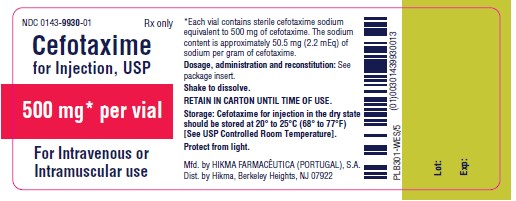
PRINCIPAL DISPLAY PANEL NDC 0143- 9930 -01 Rx only Cefotaxime for Injection, USP 500 mg* per vial For Intravenous or Intramuscular use NDC 0143- 9930 -10 Rx only Cefotaxime for Injection, USP 500 mg* per vial For Intravenous or Intramuscular use 10 x 500 mg vials PLB301-WES.5 PLB768-WES.1
PRINCIPAL DISPLAY PANEL NDC 0143- 9931 -01 Rx only Cefotaxime for Injection, USP 1 g* per vial For Intravenous or Intramuscular use NDC 0143- 9931 -25 Rx only Cefotaxime for Injection, USP 1 g* per vial For Intravenous or Intramuscular use 25 x 1 g vials PLB302-WES.4 PLB769-WES.1
PRINCIPAL DISPLAY PANEL NDC 0143-9933-01 CEFOTAXIME FOR INJECTION, USP 2 g*/vial FOR IV OR IM USE Rx ONLY NDC 0143-9933-01 CEFOTAXIME FOR INJECTION, USP 2 g*/vial FOR IV OR IM USE Rx ONLY *Each vial contains sterile cefotaxime sodium equivalent to 2 g cefotaxime. The sodium content is approximately 50.5 mg (2.2 mEq) of sodium per gram cefotaxime. Dosage, administration and reconstitution: See package insert.
Shake to dissolve. RETAIN IN CARTON UNTIL TIME OF USE. Storage: Cefotaxime for injection in the dry state should be stored at 20º to 25ºC (68º to 77ºF) [See USP Controlled Room Temperature].
PROTECT FROM LIGHT.
About this NDC listing & data coverage
What data is (and isn’t) available for this NDC — tap to expand
| NDC identity (package / product / labeler codes) | ✓ Available |
| Labeler | ✓ Available |
| Product & package description | ✓ Available |
| Marketing category & status | ✓ Available |
| Active ingredient / dosage form / route | ✓ Available |
| FDA label (SPL via DailyMed) | ✓ Available |
| Package photos | ✓ Available |
| Inactive ingredients (structured) | — Not published for this NDC The labeler did not submit a structured excipient list, or no SPL is available. |
| NADAC pharmacy acquisition price (CMS) | — Not published for this NDC CMS publishes NADAC only for NDCs reported in its retail-pharmacy survey. |
| Orange Book / therapeutic-equivalence data | — Not published for this NDC Applies only to products approved under an NDA/ANDA; many listings are out of scope. |
| HCPCS J-code billing crosswalk | — Not published for this NDC Most self-administered / retail products have no J-code — that is normal. |
| Medicaid utilization (CMS SDUD) | — Not published for this NDC CMS reports utilization only for NDCs with Medicaid claims above its privacy threshold. |