
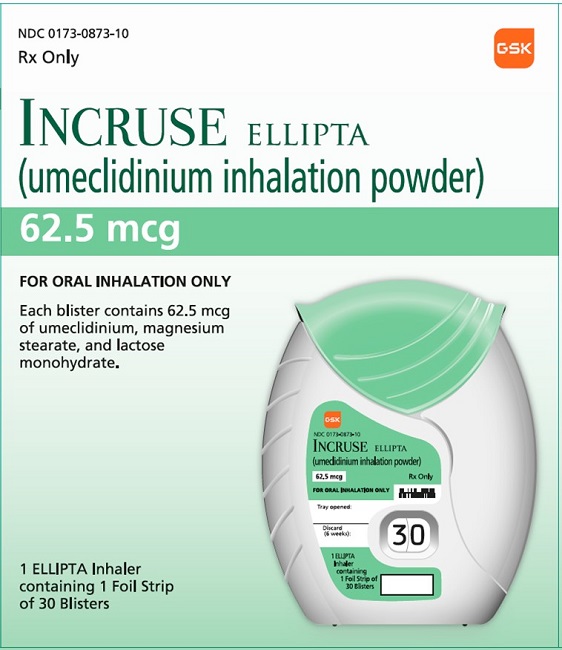
Incruse Ellipta umeclidinium 62.5 ug Aerosol, Powder — NDC 0173-0873-10 (Billing 00173-0873-10)
This is a package of Incruse Ellipta umeclidinium 62.5 ug Aerosol, Powder from GlaxoSmithKline LLC, marketed since Apr 2014 and currently FDA-listed; retail pharmacies pay about $11.30 per unit (NADAC). It is the main listing for this product, which comes in 2 package sizes.
NDC database record
One package, one record: these facts belong to NDC 0173-0873-10 alone.
- Record
- FDA NDC Directory package listing · Human prescription drug
- Code segments
- 0173 labeler · 0873 product · 10 package
- Package marketed since
- Apr 30, 2014
- Sample package
- No — commercial package
- Listing certified through
- Dec 31, 2027
- Barcode (UPC-A, from the NDC)
- 3 0173087310 1
- Medicaid fills, this package
- 130,505 prescriptions in the last four reported quarters
- FDA record last changed
- Jul 24, 2026
Identity & classification
Regulatory identifiers FDA, NLM and CMS codes for this package
Drug-database identifiers Medi-Span GPI and First Databank GCN / HICL / AHFS classification
- GSN (GCN sequence number): 072375
- GCN: 36574
- GPI-14 (Medi-Span): 44100090208030
- HICL (First Databank): 041115
- AHFS class code: 12:08.08.00
- RxCUI (RxNorm): 1539251
Where does this data come from?
- FDA openFDA NDC Directory · synced Oct 1, 2026
- FDA label on DailyMed · label index refreshed Oct 6, 2026
- RxNorm (NLM RxNav) · catalog refreshed Oct 1, 2026
- Medi-Span GPI (licensed)
- First Databank (licensed) · refreshed Oct 1, 2026
RxNorm drug class
This medicine belongs to the Anticholinergic class.
Where does this data come from?
- RxClass (NLM) · catalog refreshed Oct 1, 2026
Clinical
Patient education
Supplement & herbal interactions
Some supplements/herbs that may interact with Umeclidinium Bromide — tap one for details:
Where does this data come from?
- MedlinePlus (NLM) · refreshed Oct 1, 2026
- FDA label on DailyMed · label index refreshed Oct 6, 2026
Ask a licensed pharmacist directly — free, answered by our team.
Pricing
A drug doesn't have one price. Each row is a different public payment system, and none is what you'd pay at the counter — that depends on your insurance. The ⓘ on each row explains what it measures.
| Price system | Per ea | Per package |
|---|---|---|
| Retail pharmacies payNADAC · weekly | $11.299 | $338.98 / 30 aerosols |
| Medicaid paysCMS SDUD · 12 mo | $11.59 | $347.60 / 30 aerosols |
| Medicare drug plans payPart D · Q2 2026 | $11.61 | $348.44 / 30 aerosols |
Where does this data come from?
- CMS NADAC weekly file · file of Sep 30, 2026
- CMS ASP pricing files · refreshed Sep 20, 2026
- CMS Medicaid State Drug Utilization Data · through Q1 2026
- CMS Part D plan pricing files · refreshed Sep 24, 2026
- VA National Acquisition Center price file
Packaging — all sizes for this product
| Package NDC | Description | Per unit | Per pack | Marketing start | Marketing end | Status |
|---|---|---|---|---|---|---|
| 00173-0873-06 0173-0873-06 | 1 TRAY in 1 CARTON / 1 INHALER in 1 TRAY / 7 AEROSOL, POWDER in 1 INHALER | $10.28 / ea | $71.94 | 2014-04-30 | — | Active |
| 00173-0873-10 You're viewing this Main listing | 1 TRAY in 1 CARTON / 1 INHALER in 1 TRAY / 30 AEROSOL, POWDER in 1 INHALER | $11.30 / ea | $338.98 | 2014-04-30 | — | Active |
Per ea, this pack runs about 10% above the cheapest pack (NDC 00173-0873-06, $10.28 vs $11.30 NADAC).
In Medicaid, this is the most-dispensed pack of this product — about 98% of fills over the last four reported quarters. See all packs ↓
Pack size FAQ
What quantity is in this package?
What NDC number is used to bill for this package of Incruse Ellipta umeclidinium 62.5 ug Aerosol, Powder?
Prices are the latest CMS NADAC pharmacy acquisition cost per NDC; per-pack figures are per-unit × pack quantity, shown only when the pack is denominated in the same measure NADAC prices.
Therapeutic equivalents
| Product | Labeler | Pack | NADAC/unit | TE | Status | Price vs. this |
|---|---|---|---|---|---|---|
| Umeclidinium Ellipta 62.5 ug 66993-0189-97 | Prasco | 1 inhaler | $7.351 | — | Availability likely | save 35% |
| Incruse Ellipta 62.5 ugthis 00173-0873-10 | GlaxoSmithKline | 1 inhaler | $11.299 | — | Availability likely | — |
Where does this data come from?
- FDA openFDA NDC Directory · synced Oct 1, 2026
- FDA Orange Book · refreshed Oct 3, 2026
- CMS NADAC weekly file · file of Sep 30, 2026
Availability & generic status
We did not find an FDA-approved generic match for this exact strength, form and route. Patent/protection dates below may affect future generic timing.
Why the date isn’t exact: Generic timing can change because patents may be challenged, settled, licensed, added, removed, or worked around with a narrower label — and FDA approval does not always mean a pharmacy can get the generic today.
🛈 What do these terms mean?
- Patent
- Legal protection listed in the Orange Book that may delay generic approval or launch. Issued by the U.S. Patent & Trademark Office.
- Substance patent
- Covers the active drug molecule itself — the hardest to design around. A generic generally can’t launch until it expires.
- Formulation (product) patent
- Covers a specific formulation or dosage form. A generic can sometimes work around it with a different formulation.
- Method-of-use patent
- A patent covering one specific approved use of the drug — not necessarily the whole molecule. A generic can sometimes launch with a “skinny label” that carves out the protected use and keeps the others.
- Skinny label
- A generic label that omits a still-patented use when the FDA allows it — letting a generic reach the market for the unprotected uses.
- Exclusivity
- FDA-granted marketing protection, separate from patents — e.g. 5-yr new chemical entity, 7-yr orphan drug, or a +6-month pediatric extension.
- Paragraph IV
- A generic applicant’s formal challenge to a listed patent. It can potentially lead to earlier generic entry, but often involves litigation or a settlement.
- RLD / RS
- Reference Listed Drug — the brand product the FDA uses as the reference for generic applications. Reference Standard — the product the FDA expects generics to compare against in bioequivalence testing.
- TE / AB rating
- FDA therapeutic-equivalence rating. An AB rating generally means the FDA considers a generic therapeutically equivalent to — and substitutable for — the brand.
- LOE (loss of exclusivity)
- The latest patent or exclusivity currently listed — the loss-of-exclusivity / latest-listed-protection date shown on this page. Paragraph-IV challenges and settlements can move the real date earlier; FDA approval and a manufacturer’s decision to market can move it later.
Built from the FDA Orange Book. The bars above are scaled to each protection’s expiry; the red LOE marker is the last one to lapse.
| Patent | Type | Use code | Expires |
|---|---|---|---|
| US 7488827 ↗ | Drug substance | — | Dec 18, 2027 |
Is there a generic version of INCRUSE ELLIPTA 62.5 MCG INH?
The FDA approved a generic — why can’t I get it at my pharmacy yet?
Why do different websites show different generic release dates?
What does “FDA listed” mean?
What does a patent or protection date mean here?
What does “current Orange Book estimate” mean?
Can a generic come out before the last patent expires?
Can a generic come out after the listed dates?
What is the difference between patents and exclusivity?
Why are there multiple patent dates?
Where does this data come from?
- FDA Orange Book · refreshed Oct 3, 2026
Inactive Ingredients / Excipients
Inactive ingredients, also called excipients, are components of the drug product other than the active ingredient. They may include fillers, dyes, coatings, preservatives, flavors, or other formulation ingredients.
💡 Tap an ingredient (hover on desktop) to see what it is and why it’s used.
-
UNII EWQ57Q8I5X
Lactose monohydrate is a natural sugar derived from milk. It serves as a filler and binder in tablets and capsules, helping create the proper size, texture, and consistency of the medicine.
-
UNII 70097M6I30
Magnesium stearate is a salt made from magnesium and stearic acid, a fatty substance. It's used in tablets and capsules as a lubricant and glidant to help ingredients flow smoothly during manufacturing and prevent sticking.
2 inactive ingredients listed in the exact product block matched to this NDC.
Where does this data come from?
ingredient classCode="IACT" elements from the exact product block matched by this NDC. Label-section narrative from DailyMed / the openFDA label index is shown separately when available.- FDA label on DailyMed · label index refreshed Oct 6, 2026
- FDA openFDA NDC Directory · synced Oct 1, 2026
Inactive ingredient FAQ
Are inactive ingredients the same for every manufacturer?
Why might an inactive ingredient be missing?
Can inactive ingredients matter?
Manufacturer & labeler
More NDCs from GlaxoSmithKline LLC labeler code 00173
- LAMICTAL ODT lamotrigine Kit NDC 0173-0779-00
- LAMICTAL ODT lamotrigine Kit NDC 0173-0780-00
- Lamictal XR lamotrigine 250 mg Tablet, Film Coated, Extended Release NDC 0173-0781-00
- LAMICTAL lamotrigine Kit NDC 0173-0817-28
- Breo Ellipta fluticasone furoate and vilanterol trifenatate 100 ug; 25 ug Powder NDC 0173-0859-10
- Anoro Ellipta umeclidinium bromide and vilanterol trifenatate 62.5 ug; 25 ug Powder NDC 0173-0869-06
- Arnuity Ellipta fluticasone furoate 100 ug Powder NDC 0173-0874-10
- Arnuity Ellipta fluticasone furoate 200 ug Powder NDC 0173-0876-10
- Nucala mepolizumab 100 mg/mL Injection, Powder, For Solution NDC 0173-0881-01
- Breo Ellipta fluticasone furoate and vilanterol trifenatate 200 ug; 25 ug Powder NDC 0173-0882-10
- Trelegy Ellipta fluticasone furoate, umeclidinium bromide and vilanterol trifenatate 100 ug; 62.5 ug; 25 ug Powder NDC 0173-0887-10
- Arnuity Ellipta fluticasone furoate 50 ug Powder NDC 0173-0888-10
Where does this data come from?
- FDA openFDA NDC Directory · synced Oct 1, 2026
- Drugs@FDA
Full prescribing information FDA SPL
🎯 Indications and Usage ▾
1 INDICATIONS AND USAGE INCRUSE ELLIPTA is indicated for the maintenance treatment of patients with chronic obstructive pulmonary disease (COPD). INCRUSE ELLIPTA is an anticholinergic indicated for the maintenance treatment of patients with chronic obstructive pulmonary disease (COPD). ( 1 )
⏱️ Dosage and Administration ▾
2 DOSAGE AND ADMINISTRATION The recommended dosage of INCRUSE ELLIPTA for maintenance treatment of COPD is 1 actuation (umeclidinium 62.5 mcg) once daily by oral inhalation. • INCRUSE ELLIPTA should be used at the same time every day. Do not use INCRUSE ELLIPTA more than 1 time every 24 hours. • No dosage adjustment is required for geriatric patients, patients with renal impairment, or patients with moderate hepatic impairment [see Clinical Pharmacology ( 12.3 )] . • For oral inhalation only. ( 2 ) • Maintenance treatment of COPD: 1 actuation of INCRUSE ELLIPTA once daily administered by oral inhalation.
( 2 )
💊 Dosage Forms and Strengths ▾
3 DOSAGE FORMS AND STRENGTHS Inhalation powder: 62.5 mcg umeclidinium per actuation. Inhalation powder: 62.5 mcg of umeclidinium per actuation. ( 3 )
⛔ Contraindications ▾
4 CONTRAINDICATIONS INCRUSE ELLIPTA is contraindicated in the following conditions: • Severe hypersensitivity to milk proteins [see Warnings and Precautions ( 5.3 )] • Hypersensitivity to umeclidinium or any of the excipients [see Warnings and Precautions ( 5.3 ), Description ( 11 )] • Severe hypersensitivity to milk proteins. ( 4 ) • Hypersensitivity to any ingredient. ( 4 )
⚠️ Warnings and Cautions ▾
5 WARNINGS AND PRECAUTIONS • Do not initiate in acutely deteriorating COPD. Do not use to treat acute symptoms. ( 5.1 ) • If paradoxical bronchospasm occurs, discontinue INCRUSE ELLIPTA and institute alternative therapy.
( 5.2 ) • Worsening of narrow-angle glaucoma may occur. Use with caution in patients with narrow-angle glaucoma and instruct patients to contact a healthcare provider immediately if symptoms occur. ( 5.4 ) • Worsening of urinary retention may occur.
Use with caution in patients with prostatic hyperplasia or bladder-neck obstruction and instruct patients to contact a healthcare provider immediately if symptoms occur. ( 5.5 )
5.1Deterioration of Disease and Acute Episodes INCRUSE ELLIPTA should not be initiated in patients during rapidly deteriorating or potentially life-threatening episodes of COPD. INCRUSE ELLIPTA has not been studied in subjects with acutely deteriorating COPD. The initiation of INCRUSE ELLIPTA in this setting is not appropriate.
INCRUSE ELLIPTA should not be used for the relief of acute symptoms, i.e., as rescue therapy for the treatment of acute episodes of bronchospasm. INCRUSE ELLIPTA has not been studied in the relief of acute symptoms and extra doses should not be used for that purpose. Acute symptoms should be treated with an inhaled, short-acting beta 2 -agonist.
If INCRUSE ELLIPTA no longer controls symptoms of bronchoconstriction; the patient’s inhaled, short-acting beta 2 -agonist becomes less effective; or the patient needs more short-acting beta 2 -agonist than usual, these may be markers of deterioration of disease. In this setting re-evaluate the patient and the COPD treatment regimen at once. Increasing the daily dose of INCRUSE ELLIPTA beyond the recommended dose is not appropriate in this situation.
5.2Paradoxical Bronchospasm As with other inhaled therapies, INCRUSE ELLIPTA can produce paradoxical bronchospasm, which may be life threatening. If paradoxical bronchospasm occurs following dosing with INCRUSE ELLIPTA, it should be treated immediately with an inhaled, short-acting bronchodilator; INCRUSE ELLIPTA should be discontinued immediately; and alternative therapy should be instituted.
5.3Hypersensitivity Reactions, including Anaphylaxis Hypersensitivity reactions such as anaphylaxis, angioedema, pruritus, rash, and urticaria may occur after administration of INCRUSE ELLIPTA. Discontinue INCRUSE ELLIPTA if such reactions occur. There have been reports of anaphylactic reactions in patients with severe milk protein allergy after inhalation of other powder medications containing lactose; therefore, patients with severe milk protein allergy should not use INCRUSE ELLIPTA [see Contraindications ( 4 ), Adverse Reactions ( 6.2 )] .
5.4Worsening of Narrow-Angle Glaucoma INCRUSE ELLIPTA should be used with caution in patients with narrow-angle glaucoma. Prescribers and patients should also be alert for signs and symptoms of acute narrow-angle glaucoma (e.g., eye pain or discomfort, blurred vision, visual halos or colored images in association with red eyes from conjunctival congestion and corneal edema). Instruct patients to consult a healthcare provider immediately if any of these signs or symptoms develop.
5.5Worsening of Urinary Retention INCRUSE ELLIPTA, like all therapies containing an anticholinergic, should be used with caution in patients with urinary retention. Prescribers and patients should be alert for signs and symptoms of urinary retention (e.g., difficulty passing urine, painful urination), especially in patients with prostatic hyperplasia or bladder-neck obstruction. Instruct patients to consult a healthcare provider immediately if any of these signs or symptoms develop.
🤒 Adverse Reactions ▾
6 ADVERSE REACTIONS The following adverse reactions are described in greater detail in other sections: • Paradoxical bronchospasm [see Warnings and Precautions ( 5.2 )] • Worsening of narrow-angle glaucoma [see Warnings and Precautions ( 5.4 )] • Worsening of urinary retention [see Warnings and Precautions ( 5.5 )] Most common adverse reactions (incidence ≥2% and more common than placebo) include nasopharyngitis, upper respiratory tract infection, cough, arthralgia. ( 6.1 ) To report SUSPECTED ADVERSE REACTIONS, contact GlaxoSmithKline at 1-888-825-5249 or FDA at 1-800-FDA-1088 or www.fda.gov/medwatch.
6.1Clinical Trials Experience Because clinical trials are conducted under widely varying conditions, adverse reaction rates observed in the clinical trials of a drug cannot be directly compared with rates in the clinical trials of another drug and may not reflect the rates observed in practice. In the 8 clinical trials conducted to support initial approval of INCRUSE ELLIPTA, a total of 1,663 subjects with COPD (mean age: 62.7 years; 89% white; 65% male across all treatments, including placebo) received at least 1 inhalation dose of umeclidinium at doses of 62.5 or 125 mcg.
In the 4 randomized, double-blind, placebo- or active-controlled, efficacy clinical trials, 1,185 subjects received umeclidinium for up to 24 weeks, of which 487 subjects received the recommended dose of umeclidinium 62.5 mcg. In a 12-month, randomized, double-blind, placebo-controlled, long-term safety trial, 227 subjects received umeclidinium 125 mcg for up to 52 weeks [see Clinical Studies ( 14 )] . The incidence of adverse reactions associated with INCRUSE ELLIPTA in Table 1 is based upon 2 placebo-controlled trials: one 24-week trial (Trial 1) and one 12-week trial (Trial 2) [ see Clinical Studies (14.2)].
Table 1. Adverse Reactions with INCRUSE ELLIPTA with ≥1% Incidence and More Common than Placebo in Subjects with Chronic Obstructive Pulmonary Disease Adverse Reaction INCRUSE ELLIPTA (n = 487) % Placebo (n = 348) % Infections and infestations Nasopharyngitis 8% 7% Upper respiratory tract infection 5% 4% Pharyngitis 1% <1% Viral upper respiratory tract infection 1% <1% Respiratory, thoracic, and mediastinal disorders Cough 3% 2% Musculoskeletal and connective tissue disorders Arthralgia 2% 1% Myalgia 1% <1% Gastrointestinal disorders Abdominal pain upper 1% <1% Toothache 1% <1% Injury, poisoning, and procedural complications Contusion 1% <1% Cardiac disorders Tachycardia 1% <1% Other adverse reactions with INCRUSE ELLIPTA observed with an incidence <1% but more common than placebo included atrial fibrillation.
In a long-term safety trial (Trial 3), 336 subjects (n = 227 umeclidinium 125 mcg, n = 109 placebo) were treated for up to 52 weeks with umeclidinium 125 mcg or placebo. The demographic and baseline characteristics of the long-term safety trial were similar to those of the efficacy trials described above. Adverse reactions that occurred with a frequency ≥1% in subjects receiving umeclidinium 125 mcg that exceeded that in placebo in this trial were: nasopharyngitis, upper respiratory tract infection, urinary tract infection, pharyngitis, pneumonia, lower respiratory tract infection, rhinitis, supraventricular tachycardia, supraventricular extrasystoles, sinus tachycardia, idioventricular rhythm, headache, dizziness, sinus headache, cough, back pain, arthralgia, pain in extremity, neck pain, myalgia, nausea, dyspepsia, diarrhea, rash, depression, and vertigo.
The safety and efficacy of INCRUSE ELLIPTA in combination with an inhaled corticosteroid/long-acting beta 2 -adrenergic agonist (ICS/LABA) were also evaluated in four 12‑week clinical trials (Trial 4, Trial 5, Trial 6, and Trial 7). A total of 1,637 subjects with COPD across four 12‑week, randomized, double-blind clinical trials received at least 1 dose of INCRUSE ELLIPTA (62.5 mcg) or placebo administered once daily in addition to background ICS/LABA (mean age: 64 years, 88% white, 65% male… [Excerpted — this section continues on DailyMed.]
🔄 Drug Interactions ▾
7 DRUG INTERACTIONS Anticholinergics: May interact additively with concomitantly used anticholinergic medications. Avoid administration of INCRUSE ELLIPTA with other anticholinergic-containing drugs. ( 7.1 )
7.1Anticholinergics There is potential for an additive interaction with concomitantly used anticholinergic medicines. Therefore, avoid coadministration of INCRUSE ELLIPTA with other anticholinergic-containing drugs as this may lead to an increase in anticholinergic adverse effects [see Warnings and Precautions ( 5.4 , 5.5 )] .
👥 Use in Specific Populations ▾
8 USE IN SPECIFIC POPULATIONS
8.1Pregnancy Risk Summary There are insufficient data on the use of umeclidinium in pregnant women to inform a drug‑associated risk. Umeclidinium administered via inhalation or subcutaneously to pregnant rats and rabbits was not associated with adverse effect on embryofetal development at exposures approximately 50 and 200 times, respectively, the human exposure at the maximum recommended human daily inhaled dose (MRHDID). (See Data.) The estimated risk of major birth defects and miscarriage for the indicated populations is unknown.
In the U.S. general population, the estimated risk of major birth defects and miscarriage in clinically recognized pregnancies is 2% to 4% and 15% to 20%, respectively. Data Animal Data: In separate embryofetal developmental studies, pregnant rats and rabbits received umeclidinium during the period of organogenesis at doses up to approximately 50 and 200 times the MRHDID, respectively (on an AUC basis at maternal inhalation doses up to 278 mcg/kg/day in rats and at maternal subcutaneous doses up to 180 mcg/kg/day in rabbits).
No evidence of teratogenic effects was observed in either species. In a perinatal and postnatal developmental study in rats, dams received umeclidinium during late gestation and lactation periods with no evidence of effects on offspring development at doses up to approximately 26 times the MRHDID (on an AUC basis at maternal subcutaneous doses up to 60 mcg/kg/day).
8.2Lactation Risk Summary There is no information available on the presence of umeclidinium in human milk, the effects on the breastfed child, or the effects on milk production. Umeclidinium was detected in the plasma of offspring of lactating rats treated with umeclidinium suggesting its presence in maternal milk. (See Data.) The developmental and health benefits of breastfeeding should be considered along with the mother’s clinical need for INCRUSE ELLIPTA and any potential adverse effects on the breastfed child from umeclidinium or from the underlying maternal condition.
Data Subcutaneous administration of umeclidinium to lactating rats at greater than or equal to 60 mcg/kg/day resulted in a quantifiable level of umeclidinium in 2 of 54 pups, which may indicate transfer of umeclidinium in milk.
8.4Pediatric Use The safety and effectiveness of INCRUSE ELLIPTA have not been established in pediatric patients. INCRUSE ELLIPTA is not indicated for use in pediatric patients.
8.5Geriatric Use Based on available data, no adjustment of the dosage of INCRUSE ELLIPTA in geriatric patients is necessary, but greater sensitivity in some older individuals cannot be ruled out. Clinical trials of INCRUSE ELLIPTA included 810 subjects aged 65 years and older, and, of those, 183 subjects were aged 75 years and older. No overall differences in safety or effectiveness were observed between these subjects and younger subjects, and other reported clinical experience has not identified differences in responses between the elderly and younger subjects.
8.6Hepatic Impairment Patients with moderate hepatic impairment (Child-Pugh score of 7-9) showed no relevant increases in C max or AUC, nor did protein binding differ between subjects with moderate hepatic impairment and their healthy controls. Studies in subjects with severe hepatic impairment have not been performed [see Clinical Pharmacology ( 12.3 )] .
8.7Renal Impairment Patients with severe renal impairment (CrCl <30 mL/min) showed no relevant increases in C max or AUC, nor did protein binding differ between subjects with severe renal impairment and their healthy controls. No dosage adjustment is required in patients with renal impairment [see Clinical Pharmacology ( 12.3 )] .
🤰 Pregnancy ▾
8.1Pregnancy Risk Summary There are insufficient data on the use of umeclidinium in pregnant women to inform a drug‑associated risk. Umeclidinium administered via inhalation or subcutaneously to pregnant rats and rabbits was not associated with adverse effect on embryofetal development at exposures approximately 50 and 200 times, respectively, the human exposure at the maximum recommended human daily inhaled dose (MRHDID). (See Data.) The estimated risk of major birth defects and miscarriage for the indicated populations is unknown.
In the U.S. general population, the estimated risk of major birth defects and miscarriage in clinically recognized pregnancies is 2% to 4% and 15% to 20%, respectively. Data Animal Data: In separate embryofetal developmental studies, pregnant rats and rabbits received umeclidinium during the period of organogenesis at doses up to approximately 50 and 200 times the MRHDID, respectively (on an AUC basis at maternal inhalation doses up to 278 mcg/kg/day in rats and at maternal subcutaneous doses up to 180 mcg/kg/day in rabbits).
No evidence of teratogenic effects was observed in either species. In a perinatal and postnatal developmental study in rats, dams received umeclidinium during late gestation and lactation periods with no evidence of effects on offspring development at doses up to approximately 26 times the MRHDID (on an AUC basis at maternal subcutaneous doses up to 60 mcg/kg/day).
🧒 Pediatric Use ▾
8.4Pediatric Use The safety and effectiveness of INCRUSE ELLIPTA have not been established in pediatric patients. INCRUSE ELLIPTA is not indicated for use in pediatric patients.
🧓 Geriatric Use ▾
8.5Geriatric Use Based on available data, no adjustment of the dosage of INCRUSE ELLIPTA in geriatric patients is necessary, but greater sensitivity in some older individuals cannot be ruled out. Clinical trials of INCRUSE ELLIPTA included 810 subjects aged 65 years and older, and, of those, 183 subjects were aged 75 years and older. No overall differences in safety or effectiveness were observed between these subjects and younger subjects, and other reported clinical experience has not identified differences in responses between the elderly and younger subjects.
🆘 Overdosage ▾
10 OVERDOSAGE High doses of umeclidinium may lead to anticholinergic signs and symptoms. Treatment of overdosage consists of discontinuation of INCRUSE ELLIPTA together with institution of appropriate symptomatic and/or supportive therapy.
🧬 Clinical Pharmacology ▾
12 CLINICAL PHARMACOLOGY
12.1Mechanism of Action Umeclidinium is a long-acting muscarinic antagonist, which is often referred to as an anticholinergic. It has similar affinity to the subtypes of muscarinic receptors M1 to M5. In the airways, it exhibits pharmacological effects through inhibition of M3 receptors at the smooth muscle leading to bronchodilation.
The competitive and reversible nature of antagonism was shown with human and animal origin receptors and isolated organ preparations. In preclinical in vitro as well as in vivo studies, prevention of methacholine- and acetylcholine-induced bronchoconstrictive effects was dose-dependent and lasted longer than 24 hours. The clinical relevance of these findings is unknown.
The bronchodilation following inhalation of umeclidinium is predominantly a site-specific effect.
12.2Pharmacodynamics Cardiac Electrophysiology QTc interval prolongation was studied in a double-blind, multiple-dose, placebo- and positive-controlled, crossover study in 86 healthy subjects. Following repeat doses of umeclidinium 500 mcg once daily (8 times the recommended dosage) for 10 days, umeclidinium does not prolong QTc to any clinically relevant extent.
12.3Pharmacokinetics Linear pharmacokinetics was observed for umeclidinium (62.5 to 500 mcg). Absorption Umeclidinium plasma levels may not predict therapeutic effect. Following inhaled administration of umeclidinium in healthy subjects, C max occurred at 5 to 15 minutes.
Umeclidinium is mostly absorbed from the lung after inhaled doses with minimum contribution from oral absorption. Following repeat dosing of inhaled INCRUSE ELLIPTA, steady state was achieved within 14 days with up to 1.8-fold accumulation. Distribution Following intravenous administration to healthy subjects, the mean volume of distribution was 86 L.
In vitro plasma protein binding in human plasma was on average 89%. Elimination Metabolism: In vitro data showed that umeclidinium is primarily metabolized by the enzyme cytochrome P450 2D6 (CYP2D6) and is a substrate for the P-glycoprotein (P-gp) transporter. The primary metabolic routes for umeclidinium are oxidative (hydroxylation, O-dealkylation) followed by conjugation (e.g., glucuronidation), resulting in a range of metabolites with either reduced pharmacological activity or for which the pharmacological activity has not been established.
Systemic exposure to the metabolites is low. Excretion: The effective half-life after once-daily orally inhaled dosing is 11 hours. Following intravenous dosing with radiolabeled umeclidinium, mass balance showed 58% of the radiolabel in the feces and 22% in the urine.
The excretion of the drug-related material in the feces following intravenous dosing indicated elimination in the bile. Following oral dosing to healthy male subjects, radiolabel recovered in feces was 92% of the total dose and that in urine was <1% of the total dose, suggesting negligible oral absorption. Specific Populations Population pharmacokinetic analysis showed no evidence of a clinically significant effect of age (40 to 93 years) (Figure 1), gender (69% male) (Figure 1), inhaled corticosteroid use (48%), or weight (34 to 161 kg) on systemic exposure of umeclidinium.
In addition, there was no evidence of a clinically significant effect of race. Patients with Hepatic Impairment: The impact of hepatic impairment on the pharmacokinetics of INCRUSE ELLIPTA has been evaluated in subjects with moderate hepatic impairment (Child-Pugh score of 7-9). There was no evidence of an increase in systemic exposure to umeclidinium (C max and AUC) (Figure 1).
There was no evidence of altered protein binding in subjects with moderate hepatic impairment compared with healthy subjects. INCRUSE ELLIPTA has not been evaluated in subjects with severe hepatic impairment. Patients with Renal Impairment: The pharmacokinetics of INCRUSE ELLIPTA has been evaluated in subjects with severe renal impairment (CrCl <30 mL/min).
There was no evidence of a… [Excerpted — this section continues on DailyMed.]
🧬 Mechanism of Action ▾
12.1Mechanism of Action Umeclidinium is a long-acting muscarinic antagonist, which is often referred to as an anticholinergic. It has similar affinity to the subtypes of muscarinic receptors M1 to M5. In the airways, it exhibits pharmacological effects through inhibition of M3 receptors at the smooth muscle leading to bronchodilation.
The competitive and reversible nature of antagonism was shown with human and animal origin receptors and isolated organ preparations. In preclinical in vitro as well as in vivo studies, prevention of methacholine- and acetylcholine-induced bronchoconstrictive effects was dose-dependent and lasted longer than 24 hours. The clinical relevance of these findings is unknown.
The bronchodilation following inhalation of umeclidinium is predominantly a site-specific effect.
📦 How Supplied / Storage and Handling ▾
16 HOW SUPPLIED/STORAGE AND HANDLING INCRUSE ELLIPTA is supplied as a disposable light grey and light green plastic inhaler containing a foil strip with 30 blisters (NDC 0173-0873-10) or 7 blisters (institutional pack) (NDC 0173-0873-06). The inhaler is packaged in a moisture-protective foil tray with a desiccant and a peelable lid. Store at room temperature between 68°F and 77°F (20°C and 25°C); excursions permitted from 59°F to 86°F (15°C to 30°C) [See USP Controlled Room Temperature].
Store in a dry place away from direct heat or sunlight. Keep out of reach of children. INCRUSE ELLIPTA should be stored inside the unopened moisture-protective foil tray and only removed from the tray immediately before initial use.
Discard INCRUSE ELLIPTA 6 weeks after opening the foil tray or when the counter reads “0” (after all blisters have been used), whichever comes first. The inhaler is not reusable. Do not attempt to take the inhaler apart.
📋 Description ▾
11 DESCRIPTION INCRUSE ELLIPTA is an inhalation powder drug product for delivery of umeclidinium (an anticholinergic) to patients by oral inhalation. Umeclidinium bromide has the chemical name 1-[2-(benzyloxy)ethyl]-4-(hydroxydiphenylmethyl)-1-azoniabicyclo[2.2.2]octane bromide and the following chemical structure: Umeclidinium bromide is a white powder with a molecular weight of 508.5, and the empirical formula is C 29 H 34 NO 2 •Br (as a quaternary ammonium bromide compound). It is slightly soluble in water.
INCRUSE ELLIPTA is a light grey and light green plastic inhaler containing a foil blister strip. Each blister on the strip contains a white powder blend of micronized umeclidinium bromide (74.2 mcg equivalent to 62.5 mcg of umeclidinium), magnesium stearate (75 mcg), and lactose monohydrate (to 12.5 mg). The lactose monohydrate contains milk proteins.
After the inhaler is activated, the powder within the blister is exposed and ready for dispersion into the airstream created by the patient inhaling through the mouthpiece. Under standardized in vitro test conditions, INCRUSE ELLIPTA delivers 55 mcg of umeclidinium per dose when tested at a flow rate of 60 L/min for 4 seconds. In adult subjects with obstructive lung disease and severely compromised lung function (COPD with forced expiratory volume in 1 second/forced vital capacity [FEV 1 /FVC] <70% and FEV 1 <30% predicted or FEV 1 <50% predicted plus chronic respiratory failure), mean peak inspiratory flow through the ELLIPTA inhaler was
67.5L/min (range: 41.6 to
83.3L/min). The actual amount of drug delivered to the lung will depend on patient factors, such as inspiratory flow profile. incruse-ellipta-spl-graphic-01.jpg
💬 Information for Patients ▾
17 PATIENT COUNSELING INFORMATION Advise the patient to read the FDA-approved patient labeling (Patient Information and Instructions for Use). Not for Acute Symptoms Inform patients that INCRUSE ELLIPTA is not meant to relieve acute symptoms of COPD and extra doses should not be used for that purpose. Advise patients to treat acute symptoms with an inhaled, short-acting beta 2 -agonist such as albuterol.
Provide patients with such medication and instruct them in how it should be used. Instruct patients to seek medical attention immediately if they experience any of the following: • Decreasing effectiveness of inhaled, short-acting beta 2 -agonists • Need for more inhalations than usual of inhaled, short-acting beta 2 -agonists • Significant decrease in lung function as outlined by the physician Tell patients they should not stop therapy with INCRUSE ELLIPTA without physician/provider guidance since symptoms may recur after discontinuation. [See Warnings and Precautions ( 5.1 ).] Paradoxical Bronchospasm As with other inhaled medicines, INCRUSE ELLIPTA can cause paradoxical bronchospasm.
If paradoxical bronchospasm occurs, instruct patients to discontinue INCRUSE ELLIPTA and contact their healthcare provider right away. [See Warnings and Precautions ( 5.2 ).] Worsening of Narrow-Angle Glaucoma Instruct patients to be alert for signs and symptoms of acute narrow-angle glaucoma (e.g., eye pain or discomfort, blurred vision, visual halos or colored images in association with red eyes from conjunctival congestion and corneal edema). Instruct patients to consult a physician immediately if any of these signs or symptoms develop. [See Warnings and Precautions ( 5.4 ).] Worsening of Urinary Retention Instruct patients to be alert for signs and symptoms of urinary retention (e.g., difficulty passing urine, painful urination).
Instruct patients to consult a physician immediately if any of these signs or symptoms develop. [See Warnings and Precautions (5.5 ).] Trademarks are owned by or licensed to the GSK group of companies. GlaxoSmithKline Durham, NC 27701 ©2023 GSK group of companies or its licensor. INC:10PI
🧬 Pharmacokinetics ▾
12.3Pharmacokinetics Linear pharmacokinetics was observed for umeclidinium (62.5 to 500 mcg). Absorption Umeclidinium plasma levels may not predict therapeutic effect. Following inhaled administration of umeclidinium in healthy subjects, C max occurred at 5 to 15 minutes.
Umeclidinium is mostly absorbed from the lung after inhaled doses with minimum contribution from oral absorption. Following repeat dosing of inhaled INCRUSE ELLIPTA, steady state was achieved within 14 days with up to 1.8-fold accumulation. Distribution Following intravenous administration to healthy subjects, the mean volume of distribution was 86 L.
In vitro plasma protein binding in human plasma was on average 89%. Elimination Metabolism: In vitro data showed that umeclidinium is primarily metabolized by the enzyme cytochrome P450 2D6 (CYP2D6) and is a substrate for the P-glycoprotein (P-gp) transporter. The primary metabolic routes for umeclidinium are oxidative (hydroxylation, O-dealkylation) followed by conjugation (e.g., glucuronidation), resulting in a range of metabolites with either reduced pharmacological activity or for which the pharmacological activity has not been established.
Systemic exposure to the metabolites is low. Excretion: The effective half-life after once-daily orally inhaled dosing is 11 hours. Following intravenous dosing with radiolabeled umeclidinium, mass balance showed 58% of the radiolabel in the feces and 22% in the urine.
The excretion of the drug-related material in the feces following intravenous dosing indicated elimination in the bile. Following oral dosing to healthy male subjects, radiolabel recovered in feces was 92% of the total dose and that in urine was <1% of the total dose, suggesting negligible oral absorption. Specific Populations Population pharmacokinetic analysis showed no evidence of a clinically significant effect of age (40 to 93 years) (Figure 1), gender (69% male) (Figure 1), inhaled corticosteroid use (48%), or weight (34 to 161 kg) on systemic exposure of umeclidinium.
In addition, there was no evidence of a clinically significant effect of race. Patients with Hepatic Impairment: The impact of hepatic impairment on the pharmacokinetics of INCRUSE ELLIPTA has been evaluated in subjects with moderate hepatic impairment (Child-Pugh score of 7-9). There was no evidence of an increase in systemic exposure to umeclidinium (C max and AUC) (Figure 1).
There was no evidence of altered protein binding in subjects with moderate hepatic impairment compared with healthy subjects. INCRUSE ELLIPTA has not been evaluated in subjects with severe hepatic impairment. Patients with Renal Impairment: The pharmacokinetics of INCRUSE ELLIPTA has been evaluated in subjects with severe renal impairment (CrCl <30 mL/min).
There was no evidence of an increase in systemic exposure to umeclidinium (C max and AUC) (Figure 1). There was no evidence of altered protein binding in subjects with severe renal impairment compared with healthy subjects. Figure 1.
Impact of Intrinsic and Extrinsic Factors on the Systemic Exposure of Umeclidinium Drug Interaction Studies Umeclidinium and P-glycoprotein Transporter: Umeclidinium is a substrate of P-gp. The effect of the moderate P-gp transporter inhibitor verapamil (240 mg once daily) on the steady-state pharmacokinetics of umeclidinium was assessed in healthy subjects. No effect on umeclidinium C max was observed; however, an approximately 1.4-fold increase in umeclidinium AUC was observed (Figure 1).
Umeclidinium and Cytochrome P450 2D6: In vitro metabolism of umeclidinium is mediated primarily by CYP2D6. However, no clinically meaningful difference in systemic exposure to umeclidinium (500 mcg) (8 times the approved dose) was observed following repeat daily inhaled dosing to normal (ultrarapid, extensive, and intermediate metabolizers) and CYP2D6 poor metabolizer subjects (Figure 1). Figure 1.
Impact of Intrinsic and Extrinsic Factors on the Systemic Exposure of Umeclidinium
🧬 Pharmacodynamics ▾
12.2Pharmacodynamics Cardiac Electrophysiology QTc interval prolongation was studied in a double-blind, multiple-dose, placebo- and positive-controlled, crossover study in 86 healthy subjects. Following repeat doses of umeclidinium 500 mcg once daily (8 times the recommended dosage) for 10 days, umeclidinium does not prolong QTc to any clinically relevant extent.
🔬 Clinical Studies ▾
14 CLINICAL STUDIES The safety and efficacy of umeclidinium 62.5 mcg were evaluated in 3 dose-ranging trials, 2 placebo-controlled clinical trials (one 12-week trial and one 24-week trial), and a 12-month long‑term safety trial. The efficacy of INCRUSE ELLIPTA is based primarily on the dose‑ranging trials in 624 subjects and the 2 placebo-controlled confirmatory trials in 1,738 subjects with COPD, including chronic bronchitis and/or emphysema. [See Clinical Studies ( 14.1 , 14.2 ).] The safety and efficacy of INCRUSE ELLIPTA in combination with an ICS/LABA were also evaluated in four 12-week clinical trials.
The efficacy of INCRUSE ELLIPTA in combination with an ICS/LABA is based on 1,637 subjects with COPD. [See Clinical Studies ( 14.3 ).] Evidence of efficacy for INCRUSE ELLIPTA on COPD exacerbations was established by the efficacy of the umeclidinium component as part of a fixed-dose combination with an ICS/LABA, as assessed in a 12-month trial in 10,355 subjects. [See Clinical Studies ( 14.3 ).]
14.1Dose-Ranging Trials Dose selection for umeclidinium in COPD was supported by a 7-day, randomized, double-blind, placebo-controlled, crossover trial evaluating 4 doses of umeclidinium (15.6 to 125 mcg) or placebo dosed once daily in the morning in 163 subjects with COPD. A dose ordering was observed, with the 62.5- and 125-mcg doses demonstrating larger improvements in FEV 1 over 24 hours compared with the lower doses of 15.6 and 31.25 mcg (Figure 2). The differences in trough FEV 1 from baseline after 7 days for placebo and the 15.6-, 31.25-, 62.5-, and 125-mcg doses were -74 mL (95% CI: -118, -31), 38 mL (95% CI: -6, 83), 27 mL (95% CI: -18, 72), 49 mL (95% CI: 6, 93), and 109 mL (95% CI: 65, 152), respectively.
Two additional dose-ranging trials in subjects with COPD demonstrated minimal additional benefit at doses above 125 mcg. The dose-ranging results supported the evaluation of 2 doses of umeclidinium, 62.5 and 125 mcg, in the confirmatory COPD trials to further assess dose response. Evaluations of dosing interval by comparing once- and twice-daily dosing supported selection of a once-daily dosing interval for further evaluation in the confirmatory COPD trials.
Figure 2. Adjusted Mean Change from Baseline in Postdose Serial FEV 1 (mL) on Days 1 and 7 Day 1 Day 7 Figure 2. Adjusted Mean Change from Baseline in Postdose Serial FEV1 (mL) on Days 1 and 7, Day 1 Figure 2.
Adjusted Mean Change from Baseline in Postdose Serial FEV1 (mL) on Days 1 and 7, Day 7
14.2Maintenance Treatment: Confirmatory Trials Lung Function The clinical development program for INCRUSE ELLIPTA included 2 randomized, double‑blind, placebo-controlled, parallel-group trials in subjects with COPD designed to evaluate the efficacy of INCRUSE ELLIPTA on lung function. Trial 1 (NCT01313650) was a 24-week placebo‑controlled trial, and Trial 2 (NCT01387230) was a 12-week placebo‑controlled trial. These trials treated subjects that had a clinical diagnosis of COPD, were 40 years of age or older, had a history of smoking ≥10 pack-years, had a post-albuterol FEV 1 ≤70% of predicted normal values, had a ratio of FEV 1 /FVC of <0.7, and had a Modified Medical Research Council (mMRC) score ≥2.
Subjects in Trial 1 had a mean age of 63 years and an average smoking history of 46 pack-years, with 50% identified as current smokers. At screening, the mean postbronchodilator percent predicted FEV 1 was 47% (range: 13% to 74%), the mean postbronchodilator FEV 1 /FVC ratio was 0.47 (range: 0.20 to 0.74), and the mean percent reversibility was 15% (range: -35% to 109%). The majority of subjects (72%) reported not having a COPD exacerbation in the prior 12 months.
Baseline demographics and lung function for subjects in Trial 2 were similar to those in Trial 1. Trial 1 evaluated umeclidinium 62.5 mcg and placebo. The primary endpoint was change from baseline in trough (predose) FEV 1 at Day 169 (defined as the mean of the FEV 1 values obtained at 23 and 24 hours after the pre… [Excerpted — this section continues on DailyMed.]
🧪 Nonclinical Toxicology ▾
13 NONCLINICAL TOXICOLOGY
13.1Carcinogenesis, Mutagenesis, Impairment of Fertility Umeclidinium produced no treatment-related increases in the incidence of tumors in 2-year inhalation studies in rats and mice at inhaled doses up to 137 and 295/200 mcg/kg/day (male/female), respectively (approximately 20 and 25/20 times, respectively, the MRHDID for adults on an AUC basis). Umeclidinium tested negative in the following genotoxicity assays: the in vitro Ames assay, in vitro mouse lymphoma assay, and in vivo rat bone marrow micronucleus assay.
No evidence of impairment of fertility was observed in male and female rats at subcutaneous doses up to 180 mcg/kg/day and at inhaled doses up to 294 mcg/kg/day, respectively (approximately 100 and 50 times, respectively, the MRHDID for adults on an AUC basis).
📄 Carcinogenesis, Mutagenesis, Impairment of Fertility ▾
13.1Carcinogenesis, Mutagenesis, Impairment of Fertility Umeclidinium produced no treatment-related increases in the incidence of tumors in 2-year inhalation studies in rats and mice at inhaled doses up to 137 and 295/200 mcg/kg/day (male/female), respectively (approximately 20 and 25/20 times, respectively, the MRHDID for adults on an AUC basis). Umeclidinium tested negative in the following genotoxicity assays: the in vitro Ames assay, in vitro mouse lymphoma assay, and in vivo rat bone marrow micronucleus assay.
No evidence of impairment of fertility was observed in male and female rats at subcutaneous doses up to 180 mcg/kg/day and at inhaled doses up to 294 mcg/kg/day, respectively (approximately 100 and 50 times, respectively, the MRHDID for adults on an AUC basis).
📄 Patient Package Insert ▾
PATIENT INFORMATION INCRUSE ELLIPTA (IN-cruise e-LIP-ta) (umeclidinium inhalation powder) for oral inhalation use What is INCRUSE ELLIPTA? • INCRUSE ELLIPTA is an anticholinergic medicine (umeclidinium). • Anticholinergic medicines such as umeclidinium help the muscles around the airways in your lungs stay relaxed to prevent symptoms such as wheezing, cough, chest tightness, and shortness of breath. These symptoms can happen when the muscles around the airways tighten. This makes it hard to breathe. • INCRUSE ELLIPTA is not used to relieve sudden breathing problems and will not replace a rescue inhaler. • INCRUSE ELLIPTA is a prescription medicine used long term (chronic) to treat people with chronic obstructive pulmonary disease (COPD).
COPD is a chronic lung disease that includes chronic bronchitis, emphysema, or both. • INCRUSE ELLIPTA is used as 1 inhalation 1 time each day to improve symptoms of COPD for better breathing and to reduce the number of flare-ups (the worsening of your COPD symptoms for several days). • INCRUSE ELLIPTA should not be used in children. It is not known if INCRUSE ELLIPTA is safe and effective in children. Do not use INCRUSE ELLIPTA if you: • have a severe allergy to milk proteins.
Ask your healthcare provider if you are not sure. • are allergic to umeclidinium or any of the ingredients in INCRUSE ELLIPTA. See the end of this Patient Information for a complete list of ingredients in INCRUSE ELLIPTA. Before using INCRUSE ELLIPTA, tell your healthcare provider about all of your medical conditions, including if you: • have heart problems. • have eye problems such as glaucoma.
INCRUSE ELLIPTA may make your glaucoma worse. • are allergic to milk proteins. • have prostate or bladder problems, or problems passing urine. INCRUSE ELLIPTA may make these problems worse. • are pregnant or plan to become pregnant. It is not known if INCRUSE ELLIPTA may harm your unborn baby. • are breastfeeding or plan to breastfeed.
It is not known if the medicine in INCRUSE ELLIPTA passes into your breast milk and if it can harm your baby. Tell your healthcare provider about all the medicines you take, including prescription and over-the-counter medicines, vitamins, and herbal supplements. INCRUSE ELLIPTA and certain other medicines may interact with each other.
This may cause serious side effects. Especially tell your healthcare provider if you take: • anticholinergics (including tiotropium, ipratropium, aclidinium) • atropine Know the medicines you take. Keep a list of them to show your healthcare provider and pharmacist when you get a new medicine.
How should I use INCRUSE ELLIPTA? Read the step-by-step instructions for using INCRUSE ELLIPTA at the end of this Patient Information. • Do not use INCRUSE ELLIPTA unless your healthcare provider has taught you how to use the inhaler and you understand how to use it correctly. • Use INCRUSE ELLIPTA exactly as your healthcare provider tells you to use it. Do not use INCRUSE ELLIPTA more often than prescribed. • Use 1 inhalation of INCRUSE ELLIPTA 1 time each day.
Use INCRUSE ELLIPTA at the same time each day. • If you miss a dose of INCRUSE ELLIPTA, take it as soon as you remember. Do not take more than 1 inhalation per day. Take your next dose at your usual time.
Do not take 2 doses at 1 time. • If you take too much INCRUSE ELLIPTA, call your healthcare provider or go to the nearest hospital emergency room right away if you have any unusual symptoms, such as worsening shortness of breath, chest pain, increased heart rate, or shakiness. • Do not use other medicines that contain an anticholinergic for any reason. Ask your healthcare provider or pharmacist if any of your other medicines are anticholinergic medicines. • Do not stop using INCRUSE ELLIPTA unless told to do so by your healthcare provider because your symptoms might get worse.
Your healthcare provider will change your medicines as needed. • Talk to your healthcare provider right away if you stop using INCRUSE ELLIPTA.… [Excerpted — this section continues on DailyMed.]
📖 Instructions for Use ▾
INSTRUCTIONS FOR USE INCRUSE ELLIPTA (IN-cruise e-LIP-ta) (umeclidinium inhalation powder) for oral inhalation use Read this before you start: • If you open and close the cover without inhaling the medicine, you will lose the dose. • The lost dose will be securely held inside the inhaler, but it will no longer be available to be inhaled. • It is not possible to accidentally take a double dose or an extra dose in 1 inhalation. Your INCRUSE ELLIPTA inhaler How to use your inhaler • INCRUSE ELLIPTA comes in a tray. • Peel back the lid to open the tray.
See Figure A. • The tray contains a desiccant to reduce moisture. Do not eat or breathe in (inhale). Throw it away in the household trash out of reach of children and pets.
See Figure B. Figure A Figure B Important Notes: • Your inhaler contains 30 doses (7 doses if you have a sample or institutional pack). • Each time you fully open the cover of the inhaler (you will hear a clicking sound), a dose is ready to be inhaled. This is shown by a decrease in the number on the counter. • If you open and close the cover without inhaling the medicine, you will lose the dose.
The lost dose will be held in the inhaler, but it will no longer be available to be inhaled. It is not possible to accidentally take a double dose or an extra dose in 1 inhalation. • Do not open the cover of the inhaler until you are ready to use it. To avoid wasting doses after the inhaler is ready, do not close the cover until after you have inhaled the medicine. • Write the “Tray opened” and “Discard” dates on the inhaler label.
The “Discard” date is 6 weeks from the date you open the tray. Check the counter. See Figure C.
Figure C • Before the inhaler is used for the first time, the counter should show the number 30 (7 if you have a sample or institutional pack). This is the number of doses in the inhaler. • Each time you open the cover, you prepare 1 dose of medicine. • The counter counts down by 1 each time you open the cover. Prepare your dose: Wait to open the cover until you are ready to take your dose.
Figure D Step 1. Open the cover of the inhaler. See Figure D. • Slide the cover down to expose the mouthpiece.
You should hear a “click.” The counter will count down by 1 number. You do not need to shake this kind of inhaler. Your inhaler is now ready to use. • If the counter does not count down as you hear the click, the inhaler will not deliver the medicine.
Call your healthcare provider or pharmacist if this happens. Figure E Step 2. Breathe out.
See Figure E. • While holding the inhaler away from your mouth, breathe out (exhale) fully. Do not breathe out into the mouthpiece. Figure F Step 3.
Inhale your medicine. See Figure F. • Put the mouthpiece between your lips, and close your lips firmly around it. Your lips should fit over the curved shape of the mouthpiece. • Take 1 long, steady, deep breath in through your mouth.
Do not breathe in through your nose. Figure G • Do not block the air vent with your fingers. See Figure G.
Figure H • Remove the inhaler from your mouth and hold your breath for about 3 to 4 seconds (or as long as comfortable for you). See Figure H. Figure I Step 4.
Breathe out slowly and gently. See Figure I. • You may not taste or feel the medicine, even when you are using the inhaler correctly. • Do not take another dose from the inhaler even if you do not feel or taste the medicine. Figure J Step 5.
Close the inhaler. See Figure J. • You can clean the mouthpiece if needed, using a dry tissue, before you close the cover. Routine cleaning is not required. • Slide the cover up and over the mouthpiece as far as it will go.
Important Note: When should you get a refill? Figure K • When you have fewer than 10 doses remaining in your inhaler, the left half of the counter shows red as a reminder to get a refill. See Figure K. • After you have inhaled the last dose, the counter will show “0” and will be empty. • Throw the empty inhaler away in your household trash out of reach of children and pets… [Excerpted — this section continues on DailyMed.]
📄 Package Label / Principal Display Panel ▾
PRINCIPAL DISPLAY PANEL NDC 0173-0873-10 INCRUSE ELLIPTA (umeclidinium inhalation powder) 62.5 mcg Rx Only FOR ORAL INHALATION ONLY Each blister contains 62.5 mcg of umeclidinium, magnesium stearate, and lactose monohydrate. 1 ELLIPTA Inhaler containing 1 Foil Strip of 30 Blisters GSK Made in Singapore ©2025 GSK group of companies or its licensor 62000000102193 Rev. 10/25 Incruse Ellipta 30 count carton