
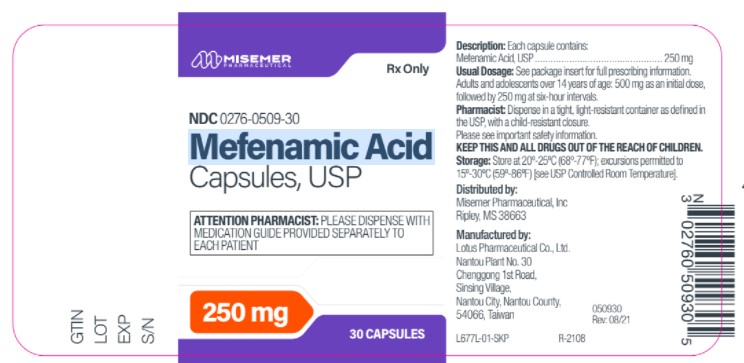
Mefenamic Acid 250 mg Capsule, 30-count — NDC 0276-0509-30 (Billing 00276-0509-30)
This is a package of 30 capsules of Mefenamic Acid 250 mg Capsule from Misemer Pharmaceuticals, Inc, marketed since Nov 2021 and currently FDA-listed. It is this product's only package size.
NDC database record
One package, one record: these facts belong to NDC 0276-0509-30 alone.
- Record
- FDA NDC Directory package listing · Human prescription drug
- Code segments
- 0276 labeler · 0509 product · 30 package
- Package marketed since
- Nov 1, 2021
- Sample package
- No — commercial package
- Listing certified through
- Dec 31, 2027
- Billing quantity
- 30 EA per package
- Barcode (UPC-A, from the NDC)
- 3 0276050930 5
- FDA record last changed
- Jul 24, 2026
Identity & classification
Regulatory identifiers FDA, NLM and CMS codes for this package
Drug-database identifiers Medi-Span GPI and First Databank GCN / HICL / AHFS classification
- GSN (GCN sequence number): 004285
- GCN: 16530
- GPI-14 (Medi-Span): 66100050000105
- HICL (First Databank): 001776
- AHFS class code: 28:08.04.04
- RxCUI (RxNorm): 829500
Where does this data come from?
- FDA openFDA NDC Directory · synced Oct 1, 2026
- FDA label on DailyMed · label index refreshed Oct 6, 2026
- RxNorm (NLM RxNav) · catalog refreshed Oct 1, 2026
- Medi-Span GPI (licensed)
- First Databank (licensed) · refreshed Oct 1, 2026
RxNorm drug class
This medicine belongs to the Nonsteroidal Anti-inflammatory Drug class.
Where does this data come from?
- RxClass (NLM) · catalog refreshed Oct 1, 2026
Clinical
Mefenamic acid is used to relieve pain, including menstrual pain (pain that happens before or during a menstrual period). Mefenamic acid is in a class of medications called NSAIDs. It works by stopping the body's production of a substance that causes pain, fever, and inflammation.
Read the full MedlinePlus article ↗- It treats mild to moderate pain for up to a week in people 14 and older. It is also used for painful periods (primary dysmenorrhea). It is an NSAID, similar in type to ibuprofen.
- You take it by mouth. Usually there is a larger first dose, then a smaller dose about every 6 hours. For painful periods, you start when bleeding and symptoms begin. Use the lowest...
- Stomach upset is the most common, including pain, nausea, heartburn, diarrhea or constipation. Some people have dizziness, headache, rash or ringing in the ears. Call us if these a...
- Seek help for black or bloody stools, vomiting blood, chest pain, trouble breathing, weakness on one side, or slurred speech. Also stop it and get help for a rash, blisters, facial...
Patient education
Supplement & herbal interactions
Some supplements/herbs that may interact with Mefenamic Acid — tap one for details:
Mefenamic Acid may be associated with lower levels of 1 nutrient — worth a chat with your pharmacist, not a cause for alarm.
Where does this data come from?
- MedlinePlus (NLM) · refreshed Oct 1, 2026
- FDA label on DailyMed · label index refreshed Oct 6, 2026
Ask a licensed pharmacist directly — free, answered by our team.
Pricing
A drug doesn't have one price. Each row is a different public payment system, and none is what you'd pay at the counter — that depends on your insurance. The ⓘ on each row explains what it measures.
| Price system | Per each | Per package |
|---|---|---|
| Retail pharmacies payNADAC · weekly | Not in the retail survey — common for institutional, discontinued, or low-volume packs. | |
| Medicaid paysCMS SDUD · 12 mo | No recent Medicaid claims on file for this NDC — rare and low-volume NDCs are suppressed in the public data. | |
| Medicare drug plans payPart D · Q2 2026 | $3.56 | $106.74 / 30 capsules |
Where does this data come from?
- CMS NADAC weekly file
- CMS ASP pricing files · refreshed Sep 20, 2026
- CMS Medicaid State Drug Utilization Data · refreshed Oct 7, 2026
- CMS Part D plan pricing files · refreshed Sep 24, 2026
- VA National Acquisition Center price file
Packaging — all sizes for this product
| Package NDC | Description | Marketing start | Marketing end | Status |
|---|---|---|---|---|
| 00276-0509-30 You're viewing this Main listing | 30 CAPSULE in 1 BOTTLE | 2021-11-01 | — | Active |
Therapeutic equivalents
| Product | Labeler | Pack | NADAC/unit | TE | Status | Price vs. this |
|---|---|---|---|---|---|---|
| Mefenamic Acid 250 mgthis 00276-0509-30 | Misemer | 30 capsules | — | AB | FDA listed | — |
| Mefenamic acid 250 mg 42571-0258-01 | Micro | 100 capsules | — | AB | FDA listed | — |
| Mefenamic Acid 250 mg 68180-0185-01 | Lupin | 100 capsules | — | AB | FDA listed | — |
| Mefenamic acid 250 mg 72162-2382-03 | Bryant | 30 capsules | — | AB | FDA listed | — |
| Mefenamic Acid 250 mg 80425-0306-01 | Advanced | 30 capsules | — | AB | FDA listed | — |
| Mefenamic Acid 250 mg 80425-0423-01 | Advanced | 30 capsules | — | AB | FDA listed | — |
Where does this data come from?
- FDA openFDA NDC Directory · synced Oct 1, 2026
- FDA Orange Book · refreshed Oct 3, 2026
- CMS NADAC weekly file
Availability & generic status
This product is an FDA-approved generic. Other versions of the same drug are listed under Therapeutic equivalents, least expensive first.
Where does this data come from?
- FDA Orange Book · refreshed Oct 3, 2026
What it looks like
Where does this data come from?
- FDA label on DailyMed · label index refreshed Oct 6, 2026
Inactive Ingredients / Excipients
Inactive ingredients, also called excipients, are components of the drug product other than the active ingredient. They may include fillers, dyes, coatings, preservatives, flavors, or other formulation ingredients.
🧪 Avoiding an ingredient? See Mefenamic Acid inactive ingredients by manufacturer: every current product's list side by side, so you can ask your pharmacy for the version that does not list it.
💡 Tap an ingredient (hover on desktop) to see what it is and why it’s used.
-
UNII 35SW5USQ3G
A synthetic yellow dye used to color medicines. It helps make tablets, capsules, and liquids visually distinct so patients can easily identify their medication.
-
UNII 92RU3N3Y1O
Dimethicone is a silicone-based oil that acts as an anti-foaming agent and lubricant in medicines. It reduces gas bubbles in liquid formulations and helps coat and protect the stomach lining when ingested.
-
UNII H3R47K3TBD
FD&C Blue No. 1 is a synthetic blue dye approved for use in foods and medicines. It serves as a colorant to give the medication its distinctive appearance and help with product identification.
-
UNII H77VEI93A8
A synthetic yellow dye used to color medications. It helps identify the drug and make it visually distinctive, with no effect on how the medicine works.
-
UNII EX438O2MRT
Ferric oxide yellow is a naturally occurring iron compound used as a colorant in medications. It gives tablets, capsules, and other forms a yellow or golden hue for identification and appearance.
-
UNII 2G86QN327L
Gelatin is a protein derived from animal collagen, commonly used in medicines as a gelling agent and capsule material. It helps create soft or hard capsule shells that hold and release medication, and can also thicken liquid formulations.
-
UNII EWQ57Q8I5X
Lactose monohydrate is a natural sugar derived from milk. It serves as a filler and binder in tablets and capsules, helping create the proper size, texture, and consistency of the medicine.
-
UNII 6DC9Q167V3
Propylene glycol is a clear liquid derived from petroleum or vegetable sources. It acts as a solvent, humectant, and preservative in medicines, helping dissolve active ingredients and maintain product stability.
-
UNII 46N107B71O
Shellac is a natural resin secreted by the lac beetle. It's used as a coating on tablets and capsules to control how quickly the medicine dissolves and to improve appearance and stability.
-
UNII 15FIX9V2JP
Titanium dioxide is a bright white mineral powder commonly used as a colorant and opacifying agent. It makes pills and tablets white or lighter in color and helps make coatings non-transparent.
10 inactive ingredients listed in the exact product block matched to this NDC.
Where does this data come from?
ingredient classCode="IACT" elements from the exact product block matched by this NDC. Label-section narrative from DailyMed / the openFDA label index is shown separately when available.- FDA label on DailyMed · label index refreshed Oct 6, 2026
- FDA openFDA NDC Directory · synced Oct 1, 2026
Inactive ingredient FAQ
Are inactive ingredients the same for every manufacturer?
Why might an inactive ingredient be missing?
Can inactive ingredients matter?
Manufacturer & labeler
More NDCs from Misemer Pharmaceuticals, Inc labeler code 00276
- Fenoprofen Calcium 300 mg Capsule NDC 0276-0502-10
- Fenoprofen Calcium 400 mg Capsule NDC 0276-0503-90
- Ketoprofen 25 mg Capsule NDC 0276-0504-10
- Ketoprofen 50 mg Capsule NDC 0276-0506-10
- Ketoprofen 75 mg Capsule NDC 0276-0507-10
- Metaxalone 400 mg Tablet NDC 0276-0508-10
- Methocarbamol 1000 mg Tablet, Coated NDC 0276-0510-10
- Glitch Advanced Relief Eye Drops Polyethylene glycol 400, Tetrahydrozoline HCl 400 1 g/100mL; .05 g/100mL Solution/ Drops NDC 0276-0801-15
Where does this data come from?
- FDA openFDA NDC Directory · synced Oct 1, 2026
- Drugs@FDA
Full prescribing information FDA SPL
🚨 Boxed Warning ▾
BOXED WARNING Cardiovascular Risk NSAIDs may cause an increased risk of serious cardiovascular thrombotic events, myocardial infarction, and stroke, which can be fatal. This risk may increase with duration of use. Patients with cardiovascular disease or risk factors for cardiovascular disease may be at greater risk ( See WARNINGS ).
Mefenamic acid is contraindicated for the treatment of peri-operative pain in the setting of coronary artery bypass graft (CABG) surgery ( See WARNINGS ). Gastrointestinal Risk NSAIDs cause an increased risk of serious gastrointestinal adverse events including bleeding, ulceration, and perforation of the stomach or intestines, which can be fatal. These events can occur at any time during use and without warning symptoms.
Elderly patients are at greater risk for serious gastrointestinal events ( See WARNINGS ).
🎯 Indications and Usage ▾
INDICATIONS AND USAGE Carefully consider the potential benefits and risks of mefenamic acid and other treatment options before deciding to use mefenamic acid. Use the lowest effective dose for the shortest duration consistent with individual patient treatment goals ( see WARNINGS ). Mefenamic acid is indicated: For relief of mild to moderate pain in patients ≥14 years of age, when therapy will not exceed one week (7 days).
For treatment of primary dysmenorrhea.
⏱️ Dosage and Administration ▾
DOSAGE AND ADMINISTRATION Carefully consider the potential benefits and risks of mefenamic acid and other treatment options before deciding to use mefenamic acid. Use the lowest effective dose for the shortest duration consistent with individual patient treatment goals ( see WARNINGS ). After observing the response to initial therapy with mefenamic acid, the dose and frequency should be adjusted to suit an individual patient's needs.
For the relief of acute pain in adults and adolescents ≥14 years of age, the recommended dose is 500 mg as an initial dose followed by 250 mg every 6 hours as needed, usually not to exceed one week. 4 For the treatment of primary dysmenorrhea, the recommended dose is 500 mg as an initial dose followed by 250 mg every 6 hours, given orally, starting with the onset of bleeding and associated symptoms. Clinical studies indicate that effective treatment can be initiated with the start of menses and should not be necessary for more than 2 to 3 days.
5
⛔ Contraindications ▾
CONTRAINDICATIONS Mefenamic acid is contraindicated in patients with known hypersensitivity to mefenamic acid. Mefenamic acid should not be given to patients who have experienced asthma, urticaria, or allergic-type reactions after taking aspirin or other NSAIDs. Severe, rarely fatal, anaphylactic-like reactions to NSAIDs have been reported in such patients (see WARNINGS - Anaphylactoid Reactions, and PRECAUTIONS - Preexisting Asthma).
Mefenamic acid is contraindicated for the treatment of peri-operative pain in the setting of coronary artery bypass graft (CABG) surgery ( see WARNINGS ). Mefenamic acid is contraindicated in patients with acute active ulceration or chronic inflammation of either the upper or lower gastrointestinal tract. Mefenamic acid should not be used in patients with pre-existing renal disease.
⚠️ Warnings ▾
WARNINGS CARDIOVASCULAR EFFECTS Cardiovascular Thrombotic Events Clinical trials of several COX-2 selective and nonselective NSAIDs of up to three years duration have shown an increased risk of serious cardiovascular (CV) thrombotic events, myocardial infarction, and stroke, which can be fatal. All NSAIDs, both COX-2 selective and nonselective, may have a similar risk. Patients with known CV disease or risk factors for CV disease may be at greater risk.
To minimize the potential risk for an adverse CV event in patients treated with an NSAID, the lowest effective dose should be used for the shortest duration possible. Physicians and patients should remain alert for the development of such events, even in the absence of previous CV symptoms. Patients should be informed about the signs and/or symptoms of serious CV events and the steps to take if they occur.
There is no consistent evidence that concurrent use of aspirin mitigates the increased risk of serious CV thrombotic events associated with NSAID use. The concurrent use of aspirin and an NSAID does increase the risk of serious GI events (see GI WARNINGS). Two large, controlled, clinical trials of a COX-2 selective NSAID for the treatment of pain in the first 10-14 days following CABG surgery found an increased incidence of myocardial infarction and stroke ( see CONTRAINDICATIONS ).
Hypertension NSAIDs, including mefenamic acid, can lead to onset of new hypertension or worsening of preexisting hypertension, either of which may contribute to the increased incidence of CV events. Patients taking thiazides or loop diuretics may have impaired response to these therapies when taking NSAIDs. NSAIDS, including mefenamic acid, should be used with caution in patients with hypertension.
Blood pressure (BP) should be monitored closely during the initiation of NSAID treatment and throughout the course of therapy. Congestive Heart Failure and Edema Fluid retention and edema have been observed in some patients taking NSAIDs. Mefenamic acid should be used with caution in patients with fluid retention or heart failure.
Gastrointestinal Effects - Risk of Ulceration, Bleeding, and Perforation NSAIDs, including mefenamic acid, can cause serious gastrointestinal (GI) adverse events including inflammation, bleeding, ulceration, and perforation of the stomach, small intestine, or large intestine, which can be fatal. These serious adverse events can occur at any time, with or without warning symptoms, in patients treated with NSAIDs. Only one in five patients, who develop a serious upper GI adverse event on NSAID therapy, is symptomatic.
Upper GI ulcers, gross bleeding, or perforation caused by NSAIDs occur in approximately 1% of patients treated for 3-6 months, and in about 2-4% of patients treated for one year. These trends continue with longer duration of use, increasing the likelihood of developing a serious GI event at sometime during the course of therapy. However, even short-term therapy is not without risk.
NSAIDs should be prescribed with extreme caution in those with a prior history of ulcer disease or gastrointestinal bleeding. Patients with a prior history of peptic ulcer disease and/or gastrointestinal bleeding who use NSAIDs have a greater than 10-fold increased risk for developing a GI bleed compared to patients with neither of these risk factors. Other factors that increase the risk for GI bleeding in patients treated with NSAIDs include concomitant use of oral corticosteroids or anti-coagulants, longer duration of NSAID therapy, smoking, use of alcohol, older age, and poor general health status.
Most spontaneous reports of fatal GI events are in elderly or debilitated patients and therefore, special care should be taken in treating this population. To minimize the potential risk for an adverse GI event in patients treated with an NSAID, the lowest effective dose should be used for the shortest possible duration. Patients and physicians should remain alert for signs and symptoms of… [Excerpted — this section continues on DailyMed.]
🤒 Adverse Reactions ▾
ADVERSE REACTIONS In patients taking mefenamic acid or other NSAIDs, the most frequently reported adverse experiences occurring in approximately 1-10% of patients are: Gastrointestinal experiences including - abdominal pain, constipation, diarrhea, dyspepsia, flatulence, gross bleeding/perforation, heartburn, nausea, GI ulcers (gastric/duodenal), vomiting, abnormal renal function, anemia, dizziness, edema, elevated liver enzymes, headaches, increased bleeding time, pruritus, rashes, tinnitus. Additional adverse experiences reported occasionally and listed here by body system include: Body as a whole - fever, infection, sepsis Cardiovascular system - congestive heart failure, hypertension, tachycardia, syncope Digestive system - dry mouth, esophagitis, gastric/peptic ulcers, gastritis, gastrointestinal bleeding, glossitis, hematemesis, hepatitis, jaundice Hemic and lymphatic system - ecchymosis, eosinophilia, leukopenia, melena, purpura, rectal bleeding, stomatitis, thrombocytopenia Metabolic and nutritional - weight changes Nervous system - anxiety, asthenia, confusion, depression, dream abnormalities, drowsiness; insomnia, malaise, nervousness, paresthesia, somnolence, tremors, vertigo Respiratory system - asthma, dyspnea Skin and appendages - alopecia, photosensitivity, pruritus, sweat Special senses - blurred vision Urogenital system - cystitis, dysuria, hematuria, interstitial nephritis, oliguria/polyuria, proteinuria, renal failure Other adverse reactions, which occur rarely are: Body as a whole - anaphylactoid reactions, appetite changes, death Cardiovascular system - arrhythmia, hypotension, myocardial infarction, palpitations, vasculitis Digestive system - eructation, liver failure, pancreatitis Hemic and lymphatic system - agranulocytosis, hemolytic anemia, aplastic anemia, lymphadenopathy, pancytopenia Metabolic and nutritional – hyperglycemia Nervous system - convulsions, coma, hallucinations, meningitis Respiratory - respiratory depression, pneumonia Skin and appendages - angioedema, toxic epidermal necrosis, erythema multiforme, exfoliative dermatitis, Stevens-Johnson syndrome, urticaria Special senses - conjunctivitis, hearing impairment
🔄 Drug Interactions ▾
Drug Interactions A number of compounds are inhibitors of CYP2C9. Drug interactions studies of mefenamic acid and these compounds have not been conducted. The possibility of altered safety and efficacy should be considered when mefenamic acid is used concomitantly with these drugs.
ACE-inhibitors Reports suggest that NSAIDs may diminish the antihypertensive effect of ACE-inhibitors. This interaction should be given consideration in patients taking NSAIDs concomitantly with ACE-inhibitors. Aspirin When mefenamic acid is administered with aspirin, its protein binding is reduced, although the clearance of free mefenamic acid is not altered.
The clinical significance of this interaction is not known; however, as with other NSAIDs, concomitant administration of MEFENAMIC ACID and aspirin is not generally recommended because of the potential of increased adverse effects. Diuretics Clinical studies, as well as post marketing observations, have shown that mefenamic acid can reduce the natriuretic effect-of furosemide and thiazides in some patients. This response has been attributed to inhibition of renal prostaglandin synthesis.
During concomitant therapy of NSAIDs, the patient should be observed closely for signs of renal failure (see PRECAUTIONS, Renal Effects), as well as to assure diuretic efficacy. Lithium NSAIDs have produced an elevation of plasma lithium levels and a reduction in renal lithium clearance. The mean minimum lithium concentration increased 15% and the renal clearance decreased by approximately 20%.
These effects have been attributed to inhibition of renal prostaglandin synthesis by the NSAID. Thus, when NSAIDs and lithium are administered concurrently, subjects should be observed carefully for signs of lithium toxicity. Methotrexate NSAIDs have been reported to competitively inhibit methotrexate accumulation in rabbit kidney slices.
This may indicate that they could enhance the toxicity of methotrexate. Caution should be used when NSAIDs are administered concomitantly with methotrexate. Warfarin The effects of warfarin and NSAIDs on GI bleeding are synergistic, such that users of both drugs together have a risk of serious GI bleeding higher than users of either drug alone.
Antacids In a single dose study (n=6), ingestion of an antacid containing 1.7-gram of magnesium hydroxide with 500-mg of mefenamic acid increased the C max and AUC of mefenamic acid by 125% and 36%, respectively. 1
🔄 Drug / Laboratory Test Interactions ▾
Drug/Laboratory Test Interactions Mefenamic acid may prolong prothrombin time. 4 Therefore, when the drug is administered to patients receiving oral anticoagulant drugs, frequent monitoring of prothrombin time is necessary. A false-positive reaction for urinary bile, using the diazo tablet test, may result after mefenamic acid administration. If biliuria is suspected, other diagnostic procedures, such as the Harrison spot test, should be performed.
🤰 Pregnancy ▾
Pregnancy Teratogenic Effects: Pregnancy Category C. Reproductive studies conducted in rats and rabbits have not demonstrated evidence of developmental abnormalities. However, animal reproduction studies are not always predictive of human response.
There are no adequate or well controlled studies in pregnant women. Mefenamic acid should be used in pregnancy only if the potential benefit justifies the potential risk to the fetus. Nonteratogenic Effects: Because of the known effects of nonsteroidal anti-inflammatory drugs on the fetal cardiovascular system (closure of ductus arteriosus), use during pregnancy (particularly late pregnancy) should be avoided.
🆘 Overdosage ▾
OVERDOSAGE Symptoms following acute NSAIDs overdoses are usually limited to lethargy, drowsiness, nausea, vomiting, and epigastric pain, which are generally reversible with supportive care. Gastrointestinal bleeding can occur. Hypertension, acute renal failure, respiratory depression and coma may occur, but are rare.
Anaphylactoid reactions have been reported with therapeutic ingestion of NSAIDs, and may occur following an overdose. Patients should be managed by symptomatic and supportive care following an NSAID overdose. There are no specific antidotes.
Emesis and/or activated charcoal (60 to 100 g in adults, 1 to 2 g/kg in children) and/or osmotic cathartic may be indicated in patients seen within 4 hours of ingestion with symptoms or following a large overdose (5 to 10 times the usual dose). Forced diuresis, alkalinization of urine, hemodialysis, or hemoperfusion may not be useful due to high protein binding.
🧬 Clinical Pharmacology ▾
CLINICAL PHARMACOLOGY Pharmacodynamics Mefenamic acid is a non-steroidal anti-inflammatory drug (NSAID) that exhibits anti-inflammatory, analgesic, and antipyretic activities in animal models. The mechanism of action of mefenamic acid, like that of other NSAIDs, is not completely understood but may be related to prostaglandin synthetase inhibition. Pharmacokinetics Absorption Mefenamic acid is rapidly absorbed after oral administration.
In two 500-mg single oral dose studies, the mean extent of absorption was 30.5 mcg/hr/mL (17%CV). 1,2 The bioavailability of the capsule relative to an IV dose or an oral solution has not been studied. Following a single 1-gram oral dose, mean peak plasma levels ranging from 10-20 mcg/mL 3 have been reported.
Peak plasma levels are attained in 2 to 4 hours and the elimination half-life approximates 2 hours. Following multiple doses, plasma levels are proportional to dose with no evidence of drug accumulation. In a multiple dose trial of normal adult subjects (n=6) receiving 1-gram doses of mefenamic acid four times daily, steady-state concentrations of 20 mcg/mL were reached on the second day of administration, consistent with the short half-life.
The effect of food on the rate and extent of absorption of mefenamic acid has not been studied. Concomitant ingestion of antacids containing magnesium hydroxide has been shown to significantly increase the rate and extent of mefenamic acid absorption ( see PRECAUTIONS, Drug Interactions ). 1 Distribution Mefenamic acid has been reported as being greater than 90% bound to albumin.
9 The relationship of unbound fraction to drug concentration has not been studied. The apparent volume of distribution ( Vzs s /F) estimated following a 500-mg oral dose of mefenamic acid was
1.06L/kg. 2 Based on its physical and chemical properties, mefenamic acid is expected to be excreted in human breast milk. Metabolism Mefenamic acid is metabolized by cytochrome P450 enzyme CYP2C9 to 3-hydroxymethyl mefenamic acid (Metabolite I).
Further oxidation to a 3-carboxymefenamic acid (Metabolite II) may occur. 10 The activity of these metabolites has not been studied. The metabolites may undergo glucuronidation and mefenamic acid is also glucuronidated directly.
A peak plasma level approximating 20 mcg/mL was observed at 3 hours for the hydroxy metabolite and its glucuronide (n=6) after a single 1-gram dose. Similarly, a peak plasma level of 8 mcg/mL was observed at 6-8 hours for the carboxy metabolite and its glucuronide. 3 Excretion Approximately fifty-two percent of a mefenamic acid dose is excreted into the urine primarily as glucuronides of mefenamic acid (6%), 3-hydroxymefenamic acid (25%) and 3-carboxymefenamic acid (21%).
The fecal route of elimination accounts for up to 20% of the dose, mainly in the form of unconjugated 3-carboxymefenamic acid. 3 The elimination half-life of mefenamic acid is approximately two hours. Half-lives of metabolites I and II have not been precisely reported, but appear to be longer than the parent compound.
3 The metabolites may accumulate in patients with renal or hepatic failure. The mefenamic acid glucuronide may bind irreversibly to plasma proteins. Because both renal and hepatic excretion are significant pathways of elimination, dosage adjustments in patients with renal or hepatic dysfunction may be necessary.
Mefenamic acid should not be administered to patients with preexisting renal disease or in patients with significantly impaired renal function. TABLE 1. Pharmacokinetic Parameter Estimates for Mefenamic Acid PK Parameters Normal Healthy Adults (18-45 yr) Value CV T ma x (hr) 2 66 Oral clearance (L/hr) 21.23 38 Apparent volume of distribution; Vz/F (L/kg) 1.06 60 Half-life; t ½ (hrs) 2 to 4 NA Special Populations Pediatric Mefenamic acid has not been adequately investigated in pediatric patients less than 14 years of age.
A study in 17 preterm infants administered 2 mg/kg indicated that the half-life was about five times as long as… [Excerpted — this section continues on DailyMed.]
📦 How Supplied / Storage and Handling ▾
HOW SUPPLIED Mefenamic acid is available as 250 mg green-banded, yellow capsules, imprinted with "BP" on the cap and "629" on the body in green ink. Bottles of 30, NDC# 0276-0509-30. Dispense in a tight container as defined in the USP. Storage Store at 20°-25°C (68°-77°F); excursions permitted to 15°-30°C (59°-86°F) [See USP Controlled Room Temperature].
📦 Storage and Handling ▾
Storage Store at 20°-25°C (68°-77°F); excursions permitted to 15°-30°C (59°-86°F) [See USP Controlled Room Temperature].
📋 Description ▾
DESCRIPTION Mefenamic acid is a member of the fenamate group of nonsteroidal anti-inflammatory drugs (NSAIDs). Each green-banded, yellow capsule contains 250 mg of mefenamic acid for oral administration. Mefenamic acid is a white to greyish-white, odorless, microcrystalline powder with a melting point of 230°-231°C and water solubility of 0.004% at pH 7.1.
The chemical name is N-2,3-xylylanthranilic acid. The molecular weight is 241.29. Its molecular formula is C 15 H 15 NO 2 and the structural formula of mefenamic acid is: Each capsule also contains lactose monohydrate.
The capsule shell and band contain dimethicone, D&C yellow No. 10, FD&C blue No. 1 aluminum lake, FD&C yellow No.
6, gelatin, propylene glycol, shellac, titanium dioxide and yellow iron oxide. structure
💬 Information for Patients ▾
Information for Patients Patients should be informed of the following information before initiating therapy with an NSAID and periodically during the course of ongoing therapy. Patients should also be encouraged to read the NSAID Medication Guide that accompanies each prescription dispensed. Mefenamic acid, like other NSAIDs, may cause serious CV side effects, such as MI or stroke, which may result in hospitalization and even death.
Although serious CV events can occur without warning symptoms, patients should be alert for the signs and symptoms of chest pain, shortness of breath, weakness, slurring of speech, and should ask for medical advice when observing any indicative sign or symptoms. Patients should be apprised of the importance of this follow-up (see WARNINGS, Cardiovascular Effects). Mefenamic acid, like other NSAIDs, can cause GI discomfort and, rarely, serious GI side effects, such as ulcers and bleeding, which may result in hospitalizations and even death.
Although serious GI tract ulcerations and bleeding can occur without warning symptoms, patients should be alert for the signs and symptoms of ulceration and bleeding, and should ask for medical advice when observing any indicative sign or symptoms including epigastric pain, dyspepsia, melena, and hematemesis. Patients should be apprised of the importance of this follow-up (see WARNINGS, Gastrointestinal Effects: Risk of Ulceration, Bleeding, and Perforation). Mefenamic acid, like other NSAIDs, can cause serious skin side effects such as exfoliative dermatitis, SJS, and TEN, which may result in hospitalizations and even death.
Although serious skin reactions may occur without warning, patients should be alert for the signs and symptoms of skin rash and blisters, fever, or other signs of hypersensitivity such as itching, and should ask for medical advice when observing any indicative signs or symptoms. Patients should be advised to stop the drug immediately if they develop any type of rash and contact their physicians as soon as possible. Patients should promptly report signs or symptoms of unexplained weight gain or edema to their physicians.
Patients should be informed of the warning signs and symptoms of hepatotoxicity (e.g. nausea, fatigue, lethargy, pruritus, jaundice, right upper quadrant tenderness, and "flu-like" symptoms). If these occur, patients should be instructed to stop therapy and seek immediate medical therapy. Patients should be informed of the signs of an anaphylactoid reaction (e.g. difficulty breathing, swelling of the face or throat).
If these occur, patients should be instructed to seek immediate emergency help ( see WARNINGS ). In late pregnancy, as with other NSAIDs, mefenamic acid should be avoided because it may cause premature closure of the ductus arteriosus.
💬 Medication Guide ▾
Medication Guide MEDICATION GUIDE Mefenamic (me-fe-NAM-ik) Acid Capsules USP Rx only Medication Guide for Nonsteroidal Anti-inflammatory Drugs (NSAIDS) What is the most important information I should know about medicines called Nonsteroidal Anti-inflammatory Drugs (NSAIDs)? NSAID can cause serious side effects, including: Increase risk of a heart attack or stroke that can lead to death. This risk may happen early in treatment and may increase: with increasing doses of NSAIDs with longer use of NSAIDs Do not take NSAIDs right before or after a heart surgery called a "coronary artery bypass graft (CABG)".
Avoid taking NSAIDs after a recent heart attack, unless your healthcare provider tells you to. You may have an increased risk of another heart attack if you take NSAIDs after a recent heart attack. Increase risk of bleeding, ulcers and tears (perforation) of the esophagus (tube leading from the mouth to the stomach), stomach and intestines: anytime during use without warning symptoms that may cause death The risk of getting an ulcer or bleeding increases with: past history of stomach ulcers, or stomach or intestinal bleeding with use of NSAIDs taking medicines called "corticosteroids", "anticoagulants", "SSRIs", or "SNRIs" increasing doses of NSAIDs longer use of NSAIDs smoking drinking alcohol older age poor health advanced liver disease bleeding problems NSAID should only be used: exactly as prescribed at the lowest dose possible for your treatment or the shortest time needed What are NSAIDs?
NSAIDs are used to treat pain and redness, swelling, and heat (inflammation) from medical conditions such as different types of arthritis, menstrual cramps, and other types of short-term pain. Who should not take NSAIDs? Do not take NSAIDs: if you have had an asthma attack, hives, or other allergic reaction with aspirin or any other NSAIDs. right before or after heart bypass surgery.
Before taking NSAIDs, tell our healthcare provider about all of your medical conditions, including if you: have liver or kidney problems have high blood pressure have asthma are pregnant or plan to become pregnant. Taking NSAIDs at about 20 weeks of pregnancy or later may harm your unborn baby. If you need to take NSAIDs for more than 2 days when you are between 20 and 30 weeks of pregnancy, your healthcare provider may need to monitor the amount of fluid in your womb around your baby.
You should not take NSAIDs after about 30 weeks of pregnancy are breastfeeding or plan to breastfeed Tell your healthcare provider about all of the medicines you take, including prescription or over-the-counter medicines, vitamins, or herbal supplements. NSAIDs and some other medicines can interact with each other and cause serious side effects. Do not start taking any new medicine without talking to your healthcare provider first.
What are the possible side effects of NSAIDs? NSAIDs can cause serious side effects, including: See "What is the most important information I should know about medicines called Nonsteroidal Anti-inflammatory Drugs (NSAIDs)? new or worse high blood pressure heart failure liver problems including liver failure kidney problem including kidney failure low red blood cells (anemia) life-threatening skin reactions life-threatening allergic reactions Other side effects if NSAIDs include: stomach pain, constipation, diarrhea, gas, heartburn, nausea, vomiting, and dizziness.
Get emergency help right away if you get any of the following symptoms: shortness of breath or trouble breathing chest pain weakness in one part or side of your body slurred speech swelling of the face or throat Stop taking your NSAID and call your healthcare provider right away if you get any of the following symptoms: nausea more tired or weaker than usual diarrhea itching your skin or eyes look yellow indigestion or stomach pain flu-like symptoms vomit blood there is blood in the bowel movement or it is black and sticky like tar unusual weight gain skin rash or blisters with fever swel… [Excerpted — this section continues on DailyMed.]
⚠️ Precautions ▾
PRECAUTIONS General Mefenamic acid cannot be expected to substitute for corticosteroids or to treat corticosteroid insufficiency. Abrupt discontinuation of corticosteroids may lead to disease exacerbation. Patients on prolonged corticosteroid therapy should have their therapy tapered slowly if a decision is made to discontinue corticosteroids.
The pharmacological activity of mefenamic acid in reducing fever and inflammation may diminish the utility of these diagnostic signs in detecting complications of presumed noninfectious, painful conditions. Hepatic Effects Borderline elevations of one or more liver tests may occur in up to 15% of patients taking NSAIDs, including mefenamic acid. These laboratory abnormalities may progress, may remain unchanged, or may be transient with continuing therapy.
Notable elevations of ALT or AST (approximately three or more times the upper limit of normal) have been reported in approximately 1% of patients in clinical trials with NSAIDs. In addition, rare cases of severe hepatic reactions, including jaundice and fatal fulminant hepatitis, liver necrosis and hepatic failure, some of them with fatal outcomes, have been reported. A patient with symptoms and/or signs suggesting liver dysfunction, or in whom an abnormal liver test has occurred, should be evaluated for evidence of the development of a more severe hepatic reaction while on therapy with mefenamic acid.
If clinical signs and symptoms consistent with liver disease develop, or if systemic manifestations occur (e.g., eosinophilia, rash, etc.), mefenamic acid should be discontinued. Hematological Effects Anemia is sometimes seen in patients receiving NSAIDs, including mefenamic acid. This may be due to fluid retention, GI blood loss, or an incompletely described effect upon erythropoiesis.
Patients on long-term treatment with NSAIDs, including mefenamic acid, should have their hemoglobin or hematocrit checked if they exhibit any signs or symptoms of anemia. NSAIDs inhibit platelet aggregation and have been shown to prolong bleeding time in some patients. Unlike aspirin, their effect on platelet function is quantitatively less, of shorter duration, and reversible.
Patients receiving mefenamic acid who may be adversely affected by alterations in platelet function, such as those with coagulation disorders or patients receiving anticoagulants, should be carefully monitored. Pre-existing Asthma Patients with asthma may have aspirin-sensitive asthma. The use of aspirin in patients with aspirin-sensitive asthma has been associated with severe bronchospasm which can be fatal.
Since cross reactivity, including bronchospasm, between aspirin and other nonsteroidal anti-inflammatory drugs has been reported in such aspirin-sensitive patients, mefenamic acid should not be administered to patients with this form of aspirin sensitivity and should be used with caution in patients with pre-existing asthma. Information for Patients Patients should be informed of the following information before initiating therapy with an NSAID and periodically during the course of ongoing therapy. Patients should also be encouraged to read the NSAID Medication Guide that accompanies each prescription dispensed.
Mefenamic acid, like other NSAIDs, may cause serious CV side effects, such as MI or stroke, which may result in hospitalization and even death. Although serious CV events can occur without warning symptoms, patients should be alert for the signs and symptoms of chest pain, shortness of breath, weakness, slurring of speech, and should ask for medical advice when observing any indicative sign or symptoms. Patients should be apprised of the importance of this follow-up (see WARNINGS, Cardiovascular Effects).
Mefenamic acid, like other NSAIDs, can cause GI discomfort and, rarely, serious GI side effects, such as ulcers and bleeding, which may result in hospitalizations and even death. Although serious GI tract ulcerations and bleeding can occur without warning symptoms, pat… [Excerpted — this section continues on DailyMed.]
🧬 Pharmacokinetics ▾
Pharmacokinetics Absorption Mefenamic acid is rapidly absorbed after oral administration. In two 500-mg single oral dose studies, the mean extent of absorption was 30.5 mcg/hr/mL (17%CV). 1,2 The bioavailability of the capsule relative to an IV dose or an oral solution has not been studied.
Following a single 1-gram oral dose, mean peak plasma levels ranging from 10-20 mcg/mL 3 have been reported. Peak plasma levels are attained in 2 to 4 hours and the elimination half-life approximates 2 hours. Following multiple doses, plasma levels are proportional to dose with no evidence of drug accumulation.
In a multiple dose trial of normal adult subjects (n=6) receiving 1-gram doses of mefenamic acid four times daily, steady-state concentrations of 20 mcg/mL were reached on the second day of administration, consistent with the short half-life. The effect of food on the rate and extent of absorption of mefenamic acid has not been studied. Concomitant ingestion of antacids containing magnesium hydroxide has been shown to significantly increase the rate and extent of mefenamic acid absorption ( see PRECAUTIONS, Drug Interactions ).
1 Distribution Mefenamic acid has been reported as being greater than 90% bound to albumin. 9 The relationship of unbound fraction to drug concentration has not been studied. The apparent volume of distribution ( Vzs s /F) estimated following a 500-mg oral dose of mefenamic acid was
1.06L/kg. 2 Based on its physical and chemical properties, mefenamic acid is expected to be excreted in human breast milk. Metabolism Mefenamic acid is metabolized by cytochrome P450 enzyme CYP2C9 to 3-hydroxymethyl mefenamic acid (Metabolite I).
Further oxidation to a 3-carboxymefenamic acid (Metabolite II) may occur. 10 The activity of these metabolites has not been studied. The metabolites may undergo glucuronidation and mefenamic acid is also glucuronidated directly.
A peak plasma level approximating 20 mcg/mL was observed at 3 hours for the hydroxy metabolite and its glucuronide (n=6) after a single 1-gram dose. Similarly, a peak plasma level of 8 mcg/mL was observed at 6-8 hours for the carboxy metabolite and its glucuronide. 3 Excretion Approximately fifty-two percent of a mefenamic acid dose is excreted into the urine primarily as glucuronides of mefenamic acid (6%), 3-hydroxymefenamic acid (25%) and 3-carboxymefenamic acid (21%).
The fecal route of elimination accounts for up to 20% of the dose, mainly in the form of unconjugated 3-carboxymefenamic acid. 3 The elimination half-life of mefenamic acid is approximately two hours. Half-lives of metabolites I and II have not been precisely reported, but appear to be longer than the parent compound.
3 The metabolites may accumulate in patients with renal or hepatic failure. The mefenamic acid glucuronide may bind irreversibly to plasma proteins. Because both renal and hepatic excretion are significant pathways of elimination, dosage adjustments in patients with renal or hepatic dysfunction may be necessary.
Mefenamic acid should not be administered to patients with preexisting renal disease or in patients with significantly impaired renal function. TABLE 1. Pharmacokinetic Parameter Estimates for Mefenamic Acid PK Parameters Normal Healthy Adults (18-45 yr) Value CV T ma x (hr) 2 66 Oral clearance (L/hr) 21.23 38 Apparent volume of distribution; Vz/F (L/kg) 1.06 60 Half-life; t ½ (hrs) 2 to 4 NA Special Populations Pediatric Mefenamic acid has not been adequately investigated in pediatric patients less than 14 years of age.
A study in 17 preterm infants administered 2 mg/kg indicated that the half-life was about five times as long as adults, consistent with the low activity of metabolic enzymes in newborn infants. The mean C max in this study was 4 mcg/mL (range 2.9-6.1). The mean time to maximum concentration (T max ) was 8 hours (range 2-18 hrs).
11 Race Pharmacokinetic differences due to race have not been identified. Hepatic Insufficiency Mefenamic acid pharmacokinetics hav… [Excerpted — this section continues on DailyMed.]
🧬 Pharmacodynamics ▾
Pharmacodynamics Mefenamic acid is a non-steroidal anti-inflammatory drug (NSAID) that exhibits anti-inflammatory, analgesic, and antipyretic activities in animal models. The mechanism of action of mefenamic acid, like that of other NSAIDs, is not completely understood but may be related to prostaglandin synthetase inhibition.
🔬 Clinical Studies ▾
CLINICAL STUDIES In controlled, double-blind, clinical trials, mefenamic acid was evaluated for the treatment of primary spasmodic dysmenorrhea. The parameters used in determining efficacy included pain assessment by both patient and investigator; the need for concurrent analgesic medication; and evaluation of change in frequency and severity of symptoms characteristic of spasmodic dysmenorrhea. Patients received either mefenamic acid, 500 mg (2 capsules) as an initial dose of 250 mg every 6 hours, or placebo at onset of bleeding or of pain, whichever began first.
After three menstrual cycles, patients were crossed over to the alternate treatment for an additional three cycles. Mefenamic acid was significantly superior to placebo in all parameters, and both treatments (drug and placebo) were equally tolerated.
📄 Package Label / Principal Display Panel ▾
PRINCIPAL DISPLAY PANEL label
Medicare Part D spend CMS · PART D · 2026 (Q1)
Reported adverse events (FAERS)
Top reported reactions
Age at onset
Reporter sex
Serious outcomes
Where does this data come from?
About this NDC listing & data coverage
What data is (and isn’t) available for this NDC — tap to expand
| NDC identity (package / product / labeler codes) | ✓ Available |
| Labeler | ✓ Available |
| Product & package description | ✓ Available |
| Marketing category & status | ✓ Available |
| Active ingredient / dosage form / route | ✓ Available |
| FDA label (SPL via DailyMed) | ✓ Available |
| Package photos | ✓ Available |
| Inactive ingredients (structured) | ✓ Available |
| NADAC pharmacy acquisition price (CMS) | — Not published for this NDC CMS publishes NADAC only for NDCs reported in its retail-pharmacy survey. |
| Orange Book / therapeutic-equivalence data | ✓ Available |
| HCPCS J-code billing crosswalk | — Not published for this NDC Most self-administered / retail products have no J-code — that is normal. |
| Medicaid utilization (CMS SDUD) | — Not published for this NDC CMS reports utilization only for NDCs with Medicaid claims above its privacy threshold. |