
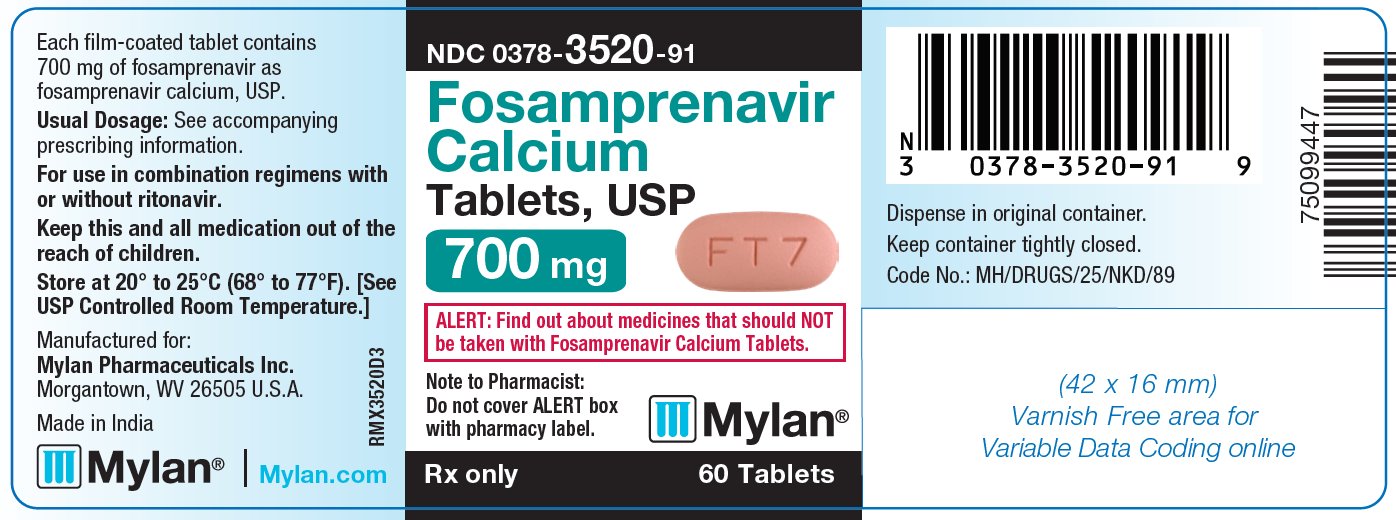
Fosamprenavir Calcium 700 mg Tablet, Film Coated, 60-count — NDC 0378-3520-91 (Billing 00378-3520-91)
This is a package of 60 tablets of Fosamprenavir Calcium 700 mg Tablet, Film Coated from Mylan Pharmaceuticals Inc., marketed since Sep 2017 and currently FDA-listed. It is this product's only package size.
NDC database record
One package, one record: these facts belong to NDC 0378-3520-91 alone.
- Record
- FDA NDC Directory package listing · Human prescription drug
- Code segments
- 0378 labeler · 3520 product · 91 package
- Package marketed since
- Sep 18, 2017
- Sample package
- No — commercial package
- Listing certified through
- Dec 31, 2026
- Billing quantity
- 60 EA per package
- Barcode (UPC)
- 0303783520919
- FDA record last changed
- Jul 24, 2026
Identity & classification
Regulatory identifiers FDA, NLM and CMS codes for this package
Drug-database identifiers Medi-Span GPI and First Databank GCN / HICL / AHFS classification
- GSN (GCN sequence number): 053176
- GCN: 20553
- GPI-14 (Medi-Span): 12104525100330
- HICL (First Databank): 025662
- AHFS class code: 08:18.08.08
- RxCUI (RxNorm): 402109
Where does this data come from?
- FDA openFDA NDC Directory · synced Oct 1, 2026
- FDA label on DailyMed · label index refreshed Oct 5, 2026
- RxNorm (NLM RxNav) · catalog refreshed Oct 1, 2026
- Medi-Span GPI (licensed)
- First Databank (licensed) · refreshed Oct 1, 2026
RxNorm drug class
This medicine belongs to the Protease inhibitors class.
Where does this data come from?
- RxClass (NLM) · catalog refreshed Oct 1, 2026
Clinical
Fosamprenavir is used to treat human immunodeficiency virus (HIV) infection. Fosamprenavir is in a class of medications called protease inhibitors. It works by decreasing the amount of HIV in the blood. Although fosamprenavir does not cure HIV, it may decrease your chance of developing acquired immunodeficiency syndrome (AIDS) and HIV-related illnesses. Taking these medications and making other life-style changes may decrease the risk of giving the HIV virus to other people.
Read the full MedlinePlus article ↗- It treats HIV-1 infection. You take it together with other HIV medicines, not by itself. It blocks an enzyme the virus needs to make working copies of itself.
- Tablets can be taken with or without food. If you or your child uses the oral suspension, adults should take it without food and children should take it with food. If a child vomit...
- The most common are diarrhea, rash, nausea, vomiting and headache. Mild rashes often settle. But call your doctor right away for a severe rash, blistering, or rash with fever or fe...
- Not always. Fosamprenavir interacts with many drugs, and some combinations are not allowed, including simvastatin, lovastatin, rifampin and St. John's wort. Always check with me be...
Patient education
Supplement & herbal interactions
Where does this data come from?
- MedlinePlus (NLM) · refreshed Oct 1, 2026
- FDA label on DailyMed · label index refreshed Oct 5, 2026
Ask a licensed pharmacist directly — free, answered by our team.
Pricing
A drug doesn't have one price. Each row is a different public payment system, and none is what you'd pay at the counter — that depends on your insurance. The ⓘ on each row explains what it measures.
| Price system | Per each | Per package |
|---|---|---|
| Retail pharmacies payNADAC · weekly | Not in the retail survey — common for institutional, discontinued, or low-volume packs. | |
| Medicaid paysCMS SDUD · 12 mo | No recent Medicaid claims on file for this NDC — rare and low-volume NDCs are suppressed in the public data. | |
| Medicare drug plans payPart D · Q2 2026 | $14.41 | $864.44 / 60 tablets |
Where does this data come from?
- CMS NADAC weekly file
- CMS ASP pricing files · refreshed Sep 20, 2026
- CMS Medicaid State Drug Utilization Data · refreshed Oct 5, 2026
- CMS Part D plan pricing files · refreshed Sep 24, 2026
- VA National Acquisition Center price file
Packaging — all sizes for this product
| Package NDC | Description | Marketing start | Marketing end | Status |
|---|---|---|---|---|
| 00378-3520-91 You're viewing this Main listing | 60 TABLET, FILM COATED in 1 BOTTLE, PLASTIC | 2017-09-18 | — | Active |
Therapeutic equivalents
| Product | Labeler | Pack | NADAC/unit | TE | Status | Price vs. this |
|---|---|---|---|---|---|---|
| Fosamprenavir Calcium 700 mgthis 00378-3520-91 | Mylan | 60 tablets | — | AB | FDA listed | — |
| Fosamprenavir Calcium 700 mg 63304-0583-01 | Sun | 100 tablets | — | AB | FDA listed | — |
Where does this data come from?
- FDA openFDA NDC Directory · synced Oct 1, 2026
- FDA Orange Book · refreshed Oct 3, 2026
- CMS NADAC weekly file
Availability & generic status
This product is an FDA-approved generic. Other versions of the same drug are listed under Therapeutic equivalents, least expensive first.
Where does this data come from?
- FDA Orange Book · refreshed Oct 3, 2026
What it looks like
Where does this data come from?
- FDA label on DailyMed · label index refreshed Oct 5, 2026
Inactive Ingredients / Excipients
Inactive ingredients, also called excipients, are components of the drug product other than the active ingredient. They may include fillers, dyes, coatings, preservatives, flavors, or other formulation ingredients.
🧪 Avoiding an ingredient? See Fosamprenavir inactive ingredients by manufacturer: every current product's list side by side, so you can ask your pharmacy for the version that does not list it.
💡 Tap an ingredient (hover on desktop) to see what it is and why it’s used.
-
UNII M28OL1HH48
Croscarmellose sodium is a plant-based substance derived from cellulose. It acts as a disintegrant, helping tablets and capsules break down quickly in the digestive system so the medicine can be absorbed.
-
UNII 1K09F3G675
Ferric oxide red is an inorganic iron compound used as a colorant in medicines. It gives tablets, capsules, or other dosage forms a red or reddish tint for identification and appearance.
-
UNII 3NXW29V3WO
Hypromellose is a plant-based thickener made from cellulose. It's used in medicines as a binder to hold ingredients together, a coating for tablets, and a thickener for liquids.
-
UNII 70097M6I30
Magnesium stearate is a salt made from magnesium and stearic acid, a fatty substance. It's used in tablets and capsules as a lubricant and glidant to help ingredients flow smoothly during manufacturing and prevent sticking.
-
UNII OP1R32D61U
Microcrystalline cellulose is a purified form of cellulose, a natural fiber from plant sources. It acts as a binder and filler in tablets and capsules, helping hold ingredients together and give the medicine its shape and size.
-
UNII FZ989GH94E
Povidone is a synthetic polymer made from a plastic-like material. It acts as a binder to hold tablet ingredients together and as a disintegrant to help the tablet break apart in your stomach so the medicine can be absorbed.
-
UNII ETJ7Z6XBU4
Silicon dioxide is a naturally occurring mineral used as a glidant and anti-caking agent. It helps powder ingredients flow smoothly and prevents clumping during manufacturing and storage.
-
UNII 15FIX9V2JP
Titanium dioxide is a bright white mineral powder commonly used as a colorant and opacifying agent. It makes pills and tablets white or lighter in color and helps make coatings non-transparent.
-
UNII XHX3C3X673
Triacetin is a clear, oily liquid made from glycerin and acetic acid. It works as a plasticizer and solvent in medicines, helping soften coatings and improve how liquids mix together in formulations.
9 inactive ingredients listed in the exact product block matched to this NDC.
Where does this data come from?
ingredient classCode="IACT" elements from the exact product block matched by this NDC. Label-section narrative from DailyMed / the openFDA label index is shown separately when available.- FDA label on DailyMed · label index refreshed Oct 5, 2026
- FDA openFDA NDC Directory · synced Oct 1, 2026
Inactive ingredient FAQ
Are inactive ingredients the same for every manufacturer?
Why might an inactive ingredient be missing?
Can inactive ingredients matter?
Manufacturer & labeler
More NDCs from Mylan Pharmaceuticals Inc. labeler code 00378
- Estradiol .06 mg/d Patch NDC 0378-3361-99
- Armodafinil 50 mg Tablet NDC 0378-3431-93
- Armodafinil 150 mg Tablet NDC 0378-3432-93
- Armodafinil 250 mg Tablet NDC 0378-3433-93
- Azelastine Hydrochloride and Fluticasone Propionate 137 ug; 50 ug Spray, Metered NDC 0378-3458-23
- Mirtazapine 15 mg Tablet, Film Coated NDC 0378-3515-01
- Mirtazapine 30 mg Tablet, Film Coated NDC 0378-3530-01
- Mirtazapine 45 mg Tablet, Film Coated NDC 0378-3545-01
- Cetirizine Hydrochloride 5 mg Tablet, Film Coated NDC 0378-3635-01
- Cetirizine Hydrochloride 10 mg Tablet, Film Coated NDC 0378-3637-01
- Phenytek phenytoin sodium 300 mg Capsule, Extended Release NDC 0378-3750-01
- Clozapine 25 mg Tablet, Orally Disintegrating NDC 0378-3813-01
Where does this data come from?
- FDA openFDA NDC Directory · synced Oct 1, 2026
- Drugs@FDA
Full prescribing information FDA SPL
🎯 Indications and Usage ▾
1 INDICATIONS AND USAGE Fosamprenavir calcium tablets are indicated in combination with other antiretroviral agents for the treatment of human immunodeficiency virus (HIV-1) infection. The following points should be considered when initiating therapy with fosamprenavir plus ritonavir in protease inhibitor-experienced patients: • The protease inhibitor-experienced patient trial was not large enough to reach a definitive conclusion that fosamprenavir plus ritonavir and lopinavir plus ritonavir are clinically equivalent [see Clinical Studies (14.2) ] . • Once-daily administration of fosamprenavir plus ritonavir is not recommended for adult protease inhibitor-experienced patients or any pediatric patients [see Dosage and Administration (2.2 , 2.3) , Clinical Studies (14.2 , 14.3) ]. • Dosing of fosamprenavir plus ritonavir is not recommended for protease inhibitor-experienced pediatric patients younger than 6 months [see Clinical Pharmacology (12.3)] .
Fosamprenavir calcium tablets are an HIV protease inhibitor indicated in combination with other antiretroviral agents for the treatment of HIV-1 infection. ( 1 )
⏱️ Dosage and Administration ▾
2 DOSAGE AND ADMINISTRATION • Therapy-Naive Adults: Fosamprenavir 1,400 mg twice daily; fosamprenavir 1,400 mg once daily plus ritonavir 200 mg once daily; fosamprenavir 1,400 mg once daily plus ritonavir 100 mg once daily; fosamprenavir 700 mg twice daily plus ritonavir 100 mg twice daily. ( 2.2 ) • Protease Inhibitor-Experienced Adults: Fosamprenavir 700 mg twice daily plus ritonavir 100 mg twice daily. ( 2.2 ) • Pregnant Patients: Fosamprenavir 700 mg twice daily plus ritonavir 100 mg twice daily should only be considered in women who are already on a stable twice-daily regimen of fosamprenavir/ritonavir 700 mg/100 mg prior to pregnancy and who are virologically suppressed (HIV-1 RNA less than 50 copies per mL).
( 2.2 ) • Pediatric Patients (aged at least 4 weeks to 18 years): Dosage should be calculated based on body weight (kg) and should not exceed adult dose. ( 2.3 ) • Hepatic Impairment: Recommended adjustments for patients with mild, moderate, or severe hepatic impairment. ( 2.4 ) Dosing Considerations • Fosamprenavir calcium tablets may be taken with or without food.
( 2.1 )
2.1General Dosing Information Fosamprenavir calcium tablets may be taken with or without food. Higher-than-approved dose combinations of fosamprenavir plus ritonavir are not recommended due to an increased risk of transaminase elevations [see Overdosage (10) ] . When fosamprenavir is used in combination with ritonavir, prescribers should consult the full prescribing information for ritonavir.
2.2Adults Therapy-Naive Adults • Fosamprenavir 1,400 mg twice daily (without ritonavir). • Fosamprenavir 1,400 mg once daily plus ritonavir 200 mg once daily. • Fosamprenavir 1,400 mg once daily plus ritonavir 100 mg once daily. o Dosing of fosamprenavir 1,400 mg once daily plus ritonavir 100 mg once daily is supported by pharmacokinetic data [see Clinical Pharmacology (12.3) ] . • Fosamprenavir 700 mg twice daily plus ritonavir 100 mg twice daily. o Dosing of fosamprenavir 700 mg twice daily plus ritonavir 100 mg twice daily is supported by pharmacokinetic and safety data [see Clinical Pharmacology (12.3) ] .
Protease Inhibitor-Experienced Adults • Fosamprenavir 700 mg twice daily plus ritonavir 100 mg twice daily. Pregnancy • Fosamprenavir 700 mg twice daily plus ritonavir 100 mg twice daily. o Dosing of fosamprenavir 700 mg twice daily plus ritonavir 100 mg twice daily should only be considered in pregnant patients who are already on a stable twice-daily regimen of fosamprenavir/ritonavir 700 mg/100 mg prior to pregnancy and who are virologically suppressed (HIV-1 RNA less than 50 copies per mL). Lower exposures of amprenavir were observed during pregnancy; therefore, viral load should be monitored closely to ensure viral suppression is maintained [see Use in Specific Populations (8.1) , Clinical Pharmacology (12.3) ] .
Data regarding use of other regimens of fosamprenavir (with or without ritonavir) in pregnancy are not available.
2.3Pediatric Patients (Aged at Least 4 Weeks to 18 Years) The recommended dosage of fosamprenavir in patients aged at least 4 weeks to 18 years should be calculated based on body weight (kg) and should not exceed the recommended adult dose (Table 1). Table 1. Twice-Daily Dosage Regimens by Weight for Protease Inhibitor-Naive Pediatric Patients (Aged 4 Weeks and Older) and for Protease Inhibitor-Experienced Pediatric Patients (Aged 6 Months and Older) Using Fosamprenavir Calcium Oral Suspension with Concurrent Ritonavir Weight Twice-Daily Dosage Regimen < 11 kg Fosamprenavir 45 mg/kg plus ritonavir 7 mg/kg When dosing with ritonavir, do not exceed the adult dose of fosamprenavir 700 mg/ritonavir 100 mg twice-daily dose.
11 kg - < 15 kg Fosamprenavir 30 mg/kg plus ritonavir 3 mg/kg 15 kg - < 20 kg Fosamprenavir 23 mg/kg plus ritonavir 3 mg/kg ≥ 20 kg Fosamprenavir 18 mg/kg plus ritonavir 3 mg/kg Alternatively, protease inhibitor-naive children aged 2 years and older can be administered fosamprenavir (without ritonavir) 30 mg p… [Excerpted — this section continues on DailyMed.]
💊 Dosage Forms and Strengths ▾
3 DOSAGE FORMS AND STRENGTHS Fosamprenavir Calcium Tablets, USP are available containing 700 mg of fosamprenavir as fosamprenavir calcium, USP. • The 700 mg tablets are pink, film-coated, modified capsule shaped, unscored tablets debossed with M on one side of the tablet and FT7 on the other side. • 700-mg tablets ( 3 )
⛔ Contraindications ▾
4 CONTRAINDICATIONS • Fosamprenavir calcium tablets are contraindicated in patients with previously demonstrated clinically significant hypersensitivity (e.g., Stevens-Johnson syndrome) to any of the components of this product or to amprenavir. • Fosamprenavir calcium tablets are contraindicated when coadministered with drugs that are highly dependent on cytochrome P450 (CYP)3A4 for clearance and for which elevated plasma concentrations are associated with serious and/or life-threatening events. These drugs and other contraindicated drugs (which may lead to reduced efficacy of fosamprenavir and possible resistance) are listed below [see Drug Interactions (7), Clinical Pharmacology (12.3)].
The list of contraindicated drugs applies to the use of fosamprenavir with or without ritonavir, unless otherwise indicated. If fosamprenavir is coadministered with ritonavir, reference should be made to the full prescribing information for ritonavir for additional contraindications. • Fosamprenivir is contraindicated when coadministered with the following drugs: o Alpha 1-adrenoreceptor antagonist: Alfuzosin o Antiarrhythmics: Flecainide (with ritonavir ), propafenone (with ritonavir ) o Antimycobacterial: Rifampin o Antipsychotic: Lurasidone (with ritonavir ), pimozide o Ergot derivatives: Dihydroergotamine, ergonovine, ergotamine, methylergonovine o GI motility agent: Cisapride o Herbal product: St.
John’s wort ( Hypericum perforatum ) o Lipid modifying agents: Lomitapide, lovastatin, simvastatin o Non-nucleoside reverse transcriptase inhibitor: Delavirdine o PDE5 inhibitor: Sildenafil (REVATIO ® ) (for treatment of pulmonary arterial hypertension) o Sedative/hypnotics: Midazolam, triazolam • Hypersensitivity to fosamprenavir or amprenavir (e.g., Stevens-Johnson syndrome). ( 4 ) • Drugs highly dependent on cytochrome P450 (CYP)3A4 for clearance and for which elevated plasma levels may result in serious and/or life-threatening events.
( 4 ) • Review ritonavir contraindications when used in combination. ( 4 )
⚠️ Warnings and Cautions ▾
5 WARNINGS AND PRECAUTIONS • The concomitant use of fosamprenavir with ritonavir and certain other drugs may result in known or potentially significant drug interactions. Consult the full prescribing information prior to and during treatment for potential drug interactions. ( 5.1 , 7.3 ) • Fosamprenavir should be discontinued for severe skin reactions, including Stevens-Johnson syndrome.
( 5.2 ) • Fosamprenavir should be used with caution in patients with a known sulfonamide allergy. ( 5.3 ) • Use of higher-than-approved doses may lead to transaminase elevations. Patients with hepatitis B or C are at increased risk of transaminase elevations.
( 5.4 ) • Patients receiving fosamprenavir may develop new onset or exacerbations of diabetes mellitus, hyperglycemia ( 5.5 ), immune reconstitution syndrome ( 5.6 ), increase of body fat ( 5.7 ), and elevated triglyceride and cholesterol concentrations ( 5.8 ). Monitor cholesterol and triglycerides prior to therapy and periodically thereafter. • Acute hemolytic anemia has been reported with amprenavir. ( 5.9 ) • Hemophilia: Spontaneous bleeding may occur, and additional factor VIII may be required.
( 5.10 ) • Nephrolithiasis: Cases of nephrolithiasis have been reported with fosamprenavir. ( 5.11 )
5.1Risk of Serious Adverse Reactions Due to Drug Interactions Initiation of fosamprenavir/ritonavir, a CYP3A inhibitor, in patients receiving medications metabolized by CYP3A, or initiation of medications metabolized by CYP3A in patients already receiving fosamprenavir/ritonavir may increase plasma concentrations of medications metabolized by CYP3A. Initiation of medications that inhibit or induce CYP3A may increase or decrease concentrations of fosamprenavir/ritonavir, respectively. These interactions may lead to: • clinically significant adverse reactions, potentially leading to severe, life-threatening, or fatal events from greater exposures of concomitant medications. • clinically significant adverse reactions from greater exposures of fosamprenavir/ritonavir. • loss of therapeutic effect of fosamprenavir/ritonavir and possible development of resistance.
See Table 6 for steps to prevent or manage these possible and known significant drug interactions, including dosing recommendations [see Drug Interactions (7) ] . Consider the potential for drug interactions prior to and during therapy with fosamprenavir/ritonavir; review concomitant medications during therapy with fosamprenavir/ritonavir; and monitor for the adverse reactions associated with the concomitant medications [see Contraindications (4) , Drug Interactions (7) ] .
5.2Skin Reactions Severe and life-threatening skin reactions, including 1 case of Stevens-Johnson syndrome among 700 subjects treated with fosamprenavir in clinical trials. Treatment with fosamprenavir should be discontinued for severe or life-threatening rashes and for moderate rashes accompanied by systemic symptoms [see Adverse Reactions (6) ] .
5.3Sulfa Allergy Fosamprenavir should be used with caution in patients with a known sulfonamide allergy. Fosamprenavir contains a sulfonamide moiety. The potential for cross-sensitivity between drugs in the sulfonamide class and fosamprenavir is unknown.
In a clinical trial of fosamprenavir used as the sole protease inhibitor, rash occurred in 2 of 10 subjects (20%) with a history of sulfonamide allergy compared with 42 of 126 subjects (33%) with no history of sulfonamide allergy. In 2 clinical trials of fosamprenavir plus low-dose ritonavir, rash occurred in 8 of 50 subjects (16%) with a history of sulfonamide allergy compared with 50 of 412 subjects (12%) with no history of sulfonamide allergy.
5.4Hepatic Toxicity Use of fosamprenavir with ritonavir at higher-than-recommended dosages may result in transaminase elevations and should not be used [see Dosage and Administration (2) , Overdosage (10) ] . Patients with underlying hepatitis B or C or marked elevations in transaminases prior to treatment may be at increased risk… [Excerpted — this section continues on DailyMed.]
🤒 Adverse Reactions ▾
6 ADVERSE REACTIONS • Severe or life-threatening skin reactions have been reported with the use of fosamprenavir [see Warnings and Precautions (5.2) ] . • The most common moderate to severe adverse reactions in clinical trials of fosamprenavir were diarrhea, rash, nausea, vomiting, and headache. • Treatment discontinuation due to adverse events occurred in 6.4% of subjects receiving fosamprenavir and in 5.9% of subjects receiving comparator treatments. The most common adverse reactions leading to discontinuation of fosamprenavir (incidence less than or equal to 1% of subjects) included diarrhea, nausea, vomiting, AST increased, ALT increased, and rash. • In adults the most common adverse reactions (incidence greater than or equal to 4%) are diarrhea, rash, nausea, vomiting, and headache.
( 6.1 ) • Vomiting and neutropenia were more frequent in pediatrics than in adults. ( 6.1 ) To report SUSPECTED ADVERSE REACTIONS, contact Mylan at 1-877-446-3679 (1-877-4-INFO-RX) or FDA at 1-800-FDA-1088 or www.fda.gov/medwatch.
6.1Clinical Trials Experience Because clinical trials are conducted under widely varying conditions, adverse reaction rates observed in the clinical trials of a drug cannot be directly compared with rates in the clinical trials of another drug and may not reflect the rates observed in clinical practice. Adult Trials The data for the 3 active-controlled clinical trials described below reflect exposure of 700 HIV-1– infected subjects to fosamprenavir calcium tablets, including 599 subjects exposed to fosamprenavir for greater than 24 weeks, and 409 subjects exposed for greater than 48 weeks.
The population age ranged from 17 to 72 years. Of these subjects, 26% were female, 51% white, 31% black, 16% American Hispanic, and 70% were antiretroviral-naive. Sixty-one percent received fosamprenavir 1,400 mg once daily plus ritonavir 200 mg once daily; 24% received fosamprenavir 1,400 mg twice daily; and 15% received fosamprenavir 700 mg twice daily plus ritonavir 100 mg twice daily.
Selected adverse reactions reported during the clinical efficacy trials of fosamprenavir are shown in Tables 2 and 3. Each table presents adverse reactions of moderate or severe intensity in subjects treated with combination therapy for up to 48 weeks. Table 2.
Selected Moderate/Severe Clinical Adverse Reactions Reported in Greater than or Equal to 2% of Antiretroviral-Naive Adult Subjects Adverse Reaction APV30001 All subjects also received abacavir and lamivudine twice daily. APV30002 Fosamprenavir 1,400 mg Twice Daily (n = 166) Nelfinavir 1,250 mg Twice Daily (n = 83) Fosamprenavir 1,400 mg and Ritonavir 200 mg Once Daily (n = 322) Nelfinavir 1,250 mg Twice Daily (n = 327) Gastrointestinal Diarrhea 5% 18% 10% 18% Nausea 7% 4% 7% 5% Vomiting 2% 4% 6% 4% Abdominal pain 1% 0% 2% 2% Skin Rash 8% 2% 3% 2% General disorders Fatigue 2% 1% 4% 2% Nervous system Headache 2% 4% 3% 3% Table 3.
Selected Moderate/Severe Clinical Adverse Reactions Reported in Greater than or Equal to 2% of Protease Inhibitor-Experienced Adult Subjects (Trial APV30003) Adverse Reaction Fosamprenavir 700 mg and Ritonavir 100 mg Twice Daily All subjects also received 2 reverse transcriptase inhibitors. (n = 106) Lopinavir 400 mg and Ritonavir 100 mg Twice Daily (n = 103) Gastrointestinal Diarrhea 13% 11% Nausea 3% 9% Vomiting 3% 5% Abdominal pain < 1% 2% Skin Rash 3% 0% Nervous system Headache 4% 2% Skin rash (without regard to causality) occurred in approximately 19% of subjects treated with fosamprenavir in the pivotal efficacy trials.
Rashes were usually maculopapular and of mild or moderate intensity, some with pruritus. Rash had a median onset of 11 days after initiation of fosamprenavir and had a median duration of 13 days. Skin rash led to discontinuation of fosamprenavir in less than 1% of subjects.
In some subjects with mild or moderate rash, dosing with fosamprenavir was often continued without interruption; if interrupted, reintroduction of fosamprenavir generally di… [Excerpted — this section continues on DailyMed.]
🔄 Drug Interactions ▾
7 DRUG INTERACTIONS • Coadministration of fosamprenavir with drugs that induce CYP3A4 may decrease amprenavir (active metabolite) concentrations leading to potential loss of virologic activity. ( 7 , 12.3 ) • Coadministration with drugs that inhibit CYP3A4 may increase amprenavir concentrations. ( 7 , 12.3 ) • Coadministration of fosamprenavir or fosamprenavir and ritonavir may result in clinically significant interactions with drugs metabolized by CYP3A4.
( 7 ) • Coadministration of fosamprenavir and ritonavir may result in clinically significant interactions with drugs metabolized by CYP2D6. ( 7 )
7.1Cytochrome P450 Inhibitors and Inducers Amprenavir, the active metabolite of fosamprenavir, is an inhibitor of CYP3A4 metabolism and therefore should not be administered concurrently with medications with narrow therapeutic windows that are substrates of CYP3A4. Data also suggest that amprenavir induces CYP3A4. Amprenavir is metabolized by CYP3A4.
Coadministration of fosamprenavir and drugs that induce CYP3A4, such as rifampin, may decrease amprenavir concentrations and reduce its therapeutic effect. Coadministration of fosamprenavir and drugs that inhibit CYP3A4 may increase amprenavir concentrations and increase the incidence of adverse effects. The potential for drug interactions with fosamprenavir changes when fosamprenavir is coadministered with the potent CYP3A4 inhibitor ritonavir.
The magnitude of CYP3A4-mediated drug interactions (effect on amprenavir or effect on coadministered drug) may change when fosamprenavir is coadministered with ritonavir. Because ritonavir is a CYP2D6 inhibitor, clinically significant interactions with drugs metabolized by CYP2D6 are possible when coadministered with fosamprenavir plus ritonavir. Ritonavir also appears to induce CYP3A, CYP1A2, CYP2C9, CYP2C19, and CYP2B6, as well as other enzymes, including glucuronosyl transferase.
There are other agents that may result in serious and/or life-threatening drug interactions [see Contraindications (4) ] .
7.2Established and Other Potentially Significant Drug Interactions If fosamprenavir is used in combination with ritonavir, see full prescribing information for ritonavir for additional information on drug interactions [see Contraindications (4) , Clinical Pharmacology (12.3) ] . Table 6 provides a listing of established or potentially clinically significant drug interactions. Information in the table applies to fosamprenavir with or without ritonavir, unless otherwise indicated.
Table 6. Established and Other Potentially Significant Drug Interactions Concomitant Drug Class: Drug Name Effect on Concentration of Amprenavir or Concomitant Drug Clinical Comment HCV/HIV-Antiviral Agents HCV protease inhibitor: Boceprevir Fosamprenavir: ↓ Amprenavir (predicted) ↔ or ↓ Boceprevir (predicted) Fosamprenavir/ ritonavir: ↓ Amprenavir (predicted) ↓ Boceprevir (predicted) Coadministration of fosamprenavir or fosamprenavir/ritonavir and boceprevir is not recommended. HCV protease inhibitor: Simeprevir Fosamprenavir: ↔ Amprenavir (predicted) ↑ or ↓ Simeprevir (predicted) Fosamprenavir/ ritonavir: ↔ Amprenavir (predicted) ↑ Simeprevir (predicted) Coadministration of fosamprenavir or fosamprenavir/ritonavir and simeprevir is not recommended.
HCV protease inhibitor: Paritaprevir (coformulated with ritonavir and ombitasvir and coadministered with dasabuvir) Fosamprenavir: ↑ Amprenavir (predicted) ↑ or ↔ Paritaprevir (predicted) Fosamprenavir/ ritonavir: ↑ or ↔ Amprenavir (predicted) ↑ Paritaprevir (predicted) Appropriate doses of the combinations with respect to safety and efficacy have not been established. Fosamprenavir 1,400 mg once daily may be considered when coadministered with paritaprevir/ritonavir/ombitasvir/dasabuvir. Coadministration of fosamprenavir/ritonavir and paritaprevir/ritonavir/ombitasvir/ dasabuvir is not recommended.
Non-nucleoside reverse transcriptase inhibitor: Delavirdine See Clinical Pharmacology (12.3) Tables 10 , 11 , 12 , or 13 for… [Excerpted — this section continues on DailyMed.]
👥 Use in Specific Populations ▾
8 USE IN SPECIFIC POPULATIONS Lactation: Breastfeeding is not recommended due to potential for HIV transmission. ( 8.2 )
8.1Pregnancy Pregnancy Exposure Registry There is a pregnancy exposure registry that monitors pregnancy outcomes in women exposed to fosamprenavir during pregnancy. Healthcare providers are encouraged to register patients by calling the Antiretroviral Pregnancy Registry (APR) at 1-800-258-4263. Risk Summary Limited data are available for use of fosamprenavir in pregnancy.
Fosamprenavir 700 mg twice daily taken with ritonavir 100 mg twice daily should only be considered in pregnant patients who are already on a stable twice-daily regimen of fosamprenavir/ritonavir 700 mg/100 mg prior to pregnancy, and who are virologically suppressed (HIV-1 RNA less than 50 copies per mL) (see Clinical Considerations and Data ). There are insufficient human data on the use of fosamprenavir during pregnancy to adequately assess a drug-associated risk for birth defects and miscarriage. Given the limited number of pregnancies exposed to fosamprenavir-based regimens, no conclusions can be drawn on the safety of fosamprenavir in pregnancy.
The background risk for major birth defects and miscarriage for the indicated population is unknown. The background rate for major birth defects in a U.S. reference population of the Metropolitan Atlanta Congenital Defects Program (MACDP) is 2.7% (see Data ) . The estimated background rate of miscarriage in clinically recognized pregnancies in the U.S. general population is 15% to 20%.
In animal reproduction studies, no evidence of major adverse developmental outcomes was observed following oral administration of fosamprenavir. Systemic exposure to amprenavir (the active ingredient) was less than (rabbits) or up to 2 times (rats) those in humans at the maximum recommended human dose (MRHD) with or without ritonavir. In contrast, oral administration of amprenavir was associated with abortions in pregnant rabbits at doses that produced approximately one-twentieth the human exposure at the MRHD.
In the rat pre- and postnatal development study, toxicities to the offspring, including reduced survival and reproductive performance, were observed at maternal systemic exposures (AUC) to amprenavir that were approximately 2 times the exposure in humans at the MRHD of fosamprenavir alone or approximately the same as those seen in humans following administration of the MRHD of fosamprenavir in combination with ritonavir (see Data ). Clinical Considerations Virologic Monitoring During Pregnancy and the Postpartum Period Based on limited data on the use of fosamprenavir during pregnancy, no dosage adjustments are required for pregnant patients who are already on a stable twice-daily regimen of fosamprenavir 700 mg taken with ritonavir 100 mg prior to pregnancy, and who are virologically suppressed (HIV-1 RNA less than 50 copies per mL) [see Dosage and Administration (2.3) , Clinical Pharmacology (12.3) ] .
In a clinical trial of 10 HIV-1–infected pregnant women treated with fosamprenvir 700 mg taken with ritonavir 100 mg twice daily through postpartum, total amprenavir exposures were lower during pregnancy compared with the postpartum period. Therefore, viral load should be monitored closely to ensure viral suppression is maintained [see Data , Dosage and Administration (2.2) , Clinical Pharmacology (12.3) ] . Pregnancy data with other dosage regimens of fosamprenavir (with or without ritonavir) are not available.
Data Human Data Fosamprenavir 700 mg taken with ritonavir 100 mg twice daily in combination with a background regimen was evaluated in a clinical trial of 10 HIV-1–infected pregnant women during the second and third trimesters and postpartum. Subjects initiated fosamprenavir/ritonavir during pregnancy at a median of 19 weeks’ gestation; 4 had undetectable HIV-1 RNA viral load (less than 50 copies/mL) at the time of initiation. Amprenavir pharmacokinetics and placental transfer were studied during t… [Excerpted — this section continues on DailyMed.]
🤰 Pregnancy ▾
8.1Pregnancy Pregnancy Exposure Registry There is a pregnancy exposure registry that monitors pregnancy outcomes in women exposed to fosamprenavir during pregnancy. Healthcare providers are encouraged to register patients by calling the Antiretroviral Pregnancy Registry (APR) at 1-800-258-4263. Risk Summary Limited data are available for use of fosamprenavir in pregnancy.
Fosamprenavir 700 mg twice daily taken with ritonavir 100 mg twice daily should only be considered in pregnant patients who are already on a stable twice-daily regimen of fosamprenavir/ritonavir 700 mg/100 mg prior to pregnancy, and who are virologically suppressed (HIV-1 RNA less than 50 copies per mL) (see Clinical Considerations and Data ). There are insufficient human data on the use of fosamprenavir during pregnancy to adequately assess a drug-associated risk for birth defects and miscarriage. Given the limited number of pregnancies exposed to fosamprenavir-based regimens, no conclusions can be drawn on the safety of fosamprenavir in pregnancy.
The background risk for major birth defects and miscarriage for the indicated population is unknown. The background rate for major birth defects in a U.S. reference population of the Metropolitan Atlanta Congenital Defects Program (MACDP) is 2.7% (see Data ) . The estimated background rate of miscarriage in clinically recognized pregnancies in the U.S. general population is 15% to 20%.
In animal reproduction studies, no evidence of major adverse developmental outcomes was observed following oral administration of fosamprenavir. Systemic exposure to amprenavir (the active ingredient) was less than (rabbits) or up to 2 times (rats) those in humans at the maximum recommended human dose (MRHD) with or without ritonavir. In contrast, oral administration of amprenavir was associated with abortions in pregnant rabbits at doses that produced approximately one-twentieth the human exposure at the MRHD.
In the rat pre- and postnatal development study, toxicities to the offspring, including reduced survival and reproductive performance, were observed at maternal systemic exposures (AUC) to amprenavir that were approximately 2 times the exposure in humans at the MRHD of fosamprenavir alone or approximately the same as those seen in humans following administration of the MRHD of fosamprenavir in combination with ritonavir (see Data ). Clinical Considerations Virologic Monitoring During Pregnancy and the Postpartum Period Based on limited data on the use of fosamprenavir during pregnancy, no dosage adjustments are required for pregnant patients who are already on a stable twice-daily regimen of fosamprenavir 700 mg taken with ritonavir 100 mg prior to pregnancy, and who are virologically suppressed (HIV-1 RNA less than 50 copies per mL) [see Dosage and Administration (2.3) , Clinical Pharmacology (12.3) ] .
In a clinical trial of 10 HIV-1–infected pregnant women treated with fosamprenvir 700 mg taken with ritonavir 100 mg twice daily through postpartum, total amprenavir exposures were lower during pregnancy compared with the postpartum period. Therefore, viral load should be monitored closely to ensure viral suppression is maintained [see Data , Dosage and Administration (2.2) , Clinical Pharmacology (12.3) ] . Pregnancy data with other dosage regimens of fosamprenavir (with or without ritonavir) are not available.
Data Human Data Fosamprenavir 700 mg taken with ritonavir 100 mg twice daily in combination with a background regimen was evaluated in a clinical trial of 10 HIV-1–infected pregnant women during the second and third trimesters and postpartum. Subjects initiated fosamprenavir/ritonavir during pregnancy at a median of 19 weeks’ gestation; 4 had undetectable HIV-1 RNA viral load (less than 50 copies/mL) at the time of initiation. Amprenavir pharmacokinetics and placental transfer were studied during the second trimester (n = 6) or third trimester (n = 9) and postpartum (n = 9).
Pregnancy outcomes were available for all… [Excerpted — this section continues on DailyMed.]
🧒 Pediatric Use ▾
8.4Pediatric Use The safety, pharmacokinetic profile, and virologic and immunologic responses of fosamprenavir with and without ritonavir were evaluated in protease inhibitor-naive and -experienced HIV-1–infected pediatric subjects aged at least 4 weeks to younger than 18 years and weighing at least 3 kg in 3 open-label trials [see Adverse Reactions (6.1) , Clinical Pharmacology (12.3) , Clinical Studies (14.3) ] . Treatment with fosamprenavir is not recommended in protease inhibitor-experienced pediatric patients younger than 6 months.
The pharmacokinetics, safety, tolerability, and efficacy of fosamprenavir in pediatric patients younger than 4 weeks have not been established [see Clinical Pharmacology (12.3) ] . Available pharmacokinetic and clinical data do not support once-daily dosing of fosamprenavir alone or in combination with ritonavir for any pediatrics or twice-daily dosing without ritonavir in pediatric patients younger than 2 years [see Clinical Pharmacology (12.3) , Clinical Studies (14.3) ] . See Dosage and Administration (2.3) for dosing recommendations for pediatric patients.
🧓 Geriatric Use ▾
8.5Geriatric Use Clinical studies of fosamprenavir did not include sufficient numbers of patients aged 65 and over to determine whether they respond differently from younger adults. In general, dose selection for an elderly patient should be cautious, reflecting the greater frequency of decreased hepatic, renal, or cardiac function and of concomitant disease or other drug therapy.
🆘 Overdosage ▾
10 OVERDOSAGE In a healthy volunteer repeat-dose pharmacokinetic trial evaluating high-dose combinations of fosamprenavir plus ritonavir, an increased frequency of Grade 2/3 ALT elevations (greater than 2.5 x ULN) was observed with fosamprenavir 1,400 mg twice daily plus ritonavir 200 mg twice daily (4 of 25 subjects). Concurrent Grade 1/2 elevations in AST (greater than 1.25 x ULN) were noted in 3 of these 4 subjects. These transaminase elevations resolved following discontinuation of dosing.
There is no known antidote for fosamprenavir. It is not known whether amprenavir can be removed by peritoneal dialysis or hemodialysis, although it is unlikely as amprenavir is highly protein bound. If overdosage occurs, the patient should be monitored for evidence of toxicity and standard supportive treatment applied as necessary.
🧬 Clinical Pharmacology ▾
12 CLINICAL PHARMACOLOGY
12.1Mechanism of Action Fosamprenavir is an HIV-1 antiretroviral agent [see Microbiology (12.4) ] .
12.3Pharmacokinetics The pharmacokinetic properties of amprenavir after administration of fosamprenavir, with or without ritonavir, have been evaluated in both healthy adult volunteers and in HIV-1–infected subjects; no substantial differences in steady-state amprenavir concentrations were observed between the 2 populations. The pharmacokinetic parameters of amprenavir after administration of fosamprenavir (with and without concomitant ritonavir) are shown in Table 7. Table 7.
Geometric Mean (95% CI) Steady-State Plasma Amprenavir Pharmacokinetic Parameters in Adults Regimen C max (mcg/mL) T max (hours) Data shown are median (range). AUC 24 (mcg•h/mL) C tau C tau is the concentration at the end of the dose interval. (mcg/mL) Fosamprenavir 1,400 mg Twice Daily (n = 22) HIV-infected adults.
4.82(4.06-5.72) 1.3 (0.8-4.0)
33.0AUC24 was calculated from AUC12 summary data x 2. (27.6-39.2) 0.35 (0.27-0.46) Fosamprenavir 1,400 mg Once Daily plus Ritonavir 200 mg Once Daily (n = 22) Healthy adults. 7.24 (6.32-8.28) 2.1 (0.8-5.0) 69.4 (59.7-80.8) 1.45 (1.16-1.81) Fosamprenavir 1,400 mg Once Daily plus Ritonavir 100 mg Once Daily (n = 36) 7.93 (7.25-8.68) 1.5 (0.75-5.0) 66.4 (61.1-72.1) 0.86 (0.74-1.01) Fosamprenavir 700 mg Twice Daily plus Ritonavir 100 mg Twice Daily (n = 24) 6.08 (5.38-6.86) 1.5 (0.75-5.0) 79.2 (69.0-90.6) 2.12 (1.77-2.54) The mean plasma amprenavir concentrations of the dosing regimens over the dosing intervals are displayed in Figure 1.
Figure 1. Mean (±SD) Steady-State Plasma Amprenavir Concentrations and Mean EC50 Values Against HIV from Protease Inhibitor-Naive Subjects (in the Absence of Human Serum) Absorption After administration of a single dose of fosamprenavir to HIV-1–infected subjects, the time to peak amprenavir concentration (T max ) occurred between 1.5 and 4 hours (median 2.5 hours). The absolute oral bioavailability of amprenavir after administration of fosamprenavir in humans has not been established.
After administration of a single 1,400-mg dose in the fasted state, fosamprenavir calcium oral suspension (50 mg per mL) and fosamprenavir calcium tablets (700 mg) provided similar amprenavir exposures (AUC); however, the C max of amprenavir after administration of the suspension formulation was 14.5% higher compared with the tablet. Amprenavir is both a substrate for and inducer of P-glycoprotein. Effects of Food on Oral Absorption Administration of a single 1,400 mg-dose of fosamprenavir calcium tablets in the fed state (standardized high-fat meal: 967 kcal, 67 grams fat, 33 grams protein, 58 grams carbohydrate) compared with the fasted state was associated with no significant changes in amprenavir C max , T max , or AUC 0-∞ [see Dosage and Administration (2) ] .
Distribution In vitro , amprenavir is approximately 90% bound to plasma proteins, primarily to alpha 1 -acid glycoprotein. In vitro , concentration-dependent binding was observed over the concentration range of 1 to 10 mcg per mL, with decreased binding at higher concentrations. The partitioning of amprenavir into erythrocytes is low, but increases as amprenavir concentrations increase, reflecting the higher amount of unbound drug at higher concentrations.
Metabolism After oral administration, fosamprenavir is rapidly and almost completely hydrolyzed to amprenavir and inorganic phosphate prior to reaching the systemic circulation. This occurs in the gut epithelium during absorption. Amprenavir is metabolized in the liver by the CYP3A4 enzyme system.
The 2 major metabolites result from oxidation of the tetrahydrofuran and aniline moieties. Glucuronide conjugates of oxidized metabolites have been identified as minor metabolites in urine and feces. Elimination Excretion of unchanged amprenavir in urine and feces is minimal.
Unchanged amprenavir in urine accounts for approximately 1% of the dose; unchanged amprenavir w… [Excerpted — this section continues on DailyMed.]
🧬 Mechanism of Action ▾
12.1Mechanism of Action Fosamprenavir is an HIV-1 antiretroviral agent [see Microbiology (12.4) ] .
Mechanism of Action Fosamprenavir is a prodrug that is rapidly hydrolyzed to amprenavir by cellular phosphatases in the gut epithelium as it is absorbed. Amprenavir is an inhibitor of HIV-1 protease. Amprenavir binds to the active site of HIV-1 protease and thereby prevents the processing of viral Gag and Gag-Pol polyprotein precursors, resulting in the formation of immature non-infectious viral particles.
📦 How Supplied / Storage and Handling ▾
16 HOW SUPPLIED/STORAGE AND HANDLING Fosamprenavir Calcium Tablets, USP are available containing 700 mg of fosamprenavir as fosamprenavir calcium, USP. The 700 mg tablets are pink, film-coated, modified capsule shaped, unscored tablets debossed with M on one side of the tablet and FT7 on the other side. They are available as follows: NDC 0378-3520-91 bottles of 60 tablets Store at 20° to 25°C (68° to 77°F). [See USP Controlled Room Temperature.] Keep container tightly closed.
Dispense in original container.
📋 Description ▾
11 DESCRIPTION Fosamprenavir calcium, USP is a prodrug of amprenavir, an inhibitor of HIV protease. The chemical name of fosamprenavir calcium is (3 S )-tetrahydrofuran-3-yl (1 S ,2 R )-3-[[(4-aminophenyl) sulfonyl](isobutyl)amino]-1-benzyl-2-(phosphonooxy) propylcarbamate monocalcium salt. Fosamprenavir calcium is a single stereoisomer with the (3 S )(1 S ,2 R ) configuration.
It has a molecular formula of C 25 H 34 CaN 3 O 9 PS and a molecular weight of 623.67. It has the following structural formula: Fosamprenavir calcium is a white to cream color powder with a solubility of approximately 0.31 mg per mL in water at 25°C. Fosamprenavir calcium tablets, USP are available for oral administration in a strength of 700 mg of fosamprenavir as fosamprenavir calcium (equivalent to approximately 600 mg of amprenavir).
Each 700-mg tablet contains the inactive ingredients colloidal silicon dioxide, croscarmellose sodium, hypromellose, magnesium stearate, microcrystalline cellulose, povidone, red iron oxide, silicified microcrystalline cellulose, titanium dioxide and triacetin. Meets USP Dissolution Test 2 Fosamprenavir Structural Formula
💬 Information for Patients ▾
17 PATIENT COUNSELING INFORMATION Advise the patient to read the FDA-approved patient labeling (Patient Information). Drug Interactions: A statement to patients and healthcare providers is included on the product’s bottle label: ALERT: Find out about medicines that should NOT be taken with Fosamprenavir Calcium Tablets. Fosamprenavir calcium tablets may interact with many drugs; therefore, advise patients to report to their healthcare provider the use of any other prescription or nonprescription medication or herbal products, particularly St.
John’s wort. Advise patients receiving PDE5 inhibitors that they may be at an increased risk of PDE5 inhibitor-associated adverse events, including hypotension, visual changes, and priapism, and should promptly report any symptoms to their healthcare provider [see Contraindications (4) , Warnings and Precautions (5.1) , Drug Interactions (7) ] . Contraception: Instruct patients receiving combined hormonal contraception to use an effective alternative contraceptive method or an additional barrier method during therapy with fosamprenavir calcium tablets because hormonal levels may decrease, and if used in combination with fosamprenavir calcium tablets and ritonavir, liver enzyme elevations may occur [see Drug Interactions (7.2) , Use in Specific Populations (8.3) ] .
Severe Skin Reactions: Advise patients that skin reactions ranging from mild to severe, including Stevens-Johnson Syndrome, have been reported with fosamprenavir calcium tablets. Advise patients to discontinue fosamprenavir calcium tablets immediately for severe or life-threatening skin reactions or for moderate rashes accompanied by systemic symptoms [see Warnings and Precautions (5.2) , Adverse Reactions (6) ] . Sulfa Allergy: Advise patients to inform their healthcare provider if they have a sulfa allergy.
The potential for cross-sensitivity between drugs in the sulfonamide class and fosamprenavir is unknown [see Warnings and Precautions (5.3) ] . Hepatic Toxicity: Advise patients that it is recommended to have laboratory testing before and during therapy as patients with underlying hepatitis B or C or marked elevations of transaminases prior to treatment may be at increased risk for developing or worsening transaminase elevations with use of fosamprenavir calcium tablets, particularly at higher than recommended doses which should not be used [see Warnings and Precautions (5.4) ] .
Immune Reconstitution Syndrome: Advise patients to inform their healthcare provider immediately of any signs or symptoms of infection as inflammation from previous infection may occur soon after combination antiretroviral therapy, including when fosamprenavir calcium tablets are started [see Warnings and Precautions (5.6) ] . Increase in Body Fat: Inform patients that an increase of body fat may occur in patients receiving protease inhibitors, including fosamprenavir calcium tablets, and that the cause and long-term health effects of these conditions are not known at this time [see Warnings and Precautions (5.7) ] .
Lipid Elevations: Advise patients that it is recommended to have laboratory testing before and during therapy as increases in the concentration of triglycerides and cholesterol have been reported with use of fosamprenavir calcium tablets [see Warnings and Precautions (5.8) , Adverse Reactions (6) ] . Pregnancy Registry: Advise patients that there is a pregnancy exposure registry that monitors pregnancy outcomes in women exposed to fosamprenavir calcium tablets during pregnancy [see Use in Specific Populations (8.1) ] .
Lactation: Instruct women with HIV-1 infection not to breastfeed because HIV-1 can be passed to the baby in the breast milk [see Use in Specific Populations (8.2) ] . Missed Dose: Instruct patients that if they miss a dose of fosamprenavir calcium tablets, to take it as soon as they remember. Advise patients not to double their next dose or take more than the prescribed dose [see Dosage and Administration (2) ] .
🧬 Pharmacokinetics ▾
12.3Pharmacokinetics The pharmacokinetic properties of amprenavir after administration of fosamprenavir, with or without ritonavir, have been evaluated in both healthy adult volunteers and in HIV-1–infected subjects; no substantial differences in steady-state amprenavir concentrations were observed between the 2 populations. The pharmacokinetic parameters of amprenavir after administration of fosamprenavir (with and without concomitant ritonavir) are shown in Table 7. Table 7.
Geometric Mean (95% CI) Steady-State Plasma Amprenavir Pharmacokinetic Parameters in Adults Regimen C max (mcg/mL) T max (hours) Data shown are median (range). AUC 24 (mcg•h/mL) C tau C tau is the concentration at the end of the dose interval. (mcg/mL) Fosamprenavir 1,400 mg Twice Daily (n = 22) HIV-infected adults.
4.82(4.06-5.72) 1.3 (0.8-4.0)
33.0AUC24 was calculated from AUC12 summary data x 2. (27.6-39.2) 0.35 (0.27-0.46) Fosamprenavir 1,400 mg Once Daily plus Ritonavir 200 mg Once Daily (n = 22) Healthy adults. 7.24 (6.32-8.28) 2.1 (0.8-5.0) 69.4 (59.7-80.8) 1.45 (1.16-1.81) Fosamprenavir 1,400 mg Once Daily plus Ritonavir 100 mg Once Daily (n = 36) 7.93 (7.25-8.68) 1.5 (0.75-5.0) 66.4 (61.1-72.1) 0.86 (0.74-1.01) Fosamprenavir 700 mg Twice Daily plus Ritonavir 100 mg Twice Daily (n = 24) 6.08 (5.38-6.86) 1.5 (0.75-5.0) 79.2 (69.0-90.6) 2.12 (1.77-2.54) The mean plasma amprenavir concentrations of the dosing regimens over the dosing intervals are displayed in Figure 1.
Figure 1. Mean (±SD) Steady-State Plasma Amprenavir Concentrations and Mean EC50 Values Against HIV from Protease Inhibitor-Naive Subjects (in the Absence of Human Serum) Absorption After administration of a single dose of fosamprenavir to HIV-1–infected subjects, the time to peak amprenavir concentration (T max ) occurred between 1.5 and 4 hours (median 2.5 hours). The absolute oral bioavailability of amprenavir after administration of fosamprenavir in humans has not been established.
After administration of a single 1,400-mg dose in the fasted state, fosamprenavir calcium oral suspension (50 mg per mL) and fosamprenavir calcium tablets (700 mg) provided similar amprenavir exposures (AUC); however, the C max of amprenavir after administration of the suspension formulation was 14.5% higher compared with the tablet. Amprenavir is both a substrate for and inducer of P-glycoprotein. Effects of Food on Oral Absorption Administration of a single 1,400 mg-dose of fosamprenavir calcium tablets in the fed state (standardized high-fat meal: 967 kcal, 67 grams fat, 33 grams protein, 58 grams carbohydrate) compared with the fasted state was associated with no significant changes in amprenavir C max , T max , or AUC 0-∞ [see Dosage and Administration (2) ] .
Distribution In vitro , amprenavir is approximately 90% bound to plasma proteins, primarily to alpha 1 -acid glycoprotein. In vitro , concentration-dependent binding was observed over the concentration range of 1 to 10 mcg per mL, with decreased binding at higher concentrations. The partitioning of amprenavir into erythrocytes is low, but increases as amprenavir concentrations increase, reflecting the higher amount of unbound drug at higher concentrations.
Metabolism After oral administration, fosamprenavir is rapidly and almost completely hydrolyzed to amprenavir and inorganic phosphate prior to reaching the systemic circulation. This occurs in the gut epithelium during absorption. Amprenavir is metabolized in the liver by the CYP3A4 enzyme system.
The 2 major metabolites result from oxidation of the tetrahydrofuran and aniline moieties. Glucuronide conjugates of oxidized metabolites have been identified as minor metabolites in urine and feces. Elimination Excretion of unchanged amprenavir in urine and feces is minimal.
Unchanged amprenavir in urine accounts for approximately 1% of the dose; unchanged amprenavir was not detectable in feces. Approximately 14% and 75% of an administered single dose of 14 C-amprenavir can be accounted for a… [Excerpted — this section continues on DailyMed.]
🔬 Clinical Studies ▾
14 CLINICAL STUDIES
14.1Therapy-Naive Adult Trials APV30001 A randomized, open-label trial evaluated treatment with fosamprenavir calcium tablets (1,400 mg twice daily) versus nelfinavir (1,250 mg twice daily) in 249 antiretroviral treatment-naive subjects. Both groups of subjects also received abacavir (300 mg twice daily) and lamivudine (150 mg twice daily). The mean age of the subjects in this trial was 37 years (range: 17 to 70 years); 69% of the subjects were male, 20% were CDC Class C (AIDS), 24% were white, 32% were black, and 44% were Hispanic.
At baseline, the median CD4+ cell count was 212 cells per mm 3 (range: 2 to 1,136 cells per mm 3 ; 18% of subjects had a CD4+ cell count of less than 50 cells per mm 3 and 30% were in the range of 50 to less than 200 cells per mm 3 ). Baseline median HIV-1 RNA was 4.83 log 10 copies per mL (range: 1.69 to 7.41 log 10 copies per mL; 45% of subjects had greater than 100,000 copies per mL). The outcomes of randomized treatment are provided in Table 15.
Table 15. Outcomes of Randomized Treatment through Week 48 (APV30001) Outcome (Rebound or discontinuation = failure) Fosamprenavir 1,400 mg Twice Daily (n = 166) Nelfinavir 1,250 mg Twice Daily (n = 83) Responder Subjects achieved and maintained confirmed HIV-1 RNA less than 400 copies per mL (less than 50 copies per mL) through Week 48 (Roche AMPLICOR HIV-1 MONITOR Assay Version 1.5). 66% (57%) 52% (42%) Virologic failure 19% 32% Rebound 16% 19% Never suppressed through Week 48 3% 13% Clinical progression 1% 1% Death 0% 1% Discontinued due to adverse reactions 4% 2% Discontinued due to other reasons Includes consent withdrawn, lost to follow up, protocol violations, those with missing data, and other reasons.
10% 10% Treatment response by viral load strata is shown in Table 16. Table 16. Proportions of Responders through Week 48 by Screening Viral Load (APV30001) Screening Viral Load HIV-1 RNA (copies/mL) Fosamprenavir 1,400 mg Twice Daily Nelfinavir 1,250 mg Twice Daily < 400 copies/mL n < 400 copies/mL n ≤ 100,000 65% 93 65% 46 > 100,000 67% 73 36% 37 Through 48 weeks of therapy, the median increases from baseline in CD4+ cell counts were 201 cells per mm 3 in the group receiving fosamprenavir and 216 cells per mm 3 in the nelfinavir group.
APV30002 A randomized, open-label trial evaluated treatment with fosamprenavir calcium tablets (1,400 mg once daily) plus ritonavir (200 mg once daily) versus nelfinavir (1,250 mg twice daily) in 649 treatment-naive subjects. Both treatment groups also received abacavir (300 mg twice daily) and lamivudine (150 mg twice daily). The mean age of the subjects in this trial was 37 years (range: 18 to 69 years); 73% of the subjects were male, 22% were CDC Class C, 53% were white, 36% were black, and 8% were Hispanic.
At baseline, the median CD4+ cell count was 170 cells per mm 3 (range: 1 to 1,055 cells per mm 3 ; 20% of subjects had a CD4+ cell count of less than 50 cells per mm 3 and 35% were in the range of 50 to less than 200 cells per mm 3 ). Baseline median HIV-1 RNA was 4.81 log 10 copies per mL (range: 2.65 to 7.29 log 10 copies per mL; 43% of subjects had greater than 100,000 copies per mL). The outcomes of randomized treatment are provided in Table 17.
Table 17. Outcomes of Randomized Treatment through Week 48 (APV30002) Outcome (Rebound or discontinuation = failure) Fosamprenavir 1,400 mg/ Ritonavir 200 mg Once Daily (n = 322) Nelfinavir 1,250 mg Twice Daily (n = 327) Responder Subjects achieved and maintained confirmed HIV-1 RNA less than 400 copies per mL (less than 50 copies per mL) through Week 48 (Roche AMPLICOR HIV-1 MONITOR Assay Version 1.5). 69% (58%) 68% (55%) Virologic failure 6% 16% Rebound 5% 8% Never suppressed through Week 48 1% 8% Death 1% 0% Discontinued due to adverse reactions 9% 6% Discontinued due to other reasons Includes consent withdrawn, lost to follow up, protocol violations, those with missing data, and other reasons.
15% 10% Treatment response by viral load str… [Excerpted — this section continues on DailyMed.]
🧪 Nonclinical Toxicology ▾
13 NONCLINICAL TOXICOLOGY
13.1Carcinogenesis, Mutagenesis, Impairment of Fertility In long-term carcinogenicity studies, fosamprenavir was administered orally for up to 104 weeks at doses of 250, 400, or 600 mg per kg per day in mice and at doses of 300, 825, or 2,250 mg per kg per day in rats. Exposures at these doses were 0.3- to 0.7-fold (mice) and 0.7- to 1.4-fold (rats) those in humans given 1,400 mg twice daily of fosamprenavir alone, and 0.2- to 0.3-fold (mice) and 0.3- to 0.7-fold (rats) those in humans given 1,400 mg once daily of fosamprenavir plus 200 mg ritonavir once daily.
Exposures in the carcinogenicity studies were 0.1- to 0.3-fold (mice) and 0.3- to 0.6-fold (rats) those in humans given 700 mg of fosamprenavir plus 100 mg ritonavir twice daily. There was an increase in hepatocellular adenomas and hepatocellular carcinomas at all doses in male mice and at 600 mg per kg per day in female mice, and in hepatocellular adenomas and thyroid follicular cell adenomas at all doses in male rats, and at 825 mg per kg per day and 2,250 mg per kg per day in female rats. The relevance of the hepatocellular findings in the rodents for humans is uncertain.
Repeat-dose studies with fosamprenavir in rats produced effects consistent with enzyme induction, which predisposes rats, but not humans, to thyroid neoplasms. In addition, in rats only there was an increase in interstitial cell hyperplasia at 825 mg per kg per day and 2,250 mg per kg per day, and an increase in uterine endometrial adenocarcinoma at 2,250 mg per kg per day. The incidence of endometrial findings was slightly increased over concurrent controls, but was within background range for female rats.
The relevance of the uterine endometrial adenocarcinoma findings in rats for humans is uncertain. Fosamprenavir was not mutagenic or genotoxic in a battery of in vitro and in vivo assays. These assays included bacterial reverse mutation (Ames), mouse lymphoma, rat micronucleus, and chromosome aberrations in human lymphocytes.
The effects of fosamprenavir on fertility and general reproductive performance were investigated in male (treated for 4 weeks before mating) and female rats (treated for 2 weeks before mating through Postpartum Day 6) that received doses of 300, 820, or 2,240 mg per kg per day. Systemic exposures (AUC 0-24 h ) to amprenavir in these studies were 3 (males) to 4 (females) times higher than exposures in humans following administration of the MRHD of fosamprenavir alone or similar to those seen in humans following administration of fosamprenavir in combination with ritonavir.
Fosamprenavir did not impair mating or fertility of male or female rats and did not affect the development and maturation of sperm from treated rats.
📄 Carcinogenesis, Mutagenesis, Impairment of Fertility ▾
13.1Carcinogenesis, Mutagenesis, Impairment of Fertility In long-term carcinogenicity studies, fosamprenavir was administered orally for up to 104 weeks at doses of 250, 400, or 600 mg per kg per day in mice and at doses of 300, 825, or 2,250 mg per kg per day in rats. Exposures at these doses were 0.3- to 0.7-fold (mice) and 0.7- to 1.4-fold (rats) those in humans given 1,400 mg twice daily of fosamprenavir alone, and 0.2- to 0.3-fold (mice) and 0.3- to 0.7-fold (rats) those in humans given 1,400 mg once daily of fosamprenavir plus 200 mg ritonavir once daily.
Exposures in the carcinogenicity studies were 0.1- to 0.3-fold (mice) and 0.3- to 0.6-fold (rats) those in humans given 700 mg of fosamprenavir plus 100 mg ritonavir twice daily. There was an increase in hepatocellular adenomas and hepatocellular carcinomas at all doses in male mice and at 600 mg per kg per day in female mice, and in hepatocellular adenomas and thyroid follicular cell adenomas at all doses in male rats, and at 825 mg per kg per day and 2,250 mg per kg per day in female rats. The relevance of the hepatocellular findings in the rodents for humans is uncertain.
Repeat-dose studies with fosamprenavir in rats produced effects consistent with enzyme induction, which predisposes rats, but not humans, to thyroid neoplasms. In addition, in rats only there was an increase in interstitial cell hyperplasia at 825 mg per kg per day and 2,250 mg per kg per day, and an increase in uterine endometrial adenocarcinoma at 2,250 mg per kg per day. The incidence of endometrial findings was slightly increased over concurrent controls, but was within background range for female rats.
The relevance of the uterine endometrial adenocarcinoma findings in rats for humans is uncertain. Fosamprenavir was not mutagenic or genotoxic in a battery of in vitro and in vivo assays. These assays included bacterial reverse mutation (Ames), mouse lymphoma, rat micronucleus, and chromosome aberrations in human lymphocytes.
The effects of fosamprenavir on fertility and general reproductive performance were investigated in male (treated for 4 weeks before mating) and female rats (treated for 2 weeks before mating through Postpartum Day 6) that received doses of 300, 820, or 2,240 mg per kg per day. Systemic exposures (AUC 0-24 h ) to amprenavir in these studies were 3 (males) to 4 (females) times higher than exposures in humans following administration of the MRHD of fosamprenavir alone or similar to those seen in humans following administration of fosamprenavir in combination with ritonavir.
Fosamprenavir did not impair mating or fertility of male or female rats and did not affect the development and maturation of sperm from treated rats.
📄 Patient Package Insert ▾
Patient Information Fosamprenavir Calcium Tablets, USP (fos″ am pren′ a vir kal′ see um) What is the most important information I should know about fosamprenavir calcium tablets? Fosamprenavir calcium tablets can interact with other medicines and cause serious side effects. It is important to know the medicines that should not be taken with fosamprenavir calcium tablets.
See the section “Who should not take fosamprenavir calcium tablets?” Fosamprenavir calcium tablets can cause serious side effects, including: • Severe skin reactions. Fosamprenavir calcium tablets may cause severe or life-threatening skin reactions or rash. If you get a rash with any of the following symptoms, stop taking fosamprenavir calcium tablets and call your healthcare provider or get medical help right away: o hives or sores in your mouth, or your skin blisters and peels o trouble swallowing or breathing o swelling of your face, eyes, lips, tongue, or throat For more information about side effects, see “What are the possible side effects of fosamprenavir calcium tablets?” What are fosamprenavir calcium tablets?
Fosamprenavir calcium tablets are a prescription medicine that is used together with other antiretroviral medicines to treat human immunodeficiency virus 1 (HIV-1) infection. HIV-1 is the virus that causes Acquired Immune Deficiency Syndrome (AIDS). It is not known if fosamprenavir is safe and effective in children younger than 4 weeks of age.
Do not take fosamprenavir calcium tablets if you: • are allergic to amprenavir, fosamprenavir calcium, or any of the ingredients in fosamprenavir calcium tablets. See the end of this leaflet for a complete list of ingredients in fosamprenavir calcium tablets. • take any of the following medicines: o alfuzosin o rifampin o ergot including: ▪ dihydroergotamine mesylate ▪ ergonovine ▪ ergotamine tartrate ▪ methylergonovine o cisapride o St. John’s wort ( Hypericum perforatum ) o lomitapide o lovastatin o simvastatin o pimozide o delavirdine mesylate o sildenafil (REVATIO), for treatment of pulmonary arterial hypertension o triazolam o midazolam, when taken by mouth Serious problems can happen if you or your child take any of the medicines listed above with fosamprenavir calcium tablets.
If you are taking fosamprenavir calcium tablets with ritonavir, do not take the following medicines: o flecainide o propafenone o lurasidone Before taking fosamprenavir calcium tablets, tell your healthcare provider about all of your medical conditions, including if you: • are allergic to medicines that contain sulfa. • have or have had liver problems, including hepatitis B or C virus infection. • have kidney problems. • have high blood sugar (diabetes). • have hemophilia. • have high cholesterol. • are pregnant or plan to become pregnant.
It is not known if fosamprenavir calcium tablets will harm your unborn baby. Talk to your healthcare provider if you are pregnant or plan to become pregnant during treatment with fosamprenavir calcium tablets. o Fosamprenavir calcium tablets may reduce how well hormonal contraceptives (birth control pills) work. Females who may become pregnant should use a different form of birth control or an additional barrier method of birth control during treatment with fosamprenavir calcium tablets.
Pregnancy Registry. There is a pregnancy registry for women who take fosamprenavir calcium tablets during pregnancy. The purpose of the registry is to collect information about the health of you and your baby.
Talk to your healthcare provider about how you can take part in this registry. • are breastfeeding or plan to breastfeed . Do not breastfeed if you take fosamprenavir calcium tablets. o You should not breastfeed if you have HIV-1 because of the risk of passing HIV-1 to your baby. o It is not known if fosamprenavir can pass to your baby in your breast milk. o Talk with your healthcare provider about the best way to feed your baby. Tell your healthcare provider about all the medicines you take, including… [Excerpted — this section continues on DailyMed.]
📄 Package Label / Principal Display Panel ▾
PRINCIPAL DISPLAY PANEL – 700 mg NDC 0378-3520-91 Fosamprenavir Calcium Tablets, USP 700 mg ALERT: Find out about medicines that should NOT be taken with Fosamprenavir Calcium Tablets. Note to Pharmacist: Do not cover ALERT box with pharmacy label. Rx only 60 Tablets Each film-coated tablet contains 700 mg of fosamprenavir as fosamprenavir calcium, USP.
Usual Dosage: See accompanying prescribing information. For use in combination regimens with or without ritonavir. Keep this and all medication out of the reach of children.
Store at 20° to 25°C (68° to 77°F). [See USP Controlled Room Temperature.] Manufactured for: Mylan Pharmaceuticals Inc. Morgantown, WV 26505 U.S.A. Made in India Mylan.com RMX3520D3 Dispense in original container.
Keep container tightly closed. Code No.: MH/DRUGS/25/NKD/89 Fosamprenavir Calcium Tablets 700 mg Bottle Label
Medicare Part D spend CMS · PART D · 2026 (Q1)
About this NDC listing & data coverage
What data is (and isn’t) available for this NDC — tap to expand
| NDC identity (package / product / labeler codes) | ✓ Available |
| Labeler | ✓ Available |
| Product & package description | ✓ Available |
| Marketing category & status | ✓ Available |
| Active ingredient / dosage form / route | ✓ Available |
| FDA label (SPL via DailyMed) | ✓ Available |
| Package photos | ✓ Available |
| Inactive ingredients (structured) | ✓ Available |
| NADAC pharmacy acquisition price (CMS) | — Not published for this NDC CMS publishes NADAC only for NDCs reported in its retail-pharmacy survey. |
| Orange Book / therapeutic-equivalence data | ✓ Available |
| HCPCS J-code billing crosswalk | — Not published for this NDC Most self-administered / retail products have no J-code — that is normal. |
| Medicaid utilization (CMS SDUD) | — Not published for this NDC CMS reports utilization only for NDCs with Medicaid claims above its privacy threshold. |