
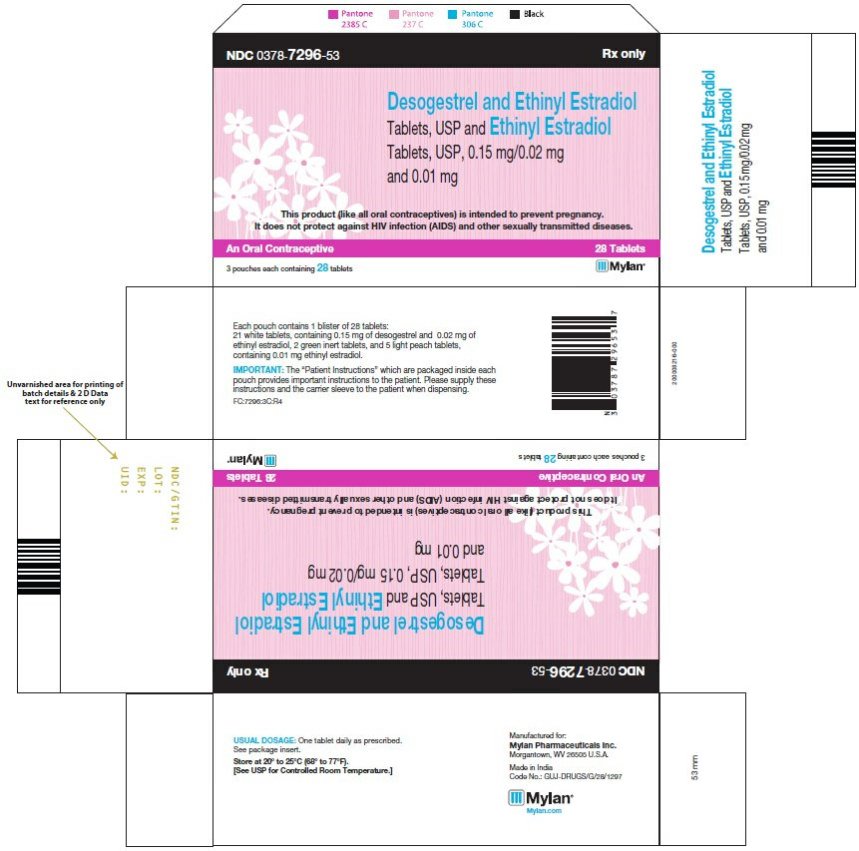
DESOGESTREL AND ETHINYL ESTRADIOL Kit, 3 pouches
Other active recalls for Desogestrel And Ethinyl Estradiol And Ethinyl Estradiol (different manufacturers) — 1 · tap to view
🆔 Identity & classification
Where does this data come from?
🏷️ RxNorm drug class
This medicine belongs to the Estrogen class.
Where does this data come from?
🏭 Manufacturer & labeler
Where does this data come from?
🩺 Clinical
Oral contraceptives (birth-control pills) containing ethinyl estradiol (an estrogen) and desogestrel (a progestin) are used to prevent pregnancy. Estrogen and progestin are two female sex hormones. Combinations of estrogen and progestin work by preventing ovulation (the release of eggs from the ovaries). Oral contraceptives are an effective method of birth control, but they do not prevent the spread of human immunodeficiency virus (HIV, the virus that causes acquired immunodeficiency syndrome [AIDS]) and other sexually transmitted diseases.
Read the full MedlinePlus article ↗Patient education
Supplement & herbal interactions
Where does this data come from?
Ask a licensed pharmacist directly — free, answered by our team.
💊 What it looks like
Where does this data come from?
🧪 Inactive Ingredients / Excipients
Inactive ingredients, also called excipients, are components of the drug product other than the active ingredient. They may include fillers, dyes, coatings, preservatives, flavors, or other formulation ingredients.
Where does this data come from?
IACT rows and label-wide narrative are kept separate; availability and product-level specificity depend on the submitted label.Inactive ingredient FAQ
Are inactive ingredients the same for every manufacturer?
Why might an inactive ingredient be missing?
Can inactive ingredients matter?
💲 Pricing
A drug doesn't have one price. Each row is a different public payment system, and none is what you'd pay at the counter — that depends on your insurance. The ⓘ on each row explains what it measures.
| Price system | Per ea | Per package |
|---|---|---|
| Retail pharmacies payNADAC · weekly | $0.161 | $0.48 / 3 kit |
| Medicaid paysCMS SDUD · 12 mo | $0.4149 | $1.24 / 3 kit |
| Medicare drug plans payPart D · Q2 2026 | $0.2151 | $0.65 / 3 kit |
Where does this data come from?
🔁 Therapeutic equivalents
| Product | Labeler | Pack | NADAC/unit | TE | Status | Price vs. this |
|---|---|---|---|---|---|---|
| Simliya 65862-0886-88 | Aurobindo | 3 pouches | $0.160 | AB | FDA listed | +0% |
| Desogestrel And Ethinyl Estradiol And Ethinyl Estradiolthis 00378-7296-53 | Mylan | 3 pouches | $0.161 | AB | Availability likely | — |
| Viorele 68462-0318-29 | Glenmark | 1 kit | $0.161 | AB | Availability likely | — |
| Viorele 50090-1395-00 | A-S | 1 kit | — | AB | FDA listed | — |
| desogestrel and ethinyl estradiol and ethinyl estradiol 79929-0020-07 | Naari | 1 pouch | — | AB | FDA listed | — |
| desogestrel and ethinyl estradiol and ethinyl estradiol 60505-4895-02 | Apotex | 1 pouch | — | AB | FDA listed | — |
Where does this data come from?
⏳ Availability & generic status
This product is an FDA-approved generic. Other versions of the same drug are listed under Therapeutic equivalents, least expensive first.
Where does this data come from?
🗺️ Medicaid utilization & spend
📦 Packaging — all sizes for this product
| Package NDC | Description | Marketing start | Status |
|---|---|---|---|
| 00378-7296-53 You're viewing this | 3 POUCH in 1 CARTON (0378-7296-53) / 1 BLISTER PACK in 1 POUCH (0378-7296-85) / 1 KIT in 1 BLISTER PACK | 2014-07-16 | Active |
🧭 About this NDC listing & data coverage
Kit / multi-component package
This NDC identifies a kit — a package containing more than one component. Structured data (pricing, ingredients, equivalents) is often reported per component rather than for the kit NDC itself, which can make this page look thinner than the components' own pages.
What data is (and isn’t) available for this NDC — tap to expand
| NDC identity (package / product / labeler codes) | ✓ Available |
| Labeler | ✓ Available |
| Product & package description | ✓ Available |
| Marketing category & status | ✓ Available |
| Active ingredient / dosage form / route | ✓ Available |
| FDA label (SPL via DailyMed) | ✓ Available |
| Package photos | ✓ Available |
| Inactive ingredients (structured) | — Not published for this NDC The labeler did not submit a structured excipient list, or no SPL is available. |
| NADAC pharmacy acquisition price (CMS) | ✓ Available |
| Orange Book / therapeutic-equivalence data | ✓ Available |
| HCPCS J-code billing crosswalk | — Not published for this NDC Most self-administered / retail products have no J-code — that is normal. |
| Medicaid utilization (CMS SDUD) | ✓ Available |
Questions about this listing
Is the NDC printed on the package the same as the 11-digit billing NDC?
What do the three segments of this NDC mean?
Is this package still being marketed?
Who lists this product with the FDA?
Do I need a prescription for this product?
Where does this data come from?
📄 Full prescribing information FDA SPL
🚨 Boxed Warning ▾
WARNING: CIGARETTE SMOKING AND SERIOUS CARDIOVASCULAR EVENTS Cigarette smoking increases the risk of serious cardiovascular events from combination oral contraceptive (COC) use. This risk increases with age, particularly in women over 35 years of age, and with the number of cigarettes smoked. For this reason, COCs, including desogestrel and ethinyl estradiol tablets and ethinyl estradiol tablets, are contraindicated in women who are over 35 years of age and smoke (see CONTRAINDICATIONS and WARNINGS ).
🎯 Indications and Usage ▾
INDICATIONS AND USAGE Desogestrel and ethinyl estradiol tablets and ethinyl estradiol tablets are indicated for the prevention of pregnancy in women who elect to use this product as a method of contraception. Oral contraceptives are highly effective. Table II lists the typical accidental pregnancy rates for users of combination oral contraceptives and other methods of contraception.
The efficacy of these contraceptive methods, except sterilization, depends upon the reliability with which they are used. Correct and consistent use of these methods can result in lower failure rates. TABLE II: PERCENTAGE OF WOMEN EXPERIENCING AN UNINTENDED PREGNANCY DURING THE FIRST YEAR OF TYPICAL USE AND THE FIRST YEAR OF PERFECT USE OF CONTRACEPTION AND THE PERCENTAGE CONTINUING USE AT THE END OF THE FIRST YEAR, UNITED STATES.
Adapted from Hatcher et al., 1998, ref # 1. % of Women Experiencing an Unintended Pregnancy within the First Year of Use % of Women Continuing Use at One Year Among couples attempting to avoid pregnancy, the percentage who continue to use a method for one year. (4) Method (1) Typical Use Among typical couples who initiate use of a method (not necessarily for the first time), the percentage who experience an accidental pregnancy during the first year if they do not stop use for any other reason. (2) Perfect Use Among couples who initiate use of a method (not necessarily for the first time) and who use it perfectly (both consistently and correctly), the percentage who experience an accidental pregnancy during the first year if they do not stop use for any other reason.
(3) Chance The percents becoming pregnant in columns (2) and (3) are based on data from populations where contraception is not used and from women who cease using contraception in order to become pregnant. Among such populations, about 89% become pregnant within one year. This estimate was lowered slightly (to 85%) to represent the percent who would become pregnant within one year among women now relying on reversible methods of contraception if they abandoned contraception altogether.
85 85 Spermicides Foams, creams, gels, vaginal suppositories, and vaginal film. 26 6 40 Periodic abstinence 25 63 Calendar 9 Ovulation Method 3 Sympto-Thermal Cervical mucus (ovulation) method supplemented by calendar in the pre-ovulatory and basal body temperature in the post-ovulatory phases. 2 Post-Ovulation 1 Withdrawal 19 4 Cap With spermicidal cream or jelly.
Parous Women 40 26 42 Nulliparous Women 20 9 56 Sponge Parous Women 40 20 42 Nulliparous Women 20 9 56 Diaphragm 20 6 56 Condom Without spermicides. Female (Reality) 21 5 56 Male 14 3 61 Pill 5 71 Progestin Only
0.5 Combined
0.1IUD Progesterone T 2.0 1.5 81 Copper T 380A 0.8 0.6 78 LNg 20 0.1 0.1 81 Depo-Provera 0.3 0.3 70 Norplant and Norplant-2 0.05 0.05 88 Female sterilization 0.5 0.5 100 Male sterilization 0.15 0.10 100
⏱️ Dosage and Administration ▾
DOSAGE AND ADMINISTRATION To achieve maximum contraceptive effectiveness, maximum contraceptive effectiveness, desogestrel and ethinyl estradiol tablets and ethinyl estradiol tablets must be taken exactly as directed and at intervals not exceeding 24 hours. Desogestrel and ethinyl estradiol tablets and ethinyl estradiol tablets may be initiated using either a Sunday start or a Day 1 start. NOTE: Each blister is preprinted with the days of the week, starting with Sunday, to facilitate a Sunday start regimen.
Six different "day label strips" are provided with each blister in order to accommodate a Day 1 start regimen. In this case, the patient should place the self-adhesive "day label strip" that corresponds to her starting day over the preprinted days. IMPORTANT: The possibility of ovulation and conception prior to initiation of use of desogestrel and ethinyl estradiol tablets and ethinyl estradiol tablets should be considered.
The use of desogestrel and ethinyl estradiol tablets and ethinyl estradiol tablets for contraception may be initiated 4 weeks postpartum in women who elect not to breast-feed. When the tablets are administered during the postpartum period, the increased risk of thromboembolic disease associated with the postpartum period must be considered (see CONTRAINDICATIONS and WARNINGS concerning thromboembolic disease. See also PRECAUTIONS for Nursing mothers).
If the patient starts on desogestrel and ethinyl estradiol tablets and ethinyl estradiol tablets postpartum, and has not yet had a period, she should be instructed to use another method of contraception until a white to off-white tablet has been taken daily for 7 days. SUNDAY START When initiating a Sunday start regimen, another method of contraception should be used until after the first 7 consecutive days of administration. Using a Sunday start, tablets are taken daily without interruption as follows: The first white to off-white tablet should be taken on the first Sunday after menstruation begins (if menstruation begins on Sunday, the first white to off-white tablet is taken on that day).
One white to off-white tablet is taken daily for 21 days, followed by 1 green (inert) tablet daily for 2 days and 1 light peach (active) tablet daily for 5 days. For all subsequent cycles, the patient then begins a new 28-tablet regimen on the next day (Sunday) after taking the last light peach tablet. [If switching from a Sunday start oral contraceptive, the first desogestrel and ethinyl estradiol tablets and ethinyl estradiol tablets should be taken on the second Sunday after the last tablet of a 21 day regimen or should be taken on the first Sunday after the last inactive tablet of a 28 day regimen.] If a patient misses 1 white to off-white tablet, she should take the missed tablet as soon as she remembers.
If the patient misses 2 consecutive white to off-white tablets in Week 1 or Week 2, the patient should take 2 tablets the day she remembers and 2 tablets the next day; thereafter, the patient should resume taking 1 tablet daily until she finishes the cycle pack. The patient should be instructed to use a back-up method of birth control if she has intercourse in the 7 days after missing pills. If the patient misses 2 consecutive white to off-white tablets in the third week or misses 3 or more white to off-white tablets in a row at any time during the cycle, the patient should keep taking 1 white to off-white tablet daily until the next Sunday.
On Sunday the patient should throw out the rest of that cycle pack and start a new cycle pack that same day. The patient should be instructed to use a back-up method of birth control if she has intercourse in the 7 days after missing pills. DAY 1 START Counting the first day of menstruation as "Day 1", tablets are taken without interruption as follows: One white to off-white tablet daily for 21 days, one green (inert) tablet daily for 2 days followed by 1 light peach (ethinyl estradiol) tablet daily for 5 days.
For all subsequ…
⛔ Contraindications ▾
CONTRAINDICATIONS Oral contraceptives should not be used in women who currently have the following conditions: • Thrombophlebitis or thromboembolic disorders • A past history of deep vein thrombophlebitis or thromboembolic disorders • Cerebral vascular or coronary artery disease • Current diagnosis of, or history of, breast cancer, which may be hormone-sensitive • Carcinoma of the endometrium or other known or suspected estrogen-dependent neoplasia • Undiagnosed abnormal genital bleeding • Cholestatic jaundice of pregnancy or jaundice with prior pill use • Hepatic adenomas or carcinomas Are receiving Hepatitis C drug combinations containing ombitasvir/paritaprevir/ritonavir, with or without dasabuvir, due to the potential for ALT elevations (see Warnings , RISK OF LIVER ENZYME ELEVATIONS WITH CONCOMITANT HEPATITIS C TREATMENT )
⚠️ Warnings ▾
WARNINGS The use of oral contraceptives is associated with increased risks of several serious conditions including myocardial infarction, thromboembolism, stroke, hepatic neoplasia, and gallbladder disease, although the risk of serious morbidity or mortality is very small in healthy women without underlying risk factors. The risk of morbidity and mortality increases significantly in the presence of other underlying risk factors such as hypertension, hyperlipidemias, obesity, and diabetes. Practitioners prescribing oral contraceptives should be familiar with the following information relating to these risks.
The information contained in this package insert is principally based on studies carried out in patients who used oral contraceptives with formulations of higher doses of estrogens and progestogens than those in common use today. The effect of long-term use of the oral contraceptives with formulations of lower doses of both estrogens and progestogens remains to be determined. Throughout this labeling, epidemiologic studies reported are of two types: retrospective or case control studies and prospective or cohort studies.
Case control studies provide a measure of the relative risk of a disease, namely, a ratio of the incidence of a disease among oral contraceptive users to that among non-users. The relative risk does not provide information on the actual clinical occurrence of a disease. Cohort studies provide a measure of attributable risk, which is the difference in the incidence of disease between oral contraceptive users and non-users.
The attributable risk does provide information about the actual occurrence of a disease in the population (Adapted from refs. 2 and 3 with the authors’ permission). For further information, the reader is referred to a text on epidemiologic methods.
1. Thromboembolic disorders and other vascular problems a. Thromboembolism An increased risk of thromboembolic and thrombotic disease associated with the use of oral contraceptives is well established.
Case control studies have found the relative risk of users compared to non-users to be 3 for the first episode of superficial venous thromboembolic disease, 4 to 11 for deep vein thrombosis or pulmonary embolism, and 1.5 to 6 for women with predisposing conditions for venous thromboembolic disease (2,3,19–24). Cohort studies have shown the relative risk to be somewhat lower, about 3 for new cases and about 4.5 for new cases requiring hospitalization (25). The risk of thromboembolic disease associated with oral contraceptives is not related to length of use and disappears after pill use is stopped (2).
Several epidemiologic studies indicate that third generation oral contraceptives, including those containing desogestrel, are associated with a higher risk of venous thromboembolism than certain second generation oral contraceptives (102–104). In general, these studies indicate an approximate two-fold increased risk, which corresponds to an additional 1 to 2 cases of venous thromboembolism per 10,000 women-years of use. However, data from additional studies have not shown this two-fold increase in risk.
A two- to four-fold increase in relative risk of post-operative thromboembolic complications has been reported with the use of oral contraceptives (9, 26). The relative risk of venous thrombosis in women who have predisposing conditions is twice that of women without such medical conditions (9, 26). If feasible, oral contraceptives should be discontinued at least four weeks prior to and for two weeks after elective surgery of a type associated with an increase in risk of thromboembolism and during and following prolonged immobilization.
Since the immediate postpartum period is also associated with an increased risk of thromboembolism, oral contraceptives should be started no earlier than four weeks after delivery in women who elect not to breast-feed. b. Myocardial infarction An increased risk of myocardial infarction has been attributed to oral contr…
🤒 Adverse Reactions ▾
ADVERSE REACTIONS An increased risk of the following serious adverse reactions has been associated with the use of oral contraceptives (see WARNINGS section): • Thrombophlebitis and venous thrombosis with or without embolism • Arterial thromboembolism • Pulmonary embolism • Myocardial infarction • Cerebral hemorrhage • Cerebral thrombosis • Hypertension • Gallbladder disease • Hepatic adenomas or benign liver tumors Post Marketing Experience Five studies that compared breast cancer risk between ever-users (current or past use) of COCs and never-users of COCs reported no association between ever use of COCs and breast cancer risk, with effect estimates ranging from 0.90 - 1.12 (Figure 2) (64-68).
Three studies compared breast cancer risk between current or recent COC users (<6 months since last use) and never users of COCs (Figure 2) (64, 67, 69). One of these studies reported no association between breast cancer risk and COC use. The other two studies found an increased relative risk of 1.19 - 1.33 with current or recent use.
Both of these studies found an increased risk of breast cancer with current use of longer duration, with relative risks ranging from 1.03 with less than one year of COC use to approximately 1.4 with more than 8-10 years of COC use. FIGURE 2: RELEVANT STUDIES OF RISK OF BREAST CANCER WITH COMBINED ORAL CONTRACEPTIVES RR = relative risk; OR = odds ratio; HR = hazard ratio. “ever COC” are females with current or past COC use; “never COC use” are females that never used COCs. There is evidence of an association between the following conditions and the use of oral contraceptives: • Mesenteric thrombosis • Retinal thrombosis The following adverse reactions have been reported in patients receiving oral contraceptives and are believed to be drug-related: • Nausea • Vomiting • Gastrointestinal symptoms (such as abdominal cramps and bloating) • Breakthrough bleeding • Spotting • Change in menstrual flow • Amenorrhea • Temporary infertility after discontinuation of treatment • Edema • Melasma which may persist • Breast changes: tenderness, enlargement, secretion • Change in weight (increase or decrease) • Change in cervical erosion and secretion • Diminution in lactation when given immediately postpartum • Cholestatic jaundice • Migraine • Rash (allergic) • Mental depression • Reduced tolerance to carbohydrates • Vaginal candidiasis • Change in corneal curvature (steepening) • Intolerance to contact lenses The following adverse reactions have been reported in users of oral contraceptives and the association has been neither confirmed nor refuted: • Pre-menstrual syndrome • Cataracts • Changes in appetite • Cystitis-like syndrome • Headache • Nervousness • Dizziness • Hirsutism • Loss of scalp hair • Erythema multiforme • Erythema nodosum • Hemorrhagic eruption • Vaginitis • Porphyria • Impaired renal function • Hemolytic uremic syndrome • Acne • Changes in libido • Colitis Budd-Chiari Syndrome FIGURE 2: RELEVANT STUDIES OF RISK OF BREAST CANCER WITH COMBINED ORAL CONTRACEPTIVES
🆘 Overdosage ▾
OVERDOSAGE Serious ill effects have not been reported following acute ingestion of large doses of oral contraceptives by young children. Overdosage may cause nausea, and withdrawal bleeding may occur in females. NON-CONTRACEPTIVE HEALTH BENEFITS The following non-contraceptive health benefits related to the use of oral contraceptives are supported by epidemiologic studies which largely utilized oral contraceptive formulations containing estrogen doses exceeding 0.035 mg of ethinyl estradiol or 0.05 mg of mestranol (73–78).
Effects on menses: • increased menstrual cycle regularity • decreased blood loss and decreased incidence of iron deficiency anemia • decreased incidence of dysmenorrhea Effects related to inhibition of ovulation: • decreased incidence of functional ovarian cysts • decreased incidence of ectopic pregnancies Effects from long-term use: • decreased incidence of fibroadenomas and fibrocystic disease of the breast • decreased incidence of acute pelvic inflammatory disease • decreased incidence of endometrial cancer decreased incidence of ovarian cancer
🧬 Clinical Pharmacology ▾
CLINICAL PHARMACOLOGY Combination oral contraceptives act by suppression of gonadotropins. Although the primary mechanism of this action is inhibition of ovulation, other alterations include changes in the cervical mucus (which increase the difficulty of sperm entry into the uterus) and the endometrium (which reduce the likelihood of implantation). Receptor binding studies, as well as studies in animals, have shown that etonogestrel, the biologically active metabolite of desogestrel, combines high progestational activity with minimal intrinsic androgenicity (91,92).
The relevance of this latter finding in humans is unknown. Pharmacokinetics Absorption Desogestrel is rapidly and almost completely absorbed and converted into etonogestrel, its biologically active metabolite. Following oral administration, the relative bioavailability of desogestrel compared to a solution, as measured by serum levels of etonogestrel, is approximately 100%. and ethinyl estradiol tablets and ethinyl estradiol tablets provide two different regimens of ethinyl estradiol; 0.02 mg in the combination tablet [white to off-white] as well as 0.01 mg in the light peach tablet.
Ethinyl estradiol is rapidly and almost completely absorbed. After a single dose of Desogestrel and Ethinyl Estradiol Tablets and Ethinyl Estradiol Tablets combination tablet [white to off-white], the relative bioavailability of ethinyl estradiol is approximately 93% while the relative bioavailability of the 0.01 mg tablet [light peach] is 99%. The effect of food on the bioavailability of desogestrel and ethinyl estradiol tablets and ethinyl estradiol tablets following oral administration has not been evaluated.
The pharmacokinetics of etonogestrel and ethinyl estradiol following multiple dose administration of desogestrel and ethinyl estradiol tablets and ethinyl estradiol tablets were determined during the third cycle in 17 subjects. Plasma concentrations of etonogestrel and ethinyl estradiol reached steady-state by Day 21. The AUC(0–24) for etonogestrel at steady-state on Day 21 was approximately 2.2 times higher than AUC(0–24) on Day 1 of the third cycle.
The pharmacokinetic parameters of etonogestrel and ethinyl estradiol during the third cycle following multiple dose administration of desogestrel and ethinyl estradiol tablets and ethinyl estradiol tablets are summarized in Table I. TABLE I: MEAN (SD) PHARMACOKINETIC PARAMETERS OF DESOGESTREL AND ETHINYL ESTRADIOL TABLETS AND ETHINYL ESTRADIOL TABLETS OVER A 28-DAY DOSING PERIOD IN THE THIRD CYCLE (n=17). Etonogestrel Day Dose Desogestrel mg C max pg/mL T max h t 1/2 h AUC 0–24 pg/mL•hr CL/F L/h 1 0.15 2503.6 (987.6) 2.4 (1.0) 29.8 (16.3) 17,832 (5674) 5.4 (2.5) 21 0.15 4091.2 (1186.2) 1.6 (0.7) 27.8 (7.2) 39,391 (12,134) 4.4 (1.4) C max measured peak concentration T max observed time of peak concentration t 1/2 elimination half-life, calculated by 0.693/K elim AUC 0–24 area under the concentration-time curve calculated by the linear trapezoidal rule (Time 0 to 24 hours) CL/F apparent clearance Ethinyl Estradiol Day Dose mg C max pg/mL T max h t 1/2 h AUC 0–24 pg/mL•hr CL/F L/h 1 0.02 51.9 (15.4) 2.9 (1.2) 16.5 (4.8) 566 (173) n=16 25.7 (9.1) 21 0.02 62.2 (25.9) 2.0 (0.8) 23.9 (25.5) 597 (127 35.1 (8.2) 24 0.01 24.6 (10.8) 2.4 (1.0) 18.8 (10.3) 246 (65) 43.6 (12.2) 24 0.01 35.3 (27.5) 2.1 (1.3) 18.9 (8.3) 312 (62) 33.2 (6.6) Distribution Etonogestrel, the active metabolite of desogestrel, was found to be 99% protein bound, primarily to sex hormone-binding globulin (SHBG).
Ethinyl estradiol is approximately 98.3% bound, mainly to plasma albumin. Ethinyl estradiol does not bind to SHBG, but induces SHBG synthesis. Desogestrel, in combination with ethinyl estradiol, does not counteract the estrogen-induced increase in SHBG, resulting in lower serum levels of free testosterone (96–99).
Metabolism Desogestrel Desogestrel is rapidly and completely metabolized by hydroxylation in the intestinal mucosa and on first pass through the liver…
📦 How Supplied / Storage and Handling ▾
HOW SUPPLIED Desogestrel and Ethinyl Estradiol Tablets, USP and Ethinyl Estradiol Tablets, USP, 0.15 mg/0.02 mg and 0.01 mg contain 21 round white to off-white tablets, 2 round green tablets and 5 round light peach tablets in a blister pack. Each round white to off-white tablet (debossed with “232” on one side and other side plain) contains 0.15 mg desogestrel and 0.02 mg ethinyl estradiol. Each round green tablet (debossed with “294” on one side and other side plain) contains inert ingredients.
Each round light peach tablet (debossed with “233” on one side and other side plain) contains 0.01 mg ethinyl estradiol. Cartons of 3 NDC 0378-7296-53 Cartons of 6 NDC 0378-7296-56 Store at 20° to 25°C (68° to 77°F) [See USP Controlled Room Temperature]. Rx only
📋 Description ▾
DESCRIPTION Desogestrel and Ethinyl Estradiol Tablets, USP and Ethinyl Estradiol Tablets, USP provide an oral contraceptive regimen of 21 white to off-white round tablets each containing 0.15 mg desogestrel (13-ethyl-11- methylene-18,19-dinor-17 alpha-pregn- 4-en- 20-yn-17-ol), 0.02 mg ethinyl estradiol (19-nor-17 alpha-pregna-1,3,5 (10)-trien-20-yne-3,17-diol), and inactive ingredients which include anhydrous lactose, colloidal silicon dioxide, polyvinyl pyrrolidone, potato starch, stearic acid, and vitamin E, followed by 2 inert green round tablets with the following inactive ingredients: FD&C Blue No.
1 Aluminum Lake, ferric oxide yellow, lactose monohydrate, magnesium stearate and polacrilin potassium. Desogestrel and Ethinyl Estradiol Tablets, USP and Ethinyl Estradiol Tablets, USP, 0.15 mg/0.02 mg and 0.01 mg also contain 5 light peach round tablets containing 0.01 mg ethinyl estradiol (19-nor-17 alpha-pregna-1,3,5 (10)-trien-20- yne-3,17-diol) and inactive ingredients which include anhydrous lactose, dl -alpha-tocopherol, FD&C Y ellow No. 6 Aluminum Lake, lactose monohydrate, magnesium stearate, microcrystalline cellulose, polacrilin potassium and povidone K-25.
The molecular weights for desogestrel and ethinyl estradiol are 310.48 and 296.40 respectively. The structural formulas are as follows: Desogestrel and ethinyl estradiol tablets meet USP dissolution test 2 Desogestrel and Ethinyl Estradiol Structural Formulas