
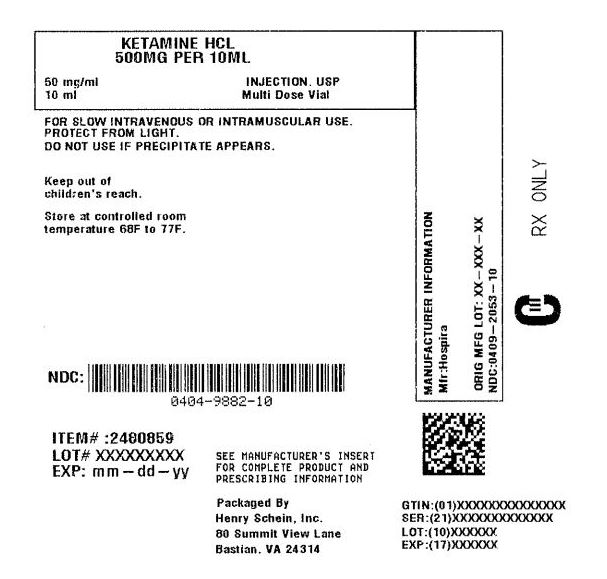
KETAMINE HYDROCHLORIDE 50 mg/mL Injection, Solution, Concentrate
🆔 Identity & classification
Where does this data come from?
🏷️ RxNorm drug class
This medicine belongs to the General Anesthetic class.
Where does this data come from?
🏭 Manufacturer & labeler
Where does this data come from?
🩺 Clinical
- The FDA-approved use of ketamine injection is as a general anesthetic — it's given in hospitals and surgical centers to put people into a deep sedated state for procedures, either...
- What exactly is ketamine used for — I keep hearing about it in the news but my doctor says it's for surgery?
- Ketamine creates what's called a 'dissociative' state — you won't feel pain and you'll be deeply sedated, but it works a little differently from traditional anesthesia. Your protec...
- Will I be completely unconscious, or will I know what's happening?
Patient education
Supplement & herbal interactions
Where does this data come from?
Ask a licensed pharmacist directly — free, answered by our team.
🧪 Inactive Ingredients / Excipients
Inactive ingredients, also called excipients, are components of the drug product other than the active ingredient. They may include fillers, dyes, coatings, preservatives, flavors, or other formulation ingredients.
Where does this data come from?
IACT rows and label-wide narrative are kept separate; availability and product-level specificity depend on the submitted label.Inactive ingredient FAQ
Are inactive ingredients the same for every manufacturer?
Why might an inactive ingredient be missing?
Can inactive ingredients matter?
💲 Pricing
A drug doesn't have one price. Each row is a different public payment system, and none is what you'd pay at the counter — that depends on your insurance. The ⓘ on each row explains what it measures.
| Price system | Per mL | Per package |
|---|---|---|
| Retail pharmacies payNADAC · weekly | Not in the retail survey — common for institutional, discontinued, or low-volume packs. | |
| Medicaid paysCMS SDUD · 12 mo | No recent Medicaid claims on file for this NDC — rare and low-volume NDCs are suppressed in the public data. | |
| Medicare drug plans payPart D · quarterly | No Part D plan price is available for this NDC in our data. | |
Where does this data come from?
🔁 Therapeutic equivalents
| Product | Labeler | Pack | NADAC/unit | TE | Status | Price vs. this |
|---|---|---|---|---|---|---|
| Ketamine Hydrochloride 50 mg/mL 00143-9508-10 | Hikma | 10 vials | $0.558 | AP | Availability likely | — |
| Ketamine Hydrochloride 50 mg/mL 00409-2053-10 | Hospira, | 10 vials | $0.558 | AP | Availability likely | — |
| Ketamine Hydrochloride 50 mg/mL 25021-0683-10 | Sagent | 10 vials | $0.558 | AP | Availability likely | — |
| Ketamine Hydrochloride 50 mg/mL 55150-0439-10 | Eugia | 10 vials | $0.558 | AP | Availability likely | — |
| ketamine hydrochloride 50 mg/mL 65219-0188-10 | Fresenius | 10 vials | $0.558 | AP | Availability likely | — |
| Ketamine Hydrochloride 50 mg/mL 72572-0320-10 | Civica, | 10 vials | $0.558 | AP | Availability likely | — |
| Ketalar 50 mg/mL 42023-0114-10 | Par | 10 vials | $0.672 | AP | Availability likely | — |
| Ketamine Hydrochloride 50 mg/mLthis 00404-9882-10 | Henry | 1 vial | — | AP | FDA listed | — |
| Ketamine Hydrochloride 50 mg/mL 68083-0505-10 | Gland | 10 vials | — | AP | FDA listed | — |
Where does this data come from?
⏳ Availability & generic status
This product is an FDA-approved generic. Other versions of the same drug are listed under Therapeutic equivalents, least expensive first.
Where does this data come from?
🔬 Reported adverse events (FAERS)
Top reported reactions
Age at onset
Reporter sex
Serious outcomes
Where does this data come from?
📦 Packaging — all sizes for this product
| Package NDC | Description | Marketing start | Status |
|---|---|---|---|
| 00404-9882-10 You're viewing this | 1 VIAL in 1 BAG (0404-9882-10) / 10 mL in 1 VIAL | 2022-01-11 | Active |
🧭 About this NDC listing & data coverage
What data is (and isn’t) available for this NDC — tap to expand
| NDC identity (package / product / labeler codes) | ✓ Available |
| Labeler | ✓ Available |
| Product & package description | ✓ Available |
| Marketing category & status | ✓ Available |
| Active ingredient / dosage form / route | ✓ Available |
| FDA label (SPL via DailyMed) | ✓ Available |
| Package photos | ✓ Available |
| Inactive ingredients (structured) | — Not published for this NDC The labeler did not submit a structured excipient list, or no SPL is available. |
| NADAC pharmacy acquisition price (CMS) | — Not published for this NDC CMS publishes NADAC only for NDCs reported in its retail-pharmacy survey. |
| Orange Book / therapeutic-equivalence data | ✓ Available |
| HCPCS J-code billing crosswalk | — Not published for this NDC Most self-administered / retail products have no J-code — that is normal. |
| Medicaid utilization (CMS SDUD) | — Not published for this NDC CMS reports utilization only for NDCs with Medicaid claims above its privacy threshold. |
Questions about this listing
Why is there no price listed?
Is the NDC printed on the package the same as the 11-digit billing NDC?
What do the three segments of this NDC mean?
Is this package still being marketed?
Who lists this product with the FDA?
Do I need a prescription for this product?
Where does this data come from?
📄 Full prescribing information FDA SPL
🎯 Indications and Usage ▾
INDICATIONS AND USAGE Ketamine hydrochloride injection is indicated as the sole anesthetic agent for diagnostic and surgical procedures that do not require skeletal muscle relaxation. Ketamine hydrochloride injection is best suited for short procedures but it can be used, with additional doses, for longer procedures. Ketamine hydrochloride injection is indicated for the induction of anesthesia prior to the administration of other general anesthetic agents.
Ketamine hydrochloride injection is indicated to supplement low-potency agents, such as nitrous oxide. Specific areas of application are described in the CLINICAL PHARMACOLOGY Section.
⏱️ Dosage and Administration ▾
DOSAGE AND ADMINISTRATION Parenteral drug products should be inspected visually for particulate matter and discoloration prior to administration, whenever solution and container permit. Note: Barbiturates and ketamine, being chemically incompatible because of precipitate formation, should not be injected from the same syringe. If the ketamine dose is augmented with diazepam, the two drugs must be given separately.
Do not mix ketamine hydrochloride and diazepam in syringe or infusion flask. For additional information on the use of diazepam, refer to the WARNINGS and DOSAGE AND ADMINISTRATION Sections of the diazepam insert. Preoperative Preparations 1.
While vomiting has been reported following ketamine administration, some airway protection may be afforded because of active laryngeal-pharyngeal reflexes. However, since aspiration may occur with ketamine and since protective reflexes may also be diminished by supplementary anesthetics and muscle relaxants, the possibility of aspiration must be considered. Ketamine is recommended for use in the patient whose stomach is not empty when, in the judgment of the practitioner, the benefits of the drug outweigh the possible risks.
2. Atropine, scopolamine, or another drying agent should be given at an appropriate interval prior to induction. Onset and Duration Because of rapid induction following the initial intravenous injection, the patient should be in a supported position during administration.
The onset of action of ketamine is rapid; an intravenous dose of 2 mg/kg of body weight usually produces surgical anesthesia within 30 seconds after injection, with the anesthetic effect usually lasting five to ten minutes. If a longer effect is desired, additional increments can be administered intravenously or intramuscularly to maintain anesthesia without producing significant cumulative effects. Intramuscular doses, in a range of 9 to 13 mg/kg usually produce surgical anesthesia within 3 to 4 minutes following injection, with the anesthetic effect usually lasting 12 to 25 minutes.
Dosage As with other general anesthetic agents, the individual response to ketamine is somewhat varied depending on the dose, route of administration, and age of patient, so that dosage recommendation cannot be absolutely fixed. The drug should be titrated against the patient's requirements. In individuals with a history of chronic ketamine use for off-label indications, there have been case reports of genitourinary pain that may be related to the ketamine treatment, not the underlying condition (see ADVERSE REACTIONS Section).
Consider cessation of ketamine if genitourinary pain continues in the setting of other genitourinary symptoms. Induction Intravenous Route The initial dose of ketamine administered intravenously may range from 1 mg/kg to 4.5 mg/kg. The average amount required to produce five to ten minutes of surgical anesthesia has been 2 mg/kg.
Alternatively, in adult patients an induction dose of 1 mg to 2 mg/kg intravenous ketamine at a rate of 0.5 mg/kg/min may be used for induction of anesthesia. In addition, diazepam in 2 mg to 5 mg doses, administered in a separate syringe over 60 seconds, may be used. In most cases, 15 mg of intravenous diazepam or less will suffice.
The incidence of psychological manifestations during emergence, particularly dream-like observations and emergence delirium, may be reduced by this induction dosage program. Note: The 100 mg/mL concentration of ketamine should not be injected intravenously without proper dilution. It is recommended the drug be diluted with an equal volume of either Sterile Water for Injection, USP, Normal Saline, or 5% Dextrose in Water.
Rate of Administration It is recommended that ketamine be administered slowly (over a period of 60 seconds). More rapid administration may result in respiratory depression and enhanced pressor response. Intramuscular Route The initial dose of ketamine administered intramuscularly may range from 6.5 to 13 mg/kg.
A do…
⛔ Contraindications ▾
CONTRAINDICATIONS Ketamine hydrochloride is contraindicated in those in whom a significant elevation of blood pressure would constitute a serious hazard and in those who have shown hypersensitivity to the drug.
⚠️ Warnings ▾
WARNINGS Cardiac function should be continually monitored during the procedure in patients found to have hypertension or cardiac decompensation. Postoperative confusional states may occur during the recovery period. (See SPECIAL NOTE).
Respiratory depression may occur with overdosage or too rapid a rate of administration of ketamine, in which case supportive ventilation should be employed. Mechanical support of respiration is preferred to administration of analeptics. Pediatric Neurotoxicity Published animal studies demonstrate that the administration of anesthetic and sedation drugs that block NMDA receptors and/or potentiate GABA activity increase neuronal apoptosis in the developing brain and result in long-term cognitive deficits when used for longer than 3 hours.
The clinical significance of these findings is not clear. However, based on the available data, the window of vulnerability to these changes is believed to correlate with exposures in the third trimester of gestation through the first several months of life, but may extend out to approximately three years of age in humans. (See PRECAUTIONS/Pregnancy).
Some published studies in children suggest that similar deficits may occur after repeated or prolonged exposures to anesthetic agents early in life and may result in adverse cognitive or behavioral effects. These studies have substantial limitations, and it is not clear if the observed effects are due to the anesthetic/sedation drug administration or other factors such as the surgery or underlying illness. Anesthetic and sedation drugs are a necessary part of the care of children needing surgery, other procedures, or tests that cannot be delayed, and no specific medications have been shown to be safer than any other.
Decisions regarding the timing of any elective procedures requiring anesthesia should take into consideration the benefits of the procedure weighed against the potential risks.
🤒 Adverse Reactions ▾
ADVERSE REACTIONS Cardiovascular: Blood pressure and pulse rate are frequently elevated following administration of ketamine alone. However, hypotension and bradycardia have been observed. Arrhythmia has also occurred.
Respiration: Although respiration is frequently stimulated, severe depression of respiration or apnea may occur following rapid intravenous administration of high doses of ketamine. Laryngospasms and other forms of airway obstruction have occurred during ketamine anesthesia. Eye: Diplopia and nystagmus have been noted following ketamine administration.
It also may cause a slight elevation in intraocular pressure measurement. Genitourinary: In individuals with history of chronic ketamine use or abuse, lower urinary tract and bladder symptoms including dysuria, increased urinary frequency, urgency, urge incontinence, and hematuria have been reported (see DOSAGE AND ADMINISTRATION Section). In addition, diagnostic studies performed to assess the cause of these symptoms have reported cystitis (including cystitis non-infective, cystitis interstitial, cystitis ulcerative, cystitis erosive and cystitis hemorrhagic) as well as hydronephrosis and reduced bladder capacity.
Psychological: (See SPECIAL NOTE). Neurological: In some patients, enhanced skeletal muscle tone may be manifested by tonic and clonic movements sometimes resembling seizures (see DOSAGE AND ADMINISTRATION Section). Gastrointestinal: Anorexia, nausea and vomiting have been observed; however, this is not usually severe and allows the great majority of patients to take liquids by mouth shortly after regaining consciousness (see DOSAGE AND ADMINISTRATION Section).
General: Anaphylaxis. Local pain and exanthema at the injection site have infrequently been reported. Transient erythema and/or morbilliform rash have also been reported.
For medical advice about adverse reactions contact your medical professional. To report SUSPECTED ADVERSE REACTIONS, contact Hospira, Inc. at 1-800-441-4100 or FDA at 1-800-FDA-1088 or www.fda.gov/medwatch.
🆘 Overdosage ▾
OVERDOSAGE Respiratory depression may occur with overdosage or too rapid a rate of administration of ketamine, in which case supportive ventilation should be employed. Mechanical support of respiration is preferred to administration of analeptics.
🧬 Clinical Pharmacology ▾
CLINICAL PHARMACOLOGY Ketamine is a rapid-acting general anesthetic producing an anesthetic state characterized by profound analgesia, normal pharyngeal-laryngeal reflexes, normal or slightly enhanced skeletal muscle tone, cardiovascular and respiratory stimulation, and occasionally a transient and minimal respiratory depression. The mechanism of action is primarily due to antagonism of N-methyl-D-aspartate (NMDA receptors) in the central nervous system (CNS). A patent airway is maintained partly by virtue of unimpaired pharyngeal and laryngeal reflexes.
(See WARNINGS and PRECAUTIONS Sections.) The biotransformation of ketamine includes N-dealkylation (metabolite I), hydroxylation of the cyclohexone ring (metabolites III and IV), conjugation with glucuronic acid and dehydration of the hydroxylated metabolites to form the cyclohexene derivative (metabolite II). Following intravenous administration, the ketamine concentration has an initial slope (alpha phase) lasting about 45 minutes with a half-life of 10 to 15 minutes. This first phase corresponds clinically to the anesthetic effect of the drug.
The anesthetic action is terminated by a combination of redistribution from the CNS to slower equilibrating peripheral tissues and by hepatic biotransformation to metabolite I. This metabolite is about 1/3 as active as ketamine in reducing halothane requirements (MAC) of the rat. The later half-life of ketamine (beta phase) is 2.5 hours.
The anesthetic state produced by ketamine has been termed "dissociative anesthesia" in that it appears to selectively interrupt association pathways of the brain before producing somatesthetic sensory blockade. It may selectively depress the thalamoneocortical system before significantly obtunding the more ancient cerebral centers and pathways (reticular-activating and limbic systems). Elevation of blood pressure begins shortly after injection, reaches a maximum within a few minutes and usually returns to preanesthetic values within 15 minutes after injection.
In the majority of cases, the systolic and diastolic blood pressure peaks from 10% to 50% above preanesthetic levels shortly after induction of anesthesia, but the elevation can be higher or longer in individual cases (see CONTRAINDICATIONS Section). Ketamine has a wide margin of safety; several instances of unintentional administration of overdoses of ketamine (up to ten times that usually required) have been followed by prolonged but complete recovery. Ketamine has been studied in over 12,000 operative and diagnostic procedures, involving over 10,000 patients from 105 separate studies.
During the course of these studies ketamine hydrochloride was administered as the sole agent, as induction for other general agents, or to supplement low-potency agents. Specific areas of application have included the following: debridement, painful dressings, and skin grafting in burn patients, as well as other superficial surgical procedures. neurodiagnostic procedures such as pneumonencephalograms, ventriculograms, myelograms, and lumbar punctures. See also Precaution concerning increased intracranial pressure. diagnostic and operative procedures of the eye, ear, nose, and mouth, including dental extractions. diagnostic and operative procedures of the pharynx, larynx, or bronchial tree.
NOTE: Muscle relaxants, with proper attention to respiration, may be required (see PRECAUTIONS Section). sigmoidoscopy and minor surgery of the anus and rectum, and circumcision. extraperitoneal procedures used in gynecology such as dilatation and curettage. orthopedic procedures such as closed reductions, manipulations, femoral pinning, amputations, and biopsies. as an anesthetic in poor-risk patients with depression of vital functions. in procedures where the intramuscular route of administration is preferred. in cardiac catheterization procedures.
In these studies, the anesthesia was rated either "excellent" or "good" by the anesthesiologist and the surgeon at 90% and 93%,…
📦 How Supplied / Storage and Handling ▾
HOW SUPPLIED Ketamine Hydrochloride Injection, USP is supplied as the hydrochloride in concentrations equivalent to ketamine base. Color of solution may vary from colorless to very slightly yellowish and may darken upon prolonged exposure to light. This darkening does not affect potency.
Do not use if a precipitate appears. Store between 20° to 25°C (68° to 77°F). (See USP Controlled Room Temperature.) Protect from light.
Product repackaged by: Henry Schein, Inc., Bastian, VA 24314 From Original Manufacturer/Distributor's NDC and Unit of Sale To Henry Schein Repackaged Product NDC and Unit of Sale Total Strength/Total Volume (Concentration) per unit NDC 0409-2053-10 Box of 10 10 mL Multiple-dose Fliptop Vial NDC 0404-9882-10 1 10 mL Multiple-dose Fliptop vial in a bag (Vial bears NDC 0409-2053-20) 500 mg/10 mL (50 mg/mL) Image1.jpg
📋 Description ▾
DESCRIPTION Ketamine hydrochloride is a nonbarbiturate general anesthetic chemically designated dl 2-(o-Chlorophenyl)-2-(methylamino) cyclohexanone hydrochloride. It is formulated as a slightly acid (pH 3.5–5.5) sterile solution for intravenous or intramuscular injection in concentrations containing the equivalent of either 50 or 100 mg ketamine base per milliliter and contains not more than 0.1 mg/mL benzethonium chloride added as a preservative. Ketamine hydrochloride has a molecular formula of C13H16ClNO ∙ HCl, a molecular weight of 274.19 and the following structural formula: Formula1.jpg