
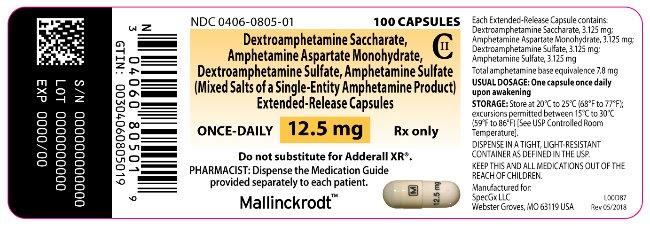
Mixed Salts of a Single-Entity Amphetamine Product DEXTROAMPHETAMINE SACCHARATE, AMPHETAMINE ASPARTATE MONOHYDRATE, DEXTROAMPHETAMINE SULFATE, AMPHETAMINE SULFATE 3.125 mg; 3.125 mg; 3.125 mg; 3.125 mg Capsule, Extended Release, 100-count
🆔 Identity & classification
Where does this data come from?
🏷️ RxNorm drug class
This medicine belongs to the Central Nervous System Stimulant class.
Where does this data come from?
🏭 Manufacturer & labeler
Where does this data come from?
🩺 Clinical
The combination of dextroamphetamine and amphetamine (Adderall®, Adderall® XR, Mydayis®) is used as part of a treatment program to control symptoms of attention deficit hyperactivity disorder (ADHD; more difficulty focusing, controlling actions, and remaining still or quiet than other people who are the same age). Adderall® is used to treat ADHD in adults and children 3 years of age and older. Adderall® XR is used to treat ADHD in adults and children 6 years of age and older. Mydayis® is used to treat ADHD in adults and children 13 years of age and older. Dextroamphetamine and amphetamine (Add...
Read the full MedlinePlus article ↗- It helps your brain maintain higher levels of two key signaling chemicals — dopamine and norepinephrine. In people with ADHD, those chemical signals can be inconsistent, making it...
- What exactly is this medication supposed to do for ADHD?
- The most common ones, especially at first, are reduced appetite, trouble falling asleep, and sometimes a stomachache or headache. These often improve after your body adjusts to the...
- What side effects should I actually expect when I first start taking it?
Patient education
Supplement & herbal interactions
Where does this data come from?
Ask a licensed pharmacist directly — free, answered by our team.
💊 What it looks like
Where does this data come from?
🧪 Inactive Ingredients / Excipients
Inactive ingredients, also called excipients, are components of the drug product other than the active ingredient. They may include fillers, dyes, coatings, preservatives, flavors, or other formulation ingredients.
💡 Tap an ingredient (hover on desktop) to see what it is and why it’s used.
-
UNII 3K9958V90M
A liquid solvent derived from fermentation or chemical synthesis. In medicines, alcohol dissolves active ingredients, helps preserve the product, and improves how the body absorbs certain drugs.
-
UNII 7Z8S9VYZ4B
Ethylcellulose is a plant-derived thickener and film-former made by chemically modifying cellulose. It's used as a binder to hold tablet ingredients together, a coating to control how quickly medicine is released, or a thickener in liquid formulations.
-
UNII EX438O2MRT
Ferric oxide yellow is a naturally occurring iron compound used as a colorant in medications. It gives tablets, capsules, and other forms a yellow or golden hue for identification and appearance.
-
UNII G7036X8B5H
A dark iron compound that gives medicine its color. Used as a colorant in tablets and capsules to help identify the medication and make it visually distinctive.
-
UNII 2G86QN327L
Gelatin is a protein derived from animal collagen, commonly used in medicines as a gelling agent and capsule material. It helps create soft or hard capsule shells that hold and release medication, and can also thicken liquid formulations.
-
UNII 9XZ8H6N6OH
A plant-based cellulose derivative used as a binder to hold tablet ingredients together, a thickener in liquids, and a coating agent to control how fast the medicine dissolves.
-
UNII 70097M6I30
Magnesium stearate is a salt made from magnesium and stearic acid, a fatty substance. It's used in tablets and capsules as a lubricant and glidant to help ingredients flow smoothly during manufacturing and prevent sticking.
-
UNII C9H2L21V7U
A fat derived from coconut or palm oil containing shorter fatty acid chains. It serves as a solvent and carrier to help dissolve or suspend active ingredients, improving absorption and stability in liquid formulations.
-
UNII NX76LV5T8J
A synthetic plastic polymer made from methacrylic acid and ethyl acrylate. It's used as a coating or binder to control how and where the medicine dissolves in your digestive system.
-
UNII 2UMI9U37CP
Oleic acid is a naturally occurring fatty acid derived from plant or animal oils. It functions as an emulsifier and solvent in medicines, helping blend water and oil-based ingredients together and dissolving other components.
-
UNII 99Q3C7L77T
A synthetic polymer made from acrylic compounds. It acts as a film-former and pH-dependent release agent in tablets and capsules, helping control how and where the active drug dissolves in the digestive system.
-
UNII 6OZP39ZG8H
Polysorbate 80 is a synthetic emulsifier derived from sorbitol and oleic acid. It helps mix oil and water-based ingredients together in medications and improves how the product disperses in the body.
-
UNII WZH3C48M4T
Potassium hydroxide is a strong alkaline chemical used in medicines to adjust and maintain the pH level of liquid formulations, helping keep the product stable and the active ingredients effective.
-
UNII 6DC9Q167V3
Propylene glycol is a clear liquid derived from petroleum or vegetable sources. It acts as a solvent, humectant, and preservative in medicines, helping dissolve active ingredients and maintain product stability.
-
UNII 46N107B71O
Shellac is a natural resin secreted by the lac beetle. It's used as a coating on tablets and capsules to control how quickly the medicine dissolves and to improve appearance and stability.
-
UNII 368GB5141J
A detergent and foaming agent derived from coconut or palm oil. In medications, it helps break down and mix oil and water-based ingredients, aids in tablet disintegration, and improves how the drug dissolves and spreads in the mouth or digestive system.
-
UNII O8232NY3SJ
A plant-based carbohydrate derived from corn kernels. It acts as a filler to add bulk, a binder to hold ingredients together, and a disintegrant to help the tablet break apart in your stomach for absorption.
-
UNII C151H8M554
A natural sugar derived from sugar cane or sugar beets. It's used as a sweetener, filler, and binder to improve taste, add bulk, and help hold tablet or capsule ingredients together.
-
UNII 7SEV7J4R1U
A powder made from a naturally occurring mineral. In medicines, talc works as a glidant and anti-caking agent, helping tablets and capsules flow smoothly during manufacturing and preventing clumping.
-
UNII 15FIX9V2JP
Titanium dioxide is a bright white mineral powder commonly used as a colorant and opacifying agent. It makes pills and tablets white or lighter in color and helps make coatings non-transparent.
-
UNII 8Z96QXD6UM
Triethyl citrate is a clear liquid derived from citric acid. It acts as a plasticizer and solvent in tablet coatings and film formulations, helping the coating remain flexible and adhere properly to the medicine.
21 inactive ingredients listed in the exact product block matched to this NDC.
Where does this data come from?
ingredient classCode="IACT" elements from the exact product block matched by this NDC. Label-section narrative from DailyMed / the openFDA label index is shown separately when available.Inactive ingredient FAQ
Are inactive ingredients the same for every manufacturer?
Why might an inactive ingredient be missing?
Can inactive ingredients matter?
💲 Pricing
A drug doesn't have one price. Each row is a different public payment system, and none is what you'd pay at the counter — that depends on your insurance. The ⓘ on each row explains what it measures.
| Price system | Per each | Per package |
|---|---|---|
| Retail pharmacies payNADAC · weekly | Not in the retail survey — common for institutional, discontinued, or low-volume packs. | |
| Medicaid paysCMS SDUD · 12 mo | No recent Medicaid claims on file for this NDC — rare and low-volume NDCs are suppressed in the public data. | |
| Medicare drug plans payPart D · quarterly | No Part D plan price is available for this NDC in our data. | |
Where does this data come from?
🔁 Therapeutic equivalents
| Product | Labeler | Pack | NADAC/unit | TE | Status | Price vs. this |
|---|---|---|---|---|---|---|
| dextroamphetamine saccharate, amphetamine aspartate monohydrate, dextroamphetamine sulfate, and amphetamine sulfate 3.125 mg/1; 3.125 mg/1; 3.125 mg/1; 3.125 mg 00480-3683-01 | Teva | 100 capsules | $8.436 | AB2 | Availability likely | — |
| Dextroamphetamine saccharate, amphetamine aspartate monohydrate, dextroamphetamine sulfate, amphetamine sulfate 3.125 mg/1; 3.125 mg/1; 3.125 mg/1; 3.125 mg 57664-0950-88 | Sun | 100 capsules | $8.436 | AB2 | Availability likely | — |
| Mydayis 3.125 mg/1; 3.125 mg/1; 3.125 mg/1; 3.125 mg 54092-0468-01 | Takeda | 100 capsules | $10.759 | AB2 | Availability likely | — |
| Mixed Salts of a Single-Entity Amphetamine Product 3.125 mg/1; 3.125 mg/1; 3.125 mg/1; 3.125 mgthis 00406-0805-01 | SpecGx | 100 capsules | — | AB2 | FDA listed | — |
Where does this data come from?
⏳ Availability & generic status
This product is an FDA-approved generic. Other versions of the same drug are listed under Therapeutic equivalents, least expensive first.
Where does this data come from?
📦 Packaging — all sizes for this product
| Package NDC | Description | Marketing start | Status |
|---|---|---|---|
| 00406-0805-01 You're viewing this | 100 CAPSULE, EXTENDED RELEASE in 1 BOTTLE (0406-0805-01) | 2023-11-01 | Active |
🧭 About this NDC listing & data coverage
What data is (and isn’t) available for this NDC — tap to expand
| NDC identity (package / product / labeler codes) | ✓ Available |
| Labeler | ✓ Available |
| Product & package description | ✓ Available |
| Marketing category & status | ✓ Available |
| Active ingredient / dosage form / route | ✓ Available |
| FDA label (SPL via DailyMed) | ✓ Available |
| Package photos | ✓ Available |
| Inactive ingredients (structured) | ✓ Available |
| NADAC pharmacy acquisition price (CMS) | — Not published for this NDC CMS publishes NADAC only for NDCs reported in its retail-pharmacy survey. |
| Orange Book / therapeutic-equivalence data | ✓ Available |
| HCPCS J-code billing crosswalk | — Not published for this NDC Most self-administered / retail products have no J-code — that is normal. |
| Medicaid utilization (CMS SDUD) | — Not published for this NDC CMS reports utilization only for NDCs with Medicaid claims above its privacy threshold. |
Questions about this listing
Why is there no price listed?
Is the NDC printed on the package the same as the 11-digit billing NDC?
What do the three segments of this NDC mean?
Is this package still being marketed?
Who lists this product with the FDA?
Do I need a prescription for this product?
Where does this data come from?
📄 Full prescribing information FDA SPL
🚨 Boxed Warning ▾
WARNING: ABUSE, MISUSE, AND ADDICTION M ixed Salts of a Single-Entity Amphetamine Product Extended-Release Capsules have a high potential for abuse and misuse, which can lead to the development of a substance use disorder, including addiction. Misuse and abuse of CNS stimulants, including Mixed Salts of a Single-Entity Amphetamine Product Extended-Release Capsules, can result in overdose and death [see Overdosage ( 10 )], and this risk is increased with higher doses or unapproved methods of administration, such as snorting or injection.
Before prescribing Mixed Salts of a Single-Entity Amphetamine Product Extended-Release Capsules, assess each patient’s risk for abuse, misuse, and addiction. Educate patients and their families about these risks, proper storage of the drug, and proper disposal of any unused drug. Throughout Mixed Salts of a Single-Entity Amphetamine Product Extended-Release Capsules treatment, reassess each patient’s risk of abuse, misuse, and addiction and frequently monitor for signs and symptoms of abuse, misuse, and addiction [see Warnings and Precautions ( 5.1 ), Drug Abuse and Dependence ( 9.2 )].
WARNING: ABUSE, MISUSE, AND ADDICTION See full prescribing information for complete boxed warning. Mixed Salts of a Single-Entity Amphetamine Product Extended-Release Capsules have a high potential for abuse and misuse, which can lead to the development of a substance use disorder, including addiction. Misuse and abuse of CNS stimulants, including Mixed Salts of a Single-Entity Amphetamine Product Extended-Release Capsules, can result in overdose and death ( 5.1 , 9.2 , 10 ): Before prescribing Mixed Salts of a Single-Entity Amphetamine Product Extended-Release Capsules, assess each patient’s risk for abuse, misuse, and addiction.
Educate patients and their families about these risks, proper storage of the drug, and proper disposal of any unused drug. Throughout treatment, reassess each patient’s risk and frequently monitor for signs and symptoms of abuse, misuse, and addiction.
🎯 Indications and Usage ▾
1 INDICATIONS AND USAGE Mixed Salts of a Single-Entity Amphetamine Product Extended-Release Capsules are indicated for the treatment of Attention Deficit Hyperactivity Disorder (ADHD) in patients 13 years and older [see Clinical Studies ( 14 )] . Limitations of Use: Pediatric patients 12 years and younger experienced higher plasma exposure than patients 13 years and older at the same dose, and experienced higher rates of adverse reactions, mainly insomnia and decreased appetite [see Use in Specific Populations ( 8.4 )] .
Mixed Salts of a Single-Entity Amphetamine Product Extended-Release Capsules are a central nervous system (CNS) stimulant indicated for the treatment of Attention Deficit Hyperactivity Disorder (ADHD) in patients 13 years and older. ( 1 ) Limitations of Use: Pediatric patients 12 years and younger experienced higher plasma exposure than patients 13 years and older at the same dose and experienced higher rates of adverse reactions, mainly insomnia and decreased appetite. ( 8.4 )
⏱️ Dosage and Administration ▾
2 DOSAGE AND ADMINISTRATION Mixed Salts of a Single-Entity Amphetamine Product Extended-Release Capsules should be administered once daily upon awakening. Recommended Starting Dose Titration Schedule Maximum Daily Dose Adults 12.5 mg 12.5 mg weekly 50 mg Pediatrics (13 to 17) 12.5 mg 12.5 mg weekly 25 mg In adult patients with severe renal impairment the maximum dose should not exceed 25 mg daily. Use in adult patients with ESRD is not recommended.
( 2.6 , 8.6 ) The maximum dose in pediatric patients with severe renal impairment is 12.5 mg daily. Use in pediatric patients with ESRD is not recommended. ( 2.6 , 8.6 ) Patients are advised to take consistently either with or without food.
( 2.2 ) Administer upon awakening because the effects may last up to 16 hours and there is the potential for insomnia. ( 2.2 ) Prior to treatment, assess for presence of cardiac disease. ( 2.1 ) To avoid substitution errors and overdosage, do not substitute for other amphetamine products on a milligram-per-milligram basis because of different amphetamine base compositions and differing pharmacokinetic profiles.
( 2.7 )
2.1Pretreatment Screening Prior to treating patients with Mixed Salts of a Single-Entity Amphetamine Product Extended-Release Capsules, assess: for the presence of cardiac disease (i.e., perform a careful history, family history of sudden death or ventricular arrhythmia, and physical exam) [see Warnings and Precautions ( 5.2 )] the family history and clinically evaluate patients for motor or verbal tics or Tourette’s syndrome before initiating Mixed Salts of a Single-Entity Amphetamine Product Extended-Release Capsules [see Warnings and Precautions ( 5.10 )]
2.2General Administration Instructions Because the effects of Mixed Salts of a Single-Entity Amphetamine Product Extended-Release Capsules may last up to 16 hours and there is potential for insomnia, administer once daily in the morning upon awakening. In the event of a missed dose, do not administer later in the day. Do not administer additional medication to make up for the missed dose [see Adverse Reactions ( 6.1 ), Clinical Studies ( 14 )].
2.3Administration Instructions Administer Mixed Salts of a Single-Entity Amphetamine Product Extended-Release Capsules orally with or without food. Advise patients to take Mixed Salts of a Single-Entity Amphetamine Product Extended-Release Capsules consistently either with food or without food [see Clinical Pharmacology ( 12.3 )] . Mixed Salts of a Single-Entity Amphetamine Product Extended-Release Capsules may be administered in one of the following ways: Swallow Mixed Salts of a Single-Entity Amphetamine Product Extended-Release Capsules whole, or Open capsule and sprinkle the entire contents over a spoonful of applesauce.
The sprinkled applesauce should be consumed immediately; it should not be stored. Patients should take the sprinkled applesauce in its entirety without chewing. The dose of a single capsule should not be divided.
2.4Recommended Dosage Adults (18 to 55 years) The recommended starting dose of Mixed Salts of a Single-Entity Amphetamine Product Extended-Release Capsules is 12.5 mg once daily in the morning upon awakening. Initial doses of 25 mg once daily may be considered for some patients. Dosage may be adjusted in increments of 12.5 mg no sooner than weekly, up to a maximum dose of 50 mg once daily, based on the therapeutic needs and response of the patient.
Doses above 50 mg daily have shown no additional clinically meaningful benefit. Pediatric Patients (13 to 17 years) The recommended starting dose is 12.5 mg once daily in the morning upon awakening. Dosage may be adjusted in increments of 12.5 mg no sooner than weekly, up to a recommended maximum dose of 25 mg once daily.
The dose should be individualized according to the needs and response of the patient. Doses higher than 25 mg have not been evaluated in clinical trials in pediatric patients.
2.5 Dosage Modifications Due to Drug Interactions Agents that alte…
💊 Dosage Forms and Strengths ▾
3 DOSAGE FORMS AND STRENGTHS Extended-release capsules 12.5 mg: opaque yellow body/opaque yellow cap (imprinted with "12.5 mg" and "M" in a box) Extended-release capsules 25 mg: opaque white body/opaque white cap (imprinted with "25 mg" and "M" in a box) Extended-release capsules 37.5 mg: opaque pink body/opaque blue cap (imprinted with "37.5 mg" and "M" in a box) Extended-release capsules 50 mg: opaque blue body/opaque blue cap (imprinted with "50 mg" and "M" in a box) Extended-release capsules: 12.5 mg, 25 mg, 37.5 mg, 50 mg ( 3 )
⛔ Contraindications ▾
4 CONTRAINDICATIONS Mixed Salts of a Single-Entity Amphetamine Product Extended-Release Capsules are contraindicated in patients with: Known hypersensitivity to amphetamine, or other components of Mixed Salts of a Single-Entity Amphetamine Product Extended-Release Capsules. Hypersensitivity reactions such as angioedema and anaphylactic reactions have been reported in patients treated with other amphetamine products [see Adverse Reactions (6.2) ] . Concomitant treatment with monoamine oxidase inhibitors (MAOIs), and also within 14 days following discontinuation of treatment with a monoamine oxidase inhibitor, because of an increased risk of hypertensive crisis [see Drug Interactions (7.1) ] .
Known hypersensitivity to amphetamine products or other ingredients in Mixed Salts of a Single-Entity Amphetamine Product Extended-Release Capsules. ( 4 ) Use with monoamine oxidase (MAO) inhibitors, or within 14 days of the last MAO inhibitor dose. ( 4 , 7.1 )
⚠️ Warnings and Cautions ▾
5 WARNINGS AND PRECAUTIONS Risks to Patients with Serious Cardiac Disease : Avoid use in patients with known structural cardiac abnormalities, cardiomyopathy, serious cardiac arrhythmia, coronary artery disease, or other serious cardiac disease. ( 5.2 ) Increased Blood Pressure and Heart Rate : Monitor blood pressure and pulse. ( 5.3 ) Psychiatric Adverse Reactions : Prior to initiating Mixed Salts of a Single-Entity Amphetamine Product Extended-Release Capsules, screen patients for risk factors for developing a manic episode.
If new psychotic or manic symptoms occur, consider discontinuing Mixed Salts of a Single-Entity Amphetamine Product Extended-Release Capsules . ( 5.4 ) Long-Term Suppression of Growth in Pediatric Patients : Closely monitor growth (height and weight) in pediatric patients. Pediatric patients not growing or gaining height or weight as expected may need to have their treatment interrupted.
( 5.5 ) Peripheral Vasculopathy, Including Raynaud’s Phenomenon : Careful observation for digital changes is necessary during Mixed Salts of a Single-Entity Amphetamine Product Extended-Release Capsules treatment. Further clinical evaluation (e.g., rheumatology referral) may be appropriate for patients who develop signs or symptoms of peripheral vasculopathy. ( 5.6 ) Seizures: May lower the convulsive threshold.
If a seizure occurs, discontinue Mixed Salts of a Single-Entity Amphetamine Product Extended-Release Capsules. ( 5.7 ) Serotonin Syndrome: Increased risk when co-administered with serotonergic agents (e.g., SSRIs, SNRIs, triptans), but also during overdosage situations. If it occurs, discontinue Mixed Salts of a Single-Entity Amphetamine Product Extended-Release Capsules and initiate supportive treatment.
( 5.8 ) Motor and Verbal Tics, and Worsening of Tourette’s Syndrome : Before initiating Mixed Salts of a Single-Entity Amphetamine Product Extended-Release Capsules, assess the family history and clinically evaluate patients for tics or Tourette’s syndrome. Regularly monitor patients for the emergence or worsening of tics or Tourette’s syndrome. Discontinue treatment if clinically appropriate.
( 5.10 )
5.1Abuse, Misuse, and Addiction Mixed Salts of a Single-Entity Amphetamine Product Extended-Release Capsules have a high potential for abuse and misuse. The use of Mixed Salts of a Single-Entity Amphetamine Product Extended-Release Capsules exposes individuals to the risks of abuse and misuse, which can lead to the development of a substance use disorder, including addiction. Mixed Salts of a Single-Entity Amphetamine Product Extended-Release Capsules can be diverted for non-medical use into illicit channels or distribution [see Drug Abuse and Dependence ( 9.2 )].
Misuse and abuse of CNS stimulants, including Mixed Salts of a Single-Entity Amphetamine Product Extended-Release Capsules, can result in overdose and death [see Overdosage ( 10 )], and this risk is increased with higher doses or unapproved methods of administration, such as snorting or injection. Before prescribing Mixed Salts of a Single-Entity Amphetamine Product Extended-Release Capsules, assess each patient’s risk for abuse, misuse, and addiction. Educate patients and their families about these risks and proper disposal of any unused drug.
Advise patients to store Mixed Salts of a Single-Entity Amphetamine Product Extended-Release Capsules in a safe place, preferably locked, and instruct patients to not give Mixed Salts of a Single-Entity Amphetamine Product Extended-Release Capsules to anyone else. Throughout Mixed Salts of a Single-Entity Amphetamine Product Extended-Release Capsules treatment, reassess each patient’s risk of abuse, misuse, and addiction and frequently monitor for signs and symptoms of abuse, misuse, and addiction.
5.2Risks to Patients with Serious Cardiac Disease Sudden death has been reported in patients with structural cardiac abnormalities or other serious cardiac disease who were treated with CNS stimulants at the recommend…
🤒 Adverse Reactions ▾
6 ADVERSE REACTIONS The following adverse reactions are discussed in greater detail in other sections of the labeling: Abuse, Misuse, and Addiction [see Boxed Warning, Warnings and Precautions ( 5.1 ), Drug Abuse and Dependence ( 9.2 , 9.3 )] Hypersensitivity to amphetamine products or other ingredients of Mixed Salts of a Single-Entity Amphetamine Product Extended-Release Capsules [see Contraindications ( 4 )] Hypertensive Crisis When Used Concomitantly with Monoamine Oxidase Inhibitors [see Contraindications ( 4 ), Drug Interactions ( 7.1 )] Risks to Patients with Serious Cardiac Disease [see Warnings and Precautions ( 5.2 )] Increased Blood Pressure and Heart Rate [see Warnings and Precautions ( 5.3 )] Psychiatric Adverse Reactions [see Warnings and Precautions ( 5.4 )] Long-Term Suppression of Growth in Pediatric Patients [see Warnings and Precautions ( 5.5 )] Peripheral Vasculopathy, including Raynaud’s phenomenon [see Warnings and Precautions ( 5.6 )] Seizures [see Warnings and Precautions ( 5.7 )] Serotonin Syndrome [see Warnings and Precautions ( 5.8 )] Motor and Verbal Tics, and Worsening of Tourette’s Syndrome [see Warnings and Precautions ( 5.10 )] Most common adverse reactions in patients with ADHD (incidence ≥5% and at a rate at least twice placebo) are: Pediatrics (13 years and older): insomnia, decreased appetite, decreased weight, irritability, and nausea.
( 6.1 ) Adults: insomnia, decreased appetite, decreased weight, dry mouth, increased heart rate, and anxiety. ( 6.1 ) To report SUSPECTED ADVERSE REACTIONS, contact Mallinckrodt at 1-800-778-7898 or FDA at 1-800-FDA-1088 or www.fda.gov./medwatch
6.1Clinical Trials Experience Because clinical trials are conducted under widely varying conditions, adverse reaction rates observed in the clinical trials of a drug cannot be directly compared to rates in the clinical trials of another drug and may not reflect the rates observed in clinical practice. Mixed Salts of a Single-Entity Amphetamine Product Extended-Release Capsules were studied in adults (18 to 55 years) and pediatric patients (13 to 17 years) who met Diagnostic and Statistical Manual of Mental Disorders, 4 th or 5 th editions (DSM-IV-TR ® or DSM-5) criteria for ADHD.
The safety data for adults were pooled from three randomized, double-blind, placebo-controlled studies in doses of 12.5 mg to 75 mg per day (1.5 times the maximum recommended dosage). Doses higher than 50 mg per day did not demonstrate additional clinical benefit and are not recommended. The safety data for pediatric patients (13 to 17 years) is from 1 randomized, double-blind, placebo-controlled study of doses of 12.5 mg to 25 mg.
The total exposure in patients treated with Mixed Salts of a Single-Entity Amphetamine Product Extended-Release Capsules totalled 704; this included pediatric patients, 78 adolescent patients and 626 adult patients from multiple well-controlled trials. The duration of use ranged from 4 to 7 weeks [see Clinical Studies (14) ] . Adverse Reactions Leading to Discontinuation of Treatment In pooled controlled trials of adult patients, 9% (54/626) of Mixed Salts of a Single-Entity Amphetamine Product Extended-Release Capsules-treated patients discontinued due to adverse reactions compared to 2% (7/328) of placebo-treated patients.
The most frequent adverse reactions leading to discontinuation (i.e., leading to discontinuation in at least 1% of Mixed Salts of a Single-Entity Amphetamine Product Extended-Release Capsules-treated patients and at a rate at least twice that of placebo) were insomnia (2%, n=15), blood pressure increased (2%, n=10), decreased appetite (1%, n=5), and headache (1%, n=4). In a controlled trial including adolescent patients (13 to 17 years), 5% (4/78) of Mixed Salts of a Single-Entity Amphetamine Product Extended-Release Capsules-treated patients discontinued due to adverse reactions compared to 0% (0/79) of placebo-treated patients.
The most frequent adverse reaction leading to discontinuation (i…
🔄 Drug Interactions ▾
7 DRUG INTERACTIONS Acidifying and Alkalinizing Agents: Agents that alter GI and urinary pH can alter blood levels of amphetamine. Acidifying agents (GI and urinary) decrease amphetamine blood levels, while alkalinizing agents (GI and urinary) increase amphetamine blood levels. Adjust Mixed Salts of a Single-Entity Amphetamine Product Extended-Release Capsules dosage accordingly. ( 2.5 , 7.1 )
7.1Drugs Having Clinically Important Interactions with Amphetamines Table 3 Drugs Having Clinically Important Interactions with Amphetamines Monoamine Oxidase Inhibitors (MAOIs) Clinical Impact MAOI antidepressants slow amphetamine metabolism, increasing amphetamines effect on the release of norepinephrine and other monoamines from adrenergic nerve endings causing headaches and other signs of hypertensive crisis. Toxic neurological effects and malignant hyperpyrexia can occur, sometimes with fatal results. Intervention Do not administer Mixed Salts of a Single-Entity Amphetamine Product Extended-Release Capsules during or within 14 days following the administration of MAOI [see Contraindications (4) ] .
Serotonergic Drugs Clinical Impact The concomitant use of amphetamines and serotonergic drugs increases the risk of serotonin syndrome. Intervention Initiate with lower doses and monitor patients for signs and symptoms of serotonin syndrome, particularly during Mixed Salts of a Single-Entity Amphetamine Product Extended-Release Capsules initiation or dosage increase. If serotonin syndrome occurs, discontinue Mixed Salts of a Single-Entity Amphetamine Product Extended-Release Capsules and concomitant serotonergic drug(s) [see Warnings and Precautions (5.7 )] .
Alkalinizing Agents Clinical Impact May increase exposure to amphetamine and exacerbate the action of amphetamine. Intervention Caution should be taken when co-administering Mixed Salts of a Single-Entity Amphetamine Product Extended-Release Capsules and gastrointestinal and urinary alkalinizing agents. Acidifying Agents Clinical Impact Lower blood levels and efficacy of amphetamines.
Intervention Increase dose of Mixed Salts of a Single-Entity Amphetamine Product Extended-Release Capsules based on clinical response. Tricyclic Antidepressants Clinical Impact May enhance the activity of tricyclic or sympathomimetic agents causing sustained increases in the concentration of d- amphetamine in the brain; cardiovascular effects can be potentiated. Intervention Monitor frequently and adjust Mixed Salts of a Single-Entity Amphetamine Product Extended-Release Capsules dose or use alternative therapy based on clinical response.
CYP2D6 Inhibitors Clinical Impact May increase the exposure of amphetamine. Intervention Start with lower doses and monitor frequently and adjust Mixed Salts of a Single-Entity Amphetamine Product Extended-Release Capsules dose or use alternative therapy based on clinical response. Gastric pH Modulators Clinical Impact Potential change in shape of PK profile and exposure may occur.
Intervention Monitor patients for changes in clinical effect and use alternative therapy based on clinical response.
7.2Drug/Laboratory Test Interactions Amphetamines can cause a significant elevation in plasma corticosteroid levels. This increase is greatest in the evening. Amphetamines may interfere with urinary steroid determinations.
👥 Use in Specific Populations ▾
8 USE IN SPECIFIC POPULATIONS Pregnancy: Based on animal data, may cause fetal harm. ( 8.1 ) Lactation: Breastfeeding not recommended. ( 8.2 ) Pediatric: Safety and effectiveness have not been established in pediatric patients ages 12 years and younger.
( 8.4 ) Renal Impairment: Dose adjustment is needed in patients with severe renal insufficiency. Use of Mixed Salts of a Single-Entity Amphetamine Product Extended-Release Capsules in patients with ESRD is not recommended. ( 2.6 , 8.6 )
8.1Pregnancy Pregnancy Exposure Registry There is a pregnancy exposure registry that monitors pregnancy outcomes in women exposed to Mixed Salts of a Single-Entity Amphetamine Product Extended-Release Capsules during pregnancy. Healthcare providers are encouraged to register patients by calling the National Pregnancy Registry for Psychiatric Medications at 1-866-961-2388 or visiting online at https://womensmentalhealth.org/research/pregnancyregistry/. Risk Summary The limited available data from published literature and postmarketing reports on use of amphetamine in pregnant women are not sufficient to inform a drug-associated risk for major birth defects and miscarriage.
Adverse pregnancy outcomes, including premature delivery and low birth weight, have been seen in infants born to mothers dependent on amphetamines [see Clinical Considerations] . In an embryofetal development study, amphetamine ( d- to l- enantiomer ratio of 3:1, the same as in Mixed Salts of a Single-Entity Amphetamine Product Extended-Release Capsules) had no effects on embryofetal morphological development or survival when administered to pregnant rats and rabbits throughout the period of organogenesis up to doses 10 times the maximum recommended human dose (MRHD) of 25 mg/day given to adolescents, on a mg/m 2 body surface area basis.
However, in a pre- and post-natal development study, amphetamine ( d- to l- ratio of 3:1) administered orally to pregnant rats during gestation and lactation caused a decrease in pup survival and a decrease in pup body weight that correlated with a delay in developmental landmarks at clinically relevant doses of amphetamine. In addition, adverse effects on reproductive performance were observed in pups whose mothers were treated with amphetamine. Long-term neurochemical and behavioral effects have also been reported in animal developmental studies using clinically relevant doses of amphetamine [see Data ] .
The estimated background risk of major birth defects and miscarriage for the indicated population is unknown. All pregnancies have a background risk of birth defect, loss or other adverse outcomes. In the U.S. general population, the estimated background risk of major birth defects and miscarriage in clinically recognized pregnancies is 2 to 4% and 15 to 20%, respectively.
Clinical Considerations Fetal/Neonatal Adverse Reactions Amphetamines, such as Mixed Salts of a Single-Entity Amphetamine Product Extended-Release Capsules, cause vasoconstriction and thereby may decrease placental perfusion. In addition, amphetamines can stimulate uterine contractions increasing the risk of premature delivery. Infants born to amphetamine-dependent mothers have an increased risk of premature delivery and low birth weight.
Monitor infants born to mothers taking amphetamines for symptoms of withdrawal such as feeding difficulties, irritability, agitation, and excessive drowsiness. Data Animal Data Amphetamine ( d- to l- enantiomer ratio of 3:1, the same as in Mixed Salts of a Single-Entity Amphetamine Product Extended-Release Capsules) had no apparent effects on embryofetal morphological development or survival when administered orally to pregnant rats and rabbits throughout the period of organogenesis at doses of up to 6 and 16 mg/kg/day, respectively.
These doses are approximately 2 and 10 times, respectively, the maximum recommended human dose (MRHD) of 25 mg/day given to adolescents, on a mg/m 2 body surface area basis. Fetal malformations and death hav…
🤰 Pregnancy ▾
8.1Pregnancy Pregnancy Exposure Registry There is a pregnancy exposure registry that monitors pregnancy outcomes in women exposed to Mixed Salts of a Single-Entity Amphetamine Product Extended-Release Capsules during pregnancy. Healthcare providers are encouraged to register patients by calling the National Pregnancy Registry for Psychiatric Medications at 1-866-961-2388 or visiting online at https://womensmentalhealth.org/research/pregnancyregistry/. Risk Summary The limited available data from published literature and postmarketing reports on use of amphetamine in pregnant women are not sufficient to inform a drug-associated risk for major birth defects and miscarriage.
Adverse pregnancy outcomes, including premature delivery and low birth weight, have been seen in infants born to mothers dependent on amphetamines [see Clinical Considerations] . In an embryofetal development study, amphetamine ( d- to l- enantiomer ratio of 3:1, the same as in Mixed Salts of a Single-Entity Amphetamine Product Extended-Release Capsules) had no effects on embryofetal morphological development or survival when administered to pregnant rats and rabbits throughout the period of organogenesis up to doses 10 times the maximum recommended human dose (MRHD) of 25 mg/day given to adolescents, on a mg/m 2 body surface area basis.
However, in a pre- and post-natal development study, amphetamine ( d- to l- ratio of 3:1) administered orally to pregnant rats during gestation and lactation caused a decrease in pup survival and a decrease in pup body weight that correlated with a delay in developmental landmarks at clinically relevant doses of amphetamine. In addition, adverse effects on reproductive performance were observed in pups whose mothers were treated with amphetamine. Long-term neurochemical and behavioral effects have also been reported in animal developmental studies using clinically relevant doses of amphetamine [see Data ] .
The estimated background risk of major birth defects and miscarriage for the indicated population is unknown. All pregnancies have a background risk of birth defect, loss or other adverse outcomes. In the U.S. general population, the estimated background risk of major birth defects and miscarriage in clinically recognized pregnancies is 2 to 4% and 15 to 20%, respectively.
Clinical Considerations Fetal/Neonatal Adverse Reactions Amphetamines, such as Mixed Salts of a Single-Entity Amphetamine Product Extended-Release Capsules, cause vasoconstriction and thereby may decrease placental perfusion. In addition, amphetamines can stimulate uterine contractions increasing the risk of premature delivery. Infants born to amphetamine-dependent mothers have an increased risk of premature delivery and low birth weight.
Monitor infants born to mothers taking amphetamines for symptoms of withdrawal such as feeding difficulties, irritability, agitation, and excessive drowsiness. Data Animal Data Amphetamine ( d- to l- enantiomer ratio of 3:1, the same as in Mixed Salts of a Single-Entity Amphetamine Product Extended-Release Capsules) had no apparent effects on embryofetal morphological development or survival when administered orally to pregnant rats and rabbits throughout the period of organogenesis at doses of up to 6 and 16 mg/kg/day, respectively.
These doses are approximately 2 and 10 times, respectively, the maximum recommended human dose (MRHD) of 25 mg/day given to adolescents, on a mg/m 2 body surface area basis. Fetal malformations and death have been reported in mice following parenteral administration of d -amphetamine doses of 50 mg/kg/day (approximately 8 times the MRHD given to adolescents on a mg/m 2 basis) or greater to pregnant animals. Administration of these doses was also associated with severe maternal toxicity.
A pre- and postnatal development study was conducted with amphetamine ( d- to l- enantiomer ratio of 3:1) in which pregnant rats received daily oral doses of 2, 6, and 10 mg/kg from gestation day 6 to lacta…
🧒 Pediatric Use ▾
8.4Pediatric Use The safety and effectiveness of Mixed Salts of a Single-Entity Amphetamine Product Extended-Release Capsules in pediatric patients with ADHD ages 13 to 17 years have been established in two placebo-controlled clinical studies [see Adverse Reactions ( 6.1 ), Clinical Pharmacology ( 12.3 ), Clinical Studies ( 14 )] . The safety and effectiveness of Mixed Salts of a Single-Entity Amphetamine Product Extended-Release Capsules have not been established in pediatric patients ages 12 years and younger. Mixed Salts of a Single-Entity Amphetamine Product Extended-Release Capsules have been studied for the treatment of ADHD in pediatric patients 6 to 12 years in two placebo controlled safety and efficacy trials.
In the first trial, pediatric patients 6 to 12 years experienced higher rates of adverse reactions in some cases compared to patients 13 years and older, including higher rates of insomnia (30% versus 8%) and appetite decreased (43% versus 22%). In addition, amphetamine systemic exposures (both d - and l -) in pediatric patients 6 to 12 years following a single dose were higher than those observed in adults at the same dose (72-79% higher C max and approximately 83% higher AUC). A second trial evaluated a lower dose than those approved for pediatric patients 13 to 17 years; efficacy was not demonstrated for the lower dose.
Therefore, a safe and effective dose cannot be established in pediatric patients 12 years and younger. Growth Suppression Growth should be monitored during treatment with stimulants, including Mixed Salts of a Single-Entity Amphetamine Product Extended-Release Capsules, in pediatric patients 13 to 17 years who are not growing or gaining weight as expected may need to have their treatment interrupted [see Warnings and Precautions (5.5) , Adverse Reactions (6.1) ] . Juvenile Animal Toxicity Data Juvenile rats treated with mixed amphetamine salts (same as in Mixed Salts of a Single-Entity Amphetamine Product Extended-Release Capsules) early in the postnatal period through sexual maturation demonstrated transient changes in motor activity.
Learning and memory was impaired at approximately 8 times the maximum recommended human dose (MRHD) given to children on a mg/m 2 basis. No recovery was seen following a drug free period. A delay in sexual maturation was observed at a dose approximately 8 times the MRHD given to children on a mg/m 2 basis, although there was no effect on fertility.
In a juvenile developmental study, rats received daily oral doses of amphetamine ( d to l enantiomer ratio of 3:1, the same as in Mixed Salts of a Single-Entity Amphetamine Product Extended-Release Capsules) of 2, 6, or 20 mg/kg on days 7 to 13 of age; from day 14 to approximately day 60 of age these doses were given b.i.d. for total daily doses of 4, 12, or 40 mg/kg. The latter doses are approximately 0.8, 2, and 8 times the MRHD of 25 mg/day given to children on a mg/m 2 basis. Post-dosing hyperactivity was seen at all doses; motor activity measured prior to the daily dose was decreased during the dosing period but the decreased motor activity was largely absent after an 18 day drug-free recovery period.
Performance in the Morris water maze test for learning and memory was impaired at the 40 mg/kg dose, and sporadically at the lower doses, when measured prior to the daily dose during the treatment period; no recovery was seen after a 19 day drug-free period. A delay in the developmental milestones of vaginal opening and preputial separation was seen at 40 mg/kg but there was no effect on fertility.
🧓 Geriatric Use ▾
8.5Geriatric Use Clinical studies of Mixed Salts of a Single-Entity Amphetamine Product Extended-Release Capsules did not include sufficient numbers of subjects aged 65 and over to determine whether they respond differently from younger subjects. Other reported clinical experience has not identified differences in responses between the elderly and younger patients. In general, dose selection for an elderly patient should start at the low end of the dosing range, reflecting the greater frequency of decreased hepatic, renal, or cardiac function, and of concomitant disease or other drug therapy.
🆘 Overdosage ▾
10 OVERDOSAGE Clinical Effects of Overdose Overdose of CNS stimulants is characterized by the following sympathomimetic effects: Cardiovascular effects including tachyarrhythmias, and hypertension or hypotension. Vasospasm, myocardial infarction, or aortic dissection may precipitate sudden cardiac death. Takotsubo cardiomyopathy may develop.
CNS effects including psychomotor agitation, confusion, and hallucinations. Serotonin syndrome, seizures, cerebral vascular accidents, and coma may occur. Life-threatening hyperthermia (temperatures greater than 104°F) and rhabdomyolysis may develop.
Overdose Management Consider the possibility of multiple drug ingestion. The pharmacokinetic profile of Mixed Salts of a Single-Entity Amphetamine Product should be considered when treating patients with overdose. D-amphetamine is not dialyzable.
Consider contacting the Poison Help line (1-800-222-1222) or a medical toxicologist for additional overdose management recommendations.
🧬 Clinical Pharmacology ▾
12 CLINICAL PHARMACOLOGY
12.1Mechanism of Action Amphetamines are non-catecholamine sympathomimetic amines with CNS stimulant activity. The exact mode of therapeutic action in ADHD is not known.
12.2Pharmacodynamics Amphetamines block the reuptake of norepinephrine and dopamine into the presynaptic neuron and increase the release of these monoamines into the extraneuronal space.
12.3Pharmacokinetics Mixed Salts of a Single-Entity Amphetamine Product Extended-Release Capsules contain d- amphetamine and l- amphetamine salts in the ratio of 3:1. Pharmacokinetic studies of d- and l- amphetamine after oral administration of Mixed Salts of a Single-Entity Amphetamine Product Extended-Release Capsules have been conducted in healthy adults (19 to 52 years) and pediatric patients (6 to 17 years) with ADHD. Following administration of Mixed Salts of a Single-Entity Amphetamine Product Extended-Release Capsules, the peak plasma concentrations occurred in about 7 to 10 hours in pediatric patients and about 8 hours in adults for both d -amphetamine and l -amphetamine.
The mean plasma elimination half-life for d -amphetamine ranges from about 10 to 11 hours and l -amphetamine from 10 to 13 hours in both pediatric and adult patients. Absorption Mixed Salts of a Single-Entity Amphetamine Product Extended-Release Capsules exhibit linear dose proportionality over the range of 12.5 to 50 mg. Steady-state is achieved between Days 7 and 8 of dosing with mean accumulation ratio of 1.6.
A single dose of Mixed Salts of a Single-Entity Amphetamine Product Extended-Release 37.5 mg capsules provided comparable plasma concentration profiles of both d- and l- amphetamine to mixed amphetamine salts extended release (MAS-ER) 25 mg followed by 12.5 mg immediate release amphetamine administered 8 hours later (Figure 1). Figure 1 Mean Plasma Concentrations of d - and l -Amphetamine Following Oral Administration of Mixed Salts of a Single-Entity Amphetamine Product Extended-Release Capsules 37.5 mg vs MAS-ER 25 mg Followed by Immediate-Release MAS-IR 12.5 mg 8 Hours Later in Adults Effect of Food High-fat meal does not affect the extent of absorption of d- and l- amphetamine when taken with Mixed Salts of a Single-Entity Amphetamine Product Extended-Release Capsules.
T max is prolonged by 5 hours (from 7.0 hours at fasted state to 12.0 hours after a high-fat meal) for d -amphetamine and 4.5 hours (from 7.5 hours at fasted state to 12 hours after a high-fat meal) for l- amphetamine after administration of Mixed Salts of a Single-Entity Amphetamine Product Extended-Release Capsules 50 mg with high-fat meal. Opening the capsule and sprinkling the contents on applesauce results in comparable absorption and exposure to the intact capsule taken in the fasted state [see Dosage and Administration (2.3) ] .
Effect of Alcohol The in vitro testing showed increases in amphetamine release rate from Mixed Salts of a Single-Entity Amphetamine Product Extended-Release Capsules in the presence of 20% and, more noticeably, 40% alcohol. There is no in vivo study conducted for the effect of alcohol on drug exposure. Elimination Metabolism Amphetamine is reported to be oxidized at the 4 position of the benzene ring to form 4-hydroxyamphetamine, or on the side chain α or β carbons to form alpha-hydroxy-amphetamine or norephedrine, respectively.
Norephedrine and 4-hydroxy-amphetamine are both active and each is subsequently oxidized to form 4-hydroxy-norephedrine. Alpha-hydroxy-amphetamine undergoes deamination to form phenylacetone, which ultimately forms benzoic acid and its glucuronide and the glycine conjugate hippuric acid. Although the enzymes involved in amphetamine metabolism have not yet been clearly defined, CYP2D6 is known to be involved with formation of 4-hydroxy-amphetamine.
Since CYP2D6 is genetically polymorphic, population variations in amphetamine metabolism are a possibility. Amphetamine is known to inhibit monoamine oxidase. Amphetamines are not an in vitro inh…
🧬 Mechanism of Action ▾
12.1Mechanism of Action Amphetamines are non-catecholamine sympathomimetic amines with CNS stimulant activity. The exact mode of therapeutic action in ADHD is not known.
📦 How Supplied / Storage and Handling ▾
16 HOW SUPPLIED/STORAGE AND HANDLING How Supplied Mixed Salts of a Single-Entity Amphetamine Product Extended-Release Capsules are available as: Extended-release capsules 12.5 mg: opaque yellow body/opaque yellow cap (imprinted with "12.5 mg" and "M" in a box) Bottles of 100............................................................................................. NDC 0406-0805-01 Extended-release capsules 25 mg: opaque white body/opaque white cap (imprinted with "25 mg" and "M" in a box) Bottles of 100.............................................................................................
NDC 0406-0803-01 Extended-release capsules 37.5 mg: opaque pink body/opaque blue cap (imprinted with "37.5 mg" and "M" in a box) Bottles of 100............................................................................................. NDC 0406-0807-01 Extended-release capsules 50 mg: opaque blue body/opaque blue cap (imprinted with "50 mg" and "M" in a box) Bottles of 100............................................................................................. NDC 0406-0804-01 Storage and Handling Dispense in a tight, light-resistant container as defined in the USP.
Store at room temperature, 20°C to 25°C (68°F to 77°F). Excursions permitted between 15°C to 30°C (59°F to 86°F) [see USP Controlled Room Temperature] .
📋 Description ▾
11 DESCRIPTION Mixed Salts of a Single-Entity Amphetamine Product Extended-Release Capsules contain mixed salts of a single-entity amphetamine, a CNS stimulant. Mixed Salts of a Single-Entity Amphetamine Product Extended-Release Capsules contain equal amounts (by weight) of four salts: dextroamphetamine sulfate and amphetamine sulfate, dextroamphetamine saccharate and amphetamine aspartate monohydrate. This results in a 3:1 mixture of dextro- to levoamphetamine base equivalent.
The 12.5 mg, 25 mg, 37.5 mg and 50 mg strength capsules are for oral administration. They contain three types of drug-releasing beads, an immediate release and two different types of delayed release (DR) beads. The first DR bead releases amphetamine at pH 5.5 and the other DR bead releases amphetamine at pH 7.0.
CAPSULE STRENGTHS EACH CAPSULE CONTAINS: 12.5 mg 25 mg 37.5 mg 50 mg Dextroamphetamine Saccharate 3.125 mg 6.250 mg 9.375 mg 12.500 mg Amphetamine Aspartate Monohydrate 3.125 mg 6.250 mg 9.375 mg 12.500 mg Dextroamphetamine Sulfate 3.125 mg 6.250 mg 9.375 mg 12.500 mg Amphetamine Sulfate 3.125 mg 6.250 mg 9.375 mg 12.500 mg Total mixed amphetamine salts 12.500 mg 25 mg 37.5 mg 50 mg Total amphetamine base equivalence 7.8 mg 15.6 mg 23.5 mg 31.3 mg Inactive Ingredients and Colors: The inactive ingredients in Mixed Salts of a Single-Entity Amphetamine Product Extended-Release Capsules include: hard gelatin capsules, ethylcellulose, medium-chain triglycerides, oleic acid, hydroxypropyl cellulose, magnesium stearate, Methacrylic Acid and Ethyl Acrylate Copolymer, sodium lauryl sulfate, polysorbate, sucrose, corn starch, talc, triethyl citrate, and (poly(methyl acrylate-co-methyl methacrylate-co-methacrylic acid 7:3:1; 280000 mw)).
The gelatin capsules for all four strengths contain gelatin, Sodium lauryl sulfate, titanium dioxide, and edible inks which contain shellac glaze, propylene glycol, potassium hydroxide, and black iron oxide. The 12.5 mg strength gelatin capsules also contain yellow iron oxide. The 37.5 mg strength contains FD&C Blue No.
1 and FD&C Red No. 3. The 50 mg strength capsule also contains FD&C Blue No.
1.
💬 Medication Guide ▾
Dispense with Medication Guide available at: www.mallinckrodt.com/Medguide/MG20D13.pdf or by calling 1-800-778-7898. MEDICATION GUIDE Dextroamphetamine Saccharate, Amphetamine Aspartate Monohydrate, Dextroamphetamine Sulfate, Amphetamine Sulfate (dex” troe am fet’ a meen sac cha rate, am fet’ a meen a spar’ tate, dex” troe am fet’ a meen sul’ fate, am fet’ a meen sul’ fate) (Mixed Salts of a Single-Entity Amphetamine Product) Extended-Release Capsules, CII What is the most important information I should know about Mixed Salts of a Single-Entity Amphetamine Product Extended-Release Capsules?
Mixed Salts of a Single-Entity Amphetamine Product Extended-Release Capsules may cause serious side effects, including: Abuse, misuse, and addiction. Mixed Salts of a Single-Entity Amphetamine Product has a high chance for abuse and misuse and may lead to substance use problems, including addiction. Misuse and abuse of Mixed Salts of a Single-Entity Amphetamine Product, other amphetamine containing medicines, and methylphenidate containing medicines, can lead to overdose and death.
The risk of overdose and death is increased with higher doses of Mixed Salts of a Single-Entity Amphetamine Product or when it is used in ways that are not approved, such as snorting or injection. Your healthcare provider should check you or your child’s risk for abuse, misuse, and addiction before starting treatment with Mixed Salts of a Single-Entity Amphetamine Product and will monitor you or your child during treatment. Mixed Salts of a Single-Entity Amphetamine Product may lead to physical dependence after prolonged use, even if taken as directed by your healthcare provider.
Do not give Mixed Salts of a Single-Entity Amphetamine Product to anyone else. See “What is Mixed Salts of a Single-Entity Amphetamine Product?” for more information. Keep Mixed Salts of a Single-Entity Amphetamine Product in a safe place and properly dispose of any unused medicine.
See “How should I store Mixed Salts of a Single-Entity Amphetamine Product?” for more information. Tell your healthcare provider if you or your child have ever abused or been dependent on alcohol, prescription medicines or street drugs. Risks for people with serious heart disease.
Sudden death has happened in people who have heart defects or other serious heart disease. Your healthcare provider should check you or your child carefully for heart problems before starting Mixed Salts of a Single-Entity Amphetamine Product. Tell your healthcare provider if you or your child have any heart problems, heart disease, heart defects.
Call your healthcare provider or go to the nearest hospital emergency room right away if you or your child have any signs of heart problems such as chest pain, shortness of breath, or fainting during treatment with Mixed Salts of a Single-Entity Amphetamine Product. Increased blood pressure and heart rate. Your healthcare provider should check you or your child’s blood pressure and heart rate regularly during treatment with Mixed Salts of a Single-Entity Amphetamine Product.
Mental (psychiatric) problems, including: new or worse behavior and thought problems new or worse bipolar illness new psychotic symptoms (such as hearing voices, or seeing or believing things that are not real) or new manic symptoms Tell your healthcare provider about any mental problems you or your child have, or about a family history of suicide, bipolar illness, or depression. Call your healthcare provider right away if you or your child have any new or worsening mental symptoms or problems while taking Mixed Salts of a Single-Entity Amphetamine Product Extended-Release Capsules, especially hearing voices, seeing or believing things that are not real, or new manic symptoms.
What are Mixed Salts of a Single-Entity Amphetamine Product Extended-Release Capsules? Mixed Salts of a Single-Entity Amphetamine Product Extended-Release Capsules are a central nervous system (CNS) stimulant prescription medicine used for the tr…